The Bible says some women are weak, and it is meant in a bad way. The Bible also says Christians are to be weak, but it’s meant in a good way. Let’s look at the two ways.
Weak in a bad way
Silly, weak woman!
For among them are those who creep into households and capture weak women, burdened with sins and led astray by various passions (2 Timothy 3:6)
The Greek word for weak here is gunaikarion, a contemptuous term meaning a silly, foolish, little woman.
Jamieson, Fausset, & Brown Commentary says,
laden with sins—(Is 1:4); applying to the “silly women” whose consciences are burdened with sins, and so are a ready prey to the false teachers who promise ease of conscience if they will follow them. A bad conscience leads easily to shipwreck of faith (1 Ti 1:19).
Matthew Henry’s Whole Commentary on the Bible says of these women:
A foolish head and a filthy heart make persons, especially women, an easy prey to seducers.
John MacArthur Commentary says,
Weak in virtue and knowledge of the truth. and weighed down with spiritual and emotional guilt over their sins, these women were easy prey for the deceitful false teachers.
Weak in a good way
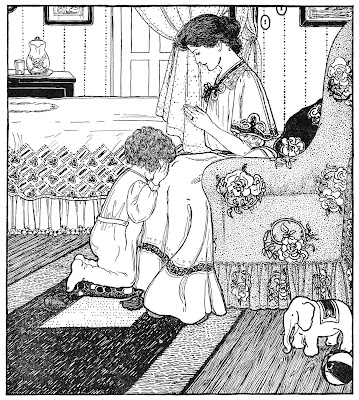
Weak woman is strong. She prays and relies on Jesus.
For the sake of Christ, then, I am content with weaknesses, insults, hardships, persecutions, and calamities. For when I am weak, then I am strong. (2 Corinthians 12:10).
Gill’s Explains it this way:
for when I am weak, then am I strong; when he was attended with all the above mentioned infirmities, when laden with reproaches, surrounded with necessities, followed with persecutions, and brought into the utmost straits and difficulties, and was most sensible of his weakness in himself to bear and go through all these things; then was he upheld by the divine arm, and strengthened by the power of Christ; so that he was not only able to sustain the conflict, but became more than a conqueror, and even to triumph in the midst of these adversities;
The difference is that silly weak women are loaded down with unrepented-of sin, which clouds their mind and they fall prey to untruth. Weak women who rely on the glorious Divine Arm to lift them are wise, strong, and in His power. They know the truth and see Him clearly. They possess virtue and radiate calm wisdom.
I found it interesting because much of women’s ministry teaching comes from this kind of study. The Grandmother of word studies is Beth Moore. Her proteges are following suit and her proteges’ proteges, third generation Bible teachers for women, are following suit also.
I attended a BM Living Proof “study” in North Carolina five years ago. I had begun going to church regularly 4 years prior. So I was a newbie to church and only I was a few years in the faith to begin with. I was totally new to discernment. Most of my early blogging had to do more with prophecy than discernment or encouragement.
I re-read the discernment essays I had written back then regarding Moore’s teaching and I am proud of the Holy Spirit because I think they hold up over time. I believe I was on the money with my concerns to a degree that only the Holy Spirit can take credit because, as I said, I was new and fairly unlearned. I had written a review about my concern with how Moore approaches a teaching she said she constructs for delivery at Living Proof.
She explained how she arrives at the lessons she teaches on her tour. She said that when she prays the Holy Spirit will deliver a word to her. [This is an extrabiblical, Mystical practice] In the case for the teaching in Charlotte, it had been “Hold Fast.” In the case of her next tour in Columbia, it will be “Prepare.” She then creates an acrostic of teaching points that begin with each letter in the main word. Ours was –
His affection is set upon us Only He is your praise Loving Him awakens your true heart Doing His will does us good Fleeing to Him means fleeing with Him Any tighter embrace will also replace Satan wants what we have The Lord is your life
Looks kind of OK, doesn’t it? I won’t explain each of the eight mantras point by point, but share with you some of what troubled me most. I think word studies are good, and I like when teachers look into the Greek or the Hebrew meaning. This manner of exegetical study, finding all the words that relate to a subject and building a lesson out of it is fraught with danger. You lose the context of each passage you are extracting the word from. If you cross OT to NT that context gets more complicated because you have to research whether the word used in a context was meant only for the Jews in the Old Covenant or can be extrapolated into the New Covenant for the Gentiles. Getting meaning from the Hebrew-to-Greek is also problematic for a layman.
This approach also means that you wind up using a LOT of verses in one study and that tends to feel cobbled together and superficial. You can’t really explain to full depth each verse so you simply refer to them, and there winds up being a lot of different points. It gets unfocused, really fast.
Moore had said that she found every ‘hold fast’ in the Bible, OT or NT, and she put together a lesson from that. A lot of people in the audience were so impressed with her mention of the Greek word for this or the Hebrew word for that. Even at my naïve state years ago, ripping out a word from its context and matching it to other words it may seem like, wasn’t a good approach. Context is everything.
The Master’s Seminary article explains in detail just why students should not absorb lessons from teachers who crafted lessons based on these kinds of word studies, nor should teachers create lessons based on studies of these kinds. Below are two short excerpts from the short version of their article. If you want to go deeper into the whys and wherefores, there is a fuller, lengthier version of the same article, here.
When it comes to studying Scripture, word studies are popular, easily obtained from available resources and an easy way to procure sermon content. However, word studies are also subject to radical extrapolations and erroneous applications. It is not always possible to strike exegetical gold by extracting a word from the text for close examination. Word studies alone will not suffice. Indeed, over-occupation with word studies can be a sign of laziness and ignorance involved in much of what passes for biblical exposition in our times.
Study of the words alone will not present us with a consistent interpretation or theology. This is one of the misleading aspects of theological dictionaries/wordbooks. One learns far more about obedience/disobedience or sacrifice and sin from the full statement of a passage like 1 Sam 15:22–23 than he will from word studies of key terms like “sacrifice,” “obey,” or “sin” in the text.
The most important thing about studying the Bible is actually reading the Bible. Too many people spend too much time warming up first. Getting the right chair, the cup of coffee, the notebook, the pen, the devotional, the book about how to read the Bible … all fussing over the preparations and never getting to the main event.
Be a good Bible student. And watch out for shallow word study teachers. Just because they mention “Greek” or “Hebrew” doesn’t necessarily mean they’ve delved deeply. Many times it means the opposite.
Recommended resources:
Hermeneutics:
her·me·neu·tics- ˌhərməˈn(y)o͞odiks/
noun. the branch of knowledge that deals with interpretation, especially of the Bible or literary texts.
On “Super Tuesday” preceding the long build-up to the November Presidential elections, James R. White of Alpha and Omega Ministries wrote a long political opinion piece on his Facebook page. I was struck by the first paragraphs, which I excerpt here. To read the full opinion essay, go to his Facebook page.
As my friend Patee Jennings said: “As you contemplate your day trust God is in control and still reigning on earth no matter what…..“
The political process may be a part of our lives, but it is incidental to our Christian lives. This is evidenced by the fact that even those with minimal discernment can see that America is fading into history. Yet Jesus and His word shall never fade away. (Matthew 24:35)
I have a somewhat unique perspective on the political process in the United States. As a professional speaker and debater with extensive experience around the globe engaging in polemics and debate (and as an Independent, unaligned with either political party), I watch the drama playing out in the US with a mixture of horror, disgust, revulsion, shock, and what would pass for humor if our freedoms, liberty, and future were not at stake. It is not that political debate has been particularly in-depth or appropriate in years past. Real “debates” have always been a rarity, but the 2016 Presidential election has reached new heights in absurdity. And this time, “evangelicals” are smack-dab in the middle, playing a pivotal role in what I am convinced will be their own downfall.
I write from the perspective of one who believes the great experiment with liberty that was the United States Constitution is breathing its last. That grand document has reached the end of its time of usefulness. It is not that the form of government it created does not remain a perfectly valid and liberty-granting institution. It is that the people it was written for no longer exists. It was not written to govern a self-centered, ignorant, arrogant, sinful, secularist people. It was written for a “moral and religious people,” as John Adams rightly said, “It is wholly inadequate to the government of any other.” It is hardly surprising that we would see confusion when the words of the Constitution have lost their meaning and their ability to provide guidance.
But there is much more going on in this election year. I see clear and compelling evidence of supernatural activity in our land. Yes, I see the judgment of God upon a people who can see the videos of Planned Parenthood, aka Molech International, and not only refuse to immediately shut them down—out of simple, common humanity—but instead they prosecute those who documented the evil, and rally to the defense of the caretakers of the ovens of Dachau! This is the same nation that has festooned its government buildings with rainbow-colored lights in celebration of the overthrow of the ordinance of marriage by five robed oligarchs.
What the unconverted heart wants is so different from what the converted heart wants. As James Smith said in 1859, the state of the unconverted is-
They are in a state of misery. They do not enjoy the favor of God, nor taste the sweetness of his blessing. Have what they may, they are never satisfied, for their immortal nature is always craving for something higher and better. … They are in opposition to God.
It is the Holy Spirit working directly, efficaciously and irresistibly upon man’s heart and mind, making the man over again, and creating him anew after the image of Christ in holiness and righteousness of the truth. A revolution, a reconstruction takes place at the center of man’s moral and spiritual being: sin and pollution are dethroned in the citadel of man’s being, and righteousness takes its place. (source)
Our desires align with God’s, our desire is for hatred of sin, pursuit of holiness, our neighbor’s good, service, forgiveness, mercy, righteousness and more.
The two hearts (converted vs. unconverted) were never more starkly contrasted as in Salome and Esther’s.
Esther Before King Ahasuerus with Haman Being Sent to the Gallows,1577 (studio of) Claeissens, Anthuenis (1536-1613)
According to Mark 6:21-29 a daughter of Herodias danced before Herod and her mother Herodias at the occasion of his birthday, and in doing so gave her mother the opportunity to obtain the head of John the Baptist. Even though the New Testament accounts do not mention a name for the girl, this daughter of Herodias is often identified with Salome. According to Mark’s gospel Herodias bore a grudge against John for stating that Herod’s marriage to her was unlawful; she encouraged her daughter to demand that John be executed. (source)
and when the daughter of Herodias herself came in and danced, she pleased Herod and his dinner guests; and the king said to the girl, “Ask me for whatever you want and I will give it to you.” 23And he swore to her, “Whatever you ask of me, I will give it to you; up to half of my kingdom.” 24And she went out and said to her mother, “What shall I ask for?” And she said, “The head of John the Baptist.” 25Immediately she came in a hurry to the king and asked, saying, “I want you to give me at once the head of John the Baptist on a platter.” (Mark 6:22-25).
Deadly desire: Aubrey Beardsley’s illustration for Wilde’s play (Getty Images) Source
Why does the unconverted heart want death on a platter? Because John the Baptist had spoken against the King’s unlawful marriage. Nobody likes it when their sin is pointed out, least of all the one with an unconverted heart. The daughter, which through history we know is named Salome, sided with her mother in wanting the burr in their side dead. Silencing the voice of God used through His people never silences the conscience though, nor does it destroy coming judgment for their sins. The sinner may gain temporary relief, but it is only temporary.
King Ahasuerus of Persia ruled from Ethiopia to Iran, over 127 districts. When he saw kind and gentle Esther standing in the court, he was pleased with her.
Then Esther approached and touched the tip of the scepter. 3And the king said to her, “What is it, Queen Esther? What is your request? It shall be given you, even to the half of my kingdom.” 4And Esther said, “If it please the king, let the king and Haman come today to a feast that I have prepared for the king.” (Esther 5:2b-4)
Both kings had asked the women in their lives what request they had and promised to fulfill it up to half their respective kingdoms. What power! What an important moment! If you were given such a powerful promise, what would you ask for? Each woman instantly knew what she wanted.
Esther famously was concerned with doing God’s will, even to the risk of her own life. She spoke up on behalf of her people, who were under threat of genocide. Esther wanted life for her people because they were God’s people, Salome wanted death to John the Baptist to silence the convicting voice. The two hearts could not be more starkly different.
Pray to the Spirit to continue softening your heart so that given an opportunity to ask a favor the King of Kings, you will ask in a way that is aligned with His will. What tragedy it was for Salome to ask for something so fleeting so as to gain temporary relief from the conviction of her sin, only to discover in the end that punishment is forever. Even more so is the tragedy when they have available the gracious and eternal relief from sin’s burden of guilt and shame through Jesus Christ- and spurn it.
“Up to half my kingdom” the promise was even more ironic. Those with a converted heart will share as co-heirs the entire kingdom, wealth beyond imagining, peace and joy and treasure of the highest kind: Jesus. (Galatians 4:7).
I work with people who have lost children to accident, or miscarriage. I work with people who lost spouses, who have been through trauma or war. Below is a wonderful essay in which the author recounts the agony and the blessing of his and his wife’s trial, and the suffering they endured to the glory of God. The author’s point is:
Friend, if you’re a Bible-study leader, Sunday school teacher, and especially if you’re a pastor, I beg you: prepare your people for suffering!
Teach Your People to Suffer Eric Dodson February 29, 2016
My lovely wife and I were sitting in a parenting class at church, when the chairman of the elder board came and asked for us. Actually he asked for “the parents of Calvin Dodson.” Slightly embarrassed, thinking our little one must have thrown a fit, or done something else to show we really needed the parenting class, we got up and went with him.
As we left the room and headed down the stairs, he let us know that our 8-month-old son had experienced a seizure and that the nursery staff had called 911. Stunned, we came in his nursery room to find our son—our youngest at the time—being tended to by a nurse. He had blue lips and barely moved. It was terrifying.
That scene began what has turned into a nearly three-year trial that’s included many trips to Children’s Hospital LA, two of our sons experiencing multiple seizures, sleepless nights, many tears, and the dreaded news that their condition could end their life before adulthood. It’s been a terrible trial, and it’s been an incredible blessing.
That may seem impossible to say, and three years ago, I might not have believed it myself. But the truth is that this trial—the most suffering we’ve ever faced—has been an immeasurable blessing. It has been such a blessing because of the amazing church we attend, a church with leaders who prepare their people to suffer.
Friend, if you’re a Bible-study leader, Sunday school teacher, and especially if you’re a pastor, I beg you: prepare your people for suffering!
Suffering is a present reality.
Just turn on the news, and it’s obvious that today’s culture is a living testimony to the truths of Romans 1. As society continues to rebel against God, reject his teaching, and increase in unrighteousness, suffering is the inevitable result. We live in a fallen world filled with disease, political strife, wars, racial tension—evil! As those who shepherd God’s flock, we must prepare them to live in such a world. We must prepare them for suffering.
Christians should expect suffering.
Not only should we prepare our people for the suffering that results from living in a fallen world; we must also prepare them for the unique suffering that is guaranteed for those who follow Christ. Suffering is part of the Christian life. Scripture speaks repeatedly of the suffering Christians are bound to face (Romans 8; 2 Corinthians 1; Philippians 1:29, 3:8-10; Colossians 1:24; 2 Thessalonians 1:5; James 1). Nearly the entire books of 2 Timothy and 1 Peter are devoted to helping Christians deal with suffering. Christ warned the church of Smyrna that they would face great suffering (Revelation 2:9–11). Scripture makes it abundantly clear; Christians will suffer. If we are to teach the whole counsel of God, we must teach our people about suffering. Suffering produces sanctification.
Scripture not only promises that Christians will suffer; it also tells us that suffering is not without cause. In fact, we are to rejoice in our trials knowing that they are one of the tools God uses to make us “perfect and complete, lacking in nothing” (James 1:2–4). What an incredible encouragement that is! We must not help our people avoid suffering or be chiefly concerned with helping them escape trials as soon as possible. We must encourage them to learn from their trials, to rejoice in the sanctifying work God is doing through their suffering.
Suffering increases fellowship.
One of the oft-overlooked benefits of the church as the body of Christ paradigm is found in 1 Corinthians 12:26:
And if one member suffers, all the members suffer with it…
It’s difficult to overstate the impact suffering can have on the depth of fellowship within the body of Christ. Suffering provides the church a unique opportunity to grow in compassion, understanding, and love for one another. Trials provide a chance for the church to truly, practically bear one another’s burdens, and to model the love of Christ for the world.
Suffering produces hope.
One of the greatest gifts of suffering is the contrast it provides with the glory that is to come. Paul celebrates this truth beautifully in Romans 8:18:
For I consider that the sufferings of this present time are not worthy to be compared with the glory that is to be revealed to us.
Friend, that is far more than a religious platitude. That is glorious truth! The great hope for Christians—suffering any type of trial—is the unfathomable glory that awaits. Our suffering ought to point us to that. Our trials ought to increase our anticipation, increase our longing for future glory.
There is coming a day, when the curse that weighs heavy on this world will be lifted, when the redeemed of the nations will worship together free from persecution, when there will be no more conflict, political strife, or war. There’s a glorious day yet future when no one is scraping pennies just to get by, no wife loses her husband to cancer, no more little boys with seizures. The trials of this day point us forward with ever-growing expectation of that glorious day.
* * * *
Eric is a graduate of The Master’s Seminary, and shepherds a Bible study through the Cornerstone Fellowship Group at Grace Community Church. He works as a Broadcast Copywriter at Grace To You. He and his wife, Tara, have three sons.
Every human will be judged. There are two kinds of judgment. One is for the lost, judgment for their sin. God will judge them and then cast them into hell for all eternity to endure the punishment of His wrath. (Revelation 20:11-15). This is known as the Great White Throne Judgment.
The other judgment is not really a judgment, more of an evaluation. All believers will stand before Christ after the rapture, and He will evaluate their lives based on what they did for Him, and what their motivation was. Christ will judge our works. We aren’t under wrath because as believers we entered heaven through the Door of Jesus, and He already exhausted God’s wrath for us by absorbing our punishment for sins when He was on the cross. So, God is not angry with us like He is with the unbelievers, but we can lose rewards that we would have otherwise earned. This is known as the Bema Seat. (2 Corinthians 5:10).
Hebrews 10:31 says “It is a fearful thing to fall into the hands of the living God.” Though we have nothing to fear, just thinking about standing before Jesus and having all my works and secrets of the heart exposed is cringe-worthy. To add fuel to the fire, so to speak, our pastor said the following last Sunday. I’ll paraphrase.
He was in a court situation observing a woman who was about to be sentenced for her DUI charge. As the court came together and the judge was preparing to speak the verdict, our pastor said that he could see the defendant begin to shake. Her arm quivered visibly, then her leg. She soon was shaking uncontrollably. A human judge was about the render a verdict in her crime, and she knew she was guilty. Her shaking increased. It is a fearful thing to be publicly judged for our crimes.
Now imagine this.
Imagine that God put a tape recorder around your neck. For the next year, He recorded everything you said. At the end of the year, He took off the tape recorder and played it back. Imagine then, He uses the same level of judgment that you used when talking to other people or about other people…on you.
It makes us cringe, doesn’t it? And if we think that our own words used against us as the benchmark of judgment is harsh, a human standard, what then of God’s holy and perfect standard? One cannot even conceive of being able to stand before Him.
If you, LORD, kept a record of sins, Lord, who could stand? (Psalm 130:3)
And yet those who are in Christ, will be able to stand.
The Psalm verse goes on to show the glorious reason why,
But with you there is forgiveness, that you may be feared. (Psalm 130:4)
If in thinking of the tape recorded judgments you utter make you shrink back in fear of having those same levels of judgment thrown back at you… if thinking of that human standard makes you fear of their exposure before Jesus’ much higher Godly standard, that is the fear of the Lord. It is a good fear. It is a Godly fear. It is the kind of fear that keeps our behavior and our sins in perspective. God’s holy standard of judgment are perfect and unimaginable, and thinking of them rendered upon the lost makes me feel more compassion for them, instead of irritation. Thinking of my own words used against me to judge me, keeps me more honest about my conversations.
And the tongue is a fire, a world of unrighteousness. The tongue is set among our members, staining the whole body, setting on fire the entire course of life, and set on fire by hell. (James 3:6).
My walk toward the cross was more like trench warfare. I fought it. During the time of the most pitched spiritual warfare, I created a lot of art in attempts to understand what was going on with me as my spirit fought the Savior but I couldn’t express it in words.
In this piece below I felt intuitively that my spirit was trying to transform but something was holding me down while at the same time something was pulling me up. In the piece below, the butterfly is broken and unable to transform because it is caught in a net as it attempts to fight off whatever has captured it. The poem, which I re-typed in larger font, mentions Strigoi. This is a folk personage who, in Romanian legend, is a kind of vampire. I intuitively felt that a dark force of evil had caught me, so I used the reference to Strigoi.
Strangely (though not so strangely if you understand the Bible) I was trying to get “upward” toward something better, BUT NOT JESUS! Horrors, anything except Jesus! I bought Buddhist books, pagan books, New Age gooks, psychology books, all in vain attempts to stave off the one last resort to try- Jesus. I was vigorous about it.
During that time I felt that the world had two elements to it, good, or love, and evil. I represented that fight in this piece, called ‘Intelligent Design.’
You might notice that same cupola in Intelligent Design that is in the Suspended Transformation piece. It has a sort of evil eye as a wind vane and to me, seemed very demonic. It represented a strong tower or fortress of evil. My mistake then was thinking that good, or love, and evil were equal combatants in this world. Of course I know now that Jesus has overcome everything and evil bows to His will. The battle is not equal. It is not even.
I remember shortly after I was saved, this battle and its exigencies were still fresh in my mind and very palpable. I said to a church friend of the Arminian type, “I was brought to the cross kicking and screaming.” She looked at me and dismissively said, “You were not!” My friend and her circle in which I was involved strongly believed that the believer decides for him or herself to go forward down an aisle and the walk down the aisle is littered with rose petals, dancing unicorns and rainbows. While that may be some people’s experience, my own experience at salvation was one of agony, blood, tears, and resistance. I did not want to go. But I could not resist.
On Star Trek, tractor beams were a beam that emanated from a spaceship and when aimed at a lesser vessel, inexorably drew the then-helpless vessel toward the greater vessel. No matter if the lesser vessel had its shields up, or if its thrusters were in full reverse, or if they attempted to bug out at warp speed, once caught in the Tractor Beam, they could not escape and were pulled to the Vessel. The name ‘tractor beam’ was coined from food chemist and science fiction writer E.E. Smith’s original “Attractor Beam.” I was a Trekkie (original series) and I always liked the tractor beam. I did not know, but God knew, that decades later I would be caught in His tractor beam of grace.
Today I understand that God wrote our names down in His Lamb’s Book of Life before the foundation of the world. (Ephesians 1:4). The default condition of every person on earth is that we are all sinners all the time and we do not seek God. (Romans 3:10-11).
However, His grace is such that, at the appointed time, God uses His irresistible grace as a tractor beam to draw people to His Son. (John 6:44). Without it, we would never willingly “choose Jesus.” We can’t and if we are drawn, initially we resist. However God is so mighty and His will be done on earth as it is in heaven, so no one can resist it forever. Otherwise it would mean that satan and man can frustrate God.
The enmity of the human heart is most virulent at the point of the supreme revelation of God’s glory. So deep-seated and persistent is the contradiction that the Saviour as the embodiment of grace is rejected. It is when we recognize this that the need for irresistible grace is perceived.
No one cay say to Him, “Nah, I’m good.” Could Lazarus reply to Jesus in the tomb, “I want to lay here a little longer.” No. The Doctrine of Irresistible grace is the “I” in the TULIP acronym for the Doctrines of Grace. Though personal experience is not the final analysis of anything, I know my salvation walk was fraught with resistance. I dug in my heels.
It is a moral and spiritual impossibility for a person to come to Christ apart from the Father’s drawing. What we find now is that it is a moral and spiritual impossibility for the person given by the Father to the Son not to come. There is by Jesus’ verdict the invariable conjunction of these two diverse kinds of action—“all that the Father giveth me will come to me.” There is invincible efficacy in the Father’s action and this means grace irresistible. (John Murray)
At the time I was revolted by the notion of anything about Jesus, that the something better my heart was wanting was indeed Him. I now am grateful every day that I know Him and that I can ponder His beauty and wondrous glory at any moment of the day. I can read His word at any time and earn more about Him. I can pray and enter into the throne room. I can see Him in other people of the faith. He is endlessly fascinating to me, to a degree that is as far as the east is from the west as I had found Him revolting before salvation. Only Jesus could turn such a drenched heart of sin and His very name on my tongue made it bitter, to one of cleansed wonder for His glory. Only him. Thank God we cannot resist Him.
Note: John Murray on Irresistible Grace, From Ligonier Ministries, the teaching fellowship of R.C. Sproul. All rights reserved. Website: http://www.ligonier.org | Phone: 1-800-435-4343”
Risen, a movie centered around the resurrection of Jesus, is just out. The plot synopsis says,
In 33 AD, a Roman Tribune in Judea is tasked to find the missing body of an executed Jew rumored to have risen from the dead.
I won’t see “Risen.” I’m not a demographic, I’m not a market, I’m not merchandise. I won’t trade money on my faith, because it’s not entertainment. I won’t participate in the merchandising of my faith. (2 Peter 2:3).
That’s not to say that I never buy any Christian merchandise. I do. I buy Bibles. I buy theological books. I buy Christian fiction. I pay for movies that have Christian themes. So what’s the difference between that merchandising and the merchandising I mention in Risen? Risen purports to show a foundational doctrine of our faith, with an actor playing “Jesus.” It purports to show His resurrection, THE main ingredient of the Christian faith. (1 Corinthians 15:14). And as some reviewers admit, there are added elements in the film and other elements which occurred are omitted. Why go see a movie that from the outset you know has twisted the Doctrine of the Resurrection and included errors and omissions?
There is another kind of merchandising I’ve mentioned frequently on this blog. Whenever a ‘Christian’ movie is released, churches are inundated with merchandise sales pitches. Study guides, devotionals, bracelets, workbooks, bookmarks…trinkets. That’s another kind of merchandising. Both kinds diminish the glory and uniqueness of our faith and makes our Jesus small. Didn’t he cleanse the Temple? I’d rather save my money to buy a solid book to give away to a friend than spend the money to see a flawed movie for myself.
However, I hold no judgment against anyone who chooses to see that or any other Christian movie. It’s an area of liberty. I personally know that if I see Risen with its added and omitted elements that those will remain in my head and I won’t be able to get them out. My mind is weak that way. So my choice is to refrain. If you’re considering seeing the movie, here is the author of Gentle Reformation with three reasons to consider not to. And he really is gentle.
It’s time for the annual Shepherd’s Conference! It is one conference I look forward to every year. It is a conference ministering to Pastors held at Grace Community Church, annually in March. It makes it sweeter this year because a friend of mine started at The Master’s College (a college associated with the Church) this past January. He will be helping there. What a blessing this conference has turned out to be. The dates are March 9-13. Speakers are John MacArthur, Ligon Duncan, Albert Mohler, Paul Washer, Tom Pennington, Phil Johnson, Steven Lawson, and Nathan Busenitz. And time flies, it’s the 36th annual conference.
The first Shepherds’ Conference was held on March 19, 1980, on the campus of Grace Community Church. That year, 159 men gathered under the leadership of our pastor to focus on the theme of pastoral ministry. … [in 2015] nearly 1,200 volunteers served in a variety of different capacities—and from our high school students to our experienced senior saints, everyone’s effort made a difference. As a result, more than 60,000 printed resources were distributed, 40,000 cups of coffee were served, and more than 13,000 volunteer hours were invested.
Last year, about 4,000 men attended. What a blessing this conference has come to be for the attendees, volunteers, and virtual pastors and participants all across the globe. Definitely tune in when you can. The sound of 4000 men all singing traditional hymns to the glory of God is an experience you won’t soon forget.
—————————————-
Narcigesis is a newly coined word. The word exegesis means “critical explanation or interpretation of a text, especially of scripture.” Since our world is so narcissistic today, the word narcigesis is a take-off on that, meaning to make the interpretation of the text be about one’s self (instead of about Jesus, John 5:39, Luke 24:27).
Though this clip is new, it’s made the rounds quite a bit. That’s because it is a classic example of narcigesis. As Beth Moore opens the scripture to explain it, she says,
“We’re about to put ourselves in the storyline, because that’s what Jesus is after today.”
Um, okaaay. So somewhere in the Bible Jesus changed His mind about all scripture pointing to Him, and now says, scripture points to you.” I think not. I also think not that Beth knows what Jesus is after and is teaching from this “knowledge”.
I like Queen Elizabeth II. My grandmother was from England and one of my early memories is Gramma’s dish with the portrait of the Queen on it displayed on the wall of her apartment. The Queen seems nice, from what a commoner can know about a monarch who rules another nation and lives a private life in a castle with carefully scripted and choreographed interview sessions. I’ve often wondered if the Queen worships Jesus. This article discusses it a bit more.
I’m a cat lover but in attempts to be an equal opportunity pet promoter here is another thingie about dogs. (Well not really equal, I’m just throwing you a bone. See what I did there?)
Here is Boo the Pomeranian getting groom, eyes closing in delight as someone plays with his hair. Who hasn’t been there? Come on, you know you have.
False teachers and false prophets are a scourge. They always have been. Ever since the beginning, satan has been lying to humans, and as prince of the power of the air he has sent his demon horde to influence false teachers and make them prophesy falsely. (Deuteronomy 13:6–10; 18:20; Matthew 24:11). Gullible Christians and the lost have believed these false prophecies and untrue teachings ever since.
Probably today’s false teachers are aren’t more numerous than they were in the first century, though it feels like they are. Apologist James R. White said today
there are not more heretics today, there is just more availability of making your heresy known.
However any Christian with a modicum of faith or any grain of loyalty to Jesus will be aggrieved when coming up against a false prophet or hearing about a heretical teaching. I am. I am a lot.
Like ants at a picnic, these false teachers are everywhere, and more are popping up every day. Jesus is in control and has ordained each and every one. As He does with everything, He has a purpose for false teaching.
God uses the response to false teaching on the part of the members of the visible church, individually and corporately, to demonstrate who is true to Him and to His Word, and who is not. To put it another way, God is building a record that Christ will use at the Last Judgment, when many will come before Him and claim to have done many wonders in His name, but Jesus will say, “I never knew you; depart from Me, you who practice lawlessness!” (Matthew 7:23).
The main reasons God permits false teachers is that first, sin exists in the world. False teaching is sin. Secondly, it’s used to test His people. So though it’s a grief, a burden, and a scourge, God has His purposes for allowing it.
And then sweet relief will come! There will come a day when false prophets will not be allowed!
After the rapture, and after the conclusion of the Tribulation, in that order, a Kingdom on earth will be established. It will last for 1000 years. It is colloquially called the Millennium Kingdom. It will be an actual kingdom whereupon incarnated Jesus walks among His people, rules from Jerusalem, (Revelation 2:27) administers affairs of the nations, and receives worship (including sacrifices) in the Temple. (Isaiah 56:6-8; Zechariah 14:16; Jeremiah 33:15-18, Ezekiel 43:18-46:24)
Satan will be bound in the pit along with his demon horde. (Revelation 20:1-3). The people occupying the Kingdom will have relief from satan, finally! However, sin will still be present. Some of the people who survived the Tribulation will be mortal, and thy will enter the Kingdom along with us (glorified at the rapture) and the Old Testament saints (resurrected at the end of the Tribulation) and Tribulation martyrs (resurrected at the end of the Tribulation). These mortals will repopulate the earth through procreation, and their children will do the same and so on, for 1000 years. These mortals will still have a sin nature, which will express itself at the end of the 1000 year kingdom when satan is released from the pit and gathers the secretly sinful like sands upon the sea to rebel against Jesus. (Revelation 20:7-8).
But meanwhile during the blissful 1000 year Kingdom, there will be no false teaching, no false teachers, no false prophecies!
“And if anyone again prophesies, his father and mother who bore him will say to him, ‘You shall not live, for you speak lies in the name of the LORD.’ And his father and mother who bore him shall pierce him through when he prophesies.” (Zechariah 13:3)
False prophets will be immediately stabbed. Even by his parents.
The form of phraseology here is drawn from De 13:6–10; 18:20. The substantial truth expressed is that false prophecy shall be utterly abolished. If it were possible for it again to start up, the very parents of the false prophet would not let parental affection interfere, but would be the first to thrust him through. Love to Christ must be paramount to the tenderest of natural ties (Mt 10:37). Much as the godly love their children, they love God and His honor more. (Jamieson, R., Fausset, A. R., & Brown, D. Commentary Critical and Explanatory on the Whole Bible)
The dance between false prophets and demons will end. Matthew Henry:
False prophecy shall also be brought to an end: I will cause the prophets and the unclean spirit, the prophets that are under the influence of the unclean spirit, to pass out of the land. The devil is an unclean spirit; sin and uncleanness are from him; he has his prophets, that serve his interests and receive their instructions from him. Take away the unclean spirit, and the prophets would not deceive as they do; take away the false prophets that produce sham commissions, and the unclean spirit could not do the mischief he does. When God designs the silencing of the false prophets he banishes the unclean spirit out of the land, that wrought in them, and was a rival with him for the throne in the heart. Henry, M. (1994). Matthew Henry’s commentary on the whole Bible
Of the Zechariah 13:3 verse, John MacArthur comments:
Because of the salvation of God that has cleansed God’s people and made them love Him and His truth, hatred of false prophecy will overrule normal human feelings, causing even a mother or father to put their apostate child to death. This is a stern reminder of hos God feels about and will eventually treat those preaches who misrepresent the truth.
Contrast the Zechariah verse of Millennium parents killing their own child because he speaks false prophecy, to the verse in Matthew 10:21 when in the last days parents will kill their offspring for speaking the Truth.
What a time that will be! When love for Jesus and His truth is the worldwide global attitude! For all my brethren who read this, it’s an essay about prophecy, obviously. It is also encouragement. Jesus IS in control. He has a plan, and that plan includes the [hopefully soon] day when He will rule and reign personally and false prophets will not be tolerated. What a day that will be.