
 |
| EPrata photo |
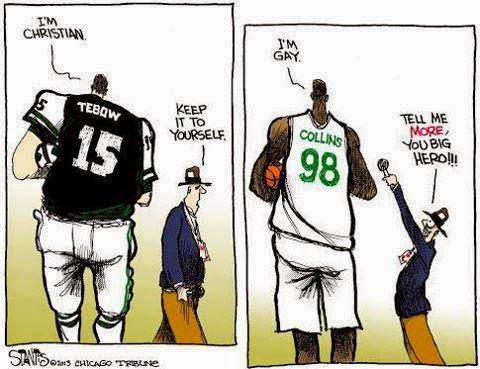
Don’t ask don’t tell…if you’re a Christian
I know we all may be finding the homosexual intrusion into American & world culture tiresome. And the discussions about it are even more so. Worst of all, we are not of this world and the homosexual lobby is winning. Will win eventually.
Nonetheless, we always continue to proclaim God’s glories and urge one and all of the pagans to repent, and then we exhort for for one and all of the brethren to adhere to His standards. He is God, holy and high, and He knows best. It is as simple as that.
Romans 1:18-32 shows us the process of a downward progression of a culture when the majority of its populace refuses to repent. Please bear with me as I post the entire passage.
God’s Wrath on Unrighteousness
18For the wrath of God is revealed from heaven against all ungodliness and unrighteousness of men, who by their unrighteousness suppress the truth. 19For what can be known about God is plain to them, because God has shown it to them. 20For his invisible attributes, namely, his eternal power and divine nature, have been clearly perceived, ever since the creation of the world,g in the things that have been made. So they are without excuse. 21For although they knew God, they did not honor him as God or give thanks to him, but they became futile in their thinking, and their foolish hearts were darkened. 22Claiming to be wise, they became fools, 23and exchanged the glory of the immortal God for images resembling mortal man and birds and animals and creeping things.
24Therefore God gave them up in the lusts of their hearts to impurity, to the dishonoring of their bodies among themselves, 25because they exchanged the truth about God for a lie and worshiped and served the creature rather than the Creator, who is blessed forever! Amen.
26For this reason God gave them up to dishonorable passions. For their women exchanged natural relations for those that are contrary to nature; 27and the men likewise gave up natural relations with women and were consumed with passion for one another, men committing shameless acts with men and receiving in themselves the due penalty for their error.
28And since they did not see fit to acknowledge God, God gave them up to a debased mind to do what ought not to be done. 29They were filled with all manner of unrighteousness, evil, covetousness, malice. They are full of envy, murder, strife, deceit, maliciousness. They are gossips, 30slanderers, haters of God, insolent, haughty, boastful, inventors of evil, disobedient to parents, 31foolish, faithless, heartless, ruthless. 32Though they know God’s righteous decree that those who practice such things deserve to die, they not only do them but give approval to those who practice them.
The NASB says of the last verse that they give “hearty approval” to them that practice those things.
Hearty approval.
This aspect of the hearty approval statement indicates not just individual sin, and not just collective sin, but also enticement into sin. In addition, giving hearty approval to sin involves a tipping point. This involves peer pressure and groupthink. When a group practicing the sin increases in numbers, at a certain point, there is more pressure to perform the sin than there was to hide the sin or not engage in it at all. The original people or group doing the sin paid the shame price in the culture for having been found out, but after a while the shame wore off and more and more people fornicated, were adulterers, homosexuals, lesbians, bigamists, prostitutes sex workers (see? we don’t even call them prostitutes any more let alone whores).
Remember back in the day when premarital sex was talked about in hushed whispers? When a mother bearing an illegitimate child was hustled off to another location because she (and the father) had brought shame onto the family? When homosexuality was a considered a perversion and never discussed, let alone approved of? Now there are television shows which feature gays in ‘marriages’ as normal, men in marriages to multiple wives, lesbians casually kissing on television. The hearty approval is that the ratings of these television shows and movies get higher ratings with this kind of content in it.
We’ve seen this since the 1950s with premarital sex. We’ve seen this since the late 1960s with fornicating outside of marriage and with adultery. No-fault divorce is one of the major causes of the former. We’ve seen this with homosexuality since the 1970s. In the 1980s with the advent of cable television and a wider latitude for exposing the audience to worse language, bloodier violence, and more sex. By the 1990s the tidal wave of sin in the world being reflected on tv and other media, and then reflected back to approving audiences was firmly entrenched. 1993’s movie with Tom Hanks (Philadelphia) about an HIV-positive homosexual man was Hollywood’s first mainstream movie with a gay as the main character as sympathetic. Cut to 20 years beyond that date and we are awash with an upside down world where sin is heartily approved of and those not wishing to participate in sin are the odd ones out.
Now we have a pastor of a conservative Southern Baptist church changing his mind on the issue of homosexuality being sinful (he says it isn’t) and is accepting of his gay son’s lifestyle. He calls himself a “gay-affirming pastor” but it is just being sin-affirming. And a sin-affirming pastor is an oxymoron.
Woe to those who call evil good and good evil, who put darkness for light and light for darkness, who put bitter for sweet and sweet for bitter! (Isaiah 5:20)
In just 20 years, half a generation, we’ve gone from President Clinton’s “Don’t Ask Don’t Tell” being about homosexuals in military service to don’t ask don’t tell about Christians in military service.
Wretched Radio brings us this photo of a greeting card section of Walgreen’s

And this one really hurts.
Sir Elton John says Jesus would support gay marriage: ‘He was all about love’
Sir Elton John has said he believes that Jesus would be a supporter of gay marriage. The “Daniel” singer, who hopes to marry filmmaker David Furnish next year, said he thinks that the Christian figure would have supported the union of gay members of the clergy. Speaking to Sky News on the same weekend as the London Pride parade, Sir Elton said: “If Jesus Christ was alive today, I cannot see him, as the Christian person that he was and the great person that he was, saying this could not happen. “He was all about love and compassion and forgiveness and trying to bring people together. “And that is what the Church should be about.”
Nope I was wrong. This next part of the above article hurts worse.
But the chart-topping artist said that the Church deserved credit for the progress that has been made in recent years. He heaped particular praise onto the Archbishop of Canterbury and Pope Francis, whom he described as a “wonderful” man who had stripped back church teaching to reveal its fundamental message of love.
Yes. They heartily approve.
Golfing in heaven?
What will heaven be like? It is a marvelous question those of us who long for our heavenly home ask often. On the one hand, the glimpses given to us in scripture are wonderful and awe-inspiring. On the other hand, those glimpses make us long to be there even more!
There are some things the bible is silent on however, regarding our future in eternity. We know heaven will be a place where we will be active, and working for Jesus. We don’t know exactly what we will do. “Rule and reign”, worship Jesus, of course, and it won’t be boring. But as to exactly what we will do in the eternal state, the bible is silent.
We do know that our citizenship is in heaven, our new name is in heaven, our brethren are in heaven, our reward is in heaven, our life is in heaven, our hope is in heaven- Jesus is in heaven!
But rejoice inasmuch as you participate in the sufferings of Christ, so that you may be overjoyed when his glory is revealed. (1 Peter 4:13)
As John MacArthur says in his essay What heaven Is–
Everything we love, everything we value, everything eternal is in heaven. Nevertheless the church in this century has tended to be self-indulgent, proof that many Christians have lost their heavenly perspective. Too many don’t want to go to heaven until they’ve enjoyed all that the world can deliver. Only when all earthly pursuits are exhausted, or when age and sickness hamper their enjoyment, are they ready for heaven…
It is so important to have a heavenly perspective. The bible mentions heaven 550 times! It is obviously important to God that we know about it, or He wouldn’t have mentioned it so much. One of the most wonderful things about heaven is that we will see God.
“We will see He who is…according to 1 Timothy 6:15…the blessed and only Sovereign, the King of kings and Lord of lords who alone possesses immortality and dwells in unapproachable light, whom no man has seen or can see.” We will see Him then. Matthew 5:8 says, “They shall see God.” In that city we will be engulfed in His presence. We will be exposed to the full blaze of His eternal glory. Christ will be the radiant focal point of that manifestation. Christ will be the centerpiece, if there is such a thing, of that diamond blazing glory of God. (source)
We will be consumed with the glory of God!
And this then really is the joy of heaven. The hymn writer said, “The bride eyes not her garment, but her dear bridegroom’s face. I will not gaze at glory, but on my King of grace.” In other words, the believer is going to follow the glory back to the face from which it radiates. (source)
It is equally important to also to have the right heavenly perspective.
To that end, I am reminded of something Billy Graham once said about heaven. In Ken Garfield’s biography, Billy Graham: A Life in Pictures, Graham is quoted,
“Somebody once asked me, ‘Will there be golf courses in heaven?’ I said, ‘If they’re necessary for our happiness, they’ll be there.’”
And that is precisely the wrong heavenly perspective.
 |
| Wiki CC, Herring Cove Golf Course, New Brunswick, Canada source |
Readers of this blog know that I’ve written about Mr Graham a few times in the past. Mr Graham unfortunately is a liberal ecumenical who has a worldly perspective and has preached inconceivable contradictions. For example, preaching the Gospel at his conventions yet also declaring Muslims are in the body of Christ even if they don’t know Jesus, or that Mormons are not a cult outside Christian orthodoxy or that the Pope is a fine Christian and a terrific evangelist.
Mr Graham is famous for his interview with Robert Schuller in 1997 whereupon Mr Graham said he believes people can attain heaven without knowing Christ. He said the same in an interview in McCall’s magazine in 1978 and again before that in his own Decisions Magazine in 1960. His apostasy can be traced far back, even to his youth, when Graham was rejected for membership in a youth group due to him being too worldly, and later when chafing under Bob Jones’ University biblical standards, he transferred to the less strict Florida Bible Institute. Here Mr Graham is quoted as saying,
“I used to play God, but I can’t do that anymore. I used to believe that pagans in far-of countries were lost – were going to hell – if they did not have the gospel of Jesus Christ preached to them. I no longer believe that. I believe that there are other ways of recognizing the existence of God – through nature, for instance – and plenty of other opportunities, therefore, of saying “yes” to God. (James Michael Beam, “I Can’t Play God Anymore,” McCall’s (January 1978)
Compared to the glories of heaven as described in scripture, and compared to those glories as summarized above, Mr Graham’s worldly perspective about golf needing to be in heaven for him to be happy is certainly disappointing.
The hope of heaven should fill us with a joy of anticipation that loosens us from this transitory world. It’s easy to become so attached to the world that we spend our energy consuming things that will perish rather than accumulating treasure in heaven (Source)
If, as Mr Graham said, whatever is necessary for our happiness will be in heaven, I ask, what if sex is necessary for our happiness? Will it be there?
The bible says no. (Matthew 22:30).
What if my happiness in heaven depends on my unsaved mother being there, will I then be unhappy? The bible says no. (Isaiah 65:17)
The perspective that whatever made us happy on this earth is what we “need” to make us happy in heaven gives short shrift to the incomparable riches of His grace, His holy habitation, and His personal presence. JESUS is what is necessary for our happiness in heaven, and we will have it. No earthly game, activity, or item we enjoyed on this earth will be missed.
 |
| Creative Commons, source |
And just kidding now, what if Basketball was necessary for my happiness, and bowing to my ‘needs’, our Exalted God created heaven around my need to throw a bouncy ball into a net? Won’t every shot be a basket? Won’t every golf swing result in a hole-in-one, every baseball swing a home run? Because everything in heaven is perfect. Does Mr Graham believe that he won’t make par in heaven? If so, then there will be disappointment, and heaven is not a disappointing place.
Hinging our heavenly ‘happiness’ on the needs of our earthly desires is small minded. Expecting our God to create a place for us based on the activities we enjoyed while on the cursed earth, fails to keep in mind that what we do here is only a shadow of things to come. (Colossians 2:17).
Praise God that heaven is so stupendous, that He chose us for salvation, and that we will be with Him!!
Then the angel showed me the river of the water of life, bright as crystal, flowing from the throne of God and of the Lamb through the middle of the street of the city; also, on either side of the river, the tree of life with its twelve kinds of fruit, yielding its fruit each month. The leaves of the tree were for the healing of the nations. No longer will there be anything accursed, but the throne of God and of the Lamb will be in it, and his servants will worship him. They will see his face, and his name will be on their foreheads. And night will be no more. They will need no light of lamp or sun, for the Lord God will be their light, and they will reign forever and ever. (Revelation 22:1-5)
Large earthquake hits Arizona, felt in NM, TX
Several earthquakes occurred overnight and yesterday. Here is a short report.
Moderate quake widely felt in Arizona, N. Mexico
A moderate earthquake struck in Arizona near the New Mexico line that was widely felt across the region, but no injuries or damages were immediately reported. County sheriffs’ offices on both sides of the state line reported receiving numerous phone calls after Saturday’s magnitude 5.2 quake shook the largely rural region. Arizona residents in Graham County, Safford, Tucson, Gilbert, Mesa, Chandler and other areas have reported feeling the tremor. It was felt as far away as Phoenix and El Paso, Texas, both about 175 miles from the epicenter, as well in parts of Mexico, which begins some 80 miles to the south.
As soon as I read of an earthquake in Arizona, I wondered how frequent or infrequent earthquakes there are. Not too frequent, though they do happen. The largest one similar to the one that occurred last night happened 50 years ago. But this one is bigger, making it one of the largest magnitude quakes in AZ history. Below is some context for you.
Earthquake History of Arizona, according to United States Geological Survey,
The earliest documents which describe Arizona earthquakes were those recorded at Fort Yuma, located in the 1800’s on the California side of the Colorado River. Shocks which probably centered in the Imperial Valley of California, or in Mexico, have been noted there since late 1852.
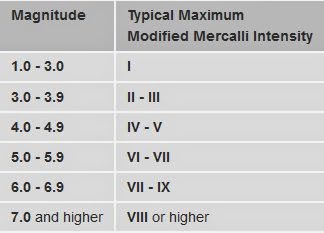
No earthquake in recorded history has caused deaths or injuries in Arizona. In the past century or more, 14 tremors of intensity V to VII have centered within its borders, of which 12 were reported after Arizona entered the Union in February 1912. All of these shocks, however, were moderate in intensity, with one intensity VII, one VI-VII, four VI, and eight V.
News station KPHO reports that Historical data kept by the USGS establishes this earthquake one of the most powerful in Arizona history. In July of 1959 a magnitude 5.6 quake struck along the Arizona-Utah border. A rockslide at Mather Point in the Grand Canyon was attributed to the shock, according to the USGS.
In other quake news,
Magnitude of quake off south Atlantic islands revised to 6.9; tsunami threat ‘does not exist’
A powerful 6.9 magnitude earthquake struck in the far south Atlantic ocean in the inhospitable South Sandwich Islands region, the United States Geological Survey (USGS) said on Sunday. The USGS, which monitors quakes worldwide initially said the quake was of magnitude 7.1, but later revised its strength downwards. It also slightly revised the epicentre’s location. The quake, which struck at 7.52am, had an epicentre 154km north-west of the uninhabited Visokoi Island, and 1,975km east-south-east of Stanley, the main city on the Falkland Islands, the USGS reported. The epicentre was at a depth of 16.5km.
6.2-magnitude quake hits off Japan’s Iwo Jima
TOKYO: A 6.2-magnitude earthquake hit off the Japanese island of Iwo Jima on Sunday, said the US Geological Survey. The quake was situated 167km east-southeast of Iwo Jima, which is part of Japan’s Volcano Islands chain. Japanese broadcaster NHK there was no threat of a tsunami resulting from the earthquake.
Oklahoma continues to be seismically active, as does other parts of the United States where it seems that earthquakes don’t or shouldn’t be happening. This is the USGS 7-day earthquake map view.

Here is a closer-in view. My memory may well be flawed, but I don’t remember seeing so many “dots” sprinkled all over the US. This view is of the last week.

He who removes mountains, and they know it not, when he overturns them in his anger, who shakes the earth out of its place, and its pillars tremble; (Job 9:5-6)
Then the earth reeled and rocked; the foundations also of the mountains trembled and quaked, because he was angry. (Psalm 18:7)
The Beach, The Sea, The Ocean
This is a holiday week where many people take a vacation at the beach. I grew up in “The Ocean State”, the beach was never far. Nor the Bay, or the Cove, or the Inlet. I was always at some beach or other. I grew to detect and love the ocean’s moods, the weather in all its forms. The beach is such a relaxing vacation. The ocean is beautiful, mysterious, dangerous, life-sustaining, and at sunset, the beach displays the Creator’s artistry in the sky for its backdrop.
So God created the great creatures of the sea and every living thing with which the water teems and that moves about in it, according to their kinds, and every winged bird according to its kind. And God saw that it was good. 22God blessed them and said, “Be fruitful and increase in number and fill the water in the seas, and let the birds increase on the earth.” 23And there was evening, and there was morning—the fifth day. (Genesis 1:21-23)

When our days there were ended, we departed and went on our journey, and they all, with wives and children, accompanied us until we were outside the city. And kneeling down on the beach, we prayed. (Acts 21:5)

There the centurion found a ship of Alexandria sailing for Italy and put us on board. Coasting along it with difficulty, we came to a place called Fair Havens, near which was the city of Lasea. (Acts 27:6, 8)

For he takes up the drops from the sea; he sends them through his mist as rain (Job 36:27)

Our mighty God has created all that we see and all that we don’t see. He is our Creator, and as for the sea, what a wondrous gift it is.
Let us love one another
 |
| EPrata photo |
Message to "Pan-Tribbers"

The rapture is the next event on God’s prophecy schedule. It is an event unparalleled in all of history! We saw a picture of the rapture when God took Enoch alive, translated him instantly from earth to heaven. (Genesis 5:24, Hebrews 11:5). The rapture itself will be a joyous reunion of all the saints alive and dead, meeting our Lord in the air, to be with Him forevermore! It is the ultimate moment we all long for, look forward to. The glorious resurrection! The glorious meeting! When God gives a bride to His Son! At long last!
God has planned this prophetic moment, and the ones afterward, since before the foundation of the world. (Ephesians 1:4). The amazing thing, is that He has told us before the time! (Matthew 24:25, Amos 3:7, 1 Corinthians 15:51).
Prophecy matters very much to the Lord. Prophecy is a doctrine, it’s Eschatology (“Last Things“). The longest speech Jesus made was the Olivet Discourse, about last things. Every book of the New Testament except Philemon has last things in it! Last things matter to the Lord.
As for the rapture specifically, it is our hope and joy. It is the sweetest promise. It is the doctrine with which we encourage each other! (1 Thessalonians 4:18).
that the righteous will rise first in the morning of the resurrection, and before the living saints are changed, and are with Christ; that they will both be taken up together to meet him; and that they shall all be with him, and that for ever, and never part more; than which nothing can yield more true and solid comfort” (Gill’s Exposition)
Even more glorious, Jesus said we are not appointed to wrath and He will keep us from the our of trial that is to come upon the whole world! (Revelation 3:10).
Ans yet we have so many people mocking and scoffing at last things. (2 Peter 3:3; Jude 1:8). “Where is the promise of his coming?” they will mock. “How come He is taking so long?” they will scoff.

Satan has even put it to some people that there is no rapture at all. They claim it is a made-up event from the ravings of a demonically influenced Scottish girl named Margaret MacDonald and picked up by John Darby in the 1830s. Nonsense. But several times a week I receive emails apprising me of this “fact” and they deny the doctrine completely.
Others are influenced by satan’s notion that there will be a partial rapture. That God has selected some to go and some less faithful to stay so as to be polished by the Tribulation and be ready to meet Him later.
Worse, many Christians have fallen for the notion of a ‘post tribulation’ rapture. These people believe in the rapture, just not that it will occur before the Tribulation. The confuse the trumpets and twist some scriptures and throw in some personal martyr complexes for good measure. They believe that Jesus will hurl wrath at His bride and then bring us home.
But if the rapture will be post-Tribulation, Paul never needed to write the Thessalonians a second time to reassure them they had not missed the rapture because what seemed like the Tribulation had begun. 2 Thessalonians 2 would have been a different letter. Paul would have said, ‘yes it’s started, but hold on, you can make it with the help of the Spirit.’ But he didn’t.
But there is an even worse tribulation position than the denial, the partial, the post. It is the “Pan-Tribulation” position.
It is the position for some reason that irks me the most. You hear it sometimes from Christians, who, when discussing the rapture and last things, and the rapture’s timing, they say, “I’m a pan-tribulationist. Everything will work out in the end. HAR HAR HAR.” They think this is funny. They think this is clever. They even think this is pious.
It isn’t.
What they are in effect saying is, one-third of the bible doesn’t matter to them. Studying these things so as to encourage each other doesn’t matter to them. In casually dismissing these important doctrines, they are agreeing with satan to steal hope. They are being used by him to confuse the sheep. They are destroying an important witnessing tool for Christians. They are dampening urgency.
The Doctrine of Last Things and the Rapture Doctrine itself is not seen as an essential doctrine for salvation. It is seen as a “nonessential” for belief. But that doesn’t mean it’s not essential to know. It doesn’t mean it’s not essential to study. The rapture IS a very important doctrine.
The Rapture of church-age believers is a source of great encouragement and motivation to godly Christian service (1 Cor. 15:58). The Rapture is a very important doctrine. It helps to motivate the Lord’s people to stay awake spiritually and it helps to motivate the churches to stay busy in the work of preaching the gospel to lost souls before it is too late. (source)
Being a “pan tribber” was alien to Paul’s mindset. He had a very short time in Thessalonika and the first things he taught were the last things.
The Rapture Is an Important Doctrine
First, the rapture is an important doctrine. Many give the impression that the rapture is some kind of secondary doctrine that need not be given too much attention. We are often told that we should focus on the “big ticket” theological items such as the Virgin Birth, the Vicarious Atonement, the Trinity, Salvation by Faith Alone, and the Deity of Christ. Only after these doctrines are mastered should we then consider or contemplate the doctrine of the rapture. Along these same lines, many contend that the rapture is certainly not something that a new believer should give too much time or attention to. …Such thinking was foreign to the mindset of the Apostle Paul. Interestingly, the Thessalonians were new believers (1 Thess. 1:9). … The point in all of this is that although the Thessalonians were new believers, Paul never hid the doctrine of the rapture from them. On the contrary, he openly disclosed this teaching to them along with many other doctrines.
In his letter to the Thessalonians, before more fully developing the doctrine of the rapture in 1 Thessalonians 4:13-18, Paul briefly mentioned this doctrine in 1 Thessalonians 1:10. Paul obviously believed that the rapture is a foundational doctrine because he mentioned it immediately after discussing other basic doctrines such as the Holy Spirit (1:5) and conversion (1:5, 9). He also mentions the rapture doctrine (4:13-18) just after and before discussing other basic Christian truths such as sanctification (4:3, 5:23) and the dimensions of man’s nature (5:23). Evidently, in Paul’s thinking, the rapture was just as important as these other truths and deserved the same level of treatment and understanding.
With so much of last things occupying up to a third of the bible, with each book of the NT except Philemon teaching us last things, with Jesus spending the most time of all telling the answer to the question what are the signs of the end, and with Paul delivering the rapture doctrine early and firmly to the new believers, WHO IS SOMEONE TO SAY “I’m a pan-tribber. It’ll all work out in the end” !
Shame, O, for shame!
when you ask them about the last things and how the story ends, they don’t have a clue. They say, “Well I don’t know if I’m a-mill, post-mill, pre-mill, pan-mill, whatever mill. I don’t…but I don’t think it’s really important.” That’s like saying, you know, that a book is written, the most important book that’s ever been written in the history of the world, the only book that truly reflects God’s purpose for humanity and you don’t care how it ends? Of course you care how it ends. (source)

~~~~~~~~~~~~~~~~~~~
Further reading:
Why Some Reject the Pre-Tribulation rapture
Sermon series: The Rapture and the Day of the Lord
HBO’s new rapture television series "The Leftovers"
The Leftovers is an upcoming American television drama fantasy series created by Damon Lindelof and Tom Perrotta set to air on HBO. It is based on Perrotta’s novel of the same name. The pilot was written by Lindelof and Perrotta, and directed by Peter Berg. The series stars Justin Theroux, Amy Brenneman, Christopher Eccleston, Liv Tyler, and Ann Dowd. It is scheduled to premiere on HBO on June 29, 2014.
Premise: The Leftovers takes place in the wake of a global “Rapture” and centers on the people who were not taken but were left behind in a suburban community.
An early review:
Clueless and Gloomy in Suburbia
‘The Leftovers,’ on HBO, a Tale of Mysterious Disappearances
If that was the Christian rapture, then some of the worst people were chosen for eternal salvation. On “The Leftovers,” a spooky new series starting on Sunday on HBO, about one person in 50 vanished on Oct. 14, without any discernible pattern: babies, lawyers, drunks, thieves, surgeons, murderers, grandmothers, bartenders, celebrities and even the pope are gone. Three years after 2 percent of the world’s population suddenly disappeared, lots of people believe it was an act of God, but nobody has any answers, especially not special commissions reporting to Congress. Some churches close, and new cults form
The question is, how soon will life imitate art? (except for the part about the pope, he’s not going anywhere)
Dystopia: a society characterized by human misery, as squalor, oppression, disease, and overcrowding. Compare utopia.
Below is an excerpt from an interview with the writer of the new series. It is so interesting to see how the unsaved view us.
That novel had several evangelical characters, and while researching that unfamiliar world, he was constantly struck at how often the Rapture came up as a literal part of people’s faith. But Mr. Perrotta, whose earlier books include “Election” and “Little Children,” had no interest in engaging in easy satire of the Rapture and its adherents. He wanted to deal with those beliefs seriously. “One of the things that happened was, I started to think of the Rapture as an amazing metaphor for loss, and particularly sudden loss,” he said. But Mr. Perrotta’s Rapture came with a twist: What if it was random? What if it took a wrecking ball to one’s entire belief system?
Yes, sudden … in the twinkling of an eye. Literally.
And it will seem random. Just ask Lazarus and the Rich Man.
In the tv show about 140 million alive people go in the rapture, or about 2% of the world population. I’d say this is a reasonable estimate of how many will go. Of course, the dead shall rise, too.
This is another article about the show, Tom Perrotta explores mass grief in The Leftovers
What if millions of people around the world vanished — suddenly, for no apparent reason — in an event like the rapture foretold in Christian prophecy? That’s the premise of a new HBO series based on Tom Perrotta’s much-admired novel, The Leftovers.
That IS one aspect of the upcoming rapture, grief. There will be mass grief all over the world. However, the Holy Spirit’s restraining ministry will cease at the rapture, so as to allow sin to have its day. After a short while the world’s population won’t care that loved ones have disappeared. Either they will be too busy sinning so greatly, or they will be too busy trying to survive, or the ones who come to Christ will rejoice in knowing they will see their loved ones soon anyway.

One article I read about the show made the comment that there are many dystopian televisions shows on tv now. Dystopian is the opposite of utopian, where everything is perfect. Dystopian is a world where nothing is perfect, it is dark, gloomy, hopeless. In Isaiah 24, the passage titled “Judgment on the whole earth” we read;
In the streets they cry out for wine; all joy turns to gloom, all joyful sounds are banished from the earth. (Isaiah 24:11 NIV)
There is a simple reason for the flood of dystopian movies, television shows, books, and themed magazines. There is a reason for the hoarding/prepping, apocalypse cults, and doomsday pod sales. It has to do with hope.
This planet is carrying the biggest load of sin since the Flood, and the largest amount of sinful people. Apostasy is rampant, Jesus-rejection is a plague, and hatred of all things holy is reaching a time of nearly no equal. Anyone who does not have Christ has no hope. That’s a lot of hopeless people on the planet, promoting their hopeless worldview.
For you, O Lord, are my hope, my trust, O Lord, from my youth. (Psalm 71:5)
Surely there is a future, and your hope will not be cut off. (Proverbs 23:18)
The thief comes only to steal and kill and destroy. I came that they may have life and have it abundantly. (John 10:10)
Those with hope in Jesus have life and they have it abundantly. Those without Christ have no hope and do not have life abundantly. They live under the Thief (who is satan) who kills and destroys. No wonder the unsaved’s worldview is so dark and dystopian. Further, because Hollywood is run by people with this hopeless worldview, it is no wonder that what flows from it are the pictures in the mind and the desires of their heart: dark, hopeless, joyless.
In this article from A.V. Club, see how cleverly satan has acknowledged the rapture, but has changed its presentation to a hopeless mystery and an “unknowable” riddle. To make us wonder if God really will take all the Christians, and casting doubt just as he did in the Garden (“Hath God said…?” Genesis 3:1). Yet we know in the bible that the mystery has been revealed! 1 Corinthians 15:51 declares it.
The Leftovers is bleak, brutal, brilliant television
Based on the novel by Tom Perrotta (who shares a co-creator credit with Lindelof and co-writes a couple of episodes), The Leftovers is some of the most desolate, despairing television on air. It’s also frequently brilliant, using the central hook of Perrotta’s book not as a pivot into genre fiction but as a pivot into something like a modern version of medieval mystery plays. But instead of God at the center of the story, there’s uncertainty, a Schrödinger’s cat the characters would desperately like to observe, if only they could force the box to open and provide them with answers.
In the series, as in Perrotta’s novel, an unexplained event causes 2 percent of the world’s population to disappear one crisp October day. It’s an event very like the Christian rapture, except there’s no rhyme or reason to those taken. It’s just as likely for sinners and innocents to be caught up. The series opens with a riveting depiction of that day, in which director Peter Berg, in one fluid camera movement, suggests the panic of a mother suddenly realizing her baby is no longer there, before leaping three years into the future, when both science and religion have essentially given up on trying to explain what happened, and others are hoping to move on with their lives.
And isn’t it clever of satan to ignore the reason for the rapture- God’s wrath. God will punish in wrath during the time after the rapture, yet no mention is ever made of this in the program. Satan introduces doctrines of devils while conveniently offering only half the story. (“You surely wont die!” Genesis 3:4).
Praise Jesus that He is so full of Light and Joy! We have eternal, ever-flowing hope! His mystery has been revealed! He is coming for all the Christians leaving none behind. He is our Father, or Shepherd, our hope.
I will not be watching The Leftovers. Even if I had a TV. Or cable. Why join with those who are in darkness to present such an unbliblical view of the great Hope we have within us? Why participate in one lost man’s academic – but not spiritual – exploration of the rapture? “For what partnership has righteousness with lawlessness? Or what fellowship has light with darkness?” (2 Corinthians 6:14)
 |
| Serenidad: free wallpaper |
We have the blessed Word delivered to us the saints, once for all (Jude 1:3). We have the authoritative visions from the prophets and from Jesus describing the hope to come, the heavenly city and all its perfections. We have the Kingdom within us to sustain us as a deposit of the guarantee. Cling to His word, rejoice in what is described in the bible regarding our future home. Utopia is man’s version of perfection, but the perfections seen in His word are so much more than than- they are God’s promises.
How to respond to a "God told me" comment
 |
| source |
In Christianity today, we have a major epidemic of use of the phrase “God told me”.
In some cases, God told me is shorthand for a process the Christian has undergone wherein they have read the bible to determine God’s will, have prayed, have submitted to Him and to church leadership, have counted the cost, and then have made a decision. Sometimes we’re guilty of saying “God told me…
–to join this ministry
–to become a missionary
–to leave this church
–to adopt a child
as shorthand for all the above. It is a poor use of the phrase however, and we shouldn’t say it. More on that in a minute.
More often it means that the Christian hasn’t heard from God but wants to elevate his decision into something inviolable, wherein the Christian’s decision can’t be held to account. After all, it was from God.
Other times, the Christian has received a supposed revelation and encapsulates that revelation by saying “God told me.” Many times they have received a dream, or a ‘nudge’ or have heard that ‘still, small voice’ and are basing their decision on this personal revelation from God on those things instead of the word and then trusting to providence.
 |
| EPrata photo |
The ‘still, small voice’ is permeating Christianity, with the result that now most conversations among Christians are peppered with “God told me” as a result. This is partly thanks to Henry Blackaby, who opened the door to personal revelation in his “Experiencing God” workbook and series of lessons published in the 1990s. Baptists especially who had not been prone to mysticism prior to this, fell hard for the method the Baptist Blackaby was promoting. One reviewer of Experiencing God said here,
“many readers will nevertheless find great encouragement in hearing a still, small voice among a vast number of everyday experiences.”
Blackaby taught: God Often Speaks in a “Still, Small Voice” (I Kings 19:11–13). Sometimes God will speak through “the wind or an earthquake or a fire,” but most often He speaks in a still, small voice. Be attentive!“
‘Most often’? Where is that in the bible? Blackaby went on to sadly teach:
If you are not hearing God’s voice, examine your heart.
It is crushing to be told by an elder that we should be hearing from God, and if we aren’t we may be the problem!
Of the Mystical, Princeton theologian of yore BB Warfield said
There is nothing more important in the age in which we live than to bear constantly in mind that all the Christianity of Christianity rests precisely on “external authority.”
Relying on small voices, impressions, and God told me revelation diminishes the sufficiency of the bible by virtue of the fact that someone is adding to God’s revelation. The bible isn’t enough for them. In His book Things that Go Bump in the Church, Mike Abendroth along with co-authors Byron Yawn and Clint Archer explained in their theological decoder, that when you hear people say “God told me, it really means,
I really think I should do ______ but I’m forgetting that the canon of scripture is closed and there is no need for further revelation. I want confirmation for my precarious decision, and I’m mistaking intuition for God’s voice. I’m forgetting to follow Proverbs 3:5-6.
So we know that the still small voice is a twisted use of scripture ripped from its context, and the God Told Me phrase could either be shorthand meaning a biblical process a person has gone through or a short cut from reading the bible and a cover for their poor decision making. So here is the question I was asked:
How do we respond when someone says “God told me…”
 It was a great question. Let’s get practical. I thought of a few responses, gleaned from the very good articles, sermon, and audio lessons linked below. Some of the responses below are mine, and some are a mixture from the articles below which are excerpted and reworked. They are not inclusive, or may not even be appropriate for you or your situation. But they may provide a start in your own thinking. Please search the scriptures for relevant verses which speak to this issue.
I recently wrote a serious piece about the Third Commandment, taking the Lord’s name in vain. One way to take it in vain is to trivialize it, to be swift or short. We have to be careful never to ascribe to Him thoughts He doesn’t have or things He never said. “God told me” very often does just that though, trivializes His name by ascribing things to Him He never said. It is a serious thing to say “God told me”!
I find that asking questions initially is the best way to begin. Be sincere in asking questions. Perhaps the person truly is using the phrase out of habit because everyone else does, or simply hadn’t thought about its use in light of the Third Commandment before.
- I thought that the biblical canon is closed, that God has already told us everything we need for life and godliness.
- I’d be too wary of the risk of introducing error to our lives and to the church to depend on a whisper voice.
- I don’t believe God needs to give us special revelation to reaffirm what he has already told us to do in his word.
- Did an angel deliver the news to you, like in the bible?
Here are a few more:
- How did you test it to see if it is really of God?
- How can I test to see if it really from God? (special implications for married couples, business partners, or others in different kinds of partnership or ministry)
- How do you know it’s not your intuition?
- The only time I’m ever 100% sure God is speaking to me is when I am reading the Bible.
- I can’t trust my heart or mind to speak to me because of Jeremiah 17:9 which says, “The heart is deceitful above all things and beyond cure. Who can understand it?”
- I’m too mindful of the scripture in 2 Corinthians 11:14 which says “And no wonder, for even Satan disguises himself as an angel of light” to trust whether inner impressions are from God. I just make my decision if it is within the biblically revealed will of God and trust Him top providentially work all things to the good for those who love Him (Rom 8:28)
- What scripture were you reading, I’ll look it up (I wasn’t reading scripture). Then how do you know it’s not your own idea?
This next batch are reworked from the Cornestone link below, a piece taking Mark Driscoll of Mars Hill Church to task some years ago by declaring God speaks to him. These are a little edgier.
- I’d be too scared to say ‘God told me’ because of the seriousness of the 3rd commandment, not taking God’s name casually, just in case He didn’t say what I thought He said. I usually just say “I have decided to…please pray for me”.
- Do you think that that believers have access to “personal revelation” from God that equals/trumps the revelation of scripture?
- Do you think that your subjective, personal experience of a word from God is in authority over the objective truth of scripture?
- Do you think that your revelation minimizes the role of scripture in personal experience and the need for the faithful interpretation of scripture?
Those are some ideas…please let me know how you react when someone in conversation says to you “God told me”, or if you have said “God told me” and were reacted to.
~~~~~~~~~~~~~~~~~~~~~~~~
Further reading
Does God give us personal direction through a still small voice? 2-min audio lesson
The Still, Small Voice (sermon by Phil Johnson)
God told me…really?
Rapture: "Where did all the people go?" What will the world say in explanation?
Many readers of this blog have asked in email or Facebook messages, what I think the government or the ‘powers that be’ will say to a fearful and wondering population after the rapture. With millions of people having suddenly evaporated, the disappearances will have to be explained somehow. I’m often asked to speculate on what the response will be. I know many of you wonder, too.
This is because once the Light has broken into our stony hearts and conformed us to the image of Christ, it is soooo hard to see life any differently. The presence of the Holy Spirit in us makes everything suddenly so clear about our sin, our condemnation, and our destination before we knew Him. We wonder how it is that so many will STILL refuse to believe, despite the world’s most massive sign, ever.
And this is the judgment: the light has come into the world, and people loved the darkness rather than the light because their works were evil. (John 3:19)
So we know many will still reject. We wonder what kind of explanation will be offered that could satisfy a lost and unbelieving world.
The rapture will be an event unprecedented in human history. The Flood was a global catastrophe, but there were only 8 people alive to witness it and the aftermath. The rapture will be the opposite. A few will be taken and the multitude will be left behind to witness the aftermath. Christians who are alive and Christians who are dead will be taken instantly, in the twinkling of an eye, to meet the Lord Jesus in the air (1 Corinthians 15:52). Of course, we have no way of knowing for sure what will be said in the aftermath. The Church will be gone.
We understand one of the false explanations that may be given is that it is new technology being tested. It may also be proposed that the government explains that the disappearances are due to space beings of a higher order (i.e aliens) taking all the bad people (i.e Christians).

I watched a rapture movie last night on Youtube. It was produced in 1981, and like many in the genre, is low budget with cheesy special effects. It is called “Years of the Beast.” Never mind that it is hosted on Youtube by someone calling herself “Apostle” Mary Thomas, it is the theater version of the 33 year old movie, credits and all. Internet Movie Database has the scoop on it, including some viewer reviews.
The synopsis reads: College professor Stephen Miles (Gary Bayer), his wife, a young girl, and a drifter (Jerry Houser) are suddenly faced with a society where money is worthless, food is scarce, your neighbor is your enemy and oppression reigns. The four must survive a world of earthquakes, natural disasters, looters, corrupt officials and the Anti-Christ in power.
In the movie, after the rapture we saw the people left behind watching the news, and the newscasters tried to explain the disappearances in exactly the above ways. They said it was new technology, or aliens. Another explanation was no explanation, “We just don’t know what we are dealing with yet, that is why the entire planet must come together as a family…” an explanation which of course paved the way for the antichrist.
However two of the main characters are discussing the event in their truck as they drove along. They were hashing over the above given explanations. One said to the other, ‘what do you think?’ And the actor playing the drifter (Jerry Houser) said,
“Someone told me it is a hoax. That the radical Christians dug up their friends
and went into hiding.”
Now THAT is a biblical explanation! It is the first proposed explanation I’ve heard that might be the actual reason given for the rapture. Read Matthew 28:13-18. It is the report of the Guard to the chief priests. Jesus had resurrected and of course His body was no longer in the tomb.
While they were going, behold, some of the guard went into the city and told the chief priests all that had taken place. And when they had assembled with the elders and taken counsel, they gave a sufficient sum of money to the soldiers and said, “Tell people, ‘His disciples came by night and stole him away while we were asleep.’ 14And if this comes to the governor’s ears, we will satisfy him and keep you out of trouble.” So they took the money and did as they were directed. And this story has been spread among the Jews to this day.
In the Movie Years of the Beast, the adult daughter and son in law drove from Seattle to her father’s farm to find out why her dad was not answering the phone. They couldn’t find him. They waited some days and then they came across his clothes in the chair, his watch and wedding ring next to them. They realized what had happened, and they ran out to the family cemetery plot behind the house. They were running to check if her mother’s grave had opened. It had.

Human depravity is a powerful thing. The priests and Pharisees and scribes and Sadducees were standing in front of Messiah, recipients of His teaching, miracles, love, discipling, and yet they rejected. The power of the human mind to remain embedded in darkness even when a powerful sign is right in front of us is something most people can’t fathom, whether they are saved or unsaved.
Therefore, yes, people will believe whatever explanation is offered as to where the Christians went. Personally, I don’t believe there will be so very many alive that will go. The world will be in chaos, yes, but the world will easily paper over the disappearances and get on with business, the business of rejecting Christ all the way to the grave.
So let us turn from this speculation, as interesting as it is, and ask the eternal question: are YOU ready? Christ’s return in the air to gather His elect could happen at any moment. It could happen now, or tomorrow or next week. Never put off what you can do tomorrow what you must do today.
For he says, “In a favorable time I listened to you, and in a day of salvation I have helped you.” Behold, now is the favorable time; behold, now is the day of salvation. (2 Corinthians 6:2)
Now there was a man of the Pharisees named Nicodemus, a ruler of the Jews. This man came to Jesus by night and said to him, “Rabbi, we know that you are a teacher come from God, for no one can do these signs that you do unless God is with him.” Jesus answered him, “Truly, truly, I say to you, unless one is born again he cannot see the kingdom of God.” Nicodemus said to him, “How can a man be born when he is old? Can he enter a second time into his mother’s womb and be born?” Jesus answered, “Truly, truly, I say to you, unless one is born of water and the Spirit, he cannot enter the kingdom of God. That which is born of the flesh is flesh, and that which is born of the Spirit is spirit. Do not marvel that I said to you, ‘You must be born again.’ The wind blows where it wishes, and you hear its sound, but you do not know where it comes from or where it goes. So it is with everyone who is born of the Spirit.”
Nicodemus said to him, “How can these things be?” Jesus answered him, “Are you the teacher of Israel and yet you do not understand these things? Truly, truly, I say to you, we speak of what we know, and bear witness to what we have seen, but you do not receive our testimony. If I have told you earthly things and you do not believe, how can you believe if I tell you heavenly things? No one has ascended into heaven except he who descended from heaven, the Son of Man. And as Moses lifted up the serpent in the wilderness, so must the Son of Man be lifted up, that whoever believes in him may have eternal life.
“For God so loved the world, that he gave his only Son, that whoever believes in him should not perish but have eternal life. For God did not send his Son into the world to condemn the world, but in order that the world might be saved through him. Whoever believes in him is not condemned, but whoever does not believe is condemned already, because he has not believed in the name of the only Son of God. (John 3:1-18)


