Posted in economy, mark of the beast, one world economy, prophecy, revelation

Thoughts on Economic Collapse and Tribulation economy

Someone asked me about the economy in the Tribulation, and wondered if the global and American economy will collapse prior to the Tribulation or not.

It’s speculation, because the Bible doesn’t specifically say how we will get from here to there, only what will be. I do like to be aware of what the bible says about the seemingly near event on the prophetic timeline, the 7 years of Tribulation. (The rapture is the very next event. I also enjoy thinking about the Millennium which will occur after the Tribulation such as the peaceable kingdom, and the temple and the King’s Highway, and New Jerusalem, etc).

As for the economy, it’s an interesting question because the Bible prophesies that during the Tribulation, the antichrist’s right hand man, the False Prophet, will enforce a mark on people. The mark is one of worship. No one will be fooled, they will know it is a mark of allegiance to and worship of the Beast. (Revelation 14:9). The enticement to take the mark is that one may then participate in the economy, buying and selling. If one refuses the mark, they may not buy or sell. (Revelation 13:16-17). Further, they will be identified as an enemy of the state and be killed (Revelation 6:9-11, Matthew 24:9).

It’s an interesting question, isn’t it, about financial collapse. The collapse of ’07-’08 was incredible, and the subsequent years even more so. I had read a Christian economist who said recently that with the derivatives bubble, college loan bubble, fiat currency and massive outstanding debt, it is OBVIOUS that America, and most nations in fact, are being held up by the supernatural power of God. Nothing in traditional economics makes sense enough to explain how we are going on as we are for so long.

As for the Tribulation economy, that’s interesting too. There IS an economy during the Tribulation. The global economy does not collapse until Revelation 18. Or, at least, it might have partially collapsed prior to then and been rebuilt according to Antichrist specs, with a one world economy and mark of the beast currency. Yes, Revelation 6:6 shows that currency is so inflated that it costs a day’s wage to buy one loaf of bread. But Rev 18 shows a highly advanced trade in luxuries. I believe this shows that the wealth gap will widen so much that many poor starve to death and the love of the rich grows cold in not caring. If Jesus emphasized compassion on the poor and generosity toward same in both the OT and the NT to the degree He did, the antichrist will emphasize the opposite. So there will be an economy, it just won’t look like it does now.

As a brief rabbit trail, you might already know that the sex trafficking and slave trade is growing all across the world. Poverty adds to this sad fact. Many daughters are being sold because people are so poor they cannot afford to feed kids. In Greece a few years ago when their economy nearly failed (before the EU bailout) the problem of abandoned kids was huge. You note in Rev 18:13 one of the luxuries being traded will be slaves. I believe that when the poor become utterly destitute in the Tribulation economy, slavery will blossom massively and that will be the reason why. No food, and in order to get money, they will sell anyone, even their mother. After all, love will wax cold. (Mt 24:12)

I read a prophecy minister’s essay once who thinks that it will be the event of the rapture itself that will trigger the collapse. The sudden removal of thousands or millions of Christians from the economy will certainly put a dent in it. However I’m not so sure the rapture will collapse it completely. Jesus said the way was narrow and few find it. I think there are way fewer Christians who will be taken in the rapture than people think. I think the loss of workers will dent the economy, maybe enough to re-structure it, but not collapse totally. After all, the antichrist only has 7 years, 3.5 actually, to make the Mark of the Beast economy prophesied in Revelation 13:16-17 come about and healthy enough to see such massive collapse as we do in Rev 18. He has to have something to work with to begin with in order to revive the economy.

And think on this, right now gargantuan amounts of money go toward social programs to help the sick, the poor, the disadvantaged. When the Christians are removed, and the Spirit withdraws His restraining ministry, (2 Thessalonians 2:7) then compassion, generosity, and love will cease (2 Timothy 3:1-5). All that money being poured into cancer research and orphanages and welfare and social justice programs will be re-diverted. There will be no compassion, (Matthew 24:12) therefore no money needed to help anyone at any time through any compassion program. It will be the end of philanthropy, effectively freeing up trillions of dollars.

It has been interesting (but sad) to see the drought bloom in CA, and all the while we in GA received 5-6 inches of rain this week alone. Drought has a slow-moving but ultimately devastating impact to economies. CA’s economy is the largest in the US, much of it from agriculture. Personally I think it will be drought that does us in here in America.

You remember the American Dustbowl here in the US during the Great Depression of the 1930s. It sparked one of the most massive internal migrations we have ever experienced in the US

Historians have since clarified some of the dimensions of the misnamed migration. Numbers are elusive but it is safe to say that 300-400,000 Oklahomans, Texans, Arkansans, and Missourians moved to California and settled there during the 1930s. This would have been a significant population transfer in any era but was particularly momentous in the context of the depression when internal migration rates for other parts of the country were low and when high unemployment made any kind of relocation risky. (Source)

Look at this interesting article about drought’s economic impact.

Drought produces a complex web of impacts that spans many sectors of the economy and reaches well beyond the area experiencing physical drought. This complexity exists because water is integral to society’s ability to produce goods and provide services. Impacts are commonly referred to as direct and indirect. Direct impacts include reduced crop, rangeland, and forest productivity, increased fire hazard, reduced water levels, increased livestock and wildlife mortality rates, and damage to wildlife and fish habitat. The consequences of these direct impacts illustrate indirect impacts. For example, a reduction in crop, rangeland, and forest productivity may result in reduced income for farmers and agribusiness, increased prices for food and timber, unemployment, reduced tax revenues because of reduced expenditures, foreclosures on bank loans to farmers and businesses, migration, and disaster relief programs.

In short, the entire economic situation is a myriad of intertwined causes and effects. They go back a long time and they are set in motion through the sovereignty of the Lord. It brings praise for the Lord to mind when I realize how precise He is to have developed all these events together to draw us ever closer to the Tribulation hour. He raises up kings and sets them down. He raises up nations and strikes them down. He thrives economies and He impoverishes them. He will perform what He has decreed.

Come now, you rich, weep and howl for the miseries that are coming upon you. Your riches have rotted and your garments are moth-eaten. Your gold and silver have corroded, and their corrosion will be evidence against you and will eat your flesh like fire. You have laid up treasure in the last days. Behold, the wages of the laborers who mowed your fields, which you kept back by fraud, are crying out against you, and the cries of the harvesters have reached the ears of the Lord of hosts. You have lived on the earth in luxury and in self-indulgence. You have fattened your hearts in a day of slaughter.  (James 5:1-5)

The only economy is the one in Jesus: repentance, faith, belief, and being doers of the word. This economy will always thrive, never become impoverished, and sustain itself at the magnificent Hand of God.

Posted in bible, flea, fly, insects, locust

Locusts and bees and flies, oh my! Insects in the Bible

It’s spring, and that means birds are back, yay! It unfortunately also means bug season.

I walked around the yard and over to the pasture and I pass wasps busily building nests, carpenter bees buzzing, bumble bees in the wildflowers, fleas trying to get on my cats, flies, and moths circling the spotlight.

When I came back inside, I settled down to Facebook to see what was what and who was who. People like to post photos with quotes on them. Often, far too often, the quote is from someone who is a false teacher or at least, on the path and is currently not highly trustworthy. I’ve often wondered how far to go in adding my 2¢.

Today I made three comments regarding the Truth, which were not totally affirming of the posted quote but offered an alternate view. I thought of the term “gadfly.” According to Wikipedia,

A gadfly is a person who upsets the status quo by posing upsetting or novel questions.

The term “gadfly” was used by Plato in the Apology to describe Socrates’s relationship of uncomfortable goad to the Athenian political scene, which he compared to a slow and dimwitted horse.During his defense when on trial for his life, Socrates, according to Plato’s writings, pointed out that dissent, like the gadfly, was easy to swat, but the cost to society of silencing individuals who were irritating could be very high. “If you kill a man like me, you will injure yourselves more than you will injure me,” because his role was that of a gadfly, “to sting people and whip them into a fury, all in the service of truth.”

I don’t see my role as that, to purposely whip people into a fury, but often in employing the gift of discernment the results evidenced are emotions that range from irritation to fury. Sometimes people are stung when you offer that their favorite teacher is really a false teacher, or their pet doctrine is unbiblical, or their method isn’t aligned with what the bible says. Some examples of gadfly questions or statements might be:

  • Are you sure you want to continue doing altar calls?
  • Did you know that Billy Graham preached a different Gospel?
  • Is Beth Moore the best curriculum we can find or are there others that would be more biblical?
  • I don’t think free will means what you think it means
  • Is it possible that LifeWay has become untrustworthy and sells things with heretical doctrine in them?

The thought about gadflies brought me to a biblical reference about gadflies in Jeremiah 46:20.

Egypt is a beautiful heifer, but a gadfly is coming against her from the north.” (NIV)

Yes, the gadfly cometh. LOL. I got to thinking about animals in the Bible in general. We think of leviathan, or the great fish that swallowed Jonah, or the bears that tore up the mocking boys, or the lions that David fought, but what of lowly insects?

Locust

The bible mentions them frequently. Some of the plagues God put on Pharaoh and his people were insects. The Plague of Gnats, the Plague of Flies (Exodus 8), the Plague of Locusts (Exodus 10).

John the Baptist ate wild honey and locusts in the desert. (Matthew 3:4). God even likened Himself to a moth once. (Hosea 5:12). But what of other insects in the Bible?

INSECTS: we find at least 23 names of insects or words referring to them: ant, bald locust, bee, beetle, cankerworm, caterpillar, creeping thing, cricket, crimson, flea, fly, gnat, grasshopper, honey, hornet, locust, louse, (lice), moth, palmer-worm, sandfly, scarlet-worm, silk-worm.

These can be referred to about 12 insects, which, arranged systematically, are:
Hymenoptera, ant, bee, hornet;
Siphonaplera, flea;
Diplera, fly;
Rhynchota, louse, scarlet-worm;
Orthoptera, several kinds of grasshoppers and locusts.

The word “worm” refers not only to the scarlet-worm, but to various larvae of Lepidoptera, Coleoptera, and Diptera. “Creeping things” refers indefinitely to insects, reptiles, and beasts. In the list of 23 names given above honey and bee refer to one insect, as do crimson and scarlet. Sandfly has no place if “lice” be retained in Ex 8:16 ff. Bald locust, beetle, canker-worm, cricket, and palmer-worm probably all denote various kinds of grasshoppers and locusts.

The Eng. language seems to lack appropriate names for different kinds of grasshoppers and locusts, and it is difficult to suggest any names to take the places of those against which these criticisms are directed. See under the names of the respective insects.

See also SCORPION and SPIDER, which are not included here because they are not strictly insects.

Source: Day, A. E. (1915). Insects. In J. Orr, J. L. Nuelsen, E. Y. Mullins, & M. O. Evans (Eds.), The International Standard Bible Encyclopaedia (Vol. 1–5, p. 1473). Chicago: The Howard-Severance Company.

In 1915, swarms of locusts devastated Palestine. An American Colony photographer took this picture of a fig tree that the locusts had stripped bare. The picture starkly illustrates the kind of damage these insects would have inflicted during the locust plague in Egypt and in the other instances that the Bible mentions of locust swarms. ‎Exod 10:4–19, Deut 28:38, Joel 1:4, Joel 2:25, Amos 7:1, Rev 9:3–7
‎Image by Matson Photo Service, from Library of Congress. License: Public Domain

The Bitterness of Pharaoh

God used insects as the dividing line to show Pharaoh Who is in charge of creation.

‎After the third and fourth plagues there could no longer be any doubt as to the power of Moses, and very little doubt as to his divine authority. When the plague of lice came, Pharaoh’s magicians tried to imitate it and failed, and they confessed to him that they believed that Moses had the power of a god. In the plague of flies, Moses for the first time drew a dividing line: the flies did not come into the houses of the Israelites; they pestered only the Egyptians.

‎Strangely indeed must Pharaoh have felt his position. He, the absolute monarch who had always had his way in everything and been all powerful, who was called a god by his people, he was now told by his own learned men that there was another more powerful than he, that there was a real God acting against him, and that he must yield. The Bible and its Story, Volume 2: The Law, Leviticus to Deuteronomy, Horne, Charles, Bewer, Julius

In Isaiah 7:18 we read,

In that day the LORD will whistle for the fly that is at the end of the streams of Egypt, and for the bee that is in the land of Assyria.

Flies were a serious problem.

As the plague is represented as filling the houses of the Egyptians, it is likely that the house-flies (Muscidae) are intended. In the warm climate of Egypt these insects are an annoyance that can hardly be overstated. The manner in which they assemble in dense clouds at such a sun-trap as Akaba, for instance, is almost inconceivable, and the irritation they produce is heightened by the knowledge that they are capable of carrying an infectious sort of ophthalmia, which is a prevalent disorder amongst the Bedouins, from person to person. Owing to the softness of the skin in the warm climate, the house-fly of Egypt is soon able to effect a penetration in tender parts, such as the corner of the eyes, and the vulnerable point speedily becomes a throbbing mass of these abominable insects, who are thus enabled to suck the blood and produce festering sores.

The other term translated by the word fly is zebub. It occurs in Eccles. 10:1, ‘Dead flies cause the ointment of the apothecary to send forth a stinking savour;’ and here the term is probably generically used for the swarms of flies, which speedily cause corruption and pollution in anything capable of being attacked by them in the East. The ointments spoken of are perfumed unguents and cosmetics, so largely used in these countries.

The second passage where zebub occurs is in Isa. 7:18, ‘the Lord shall hiss for the fly that is in the uttermost part of the rivers of Egypt, and for the bee that is in the land of Assyria.’ [See under BEE.] This word zebub has been identified with the modern Arabic ḍebab, which is a name given to a species of gad-fly. A species of Tabanus, or ‘breeze fly,’ is stated to be common in the valleys of the Jordan and the Nile, and is very injurious to animals. To this genus our ‘horse-flies’ or ‘clegs’ belong, which are armed with an arrangement of lancets enabling them to make a clean incision for the purpose of blood-sucking.

Hart, H. C. (1888). The Animals Mentioned in the Bible (pp. 100–101). London: The Religious Tract Society.

God is amazing as Creator. Everything He created was very good. (Genesis 1:31). Insects didn’t bite, suck blood, cause disease, or pollute the food and ointments (Ecc 10:1). Yet sin entered the world and the ground was cursed and creation was polluted with thorns and sweat and blood and death. Yet even then, God uses insects to carry out His will and He uses them in general as symbols of His might and His plan. Insects individually might be lowly, but when God uses them, they are mighty!

A Psalm of David. The earth is the LORD’s and the fullness thereof, the world and those who dwell therein, (Psalm 24:1)

I hope you have enjoyed this short survey of insects in the Bible.

Here are some photos of the insects I have met in my yard…

Bee. EPrata photo

Fire ants. EPrata photo

Fly. EPrata photo

Wasp. EPrata photo

Posted in demon possession, discernment, exorcism, priests, vatican

Vatican struggling to keep up with exorcism demand

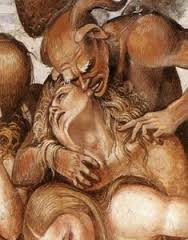
“Traditionally there are certain signs that often accompany true cases of possession,” the priest said, “things that are difficult if not impossible to explain otherwise.” These signs include aversion for sacred objects, the sudden ability to speak languages that the person has never studied or had contact with, the movement of objects with no physical cause, sharp changes in mood that are not attributable to psychological reasons, and other such things, he told Breitbart.

And so begins a recent article titled  Vatican Exorcism Course Draws 170 Students to Study Demonic Activity, where the Vatican reports an increase in demonic possession and the increasing need for ‘exorcists’. The article focused on the busting-at-the-seams demonic deliverance training classes now being held at the Vatican.

One concept to note in that quote, and there is much to discuss about this, is that the priest holding the demon-busting classes said that frequently a sign of possession is speaking in a language one has not learned. This is known as speaking in tongues.

Typically when a ‘miracle’ or ‘manifestation’ of something supernatural appears, witnesses usually ascribe it to Jesus or heaven. However, just because an event occurs which is obviously supernatural, it doesn’t mean it is sent from heaven. Usually it is NOT. In 2 Corinthians 11:13-15 we read that men masquerade as false apostles, satan appears as an angel of light, and demons disguise themselves as servants of righteousness.

Satan and his unholy angels have powers that allow them within limits to counterfeit miracles. Read Exodus 7:8-11,

Then the Lord said to Moses and Aaron, 9“When Pharaoh says to you, ‘Prove yourselves by working a miracle,’ then you shall say to Aaron, ‘Take your staff and cast it down before Pharaoh, that it may become a serpent.’” 10So Moses and Aaron went to Pharaoh and did just as the Lord commanded. Aaron cast down his staff before Pharaoh and his servants, and it became a serpent. 11Then Pharaoh summoned the wise men and the sorcerers, and they, the magicians of Egypt, also did the same by their secret arts.

Getting even more specific, in discussing the particular gift of tongues, that was a gift given to the early church and the early church only. The gift of tongues is recorded in Acts 2:4-5.

And they were all filled with the Holy Spirit and began to speak in other tongues as the Spirit gave them utterance. 5 Now there were dwelling in Jerusalem Jews, devout men from every nation under heaven. 6 And at this sound the multitude came together, and they were bewildered, because each one was hearing them speak in his own language.

A Roman Catholic Crucifix.

This is a sign gift, and the gift of tongues and other sign gifts were temporary. They ceased with the passing of the Apostles. People do not speak in tongues anymore. Not genuinely anyway. (For biblical reasons why this is true, go here )

As for the non-genuine ways people speak in tongues, you might be surprised to discover that speaking gibberish, jerking involuntarily, and falling down insensate is a sign that a person is possessed by a demon, not speaking a heavenly language or filled with a heavenly spirit.

You might be even more surprised to discover that those signs as they are manifested in a person are commonly manifested in false religions, such as Hinduism.

Now, this may be a little bit anticlimactic because this has already been discussed somewhat. But for those who may be tuning in on the Internet and haven’t been here at the conference, which theological group does the following: heretic jerking and shaking, uncontrollable laughter, being slain in the Spirit, they prophesy and they speak in tongues. Of course, most people would think of Charismatics/Word of Faith, it’s actually Hindus.

Hindus do all of these things as well and has already been mentioned in this conference, you can look at video clips of Hindus practicing this thing known as Kundalani(?), it’s a subset, a little discipline within Hinduism. You can look at clips of Hindu Kundalani, and look of clips of professing Charismatic Christians and they are absolutely indistinguishable. You cannot tell the difference, the exact same kind of behavior. And so that should give us really a lot of pause before we start to say, “Oh, well so-and-so is speaking in tongues, or so-and-so is being slain in the Spirit, that’s a sign of God’s hand on that person, that’s a sign of spirituality.” Absolutely not. There may be a spirit at work, but it is not the Holy Spirit…it is not the Holy Spirit. (Source)

The irony, sadly, is that the Catholic priests being trained to exorcise these demons are dividing their own kingdom. The Catholic Church and its priests and adherents are under the bondage of satan, not submitted to Christ. The RCC is the most satanically successful religious organization on earth, it is not of the true faith. Trained or not, its priests have no authority over satan but are sadly under his authority.

In this passage, when Jesus cast out a demon from a man, and healed his muteness and blindness, the Pharisees descended to a panic when the people began wondering if Jesus was the promised deliverer of Israel.

And all the people were amazed, and said, “Can this be the Son of David?” 24But when the Pharisees heard it, they said, “It is only by Beelzebul, the prince of demons, that this man casts out demons.” 25Knowing their thoughts, he said to them, “Every kingdom divided against itself is laid waste, and no city or house divided against itself will stand. 26And if Satan casts out Satan, he is divided against himself. How then will his kingdom stand? 27And if I cast out demons by Beelzebul, by whom do your sons cast them out? Therefore they will be your judges.

In his commentary, MacArthur says of this verse,

And it is further true that Satan often disguises himself as an angel of light, (2 Cor 11:14). In that role he may pretend to cast out a demon by restricting its power over the possessed person in order to give the impression of a cleansing. That sort of supposed exorcism has been common throughout the history of the church and is practiced today by various cults, false healers, and exorcists.

Sons of Sceva, Matthias Scheits (c.1630-1700)

Yes, satan is a real being and actively at work in this world sowing evil, lies, and despair. He is a destroyer. However the priests have no authority over any demon, and any one they cast out would be a false show, a lie, or an accident. Remember the Sons of Sceva?

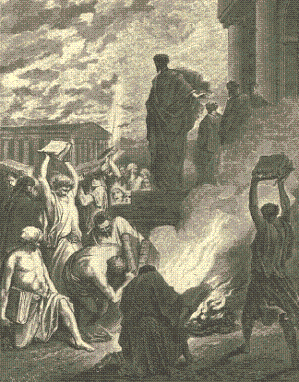
Then some of the itinerant Jewish exorcists undertook to invoke the name of the Lord Jesus over those who had evil spirits, saying, “I adjure you by the Jesus whom Paul proclaims.” 14Seven sons of a Jewish high priest named Sceva were doing this. 15But the evil spirit answered them, “Jesus I know, and Paul I recognize, but who are you?” 16And the man in whom was the evil spirit leaped on them, mastered all of them and overpowered them, so that they fled out of that house naked and wounded. 17And this became known to all the residents of Ephesus, both Jews and Greeks. And fear fell upon them all, and the name of the Lord Jesus was extolled. (Acts 19:13-17).

Matthew Henry says of trying to exorcise demons outside the authority of God,

It was common, especially among the Jews, for persons to profess or to try to cast out evil spirits. If we resist the devil by faith in Christ, he will flee from us; but if we think to resist him by the using of Christ’s name, or his works, as a spell or charm, Satan will prevail against us.

HuffPo via Washington Post and Getty Images

In one last quote from the article, Vatican Exorcism Course Draws 170 Students to Study Demonic Activity,

Pope Francis has spoken of the devil repeatedly, insisting that he is real and must be fought. This generation, the Pope said last October, “was led to believe that the devil was a myth, a picture, an idea, the idea of evil. But the devil exists, and we have to fight him.” Pope Francis has praised the work of exorcists, priests dedicated to the work of deliverance and casting out demons. According to the Pope, priests devoted to the ministry of exorcism “manifest the Church’s love and acceptance of those who suffer because of the devil’s works.”

Well we all suffer because of the devils’ works, the unsaved and the saved. But of course they are focusing on the exact wrong thing, satan, when we all should be focusing on Jesus. But RCC priests cannot focus on Jesus becuase they are an enemy to Him.

In general, if a person is not in Christ, he is a friend of satan. 1 John 2 outlines the dichotomy. If you love the world, you’re not a friend to Jesus, and vice versa. Satan can certain possess any person who is of this world because this world is temporarily his. (2 Cor 4:4). Satan dividing satan is not logical, as Jesus eloquently explained to the Pharisees.

Alternately, if you’re a Christian, you cannot be possessed. The Holy Spirit is sealed within us as a guarantee of the deposit of our inheritance (Ephesians 4:30, 1:13-14). No one can break that seal, only God, and God has said He will not. (James 1:18, John 10:28). Moreover we are called to resist the devil, (James 4:7) not take classes in demonic ninja and then go out to find him and fight him.

What fruit will it bear to keep our eyes on satan, when our eyes should be on Jesus? Chasing after demons brings nothing to Jesus but pride, arrogance, and wasted time. HE is our all in all, sufficient for all battles. (Judges 7:7).

Friends, do not let all this talk of increasing demonic activity pique your interest. The Catholics, Hindus, and other adherents to false religions may play at exorcism, may utter what they believe is heaven sent gibberish, may seek satan on the battleground, but we are to seek Christ-

Seek the LORD and his strength; seek his presence continually! (Psalm 105:4).

Our weapon is prayer. Do we believe we have the strength to overcome 5000 demons, the number that was reported inhabiting the man in the Gadarene tombs? (Luke 8:26-39). Our strength is puny compared to the heavenly power of even the unholy angels, whom we dare not blaspheme (2 Peter 2:12). We are to rely on His strength, and He will deliver us one way or another.

If someone comes to you with a report of supernatural activity such as tongues, demon deliverance by any other method except salvation, or any supernatural miracle, be skeptical. Very skeptical. Seek the Lord, who is Good; not satan, who is evil.

~~~~~~~~~~~~~~~~~~~~~~~~~

Further Reading:

Can Christians be demon-possessed?

According to 1 Peter 1:5, when Christ reigns in a person’s life, that person is kept by God’s power. As a result, “the evil one does not touch him”  (1 John 5:18). When the Holy Spirit inhabits a person, no demon can set up house as a squatter. Indwelling by demons is only evidence of a lack of genuine salvation.

Can a Christian today perform an exorcism? What does the Bible say about casting out demons?

Interestingly, there seems to be a shift in the latter part of the New Testament regarding demonic warfare. The teaching portions of the New Testament (Romans through Jude) refer to demonic activity, yet do not discuss the actions of casting them out, nor are believers exhorted to do so. We are told to put on the armor to stand against them (Ephesians 6:10-18). We are told to resist the devil (James 4:7), be careful of him (1 Peter 5:8), and not give him room in our lives (Ephesians 4:27). However, we are not told how to cast him or his demons out of others, or that we should even consider doing so.

Vatican Exorcism Course Aims Comes Amid Growing Interest in Occult

The Vatican was holding a course about exorcism this week amid a burgeoning interest in the practice and the occult in general, according to one of the organizers. “We have held this course for the past 10 years, and the numbers of those who want to attend keep growing,” said Giuseppe Ferrari of the Research Group of Socio-Religious Formation, one of the event’s organizers. “Initially we had 50 students. This year we had 200 people from 30 countries around the world,” he said on Friday.

Posted in comment policy, mock, mocking

Comment on a comment policy about mocking

Anyone who has run an online forum, been a blog comment moderator, or edited a newspaper, knows the difficulties with some comments. What sometimes happens, especially on a Christian site, is that some people ask a question disingenuously, with malintent or a sneer of mocking Jesus. I know you’re shocked that this happens.

How long will scoffers delight in their scoffing and fools hate knowledge?” (Proverbs 1:22b)

knowing this first of all, that scoffers will come in the last days with scoffing, following their own sinful desires.” (2 Peter 3:3)

Sometimes when someone asks a question it’s obvious they are not a believer and they’re just trolling for a reaction. Other times, though, it’s not obvious. It’s these I have a hard time with. I never know quite how to respond. I’m not talking about my own comfort for ease of moderation. I just do not want Jesus to be mocked.

Last night a pastor friend of mine was asked a question on Facebook. I don’t know where the original question is, but by my pastor friend’s response, it seems that he might have been wondering of the question was legitimate, or if the person was mocking. So he prefaced his response with a well-stated preamble. I received permission from him to publish it as my go-to reference in a comment policy.

~~~~~~~~~~~~~~~~~~~~~~~~~~~~~

Thank you for posting your thoughts and question.

Before I address your post, there are two issues I wish to present before you. First, the issue of honestly seeking answers to legitimate questions of faith; if there is a lack of inner peace in your soul with God and feel compelled to search for and know God, then I believe the LORD is drawing you unto Himself and His Son, Jesus Christ (John 6:44, 65-66).

That said, take comfort from God’s promise through His servant Jeremiah to the people of Israel living in captivity in 586 B.C.; “For I know the thoughts that I think toward you, says the LORD, thoughts of peace and not evil, to give you a future and hope. Then you will call upon Me and go and pray to Me, and I will listen to you. And you will seek Me and find Me, when you search for Me with all your heart” (Jeremiah 29:11-13).

The second issue I wish to address is the publicly disrespecting Almighty God with mockery. If you are attempting to mock the LORD and humiliate Christians, your efforts will backfire on you. Should I ever discern this type of attitude from your inquiries, I will not entertain you or others with a response, as it would be “casting pearls before swine” (Matthew 7:6). In other words, I will not provide the opportunity for mockers of God to trample upon the gospel of Jesus Christ.

Dear commenter, now that those two issues are out of the way, I am assuming that you are honestly seeking answers to legitimate questions of faith, and so, here is my response…

~~~~~~~~~~~~~~~~~~~~~~~~~~~~~

I think that says it very well. For the most part, people on this site are polite and the tone seems to be maintaining at a level respect. However for the few comments that come across with a less-than-honest approach, the above will be my response.

Posted in bible, hermeneutic, interpetation

The Spirit’s illumination and how the Sadducees missed the boat

We know that it is possible to interpret the bible too liberally. We run into that all the time. People put their own spin on things, twist the scriptures, even add tradition or direct revelation to the sacred word. What comes out the other end is a different Jesus and a different Gospel.

But is it possible to interpret the bible too narrowly? To interpret it so strictly or literally that many general concepts are missed, and you wind up with a different gospel just the same as interpreting too liberally? Yes.

One example of a group that exhibited that kind of hermeneutic are the Sadducees.

The Sadducees

The Sadducees were one of the major Jewish religious groups in Israel from the Maccabean period (167 BC) through the destruction of the temple (AD 70). While we do not have any of their writings, the information we do have paints a picture of a rather small group of individuals and families who maintained a strong influence on the leadership of the Jewish people under Roman rule. They were popular with the aristocracy and the wealthy, but they did not enjoy the support of most of the people.

The term Sadducees is likely derived from Zadok, the high priest at the time of David (1 Sam 8:17; 15:24) and Solomon (1 Kgs 1:34; 1 Chr 12:29). The sons of Zadok controlled the Jerusalem temple and high priesthood from the rebuilding of the temple (520–525 BC) through its desecration by Antiochus IV (AD 175–164). In the aftermath of the Maccabean revolt, the Hasmoneans emerged as occupiers of the priesthood. Many descendants of Zadok and other priestly and lay followers believed the appointment of the Hasmoneans was illegitimate and sought to reestablish the dynasty of Zadok from the Davidic age. This opposition party likely grew to become the group called the Sadducees.

The NT mentions the Sadducees several times. In the Synoptic Gospels, they are often paired with the Pharisees in their opposition to Jesus (Matt 16:1) and in receiving Jesus’ condemnation (Mark 3:7; 16:6–12). They are specifically identified as those who challenged Jesus about His teaching on the resurrection and the afterlife (Matt 22:23–33; Mark 12:18–27; Luke 20:27–40). The book of Acts also mentions the Sadducees as members of the Jewish ruling class who were challenging the preaching of the apostles—particularly their teaching on the resurrection (Acts 4:1; 5:17). Acts 23:6–8 recounts an argument between the Pharisees and Sadducees over their views of the resurrection. Luke specifically tells his readers that, “the Sadducees say there is no resurrection, nor angel, nor spirit, but the Pharisees acknowledge them all.” There is no definitive explanation for their disbelief other than their strict adherence to the clear teaching of the Pentateuch alone. Jewish teaching regarding the resurrection, afterlife, and rewards was largely developed during the years following the postexilic prophets.

References to the Sadducees in Josephus and the rabbinic literature portray them in constant conflict with the Pharisees. However, both of these sources were closely aligned with the Pharisees themselves. Although the Sadducees are generally seen as the stricter of the parties, in some instances they were more lenient for the Jewish people when the Pharisaic teachings were seen as extrabiblical and therefore nonbinding. They saw themselves as the “old guard,” who sought to maintain the ancient Jewish traditions and teachings that originated with the Pentateuch and defend them in the face of what they viewed as dangerous innovations introduced by the Pharisees.

There are no references to the Sadducees following the destruction of the temple in AD 70. Perhaps most of them fell during the attack. Since the temple and worship laws associated with it were central to their existence, it is not hard to imagine them being willing to die for their cause. If they did survive, their influence was completely lost after the temple’s destruction. We simply have no record of their demise.

LEE WEBB
(Barry, J. D., Heiser, M. S., Custis, M., Mangum, D., & Whitehead, M. M. (2012). Faithlife Study Bible. Bellingham, WA: Logos Bible Software.)

The Sadducees thought they knew truth. The Pharisees thought they knew truth. Saul certainly thought so, and then he met Jesus on the road to Damascus and the newly converted Paul was taught otherwise. So it it ever possible to know that you know the truth? Yes.

Picture the moment when your bicycle training wheels came off, and you were wobbling all over the road as you tried to stay upright. You on your bike swayed toward the left hand sidewalk, then curved dramatically to the right, and wobbled and wiggled all the way down the road.

However you don’t always wobble and wiggle all over the road. As your legs got stronger your bike stayed more upright and your path became straighter. Eventually you were flying down the road on the centerline. “Look, Ma! No hands!”

The Spirit’s work in our minds as He biblically illuminates truth is just like the kid on the bike. We are on a narrow road. We are on a bike. We wobble here to the left and then wiggle to the right, our handlebars making dramatic swoops and sways. But…we stay ON the road, not going off because we’re saved after all, and not swaying too far to the left like the Sadducees nor too far to the right like the Pharisees, because we are on a road that is narrow. And second, and we quickly gain traction and skill, and we soon are submitting to the Spirit’s illuminations and staying doctrinally centered. We won’t be interpreting the bible too narrowly nor will we be interpreting it too liberally. It will be juuuust right.

S. Lewis Johnson on the doctrine of “Illumination- or Truth Made Clear“, 1 Cor 2:6 to 1 Cor 3:4

Now, tonight we are studying Illumination, and that is the work of the spirit in granting understanding to us as we study the inspired revelation, so that illumination has to do with understanding the Bible. In fact, this is the secret to the understanding of the word of God. P. T. Forsyth was a man who was a very famous theologian in the earlier part of the twentieth century, and he once made a statement that we can use as a kind of motto for our study tonight. He said, “The truth that we see depends upon the men that we are.” “The truth that we see depends upon the men that we are.” And I think that we’re going to see that that is taught by the Apostle Paul in the passage to which we shall look in just a moment. To put it in a popular way, the divine side of the understanding of the Bible is illumination. From the human standpoint, looking at it from the standpoint of human effort, we speak of interpretation. So, interpretation is the human effort expended in the understanding of the Bible. Illumination is the divine activity by which the Holy Spirit enables us to understand.

the apostle says the five senses are insufficient in divine truth. He said, “As it is written, Eye hath not seen, nor ear heard, neither have entered into the heart of man, the things which God hath prepared for them that love him.” So, divine truth is not attained to by means of the senses. It is something that is revealed in another way. Now, the second thing that he says is that it is known and revealed by the spirit.

“Now we have received, not the spirit of the world, but the spirit who is of God; that we might know the things that are freely given to us by God.” Therefore, what Paul is affirming is that it is only through the Holy Spirit that we are able to understand divine truth. I think Phillips has rendered this something like this, “But God has through the spirit let us share his secret.” So illumination then is the means by which we come to understand things that we could not possibly understand about divine truth.

Please go to the link to listen to or read the transcript of this very good sermon on how the Spirit makes truth clear to us.

But, as it is written,
“What no eye has seen, nor ear heard,
nor the heart of man imagined,
what God has prepared for those who love him”—

10these things God has revealed to us through the Spirit. For the Spirit searches everything, even the depths of God. 11For who knows a person’s thoughts except the spirit of that person, which is in him? So also no one comprehends the thoughts of God except the Spirit of God. 12Now we have received not the spirit of the world, but the Spirit who is from God, that we might understand the things freely given us by God. 13And we impart this in words not taught by human wisdom but taught by the Spirit, interpreting spiritual truths to those who are spiritual. (1 Corinthians 2:9-13)

Freely given. Freely! We can understand the things of God, by His Spirit, because He knows the mind of God. And it’s free. The gracious gifts from our Savior are plentiful and manifold.

Posted in facebook, facial recognition, mark of the beast, prophecy

One app’s facial recognition outstrips the CIA’s, you will never guess which it is

One of the most mysterious segments of prophetic scripture are the verses telling us about the Mark of the Beast. We read about it in Revelation 13:11-18. The Second Beast is the false prophet. It’s actually the false prophet who causes all to have the mark, or be excluded from the economy. The mark is an identification of allegiance to and worship of the Beast. The penalty for not taking it is that no man may buy or sell. But the reason to take it is to worship the antichrist. Here is the passage.

The Second Beast
Then I saw another beast rising out of the earth. It had two horns like a lamb and it spoke like a dragon. 12It exercises all the authority of the first beast in its presence, and makes the earth and its inhabitants worship the first beast, whose mortal wound was healed. 13It performs great signs, even making fire come down from heaven to earth in front of people, 14and by the signs that it is allowed to work in the presence of the beast it deceives those who dwell on earth, telling them to make an image for the beast that was wounded by the sword and yet lived. 15And it was allowed to give breath to the image of the beast, so that the image of the beast might even speak and might cause those who would not worship the image of the beast to be slain. 16Also it causes all, both small and great, both rich and poor, both free and slave, to be marked on the right hand or the forehead, 17so that no one can buy or sell unless he has the mark, that is, the name of the beast or the number of its name. 18This calls for wisdom: let the one who has understanding calculate the number of the beast, for it is the number of a man, and his number is 666.

Part of being entranced by the verses is the fact that there are so many questions that arise from reading them. How does one person cause all on earth to receive a mark? How will they know if someone doesn’t take the mark? If someone gos to buy something without the mark, what will happen? How long will it take until someone in authority comes to grab the person who doesn’t have the mark? Most interesting of all, much of this buying and selling and grabbing and beheading has to do with technology.

Prior to today’s technology, such massive, global tracking and marking would never have been possible. I’m only 54 years old and I clearly remember when bar codes were invented and came into ubiquitous use. Never mind laptops, internet, and now quantum computing, Artificial Intelligence, bitcoin and its ilk, iris scanning, robotics, and nanotechnology. It’s dizzying. It reminds me of the prophecy in Daniel 12:4,

“But you, Daniel, shut up the words and seal the book, until the time of the end. Many shall run to and fro, and knowledge shall increase.”

As a rabbit trail for just a moment, the Lord sends an angel to fly at mid-heaven and warn the people of the world NOT to take the mark. See below:

And another angel, a third, followed them, saying with a loud voice, “If anyone worships the beast and its image and receives a mark on his forehead or on his hand, 10he also will drink the wine of God’s wrath, poured full strength into the cup of his anger, and he will be tormented with fire and sulfur in the presence of the holy angels and in the presence of the Lamb. 11And the smoke of their torment goes up forever and ever, and they have no rest, day or night, these worshipers of the beast and its image, and whoever receives the mark of its name.” (Revelation 14:9-1)

The mark of the beast is definitely a mark of worship and allegiance to the antichrist, which means the person has declared for satan. That’s why taking it incurs so much wrath. But back to the technology of today. Managing the buying and selling of all peoples in earth via this mark is just an astounding concept to me. There is no such thing as privacy any more, tracking and hacking are things the youth of today are used to, though I’ll never get used to it. There are undoubtedly many different kinds of technologies that will merge into the one that will allow the mark of the beast to be implemented and global economic tracking to such a specific degree occur. But consider this, I’ll run it past you…

It’s from Extremetech, published last March:

Facebook’s New ‘DeepFace’ Program Is Just As Creepy As It Sounds

Facebook owns the world’s largest photo library, and it now has the technology to match almost all the faces within it. Yes, even the ones you don’t tag.  Facebook announced last week that it has developed a program called “DeepFace,” which researchers say can determine whether two photographed faces are of the same person with 97.25 percent accuracy.  According to Facebook, humans put to the same test answer correctly 97.53 percent of the time — only a quarter of a percent better than Facebook’s software.  The takeaway: Facebook has essentially caught up to humans when it comes to remembering a face.

Facebook’s facial recognition software is now as accurate as the human brain, but what now?

It would also be irresponsible if we didn’t mention the true power of facial recognition, which Facebook is surely investigating: Tracking your face across the entirety of the web, and in real life, as you move from shop to shop, producing some very lucrative behavioral tracking data indeed.

As we move from shop to shop? 97% accuracy?

Facebook will soon be able to ID you in any photo

“we’ve been able to detect faces in images for about 2 decades,” LeCun says. Even the puny computers in cheap consumer cameras have long been able to detect and focus on faces.

But “identifying a face is a much harder problem than detecting it,” LeCun says. Your face uniquely identifies you. But unlike your fingerprints, it is constantly changing. Just smile and your face is transformed. The corners of your eyes wrinkle, your nostrils flare, and your teeth show. Throw your head back with laughter and the apparent shape of your face contorts. Even when you wear the same expression, your hair varies from photo to photo, all the more so after a visit to the hairdresser. And yet most people can spot you effortlessly in a series of photos, even if they’ve seen you in just one.
In terms of perceiving the world around us, facial recognition may be “the single most impressive thing that the human brain can do,” says Erik Learned-Miller, a computer scientist at the University of Massachusetts, Amherst. By contrast, computers struggle with what researchers call the problem of A-PIE: aging, pose, illumination, and expression. These sources of noise drown out the subtle differences that distinguish one person’s face from another.

Thanks to an approach called deep learning, computers are gaining ground fast.

Now, I am not saying that Facebook is the Mark of the Beast, for heaven’s sake don’t misunderstand. However, I’m intrigued that all along as we watch technology grow to an excessively intrusive point in our lives, that quietly, unassumingly, Facebook has amassed the data and know-how to put into place a large part of the puzzle that may become part of the technology involved with the Mark of the Beast.

I’m one of the last generation to have grown up technology-free. I played outside after school, roaming the neighborhood on my book, coming home when the streetlights turned on. I’m one of a generation who loves the internet but remember a time when I read books and went skating and built snowmen and played hopscotch- outside. I remember.

Reading that Facebook has amassed the world’s largest facial recognition data dropped the penny. Facebook has my birthdate, photo, locations where I’ve lived, friends, employment, education…in short, an online profile. And I gave it to them.

It is an amazing, dizzying time, this new millnnium. Meanwhile, knowledge is increasing and technology is rapidly heading to its ultimate destination. I feel like Thumbelina on a leaf going down the rapids. But the leaf is really the hand of Jesus and I’m safe and secure. I’m not worried or scared or depressed. I’m amazed. Every day we make technological advances that enhance the lives of humanity but one day will be turned to evil use by the antichrist and false prophet. Amazing, stunning time. I want to see what happens next. Hopefully the Lord’s return to collect His Bride in the rapture!

Because, you see, we will be raptured before any of this comes to pass. We won’t have to worry about the mark of the beast, the false prophet, the antichrist, being excluded from the economy, starvation, or beheading. He will rescue us from the wrath to come, (1 Thess 1:10) and spare us His indignation poured out. (Isaiah 26:20). If you have repented of your sins, and confessed to Jesus as Lord and Savior, and know He is resurrected and reigning from heaven, soon to return as the Bible says, you are saved. (Romans 10:9). We rest securely in His arms and seek to become weak in the flesh so the Spirit will use us strongly. (2 Cor 12:9-10).

Now if you will excuse me, I need to go check my Facebook status…

Posted in church, discernment, leaving church

Leaving your church (for another)

People leave church for the right reasons. People leave church for the wrong reasons. People leave because they don’t like the music. People leave because they want to BE the music. People leave because they disagree with the pastor’s stance on minor issues. People leave because they disagree with the pastor’s stance on major issues. People leave because they didn’t get voted deacon. People leave because they heard a better church was down the road. People leave their church because after prayer and consideration and feeling legitimately led, they feel their family would be better served and they could better serve at that church across town.

For better or for worse, people leave their church all the time.

Did you see what I did there? I said ‘for better or for worse’, deliberately invoking the marital covenant, because that is what church membership is. It is a covenant with fellow believers. You you promise to love them, honor them, cherish them, in sickness and in health, bearing each other’s burdens, (Gal 6:2), admonishing and encouraging, (Col 3:16), sharing lives in vulnerability and intimacy, and worshiping Jesus- together. (James 5:13). It’s a close relationship and one not to be thrown away on petty squabbles.

Taking a biblical example, the church at Corinth. These people were fighting, getting drunk at the Lord’s table, allowing incest, having chaotic services, dividing into factions and cliques, and debating over meats. Phew! Yet Paul wrote that he gave thanks for the people at the church at Corinth. (1 Corinthians 1:4-5). There was no church down the road to move their letter to. Corinth. That was IT.

How about the folks at the church at Sardis? Jesus pronounced them dead, and their works were dead, and what wasn’t dead was about to die! (Revelation 3:1-3). Yet a few remained alive and pleasing to the Lord. How terrible did they feel being surround by dead believers?! It must have been rough.

What if you had been one of the few members of the church at Sardis that had not soiled their clothes and remained righteous? It must have been hard for those members watching their church die! (Revelation 3:4). But what comfort. Jesus sees them and is not only pleased, but He commends them personally.

Or the folks at Thyatira, suffering by seeing a false prophetess prosper, teaching false doctrines (which is an agony to endure, believe me), tempting the members for so long she birthed spiritual daughters. A few did not hold to her teaching, and are commended.

Would “the few” at Sardis and “the rest” at Thyatira have left for another church, if there had been one? Its purely speculative. They didn’t have the choice so they stuck it out. Were some that fell under the sway of the false prophetess Jezebel children or slaves of the members at Thyatira? No doubt. It is a heartbreaker.

It doesn’t help that pastors these days display a craven ambition, using smaller churches as a ladder to bigger and mega, or as a stopping/resting  place as they write their next book. Some pastors church-hop themselves, pastoring as many as 6 churches in 9 years. They do not provide a good example of shepherding commitment and staying power.

On the other hand, leaving the marriage metaphor alone for a moment, there are times people can and should leave a church. Perhaps the Lord has legitimately led you to serve elsewhere. The Spirit gives gifts as He wills, so perhaps He wants move you to use you and His gifts at another location as a better puzzle piece fit. Maybe your pastor is teaching heresy. Or maybe not heresy but has drifted too far for your comfort zone, and you don’t want to expose your children. There maybe practical matters- employment transfer, moving closer to aging parents, a road that has become too dangerous to travel. What then? Moving your membership to another church would be a legitimate thing to do.

Here are a variety of links exploring reasons to leave and reasons to stay, and if deciding to go, how to leave successfully and graciously. Just some food for thought. Apostasy is gripping all churches to an alarming degree. If a person leaves for a trivial reason, or impatiently, he or she may wind up in a worse condition at a church down the road where a worse apostasy is discovered. Apostasy is everywhere, even in that bustling church down the road. No church is perfect.

No matter how dim things have become in your church, Jesus is still in charge, sovereignly ordering all for His glory. But the nitty gritty of week-in-week-out worship in a church that preaches entertainment, or health/wealth, or Arminianism as an idol, or is teetering toward spiritual abuse, or any of the cringe-worthy fads…is hard. But no harder than the early churches in the Bible mentioned above. And they had to contend with false teachings to a major degree also. The Spirit may indeed by moving you to another worship center for His reasons. Or the Spirit might be impressing on you to stay. It’s not for me to say one way or another when it might be time to leave a church or how long to stay. In Christian liberty, it’s the decision of the spiritual leader of your home, whoever that leader is. There are many things to take into consideration, and prayer of course should be a major part of any decision.

When do you leave a church?

It is the conversation with church members every pastor dreads but inevitably comes to every man who has shepherded a local flock: “Pastor, we need to meet with you and discuss our future at the church. We have been praying about transferring our membership to another church.” Naturally, you ask the inevitable question, “Why?” 

When Should People Leave Their Church?

Leaving a church is not something that should be done lightly. Too many people abandon churches for petty reasons. Disagreements over simple matters of preference are never a good reason to withdraw from a sound, Bible-believing church. Christians are commanded to respect, honor, and obey those whom God has placed in positions of leadership in the church (Heb. 13:7, 17). However, there are times when it becomes necessary to leave a church for the sake of one’s own conscience, or out of a duty to obey God rather than men. Such circumstances would include:

When is it right to leave a church?

Believers who feel a desire to leave a church should be clear on their reasons. If the church does not proclaim truth, cling to the Bible and revere Christ as its head, and there is another church in the area that does, then there are grounds to leave. A case can be made, however, for staying and working to bring about changes for the better. We are exhorted to “contend earnestly for the faith which was once for all delivered to the saints” (Jude 3). If one is strongly convicted of the need to move the church in a more Bible-based, Christ-honoring direction, and feels he/she can do that in a loving and non-divisive manner, then that would seem to be the better course of action.

Good reasons for moving on

“What right do you ever have to leave a church?” I can remember that question being asked by my ecclesiology professor in seminary. It is a good question and one that would benefit us all to wrestle with. As Kevin has recently pointed out on this blog, there is biblical warrant and there are practical reasons for entering into covenant through local church membership. Having entered into that covenant our breaking of it should never be done lightly. Clearly, there are reasons to leave a local church. But what are they?

5 Really Bad Reasons To Leave Your Church

Let’s be honest, while there are some good reasons for leaving a church, there are a lot more bad ones. As a pastor, I hear some of them every now and then as people walk out the door. As a church planter, I hear them constantly as people walk in the door. If you’re thinking about looking for a new church home, please don’t use one of these five reasons to make the jump:

5 Tips on Leaving a Church the Right Way

I met yesterday with a friend who is leaving our church. We had a good conversation about his reasons for leaving (they are legitimate) and then some discussion about how he can “leave well.” I told him that, based on my experience with people leaving our church or coming to our church after leaving another one, most people don’t leave well.

Posted in encouragement, marriage, singleness, unmarried, virgin

Joyful in Singleness part 4 conclusion: Personal Note and Opinion

Joyful in Singleness part 1
Joyful in Singleness part 2
Joyful in Singleness part 3

Pastor, Christian Book reviewer, and blogger Tim Challies mentioned recently that in his search for recommendations of female conservative bloggers, he noticed that many of the blogs he found had gone cold. “Conservative female bloggers tend to publish less consistently than their male counterparts” he wrote. Subsequent to that observation, three of the women on his recommended blog list contacted Mr Challies to explain why. All were married.

The women bloggers mentioned a myriad of reasons why their essay production is slower than male counterparts, including the normal and reasonable fact that they have many demands on their time as either working mothers or stay at home moms. Challies illuminated the simple fact that many male theologian bloggers are employed or are in a career attached to theological writing, such as pastor, parachurch essayist, professor, or seminary student. A woman’s ‘day job’ often gives little time to theological writing at night.

Contrary to rumor, a single woman’s
life of service to the Lord
doesn’t look like this. It involves
dirty dishes, car breakdowns, and slogging
through difficult verses – alone

As a female Christian conservative blogger, I am also acutely aware, as are my sisters, that as women we must study harder and more deeply before writing, to ensure that we have not been deceived, deluded, or led astray, but that we understand the scriptures correctly. As women, the bible clearly shows that we have a tendency not to. We are the weaker vessel, it was the woman who was deceived. (1 Timothy 2:14). Thus, it takes longer to produce a piece, because so much prayer, study, more prayer, and editing are involved. At least, that is the case for me.

In her response to Mr Challies, Hannah Anderson said that productivity or sheer output is not necessarily a mark of quality. She said, “don’t evaluate a blogger’s worth based on productivity alone. In my own life, I’ve had to accept that God has called me to be both a stay-at-home mom and a writer.” 

I applaud my sisters who are busy with serving the Lord through their capacity as mothers and wives, congregants, and volunteers, and yet still write wonderful and uplifting pieces for their sisters and God’s glory.

However … I would like to report from the side of a female blogger who is not married. What of the single woman, given the spiritual gifts of discernment, teaching, and exhortation, and who possesses a God-given ability for writing? What of the single woman who has no husband and no children, no family, lots of time, and a nearly insatiable interest in the bible? What then? How can such a woman use her Spirit-given gift and her God-given time to serve the Lord?

I wrote to Pastor Challies and had a nice exchange with his blog secretary/e-mail screener. But it seemed that his interest in exploring single/unmarried female bloggers’ issues and contributions to the faith were not to be. I kept thinking about the issue, though.

I mentally looked around my church. I saw the row of youths sitting in the chairs at the back wall, between the ages of 16 and 23 or so. One young man teaches the career and college class and is headed to a Christian University in the fall. Another participates in the choir, and sometimes co-leads musical worship time. Others serve in the nursery. Most of the Youth participate in sort term mission trips in the US and even abroad; several single young people traveled to Peru to serve in an orphanage there.

In looking around further, I saw widows. One is very active in serving in the community, tirelessly, as well as serving in our church. Over there is the recently divorced man, sadly through no desire of his own. Over there is the married woman with small children whose husband is working far away for long periods. There is a widow with health issues. Some widowers. Of course there are married couples of all ages and stages, too. And me, a single loner, older in life but relatively new to the faith. What a diverse demographic spread in our small, rural Baptist church. And why wouldn’t it be? Jesus calls people to his own from all races, creeds, economic status, and stages of life.

I don’t enjoy talking about myself so much, but I think it would be disingenuous not to share my background a bit after so much writing about being single for the kingdom. People need a context so my actions and statements can be judged accordingly. I am single and childless. I came to the Lord as an older woman, at age 43. I’ve been professionally employed in all my adult life either as a teacher, or writer/journalist/editor. I was divorced prior to salvation for a biblical reason. After salvation, I joined a church and I serve there. I firmly believe that serving in real life is and should be a primary place of service for all Christians. Blogging is not a substitute for real life. It’s no substitute for discipling relationships in a church with oversight and support.

John Stott wrote of his 90-year singleness and how it came to be.

In spite of rumors to the contrary, I have never taken a solemn vow or heroic decision to remain single! On the contrary, during my 20s and 30s, like most people, I was expecting to marry one day. In fact, during this period I twice began to develop a relationship with a lady who I thought might be God’s choice of life-partner for me. But when the time came to make a decision, I can best explain it by saying that I lacked an assurance from God that he meant me to go forward. So I drew back. And when that had happened twice, I naturally began to believe that God meant me to remain single.

Though prior to salvation I had wanted very much to be married (but not have kids, interestingly), after salvation I realized, like Dr Stott, it was not God’s plan for me to have either marriage or children. I accepted this without too much protest and with some relief, but I did ask the Lord to help me with it. He did. (1 Corinthians 7:7).

When the platforms for bloggers became available and free, I started this blog on January 6, 2009 and began publicly doing the writing, researching and editing I’d been doing already informally. I had already started my personal blog in 2006. The focus of this blog is Christian prophecy, discernment, and encouragement. I’m in my seventh year and I thank the Holy Spirit for giving me endurance and catalysts for ideas by reading His word.

The Lord began designing my life so that I could sustain myself through an employment that was fulfilling but not mentally or physically taxing, (teacher’s aide) and still have the energy to arrive home and shift gears into the second part of my day- the most important part- ministry through writing. If I spend 8 hours a day at school, I will just as likely spend 8 hours a day researching, writing, blogging, praying, studying, and responding to people via email or in real life who have biblical questions or concerns. It’s my ‘second shift.’ In this regard, however, sometimes I do get undisciplined.

You see, though single and actively dedicated to Jesus most of the day, I’m not a holy, exalted person. I’m still human. There are some days to my shame, I don’t pray. I have a tendency to enjoy movies and TV shows on Netflix and Hulu (currently binging on BBC’s The Indian Doctor) to the exclusion of spiritual work. Netflix and Hulu are a blessing in that they’re inexpensive and allow me to exclude lascivious ads and manage what passes in front of my eyes to a higher degree than broadcast TV, but still, some days I have to push through an urge to just watch the tube all day and then walk around the pasture taking photos of sheep and grass and picking flowers.

For the wives and mothers who blog, my hat is off to them. Their primary means of serving the Lord is to raise a family in submission to your husband and ultimately the Lord. Yet they still find time to write and do it well.

I have no such responsibilities. What else would I do with the extra time the Lord has given me? Squandering it would be sin. And I know I’d fall into sin. We know what the bible says about idle widows, “They learn to be idle, wandering about from house to house; and not only idle but tattlers also, and busybodies, speaking things which they ought not.” (1 Timothy 5:13). That could easily be me in an instant. At root, I am lazy.

I should use the time, talents, gifts, and energies He gave me for His glory, always keeping in mind the kingdom of God. Blogging theological essays of varying depth each day is not easy, it is tiring some days and causes spiritual grief on others. But it is always fulfilling. I have an opportunity to meet with the Lord each day through His word- without distraction. Even if my blog counter read zero every day, I would still blog. I have an audience of One and I pray He is pleased.

One other item to mention: something that would go a long way toward rectifying the near-idolatrous focus on marriage and family to the near-exclusion of addressing ministry for singles and others in conservative Christian churches, is expositional preaching. Preaching through books of the Bible will result in a perfect proportion of sermons aimed at each demographic, because it would reflect the perfect proportion Jesus had in mind when He sent the Spirit to inspire its writing in the first place.

free to reuse by torbakhopper

Topical preaching is fraught with stumbling blocks. A pastor’s fears or biases will lead him to preach on his likes and comfort zone and avoid his dislikes and discomfort zone. Culture around us is filled with marrieds, so preaching usually reflects that church reality also.

It presents stumbling blocks to me personally, also. In my own case, when I see that yet another sermon series will be on “Marriage” or “The Family” I have to fight an urge to make myself absent that day. I then need to spend spiritual energy chastising myself by mentally saying ‘It’s about worshiping Jesus, not what I get out of it’ … ‘I must support and honor my pastor and leaders, not selfishly stay home because I don’t click with the topic’ … ‘I must not forsake congregating with the saints as the bible says’… Pastors, just preach the word, in season and out of season. (2 Timothy 4:2). Everything that way will always come out even.

Stott: Final words of advice for single people:

First, don’t be in too great a hurry to get married. We human beings do not reach maturity until we are about 25. To marry before this runs the risk of finding yourself at twenty-five married to somebody who was a very different person at the age of twenty. So be patient. Pray daily that God will guide you to your life partner or show you if he wants you to remain single. Second, lead a normal social life. Develop many friendships. Third, if God calls you to singleness, don’t fight it. Remember the key text: “Each person has his or her own gift of God’s grace” (1 Cor. 7:7).

Joyful in Singleness part 1
Joyful in Singleness part 2
Joyful in Singleness part 3

~~~~~~~~~~~~~~~~~~~~~~~~~

Further Reading

This blog’s tagline gives me pause as to its overall philosophy, (“social psychology + faith + reconciliation“) but this particular essay I thought was very good.
Singled Out: How Churches Can Embrace Unmarried Adults

Desiring God: How to Serve “The Singles” — Ministry to Unmarried Adults in Your Local Church by Carolyn McCulley

ChurchLeaders: 8 Single Principles for a Singles’ Ministry

Posted in encouragement, marriage, singleness, unmarried, virgin

Joyful in Singleness part 3: Famous biblical unmarrieds

Joyful in Singleness part 1
Joyful in Singleness part 2
Joyful in Singleness part 4 conclusion: Personal Note and Opinion

Are you one of a partly hidden minority in the body of Christ who has felt led by the Lord to remain single and celibate for all your days? I’m not talking about unbiblical vows of celibacy like the false Roman Catholic Church forces on its priests and nuns. I’m asking if you are one of the blessed recipients of what apostle Paul called a gift of singleness.

Though marriage is the norm for most people, and it is indeed an institution created by God, and it is a picture of our coming union with Christ, marriage is not given to everyone. Never mind that the average person on earth is single for a good portion of their lives. Americans now spend more years of their adult lives unmarried than married.

The trend toward spending more time single is not specific to the United States. Across 192 countries, people who, by age 30, had always been single, increased from 15% in the 1970s to 24% in the 1990s. The increase was greater for developed countries: In the 1990s, 38% of the women and 57% of the men reached the end of their 20s without ever marrying (World Fertility Report, 2003). Source: Single Women Fact Sheet

These demographics are reflected in the average church congregation. Yet ministry and interpersonal attitudes have not kept up, and many permanently single people feel marginalized or overlooked.

In part one I introduced these and other facts. In part 2 I looked at specific verses and passages that address marriage, singleness, celibacy, and eunuchs (old and modern-day). In this part I’ll look at the impact that single people have made for the kingdom. I’m not focusing on the status of temporarily single people who will marry at some point. I am looking at those people who are beneficiaries of the God-given gift of singleness, a status designed purposely by God for His glory through His use of these individuals. (1 Corinthians 7:6-7).

~~~~~~~~~~~~~~~~~~~~~~~

A few days ago, Aimee Byrd posted an essay reviewing Kevin DeYoung’s new book, “What Does the Bible Really Say about Homosexuality?” In her essay titled The Demythologizing of Sex, Byrd quoted DeYoung.

But, of course, none of this can be possible without uprooting the idolatry of the nuclear family, which holds sway in many conservative churches. The trajectory of the New Testament is to relativize the importance of marriage and biological kinship. A spouse and a minivan full of kids on the way to Disney World is a sweet gift and a terrible god. If everything in Christian community revolves around being married with children, we should not be surprised when singleness sounds like a death sentence.

I admire married people with children who labor in the church. I can’t imagine their exhaustion, the time it takes to raise children, and still have time to study that Sunday School lesson he will be teaching, or her volunteer work in the nursery, or their ministry to the community hungry…and remain diligent in personal Bible study and family devotions. Phew! There seems not to be enough hours in the day. Jesus designed it so that a majority of people will at some point in their lives marry and most of these will likely have children. Their focus is naturally on their family lives. And naturally, their interests are divided. (1 Corinthians 7:33, 35).

We know of famous married couples in the Bible, Adam and Eve, Ruth and Boaz, Jezebel and Ahab, Abram and Sarai, Jacob and Rachel/Jacob and Leah, David and Michal/David and Bathsheba, Solomon and all his wives, Mary and Joseph, Zacharias and Elisabeth, Priscilla and Aquila, Ananias and Sapphira…In each case God ordained for the person a spouse and in each case their marriage as recorded in scripture became something the Lord used for His glory and our instruction.

However, remember, marriage is not an institution that will last forever. In his exposition of 1 Corinthians 7:25-40, S. Lewis Johnson said,

The central thought of the apostle is that celibacy is desirable; it’s not demanded. Why? … Well, from reading the passage here and from knowing the things that our Lord had said with which the apostle was familiar, evidently for him he thinks of marriage as a temporary covenant for the propagation of the human race. But the relation to the Lord is an eternal relation — relationship.

And so in the light of that, what he seems to be suggesting to us is that we, as believers, should remember that we are heading to an eternal destiny in the presence of the Lord. … He wants to focus our attention upon the fact that we are on our way to eternity. And this is temporary. And we are to spend ourselves during this temporary period of time in seeking the Lord and ministering as believers for him in the society of which we are apart. I gather that that’s what — that’s why Paul says the things that he says when he says, “Marriage is good. It’s alright to marry, but it’s better to give yourself holy to the Lord.” And now he is going to talk about why it is so.

The unmarried man or women does not have divided interests and can focus solely on pleasing the Lord. (1 Corinthians 7:32, 34b). Let’s look at some people in the Bible who were specifically and notably single, devoting all time and energy to ministering to Him. First will be people from the Old and New Testaments we know were single, and then a list of others we can say might have been or were probably single.

Jeremiah, by Michaelangelo

Jeremiah

A prophet of the Lord and author of the book of Jeremiah and Lamentations, Jeremiah never married or had children.

The word of the Lord came to me: 2“You shall not take a wife, nor shall you have sons or daughters in this place. (Jeremiah 16:1-2)

The LORD said He was planning to still the voice of the bride and bridegroom, and plagues and hardship were going to come upon the land. Gill’s Commentary explains Jeremiah’s single status,

Thou shall not take thee a wife,…. Not because it was unlawful; for it was lawful for prophets to marry, and they did; but because it was not advisable, on account of the calamities and distresses which were coming upon the nation; which would be more bearable by him alone, than if he had a wife, which would increase his care, concern, and sorrow.

Apostle Paul alludes to the times also as a reason not to marry. (1 Corinthians 7:26). Sometimes God ordains singleness not to test a person in endurance or deny a person a pleasure, but to spare a person grief in coming calamity.

St. Anna the Prophetess by Rembrandt Van Rijn

Anna

Here is a woman who lived in apostate times, the worst of times. Her generation had drifted fully from the Old Testament law and lived under the oppressive and false rule of Pharisaical law, as we know from the many admonitions and warnings Jesus gave to the Pharisees, and Paul’s initial terrorism against the early Christians. God had been silent 400 years, since the close of the Old Testament canon in Malachi in approximately 430BC. The last chapter of Malachi is short, but contains a warning about the Day of the LORD, a warning to follow the Law given to Moses, and this, the last words Israel heard said to them by God–

“Behold, I will send you Elijah the prophet before the great and awesome day of the Lord comes. And he will turn the hearts of fathers to their children and the hearts of children to their fathers, lest I come and strike the land with a decree of utter destruction.” (Malachi 4:5-6)

Malachi’s warning was not without cause. The Jewish people were mistreating their wives, marrying pagans and not tithing, and the priests were neglecting the temple and not teaching the people the ways of God. In short, the Jews were not honoring God. (Source)

Things only worsened as 400 years ground on. Yet there were a few that remained pure in heart and pleasing to the LORD. In approximately 27-29BC, Jesus was born and was presented at the Temple according to the Law. Anna was there.

And there was a prophetess, Anna the daughter of Phanuel, of the tribe of Asher. She was advanced in years and had lived with her husband seven years after her marriage, and then as a widow to the age of eighty-four. She never left the temple, serving night and day with fastings and prayers. At that very moment she came up and began giving thanks to God, and continued to speak of Him to all those who were looking for the redemption of Jerusalem. (Luke 2:36-38).

A widow can know what it is to face a long, lonely and cheerless life, and a solitude made more acute because of the remembrance of happier days. But it was not so with Anna. When as a young, motherless wife, God withdrew from her the earthly love she rejoiced in, she did not bury her hope in a grave. In the place of what God took, He gave her more of Himself, and she became devoted to Him who had promised to be as a Husband to the widow, and through her long widowhood was unwearying in devotion to Him. She “trusted in God,” and her hoary head was a crown of glory (Proverbs 16:31). Repose of soul was hers for eighty-five years because the one thing she desired was to have God’s house as her dwelling place all the days of her life. Source.

Paul

Paul writing his epistles. Valentin de Boulogne

In 1 Corinthians 7:6 Paul declared he himself had the gift of celibacy, so we know that he was not at that time married. Had he ever been married? We don’t know for sure. At some point, if Paul had been married, his wife either had died or was not in the picture. Paul’s tremendous conversion showed that the redemption available in only Jesus Christ is not beyond even the “chief of sinners”, a murderer and terrorist of His people. (1 Timothy 1:15).

In his life lived and in the strength of Christ, Paul founded churches all over the region in his three missionary journeys, pastored them, discipled young men for the future labor in Christ, contended for the faith alongside many men and women, ‘redeemed’ a slave and reconciled him with his master, and wrote Romans, 1 and 2 Corinthians, Galatians, Philippians, 1 and 2 Thessalonians, Philemon, Ephesians, Colossians, 1 and 2 Timothy and Titus.

From conceited, legalistic terrorist, Paul became a humble, powerful witness for the glory of Christ.

Mary/Martha/Lazarus 

This sibling trio were single. They were used mightily of Jesus. In His Incarnation He lodged with them, all three of whom He loved. (John 11:5). He used Lazarus to show the glory of God, Martha illustrated her “love and piety alike found adequate and satisfying expression at all times in the ordinary kindly offices of hospitality and domestic service” according to Lockyer, and Mary of Bethany loved to sit at her Lord’s feet and absorb heavenly truths.

Philip’s four unmarried daughters

These women (Acts 21:8-9) prophesied.

Philip’s household included four virgin daughters who were prophetesses. That Luke describes them as virgins suggests that they may have been set aside by God for special ministry (cf. 1 Cor 7:34). Prophets, like apostles, were specially appointed by God in the church. They must be distinguished from individual believers with the gift of prophecy (1 Cor 12:10). They complemented the ministry of the apostles (Eph 4:11) by functioning exclusively within the body of a particular congregation, while the apostles had a broader ministry.

It has been recorded that early believers regarded these women as valuable sources of information on the early history of the church. The historian Eusebius notes that the church Father Papias received information from them (Ecclesiastical History III.XXXIX, p. 126). Perhaps Luke used them as a source of information in writing his gospel and Acts. He would have had many opportunities to talk with them, not only during this visit but also during Paul’s two-year imprisonment at Caesaria (Acts 24:27). (Source: MacArthur Commentary on Acts).

Apocalypse of Lorvao. Wimimedia Commons public domain US

The 144,000

Revelation 7:1-8 and Revelation 14:1-5 records that the Lord reserves 144,000 virgins and will supernaturally seal them from harm during the judgments of the Tribulation, in order to use them for His glory. They will evangelize the world during the Tribulation. Multitudes and myriad come to faith in Jesus Christ during this time, thanks to the supernatural energizing of these unmarried singles.

We, in the Christian church, perhaps in our day are not giving proper credit to those who, by the grace of God, have given themselves to a celibate or single life. The unmarried woman, for example, and the unmarried man who have given themselves to service for the Lord and have eschewed marriage; we should give them credit for what they have done. ~S. Lewis Johnson, Marriage Counsel III

Probably unmarried/virgin:

John the Baptist

The bible doesn’t say one way or another whether John the Baptist was married…he was in all probability a Nazirite but Nazirites were not forbidden to marry. Nazirite comes from a Hebrew word meaning “consecrated.” There were only two other lifelong Nazirites in the bible (Samuel and Samson) so it not unlikely that John was not married but consecrated for life to his task, which was forerunner of Christ. Though we can’t speculate too far, given John’s lifestyle of living in the desert, eating, locusts and honey, wearing camel hair, and being a Nazirite itinerant preacher completely submitted to Jesus, it is unlikely that he was married. (Matthew 3:1,4). Since before the foundation of the world, John was appointed forerunner of Christ. It seems as if it is not too presumptuous to say he was unmarried so that his attention would not be divided.

Daniel

Daniel 1:3, 7-9 alludes to the fact that when taken captive, Daniel might have been castrated and become a eunuch.

In Daniel 1:3, Daniel, Hananiah, Mishael, and Azariah (known by the Babylonian names Belteshazzar, Shadrach, Meshach, and Abednego) were put under the care of Ashpenaz, the chief of the saris. The Hebrew word saris is translated as “eunuch” and “court official.” It does not always refer to one who has been made a eunuch. Potiphar is called an Egyptian “saris” in Gen 39:1, yet he was married. It is unclear whether he was also a eunuch. Despite this devastating turn of events, Daniel possessed an unwavering faith in God. In Ezekiel 14:14–16, he stands with Noah and Job as the three men God commended for their righteousness. Daniel obeyed God in matters from dietary cleanliness to daily worship, and he proclaimed to everyone—at great peril—that God is above all. Source: Faithlife Study Bible, JD Barry.

Lydia

This woman ran a profitable business and had a home large enough to accommodate the entire missionary team. (Acts 16:14, 15, Acts 16:40). No husband is mentioned in association with ‘Lydia’s business’ and ‘Lydia’s household’ so it was likely she was single via widowhood. She provided a safe haven for Paul and his mission team time and again, in loving hospitality so they could rest and recover. Her home is where Paul and Silas went after being released from prison, and it was there the brethren received solace and encouragement. Baumgarten says,

“This assembly of believers in the house of Lydia was the first church that had been founded in Europe”.

Of Marriage and singleness in general, S. Lewis Johnson remarked,

I never quite understand why married people who have the comforts of home often speak in a disparaging and unkind way of unmarried people. It should be that if marriage is so delightful, that married people would speak in a very tenderness and — tender and sympathetic way of people who have not married. But instead of that, they speak sometimes in such a contentious way. I never like to hear people say, “Oh she’s just an old maid’ or “he is just an old bachelor.” Wait a minute! He whom you so designate may be glorifying the Lord in a way he could not have done if he were the head of a household and she of whom you speak, may be one who is rendering wonderful service to God and humanity. I repeat, some of most devoted Christians I have ever know have been unmarried men and women who gave themselves holy to the work of the Lord Jesus Christ. All honor to them. I agree with that. ~S. Lewis Johnson, Marriage Counsel III

Wikipedia

In modern times we can point to many people who chose to remain unmarried for the sake of the kingdom, like Pastor John Stott, for example, who was single all 90 years of his life and served the Lord actively as pastor for 65 of them. Some chose to stay unmarried after the death of a spouse, Rachel Saint, for example. MacArthur says of Mrs Saint,

Rachel Saint served as a single missionary among the Auca Indians of Ecuador for many years without companionship. She poured out her life and her love to the indians and found great blessing and fulfillment. (source)

S. Lewis Johnson said of single missionaries,

Many of the missionaries who have gone out from the shores of the United States have been women missionaries who’ve gone out, spent their lives in heathen lands and the jungles, and in the countries where things are not nearly so nice as the United States of America, and have been responsible for many, many people having an opportunity to hear the Gospel of the Lord Jesus Christ. I’ve known of some who have gone to Mexico, translated the language of tribes themselves and then written the Bible for them, so to speak, translated it, and made it possible for people to have the Bible in their own language. What a marvelous ministry. And when you remember that we are here just a short time and eternity is fairly long, you can see what a marvelous choice has been made by some people to not be entangled in marriage.

Whether God has destined a mate for you, or has consecrated you to Himself as an unmarried/single earlier than eternity, His glory always shines through His people when we submit all to Him. Whether married or unmarried, single temporarily or permanently, we are His children, loved perfectly and endowed with His Spirit to do His work. We have all been gifted, and when we look upon each other, we should not see married or single, at odds in misunderstanding or apprehension, but equally gifted individuals co-laboring for Christ’s name and His glory.

Joyful in Singleness part 1
Joyful in Singleness part 2

Joyful in Singleness part 4 conclusion: Personal Note and Opinion