Posted in faith, garden of eden, God, repentance

What does it mean to "Walk with God"?

Enoch walked with God, and he was not, for God took him. (Genesis 5:24).

Noah was a righteous man, blameless among the people of his time, and he walked faithfully with God. (Genesis 6:9)

And they were both righteous before God, walking blamelessly in all the commandments and statutes of the Lord. (Zechariah and Elizabeth, Luke 1:6)

I therefore, a prisoner for the Lord, urge you to walk in a manner worthy of the calling to which you have been called, (Ephesians 4:1)

Our pastor gave this explanation and example last Sunday in his sermon,

What does it mean to walk with God? I’m sure it means many things. If you think of it this way, walking with each step, back and forth, the two footsteps that we use as we walk with God are the footsteps of repentance and faith. Repentance means that we own the fact that we sin. I’ve acted incorrectly, I’ve acted wrongly. And I put that forward, I confess who I am. And then, I put faith in what Christ has done. … Repentance and faith are the feet that we walk with as we walk with God. It means we continually admit who we are [sinners] and our need; and we continually admit that Christ has met that need.  

Walking with God does not mean perfection. Job is said to be blameless and yet we see Job make mistakes. In the New Testament in Luke we’re told Elizabeth and Zechariah the mother and father of John the Baptist, called “blameless and righteous walking in all the commandments of the Lord” and yet before the chapter is over, Zechariah sins. Does blameless and righteous mean that you’re sinless? No it does not. It means the general direction of your life is toward Jesus.

Pastor teaches High School Bible at a Christian Academy. In discussing being blameless and righteous, one of his students had asked, “Doesn’t blameless mean without blame? How can they not be perfect if they’re called blameless?” Pastor used the example of cross-country running, which is popular at his school.
The trails go through the woods, up muddy hills, over a creek, through fields. Some of the terrain is level and some is difficult. He said picture two runners who start out. However after a while one stumbles and falls down the embankment and into a ditch. The other runner also stumbles and falls in the woods. He said the runner who fell into a ditch got up and angry and frustrated, decided to quit the race and go back to the car. Angrily tearing off his number, he threw that into the ditch.
The second runner is also tired, angry and frustrated. The hills are hard and the race is long. However when he fell, he did not stay down. He did not stomp off the path. He said, “I’m tired but I’m going to keep running. I’m going to run the race.” And he does, finishing at last.
Is there a difference between the two runners? Yes. Did both of the stumble? Yes. We all stumble in many ways. (James 3:2). Did both of them get back up and keep going on the path? No. This is the difference between someone who is walking blamelessly in all the statutes and commandments of God and someone who is not. It is not describing a perfect person.
He gave a good example there and it’s comforting to hear the James verse. Isn’t God good to us in allowing our crazed and mournful hearts to be salved in knowing that He knows we stumble? And in many ways, at that? At least, I know it is true for me. I do stumble in many ways. Is the life trajectory of my walk with God persevering and upward and sanctifying? I believe so. I certainly hope so.
There are only two paths and there are only two guides, one for each path. Jesus guides us on our way on the narrow path. Satan leads us along our way on the broad path.
Can two walk together, except they be agreed? (Amos 3:3, KJV)

Gill: And to a spiritual walk with God, and communion with him, agreement is requisite. 

And they heard the sound of the LORD God walking in the garden in the cool of the day, and the man and his wife hid themselves from the presence of the LORD God among the trees of the garden. (Genesis 3:8)
The moment Adam and Eve were in disagreement with God, they did not walk with Him. 
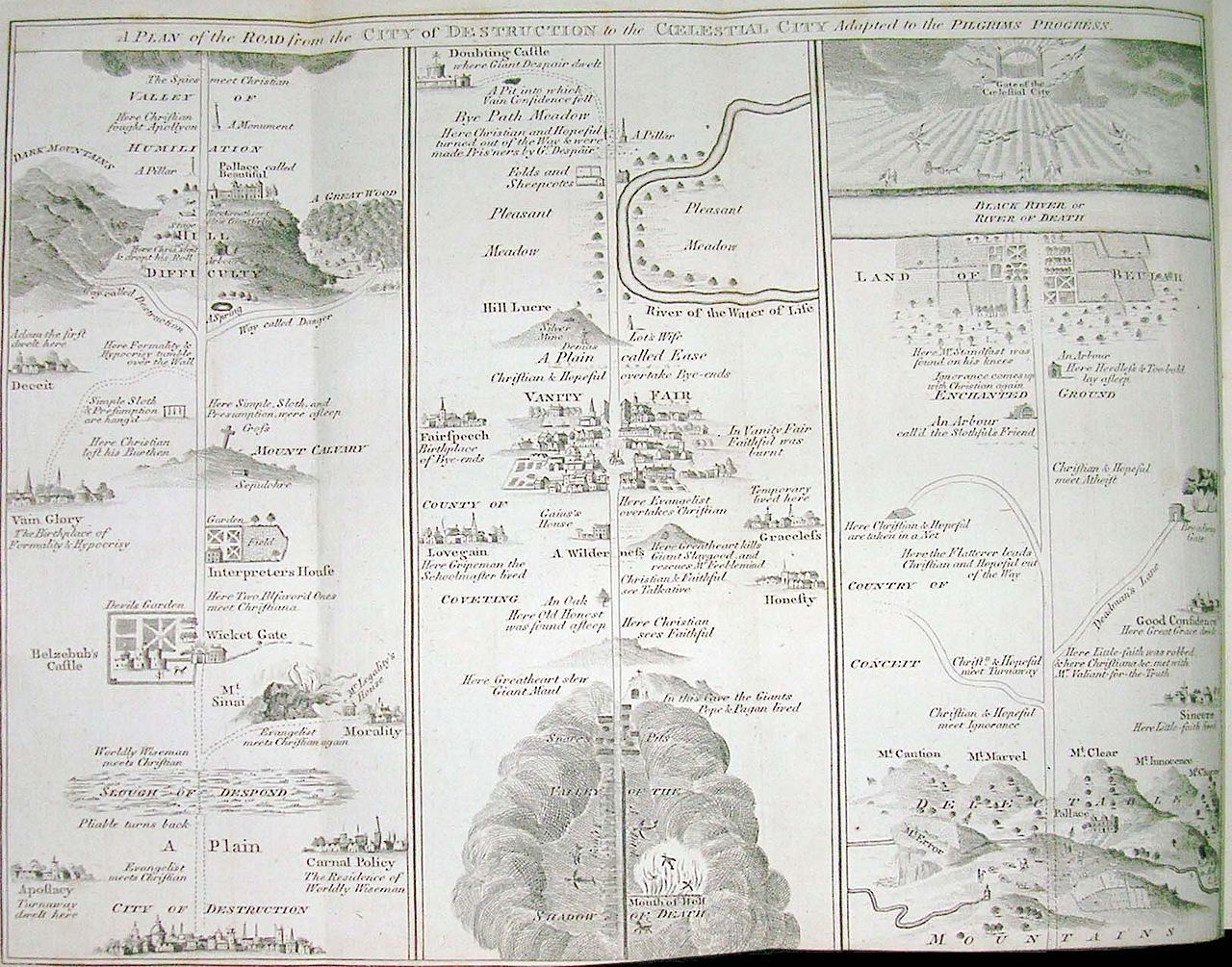
Agreement with God…walking with Him in all His commands requires repentance and faith. May God bless your walk and my walk with Jesus as we traverse this wonderful, difficult, muddy, beautiful trail through life’s race, until we reach the Celestial City.
Posted in burden, joseph, old testament, sin

Who was the real prisoner?

We know the story of Joseph and his brothers. Genesis 37 to 47 recounts Joseph’s two dreams of superiority over his elder brothers, his coat of many colors, the murderous plot to kill Joseph (Genesis 38:18) and his sale into slavery in Egypt. (Genesis 38:28)

We know that Joseph’s faith was great, and that despite arriving in Egypt as a slave, God was with him. Joseph rose to a place of prominence in Potiphar’s house, (Genesis 39:2), was then unjustly accused of rape and thrown into jail. Even in jail, Joseph’s faith was great and he rose to a place of authority within the jail, (Genesis 39:23) then to a place of prominence in all of Egypt. (Genesis 41:40). Twenty-four years or thereabouts pass before Joseph’s brothers return to Egypt a second time.

Initially the brothers had plotted to kill Joseph. But Judah said “What profit is it if we kill our brother and conceal his blood? Come, let us sell him to the Ishmaelites…” (Genesis 37:26a).

Indulge your sin of jealousy, conspiracy, fratricide, anger, AND profit from it.

So they did, they waffled on killing their brother, they ended up stuffing Joseph in a pit but then dragged him out when the caravan passed by so they could sell him into slavery. And that seemed to be the end of Joseph for the brothers, for all they knew.

Decades later, the famine had become very severe in all the surrounding region. Unbeknownst to the brothers, Joseph had foreseen the famine coming, thanks to a dream the LORD had sent to Pharaoh, and which Joseph and interpreted by His grace. Facing starvation, the brothers decided to travel to Egypt to buy grain, and they were of course faced with Joseph who had become vizier to Pharaoh, second most powerful man in all of Egypt. The brothers did not recognize Joseph, but Joseph recognized the brothers. Joseph accused the brothers of being spies and held them in custody. He told them to return to Canaan and bring back Benjamin, the youngest, to him. The brothers huddled and said to one another,

In truth we are guilty concerning our brother, in that we saw the distress of his soul, when he begged us and we did not listen. That is why this distress has come upon us.” And Reuben answered them, “Did I not tell you not to sin against the boy? But you did not listen. So now there comes a reckoning for his blood.” (Genesis 42:21-22).

Reuben was referring to the death penalty for taking a life, but there is also a spiritual aspect to this.

Source Wikimedia

Joseph had been in actual prison, and no doubt had some dark days. But the LORD was with Joseph, it says so during the recounting of Joseph’s life, many times. (Genesis 39:2, Genesis 39:21, Genesis 39:23…). When the LORD is with you, no matter the circumstance, one can dwell in joy and peace. (Philippians 4:4). Being “in the Lord” brings with it a sphere of peace that is unrelated to the circumstances of this worldly life. Being in the Lord means you possess an unchanging, invincible bubble of joy that none can penetrate. (Philippians 4:7).

Contrast Joseph’s spiritual success with his brothers’. When accused, they crumbled at once under the weight of their collective guilt. They’d been carrying this tremendous burden of guilt since the day they rode off, deaf to the pleas of the teenager they conspired to sell. It was their prison.

The scriptures declare we are all prisoners of sin, release only comes in faith in the Lord Jesus. (Galatians 3:22, John 8:34, Romans 7:14).

That is why Joseph, though imprisoned, was free; and the brothers, though free, were imprisoned. The burden of sin is heavy, but a clean conscience is light.

The solution:

Wretched man that I am! Who will set me free from the body of this death? Thanks be to God through Jesus Christ our Lord! So then, on the one hand I myself with my mind am serving the law of God, but on the other, with my flesh the law of sin.” (Romans 7:24–25).

Are you like Christian, the man in the allegory Pilgrim’s Progress by John Bunyan? Christian was weighted by a burden on his back of which he could not rid himself and was causing much distress.

Christian: I cannot go as fast as I would, by reason of this burden that is on my back.
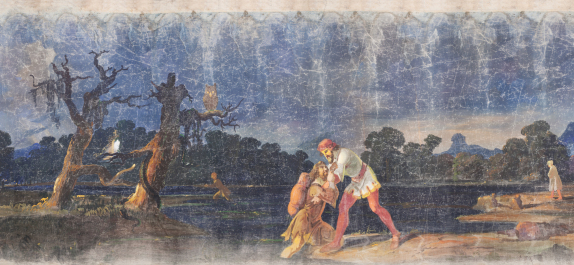
Now I saw in my dream, that just as they had ended this talk, they drew nigh to a very miry slough that was in the midst of the plain: and they being heedless, did both fall suddenly into the bog. The name of the slough was Despond. Here, therefore, they wallowed for a time, being grievously bedaubed with the dirt; and Christian, because of the burden that was on his back, began to sink in the mire.

Slough of Despond, Dyer Library, Saco, Maine

Evangelist explained to Christian why the ground was so bad at the Slough of Despond:

‘This miry Slough is such a place as cannot be mended; it is the descent whither the scum and filth that attends conviction for sin doth continually run, and therefore is it called the Slough of Despond: for still as the sinner is awakened about his lost condition, there ariseth in his soul many fears, and doubts, and discouraging apprehensions, which all of them get together, and settle in this place; and this is the reason of the badness of this ground.

Are you sinking deep into guilt and shame, as were Joseph’s brothers, weighted in guilt by their heinous acts? Do you long for freedom from sin and a cleansed heart, forgiven of the sins which are burdening you? Only Jesus can provide that, and He has.

Jesus answered him, “Truly, truly, I say to you, unless one is born again he cannot see the kingdom of God.” (John 3:3)

The time is fulfilled, and the kingdom of God is at hand; repent and believe in the gospel.” (Mark 1:15).

THE GOSPEL

Posted in ark, brimstone, sodom, wrath

He will shut the door; which side will you be on what that day arrives?

I like doors. How can so many rectangles be so different and so descriptive of who the people are who live behind them? I take pictures of doors a lot.

When I arrive home from a loud and busy day at school, being on the Spectrum, I’m especially sensitive to noise. I savor the quiet.  So when I unlock my door, open it and step inside, and close it behind me, I breathe an audible sigh of relief. Doors shut out the outside, barring unwanted things. Doors allow for rest and repose for those inside. Doors are amazing.

The Bible references doors frequently. One of the seven I AM statements Jesus made, in fact, was that He is the Door.

I am the door. If anyone enters by me, he will be saved and will go in and out and find pasture. (John 10:9).

Christ is the door. This he saith to those who pretended to seek for righteousness, but, like the Sodomites, wearied themselves to find the door, where it was not to be found. [Genesis 19:11] (Matthew Henry’s commentary on the whole Bible)

The Sodomites could not enter through the door. Neither could the unwise virgins.

And while they were going away to make the purchase, the bridegroom came, and those who were ready went in with him to the wedding feast; and the door was shut. “Later the others also came. ‘Lord, Lord,’ they said, ‘open the door for us!’ (Matthew 25:10).

The Lord does not open the door for the pleading virgins. He says He never knew them, and condemningly, the door remains shut.

The Ark which Noah built had a door, too. For 120 years, Noah, a preacher of righteousness, (2 Peter 2:5) pleaded with all to enter into God’s safety. They refused. They perished.

And those that entered, male and female of all flesh, went in as God had commanded him. And the LORD shut him in. (Genesis 7:16)

Our pastor preached on the Flood this past Sunday. He said that Noah and the family went inside, and then God shut the door. What a terrible thing it would have been for Noah himself to shut the door against his neighbors and friends. “But he wasn’t asked to shut it,” our pastor said. “God did it.”

The door was shut against the Sodomites. The door was shut against the unwise virgins. The door was shut against the antediluvian world.  In Isaiah 55:6-7 we read,

Seek the LORD while he may be found;
call upon him while he is near;
let the wicked forsake his way,
and the unrighteous man his thoughts;
let him return to the LORD, that he may have compassion on him,
and to our God, for he will abundantly pardon.

God is love and He is mercy. He is long-suffering, but His mercy, love, and patience will end. At a point at which only He knows, the door will shut, the number of the Church will be complete, (Romans 11:25-26) and He will call His Bride home to heaven. Then He will send His wrath upon the unrighteous and the Great Tribulation will be terrible in its effect. Though many will come to faith during that woeful time, they will not be protected from His wrath as the Church is promised to be. (1 Thessalonians 5:9).

Just because it’s not the rapture or even the Tribulation do not delay entering through the Door of Jesus Christ. There is no other way to obtain salvation, forgiveness of sins, and to escape the wrath. Flee from the wrath to come!

Who has warned you to flee from the wrath to come? (Matthew 3:7).
Who have fled for refuge to lay hold upon the hope set before us. (Hebrews 6:18). 

We will first consider the question of John the Baptist. “When he saw many of the Pharisees and Sadducees come to his baptism, he said unto them, O generation of vipers, who has warned you to flee from the wrath to come?” 

I have no doubt that the Pharisees and Sadducees were very much surprised to hear John addressing them in that way, for men who wish to win disciples ordinarily adopt milder language than that—and choose more attractive themes—for they fear that they will drive their hearers from them if they are too personal and speak too sharply. 

There is not much danger of that, nowadays, for the current notion now abroad is that Gospel ministers can sew with silk without using a sharp needle and that, instead of piercing men with the sword of the Spirit, they should show them only the hilt of it—let them see the bright diamonds on the scabbard, but never let them feel the sharpness of the two-edged blade! They should always comfort, console and cheer, but never allude to the terror of the Lord. 

Charles Spurgeon, Flee from the wrath to come! 

But I do not see fire and brimstone smoking in the distance, you argue. It is a fine and lovely spring day, and all things are going on as they have been? Why worry about some kind of wrath, which is hard to believe anyway?

Because He will shut the door! He hates sin and His long-suffering regarding sin will end, just as it did at Noah’s time.

Put to death therefore what is earthly in you: sexual immorality, impurity, passion, evil desire, and covetousness, which is idolatry. On account of these the wrath of God is coming. (Colossians 3:5-6)

At an hour or day you do not know but God knows, He will shut the door and rain down His anger. His plan is specific. It could be in ten years it could be in the next moment of time. God has planned it and it surely will come to pass, just as it did in Noah’s time.

In the six hundredth year of Noah’s life, in the second month, on the seventeenth day of the month, on that day all the fountains of the great deep burst forth, and the windows of the heavens were opened. 12And rain fell upon the earth forty days and forty nights. (Genesis 7:11-12).

And in addition, because God isn’t seeming to rain down fire and brimstone at this moment in your section of the ungodly world, does not mean He isn’t about to harden your heart so that you will never be able to go through that door of righteousness. (Romans 9:18). His wrath could manifest itself in your internal standing, and not just the external disaster of His visible wrath.

When the door shuts, you want to be on the right side of it. The palpable sense of relief and joy you feel when you arrive home to a loving family and a warm supper and rest and safety from the plagues of the day will be magnified a million-billion-google-fold when you are carried to the bosom of Jesus in His ark of safety and love, forgiven of sins and cleansed, washed and nurtured and grown when you receive your glorified body and given the mind of Christ in full, and knowledge of Him face to face.

Imagine what a day that will be. And because the terror of the LORD is real, imagine being a resident of Sodom, futilely beating on the door until you weary yourself. Imagine uselessly appealing to Jesus from outside to open it and hearing Him say, “I never knew you.”

On which side of the door will you be when you breathe your last, or when the wrath finally comes?

And to the angel of the church in Philadelphia write: ‘The words of the holy one, the true one, who has the key of David, who opens and no one will shut, who shuts and no one opens. (Revelation 3:7).
Posted in charismatic, discernment, strange fire

Strange Fire Q & A: How do we distinguish between the Spirit prompting us, and our own thoughts?

One hundred years ago, the modern Pentecostal movement was born. By October 2013 the Pentecostal movement has morphed into the Charismatic movement with its particular brand of false doctrine and had infected much of western Christianity and polluted quite a bit of Christianity abroad. The excesses of the movement include faith healing, reports of raising the dead, babbling tongues, alleged prophecies and direct revelation, disorderly church services and worse. The movement assaulted the sufficiency of scripture, the inerrancy of scripture, besmirched the name of Jesus Christ and damaged the faith of many. 

John MacArthur and his team at Grace To You took a stand against this movement and sought to bring clarity to why its doctrines needed comparison to the Bible correction. To that end, they organized the Strange Fire Conference, held in the fall of 2013. One of the main purposes of the conference was to initiate a substantive discussion about these issues. It achieved its purpose. Every sermon preached at the conference rebuked the movement simply by preaching the truth, and brought correct biblical doctrine to the fore. Given the outcry, it seems that the effect was immediate.

There were many good questions asked at the various seminars and Q & A sessions held during the conference period, but not all of them could be immediately answered. After the conference concluded, ministers and theologians at Grace Community Church and The Master’s Seminary wrote out answers to these unanswered questions, compiled them, and put them on one web page.

The page is a treasure trove of good, solid rebuttals to and practical helps about what to do if encountering Charismatic doctrines in your church, in your family, or in yourself.

~~~~~~~~~~~~~~~~~~~~~~~~

Epidemic in the Charismatic movement is the acceptance of personal revelations. Everybody and their brother it seemed is hearing from Jesus and were eager to share “a word from the Lord”. Such practices assault the sufficiency of scripture, of course, and must be corrected. However, one book is doing its level best to continue to attack the sufficiency of God’s word-  Jesus Calling. Jesus Calling was published in 2004, 16 years ago now, but is still on the bestseller lists. Friends, Jesus is not calling. he has spoken and His word is contained in the closed canon of scripture. The book has spawned a cottage industry of studies, devotionals, children’s books, and other material that has never stopped polluting the faith. Indeed, it seems to be increasing in its staying power and corrupt work.

Here is just one of the Questions and Answers in the Strange Fire Q&A page.

Q. How do we distinguish between the legitimate prompting of the Holy Spirit and our own thoughts or will?
A. While God can prompt us to think or do something, He has not given a clear and objective mechanism to identify when He is doing that. Since no one can identify with absolute certainty the source of the impressions he experiences, he must not ascribe authority to them or rely upon them as direction from God. John MacArthur gives good advice on that point in this downloadable audio. Mistaking a personal impression for divine guidance can lead us far astray from God’s will and may cause serious problems in our lives. 

How should a Christian respond to what he thinks might be a leading of the Holy Spirit? By comparing the impression with the objective, authoritative revelation God gave us—the Scripture. So, does the thought you are having agree with biblical theology? Is the action condemned or condoned in God’s Word? Will that choice ultimately bring glory to God? As you answer these questions in light of biblical teaching, you can know whether you are walking in the will of God.

I would also encourage you to listen to John’s two messages on the topic of understanding God’s will for your life. You can listen to the messages here.

Posted in eschatology, prophecy, rapture, second coming, tribulation

12 Things to Know about the Antichrist, or, Why Prophecy is Important

There are niche segments of study within the theological world that are more valued than others. Discernment gets a bad name, often rightly, because many discernment writers tend to drift toward a more “censorious spirit” as Gill said in his Exposition, stating, “Censorious persons rarely have the good will of their fellow creatures” in mind. However as the pendulum tends to swing, it makes a full arc and for a while discernment receives a poor reputation in total, even while there are good discernment writers and speakers out there (Justin Peters comes to mind) mixed in with the cranks and angry ones.

Though all Christians are called to discern between right and wrong, some have been given extra discernment as a gift of the Holy Spirit (1 Corinthians 12:10). While on the one hand it’s not to be abused, it’s also not to be dismissed. (FMI on the gift of discerning of spirits, go here).

Eschatology is another area of study which also receives a poor reputation, in no thanks to many Christians themselves. Eschatology is the study of last things, AKA, prophecy, especially the period since the First Coming of Jesus Christ. Though it’s forbidden, some date-set and of course the end date at which their predictions pass with no fulfillment make a mockery of Christ’s name to unbelievers and a disappointment to the believers who were drawn in. Others who study eschatology badly simply perpetuate ridiculous theories concerning the end times. Others wrongly insist that eschatological subjects are biblically unknowable.

My blog covers three areas; discernment, prophecy and encouragement. I’ve seen the pendulum swing from side to side in each of these areas over the last 7 years of daily blogging here at The End Time. I have maintained from the beginning of my blogging life and my Christian witness in real life, that prophecy is important – because it was important to Jesus. Last days are spoken of in almost every book of the New Testament. Paul spent a good deal of time teaching it to the Thessalonians. Even as the babes in Christ that they were, Paul pulled out all the stops to ensure that these Thessalonian Christian babies knew the importance of living with a very present knowledge of Christ’s imminent return. Doing so gives us a heart for the lost, a fervency in life, and a strength to look forward beyond persecution or trouble. I refuse to marginalize prophecy as a legitimate area of study.

Here is Michael Holst stating the point of eschatology so much better than I ever did.

12 THINGS TO KNOW ABOUT THE ANTI-CHRIST
by Matthew Holst • April 01, 2016

One of the Apostle Paul’s great preoccupations in both of his letters to the church at Thessalonica is the second coming of Christ. He was not only concerned with getting the doctrine “right” but also with the great pastoral implications of such teaching. In 1 Thessalonians he writes concerning the second coming of Christ in relation to the resurrection of the dead and the gathering together of saints who are alive at that time. In 2 Thessalonians he reinforces what he had already taught at Thessalonica (2 Thess. 2:5) concerning the dangers of the last days, specifically with regard to the great apostasy in the church induced by the revelation of the Man of Lawlessness. 

Depending on your eschatological framework, your identification of the Man of Lawlessness and his activities may differ from what I wish to offer in this post. Coming to terms with the fact that there will indeed be a Man of Lawlessness plays an important role in the life of the believer as he or she eagerly waits for the day of Christ’s coming. In days of relative peace, we must ready ourselves and forthcoming generations–especially our own children–for the days of anarchic deception that will accompany the Man of Lawlessness. 

We, in the Calvinistic and Reformed church, have not done justice to the Scripture’s teaching on this matter. We often rightly respond to the “Left Behind” industry with dismay and sarcasm. In so doing, however, we have, perhaps inadvertently failed to sufficiently and soberly grasp Scripture’s teaching on this period of history which will be instrumental in bringing about a catastrophic and irreversible apostasy. Here then, are twelve biblical observations about the Man of Lawlessness (MoL) to help prepare us for that day.

For the rest of Mr Horst’s essay, go to the Alliance of Confessing Evangelicals.

I’d like to reiterate that the Rapture (when Christ calls for His Bride in the air, 1 Thessalonians 4:15-17) and the Second Coming (when His feet touch down at the Mount of Olives at the end of the Tribulation, Mt 16:27, Zechariah 14:4) are two separate events.

Posted in dscernment, false teacher, joel osteen

Joel Osteen’s evil gospel

The following Christian Post article was published this week.

Lakewood Church Pastor Joel Osteen says he isn’t cheating anyone by not talking about Hell and repentance, insisting that people feel guilty enough already, and he wants to lift up believers instead of bringing them down. 

When asked in an Easter Sunday interview by CBS News’ “Sunday Morning” program “Do you feel like you’re cheating people by not telling them about the Hell part? Or repentance part?” Osteen answered: “No, I really don’t, because it’s a different approach.”

Please understand how evil Joel Osteen is. Before we go any further, let’s have a biblical discussion of the definition of evil. From Bible Study Tools:

This essay uses the term “moral evil” to include both social offenses (ethics, murder, theft) and cultic sins (those offenses aimed directly against the deity- blasphemy, idolatry). Moral evil, therefore, whether its setting be cultic or social, when carried out may be considered a sin. Cultic values are addressed in the first four of the Ten Commandments (Exod 20:3-11; Deut 5:7-15) and by the first of Jesus’ “Great Commandments” (Matt 22:37-40; Mark 12:30; Luke 10:27 ; cf. Deut 6:5); ethics are considered in the last six of the Ten Commandments (Exod 20:12-17 ; Deut 5:16-21 ) and by the second “Great Commandment” (Lev 19:18 ). 

If God is the definer of what is good (2 Sam 10:12; Mark 10:18; Luke 18:19), right (Gen 18:25), and just (Job 34:12 ), it is not surprising that the Bible never attributes moral or cultic evil to him (Job 34:10). Indeed, he hates evil (Psalm 5:6) and is the avenging judge who punishes those who practice it (Isa 31:2 ; Micah 2:1). 

Because what is right was what was ordained by God, and what is wrong was what was proscribed by him, deviation from this paradigm constitutes what is evil. The most common term for cultic evil in the Old Testament (used over 200 times) is awon, “perversion, ” possibly related to the verb awah, “to be bent,” “to twist.” As such, it refers to what is theologically perverted in some way. 

 Variance from God’s moral law is evil. Theological perversion is evil.

In these days of tolerance and all-inclusiveness, people are reluctant to call evil what it is. The Bible, however, is clear that anything not of God is of satan. And satan is evil.

A different Gospel is evil.
Workers of iniquity are evil.
Immorality is evil.
Deluding people is evil.
Works salvation is evil.

That ground laid, here is an article which appeared this week in the Christian Mail, originally in The Christian Post

Joel Osteen Says He’s Not Cheating People by Not Preaching About Hell

Lakewood Church Pastor Joel Osteen says he isn’t cheating anyone by not talking about Hell and repentance, insisting that people feel guilty enough already, and he wants to lift up believers instead of bringing them down. 

When asked in an Easter Sunday interview by CBS News’ “Sunday Morning” program “Do you feel like you’re cheating people by not telling them about the Hell part? Or repentance part?” Osteen answered: “No, I really don’t, because it’s a different approach.

He continued: “You know, it’s not hellfire and brimstone. But I say most people are beaten down enough by life. They already feel guilty enough. They’re not doing what they should, raising their kids — we can all find reasons. So I want them to come to Lakewood or our meetings and be lifted up, to say, ‘You know what? I may not be perfect, but I’m moving forward. I’m doing better.’ And I think that motivates you to do better.” 

Osteen has on numerous occasions denied that he peaches a “watered-down” version of the Gospel, stating in a February 2012 message that for many years religion has pushed down people, and people have been told that they can’t measure up to God.

“My goal is to make God good …”

His goal is to deny the Gospel, omit the Bible parts he personally finds unpalatable, and to REMAKE God in another image. This is evil.

But are Osteen’s followers hapless victims of an unscrupulous wolf? yes. And no.

For the time is coming when people will not endure sound teaching, but having itching ears they will accumulate for themselves teachers to suit their own passions, (2 Timothy 4:3).

Dishonorable people who already know they are guilty, want to be indulged in their sin, and heap up teachers like Osteen to suit their dishonorable needs. And unscrupulous Osteen is only to happy to modify the Gospel in order to retain those dishonorable people. It is a match made in hell.

Here is Justin Peters explaining Osteen’s theology and how it does not plumb with scripture. The 3-minute video summarizes,

Joel Osteen is a phenomenal false teacher and deceiver. He has attached the “Christianity” brand to his self affirmation, feel good pagan religion, and those who lust after his trinkets follow him by the millions down that broad road to destruction. Evidently it must be broad in order to accommodate their vast numbers.

Justin Peters in his series Clouds Without Water (http://justinpeters.org/) does a masterful job exposing the Word of Faith heresy and calling true believers in the Lord Jesus Christ to more serious discernment… because the hour is real late folks…

Here is John MacArthur rebuking Joel Osteen’s theology. The 6-minute video summary states:

Pastor John MacArthur exposes Joel Osteen as a pagan religionist, a quasi-pantheist, and an agent of Satan. He critiques Joel’s book, quotes, and prayer and compares them with what the Bible teaches. This is an excerpt from John MacArthur’s sermon, “A True Knowledge of the True God.” Used by permission. You can read the transcript, watch, or download the full video here: http://www.gty.org/Resources/Sermons/90-397

Posted in judge not, paul washer

Paul Washer’s Nervous Breakdown: or, What They Really Mean When they say ‘Judge Not’

Video is under two minutes long-

Gill’s Exposition says of the verse in Matthew 7:1- [emphasis mine]

Judge not, that ye be not judged. This is not to be understood of any sort of judgment; not of judgment in the civil courts of judicature, by proper magistrates, which ought to be made and pass, according to the nature of the case; nor of judgment in the churches of Christ, where offenders are to be called to an account, examined, tried, and dealt with according to the rules of the Gospel; …

It would be well, if persons subject to a censorious spirit, would put themselves in the case and circumstances the persons are in they judge; and then consider, what judgment they would choose others should pass on them. The argument Christ uses to dissuade from this evil, which the Jews were very prone to, is, “that ye be not judged”; meaning, either by men, for such censorious persons rarely have the good will of their fellow creatures, but are commonly repaid in the same way; or else by God, which will be the most awful and tremendous: for such persons take upon them the place of God, usurp his prerogative, as if they knew the hearts and states of men; and therefore will have judgment without mercy at the hands of God

Posted in encouragement, faroe islands, missionaries

God’s word goes out and does not return void: Faroe Islands

I love mission stories. It warms my heart to hear tales of past missionaries’ work, and the fruit their work might be bearing nowadays. I love to hear of people turning to solid ministries to seek truth in sermons, books, or commentaries. That’s why this monthly letter I receive from John MacArthur’s Grace to You ministry was a refreshing balm to a weary soul. I hope it encourages you as well.

Source: Google map

———-begin excerpted letter————-

The Faroe Islands 

It’s hard to fully express our overwhelming joy as we see the Lord blessing and working through the ministry of Grace To you. He is doing glorious things all across the planet- including in places I’ve known little about until recently. 

The Faroe Islands is one such place. After a worship service at Grace Community Church, where I pastor, a man named Bernhard introduced himself to me. While visiting the United States on business, he wanted to meet me so he could express his gratitude for Grace to You’s ministry to him and others in his obscure corner of the world. 

The Faroe Islands comprise eighteen small, rocky islands halfway between Norway and Iceland. Their jagged cliffs are lashed year-round by powerful Arctic winds. While the natural scenery is stunning, tourism is limited due to the nation’s remote location. The major industry is commercial fishing in the volatile North Sea. 

Over the centuries, the Faroese people have endured Viking invasions, the Black Death, (which killed half the population), and many seagoing tragedies. those historic challenges, along with isolation and elements to which the Faroese are exposed, have forged a small but resilient population of just 50,000. As you can imagine, reaching the Faroese with the gospel also involved some resilience. 

No true evangelistic work ever took root on the Faroe Islands until 1865 when a Scottish missionary, William Sloan, arrived. While in Scotland, Sloan had been forced by his fiancee to choose between marriage and the Faroe mission field. To the benefit of the Faroese, including those living today, he sailed alone to fish for souls in a land of pagan fishermen. Through many years of going door to door selling books and conducting Bible studies, William Sloan established thirty-six churches spread among the islands. Evangelicals in the Faroes now make up one of the highest percentages of evangelicals on any nation on earth. 

I didn’t even know that population existed until the last few days. But my education has been rapid thanks to my encounter with Bernhard. he gave me two fascinating books, which I immediately read. But the letter Bernhard handed me made a greater impression, a letter that in a sense, involves you and friends like you.

John, my dear brother, what a blessing your ministry has been in my life. I have listened to many hundreds of your sermons over the past five years. Without your teaching, how empty my understanding and life would be. The Faroese church desperately needs a reformation. Like churches elsewhere, our churches are really falling apart.  That is why Grace To You’s online teaching is such a sweet and fresh breeze to our hearts.  At forty-six, I am the oldest of five brothers; we all listen to your sermons. We have your commentaries and many of your other books as well. many of my friends also listen. I guess what I’m trying to say is that we really love you and hope to see you in the Faroes sometime.

God’s word never returns void- it always accomplishes His divine, saving sanctifying, comforting, and equipping work. While we call ourselves a mass-media ministry, our focus isn’t the size of our reach. It’s not about numbers of people.  We are all about unpacking God’s word for individual men and women, verse by verse. There are no unimportant issues or people. And thanks to the technology at our disposal,  there’s essentially no area too small or remote to reach. What an exciting time to minister biblical truth.

———-end excerpted letter————-

Source: Google maps

Further reading

CNN: Faroe Islands, Bleak, Beautiful Land of Grass Roofs

The Atlantic: Faroe Islands in Pictures

Faroe Islands, Backbone of our monarchy

When he arrived 27 years old in 1865 he had to start from scratch.  The language was Faroese, but the language of the church and the whole Civil Service was Danish.  He worked 13 years without seeing any fruit and being often scorned by the dead Lutheran state church –  but then awakenings broke out, and many new assemblies were spontaneously planted.

Posted in challies, chirs powers, chris koelle, full of eyes, visual exegesis, visual theology

Visual Exegesis/Visual Theology: Bunyan’s Order & Causes, Annie Vallotton, Chris Koelle, Challies, Chris Powers animation ‘It is finished’

I have written before about an extraordinary young man named Chris Powers. He is using his artistic gift for the glory of God in creating visual art for the world. He calls his art and animations “visual exegesis” because he uses a verse and creates an artistic rendition of the verse or doctrinal concept in visual form. This is extraordinarily difficult to do.

Famously, John Bunyan did this with words and pictures in his allegorical book Pilgrim’s Progress.

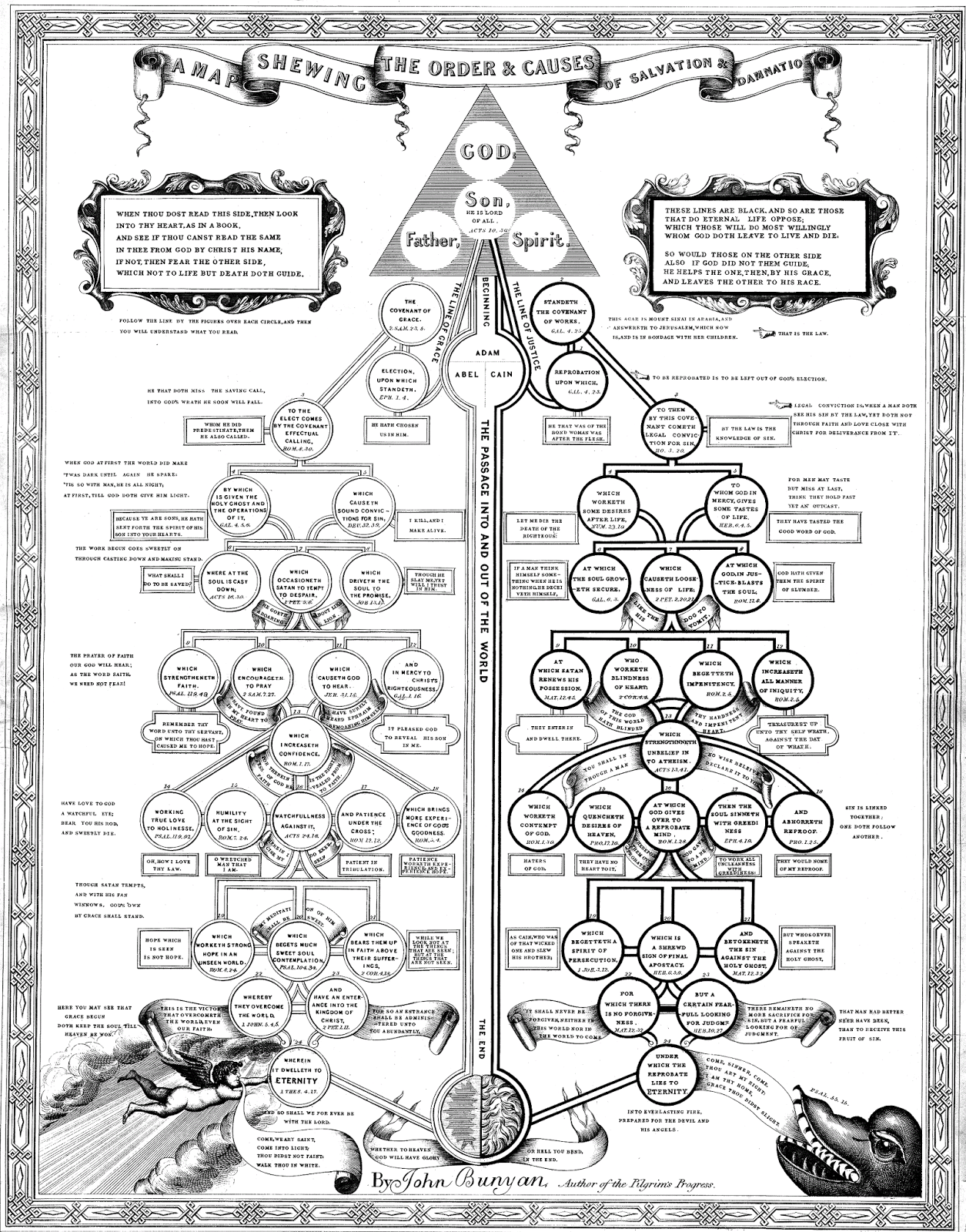
Bunyan also made the first visual theology chart in Christendom when he created his poster Order and Causes of Salvation and Damnation-

Source

Chris Koelle is an artist who worked with Matt Dorff in collaboration to create an artistic rendition of the Book of Revelation. There are multiple difficult images in that apocalyptic book of the Bible and the doctrines are difficult too. Yet some talented people have an ability to create images that communicate these doctrines with clarity and accuracy without disrespect to the Lord or the Holy Spirit who inspired the words. Koelle’s images are drawn in complicated, eerily sinister yet glorifying ways.

Another noted Bible artist is Annie Vallotton, whose images are as far from Koelle’s as it is possible to be. Vallotton’s illustrations contain just a few clear, simple pen lines, yet are just as evocative as Koelle’s grand and complex illustrations. Vallotton illustrated the Good News Bible and created about 500 images for the finished product. However Vallotton said in an interview that for each image she might make up to 90 drafts until she felt the verse’s message was clearly communicated in the image.  You can read about her here, or more in depth here. Or here.

The largely expressionless figures make little attempt to interpret the text, but rather invite the reader to do so.

Job railing against the LORD’S ‘injustice’.

I’d like to add Chris Powers to the list for your consideration. I’ve been watching his growth as an artist and as a Brother in the faith for some years now. His work is solidly dedicated to the Lord. He does what he calls visual exegesis, to what Challies calls “visual theology“.

We live in a visual culture. Today, people increasingly rely upon visuals to help them understand new and difficult concepts. The rise and popularity of the Internet infographic has given us a new way to convey data, concepts, and ideas. But the visual portrayal of truth is not a novel idea. God himself used visuals to teach truth to his people. If you have ever considered the different elements within the Old Testament tabernacle or temple you know that each element was a visual representation of a greater truth. The sacrificial system and later the cross were also meant to be visual—visual theology. (source)

Tim Challies’ book Visual Theology goes on sale next month. I’ve already pre-ordered my copy.

Powers is completing his art book titled “Visual Exegesis, Vol. 1” a book which has his visual theology on one page and his explanation on the opposite page. It will be ready for publication on Amazon in a few weeks as of this writing. You can learn more about the upcoming book, here. You can take a sneak peek at the new book, here. You can see Chris explain the book, here and take an even longer sneak peek. Here is Chris explaining his art book, Visual Exegesis:

[I]n the upcoming art book, I try to highlight the exegetical element in each image. The book has a picture on one page and a description of how the text was translated into image on the other. My goal here is to strengthen the tether between word and image so that the imagery might deepen our understanding of scripture, and scripture would enlighten our understanding of the image. 

It is a stunning art book:

Mainly, Chris Powers makes animations. To that end, he has completed a stunning new animation to the song It Is Finished. I’ll post the video below. Below that is a video explaining his thought process for why he chose to depict certain arts of the song the way he did. Both videos are worth a look.

Powers’ work is freely available. I repeat: he is giving his animations and study curricula, tracts, and other material away for free. He is also creating lesson plans and guides to accompany each animation, so they can be used n small groups. He has volunteer translators translating the work into Spanish and Portuguese. His website is fullofeyes.com. He is on Patreon and Gaius, if you want to make a one-time donation or support his work each month, even at the $1 level.

I personally believe his work is making a tremendous impact for the kingdom and I am fervently using this medium to promote him and his work at Full Of Eyes. I hope you feel his work is worthy of praise also, and promote him within your sphere.

Posted in discernment, parable, tares, weeds

Parable of the weeds (hint, it’s not about the church)

The Parable of the Weeds


He put another parable before them, saying, “The kingdom of heaven may be compared to a man who sowed good seed in his field, but while his men were sleeping, his enemy came and sowed weeds among the wheat and went away. So when the plants came up and bore grain, then the weeds appeared also. And the servants of the master of the house came and said to him, ‘Master, did you not sow good seed in your field? How then does it have weeds?’ He said to them, ‘An enemy has done this.’ So the servants said to him, ‘Then do you want us to go and gather them?’ But he said, ‘No, lest in gathering the weeds you root up the wheat along with them. Let both grow together until the harvest, and at harvest time I will tell the reapers, Gather the weeds first and bind them in bundles to be burned, but gather the wheat into my barn.’” (Matthew 13:24-30)

Donald Grey Barnhouse, in his sermon “What is God Doing Today?” explained,

Now, the Lord Jesus Christ taught clearly that we are in this age to sow the seed – that is, to spread the Gospel. But we are to expect that only part of the seed will fall on good ground, that is, believing hearts. And that the rest will not produce good fruit. The fault is not with the seed, but with the hearts. Christ taught that satan would plant counterfeit believers in the midst of true believers so that it would be difficult to tell the real from the false. The true and the false, the real and the counterfeit grow together until the harvest which is the end of the age in which we live. These truths He taught in the Parable of the Sower and the Wheat and Tares. And he gave the explicit interpretation Himself, not leaving it to man’s imagination. The good and the bad are to grow together. Neither will destroy the other. God will take care of the separation.

Matthew Henry:

So prone is fallen man to sin, that if the enemy sow the tares, he may go his way, they will spring up, and do hurt; whereas, when good seed is sown, it must be tended, watered, and fenced.

EPrata photo

What is a weed? It is useful to study the properties of the object of the agricultural metaphor which the Lord in His wisdom used to explain the parable to us. As we read these properties of weeds, let’s keep in mind how these properties mirror the properties of the unbeliever. At the Penn State Extension website, we read Introduction to Weeds,

–a plant growing where it is not wanted
–a plant whose virtues have not yet been discovered. (R.W.Emerson). [Ed note: i.e. a virtueless plant]
–plants that are competitive, persistent, pernicious, and interfere negatively with human activity (Ross, et. al.)
–No matter what definition is used, weeds are plants whose undesirable qualities outweigh their good points, according to man.

These qualities of weeds certainly mirror the unbeliever’s qualities. Unbelievers in the world interfere with our activity, in pernicious, persistent, and competitive ways. This is because they are sown by satan. To continue looking at weeds:

Certain characteristics are associated with and allow the survival of weeds. Weeds posses one or more of the following:

a) abundant seed production;
b) rapid population establishment;
c) seed dormancy;
d) long-term survival of buried seed;
e) adaptation for spread;
f) presence of vegetative reproductive structures; and
g) ability to occupy sites disturbed by human activities.

I was particularly struck by the notion that weeds engage in “rapid population establishment”. Satan does not rest. One weed soon leads to others.

Weeds are troublesome in many ways. Primarily, they reduce crop yield by competing for water, light, soil nutrients, and space.

The parable is fairly simple, as parables go. The field is not the church. The Lord said the field is the world. (Mt 13:38). If we interpret the field as the church, then we would have a conflict with Matthew 18:15-17, which says to put unrepentant sinners out of the church, i.e. uproot them. So the field is the world, and the unbelievers are sown by satan.

In this tolerant, all-inclusive age, some people chafe when we say that there are two kinds of people in the world, those who are children of the Kingdom and those who are children of satan. We hate to think that there is no middle ground, or love to think that there must be ‘some good’ in people, they’re kinda, almost, mostly good. But no. If a person is not under the control and sovereignty of the Lord Jesus, they are under the control and sovereignty of satan. Wheat or tares. There are no hybrids.

The parable is telling us that we believers are sown into the world by Jesus. Let’s stop there. How wonderful! To be specifically planted by Jesus in the time and in the place He desires us to be grown is a very comforting thought. Matthew Henry wrote the comment to the verse by saying, “when good seed is sown, it must be tended, watered, and fenced,” and how wonderful it is to know we are being grown, nurtured and tended by Christ Himself.

The last part of the parable reminds us that Christ will do the separating at the end of the age. Again, this does not mean pastors aren’t to pursue biblical correction or even excommunication for unrepentant church members. It means that the world’s harvest will be accomplished by Jesus, since he has the power and discernment to see men’s hearts.(John 2:24).

The tares’ fate is to be thrown into the fire, and a woeful moment that will be for them, but for believers it will be an honor to watch Jesus right everything and avenge His name. (Revelation 6:10, 19:2).

Angels if you notice are God’s ministers of judgment. They often carry out the judgments God pronounces. They did at Sodom, also, it was an angel of the Lord that struck Herod down, and throughout Revelation angels execute the dread judgments, to name a few examples. And at the end of the age, they are the harvesters. Revelation 14:16 says,

So he who sat on the cloud swung his sickle across the earth, and the earth was reaped.

The five worst words in the Bible in my opinion. “…and the earth was reaped”. It demonstrates the power and might of the Lord to easily punish men. It also shows the meager and measly efforts of man to thwart Him. It is not possible. It is a terrifying verse because at some point all things will not go on as they have been. There is an end day. It will end for the tares. But it will continue in glory for the wheat!