
The title for my pithy sayings comes from Proverbs 1:8-9,
Hear, my son, your father’s instruction,
and forsake not your mother’s teaching,
for they are a graceful garland for your head
and pendants for your neck.

The title for my pithy sayings comes from Proverbs 1:8-9,
Hear, my son, your father’s instruction,
and forsake not your mother’s teaching,
for they are a graceful garland for your head
and pendants for your neck.

A theological term referring to the relation of God to creation. God is “other,” “different” from His creation. He is independent and different from His creatures (Isaiah 55:8-9). He transcends His creation. He is beyond it and not limited by it or to it.
Source unknown, found at Bible.org
Transcendence: God’s separateness or otherness from the creation and the human race.
Source Biblical Doctrine, MacArthur & Mayhue Eds
Oh, the depth of the riches and wisdom and knowledge of God! How unsearchable are his judgments and how inscrutable his ways! “For who has known the mind of the Lord, or who has been his counselor?” “Or who has given a gift to him that he might be repaid?” For from him and through him and to him are all things. To him be glory forever. Amen. (Romans 11:33-36).
For my thoughts are not your thoughts, neither are your ways my ways, declares the Lord. For as the heavens are higher than the earth, so are my ways higher than your ways and my thoughts than your thoughts. (Isaiah 55:8-9)
Can you find out the deep things of God? Can you find out the limit of the Almighty? (Job 11:7).

Today in evangelical circles we are dealing with an unthinkable situation: serious discussions of the possibility of a female President of the Southern Baptist Convention, and it’s Beth Moore of all people. I don’t think it will actually happen, but the trail has been blazed. The tweets have been sent. News articles have been written. The discussions have been significant. The possibility has been raised and not rejected. Next time the discussions will go further. That is the nature of sin.
We are reading news articles like this:
The Case for Electing Beth Moore President of the SBC
and seeing tweets like this:

And we wonder, how did we get here? Slowly, incrementally, just as all sin happens. Sin has been tolerated, and once the camel has his nose under the tent, soon he enters fully.
Back in 2012 I wrote about how this creeping feminism would affect and harm the greater body. I said that the constant scenes of forward living women preaching and teaching men, being CEO of their own corporations ministries, globe-trotting, leaving children at home, and living lives that in the secular world are be called feminist, will come to roost.
Well, it has.
What you read below is an edited re-post of what I wrote in 2012. I pray that God has mercy on the young women who see the Christian feminists and become confused as to their roles. I pray that He is forbearing and patient a while longer, so the Bible teachers who live these Christian feminist lives would come to repentance. I pray He has mercy on the husbands who allow it. God did give the metaphorical Jezebel time to repent, and her daughters too, in Revelation 2 letter to the church at Thyatira. But He also threatened to strike her and her followers dead if they did not, and to repay those who tolerated her according to their deeds. Sin of whatever nature is serious, as when it is in the form of tolerating a false prophetess!
_____________________________
There are some celebrity woman Bible teachers today who say that they live a life of biblical womanhood but their lives show something different- and it’s equal to the secular feminists. Let’s take a look at what the new Christian feminism is.

“A woman needs a man like a fish needs a bicycle” was the feminist motto of the 1970s. The implication was that women didn’t ‘need’ a man at all.
Readers of the blog already know that I am not a fan of feminism. I wrote an essay called “The Eternal Discontent of Feminists“, in which I looked at the hypocritical standard secular feminists themselves apply to other women who are perceived as not doing feminism right. That, more than anything, lets us know that feminism is not about equal rights for women, it is about satan’s sowing of discontent among women and causing a division away from the Godly roles He has set up.
Feminism has encroached into Christianity. I think most people are still slumbering because I haven’t seen a hue and cry against it. Granted, it is subtle, especially in the women who claim to be evangelical in words but actually live a feminist life.
 |
| Source |
There are now a number of popular Bible teachers/preachers who travel widely, filling arenas, marketing their books, selling their products, and leaving the husband at home to take care of the kids. These women have assumed the lead role in the marriage and are the main breadwinner, and/or the husband is the helpmeet, usually having set aside his career to work in his wife’s corporation ministry. While these women call what they are doing “ministry,” I call it “feminism”.
As with so much in evangelical Christianity, the waters are increasingly muddied on what should be clear. What is biblical womanhood? In today’s world is it the Bible preaching, sometimes ordained woman, traveling cross country, her husband at home helping with the kids, often having quit his job to help his famous wife perform her ministry?
Or it is a woman with a terribly flawed view of the Bible who sits in a tent when she has per period as a practice for what it was like to be a woman of the Bible for one year?
Or it is a new feminist who is open to women being ordained, to preaching, and/or to acceptance of gays into leadership positions while touting the rising up of women from subjugated roles?
 There is something in between. It’s women who claim to be submitted Christian wives who just happen to teach the Bible but really are feminists living a life Gloria Steinem would envy. They are a new crop of what I’ll call Christian secret feminists. They live a feminist life inside of Christianity but call it ministry.
One woman who has much to answer for about this new role is Beth Moore. She was the one who broke new ground in how far a woman could go in attaining celebrity status, in workplace and homelife gender reversals, in being the main and sustained breadwinner of the family, and pr/teaching in a church and in the world. Mrs Moore, while speaking conservative values cloaked in all the right Christianese, lives a very forward life. You will see more details on this below.

A spiritual daughter of Mrs Moore in this generation of new Christian secret feminists is Christine Caine. Mrs Caine’s language is less cloaked in her declarations of what women can or should see as their roles in Christian home and work life. Mrs Caine is an ordained minister and part of Hillsong Church in Australia.
For example, in an interview reassuring Pastor’s wives that despite Caine’s visible usurpation of the traditional husband-wife roles, that their stay-at-home role is still viable: “Predominantly I might teach a little bit and I step out into what would be the more classic leadership gift, so a lot of people say ‘I’m not that, so therefore I must not have a role to play…'”
It is no wonder that woman are confused when they see leaders or peers taking on the ‘classic leadership gift’. And that is one way they cloak their rebellion in Christianese: it is not a role or a job, it is a ‘gift’.
Christine continues in the interview by acknowledging that there are “women who are gentle and loving and nurturing”, and there are other “women who come along side and do a bit more “non-gentle prodding help people go to the next level.” But that in “no way diminishes your role.”
Really? Sure it does. It sets up women to be discontent. By justifying herself in the leadership role as a gift from God (and who can argue with that?) and acknowledging that there are ‘levels’ and women need to get to, but at the same time saying it is important to stay at home and be nurturing…she has completely confused any listener as to the clear guidelines of the notion of what Biblical womanhood is. She says one thing (and not too clearly, either) and does another.
Jennie Allen is founder of of If:Gathering and one of the youngest of the feminist-living ladies on this list. IF is a tax exempt corporation, and shows founder Jennie as President and CEO, working 40/hours week, with husband Zac as board chair working 10 hours week. Allen is quoted in Christianity Today article as saying, “We’ve been slow to step into our giftedness or strengths. For a long time, that wasn’t an option,” said Allen.”
Discernment tip: one way to detect if a person is in the Word is to see if what they say and what they do match up over time. If what they say and what they do are different, run away.
Mrs Caine’s reassurances use a neat scriptural twist. The way satan works with any woman’s objection to women taking on home or ministry leadership roles is to acknowledge that the women feel weak or unsure in them, but to get around it by assuring them that all they need to do is have courage to step out and let Jesus work through their weakness, citing 2 Corinthians 12:9. Or simply as Jennie Allen encourages, ‘just do it because the time is now’.
In that same interview, Mrs Caine said, “The only way I was able to continue in my role is that my senior pastor’s wife stepped into her role and chose not to be threatened or intimidated because the giftings were different.”
Oh, I get it. Women are now complementarians to each other. It’s the height of irony that again, unwittingly, Mrs Caine acknowledges that these new ‘roles’ set up discontent and that she is glad that in her situation at least, the pastor’s wife wasn’t jealous of her fabulous gift of leadership. A good portion of the middle of the interview is Caine’s description of how women are to be complementarian of each other in church settings. One takes the wifely nurturing role so that the younger ones coming up can step out, so to speak.
Now, female support between and among ministries is a good thing, and it is biblically commanded. (Titus 2:4) but the description in Titus is for elder women to teach the younger is in their biblically defined helpmeet role, not to be a helpmeet to other women who usurp into classic male roles. It is another twist of using the Bible to justify what is not proper.
Priscilla Shirer is another of these new Christian secret feminists whose life is more forward than their spiritual mothers. I’ve posted this before but it bears repeating:

“This NY Times article notes that “Priscilla Shirer’s marriage appears to be just the sort of enlightened partnership that would make feminists cheer.”
The article describes what makes the liberal and secular newspaper and their readership, cheer. Mr Shirer, who quit his job to serve his wife’s organization ministry, spends much of the day negotiating Priscilla’s speaking invitations and her book contracts. In the afternoon it’s often Mr Shirer who collects the boys from school. Back home, Priscilla and Jerry divide chores and child care equally.
“Jerry quit his job to run his wife’s ministry. Priscilla now accepts about 20 out of some 300 speaking invitations each year, and she publishes a stream of Bible studies, workbooks and corresponding DVDs intended for women to read and watch with their girlfriends from church. Jerry does his share of housework and child care so that Priscilla can study and write. He travels with his wife everywhere. Whenever possible, they take their sons along on her speaking trips, but they often deposit the boys with Jerry’s mother,”‘ states the article.
If you delete the name Priscilla Shirer and substitute Gloria Steinem, and change the word ministry to job you have a description of a life that any feminist would be proud of.
By now Beth Moore is one of the elders in this realm. Moore has been “on the ministry circuit” for 15 years. Thus, her rebellious example has been long in view for many women who have watched her since they were an impressionable teen. So is Sheryl Brady and Joyce Meyer. Those women were the trailblazers for women in male leadership ministry. Newcomers arriving on the scene such as Priscilla Shirer or Christine Caine, and the younger Rachel Held Evans and Jennie Allen, have learned from the best of the Christian secret feminists. For example:
Beth Moore said to Christianity Today in 2010 that her man demanded a regular home life so she only travels every other Friday and comes right back home the next day.
“We walk the dogs together and eat out together all the time and lie on the floor with pillows and watch TV,” Moore says. “My man demanded attention and he got it, and my man demanded a normal home life and he got it.”
Aww, isn’t that nice. But it’s disingenuous in the extreme. The reality is that Mrs Moore is not only gone from home at least 20 times per year on her Living Proof tours, which is a lot if you have kids and a husband. Mrs Moore appears weekly on the Life Today television show, travels for weeks on book tours, where she expounds on the burning question all women in America are apparently asking, “How can women find validation without a man’s affirmation?” and which her book So Long, Insecurity apparently attempts to answer.
She also spends extended private time for weeks in a cabin by herself in Wyoming to write (as stated in the preface to “When Godly People Do Ungodly Things”). She is the President of her own company that in 2011 brought in 4.1 million dollars, with an excess after expenses of 1.3M, stated working hours of 40/week. If you think all she does is lay around on pillows gazing adoringly at her man then all I can say is look at what she does, not what she says. Beth Moore is a Christian secret feminist because for years she has lived that way, no matter what blather she tells Christianity Today.
It is no wonder women are confused when they see Beth Moore telling us that you can have it all, and still be a Christian woman, if you call it ministry. Enjoli.
Rachel Held Evans “is one of the better known Christian writers in mainline and progressive circles these days. Her new book examines what it would mean to live life as a woman according to the Biblical laws for a year. It’s in the vein of books like AJ Jacobs’ “The Year of Living Biblically” and other “human guinea pig” projects. The book is funny, thoughtful and empowering for women seeking to understand where they fit within a faith that has largely been controlled by men for centuries” writes Patheos.
Ms Evans says she is an accidental feminist, writing on her blog, “Most of all, if these critics knew me, they would know that it isn’t feminism that inspires me to advocate gender equality in the Church and in the world; it is the gospel of Jesus Christ.”
That seems to be another approach to justifying Christian feminism, “it was an accident”, or “God surprised me with this ministry” as Priscilla Shirer says, as if stating that since it was all out of their hands they are not nor will be morally and spiritually culpable on the Lord’s day of Judgment. I can assure Mrs Evans that Jesus did not deliver the Gospel by His blood so she could use it to promote a different role for women than He has already ordained.
We have looked at some of today’s most popular Christian secret and open feminists, the old guard and the new pups coming up. I offered you some examples from their own statements of how their lives in reality more match the secular world’s view of a strong feminist woman rather than the biblical helpmeet.
The old saying from the 70s, “A woman needs a man like a fish needs a bicycle” was the feminist motto. Now the only difference for today’s Christian secret feminist is the logo on her purse.

This first was published on The End Time in October 2011. It’s a lesson we need more than ever today, 8 years later and the world grows ever more hostile to Christianity and the name of Jesus.
It’s a tough crowd these days, isn’t it? Lots of people are hard of hearing when it comes to Jesus, sin, and things of faith. Atheists and agnostics are heart-hardened, and even more so these days. Liberal Christians are hardened to Jesus, too. They want to stop talking about hell, sin, judgment, and courts, but only speak of love, peace, joy, and freedom. They, and their mouth-pieces, the ACLU and the like, tell Christians to sit down and shut up. Others simply warn, “stop saying that!” But we won’t.
As the cursed world spirals ever downward to its prophesied end, physical illness, cataclysmic wrath events like tornadoes and floods keep happening, spiritual darkness hovers over families, we might be tempted to give up crying out to Jesus for comfort and help. Don’t cease crying out night and day. Persevere in prayer and petition.
Consider Bartimaeus—
[Blind Bartimaeus] began to cry out and say, “Jesus, Son of David, have mercy on me!” Many were sternly telling him to be quiet, but he kept crying out all the more, “Son of David, have mercy on me!” And Jesus stopped and said, “Call him here.” So they called the blind man, saying to him, “Take courage, stand up! He is calling for you.” Throwing aside his cloak, he jumped up and came to Jesus. And answering him, Jesus said, “What do you want Me to do for you?” And the blind man said to Him, “Rabboni, I want to regain my sight!” And Jesus said to him, “Go; your faith has made you well.” (Mark 10:47-52)
Son of David was a Messianic title. The blind man’s choice to address Jesus that way was an immediate indicator that the blind man knew who Jesus is. His very next comment was a plea for mercy. Sinners know they need mercy, and this blind man knew he was a sinner, and that Jesus could dispense mercy to him.
But the people were shouting loudly for the blind beggar to sit down and shut up. I can just hear them say, “Hush! You’re making a scene“…when the crowd and the noise and the scene around Jesus must have been unlike any other near Jerusalem, ever! And they were telling the blind man to be quiet, over all that noise…that is how inappropriate they thought he was being. But would the blind man be quiet? No. He shouted LOUDER.
Jesus stopped, and He called for them to bring the man to Him. Just as He told the disciples not to shush the children but bring them to Him instead, (Mark 10:14) He ignored the people’s warnings for the man to be quiet and said for him to be brought.
The world will call for evangelical Christians to be quiet and that is precisely the time when the world most needs to hear of sin, and the remedy for it, Jesus. Keep shouting, make a joyful noise, sing, rejoice, make a clamor! We shout redemption! We shout pardon from sin’s judgment! We shout the cross and Him crucified! Told to be quiet, we shout louder! We have the Good News, we see Jesus coming, we call out, take courage, stand up!
“Rejoice greatly, O Daughter of Zion! Shout, Daughter of Jerusalem! See, your king comes to you, righteous and having salvation, gentle and riding on a donkey, on a colt, the foal of a donkey.” (Zech 9:9)
“O clap your hands, all peoples; Shout to God with the voice of joy.” (Psalm 47:1)
“They raise their voices, they shout for joy; from the west they acclaim the LORD’s majesty” (Isaiah 24:14)
Recognize the Messiah, son of David, and shout to Him for your own salvation! Your faith will save you.
We see the collapse of denominations and the fluidity of gender, the perverted homosexual agenda and the perverted Christian agenda, the child nappings and the teen drownings, volcanoes exploding and lava flowing, deaths and suicides…and more. The news of the world and the news inside the Christian bubble are both troubling and saddening.
Yet we have hope.
But we do not want you to be uninformed, brothers, about those who are asleep, that you may not grieve as others do who have no hope. (1 Thessalonians 4:13)
It is good news that He loves us and is waiting to call us, His bride, home to Him soon. He is preparing the place in which we will dwell for all eternity, untainted by sin at last. We will gaze at one another through the spotless lens of the Holy One who redeemed us to Himself, and we will love Him and each other perfectly. His light will shine upon us untainted by clouds, pure as the blazing Light that shines supreme, transcendent, unmatched, our eyes shining as the reflection of His matchless glory. Angels will sing praises to Him and we will join in, love glowing out among all creation in glory, as only He can be! Why He chooses to share Himself with us, I will never know, but that knowledge and fact only makes me love Him all the more. He saved a wretch like me, and changed me from creature to daughter of God!
I sincerely hope you all are well. If you are not, then I hope that good news of what awaits us revives you, that we have the perfect assurance of the incomparable riches of His grace.
Beloved, these things are true, these things are noble, these things are just, these things are pure, these things are lovely, these things are of good report, there is virtue and they is praiseworthy—meditate on these things. (Phil 4:8-9 paraphrased)
God will judge the unrighteous. But we love Jesus and love casts out all fear. Whoever is in Jesus has no fear, because He is GOOD! His promises are true. His mercy endures forever.
Are you glad in His salvation? We wait, and we love, and we endure, but are we glad? He saved us! The most important person in the universe who was and is and is to come came down from his Holy Mountain to serve us, teach us and save us. He left glory to give us His righteousness. Be glad in it. Even as we wait, we have more days to rejoice in the hope in us, and to be the light to others in that hope.
It’s summer. Hold your loved ones close. Have picnics, catch fireflies, dip toes in the sand, go on a road trip, read a summer book. Unplug, unwind, let go a bit if you can.
Here is something lighthearted to end what I hope is encouraging to you.

This essay was published in January 2011
I listened to a great John MacArthur sermon that discussed how sin starts and what happens when we allow sin to continue without ending it at its root. MacArthur’s sermon is titled “Hacking Agag to pieces” and you can listen to or read part one here, and part 2 here. I recommend it.
There is a section of the two-part hour long sermon that made me think of a Bob Newhart skit. In the skit from MadTV, Newhart is a psychologist seeing a patient for the first time. Now, here is the salient part of MacArthur’s sermon about sin:
“Now what is he [Paul] saying? I’ll tell you what he’s saying. Stop lusting. It’s not too mystical. Stop lusting. It’s like 1 Corinthians 6:18, “Flee immorality.” Do you want to put to death the lusts in your heart? Then stop entertaining them. Peter doesn’t describe some complex program of therapy, he says quit lusting. Stop it. Put it out of your life. There’s no point sitting around waiting for some heavenly power to erase lust. There’s no point spending hours and hours or years and years looking for the right formula to chase away the demon of lust. Here’s a most simple straight-forward means of killing sin, stop lusting…stop it. It’s kind of like James 4 which says resist the devil and he’ll flee from you. Stop lusting and you’ll stop sinning.”
Here is the Newhart piece which I believe makes a great companion to the MacArthur point about sin. Watch the first 2:40:
LOL! If you want to get the impact of the point, then listen to MacArthur’s full part one of ‘Hacking Agag to pieces’. Then think of the Newhart skit. We laugh at the moment when Newhart says “STOP IT!” but there is truth to those words. We engage in self-indulgent therapies for sins we maintain are generated outside of our bodies, not inside. We let them linger, run around, placate them because those sins are ‘not our fault’. But MacArthur is right. There is no complex therapy that will help us stop sin. There is no divining rod to pass over us to erase it. It is up to us to stop it at the root. And that root is our thoughts. Do not think about your lusts. Do not entertain thoughts of them. STOP IT.
“Easy for you to say that!” you might make a charge against me. But I’ve been there. I’m still there. I have to work really really hard at not letting sinful thoughts enter into my head. When I find them, I have to work at telling my brain to “STOP IT”. It’s work. Paul said in Romans 6:12 “Therefore do not let sin reign in your mortal body, that you should obey it in its lusts.” Do not. It is as simple as that. “Present yourselves to God as being alive from the dead, and your members as instruments of righteousness to God.” If you put on your armor, resist the devil, and guard your thoughts, “For sin shall not have dominion over you, for you are not under law but under grace.” (Romans 6:13b-14). And that is a very good place to be.

I’m over the victim culture.
Really over it.
I don’t doubt that there are real cases of abuse and intimidation and oppression out there. There always have been. What’s different is that due to the current ‘intersectionality’ culture, everyone feels like they have a victim story to tell, and that it’s all valid and without scrutiny, thank you.
Do I know what I’m talking about? Yes. I’m personally familiar with various abuses.
But you know what? Because I am not a snowflake, I don’t focus on any of that. It happened, it’s real, it hurt me or my family members, but it’s in the past. You move on. I am a new creature, a new creation, with a bright future to look forward to. I have a Father who will not disown me, who understands me because He made me, a church family, riches in heaven, fruit of the Spirit growing every day. I have a sweet life in Christ, and being a victim is not a part of that.
Some of the things I read women claiming is misogyny or oppression or abuse, just isn’t. It isn’t ladies! People like Beth Moore don’t help when she writes about her experiences of being “ignored” or “made fun of at team meetings”, “dismissed and ridiculed and talked down to”. Ladies, being talked down to is not abuse, it’s not misogyny, it’s not oppression. When someone “disrespects” you it isn’t necessarily “because of gender”, and even if it is, so what? No need to make a federal case. Ladies, just get on with things. It’s inconceivable that someone with the (sad) amount of influence Beth Moore has in our evangelical world would make a federal case of ‘being disrespected’.
Christian women in other parts of the world are being persecuted to such an extent that to be ‘ignored’ would be a blessing. One woman pseudo-named Maryam for safety purposes talks of her father being put in jail for complaining to police about the Muslims that block his store, and the threats of acid attacks on her sisters, and the Muslim gang of men that tried to stone her as she walked down the street.
One thinks of the Christian women that have come before us in history, like Amelia E. Barr in the 1800s, who with her husband emigrated to the US from England, lost the business opportunity they emigrated to, moved to Texas where her husband and 4 of her sons died of yellow fever. She was left alone to raise her daughters, and she worked tirelessly to do so- successfully, Barr had no time to whine about not being heard at team meetings. As a matter of fact, she said this:
“In my life I have been sensible of the injustice constantly done to women. Since I have had to fight the world single-handed, there has not been one day I have not smarted under the wrongs I have had to bear, because I was not only a woman, but a woman doing a man’s work, without any man, husband, son, brother or friend, to stand at my side, and to see some semblance of justice done me.”
As I discussed these things with some younger women on Twitter, the longest conversation I’ve had on Twitter for the last ten years, none of them got it. As a matter of fact, one woman posted the Wonder Woman gif (not this one but similar.)

I replied that they’re funny, thinking they’re all warrior princesses, while no one is making the armor, cleaning up after Wonder gal, or cooking her meals. Everyone is a warrior princess. No one is a servant. In today’s cultural language of “I’m empowered, because I recovered from my abuse” stances, being a servant (slave, gasp!) without an abuse story is distasteful and frowned upon. We’re all chiefs, no one is a bottle washer.
Amelia Barr was a warrior princess. So was Susannah Spurgeon, Katy Von Bora, Gladys Aylward, Susanna Wesley. They got on with things. They got things done. They didn’t have time to write whiny blogs and post gifs of Wonder Woman. I don’t mean to be mean, or dismissive, but I do mean to exhort our ladies for greater strength and restraint in touting one’s self, even when speaking of the negative that needs (does it really?) to be told.
I read this of the Apostle Paul’s constant thankfulness. Here was a man who really was abused, oppressed, and hated. He endured so much for the sake of the Gospel. And yet he never called himself a warrior prince, he never set out to grab empowerment from telling his story, never boasted except in Christ. John MacArthur Romans Commentary:
During his second Roman imprisonment, he may have spent time in the wretched Mamertine prison. If so, we can be sure he was thankful even there, although the city sewer system ran through the prison. I was told on a visit there that when the cells were filled to capacity, the sewage gates were opened and all the inmates would drown in the filthy water, making way for a new batch of prisoners. But Paul’s thankfulness didn’t rise or fall on his earthly circumstances but on the richness of his fellowship with the Lord.
Even if Paul was never incarcerated at Mamertine prison, you know for sure other Christians were, and more thanlikely died that way.
Do you know what Christian women do? They persevere. They endure to the end. They forgive. They know that love covers a multitude of sins. If there’s abuse like physical beating, we go to a shelter. If there is rape or harassment or stalking, we go to the police. But not every slight is abuse. Not every want that’s denied is oppression. What we do is as Jimmy Buffett sang.
“Breathe in, breathe out, move on.”
Let’s stop gazing at the lint in our bellies and thinking it is the thorn in our side. The American-female empowerment through abuse-story telling culture has to stop. Women, Sisters, breathe in, breathe out, (tell the authorities if necessary) and move on.
Therefore, since we have so great a cloud of witnesses surrounding us, let us also lay aside every encumbrance and the sin which so easily entangles us, and let us run with endurance the race that is set before us, (Hebrews 12:1)
We have a sin-nature. Everyone born after Adam (except Jesus) inherited it.Before salvation when we flowed along with everyone else int he world who wasn’t saved, we never noticed it. After salvation when we turned 180 degrees and faced the full brunt of the flow of the world’s enmity against God, then we felt it.
We feel it every day inside of us. Paul certainly did. In Romans 7:15 he pleaded out loud,
For I do not understand my own actions. For I do not do what I want, but I do the very thing I hate.
And he definitely had been a Christian a long time and had lots of practice at it.
Believers can never conquer the sin nature. We can subdue it, wrestle with it, have some small victories over it. It might retreat to a dark corner of the heart for a while until a more opportune time, but we can’t be victorious over it.
With the Spirit’s help we can grow in righteousness, putting the squeeze on the remaining space in us that the sin-nature has to make room for. It might shrink back, but it can never leave us. Why?
The sin-nature is part of our flesh. Like this:

We can chip away at it, but the sin-nature remains an integral part of our biology.
After the resurrection when Jesus gives us new bodies in eternity, and we are glorified with no sin particle left in us, we will stand tall and proud, trophies of His glory. Like this:

Our roots in Christ, our sap His righteousness, our leaves His mercies, beautifully made and reaching for the Son.
Until then, we continue killing the sin in us-
For if you live according to the flesh you will die, but if by the Spirit you put to death the deeds of the body, you will live. (Romans 8:13)
We’re losing the meaning of our uniquely Christian words.
I listened to a Phil Johnson interview where he talked about being caught off guard this spring with the flooding-in and vehemence of the social justice movement and the racial equality woke movement.
It is a true fact that many of our younger people think that ‘social justice’ is the same thing as ‘biblical justice’ when they certainly are not.
Biblical illiteracy is high, and with the lack of actually reading the Bible, younger people are losing the meaning of foundational words like justification, sanctification, glorification. It doesn’t help when venerable theologians choose to use phrases like “future justification; instead of ‘justification’ and confuse, well, just about everybody.
Some years ago I enjoyed the Apologetic Index’s listing of the Emerging Church: Glossary of Emergent Terms For Those New to the Conversation. It was funny, if you were up on the movement. It was also sad to see how devastatingly accurate those writers were about the co-opting of normal terms and made to mean something new. Like this entry to their ‘dictionary’-
Christ – An incredible, outstanding man in the Bible who left behind a valuable story that enables us to make the world a better place. Some people (including some in the emergent conversation) say he is a divine being, but this concept is subject to deconstruction.
Since we in our native countries speak a language to each other and are subsequently understood, we tend to think that language stays the same. It doesn’t. Language isn’t static. Meanings shift and move all the time. Hogwash was a word that came into use, rise int he 1700s, peaked in the 1800s and now you rarely see it written anymore and even more rarely, spoken. Lots of words that are currently in use weren’t a existence when I was a kid, because the thing the word refers to wasn’t invented. Compact Disc (and even that is dwindling as digital music takes over), surf-n-turf, head trip, grok, miniseries, and biohazard were words that were new when I was growing up.
New words today would include adulting, sup, suh, trill…sigh, are currently trendy words.
Or words still exist but change meaning. When I was growing up, incontinent means liable to pee one’s pants. 2 Timothy 3:3 uses the word incontinent-
Without natural affection, trucebreakers, false accusers, incontinent, fierce, despisers of those that are good,
No it does not mean that men everywhere will be dribbling. The word in the 1300s-1400s used to mean without self-control emotionally and physically, now it evokes only the lack of control over the bladder. We don’t use the word dayspring much anymore. Suffer in the old translation of “suffer the little children to come unto me” has a different meaning now. We don’t see words like froward, graven, cleave, or husbandman in common use these days.
So words fall in and out of use, new words emerge, and old words shift meaning.
However the thread of Christianity depends on a unity from one generation to the next of mutual understanding of our important words. Words handed down that form the bricks of our faith must be used, taught, and widely understood. We must understand the important terms.
Hence the Word of the Week.
Defined by Baker’s Exegetical Dictionary, public domain. More at link
Justification is the declaring of a person to be just or righteous. It is a legal term signifying acquittal.
Accordingly it is not surprising that salvation is often viewed in legal terms. The basic question in all religion is, “How can sinful people be just (i.e., be justified) before the holy God?” Justification is a legal term with a meaning like”acquittal”; in religion it points to the process whereby a person is declared to be right before God. That person should be an upright and good person, but justification does not point to qualities like these. That is rather the content of sanctification. Justification points to the acquittal of one who is tried before God. In both the Old Testament and the New the question receives a good deal of attention and in both it is clear that people cannot bring about their justification by their own efforts.The legal force of the terminology is clear when Job exclaims, “Now that I have prepared my case, I know I will be vindicated” ( Job 13:18 ).
Justification means that God brings down the gavel and declares a person righteous, despite their crimes, because they have passed through the Righteous Door of Jesus. This was enacted when Jesus died on the cross, becoming sin for us, and then His righteousness was imputed to us. Therefore God can and does declared His elect justified, i.e. no longer under penalty for their crimes.
Phil Johnson wonderfully explains it here in this sermon-
Who Can Condemn Us?
May 27, 2018 | Romans 8:34
——————————————–
More explanations here
Got Questions: What is Justification?

Our church has a healthy demographic of college kids. The other day I was watching an Instagram video story a young friend posted of a bunch of the youths in high spirits romping around the college campus at midnight, then heading to CVS for sodas, laughing and pushing and giggling.
I smiled, remembering my own hi-jinks and clean fun- road trips and loud laughter and silly fun. Ahhh, youth.
Those kind of memories are satisfying because that is how youths act, college or no. They’re boisterous, they’re lively, they’re carefree, they’re happy.
Kim Shay at The Upward Call blog published a good essay a few days ago about older women not being a trope. (In TV or Movies a trope is a common overused theme or device). In many TV shows, the older women is depicted as silly, or a gossip, or a busybody. Think Hyacinth Bucket (Bou-quet) or the sanctimonious Church Lady of Saturday Night Live by Dana Carvey. Or Mrs Bridgette McCarthy on Father Brown, a church secretary, gossip, and often at odds with and acerbic toward other characters.
It was a look at how older women should act according to Bible verses that command reverence and sober-mindedness.
I’m an older woman now I’m almost 58 years of age. I have completely white hair, overweight, a lumbering stiff walk, and oh my achin’ back. All the things that come with old age, including sagging skin, age spots, and general droopiness.
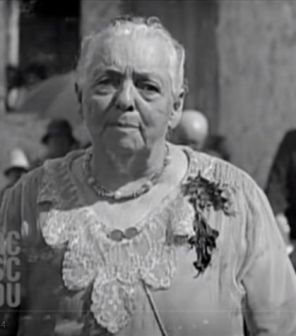
I remember being a teen at a friends’ house listening to the latest music laying upside down, college road trips, my car stuffed with gangly youths, a young adult with my posse playing bar trivia…it was yesterday. Ladies, age creeps up on silent cat feet (with apologies to Carl Sandburg). The boisterous hi-jinks no longer suit. If I were to gadabout at CVS at midnight with pals, they’d lock me up for being crazy. Why? That’s not how older women act.
They line the wall at dances sitting in folding chairs, purses firmly atop lap. They tut-tut at the beauty and litheness of the young ones sailing by. They cook and serve the meals with a knowing nod and quiet hospitable satisfaction. They accept collect calls from grandkids at midnight when the car breaks down on the way home from hi-jinks. They rearrange the potlucks on the sagging table, they form the cleanup swat team afterwards. I should say instead, we. I’m a we now.
I know some of these are a writing trope in themselves, but they are tropes because they are true.
Kim wrote: “My husband once asked me with regard to the women who have spoken at my church’s women’s conferences: “Why is the speaker always young and beautiful instead of old and plain?”

I was noticing that, too. So many of the speakers at conferences now are younger women (in addition to all ages of men). Do younger women have something to say? Yes, but so do older women. And the elder females have been at it longer.
So since we have been at it longer what do we say about how to conduct ourselves? Well, whatever the Bible says about our conduct. Before I get into the nuts and bolts of biblical behavioral standards, I’ll mention that whenever I discuss behavioral standards, particularly applied to false teachers, these comments receive the most negative feedback of all the kinds of comments I make online. People hate to be reminded that the Bible endlessly outlines behavioral standards of any kind. There are general calls for certain kinds of good behavior, there are specific calls for individual demographics, and there is a reminder that we will be judged on how we behaved as well as what we believed.

In one set of verses we read about how we are to act, and the reason for it-
as servants of God we commend ourselves in every way: by great endurance, in afflictions, hardships, calamities, 5 beatings, imprisonments, riots, labors, sleepless nights, hunger; 6 by purity, knowledge, patience, kindness, the Holy Spirit, genuine love; 7 by truthful speech, (2 Corinthians 6:4-7a)
Why? “so that no fault may be found with our ministry” (2 Corinthians 6:3b).
But what specifically of elder women? If we are married to a overseer, act in ways that aid him in keeping order in the household. (1 Timothy 3:4). If married to a deacon, the same, (1 Timothy 3:12. Additionally, deacon’s wives must be dignified, not slanderers, but sober-minded, faithful in all things. (1 Timothy 3:11). I am assuming that wives of pastors and deacons aren’t entirely youthful because the qualifications for pastors are not to be recent converts (1 Timothy 3:6) and to have built up a good reputation- which takes time. (1 Timothy 3:7).
If we are a widow, Paul in 1 Timothy 5 described real widows as: “Now she who is a widow indeed and who has been left alone, has fixed her hope on God and continues in entreaties and prayers night and day.” Which reminds me of Anna at the temple in Luke 2.
A widow could be put on the list for church aid if she had behaved in the following way-
A widow is to be put on the list only if she is not less than sixty years old, having been the wife of one man, 10having a reputation for good works; and if she has brought up children, if she has shown hospitality to strangers, if she has washed the saints’ feet, if she has assisted those in distress, and if she has devoted herself to every good work.
An elder married woman is not to be contentious, as Syntyche and Euodia were. (Philippians 4:2). Titus 2 is the famous verse that outlines how older women are to act-
Older women likewise are to be reverent in behavior, not slanderers or slaves to much wine. They are to teach what is good, and so train the young women to love their husbands and children, to be self-controlled, pure, working at home, kind, and submissive to their own husbands, that the word of God may not be reviled.
Reverent in behavior. Self-controlled. Kind. These are not hard to understand and not unreasonable to ask. When I write about behavioral standards other women rush to scream and rant, but really, what is there to rant against? They want to lose control? Be irreverent? Unkind?
Anyway, the Bible outlines behavioral standards for all ages. As I pass through the aging eras and enter the golden gate of elder womenhood, I’ll try to be mindful of how the Bible expects me to behave, so as not to discredit the ministry. Plus, I’ll try not to be a trope!

Further Reading
This makes a nice companion piece. Jared Wilson, that whippersnapper at age 42, not only muses on growing old, but provides some helpful tips to grow old gracefully.

