Posted in discernment, theology

“If I ever meet him I’ll probably sock him in the face” said Jen Wilkin, Redefining Rahab, part 2

By Elizabeth Prata

I wrote a 3-part series on Mrs Wilkin, looking at her overall ministry here, herehere. It got long, so I promised to follow up with some specifics from her Rahab teaching lesson. This is that series.
Part 1 here

Part 3 here

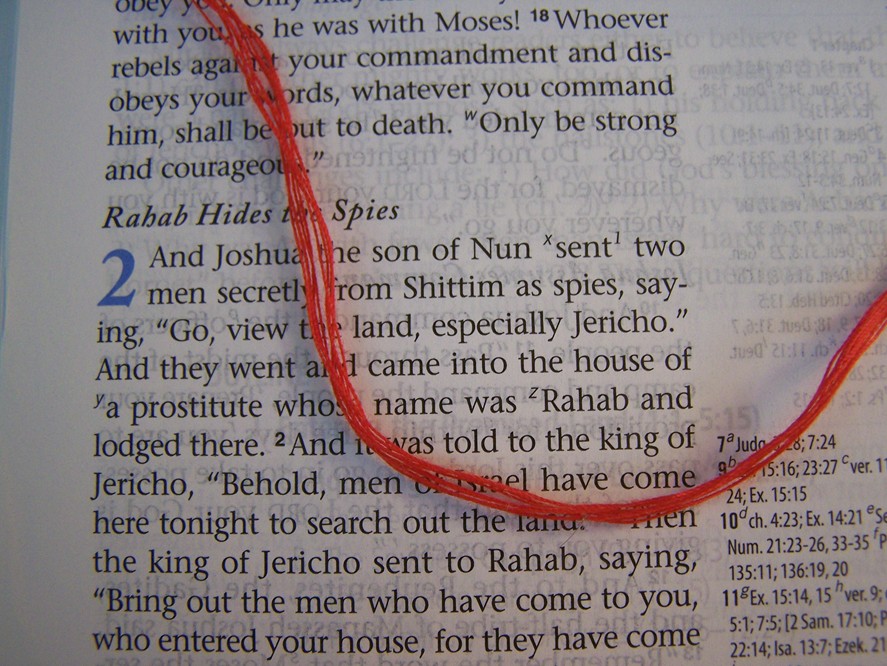
d9890-scarletthread

The Rahab lesson

Mrs Wilkin teaches expositionally through books. This is good. She has taught through Joshua recently and also in 2014. In the section concerning Rahab, Wilkin preached a gender message. I am sad to report this. I was fairly shocked with Wilkin’s attitude through this lesson, which was angry, unethical, and improper for a woman of her maturity and standing. Let’s take a closer look.

Full lesson from 2014 sorry this full episode has been deleted and I can’t find it anywhere on the internet

LifeWay Women 4-min clip from 2018 titled “Redefining Rahab”.

A pertinent part of the 2018 talk is transcribed for you here. Wilkin said much the same things in her 2014 podbay lesson and the June 2018 Lifeway talk. One difference is that in the 2014 talk Wilkin said the names of the commenters with whom she disagreed.

But in both talks Wilkin twisted the exposition to meet her own agenda, which was to elevate and redefine Rahab’s reputation away from the biblical characterization, downplay her prostitution as a sin, add a mythical backstory, and tarnish the men who dared to speak of her in a way Wilkin didn’t like.

Jen opens her lesson this way-

Quote:
Rahab has been handed down to us thru the centuries characterized with 2 words- she is  liar and a whore. That is the way she has come to us through the centuries. Even to today I was hard pressed to find commentaries that did not view her in that light. Listen to some of the things I read as I prepared to teach. (from 2014 podbay lesson).

The reason Rahab ‘has come down to us’ as a liar and a whore is becuase the Bible says that is what she was.

Quote:
How has [Rahab] come down to us through history? She’s a woman and a Canaanite and a prostitute. She would have been a social outcast even among her own people. Here’s the way she is often referred to in commentaries. I’m not going to name the names of the commentators. … You know why she was a prostitute? Because she wanted to be one.(from 2018 Lifeway lesson)

Wilkin refers to Rahab several time as a ‘whore’:
History has judged Rahab as a liar and a whore. Is that how we should read her?

In the 30 or so Bible translations I looked at, the word prostitute or harlot was used almost equally. Not one used the word whore. Only Jen Wilkin called Rahab a whore. That was Wilkin’s choice, and of course, we know that it is a worse word, an inflammatory word.

The reason Rahab has ‘come down to us in history’ as a prostitute is because God in His wisdom inspired the writer to write it that way. It is a fact. She was a prostitute. That was her profession. Lydia was a dyer of purple, Moses was a shepherd. Rahab was a prostitute. It’s a plain fact, but Wilkin spends a good deal of time in her lesson on this topic, as we will see.

Quote: Here’s the way that she’s often referred to in commentaries. I’m not going to name the names of the commentators, but can I just be honest with you? Male commentators can be super hard on female Bible characters. Abraham can take his wife over to Pharaoh’s house and leave her there for several weeks twice basically. Abimelech and Pharaoh. And we’re like, “But you know what? It’s cool.” And then the women, it’s like, “Mmm. No. You know why she’s a prostitute? Because she wanted to be one.”

It is a massive generalization to claim that ‘male commentators’ are ‘super hard’ on female characters. Her gender bias is showing here. In addition, Wilkin is claiming that the male commentators are biased in how they write their commentaries, that they see male vs. female and write about the females in a less than honest way. It may or may not be so. If one finds bias in a commentary then a teacher should just move on and not disdain their work by publicly mocking it, which was the tone of Wilkin’s voice as she made the statements. So far she hasn’t taught the text yet.

Matthew Henry, we can give his name out cause he’s long dead. And this does not mean these men are terrible commentators, it’s just a sampling for you. I said I wasn’t gonna say their names, I lied. He’s describing her taking them up on the roof and hiding them under the stocks of flax and he says, “By these stocks of flax it appears that she had at least one of the good characters of the virtuous woman. However, in others of them, she might be deficient. That she sought wool and flax and wrought willingly with her hands. From this instance of her honest industry, one would hope that whatever she had been formally, she was not now a harlot.”

What on earth is the matter with that assessment? One would hope the woman was not still a harlot. And the flax on the roof is mentioned in Proverbs constantly as a worthy industry for a woman.

Another well-known commentator, I will not say his name, he says, “We may be appalled at the fact that Rahab was a prostitute or that she was a liar, but the fact is that she was not saved by her works, but by her faith.” Now, don’t miss that we’re supposed to be appalled by the fact that she was a prostitute and a “liar” (air quotes).

Of course we’re appalled at the thought of a woman selling her body for money. Who wouldn’t be! It’s a degrading and awful profession. It’s also a sin. Sexual sins are worse than other sins, according to 1 Corinthians 6:18.

And then this is from a book called All The Women of the Bible by a man whose name I very much want to tell you, because I’ve since read other things he said about other women of the Bible. He says this about Rahab: “Like many a young girl today, perhaps she found the restrictions of her respectable home too irksome. She wanted a freer life, a life of thrill and excitement away from the drab monotony of the home giving her birth and protection. So high-spirited and independent, she left her parents, set up her own apartment with dire consequences.” Yeah, right, Herbert. (audience laughs). … History has judged Rahab as a liar and a whore. (from 2018 Lifeway video).

Jen’s voice deepened when she read ‘dire consequences’. It is dire when a woman finds she must turn to selling her body to survive. Is Jen saying it isn’t dire? Here her mocking became hardened. That was sad, not only because one should simply teach the text, not attempt to educate the audience on gender politics suspected or imagined from other commenters, but because that is what the text says.

History hands Rahab the moniker liar and prostitute because that is what the eternal word has named her. Is Jen Wilkin disagreeing with the inspiration of scripture and the characterization of Rahab this way? She spends time mocking commenters who relate Rahab’s profession as it was stated in the Bible, as if the mean and misogynistic men had made it up. She chided the commenter for speculating on how Rahab might have became a prostitute, but Wilkin does the exact same thing in both her lessons, speculating on Rahab’s backstory.

I think we’ve grown in our understanding of things. If you were to google the name Rahab right now, do you know what would come up for you? A list of non-profit organizations. And what do you think that they’re involved in? Freeing women from human trafficking.

Wilkin choked up and held back tears at this point. We’ve ‘grown’ in our understanding of things? What things? That we should no longer believe that prostitution is bad? That lying is OK? Here Wilkin goes off on a second tangent (the first was mocking commenters who identify Rahab as a prostitute) and here she spends time explaining about the backstory of Rahab as an unwillingly trafficked youth, which isn’t in the Bible, and tying it to today’s Googling of her name as the inspiration for social justice causes. Is that what you want from a credible Bible teacher?

How do you think a woman gets to be a prostitute in ancient Canaan? I mean, it could be that she chose the profession, but I’ve heard precious few stories in my entire life that would indicate that a woman chooses that, free of any power dynamic, free of anything societal that’s going on. And in fact, we even know from history that it was a common practice in Canaan and other ancient cultures, that when a family could not pay a debt they often had to sell a daughter. It seem far more likely to me that find Rahab in the state that we find her in, not because she wanted to be a prostitute, but because that is where life forced her to be.

In neither of her lessons, the 2014 or the 2018 that I listened to, I never quite understood Wilkin’s emphasis on softening Rahab’s profession with a mythical backstory and including societal pressures and human trafficking into the lesson as potential motivators for Rahab’s profession, and what that had to do with what she had said would be the point of her lesson: looking at why Joshua sent the spies in the first place.

Others who commented under the 2018 Youtube Lifeway video were similarly confused at Wilkin’s emphasis. You can see I’m not the only one who saw Wilkin’s obvious anger.

La Di commented:
So why concentrate on commentators when we can read it for ourselves? I don’t understand the anger at flawed men with flawed opinions. It’s not really relevant to the story.

Shelie Martin commented:
Jen Wilkins cannot redefine Rahab. She is not God and she should not be redefining anything in God’s Word.

In part 3 we will look at Jen Wilkin’s academic ethics and her situational ethics. It’s not dry, I promise. Stay tuned.

Posted in discernment, theology

“If I ever meet him I’ll probably sock him in the face” said Jen Wilkin, Redefining Rahab, part 1

By Elizabeth Prata

Introduction

Falsity spreads its tentacles no matter how it comes, secretly, openly, or when it is known but not opposed. It upsets the faith of some, destroys whole families, and pollutes the church, drawing away its disciples into darkness.

Though it is a heavy responsibility and a constant challenge, incorrect or false teaching must be identified and rejected. It does get wearisome for people to constantly see this one or that one called out as drifting, false, or a heretic. It’s disappointing too. But we must persist. Keep Christ’s name spotless and His faith pure.

Incorrect or false teaching sometimes doesn’t start out as false. It sometimes starts off as good. But without course corrections, satan can take something good and twist it. (2 Peter 3:16). That may be happening with Jen Wilkin.

She admitted in an interview that her foremost motivation is not to teach the Bible to women, it is that she wants women to see a woman teaching the Bible. It’s gender, not Christ. She said, “One of the most important things that I do when I travel around the country and teach the Bible is actually not that I teach the Bible. It’s that I show up looking like a woman and teach the Bible. Because a lot of women see only men do that.” Underline mine. There is nothing more important than teaching the Bible, for a man or a woman. (2 Timothy 3:16-17)

Annotation2019-12-21110301

This 3-part series looks at Jen Wilkin’s “Redefining Rahab” lessons from 2014 and 2018. Part 1 is background & intro, part 2 is a look at her emphasis in the Rahab lesson, and part 3  is a look at her academic ethics & her situational ethics.

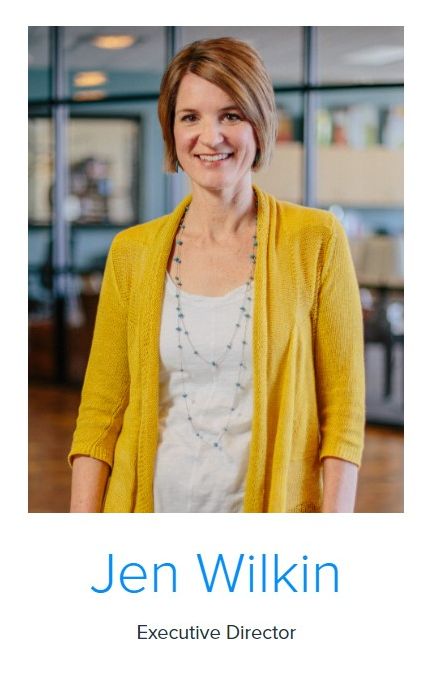
Jen Wilkin bio

Jen Wilkin hit the public scene with her freshman 2014 book, Women of the Word. She is a member of Matt Chandler’s Village Church, and is an Executive Director of Bible Studies at The Village Church Institute, a discipling/teaching arm of the church. Jen writes Bible studies and teaches. She is a nationally known author, and is a sought-after speaker for conferences, podcasts, and other settings. Jen is a wife and mother of 4 adult children.

Jen has stated often that she is a complementarian, and wishes to teach women only, strengthening them in their theological understanding. She decries books “that look like their covers were painted with estrogen”, lol, and pushes for a strong foundation for women in their beliefs. To that end, Jen has made her career and ministry focus by writing books and touring the conference circuit with that message.

However in the past series I wrote, I demonstrated that Wilkin’s complementarianism is in word only. Functionally, she teaches the Bible to men, she trains male pastoral staff, male missionaries and male church planters, (frequently on gender issues), and she speaks before mixed audiences even on a Sunday pulpit.

As we see with ministries with a singular focus, such as end time ministries, ‘deliverance’ ministries, or discernment ministries, the more singular and narrow focus the ministry’s theme is, the more easily it can be twisted away from its center and into something that over time goes far afield from orthodoxy. With Wilkin’s ever more narrowing focus on women and gender, I believe that is what might be happening with Wilkin.

I wrote a 3-part series on Mrs Wilkin, looking at her overall ministry here, here, here. It got long, so I promised to follow up with some specifics from her Rahab teaching lesson. This is that series.

Next, Part 2

d9890-scarletthread

Posted in discernment, theology

Slippery Slopes: A discerning look at Jen Wilkin, part 2

By Elizabeth Prata

In Part 1 I introduced this three-part series with some of the things I enjoy about Jen Wilkin, the pros, so to speak, her bio, and raised some concerns. In this part I’ll take a closer look at the concerns. I look at Mrs Wilkin’s now-infamous menstruation eisegesis lesson. In part 3 I discuss whether she actually lives out her stance that she is a complementarian woman.

Continue reading “Slippery Slopes: A discerning look at Jen Wilkin, part 2”
Posted in discernment, theology

Slippery Slopes: A discerning look at Jen Wilkin, part 1

By Elizabeth Prata

Part 2
Part 3
Introduction

Discernment is a moving target. It’s never settled. Different teachers and pastors move behind different biblical boundaries, they change. Just because someone used to be good doesn’t mean we never take another look as time goes by.

For example, Jen Wilkin used to be solid. Now she’s not.

Recently a video clip surfaced of author, Bible teacher, and Executive Director of The Village Institute, Jen Wilkin. Wilkin is considered solid. Her 2014 freshman book, Women of the Word is used widely. She is a vocal proponent of complementarianism, the biblical concept of the living out the different but complementary roles God has set for women and men. She is a staff member and a congregant at one of the campuses of Matt Chandler’s Village Church. Mrs Wilkin is also a sought-after speaker at national conferences and podcasts.

However, in this clip of which I’ll speak, Wilkin was educating a gathering of male pastors and church planters on the topic of “Women in Church Planting: Understanding women as central to the mission.” Teaching a male audience violates 1 Timothy 2:12. Further, as part of her lesson, she eisegeted a woman’s menstrual period. She said that women “understand the Gospel” differently because of it, and intimated that because women ‘are wrapped in female flesh’ we have special insight into Jesus because of this fleshly parable of the monthly “shedding of blood for the renewal of life”. Transcript and video clip will be in part 2. Thus, her gender politics were evident, another shock. What is going on? That is what this and the next essay is about.

Eisegesis is when you apply a topic, thought, or narrative INTO the text and shape your talk according to your presupposed concepts, manipulating the Bible to fit it. The proper way to handle God’s word is to exegete it, or draw out of the text (ex-) its intended meaning.

Needless to say, the earthquake the video caused was thunderous. Social media was abuzz, stunned at what had previously been seen as a solid teacher speaking of such things casually, unbiblically, eisegetically, and to a room full of men, no less.

Is it time to look into the teachings of Mrs Jen Wilkin? It seems so. Subsequently I was asked to look into her biblical positions and her activities, in a discernment review.

Jen Wilkin: Pros

As for Jen Wilkin, I admire her emphasis that we should teach through books of the Bible, not relying on canned curricula. I also admire her desire to bring to women a cohesive understanding of the Bible and its overarching message. Mrs Wilkin proclaims a strong complementarian stance. She is passionate about women receiving a proper theological education. There is no doubt that Mrs Wilkin is intelligent and well spoken. 

We should compare what people say with what they do. Talking is easy. Does the person follow through with a lifestyle that demonstrates her proclaimed stances? For example, many complementarian women say they “don’t want to be pastors,” including Mrs Wilkin. This is good, it’s not biblical for women to lead a church. But they stop short of true complementarian doctrine when they go on to teaching men anyway. 1 Timothy 2:12 says “I do not allow a woman to teach or assume authority over a man, she is to be quiet.” (NIV). Teaching men or a co-ed audience in church or at conferences violates this verse. 

In the next part I will examine the now-infamous menstruation clip. In part 3 I will look at Jen Wilkin’s recent activities to see whether they line up with her proclaimed complementarian stance. I’ll also look at Jen’s continual insistence that adding women to the teaching staff “is not a slippery slope”. (Hint: It is).

In a follow up to these three parts of my discernment review, I discovered her lessons on “Redefining the Story of Rahab.” Ladies, any time you see someone, man or women, redefining anything from orthodoxy, be wary. Her Rahab lesson includes promotion of situational ethics but it gives me a chance to write about proper treatment of handling material. I’ll write that follow up soon.

So, is Jen Wilkin moving behind the boundary stones and sliding down a slippery slope? We will see.

The Village Church Institute is the teaching and discipling arm of the Village Church, to which Jen Wilkin belongs. Matt Chandler is currently the main pastor of the church, over all the campuses. Jen is on staff there. Jen had been ‘Classes and Curriculum Director’ (above) and then was Executive Director (below). Jen writes Bible studies for the Institute.

Part 2
Part 3

Posted in discernment, theology

Alistair Begg and the Preaching Conference

By Elizabeth Prata

The inaugural National Preaching Conference is scheduled at First Baptist Church in Waco Nov. 19-21. The synopsis of this new conference says in part,

We hope you will join us for these uplifting days when the shepherds can be shepherded and the feeders can be fed. This occasion will echo the best of yesterday’s traditions and resound with the needs of tomorrow’s church.

Interesting. Perhaps some of the pastors who can’t make it all the way to California to attend a more established preacher’s conference such as the Shepherd’s Conference can make it to Texas instead. Continue reading “Alistair Begg and the Preaching Conference”

Posted in discernment, Uncategorized

If:Gathering: more information

By Elizabeth Prata

Three years ago I had an inquiry from a sister in the faith about the woman of She Reads Truth and the IF:Gathering. In looking at these two organizations, which feature overlap of the woman who founded and participate in them, I discovered they adhere to and teach an aberrant theology that is unhealthy for woman. A series resulted.

Three years later, the IF:Gathering and its woman have only embedded themselves deeper into the faith and are tainting even more women with their brand of liberal theology, shaky hermeneutics, usurping lifestyles, and their idol of social justice. Continue reading “If:Gathering: more information”

Posted in discernment, theology

The train is still coming down the tracks

By Elizabeth Prata

train coming 2


Growing up in my town in the 1960s, there was a train track running along the shoreline. Behind the tracks there was a busy wharf with fishermen, moorings for recreational boaters, and shoreside homes and their children running about. There were a lot of train crossings, and many of them weren’t guarded by automatic gates and warning signals.

Sadly, we frequently read in our local paper of crossing fatalities, both vehicular and pedestrian. To my impressionable ears it seems like almost a weekly occurrence. It wasn’t that frequent but I do remember my father, who was on the town Zoning Committee for a time, talking about the Town Council’s plans to automate and/or close some of the crossings to reduce potential for fatalities. Continue reading “The train is still coming down the tracks”

Posted in discernment, theology

Are hordes of Muslims coming to Christ though dreams of Isa?

By Elizabeth Prata


dreams

I wrote about the Muslim Dream conversion stories issue in 2011. At that time I investigated and my conclusion was a big NO.

Are Massive Numbers of Muslims Coming to Christ?

I wrote again in 2018 when unfortunately, IMB President David Platt affirmed these dreams and second hand stories, and worse, blasphemously called The Messiah Isa. This was during his International Mission Board report in June 2018. Again I said a big NO.

Blasphemy: Isa is not Jesus and Jesus is not Isa.

Again in 2019 the issue comes up. Here is Justin Peters dispelling these stories with a good dose of truth, in a minute and a half video. He said he receives this question all the time, continuing to be raised after the issue first surfaced 8 or 9 years ago. The question and the answer is important because the method that is related by these spurious testimonies degrades the sufficiency of scripture. (Just like any extra biblical revelation, whether dream or vision.)

Evaluating claims of salvation in light of the sufficiency of scripture

Posted in discernment, theology

Book Review & Discernment lesson: Supernatural Childbirth

By Elizabeth Prata

baby

A reader contacted me about the book Supernatural Childbirth by Jackie Mize. She said that the author promises a pain-free childbirth using name it and claim it techniques.

This reader is expecting her first child and is understandably concerned with the issue of childbirth. Friends were excitedly pushing the book on her, yet she understood that pain-free childbirth was not a biblical stance. She asked me to look into the book and review it.

Supernatural Childbirth by Jackie Mize was originally published in 1993, and was again published in 2018. The book apparently is enjoying a resurgence. This is a shame, because Mize said “In my heart I knew there was a way to have a baby without pain and without fear.” (page 23). This inner heart-prompting was confirmed when she attended a Kenneth Copeland meeting where Copeland uttered a prophecy allegedly from the Lord promising no pain in labor to women who were expecting. Voila, a personal craving met a false prophecy and a word-faith book was born. Pun intended.

Here is a screen shot of page 21 where Mize said she first heard ‘Brother’ Copeland prophesy. He said ‘The Lord says’ which I found terrifying to read.

One Amazon reviewer of Supernatural Childbirth said that she failed in the approach to pain-free childbirth because she didn’t “have enough faith” and had “allowed fear in.” For the reviewer’s second pregnancy she had “built up her relationship with God” and she “knew He wouldn’t let her down.” Indeed, she said “I got exactly what I had asked for.”

Another reviewer gave the book one-star on the basis of being too charismatic, but then says she disagrees with the book because it IS normal for God to speak directly to you and tell you “where He wants you to have the baby.”

With confusing reviews like these that vastly misunderstand the basics of the faith, it is no wonder many become deceived and fall into a sphere like Kenneth Copeland’s name it-claim it milieu. I agreed with the reader who was troubled by claims made in this book based on just the scant information so far. I dug deeper.

Far from Name It/Claim It being a dead doctrine, the prosperity preachers are alive and well, and multiplying. As the sin of the world increases, it tags people who want more of what God can give materially than what He gives spiritually. These teachers are successful because they twist the word. People with unmortified personal cravings, lusts, desires cling to these statements and the false prosperity preachers gain followers.

For the time is coming when people will not endure sound teaching, but having itching ears they will accumulate for themselves teachers to suit their own passions, (2 Timothy 4:3).

So what IS the prosperity gospel?

In their book, When Helping Hurts, Steve Corbett and Brian Fikkert note,

In other words, wealth and holiness are intrinsically and linearly connected: the more holy you are, the richer you will be.

At its core, the health-and-wealth gospel teaches that God rewards increasing levels of faith with greater amounts of wealth. Source

And not only wealth, but ease, healing, and trouble free living. In effect, they promise a King Midas touch, where with enough faith, everything one touches turns to gold.

The Pharisees are good examples of this theology. It was thought in the Old Testament that the holier a person was the more God blessed Him. It’s why Job’s friends were so insistent that Job must have committed a sin in order for him to have been so cursed by God. (Job 4:8). Unaware of the coming Gospel, they thought that visible blessing was a manifestation of internal holiness. The Pharisees of Jesus’ time took this philosophy of reaping and sowing to another level, even boasting in their holiness as the self-satisfied Pharisee who thanked God that he wasn’t like the poor tax collector over there. (Luke 18:9-14).

In the first place, one should never read a book based on any prosperity gospel or name-it claim it theology. This kind of theology is also known as Word Faith. Kenneth Copeland is not a brother and nothing he says should ever be taken seriously for even a moment. His ‘prophecies’ supposedly directly from the Lord are debunked here. By the Bible’s own standard, a failed prophet is no prophet of God.

As for the prophet who prophesies of peace, when the word of the prophet comes to pass, the prophet will be known as one whom the LORD has truly sent. (Jeremiah 28:9).

Of course none of Copeland’s prophecies have come to pass. The Bible explains when that happens, they were not of God-

And if you say in your heart, ‘How may we know the word that the LORD has not spoken?’— 22when a prophet speaks in the name of the LORD, if the word does not come to pass or come true, that is a word that the LORD has not spoken; the prophet has spoken it presumptuously. You need not be afraid of him. (Deuteronomy 18:22).

There were false prophets back in the OT times and there are now. (Ezekiel 13:6, 2 Peter 2:1). We are to be watchful and careful about whose teaching we choose to absorb. Unfortunately, the Prosperity Gospel promoted by the seemingly long-lasting Kenneth Copeland is still going strong. Resist it and turn away from it.

Back to Mize’s book. She began with a heart-craving for release from pain in childbirth, heard Copeland supposedly confirm this fact in a spurious prophecy, and then went to the Bible to find proofs. She arrives at her false conclusions by cherry picking words like blessing and rescue and applying them to her theme, which she brought with her to the text. Hers is typical eisegesis. Eisegesis- when you bring a thought with you to the word of God and then find verses which support it. Exegesis is when you impartially go to the text to discover its meaning and draw it out (the ex– in exegesis).

In this book women are led to believe they have total control over their bodies and can command female body parts to obey their declarations (Word of Faith). Their failure in succumbing to pain in childbirth is “fear and lack of knowledge” according to the author. (page 32). I believe the pain is due to a very large object being expelled through a very small opening, and no accumulation of ‘knowledge’ is going to change that.

In direct contradiction to Mize, we see in scripture that we do not have control over our bodies. It is God who opens and closes wombs-

Eve in Genesis 4:1 declaring her son Abel was born ‘with the help of the LORD’
Hannah’s womb was closed by the LORD, 1 Samuel 1:5
Leah- God opened her womb Genesis 29:31
God opened Rachel’s womb, Genesis 30:22
The Lord enables Ruth to conceive by Boaz, Ruth 4:13
The LORD closed then opened the wombs of all the women in Abimelech’s house, Genesis 20:17,18

It is pride to say that we have control over our own bodies when the LORD clearly as Creator ordains these things. It causes blame and shame for women to be told that their labor pain is due to ignorance or lack of faith.

Mize’s proof-texting of the Bible revealed the following false interpretations. Early on in her book she states that the Hebrew women of Exodus 1 were giving birth easily and quickly, unlike the Egyptian women, because they are in covenant with God and quick and easy childbirth is part of the package of being covenant people. Yet, the text in Exodus 1:15 says nothing about pain free. Only quick. We also know from history that in succeeding generations Hebrew women travailed mightily in childbirth. Jesus notes this in John 16:21. It’s stated again in 1 Thessalonians 5:3. Isaiah compares persecution to a woman in labor, (Isaiah 13:8) and Micah uses the word anguish for a woman in labor. (Micah 4:9).

Mize also rejects the notion that the Egyptian midwives were lying about the Hebrew women delivering so quickly, as an excuse as to why the male babies had not been killed. Mize rejects the concept that they were lying but offers no proof. John MacArthur and RC Sproul both believe that the women were lying, but suffered no condemnation because they feared the LORD, as did Rahab, who lied also and received no condemnation.

Mize goes on to use 1 Timothy 2:15 as another proof text to support her unbiblical pain-free childbirth position,

Yet she will be saved through childbearing—if they continue in faith and love and holiness, with self-control.

Mize defines the word ‘saved’ in the above verse as kept safe and sound, which is pretty close to the Strong’s definition of the Greek, I save, heal, preserve, rescue. So does it means that women in childbearing will always be kept safe and sound leading to a painless childbirth? It can’t, women die in childbirth all the time. Matriarch Rachel, married to Jacob AKA Israel, herself had an extremely painful labor (Genesis 35:17) and died in childbirth. (Genesis 35:18). Was this proof then she was not a covenant women? Does it mean Rachel had not claimed her painless birth by demonstrating enough faith?

The word saved in the verse above is indeed sozo, and it is commonly used throughout the NT to mean rescued, saved, healed, to preserve safe and unharmed. But in context, and context is everything, the entire verse in its passage actually is interpreted to mean that-

though a woman precipitated the Fall and women bear that responsibility, yet they may be preserved through that stigma through childbearing. The rescue, delivery, the freeing of women from the stigma of having led the race into sin happens when they bring up a righteous seed. ~The MacArthur New Testament Commentary

We see this same interpretation echoed in Albert Barnes’ Notes on the Bible 250 years earlier, (1830s)-

Notwithstanding she shall be saved – The promise in this verse is designed to alleviate the apparent severity of the remarks just made about the condition of woman, and of the allusion to the painful facts of her early history. What the apostle had just said would carry the mind back to the period in which woman introduced sin into the world, and by an obvious and easy association, to the sentence which had been passed on her in consequence of her transgression, and to the burden of sorrows which she was doomed to bear.

So no, indeed it is not true that women will have an easy or painless childbirth. But you see how it can be that if you engage in eisegesis and cherry pick one word out of context, and/or rely on one verse, you can easily make the case for any notion you have a desire to.

Let us get to the main verse before this becomes too long. Speaking of the Fall and the consequences women are to bear from it, in Genesis 3:16 God cursed women with a painful childbirth. Mize’s book would seem to say that if we are powerful enough in our faith, that we can overthrow God’s words and enjoy a pain free experience when delivering a child. Here is what God said-

To the woman he said, “I will surely multiply your pain in childbearing; in pain you shall bring forth children. Your desire shall be contrary to your husband, but he shall rule over you.” (Genesis 3:16).

How on earth can this be explained away? How can my faith override the spoken declaration of God that was supposed to be for all time?

Mize here quotes the King James Version which uses the word sorrow instead of pain. All other translations use the word pain, and Strong’s in the Lexicon also uses the Hebrew word pain, too.

In this case, Mize used the word as it appeared in only one translation and ignored the definition of the word in Hebrew, explaining its meaning in English (sorrow). However, in a previous example (sozo=saved through childbearing) she used the word in Greek and the definition to make her case.  Inconsistency in interpretive methods is typical of eisegesis. Proper hermeneutics calls for consistency in applying our interpretive methods.

The purpose of biblical hermeneutics is to protect us from misapplying Scripture or allowing bias to color our understanding of truth. GotQuestions: What is biblical hermenutics?

Yet the author blames the Church for misapplying the word in God’s curse to Eve as pain.

“The church has always wanted it to mean pain for Eve. Well, it doesn’t mean pain, it means what it says, sorrow, grief. My God didn’t put pain on them.” page 90

She is including Adam here too, in God’s curse to bring forth fruit of the land in toil and pain. The first rule of proper hermeneutics (science of interpretation) is to interpret the word literally. It means what it says in its plain meaning. God said that Eve will bring forth children in pain, and that is what it means. The following verses also mention that women have pain, agony, or anguish in childbirth-

Romans 8:22
Hosea 13:13
Galatians 4:19
Genesis 35:17
Isaiah 42:14
Micah 4:9
Psalm 48:6
Micah 4:10
Galatians 4:27
Revelation 12:2
Isaiah 21:3
Jeremiah 50:43

It is hubris to be a lone woman purporting to correct thousands of years of previous Church interpretation. It is dangerous to re-interpret what God has said. It is unwise to blame the church for faulty reasoning. It is foolish to contravene thousands of years of experience of every woman who has ever given birth. Labor is painful. That’s how it is and will be until we enter the eternal state and all curses are reversed and there will be no more marriage or childbirth.

The author in her book relates visions that God has supposedly supplied her with and credits Him with speaking directly to her, putting His alleged words in quotes.

Mize admits that her delivery was not pain free, but better than the first. Her own admission is that the technique failed, but she still recommends the book wholeheartedly. I believe this is called ‘a blind spot.’

I’d advise women to steer clear of this book, which arrives at unwieldy conclusions, is riddled with charismania, (Mize recounts visions the Lord supposedly gave her) is inspired by a false prophet and rests on unstable foundations. (2 Peter 3:16). Not recommended.

I hope this review was also a discernment lesson in how people twist the word of God to make it say things it doesn’t. I’ve included some resources down below about proper interpretation, and also some books for expectant mothers more on the solid side.*

Proper Biblical Interpretation

How Should We Interpret the Bible, Part 1: Principles for Understanding God’s Word

Practical Principles of Biblical Interpretation

Justin Peters carefully, graciously, and biblically deconstructs the Word Faith movement in his series, Clouds Without Water. I recommend it. (Also on Youtube).

*I am not a mom and I am not very familiar with these authors below. I searched to the best of my ability on their stances and associations, and feel somewhat comfortable offering their books to you. If you know otherwise, please tell me. Also, as always, use your own discernment before making any choices.

Labor with Hope: Gospel Meditations on Pregnancy, Childbirth, and Motherhood, by Gloria Furman

Praying Through Your Pregnancy: A Week-by-Week Guide, by Jennifer Polimino

Waiting in Wonder: Growing in Faith While You’re Expecting by Catherine Claire Larson