Posted in theology

What a ‘bam!’ verse this is

By Elizabeth Prata

Isaiah contains some of the loftiest, majestic, and beautiful poetry in the Bible. It also contains some of the most startling truths, which are made all the more startling by their being wrapped in such vividly lyrical, beautiful language. I was struck the other morning by this verse in Isaiah 50:11,

Behold, all you who kindle a fire, Who encircle yourselves with flaming arrows, Walk in the light of your fire And among the flaming arrows you have set ablaze. This you will have from My hand: You will lie down in torment.

The reader is involved with the imagery, the poetry of the words and then BLAM! the blunt ending.

Wow. Isn’t the Bible amazing! Truth, unspoiled because it is from the mind of God. Pure and perfect, set down for us puny humans to gain insight as to who this Great God is.

Barnes’ Notes on the Bible says of that verse-

“Behold, all ye that kindle a fire – This verse refers to the wicked. In the previous verse, the Messiah had called upon all the pious to put their trust in God, and it is there implied that they would do so. But it would not be so with the wicked. In times of darkness and calamity, instead of trusting in God they would confide in their own resources, and endeavor to kindle a light for themselves in which they might walk. But the result would be, that they would find no comfort, and would ultimately under his hand lie down in sorrow. The figure is continued from the previous verse.”

“The pious who are in darkness wait patiently for the light which Yahweh shall kindle for them But not so with the wicked. They attempt to kindle a light for themselves, and to walk in that. The phrase, ‘that kindle a fire,’ refers to all the plans which people form with reference to their own salvation; all which they rely upon to guide them through the darkness of this world. It may include, therefore, all the schemes of human philosophy, of false religion, of paganism, of infidelity, deism, and self-righteousness; all dependence on our good works, our charities ties, and our prayers.”

“All these are false lights which people enkindle, in order to guide themselves when they resolve to cast off God, to renounce his revelation, and to resist his spirit. It may have had a primary reference to the Jews, who so often rejected the divine guidance, and who relied so much on themselves; but it also includes all the plans which people devise to conduct themselves to heaven. The confidence of the pious Isaiah 50:10 is in the light of God; that of the wicked is in the light of people.” –end Barnes’ Notes

I turned to the commentary to confirm what I had interpreted. It was the same. It is a grief that there are so many people walking about trying to save themselves. Praying and worshiping a fictitious god. As Barnes said, ‘The phrase, ‘that kindle a fire,’ refers to all the plans which people form with reference to their own salvation’. How many false religions are there? Too many to count over the millennia. How subtly the devil creates an ‘almost right religion’ (Catholicism, 7th Day Adventists, Mormons…) who claim Jesus. But almost right is wrong. Self-salvation doesn’t exist.

How many people are already in torment because of their refusal to give up their sins… O, heartbreak!

BUT GOD! He did not leave us in our pitiful, hopeless state!

But God, being rich in mercy, because of His great love with which He loved us, even when we were dead in our wrongdoings, made us alive together with Christ (by grace you have been saved), and raised us up with Him, and seated us with Him in the heavenly places in Christ Jesus, so that in the ages to come He might show the boundless riches of His grace in kindness toward us in Christ Jesus. For by grace you have been saved through faith; and this is not of yourselves, it is the gift of God; (Ephesians 2:4-8).

For us sinners, mercy is the greatest thing He is rich in! The gospel is law and it is grace. It is hell and it is heaven. It is wrath and it is love. Martyn Lloyd-Jones preached through Ephesians. His sermon outline for Ephesians 1:1 is as follows,

Sermon Breakdown

  1. The epistle to the Ephesians reveals the glory, mystery and riches of God’s redemption through Christ.
  2. The epistle provides a panoramic view of salvation from the heavenly realm.
  3. The epistle exalts God, His glory, greatness, majesty and sovereignty.
  4. God is eternal, self-sufficient and dwells in His own glory.
  5. God’s sovereignty is displayed through His will and control over all things.
  6. God’s ways are a mystery which we cannot fully comprehend with our finite minds.
  7. The epistle reveals the riches and abundance of God’s grace.
  8. The epistle holds us face to face with God and what He has done.
  9. The epistle’s theme is God the Father who is over all.
  10. The epistle also focuses on the Lord Jesus Christ through whom God’s purposes are accomplished.
  11. There is no gospel or salvation apart from Jesus Christ.
  12. We have redemption and forgiveness through Christ’s blood.
  13. God’s purpose is to gather all things in Christ, both in heaven and on earth.
  14. God’s plan of redemption was necessary due to the fall of man and the work of Satan.
  15. God began working out His plan of redemption through calling the nation of Israel.
  16. God’s purpose is now seen through the church where Jews and Gentiles are united in Christ.
  17. The church provides an example of God’s purpose to unite all things in Christ.
  18. The epistle calls us to live out the Christian life in light of God’s purpose.

It’s great to ponder these things in love for our Savior.

Posted in christmas, judgment, wrath

The Gospel’s Bookends: Wrath and Love

By Elizabeth Prata

SYNOPSIS

I reflect on God’s love with His righteous wrath, using Daniel’s compassion toward Nebuchadnezzar. The essay argues that the Gospel begins with wrath against sin and ends with redeeming love, urging believers to love enemies while warning that repentance is essential for salvation.

Continue reading “The Gospel’s Bookends: Wrath and Love” →
Posted in forgiven, jesus, redemption, sin

Finding Hope in God’s Forgiveness and Forgetfulness

By Elizabeth Prata

SYNOPSIS

I encourage believers amid the world’s growing sinfulness by recalling Charles Spurgeon’s sermon, “God’s Non-Remembrance of Sin.” As believers grapple with their own imperfections, Spurgeon offers hope that God not only forgives but forgets sins. This message remains relevant, urging believers to embrace and share God’s mercy and grace.

Continue reading “Finding Hope in God’s Forgiveness and Forgetfulness” →
Posted in poetry, Uncategorized

Kay Cude Poetry: Everlasting Mercy

Kay Cude poetry, used with permission. RIght-Click picture to enlarge

Artist’s Statement:

I am consistently drawn to Dore’s work! And each time I utilize one of his profoundly sensitive pieces, I imagine that as he worked on his wood plates, he had no concept of their enduring qualities or that centuries later I and others would be drawn to use them in our efforts to magnify and praise God! How amazed Dore would be to know that his telling works now cover the earth through digital media, or that millions have seen God’s glory through his pieces, and in a more profound way than he could even begin to imagine! Isn’t God just so very wise! His plans to make Himself and His Christ known through art and other forms of media makes our intuitiveness very pale! I believe God selects those desiring to serve Him in this manner and uses their work (spiritual gifts) for His purpose…

More on artist and engraver Gustave Dore and his fabulous and evocative works, many of which are biblical scenes.

Posted in encouragement, grace, repentance, salvation, sin

The Most Terrifying Thing God Can Do: In which I testify to God’s grace in saving me

In the past, Tim Challies posted an article titled The Most Terrifying Thing God Can Do. It’s a terrifying article. It crushed me reading it and apparently it did for many others as well. I saw this article referred to and re-posted numerous times.

The most terrifying thing God can do is to turn an unsaved person over to his sin. Having just gone through Romans 1 in my Sunday School class, I was starkly reminded again of God giving them over to their sin. It’s stated three times at the end of the chapter. This again clutched my heart with terror and grief. Sin is such a powerful drug, a terrifying trap.

Continue reading “The Most Terrifying Thing God Can Do: In which I testify to God’s grace in saving me” →
Posted in poetry, Uncategorized

Kay Cude Poetry: Everlasting Mercy

Kay Cude poetry, used with permission. Click picture to enlarge

Artist’s Statement:

I am consistently drawn to Dore’s work! And each time I utilize one of his profoundly sensitive pieces, I imagine that as he worked on his wood plates, he had no concept of their enduring qualities or that centuries later I and others would be drawn to use them in our efforts to magnify and praise God! How amazed Dore would be to know that his telling works now cover the earth through digital media, or that millions have seen God’s glory through his pieces, and in a more profound way than he could even begin to imagine! Isn’t God just so very wise! His plans to make Himself and His Christ known through art and other forms of media makes our intuitiveness very pale! I believe God selects those desiring to serve Him in this manner and uses their work (spiritual gifts) for His purpose…

More on artist and engraver Gustave Dore and his fabulous and evocative works, many of which are biblical scenes.

Posted in encouragement, theology

Throwback: Lot Received So Much Mercy

I’m doing a Throwback today and tomorrow. Happy Thanksgiving everyone!

This first appeared on The End Time one year ago, 11/21/2017

Picture by Violet Nesdoly, patterned after
“Escape for thy life” by Julius Schnorr von Carolsfeld

The story of Lot is an interesting one. Abraham’s nephew, we’re familiar with Lot’s origins from Genesis 11:27,

Terah became the father of Abram, Nahor and Haran; and Haran became the father of Lot.

When Haran died, Terah took in Lot and raised him. Later when Abram heard God and prepared to leave his home in obedience, Lot went with his uncle Abram. (Genesis 12:4).

Much later as their joined herds grew so large that the pastures would not feed them all, Lot chose the plain toward Sodom and Abram let Lot have that choice and Abram went the other way. The two separated. It wasn’t long after that Lot was living IN Sodom and had become one of its elders sitting at the gate. You know all this. Lot received mercy through all these choices and his downward spiral.

Now, when the outcry against Sodom had grown terrible, God sent Jesus and two angels to destroy Sodom and the other 4 cities of the plain (Gomorrah, Admah, Zeboiim, and tiny Zoar). Abram pleaded to save Sodom for the sake of ten righteous people that may live in it. Unfortunately, the city was so wicked, ten righteous could not be found, and its destruction was scheduled. The Lord again offered mercy to Lot and here are the examples.

He sent the two angels into the city to warn Lot, his wife, and any family members. We see again that Lot’s character isn’t the best. Lot knew the angels were from God and he understood that judgment was coming. He even had seen the angels perform a miracle by striking all the men of the lustful mob blind. Even at the very last moments of Sodom’s life as a city, Lot was still making incredibly bad choices.

Pleading with the mob, he offers them his virginal daughters to rape instead. That was a craven and unconscionable thing for a father to do.

Behold, I have two daughters who have not known any man. Let me bring them out to you, and do to them as you please. Only do nothing to these men, for they have come under the shelter of my roof. (Genesis 19:8).

Then when Lot attempted to warn his sons-in-law, Lot’s witness was so poor that they thought he was joking. Lot was not spiritually convincing in the least.

So Lot went out and said to his sons-in-law, who were to marry his daughters, “Up! Get out of this place, for the Lord is about to destroy the city.” But he seemed to his sons-in-law to be jesting. (Genesis 18:14).

Even then, Lot lingered. We all know that Mrs Lot turned her head and looked back, violating the angels’ command, but Lot lingered in Sodom too!

But he lingered. So the men seized him and his wife and his two daughters by the hand, the Lord being merciful to him, and they brought him out and set him outside the city. (Genesis 19:16).

Even through all this, the Lord is still offering Lot mercy. But when the angels told Lot to run and go fast away from Sodom to the hills, he whined and complained that he couldn’t! He asked instead to be allowed to run to Zoar.

I’d like to think that if two of God’s holy angels arrived and told me to leave because the place where I lived was about to be destroyed, I’d listen. Moreover, I’d like to think that I wouldn’t disobey, and would not be bold enough to negotiate the terms! But Lot did.

Behold, your servant has found favor in your sight, and you have shown me great kindness in saving my life. But I cannot escape to the hills, lest the disaster overtake me and I die. 20 Behold, this city is near enough to flee to, and it is a little one. Let me escape there—is it not a little one?—and my life will be saved. (Genesis 19:20).

And finally, even though the angels told Lot that they would not overthrow the little town Lot spoke of, Lot was still afraid!

Now Lot went up out of Zoar and lived in the hills with his two daughters, for he was afraid to live in Zoar. So he lived in a cave with his two daughters. (Genesis 19:30).

In 2 Peter 2:7 Lot is called righteous. Three times.

Take comfort from Lot’s string of decisions. I am sure that I have made such poor decisions in my Christian life, one after another. I surely would have deserved death. But the Lord strove with Lot and allowed the angels to grant him favor after favor. The Lord loves whom He loves and He has mercy upon whom He has mercy.

Do you know why Lot was called righteous by Peter under the inspiration of the Holy Spirit not just once but three times in the verses from 2 Peter?

“because he was oppressed by the sensual conduct of unprincipled men, for by what he saw and heard that righteous man while living among them felt his righteous soul tormented day after day with their lawless deeds.” (2 Peter 2:7)

Lot hated sin.

That’s it. The Lord has mercy on fathers who fail their daughters, on morally weak men, on stumblers and whiners and bumblers. Like I am, and you are. When we hate sin, our own and others’, we are on the right side of God – for He is holy.

Take comfort in Lot’s example. Hate sin, love God, and trust that He has mercy for those who strive to holiness and fight against sin.


Posted in theology

From whence our mercies come

By Elizabeth Prata

In The Pilgrim’s Progress, Part 2, there is a scene with Christiana in the House of the Interpreter. The Interpreter was showing Christiana, Mercy, and the boys some things happening in different rooms of the house.

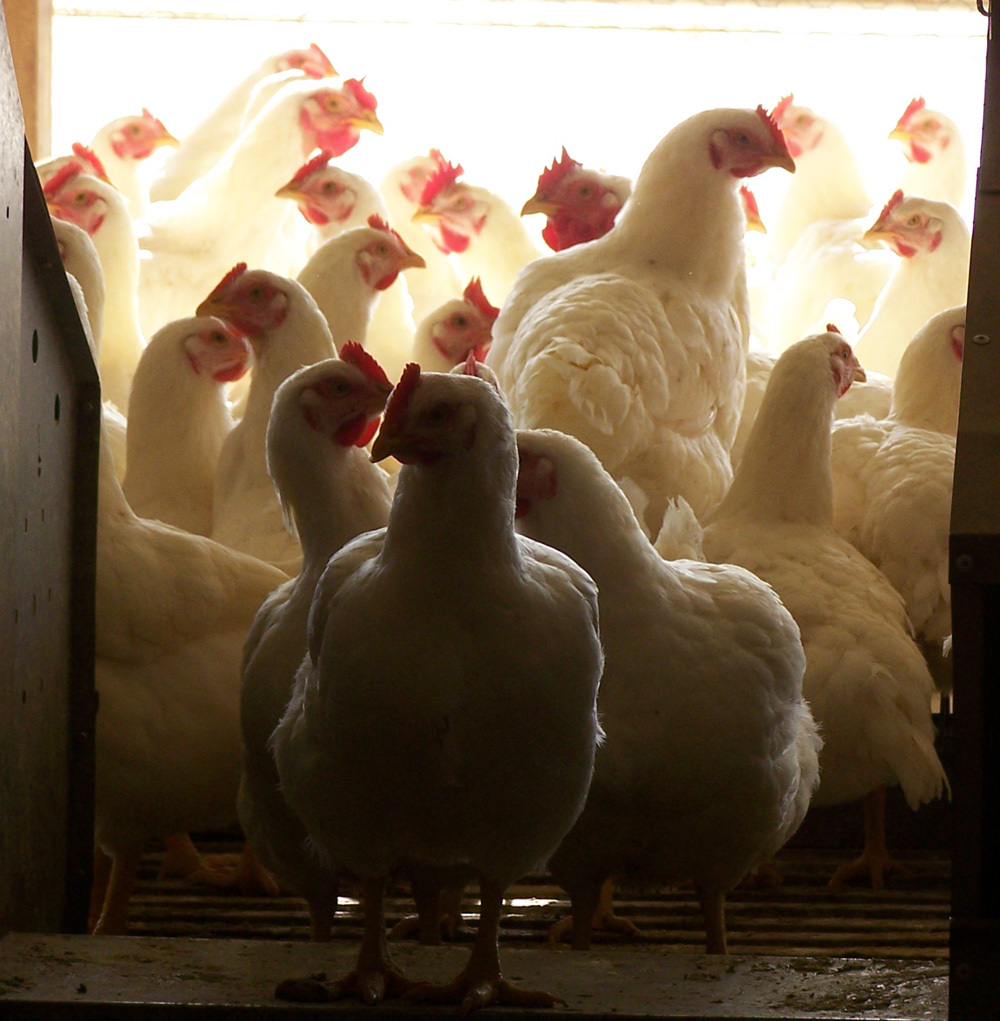
He had them into another room, where were a hen and chickens, and bid them observe a while. So one of the chickens went to the trough to drink, and every time she drank she lifted up her head and her eyes towards heaven. See, said he, what this little chick doth, and learn of her to acknowledge whence your mercies come, by receiving them with looking up.

Of course the Interpreter is making reference to something by using a picture. Chickens actually need to drink by tipping their heads back.

Often times in late medieval literature, the author used emblems to convey an idea. An emblem is not a symbol, exactly.

According to Wikipedia, “although the words emblem and symbol are often used interchangeably, an emblem is a pattern that is used to represent an idea or an individual. An emblem crystallizes in concrete, visual terms some abstraction: a deity, a tribe or nation, or a virtue or vice.”

Just a paragraph above in this section of Pilgrim’s Progress, author John Bunyan had directly referred to an emblem. As the Interpreter showed Christiana a robin eating a spider, he proceeded to explain its meaning.

A few moments later in the scene, we come upon the chickens. It’s a vivid word picture. Not much needs to be explained about what we see here. The picture is good to ponder. Do we acknowledge from whence our mercies come? Are we thankful to the Father who gives all good gifts to His children?

chickens