Posted in theology

Discernment: How do I go about looking for fruit?

By Elizabeth Prata

EPrata photo

Did you know that every New Testament Book (except Philemon) deal with, advises, warns, or commands us about false teachers/doctrine? It is a huge subject in the Bible. In the Old Testament, dealing with false prophets was also a huge topic. Deuteronomy 18:20-22 says a false prophet must be put to death! THAT is how serious God takes it for men or women to speak in His name when they are actually speaking for satan. All of Jeremiah 23 deals with the topic, as well as many others.

We can’t be all “oh, just let them be”, or “don’t judge”, or “you don’t know their heart”, or “they mean well, just eat the meat and spit out the bones’. No. There is nothing more important that the Truth. Jesus died so we may learn it. Do not squander the truth with platitudes that allow doctrinal pollution to seep into your souls.

To that end, Jesus gave us some instructions in the Sermon on the Mount. In Matthew 7, He spoke a section of verses that discuss how to reveal a false teacher. It is by looking at his or her fruit. Here are the verses:

A Tree and Its Fruit

15″Beware of the false prophets, who come to you in sheep’s clothing, but inwardly are ravenous wolves. 16You will know them by their fruits. Grapes are not gathered from thorn bushes, nor figs from thistles, are they? 17So every good tree bears good fruit, but the bad tree bears bad fruit. 18A good tree cannot bear bad fruit, nor can a bad tree bear good fruit. 19Every tree that does not bear good fruit is cut down and thrown into the fire. 20So then, you will know them by their fruits.” (Matthew 7:15-20).

Easier said than done, right? Easy to read it on the page but hard to apply it in life. One reason is that we want to take care in distinguishing between the true teacher, the teacher who is temporarily teaching error or an incomplete doctrine (think of Apollos), or the truly false teacher who is evil through and through and marked for condemnation. (2 Peter 2:3; Jude 1:4).

Teacher Sinclair Ferguson illustrated a few key points on HOW to detect a false teacher in his sermon “Ultimate Choices” (Youtube), the final lesson from Ligonier in Ferguson’s sermon on the mount series,

Jesus said, ‘You will recognize them by their fruits’. What does this mean? In these excerpts, Ferguson explained,

Look at the person’s teaching and their character

1. Does this person remind me of the character and speech of the Lord Jesus Christ? Spiritual fruit in scripture, especially in the NT, is first and foremost likeness to Jesus in character and in speech. Alas, so often that spiritual test will enable you to see through a spiritual charlatan.

Look at the impact he makes on others.

2. And then you need to ask the question what is the fruit of this ministry and those who are influenced by it? What is the fruit of this teaching as you see the impact of it? Jesus is saying not only look at the person’s teaching and their character, but look at the impact he makes on others. See if this person’s teaching enables them to grow in fruit of the spirit. See if what he teaches sets them free from himself, to live for the glory of God.

3. Lord Lord, didn’t we prophesy in your name etc

…depart from me I never knew you. Here, Jesus is teaching us to distinguish to judge to discern between the possession of abilities that impress us and the presence of grace that draws us to Jesus Christ. It’s possible to preach wonderfully eloquently, to prophesy, but apparently not really be a genuine Christian believer.

Jesus sent out Judas Iscariot with the others to heal the sick and to cast out demons he came back with the others and said that the very demons of Hell are subject to us.

4. The test is this- does the teaching draw my eyes to the Lord Jesus?

Or does it draw my eyes to him or her, the gifts they have, the impression they make? It is this that helps us make the judgment of whether we follow this teacher. —End Sinclair Ferguson
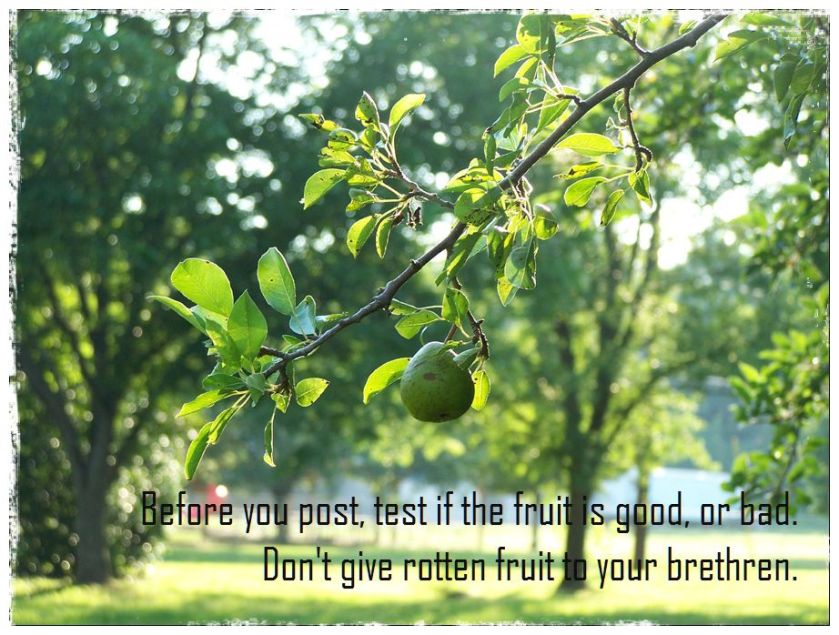

EPrata photo

Fruit takes time to ripen. For us who want to assess a professing Christian’s teaching of lifestyle, we wait a bit and watch. Compare what they say or how they live to the Bible. The Bible is the standard. Someone once told me before I was saved, I was too trusting, taking everything people said at face value as true. I had no clue people lied, had personal agendas, or were manipulative. She said, “What they say and what they do must match up.” I have found this good advice post-salvation to assess a good teacher from a false one.

Don’t allow today’s politically correct stances, today’s cultural ideals, or today’s lifestyles to influence you. The BIBLE is the barometer. It is important to note that we don’t only test their teaching but also their lifestyle.

The qualifications for male teachers from 1 Timothy 3, Titus 1:5–9; 1 Peter 5:1–4 relate more to lifestyle than ability. The same goes for females from Titus 2 for the older “teaching what is good” to the younger. Lifestyle is a big part of qualifications for teaching God’s word.

EPrata photo

A teacher’s doctrine can be checked against the Bible for what they say and what they DON’T say. Some teachers or pastors who profess Christianity have publicly stated they don’t talk about certain doctrines. I can think of some names right now who have said they deliberately don’t preach or teach on sin, hell, wrath, judgment, homosexuality, age of the earth, or eschatology. That is one of the reasons we wait a bit to assess a teacher’s solidity- you’ve noticed he or she hasn’t talked about certain doctrines ever. Do they teach the WHOLE counsel of God? Unashamed and bold?

I hope these few items from Sinclair have been helpful to you. Humility and a servant heart will show good character, and not just lip service to those, but a true, over time, humble service. A renewing mind and a servant heart will yield good fruit.

Posted in theology

The Importance of Discernment in Discipleship

By Elizabeth Prata

EPrata painting

SYNOPSIS

Discipleship requires careful selection of mentors grounded in Scripture, as highlighted in some people’s experiences with misguiding figures. Recognizing the importance of discernment, both new and mature believers must avoid false teachings and seek genuine, faithful Christian guidance. Much of one’s spiritual growth flows with the quality of chosen disciplers and spiritual models.

Continue reading “The Importance of Discernment in Discipleship”
Posted in theology

How Christ’s Character Reflects in Us

By Elizabeth Prata

And Saul commanded his servants, “Find me someone who plays well, and bring him to me.” One of the young men answered, “Behold, I have seen a son of Jesse the Bethlehemite, who is skillful in playing, a man of valor, a man of war, prudent in speech, and a man of good presence, and the LORD is with him.” (1 Samuel 16:17-18).

harp
EPrata photo

King Saul is distressed. He gets these spells of despondency and near madness due to an evil spirit plaguing him. Music quells these incidences, and in v. 16, Saul is calling for help. Saul’s servant replies that ‘he has seen’ a young man of good character. We’ll come back to ‘he has seen.’

You notice that the servant didn’t just leave it at ‘plays well’. Anyone can hire a good musician. But when you’re feeling down, who do you want nearby to comfort you, even if it is through music with not much personal interaction? You want a good man. So the servant also included David’s character qualities in this verbal resume. He said that it is seen that David is known to be valorous, strong (man of war), and discerning. That’s the Hebrew word for ‘prudent in speech’. What is meant here is “intelligent, discreet, discerning, have understanding”. When you’re King and enter into a spell of weakness, you don’t want a blabbermouth running your private business all over town. You want someone compassionate.

Finally, the servant ends with a kicker: the Lord is with David.

In the New Testament times one would likely say “He is in the Lord”, or “The Spirit is in him.”

The saints of God are recognized by their fruit. One example is Samuel, “Now the boy Samuel continued to grow both in stature and in favor with the LORD and also with man.” (1 Sam 2:26; cf Luke 2:40).

Luke 6:44 reminds us that a good tree will bear good fruit. Galatians 5:22-23 reminds us that the fruit is:

“love, joy, peace, patience, kindness, goodness, faithfulness, gentleness, self-control; against such things there is no law.”

Matthew 5:14 says we are to be light in the world. Light is not hidden but bright and high so all can see. We believers are to have evidence in our lives that we are one of the Lord’s. That evidence needs to be seen in our words and deeds. (James 2:14). We need to have observable evidence because sanctification means we are daily being conformed to the image of Christ. We must reflect His character in more observable ways as we grow though our life.

I am not talking about personal reputation. I am not speaking of a motivation where we cultivate the approval of man. I am not speaking of that at all.

As James M. Hamilton explained in his book Work and Our Labor for the Lord,

We live obediently and humbly “as a good testimony for unbelievers (1 Corinthians 9:12; 1 Thessalonians 4:12; 1 Timothy 5:14; 6:1; Titus 2:5,9). At many points in his letters Paul instructs Christians to live in a way that reflects concern for how non-Christians perceive Christianity and its adherents. That is to say, Christians are to work in ways that commend the faith to outsiders. Believers are to be winsome and attractive, not repulsive and obnoxious. This concern for how unbelievers perceive the faith is inextricably connected to a desire for others to know, enjoy, and glorify God in Christ. This aspect of doing good work links up with the Great Commission (Matthew 28:18-20). Christians contribute to the task of making disciples of all nations by doing good work that gives the faith a good reputation.”

It’s the reputation of Christ that is at play here, not ours. If we are observably joyful, kind, faithful, self-controlled, good, patient, peaceful, loving, full of light, it will be obvious that it is Christ’s character in us, by the Spirit.

David’s character was observable and noted. Remember, whether you realize it or not, even if you work from home or work in a cubicle, people are watching you (us). They note your (our) character. The more we walk with Christ, the more our character will be His character.

What are people observing about you? Is Christ in you and evident? When someone wants to choose a person for a project or a team or a club, would they say you (me) are brave, prudent, skillful, with good presence, and the Lord with us? Like David? I hope and pray that people see the Lord in me, and not me in me, or at least less and less of me. Christ’s character is beautiful.

Posted in encouragement, theology

Good fruit (Not what you think)

By Elizabeth Prata

I was cutting up a nectarine that had been sitting in my fruit bowl for many days. “Surely it will be ripe by now” I thought.

I began chopping it into chunks to add to my oatmeal, and it was still hard and unripe. Gah! Other times when I think the piece of fruit is ripe, it’s dried out and mummy-like inside.

It’s not that I can’t tell when a piece of fruit is ripe, I can. It’s that the declining quality of the fruits makes it hard to determine if this one is juicy or this one is always going to remain a rock. Lately at the grocery store, choosing fruit has been like Fruit Roulette.

I remember my friend and I driving in the Tuscan countryside (yes, really) and we got behind a small tractor pulling a trailer of artichokes. The road was bumpy and occasionally an artichoke tumbled out and bounced on the pavement in front of us. We laughed and started saying, ‘Did you think I fell off the artichoke truck yesterday?’ changing the idiom from ‘the turnip truck’.

Here he is after turning down the driveway to a farm:

tuscan artichoke wagon.jpg

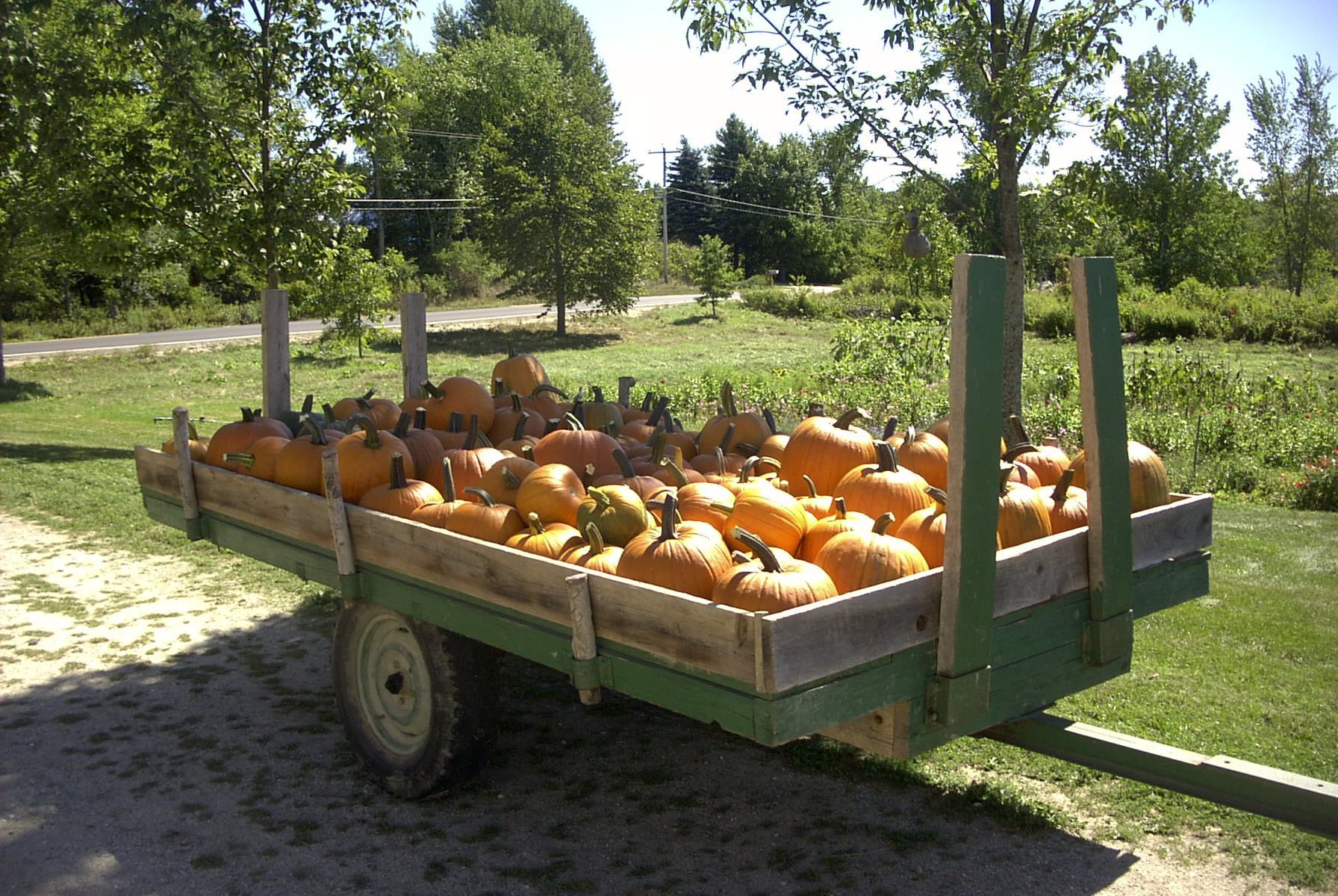
In New England, where I used to live, fall meant apples, cider, vivid foliage,and pumpkins. I lived near a pumpkin farm. Imagine pulling up pounds and pounds and tons of pumpkins and loading each one onto the wagon. Oof, hard labor for sure. Here’s the wagon, so colorfully enticing for buyers looking for a pumpkin to make that perfect jack-o-lantern-

pumpkins.jpg

I live in a farming community now and the farmer’s markets are filled with abundance, like this watermelon farmer’s truck.

watermelon

I think of the passages that promise abundance during the 1000 reign of Christ.

Each of them will sit under his vine And under his fig tree, With no one to make them afraid, For the mouth of the LORD of hosts has spoken. (Micah 4:4)

In that day,’ declares the LORD of hosts, ‘every one of you will invite his neighbor to sit under his vine and under his fig tree.  (Zechariah 3:10)

If the earth is so beautiful now, (under its curse), and there is abundance rising from it (with toil and sweat, yes), then how beautiful will the coming kingdom be? How will it feel to sit in the sun and have a conversation with a beloved member of the redeemed body, and not worry about where your pickpockets and thieves? Not fear assault? No mass shootings?

What will these figs and their foods taste like? Heavenly, literally. My fruit on the plate will be ripe, beautiful, perfect. No more disappointments cutting into a piece of fruit only to find it withered or hard or juiceless.

I know we praise Jesus for the big things, like redemption, grace, propitiation, etc. But I also look forward to the peace and tranquility the coming kingdom will afford His people, and its fruits.


Posted in theology

Observable Character: David

By Elizabeth Prata

And Saul commanded his servants, “Find me someone who plays well, and bring him to me.” One of the young men answered, “Behold, I have seen a son of Jesse the Bethlehemite, who is skillful in playing, a man of valor, a man of war, prudent in speech, and a man of good presence, and the LORD is with him.” (1 Samuel 16:17-18).

harp

King Saul is distressed. He gets these spells of despondency and near madness due to an evil spirit plaguing him. Music quells these incidences, and in v. 16, Saul is calling for help. Saul’s servant replies that ‘he has seen’ a young man of good character. We’ll come back to ‘he has seen.’

You notice that the servant didn’t just leave it at ‘plays well’. Anyone can hire a good musician. But when you’re feeling down, who do you want nearby to comfort you, even if it is through music with potentially not much personal interaction? You want a good man. So the servant also included David’s character qualities in this verbal resume. He said that it is seen that David is known to be valorous, strong (man of war), and discerning. That’s the Hebrew word for ‘prudent in speech’. What is meant here is “intelligent, discreet, discerning, have understanding”. When you’re King and enter into a spell of weakness, you don’t want a blabbermouth  running your private business all over town and you want someone compassionate.

Finally, the servant ends with a kicker: the Lord is with David.

In the New Testament times one would likely say “He is in the Lord”, or “The Spirit is in him.”

The saints of God are recognized by their fruit. One example is Samuel, “Now the boy Samuel continued to grow both in stature and in favor with the LORD and also with man.” (1 Sam 2:26; cf Luke 2:40).

Luke 6:44 reminds us that a good tree will bear good fruit. Galatians 5:22-23 reminds us that the fruit is:

“love, joy, peace, patience, kindness, goodness, faithfulness, gentleness, self-control; against such things there is no law.”

Matthew 5:14 says we are to be light in the world. Light is not hidden but bright and high so all can see. We believers are to have evidence in our lives that we are one of the Lord’s. That evidence needs to be seen in our words and deeds. (James 2:14). We need to have observable evidence because sanctification means we are daily being conformed to the image of Christ. We must reflect His character in more observable ways as we grow though our life.

I am not talking about personal reputation. I am not speaking of a motivation where we cultivate the approval of man. I am not speaking of that at all.

As James M. Hamilton explained in his book Work and Our Labor for the Lord,

We live obediently and humbly “as a good testimony for unbelievers (1 Corinthians 9:12; 1 Thessalonians 4:12; 1 Timothy 5:14; 6:1; Titus 2:5,9). At many points in his letters Paul instructs Christians to live in a way that reflects concern for how non-Christians perceive Christianity and its adherents. That is to say, Christians are to work in ways that commend the faith to outsiders. Believers are to be winsome and attractive, not repulsive and obnoxious. This concern for how unbelievers perceive the faith is inextricably connected to a desire for others to know, enjoy, and glorify God in Christ. This aspect of doing good work links up with the Great Commission (Matthew 28:18-20). Christians contribute to the task of making disciples of all nations by doing good work that gives the faith a good reputation.”

It’s the reputation of Christ that is at play here, not ours. If we are observably joyful, kind, faithful, self-controlled, good, patient, peaceful, loving, full of light, it will be obvious that it is Christ’s character in us, by the Spirit.

David’s character was observable and noted. Remember, whether you realize it or not, even if you work from home or work in a cubicle, people are watching you (us). They note your (our) character. The more we walk with Christ, the more our character will be His character.

What are people observing about you? Is Christ in you and evident? When someone wants to choose a person for a project or a team or a club, would they say you (me) are brave, prudent, skillful, with good presence, and the Lord with us? Like David? I hope and pray that people see the Lord in me, and not me in me, or at least less and less of me. Christ’s character is beautiful.

——————————–

Observable Character: Ruth

Observable Character: Dorcas

Ligonier Teaching Series: The Life of David (free)

Posted in discernment, Uncategorized

Bad fruit is bad

Yesterday I wrote about the wind, meaning, the Spirit, blowing where it will. I wrote of how we can’t see the wind at the time but we can see its effects. One of the effects of the wind’s (Spirit’s) effect is fruit. The changed heart will be producing good fruit. A bad heart produces only bad fruit. The unsaved who profess but do not possess Christ will produce bad fruit at some point. False teachers will produce bad fruit also.

Beware of the false prophets, who come to you in sheep’s clothing, but inwardly are ravenous wolves. You will know them by their fruits. Grapes are not gathered from thorn bushes nor figs from thistles, are they? So every good tree bears good fruit, but the bad tree bears bad fruit. A good tree cannot produce bad fruit, nor can a bad tree produce good fruit. Every tree that does not bear good fruit is cut down and thrown into the fire. So then, you will know them by their fruits. (Matthew 7:15-20 NASB)

Please notice the certainty in the lesson. Jesus said ‘You WILL know them’. Not that it will be uncertain, or foggy, or maybe, or perhaps. But you WILL.

Not all fruit is produced quickly. Different fruit trees bear fruit at different lengths of time. After planting, fig trees bear figs after 1-2 years. Apple trees take 3-5 years to produce fruit. Pear trees take about 4-6 years. The point is, not all false teachers will quickly show their true nature, but at some point, no matter how long it takes, they will produce the bad fruit Jesus spoke of. And then you will know them.

They wear sheep’s clothing. This means that outwardly false teachers will appear on the surface to be like the true sheep. Barnes’ Notes explains here,

Who come in sheep’s clothing – The sheep is an emblem of innocence, sincerity, and harmlessness. To come in sheep’s clothing is to assume the appearance of sanctity and innocence, when the heart is evil.

Ravening wolves – Rapacious; voraciously devouring; hungry even to rage. Applied to the false teachers, it means that they assumed the appearance of holiness in order that they might the more readily get the property of the people. They were full of extortion and excess. See Matthew 23:25.

I remember watching an art interpretation show some years back. I like Renaissance art and this episode featured Caravaggio and his famous painting of the Bacchus. I have seen the actual painting in the Uffizi Gallery in Florence. Here it is.

Caravaggio_-_Bacco_adolescente_-_Google_Art_Project

I wish I could go back and really appreciate the art now that my spiritual eyes have been opened. I remember standing in front of it at the Uffizi for a short moment, and saying to myself, “Pretty! I like fruit.” And then moving on. Outwardly the painting looked good.

Let’s not move on. Let’s look at this scene for a moment.

Bacchus is a god of wine and ecstasy. Starting at the top, Bacchus’ cheeks. His cheeks are ruddy, but not a healthy ruddy like David, from being out in the air and working hard. (1 Samuel 16:12). No, Bacchus’ cheeks are red from dissipation, from drunkenness and licentiousness and debauchery and overindulgence. His eyes are glazed and drowsy.  He is half dressed, exposing skin, indicating sensuousness, but the mattress he is laying on is dirty. He is offering the viewer wine, a beverage that will make one take leave of senses. But his near nakedness is also indicating he is offering something more. His fingernails are dirty.

Now the fruit. Looking hard at the fruit, you notice that despite the lushness and the voluminous quantity, the fruit is overripe. It’s rotting. It’s bad. The apple has a worm. The pomegranate has burst open. The nectarine is rotten.

fruit

If you want an technical description of this bowl of disease, here it is

Exact in detail they include precise representations of disease symptoms, insect damage, and various abiotic defects. … The fruits include black, red, and white clusters of grapes; a bursting pomegranate; figs; a large green pear; three apples—one greenish and one red with a codling moth (Carpocapsa pomonella) entrance hole, a small, golden russet crab with two areas of rot, likely a form of Botrysphaeria; and a half-rotten quince. The basket contains two fig leaves both with a dorsal (abaxial) view and a grape leaf yellowing at the edge suggestive of potassium deficiency. The head of Bacchus is crowned with clusters of black and white grapes and senescing leaves, one of which is turning red, probably an indication of crown gall, induced by Agrobacterium tumefaciens. Source: Purdue Department of Landscape and Horticulture

Eww. The fruit of debauchery is rotten. The fruit is BAD. False teachers only offer bad fruit.

Do you want to eat the bad fruit? Bite into an apple with a moth worm inside? Consume sickly peaches dripping with its own rotted pus?

People often try to be charitable with false teachers. I understand wanting to be charitable, but there is a time and a place for charity. False teachers are evil. They are against Jesus. They are against you. They are against me.

Jesus said that there is good fruit and bad fruit. He didn’t say that there was fence fruit or sort of OK fruit or any fruit in the middle. The fruit teachers offer is either one or the other.

I learned my lesson with the art. Art takes a while to look at, examine, notice, and ponder. It’s the same with what teachers teach us. Good teachers and bad teachers offer us things. It takes time to look at, examine, notice, and ponder what they are offering. Once we discern the bad from the good, we are told to hold on to the good and leave off the bad.

but test everything; hold fast what is good. (1 Thessalonians 5:21).
Love must be sincere. Detest what is evil; cling to what is good. (Romans 12:9)

So there is no excuse for listening to someone generally and widely acknowledged to be a false teacher. A false teacher does not offer anything good. Their fruit is bad. You can’t follow them and expect them to produce one good fruit on the tree. Jesus said the tree is either all good or all bad.

Don’t eat of their fruit. Don’t quote them. Don’t buy their books. Don’t eat the meat and spit out the bones, which doesn’t even make sense because we are talking about fruit. When you are tempted to peek at a false teacher’s site/tweets/stream/Facebook/books, picture the debauched Bacchus with dirty fingernails on a dirty mattress offering you wormy rotted fruit.

Instead, we can imbibe of the sweet waters from the fountain of life and the pure bread from heaven.

How precious is your steadfast love, O God!
The children of mankind take refuge in the shadow of your wings.
They feast on the abundance of your house,
and you give them drink from the river of your delights.
For with you is the fountain of life;
in your light do we see light.
Psalm 36:7-9

—————————————-

Further Reading

Ligonier: False Prophets and their Fruits

CARM: You will know them by their fruit

Posted in discernment, Uncategorized

The biblical worldview is that there is the righteous and the wicked

When you read chunks of the Bible at one time, patterns and themes emerge that may not be as noticeable as when you read just a few verses more deeply. That’s why both kinds of study are valuable.

In reading the Psalms, one immediately notices David’s worldview. It’s stark, solid, and biblical. With David, there are the righteous, and the wicked. Period.

We live in times where Christians are pressured to blur those lines. We’re told to accept and tolerate all manner of sin, value any and all professions of faith even if they’re unaccompanied by fruit, and to view all people as inherently good. Failure to do the above invites catcalls of “Pharisee”, “judgmental”, or worse.

However, when we blur those lines, the loss to the church is that mission fields shrink and disappear. Doctrinal lines are dismissed. Sadly, if we don’t know who is in and who is out, who do we evangelize?

I found this article from a church in MO, called The Righteous and the Wicked. I don’t agree with their KJV-only stance, but I do agree with this article.

We believe that there is a radical and essential difference between the righteous and the wicked; that such only as through faith are justified in the name of the lord Jesus, and sanctified by the spirit of our god, are truly righteous in his esteem while all such as continue in impenitence and unbelief are in his sight wicked, and under the curse; and this distinction holds among men both in and after death. …

This article also emphasizes the fact that with God, there is no middle ground. With men, we see much middle ground or gray area. With God it is all black or white, right or wrong, for him or against him. Joshua made this very clear in Joshua 24:14,15 when he demanded that Israel make a choice to either serve God or not serve God. “Now therefore fear the LORD, and serve him in sincerity and in truth: and put away the gods which your fathers served on the other side of the flood, and in Egypt; and serve ye the LORD. 15 And if it seem evil unto you to serve the LORD, choose you this day whom ye will serve; whether the gods which your fathers served that were on the other side of the flood, or the gods of the Amorites, in whose land ye dwell: but as for me and my house, we will serve the LORD.”

The Bible makes it clear so many times, using opposites in a plethora of descriptions. This verse from Isaiah 5:20 is just one:

Woe unto them that call evil good, and good evil; that put darkness for light, and light for darkness; that put bitter for sweet, and sweet for bitter!

The verse presents three of the stark opposites:

Evil-Good
Darkness-Light
Bitter-Sweet

We read of those who are cursed and those who are blessed.

Those who are dead and those who are living.

There are those in Christ and those who are in outer darkness.

There are those who draw near, and those who fall away.

There are those who are hot, and those who are cold. The middle ground of lukewarm is something Jesus hates!

The sad thing is that some of these unsaved, evil people are professing Christians. Others are simply true Christians who are stumbling. Without practicing biblical discernment, we are losing our ability as a global church to detect the difference. This is to our detriment. The biblical worldview is that there is either-or.

We need to be mindful of the two-path approach to Jesus. Now, we don’t have the omnipotence that God does. When I try to have these conversations with fellow believers, they quickly shut it down, saying, “Only God knows the heart.” That is true. I can’t see the heart of people to say with the same certainty as God that a person is saved or not saved. I’m not omnipotent. But discernment doesn’t require omnipotence.  “You will know them by their fruits,” Jesus said, twice in the same lesson. (Matthew 7:15-20). He gave us the ability to discern the difference between a thistle and a fig, the difference between a grape and a thorn.

He didn’t say, ‘You won’t know them.’ He didn’t say, ‘You may know them, perhaps. Try again later.’ He didn’t say, ‘Stay quiet because only God knows the heart.’

Therefore by their fruits you will know them. (Matthew 7:20)

I’m not saying to go around and make unsound declarations about people’s position in Christ. But I am saying two things that revolve around this concept – inconsistency and hypocrisy in Christian life brings reproach upon the cause of truth.

Many will follow their sensuality, and because of them the way of the truth will be maligned; (2 Peter 2:2).

So for that reason,

1. Remember that there are two roads and two roads only. Societal pressure, cultural tolerance, personal timidity add to the reluctance of people to remember that. The biblical worldview is that it’s either-or with nothing in the middle! The middle road with mushy doctrinal lines is lukewarm. Jesus hates lukewarm. Do not tolerate sinners among you who preach false doctrine! (Revelation 2:20).

2. If you see a long-term pattern of sin in a person or a long time of no fruit, it is allowed and even commanded by His word, to do something about it. Some of these verses are aimed at pastors but it is also incumbent on lay-people to both edify and rebuke in sincere concern for their restoration. (1 Cor. 5:1-13, 1 Timothy 5:20, 2 Timothy 4:2, Titus 1:13, Galatians 2:14, Ephesians 5:11…)

In an attempt to be kind, or caring, or non-judgmental, we too often allow a believer (or a non-believer “believer”) to go on their wicked path. The believer, if he is a believer, loses rewards every moment he continues on his course of sin. More importantly, professing believers who continue on a wicked path bring reproach onto the name of Jesus. (Romans 2:23-24). The professing person who is self-deluded and not a believer at all, may, in fact, be shaken out of their deluded complacency unto salvation if one confronts them about their lack of fruit.

Even if they aren’t shaken out of complacency or a sinning path, and the Lord hardens them further instead, His glory is manifested in that person as a vessel of wrath. Plus, you are giving Him glory by obeying. Just as the result of our salvation discussions is left to the Holy Spirit, sin-correcting discussion results are also left to Him. Sometimes the person will be amenable, sometimes they will become angry and then amenable, and sometimes they will get mad and stay mad. If you have prayed, if you have been diligent to follow His statutes, if you’ve removed the log from your own eye, if you’ve spoken with a sincerity for the betterment and concern for the person, then leave the results to the Spirit. You’ve done your part.

The Takeaway:

There are two roads. There are the righteous and the wicked. The two roads people travel lead to His domain, whether it is the kingdom of Light in heaven or His domain of Outer Darkness in the Lake of Fire. After death, there is a great gulf fixed, that none many travel from one to the other. Speak the truth in love to those who you have concerns for before the roads become unalterably fixed after death.

As David said in Psalm 6:5,

For in death there is no remembrance of you; in Sheol who will give you praise?

Matthew Henry is concise regarding this verse, and of today’s concept, his comment on Psalm 6:5 is a good way to end it:

6:1-7 These verses speak the language of a heart truly humbled, of a broken and contrite spirit under great afflictions, sent to awaken conscience and mortify corruption. Sickness brought sin to his remembrance, and he looked upon it as a token of God’s displeasure against him. The affliction of his body will be tolerable, if he has comfort in his soul. Christ’s sorest complaint, in his sufferings, was of the trouble of his soul, and the want of his Father’s smiles. Every page of Scripture proclaims the fact, that salvation is only of the Lord.

Man is a sinner, his case can only be reached by mercy; and never is mercy more illustrious than in restoring backsliders. With good reason we may pray, that if it be the will of God, and he has any further work for us or our friends to do in this world, he will yet spare us or them to serve him. To depart and be with Christ is happiest for the saints; but for them to abide in the flesh is more profitable for the church.

~~~~~~~~~~~~~~~~~~~~~~~~~~~~

Further Reading

Dealing with Sinning Christians

When Should a Christian try to correct another Christian?

In keeping with the theme of knowing there are only two roads and that there are only the righteous and the wicked, let’s look at what a Biblical worldview is, and when a Christian’s biblical worldview can become diluted:

What’s a Christian worldview anyway?