
Posted in encouragement, theology

I’ve heard of wine pairings, or even tea pairings, but book pairings?

By Elizabeth Prata

You know how, in the foodie world, they pair different foods or drinks together for the eater to enjoy maximum flavor? “Sauvignon blanc is the classic wine pairing for goat cheese, but you could also try a crisp dry Provençal rosé…” Or, “This Sencha Green tea would be lovely with Arugula and lightly steamed vegetables…”

I do book pairings. If a book is a difficult one, I pair it with a modern treatment. Not modernized language, though that sometimes helps, but pairing an older author and a modern author who wrote about the same subject. Or simply read books by two modern day authors writing about the same subject.

I think these would be good pairings:

Work: Its Purpose, Dignity, and Transformation by Daniel M. Doriani
and
Work and Our Labor in the Lord (Short Studies in Biblical Theology), by James M. Hamilton Jr.

I’ve read the Hamilton book. Challies recommended the Doriani book yesterday in his 10 New and Notable Books for April blog essay, and I think that would be fun to read it and compare to the way Hamilton treated the subject.

This might also be a good pairing:

The Power of Christian Contentment by Andrew M. Davis
and
The Rare Jewel of Christian Contentment, by Jeremiah Burroughs

The Burroughs book was first published in 1648. Burroughs was an English Puritan preacher. His book on contentment is considered to be one of the gold standards on the topic, but the language is somewhat antiquated. Pairing the Burroughs book with the Davis tome (which I have not read) might be a good idea.

As a matter of fact, last summer I did pair a Puritan book with a more recently written book and it was very helpful to me in understanding the older one. I read –

The Enemy Within: Straight Talk about the Power and Defeat of Sin by Kris Lundgaard
and
Mortification of Sin in Believers by Puritan John Owen

The Lundgaard book drew heavily on the original Owen works on indwelling sin and the mortification of sin. Reading a chapter of Lundgaard’s book one day and then Owen the next helped my brain prepare for Owens’ more complex treatment of the subject in his Puritan language.

I’ve paired these and I am enjoying the double treatment of how to critically read a book-

Lit!: A Christian Guide to Reading Books by Tony Reinke is

A practical guide built on the gospel, Lit! models the skills needed to build a balanced reading diet of Scripture, theology, and devotional books, but without overlooking important how-to books, great stories, and books meant to be enjoyed for pleasure.

How to Read a Book: The Classic Guide to Intelligent Reading by Mortimer J. Adler and Charles Van Doren

Wikipedia’s blurb explains Adler’s 1940 book. “Adler co-authored a heavily revised edition in 1972 with Charles Van Doren, which gives guidelines for critically reading good and great books of any tradition. The 1972 revision, in addition to the first edition, treats genres, inspectional and syntopical reading.”

Adler’s book goes into much depth. Reinke’s book is a bit lighter. I like to read Reinke’s book and then the next day read Adler’s.

You might wonder, why go through all this trouble to ‘pair books’?

Because doing so helps train us, specifically in three higher order thinking skills: Analysis, Synthesis, and Evaluation.

  • Analysis refers to the ability to break down material into its component parts so that its organizational structure may be understood
  • Synthesis refers to the ability to put parts together to form a new whole
  • Evaluation is concerned with the ability to judge the value of material (statement, novel, poem, research report) for a given purpose. (Source)

We employ those skills when we read the Bible. We need to analyze the passages. We synthesize when we examine the different gospels, comparing them to each other. We synthesize when we strive to understand eschatology from different passages in the Old and New Testaments. Evaluation is an important skill in discernment- if we lack the ability to judge material for the purpose of edification of souls, then we open ourselves much that is false.

The Holy Spirit illuminates the scriptures’ meaning. But we still have to put in the hard work.

But solid food is for the mature, for those who have their powers of discernment trained by constant practice to distinguish good from evil.  (Hebrews 5:14).

Have nothing to do with irreverent, silly myths. Rather train yourself for godliness; (1 Timothy 4:7).

colbert windows
Pair up two books and see what you think

——————————————————-
Further Reading:

I’ve written two other essays about the ‘how to read’ issue.

One of them is here

The other one is here

Posted in prayer, theology

What are some good books on prayer?

I am always thrilled when one of the ladies asks me a question, either a theological question, one on Christian life, or a book recommendation. It means she is thinking, seeking God’s glory, and striving on her walk. With so much negtivity around, it’s great to be reminded, that nothing and no one will overthrow Jesus’s church. It is thriving, growing, and will endure till the last day. There are still many Christians on earth who care about the way God wants to receive worship and prayer and who care about their Christian walk. What a blessing the brethren are.

prayer

A reader recently asked me for recommendations on books about prayer. My first thought immediately went to the Valley of Vision. Valley of Vision! It’s a book OF prayers by Puritans. But reading it will teach you to pray. It is THE most convicting, moving, and stirring book one could hope to read! (after the Bible). These Puritans’ prayers are deep and God centered. I’d say it’s #3 of best loved books in the English language, with the Bible first and Pilgrim’s Progress next. If you have those three books on your shelf, the seeds of theological solidity have been planted, with more books to sprout as you go.

Also, I recommended “The Power Of Prayer In A Believer’s Life“, by C.H. Spurgeon, a collection of sermons. Charles Spurgeon preached numerous times on prayer.

Considered by his peers then and now as “The Prince of Preachers,” Charles Spurgeon built London’s Metropolitan Tabernacle into the world’s largest independent congregation during the nineteenth century. While many factors have been highlighted that help explain the effectiveness of Spurgeon’s preaching, the foremost secret that empowered Charles Spurgeon was his devotion to prayer.

Or this one on Amazon is a good one.

7 classics on PRAYER: Here is the blurb:

This fantastic compilation brings you 7 Christian classics on PRAYER. Ever struggled with how to pray, what to pray for, or just needed encouragement to keep praying? These powerful writings will stir your heart and strengthen your faith, helping you grow in communion with God.

 How To Pray – by R. A. Torrey [12 chapters]
• With Christ in the School of Prayer – by Andrew Murray [32 chapters]
• Prevailing Prayer – by D. L. Moody [11 chapters]
• How I Know God Answers Prayer – by Rosalind Goforth [10 chapters]
• Answers to Prayer – from George Muller’s Narratives [6 chapters]
• Power Through Prayer – by E. M. Bounds [20 chapters]
• A Short and Easy Method of Prayer – by Madame Jeanne Guyon [24 chapters]


Jeanne Guyon was a Catholic Mystic, so that section of the book appears to be the only dud chapter.

I am extremely hesitant to recommend something newer. Of late many people have been writing about prayer, but the authors are outight heretics or in some cases blossoming heretics. Or they quote Catholics or mystics in the book. Others twist the discipline of prayer into a prosperity or self-help notion. If you know of a recent and solid book on prayer, please do share. When I recommend, I think it’s better to stick with the more solid older books on this subject. See what a search for ‘Christian books on prayer’ yields:

Clipboard01

One can always go to the gty.org store and look for something there, or the same at Ligonier.org. Banner of Truth books is pretty trustowrthy, this is their page on the subject of prayer

Thanks for the question, keep them coming!

Posted in discernment, Uncategorized

Christian books: It’s not “just fiction”

I love to read. With the New Year and all the ‘Reading Challenges’ that emerge as people make decisions at the start of the year, I’d decided to go back to reading for pleasure. This is an activity that had fallen by the wayside as I got busier, and my eyes grew more tired at night. Aging. It’s not for sissies, lol.

I also decided to read the books that were on my own shelves to start with, rather than going out to buy a bunch of new books. Shop my own shelves, so to speak! So as I’d picked up that novel or this novel I’d had on my shelf since before salvation, and began to read them, I became dissatisfied. Sadly, the secular novels of today, even the literary ones, contain things my sanctifying soul objects to. Especially if there is profanity or blasphemy.

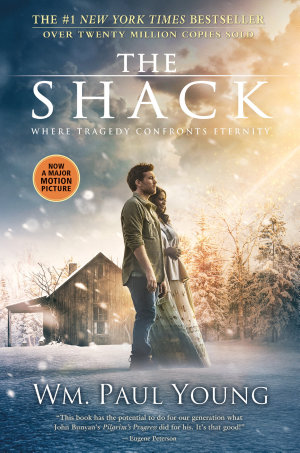
Are Christian books safer? Well, no. Take the book The Shack, for instance. This was a runaway bestseller back in 2007-2008 and onward. It was sold in Christian bookstores as a Christian book. Its author, William P. Young, wrote about a man who was staggering under heavy grief due to the kidnapping and death of his little daughter, which had happened in a derelict shack. One day the man received a handwritten note in his mailbox, with no stamp or postage, requesting his presence…in the shack. It turned out to have been an invitation from God. Curious, the man goes to the shack, where he also ‘meets’ Jesus and the Holy Spirit in addition to being greeted by ‘God.’ It turns out that according to the author’s presentation of the Trinity, God is a woman, as is the Holy Spirit. The book goes on to present discussions between the persons of the Trinity and the man, regarding sin, evil, salvation, judgment, and other doctrines. The book teaches that sin is its own judgment, that hell exists to purge away unbelief (not punish for sin), that there is universal reconciliation, and other aberrant, non-biblical doctrines.

Many credible leaders in the faith negatively reviewed the book. I reviewed it negatively also. A common rebuttal to our negative view of the book was, “Lighten up. It’s only fiction!” Or, “It’s only a novel!”

Dear reader, novels teach an author’s point of view, either subtly or overtly. It’s no different for Christian novels. Novels with Christian themes use narrative to teach. We must all be Bereans and check to see that these things in the ‘Christian’ book are so, in whatever form the doctrines are coming to us. Doctrine is taught in songs, poems, sermons, lessons, theological books…and fiction.

Below are three essays regarding Christian fiction and theology that flesh out these issues.

Dr. R. Albert Mohler Jr. serves as president of The Southern Baptist Theological Seminary. In this first essay I’m linking to, Albert Mohler offers thoughts on the missing art of evangelical discernment as encapsulated by evangelical response to The Shack. The massive popularity of the book meant that Christians were accepting of, or at least overlooking, the heretical doctrines The Shack espoused. Fiction or not, false doctrine is gangrenous, (2 Timothy 2:17) and spreads infection to all who come into contact with it. Infection is no respecter of literary genres.

Though The Shack was published 10 years ago, it is still evidencing strong sales, sure to be spurred by the imminent release of the movie of the same name. Dr Mohler wrote,

Even as Wayne Jacobson and others complain of those who identify heresy within The Shack, the fact is that the Christian church has explicitly identified these teachings as just that — heresy. The obvious question is this: How is it that so many evangelical Christians seem to be drawn not only to this story, but to the theology presented in the narrative — a theology at so many points in conflict with evangelical convictions?

[Professor Timothy Beal of Case Western University] then asks: “What are these progressive theological ideas doing in this evangelical pulp-fiction phenomenon?” He answers: “Unbeknownst to most of us, they have been present on the liberal margins of evangelical thought for decades.” Now, he explains, The Shack has introduced and popularized these liberal concepts even among mainstream evangelicals.

So we see that Christian fiction is deliberately used to bring heretical ideas to the masses and worse, popularize them. Christian reader, beware! It’s not “just fiction”!

In this linked essay, Samuel D. James muses on the current state of Christian Publishing, where adult coloring books and bubble-gum devotionals litter the top ten, and wonders why there is a gap between the thought-provoking content we regularly read on social media and blogs, versus the tripe we’re exposed to in hard copy publishing.

As I look out on the confessional evangelical writing scene, I see a lot of good, even in places where I’d find much to disagree with. There is quite a bit of thoughtful, meaningful commentary out there right now. So when I see a list like this, I can’t help but wonder: Where’s the disconnect? Why am I seeing such a stark difference between the content I inhabit on a daily basis and the content that the average Christian is consuming at bestselling rates? I don’t have an answer for that.

There are a few things I do know:

The space right now for creative Christian writers is enormous. There is a real material need in American Christian culture for literary talent. We can’t talk to teenage and twentysomething believers about using their gifts for the good of the body of Christ and only point them toward vocational ministry or the mission field. Christian art matters (it always has), and it requires Christian artists. They won’t grow out of the ground; they have to be cultivated, encouraged, identified, and supported.

Hear hear. Where are the new authors? People who might have written acceptable fiction twenty years ago are not only growing older but many of them are growing more liberal (Max Lucado…Ted Dekker…etc) Where are the young credible, solid authors coming up? Many of those older authors have taught their own family and their offspring are now writing books, such as Max Lucado’s daughter Jenna, and Beth Moore’s daughter Melissa. This is even a more important question because the twenty-somethings of today have been raised entirely in a liberal, prosperity, market-driven church growth model with sermonettes passing for deep theological thought and 7-11 praise songs that pass for hymns.

Jesus noted the pattern when sinful doctrine is allowed to remain for periods of time in teaching, the next generation adopts it.

But I have this against you, that you tolerate that woman Jezebel, who calls herself a prophetess and is teaching and seducing my servants to practice sexual immorality and to eat food sacrificed to idols. 21 I gave her time to repent, but she refuses to repent of her sexual immorality. 22 Behold, I will throw her onto a sickbed, and those who commit adultery with her I will throw into great tribulation, unless they repent of her works, 23 and I will strike her children dead. (Rev 2:20-23a).

Christian reader, keep your eye out for good new authors, and buy their books and encourage them personally by offering good reviews on Amazon or even directly through their social media or email (if published).

I recommend reading the remainder of Mr James’ article, also. He has several additional bullet point thoughts on the matter that are worth your time.

Here is the third article for your consideration, 12 Fiction Books That Will Shape Your Theology

I am mentioning this article not for the list, which may or may not contain books that are healthy ‘eating’ for the Christian, but for the fact that the author writes that it’s a given that Christian fiction shapes theology.

When we think about the role of reading in our spiritual formation, we generally think of non-fiction books that help us understand scripture and theology, but fiction powerfully shapes the ways in which we think faithfully about God and the world. Here is some of the best fiction that has been most formative in my own theology.

Here Albert Mohler states, that Christian books, specifically The Shack, are in fact sustained theological arguments.

In evaluating the book, it must be kept in mind that The Shack is a work of fiction. But it is also a sustained theological argument, and this simply cannot be denied. Any number of notable novels and works of literature have contained aberrant theology, and even heresy. The crucial question is whether the aberrant doctrines are features of the story or the message of the work. When it comes to The Shack, the really troubling fact is that so many readers are drawn to the theological message of the book, and fail to see how it conflicts with the Bible at so many crucial points.

What is meant here is, is the heretical message simply a mechanism to propel the narrative, as in an

example of a character who believes something unorthodox but eventually is saved from his sinful devotion to an aberrant theology, or is the aberrant message THE point of the book?  One of my favorite books of all time is Elmer Gantry by Sinclair Lewis. It tells the story of a false convert who rose to fame and celebrity pastor status, all the while not being a believer in any sense. The message of the book was to illustrate how this can happen, not promote that hypocrisy is to be accepted. The sustained theological argument of Elmer Gantry is that hypocrisy is bad, while the sustained theological argument in The Shack is that God does not punish sin and everyone will eventually be reconciled to God.

Friends, do not accept the argument that “it’s just fiction!” Unorthodox theologies come to us in song, poems, art, sermons, movies, and books. We must be Bereans and test every theological argument that we absorb. If this sounds like a lot of work, it is. Paul repeatedly advised his readers to be vigilant. (For example, 1 Corinthians 16:13). We are on a battlefield in a war, and we don’t only hear the cannons booming, but we must be alert for snipers, too. When it comes to accepting things not of the Lord, it all matters. A sniper is not “just a sniper,” and Christian books are never “just fiction.”

——————————————-

Further Reading

The Gospel Coalition, Christian Reading List for 4th-5th grade (other grades and reading levels at link)

Pilgrim’s Progress: (free online)

Pilgrim’s Progress is a great work of Christian literature. Originally composed in the 17th century, this spiritual allegory has entertained and delighted innumerous readers for over 300 years. Part I tells of “Christian” and his journey to “Celestial City;” Part II tells of the journey of Christian’s wife Christiana and their children to Celestial City. The two parts work together as a unified whole, which describes and depicts the believer’s life and struggles. Indeed, given the easy style of the book, readers of all ages can understand the spiritual significance of the depictions in the story. However, Pilgrim’s Progress does not simply instruct readers with spiritual allegories; it entertains them as well, through Bunyan’s creative story telling. Enjoyable and spiritually instructive, Pilgrim’s Progress is highly recommended.

Pilgrim’s Progress at Amazon for purchase

Posted in encouragement, Uncategorized

Prata Potpourri: Books, Books, Books, and Instagram Bible

Bible Reading Plans, Reading Challenges, Reading Resolutions, what’s a girl to do? Read!

Memory moment: A constant accusation against me as a kid was “Why do you always have your nose stuck in a book?” I heard that a lot, from parents, relatives, teachers. Though the teachers may have had a point. I’d put the smaller book by Laura Ingalls Wilder inside the larger tome of Algebra 1 and pretended to follow along in the math lesson. The teacher was not fooled, blast her preternatural senses.

Now that I’m saved, I pray that my nose is always stuck in THE Book, the Bible. Beyond that, reading as a pleasurable activity also engages the mind and stirs the imagination. Reading increases vocabulary, provides conversational topics, and are just plain fun. I’d let reading go to the side for a while but I’m resolving to pick it back up. (Do you see what I did there?)

I loved this piece by Jen Wilkin: Beware The Instagram Bible. She spoke against “The Instagram Bible” which is to say, the tendency for girls and women to post frilly and sentimental verse posts on Instagram, fluffed by flowers and feathers and filters, but ONLY the “loving”and “kind” verses and none of the tougher verses. Wilkin mused that if all the Bibles of the world disappeared and we only had access to scripture via these posted Instagram verses, the Bible would hardly be properly represented.

I’ve written about this before, regarding Church Bulletins, which typically do the same thing. Just once I’d like to see a judgment or wrath verse on a church bulletin.

Are you on the fence about starting a Bible Reading Plan? Yes. Yes I am. I am on day three and I’m already chafing under the self-imposed restrictions I’ve adopted. On the other hand, diligence and discipline do often chafe. So there’s that. I am sticking with it so far. But Jen Oshman has a good take on the whole thing in her article above. BTW, I am tickled I found Jen Oshman and put her on my blogroll before Challies did. There you go, my first boast of 2017. I repent. But it felt so good.

“Never trust anyone who has not brought a book with them.” 
― Lemony Snicket, Horseradish: Bitter Truths You Can’t Avoid


Victoria Elizabeth Barnes, who is a good and funny writer, shares her latest estate sale find, a mini barrister bookcase. Her photos are gorgeous too. BTW, my former husband had a barrister bookcase, several levels high. It was a cool item, though not as cool as Mrs Barnes’ bookcase, because, well, hers is mini and mini means cute and cute is always cool.

Tim Challies is complementarian and he reads books by women. Gasp! LOL, of course men read books by women and unlike the Tower of Siloam, the hierarchy God has instituted for his church does not come unexpectedly toppling down to crush all in its usurping path. Read more to see why.

Here is Solid Food Ministries with a list of Reading Resources. Their Book Review page. And, their GoodReads page. Check them out!!

What does Samuel James believe is the threat to reading?

This is such an important, and liberating, point. You can’t read it all, and almost certainly shouldn’t try. Indiscriminate buying of books to fill out one’s “personal library” looks great on Instagram, but in practically every circumstance, it undermines the very intellectual pursuit it mimics.

Are your books piled up in stacks around the house? Bookshelves overflowing? 2X4’s on milk crates sagging? No mini-barrister bookcase in sight? Here is a Librarian with a website dedicated to organizing your own personal library. BTW I organize my books by genre and size. If you do it any other way, you’re doing it wrong. Just kidding. Maybe.

“There are worse crimes than burning books. One of them is not reading them.” 
― Joseph Brodsky

A Gentle Madness: Bibliophiles, Bibliomanes, and the Eternal Passion for Books. I have this book. It’s on the top left shelf of Bookcase #1. I am too afraid to read it. I have heard that self-diagnosing from the internet isn’t a good idea.

A photo I took of a poster at the famous City Lights bookstore in San Francisco
City Lights Books, San Francisco, EPrata photo