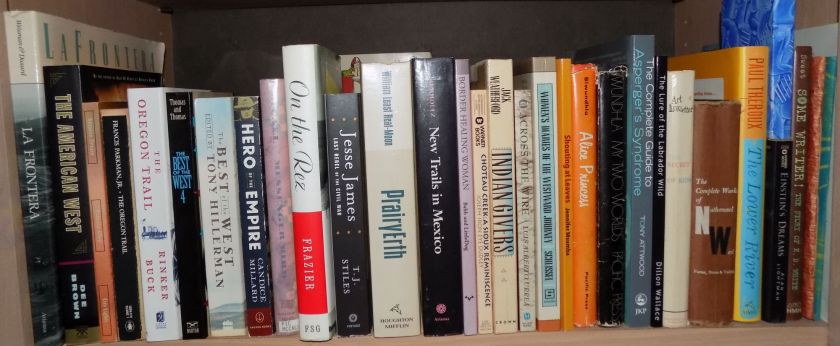
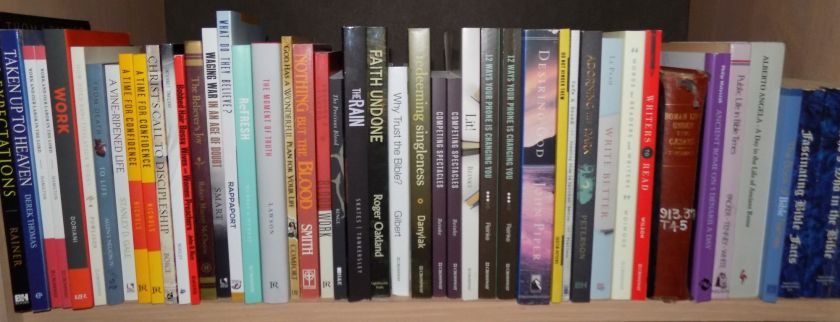
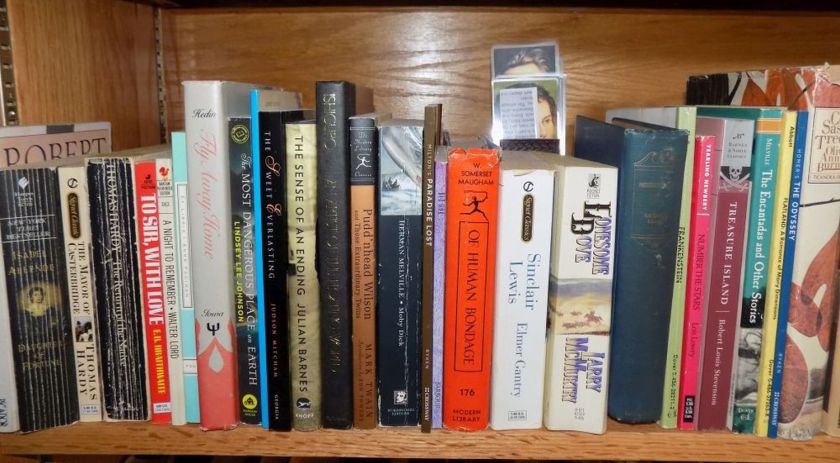
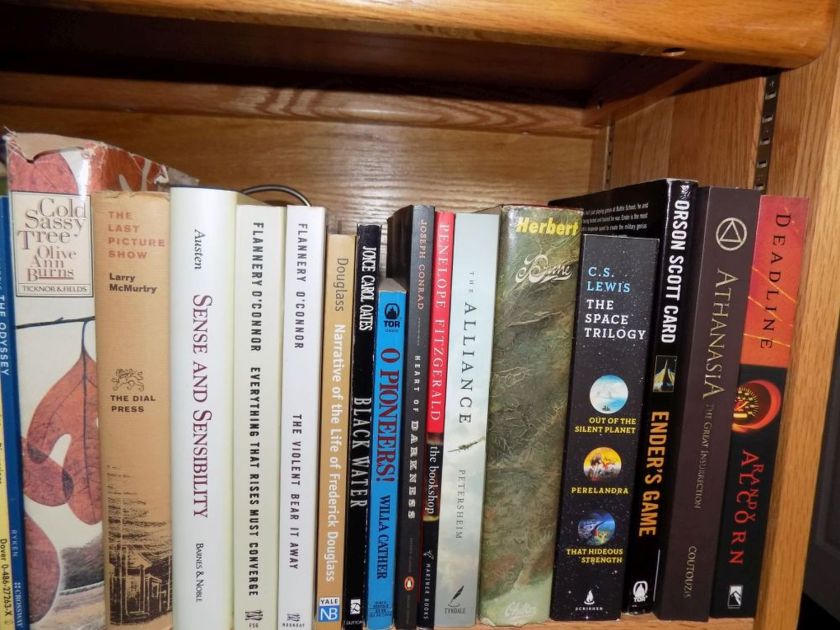
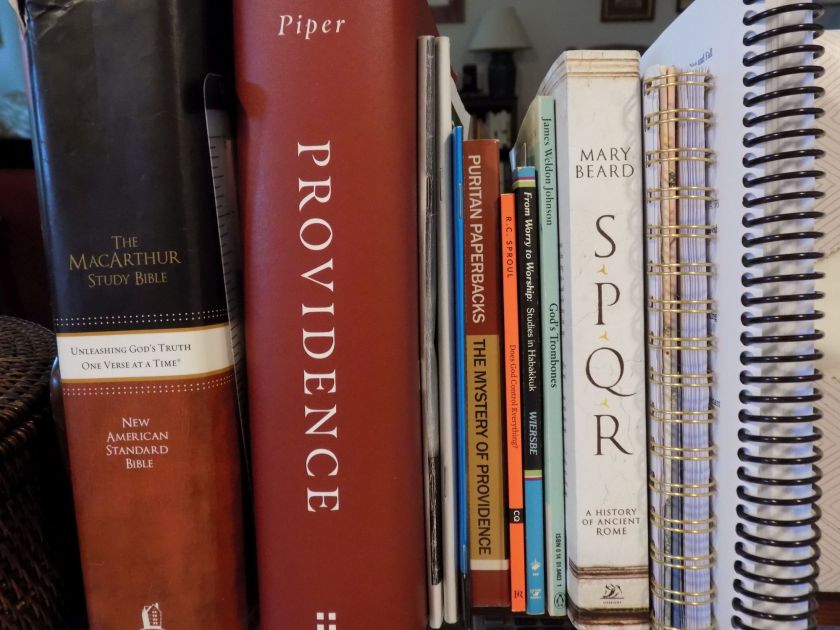
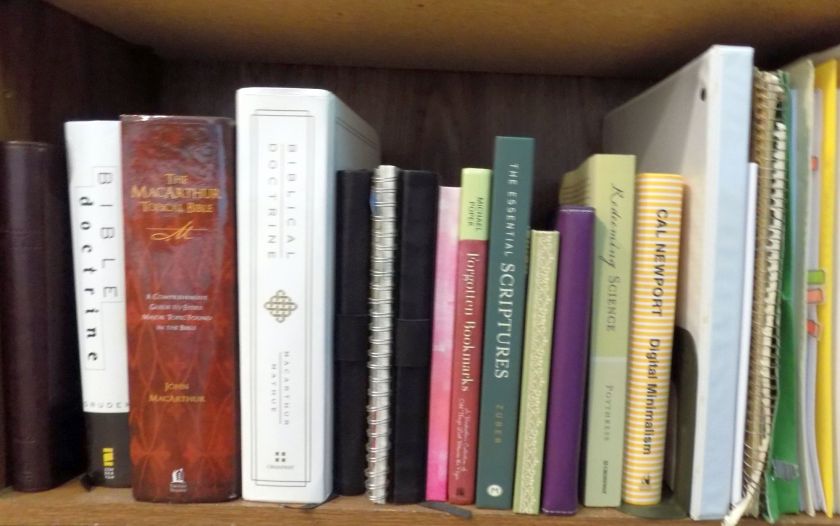
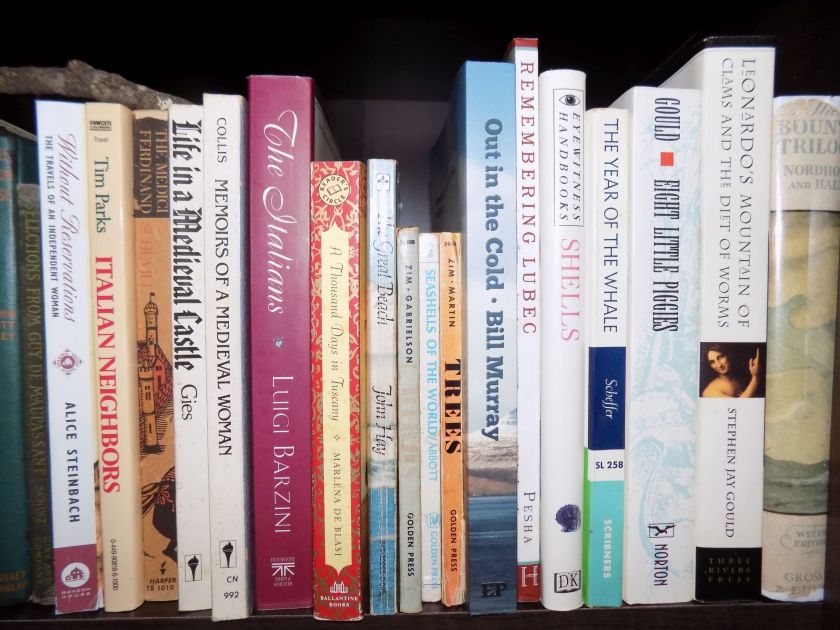
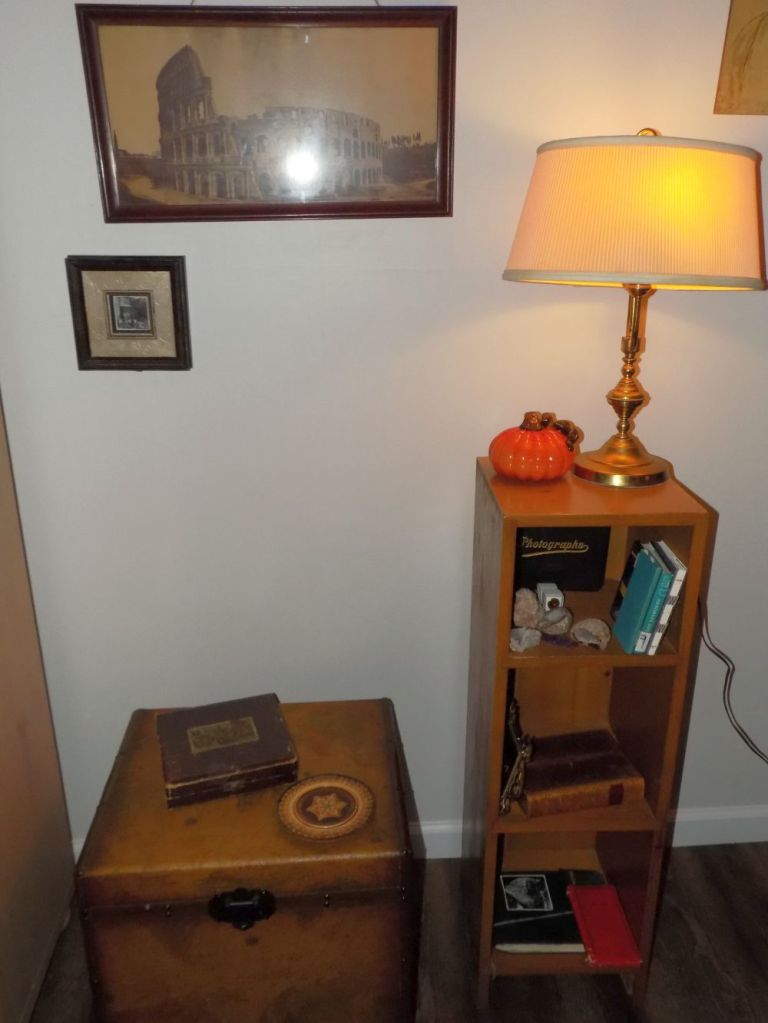
I think we do enjoy seeing each other’s libraries and study nooks and workspaces. I know I do. So here is mine…
I’ve had 2 weeks off from school and I used it to rest and relax. Also to do a little re-organizing of my laptop files, clearing out dead links and checking bookmarks. I am mulling over the upcoming year’s books I want to read, topics to consider for blogs, and setting up what Bible Reading Plan and which devotional to follow (FYI I chose The MacArthur Daily Bible, Dustin Benge’s new Hearts Aflame Puritan devotional podcast, and Valley of Vision for the afternoon reading).
I have a nice apartment, for which I am extremely grateful. Like, grateful every day. Rents here in this rural area went through the roof in the last few years, and occupancy is almost 100%. We are adjacent to an SEC college city and our county has been ‘discovered’. Realtors call it “fast-growing.” Which practically no one likes, except realtors.
Despite being in a poverty area, our school system is in or near the top ten for the state. It’s a farming community and when I first learned of the farm gate take being in the hundreds of millions, well I was shocked. LOTS of farming, which means pasture after pasture with cows, horses, low roofed chicken houses. All that, combined with (now gone) lower cost of living, proximity to a mid sized city and the bucolic beauty all around, well, suburbia is here. Development is here.
Anyway, back to my apartment and my command central. Though there are several rooms, I spend most of my time in the kitchen at the kitchen table. Here is my command center I’ve created:
The main thing is that everything I need is within reach
The laptop is the main feature, it is my music, sermons, TV, social media, and writing & photography tool. Next to that is my agate coaster, which I switch out for a granite one. I love stone. The green larger piece of round marble is the coaster I place my teapot on.
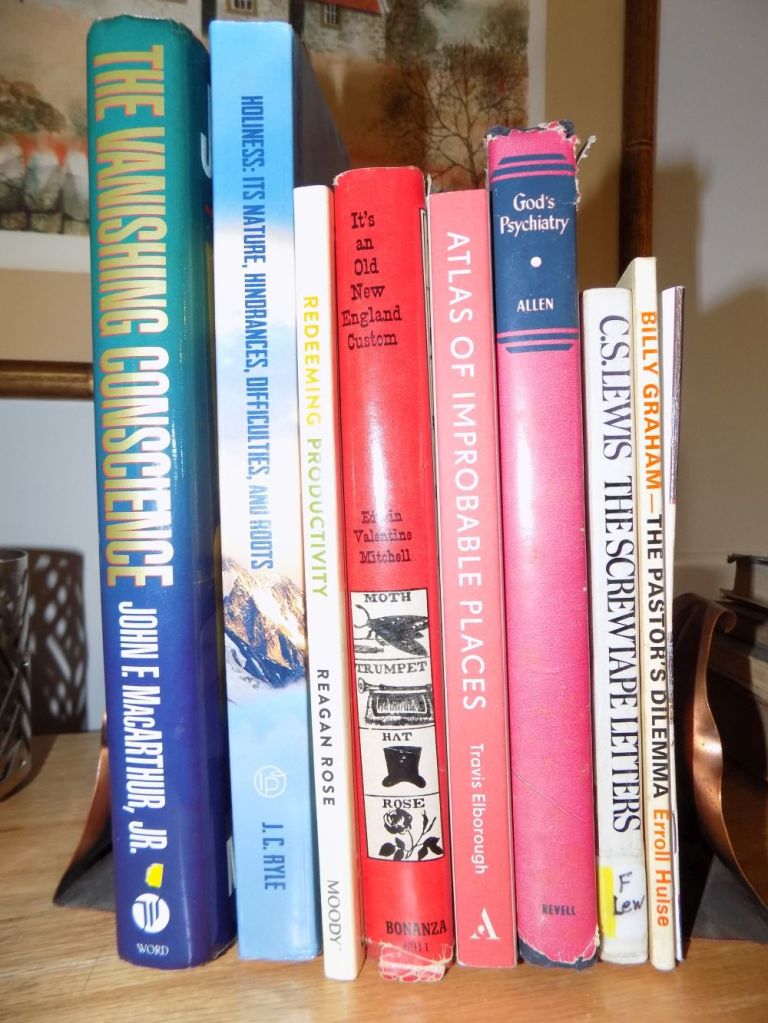
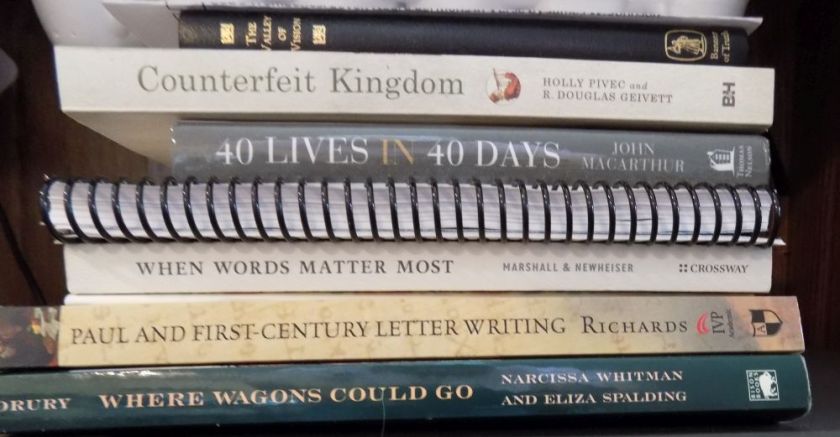
The brown mini teapot in front of the laptop is a pencil cup. Behind that is a slightly raised up shelf of books. These are the books I am currently reading or referring to for a research into a topic for the blog. And my Bible.
To the left of the pencil-cup teapot are some practical things, hygrometer to check the humidity levels and temperature, lotion for my hands, and extra bookmarks. I have tissues on the bookshelf because I always have a stuffy nose, or for sad scenes in movies, or heartfelt prayer. Also some post it notes, notepaper, and eye drops.
The only thing I don’t like is that I have the laptop cord extending from the table to the wall which is in the way on the floor. I have a lighting problem and needed some extra light for reading at night. But I didn’t want to extend more cords on the floor.
I fixed my lighting problem by getting a chargeable lamp, and a friend bought me another one I put on the right side. And last, on the silver tray is just for beauty. Flowers, flameless tea candles, and crystal holders.
I love flowers. Just love them. If I was a rich lady with a big house that had a foyer (foy-YAY) I’d have a large round oak table with marble on the top and a huge vase of ever-changing fresh flowers. (And a butler to change them out).
I usually read here at the table, but sometimes I go over to the living room and sit in my comfy chair with a handmade quilt over my lap. Everything I need is here and within reach.
For 2025 I am planning to do the same thing I’ve done for the last 18 years, work full time, write every day on the blog, read stuff, and go to church. It’s a little life but it’s a good life.
As 2025 begins, I am reminded that the Lord has been so good to me in these past years, and He will do so again in the next year. Even if whatever happens seems bad to me, it’s good. Why? because all He does is good to those who love Him, and I do love Him.
It’s taking stock time. It’s turning over last year’s leaf into a new leaf. It’s time to make decisions. It’s New Year 2025 (almost)!
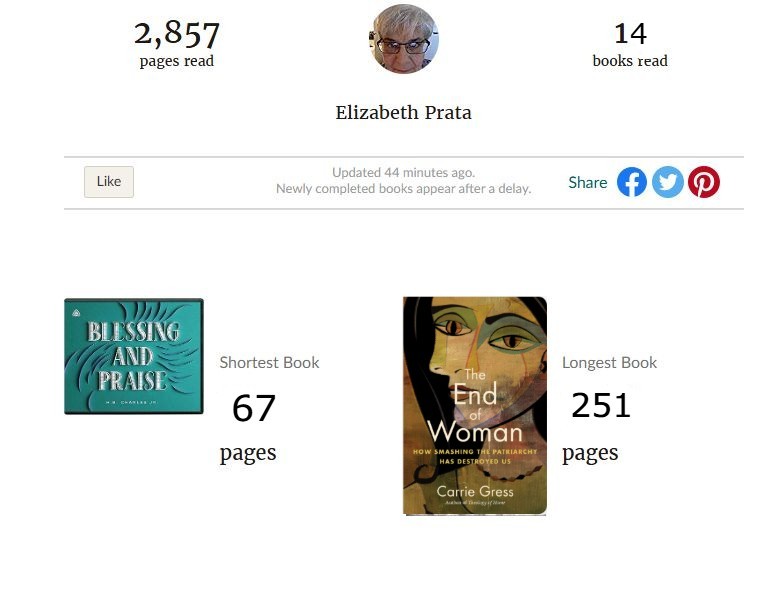
I took a look at my Goodreads list. I’m not a huge fan of Goodreads, I find the site cumbersome and hard to use. But it is useful. I didn’t record all the books I read this year (2024) on it but I did keep track in my hard copy planner. [I’m old school- a chronicler from 1968, I prefer hard copy]. So I added the books from my planner to Goodreads and it calculated my Year in Reading.
First of all, and I say this every year, I didn’t do as badly as I thought I did. I always consider myself a reading failure but that’s because I really don’t remember the books I’ve read. I read 14 books this year and that is about 10 more than I thought I did.
The book Blessings and Praise: Benedictions and Doxologies in the Bible is by HB Charles and it’s a workbook. It was part of a video study course I took from Ligonier earlier in the year. It is EXCELLENT! Highly recommended.
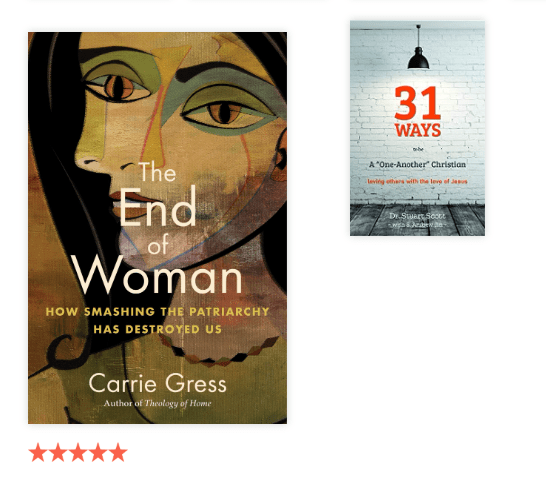
The other one is The End of Woman: How Smashing the Patriarchy Has Destroyed Us by Carrie Gress. It’s a thoroughly researched and extremely well edited book on the origins of feminism and their threads throughout the 1700s, 1800s, 1900s to the 2000s. When I say well edited, it’s because Gress researched voluminously, but crafted such a compelling narrative that puts in exactly the right facts and leaves out anything that would bog down the reader. With a massively researched topic spanning 300 years, it’s hard to know what to put in and what to leave out, and that is what an editor does- does those decisions which makes the story readable. By the way, feminism is evil, but WAY MORE evil than I thought. Ms Gress has the story.
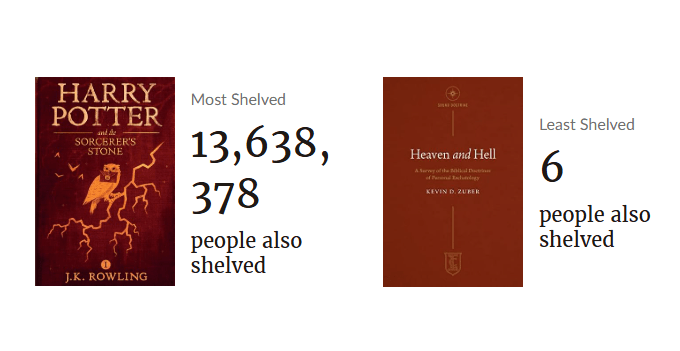
I picked up the Harry Potter book this past summer. I read the first two when they came out, now more than 20 years ago. This summer I thought, well, let me see if I connect with them again, or not.
I mentioned this online and holy guacamole, lots of people got hot under the collar right away, accusing me of all sorts, because Potter is occult! the witchcraft! it’s evil! Etc. I asked sincerely if HP was any different from Lord of the Rings with, you know, wizards and supernatural events and stuff, but they just kept complaining and harassing. So I ignored them and read the first two books again.
Interestingly, Samuel Sey of @slowtowrite asked the following question on Twitter/X and I enjoyed the discussion, which was pretty civil. That debate is here if you want to read it.
Samuel Sey, @SlowToWrite asked – “Are there still Christians who believe people should avoid the Harry Potter books/movies because of its depiction of witchcraft? If so, I’m truly curious: What makes the witchcraft in Harry Potter more acceptable than the witchcraft in Lord of the Rings?“
I thought Harry Potter book #1 was engaging enough because it’s well written, creative, and different. But halfway thru book #2 I lost steam and put them aside. Just like 20 years ago. As for the most shelved vs least shelved books on Goodreads as seen above, it’s no surprise to me that HP is on many millions of shelves but Heaven and Hell is only on 6, lol.
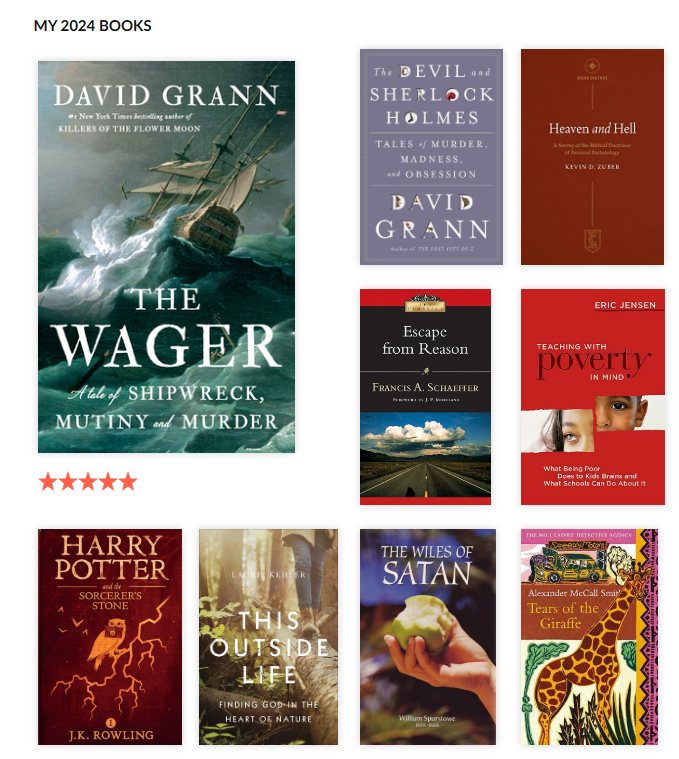
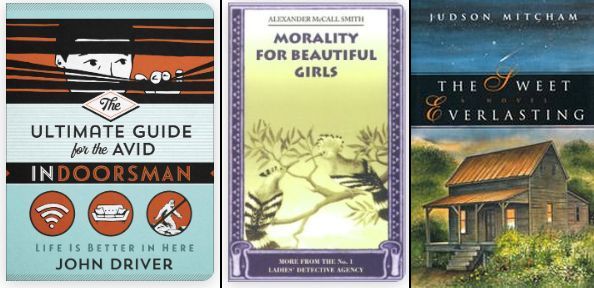
My books for 2024 are as follows
Confession- I have not read Morality for Beautiful Girls yet but I plan to read it today, so technically…
My goals for reading this year 2025 are to…read. I am increasingly tired when I get home from a full day of work as a reading interventionist in an elementary school. My eyes are tired too, they get dry and then they spasm. So I just want to keep the habit going without putting too much pressure on myself. I’ve enjoyed this Christmas break, and summer break I do read a lot, but absent a break, Saturdays seem to be the only day my mind is ready for reading.
I am reading the very long William Carey biography and I’ll continue that. Maybe the book on the ascension called Taken up to Heaven by Derek Thomas. I started Unlawful Killings by Wendy Joseph, a UK judge explaining about how the British court system works and reminiscing on her memorable cases. Beyond that I’ll see what comes up.
In 2023 I read The Art Thief: A True Story of Love, Crime, and a Dangerous Obsession, the one by Michael Finkel not the other similarly named book, and These is my Words: The Diary of Sarah Agnes Prine, 1881-1901 by Sarah Agnes Prine. Those two books were standout books, two of the best I’ve read in years. Absorbing and memorable. I’m still thinking of them over a year later. I hope I find a couple of books in 2025 equally as good as those.
If you are into Christian Reading Challenges, Challies always has a good one, you have to sign up for his newsletter but there is no cost involved and you can unsubscribe if you don’t like the newsletter. G3 has a reading challenge too. Reading challenges are when the organization sets a theme for the books they suggest you read, such as “Read a book over 100 years old” or “Read a book published this year”.
If you want a secular reading challenge, Barnes & Noble has one. Their themes are ones such as a selection of adventure books, meditative, dystopian. In their Empowerment suggestions, I’d avoid Rachel Hollis’s book, and in the Translated section I’d avoid Emily Wilson’s translation of The Iliad. I’d avoid the Memoir section completely. Secular books always come with risks. (Christian books too, but less so). Alternately, you could take just their categories and vet and select your own books.
It’s good to have a goal. Apparently last December 31 at Goodreads I’d set a goal of 13 books. I met it plus one. I find that absent a set goal, I fritter the time away and before I know it, I haven’t done much of anything. Having a Bible Reading Goal is good. I decided on the John MacArthur Daily Bible for my plan and I’ve included Dustin Benge’s Hearts Aflame Puritan reading devotional podcast, with a page of Valley of Vision Puritan prayer devotionals in the afternoon. Setting any goal is good, and setting it down in writing even better. Having set goals provides structure, limits, boundaries and it feels good to meet one’s set challenges.
Happy New Year and thank you for a great year and I pray your year of 2025 is in the Lord- now much else to say because all He does is good for those who love Him and for His glory!
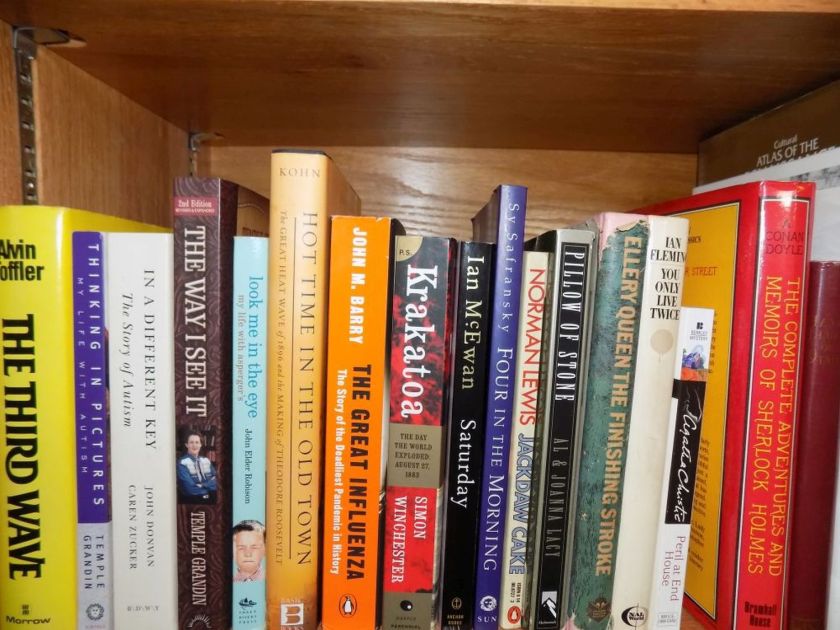
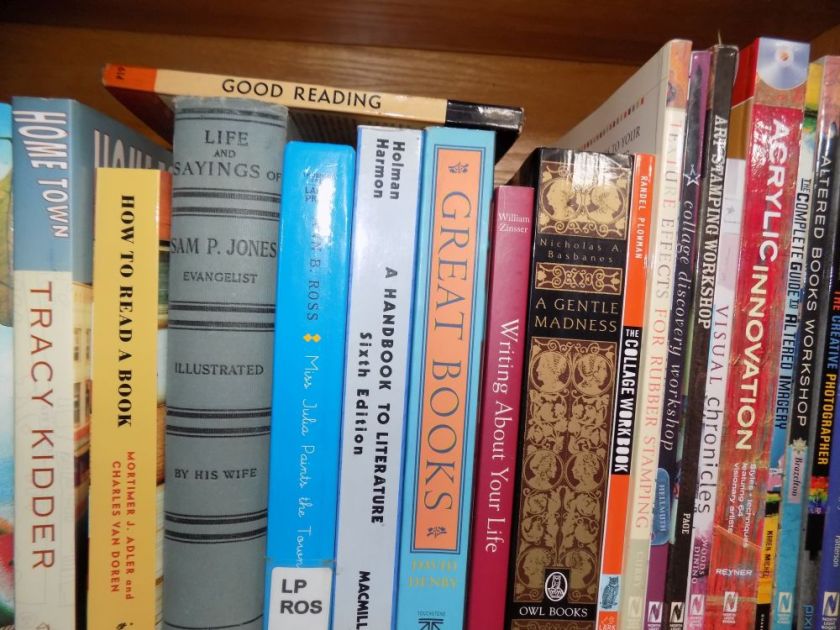
I love books! I love everything about them. I like inventorying them when I bring one home. I like looking at the ones on my shelves. I like my library room full of books. I like thinking about the ones I have read and the ones I want to read. I like the covers (I DO judge a book by its cover). I like the thrill of maybe finding a first edition (I have a 1st ed C.S. Lewis and a 1st Book Club edition of Dune). I like book bindings. I like antiquated books. I like the thrill of the hunt for books.
EPrata photo
Like this find delivered to the Metropolitan Museum. Maybe someday I’ll find a book like that!
I also like reading. I’ve always been a reader. I was weaned on 1960s Dick and Jane. I grew into Nancy Drew in 2nd grade, enjoyed Harriet the Spy as a 5th grader, got wrapped up in King Arthur as a High Schooler (The Once and Future King, The Crystal Cave, Le Morte d’Arthur), and the Classics. I loved the classics, like Huck Finn and Following the Equator from Mark Twain, The Great Gatsby from F. Scott Fitzgerald, Hemingway, Gabriel Garcia Marquez. I did go on a tear in my early 20s on South American literature’s Magic Realism from Marquez, Esquival, Allende, Neruda etc.
In my thirties I was living on the sailboat and also traveling a lot and the internet hadn’t come to the little people yet so I always had a book in hand. I liked at that time the traveling/adventure narratives such as A Year in Provence, Into Thin Air, Tim Cahill books, seafaring books and explorer books like The Lost City of Z.
In my 40s I was establishing my business of a local newspaper and read journalism books and books about civic society. In this era the book Bowling Alone stood out.
Reading is my identity as a person. It’s also my professional identity. My two education degrees revolve around literacy, so my professional days are to urge people to become better readers, to enjoy stories, to find the value of reading.
EPrata photo
In my 50s I still read but not as much. I went back to work in education, this time not a teacher but as a teacher’s aide. It is a demanding job and with my aging I found I was tired when I got home. But the frequent breaks from school still provided ample time to read, and I revisited the classics and some modern literature. I had also been saved by the grace of Jesus and I started reading theological books such as the Puritan Paperbacks and other religious topics.
Then I turned 60. I was still working, and the job had deepened into being a teacher’s aide PLUS doing interventions with struggling readers and keeping up with the data. Educators make as many decisions all day as an air traffic controller. Decision fatigue is real. The irony of aging is that as one gains seniority or more experience, she is given more responsibility. This is natural. However more responsibility comes at a time when the person is tiring mentally and physically. This is natural too.
I realized that I just don’t actually read much any more. My brain is tired when I get home from work. On weekends my eyes are weary, dry, and sometimes aching or throbbing. It’s tempting to just watch a screen when there are so many options for entertainment.
I berated myself for a long time for being weak-willed, for being lazy, for starting to become aliterate (unwilling to read, although able to do so).
But I DO want to read! It’s a habit I cherish. I’ve read so many good books. I’ve used books as escapism, I’ve learned so much, expanded my vocabulary, and sparked my imagination. Many of my travels had a goal to visit bookish places, such as the great bookstores of the world, or the homes of famous authors, or locations where famous book events happened.
Why, WHY don’t I read (as much) anymore?
Smith Family Photography source
I set about to find out and to solve my problem.
I came across a video where the host proposed Why Adults Don’t read…And How to Start Again from The Book Guy. I don’t know anything about the Book Guy but his video was articulate and well researched.
Here are his reasons. But don’t just read them and go ‘Oh yah’, there’s more to them than first appears.
For example, in No. 1, he gives information about 4 levels of literacy. As an educator, I found level 1 and 2 to be interesting when thinking of my students and the lack of literacy at home. It helped me be more informed and more sensitive.
No. 3, not having enough energy is definitely a major reason. Between old eyes, decision fatigue, mental weariness, it had become much easier to watch TV mindlessly than read a book engagingly. And reading is a habit, letting it go even for a while like I have, dulls the skill. It’s harder to pick up later.
No. 4 is more complex than one would think from the statement. It’s not just a bad experience, which does tend to turn some people off. It’s the pressure from others or pressure put on one’s self to read certain books.
EPrata photo
After I was saved in my early 40s I happily read lots of theology. As my 40s were left behind and then the 50s as well, I then realized I had put pressure on myself to read what I thought I SHOULD read rather than what I wanted to read. I had incrementally viewed fiction as ‘dessert’, only to be enjoyed after dutifully absorbing ‘better’ books or more worthy books. Now, don’t get me wrong. I LOVE the Puritan Paperbacks, Commentaries, Christian living books I’ve read. Many have impacted me deeply and added greatly to my life.
[From Death to Life: How Salvation Works, Blood Work: How the Blood of Christ Accomplishes Our Salvation, Valley of Vision, Pilgrim’s Progress are just a few!).
I felt also that if I had time and inclination I should be reading the Bible. Was I letting Jesus down by not spending MORE time in the word if I had the chance?
But reading fiction is instructive in its own way. It’s not dessert. I’m amazed that as a younger adult all I read was fiction and now all I read is non-fiction. Did I become a snob? Perhaps.
I decided to get a fiction book from the Library that had been recommended to me. I pushed my computer away and got up to snuggle in my chair under a quilt, and read it. It was so relaxing. I sort of gave myself permission to indulge, and I even had a sink full of dishes, too.
Buying more books. EPrata photo
There are a few lessons for me here. First is just because I’ve been a reader all my life, I took the SKILL of reading for granted. As I transition to a slower season of life, I can’t take anything for granted- not energy, not skills, not time.
Second, read what you want. I will continue to read solidly theological books, but I will intentionally fold in fiction to the pile, and not feel guilty.
Third, just do it, as the saying goes. If I want to read, and I do, then just do it. Resist the temptation to first do the dishes, fold the laundry, and dust before, only to be too tired after. If it is important to me, then make the time.
So that’s my confession, my search for answers, and my resolve. Now if you will excuse me, I have a book to finish.
Tim Challies is a reader and a book reviewer. He is the author and promoter of the Annual Christian Reading Challenge, in which I have participated in the past.
I was glad to see this article by by Jon Dykstra linked from Tim Challies’ site. I’d add the eerily prescient 1914 novella from EM Forster, “The Machine Stops“, which predicted, well, pretty much where we are now regarding media, internet, imagination, ideas, social contact and more. Pretty amazing for a hundred-year-old novella.
Dystopian is a word from Greek meaning ‘bad place’ according to the article. It’s the opposite of Utopian, meaning ‘perfect place’.
Dystopian fiction is a genre that describes people surviving or trying to, after a holocaust of some kind, or a societal collapse, or a nuclear war, and the like. The article speaks of this kind of fiction being worthwhile because it helps us in predictive prophecy of the secular kind, in connecting the dots to see a current credible future threat. The author Dykstra’s point was that this kind of fiction spins a credible threat into scenarios that help us understand where these threats may lead us.
This is a genre well worth exploring, though with care and caution. It’s a big blank canvas that insightful writers can use to paint pictures of grim futures, all in the hopes that they, and we, will ensure such futures never come to be.
Of course, the mightiest and truest prediction of all is what God has said will come, via His word in scripture. Nothing outsmarts, outpaces, outdoes God’s prophecies.
EPrata photo
I enjoy this fiction but had felt mildly guilty about it, as though I needed to be doing something more productive. I’d wonder, ‘Am I a ghoul?’ ‘Why do I find this absorbing?’
Mr Dykstra helped me see my interest in it was to go where my own imagination lacked facility, to ‘see’ a future that is all too real in some cases, and to develop opinions and thoughts to guard against it. EM Forster’s The Machine Stops is a future that is practically already here, as is Stephen King’s The Running Man. Chilling.
The most famous work of dystopian fiction is George Orwell’s 1984, which the article mentions. That work was published in 1949. Another famous work of dystopian fiction is Aldous Huxley’s Brave New World. Other classic dystopian books are PD James’s Children of Men, which discusses the childlessness of all the nations and certain doom as the already born die off with no new births coming up to replace them. In fact, birth rates are ranging from declining to collapsing all over the world right now.
Of course there’s the famous Canadian book The Handmaid’s Tale. Dystopian fiction is good where it helps us see ahead and cope with credible current or near current threats and that book’s twisted version of Christianity isn’t a credible threat.
I mentioned I’ve participated in the Challies’ Christian Reading Challenge, at the “Avid Level” (26 books to read in a year.) I added several others of my own choosing to Challies’ list, making myself a separate genre nook of dystopian books I wanted to read. They included The Running Man, The Machine Stops, and It Can’t Happen Here by Sinclair Lewis about the rise of fascism in the US.
FYI, in Stephen King’s The Running Man (1982)- The end is absolutely chilling, because the final action the main character takes has already come to pass. Remember, in Dykstra’s essay, dystopian fiction that presents credible threats help us formulate our own reactions and imaginations, and that ne came true, for sure.
William Forschen’s book One Second After (2009) depicted the effect upon America from an EMP, (electro-magnetic pulse), and the nation’s societal collapse and resulting high death rate. The author consulted with psychologists, economists, and sociologists to base his fiction on real scenarios those experts stated would most likely happen if we suffered an EMP. It was well written and horrible to think of it occurring, as the Bible hints in some form, it will.
-was one of the first apocalyptic novels of the nuclear age and has remained popular more than half century after it was first published, consistently ranking in Amazon.com’s Top 20 Science Fiction Short Stories list. The novel deals with the effects of a nuclear war on the fictional small town of Fort Repose, Florida, which is based upon the actual city of Mount Dora, Florida. The novel’s title is derived from the Book of Revelation: “Alas, alas, that great city Babylon, that mighty city! for in one hour is thy judgment come.”
Nuclear winter wasn’t a very known or understood event back then, so the survival rate of the population in Alas, Babylon, this initial entry into the American dystopian nuclear fiction isn’t realistic, but most of the rest of the book is.
As predictive or as absorbing as dystopian fiction might be for some people, the only true prediction is what the prophetic books of the Bible tell us will happen in the future, in God’s timing.
With the US election mere days away, many on both sides are saying ‘if the other side wins it will be the end of us’… Maybe, maybe not. It might tell us a bit about God’s judgment, though, or it might just tell us that we go on living long after the thrill of living is gone, as John Cougar Mellencamp sang.
People, the Tribulation is unthinkable. But we must think on it, the Lord’s wrath already hangs over the unsaved. Thoughts of the dystopian future and reading it now in His word should should spur us to witness with eagerness and fervor.
I don’t think a steady diet of this kind of material should be on our plates, but books like this can be a legitimate addition to our bookshelves or movie queue, for the reasons stated above. Happy reading…or in this case, unhappy reading.
I’m so glad my parents were readers. My father always had a magazine rack stuffed full of trade and business magazines next to “his chair”. He usually had some kind of business book on the end table next to his char where the lamp was. My mother was always reading a book or another. Usually non-fiction but sometimes nonfiction. In her house there was a floor to ceiling built-in bookcase filled with books. I used to enjoy looking at the titles. James Galsworthy, Leon Uris, Elaine Pagels…
I spent a lot of time at libraries growing up. As a youngster when it was normal to roam the town alone, myself at the historic building that housed our town library, mahogany checkout desk, marble floors, coffered ceilings. Quietude. Then as a teen in the town we moved to, the modern library with the salt water march out back, where I’d take my sister and we’d feed the ducks under the sun and watch the tide go out.
I enjoy reading of course, but I also like everything about books themselves. Inventorying them, looking at their cover design, arranging them, knowing they are there, friends waiting to be met. Worlds to delve into. Possibilities.
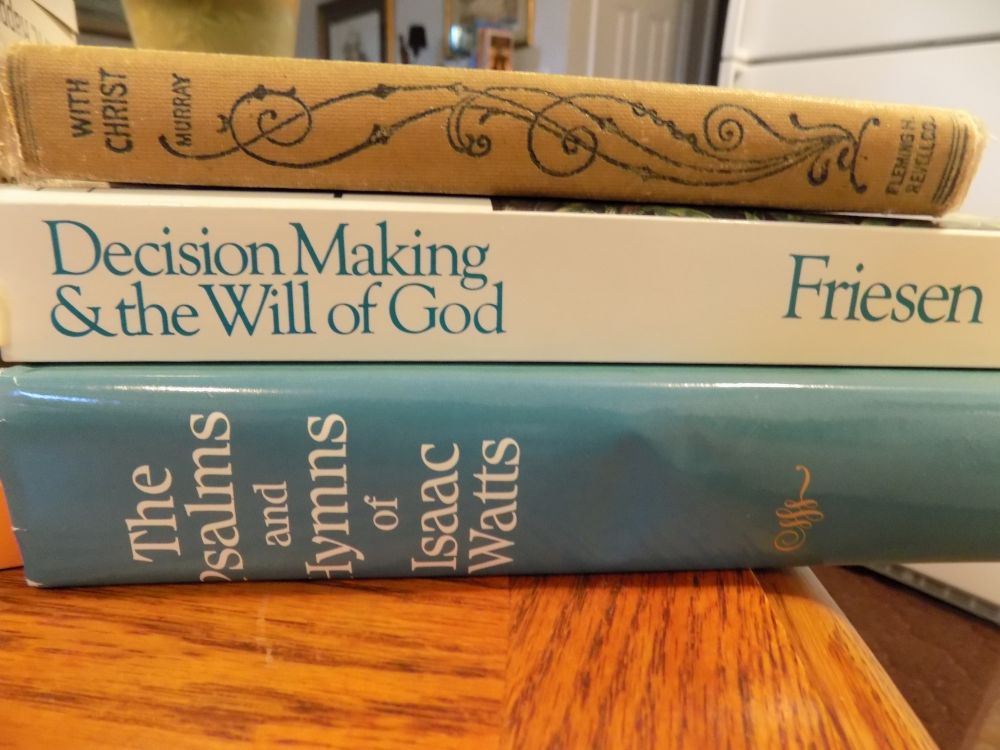
A friend was selling off his theological library and opened it up for anyone to purchase one or more books. I’m in.
This is what I got:
I’m really interested in the Decision-making book by Friesen. So many people these days make decisions by claiming to hear directly from God. Another friend sent me a link to a speech by a Mike Donahey. I hadn’t heard of him. He was talking about God’s will for your life.
He was saying that many people ask him “When did you know that being a musician was God’s will for your life?” He said he’d answer that being a musician is NOT God’s will for his life. The questioner was usually shocked at that reply. But he explained that if he got a brain injury and couldn’t write lyrics, or fingers smashed and couldn’t play guitar, or lost his voice and couldn’t sing, “Would I be missing God’s will for my life?”
Donehey said that God’s will isn’t a career choice. It is the “posture of our heart”.
Indeed, we remember the verse from John 6:40, “For this is the will of My Father, that everyone who sees the Son and believes in Him will have eternal life, and I Myself will raise him up on the last day.”
It is God’s will that we repent and believe in the Son, who was sent to die for our sins and be imputed with His righteousness.
I know these books will hold many truths and wisdom that I can benefit from, including the interesting looking book “Decision Making & the Will of God“.
But for now, it is time to dig out my scanner and inventory them in LibraryThing, the at-home, free, online book inventorying system.
I love to read. With the New Year and all the ‘Reading Challenges’ that emerged in January as people make decisions back at the start of the year, I’d decided to go back to reading for pleasure. This is an activity that had fallen by the wayside as I got busier, and my eyes grew more tired at night. Aging. It’s not for sissies, lol.
EPrata photo
I do need more often to shop my own shelves rather than buying more books! But I’m weak, lol. If I am of a mind to read fiction, I usually stick with the same novelists I’d read before (Grisham, Charles Martin, Will Thomas, and the like). When I find one author I like I tend to read more of their books, because the first one was ‘safe’ so I figure subsequent works have a higher likelihood of being be ‘safe’ too.
A while ago I had read The Rain, a self-published work by Chris Skates and Dan Tankersley. It is a fictionalized recounting of the Biblical Flood. There is a lot of ink in the Bible about the lead-up to the flood, the flood itself, and the aftermath. The authors didn’t have a lot of holes to fill. But still, dialog must be constructed, extra-biblical characters created, and some gaps must be filled by imagination. I thought they did a great job. I enjoyed the book.
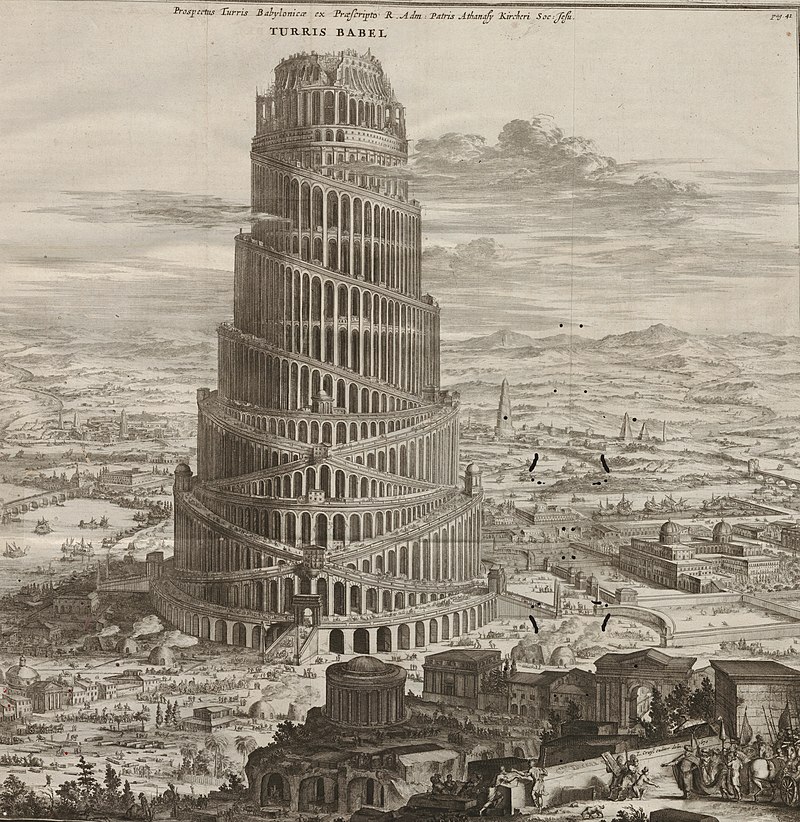
That’s why I was disappointed in their sequel, The Tower. To be sure, there is little ink in the Bible about the Tower of Babel. Only 245 words, I’ve heard. So the authors had to invent more. Theirs IS a book of fiction. So I get it. I am not quibbling about filling gaps in a fictionalized biblical story.
But two things bothered me about the book. Full disclosure: I read very little of it. First, the modern language. In The Rain, the dialog, while imagined, was of a tone that seemed old timey. It wasn’t stilted, but the authors kept modern words and idioms out of the characters’ conversations. They didn’t put idioms into the characters’ mouths that a person would say today. As a reader visualizing any scene in The Rain, I could picture the characters saying what they said.
In The Tower, the idioms, words, tone, and language were very modern. It was jarring. As an author, what you want to do is create a bubble for the reader to relax into. It’s a delicate bubble, but if you can hold the reader’s attention, they will descend into your world and stay IN the bubble. You don’t want to jar the reader out of your constructed reverie and become distracted. A distracted reader stops reading. This is what I learned in journalism class. You do not want to do anything to break that bubble.
Turris Babel from Athanasius Kircher, source wikipedia
In addition to modern language in The Tower that jogged me out of the bubble I was trying to stay inside of, the authors needed an editor. Badly. It was a self-published book as mentioned, and often than means not employing a skilled or professional editor, or even a copy editor. Copy editors check copy for wrong words, punctuation, mechanical errors in the text.
The authors used wrong words several times in the few pages I read. For example, gig for did. Site for sight, twice. Ugh. There is nothing that gets me more irritated than wrong homophones, unless it’s spelling errors. So this book had issues with the text itself. That, combined with the issues of language, meant I couldn’t read in relaxed fashion, I kept being booted out of 2300BC. I quit reading won’t pick the book up again.
If you would like information on the Tower of Babel from a credible Bible-based ministry, here is Answers in Genesis’ answer to the question, “When was the Tower of Babel Built?“
Some people object to fictionalizing stories from the Bible. Can we fictionalize biblical stories by recounting them and filling in gaps with our own imagined characters or situations? Hmmm, yes and no.
The most important point is, have you read enough of the Bible, OT and NT, to be familiar with what SHOULD be presented in a work of fiction based on a biblical story? If you’re reading a fiction book about Rachel, have you first read and are familiar with the actual Rachel of the Old Testament? If not, then you are at risk of accepting the author’s version of a true biblical person.
I thought The Rain did a good job of sticking to the biblical concepts. Though I personally have not read The Chronicles of Narnia, people tell me CS Lewis did a credible job with creating a biblical allegory that mirrored biblical concepts. As did John Bunyan in The Pilgrim’s Progress. The television series The Chosen did not do a good job of gap-filling, but twisted the Bible to suit man’s desire to diminish Jesus and hide attributes He has which make man uncomfortable.
The problem with fictionalizing, or making plausible leaps where the Bible is silent, is that very thing- our flesh gets in the way.
And our flesh has an agenda. So does satan.
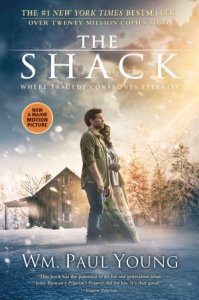
So in a way, Christian fiction books are the most unsafe books of all. Take the book The Shack, for instance. This was a runaway bestseller back in 2007-2008 and onward. It was sold in Christian bookstores as a Christian book. Its author, William Paul Young, wrote about a man who was staggering under heavy grief due to the kidnapping and death of his little daughter, her death had occurred in a derelict shack.
One day the man received a handwritten note in his mailbox to go to the same shack. Reluctant but curious, he goes, and there he ‘meets’ Jesus and the Holy Spirit in addition to being greeted by ‘God.’ It turns out that according to Young’s presentation of the Trinity, God is a woman, as is the Holy Spirit. The book goes on to present discussions between the persons of the Trinity and the man, regarding sin, evil, salvation, judgment, and other doctrines. The book teaches that sin is its own judgment and there is no other, that hell exists to purge away unbelief (not punish for sin), that there is universal reconciliation, among other aberrant, non-biblical doctrines.
Many credible leaders in the faith negatively reviewed the book. I reviewed it negatively also. A common rebuttal to our negative view of the book was, “Lighten up. It’s only fiction!” Or, “It’s only a novel!”
Dear reader, novels teach an author’s point of view, either subtly or overtly. It’s no different for Christian novels. Novels with Christian themes use narrative to teach. We must all be Bereans and check to see that these things in the ‘Christian’ book are so, in whatever form the doctrines are coming to us. Doctrine is taught in songs, poems, sermons, lessons, theological books…and fiction.
Dr. R. Albert Mohler Jr. serves as president of The Southern Baptist Theological Seminary. Dr. Mohler offers thoughts on the missing art of evangelical discernment as encapsulated by evangelical response to The Shack. He wrote:
“In evaluating the book, it must be kept in mind that The Shack is a work of fiction. But it is also a sustained theological argument, and this simply cannot be denied. Any number of notable novels and works of literature have contained aberrant theology, and even heresy. The crucial question is whether the aberrant doctrines are features of the story or the message of the work. When it comes to The Shack, the really troubling fact is that so many readers are drawn to the theological message of the book, and fail to see how it conflicts with the Bible at so many crucial points.” [underline mine]
EPrata photo
In that article, we see that Christian fiction is deliberately used to bring heretical ideas to the masses and worse, popularize them. Christian reader, beware! It’s not “just fiction”! Simply because a book is listed as Christian fiction does not mean we can let down our guard. We need to put up higher guards!
“When we think about the role of reading in our spiritual formation, we generally think of non-fiction books that help us understand scripture and theology, but fiction powerfully shapes the ways in which we think faithfully about God and the world.” C. Christopher Smith
Fiction is storytelling. Christian fiction walks a thin line between green pastures of heaven and boiling hot lava, in that the story an author is telling is based on the Bible but the Bible is not fiction. It’s history; true, and real. It’s dangerous to tinker with God’s word, yet stories must be told. CS Lewis did it well with Screwtape Letters and Bunyan with Pilgrim’s Progress. William Paul Young did it badly with The Shack, Dallas Jenkins with The Chosen.
Be discerning. The worst Christian fiction often popularizes heresy. The best Christian fiction prompts a reader to run to the Bible to absorb more truth. It also glorifies God.
Dr. Mohler said that even Christian fiction is a work of sustained theological argument. Let’s compare two books to see how this fleshes out: Elmer Gantry and The Shack.
One of my favorite books is Elmer Gantry by Sinclair Lewis. It tells the story of a false convert who rose to fame and celebrity pastor status, all the while not being a believer in any sense. The Bible tells us that this will happen, it’s a biblical concept. The message of the book was to illustrate how this can happen, not to promote that hypocrisy is to be accepted. The sustained theological argument of Elmer Gantry is that hypocrisy happens in religion and it is always bad. It wasn’t promoting hypocrisy or apostasy as good. Meanwhile, the sustained theological argument in The Shack is that God does not punish sin and everyone will eventually be reconciled to God.
We must be Bereans and test every theological argument that we absorb. If this sounds like a lot of work, it is. Paul repeatedly advised his readers to be vigilant. (For example, 1 Corinthians 16:13). We are on a battlefield in a war, and we don’t only hear the cannons booming, but we must be alert for snipers, too. When it comes to accepting things not of the Lord, it all matters. Christian books are never “just fiction.”
I love to read the Puritans. Darrell Harrison, Dean of Digital Platforms at Grace To You Media, recommended this book, so I took a look.
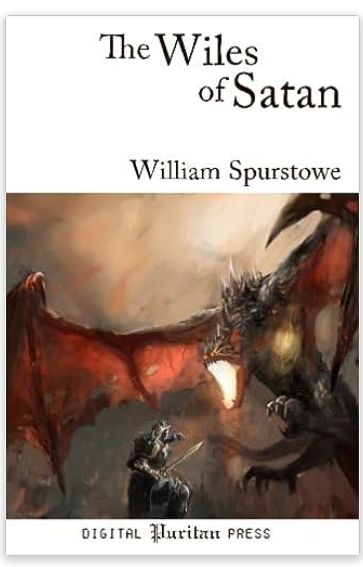
It’s The Wiles of Satan, by the previously unheard of Puritan William Spurstowe. DB Harrison said:
“Of all the Puritan books I’ve read, I have to say this little gem, “The Wiles of Satan,” by the relatively unknown William Spurstowe, is among the best. @RHB_Books.“
RHB is Reformation Heritage Books. The Publisher is Digital Puritan Press. It was out of stock at RHB but Amazon had it by the same publisher. Here is the book blurb from Amazon:
“Like it or not, every Christian is engaged in a fierce and high-stakes battle with Satan. In this enlightening book, Puritan pastor William Spurstowe succinctly illustrates from 2 Corinthians 2:11 (“…lest Satan should get an advantage of us—for we are not ignorant of his devices”) his premise: that “Satan is full of devices, and studies arts of circumvention, by which he unweariedly seeks the irrecoverable ruin of the souls of men.” Spurstowe explains how Satan’s long experience and single-minded determination make him such a formidable adversary. He then proceeds to methodically expose, explain, and disarm nearly two dozen common traps that Satan has used to ensnare every generation of the unwary. Finally, he prescribes ten helpful remedies or antidotes that can be used to counter even the most tempestuous temptation.”
“William Spurstowe (1605–1666) was a Presbyterian pastor and member of the Westminster Assembly; he served the Parliament of Richard Cromwell. Originally published in 1666, this classic treatise has been carefully prepared to benefit a new generation of Christian readers. Archaic language has been gently modernized, and dozens of helpful footnotes have been added to aid the reader. This edition includes a biographical preface, Scripture index, and review questions designed to guide group discussion or personal reflection.”
I had just written about demons the other day, since our elder is going through Matthew and we came to the Gadarene Demoniac passage. People are fascinated with satan and his unholy angels, AKA demons. The passage in Matthew 8 about the Gadarene demoniac is always astonishing when I read it. Our church elders are preaching through Matthew and we got to that passage in Matthew 8:28-34.
It’s interesting to study demons, but I offer two cautions: 1) many websites are also fascinated with the subject but tend to the sensational instead of the biblical, and 2) though it’s a biblical subject, satan would like nothing better than to ensnare you into a focus on him instead of on Jesus. Keep your eyes fixed upon Jesus.
I enjoyed CS Lewis’ “The Screwtape Letters“. I am not a fan of Lewis at all, and the only book I liked of his was Screwtape. THAT was a masterpiece, I thought. It recounts an elder demon teaching a younger one how to entice, harass, and otherwise tempt a targeted Christian. Lewis’ insight into temptation and the demonic realms was uncanny.
If you are interested in the subjects of Angelology and Demonology, Reformation Heritage Books has some for you.
–Angels: When Heaven Meets Earth by Tim Chester. –Unseen Realities: Heaven, Hell, Angels and Demons by RC Sproul. –The Scripture Revelations Respecting Good & Evil Angels by Richard Whately. This is out of stock but it may come back into stock, or find it at another online bookseller. -Also out of stock is What the Bible Teaches About Angels by Roger Ellsworth. –Spiritual Warfare: A Biblical and Balanced Perspective by Borgman & Ventura.
I offer these to you because RHB is a trusted resource. Anything on the topic of angels, demons, and spiritual warfare tends to draw a fringe crowd loaded with unbiblical notions and bad advice.
Anyway when I finish The Wiles of Satan I’ll let you know how it was. Meanwhile, keep reading! The Bible first, devotionals, and edifying books from solid authors.
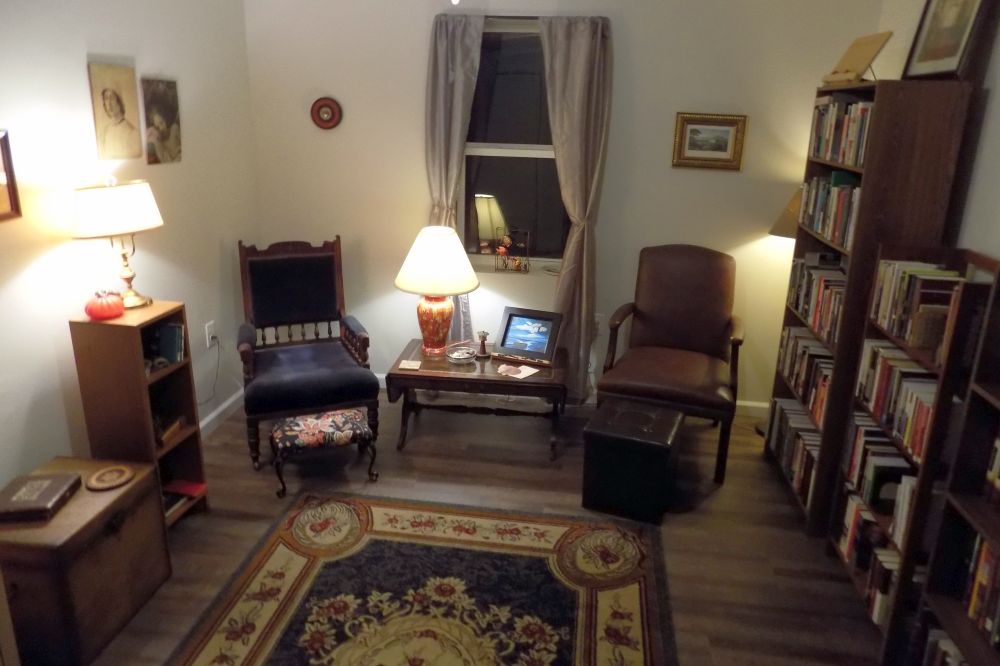
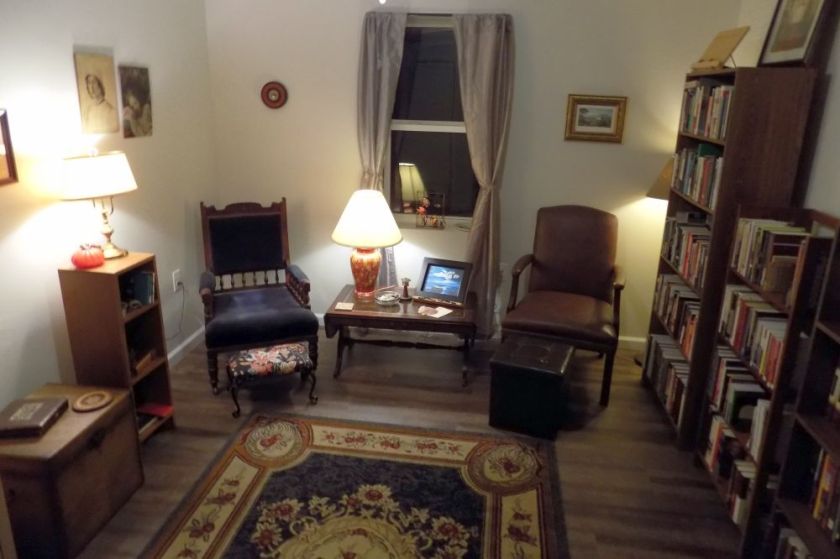
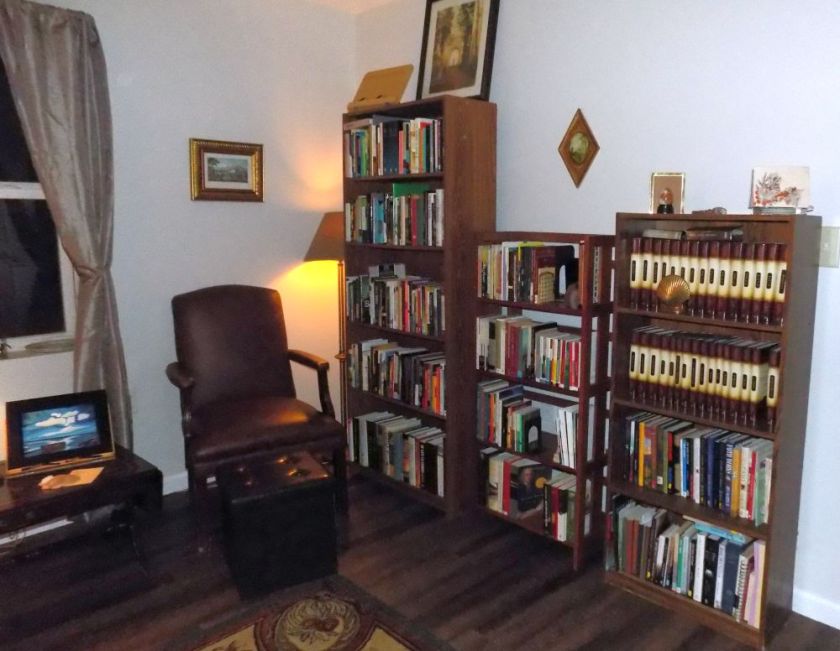
My library room. I usually sit in the chair on the right and turn on the lamp just over my shoulder.
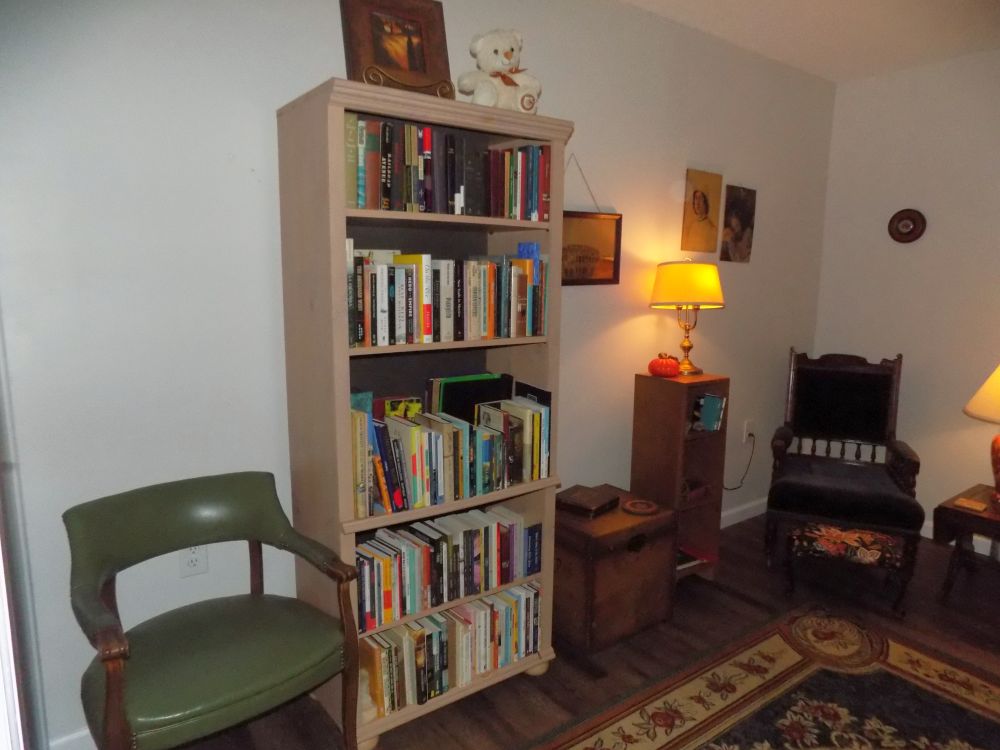
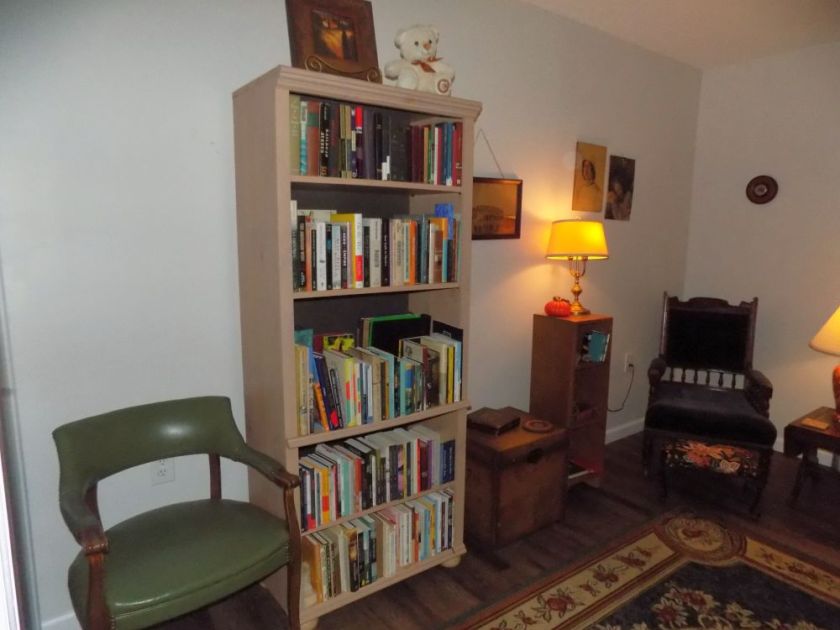
My Library room, the other side
Joe Carter at The Gospel Coalition (a site I do not generally recommend) wrote an essay on how to build a theological library on a budget. I thought there were some helpful ideas, and so I link it here.
Mr. Carter mentioned some ways to build a library that didn’t work for me. One of the ways he recommended building a library was to focus on access, not ownership. I like owning a book to borrowing one. I stick Post-it arrows, dog ear the pages (gasp!) and sometimes make notes in the margins. Can’t do that with borrowed books. He also mentioned e-books. I am old. My eyes get tired easily. I never adjusted to reading on a screen. I just can’t. Also, he mentioned thinking beyond books, like Theological Journals. Journals are fine, but I like books.
So while I think his tips might work for many people, I wanted to share how I built a theological library of 1000 books on a budget. And by budget, I mean budget!!
1. Be patient.
It took me a long time, 15 years to get to this point. One book at a time. You can build any library fast. Building the library you want takes time. It is also fun, the thrill of the hunt.
2. Be strong. Don’t buy books just because, or when you’re at a low point budget wise. Withstand temptation, and make sure you can afford the book you want.
2a. Mind the format.
That said, also be strong and withstand buying books in a format you dislike, just to buy it. If you prefer ebooks, then withstand temptation to buy hard copy. If you prefer hardcover, withstand temptation to buy paperback. If you hate used books that have been written in or highlighted, same- don’t get it. The idea is to own a library you enjoy.
3. Set aside time to browse
Accumulating books takes time and buying the right book also takes time. Look at the bookshelves at the store carefully. It’s easy to miss a title because you’re hurrying. Set aside time to browse well.
One thrift store I haunt has a wall of books. I take a chair and sit down in front of each section so I can see the bottom shelves and so I won’t get impatient as my arthritic knee kicks up. I’m not in anyone’s way and if I am I just move aside for a while and let others browse.
4. Make an Amazon wish list
People like to help. There was someone on Twitter whose house burned and with it, his entire theological library. People asked him to post a list of books so we could help replace them. It felt good to contribute. If you have some desires for certain books, make a wishlist, Amazon has them and other online booksellers do too. People might enjoy knowing exactly what to get you for Christmas or your birthday. And be sure to contribute once in a while to others’ wish lists!
5. Be focused.
Know what ‘holes’ exist in your library and focus on filling those. What is your focus? Do you have a specific focus in the library you’re trying to build? Commentaries? Christian Life? Missionary bios? If you do, concentrate on titles related to your focus, first. Bring a list if it helps you remain focused. I do. I tend to be like a squirrel in a thrift/bookstore!
6. Repeat your successes
Have a few favorite places on hand where you have had success before. I have a few places I go to first where I am more likely to find inexpensive books in my favored genres. Make it a point to swing by frequently. I go once a month. If you are in an area near where there are a lot of churches or religious people, even better. As pastors dispense with libraries, or seminaries off-load books, as people donate because they’re moving (I live near a college town) scour those places first.
I have real good luck at a re-use store associated with a domestic violence shelter. I learned that 100% of my $ goes toward the store, (where people fleeing an abusive situation can shop with free vouchers to start life again in a new home) so I feel good about spending my money there. Thrift stores in wealthy residential areas work well too and yield fine books.
7. Library book sales
Can’t be beat! Find out when your local library(ies) have their Friends of the Library book sales. Rock bottom prices. I look not just at the table but at the boxes underneath the table. Sometimes I go twice, once near the beginning and once near the end, because they refresh the inventory.
7a. Look for other sales.
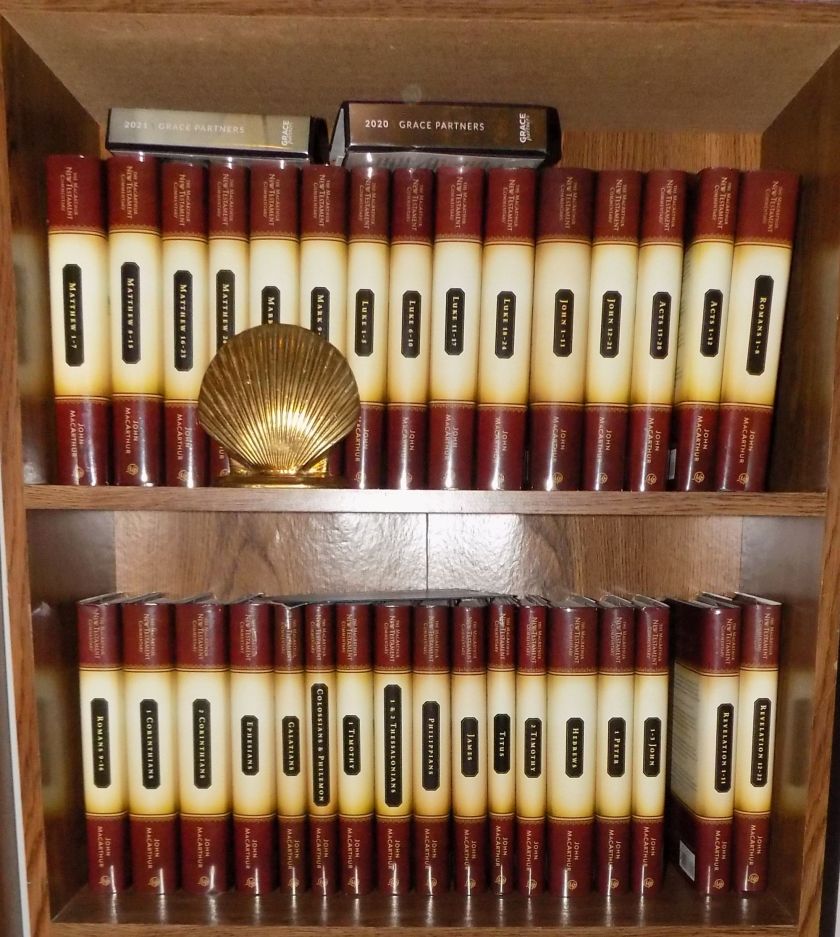
I rarely spend more than $5 on a book. But when John MacArthur finished his New Testament Commentaries, Grace To You put it on a celebratory sale. The $500 commentary set was offered for half price. A friend generously gave me half of that as a surprise gift, so I ended up paying $125 for the entire set. Moral of the story is, when you see a good deal, a once in a lifetime thing, don’t be so frugal that you pass it up. Sometimes you gotta spend to save.
8. Be wary & discerning
Just because a book is stocked in the ‘religious’ section or ‘Christian’ section, doesn’t mean it is written by a solid Christian. A lot of false teachers produce books. If you’re unfamiliar with an author, first, look at who recommended the book on the book blurbs on the back. If solid men you’re familiar with recommended the book, it’s a safer bet. If false teachers recommended the book, pass on it. You can also use your phone to google it to see reviews. Thinking that it’s only a dollar so what the hey, I’ll get it and worry about the author later, invites false teachers into your home. Don’t do it. (2 John 1:10). Your soul is worth more than a dollar.
9. Inventory your books
This is a good idea for many reasons. If a flood or fire comes, you can replicate your loss. For homeowner’s or renter’s insurance purposes. (I HIGHLY recommend renter’s insurance if you rent an abode and don’t have this insurance). And for our purposes today, so you don’t buy 2 of the same book. I’ve done that a couple of time and it annoys me because I don’t have extra to spend, and my accidental duplications were on new books!
10. Ligonier’s $5 Friday
Really, books are $5. Other material too like DVDs and audiobooks, sermon/teaching series etc. Watch the shipping though, If you buy a lot of books it spreads the shipping out so it’s still a deal, but buying one or two books, with their shipping fee hovering at $6 or $7, it makes the books regular price. Ligonier.org, every Friday.
11. Chapel Library/Open Library
Open Library is part of the Internet Archive. Go to https://web.archive.org/ and click on BOOKS at the top. They also have videos and audio, all free. I said I hate reading on screen, but there was a book that was out of print, I absolutely could not get it in hard copy. I was wild to read it, and I found it on Open Library at the Web Archive. Phew, that scratched an itch for sure! Blurb-
“The Internet Archive and participating libraries have selected digitized books from their collections that are available to be borrowed by one patron at a time from anywhere in the world for free. These books are available in BookReader format and usually in PDF and ePub formats. You can choose which format you prefer. BookReader editions may be read online immediately in your web browser. No special software is required. Other Internet Archive loans are managed through Adobe Digital Editions and will require software installation on your device.Any book that you can borrow from Open Library is also available in audio form.” Now THAT is a super deal!!
Chapel Library is part of the Mt. Zion Church’s ministry in FLorida. You can read much material for free on screen, or order it in pamphlet form sent thru the mail FREE. There are also periodicals and audio.
“We are often asked about how we select the titles that Chapel Library publishes. After prayer and careful reading, we have made regular additions over the years of tracts, booklets, and paperbacks to our catalogue that now number more than 850 titles. Chapel’s aim is to make available Christ-centered, grace-exalting literature without charge, publishing great teachers and preachers of the past, such as, Spurgeon, Calvin, Luther, Ryle, Bonar, Pink, Bunyan, the Puritans, and many more.”
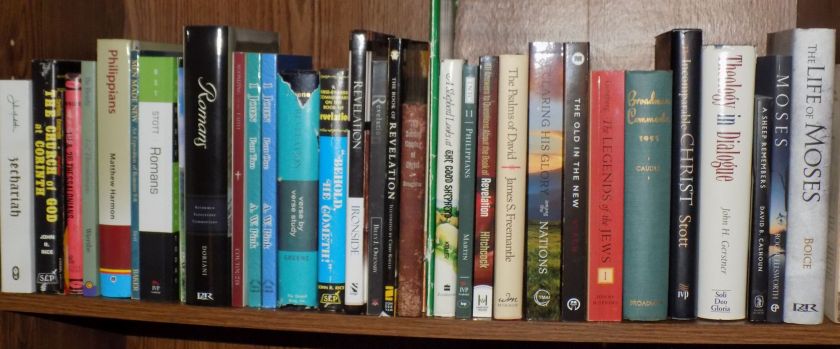
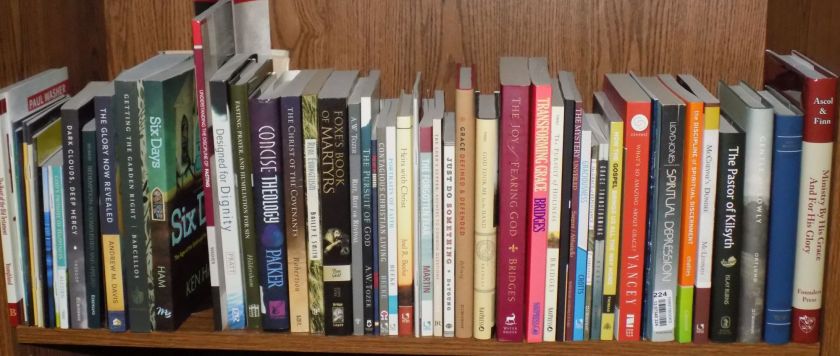
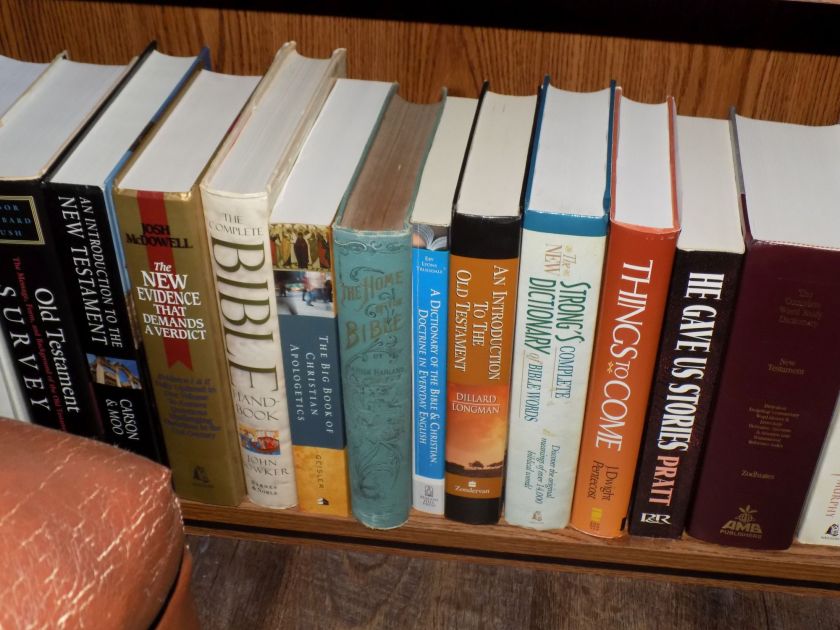
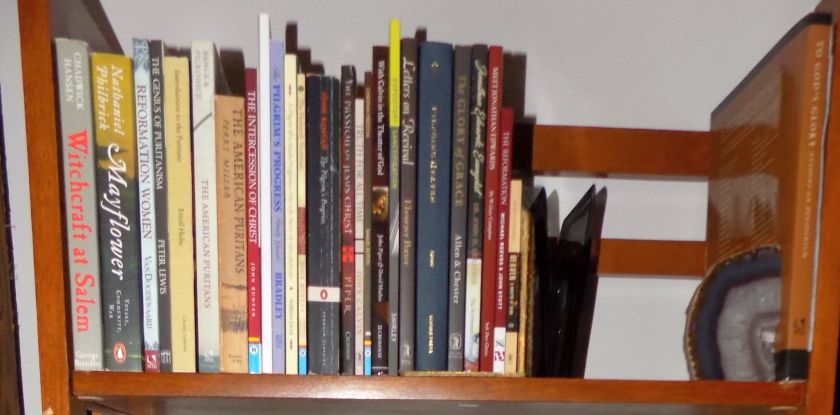
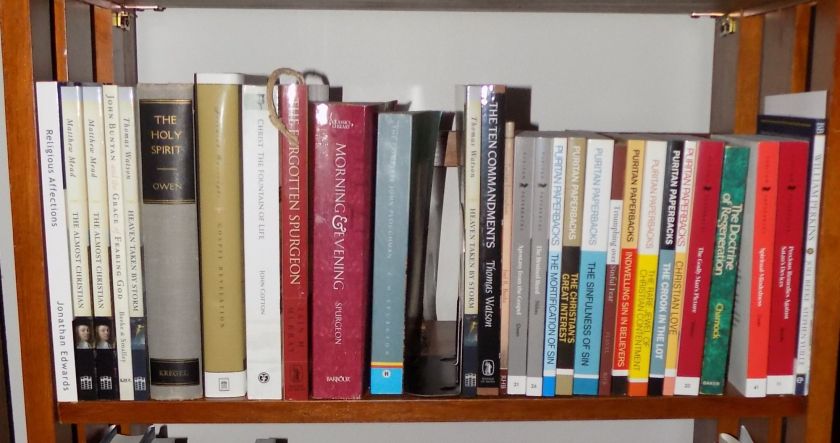
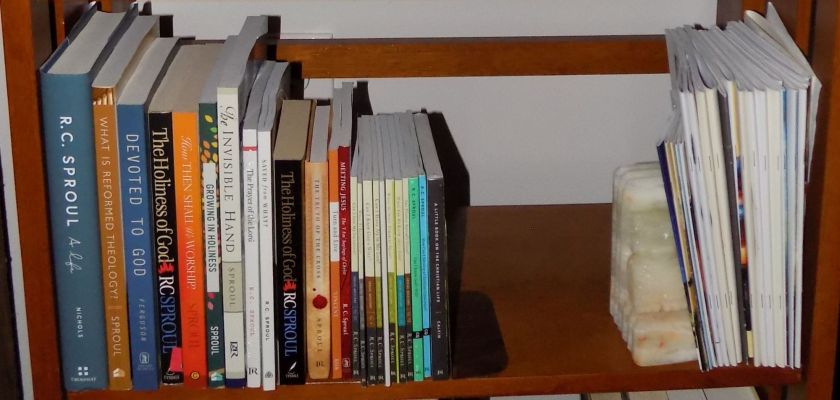
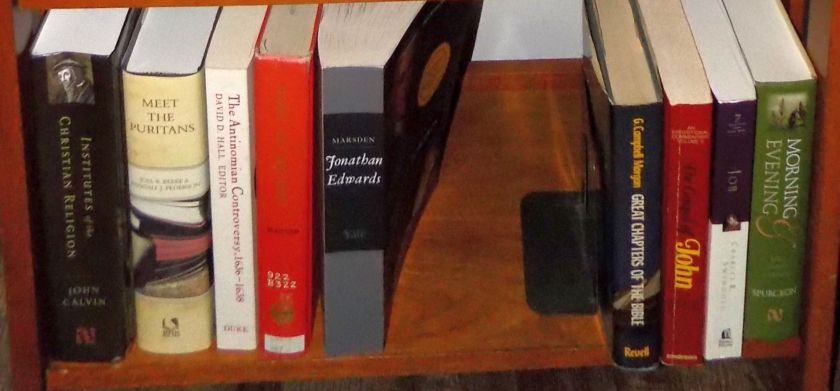
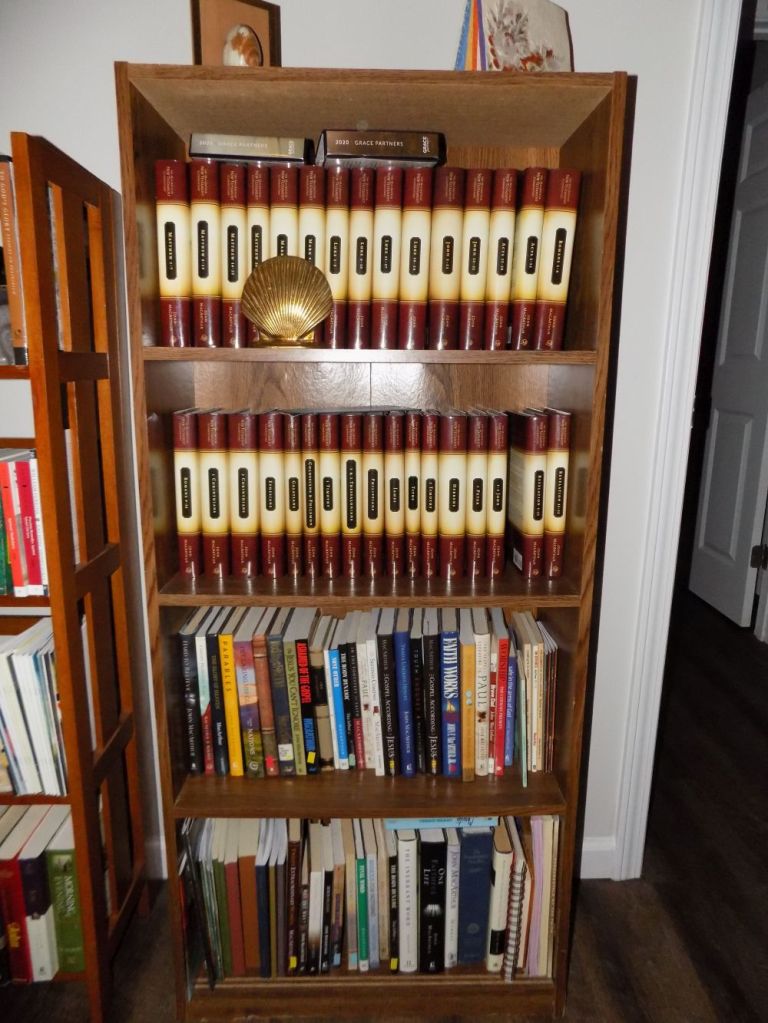
I’ve been asked to show the titles in my library. OK, here you go! I think if you right-click on particular photos you can see them larger in new tab.
OT Commentaries
NT Commentaries
grouped by subject: heaven, grace, prayer etc
heavy reference books on the bottom
Puritans shelf: About Puritans or By Puritans
More Puritans
Left: All Sproul. Right: All Chapel Library pamphlets.
Heavy books on bottom
JMac bookshelf, commentary, complete set
JMac Commentary set
Grace to You: I donate monthly. GTY sends free books
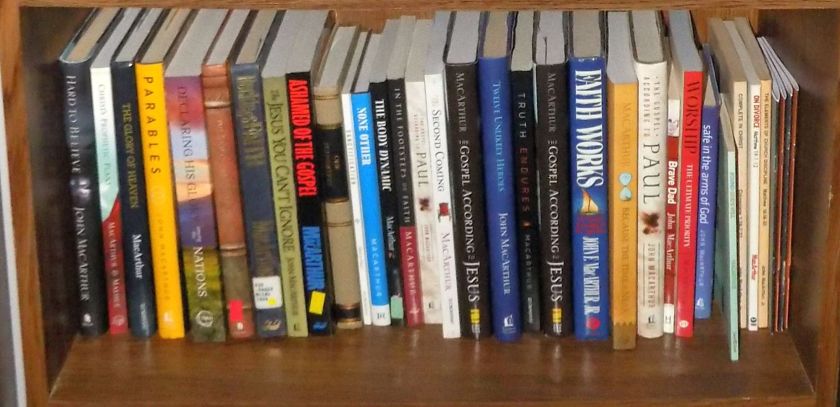
JMac books, and some heresy-for research only books
Yesterday I posted about the value of reading challenges. For me, there were at least 5 benefits to doing one last year, even though I felt I’d failed. They push you to read books you’ve always wanted to read, to read books that are already on your shelf, you read books you might not have otherwise read, you absorb good material into your heart and mind, you track your reading and objectively see that you’re not so much of a reading failure after all!
If I relied on my memory I’d have thought I’d read barely anything, but discovered I’d read 24 books. I did see my pattern, though, and why I thought I’d not been reading much. Months went by with no tracked reading of note, but during school breaks, I see I went ahead with much reading. If that’s my pattern, then oh well, OK.
Here are a few links to some good essays about reading and links to some booksellers.
Do you ever feel guilty reading a classic or even a secular novel? Do you feel like you’re ‘wasting time’? I mean, if I’m reading, shouldn’t I be reading Christian, edifying material? Spurgeon certainly read widely, and if it was good enough for him.. lol, here’s an essay about Spurgeon’s reading habits: Follow Spurgeon’s example in reading good books
I like dystopian fiction. Dystopian is the opposite of utopian. Instead of everything being perfect (utopia) it’s gone really, really wrong. I wrote about why reading dystopian literature might be useful-
100 Great Works of Dystopian Fiction: Tales about a world gone wrong. I’ve read 13 of these on this particular list. Stephen King’s The Stand is hands down THE best dystopian novel ever. I found Ender’s Game at the thrift store yesterday and scooped it up for 50 cents, I was thrilled. I started reading it.
Open Book is a podcast from Stephen Nichols at Ligonier, interviewing theologians on what books influenced them, what books are on their nightstand, and generally about their favorite books! Season 1 featured RC Sproul speaking about books he enjoyed, season 2 was interviews with John MacArthur, season 3 features Joel Beeke.
I never forgot Sproul’s passion for the Herman Melville book Redburn. He also loved Moby-Dick, in fact, wrote his thesis on “The Existential Implications of Herman Melville’s Moby-Dick,” an essay I wish I could read (I cannot find it online). Sproul loved Melville, and in his interview went on about the most monumental chapter on holiness, “The Whiteness of the Whale”
From Banner of Truth we read Why Christians Must Be Readers, when Paul called for Timothy to ‘bring the books’, “Even as the shadow of eternity fell upon him, he was anxious that his dying days should be also learning days and days of progression. Evidently there were still things he had to learn, and he was humble enough to indicate his readiness to learn from books.”
But it makes me feel good… But it has Jesus in it… But what would be the harm if I read it…
EPrata photo
In order to seek His face, and to stay on His path, before consuming any book, media, or website, Christians should always ask these questions in daily life,
–“Will this help me glorify Jesus?” –“Will this help me understand Jesus better?” –“Will this help me speak of Jesus lovingly and accurately?”