At the following website it is being reported that at a recent Joel Osteen venue, (Yankee Stadium, June 7) scalpers were charging $850 per ticket to hear the (false) preacher speak-
According to Essence Music Festival – a 3 day pass to see Prince, Lionel Richie, Mary J Blige, Erykah Badu and more on (July 4-6, 2014) in New Orleans is only $249, with 111 tickets remaining. Considering that lineup of Superstar Talent, how much would you pay to hear “Christian Superstar” Joel Osteen preach the Gospel of Jesus? According to StubHub.com, ticket scalpers are selling tickets for The Joel Osteen Tour for as much as $850. SEE COST PER SEAT! On the StubHub.com site, tickets for this event are being resold by Ticket Scalpers therefore the price is currently ranging from $18 in the Nose Bleed Seats, all the way up to $850 if you desire to look directly up Joel Osteen’s Nose. Stubhub.com is also reporting that the normal cost of tickets in Delta Suit B without the Scalper mark up is $592. Since when did scalpers start scalping church tickets you ask? Since 2005, when Joel Osteen proved he could sellout a stadium. Traditionally ticket scalpers are only interested in sold out events. Apparently the scalpers feel this event will sell out, and fans of Joel Osteen are willing to pay their asking premium. Regardless of the Performer on the stage – even if that performer just so happens to be a Preacher, the scalpers somehow seem to know how to make a profit, and they’re planning to profit as Joel profits.
Mammon, n.: The god of the world’s leading religion. ~Ambrose Bierce For some crazy reason Christians are willing to pay the high cost of these tickets just to get a front row view of Joel Osteen, prices that even tower above “A List” performers like Beyoncé.
As reported here, Osteen feels that preaching the whole counsel of God is not his niche. Osteen believes that to preach sin or wrath or judgment is not “his calling”. Instead, he preaches feel-good messages, because everybody’s on a journey.
HuffPost Live’s Marc Lamont Hill asked whether gay marriage is against the fundamental “rules” of Christianity. “It would be, but I don’t really focus on a lot of those things,” Osteen said. “I try to stay in my lane of what I feel called to do. [Gay marriage] does come up in interviews and things, but that’s not my core message.” What his message does include, Osteen said, is advising his congregation on how to let go of the past, raise good children and achieve their dreams.
Of course it seems good to the people attending to hear such smooth speech as that. Smooth as butter.
“His speech was smooth as butter,
yet war was in his heart;
his words were softer than oil,
yet they were drawn swords.”
~Psalm 55:21
S. Lewis Johnson preached on Hosea 10 in 1984. Though he was not speaking of Osteen in particular, in the quote below he was speaking of all who have a divided heart, a theme recurring in both Hosea 10:2 and the Psalm 55 verse.
“You ever met any individuals like that? They have a wonderful way of speaking smoothly, and if you’re not on your guard, you’ll be taken in by their deceptiveness, their falsity, their trickiness. And so what he is saying is, their heart is smooth, their heart is false, their heart is tricky; it is divided. In other words, outwardly they are followers of Yahweh, the true God, but really they’re followers of Baal and of their own selves.”
Gill’s Exposition explains the Psalm 55 verse, the heart is divided, and one only outwardly follows God, like Judas: “such the words of Judas, when he said to Christ, “hail, master”, and kissed him, Matthew 26:49; … but war was in his heart; even a civil war, rebellion against his prince;”
Make no mistake. Joel Osteen is at war with Christ. ‘His calling’ is to lead many sons into rebellion with him. Beware this false wolf.
In fairness, though, I can’t blame Osteen personally for the ticket prices. In order to minimize scalping, the Joel Osteen Organization does not sell tickets in large blocks. However, what does an $850 ticket say about us as people? As the article above stated, “For some crazy reason Christians are willing to pay…” Scalpers can only command the price if people are willing to pay it.
I think of Charles Spurgeon, dubbed “The Prince of Preachers” in the 1800s. He preached widely and constantly in the UK and in Europe. In 1876 however, he hadn’t had time to preach in America, despite the Redpath Lyceum Bureau having invited Spurgeon many times. When the Bureau noticed an advertisement in another newspaper trumpeting Spurgeon’s imminent arrival in the US, the Bureau write to Spurgeon asking Spurgeon to engage with them instead. The Bureau offered “one thousand dollars in gold for every lecture you deliver in America, and pay all your expenses to and from your home, and put you in the most popular auspices in the country.”
Spurgeon replied that the competing article was a “deliberate invention from a hard-up editor”, for he had no plans whatsoever to arrive in the US for a tour. He clarified that he was not a lecturer, and most importantly, “nor would I receive money for preaching.”
Megachurch speaker and author Joel Osteen was among a group of political and religious leaders who met with Pope Francis at the Vatican on Thursday. According to reports, Osteen was part of a delegation organized by the International Foundation in an effort to encourage interfaith relations and ecumenicism. Utah Senator Mike Lee (R), a Mormon, Gayle Beebe, the president of the interdenominational Westmont College in California, and Pastor Tim Timmons, founder of South Coast Community Church also in California, were among those who who greeted the pope, along with Osteen. “I just felt very honored and very humbled,” Osteen told local television station Click 2 Houston. “It was amazing. And even to go back into that part of the Vatican—there’s so much history there, the place that they took us through. You feel that deep respect and reverence for God.” “I love the fact that’s he’s made the Church more inclusive,” he said. “Not trying to make it smaller, but to try to make it larger—to take everybody in. So, that just resonates with me.”
I bet it does. Please be warned that in no uncertain terms Joel Osteen is a false teacher, and so is the Pope. Gladly, not everyone has drunk the Kool-Aid, as this pastor bluntly demonstrates from the same article.
“Joel Osteen has joined the rank of all other popular ministries in bowing his knee to the anti-Christ system, and those that blindly follow his leadership will be the first ones in line with their hand out to be marked by the beast,” Pastor Mark Herridge Sr. of Lighthouse Baptist Church in Livingston, Texas told Christian News Network. “Any Protestant ministry that links up with the pope and Catholicism is betraying the sacrifice of millions of faithful Christians that have died at the hands of this brutal, dictatorial and oppressive religion that has never represented the Church of the Living God as outlined in New Testament teaching,” he said”
GotQuestions discusses ecumenism, the notion that the church can be all-inclusive and partner with false religions in a spirit of tolerance and unity, and still be the church of Jesus Christ.
Walter A. Elwell, in The Concise Evangelical Dictionary of Theology, defines ecumenism as “The organized attempt to bring about the cooperation and unity among Christians.”
…As seen with the publication of Evangelicals and Catholics Together, there is a major emphasis in our day on ecumenical unity among Evangelicals and Roman Catholics. Those who promote such unity state that both are Christian and both are viable, God-honoring systems of faith. But clearly the substantial differences between the two groups render ECT a ridiculous document. Biblical Christianity and Roman Catholicism are two different religions that practice and believe different things about how one is saved, the authority of the Bible, the priesthood of believers, the nature of man, the work of Christ on the cross, etc. The list of irreconcilable differences between what the Bible says and what the Roman Catholic Church says makes any joint mission between the two absolutely impossible. Those who deny this are not being true to what they say they believe, no matter which side they are on. Any Catholic who is serious about his faith will deny what a serious evangelical Christian believes and vice-versa.
Osteen was only comfortable in the first place inside the Vatican with the Pope because he is false. And yes, the “he” refers to both men.
One note of correction, in the above article, Muehlenberg says “Osteen is charging $850” to attend his stadium events. That’s not quite the case. The figure of $850 is true, but it’s scalpers who are charging those fees.
It’s summer and time for a more relaxing entertainment regime. Many of us have vacations, or slower schedules at work with flex time. Movies, tv, and books can be enjoyed more than they can during a busier time of year. I’m still reading the biography of Charles Spurgeon I mentioned a couple of weeks ago. I also enjoy the summer season of television programs.
I look forward to Masterchef, a reality cooking show that is nicer with less profanity than Hell’s Kitchen, a similar show hosted by the same chef, Gordon Ramsay. I also watch Food Network Star, though I quit watching mid-season last year when the candidate chefs were just terrible on camera and worse cooks. But here I am back again. Maybe this crop can bake a decent souffle. In both Masterchef and FNS they try to keep it family entertainment and there are just a few swears sprinkled here and there, and very few double entendres. Though I noticed last year Masterchef film editors emphasized scheming and conflict between chefs more than they have in the previous 3 seasons. Masterchef Junior, though, was a rare treat and truly inspirational! I can’t wait until it’s back later this summer.
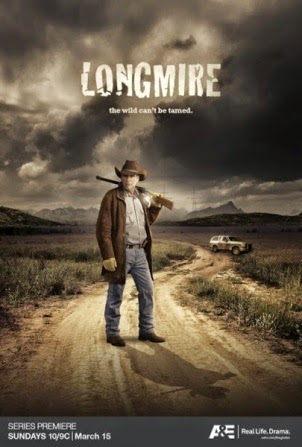
I also enjoy Longmire, a modern cowboy detective series set in Wyoming. With a small change of
clothes and horses instead of trucks, these sheriffs could be from the 1800s. There’s no swearing and only a little blood by cop show standards, but the main objection I have is the heavy emphasis in some episodes to Native American spirituality and its ritual practices, shamanism, and animal totems.
I also enjoy Motive, a Canadian detective show that is structured like Columbo. The audience knows right away who will be killed and who did it. It’s fun to watch the detectives’ thinking process as they gather clues and narrow in on the correct suspect. I like it because they always catch the bad guy. They also show a range of motives for murder, which to me, are true to life in showing how sinful humans are.
I haven’t watched Duck Dynasty for a season or so, it seemed to me to be getting kind of contrived. But I see from the promotional ads that Gov. Jindal is going to make an appearance on the show this summer. And truth be told, I kind of miss Uncle Si. Maybe I’ll tune in again.
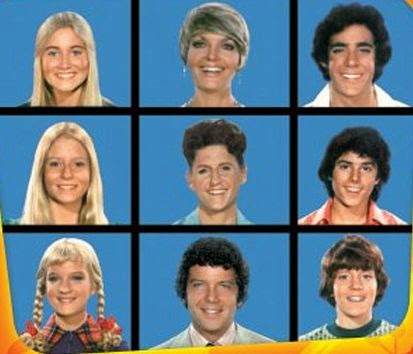
That’s pretty much it for me with broadcast tv. I have been getting back into The Brady Bunch. LOL. I know, I know. I watched it when I was a kid, mocked it when I was a younger adult, and now I’ve renewed my interest since the woman who placed the character of Alice, Ann B. Davis, died last week. She was a born again Christian, you know. One thing that Hulu and Netflix and Youtube has brought us is the ability to see the pilot episodes. I love that. Usually when a new show comes on I don’t notice. Then by the time I do notice, because it is getting good reviews, or it seems that it has developed a pattern of good entertainment with no profanity or sexual innuendos (harder to find these days) several years have gone by and I never see the “beginning” or the pilot episode.
Bradys in 1969, season 1
The other day I watched the first episode of The Brady Bunch, aired in 1969. The episode features the marriage of Carol to Mike Brady. It’s really cute. As a bonus, I enjoy seeing the styles of clothes and home decorations as well. I used to hate the furniture on the show but now I’m loving seeing the chairs, couches, etc. Maybe not so much the paneling in the den or the orange countertop in the kitchen, though, lol.
As a person who lived through the time period in which the show first aired, it’s like a homecoming for me, yet also from this adult perspective, I enjoy seeing a culture that is long gone. What culture? A stable, loving family with a working dad and a stay-at-home mom, kids who like each other, and no swearing or sexual innuendo. It’s a perfectly safe show. So far. Unless Carol dabbles with feminism later, we’ll see.
Bradys in season 5, 1974
For example, the third episode was about the smallest girl, Cindy. She was thrilled she had won the lead in the school play. Her entire family was happy for her. The mom and dad encouraged her, and the siblings were excited to attend and applaud her on. However a set of circumstances arose where the venue was going to be too small to allow all the children’s entire families to attend, and each play participant had to choose one.
This genuinely crushed Cindy, who became sick over having to choose. Overwrought with the weight of having to choose one parent over another, she dropped out of the play. I thought about today’s sitcoms, where if the same thing happened, the child would be pitting mom against dad in order to grab every privilege and toy they could wring out of the situation. Rather than love being warm and genuine, today’s show would present a greedy, manipulative child- and the show would be applauding their cunning. At the very least, it would not be presented as such a weighty matter but simply a personal dilemma to solve to the child’s best advantage.
I finished watching the 2006 show “Ugly Betty“. I’d heard it was a sweet, sensitive story of a plain looking girl trying to make it in the fashion magazine editing business. I watched the first 8 or 10 shows of the first season. Then I quit. The first three episodes were good, as advertised. A loving and supportive family of a Latina gal gets a job in Manhattan in an unusual way. Her sweet spirit and integrity were the hallmarks of the episodes.
But then the show revealed a number of dark storylines. And by episode 10 I was overcome with darkness. Sure the sets were bright with pops of color and the wardrobes were brightly colored, but the show was dark, dark. Manipulation, scheming, homosexuality, lies, sadism, transgender, serial bed-hopping…Oy get me out of here. Sigh.
One television show I watched on Hulu was excellent. It’s called Enlisted. Wikipedia’s synopsis reports,
“Three very different brothers, each soldiers in the U.S. Army, find themselves all assigned to the same unit: the fictional A Company, 2nd Battalion, 618th Infantry Regiment, 1st Brigade Combat Team, 18th Infantry Division (Mechanized), at the fictional Fort McGee, located in Florida. While the majority of the base is deployed overseas, the two younger brothers (Derrick and Randy) are assigned to rear detachment – the soldiers left behind to take care of the base. The oldest brother, Staff Sergeant Pete Hill, returns stateside from Afghanistan after punching a superior officer. He is assigned to supervise a platoon of misfits that includes his brothers. While working together, the brothers are able to renew and strengthen their childhood bonds.”
The show has a small but hardy band of supporters, needed because the show was canceled. Boo. A show like Ugly Betty goes on for years but a show honoring enlisted soldiers is canceled right away. If you watch the only ten episodes that exist, you’re watching the beginning and the end of the show. The vocal group of the show’s supporters was not enough to revive it, and it seems that the show will remain canceled for good.
I enjoyed the program because though some of it is silly, it never slides into mocking or hilarity at the expense of the soldiers. Overall the one thing that seems universally praised is that at root, the writers never make fun of soldiers, in fact, they portray serving our country as an honorable profession. The episodes I thought were the most affecting were 7 & 8, “Parade Duty” and “Vets”. As far as culturally, some episodes show some cleavage, soldiers off duty drinking, and a few mild swears. Overall the bulk of the show is fairly clean, I thought.
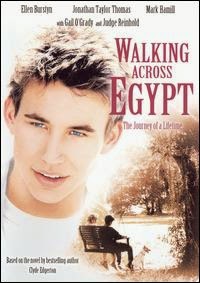
A very bright spot was a movie that had been recommended to me called “Walking Across Egypt.” It is a Christian movie involving a juvenile delinquent and a lonely older woman. The ever solid Ellen Burstyn is the woman who eventually takes in the troubled teen. Also starring is Judge Reinhold, Pat Corley as Sheriff Tillman Edward Hermann and Mark Hamill. The conclusion to the Wikipedia synopsis states, “Wesley (Jonathan Taylor Thomas), currently serving time in juvenile detention for a recent car theft. Mattie finds that this young man is just missing direction and believes that with a little insight on Christianity he can straighten up and fly right.“
Themes are also Christian love, applying the bible to life, and hypocrisy. There are a few mild swears, included to show that the boy is a delinquent, lol. But that’s it, nothing else objectionable. Watch, it’s a sweet movie. It gives me hope that there still exist good movies to unearth and be nicely surprised by.
Here is a review of a current movie, Maleficent, from Good Fight Ministries. Your mind may at first balk at the lead sentence, but if you think it through you will see it is correct. Our pastor mentioned this last week. The themes in the Lion King for example, are anti-Christianity. Consider this overview of Disney movies in general before reading below specifically about Maleficent. It’s from Berit Kjos in an article titled “The Spirit Behind the Lion King:“
“Betrayed, rejected, running from responsibility, growing strong through adversity… Disney’s latest box-office hit, The Lion King, is full of Biblical parallels, colorful characters and personal struggles that help us identify with a lovable lion made in the image of man. But watch out! Behind the spectacular scenery and noble sentiments hides the timeless earth-centered view of reality that has always lured God’s people from truth to myths. In other words, The Lion King – like Aladdin – demonstrates an alarming shift in values. While the old fairy-tale cartoons like Snow White linked sorcery to the evil characters, The Lion King uses tribal magic for “good.”
Here are the first sentences of the Maleficent review. They echo the same sentiment, evil is now good. Though the words may seem jarring, they are correct. The drift from Disney’s early days as reported in the above review of Lion King and reference to Aladdin is now ever darker as seen in Maleficent, as sin is wont to be.
Disney’s Maleficent Makes Satan the Savior It is hard to overestimate Disney’s role in the moral decline of America, with its constant glorification of occult themes and its endless parade of train wrecks of child role models for millions of children (e.g., Lindsey Lohan, Britney Spears, Miley Cyrus, etc). … The movie Maleficent is yet another example of how Disney influences millions of adults and children with darkness, by taking evil characters and making them into heroes and heroines. In Maleficent, Disney takes a notoriously wicked witch and turns her into a beloved character and even into the savior of the world. Maleficent is a movie that unfolds as though Lucifer were trying to tell his side of the story.
I don’t watch much TV at all during the school year. The ads bother me, and there isn’t much on that I like. Even PBS and The History Channel have a liberal agenda that ruins even the most vaunted of documentaries. By the time I get home from school in the afternoon, do my bible study, prayers, cook and eat dinner, and write a blog, it’s time for bed. My remote control broke a few months ago and I haven’t replaced it. There’s no point.
I say this not to tout myself, but to set up the next comment. During the summer, especially the first week of summer vacation from school, I have a tendency to make up for it. I binge watch on my laptop. Because of the release from any schedule at all, it is actually easier to let bible study slide, and to tune in and mindlessly watch a show that I can view for its entire run. That’s what happened with Ugly Betty. I watched a bunch of the episodes in a row.
In 1977 Jerry Mander, an advertising executive in San Francisco, published his book, “Four Arguments for the Elimination of Television.” Before we had the internet, men like Jerry Mander were the internet. They presented material that bucked the status quo and the only places you could find such material were dark and dusty book shops with towering aisles of precariously placed books. I loved it. These books and magazines in obscure independent bookstores provided to the marketplace of ideas concepts that were untouched from the pollution of societal norms. In 1977 the idea of eliminating television was intriguing to me. I read his book.
The argument I often gravitate to, though it is no less incriminating that the other three arguments, is the biological argument.
The biological argument against television is summed up here: Argument 3 – TV physically conditions us for authoritative rule Here are some phrases commonly used to describe watching TV. It ’s a hypnotizing, energy- sucking, brain-washing, vegetative, concentration-killing, addictive, zombie-like, mind- destroying, mind-numbing dream-state that is a stupefying, cognition-killing, mesmerizing, colonizing, isolating, meditative, and yet somehow relaxing activity. And so we like it. NIH did a 3-year $5 million study on the effects of TV. TV was found addictive and hypnotic. It stops thought similar to brain-washing; the study also noted other physical effects. The President suppressed the study and commissioned another group to re-do it. In 1977, Marie Winn wrote a book with anecdotal evidence of TV’s effects call ed “The Plug-In Drug.” It asserted that TV viewing by children was addictive, turning them into passive, incommunicative “zombies” who couldn’t play, couldn’t create, and couldn’t think clearly; they couldn’t solve problems and couldn’t fill their free time. It broke down family communication, and filtered even direct affection through the TV, to everyone’s harm. It is an instrument of “fixation technology,” and it aids in implanting imagery in the viewer.
After so many episodes of Ugly Betty I felt terrible. It was like when you diet and don’t eat sugar or fat for a long time, and then you do, your body rebels in the instant overload. Absorbing so much sinfulness at once, albeit unwittingly, I ended up jumpy, nervous, at sixes and sevens, couldn’t concentrate, and was very unhappy. Add to the likelihood that any television show will contain at least some elements of sin, and the spiritual layer of jumpiness and unhappiness increases exponentially.
None of this is news to any Christian. I did decide to quit watching the Betty show and to quit binge watching and to structure my day more formally so that I could accomplish good things for the kingdom and not devolve into a mind-numbed, unproductive puddle by the time school rolls around again.
Of course, the irony is in relating all this, it’s still a blog post about movies and TV. Movies and TV are here to stay. Back in 1977 when Mander made his arguments, cable TV hadn’t become the monolith it is now. Unlike the old days when all one had to do is unplug the TV and throw it onto the sidewalk and that was that, we now not only have television but laptops, iphones, and google glass. I know I’m going to watch something this week. It’s the same for most people. After the yard work is done, and the kids are put to bed, and the bills are made out and the phone calls are finished, my eyes are tired and reading isn’t an option all the time. It’s easy to click on the remote and settle back into watching the tube. So if I’m going to watch something, I can decide to limit the amount of time I do, carefully decide what I watch, and scrupulously review beforehand what I choose to put in front of my eyes. My mistake with Betty was that I didn’t do that. And I paid the price.
I hope my review of these few shows, Enlisted, Walking Across Egypt, Brady Bunch etc would spark your interest and perhaps you might find them suitable for your own entertainment fare. My goal of course is to reduce my TV watching to zero. By the grace of the Holy Spirit these days I am listening to more sermons and good music than I am watching TV or movies, a dramatic shift from even three years ago. Sanctification in progress, an eternity to get it right.
I watched this happy video of a puppy waiting for his boy to return home from school. I’d planned to put it on my other blog as a happy little pick-me-up. But it’s almost impossible for me to see anything and not make a spiritual application, lol. So here it is. First, the happy puppy:
Awww!! So cute! Here is the question I ask us all, myself included. Are we a puppy? Do we show obvious and generous and committed love to people? Do we rush to pick up their burdens? Are we excited to see them? To the point of eagerly waiting?
Just sayin’
“Beloved, let us love one another, for love is from God, and whoever loves has been born of God and knows God.” (1 John 4:7)
“They were continually devoting themselves to the apostles’ teaching and to fellowship, to the breaking of bread and to prayer. (Acts 2:42).
“Bear one another’s burdens, and so fulfill the law of Christ.” (Galatians 6:2)
“For I long to see you, that I may impart unto you some spiritual gift, to the end ye may be established;” (Romans 1:11)
There are so many subjects I have on deck to write and discuss. But today this subject bumped them all away and made it to the top of the list.
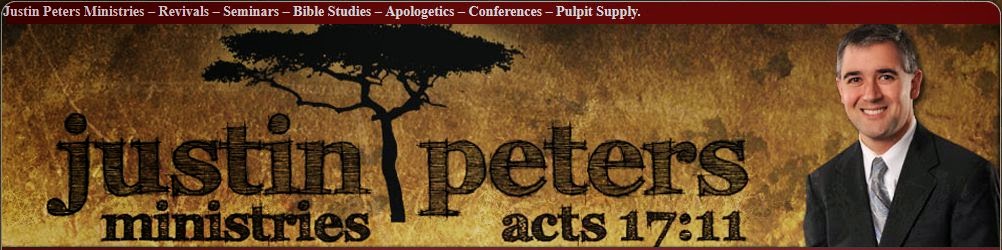
Justin Peters
I know he is the kind of man who would be excessively embarrassed at having a blog entry devoted to him, even from an obscure woman in a lonely corner of the internet like myself. He is a humble man, and totally devoted to praising Jesus, all the time. But that is why I want to highlight this man and his ministry. That, and something that happened yesterday which has already blessed many people.
Regular readers of this blog know that I enjoy John MacArthur’s preaching tremendously. He is a grace-filled, steady, wise man of God, and he has been for 50 years. His over 3000 sermons are available for free, in audio or transcribed. His study bibles and commentaries are wonderful, his devotionals are helpful, his Radio Ministry wide-spread, his books are invariably full of wisdom, and his Master’s Seminary sow solidly doctrinal men of God into the world. I believe he is the Spurgeon of our day.
Speaking of Spurgeon, we all owe him a great debt. I frequently quote him on this blog. His exposition lines my heart, having read many of his sermons. I read at least a sermon, a sermon excerpt, or devotional of his every day. For months at a time, Spurgeon preached 12 sermons a week. You heard me. He preached at the royal courts of the Dutch monarchs and the Royals of England, and he preached to the homeless warming themselves in his boiler room. His sermons were printed one per week for over thirty years. He is called the Prince of Preachers and rightly so. You’ve undoubtedly heard of Spurgeon and will hear more about him in an upcoming blog entry here.
Regular readers also know I enjoy the sermons of Phil Johnson, Steve Lawson, Don Green, and especially S. Lewis Johnson and Martyn Lloyd Jones.
The key here is that MacArthur, Spurgeon, Phil Johnson, Steve Lawson, Don Green, S. Lewis Johnson, and Martyn Lloyd Jones are or were all expositors, preaching to one congregation they pastored verse-by-verse. These men are given double honor by me. Pastoring is hard, heartbreaking work. Expositional preaching is out of favor now. Long-term pastorates like the ones these men enjoy are nearly extinct.
“Let the elders who rule well be considered worthy of double honor, especially those who labor in preaching and teaching.” (1 Timothy 5:17)
But there are there preachers out there without regular pastorate. Paul Washer is an itinerant missionary. Tony Miano is a street preacher. Ray Comfort and Todd Friel are …well, lol, I don’t know what to call those fine men except faithful to be out among the people reaching many with the Gospel.
Justin Peters is a pastor without a church as far as I know, but he is also another of these faithful men of God being used in a mighty way. Pr. Peters has two seminary degrees and is ordained. He preaches on call, he fills pulpits, he leads teaching conferences, and he does apologetics. His niche is a discernment ministry focused on Word-Faith lies.
Pastor Peters is kind, compassionate, humble, gentle, sensitive to the grace of God, wise, and kind. I know I said kind twice. I want to highlight it.
Being in a discernment ministry for so many years, leading seminars on how to detect lies in false doctrine, means Pr Peters must be involved in negativity for long stretches. He studies the word, of course, intensively, but then he must go out and attend a revival, or a charismatic conference, or a prophetic outpouring, and be among false teachers and listen to lies, in order to be able to refute. It is a muddy, dirty, potentially defeating business.
Even if one maintains one’s nose above the muck, many discernment ministers tend to become snarky, or caustic and sarcastic, or just plain arrogant. When men fall into those discernment sins it’s not because they aren’t earnest and they are usually right, but the attitude infiltrating a discernment minister’s mind and heart can often become less than graceful. Sarcasm, snark, caustic comments, derision, contempt, and scorn often accompany discernment. I combat that myself all the time. It is born of a righteous anger, but it degenerates into something that sometimes can come out as less than righteous.
It is only by clinging severely to the grace of God that one can swim in such dark waters for so many years, and yet remain humble and filled with compassion, and still declare the beauty of the Gospel with clarity and simplicity, like Pr. Peters has.
His ministry not only teaches us in apologetics how and why the Word-Faith or other doctrines are false, and in so doing, teaches how to be discerning in general, but his very example is a testament to the ample ability the Holy Spirit has to enrich a ministry while protecting a soul.
What happened yesterday is an example of how these diligent men of God, especially the ones not in front of a congregation that are seen by many, go about their work declaring the word of the Lord. They protect the sheep. They confront sin and sinners in love and with hope and prayer they will repent.
Todd Bentley is a charismatic “preacher” known for being rough, looking rough, and speaking rough.
His “healing” services have included kicking a 4th stage cancer patient in the stomach, and kneeing an elderly woman. He is covered in tattoos, many of them obtained after his “conversion.” He preaches healing if you have enough faith- AND if you sow a seed into his ministry. He is a false preacher of God, employed firmly in satan’s camp. Yet he is big in the US and bigger overseas. Bentley is deceiving many. He brings shame and reproach onto Jesus’ name. Bentley made the mistake of preaching near where Justin Peters lives.
Peters, who has cerebral palsy and walks with a large crutch, or moves in a wheelchair, went with his friend Michael Miller to hear Bentley ‘preach’ in Tulsa. Peters is well familiar with charismatic events, attending many himself in search of healing when he was a youth, and attending as a mature Christian in order to observe and learn. He and Miller had asked for prayer prior to attending Bentley’s service. This was the prayer request on Peters’ Facebook ministry page, from Mike Miller:
Brothers and sisters in Christ, I would ask for your earnest prayers for Justin and I tomorrow. We need boldness to present the truth in love with precision, Divine encounters, wisdom and to put it frankly, we are in great need of every sort of grace. No details yet but the Lord knows where we are going, and He knows how much I appreciate your prayers! We definitely need them! More info later. Grace and peace, Mike
The response of the faithful to this precious pastor and his friend was huge, and thus bathed in prayer, the pair drove from Oklahoma City to Bentley’s Tulsa “Healing and Debt Cancellation Service.” I am not kidding about the title. The service was live streamed internationally, which turned out to be a blessing for Peters. Miller was also video recording Peters’ interaction. Peters is in the cammo cap.
There Miller and Peters sat for two and a half hours, listening, praying, seeking an opportunity to speak to Bentley and also on behalf of the unwittingly deluded congregation. There was music playing constantly, and Bentley was constantly talking. It was difficult to know when to speak. Yet Peters’ conscience would not let him remain silent. Pastor Peters recounted his experience on the JD Hall Show and it is archived at sermon audio- the link is below. I encourage you to listen. Hall for the most part simply lets Peters explain what happened before, during, and after the event.
Suddenly for some reason the music stopped. Peters knew this was the moment. He got up and said out loud, “I have a word.” Peters said that at Charismatic services when someone says they have a word they always stop what they are doing and eagerly listen to man’s word. However as proof is shown in a moment, they are not always so eager to listen to God’s word. Peters then recited Matthew 7:21-23.
““Not everyone who says to me, ‘Lord, Lord,’ will enter the kingdom of heaven, but the one who does the will of my Father who is in heaven. On that day many will say to me, ‘Lord, Lord, did we not prophesy in your name, and cast out demons in your name, and do many mighty works in your name?’ And then will I declare to them, ‘I never knew you; depart from me, you workers of lawlessness.’”
Bentley looked confused for a moment, Peters said later, and asked Peters, “Who…who is the worker of iniquity?” Peters looked Bentley in the eye and said,
“You are.”
There was a split second of shock that went through Bentley and the audience. As one biblically wise person on Peters Facebook page said, it was a moment like when Nathan the Prophet rebuked David the King in 2 Samuel 12:1-15. In verse 7, “Nathan said to David, “You are the man!“
In the next second, Bentley whirled, took the microphone from Peters, muscle men leaped in to physically remove Peters, and Bentley cued the music again. The muscle men attempted to remove Peters, who was not resisting, by arm, but he has crutches attached at his elbows and if you move his arm, he’ll fall. At one point Bentley moved in to take hold of Peters, but Peters said he did not want Bentley to touch him. Peters instinctively raised his hand a bit to stop the touch. It was then that Bentley said loudly “Don’t you hit me with your crutch!”
This is ironic given that Bentley is a large, burly man and Peters is weak and unsteady.
Left, Peters with his crutch in his motorized scooter, Bentley on rt.
Peters continued to preach as he was hustled up the aisle and out the door, reminding the assembled that Bentley is a divorced man, having abandoned his handicapped wife and children. Peters advised them they were being deceived by a wolf. Though Peters and Miller left immediately when told, the Bentley team still called the police on them. The blessing was that the event was live streamed as I mentioned. This means that Peters’ preaching of the Matthew verse and the ensuing activity was broadcast live around the world.
Brothers and sisters in Christ, thank you for your prayers. The Lord graciously gave brother Justin an opportunity to publicly and personally call a false teacher out on a live streaming broadcast in front of a congregation, and Justin gave the false prophet a true “word” from God reading Matthew 7:21-23.
Justin asked me to be discreet about this lest he receive any acclaim which should only go to the Lord. God is the one that made this public rebuke possible, and who protected us. Soli Deo Gloria. So I am not going to post the video or give details, but I did want to thank you for your prayers because this situation would not have occurred without the gracious provision of the Holy Spirit and the prayers of God’s people.
Yes, they did remove Justin from the premises under force, and they did call the cops on us, but no harm was done. We did get to testify to quite a few people about this false prophet and warn them, and we got to sow the true Gospel of Jesus Christ in this heretical church. Please pray that God will have mercy on these people and save them from a very dark deception. The ones we talked to were willingly ignorant and unwilling to listen to any truth for more than a few seconds. Grace and peace to you all. Sincerely in Christ, Mike
Changing gears just a bit, Peters said on JD Hall’s interview show that in Peters’ long career as a discernment minister, there are a few false teachers who he feels are directly possessed by satan. All false teachers are under satan’s influence, being lost, but a few are directly invaded in body. Yes, possession still happens, friends. Peters said that he feels Kenneth Copeland is so dark, that he is possessed by a demon, and also Bentley is so dark that he also has a demon. This was the main reason he did not want Bentley to touch him. Now think about this:
In Peters’ work, he must attend services in places which proclaim a false gospel, tell lies, grab for greed, and in a few cases, directly confront a demon-possessed person. These spiritual soldiers are the D-Day soldiers of Omaha Beach, in the mud, in the trenches, first off the boat. The face enemy fire first and directly. They often become casualties, but if one remains in Christ, in prayer, and submits their very ego, soul, strength, and mind to Christ, they are spared the bullets and make it to the woods.
1944 D-Day invasion of Normandy
Like our precious soldiers who went to Omaha Beach on D-Day, these spiritual soldiers do it for freedom. They do it because foremost the name of Jesus must be proclaimed and protected. But they do it for the hostages. The people filling the services like Bentley’s are in bondage to a false gospel, they have no hope. Wading in to such places, Peters and men like him (Miano, Friel, Comfort, Kirk) bring the light and hope of freedom.
The men at D-Day were attempting to gain back ground for the cause of freedom, and while noble in the extreme, it was a temporal endeavor. While it brings tears to my eyes just thinking about that day 70 years ago, and the soldiers’ sacrifices, pastors like Peters are attempting to gain back ground by gathering souls for Christ, an eternal endeavor.
Peters pleaded with Hall on the interview show never to ascribe any particular honor to him. He doesn’t want limelight. Peters said it was all for the glory of God, and done by the strength of the Spirit. This is true, and it is one reason why we love Pastor Justin Peters. But we also are advised in the bible to give double honor to our soldiers on the front lines: pastors-
“Let the elders who rule well be considered worthy of double honor, especially those who labor in preaching and teaching.” (1 Timothy 5:17)
When you pray for your pastor and deacons, please also pray for the pastors who don’t have a regular flock. These men minister to the lost, bewildered, and wandering via a discernment ministry, a street ministry, or a media ministry. Spiritual warfare is sometimes more evident and more palpable in those realms, on spiritual hamburger hills all over the globe. The charismatic prosperity healing service or the public street in a gay city is the Omaha Beach of Christ. Preaching there is like D-Day. Every time.
Please also give praise to the Holy Spirit who obviously has Peters well protected, and is growing him in Christ-likeness in leaps and bounds. This is an example of a gentle, grace-filled pastor who loves Jesus. Let’s cherish these men. The Lord certainly does.
“The actual wickedness of men’s lives bears a very small proportion to what is in their hearts. But when lust is inwardly cherished, it will break forth into outward sin. Those who tempt others to drunkenness never can be their real friends, and often design their ruin. Thus men execute the Divine vengeance on each other. Those are not only heated with sin, but hardened in sin, who continue to live without prayer, even when in trouble and distress.” ~Matthew Henry’s Commentary on Hosea 7:1-7
Gustav Kaser said of icebergs,
Think of an iceberg! Only about 1/7th rises above the surface of the water. The remaining 6/7ths are under water and not visible to the human eye. A human being is comparable to an iceberg.
The wickedness we see above the surface is only a small proportion to what is in our hearts…
Therefore, praise God that He sent His Son! Jesus lived a sinless life. He died shedding His blood for those appointed to salvation, and pleased with His Son, God raised Him to life on the third day. Now instead of staggering under the weight of all my sin, that which is seen and that which is unseen below the surface, Jesus sees it all, and He saved me anyway. Now I have His righteousness declared upon me by God. As long as I am in this sinful body breathing air on earth, I have been released from the power of sin via the Holy Spirit indwelling me. I have the glorification to look forward to, when I’m no longer even in the presence of sin.
I will greatly rejoice in the Lord; my soul shall exult in my God, for he has clothed me with the garments of salvation; he has covered me with the robe of righteousness, as a bridegroom decks himself like a priest with a beautiful headdress, and as a bride adorns herself with her jewels. (Isaiah 61:10)
I have not followed the Bowe Bergdahl issue. I know little about it. Bowe Bergdahl is America’s only known prisoner of war. Apparently Obama secured this detained and ailing soldier’s release by swapping five Taliban detainees — and leaving most of Congress in the dark. As Congress has become more upset at the President’s sudden and unilateral action, it appears as the story unravels, that the soldier may or may not actually be a deserter- not a hero.
I don’t follow the ins and outs of politics anymore. I have limited time and limited emotional capacity, so I try not to fill it with incidental things of life. I stay focused on work, my local church, the people I interact with, and studying the bible, prayer, and writing, etc.
I have to admit also that my distaste for our current occupant of the Oval Office aids me in keeping me from looking too closely at our American machinations at home and abroad.
However, something on Allen West’s website came to my attention. When Obama held a press conference with the soldier’s father, Bob, and the father was speaking, the father spoke in Arabic. They were just a few words, but there you go. Allah was one of the words. Here is former Congressman and Lt. Colonel Allen West’s report of the incident.
First words of Bergdahl’s father at White House were Arabic Clare Lopez is a former CIA operations officer, a strategic policy and intelligence expert with a focus on Middle East, national defense, WMD, and counterterrorism issues, and a friend of mine. She emailed me this morning a very poignant analysis that only someone knowing language and Islam could ascertain. She wrote:
“What none of these media is reporting is that the father’s (SGT Bowe Bergdahl’s father Bob) first words at the WH were in Arabic – those words were “bism allah alrahman alraheem” – which means “in the name of Allah the most gracious and most merciful” – these are the opening words of every chapter of the Qur’an except one (the chapter of the sword – the 9th) – by uttering these words on the grounds of the WH, Bergdahl (the father) sanctified the WH and claimed it for Islam. There is no question but POTUS knows this.”
Folks, there is a lot to this whole episode — like Benghazi — that we may never know. And this is not conspiracy theory, it is truth based upon Arabic and Islamic dogma and tradition. And here’s the video if you have any questions.
UPDATE, Todd Friel. 56 seconds, another good word from Todd to ponder:
We Americans have been blessed. For the most part we have had leaders who have willing hearts, attitudes of service, and a desire to do the best for our nation and their fellow citizens. Oh, sure, we’ve had bumblers (Jimmy Carter) some bad ones (James Buchanan), some whose personality did not fit the demands of the job (Ricard Nixon), but overall we never had an inkling that the man whom fellow citizens had elected to office was actually an enemy working against them and did not care at all about their best interests.
Until Obama.
In my opinion, he is a traitor, working actively with satan to dismantle our nation. And that makes me sad, because I love this nation. I mourn for the soldiers who must perform under such a Commander in Chief. I feel empathy for the impoverished ones, the fatherless and the widows in this climate of coldness and rising crime and chaos.
I have felt this way for 7 years. But so what? In looking at nations since the first nations formed in Genesis, 7 years of living under a man who isn’t working for Jesus and isn’t even working for the best interests of the citizens is a tiny, microscopic mite in the historical scheme of things. What about Pharaoh, who let his own people die out of pride? What about invading armies into Israel, killing children? What about Herod and the Massacre of the Innocents? Nero?
What about Germany’s historical shame of Hitler, someone they elected? What about every dictator who ever lived; Pol Pot, Idi Amin, Manuel Noriega, Genghis Khan… Actually, monarchies and dictatorships have been the historical norm for governments. And given man’s depraved state, it is only natural that sinful men do sinful things, and even ‘good’ dictators turn bad.
So who are we to have pity parties over one man for a few years, even while our nation is still one of the wealthiest on the planet? Here is THE question I asked myself: am I more willing to pray for Obama, an obviously lost and hell-bound man, than I am willing to complain about his motives? Am I more willing to complain about Obama than I am to praise Jesus?
I have to admit that I don’t pray for him as much as I should. Well I hardly ever pray for him, if I’m honest. And this is despite the fact that the bible says we must pray for our leaders. It is despite the fact that for 42 years I was a sinner like Obama, and only now I am released from the power of sin by Jesus’ grace. As it is written in 1 Timothy 2:1-4,
“First of all, then, I urge that supplications, prayers, intercessions, and thanksgivings be made for all people, for kings and all who are in high positions, that we may lead a peaceful and quiet life, godly and dignified in every way. This is good, and it is pleasing in the sight of God our Savior, who desires all people to be saved and to come to the knowledge of the truth.”
We should not get all tangled up and angry when sinful people do what they normally do: sin. This goes for even our leaders, whom sometimes we set apart as somehow higher, more noble, less sinful. But the lost are just that, lost. A lost man smiles when another prays to a false god. A lost man smiles when his plans for evil seem to be coming true. But God means all evil for good to those who love Him. (Genesis 50:20, Romans 8:28). It is by God’s grace that we even know that He means it for good, having the Holy Spirit in us to illuminate the bible’s meaning to us in the verses which declare it so.
As for Obama, all our leaders, any leader, or every sinful person, “Their foot shall slide in due time.” (Deuteronomy 32:35). Obama can smile triumphantly all he wants, but the only triumphant smile I will give is the one if in the Lord’s purpose and plan, He calls Obama to salvation. I once was a sinner like the president, smiling when false gods were mentioned. If he is saved, we will be brothers in grace. THAT calls for a smile of triumph.
Severe storms rolled through Iowa and Nebraska yesterday. Unfortunately, more are forecast for today. I was amazed at the hail damage in Nebraska from the violent storms that rolled through. I have seen hail dent cars many times, but I’ve never seen hail puncture them!
Storms hit Midwest, ‘dangerous evening’ forecast Homes and cars in parts of Nebraska and Iowa were pummeled Tuesday by baseball-sized hail and damaging winds as potentially dangerous storms targeted a swath of the Midwest, including the Omaha area, where flooding left dozens of drivers stranded and prompted home evacuations. The National Weather Service said reports of extensive hail damage and flooding had trickled in as storms pushed into Nebraska and moved into neighboring Iowa, where winds of up to 85 mph were recorded. Up to 4 inches of rain was expected in parts of Nebraska and Iowa.
Weather Center Live meteorologist Shawn Reynolds tweeted yesterday at the height of the storms: “It’s the day from #hail: More than 130 storm reports of hail today”
@nonpareilonline: A floating car in #CouncilBluffs (Iowa sent in by @melaniexyz & others
In Blair Nebraska, there were injuries from hail at Walmart parking lot, 12 taken to hospital, conditions unknown.
Above photo was tweeted on Shawn Reynolds’ stream,: “RT @AdamPeters: Hail damage in Blair, NE via @Michaeldkrueger’s cousin #newx“
In Treynor Iowa, hail damages a house
Above photo tweeted from Shawn Reynolds’ stream: “This is just nuts RT @KWWLSchnack: Hail damage in #Treynor from storms Tuesday afternoon. #iawx“
driftwood1963 Instagram, “Wickedness falling from the sky! #iowa #storms #crazy #wicked #hail #thunderstorms”
Here is a collage of damage from yesterday’s weather put together by The Weather Channel
I’m not a weather expert by any means but it seems to me that though we had a few years of rising tornadoes and worse damage from them, that this year tornadoes haven’t been the bid bad mama of weather. There are fewer tornadoes, while hail storms seems to be the weather destroyer in 2014. Here is a graph that seems to confirm that there are fewer tornadoes this year: (thank goodness!)
You notice that unusually, there were no tornadoes in January or February. It is a fact that 2014 is the slowest start to tornado season ever, and gratefully, no fatalities.
I searched insurance websites to see what the claims from weather damage have been for the last few years.
The Rocky Mountain Independent Insurance Agents bulletin reported that “The nation has experienced severe storms (wind, tornado, hail) that are occurring with more intensity and affecting more areas of the country. While scientists debate why these storms occur, no one argues with their effects—extensive property damage and, many times, loss of life.
Fast Fact: National Hail Statistics: Damage caused by wind and hail cost State Farm and its policyholders more than $3.9 billion in 2012, according to an April 2013 analysis by the insurer. Texas was the state with the most wind/hail losses, followed by Illinois, New York, Ohio, Missouri, Tennessee, Indiana, New Jersey, Kentucky and Colorado. (source)
The National Insurance Crime Bureau (NICB) reports that “Hail Damage Claims in the United States, between 2010-2012, more Frequent, Severe Storms Drive 84 Percent Claims Increase.” In Montana, it is reported that the year 2013 was a record-setter for hail damage.
“Imagine a baseball dropped from an airplane flying at 30,000 feet … imagine that baseball reaching speeds of 120 MPH as it falls to the ground … and imagine you’re under it! Imagine you’re driving along at 70 MPH…or your crops are under the hail producing thunderstorm…or your home is under the thunderstorm… Hail causes $1 billion dollars in damage to crops and property each year.”
The article discusses how hail forms, how to size hail, why some hailstones are irregularly formed, the largest hailstone ever recorded in the US, and more.
Whenever I read of a hail storm I can’t help but think of the 100 pound hail that will pound men during the Tribulation. Revelation 16:21 says
“And great hailstones, about one hundred pounds each, fell from heaven on people; and they cursed God for the plague of the hail, because the plague was so severe.”
One hundred pound hailstones are not normal. It is not natural. The Weather Underground reports that “The largest officially recognized hailstone on record to have been ‘captured’ in the U.S. was that which fell near Vivian, South Dakota last summer (2010) on July 23rd. It measured 8.0” in diameter, 18 ½” in circumference, and weighed in at 1.9375 pounds.”
So when the 100 lb hailstones fall men will know that it is God, because such large hailstones have never fallen in the world to date. These hailstones will be larger by a factor of ten.
Give glory to the God in heaven now, for His restraining hand, for His blanket of mercy and common grace He delivers to the Godly and the ungodly every day. We have air to breathe, a creation to live upon, blessed rain in season, food to eat. We have the knowledge of the Gospel and for those who don’t, the opportunity to share it. His grace and mercies are manifold. There is much to praise.
When the large hail falls upon the city during the Tribulation, and men curse God, it shows us just how depraved we are. When faced with irrefutable proof of His existence, in creating such large plagues of hailstones, man in his pride still will not bow down.
Bow now to the Comforter, the Prince of Peace, the Loving Son, and Great Shepherd. Or you will bow later, Romans 14:11 says. Excerpt then, you would bow before God as His enemy. Bow now in grace as His friend. It is a terrible thing to fall into the hands of the Living God.
For we know Him who said, “VENGEANCE IS MINE, I WILL REPAY.” And again, “THE LORD WILL JUDGE HIS PEOPLE.” 31It is a terrifying thing to fall into the hands of the living God. (Hebrews 10:30-31)
A friend was walking in the Italian-Catholic neighborhood of Boston’s North End. He wrote that he passed by an impromptu shrine. He took a photo of it. I read the statement on the bottom of the shrine, which was dedicated to and all about Mary, and it sounded like a creed to me. It was also blasphemy. I decided to look it up.
Why blasphemy? The word of God does not say to “all to Mary” nor does it say to get to Jesus by going through Mary. James 4:7 says submit yourselves to God. Exodus 20:5 says not to bow down to another [besides the one true God]. Ephesians 5:23-24 says Christ is the head of the church and the church submits to Him.
The most successful false teachings are almost the truth. False teachings are like a Peanut M&M. There is an attractive, bright candy coating. There is a layer of velvety chocolate. But buried deep inside is a nut. Picture that nut as the false teaching. False teaching is layer upon layer of goodness with a hidden poison pill buried deep inside.
So often, attention is given to religions that seem like they so far away from Christianity, like atheism and Islam. But all false religions are spiritually the same, because they originate from the same source. However, some false religions seem almost true, because they claim Jesus, they use scriptures so well, and they have a seeming logic to them. But these are the most dangerous of all. For example, int eh Garden of Eden, satan disguised as a serpent didn’t approach the woman by saying, “God is wrong! Don’t listen to Him!” He approached the women by asking questions, insinuating, and blending half truths with lies.
When I searched for “all to Jesus through Mary” I found the following. It is brilliant in its false logic, evilly deadly in its blending of half-truths and full-on lies, you would see if you read the piece in its entirety. It is a Catholic piece written by a Catholic-educated man named Jayson Brunelle, and one of his many books that he has written is titled “The Blessed Mother’s Plan to Save Humanity.” This essay about how Mary is Co-Redemptrix with Jesus appeared in the Homiletical and Pastoral Review last year.
To Jesus, Through Mary, In the Spirit of St. Joseph: The Wheat, the Rose, and the Lily “St. Louis de Montfort and St. Maximillian Kolbe, … have consistently taught that the most appropriate response on our part to Mary’s role as spiritual mother is filial entrustment, or “total consecration” to her. This perfect devotion of total consecration to Jesus through Mary is truly the most sanctifying of all devotions.”
That was the sub-hed, or the article summary. Let’s take a moment to look at the word ‘consecration” and what it means. It is a word that has a concept that’s wide-ranging, but Easton’s Bible Dictionary explains the basic meaning–
“The devoting or setting apart of anything to the worship or service of God. The race of Abraham and the tribe of Levi were thus consecrated (Exodus 13:2, 12, 15; Numbers 3:12). The Hebrews devoted their fields and cattle, and sometimes the spoils of war, to the Lord (Leviticus 27:28, 29). According to the Mosaic law the first-born both of man and beast were consecrated to God. In the New Testament, Christians are regarded as consecrated to the Lord (1 Peter 2:9).
When something is set apart for holy use, whether a priest of the Old Testament, cattle, or a New Testament modern believer, it means set apart for the Lord’s use, in worship and devotion to Him. To continue with the article “To Jesus through Mary”,
So very few persons, pious Catholic Christians included, realize the tremendous role of the Blessed Virgin Mary in the sanctification of souls. Being spiritual mother of the Mystical Body, she, along with the Holy Spirit, has the tasks of forming Christ in souls, and nourishing her children with the milk of divine grace.
In that passage, the author is putting a sinner, Mary, in equal position with the Holy Spirit, whose ministry it is to point to Christ in souls. (1 Corinthians 2:14). Yes, Mary was a sinner like you and me, in need of a savior. She said as much in Luke 1:27. She is a servant of God, certainly not equal with God, and said so in Luke 1:48. The One who upholds the universe by the word of His power does not make a sinner co-equal in His work! (Hebrews 1:3)
Mary does not dispense divine grace. Only our Trinitarian God does that. As Charles Spurgeon said, “It is the chief office of the Holy Spirit to glorify Christ.” Yet Catholics are taught that Mary sanctifies souls, is our ‘spiritual mother’, and delivers divine grace.
When you speak of these things to a Catholic, they will deny they worship Mary, claiming that ‘venerating’ her is only giving her respect, but this lesson taught by a Catholic theologian destroys that stance in just a few sentences.
Remember, Catholics are not Christians, any more than Muslims are Christians or Atheists are Christians. Their spiritual father is the devil, (John 8:44), while all who believe the true Gospel has a spiritual Father in Jesus.
In this next passage, the author explains how Mary is the Church’s “Spiritual Mother”:
Mary, in giving birth to Christ the Head, also gave birth to the body connected to that Head, which is the Church. Thus, Mary, in giving birth to the source of all grace, can rightly be called “Spiritual Mother” of all who benefit from that grace.
It sounds logical, doesn’t it. We understand the biology of conception, gestation, birth, and nurturing. Jesus used those analogies many times and Paul & Peter both spoke of spiritual nourishment as milk. Yet, it falls apart when we remember that first and foremost, the virgin birth was a supernatural event unlike any other in history ever before or since. And secondly, it denies the Holy Spirit’s role in forming the Church, which occurred at Pentecost, by His indwelling of the believers there (Acts 2:4) who had been appointed to believe since before the foundation of the world. (cf Acts 13:48). Mary had nothing to do with it. She was a vessel being used by God (Luke 1:38).
Continuing with the article, we come to the next section, which the author has titled:
Mary, Mediatrix of all Grace To understand the logic of total consecration to Jesus through Mary, we must first grasp Mary’s role as Mediatrix of all graces. This is the Church’s doctrine that every grace that comes to us from God comes through the willed intercession of Mary. But this role of Mary as Mediatrix of all grace is really the completion of her role as Spiritual Mother, and follows from her unique cooperation in the redemption of humanity with Christ on Calvary. … But Mary most fully became our mother at the foot of the cross where she, in a completely singular way, participated in the redemption of humanity with Christ. That is why some theologians are wont to ascribe to Mary the title Co-Redemptrix. De Montfort said: “the more a soul is consecrated to Mary, the more it is consecrated to Jesus”
I hope your discernment and knowledge of the Word allowed you to understand that what is being taught in that Catholic Doctrine above, is that Mary is really God, or is above God. If “every grace that comes to us through God” is through Mary’s will, then it is God who is taking the subservient role. In this Catholic doctrine Her will trumps His. But it is not so! It is Christ who pours out graces. (Acts 2:33). Further, this doctrine teaches that Mary is the Intercessor, not Jesus. (Romans 8:34, Hebrews 7:25).
So in just a few short sentences, or in one essay if you read it at the link, we see that Catholics are taught that Mary has a role that trumps all three roles of our Trinitarian God. As dispenser of grace and mother of the church she edges out the Holy Spirit. As intercessor she bumps out Jesus. And as giver of all graces via her own will through God she takes over His role there as well. This is why Catholicism is false. They have another god: Mary.
The Crowning of the Virgin by the Trinity. Velázquez, 1645
I bring these things up so you can be prepared when speaking with a Catholic person. I did a rudimentary and very clumsy job of apologetics here, but I hope it gave you food for thought. The creed adorning the Marian shrine in Boston’s North End is emblazoned with lights and candles, but is in fact bringing a doctrine of darkness. Here is part of the author’s conclusion:
Having established the irrefutable validity of Mary’s role as Mediatrix of all graces, we can now understand the reason for entrusting ourselves to her, which is the essence of Marian consecration.
O, how satan loves to take our eyes off the true Rock, the only Bread, the source of the Living Water, Jesus Christ! We do NOT consecrate ourselves to a sinner named Mary whom God used as a biological vessel. We give ourselves wholly and totally to Jesus, the only worthy one in the universe.
Our church has a mission team heading to Peru next month to witness to the lost, many of them Catholics, and these doctrines saturate the Peruvian hearts and poison their minds away from the beauty and clarity of the true Gospel of Jesus Christ. Please, pray for missionaries in the Catholic regions. Pray for the Light of grace from our true God to be delivered to hearts and minds wrongly focused on Mary, so they may be lifted from the bondage of sin and darkness under which they are laboring.
Mary’s Magnificat was a hymn of praise and joy. Here as Charles Spurgeon explains Mary’s joy at the news of the coming of the Lord, not as Mother of God, but as a sinner graciously saved, in his sermon delivered on Christmas Day 1864, on this text, “And Mary said, My soul does magnify the Lord, and my spirit has rejoiced in God my Savior.” Luke 1:46, 47″
“I must close by observing that while her song was all this, yet how very humble it was, and how full of gratitude. The Papist calls her, “Mother of God,” but she never whispers such a thing in her song. No, it is “God my Savior,” just such words as the sinner who is speaking to you might use, and such expressions as you sinners who are hearing me can use, too. She needs a Savior, she feels it; her soul rejoices because there is a Savior for her. She does not talk as though she could commend herself to Him, but she hopes to stand accepted in the Beloved. Let us, then, take care that our familiarity has always blended with it the lowliest prostration of spirit when we remember that He is God Over All, blessed forever, and we are nothing but dust and ashes; He fills all things, and we are less than nothing and vanity.”
Will you sing of His tremendous grace, in joy at how He releases sinners from bondage? Pray for those in bondage to Mary to be released, so they also might sing of how their soul magnifies the Lord and their spirit also may rejoice in the Savior.