Posted in discernment

Church Covenants: Yes or no?

Source

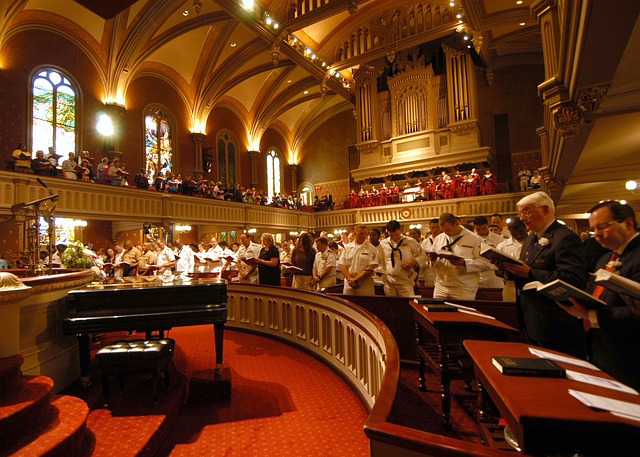
Some issues have arisen of late regarding a new-but-not-new church covenant practice. I phrased it like that because though the discussion is fairly new, the practice of church covenants is not new. But of late church covenants are re-gaining popularity, and with the wider exposure, come the discussions about whether church covenants are biblical and if they are, if they are profitable.

Dictionary.com defines church covenants, or ecclesiastical covenants as-

-a solemn agreement between the members of a church to act together in harmony with the precepts of the gospel.

FYI, if you want or need to go back a few steps to the foundation, at Christian Apologetics and Research Ministry, Matt Slick defines covenants and the ratification of covenants.

Some say that church covenants are not necessary nor are found anywhere in the Bible. Others say that they are implied and very necessary, as church history shows. Some say that church covenants help solidify one’s commitment to the church as a Godly member, others say church covenants are a breeding ground for spiritual abuse. Some say church covenants are wise and necessary, others say they propel members toward idolatry of their church instead of submission to Jesus.

When the Courageous movie and all its associated merchandising came out, I wrote about oaths. The movie people had asked Priscilla Shirer to write an oath, or a resolution, to be sold so that dads who had seen the movie could swear the oath and resolve to be better dads. And then hang it up on the wall of their home, or something. I was against this, because in my opinion it was biblically unnecessary.

In the piece, I said that I was cautious overall about swearing to anything, whether you call it an oath or a resolution or a vow. It’s always serious when you swear to something and you sign your name. Covenants are serious serious, though.

Lifeway sells a
Church Covenant card

I’ve read the pieces linked below. I cannot make up my mind yet as to whether a church covenant is necessary and good or superfluous and unbiblical. I go back and forth. In these articles, covenants are defined and discussed, pro and con. On the YES side, we have Thabiti Anyabwile and Justin Taylor at The Gospel Coalition, as well as John Piper. On the NO side, I found one from Tim Fall. I don’t know who Tim Fall is, other than having come across his essay on church covenants, but I found his site by a tweet from someone I trust. As for Wade Burleson, his piece seems biased and I find him liberal, but I link him to offer a balance of opinions from the entire spectrum.

~~~~~~~~~~~~YES~~~~~~~~~~~~

Thabiti Anyabwile: Strengths We’ve Lost: Church Covenants

The Gospel Coalition/Justin Taylor/John Piper in an essay interview: Why a Church Covenant?

Desiring God/John Piper: sermon title Why a Church Covenant?

~~~~~~~~~~~~NO~~~~~~~~~~~~

Tim Fall:  The Problem with Church Membership Covenants – bad doctrine hurts God’s people

Wade Burleson: Five reasons to Say No to Church Covenants

~~~~~~~~EXAMPLES of Modern Church Covenants~~~~~~~~

The Good: The Village Church (Pastor Matt Chandler)

The Bad: Church Covenants: Are they Biblical and Sensible? A point-by-point refutation of a sample church covenant by Don Koenig

The Ugly: Mars Hill (Ex-Pastor of defunct Mars Hill Church, Mark Driscoll), actual covenant archived at Joyful Exiles.

~~~~~~~~CHURCH COVENANTS IN HISTORY~~~~~~~~

1940 Vienna Baptist Church, West Virginia

F1630 First Church Cambridge Massachusetts, “Our Living and Historical Covenants”

Church Covenants: An Annotated Collection

Posted in heat wave, India, judgment, prophecy, revelation, wrath

Heat wave in India so severe roads are melting

Some roads in New Delhi melted.

This is an actual cover of yesterday’s newspaper in New Delhi, India. Steve Herman is the Asia correspondent for Voice of America.

Here is the story:
Intense heat wave claims over 900 lives across India, torrid temperatures melt roads in Delhi

An unrelenting heat wave has killed more than 900 people across the country over a fortnight with southern neighbours Andhra Pradesh and Telangana bearing the brunt, as torrid temperatures melted roads in the national capital and forced people indoors on Tuesday. The meteorological department issued “red box” warnings for Odisha, Jharkhand and coastal Andhra Pradesh, signalling high chances of heatstroke, dehydration and fatality with temperatures inching upwards of 45°C and conditions worsened by constant dry, sweltering winds.

This article from CNN said that the temps rose as high as 118F (48C), breaking previous the national high of 117. Some areas have reported temps of 120F. CNN reported that the death toll has reached 1,100 persons, dead from heat stroke or dehydration. In India, seven hundred ninety-two million people have no access to electricity, which means they do not even have a fan to even try and cool off.

By all accounts this heat is not normal and it’s breaking records, even for normally hot India. The average high temperature for Delhi in May is 90F. A prolonged heat wave with temps in solid triple-teen digits is unusual, though infrequently the temps may reach low triple digits for short periods. People who have been interviewed for news articles  have talked about how the heat wave has crippled the city, caused dehydration, parched bodies seeking water from anywhere.

The storm gathers: sin piles up to heaven, wrath is promised

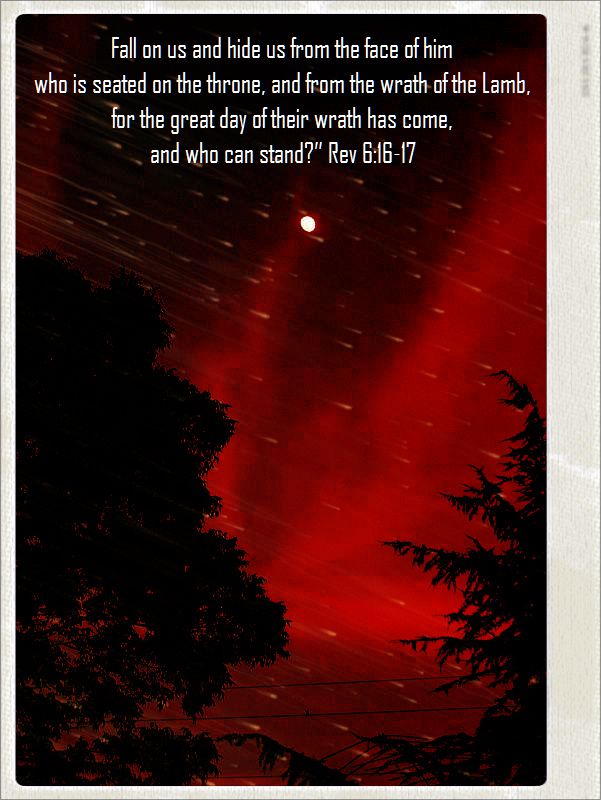
All this reminds of of the Tribulation to come. It is not the Tribulation now. However, this heat in India reminds of of the more severe heat stored up in His wrath that the Lord will pour out on the world. This heatwave today is a dim picture of the judgment to come.

One of the judgments will be a scorching heat, at the same time there will be no water. The Euphrates will be dried up. (Rev 16:12). The rivers and other waters will be made into blood. They will have only blood to drink (Rev 16:4-6)

The fourth angel poured out his bowl on the sun, and it was allowed to scorch people with fire. They were scorched by the fierce heat, and they cursed the name of God who had power over these plagues. They did not repent and give him glory. (Revelation 16:8-9).

This is that the MacArthur Commentary for the Book of Revelation says about the above verse:

In contrast to the first three angels, who poured out their bowls on the earth, the fourth angel poured our his bowl on the sun. As a result the sun, which has since the fourth day of creation (Gen. 1:14-19) given the world warmth, light and energy, becomes a deadly killer. Searing heat exceeding anything in human experience will scorch men so severely that it will seem like the atmosphere is on fire. Those who will be scorched with the sun’s fierce heat are the same “people who had the mark of the beast and worshiped its image.” (v. 2).

This fiery judgment is reminiscent of Isaiah 24:4-6,

The earth mourns and withers; the world languishes and withers; the highest people of the earth languish. 5The earth lies defiled under its inhabitants; for they have transgressed the laws, violated the statutes, broken the everlasting covenant. 6Therefore a curse devours the earth, and its inhabitants suffer for their guilt; therefore the inhabitants of the earth are scorched, and few men are left.

One would think that the unparalleled disasters of the first four bowl judgments would cause people to repent. God’s judgment is designed to bring sinners to repentance (Rom 2:4), or, like Pharaoh,  to harden their hearts.  Instead of blaming their sin, in the most shocking example of hardness of heart in history, they blasphemed the name of God, whom they know to be responsible for all their misery. Amazingly, they know that it is God who has the power over the plagues that were afflicting them. Yet they will love their sin so much, and be so deceived by the antichrist, that they will not repent so as to give God glory. Until this point, only the antichrist has been described as blaspheming, (Revelation 13:1, 5-6); here the world adopts his evil character.

Do I refer to this heatwave’s a shadowy picture of one of the judgments to come because I believe we are in the Tribulation now? Of course not. The rapture of the church will happen first, and then the judgments will be rendered by the Holy and Just Judge exactly and in the order as chronicled in Revelation.

Do I speak of the severe judgment to come in order to instill fear? A little. Holy fear and biblical knowledge of the power of God in wrath is a good thing. His judgment and His wrath are holy attributes of which we should be acquainted. But that is not why I write about the India heat-wave, entirely.

It is because knowledge of the future judgments should give us an urgency to —

–witness with words as to the grace available through Jesus Christ now,
–live holy lives in the face of known coming judgment

When I read something like the India heatwave in the headlines, my mind goes this:

“Man, I’m sorry for those people. It hurts my heart to see this suffering.”
“Boy that heatwave is nothing like the one prophesied to come in Revelation. I wouldn’t wish that on my worst enemy…”
“I’m sooooo grateful to have been saved by His grace and living with the knowledge that He is preparing a place for us and to receive us in His great gathering up!”
“What about my neighbor? Does she know Jesus? Does she know how much He loves us but is storing up wrath to come? I should talk with her tomorrow…”

Prophecy is God’s glory on display

Prophecy gives us urgency. It reveals God’s plan and offers us the wonder of seeing it fulfilled to the jot and tittle, from the past by reading the Bible, and the future as we await His return. Prophecy shows us His holy anger, of which we must fear. We gain comfort and hope- think of Simeon and Anna in the temple, eagerly awaiting the Consolation of Israel, their hope and comfort fulfilled before their eyes as Mary and Joseph came to present the babe. (Luke 2).

I like being heavenly minded. I think of seeing the face of Jesus, singing to Him with all the redeemed. I think of the street of gold, the saints of the past I’ll get to know, and so much more. Being heavenly minded also means seeing the justice of God as He renders it in the Tribulation and in the Millennial Kingdom. Judgment, wrath, and hell. There but for the grace of God go I… He took my ragged and pitifully craven life and turned it into something glorious for the Father. He put in me a new heart and my soul daily being cleansed of sin.

In all the ways above and many more, prophecy demonstrates His glory.

I encourage you all to read and study the Book of Revelation. It is not difficult, and the Spirit will make it clear. John MacArthur’s “Because the Time is Near” is tremendous in explaining the Book, or any of his sermons at gty.org from Revelation are good. You know we receive a blessing if you read the Book of Revelation. In addition, as you saw from the explanation above, the parallel verse to the scorching heat verse in Revelation is one from Isaiah. Zechariah has as much prophecy in it related to the final days on earth as Revelation does, if not more. I enjoyed Steve Hadley’s verse-by-verse sermons from Zechariah. There is so much prophecy in the Old Testament. I guess I should just say that the entire Bible is wonderful. Some say that a quarter of the whole Bible is prophetic. There is history, Law, narrative, poetry, wisdom, and prophecy. Something for everyone! So get to it today, don’t shy away from prophecy, especially Revelation.

Prophecy puts me in my place. I am a crumb, saved by grace, and at His perfect appointed time, placed within the Age of Grace to do His will, and perhaps gloriously see His rapture while I’m alive. What a privilege. Share Jesus with another, His prophetic timetable is moving quickly toward the climactic moments on earth.

Posted in bible, holy living, quiet

To Live Quietly…

My other blog is called The Quiet Life. It refers literally to the fact that I do not like noise. I like to live where there will not be loud noises, sustained interrupting noises, or any other wise unpleasant noises. I do not like them.

More philosophically the blog title refers to this verse from 1 Thessalonians 4:11 which is an important verse to me,

and to aspire to live quietly, and to mind your own affairs, and to work with your hands, as we instructed you,

I like the word ‘aspire’ and then the surprise of what comes next- ‘live quietly’. Usually aspirations include lofty things like winning the Pulitzer or becoming President of the US. Or at least, getting that raise or becoming a homeowner. One does not aspire to be quiet. Not unless you’re a Christian and you’re used to the Bible illustrating an upside down lifestyle. The first shall be last and the last shall be first. Meek shall inherit the earth. Do not expect to be served but to serve. Now we see that a holy aspiration is to live quietly. Why?

Excerpt:

First, his readers should lead a restful life. The word translated quiet (hēsychazein) means quiet in the sense of restfulness (cf. Acts 22:2; 2 Thes. 3:12; 1 Tim. 2:2, 11), rather than quiet as opposed to talkativeness (sigaō; cf. Acts 21:40; 1 Cor. 14:34). The former means “undisturbed, settled, not noisy,” while the latter means “silent.” Paul was telling the Thessalonians to be less frantic, not less exuberant. A person who is constantly on the move is frequently a bother to other people as well as somewhat distracted from his own walk with God. The latter can lead to the former. But a Christian who strives to be at peace with himself and God will be a source of peace to his brethren. Such quietude constitutes a practical demonstration of love for others.

Second, Paul recommended minding one’s own business. The connection with love for the brethren is obvious (cf. Prov. 25:17).

Third, working with one’s own hands demonstrates love for the brethren because a self-supporting person is not a burden to others. Paul himself set the example by working with his hands when he was in Thessalonica (1 Thes. 2:9). Too restful a life can be a problem also, and Paul guarded against that with this instruction. This verse dignifies manual labor. The reference also suggests that many, perhaps most, in the church came out of the working class. The Greeks deplored manual labor and relegated it to slaves as much as possible. But the Jews held it in esteem; every Jewish boy was taught a trade regardless of his family’s wealth. Work itself is a blessing, and working with one’s hands should never be despised by Christians. A man who is willing to work with his hands demonstrates his love for his brethren by being willing to humble himself to provide for his own needs so that he does not depend on others but provides for himself.

Constable, T. L. (1985). 1 Thessalonians. In J. F. Walvoord & R. B. Zuck (Eds.), The Bible Knowledge Commentary: An Exposition of the Scriptures (Vol. 2, p. 703). Wheaton, IL: Victor Books.

Posted in comforter, encouragment, God, orphans, spirit

We are not orphans

I was thinking of how wonderful God is. The Trinity, Three-In-One, Father, Son, Spirit are intimately involved in our lives. The Father’s Providence, bringing all things to pass at the good will and pleasure of Himself. The Spirit, dwelling inside us as a deposit of the guarantee to come. The Son, Priest, interceding for us on our behalf in heaven. Each Person of the Godhead intimately knowledgeable of each one of us and loving us and leading us and providing for us. It is amazing.

The Bible’s treasures are limitless. Each time we open it to read more of what God will reveal to us about Himself is a journey into love, wonder, and awe. I was reading and listening to a sermon on Saturday. John MacArthur’s “What the Cross Meant to Christ.” It was a terrific sermon as usual. In my reading and thinking about that section of John there is this verse:

I will not leave you as orphans; I will come to you.” (John 14:18).

The word orphan here means fatherless, bereft, desolate. In the context of the entire passage, Jesus is comforting the disciples, because He is going to leave them. They are lost, confused, heartbroken. They don’t quite understand but they sense something bad is about to happen and they are upset. Jesus is reassuring them. He is explaining that He is going to prepare a place for them and will return. He says He will not leave them as orphans, He will come to them.

Alexander McLaren’s commentary is excellent in explaining this beautiful moment. Imagine, the God of the Universe, softly and reassuringly comforting His little children. That was how Jesus began the conversation in chapter 13:33- “Little children.” he IS our Father, and He will not leave us Fatherless as orphans. See McLaren on the unification of the Christ and the Spirit. One says He is leaving, but One is actually present.

Then, note, further, that this coming of our Lord is identified with that of His divine Spirit. He has been speaking of sending that ‘other Comforter,’ but though He be Another, He is yet so indissolubly united with Him who sends as that the coming of the Spirit is the coming of Jesus. He is no gift wafted to us as from the other side of a gulf, but by reason of the unity of the Godhead and the divinity of the sent Spirit, Jesus Christ and the Spirit whom He sends are inseparable though separate, and so indissolubly united that where the Spirit is, there is Christ, and where Christ is, there is the Spirit. These are amongst the deep things which the disciples were ‘not able to carry’ at that stage of their development, and which waited for a further explanation. Enough for them and enough for us, to know that we have Christ in the Spirit and the Spirit in Christ; and to remember ‘that if any man have not the Spirit of Christ, he is none of His.’

“Christ is the only Remedy for the orphanhood of the world” ~McLaren

What a mystery the Trinity is! How tremendous His care of us in sending the Spirit! I can hardly contain myself. McLaren again-

Then, note, further, that this present Christ is the only Remedy for the orphanhood of the world. The words had a tender and pathetic reference to that little, bewildered group of followers, deprived of their Guide, their Teacher, and their Companion. He who had been as eyes to their weak vision, and Counsellor and Inspirer and everything for three blessed years, was going away to leave them unsheltered to the storm, and we can understand how forlorn and terrified they were, when they looked forward to fronting the things that must come to them, without His presence. Therefore He cheers them with the assurance that they will not be left without Him, but that, present still, just because He is absent, He will be all that He ever had been to them.

Wonder of wonders! He is good. He is so good!

And the promise was fulfilled. How did that dis-spirited group of cowardly men ever pluck up courage to hold together at all after the Crucifixion? Why was it that they did not follow the example of John’s disciples, and dissolve and disappear; and say, ‘The game is up. It is no use holding together any longer’? The process of separation began on the very day of the Crucifixion. Only one thing could have stopped it, and that is the Resurrection and the presence with His Church of the risen Christ in His power and in all the fullness of His gifts. If it had not been that He came to them, they would have disappeared, and Christianity would have been one more of the abortive sects forgotten in Judaism. But, as it is, the whole of the New Testament after Pentecost is aflame with the consciousness of a present Christ, working amongst His people. And although it be true that, in one aspect, we are absent from the Lord when we are present with the body, in another aspect, and an infinitely higher one, it is true that the strength of the Christian life of Apostles and martyrs was this, the assurance that Christ Himself-no mere rhetorical metaphor for His influence or His example, or His memory lingering in their imaginations, but the veritable Christ Himself-was present with them, to strengthen and to bless.

Please know dear brethren, no matter what you are going through, no matter how trying the hardship, no matter how difficult the circumstances, your Comforter is here. He has not left us as orphans.

Posted in encouragement, God's attributes, wrath

The Forgotten God: His wrath

EPrata photo

I’m big on God’s wrath. It is rarely taught from the pulpit, even rarer is the new book on it, children aren’t taught it, today’s theologians ignore it. I love God’s wrath because it is an expression of one of His holy attributes: justice, and because I love Jesus I love ALL of Him.

I am in awe of His wrath, and if I think on it longer than a moment or two, I will cry over it. God’s wrath is already being revealed (Romans 1:18) and it is a mind-bending, majestic thing. This attribute is still a necessary portion of who God is and we must understand it to proclaim it. To that end, this is the latest edition of Credo Magazine, the topic is “The Forgotten God: Divine Attributes We Are Ashamed of and Why We Shouldn’t Be”. I especially enjoyed the article “Should We Teach Our Children about the Wrath of God?” Check it out. It is free online.

The Forgotten God: Divine Attributes We Are Ashamed of and Why We Shouldn’t Be

HT Do Not Be Surprised

————————–

Further Reading/Listening:

The Fury of God, sermon series by Pastor Jeremy Lundmark

“Sissified Needy Jesus?” Sermon Jam by Voddie Baucham

Posted in end time, ireland, prophecy, same sex marriage

Ireland popular vote legalizes same-sex ‘marriage’

HT to Entreating Favor on Facebook for putting this together. I had seen the headline from The Guardian- “Ireland becomes first country to legalise same-sex marriage by popular vote” and I had been saddened to see this, but not surprised. Here is what the Bible says about the matter.

source NPR

Romans 1:26-32 “For this reason God gave them up to dishonorable passions. For their women exchanged natural relations for those that are contrary to nature; 27 and the men likewise gave up natural relations with women and were consumed with passion for one another, men committing shameless acts with men and receiving in themselves the due penalty for their error.

28 And since they did not see fit to acknowledge God, God gave them up to a debased mind to do what ought not to be done. 29 They were filled with all manner of unrighteousness, evil, covetousness, malice. They are full of envy, murder, strife, deceit, maliciousness. They are gossips, 30 slanderers, haters of God, insolent, haughty, boastful, inventors of evil, disobedient to parents, 31 foolish, faithless, heartless, ruthless. 32 Though they know God’s righteous decree that those who practice such things deserve to die, they not only do them but give approval to those who practice them.

Posted in contemplative prayer, discernment, john macarthur, mind, renew the mind, speaking in tongues, transformation

"Spirituality involves more than the mind, but it never excludes the mind"

The title of this blog essay is a quote from John MacArthur in the New Testament Commentary, First Corinthians. It refers to the verse below.

Therefore, one who speaks in a tongue should pray that he may interpret. For if I pray in a tongue, my spirit prays but my mind is unfruitful. What am I to do? I will pray with my spirit, but I will pray with my mind also; I will sing praise with my spirit, but I will sing with my mind also. Otherwise, if you give thanks with your spirit, how can anyone in the position of an outsider say “Amen” to your thanksgiving when he does not know what you are saying? For you may be giving thanks well enough, but the other person is not being built up. I thank God that I speak in tongues more than all of you. Nevertheless, in church I would rather speak five words with my mind in order to instruct others, than ten thousand words in a tongue. (1 Corinthians 14: 13-19)

Even in Corinth during the early church, believers had a tendency to lust after the more showy Spiritual gifts, particularly tongues. Tongues were actual languages believers could spontaneously utter, not having studied or having any knowledge of the language at all, yet could speak it perfectly. This was a sign to unbelievers, a fulfillment of a prophecy given in the Old Testament. (Isaiah 28:11).

However today, tongues are seen to be a babbling gibberish that comes directly from heaven and falls out of the mouth, (to the edification of no one) thereby bypassing the mind. However this is not correct.

“Spirituality involves more than the mind, but it never excludes the mind.”

There are many spiritual activities today that directly exclude the mind. Contemplative prayer (or centering prayer) excludes the mind. How can this be? We are told to contemplate the Lord, (2 Corinthians 3:18, Psalm 48:9), so contemplation is good. We are told to pray, (Matthew 6:9-13), so prayer is good. How can both terms together not be doubly good? In the words of the inimitable Inigo Montoya,

THIS is how the unstable twist truth to their own destruction. (2 Peter 3:16). Putting together two commonly understood words but using them in a different way than is commonly understood is a bible twist. For example, praying mindlessly. Putting words together that are commonly understood but creating a different context for them through continued spiritual activity is another way that the truth is twisted. For example, babbling mindlessly.

So the “modern version” of tongues bypasses the mind, and contemplative prayer bypasses the mind, and neither are valid spiritual activities grounded in biblical truth. Another activity where the mind is bypassed is what the Southern Baptist Convention calls a ‘private prayer language‘ AKA modern gibberish tongues uttered in the closet while praying. The notion is that when a person prays, God will sometimes utter gibberish that the speaker knows not the meaning of but is a direct communication between the Spirit indwelling the person and Jesus up above. Private prayer languages were explained (or attempted to be explained) back in 2006 when the SBC originally banned potential applicant missionaries if they confessed to speaking in glossolalia either public or private:

IMB board of trustees chairman Tom Hatley said that during candidate interviews, those who practiced a private prayer language gave differing explanations of it, varying from an angelic language to a “revelatory” gift of the Holy Spirit.

Thinking is what
clicks ON the Light

So, they don’t really know what it is, only that they do it. All the more reason to refuse to accept it. Unfortunately last week the SBC re-accepted the applications of potential missionaries who pray in gibberish. Sad. Tongues being gibberish isn’t supported by the Bible, the transformation of the biblical gift of tongues from a known language to today’s gibberish in modern times isn’t supported by the Bible, either. Possessing a Spiritual Gift and only using it for personal use isn’t supported by the Bible. Employing a Spiritual gift through the heart or body only and not the mind also, isn’t supported by the Bible. A Christian’s walk uses the mind AND the heart.

Let’s see what the Bible says about the mind.

Do not be conformed to this world, but be transformed by the renewal of your mind, that by testing you may discern what is the will of God, what is good and acceptable and perfect. (Romans 12:2).

and to be renewed in the spirit of your minds, (Ephesians 4:23).

Gill’s Exposition explains that after salvation/justification, the “progress and carrying on the work of renovation, the renewing of them day by day in the spirit of their minds,” i.e renewing the mind obviously includes the mind.

but I see in my members another law waging war against the law of my mind and making me captive to the law of sin that dwells in my members. (Romans 7:23)

Gill’s again, says that “the new nature in us, the principle of grace wrought in his mind, is called the law of it, because it was the governing principle there;” Our transformation begins in the mind.

The heart is transformed, surely, but the governing principle is the mind. The new mind is equivalent to the new inner self. We have the mind of Christ. (2 Corinthians 5:17).

Whenever you encounter an activity that exults in the fact that the mind is emptied, bypassed, marginalized, or in any way not fully engaged, it is a wrong activity. Because God’s transformation of us begins in the mind, bypassing the mind is actually choosing to bypass His sanctifying efforts in us. Not only will we not increase in sanctification through contemplative prayer, speaking in gibbering tongues, uttering private prayer languages, walking prayer circles or labyrinths, chanting mantras, barking holy laughter, doing “holy” yoga, seeking visions in trances, any of that which denies the mind is actually denying the mind of Christ. These activities exalt the self because you are indulging the fleshly mind. (Colossians 2:18).

Back to the title, which is a quote from John MacArthur. The Bible shows us that sanctification involves more than the mind, but it never excludes the mind. Beware of activities that sound spiritual, but aren’t. You will know they aren’t healthy for you if they exclude the mind.

His mind is too precious to waste.

Posted in church, end time

The reality of the first century church

We’re often reminded that the early church was powerful, pure, and to be emulated. And certainly, the following verse is weighty on our consciences, and it’s truly to be emulated. This was the church in its earliest days:

And day by day, attending the temple together and breaking bread in their homes, they received their food with glad and generous hearts, (Acts 2:42)

This was the church in its early weeks.

Now the full number of those who believed were of one heart and soul, and no one said that any of the things that belonged to him was his own, but they had everything in common. (Acts 4:32)

But that purity was fleeting if it ever truly existed. In its earliest days, remember, Ananias and Sapphira were killed for lying to the Holy Spirit in front of the church. Though sin had always been present, because people were present, Ananias and Sapphira’s act was the first overt, discoverable perfidy. Yet the myth of the pure church persists.

Now we look at the Church at Corinth. Paul had strongly admonished them, he’d used sarcasm, and he soundly chided the members who had gotten drunk at the Lord’s Table, had divided into factions, had sought the ‘better’ spiritual gifts, had done all manner of things unbecoming to a believing church. And now the worst of all:

Now if Christ is proclaimed as raised from the dead, how can some of you say that there is no resurrection of the dead? (1 Corinthians 15:12).

Some Christians were even denying the resurrection! The book of First Corinthians was written in about 55 AD, a mere twenty years after Our Lord’s death and resurrection. Paul even mentioned in verse 6 many brethren who were still alive at the time that Jesus appeared to the 500! Yet some in “the early church” denied the verifiable fact of the resurrection of Jesus Christ! A “pure” church? Hardly.

When we read that the earliest church in its earliest days were all “of one mind” I think we would be startled to see how fleeting that was. From almost the very the beginning, sin and falsity lurked.

A parallel to this picture of sin crouching at the door can be seen in the Millennium Kingdom. After the Tribulation and Jesus’ Second Coming, He sets up a kingdom in fulfillment of His promises to His people Israel. He personally rules on earth, with a rod of iron. The Temple is cleansed and sacrifices are ongoing. People come from all quarters of the earth, finally funneled down the Kings Highway to worship Jesus in person. The Church Saints are given tasks to perform, ruling and reigning with Jesus. Satan and his demons are locked up in the abyss. Ahhh, perfection.

Not so fast.

When satan is let out of the abyss at the end of the 1000 years, he gathers sinful people to his side in a rebellion that starts so fast it makes the head spin. All that while, when it seemed that people were at peace with Jesus, they weren’t. They were sinning greatly in their hearts. All it took is the serpent to draw that poison out of them and he uses it to foment a revolution.

And when the thousand years are ended, Satan will be released from his prison and will come out to deceive the nations that are at the four corners of the earth, Gog and Magog, to gather them for battle; their number is like the sand of the sea. And they marched up over the broad plain of the earth and surrounded the camp of the saints and the beloved city, but fire came down from heaven and consumed them, (Revelation 20:7-19).

Sin!

So the point is that man’s sin, even with satan’s influence a total unknown to the people born people in the 1000-year kingdom, thus with satan’s temptations completely absent from their lives, sin still lurks strongly in the heart of man- hiding. It’s there, just as it was in the earliest church. Ananias and Sapphira tell us this, the believers at Corinth questioning the resurrection tell us this.

Here is Pulpit Commentary on 1 Cor:12-19. Bold & italics are mine.

The resurrection of Christ is the basis of our faith in the general resurrection. Verse 12. – Now if Christ be preached that he rose from the dead. St. Paul sees that if One has risen from the dead, the fact of that miracle, taken in connection with the rest of the gospel, furnishes Christians with a sufficient proof that they shall rise. “For,” he had already said to the Thessalonians, “if we believe that Jesus died and rose again, even so them also which sleep in Jesus will God bring with him” (see the same argument in Romans 8:11).

“That there is no resurrection of the dead”. These deniers of the resurrection are usually called “the Corinthian Sadducees.” After the state of social and moral laxity of which we have been reading, we can scarcely be surprised at the existence of any disorder or anomaly in the Church of Corinth. Yet it comes with something of a shock on our paralyzed sense of astonishment to read that some of these Christians actually denied a resurrection! The fact at once proves remarkable truths, namely,

(1) that the early Christian Church had none of the ideal purity of doctrine which is sometimes ecclesiastically attributed to it;

What does this tell us for today? Well, if your church is in disarray, as the church at Corinth was, you’re in good company. Secondly, if we stop comparing our church with an idealized first century church we might be a little more content with our own. Third, being disaffected by or leaving our church for shallow reasons is really bad. No church is perfect, not even the first century church. It still astounds me that there were resurrection-deniers in the same generation witnesses as when Jesus was actually resurrected!

The pure church to emulate is the one where people sometimes sin, sometimes waver on foundational doctrines, love the word, love each other, forgive where necessary, repenting always, submitting to their elders, and worshiping together in in Spirit and in truth. Like the first century church did. 

Posted in God, god is a gentleman, sovereignty

Is God a gentleman? The illusion of a Gentleman God

Facebook, blogs, and Twitter are interesting to me as a Christian. They are forums where I can read which doctrines fellow believers are thinking, saying, accepting and promoting. These forums afford me greater exposure to the believing, professing church than I ever would be exposed to otherwise. And it works in reverse too, anything I post will also be transparently exposed for other professing, believing church members to see and either accept or reject.

In one way it’s great to see and experience the wider church, and in another sense it’s sad. It is great for the obvious reasons. We tend to become myopic in our local assemblies. Visibly experiencing the wider church keeps us linked. It’s a pure comfort to share the victories and Godly successes of others, even at a virtual distance.

On the sad side, I read abominable things. Many people believe and profess in “another Jesus”, an altogether different Savior than the One revealed to us in scripture. Other people say ridiculous things on social media. That is the focus of this essay. People say the strangest things with a straight face. One of the ridiculous things I’m reading more and more often now is the following:

“God is a gentleman. He would never interfere with our free will.”

People who say this obviously never read their bible much. On the face of it, this wrong-headed statement is easy to refute. God is certainly not a gentleman. He is God, and there is no other. (Isaiah 45:5). He drowned the entire world for sin. (Genesis 7:21). He killed Uzzah for touching the ark. (2 Samuel 6:7) He Threw Jonah into a fish. (Jonah 1:17). He killed Ananias and Sapphira on the spot in front of the church, for lying. (Acts 5:5, 10).

In the less visible example, it is still easy to refute. Our minds are blinded.

In their case the god of this world has blinded the minds of the unbelievers, to keep them from seeing the light of the gospel of the glory of Christ, who is the image of God. (2 Corinthians 4:4)

Worse, we are dead in our trespasses and sins. (Ephesians 2:1, Colossians 2:13).

We cannot freely “choose God”. We should be grateful that He doesn’t politely stand aside, never interfering with our free will, otherwise no one ever would be saved!

I searched for a credible and doctrinal essay to make the point about God not being a gentleman. I found a great one in Robert Bernecker’s wonderful book, “Who’s Your Father: Returning to the Love of the Biblical God.” His Chapter 2 especially makes the point, gracefully, biblically, and firmly. PLEASE read the entire essay!!

For now, here are a few excerpts.

The Illusion of a Gentleman God
by Robert Bernecker

We sing songs such as the popular “Our God Reigns” with great enthusiasm and joy, and then we turn right around and teach that God does not in fact reign over the wills of humans, perhaps even in the very same church service. Do we believe he reigns or do we not?

From Genesis to Revelation, God freely interferes with human will to accomplish his own eternal purpose. Even the great sinful rebellion seen in Revelation 17 is said “to carry out God’s purpose” (v. 17). In regards to the choices and actions of the ten sinful, rebellious kings described in this passage, we are told explicitly that “God put it into their hearts to carry out his purpose” (v. 17), which in this case will be his inevitable conquering of these rebellious kings and people (v. 14).

The collective preponderance of these many Scriptures thoroughly dispels the notion that God is somehow a “gentleman” that is either unable or unwilling to turn the hearts and wills of humans (and thereby their choices) to accomplish his own purpose. In fact, Psalm 33:10 (NASB) teaches us the exact opposite: “The Lord nullifies the counsel of the nations; He frustrates the plans of the peoples.” We do not read that the Lord honors the counsel of the nations and carefully respects the plans of the people. Instead, we are told, “The Lord reigns, let the people tremble!” (Psalm 99:1). We should learn from Jeremiah, who declared his awareness of this glorious truth in Jeremiah 10:23: “I know, O Lord, that the way of man is not in himself, that it is not in man who walks to direct his steps.”

Contrary to much popular teaching of our day, our Father clearly can and regularly does interfere with human free will. To our great loss, we have drifted far from the historic confession of God’s sovereign involvement in every facet of his creation. In fact, Augustine made no effort to conceal his disdain for any such suggestions that would artificially limit God’s ascendancy, and he wrote bluntly that it was “blasphemous” and “foolish” to assert that God does not change the wills of men whenever and however he chooses.4 We must repent of such foolishness, and we should instead praise our God that he does change our will! Many who profess that “God is a gentleman” have probably never considered the consequences of a world where God, for whatever reason they may assert, did not actually influence, change, and interfere with humanity’s fallen will. How horrible indeed that would be!

Posted in boaz, field, kinsman redeemer, ruth, shepherd

The Most Important Field

For a lot of guys (and gals too I guess) the football field is the most important field. They pay attention to what happens on it. They diligently keep stats, wanting to know all the minutiae regarding their team, or their favorite player. In season, the football field dominates their life.

For moms, oftentimes the soccer field is the dominant field. In season, the soccer field is ground zero to which all her activities point. The main thrust of the day is to get the child to practice or to the game on time. To be present at the field to cheer on the child. To comfort the child in what happens on the field that may have upset him or her. And to celebrate what happens on the field in victory.

There are lots of meaningful fields in people’s lives. The field where he first proposed. The field where you won your first game (for me, the field hockey field). The field where you bring your beloved dog to play in pleasant past-times. The field where you had picnics with your father, and where they dug it up, to your horror, to put up a parking garage, or a subdivision.

However there is only one field of importance. Shepherds Field.

Source: Images of the Holy Land

‎Black goats glean the remains of the yellow grass at the end of a long summer in the surroundings of the Shepherds’ Field. This primeval landscape was the background of many of the events related in the Old and New Testament. Rachel died and was buried nearby, Ruth met Boaz, a meeting which was to lead to the birth of King David, and the shepherds first heard from the angel about the birth of Jesus nearby in Bethlehem. “I bring you good tidings of great joy, which shall be to all people. For unto you is born this day in the city of David a Saviour, which is Christ the Lord” (Luke 2:10–11).

“The kingdom of heaven is like treasure hidden in a field, which a man found and covered up. Then in his joy he goes and sells all that he has and buys that field.” (Matthew 13:44)

Jesus is the treasure. It was a privilege for the angels to announce Him to the inhabitants of the earth, initially, the shepherds in the field. And here is a beautiful picture of the coming Savior, who will open His field to the Gentiles, redeem them, feed them, and protect them.

Now Naomi had a relative of her husband’s, a worthy man of the clan of Elimelech, whose name was Boaz. 2And Ruth the Moabite said to Naomi, “Let me go to the field and glean among the ears of grain after him in whose sight I shall find favor.” And she said to her, “Go, my daughter.” 3So she set out and went and gleaned in the field after the reapers, and she happened to come to the part of the field belonging to Boaz, who was of the clan of Elimelech. 4And behold, Boaz came from Bethlehem. And he said to the reapers, “The Lord be with you!” And they answered, “The Lord bless you.” 5Then Boaz said to his young man who was in charge of the reapers, “Whose young woman is this?” 6And the servant who was in charge of the reapers answered, “She is the young Moabite woman, who came back with Naomi from the country of Moab. 7She said, ‘Please let me glean and gather among the sheaves after the reapers.’ So she came, and she has continued from early morning until now, except for a short rest.”

8Then Boaz said to Ruth, “Now, listen, my daughter, do not go to glean in another field or leave this one, but keep close to my young women. 9Let your eyes be on the field that they are reaping, and go after them. Have I not charged the young men not to touch you? And when you are thirsty, go to the vessels and drink what the young men have drawn.” 10Then she fell on her face, bowing to the ground, and said to him, “Why have I found favor in your eyes, that you should take notice of me, since I am a foreigner?” 11But Boaz answered her, “All that you have done for your mother-in-law since the death of your husband has been fully told to me, and how you left your father and mother and your native land and came to a people that you did not know before. 12The Lord repay you for what you have done, and a full reward be given you by the Lord, the God of Israel, under whose wings you have come to take refuge!” 13Then she said, “I have found favor in your eyes, my lord, for you have comforted me and spoken kindly to your servant, though I am not one of your servants.” (Ruth 2:1-13)

We serve an incredible Jesus, who was announced to lowly shepherds in the field.