I know I’ve been writing about women who step into biblically unauthorized leadership positions frequently of late. I thought I was done, but then I came across something and I wanted to add to the cache of previous essays I’ve done in the last couple of weeks. I believe this is a highly important topic. However, I also believe this will be the end of the topic for a while. The previous essays on the topic of women preaching are here:
I was continuing to read about Anne Hutchinson, cleaning out some bookmarks of sites I’d intended to use but hadn’t. I got re-involved in the topic. Anne Hutchinson is such an amazing case study of the damage one lone woman could do to the faith. In this article written in the New England Quarterly in 1937, I thought this author did a good job of summing it up. In the first sentence, the ‘they’ refers to the Puritan colonists-
While they were maintaining a precarious existence, Anne Hutchinson joined them. At first she was welcomed as the godly wife of a pious and successful merchant; but before she has been long in Massachusetts, she broached a doctrine that was absolutely inconsistent with the principles with which the colony had been founded. She began to affirm a new basis for absolute truth: immediate personal communion with the Holy Ghost. If this communion has been merely for the purposes of illuminating the meaning of Holy Scripture, the puritans might have had no quarrel with her. The communion she described, however, was one which resulted in immediate revelation from the Word. To accept her doctrine would mean the abandonment of the fundamental belief for which the Puritans had crossed the water- the belief that truth for man was to be found in the Bible.
Her errors led to the logical conclusion, one which Anne propounded herself, that ministers were not needed, since, according to Mrs. Hutchinson, God preferred to deal with his children directly.
Morgan, E. (1937). The Case against Anne Hutchinson. The New England Quarterly, 10(4), 635-649. doi:10.2307/359929
Anne preached, taught men, caused division, (for which she was unapologetic), and she claimed she received direct revelations that were not in the Bible. Her behavior and her assertions might have helped the Puritan cause to begin to fail and almost caused the colony itself to fail.
In this simple sentence, the author in Biblical Doctrine makes a distinction between personal revelation and Holy Spirit illumination, saying,
However the Bible says that illumination does not render the need for human teachers unnecessary (Ephesians 4:11; 1 Timothy 3:2; 2 Timothy 4:2). ~Biblical Doctrine, MacArthur & Mayhue, Eds.
Two essays were published today which remark on the evangelical church’s tendency to allow and even seek after personal revelation and emotional experience at the expense of biblical truth. Sadly, though there are many men engaging in the pursuit, more women than ever are at the forefront of this error. If you notice, it’s the females who tend to bring in emotionalism, mysticism, and direct revelation to the church. This opens the door wide for all sorts of errors, such as women preaching or pastoring, and then all kinds of heresies, as John MacArthur points out here. Sadly, the result is fragmentation of the body-
That is why they put such an emphasis on doctrine. … Today’s evangelicals are losing the will to hold that line. Voices within the camp are now suggesting that experience may be more important than doctrine after all. Modern evangelicals can no longer define their identity in terms of doctrines they hold in common because the movement has become fragmented doctrinally.
There are many reasons for the fragmentation, as there are many attacks on the global church. But no matter the main causes, fragmentation and watered down doctrine is devastating.
One of the ways this doctrinal slide is occurring is on the back of the Evangelical Social Justice movement sweeping in. Several elders in the faith wrote a Statement opposing Social Justice and affirming the doctrinal truths the church has held dear for millennia. After the Statement was published, the original writers & signers were tasked with writing an essay to explain each of the Statement’s Articles. Justin Peters was assigned #9: Heresy.
He gave an interesting overview of what heresy is and isn’t, how the Evangelical Social Justice movement is introducing it, and as one of the results,
There can be no credible doubt that the ESJ movement is promoting egalitarianism.
Women preaching may be a secondary or tertiary error to some, but no matter where any theological error is on the scale of errors, unchecked drifting from the narrow way of truth leads to heresy- always. Pastor Peters said,
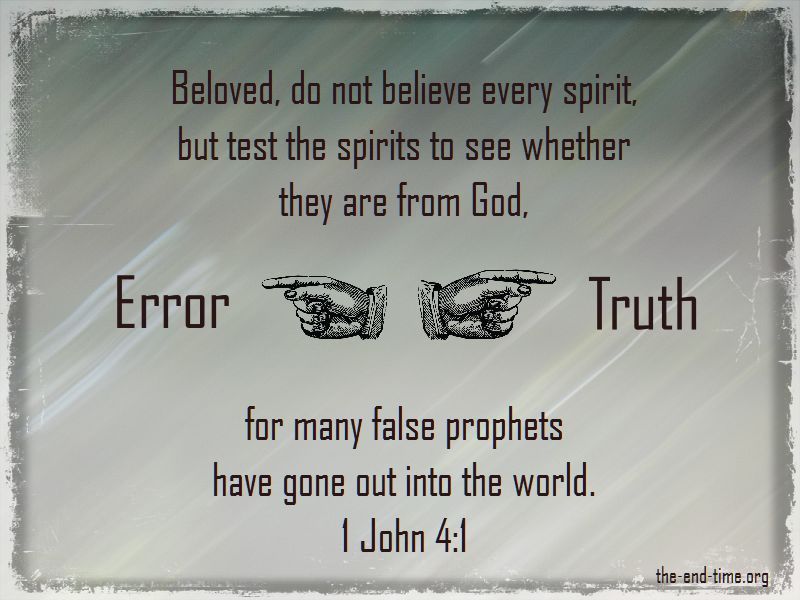
Error almost always begets more error.
Sisters, be vigilant in your own walk. Stay in the Word, pray deeply and persistently, guard against error, and test all things.
The Lord will return soon. Until He does, let Him find us doing well for His name.
On Sundays I usually post a theological word with its definition, then an explanation, and use it in a verse. I also use a picture to represent the concept. This is my effort to maintain a theological literacy among the brethren and between generations, something I believe is critical. We have to know what we believe, why, and know the words to express it. Words like Justification, Immanence, and Perspicuity have all been a Sunday Word of the Week.
Similarly, when we discuss other words representing the fruit of the Spirit, such as love, peace, and joy, we think we know what they mean, but often times these culturally embedded words have a totally different flavor when used from a biblical context. It is true of the words pertaining to the Fruit of the Spirit. Even these ‘simpler’ biblical words are misunderstood.
Therefore, over the next few weeks the Word of the Week will be one of the Fruit of the Spirit. Previously I published short essays about Love, and Joy. This week it’s Peace.
But the fruit of the Spirit is love, joy, peace, patience, kindness, goodness, faithfulness, gentleness, self-control; against such things there is no law. (Galatians 5:22-23)
What does ‘peace’ mean? I hear people saying in their decision-making, “I have a peace about it.” Is Galatians talking about that kind of peace? Or, is it the peace that comes after a war or a struggle with someone?
The Greek word as it’s used in the verse is (they think) from eiro. It means in this verse, a harmony and an accord.
Once we possess the Spirit, we are no longer at enmity against the Lord. (Ephesians 2:16). We have peace with Him since we are no longer rebelling against Him. We have relational peace. Strong’s defines it partly as:
According to a conception distinctly peculiar to Christianity, “the tranquil state of a soul assured of its salvation through Christ, and so fearing nothing from God and content with its earthly lot, of whatsoerer sort that is”: Romans 8:6; namely, is used of those who, assured of salvation, tranquilly await the return of Christ and the transformation of all things which will accompany that event,
John Gill Comments on the two kinds of peace, peace with God and peace with each other, on the Gal 5:22 verse,
which is another fruit of the Spirit: and designs peace with God in a man’s own conscience, produced there by the Spirit of God, in consequence of peace being made by the blood of Christ; and that through the application of the blood of Christ for pardon, and of his righteousness for justification to the soul of a sensible sinner by the blessed Spirit, the effect of which is peace, quietness, and tranquillity of mind; also peace with men, with the saints, and with all others; for such who are under a work of the Spirit of God, and are influenced and led by him, seek after the things which make for peace and edification among the brethren, and are desirous if possible to live peaceably with all men: hence appears another grace in them,
But beyond that, as the verse in John 13:34-35 says,
A new commandment I give to you, that you love one another: just as I have loved you, you also are to love one another. By this all people will know that you are my disciples, if you have love for one another.
We cannot have peace with one another if we are feeling less than loving.
What was “new” about this commandment? Love wasn’t new, it is in the Ten Commandments. What was new was the depth and the extent of the love Jesus commanded His people to do. Jesus loved His own to the end, fully and consistently and completely. He gave the sop to Judas. Giving the morsel to someone at a dinner was a manner and custom in Israelite banquets. The host showed utmost respect and love to a person, by personally handing him a morsel, sometimes even placing it in the recipient’s mouth himself. Judas was to betray Jesus in mere hours, but Jesus still loved Judas to the end. He gave him the sop. THAT is the new kind of love.
The fruit of the Spirit is all one fruit. It isn’t that we work on peace one week and then patience the next… The first fruit mentioned is love. ALL other fruit stem from this one fruit. If we are loving we will be patient, we will be joyful, we will be gentle, we will employ self-control, and so on. Jesus was at peace relationally with Judas the Betrayer and demonstrated that peace through His loving act of giving the morsel.
Peace with one another is to be sought because we love.
Hello and welcome to another edition of Prata Potpourri. I’ve found some interesting links and tossed them into the mix for your consideration. The week ended on a good note for me. To be honest it started on a good note, so all in all it was a good week! I hope it was for you as well. The rapture didn’t happen this week but since it’s always imminent, it could happen next week. What a blessing it will be to be in glory, seeing Jesus’ face, and rendering the perfect service and worship He deserves.
Meanwhile the dawn hasn’t broken and I’m sipping coffee in the quiet, with the vigorous rooster next door announcing the imminent arrival of Aurora. Later I will have to attend to some adulting by paying bills and choosing health care since Open Enrollment is ongoing. Maybe clean the apartment. But the precious moments between waking and arising, and heaving ho to the tasks ahead is the sweet spot of Saturday morning. I hope you enjoy a few of these during your down time, whenever you can find some.
Samuel D. James’s review of the book The Coddling of the American Mind: How Good Intentions and Bad Ideas Are Setting Up a Generation for Failure and how it’s really about parenting. Man, this guy can write.
Keith Getty says that when only constant happy hymns are sung it further saddens the downcast since they cannot reach the joyful heights. He longs for congregations to sing a few songs of lament.
Aimee Byrd, the Housewife Theologian, remarking on how even the word sin is going out of style
Dallas Holm muses in his moving and stirring praise letter about Gospel Missionaries.
Hannah Anderson’s new book All That’s Good: Recovering the Lost Art of Discernmentis reviewed by the ladies at Out of the Ordinary. I haven’t read the book and I’m not that familiar with Anderson. But I’m always looking for a good book on discernment. Let me know if you read it and like it.
Do you stint the Lord with the excuse that you must prioritize family? Meager with time or money or service for the Lord? Michael Coughlin had me at Spurgeon…and the Spirit had me at stint.
This Britain’s Got Talent clip of the singers performing the classic song White Cliffs of Dover, a WWII song. The surprise at the end, had me in tears. It got me thinking about true bravery and sacrifice, and the endless wars our globe has endured and will endure, as we are promised (Matthew 24:6. Wars have scarred generations of humans from the beginning and has corrupted even the ground with blood, hate, and bones. But then I got to thinking about the end of war, and I began to long even more for Jesus’s great appearing.
Whoever the BBC Good Food photographers are, they kill me with their luscious pictures of food, expertly photographed. So mouth watering. Stills can get boring but these guys are endlessly creative. Follow them on Twitter, you won’t regret it. @BBcGoodFood
Now they add to my pain with this photo of weekend getaways for foodies. Look at this pub! Just look at it!
Winston Tseng’s parody trash posters have Christians and conservatives up in arms. I say, relax and chill, people. He is an equal opportunity parodist, taking on the NYC MTA, Christians, Trump, and the Red Sox. I’m not a fan of the sentiment but I’m not going to spend social media time or spiritual energy decrying that an unsaved person hurt my feelings with a poster.
This European City map will serve you well in any city in which you travel. It’s highly accurate, from my own experience, lol.
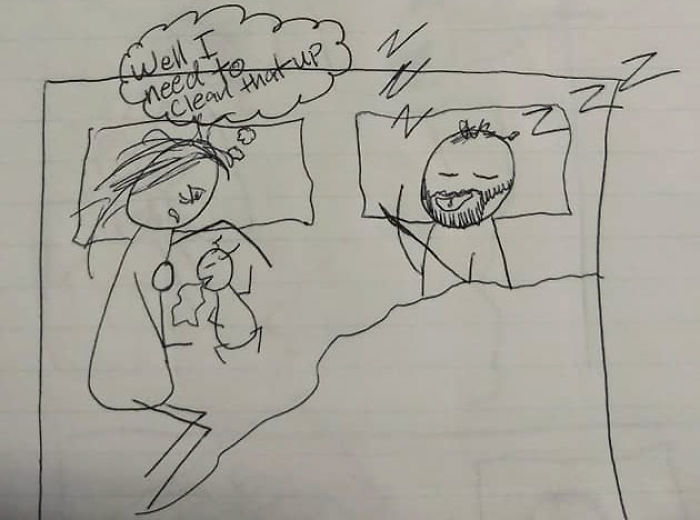
For moms. I opened with parenting and I close with mommying. Mattea Goff’s comic explaining to her husband why she is so tired in the morning has gone viral.
After hours of online searching for a biblically sound article on the topic, my friend Pastor James Bell of Southside Baptist Church in Gallatin TN found this article on same sex attraction. It’s written by Paul Barth at Purely Presbyterian. Pr. Bell’s comments are at the beginning and then the rest is Barths’ article.
Pastor Bell introduced it this way:
IS SAME SEX ATTRACTION (SSA) a sin? What does God’s Word say!? THIS IS A SPECIAL EDITION of the Grow in Grace Newsletter…
Sam Allberry, (a homosexual priest in the Anglican Church, and greatly sought after by some key Southern Baptist leaders), testifies:
“I am same-sex attracted and have been my entire life. By that I mean that I have sexual, romantic and deep emotional attractions to people of the same sex. I choose to describe myself this way because sexuality is not a matter of identity for me, and that has become good news.”
Allberry, a minister in the Anglican church, in conjunction with several other pastors, said: “We are committed to building a church that is genuinely welcoming to all people, irrespective of the pattern of sexual attraction which they experience. We would welcome initiatives to help local churches do so in a way that is affirming of and consistent with Scripture and would hope to support suggestions you might wish to bring to Synod to that effect.”
Of Sam Allberry, Russell Moore, the head of the Southern Baptist Ethics Commission, said: “Sam Allberry is a gift to the church. We need his voice!”
Therefore, we ask the following question… and sadly, after hours of searching online…. I found hundreds of articles by pastors and church leaders, supporting homosexuality… and Same Sex Attraction…. Thankfully, below is a solid, Bible saturated article:
Some otherwise conservative Christians are beginning to take a compromising stance on homosexuality. They claim that only homosexual behavior is sinful and that same sex attraction (SSA) is a “sign of brokenness” similar to feelings of grief or sadness, or as one proponent put it, that having SSA is being “born in a broken condition… that does not represent flourishing” similar to being born blind. They claim it is a negative result of the Fall, but not inherently sinful. So their advice for Christians who are same sex attracted is to remain celibate and that their SSA is not sinful and doesn’t need to be repented of.
One pastoral candidate was asked if he believed that “his homosexual feelings, attractions, thoughts, and desires are sinful.” To which he answered: “I believe my same-sex attractions are broken, but I do not believe they are sinful. It is…
Women have made many contributions to Christianity. Women believers are an incredible resource, and not incidentally, made in God’s likeness and full participants in His faith.
However, it is also a fact that God made an order to things. Men are to lead in holy matters, women are to follow. Women are not to preach the word or be a shepherd. Women are wives, mothers, teachers of children, home-keepers, teachers of other women, missionaries, evangelists, supports to husbands and pastors, song writers, painters, discerners, and many other things. But we are not to be pastors.
Yet, in this millennium, women are. People think it’s about time. People think that’s normal. But it is not.
In Oklahoma City, Oklahoma, formerly a solid church whose pastor was a two-time Southern Baptist Convention president and professorial theologian, they called a woman to lead them. The First Baptist Church of Oklahoma City released this press about their decision:
On Sunday, October 21, 2018 the First Baptist Church of Oklahoma City voted to call Rev. Sarah Stewart as its senior pastor. Sarah will serve as the 19th pastor of the 128-year-old church and is the first woman to hold the position in the church’s history.
Mrs Stewart had previously held the position at that church of leading the prayer meeting and preaching occasionally on Sunday mornings. So this sin isn’t sudden, and it shouldn’t be surprising that the church chose a woman. The camel has has his nose under the tent for a while. Back in 1983 they began ordaining women as deacons. By 2001 the church voted to sever their affiliation with the conservative Southern Baptist Convention,citing their disagreement with the denomination over women preachers.
[Zurheide] also said First Baptist leaders disagree with the convention’s opposition to women serving as pastors and its requirement that wives “submit graciously” to their husbands.
There you have it, it has been 17 years coming. Or 35 years coming since the first cracks appeared. Not a long time in the face of 7000 years of humankind’s relationship to God, or 2000 years since Paul penned the words to Timothy that-
But I do not allow a woman to teach or exercise authority over a man, but to remain quiet. (1 Timothy 2:12)
The church About Us page with the staff bios. Here is Sarah’s:
Sarah Stewart
Minister for Young Adults, since 2008
Although Sarah was born and raised in Stillwater, Oklahoma, she earned her bachelor’s degree in psychology from the University of Oklahoma. There she met and fell in love with Brad Stewart. After their marriage, she attended George W. Truett Theological Seminary where she earned her Master’s in Divinity. She has served as the youth minister at FBC Norman, Oklahoma and at FBC Rosebud in Texas. She and Brad have three wonderful sons: Noah, Luke and Griffin.
“I have a hunger to learn and grow closer to God. I enjoy leading the prayer meeting and Adult Bible study on Wednesday nights and preaching occasionally on Sunday mornings. I have the best job! I get to work with young people who are eager to learn, ready to debate and wrestle with theological questions, and some of the first ones to roll up their sleeves to serve their community.”
I have written twice this week, at length, about the dangers of women leading men in areas in which God has not ordained. Rebellion of any sort will not be tolerated by the Sovereign Holy One. Repercussions occur. In Thyatira, Jesus promised to kill the metaphorical Jezebel and her spiritual daughters dead. Her crime? Claiming personal revelation from God and teaching things they ought not. He was not impressed with those who disagreed but still tolerated her. Tolerating her sin was a sin. He said “I have this against you.” (Revelation 2:20).
Do we in 2018 believe that being in open rebellion is not an affront to God? That tolerating open rebellion is not an affront to God? These people who submit to a woman pastor are either ignorant of the scriptures or tolerating what God has not ordained. There will be repercussions.
For it is time for judgment to begin with the household of God; and if it begins with us first, what will be the outcome for those who do not obey the gospel of God? (1 Peter 4:17, NASB)
The issues that corrupted churches in the first century are the same threats facing the church today: idolatry, sexual immorality, compromise with the world and its pagan culture, spiritual deadness, and hypocrisy. Over the intervening centuries, the church has not outgrown these familiar pitfalls. Nor has God lowered or softened His righteous standard. Regardless of when and where it exists, He demands a pure church. (Source Judgment Begins at the House of God, by John MacArthur)
I pray that the Spirit convicts Sarah Stewart and she abdicates her position. At First Baptist Church Oklahoma City, they do not have a church, nor do they have a pastor. But Jesus is on His throne.
You know how some people jokingly say he or she ‘broke the internet’? Well, Anne Hutchinson broke the colony.
History hasn’t been that kind to Puritan wife Anne Hutchinson. She is either portrayed as an oppressed early feminist denied her identity, or a screeching harridan who deserved what she got. She has been called a heroine, an American Jezebel, an instrument of satan, poison, and a great imposter (the negative ones were all from John Winthrop).
Of course the truth is somewhere in the middle.
The introductory entry in this series on Puritan Wives is here. If you’d like to read some background to the Puritan emigration and founding of Massachusetts Bay Colony, you can read that link.
Sometimes we think of our historical brethren as backward or uneducated, but in fact Puritan Massachusetts was populated with highly literate people, and that included the women, unusual for the time. The 1600s was an era when women were mainly quiet at home, revered, but out of the public eye. However, Hutchinson was loud and active. An intelligent, complex, wayward mother of 15 children, she was tried and banished from the Massachusetts Bay Colony. Exiled at age 47 in 1638 and left with nowhere to go, she traipsed to Rhode Island where she was welcomed by that colony’s founder, also-exiled Roger Williams.
That was the end of the end of the Antinomian controversy but not the end of Anne Hutchinson.
Anne was born Anne Marbury in 1591 in Alford, England. Her father was an Anglican cleric. Being literate himself and a teacher, he educated Anne to the fullest.
The family moved to London and lived there a while, but when Anne married childhood friend William Hutchinson she moved back to Alford. There, they enjoyed John Cotton’s sermons. Cotton was an outstanding theologian and a dynamic preacher, a combination not often found. Cotton was extremely well thought of.
Cotton was an Anglican preacher who had served for 20 years by the time the Hutchinsons met up with him. He believed the Church needed reforms, such as divesting itself of ritual and ceremony, but did not want to separate from it. He wanted to change it from within. As time went on, though, his consistent attitude against the framework of the Anglican church and his continual speaking against it eventually exceeded the leniency his overseers gave him, and pressure forced him out. He sailed for Massachusetts in 1633.
Devastated, Anne prompted her husband to follow Cotton. In 1634, the Hutchinsons packed up their 14 children and decided to follow Cotton to the new Colony that had been established just 13 years prior.
The Hutchinsons and William’s brother-in-law, John Wheelwright, were quickly accepted into the life of the colony. Anne was a midwife, and she met and discipled many women on her normal rounds. Being articulate and a deep thinker, many women sought her commentary on the Bible. Anne soon began holding weekly meetings at her home, commenting on Cotton’s sermons.
So far, so good. A woman ministering to her fellow sisters in body and soul is what the Bible tells us ladies to do. (Titus 2:3-4). Mothering in midwifery and ministering spiritually to sisters in the colony is a good thing.
However, it wasn’t long before notoriety and interest caused men to attend her meetings, which were ever-expanding. Anne’s commentary was insightful, but a woman leading men in preaching and teaching, even in the privacy of a home, is a dangerous endeavor spiritually. The tendency to usurp is great, and that is what Anne did when she taught and preached to men.
Does sin ever only get worse? Yes. Eventually, Anne did not restrict her home meetings’ topics solely to dissecting/discussing her pastor’s sermons, she strayed into dissecting other ministers’ sermons, too, usually negatively. She criticized heavily.
More men began showing up, women too. Her ‘talks’ gravitated to mainly criticism of everyone else besides her favorite, John Cotton. She began to call names, and impugn character. She hinted that some were antichrists. She said that these other pastors were preaching a covenant of works, while the only true pastor, Cotton, was preaching rightly, the covenant of grace.
In looking at the two sides of the theological debate, it seems to me that both sides were right and both sides were wrong. However, the nuances of this soon-to-be schism are not the purview of this essay, and besides, many other people smarter than me have written on it.
My goal is to look at Anne Hutchinson’s life, and the effects of a rebellious woman’s actions and how they harm the body.
Several of the named pastors naturally took a dim view of her preaching, and there was a meeting held to discuss what to do. John Winthrop, the spiritual leader of the Puritans at that time, was equally, if not more angered.
And the sin deepened. Soon Hutchinson began to encourage women to rise up and walk out of sermons that preached doctrines with which she did not agree. Walking out is a disdainful, rebellious act. But many women did it.
The meetings continued, only growing in number. Anne’s dissections of others’ sermons, were not God-glorifying nor encouraging to pastors. Nor did they focus on educating the attendees and enlighten them as to Jesus as Savior. Nor did they prompt the people to good works. They were simply to point out the pastor’s errors and to cement her own position which she believed to be righteous. Think of the worst discernment ministries running today, who lack love, and who never lift up but only tear down, and that was the situation between 1636-1638 with Anne.
Anne was spurred on by people who should know better.
A male admirer put it this way-
“I’ll bring you to a woman who preaches better gospel than any of your black-coats who have been at the ninnyversity, a woman of another kind of spirit who has had many revelations of things to come….I had rather such a one who speaks from the mere notion of the Spirit without any study at all than any of your learned scholars.” (Source)
One of Anne’s doctrines was that a person did not need any clergy, but could be guided by their own inner light. Anne was correct that the Spirit dwelling in us illuminates the scriptures to our mind, but incorrect that we need no clergy at all to explain the scriptures to us.
Note that “Inner light” is a Quaker term. Quakerism was rising at the time, in fact, another woman, Mary Dyer, supported Hutchinson but was later hanged as a rebel. The Quakers did not believe in baptism, formal prayer and the Lord’s Supper, nor did they believe in an ordained ministry. Each member was a minister in his or her own right, women were essentially treated as men in matters of spirituality, and they relied on an “Inner Light of Christ” as their source of spiritual inspiration, according to Dyer’s Wiki entry.
The equality of men and women in Quakerism, the lack of ordained ministry (to whom church members submit) and the inner light were all things Hutchinson would have been attracted to. It was this the admirer above was hinting at. Quakerism was anathema to Puritans and they enacted many laws against it.
Right, the statue of Hutchinson on the Massachusetts State House at 24 Beacon Street, Boston, MA. Still so controversial 375 years after death, and almost 100 years after the statue was commissioned, the original recipient, the Public Library, refused it and the Legislature ignored it for 2 years. It was finally installed in 2005. Story here: A heretic’s overdue honor
And Anne’s sin just deepened and deepened. It wasn’t long before Hutchinson began spouting personal revelations and prophecies. The apex of this was at her trial for sedition and heresy. Anne’s behavior had spawned a schism, had encouraged women to rebel, and caused a region-wide argument on the finer points of works v. grace. It also exiled her brother-in-law, John Wheelwright. It damaged Cotton’s reputation for years to come. The colony itself was suffering over this to the point of collapse. Winthrop’s “city on a hill” was only after a few years mired in petty bickering and politically unstable, caused no less by a woman. She had to be stopped.
Hutchinson was put on trial, after various attempts to get her to stop, recant, and repent. Hutchinson held firm. In her trial, she bested every single man in a theological debate, including Winthrop, who never forgave her as we’ll see later.
It might have gone her way, except at the last, she overstepped, and claimed that God Himself had told her these things. The initial charge of sedition was not met with a preponderance of evidence, due to her skill in theological combat. However when Hutchinson insisted God spoke to her personally, she was charged with blasphemy and exiled. In the spring, she moved to nearby Rhode Island and founded Portsmouth. Her husband and many of her children were already there.
Anne Hutchinson is noted as “a woman of conscience who yielded to no authority”, as quoted in this book about fellow Puritan preacher William Wentworth. Today’s feminists laud Hutchinson’s stance, but Christians know that is not the way. Of course we yield to authority.
Her friend and pastor John Cotton noted the missteps and sins Hutchinson committed,
Three things I told her made her spiritual estate unclear to me.
1. That her Faith was not begotten nor (by her relation) scarce at any time strengthened, by publicke Ministry, but by private Meditations, or Revelations, onely….
2. That she clearly discerned her Justification (as she professed:) but little or nothing at all, her Sanctification: though (she said) she believed such a thing there was by plain Scripture….
3. That she was more sharply censorious of other men’s spiritual estates and hearts, then the servants of God are wont to be, who are more taken up with judging of themselves before the Lord, then of others. Source: The New England Antinomian Controversy, Monergism
The first two are part of the theological controversy, but it’s the third I’d like to draw your attention to. Hutchinson rebelled against the scriptures, namely 1 Timothy 2:12 by teaching men. She and was unconcerned and unrepentant about it. She also failed to submit to her leaders, as Hebrews 13:17 says to do. Open and constant criticism of your leaders by disparaging them and encouraging walk-outs, is sin. (Also 1 Thessalonians 5:12, 1 Corinthians 16:16). Anne seems to have been unconcerned about the rift she was causing, and the word submit didn’t seem to be in her vocabulary. When she knew she was causing a problem, she did not repent, but persisted. This violated Romans 12:16, as she did not live in harmony with one another and failed to be humble. See also 1 Peter 3:8.
Left, John Cotton by John Smibert
Hutchinson was seen even by her lone supporter as overly judgmental and critical, as John Cotton enumerated in his list, #3.
How many Proverbs did Anne Hutchinson violate? She was not the meek, kind, quiet woman Proverbs calls us to be. She did not tend to her house (Proverbs 14:1). She was contentious, quarrelsome, and loud.
The woman of folly is boisterous, She is naive and knows nothing. (Proverbs 9:13).
When we step outside God’s ordained spheres for us, chaos ensues. I’m not speaking solely of women stepping into leadership or usurping men. Children are called to live in obedience to their parents. Men are supposed to lead the household. John Winthrop wrote of Anne’s husband William,
a man of very mild temper and weak parts, and wholly guided by his wife,
There are spheres for all of us, and when we set them aside for our own glory or our own purposes, even for a deeply held conviction or our conscience, chaos comes.
Anne’s positive influence could have been great. She was mother of 15 children, many of them boys. Her insights and strong theological knowledge could have raised up a new generation of founding fathers for our nation. If Anne had remained in her mid-wifery and women’s Bible study sphere, and tended to her home, who knows what might have come of it.
As it was, there were a few positives from the negatives of the Anne Hutchinson controversy. Winthrop sought a colonial confederation to unite the colonies. The men banded together and established Harvard College, initially a seminary to train up the generation of men, as this quote indicates,
To provide a bulwark against remnants of Hutchinson’s free-grace theology, just two weeks after she was banished the General Court of Massachusetts finally released funds in November 1637 to establish the “College at Newtowne” (renamed Harvard in 1639)
Third, it spurred Roger Williams to deepen his conviction that there should be a “wall of separation” between church and state. Hutchinson was tried as a seditionist and a heretic, and eventually convicted of blasphemy. Williams thought that-
the magistrate should not punish religious infractions—meant that the civil authority should not be the same as the ecclesiastical authority. The second idea—that people should have freedom of opinion on religious matters—he called “soul-liberty.” It is one of the foundations for the religion clauses of the First Amendment to the United States Constitution. Williams’ use of the phrase “wall of separation” in describing his preferred relationship between religion and other matters is credited as the first use of that phrase, and Thomas Jefferson’s source in later writing of the wall of separation between church and state in a letter to the Danbury Baptist Association in 1802.
It was effectively the end of the city on the hill Winthrop had wanted to establish. His theocracy was no more.
Banishment from Mass. Bay Colony. Wikimedia. It took 6 days to walk to RI
Hutchinson was not the only bad actor in this debacle. John Winthrop behaved badly too. (Among others). Anne was in her mid-forties when the trial occurred. She was either pregnant during the trial or shortly after. She emigrated to Rhode Island the spring after the trial ended and shortly afterward, gave birth. The issue from the birth was not a baby but what is believed to have been a hydatidiform mole, or molar pregnancy. It was a mass of tumors, not a baby. Knowing the outcome of it being publicly known, the Hutchinsons had it quickly and secretly buried. However, Winthrop heard about it, sought the grave, got it exhumed, and used the tragedy as ‘proof’ that his stance was right. He wrote of it widely: ‘see how the wisdom of God fitted this judgment to her sin every way, for look—as she had vented misshapen opinions, so she must bring forth deformed monsters.”
This to me, is a total lack of charity and speaks ill of his own character. Later, when it appeared that Massachusetts was set to annex Rhode Island (it never happened), fearing reprisals, Anne and her children (her husband had passed away by then) moved out of Winthrop’s reach and into New York, the Netherlands’ territory. A year later, Anne and all but one of her children were killed in an Indian massacre. Many New England pastors wrote gloating reports of her death. Winthrop called her upon her death “An American Jezebel.” I pray that today’s pastors are more charitable and loving toward their own sectarian.
If you’re a woman beset by conscience due to doctrinal difference with your pastor, what should you do? Well, not usurp the men, criticize openly, and encourage walkouts. Certainly don’t put words into God’s mouth that your stance is directly from Him.
First, decide if your difference is a salvific one or a secondary or tertiary issue. Next, pray, for your pastor, but for yourself too. Pray for wisdom and enlightenment. Perhaps you are wrong!
Then, be patient. You’re not the only one to have spotted an issue that threatens the church. Perhaps other men are working on it behind the scenes. Not everything depends on you. Be patient.
If it continues or worsens, then make an appointment to see the pastor, with your husband if possible. Ask questions to learn, don’t go in with guns blazing thinking you know it all. Ask, be an eager hearer.
Return home and be more patient. Let the information you’ve gained sink in, consult your husband, and read the Bible. Pray some more. Resist the temptation to gossip about it to mount up soldiers for your side.
As time goes on you might be relieved to find the Lord has resolved this issue, or you might find it worsening and have to make decisions. If you decide to leave your church, leave well.
Anne Hutchinson was an amazing colonialist who had much to offer the colony and her church. Unfortunately, she went outside the bounds of the ordained spheres for a woman and she caused upset, schism, and was a negative role model. There’s no doubt though, she was formidable and earned a place in American history. As a wife, though, the more negative Proverbs speak of her and women like her than do the positive ones.
Be peaceable, And the Lord’s servant must not be quarrelsome but kind to everyone, able to teach, patiently enduring evil, (2 Timothy 2:24)
———————————————–
A few resources I used for background, sources for you too
There are staunchly defended and heatedly argued “opinions” concerning man’s “free-will” faith (the heart’s object is “self”) and his personal work of “inviting, allowing, and/or accepting” Christ VS. faith (the heart’s object is Jesus) that is supplied by God in and through His sovereign act of
(1) drawing one to Christ and
(2) saving them.
There are very heated intra- and inter-denominational disagreements about “Lordship Salvation” (one repents and surrenders to Christ’s Lordship at the moment of saving faith–the heart’s object is Jesus) VS. a believer “finally making Jesus the Lord of their life” (sometime much later, usually long after they’ve decided to “invite, allow, and/or accept” Christ as Saviour–the heart’s object remains “self”).
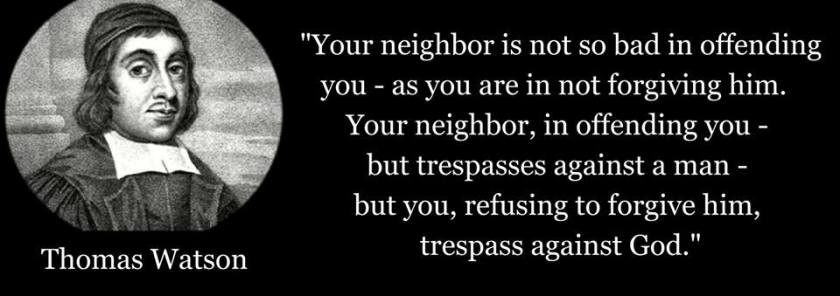
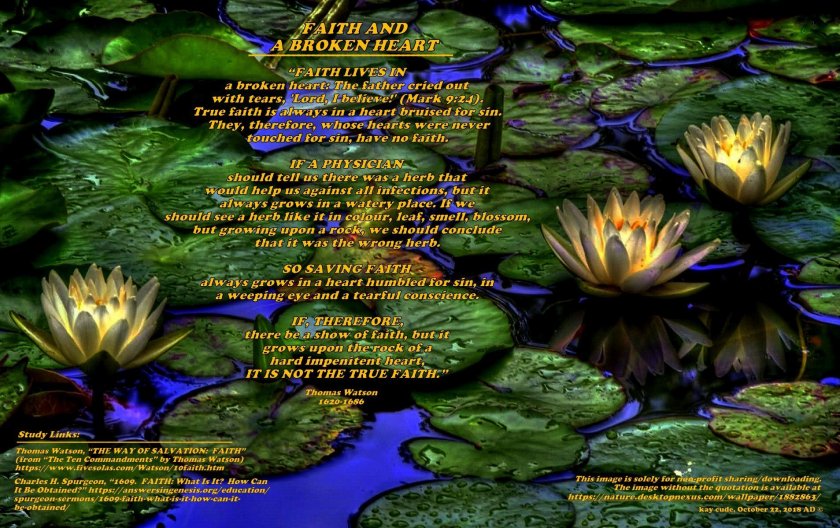
And yet it truly is a penitent heart where God works His saving work! It is our broken heart for sin that makes us hear His Words clearly–and we respond! I agree with Thomas Watson, “True faith is always in a heart bruised for sin.”
We obtain saving faith by hearing the Gospel exhorted from God’s undiluted, unedited, unaltered, and inerrant Word preached by His true and faithful servants. Truly, a penitent and believing heart is pricked to respond to God’s drawing them to Christ, for God Himself provides that one the faith necessary to believe, repent, and follow Jesus as Saviour, Lord, and Master. It is terribly sad that more often than not, a hard and impenitent heart will remain unaffected.
It may become a “pretender,” but as stated by Thomas Watson, “it is not [of] the true faith.”
As I was talking with a church friend last night at our church bonfire, he asked me about my writing. He wondered if I make a schedule of what essays I’m going to write for the week. I said I try to do an outline listing some draft subjects of blog essays for the week, but more often than not, it gets sidetracked by other things that come up.
I said that I marvel that I’ve written daily for 9 years, and over 4,000 essays, and that it is the Spirit who gives me ideas, time, energy, and resources to do it. He is an endless well, who never runs out of ways to prompt me to do an essay on a particular subject. It is tremendous. I never have to worry aobut “What am I going to write”, because somehow, things always come together, even if it’s not on a subject I originally intended at the outset of the week.
I wonder how it was for the Bible writers. As a writer, I know what the writing process feels like. I know that sometimes it’s a struggle to put thoughts down in the way I want, or how to wrestle with a topic that is too large for this space, and how to distill it into consumable sections so the reader isn’t overwhelmed… What must it have been like for them to be directly inspired by the Spirit to God-breathe HIS words onto paper! It must have been thrilling and frightening at the same time. When I get to heaven I’d love to talk with any of the Bible writers about how it was for them to pen God’s thoughts.
This week on my little blog and from my tiny brain, lol, the following subjects are on my list. It remains to be seen if I write on these this week or if I wind up on a completely different rabbit trail
Monday: Puritan Wives- Anne Hutchinson: Screeching Usurper, or Passionate Disciple?
Tuesday: A local-to-me incident and my thoughts on it
Wed: The weight of the cross
Thu: Throwback
Fri: On Reading
Sat: A Day in the Life of a Fisherman
Sun: Word of the week: Fruit of the Spirit, Peace
I had a list last week and most of the subjects were completed into published essays except for one. Soemthing came up and I swerved from the outline I’d made for myself. That’s OK, it is the writing life. Flexibility is important and things arise that occupy my attention or oare more timely.
This most often happens when I am doing Bible reading and I become fixated on something I read. You know that feeling, when your concentration drills down like a laser on one thing and the Spirit keeps it turning over and over in your mind…
Sometimes I do a shorter or a different essay because simply, I’m tired when I get home. The school day is busy and the sensory input of being among flouorescent lights, 500 children, and a staff of 50, with bells ringing and a LOUD lunchroom, sometimes just overcomes me and I empty out into a fleshly lump at the end of the day, sitting there looking at a blinking cursor, breathing but not thinking. Oh well! 🙂
Anyway, I hope you all have a wonderful day & week. My plan is to settle in after work and research Anne Hutchinson’s life as a wife. It’s a huge subject, so we’ll see how it goes.
Sometimes the pot warms its water so slowly even the most discerning frog swimming in it doesn’t realize the change in temperature in his environment until it’s too late. Even though this isn’t scientifically true, “the story is often used as a metaphor for the inability or unwillingness of people to react to or be aware of sinister threats that arise gradually rather than suddenly,” as Wikipedia explains.
It was a given that for more than 2000 years women are not to be teachers or preachers of men. We women can and do teach, we minister, and we evangelize. We discuss, we help, we clarify perhaps in a private setting, but we are not to have biblical authority over men in church expository situations.
“I do not permit a woman to teach or to exercise authority over a man; rather, she is to remain quiet.” (1 Timothy 2:12)
How is a women preaching to men a sinister situation? It’s sin. As RC Sproul said, sin is cosmic treason!
Ask the metaphorical Jezebel of Revelation 2:20 who was teaching things God did not say. Jesus promised to kill her and her followers. Inserting words into God’s mouth is sin.
Look at the Garden. One certain fruit was eaten against God’s command, and the entire race of humankind was polluted with sin. Ignoring what God said is sin.
What God says to do or not do matters. We don’t need 50,000 verses. One is enough. Women are not allowed to teach the Bible to men.
But Beth Moore does.
She has been doing it for 30 years.
Woe to Beth Moore.
A female generation is about 25 years. Therefore, it’s woe to the generation of women coming up in Christian circles who have for the entire time been seeing Moore’s preaching to men as normal, even with her pastor’s overt blessing, or the tacit blessing of her denomination the Southern Baptist Convention and its arm, Lifeway.
For years Moore taught Bible to a co-ed Sunday School class of 600-700 people as you read in that link above and later up to 900 people as stated in this link:
At that time, God began to do a new thing, stirring the heart of Beth to move to a new meeting place, meeting time, change the name of the class, and allow men to attend.
Is it God stirring the heart of a woman to disobey scripture and to teach men? I think not. In Revelation 2:23 it’s noted that Jesus will strike Jezebel’s children dead. These are not Jezebel’s biological children, but the spiritual daughters she is raising up in her polluted, sinful likeness.
The 1 Timothy scripture seems not to bother Moore. She has not repented of this cosmic treason. She describes her origins as a Bible teacher. Her Sunday School class began in 1985 and she was still teaching it in 2005. Her class almost from the beginning had a mixed audience.
Being a woman called to leadership within and simultaneously beyond those walls [of an SBC church] was complicated to say the least but I worked within the system. After all, I had no personal aspirations to preach nor was it my aim to teach men. If men showed up in my class, I did not throw them out. I taught. ~Beth Moore
It does not matter if you “had personal aspirations to preach” to men or not. If you do, you’re sinning. If you fail to stop it, you’re sinning.
How did this begin? Moore began teaching an aerobics class in Texas in the 80s at her church. It gravitated somehow (don’t ask me how, that’s a leap I can’t figure) to a Bible class in 1985. That soon turned to a co-ed class, then a 600-700 member coed class.
Moore eventually founded Living Proof Ministry in 1994. By 2003 her Living Proof Live conferences had gone beyond the confines of her church and beyond the Texas border. A national magazine took notice. Their opening sentence called her a minister.
“Once a victim of abuse, Beth Moore is one of America’s most popular ministers today.”
The article went on to note that men attended her Sunday School class. It was popular, so crowded with both sexes that attendees were asked to car pool because the parking lot was so jammed.
But the crowded conditions don’t seem to deter them. Not even the men, who came for a while in large numbers, were put off–until the ministry limited them by asking them to sit in the back, and if necessary, give up their seats to women. It is a women’s Bible study, after all. And though men are not restricted from attending, they aren’t encouraged, either. The selectivity has nothing to do with the location. With her pastor’s sanction, Beth teaches a co-ed Sunday school class of 600 to 700 in the same Southern Baptist church each week. But her ministry “really is to women,” she says. “My love is women in the body of Christ.” [emphasis mine]
An obedient teacher says “My love is for Christ and His word, and I asked the pastor to restrict the class to women only.” But as Beth Moore said above, “I didn’t throw them out. I taught.” She sought bigger rooms to accommodate them all.
The ‘aw, shucks, I’m really just a women’s teacher’ won’t cut it when pleading for mercy in front of the throne. Failure to obey the Word is failure to obey. She has been a usurper from the beginning.
And she keeps on teaching.
In 2010 when her fame was rising, Christianity Today did a 6-page cover story on her. The article cites the following:
Before she begins, she addresses the few men in the crowd. A Southern Baptist, Moore emphasizes that her ministry is intended for women. “The gentlemen who had such courage to come into this place tonight, into this estrogen fest if you will ever find one in your entire life: we are so blessed to have you,” Moore says. “I do not desire to have any kind of authority over you.”
It’s laughable to pronounce a blessing on the men in attendance, welcome them, preach the Bible to them, and then meekly deny any authority over them. Is her teaching from the Word authoritative over the women but not the men sitting next to them? Or do the women reject her authority to teach and they’re just coming, say, for the music? You see the illogic. If she teaches authoritatively, she teaches authoritatively to all in the hearing of it.
As far as Moore’s coyness that she does not desire to be authoritative over them, this is false. Genesis 3:16 tells us it is IN us to want to usurp male authority. It doesn’t matter if you desire to break God’s command or not, if you DO, you’re sinning. Try telling the traffic policeman that “I did not desire to speed on the highway” and see if he lets you go.
The Christianity Today story is page not found anymore. However, the link is here in the web archive split into 6 pages if you want to see the source.
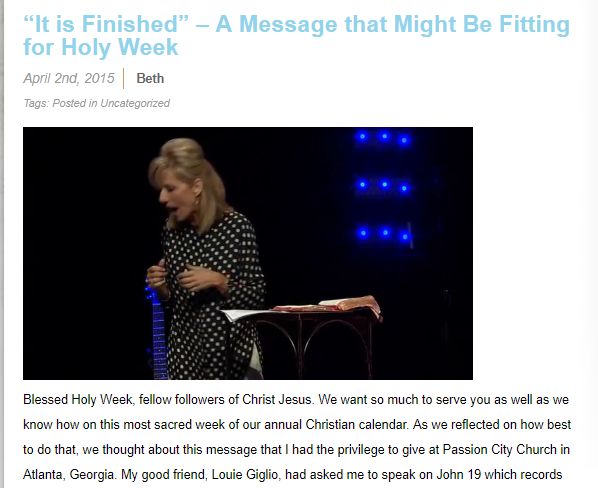
Moore’s occasional weak protest, that men attend her classes and conferences on their own volition so it isn’t really her fault, doesn’t hold water. She taught men in her SS class for 20 years. By 2012, she was personally asked to substitute for pastor Louie Giglio preaching the Sunday Service at Louie Giglio’s Passion City Church, and she accepted. It was Holy Week, and she preached John 19 to a very, VERY large crowd of congregants. Some of these people, men included, lined up two hours early just to hear her.
Brian Dodd was one of those men. He attended Passion City Church that weekend and wrote a recap of her sermon. Gushing about how Moore is “a church leader” and how excited he was that he showed up hours early.
Moore affirmed on her blog that she was asked to preach at Giglio’s church and that she accepted.
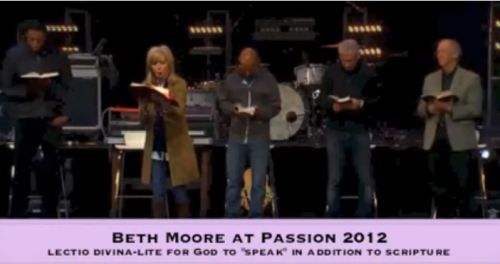
Screen grabs from videos like this in 2012 harm women when they see a female on stage preaching from the Bible shoulder to shoulder with men. It’s visual egalitarianism. Photos like this are damaging. L-R, Lecrae, Moore, Chan, Giglio, Piper preaching at Passion Conference in 2012:
In addition to Moore’s actual preaching to men, a sin, she sins by failing to separate from other women who preach and call themselves pastors. She encourages women in their preaching to men.
We must separate from false teachers and heretics. Moore does not do that, and by her continued support of these people, and they of her, more confusion is added to the body of believers, particularly younger women. Women are the weaker vessel, (1 Peter 3:7), gullible to false teaching if we are unrepentant (2 Timothy 3:6), and our flesh wants to usurp the husband (Genesis 3:16). It is unwise to partner with heretics and to encourage them. By partnering with them, Moore proves her allegiance.
After decades of teaching men and preaching to men, any declarations otherwise are only lip service.
If a woman publicly preaches to men for decades, is seemingly accepted in this role, and even promoted in it, the cumulative damage to the greater body of women is great. In June 2018, the Washington Post published an incredible article about Moore. The title was,
She has her audience laughing, tearing up and clapping, much like they would listening to any great preacher.
The article’s author notes that the Southern Baptist Convention doesn’t allow female preachers, and then went on for a paragraph describing how Moore gets around it by using tweets, books, and speaking engagements as her pulpit. The article also describes how Moore is the face of global evangelism and is personally the transition linchpin for this new future:
Moore is one of the evangelical leaders today who represent the future of the global church, in which people outside Europe and the United States will be dominant. … Moore represents this transition, which is shaping even the most conservative corners of evangelicalism.
There is the danger. After so many decades of preaching and teaching, Moore has warmed the pot and the girl froglets see women preaching to men from pulpits, in churches, at conferences, or other settings, as normal. Desirable. Meanwhile, despite the Bible’s instruction to women to be gentle, meek, quiet, and industrious, tending to their homes and children, Moore has become culturally confrontational. Political. As the lengthy article about Moore last month in The Atlantic reveals,
“Privately, however, Moore has never cared much for the delicate norms of Christian femininity.”
We know. If she did, she would not preach to men. The pot is boiling now. Is this what we want for our young women? Women who are confrontational, rebellious, vocal, political, taking on the culture, preaching to men, partnering with other rebellious preacher women and ignoring her home duties?
Though she often performs domestic femininity for her audience, in her own life she has balanced motherhood with demanding professional ambitions. She traveled every other weekend while her two daughters were growing up—they told me they ate a lot of takeout. Source The Atlantic
Writers like J. Lee Grady would love to see more women preach like Moore does. He writes in Ministry Today Magazine that it’s finally about time that women take the reins in the pulpit.
What is baffling about this whole experience is that there are large numbers of Christians today who don’t believe Beth Moore should be preaching to [mixed gender] audiences like the one in Orlando. In fact, some fundamentalists have launched attacks on her because she preaches authoritatively from pulpits.
We need an army of women like Beth Moore, and my prayer is that more women will seek the Lord and dig into His Word with the same passion that Moore has. I believe she is a forerunner for a new generation of both men and women who will carry a holy Pentecostal fire that cannot be restricted by gender.
The Washington Post predicts that, as well. Grady’s desire may yet come true. There was talk this summer of Moore being nominated for president of the Southern Baptist Convention. Her virtue signalling tweets, politically charged ‘Open Letters‘ on social media and timely hopping onto cultural topics such as social justice are akin to a Senator’s moves before a presidential run.
Imagine, within one generation a woman whose former claim to fame was the latest aerobics moves climbed steadily up to being seriously considered for president of the world’s largest denomination, a conservative one, at that. One generation, after 2000 years of holding fast to scripture on this issue. Sin is amazing in its power.
I began this essay chronicling Moore’s journey to normalizing women’s usurpation of men from the pulpit by saying ‘It was a given that for more than 2000 years women are not given to be teachers or preachers of men.’ It was. It WAS. Past tense.
Yet the LORD our God is still on His throne and He still maintains a hard line on the roles women and men are to operate within in His church. That is a given.
For God is not a God of confusion but of peace. As in all churches of the saints, the women should keep silent in the churches. For they are not permitted to speak, but should be in submission, as the law also says. If there is anything they desire to learn, let them ask their husbands at home. For it is shameful for a woman to speak in church. (1Corinthians 14: 33-35).
“I don’t have time to read.” I hear this a lot. I say this a lot. I used to read widely and incessantly before I was saved. Nowadays I am working a day job and ministering/serving at night, with Bible reading too. That leaves me either no time to read other books or tired eyes if I do have time. The pile of books grows high and the finished pile is small.
I’m preparing an essay “On Reading” for later this week, but in researching for it, and in researching for another essay I’m doing on a scene from Pilgrim’s Progress, I am discovering some things that inform my background on reading and the importance of immersing one’s self in a variety of types of literature.
Let this essay be considered an introduction to “On Reading” that I’ll write later this week.
We know that John Bunyan wrote Pilgrim’s Progress. We also know that it is the second-best selling book in the English language. The book is an allegory. What is an allegory?
An allegory is: a story, poem, or picture that can be interpreted to reveal a hidden meaning, typically a moral or political one. “Pilgrim’s Progress is an allegory of the spiritual journey”
Bunyan’s book contains literary devices and genres within it of which we may not be familiar. These are are good to know as we read his amazing allegory. What are some other types of literature? Abecedarium, Bestiary, Emblem books were popular at Bunyan’s time and before.
Abecedarium: (plural abecedaria)
A book used to teach the alphabet; alphabet book; primer. An inscription consisting of the letters of an alphabet, almost always listed in order.
In past eras childrens’ abecedaria lessons included Bible lessons and verses. I have an abecedarium (of course I do!) and here is its first page. It is an illuminated alphabet from the court of Emperor Rudolf II.
Rudolf II (1552 – 1612) was Holy Roman Emperor, King of Hungary and Croatia, King of Bohemia and Archduke of Austria. He was a member of the House of Hapsburg. The illuminated ‘A’ and picture represents a verse from Revelation 1:8,
“I am the Alpha and the Omega,” says the Lord God, “who is and who was and who is to come, the Almighty.”
The explanation of the picture from the abecedarium is that: “the first written symbol pays homage to God, the ruler of heaven and earth, the “beginning and the end”. The biblical verse, accompanied by the tetragram of Gods’ name is quoted within a stylized Omega in the middle of the page and in a cartouche at the bottom margin. With this verse, the first letter of the Greek alphabet simultaneously refers to the last one. The blue medallion containing the tetragram of his name occupies the the center of the folio. It connects the constructional drawing of the letter A with its executed version and is surrounded by the Omega, which generates flashes of lightning and thunderheads as symbols of God’s might.”
“In the upper margin, a cherub is surrounded by a laurel wreath, a sign of God’s fame, and flanked by incense burners. This angel praises the Lord along with the cherubim at the right margins. At both left and right, eternal lights burn in praise of God, as so candles entwined by olive branches, which symbolize his peace, Four demonic winged insects (the two antennae on the abdomens of the upper ones indicate that they are Ephemerae, whose life span is a single day) are attracted by the flames.”
A children’s book can be very sophisticated. Another antique book style was a Bestiary.
Bestiary is “a descriptive or anecdotal treatise on various real or mythical kinds of animals, especially a medieval work with a moralizing tone. The natural history and illustration of each beast was usually accompanied by a moral lesson. This reflected the belief that the world itself was the Word of God, and that every living thing had its own special meaning. For example, the pelican, which was believed to tear open its breast to bring its young to life with its own blood, was a living representation of Jesus. The bestiary, then, is also a reference to the symbolic language of animals in Western Christian art and literature.
Another kind of book that was popular when Bunyan was writing Pilgrim’s Progress was the Emblem Book:
An emblem book is a book collecting emblems (allegorical illustrations) with accompanying explanatory text, typically morals or poems. This category of books was popular in Europe during the 16th and 17th centuries.
In part 1 and in part 2 when Christian and Christiana are in the House of the Interpreter, there seems to be a similarity to the scenes Bunyan records there with an Emblem Book. This Wiki entry explains.
“Many of the pictures in the House of the Interpreter seem to be derived from emblem books or to be created in the manner and spirit of the emblem. … Usually, each emblem occupied a page and consisted of an allegorical picture at the top with underneath it a device or motto, a short Latin verse, and a poem explaining the allegory. Bunyan himself wrote an emblem book, A Book for Boys and Girls (1688) …”, cf. Sharrock, p. 375.
Right, Wisdom – from George Wither’s Book of Emblems (London 1635)
So…that is all pretty interesting. We know that the Bible itself contains many different kinds of literary styles. From GotQuestions’ list
historical literature (1 and 2 Kings),
dramatic literature (Job),
legal documents (much of Exodus and Deuteronomy),
song lyrics (The Song of Solomon and Psalms),
poetry (most of Isaiah),
wisdom literature (Proverbs and Ecclesiastes),
apocalyptic literature (Revelation and parts of Daniel),
short story (Ruth),
sermons (as recorded in Acts),
speeches and proclamations (like those of King Nebuchadnezzar in Daniel),
prayers (many Psalms),
parables (such as those Jesus told),
fables (such as Jotham told), and
epistles (Ephesians and Romans).
I recently read an epistolary novel, The Guernsey Literary and Potato Peel Pie Society. I read Pilgrims Progress part 1 this summer and I’m reading part 2 now, which is an allegory. I’m reading poetry, a book of short stories, and a non-fiction historical. This past summer I read Moby-Dick, which is a little of every genre, I think!
Reading widely in various genres helps the Christian when s/he reads the Bible. Reading the Bible with its many genres helps the Christian when s/he reads widely. It works both ways. Christians should be readers. Challies explains why. An abecedarium might not be your cup of tea, neither a bestiary or an emblem book, but there are many different kinds of books besides the standard Christian novel or the non-fiction theology book. Try one! I had a hard time at first with Pilgrim’s Progress because I don’t connect well to abstractions like symbolism or allegory, but I’m glad I stuck with it. The skill helps me when I read the Bible. The word pictures in the allegory also stay with me.
Let me know what different genre you tried and how you liked or didn’t like it!













 Some otherwise conservative Christians are beginning to take a compromising stance on homosexuality. They claim that only homosexual behavior is sinful and that same sex attraction (SSA) is a “sign of brokenness” similar to feelings of grief or sadness, or as








 the-end-time.org