
Kay Cude is a Texas poet. Used with permission.
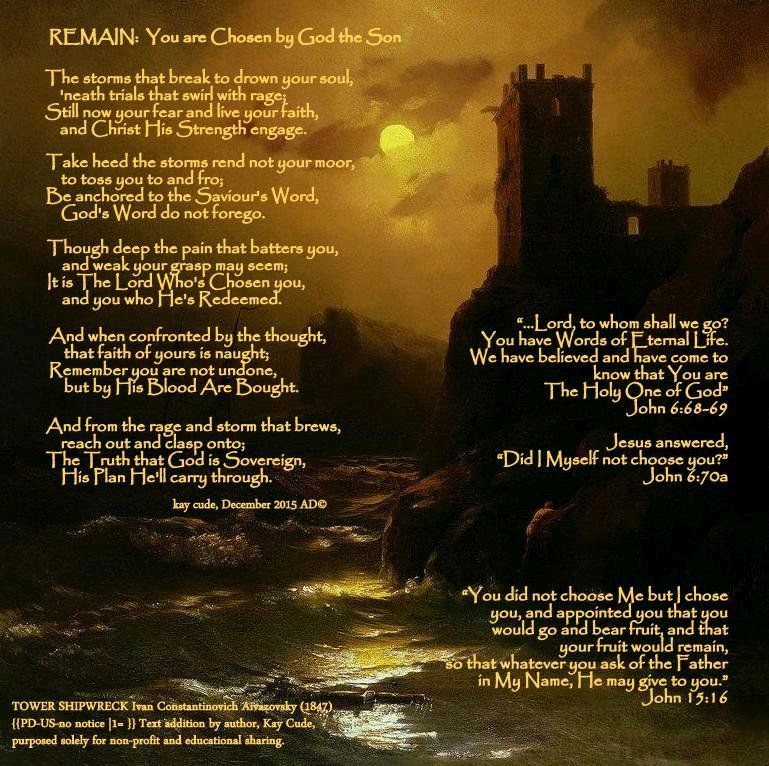
Kay Cude is a Texas poet. Used with permission.
By Elizabeth Prata
I’m reading through 1 and 2 Kings this month. There are certainly many interesting and strange things happening in those books of history. Remember, the events in those Bible books really happened. Elijah really slew 400 prophets of Baal. God really threw down fire and consumed the sacrifices in the showdown with the prophets of Baal. Wars happened. In 1 Kings 20:29 we read that the Israelites killed 100,000 Aramean foot soldiers in one day. I looked up the slaughter at Gettysburg, well-known to be one of the bloodiest battles, and about 50,000 died. The same with Waterloo. Can you imagine, twice as many Arameans dying on one day?
Here are two other unusual happenings:
In 1 Kings 17:19-21, we read of the prophet Elijah raising the Zarephath’s widow’s son, who had died.
He said to her, “Give me your son.” Then he took him from her bosom and carried him up to the upper room where he was living, and laid him on his own bed. 20He called to the LORD and said, “O LORD my God, have You also brought calamity to the widow with whom I am staying, by causing her son to die?” 21Then he stretched himself upon the child three times, and called to the LORD and said, “O LORD my God, I pray You, let this child’s life return to him.”
In 2 Kings 4:18-37 we read of the prophet Elisha’s raising of the Shunammite’s son, who had died. Here are verses 32-34,
When Elisha came into the house, he saw the child lying dead on his bed. 33 So he went in and shut the door behind the two of them and prayed to the Lord. 34 Then he went up and lay on the child, putting his mouth on his mouth, his eyes on his eyes, and his hands on his hands. And as he stretched himself upon him, the flesh of the child became warm.
The prophets laid outstretched on the dead person and the LORD graciously used their body as a vehicle for life-giving resurrection power.
It reminded me of the same but opposite historical punishment. Paul was probably thinking of this punishment when he wrote in Romans 7:24,
“Who will set me free from this body of death?”
As John MacArthur explains the punishment:
In the ancient times, one of the ways they punished murderers was to take the victim, the dead corpse, and strap them to the back of the murderer. And eventually the rotting body would cause the rotting of the murderer…a horrific way to suffer for your crime.
The corpse was used to bring death to a living body. The bodies of the prophets were used to bring life to the dead.
The wages of sin is death. Only God can resurrect life, both physical and spiritual.
As I read along, I just thought it was an interesting juxtaposition. It’s what I was thinking about.

By Elizabeth Prata
I know there’s a lot of “where are the strong Christian men” themes around. I know that male headship is under attack and the rise of feminism in the church has perhaps caused a seeming widespread dearth of strong and principled male leadership in homes and in the church. But…
I’ll extol the many strong men who ARE laboring, who DO adhere to principles, who MIGHTILY glorify God. I’ll start w/my 4 elders at my church. Diligent, wise, loving men who live moral lives, gently guide, gracefully receive repentance, &teach humbly. You know many others, surely
We see & interact many of them on Twitter every day. You know who they are. We listen to many of them online from podcasts & their church websites. You know who they are. And from that, we know there must be and are others out there too. Godly men are everywhere, busy being godly.
If we shouldn’t overstate that the majority of evangelical women are angling for egalitarianism, we also should not overstate the seeming dearth of godly men. Thank you to men unafraid to lead, unashamed of home headship, unapologetic about submission – because THEY are submitted.
I think that while it’s important to be clear-eyed about the evil times in which we live, and point to evil when we find it, we should also diligently search for and proclaim what is right, what is true what is noble,…wait, Paul said it better:
Finally, brethren, whatever is true, whatever is honorable, whatever is right, whatever is pure, whatever is lovely, whatever is of good repute, if there is any excellence and if anything worthy of praise, dwell on these things. (Philippians 4:8).
Barnes’ Notes says
Think on these things – Let them be the object of your careful attention and study, so as to practice them. Think what they are; think on the obligation to observe them; think on the influence which they would have on the world around you.
And not only think on them, look for them, talk about them, proclaim them, exult in them, and thank Jesus for them.
By Elizabeth Prata
You can hear the difference, can’t you? When a sermon is full of truth or if it isn’t. When a person is sincere and when they aren’t. Discernment is a gift given to some on the Body (1 Corinthians 12:10), discernment is also a skill demanded of all (Hebrews 5:14).
The illustration below is an example of how you can hear discernment.
There was an old pastor, so old that he had been forced to retire. His voice cracked from years of preaching. He was a humble old gentleman. He was invited to a high society kind of luncheon by a friend. He really was out of his league, frankly, but he went. And there was a famous actor there, and the one who was heading up the luncheon said to that actor in the midst of all of the folderol,
“Oh, would you stand up and recite something for us?” And he said, “Of course, I have an endless repertoire. What would you like?” The old pastor thought this is his moment. He said, “How about the 23rd Psalm” And the actor said, “Well, that’s an unusual request, but I happen to know that, and I’ll do it on one condition: that you’ll do it after I do it.”
Well, the old pastor hadn’t bargained for that, but for the sake of the Lord he said, “All right.” The actor got up, and he recited the 23rd Psalm with great intonation, beautiful, lyrical voice, tremendous interpretation. And he finished, and everyone applauded. The old pastor stood up and cracking voice and just went through the 23rd Psalm in his humble way. And when he was done, there was not a dry eye in the room.
And sensing the emotion of the moment, the actor stood and said, “I think I understand the difference in your response to me and to him. You clapped for me; you wept for him. The difference is: I know the Psalm, but he knows the Shepherd.” ~John MacArthur, The Calling of the Church
And that IS the difference when you hear it. Some recite from the mind, others know from the heart. A worthless shepherd who doesn’t know the Shepherd will be empty, though he deliver his words confidently, or with flair, or eloquently. Lord, give us ears to hear. See Revelation 2:7, “He that has an ear, let him hear what the Spirit said to the churches;”
He that hath an ear—This clause precedes the promise in the first three addresses, succeeds it in the last four. Thus the promises are enclosed on both sides with the precept urging the deepest attention as to the most momentous truths. Every man “hath an ear” naturally, but he alone will be able to hear spiritually to whom God has given “the hearing ear”; whose “ear God hath wakened” and “opened.” (Jamieson-Fausset-Brown Bible Commentary)
Discernment is something we can ask for more of (Psalm 119:66). It is something you can pray for others to be given it (Philippians 1:9). What a privilege to be able to ask the Wise one for more wisdom and discernment.
By Elizabeth Prata
‘Judah did evil in the sight of the LORD’.
For they also built for themselves high places and sacred pillars and Asherim on every high hill and beneath every luxuriant tree. 24There were also male cult prostitutes in the land. They did according to all the abominations of the nations which the LORD dispossessed before the sons of Israel. (1 Kings 14:23-24).
Reading through 1 Kings is just killing me. I mourn, cry the sins of Israel & Judah, and then take a look at myself and my own sins and idols and mourn some more. We’re no different than the folks in that book, but when such abominable sins stain from the bottom right up to the top, the kings and rulers, it’s a sure course toward judgment, individually and nationally. And it sure came. Reading the book, remember this really happened. God really judged King Jeroboam and the result surely came to pass.
you also have done more evil than all who were before you, and have gone and made for yourself other gods and molten images to provoke Me to anger, and have cast Me behind your back— 10therefore behold, I am bringing calamity on the house of Jeroboam, and will cut off from Jeroboam every male person, both bond and free in Israel, and I will make a clean sweep of the house of Jeroboam, as one sweeps away dung until it is all gone. 11″Anyone belonging to Jeroboam who dies in the city the dogs will eat. And he who dies in the field the birds of the heavens will eat; for the LORD has spoken it.'” (1 Kings 14:9-11).
I think I exclaimed out loud when I read it. Woe! Any individual failure to follow the commands of God resulted in judgment. Any failure of the nation to follow the commands of God resulted in judgment. Any failure of the Kings God had raised up to follow the commands of God resulted in judgment.
One part of the above verse in the chapters I read this morning really got to me: “on every high hill”. They worshiped their false gods by building altars and pillars and poles on the high places, which they thought brought them closer to heaven.
Do we individually here in America, or as a nation, or think our rulers and judges and governors will escape judgment as they not only turn their backs on God but applaud themselves for doing so? Here in America we have abominations ON EVERY HIGH HILL. Planned Parenthood facilities (baby killing stations), false religions welcomed and spoken of highly, homosexuality flags waving from high places and more and worse.
My friend Pastor Phil wrote this morning:
“In my reading of Romans 1:18-32, I believe we as a nation are not aware of that God’s judgment is upon us. How? First, God has given us over to the “lusts of our hearts.” Second, God has given us over to “dishonorable passions,” specifically homosexuality. Third, God has given us over to a “debased minds.” Moreover, those who give their approval to those who practice these unrighteous actions are just as guilty. The only hope for our nation and those who do not honor the Lord is to repent of these sins and to turn to Jesus Christ for His forgiveness and new life.”
I pray for individuals to be saved by being given the spirit of repentance, and I pray for leaders. But I also pray for the Lord to soon come. It’s hard to see so much sin & evil every day ON EVERY HIGH HILL.
But I am also grateful and joyful. He has given me eternal life. He has given me knowledge of the Savior. He has given me the mind of Christ, a mind that was once as debased as all the others on the high hill. He has given me life, joy, purpose, and illuminating wisdom from scripture.
As Paul ruminated, we are torn. We decry the evil that’s in the world, it feels almost like it must have to Noah, but again, we remain on earth to do His work and His will, which is also good. I’m grateful the world did not end before I myself was saved. Others being saved today and tomorrow and the next will no doubt feel the same. So as Paul wrote in Philippians 1:21-24,
For to me, to live is Christ and to die is gain. 22But if I am to live on in the flesh, this will mean fruitful labor for me; and I do not know which to choose. 23But I am hard-pressed from both directions, having the desire to depart and be with Christ, for that is very much better; 24yet to remain on in the flesh is more necessary for your sake.
I don’t know for whose sake He is keeping me here, lol. The work I do for Jesus is certainly not as significant as Paul’s was, but if the Lord is pleased to keep me here on earth to do His will and work, then I am relieved I have the Spirit to pray to for help in withstanding the woes and griefs and traps of the sin and evil all around.
What a Savior. His ways are transparent but inscrutable. This we know though: The evil on every high hill will not stand in the end. The idols and poles and altars will melt away and righteousness will reign. Jesus is higher than every high hill and His power exceeds the evil that satan can do. Hallelujah.

By Elizabeth Prata

We’ve all got our favorite metaphors from the Bible and mine’s the “light”. Just before I was converted, I first understood sin and redemption as concepts of darkness and light. Afterward, I loved the idea of Jesus as the Light, his glory brightness, and the glittering heaven where His light is shining forever.
As I lived aboard a sailboat for two years (pre-conversion era) there are now many metaphors that I gravitate to through that life experience that I cherish. Like lighthouses, anchors, the storms of life, waves buffeting, etc. But especially the lighthouse with the light!
Yesterday I read the following in the Valley of Vision, the Puritan devotional prayers (Ladies, get this book! I mean it!!)
Let not “Satan and my natural abilities content me with a little light, so that I seek no further for the Spirit of life. Teach me what to do.” ~Valley of Vision, God the Spirit
How often are we content with ‘a little light’? Half the time I think I’m content with it because I have allowed my eyes to adjust to the dimness and that has become my comfortable status quo. And how I do love the status quo. The other half of the time I think it’s because if I allow full-blast Light into my life it’d expose too many idols, sins, and pet behaviors I don’t want exposed. It’s a brave thing to ask for “more light”. I need to be braver.
Then a short while later I read this-
Open my eyes, that I may behold Wonderful things from Your law.
Psalm 119:18
Open mine eyes – David was not blind, his eye was not dim. He could read the Bible from end to end, and yet felt that he needed more light. He felt that he needed to see deeper, to have the eyes of his understanding opened. He felt that if he had nothing but his own eyes and natural understanding, he would not discover the wonders that he panted to see. He wanted Divine teaching, the eye-salve of the Spirit, and therefore he would not open the Bible without this prayer, ‘Open Thou mine eyes! ~Robert Murray M’Cheyne, The Believer’s Joy
Not content with a little light, David yearned for and even begged for more light. It is the Holy Spirit who opens our eyes to receive more Light (i.e more understanding of who God is through His word). David was a grievous sinner as we know, but he repented fully and threw himself upon the throne of grace asking for forgiveness and as we see here, understanding. This is why he was a man after God’s own heart.
More light also means more love. As we grow in understanding of who God is, we love Him more. Doctrine inspires love for the one who wrote it as we strive to live it.
More light also means, gulp, more obedience. As we grow in understanding of who God is, we love Him more and we want to obey him more- because of who He is.
It’s a brave thing to ask for more Light. Do I have such courage? I must. And even if I don’t, I must.

By Elizabeth Prata

I love to listen to sermons, especially my own pastor’s sermons. They are rich and deep with a lot to think about. He exposits verse by verse or chapter by chapter through a book of the Bible, and along the way he challenges us with his points. Just the way I like it.
I’m such a dunce though. I long to apply the words to my life so as to partner with the Spirit in my progressive sanctification. But I often don’t know the questions to ask myself in order to kick-start the process for that day. I found a helpful aid in the book I just finished reading, “Her Husband’s Crown,” a short exhortation of 9 points and a conclusion by Sara Leone.
Below are some good questions a woman can ask herself after hearing a sermon. Though the author’s intended audience is pastors’ wives, these questions are good for any woman to ask of herself after hearing her pastor’s sermon, or any sermon. I hope they help you as they helped me.
We remember the exhortation to “…receive with meekness the implanted word.” (James 1:21).
What has the word of God taught me today? Has it pointed to a sin I must confess? What promise has it encouraged me to claim? Is there a godly example for me to follow, a Christian grace to develop in my life? How should I apply the lessons of the sermon to my daily living? In other words, our goal should not be to critique our husbands’ sermons but to benefit spiritually from them.
Her Husband’s Crown, p 20 Sara Leone
BOOK REVIEW:

As I finish the books I’ve set aside for this summer’s reading, I’ll review them.
Her Husband’s Crown by Sara Leone is for sale at Amazon for only $3. It’s 42 short and sweet pages that I found practical and helpful. Sara is a pastor’s wife. The blurb says “Although written primarily for pastors wives, this booklet will encourage Christian wives in general and will stimulate prayer for and support of pastors and their wives everywhere.”
I say it’s a helpful book for any Christian woman who is a member of her church, married, unmarried, pastor’s wife or not.
What I liked about it is that the advice inside is practical, no-nonsense and nothing you haven’t really heard before. But it’s bundled in such a way that the advice and points are brought to mind again in a good way. There are blessedly few anecdotes of a personal nature, just only enough to be lightly sprinkled throughout and helpful to her chapter’s point. There is a lot of scripture. Just the way I like it.
For example, Chapter 3’s point, “Be a sympathetic and confidential listener to your husband,” based on Romans 12:15, is a wonderful treatment on the importance of pastor’s wives to be, well, sympathetic to your husband’s cares and concerns but also keep them confidential. This can be applied to any situation where a person confides in you. In other words, it’s easy to apply her points if you are a pastor’s wife and easy to adapt her points if you are not. And her points are good.
Another example, chapter 2, Fulfill your responsibilities as a mother before seeking other ministries in the church. Here, Mrs. Leone speaks to a common misperception, that the pastor’s wife is ‘First Lady’ of the church and in that role must fill the gap or lead the way for many of the ministries going on. Not so.
If you’re not a pastor’s wife then the advice is still good to be reminded of that a mother’s primary role is mother, not ministry leader. I mentioned that her advice isn’t anything you haven’t heard before, so of course we know that if you’re a mom then motherhood is a primary essential. But I also said that her advice is needed. Why? When we see many Christian mothers podcasting, running all over the US in their book tours, being guests on podcasts, writing books, maintaining a strong social media presence, and raising 7 children or 4 children and the like, it makes many true stay-at-home Christian mothers wonder if they, too can “do it all” like these other, more famous women who seem to have successful myriad ministries yet claim also to be focused on raising their children. So, Leone’s advice is needed.
The author does not come across as bossy but gentle. She is sharing these 9 points from a long life of experience but also as reminders from scripture. Reading this book is like sipping a cup of tea with a friend in the shade under a dappled dogwood tree.
Recommended.
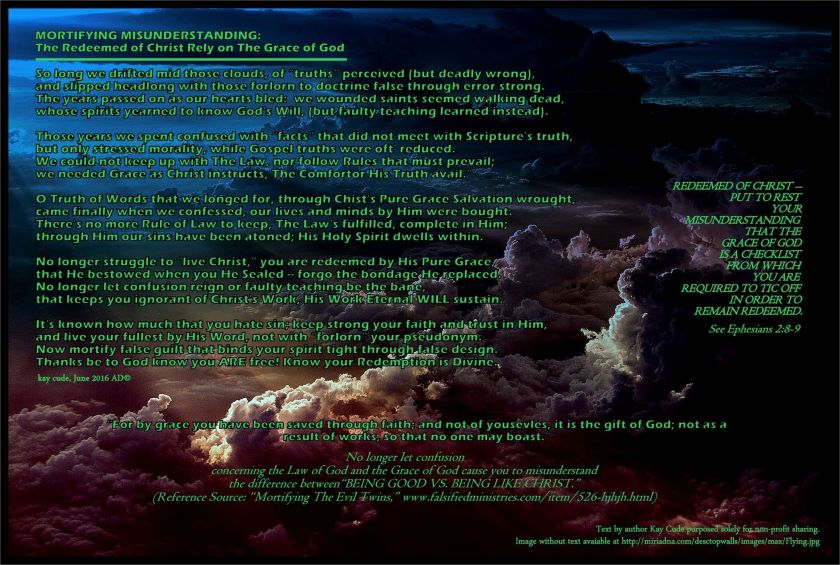
Kay Cude is a Texas poet. Used with permission.
By Elizabeth Prata
O come, let us sing for joy to the Lord,
Let us shout joyfully to the rock of our salvation.
2 Let us come before His presence with thanksgiving,
Let us shout joyfully to Him with psalms.
3 For the Lord is a great God
And a great King above all gods,
(Psalm 95:1-3)
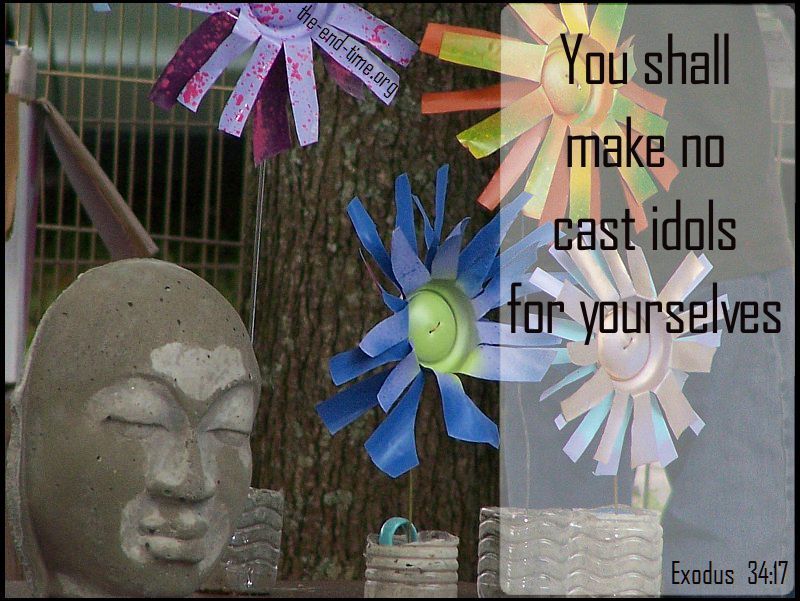
There are no other gods
There is no Allah
There is no Zeus no Mars no Dagon
Nammu, An, Ki are ephemeral as vapor
Amun and Horus are fictitious myths
Freyr and Loki … figments and chimera
All other gods are illusory
Their names hold no power
and their existence is in wood and statue only
Let the heathen howl
their bitterness at an unseen and unknown god’s failure
Spurious and futile gods who remain silent at man’s pleas
Let the pagan rail
their outrage at the silent deity who cannot and will never help
Let the godless who appeal to no-god
wail in frustration
for prayers that are never answered
For God is the only God.
Let the hopeless come to the throne of hope
Let the disillusioned bask in the fountain from the Rock
Let the helpless find help in Immanuel’s outstretched arm
Let the discouraged find eternity in God
The only God.
By Elizabeth Prata
I’m old enough now that the songs played on the radio’s Oldies station are the songs of my youth and teen years. The Supremes’ 1964 song “Baby, baby where did our love go” is catchy. It was on the radio the other day. It got me thinking in pictures. As in, ‘love’ going somewhere. Did it pack its suitcase and slink out the back door like a thief? Did it wilt then droop then evaporate, like the steam on the bathroom mirror?
The secular world sees love as a noun. Especially romantic love. They see it as a thing to be grasped. Something to be possessed. They see love as a thing that comes, then goes. That would mean that love has a mind of its own, will, volition.
The Christian knows that love is not a noun to hold but a choice to be made. Love is a verb. We choose it and we live it. Colossians 3:14 announces love as something we “put on”, indicating again that love is an act of our own volition. We are in charge of love, it is not in charge of us nor is it in charge of itself.
Beyond all these things put on love, which is the perfect bond of unity. (Colossians 3:14).
Matthew Henry explains the Colossians verse-
In order to all this, we are exhorted here to several things:—1. To clothe ourselves with love (v. 14): Above all things put on charity: epi pasi de toutois—over all things. Let this be the upper garment, the robe, the livery, the mark of our dignity and distinction. Or, Let this be principal and chief, as the whole sum and abstract of the second table. Add to faith virtue, and to brotherly-kindness charity, 2 Pt. 1:5–7. He lays the foundation in faith, and the top-stone in charity, which is the bond of perfectness, the cement and centre of all happy society. Christian unity consists of unanimity and mutual love.
Henry, M. (1994). Matthew Henry’s commentary on the whole Bible: complete and unabridged in one volume (p. 2335). Peabody: Hendrickson.
Warren Wiersbe explains-
Put on … love (Col. 3:14). This is the most important of the Christian virtues, and it acts like a “girdle” that ties all the other virtues together. This is not something that we turn on and off, like the TV set. It is a constant attitude of heart that makes us easy to live with.
Wiersbe, W. W. (1996). The Bible exposition commentary (Vol. 2, p. 138). Wheaton, IL: Victor Books.
Baby, baby, where did our love go? It didn’t go anywhere,t he person loving another simply got tired of choosing it.
Choosing to love is the hardest thing in the world, especially if you’re married. Making the choice to “put on” love toward someone who isn’t acting right, or who wronged you, or is just being a pill, is not easy. But love is the binding that holds the Body together and it is the quality that makes Christ attractive to the pagan. It is supreme.
Don’t be a bystander watching love come in and go out. Put it on, choose it, live it.

 the-end-time.org