Posted in prophecy, Uncategorized

“Sorry I Never Knew You” – Should we sing about God’s judgments?

Eschatology: the part of theology concerned with death, judgment, and the final destiny of the soul and of humankind.

Eschatology isn’t taught much. Many preachers feel underqualified to preach it because their seminary shied away from educating their students on these important doctrines. Many other preachers (incorrectly) believe that the body of doctrines in eschatology contain mysteries too dense and befuddling to fully understand. Another reason, sadly, is that many preachers and teachers don’t want to get involved in “controversies” regarding the timing of the rapture of whether there really will be a 1000 year kingdom on earth before eternity begins, controversies that aren’t really controversial at all. However, because of perceived difficulties of one kind or another, they shy away and don’t teach their congregants about ‘last things.’ Finally, the climate today in evangelical Christianity is to be ‘tolerant’ and ‘loving’, so the doctrines regarding judgment, hell, wrath, etc. are not ‘on trend’. Speaking of judgment and hell is almost taboo.

This vacuum in proper eschatological teaching has led to many fringe people ‘teaching’ on these things but instead, they’re just promoting wacky theories or generally mishandle the doctrines of last things completely. For example, they focusing on signs or setting dates, or worse, they lead many astray, confuse the sheep, or tarnish what should be a glorious hope. This wackiness has made orthodox preachers even more reluctant to delve into these doctrines because the fringe element has made eschatology almost into a joke and they don’t want to be associated with the fringe folks. So they stay even further away…and so on. The cycle continues.

It’s one reason I’m so relieved and excited I have access to Dr MacArthur’s teaching on last things. At home, I’ve been going through his Revelation series on Friday nights. I also trust S. Lewis Johnson, Martyn Lloyd Jones and Alistair Begg on last things also.

With the dearth of eschatological doctrines taught during sermons and Bible Studies, nowadays there is even less chance of finding songs about last things in worship music. But surprisingly, hymns, praise songs, Southern Gospel and Bluegrass Country used to be populated with songs about such things.

I was driving home from church on Sunday and turned my radio to a different channel. I found a little station out of Cornelia, Georgia I had not heard before. It was playing some old-timey country tunes from the 60s. This one I heard was by Naomi and the Segos, formerly Sego Brothers And Naomi. The group began gaining exposure in the late 1950s, though the band was well known in Georgia before that.

Their sons “Sorry, I Never Knew You” tells the story of a man who was dreaming. He was in heaven with all the people before Jesus, and when it was his turn to face Jesus he confidently said he had been a Christian all the while. The Lord uttered the title refrain, ‘Sorry, I Never Knew You, there is no record of your birth’. The song goes on… and at the end, the man awoke and with tears in his eyes, took stock of his faith, realized he’d been self-deceived, and repented.

I was so stunned I pulled the car over in order to listen, and to ponder the sudden sucking sound of a vacuum I heard in my mind. With that song from 1964, the first Gospel song to sell over 1 million records, by the way, I suddenly realized how FEW songs nowadays dwell on any of these topics. Would a song like that even get on the radio these days? Never mind make a million sales?

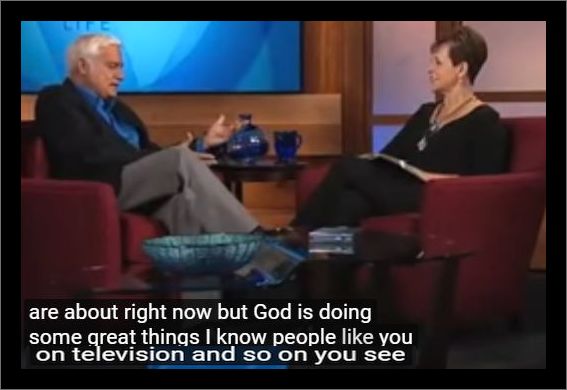
Here at SGM Radio, (Southern Gospel Music radio) they write of Naomi Sego, a Music Legend.

The song I’d heard was on what I have described before as one of the two most difficult and tear-inducing verses in the entire Bible, for me. There will be many on His day who plead for entry into the Kingdom, but the Lord will say,

And then will I declare to them, ‘I never knew you; depart from me, you workers of lawlessness.’ (Matthew 7:23)

It’s a devastating promise. I say promise because it is prophesied, which means it will come true. I will exult in Jesus righteousness and His perfect ability to make judgments, but the thought of many self-deceived “Christians” being rejected in tears and in horror, being cast away into the Lake of Fire is emotionally wrenching.

The question is, should we sing about it? What are the boundaries of singing about God’s judgments? Is that a subject that’s off limits in music as well as it seems to be in preaching?

When songs have good doctrine in them, even praise songs or popular songs, the Lord can and does use them for souls. I read several websites where people said they had heard Sorry I Never Knew You when it came out and were saved by it. “I never knew you” is directly from the Bible and covers a scene explicitly described there. The song closely matches the scene.

We should sing about last things because they’re biblical. Last things were important to Jesus- He preached on His Second Coming almost more than any other topic. The Psalms are songs, and many of them were about judgment, the righteous decrees of God and how He will finally exult over His enemies.

I love singing about the rapture in songs such as “I’ll Fly Away”. There is nothing wrong and everything right with hanging our hopes on Jesus’ future promises. (2 Timothy 4:8). But I needed to clarify my thinking on the topic further, so I did some research.


Bob Kauflin at Worship Matters wrote a few essays on the topic that I liked. In this essay, Should we sing songs about God’s judgments?, he outlines three ways God might like us to sing about His judgments,

–focus on Jesus judgment on the cross
–God’s past judgments
–God’s future judgments

And here is the important point I want to make. Yes, I believe it is OK to sing about judgment and last things. But, as Mr Kaufman wrote,

The point of all this isn’t that we should always [emphasis mine] be focusing on God’s judgments, nor to sing about them in a cold-hearted way that minimizes the tragic consequences of sin. The point is to magnify the greatness of God’s holiness, justice, righteousness, sovereignty, power, mercy, kindness, and grace in his judging evil, and especially in the judging of the Savior in our place at Calvary. His undeserved kindness has enabled us to be forgiven, to be adopted as precious children, and to anticipate unending joy at God’s right hand in the new heavens and the new earth.

In his follow-up essay, Mr Kaufman wrote,

Songs that Reference God’s Judgments

In a recent post, I suggested that generally we shy away from singing songs about God’s judgments, but that judgment is a theme found in many Psalms and Scriptural songs. I promised that I’d follow up with a post that suggested some songs we can sing that reference God’s judgments and help us think about them in a way that honors God, encourages a passion for holiness, and strengthens our confidence in the gospel.

I long for His appearing and not a day goes by when I don’t pray or sing “your kingdom come…” but that does not mean I’m cold-hearted about those who will be left behind to face the Great Tribulation or even an eternity in the Lake of Fire. In longing for His judgment it means He will have no more enemies. I long to be delivered from this body of death. I want never to sin against Him again. I want pure lips to praise Him. Most of all I want all the people to praise Him with pure hearts, with no sin or stain to interfere with the glory He is due from His redeemed.

If a song like “Sorry I Never Knew You,” which is doctrinally accurate, is used to gain Him one more soul in His triumph, then it is a good thing. We need more songs like that.

Posted in prophecy, Uncategorized

One of Jesus’ titles is “The Coming One”. He IS coming again. Are you ready?

In listening to John MacArthur’s series in Revelation, this sermon yielded some glorious truths, once again. The sermon is titled The Certainty of the Second Coming. Now, we all know Jesus is coming to earth again. This time He will not be a meek servant, but a powerful judge. But do we know just how certain His coming is? How often the Bible makes reference to it? We don’t hear the Second Coming preached much, or spoken of often. But it is the next prophetic event on the calendar (along with the rapture, which will happen just prior). Here is an excerpt from the sermon:

“The Coming One” was a title for Messiah. “The Coming One” was a special name for Messiah. In fact, back in Matthew we have an interesting reference to it. I’ll just read it to you. In Matthew, John the Baptist was in prison and he sent word by his disciples to Jesus. And they said to Him, “Are You the Coming One?” You see, the Jews all knew that the Coming One was a Messianic title. Jesus is the Coming One. That same verb, erchomai [???], that means “coming,” is used directly or indirectly with reference to Christ nine times in the book of Revelation. Seven of those nine times it is the words of Jesus Himself, referring to Himself as “the Coming One.”

This book, then, is about the coming of the Coming One. And the present tense indicates to us that He’s already coming, so that we have this sense of expectation that leads John to say, “Look, He is coming,” as if we are to be living in eager expectation. This, again, is the great heart of the book [of Revelation].

For every time the Bible mentions the first coming of Christ, it mentions the second coming 8 times. For each time the atonement is mentioned once, the second coming is mentioned twice. Jesus refers to His second coming 21 times, and over 50 times we are told to be ready for His return.

Over 50 times we are warned to be ready for His return? Wow. Yet for all the lack of preaching and teaching on it, one would think it is not important. But it is highly important. I recommend MacArthur’s series in Revelation. My personal opinion is that his best book has been Because the Time is Near, an overview of Revelation.

Through death, rapture, or Judgment, you will meet Him. Are you ready?

~~~~~~~~~~~~~~~~~~~~~~~~~~~~~~~~~~
Further Reading

Alistair Begg/Truth for Life Devotional: Be Ready

Ligonier Devotional: Discerning the Signs

Grace to You Article: Marks of a Committed Christian

Posted in discernment, Uncategorized

Brass in the Bible, and brassy, brazen women

Did you ever think about brass? Looking at some of the items in the Bible more closely is enjoyable. Linen, pomegranates, ants, and palm trees have all been examined on this blog. Soon it will be fishing boats. Today I’m interested in brass.

My interest was piqued when I was listening to a John MacArthur sermon on Revelation 1. As an aside I’d like to add a personal note. I’ve listened to Dr MacArthur’s sermons on the eschatological passages and I have researched his doctrinal stances on eschatology. I have of course also studied the eschatological doctrines myself directly in the Bible, and have listened to many other men preach on them. I believe Dr MacArthur is the most solid and biblical. Here, he preaches “Why every Calvinist should be a Premillennialist” and explains all the main eschatological viewpoints, biblically. He is firm but graceful on his pre-tribulation stance because it’s biblically rooted (a stance to which I hold and I believe to be the only correct one).

In the sermon, Dr MacArthur was going through the vision given to John of Patmos in Revelation 1:12-14.

“His feet were like burnished bronze when it has been caused to glow in a furnace.” What is that? Red hot. You’ve seen metal in a furnace, glowing, burning brass, or bronze. By the way, as a footnote, all of the temple and all of the tabernacle furniture that was in any way used in a sin offering was always brass. When you see brass in this situation, you know it has something to do with sin. And here you have feet glowing hot…very clear reference to judgment.”

Then MacArthur said,

By the way, as a footnote, all of the temple and all of the tabernacle furniture that was in any way used in a sin offering was always brass. When you see brass in this situation, you know it has something to do with sin.

Hmmm. Immediately I thought of the verse in 1 Corinthians 13:1 where Paul said,

If I speak in the tongues of men and of angels, but have not love, I am a noisy gong or a clanging cymbal.

The Greek word used in the verse for gong is brass. Now, not every biblical mention of brass is a symbol of sin. Brass instruments are mentioned. Bronze statues are made. Bronze tools are helpful. Alternately, the Calf the Israelites made was golden, not bronze. However, the bronze serpent called Nehushtan became an idol that had to be destroyed.

While brass or bronze in the temple is not used in a positive sense, now that I think about it, culturally, brass is not positive much either.

The word brazen means acting or done in a very open and shocking way without shame or embarrassment, to face with defiance or impudence —usually used in the phrase brazen it out

If someone calls you brazen, it’s not a compliment. For women, it’s even worse. A cultural epithet feminists continue to try and twist into an accolade is “the brassy woman.” This 2014 Elle Magazine article titled “Is it Really Okay for Women to be Brassy?” looked at one famous brassy woman and her life and death, comedienne Joan Rivers.

In all of the glowing memorials of Joan Rivers, who died last week at 81, she is lovingly referred to as “brassy.” And comedy, it seems, has begun to embrace the Schumerian vulgarity in all women. But, does society really, truly love a brassy gal? …

In nearly every piece of writing on the life and death of Joan Rivers, she is referred to as such. Her admirers say “brassy” like it’s a good thing. That wasn’t always the consensus.

The halfhearted answer in the magazine article is that it’s kind of OK to be brassy, but the biblical answer is, no. Though the article calls brassy women “assertive” and “confident”, brassy women are more like the aforementioned clanging brass and clanging cymbal- just noise without music. Think of women who are or were considered brassy, Joan Rivers, Mae West, Chelsea Handler, Sarah Silverman. Now think of women who have never been called brassy, Jennifer Aniston, Olivia De Haviland, Meg Ryan. The former are profane, vulgar, and loud. The latter are demure, self-possessed, and dignified. Who would you rather be around? Which woman possesses the more biblical definition of womanliness?

Fun fact: If you mix other metals with copper, you get bronze and brass. Bronze is a mixture of about 90% copper and 10% tin. It’s darker than copper, and the color is less warm. In fact, bronze turns green when it oxidizes. Dark bronze can look almost chocolatey.

Take 70% to 85% copper and mix it with zinc, and you get brass. It’s a yellow-gold color. So how do you tell brass and gold apart? Brass is slightly darker and duller; gold is lighter and shinier. … An easy way to see if something is gold or brass is to use a magnet. Brass will attract the magnet, but gold won’t. If something says “K” or “karats,” it’s gold. Gold is also about twice as heavy as brass.

The brass implements at the temple were used just outside the holy of holies. Inside the holy of holies, was gold. For example, the bronze laver in which to wash and purify from sin before tending to priestly duties is a case in point.

The Bible is precise. The Holy Spirit inspired the men to write what they did for a reason, even down to the kinds of metal God chose to use for various items for various reasons. It would be fun to study the refining process, which metals are composed of how much dross and the biblical uses of various metals.

In High School I took “Shop.” One of the projects we did was working with metal. I made an iron capital E, similar to the large capital letter “M” that Mary Tyler Moore had on her apartment wall in the old TV show. Though the half semester course was over 40 years ago, I distinctly remember excitedly donning all the safety gear and carefully pouring the liquid metal into my mold. I could hardly wait until the item cooled. It came out great!

I was amazed by the beauty of the molten metal, the glowing colors and the gracefulness of how it poured. I was satisfied to learn how it changed from solid to liquid to solid again. Metal is beautiful and interesting. I lost my ‘sculpture’ long ago, I wish I hadn’t.

Brass, bronze, brazen. Think about it. Would you rather be “good as gold” with a “heart of gold”? Or a “brassy women” who is “bold as brass”?

**Ed Note: even searching for examples of “brazen women” to use in this essay yielded many sites and photos of women toting guns (as in criminals like gun moll), being profane and immodest, and/or involved in public sex or known for “confident” sexuality. I rest my case.

————————————-

Further Reading

Brazen Women: vintage postcards and photos with captions of historically daring women

Posted in encouragement, Uncategorized

The LORD is Creator and Commander of the animal kingdom

The Lord in His power directs every atom, every person, every angel, every demon, and every animal on earth (and in heaven). He created all and He is in control over all.

Not that He makes humans like robots, but His providence sees to it that His will and His plans are carried out. I enjoy pondering His power over His creation, don’t you? There are many verses that speak to this fact. Here are a mere few that demonstrate His sovereignty.

“The earth is the LORD’s, and everything in it, the world, and all who live in it; for he founded it on the seas and established it on the waters” (Psalm 24:1-2).

Before the mountains were born or you brought forth the whole world, from everlasting to everlasting you are God” (Psalm 90:2).

He is before all things, and in him all things hold together” (Colossians 1:17).

One demonstration of His power is His control over the animals. Let’s take a look.

The most obvious one is His control over animals when He sent them to Noah to board the ark.

Of the birds according to their kinds, and of the animals according to their kinds, of every creeping thing of the ground, according to its kind, two of every sort shall come in to you to keep them alive. (Genesis 6:20).

In Exodus, He sent the plagues of flies, gnats (Exodus 8:16-19), frogs (Exodus 8:1-15) and killed all the cattle- except the ones who belonged to the Hebrews. Lest someone believe that it was an accident, the Bible declares that the LORD did it.

And the Lord did so. There came great swarms of flies into the house of Pharaoh and into his servants’ houses. Throughout all the land of Egypt the land was ruined by the swarms of flies. (Exodus 8:24).

EPrata photo


And the next day the Lord did this thing. All the livestock of the Egyptians died, but not one of the livestock of the people of Israel died
. (Exodus 9:6).

Prophet Elijah was fed by ravens.

And the word of the Lord came to him: 3 “Depart from here and turn eastward and hide yourself by the brook Cherith, which is east of the Jordan. 4 You shall drink from the brook, and I have commanded the ravens to feed you there.” (1 Kings 17:2-4).

Lest anyone think it was an accident, note that the LORD “commanded” the birds to do this. It was His will and desire that this should occur. And it did.

In Numbers 22:28 He made a donkey speak. What I found funny was that Balaam argued back. He was arguing with a donkey! He didn’t say, “Hm, this donkey which I have ridden all my life and it never spoke before, suddenly began acting strangely and then it talked to me. It must be the LORD.’ No, Balaam said he was so mad at the donkey he would like to kill it. The donkey then pleaded his case. A strange scene, for sure. But the LORD made the donkey speak. Once again, He is in control.

Of course one can think of the bears God sent to maul the taunting youths, the great fish He sent to swallow Jonah, the lions’ mouths he closed in the lion’s den for Daniel, the ram he sent to Abraham caught in the thicket atop Mt Moriah, and many other instances of how the LORD used animals to fulfill His will.

In the New Testament, He made the fish overload the disciples’ nets so much that their net broke. (Luke 5:6). In Matthew 17:24-27 he put a drachma coin into a fish’s mouth. He will call the birds of the air to the Great Supper of God. (Revelation 19:17).

EPrata photo

God communicates with His creatures. He cares for them. They indicate that there IS a Creator as a product of God’s creative energy and will.

I enjoy thinking about the sovereignty of God through these topics. His created order, the world, and heaven contain animals of which he creates, communicates with, and cares for. They do what He wishes and they even give praise to their creator. (Psalm 148:10-13).

We can do the same.

EPrata photo
Posted in encouragement, Uncategorized

Throwback Thursday: If We had X-ray Vision, what would Sin Look Like?

This was first published in January 2014 on this blog.

—————————
When satan was created, He was the most beautiful angel. Ezekiel 28:12 says

Son of man, raise a lamentation over the king of Tyre, and say to him, Thus says the Lord GOD: “You were the signet of perfection, full of wisdom and perfect in beauty.”

Inside or out, satan was not only beautiful, but he was the very seal of perfection. But it didn’t last. Though he was created perfect, one day, unrighteousness was found in him.

You were blameless in your ways from the day you were created, till unrighteousness was found in you.” (Ezekiel 28:15)

Initially, sin might look beautiful but the more a person becomes trapped in it, the less beautiful it seems to them and the more they are eternally destroyed.

The woman may be beautiful, and the sin so enticing, Proverbs 5:3 says,

For the lips of the adulterous woman drip honey and her speech is smoother than oil.

But the end of it all is is hell.

In the end she’s as bitter as wormwood and as sharp as a double-edged sword. Her feet go down to death; her steps head straight for Sheol. (Proverbs 5:4-5)

But sin at first has to look great, and not like ot really looks, or else no one would engage in it.

How does sin really look? Remember Superman’s X-Ray vision?

THIS is what sin might look like. Here is the Old Man. Once so beautiful and shining, it is what satan’s soul looks like. Eve thought the fruit looked good and a delight to the eyes, (Genesis 3:6) but shortly after all it had brought was pain and bondage (Genesis 3:16). If we had X-ray vision and could see beyond the enticing surface, this is what we would see:

“Sin”, collage on handmade paste paper, by EPrata

O, would that sin looked like this to our eyes, then we would not be so attracted to it! And sadly, horrifically, it is what us inside us. This ugliness is what Jesus sees when He looks at a non-believer. Lovingly, He still died for us.

but God shows his love for us in that while we were still sinners, Christ died for us. (Romans 5:8)

However, being that sin is so gross and deadly, it makes the triumph of Jesus all the more glorious.  Where satan is all-darkness that fools us into thinking it is light, Jesus never had one blot, one lie, one corrupt thought, one serpent slither. Not once, not ever. He IS the Light!

God is light, and in Him is no darkness at all. (1 John 1:5)

If we had X-ray vision looking at Jesus, our eyes would see only glory upon glory, shining like the sun. He is a prism of Light, reflecting throughout all the universe and into the eternity we will share with Him! When He looks upon a believer He sees that same righteousness-

For He has made Him to be sin for us, who knew no sin; that we might be made the righteousness of God in Him. (2 Corinthians 5:21)

Don’t be fooled by the initially enticing beauty of sin. It is gross, destructive, horrible. Put on your X-ray vision to see beyond the surface lie. Run from it toward Jesus who set us free from its bondage, and gave us the Spirit’s vision to see through its enticing spoils. Satan’s offerings are nothing. Jesus is our all in all.

Posted in discernment, Uncategorized

I’m not broken

Do you hear a lot of conversation these days involving the word ‘broken’ and ‘brokenness’? I do. It is the newest trendy word.

Words matter. They present reality, create meaning, knit a cultural understanding. Words matter.

The Lord revealed Himself to us by His Word. He IS the Word made flesh. He could have revealed Himself to us in pictures, symbols, or any other method. He chose the Word.

We will be judged by our words. Jesus said, “I tell you, on the day of judgment people will give account for every careless word they speak, 37 for by your words you will be justified, and by your words you will be condemned.” (Matthew 12:36).

Words matter.

In Genesis 11:1 we read, “Now the whole earth had one language and the same words.” In Genesis 11:7 God said, “Come, let us go down and there confuse their language, so that they may not understand one another’s speech.” [Literally, ‘one lip’].

How did the LORD choose to restrain man? By confusing their languages. He will reverse that on His Day. Zephaniah 3:9 has the prophecy-

For at that time I will change the speech of the peoples to a pure speech, that all of them may call upon the name of the LORD and serve him with one accord.” [literally, “one lip”].

Words matter.

Christians speak the one language of faith. Or we are supposed to, anyway. The Bible clearly explains the important concepts by which we live and construct meaning. They are in words, and the words are: sin, wrath, grace, sanctification, justification, imputation, atonement, good, evil … & etc. When we speak them to each other the meanings of these words should be clear to Christians. When we say, “I am a sinner” we know what we mean. When we say “God is good” we know what is meant by it. “I’m a depraved sinner” is understood. We should be ‘of one lip.’ But we’re not. By dropping and substituting words commonly understood for millennia, we are creating new understandings of the basics of the faith.

In today’s example, no longer are we sinners. We’re ‘broken.’

Brokenness the way it’s used nowadays does not mean what you think it means. In this piece by The Gospel Coalition, the opening paragraph succinctly describes my concerns with the increasing use of the word ‘brokenness.’ Unfortunately, the rest of the essay goes on to state the exact opposite of my point here today, so I don’t endorse the article.

In Christian circles, much has been made of brokenness, vulnerability, and authenticity in recent years. Some have expressed concern that these ideas have been overemphasized while holiness has taken a backseat. Brokenness in this context has tended to be of a faux variety. Much of it amounts to a confession of socially acceptable sins and mommy bloggers making messiness cool.

How does using brokenness the trendy way it is being used in Christian circles underestimate sin’s power? Brokenness evokes minor imperfections, not depravity. It removes the impetus from the sinner as the one performing the sin. We’ve gone from ‘I am a depraved sinner in need of grace’ to ‘I’m broken through no fault of my own and I need a heavenly butler to fix me’.

These mommy bloggers with messy lives authentically telling you about their brokenness are no different from the Pharisees who lengthen their tassels or make long prayers with long faces in order to show they are good.

Showing you are ‘bad/broken’ is no different than the Pharisees showing they were ‘good’. It’s still ‘look at me’. The result is the same also – hypocrisy.

“Maybe wholeness is embracing brokenness as part of your life.” Ann Voskamp, The Broken Way.

Maybe NOT. When we display our shining faces and our heavenly glow, we are demonstrating His victory to the world. Embracing brokenness is not displaying a victorious life.

And when you fast, do not look gloomy like the hypocrites, for they disfigure their faces that their fasting may be seen by others. Truly, I say to you, they have received their reward. (Matthew 6:16).

I do not know where these women are getting all this brokenness from, because before we’re saved, we’re not broken and in need of a little fix, as Lysa Terkeurst seems to think-

Brokenness where we are split open. Redemption where God knits us back together. Lysa TerKeurst

Before salvation, we are whole. Wholly evil, wholly depraved. We function unbroken and unabated in a cursed world where we fit in perfectly fine. After salvation, we are not fixed (as is the opposite of broken.) We are made a new creation. It’s not that our thoroughly depraved soul is dented and needs pounding out and fixing like a car mechanic doing body work on a bumper or a little knitting and voila, we’re fixed. We are so thoroughly evil that we must be made a new creation. So after salvation, nothing is broken then, either.

We’re not supposed to promote our brokenness by mooning around with a long face, writing endlessly about how broken we are. Personally, I believe doing so is an insult to Jesus, who saved us perfectly. Lest someone think I am being heartless, I do know that both before salvation and after salvation, we grieve, are bereft, lonely, sad, melancholy, stricken, and all the rest. Life hurts. It really does.

If ever there was anyone who had cause to call himself “broken” it was Paul. He was betrayed, abandoned, imprisoned, shipwrecked, beaten, lonely and even at one point “despaired of life”! He wrote in 2 Corinthians 1:8,

For we do not want you to be unaware, brothers, of the affliction we experienced in Asia. For we were so utterly burdened beyond our strength that we despaired of life itself.

Broken! For sure! But did he write anywhere in the Bible that we should dwell in our griefs? Wallow in brokenness? Embrace it? Never! What a ghastly thought! He wrote,

But even if I am being poured out like a drink offering on the sacrifice and service of your faith, I am glad and rejoice with all of you. (Philippians 2:18).

In whatever circumstance Paul found himself in, he urged rejoicing in the Lord. He never urged his people to wallow in brokenness. He never even said that as grief-stricken as he was at times that he himself was ‘broken.’

Sisters, we are not broken. If the current trendsetters using the word mean broken as in prior to salvation, well, before salvation we’re evil and depraved sinners who have no chance to please God, not broken. After salvation, we are a new creature, not broken.

If the trendsetters using the word broken to indicate a certain emotional state, well, call it what it is. Grief, broken-hearted, depression, melancholy, annoyance, overwhelmed. That’s OK, we all feel those things at times. But again, that’s not being broken. And in any case, as Paul said, rejoice, sisters, rejoice! Mooning around with a long face as a broken individual doesn’t earn you any points with Jesus. He said as much regarding the Pharisees, as I stated above.

If you’re sad, depressed, rejected, melancholy, whatever it is, rejoice! I know it’s hard. I’m not making light. But watch the words you say (and sing, and write). Saying that you’re broken is insulting to Jesus and unnecessarily transforming the Christian vocabulary into something trendy and indistinct.

I’m not broken. Are you?

Posted in encouragement, Uncategorized

Paul’s warm letters

These are the openings of all of Paul’s letters, except Galatians. Please don’t skip, read them through.

I thank my God in all my remembrance of you, always in every prayer of mine for you all making my prayer with joy, 5 because of your partnership in the gospel from the first day until now. And I am sure of this, that he who began a good work in you will bring it to completion at the day of Jesus Christ. (Philippians 1:3-6).

I give thanks to my God always for you because of the grace of God that was given you in Christ Jesus, 5 that in every way you were enriched in him in all speech and all knowledge— 6 even as the testimony about Christ was confirmed among you— 7 so that you are not lacking in any gift, as you wait for the revealing of our Lord Jesus Christ, 8 who will sustain you to the end, guiltless in the day of our Lord Jesus Christ. 9 God is faithful, by whom you were called into the fellowship of his Son, Jesus Christ our Lord. (1 Corinthians 1:4-9).

Grace to you and peace from God our Father and the Lord Jesus Christ. … Our hope for you is unshaken, for we know that as you share in our sufferings, you will also share in our comfort. (2 Corinthians 1:2,7)

For this reason, because I have heard of your faith in the Lord Jesus and your love toward all the saints, I do not cease to give thanks for you, remembering you in my prayers… (Ephesians 1:15-16).

We always thank God, the Father of our Lord Jesus Christ, when we pray for you, 4 since we heard of your faith in Christ Jesus and of the love that you have for all the saints, 5 because of the hope laid up for you in heaven (Colossians 1:3-5).

We give thanks to God always for all of you, constantly mentioning you in our prayers, 3 remembering before our God and Father your work of faith and labor of love and steadfastness of hope in our Lord Jesus Christ. (1 Thessalonians 1:203).

We ought always to give thanks to God for you, brothers, as is right, because your faith is growing abundantly, and the love of every one of you for one another is increasing. Therefore we ourselves boast about you in the churches of God for your steadfastness and faith in all your persecutions and in the afflictions that you are enduring. (2 Thessalonians 3-4).

To Timothy, my true child in the faith: Grace, mercy, and peace from God the Father and Christ Jesus our Lord. (1 Timothy 1:2).

To Timothy, my beloved child: Grace, mercy, and peace from God the Father and Christ Jesus our Lord. I thank God whom I serve, as did my ancestors, with a clear conscience, as I remember you constantly in my prayers night and day. As I remember your tears, I long to see you, that I may be filled with joy. (2 Timothy 2:2-4).

To Titus, my true child in a common faith: Grace and peace from God the Father and Christ Jesus our Savior. (Titus 1:4).

To Philemon our beloved fellow worker 2 and Apphia our sister and Archippus our fellow soldier, and the church in your house: Grace to you and peace from God our Father and the Lord Jesus Christ. I thank my God always when I remember you in my prayers, because I hear of your love and of the faith that you have toward the Lord Jesus and for all the saints, and I pray that the sharing of your faith may become effective for the full knowledge of every good thing that is in us for the sake of Christ. For I have derived much joy and comfort from your love, my brother, because the hearts of the saints have been refreshed through you. (Philemon 1:1-7).

A hallmark of Christianity is love.

By this all people will know that you are my disciples, if you have love for one another. (John 13:35).

Barnes Notes says of the John verse,

That is, your love for each other shall be so decisive evidence that you are like the Saviour, that all people shall see and know it. It shall be the thing by which you shall be known among all men. You shall not be known by special rites or habits; not by a special form of dress or manner of speech; not by special austerities and unusual customs, like the Pharisees, the Essenes, or the scribes, but by deep, genuine, and tender affection. And it is well known it was this which eminently distinguished the first Christians, and was the subject of remark by the surrounding pagans. “See,” said the pagan, “see how they love one another! They are ready to lay down their lives for each other.” 

I think it’s clear that Paul genuinely loved his people and cherished his overseers. His letters were full of approbation for them. He had high regard for his fellow workers, and wasn’t shy about saying so.

Wouldn’t it be lovely to receive a letter like Paul’s? Wouldn’t it be great to be received in person the way that Paul greets his friends? It would, on both counts. I fail the standard Paul sets here, both in reaching out with loving, personal messages to warmly encourage as Paul does, and in displaying a genuine love in person for the believers “in the common faith.”

How about you? Is there something more you can do to ‘boast of a friend’ to other friends? To pray for them earnestly? To visit with them in love, exulting in your common love of Christ?

Please re-read the letter introductions, and think of someone you can love and encourage today. I know I will.

Posted in Uncategorized

Street photography and all its joys and pains

Grammarly has changed my life.

OK, that’s hyperbole, but Grammarly has given me relief in spades. It’s an extension you add to your browser, which checks for typos and grammar mistakes as you type. No matter where you’re typing, Facebook, Twitter, comment responses on Disqus, wherever you’re typing, it puts a red line underneath a typo or grammar mistake.

I’ve been surprised at how well it offers corrections, too. It is eerily correct in its offerings even when I’m writing cultural idioms or abbreviations. For example, I typed ASAIK and it knew I meant AFAIK (As Far As I Know). The corrections far outstrip even MS Word.

You can ignore any corrections you don’t want or don’t agree with. A little red circle at the bottom keeps track of how many words need fixing, and if you want, you can click it to see how many have already been corrected. I dare not look.

Grammarly is free, though that doesn’t stop its creators from frequently reminding you that you’re “missing out” on features and offers deals on upgrades. But these reminders are not intrusive. They’re contained in a correction, once in a while.

Hey, I don’t need an upgrade, I just need my typos corrected. They are getting so bad. I wrote a three-word response on Facebook this morning and mistyped two of the words. You see what I mean about how valuable this extension is.

I’ve been interested in street photography of late. I love photography. I noticed a book called The Birth of Graffiti by Jon Naar at the Second Time Around store a while back and bought it. He took his pics of graffiti in NYC in the 1970’s, a low point for the city and its denizens.

Naar is an accomplished portrait photographer, photographer of art and architecture and more. In his 90’s now, he is still active. Wikipedia says Naar has had a multifaceted career as an intelligence officer in World War II; a globe-trotting executive during the postwar years; and an environmentalist, with nine published books to date. Major publications like The New York Times, The Saturday Evening Post, Vogue, Fortune, Elle, and Schöner Wohnen have featured Naar. The NY Times Magasine’s very first use of color for an interior was commissioned by them of Naar.

I love-hate graffiti, it is a blight but it’s also art. Art blight. Blighted art. I dunno. Overall I’m just fascinated by it. I also like gritty city pictures, tattered handbills, signs, doorways, subways…Naar’s photos were all stupendous and so evocative. Yes, he takes shots of just graffiti, but he took many of his shots with people in them. Kids playing basketball against a backdrop of a heavily graffitied wall…a mom and toddler walking by a profane graffiti mural…and so on.

I didn’t know it at the time but his style of photo is called “Street Photography.” It is defined:

Street photography, also sometimes called candid photography, is photography conducted for art or enquiry that features unmediated chance encounters and random incidents within public places.

I’ve always loved candid photography, especially of kids. I am grateful I’ve often had the chance to legitimately take photos of kids, either through being a journalist and covering school things and sports or as a school employee asked to chronicle events on campus for the yearbook or the official Facebook page. Kids are fun to take pics of because they’re unpredictable, emotive, and a challenge to get in the frame. They’re also cute!

Kids enjoy having their picture taken, unlike adults. Adults are suspicious, guarded, and can deck you if they get mad that you’re in their face. Hence the relief in being around kids with my camera.
But I also enjoy gritty cityscapes. Or even in my rural town, gritty, industrial things. Like these pics:

Many of my photos were of the same theme with the same interest in same topics as Naar’s. Like these of his:

If I’d like to concentrate on street photography, as good as it is to be on the same track as someone like Naar in terms of interest in these kinds of scenes, it’s the execution that matters. I need to improve my composition, framing, and bravery in getting close to the moment. In Naar’s scene of the police car, what makes it good is that the cop is in the car. When you look closely, you see his arm in the window. This brings life to the scene. The handbills, not only colorful and framed well, but his decision to take it with the bold clenched fist above them gives the picture a foreign feel, and vaguely threatening. The new & used tires, the inclusion of the graffiti and the loneliness of both displays of the tires makes one ask, which are new and which are used? They all look tattered.

Where I fail is getting people in the picture. Getting people in the picture is key. People energize the photo. Their activity mystifies, perplexes, shocks, or comforts. It’s the people who bring emotion to it, mystery, and story.

So, then there are the stupendous pics of Naar’s like this one, my favorite. Click to enlarge. It’s absolutely tremendous-

It’s subway and graffiti. OK, so the grit is there. The lighting is great, the warm glow of the interior of the car contrasted with the steel of the exterior. The light, joy, and movement of the people through the window to the left and the right. The yellow strip which mirrors the rush and zoom of the car itself when it arrives and departs.

And then…there is one sole, still woman. One part of the entire photo where nothing is moving. There is no joy. Her face is stoic, devoid of the same lightheartedness the rest of the people display. The grittiness of her surroundings is contrasted with her obvious wealth. Her perfectly coiffed matronly hairdo. Her poised, ladylike feet in expensive shoes. Her fur around the collar.

Since every photo should tell a story – or begin one, we ask, why, if she is so obviously of means, does she take the subway?

Most incongruously of all, is her butler and the hatbox. Pink, no less.

It’s an amazing photo.

There are many street photographers out there. This web page explains 10 principles of street photography and then lists many good street photographers.

Candid photography is interesting and challenging, just the way I like it. I’ll keep trying. Meanwhile the link above has a wonderfully long list of good photographers and pictures to be inspired by!

Posted in Uncategorized, visual exegesis

Visual Exegesis: The Life of Every Living Thing

Chris Powers of Full of Eyes creates exegetical art, still and moving images, intended to point people to the beauty of God in the crucified and risen Son. His work can be found on Youtube, Patreon, and his website, fullofeyes.com. There are study guides to accompany the videos, tracts, and art- free to use for the edification of the global church and the exaltation of Jesus’ name.

Today’s presentation is called The Life of Every Living Thing. Below Powers’ illustration is the artist’s statement.

Job 12:10, “In His hand is the life of every living thing and the breath of all mankind.”

It was tough to come up with a verse picture today. I spent most of my time reading this morning in Genesis considering some of the patterns we see in the Creation week….some wonderful stuff there, but nothing that seemed to lend itself to a picture. I also read a bit in Job and came across 12:10…..I was hesitant to make the picture that I did because it is similar to another that I did a few months ago, but–since I try to get these done early without spending TOO much time on them, I went ahead with this design.

I’m also studying the “hypostatic union” right now (the orthodox understanding of Christ as one Person–God the Son–with two natures–divine and human) for a Wednesday night class I teach at our local church….that’s got me thinking about some more of the glorious realities we see in Christ….one of which is that He–as God the Son–is sustaining the universe (“in His hand is the life of every living thing…”) even as His hands are pierced and His creaturely life ebbs away. It’s an “old” truth but one that ought always to stagger….the sovereign mingling of omnipotence and helplessness that we see at the cross is unlike anything the world can produce and a self-authenticating witness to the beauty of God’s Name.

So, I hope that this picture echoes both the idea that the God-Man upheld the life of the universe with His hands even as His flesh was pierced on the cross AND that, the piercing of His hands was also the means by which He purchased the life that He was upholding. All created life–at least all terrestrial life–would rightly have been extinguished because of sin had not the wrath a ten thousand justly-deserved Noahic floods been stored up to be poured on on the Beloved Son at Calvary.

Posted in discernment, Uncategorized

The biblical worldview is that there is the righteous and the wicked

When you read chunks of the Bible at one time, patterns and themes emerge that may not be as noticeable as when you read just a few verses more deeply. That’s why both kinds of study are valuable.

In reading the Psalms, one immediately notices David’s worldview. It’s stark, solid, and biblical. With David, there are the righteous, and the wicked. Period.

We live in times where Christians are pressured to blur those lines. We’re told to accept and tolerate all manner of sin, value any and all professions of faith even if they’re unaccompanied by fruit, and to view all people as inherently good. Failure to do the above invites catcalls of “Pharisee”, “judgmental”, or worse.

However, when we blur those lines, the loss to the church is that mission fields shrink and disappear. Doctrinal lines are dismissed. Sadly, if we don’t know who is in and who is out, who do we evangelize?

I found this article from a church in MO, called The Righteous and the Wicked. I don’t agree with their KJV-only stance, but I do agree with this article.

We believe that there is a radical and essential difference between the righteous and the wicked; that such only as through faith are justified in the name of the lord Jesus, and sanctified by the spirit of our god, are truly righteous in his esteem while all such as continue in impenitence and unbelief are in his sight wicked, and under the curse; and this distinction holds among men both in and after death. …

This article also emphasizes the fact that with God, there is no middle ground. With men, we see much middle ground or gray area. With God it is all black or white, right or wrong, for him or against him. Joshua made this very clear in Joshua 24:14,15 when he demanded that Israel make a choice to either serve God or not serve God. “Now therefore fear the LORD, and serve him in sincerity and in truth: and put away the gods which your fathers served on the other side of the flood, and in Egypt; and serve ye the LORD. 15 And if it seem evil unto you to serve the LORD, choose you this day whom ye will serve; whether the gods which your fathers served that were on the other side of the flood, or the gods of the Amorites, in whose land ye dwell: but as for me and my house, we will serve the LORD.”

The Bible makes it clear so many times, using opposites in a plethora of descriptions. This verse from Isaiah 5:20 is just one:

Woe unto them that call evil good, and good evil; that put darkness for light, and light for darkness; that put bitter for sweet, and sweet for bitter!

The verse presents three of the stark opposites:

Evil-Good
Darkness-Light
Bitter-Sweet

We read of those who are cursed and those who are blessed.

Those who are dead and those who are living.

There are those in Christ and those who are in outer darkness.

There are those who draw near, and those who fall away.

There are those who are hot, and those who are cold. The middle ground of lukewarm is something Jesus hates!

The sad thing is that some of these unsaved, evil people are professing Christians. Others are simply true Christians who are stumbling. Without practicing biblical discernment, we are losing our ability as a global church to detect the difference. This is to our detriment. The biblical worldview is that there is either-or.

We need to be mindful of the two-path approach to Jesus. Now, we don’t have the omnipotence that God does. When I try to have these conversations with fellow believers, they quickly shut it down, saying, “Only God knows the heart.” That is true. I can’t see the heart of people to say with the same certainty as God that a person is saved or not saved. I’m not omnipotent. But discernment doesn’t require omnipotence.  “You will know them by their fruits,” Jesus said, twice in the same lesson. (Matthew 7:15-20). He gave us the ability to discern the difference between a thistle and a fig, the difference between a grape and a thorn.

He didn’t say, ‘You won’t know them.’ He didn’t say, ‘You may know them, perhaps. Try again later.’ He didn’t say, ‘Stay quiet because only God knows the heart.’

Therefore by their fruits you will know them. (Matthew 7:20)

I’m not saying to go around and make unsound declarations about people’s position in Christ. But I am saying two things that revolve around this concept – inconsistency and hypocrisy in Christian life brings reproach upon the cause of truth.

Many will follow their sensuality, and because of them the way of the truth will be maligned; (2 Peter 2:2).

So for that reason,

1. Remember that there are two roads and two roads only. Societal pressure, cultural tolerance, personal timidity add to the reluctance of people to remember that. The biblical worldview is that it’s either-or with nothing in the middle! The middle road with mushy doctrinal lines is lukewarm. Jesus hates lukewarm. Do not tolerate sinners among you who preach false doctrine! (Revelation 2:20).

2. If you see a long-term pattern of sin in a person or a long time of no fruit, it is allowed and even commanded by His word, to do something about it. Some of these verses are aimed at pastors but it is also incumbent on lay-people to both edify and rebuke in sincere concern for their restoration. (1 Cor. 5:1-13, 1 Timothy 5:20, 2 Timothy 4:2, Titus 1:13, Galatians 2:14, Ephesians 5:11…)

In an attempt to be kind, or caring, or non-judgmental, we too often allow a believer (or a non-believer “believer”) to go on their wicked path. The believer, if he is a believer, loses rewards every moment he continues on his course of sin. More importantly, professing believers who continue on a wicked path bring reproach onto the name of Jesus. (Romans 2:23-24). The professing person who is self-deluded and not a believer at all, may, in fact, be shaken out of their deluded complacency unto salvation if one confronts them about their lack of fruit.

Even if they aren’t shaken out of complacency or a sinning path, and the Lord hardens them further instead, His glory is manifested in that person as a vessel of wrath. Plus, you are giving Him glory by obeying. Just as the result of our salvation discussions is left to the Holy Spirit, sin-correcting discussion results are also left to Him. Sometimes the person will be amenable, sometimes they will become angry and then amenable, and sometimes they will get mad and stay mad. If you have prayed, if you have been diligent to follow His statutes, if you’ve removed the log from your own eye, if you’ve spoken with a sincerity for the betterment and concern for the person, then leave the results to the Spirit. You’ve done your part.

The Takeaway:

There are two roads. There are the righteous and the wicked. The two roads people travel lead to His domain, whether it is the kingdom of Light in heaven or His domain of Outer Darkness in the Lake of Fire. After death, there is a great gulf fixed, that none many travel from one to the other. Speak the truth in love to those who you have concerns for before the roads become unalterably fixed after death.

As David said in Psalm 6:5,

For in death there is no remembrance of you; in Sheol who will give you praise?

Matthew Henry is concise regarding this verse, and of today’s concept, his comment on Psalm 6:5 is a good way to end it:

6:1-7 These verses speak the language of a heart truly humbled, of a broken and contrite spirit under great afflictions, sent to awaken conscience and mortify corruption. Sickness brought sin to his remembrance, and he looked upon it as a token of God’s displeasure against him. The affliction of his body will be tolerable, if he has comfort in his soul. Christ’s sorest complaint, in his sufferings, was of the trouble of his soul, and the want of his Father’s smiles. Every page of Scripture proclaims the fact, that salvation is only of the Lord.

Man is a sinner, his case can only be reached by mercy; and never is mercy more illustrious than in restoring backsliders. With good reason we may pray, that if it be the will of God, and he has any further work for us or our friends to do in this world, he will yet spare us or them to serve him. To depart and be with Christ is happiest for the saints; but for them to abide in the flesh is more profitable for the church.

~~~~~~~~~~~~~~~~~~~~~~~~~~~~

Further Reading

Dealing with Sinning Christians

When Should a Christian try to correct another Christian?

In keeping with the theme of knowing there are only two roads and that there are only the righteous and the wicked, let’s look at what a Biblical worldview is, and when a Christian’s biblical worldview can become diluted:

What’s a Christian worldview anyway?