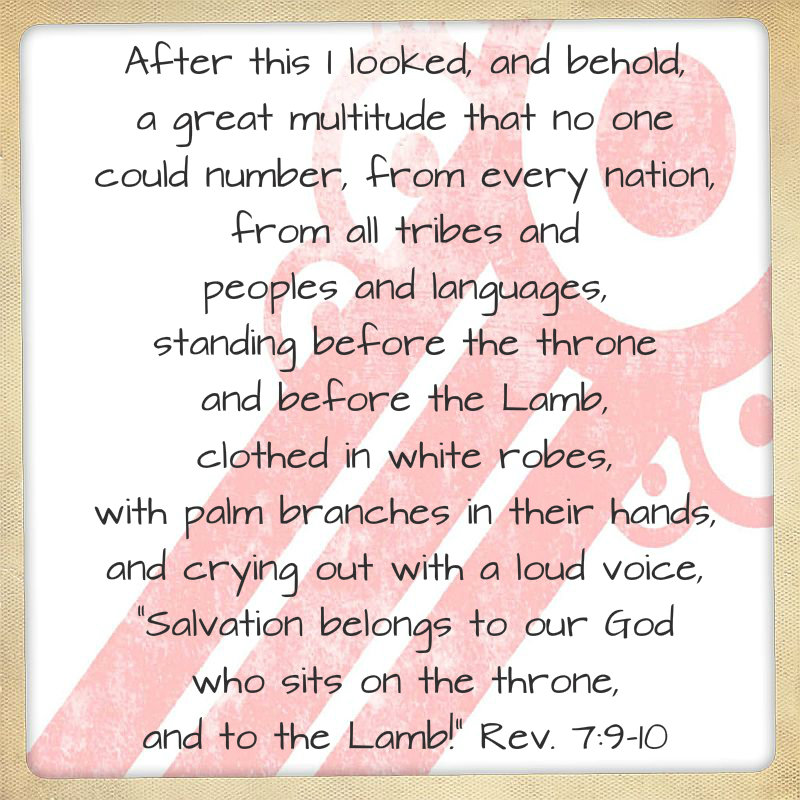
Pentecost yielded 3000 souls. Hallelujah! However, the harvest of souls will be even greater during the Tribulation. (Rev 7:9-10, 13). Hallelujah again!
Was it The Great Awakening? That revival, in three waves, yielded thousands over three waves, (First (c. 1730–1755; Second c. 1790–1840); Third c. 1855–1900), but Jonathan Edwards worried that some of those in the frenzy were simply carried away by emotionalism and societal pressure rather than their own brokenness over sin, marking them as false converts. In response to the very real probability that mixed in with the genuinely converted were many false professors, he wrote The Distinguishing Marks of a Work of the Spirit of God.
Revivals have always been plagued by errors in judgment from leaders and participants alike, Edwards warned, and have suffered from the delusions of Satan. Great care and discernment are always the order of the day. ~God’s Spirit or Human Hysteria? My Time Among the Charismatics, by Jeff Robinson.So it’s hard to count that revival’s numbers and thus its effects.
So what was the greatest revival ever? For sure?
It was Nineveh that yielded 600,000 souls for the glory of God. It was and still is the largest harvest God has effected to date. In addition, we know that was a genuine repentance and coming to faith, because first, the Bible said so, and second, the LORD stayed His hand in destroying the city. (Jonah 3:5, 10).
How do we know it was around 600,000 souls when the only number mentioned in regards to Nineveh is 120,000? Jonah 4:11 says,
And should not I pity Nineveh, that great city, in which there are more than 120,000 persons who do not know their right hand from their left, and also much cattle?
‘Not knowing the right hand from the left’ is a Hebrew idiom meaning ‘children’. Children don’t know their right hand from their left. Extrapolating the number of children and assigning them to two parents, historians and theologians estimate the city was populated by about 600,000. Its size also (three days’ walk) indicates a populous, bustling city of this magnitude.
By comparing these revivals at Pentecost, Nineveh, and the Tribulation we can praise God for His continuing and marvelous ongoing work in salvation. We will have lots of company in heaven! As Jonah said, “Salvation belongs to the Lord.” (Jonah 2:9). He will glorify His name by His mighty power to deliver men from the darkness of bondage to sin, speaking life into their dead bones,and resurrecting them to eternal life. Praise the Lord!
Our pastor began a new series Sunday on Jonah. He is taking it slow and luxuriating in our verse-by-verse exposition, which means I am too.
I want to say how delighted that he opened the sermon by explaining that the Book of Jonah, with all its supernatural wonders, and especially the great fish swallowing the prophet, was history and really happened as the Bible says. As the wrongly attributed George Orwell quote goes, “In a time of deceit, telling the truth is a revolutionary act.”
Don’t take for granted both the real and spiritual slings and arrows that are flung against your pastor for being brave in preaching the unvarnished truth to a skeptical world. Be sure to pray for him for his spiritual, physical, and emotional health and well being.
I love the prophets and I love the book of Jonah. So on the Monday after our pastor delivered the sermon I listened to four sermons on Jonah, and on Tuesday I listened to one more. There are multiple layers in Jonah, lots of deep, rich aspects one could go in the journey through this wonderful book. I know our pastor will bring out many truths as we sit under his preaching throughout the summer.
But being practical and being logical, and having been a mariner in my younger days, there was one question that bugged me. I could not find an answer to it in any sermon, commentary, or study Bible note. Until it hit me. It hit me like a thought-comet the Holy Spirit flung at my mind.
Here is the scene:
The LORD hurled a great wind on the sea and there was a great storm on the sea so that the ship was about to break up. 5Then the sailors became afraid and every man cried to his god, and they threw the cargo which was in the ship into the sea to lighten it for them. But Jonah had gone below into the hold of the ship, lain down and fallen sound asleep. (Jonah 1:4-5).
The storm was rough. The word ‘hurled’ in describing the Lord’s hurling of a storm is the same word that was used to describe King Saul’s hurling of the spear to David. This was not an ordinary storm, and the sailors knew it. Mariners don’t exaggerate. If anything, they understate the height of the waves or the intensity of the storm. Later, with a cup of grog in hand, they might say, “Aye, the boat bounced a bit.” Or “The waves were stirring all right.” Sailors are tough.
So it’s notable that the sailors were afraid. The word in Hebrew is terrified, also reverent. They knew it was some god that was doing this and they were religiously afraid. They prayed to whichever god they followed to appease him or her.
Before throwing over the cargo, the sailors would have been shortening sail. Billowing sails in a storm blow out and become tatters. So they’d reef the main and take in the jib. When that doesn’t work they take in the main sail completely and go under bare poles. They would throw the attached anchor overboard to help stabilize the boat. They would shift ballast in the hold. They would cut the dinghy away if they had one. Then they would throw over the cargo. Last, they pray, because foxholes are filled with praying people. Activity on a boat during a storm is at a pitched and chaotic level.
Does anyone know where the love of God goes when the waves turn the minutes to hours? Gordon Lightfoot, The Wreck of the Edmund Fitzgerald
It is also loud. In winds that high, the waves roar, and even the spray is loud. The spray and foam mix with the air and it’s hard to breathe, you’re breathing water half the time. The high winds whistle and beat against the mast and buffet the sailors. The waves slam and beat against the boat, which in turn creaks and makes all manner of tortured sounds. Mariners have to scream to be heard when they give directions, and when the wind becomes too loud, they just use hand gestures. Sometimes that doesn’t even work because darkness and spray obscure all sight. Anything on deck or below deck not in place or lashed down moves, skids, flings around like crazed maniacal ping pong balls.
Though the above activities are not mentioned, that is what they would have been doing. When the usual marine protocols failed, the sailors resorted to a last resort: throwing the cargo overboard. This lightens the boat and makes it bob in the water higher, so the tall waves have less chance to over-swamp the boat and capsize it or break it apart. Sailing with cargo is a money-making enterprise, and you do not want to anger the ship’s owner by having thrown over what amounts to his money. So when we read that the sailors threw over the cargo, this is very last resort.
If you’re down below, sailors have to tie themselves in or raise the bunk boards, so they aren’t flung across the cabin like a rag doll.
Against this backdrop, Jonah was asleep. Depending on the translation, scripture says not only that Jonah was sleeping, but he was fast asleep, sound asleep, in a heavy sleep, a deep sleep. How, how could Jonah sleep through all this?
It bugged me. It was not normally possible to sleep that way during a storm as severe as described. I pondered this over and over again. It seemed an important juxtaposition, the sleeping prophet as the boat is almost sinking.
Then it hit me. Jonah wanted to die.
The book of Jonah is clear about this fact. It’s stated several times that Jonah wanted to die. He would rather die than obey God in evangelizing the Ninevites. At the least, when Jonah ran away disobeying God it was a usually a death warrant. Jonah would have been aware of the cost for disobedience in the Holy of Holies, and also Uzzah’s penalty for disobeying when he touched the ark.
Jonah wanted to die as seen in Jonah 1:12 when he could have repented on deck and asked God’s forgiveness, but he chose instead to be thrown into the sea, to be tossed around like a peanut then drown alone.
In Jonah 4:3 he explicitly said he wanted to die, rather than live. He said it again in Jonah 4:8. So four times we see Jonah acting in ways that showed or stated he was serious about dying.
Elijah wanted to die because people were so bad. Jonah wanted to die because God was so good.
People who are intent on death often suddenly display an eerie calm. As the sailors were above fighting the storm, what they were really fighting for was their lives. Not Jonah. He was not fighting for life, he was resigned to death. He fell asleep. Deeply.
However potentially even more worrying is a sudden calmness, and many individuals who are contemplating suicide have a sense of resignation that can result in them acting very calm and even peaceful in the days leading up to their attempt. If they have gone from appearing excessively sad and exhibiting mood swings, to suddenly acting calm and peaceful then this can be a very dangerous sign and it’s important to look out for other signs that the calmness may not be all it seems.
Jonah was serious about dying. He wasn’t exaggerating. It wasn’t hyperbole. It wasn’t an idiom. He really preferred death to obedience, death to being an instrument of God’s compassion and love toward the pagan and evil Ninevites.
Elijah the prophet wanted to die, too. After the showdown against the Prophets of Baal and Queen Jezebel, we read,
But he himself went a day’s journey into the wilderness and came and sat down under a broom tree. And he asked that he might die, saying, “It is enough; now, O LORD, take away my life, for I am no better than my fathers.” 5And he lay down and slept under a broom tree. (1 Kings 19:4-5a).
Elijah’s sleep was a regular sleep, a completely different Hebrew word than Jonah’s deep sleep. Another difference is that Elijah wanted to die because people were so bad. Jonah wanted to die because God was so good. (Jonah 4:2-3).
I wonder if Jonah spent three days in the belly of the fish rather than one day, or one minute, because he hoped to die again. Maybe as the fish swallowed him, he was thinking, “OK, this is convenient, no one lives in a fish, now I can die!” But when it didn’t happen and didn’t happen, and on a third day it didn’t happen, then Jonah prayed his prayer. I wonder if it was his stubbornness kept him inside a foul, airless, acidic, sewage, rotting belly of a fish for all those days, only praying when he realized the Lord was going to keep him alive no matter what. Sigh. So realizing the Lord was going to supernaturally keep him alive anyway, he prayed his famous prayer in Chapter 2 and was released. Because in chapter 4 he said two more times he still wanted to die.
Who or what is your life ring? Who do you call for your S.O.S.?
So that’s the story of the death-seeking Jonah. It tells us a lot about him on that boat, that he wanted to die rather than see thousands come to Christ. That he could sleep amid a hurricane. God dealt graciously and kindly toward Jonah.
Which is good, because He deals with us graciously too. When we complain, run from Him, exhibit racist tendencies, or are just knowingly but stubbornly resist His will, He is patient. The Book of Jonah ends with a question that once again displays God’s love:
“Should I not have compassion on Nineveh, the great city in which there are more than 120000 persons who do not know the difference between their right and left hand, as well as many animals?”
Should we not have compassion on the lost, as God seeks their salvation and is slow to anger, that all would repent? We were rebellious, once, too. The LORD is gracious and compassionate, slow to anger and rich in love. (Psalm 145:8).
Here are some essays, photos, and thoughts I’ve gathered along the way this week. I found them interesting and edifying. I hope you do too.
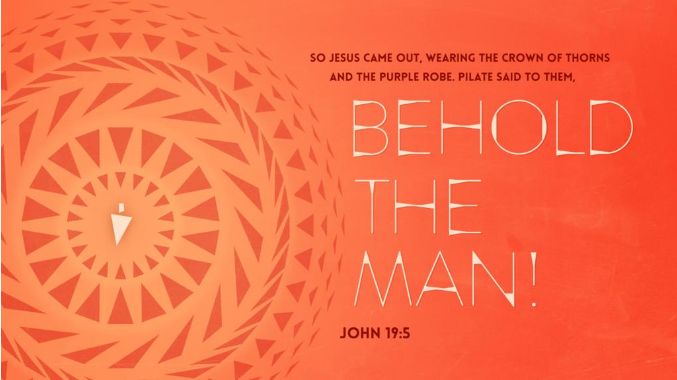
First, ponder that Christ same as a man for sinners. A short picture verse from Logos, but a powerful one with rich layers of meaning. Do you behold the Man?
Sunny Shell at Abandoned To Christ with a thought-provoking poem, It Matters Not.
It’s summer. Are you considering going on that women’s retreat? Jen Oshman at Oshman Odyssey has some practical and edifying advice before you click “Register”.
Is it true that the first time the Pre-Tribulation rapture was preached was in the 1800s from John Darby, who supposedly invented the “theory”? Of course not. Here is Way of Life with a historical piece outlining the facts of When Was the Pre-Tribulation Rapture First Taught?
In the essay Moses Accuses You, Jennifer at One Hired Late In The Day reminds us that the Jews’ hunger for a political kingdom blinded them to the eternal kingdom.
At Practical Theology for Women we read about Giving Gifts the Receiver Wants. She is reading Leviticus, which is all about gifts. With Mother’s Day just passed, Father’s Day ahead, and Wedding Season upon us, it’s interesting to think about the relationship between gift giver and gift receiver.
Tony Reinke posted My Recent Smartphone Feature Articles. I’m reading his newest book 12 Ways Your Phone is Changing You along with a number of folks at church, and we all love it. I don’t even have a smartphone or any cell phone, and the book is completely applicable to any technology. It isn’t anti-phone, it’s about making smart choices with our time- and so much more. If you don’t care to get and read Reinke’s book, the link brings you to several essays containing the meat of his message. I recommend it.
Samuel D. James at Mere Orthodoxy has some advice for budding writers. With the advent of blogs, eBook platforms and other technological innovations, getting published is more accessible than ever. But should you be published? Here is his advice on how to start writing seriously.
Apologist and all around brilliant person Robin Schumacher at Confident Christians has a good series on Counterfeit Christs. Himself raised in church but did not become a believer until age 19, Dr Schumacher is aware that many people in churches profess Christ but do not possess Him. This series illuminates the problem and offers solutions.
Julie-Ann Baumer is a Maine historian who focuses on Lewiston-Auburn area. I lived and worked in this area for many years so I follow her blog. He recently wrote about the first engagement of the Revolutionary war. Or rather, the first naval engagement of the Revolutionary War. It happened in Machias Maine and it was the incident involving the Lexington of the Seasand the ship Margaretta. Now you can wow your friends on the July 4th festivities with some Independence trivia. While you’re at it, look up the sinking of the Gaspee, which happened in April 1772 in Rhode Island. Also very interesting.
Looking for summer reading ideas? Solid Food Ministries does a yeoman’s work in reading, reviewing, and rating edifying books. Give them a look-see. On Goodreads, they have read 201 books. They are also on Facebook.
It’s lawn mowing season! Even when there’s a tornado. The Canadian #TornadoMowingMan is taking social media by storm. Ha ha pun intended. BBC has the story.
Victoria Elizabeth Barnes writes about Choosing a Beach House with her parents. Aesthetics, family dynamics, and fervent personal opinions collide. Hilariously.
That reminds me … beach season is here!!
Enjoy the week, the weather, the beach, the whatever you’re doing. Summer is short, no matter where you live. Or as Shakespeare said in Sonnet 18,
“It was a God-thing!” “The sign couldn’t have been more clear!” “It surely wasn’t a coincidence, it must have been from God!”
Have you ever heard anyone say any of these things? Or said them yourself?
Even after salvation we are sinful creatures. It would be so much easier to interpret circumstances rather than interpret the Word. We see what is happening in our lives and immediately interpret that these circumstances are in fact signs from God, omens, and ‘Godly coincidences’ that are directly and presently speaking to us. We go ahead and make decisions based on them.
But should we? Let’s look at two examples of interpreting circumstances, from the Word of God. Thanks goes to my wonderful and brilliant pastor for preaching this yesterday. Here, I summarize part:
We all know the story of Jonah. He was a Prophet of God, who prophesied to Israel. (2 Kings 14:21-25). He prophesied good things to Israel. It was during the reign of Jeroboam II King of Israel, when God was bestowing unmerited grace upon the people even though the King did evil in God’s eyes. The nation’s boundaries were being set and prosperity was growing. Therefore, likely Jonah was popular as a Prophet.
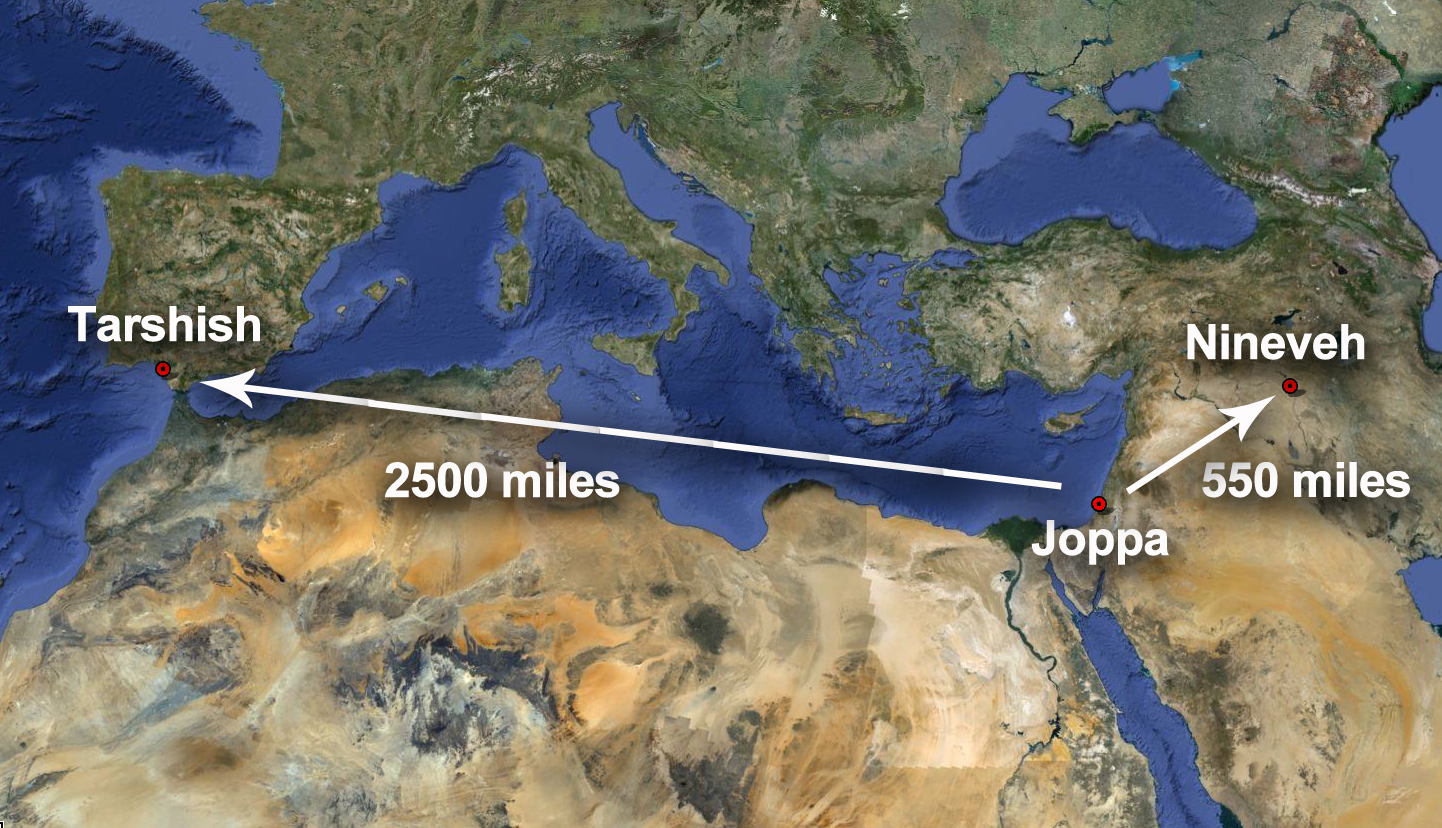
Then one day the word of the LORD came to Jonah. Jonah was told to travel to the city of Nineveh in order to prophesy to them. Nineveh was evil, they were an enemy, and Jonah was aghast. He refused. Effectively resigning his mantle, Jonah ran to Joppa instead, a seaside city where Jonah intended to grab a ship to Tarshish. This was the opposite direction of where God had told Jonah to go.
When Jonah got to Joppa (now Jaffa), he saw that there was a ship at harbor. Jonah paid the fare and flung himself into the bowels of the vessel, tired beyond bearing, and went to sleep. Though this next scene is a little beyond the time frame of my focus today, I can’t resist the glorious language from Herman Melville’s Moby-Dick:
All dressed and dusty as he is, Jonah throws himself into his berth, and finds the little state-room ceiling almost resting on his forehead. The air is close, and Jonah gasps. then, in that contracted hole, sunk, too, beneath the ship’s water-line, Jonah feels the heralding presentiment of that stifling hour, when the whale shall hold him in the smallest of his bowel’s wards.
Did Jonah feel vindicated when he saw a ship at sail, ready to voyage with the next tide? Did Jonah say, “See? It is providential! This must be what God wanted, since a ship appears before me at the ready!”
Interpreting circumstances is a dangerous thing.
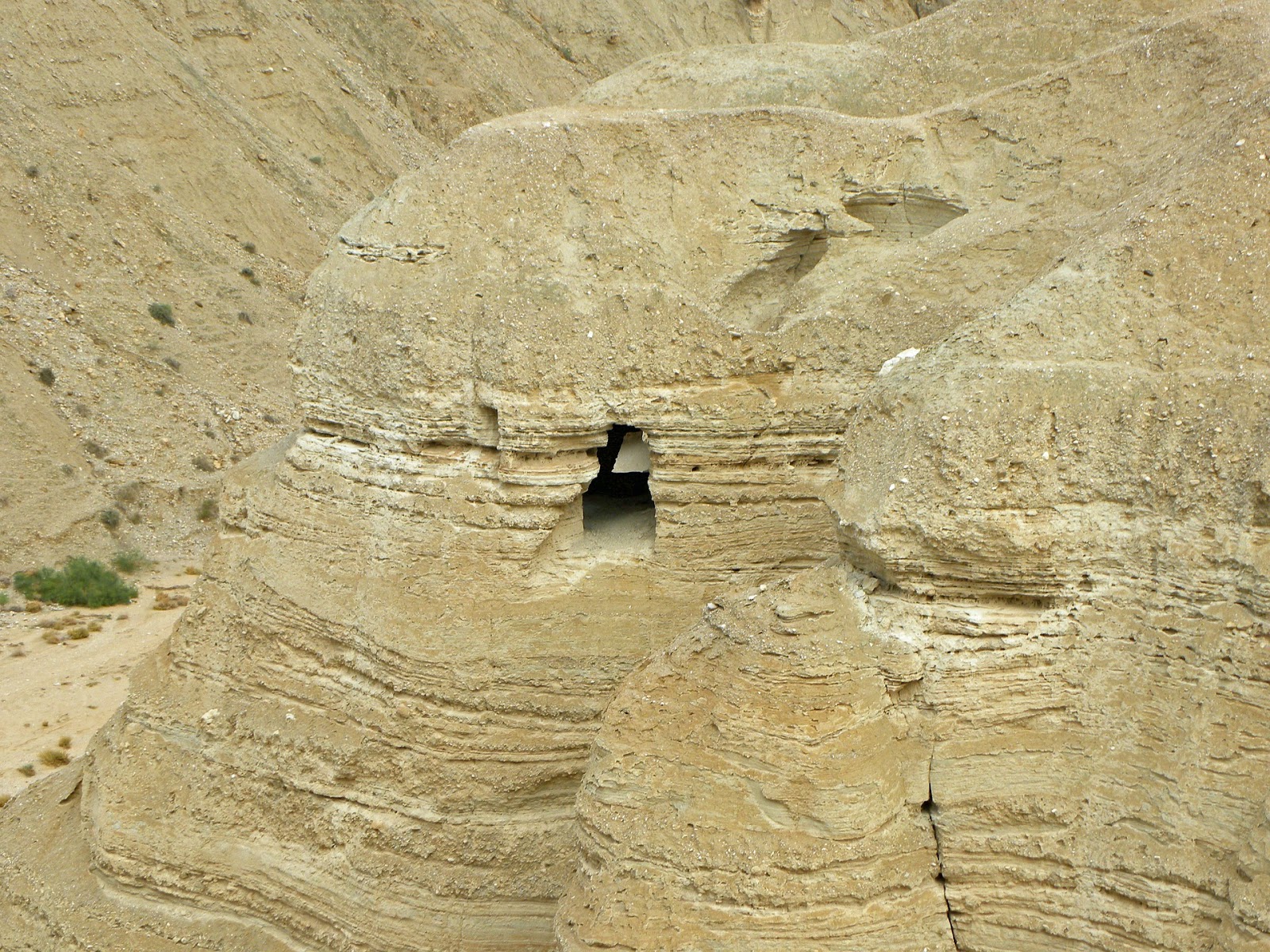
Let’s look at David. He was fleeing from King Saul, who was seeking David’s life. David and his men huddled in a cave in the wilderness of Engedi, hiding from the fire-breathing king. Saul suddenly appeared in that exact cave. There are hundreds of caves at Engedi. Hundreds. Yet Saul entered the exact cave in which David hid.
Pixabay, free to use. Hundreds of caves dot the En-gedi desert.
David’s men interpreted circumstances, saying, ‘Look, here is the king! It must be the hand of God delivering the king to your sword!’
After stealthily snipping a bit of Saul’s robe David felt convicted. He said to his men,
“Behold, this day your eyes have seen that the LORD had given you today into my hand in the cave, and some said to kill you, but my eye had pity on you; and I said, ‘I will not stretch out my hand against my lord, for he is the LORD’S anointed.’” (1 Samuel 24:10-11).
The word of the LORD had not come to David. David knew that the LORD’s anointed were protected by God, raised up by Him to perform His will and plan. David knew that the LORD Himself had placed Saul into kingship and it was the LORD’s business to remove Him if He so wanted. It was not up to David. (1 Samuel 26:10)
“If we detach ourselves from the Word, we will never interpret circumstances correctly.” ~Mark McAndrew, Jonah 1:1-3, June 4, 2017
What Pastor Mark meant here is not that we interpret signs and omens, but that when things happen and we want to know what to do or how to think about it, we refer back to the Word. David knew God’s word and David knew His character. David acted according to this knowledge, not according to subjective impressions of the circumstances.
Romans 8:14 says “For all who are led by the Spirit of God are sons of God.” So we know that the Spirit leads because He promised to lead us. But the Spirit doesn’t speak to us except through His word. And when you start thinking that God is giving you special revelation outside of His word, you have diminished the singular authority of scripture.
We don’t know whether our interpretation of the circumstance is “a heavy conscience, a strong personal desire, or emotion-driven enthusiasm” as Jeremiah Johnson wrote at the link above. If David had decided to kill King Saul because Saul had showed up in the cave at that moment and had slain Saul, it would have been grievous sin for David. If Jonah had deduced that because the ship was ready to sail in the direction he wanted to go, it must be providential, it would have been a sin for Jonah. There are always ships ready to sail to Tarshish! Jonah would be simply rationalizing his own personal desire and back-hoeing the Spirit into his sin, which is blasphemy. Johnson wrote,
We ought to look for the Holy Spirit’s leadership, but we must be cautious about assigning to Him responsibility for our words and actions. Our feelings are not necessarily a trustworthy source of information, nor are they an accurate indication that God has a special message to deliver to us or through us.
God’s people need to be circumspect when it comes to His leadership, particularly through subjective impressions and inclinations. Moreover, we need to be wary of those who hijack the prophetic seat and presume to speak for God. Source
Some throw out a fleece for guidance, some look for open doors or windows. Satan can create circumstances too. Remember Job. Satan brought about the many different circumstances that plagued Job. Stay away from interpreting signs and circumstances and just interpret life through God’s word.
Book Review: Experiencing God, by Henry Blackaby : 9Marks
[Remember, Blackaby was the one who ‘legitimized’ interpreting God’s will through circumstances, introducing the concept to conservative evangelicals]
Kay Cude is a Texas poet. Used with permission. Artist’s statement below. Click to enlarge.
For too many years I had little concept of what “walking in the Light of Christ” actually meant, even less what it involved! And for those countless years, even though I attended Sunday school and church, I somehow missed the “truth” about that walk! It was made real to me when I finally realized that my flesh was in control of “my” journey. “My way” had led me into years of Biblical ignorance and error and opened the door to deception. What a shock it was when I realized where I was spiritually…
We must each reach that defining point in our lives when we really desire to understand, believe and act upon these TRUTHS:
“The heart is more deceitful than all else and is desperately sick; who can understand it?” (Jeremiah 17:9)
“Enter through the narrow gate; for the gate is wide and the way is broad that leads to destruction, and there are many who enter through it. For the gate is small and the way is narrow that leads to life, and there are few who find it.” (Matthew 7:13-14)
Test yourselves to see if you are in the faith; examine yourselves! Or do you not recognize this about yourselves, that Jesus Christ is in you– unless indeed you fail the test? (2 Corinthians 13:5)
…”If you continue in My word, then you are truly disciples of Mine;” (John 8:31)
“For our struggle is not against flesh and blood, but against the rulers, against the powers, against the world forces of this darkness, against the spiritual forces of wickedness in the heavenly places.” (Ephesians 6:12)
“THY WORD IS A LAMP UNTO MY FEET, AND A LIGHT UNTO MY PATH.” (Psalm 119:105)







 the-end-time.org