Posted in prophecy, Uncategorized

Pleading for a reduced charge

People who are unsaved have a list of charges against them. These are the sins (crimes) they have committed against Jesus during their lifetime. At the end of time, Jesus will assemble all the unsaved and judge them. The judgment is not whether or not they will be going to heaven or hell. The one and only standard against which people are judged is whether they believed in the Son.

They will be judged on their crimes. God keeps track.

And I saw the dead, great and small, standing before the throne, and books were opened. Then another book was opened, which is the book of life. And the dead were judged by what was written in the books, according to what they had done. (Revelation 20:12).

For the Son of Man will come in His Father’s glory with His angels, and then He will repay each one according to what he has done. (Matthew 16:27)

This is not just a New Testament concept. It is in the Old Testament too, seen in the eschatological book of Daniel.

A river of fire was flowing And coming out from before Him; Thousands upon thousands were attending Him, And myriads upon myriads were standing before Him; The court sat, And the books were opened. (Daniel 7:10).

Unsaved people are judged according to their deeds they did in life, and their words, and their thoughts. (Luke 8:17, Romans 2:16, Matthew 12:37).

The sea gave up its dead, and Death and Hades gave up their dead, and each one was judged according to his deeds. (Revelation 20:13).

John MacArthur said of this verse,

The record, by the way, for each person will be unique and so will the punishment. That’s an important thing to think about. Hell is not like some great big hole where everybody gets thrown into the same place with the same level of torment. No. Every person’s life will be evaluated uniquely and every person’s punishment will be consistent with that unique evaluation.
For example, and I need to explain this cause it’s very important to understand there are degrees of punishment consistent with degrees of sinfulness. … So there is a more and a less tolerable punishment, fitting the level of sin.

Knowing this, all this foundation I just laid, that we’re judged on our deeds, thoughts, and words, and that the punishment corresponds in relativity to other how many crimes they committed, let’s turn now to two other verses.

And falling to his knees he cried out with a loud voice, “Lord, do not hold this sin against them.” And when he had said this, he fell asleep. (Acts 7:60).

Then Jesus said, “Father, forgive them, for they do not know what they are doing.” And they divided up His garments by casting lots. (Luke 23:34).

What does this mean? I’m sorry that after looking at the scriptures and many commentaries, I do not have an answer. I don’t know how this plea turns out in the heavenlies. But my thoughts are, if punishment is relative, and if we plead with God to forgive a sinner’s sin against us, would He remove that sin from their charge, reducing the severity of the punishment by a jot or a tittle? Stephen prayed so. Jesus did as well. It’s worth thinking about.

You’ve heard, no doubt, in the earthly judicial system about a reduced charge. You’ve seen lawyers on TV plea bargaining and listing the charges and then the judge might decide to remove a charge or two and the person serves a sentence with a lesser degree of punishment. There legal terms are familiar to to you.

Recently the adult son of a well-known theologian-pastor was charged with two felonies and two misdemeanors. When it came time for sentencing they decided to forego a trial. The judge wiped one felony and two misdemeanors from the list of this man’s charges and the man was only charged with one misdemeanor. He’s serving 18 months of probation and no jail time. Some charges were removed and thus the punishment was lessened.

Jesus commanded in the Lord’s prayer to forgive those who trespass against us. Is it too bold to plea that He remove the charge of those who trespassed against us from their list of crimes thus lessening their punishment? Stephen did not think it too bold. Does God actually do so if we pray it? I do not know.

I do know that when I pray for my enemies, and specifically for God to remove the charge of their crimes against me from the list of crimes which we know are ultimately perpetrated against Him, it is a prayer of grace and humility that changes me.

Do nothing from selfish ambition or conceit, but in humility count others more significant than yourselves. (Philippians 4:3).

Can I forgive as God asked us to forgive? Can I pray this as Stephen had? If I think of others more highly than myself, I will.

Gill’s Exposition says of the Acts 7 verse and Stephen:

Lord, lay not this sin to their charge: do not impute it to them, or place it to their account; let it not rise and stand in judgment against them, or they be condemned for it; grant them forgiveness for it, and for every other sin: there is a great deal of likeness between Christ and this first martyr of his at their deaths; Christ committed his Spirit into the hands of his Father, and Stephen commits his into the hands of Christ; both prayed for forgiveness for their enemies; and both cried with a loud voice before they expired; for so it follows here,

Pray for your enemies, for those who have done you wrong. God will dole out the punishment as He wills, the Lord knows, I do not know. But meanwhile, we grow in grace when we think of others more highly than ourselves, even our enemies, and plead with the Lord to remove this charge from their list of deeds and not hold it against them.
angel lamb's book of life

Posted in encouragement, Uncategorized

The death of a Christian

And he kneeled down, and cried with a loud voice, Lord, lay not this sin to their charge. And when he had said this, he fell asleep. (Acts 7:60)

Today I want to look at the kind of death Christians are afforded, as opposed to the unsaved. Tomorrow I’ll look at what Stephen cried out, the mater of pleading to the Judge for a reduced charge.

Death is the final frontier for unsaved people. That is the very edge of the precipice of knowledge which the unsaved person can tread. Beyond death, they do not know. And in the not knowing, they fear. What happens after death? Is there life? Do we blink out of existence? Death is the final frontier, and to the unsaved, ti’s one from which no one ever returns. There is no hope.

William Shakespeare’s character Hamlet said,

Thou know’st ’tis common; all that lives must die,
Passing through nature to eternity.

To grunt and sweat under a weary life;
But that the dread of something after death,
The undiscover’d country from whose bourn
No traveller returns, puzzles the will

It surely puzzles the will. The world has spit up millions of poems, stories, essays, and books musing on the undiscovered country, and all are in vain, they’re only wind.

Yet that undiscovered country is one the born-again person knows well, from His word and through prayer, we are familiar with the other side. When, as Hamlet opined, ‘we shuffle off this mortal coil’ we know that we know that we know what lies ahead: glory, peace, perfection, and Light.

Some were blessed with glimpses of it on this side of the mortal coil. Stephen, when in the throes of preaching God’s word to the Pharisees, was seen to have the countenance of an angel, because he saw the Lord standing beside the father. Paul said he had been afforded a glimpse of glory so inexpressible and beautiful he had no words to describe it. Moses, upon having been with God atop Mt. Zion, still permeated with His glory when he descended the mountain, his face shining so brightly the people were afraid.

When the unsaved attempt to gaze into the beyond they only see darkness, question marks, and unwelcoming shadows and gloomy fear, behind which their perception stalls.

The saved person has had their heart regenerated, eyes opened, and mind illuminated to the scriptures, knows what comes after death. Life! The peace one feels now that one is no longer at enmity with the Savior permeates all of a born-again person’s life, even into and through death. Barnes’ Notes says of the Acts scripture above:

how peaceful and calm is a death like that of Stephen, when compared with the alarms and anguish of a sinner! One moment of such peace in that trying time is better than all the pleasures and honors which the world can bestow;and to obtain such peace then, the dying sinner would be willing to give all the wealth of the Indies, and all the crowns of the earth. So may I die and so may all my readers – enabled, like this dying martyr, to commit my departing spirit to the sure keeping of the great Redeemer! When we take a parting view of the world; when our eyes shall be turned for the last time to take a look of friends and relatives; when the darkness of death shall begin to come around us, then may we be enabled to cast the eye of faith to the heavens, and say, “Lord Jesus, receive our spirits.” Thus, may we fall asleep, peaceful in death, in the hope of the resurrection of the just.

What a blessing the Lord has given us, His imparted knowledge of what comes next. Even better, we have the assurance of His presence and love throughout eternity. No cold darkness for us! No gate of hell with sign affixed, as Dante mused,

“Lasciate ogne speranza, voi ch’intrate”, or “Abandon all hope, ye who enter here.”

Instead we may hear, as the servant in the parable heard,

‘Well done, good and faithful servant. You have been faithful over a little; I will set you over much. Enter into the joy of your master.’ (Matthew 25:23).

Hamlet soliloquized upon contemplation of his suicide, ‘ to sleep, perchance to dream.’ No, friend, we have the assurance of life beyond life, love, light, activity, and a reality so real this present mortal coil will become the dream instead.

Beyond this mortal coil, we will live where righteousness dwells. Pray to thank the Lord for His many manifold blessings.

new heavens rigteousness dwells verse
EPrata photo


Posted in prophecy, Uncategorized

The Man Who Will Change the World

On November 4, 2008, Barack Obama was elected President of the United States. Two days ahead of president-elect Barack Obama’s inauguration, the Independent UK newspaper published this article:

John Rentoul: The man who will change the world

There will setbacks, there will be frustrations, but Barack Obama’s presidency heralds a better future for his country and for us all.

It’s nearly 9 years since that was written. Are you having a better future yet? If so, was it thanks to Obama? The article continued,

On that slight prospectus, he secured the support of the voters of the United States and, by proxy, the non-voters of the rest of the world, to assume leadership not just of the most powerful nation but of the entire planet.

I was unaware that by proxy, the American President was actually a Global King.

But that is how they viewed Obama. “The world will be a better place” the author concluded. He was sure that Obama was a savior come to rescue us from…whatever the secular world believes we need rescuing from.

Obama’s book, The Audacity of Hope, then and throughout his 2 terms, co-opted the word hope and twisted it into a political slogan that drained it of meaning. The Gentile world hopes for what they cannot see, do not know, and yearn for an unnameable something. They dwell in a cloud of foggy wisps of aspirations, desires, wishes, expectations, that cannot ever be grasped.

The born-again Christian knows that “faith is the assurance of things hoped for, the conviction of things not seen.” (Hebrews 11:1). Assurance and conviction are key words there.

The Obama debacle was a forerunner (in my opinion) of how the world seeks and will embrace the final false savior- The Antichrist. They look for a savior, a man, who will bring them temporal comfort, political savvy, global dynamism. They want someone handsome, accomplished, smooth-tongued, who will tell them everything will be all right and all they have to do is ride his coattails.

Children, it is the last hour, and as you have heard that antichrist is coming, so now many antichrists have come. Therefore we know that it is the last hour. (1 John 2:18).

However, there is a prophecy that one is to come who will embody all the negative qualities of all sinners who ever existed. A man who will be so full of sin he is called The Man of Sin. (2 Thessalonians 2:3).

They want everything except the Man-God who tells them they need forgiveness of sin, to sacrifice self for neighbor, to help the poor and widows, to obey, to submit, and to release their hold on this world. Those words and concepts are anathema. The Man of Sin will speak much more flatteringly to the people and ignite their heart of what they really want. They want luxuries, delicacies, cargoes, and splendors. (Revelation 18:14). In other words, they want this world.

Anyone who does not believe in Jesus is an antichrist, little ‘a’, as John wrote-

In his place shall arise a contemptible person to whom royal majesty has not been given. He shall come in without warning and obtain the kingdom by flatteries. (Daniel 11:21).

The coming antichrist will be a man, a regular, mortal man, but satanically imbued with charisma, charm, apparent skill, deftness, and solutions, the world will go after him, hard.

This prophesied time that is not yet here, will be a time like the author wrote of when Obama rode the crest of popularity and was actually whispered to be a savior. The above author’s glee and relief that a savior in Obama had come and the world will be fixed was not just his own, most of the world thought so too. Amplify that wave of popularity by ten thousand million and you have an idea of the reception the Antichrist will receive.

There is only one Man who can ever fix the world.

Jesus Christ is that Man, who is Man-God. He is creator of the world, reader of hearts, intercessor of His people, King above all, bringer of wrath.

He already came, taught, lived a sinless life, died as a sacrifice for redemption’s sake, imputed His righteousness to those who confess Him, ascended into heaven, and has been building His church. He will come again. He will allow the Antichrist to have his time, prophesied for three and a half short years, but then The Man-God, Savior of the world will return in wrath and kill those who make war against Him.

Repent now, while Jesus is building His church and receives with grace, not wrath. Your sins would be forgiven, and thrown into a place as far as the east is from the west.

For whether is easier, to say, Your sins be forgiven you, or to say, Arise, and walk? (Matthew 9:5)

Barnes’ Notes on the Bible

For whether is easier to say – Thy “sins be forgiven thee; or to say, Arise and walk?” The one involves divine “power,” the other divine “authority,” and neither can be done but by God. One is as easy as the other; and to be able to do the one, involves the right and the power to do the other.

Jesus is the only savior. Not any other man. Turn to Him now.

cloud

Posted in prophecy, Uncategorized

Why I love prophecy

In 2008 Pastor Phil Johnson wrote,

My own assessment would be that evangelicalism’s spiritual condition at the beginning of the twenty-first century is reminiscent of the medieval church just prior to the Protestant Reformation.

No, I take it back. Things are much worse among evangelicals today than they were in the Catholic Church in those days. Modern and postmodern evangelicalism is just like medieval Catholicism was—only more superficial.

He made the same assessment again last week during the Reformation reminiscing.

The news just keeps getting more bewildering. Sometimes I look at people who perpetrate these heinous crimes and see these faux-pastors who perform blasphemous services and I think, Jesus please come.

Prophecy promises us that He IS returning. We don’t know when, but I am glad to know, as I saw on Twitter, that “Evil has an expiration date.”

Prophecy is all about movement. It is always moving toward fulfillment. For example, the lineage of Jesus was ordained from the beginning. Each generation of unions resulting in a child was a movement toward Mary’s birth of the Messiah. Sometimes prophecy seems to be fulfilled suddenly, sometimes extremely so by those who have not been following it. Other times it was impossible to follow, as in the generations that preceded Jesus. Who knew that 1300 or so years prior to the birth of the Messiah that Rahab’s faith would save her and that she would subsequently be included in the line that would produce the Savior? Who could know that the perfect line of generations that came before Him would result in the One who would fulfill all? So sometimes it seems to come out of the blue. But God’s hand is always moving, His Divine Providence is always working in the world.

Divine providence is the means by and through which God governs all things in the universe. The doctrine of divine providence asserts that God is in complete control of all things. This includes the universe as a whole (Psalm 103:19), the physical world (Matthew 5:45), the affairs of nations (Psalm 66:7), human birth and destiny (Galatians 1:15), human successes and failures (Luke 1:52), and the protection of His people (Psalm 4:8).” (source)

So everything that happens, He is aware of, causes, or allows. And that means everything that happens is on a path toward fulfilled promises, including prophecy.

Is the movement speeding up? It feels like it. And what it is speeding up toward? Remember, the last days of the Tribulation is the end this age. It is the culmination of all of God’s works regarding sin, with the exception of the short rebellion at the end of the 1000 year Millennium Kingdom.

If you are interested in studying eschatology AKA prophecy, AKA Last Things, AKA prophecy, good for you. Prophecy is pre-written history. It is a demonstration of the Bible’s inspiration by the Holy Spirit and its accuracy as being a book delivered to us outside of time by our sovereign and omnipotent God. He proves Himself over and over by its accuracy and fulfillment. Israel’s re-emergence in 1948, an prophetic fulfillment that occurred in some of our lifetimes, is an example. The fulfillment of prophecy and its constant movement toward fulfillment is the very word of God, validated.

God accomplishes prophecy: “Who confirms the word of His servant, And performs the counsel of His messengers; Who says to Jerusalem, ‘You shall be inhabited,’ To the cities of Judah, ‘You shall be built,’ And I will raise up her waste places;” (Isaiah 44:26)

Ultimately, we study prophecy because Christ is THE great subject of it, since the beginning. We love prophecy because we trust His word, we love God’s timeless sovereignty, and we want to seek the face of Christ, the great subject of all time.

For Moses truly said unto the fathers, A prophet shall the Lord your God raise up unto you of your brethren, like unto me; him shall ye hear in all things whatsoever he shall say unto you. And it shall come to pass, that every soul, which will not hear that prophet, shall be destroyed from among the people. Yea, and all the prophets from Samuel and those that follow after, as many as have spoken, have likewise foretold of these days.” (Acts 3:22-24).

Posted in encouragement, Uncategorized

What happens to children who die?

When the September 11, 2001 attacks happened, television interviewer Larry King invited pastor-teacher John MacArthur to his program to discuss the event. King asked MacArthur, “What happens to babies who die?”

MacArthur simply replied “instant heaven.” Knowing the vagaries of television, MacArthur explained later that he had purposely given a clear and short answer because he knew about sound bites. However, on the following Sunday he chose to further explain to his own flock the biblical reasoning behind his stance.

The Bible doesn’t definitively declare one way or another where the unborn, stillborn, babies, and children go when they die. However, there is a cumulative body of scriptural evidence that supports the stance that they do go to heaven.

A horrific church massacre that happened in Texas this past Sunday, and several of the killed were children. A one-year-old, 5-year-old, 7-year-old, were among the killed, as well as a woman who was 8-months pregnant, so that unborn child died as well. I believe there were others, though their ages were not listed among the victims’list yet.

I thought it would be a good time to raise the issue again. What happens to children who die?

I can’t begin to imagine the grief that the parents and relatives feel, especially of the youngsters who were killed. If we are believers,

But we do not want you to be uninformed, brothers, about those who are asleep, that you may not grieve as others do who have no hope. (1 Thessalonians 4:13).

We have hope of Jesus, eternal life, reunion with friends and relatives…and our children.

The 2003 book that emerged from MacArthur’s series on the issue is called “Safe in the Arms of God”.

Tim Challies reviewed it herefavorably.

We mourn when there is a tragedy – of any kind – but “our concerns related to death always seem more profound and heartrending when we are dealing with the death of a child. An accident or illness seems especially tragic and poignant when the life of a little one is lost,” wrote John MacArthur.

According to Genesis 1:26-28, mankind was given the power to produce life in a deathless world. Adam and Eve were expected to “be fruitful and multiply” – to procreate and fill the earth with children who would never know death. God’s original plan was that all lives ever conceived would live for all eternity.” MacArthur, Safe in the Arms of God

We know that sin entered the world and death not only came into it but personally touched Adam and Eve, who lost their son.

I wrote about that here, in an essay titled after the painter William-Adolphe Bouguereau’s rendition of the moment, called “The First Mourning.” Adam and Eve lost their son to violence, and they wept knowing their sin brought its wages: death. No, Abel was not a youngster, but his loss must have been no less agonizing for the parents.

Please take a moment to read it. It’s profound and encouraging.

Yet we are called to love. It is our love that is supposed to make us distinct from all others.

By this everyone will know that you are my disciples, if you love one another. (John 13:35)

Hard, I know. I can’t even tread close to the fire of anger and grief in the loss of a loved one. But knowing the child is safe in the arms of God offers a comfort and a mercy that should dissipate the anger and give room to forgiveness. “Lack of forgiveness destroys relationships” said John MacArthur in a recent sermon “Forgiveness in the Age of Rage.

This lack of forgiveness that destroys our relationships includes our relationship with God. Forgiving the one who murdered a child is necessary. Forgiving God who allowed the death of a child is necessary. Our relationships should be characterized by love, forgiveness, charity, and Gospel.

The little ones who died in the Sutherland Springs church massacre, and also the Sandy Hook elementary school shooting in 2012 where 20 children were gunned down, and all the other little ones who have died throughout the ages due to illness, war, or abortion, are safe in the arms of God.

The book is small and short, but scriptural as to explanations why those who die in the womb, infancy, or young are now safe in the arms of God. You can read it and be comforted or offer it as a comfort to one who is grieving.

The Lord is near to the brokenhearted
and saves the crushed in spirit.
Psalm 34:18

——————————————————–
Further reading

Forgiveness in the Age of Rage

The First Mourning – painting

These essays show from scripture why their authors believe children who die go to heaven.

Charles Spurgeon: Infant Salvation

R. Albert Mohler, Jr. and Daniel L. Akin: The Salvation of the ‘Little Ones’: Do Infants who Die Go to Heaven?

John Piper: What Happens to Infants Who Die?

Posted in discernment, Uncategorized

What does your church use your pulpit for?

A church is not just a building.

It is special.

I am a fan of traditional church architecture and its traditional uses. More on that in a moment.

Reminiscing:
Exterior_of_Trinity_Church,_Newport,_RI

Traditional white steepled churches dotted the New England landscape wherever I went as a kid growing up in that part of the country. Some had bells atop the steeple, which I liked very much. There was something comforting about the ever-present visual of the white church steeple against a blue sky ringing out peals of music or the sound of bells, echoing across the foliage laden hills.

However, I was unfamiliar with what went on inside a church. The flip side of the comforting feeling I felt when looking at the outside of a church or of hearing its bells was changed to one of forbidding mystery and deep disquiet if I ever dared to go inside. I wasn’t saved and never attended church services, even as a kid.

Above, Trinity Episcopal, Newport RI, 1920s postcard

I did visit churches sometimes. I was interested in them from a historical aspect. For example, Trinity Church in Newport Rhode Island was established in 1698, and it is reported that George Washington attended services there. This is not the typical “George Washington slept here” stuff of legend. Washington was heavily present in Rhode Island during the Revolutionary War and Newport was the one among the state’s rotating capitals. Trinity is a gorgeous church, a New England traditional church building for sure.

I was married in a church. That seemed proper.

My mother took me to several churches as a kid, very occasionally when her conscience got too prickly to ignore. I remember the Unitarian Church, sunlight and people sitting on the floor in a circle singing along with a hippie holding a guitar in his lap. That seemed wrong. Although I didn’t like churches much when I went in one, I thought that there should be rows of pews be arranged in such a way that they faced a pulpit. If there was going to be a speaker and a message (some mysterious and incomprehensible message people kept reappearing week after week to hear) then it seemed logical that people would sit in such a way as to give attention to the message that indicated its singular importance.

I was at once attracted and repelled by the church building, its unstated message given through its appearance enough to unsettle my spirit. Church people perturbed me. I watched the church people emerge from the building week after week, but I did not dare join. It was like those folks in Acts:

Now many signs and wonders were regularly done among the people by the hands of the apostles. And they were all together in Solomon’s Portico. 13None of the rest dared join them, but the people held them in high esteem. (Acts 5:12-13).

Churches look the way they do for a reason. And I am of the strong opinion that they should remain looking like they look. The people inside are a set apart people, the pastor inside is set apart and called to preach the true words of heaven. I’m not suggesting churches are holy ground. However, but their existence, looks, architecture, and what goes on inside has meaning and import distinct from any other building and any other activity. Churches should look and act the part.

The church building should be used exclusively for worship, religious education, leader training, and ecclesiastical meetings.

Sadly today, many inside think little of giving over their building and/or their pulpit for profane purposes.

In 2010, a porn star and a pastor held a debate about pornography, the porn star on the “for” side. This “debate” was held in a San Diego church.

In 2014 the very Protestant church built to honor Martin Luther in Speyer Germany was host to an interfaith, ecumenical concert in which an Imam made the call to Muslim prayer.

In 2017, pastor Robert Jeffress of First Baptist Dallas spent 15 minutes of the Sunday service interviewing Roman Catholic television political pundit Sean Hannity at his pulpit.

The Pulpit

The pulpit is the most sacred and exalted place in the church. He who occupies this position stands as the representative of Christ. This is the minister’s first line of offense. From this honored and dedicated place he boldly denounces sin and courageously challenges the devil. From the sacred desk are heard the truths of God, which cut as a two-edged sword, bringing both conviction and contrition to the worshiper. Words of life and death flow from this fount. To this vantage point the penitent looks for the heavenly balm of Gilead. Is it not important then that one’s comportment in the desk give no cause for needless offense and bring no reproach against the name of Christ?

Phil Johnson of Grace Community Church’s stance on using the pulpit follows:

The reason we don’t have debates and dialogues with unbelievers in the worship center at Grace Community Church is the same reason we don’t use the facility for drama, secular music concerts, comedy routines, political rallies, variety shows, Amway meetings, or a host of other activities where an auditorium like that would be useful. Namely, the facility is dedicated to the proclamation of God’s Word and the corporate worship of God’s people. That was a purposeful decision made years ago. The point is not that the physical building itself is a shrine or an idol, but this is one of the ways we keep a sharp focus on what we as a church are most committed to. In other words, our unwillingness to use our pulpit for non-worship events is a strategy, not a superstition.

BTW, although people often use the word _pulpit_ to refer to the lectern on which a preacher places the Bible and his notes, the actual _pulpit_ is the raised platform on which that lectern rests. Remove the lectern and replace it with a table or a stage set, and whatever takes place on that platform is still being done “in the pulpit.”

Just some food for thought for you today. How is your pulpit used?

pulpit


pulpit2

Posted in prophecy, Uncategorized

The war to end all wars: Thoughts on War and Peace

WWI represented a sea change. The technology available by the time that war in Europe broke out was like none ever seen in any previous war. The new technology could kill millions at a time. And it did.

Planes, flame throwers, tanks, poison gas…all created by man for the express purpose of killing in war and used in WWI.

WWI was also known for a stirring slogan, or motto. “It is the war to end all war!”

The is thanks to HG Wells, as this article from Vision describes:

This year marks the centennial of the outbreak of World War I. [1914-1918]. While the so-called Great War quickly proved to be anything but the war that would prevent all future conflicts, the concept is still intriguing: Can a war put an end to war?

HG Wells wrote: “This is now a war for peace. It aims straight at disarmament. It aims at a settlement that shall stop this sort of thing for ever. Every soldier who fights against Germany now is a crusader against war. This, the greatest of all wars, is not just another war—it is the last war!”

We’re all disheartened by war. As a child of the 1960s (born in 1960) the Viet Nam war raged as the bloody backdrop to my entire childhood. Scenes and clips of army men manhandled on stretchers through the jungle, bloody bandages, helicopters hovering over wildly waving tree top greenery, Walter Cronkite intoning the numbers of dead and wounded…all provided a confusing view of the world.

Into my adulthood, the dominating Soviet Bloc was bearishly stomping all over the world, the Berlin Wall went up, President Reagan and the real possibility of nuclear holocaust informed my adulthood as much as it perplexed it. We all felt that the world could end at any moment.

And now today, the North Korean President has intimated he could and will perform an attack on the US in the form of an electro-magnetic pulse. Such an attack, where a nuclear bomb explodes in the atmosphere above any land area emits a pulse that wipes out the electrical infrastructure. An EMP bomb exploded over the central US would impact all 48 of the lower US states by immediately turning off all electronics, including landlines, cell phones, wi-fi, internet, cars with chips int hem, etc. Mass starvation, disease, and violence from societal collapse would do the rest and 90% of the population would die withing the first couple of years.

Wars and rumors of wars have always been with us. It’s rough out there and it has been since almost the beginning. Look at Genesis 4:13-14. Cain had killed Abel. God spoke to Cain and told him his punishment will be that Cain will be a wanderer over all the earth for the rest of his days. Cain immediately worried that he would be killed by anyone who found him.

Cain said to the Lord, “My punishment is greater than I can bear. Behold, you have driven me today away from the ground, and from your face I shall be hidden. I shall be a fugitive and a wanderer on the earth, and whoever finds me will kill me.”

Only one chapter after the Fall we not only have murder by Cain against Abel but Cain knows that people everywhere are violent and likely as not would just kill him as to invite him in for a cup of tea.

As a child and teen and young adult I used to wonder quite often why the world was like this. Why were there wars after wars? Why was there always war? If we could just get the right ingredients to mix smoothly, we could solve this war problem. Is it that there are too may dictators? Unjust land grabs? Economic disparity? Unequal power? What was the magic balance so that we would never have war again?

Here is the answer as to why there are wars.

We are all, individually at war with Jesus. Inside us, we are born for war, each and every one of us. Our depraved nature demands it. We war against the King, the Supreme Power, the Creator who made us. We love sin and hate holiness and battle against holiness daily, hourly, every moment.

You adulterous people! Do you not know that friendship with the world is enmity with God? Therefore whoever wishes to be a friend of the world makes himself an enemy of God. (James 4:4).

because the mind of the flesh is hostile to God: It does not submit to God’s Law, nor can it do so. (Romans 8:7)

Our hostility is the basis for all our actions. The enmity, or hostility, we feel against Jesus causes a battle within ourselves, battle against our neighbors, battle against Jesus, battle against nations. The rage we feel against the knowledge we all possess against a Holy God to whom we are accountable expresses itself in personal violence and national violence. (Romans 1:18-20).

“The War that Will End All Wars” will be Armageddon. All wars are leading up to that Big One. The entire world as represented by the global armies assembled at Har Megiddo will come together to fight Jesus. (Revelation 19:19). They will lose. (Revelation 19:21).

The only peace we can ever have is the peace that Jesus gives us. Redemption and His salvation settles the battle we wage in our hearts against Him and His holy standard.

Peace I leave with you; my peace I give to you. Not as the world gives do I give to you. Let not your hearts be troubled, neither let them be afraid. (John 14:27).

Once we are reconciled with Him,we are no longer at war with our own selves (except our sin-nature, but the Spirit helps us quell it). We love our neighbors, we love the King, we love His holy abode and release attachment to this earth.We are simply aliens in it.

And the peace of God, which surpasses all understanding, will guard your hearts and your minds in Christ Jesus. (Philippians 4:7).

We were not only called to salvation, to holiness, to the Kingdom of Light, we were called to peace. Before salvation, there is no peace. Only war. After salvation, we are called to His peace

Let the peace of Christ rule in your hearts, to which indeed you were called. (Colossians 3:15).

Posted in discernment, Uncategorized

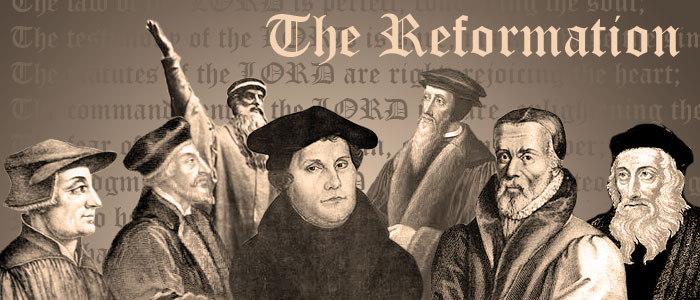
Reformation Day 500 and counting!

Today marks the 500th year anniversary of the widely accepted start of The Reformation.

reformation-image
Source

Roman Catholic Monk Martin Luther had found John Hus’s Gospel-drenched sermons, and had been studying the Bible for himself, when his conscience convicted him that the Roman Catholic structure of indulgences and other aberrant doctrines were unacceptable compared to what was taught via the Bible.

He nailed 95 theses to the All Saints’ Chapel doors at the church in Wittenberg Germany, for public discussion as per usual among the theologians of the day.

Because Luther’s propositions and questions could not be reconciled with what the Catholic dogma taught, there arose a controversy which only entrenched Luther further into his stance, when at the conclusion of his heresy trial he refused to recant and is alleged to have said,

“Here I stand; I can do no other. God help me.”

Christianity Today wrote,

Luther asserted that his conscience was captive to the Word of God and that he could not go against conscience. This was not, however, a modern plea for the supremacy of the individual conscience or for religious freedom. Though already excommunicated by Rome, Luther saw himself as a sworn teacher of Scripture who must advocate the right of all Christians to hear and live by the gospel.

Praise the Lord for His timing in bringing His word back to the people.

The Reformation is ongoing because the spiritual battle is ongoing. Satan hasn’t quit deluding the unwary and he hasn’t stopped growing his church (Roman Catholic, among others, such as Islamic, Buddhist, Hindu, Mormon, Jehovah’s Witnesses, etc). He is still at it. Despite the blessed knowledge that many of today’s leaders have regarding the differences between the Protestant and the Catholic, many other of today’s leaders seem to have forgotten the point of the Reformation was to protest the perverse twisting of the Gospel and other biblical doctrines away from truth to devilish lies a la the Roman Catholic Church.

Ultimately, though Luther wanted reform within the RCC, it was not possible, and the Protestant denominations were born.

For example, today we have well-known Protestant leaders retracting their former truthful words that Roman view of justification is heresy, and also and perpetuating their stance that works add to something called final salvation.

We have well-known so-called Reformed pastors teaching Catholic methods, sourcing Catholic authors, and naming their church classes “The Way of the Monk” led by Catholic-trained female teachers, and teaching that Catholicism is another Christian denomination, or tradition, or stream, not the heresy and affront to God that it is.

We have so-called evangelicals usurping God from the Sunday pulpit to host Catholic political celebrities, who are treated as a brother and not as a mission field.

We have whole congregations (Episcopal) in the US converting en masse back to Catholicism. Granted Episcopalians don’t have far to go, but the quote that struck me was from one lay leader of this congregation that mass converted back to Rome: “It feels fantastic,” Delaney said. “It’s like correcting 500 years of history.”

No. Not it’s not.

Despite all that, today is a great day to celebrate our Lord and Savior Jesus Christ, His church, His Spirit’s work in the world to bring men into the kingdom on the glowing carpet of truths known as The Gospel of Salvation. We celebrate the simple Gospel, the understandable Gospel, the Gospel we read in the word of God thanks to the translators and Reformers and protestors who yanked it from the dark into the Light, even on the funeral pyres of their own mortality.

We celebrate the knowledge that Jesus saves, as it is written, and so many other truths we know because He revealed it to us in His word.

We celebrate fiery, or quiet, or diligent, or intelligent, or clumsy, pastors who perpetuate the truths unadorned with skits or personal stories, just preaching, some at risk to their own lives.

We celebrate the brave men and women who circulated the word back to the people. But Reformation Day 500 ultimately celebrates One.

We praise and thanks we Lord Jesus above for all His ways, His power, might, love, Word, redemption, suffering, sovereignty, omniscience, holiness, holiness, holiness…

For by grace you have been saved through faith. And this is not your own doing; it is the gift of God, not a result of works, so that no one may boast. (Ephesians 2:8-9).