Posted in Uncategorized

Bible Reading Plan thoughts: All have sinned and fall short

romans 3 sunday

(Bible Reading Plan for Sunday is Romans 3-4).

Romans 3:23 is a familiar verse to us. For all its familiarity, don’t let it skim in and out of your mind as you read.

for all have sinned and fall short of the glory of God,

All.

Even you.

Especially me.

Genesis 6:5 says that

The Lord saw that the wickedness of man was great in the earth, and that every intention of the thoughts of his heart was only evil continually.

This verse doesn’t stand for just that pre-deluge time. (antediluvian). It’s for all time. As then, now people now live in a time of great wickedness, their hearts’ every intention thinking evil, all the time. That is the natural state of unsaved man. For saved man, it’s the natural state we resist against, with the aid of the indwelling Holy Spirit.

So, all have sinned and fallen short.

The Strong’s definition for the word fallen short is:

5302 /hysteréō (“failing to fulfill a goal”) means to be in lack and hence, unable to meet the need at hand because depleted (“all run out”). This state of lack (insufficiency, privation) naturally results when a person misses out on what is vital.

I grew up during the time when American stunt performer Evel Knieval was active. He was a guy in a Captain America-type suit who would line up a zillion semi-trucks and go really fast on a motorcycle and jump them. He was always jumping something. Of course, being a daredevil stunt performer, his feats had to become increasingly daring to keep his audience.

In 1974 he decided he wanted to jump the Snake River Canyon. This is a 1600 foot jump. A motorcycle can’t jump that far so Knieval invented a ‘sky-cycle.’ His contraption was a bucket seat attached to a steam-powered thrust engine. Knieval attempted the jump in August 1974. He fell short. The parachute accidentally deployed and the sky-cycle was dragged by winds back to the launch site.

knieval 2
Sports Illustrated photo
knieval
Sports Illustrated photo

We all fall short, all the time. If we think our Bible reading will get us into heaven, it won’t. If we think our good deeds will get us in, they won’t. If we think our donations and charity will get us in, they will not. God’s glory is so far and so high, there is nothing we can do to arrive into His light and dwell there. Our sin prevents it. We are unrighteous.

Fortunately, Jesus came to live, die as the perfect sacrificial sacrifice for sin, and be resurrected. His cross bridges that gap. We don’t have to strive, construct contraptions to get across, or worry if our own merits and good works are enough. Jesus is enough. If we are in Him, we will never fall short- because He didn’t.

But now the righteousness of God has been manifested apart from the law, although the Law and the Prophets bear witness to it— the righteousness of God through faith in Jesus Christ for all who believe
. (Romans 3:21-22)

Posted in biblical resources, Uncategorized

Resources on Depression and the Christian

depressed
Depression is something Christians don’t talk about much. Some are embarrassed by it, deeming it a weakness. Others believe that they are supposed to present a joyful countenance all the time, every day. Others adopt a plan of fake it till you make it.

So I was surprised and heartened to read Drew Dyck’s heartfelt sharing of his own journey through a long-term depression which was also punctuated by panic attacks. Mr Dyck is an acquisitions editor at Moody Publishers and a senior editor at CTPastors.com. He’s the author of Yawning at Tigers (2014) and Generation Ex: Christian (2010).

It’s always risky when one is open about something that some parts of society stigmatize. He muses on some of that in his article, as he shares the lessons he’d learned. His article is here:

You Can Break Your Brain … And 4 Other Things I’ve learned from My Struggle with Depression and Anxiety

Did you know that the Prince of Preachers, Charles Spurgeon, suffered from depression? It seems strange that on the surface, this man who was a global success at preaching, writing, pastoring, founding colleges, orphanages, and married to a wonderful woman, could ever be depressed. But he was. There are numerous resources available recounting it, including many of his own writings, but this can get you started:

The Anguish and Agonies of Charles Spurgeon

Martyn Lloyd-Jones was a physician and then a preacher. In 1960 he began preaching on depression in a lengthy sermon series which can be listened to here. The sermon series was also made into a book, “Spiritual Depression: Its Causes and Cure”. The Amazon blurb introducing the books states,

[Lloyd-Jones] carefully and compassionately analyzes an undeniable feature of modern society from which Christians have not escaped — spiritual depression.

What robs Christians of the joy that is theirs? Why does faith’s vitality drain away, leaving melancholy and anxiety it its place? In the sermons, Lloyd-Jones explores the cause and the cure.

Martyn Lloyd-Jones Spiritual Depression series

David certainly had his own ups and downs. We read in Psalm 43:4,

Why are you cast down, O my soul, and why are you in turmoil within me? Hope in God; for I shall again praise him, my salvation and my God.

Mr Dyck says that prayer and Scripture were a tremendous source of comfort in the valley (especially the Psalms). It would be wrong and neglectful of me to leave off the Bible itself as a resource. Especially the Psalms.

depressed guy
Though the Bible is its own premier resource, Mr Dyck shares that the person suffering from depression “finds it hard to even muster the energy or concentration to engage deeply in spiritual practices.” He advises asking others to pray for you when your depression sinks you too low to open His word.

Therefore we have the greatest resource of all: the Body of Christ in prayer and supplication, appealing to the Great Physician, Jesus, in prayer.

All these resources and more are available to you if you happen to be suffering from persistent panic, anxiety or depression.

Further reading:

Insufficient Help, Part 1: Grace To You’s recounting of a depressed, suicidal young man seeking help from church counselors in addition to doctors and secular therapists, who eventually took his own life. The church was sued. Did the church offer insufficient help? Are Biblical counselors qualified to use the Bible in therapy?

Overwhelmed by Anxiety? A blog series on attacking the anxiety that is attacking you.


Posted in encouragement, Uncategorized

Bible Reading Plan thoughts: The Women in the Genealogy

In our Bible Reading Plan we come to Matthew 1-2 today. Don’t hate the genealogy. Don’t skip the genealogy. Since we are told that all scripture is breathed out by God and profitable for teaching, for reproof, for correction, and for training in righteousness, that the man of God may be complete, equipped for every good work, (2 Timothy 3:16-17), it means that the genealogies are also instructive. Here are a couple of thoughts that came to my mind as I read it.

1. Women are mentioned. In a society so patriarchal as to render the women invisible, the feminists say, here are some women added to the holiest of genealogies, the line of Christ.

2. The particular women mentioned by name. In Matthew 1:3, we read: “Judah the father of Perez and Zerah by Tamar” verse 5 has both: “Salmon the father of Boaz by Rahab”, verse “Boaz the father of Obed by Ruth”, and verse 6b has “And David was the father of Solomon by the wife of Uriah”.

These women are outcasts, as John MacArthur’s commentary calls them. Tamar was a Canaanite daughter-in-law of Judah who dressed as a prostitute to trick Judah for various convoluted Old Testament reasons. As the Commentary concludes her story, “God’s grace fell on all three of these undeserving persons, including a desperate and deceptive Gentile harlot.”

Rahab was a Gentile and a professional prostitute. However, she feared God and protected the spies when they came to Jericho. As a result, God rained down grace by including her in the Messianic line, making her the mother of Boaz, King David’s great-grandfather.

Ruth was also a Gentile. She was a Moabite and a former pagan, who had no legal right to marry an Israelite, but God’s grace swept her into the family of Israel and into the Royal line through Boaz and she became David’s grandmother.

3. And David was the father of Solomon by the wife of Uriah. Did you catch that? Bathsheba is mentioned, but not named. That jumped out at me.

Tamar, Rahab, Ruth, and later, Mary are mentioned by name. Not this one. Of course we know she is Bathsheba, who bathed naked on the rooftop under the lascivious eyes of David. Incited, David contrived a way to put Bathsheba’s husband Uriah at the front lines, David committed adultery with Bathsheba, Uriah was killed at the front lines, David took Bathsheba for his wife, and then the son from this illicit union died in infancy. Their second son was Solomon. But God’s grace was sufficient to keep ‘the wife of Uriah’ in the royal line and she became ancestor to the Messiah.

The genealogy of Jesus Christ is immeasurably more than a list of ancient names; it is even more than a list of Jesus’ forebears. It is a beautiful testimony to God’s grace  and to the ministry of His Son, Jesus Christ, the friend of sinners… If He has called sinners by grace to be His forefather,s should we be surprised when He calls them by grace to be his descendants? The King presented here is truly the King of grace! ~John MacArthur

Don’t skip the genealogies. 🙂

generations


matthew 1 verse1

Posted in prophecy, Uncategorized

Bible Reading Plan thoughts: Isaiah, Israel, and that Vision

Today’s reading is Isaiah 1-6. Reading the Prophets is tough on the heart. It’s true that there are interpretive difficulties with reading them, because of the history. Sorting out which king and which nation and to whom God is speaking given that the ancient names have gone by the wayside, can be demanding on the serious student.

Also, often in the Prophets there are interpretive difficulties given the nature of prophecy itself. There are different timings of the fulfillments of the prophecies. Some happened in the past. Some are dual-layer prophecies, like the Lord’s first and second comings, or prophecies that have happened in the past and will happen in the future also. Some are prophecies solely for the future.

The interpretive difficulties usually can be resolved with prayer, study, and the aid of the Holy Spirit. It’s a head thing. But the content of the prophecies, they are hard to read because of the mourning that goes along with them. Who can’t but mourn when they read this from Isaiah 1:7-8,

friday isaiah 1 verse

Your country lies desolate; your cities are burned with fire; in your very presence foreigners devour your land; it is desolate, as overthrown by foreigners. 8 And the daughter of Zion is left like a booth in a vineyard, like a lodge in a cucumber field, like a besieged city.

Don’t just let the word lie on the page and be head knowledge-history. Apply the words to our life. At the present time of this writing, North Korea is said to be close to creating a nuclear bomb. North Korea has sworn to use their bomb on America. So what if God allows North Korea to be successful? What if America lies desolate, when NK sends a nuke or a dirty bomb or an EMP over Miami, New York, and LA? When those cities or others are burned with fire? When we are overthrown by foreigners? It could happen. It could absolutely happen.

The reason the LORD promised those things to Israel is because of what is said in Isaiah 1:4,

Ah, sinful nation, a people laden with iniquity, offspring of evildoers, children who deal corruptly! They have forsaken the Lord, they have despised the Holy One of Israel, they are utterly estranged.

So the mourning is over our personal sin and our national sin of rejecting God. It’s thinking of the terrified Israelites, living in a wasteland, carried off, or starving in a besieged city. It’s recognizing His just perfection when punishing nations for their rebellion, even us. It’s sad.

Then comes the magnificent vision in Chapter 6. What to make of the cherubim, the wings, the resounding praises of God’s holiness. We swing from desolation and sin, punishment and despair, to the temple ringing with majesty and power!

When Isaiah saw this he fell down and said in Is 6:5,

Woe is me! For I am lost; for I am a man of unclean lips, and I dwell in the midst of a people of unclean lips; for my eyes have seen the King, the Lord of hosts!

Job and Peter had the same reactions when they realized they were in the presence of the LORD. (Job 42:6, Luke 5:8). Other translations of the Isaiah verse say “I am undone”, “I am ruined” etc. The Hebrew word is “to be destroyed”. There really is no describing how vast the distance between sinful man and God in His glory. Matthew Henry says,

All vain-glory, ambition, ignorance, and pride, would be done away by one view of Christ in his glory. This awful vision of the Divine Majesty overwhelmed the prophet with a sense of his own vileness.

And yet, there is grace. He sent a Mediator to bridge that gap between us lowly sinful creatures and Him in His height and glory. The Prophetical Books follow the pattern of promise, sin, punishment, redemption. The books always end with hope. Indeed, as the Spurgeon devotional this morning is titled:

A Wonderful Guarantee
I will strengthen thee. (Isaiah 41:10)

The guarantee is that God will not leave or forsake us. If we mourn our personal and national sin, as Isaiah did, then we can turn and look upward through this glorious glimpse of chapter 6, of God on His throne, sovereignly ordaining all things coming together for the good of those who love him. In the beginning it was good. In the end it will be good.

Posted in prophecy, Uncategorized

Bible Reading Plan thought for the day: They came to present themselves

job 1 thursday verse.jpg

Satan fell. (Isaiah 14:12, Ezekiel 28:11-19). We do not know when, because the timeline for God’s creation of the universe and all its beings (including angels) is not specifically mentioned in scripture. We know that they were already created when God created the world, because they praised God for it. (Job 38:6-8). We know none of them had fallen by the conclusion of the sixth day when God saw all that he had made, and declared it very good.

By the time Genesis 3 came, though, satan was a fallen, evil, sinful creature. Revelation strongly intimates that he caused a third of his cohorts to fall with him. (Revelation 12:4).

However as we see from today’s verses in the Bible Reading Plan, satan and his cohorts to this day still have access to heaven. They still appear to God. They still stalk the heavenlies and strut in the holy place. God allows this for His sovereign purposes. In another example separate from today’s, we see that God used a lying spirit to deceive Ahab, (2 Chronicles 18:18-22). Satan and hsi demons come and go in heaven.

One day, and what a day that will be, God will SHUT the door of heaven and satan and his third of hosts will not be granted access to heaven any longer. This will occur in the Great Tribulation, as depicted in Revelation 12:7-17. In fact, this rejection enrages the devil so much that he redoubles his efforts to overcome God’s people and His kingdom. The persecutions and evil events already occurring on earth at that time turn to massive and horrific evil as many millions of believers are martyred. Revelation 12 again.

Whether satan is presenting himself before God in heaven or tormenting His people on earth, whether it is the Great Tribulation or just nowadays, God is fully in control. You see in the verses in Job that God set limits to satan’s actions, and satan adhered to them.

God is sovereign, and if you are a believer in Him, with the Holy Spirit in us as a seal of His guarantee of redemption and eternal life, you have already overcome the devil- because Jesus did.

He disarmed the rulers and authorities and put them to open shame, by triumphing over them in him. (Colossians 2:15)

Posted in discernment, Uncategorized

Strong women, who can know?

Alistair Roberts wrote at Mere Orthodoxy about the need to dispense with the strong female character. It’s a well-written, if long, article. He made some excellent points. Then he followed up with another article at his own site, Alistair’s Adversaria, reacting to some push-back, here.

I want to include a few excerpts from his good original article and then continue with my own thoughts. We may need to dispense with the ‘strong female character’ as Roberts suggests, or as I propose, we may need to redefine what a strong female character is in the first place.

Popular culture is the focus of some of the most determined attempts to shift attitudes on a host of issues within society at large, and such forms of representation are an important dimension of this. While popular media and the various ‘messages’ within it may often appear innocuous, they are frequently anything but. Behind them lie concerted efforts to change the public’s thinking and perception on key matters and some carefully calculated agendas. The supposed shallowness of pop culture is deceptive: It is a realm where brilliant and talented people go to try to shape minds at their most unguarded and impressionable. It is on the ground of entertainment media that the so-called culture wars have largely been lost.

Yes! Yes! Yes! Entertainment is never innocuous. What we absorb in entertainment has an agenda, a worldview, and a purpose. It’s not merely to entertain you and me, it is to change our perceptions, and this happens more easily when we are at our most unguarded.

RE more recent portrayals of Disney Princesses:

Yet, despite their likeableness and roundedness as characters, these new princesses betray some concerning anxieties about women’s place and agency within the world. Within the kickass princess trope lurks the implication that, to prove equality of dignity, worth, agency, and significance as a character, all of a woman’s resolve, wisdom, courage, love, kindness, self-sacrifice, and other traits simply aren’t enough—she must be capable of putting men in their place by outmatching them in endeavors and strengths that naturally favor them, or otherwise making them look weak or foolish.

That is very well said!

His article becomes tremendous toward the end. The section titled The Heroism of Lady Wisdom recounts the strong female through God’s eyes. The woman at home, raising children, is where the real strength is-

Our failure to see the heroism and the strength of such a diligent and active woman is a failure to see the world as God does. The strength of such a woman is not that of conformity to more typically male forms of strength, but rather of the reflection of the work of the master creator, Lady Wisdom, within her own world of activity.

Women can be trained in martial arts and sword play. It takes strength of the physical type to perform those feats. Of course, women lack the same upper body strength as men and cannot replicate male feats of warlike strength exactly, but thanks to animation and CGI, we can overlook that fact.

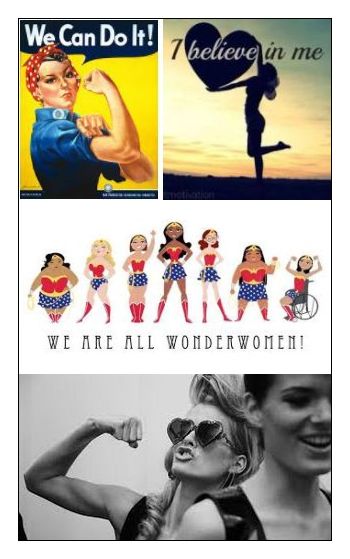
If you do a Google image search for ‘strong women’ you get photos like these:
strong

But truly, who is stronger, Mulan, or Lydia? Lydia hosted a home church. (Acts 16:40). She was a working woman, but she also prepared endlessly for guests, cleaning and readying the domicile so that the main concentration could be on studying the Word and fellowshipping with one another. Dorcas/Tabitha sewed endlessly for charity. (Acts 9:36). She made garments and sat among other women, edifying and speaking and loving. It’s harder to unfailingly love through the years than it is to swing a sword once or twice.

Jael swung a hammer and drove one tent peg for a few minutes. (Judges 4:17-22). Yet Leah was used by Laban her father and unpreferred by her husband, but submitted to them both, uncomplainingly raised 6 boys, and was faithful to God all her days. Which takes more strength, a few moments of physical exertion, of a lifetime of putting God first? Who is the woman of valor?

Hannah was barren, a devastating indictment in the culture’s eyes. She was tormented by her husband’s other wife. She asked for a son and vowed to give him back to God- and then did. Which takes more strength, the woman of Abel-Bethmaach who negotiated a peace treaty, (2 Samuel 20:16-21a), or Hannah? Could you give up your son and only see him once a year? Withstand insults and torment from a competing wife and turn only to the Lord for comfort and petitions? I know my answer. I’d complain and gossip and plot against the jealous other wife. Hannah showed strength of character not just in one Bible event like the wise woman of Bethmaach, but maintained Godly character for years. What woman is “stronger”?

Mary is to me one of the strongest women of the entire Bible. As a virginal teenager (probable age) betrothed but not yet connubially married, she was told that she would conceive and bear a child by the Spirit. Adultery was a crime for which people were stoned. Mary faced it and said to angel Gabriel, ‘let it be done to me as God wills.’ She gave birth in the cold and among animals. She lived with the whispers of adultery and attendant humiliation and doubts about her character all her life. She was told at His birth she would see Him die horrifically. And she did see her Son die horrifically. She was obedient, she bore it- and praised God through it. Isn’t that strength? Could you do as Mary did?

Our culture sees external fighting as strength. Feminists create women who appear in movies and shows, proficient in martial arts, wars, battles involving swords, knives, or guns as ‘strong’ women.  It’s the trope that’s constantly pushed in front of us. Rapunzel, Merida, Elsa, Wonder Woman, Rey, are all presented to us in entertainment as the external female strong ideal because they wield weapons. They’re called strong because of their derring-do. They’re lauded because they make men look foolish. But the REAL battle is not with swords, but is the internal fight against sin. Truly strong women wield the sword of the Word. (Ephesians 6:17). Truly strong women help their husbands, support and care for them, (Genesis 2:18; 20b) not make them look weak or foolish.

There are so many named and unnamed Godly women in the Bible who fought their own sin-nature and demonstrated quiet strength for years. Real strength is obedience to God, submission to our roles, and resisting sin always. Be strong, women, be strong.

Further Reading

Essay: Bad Examples of Women Pastors (But Great Examples of Godly Women)

Sermon: The Proverbs 31 Woman
 

Posted in encouragement, Uncategorized

Today’s Bible Reading thoughts, Psalm 1:3

A verse from our Bible reading for today:

psalm 1 wed verse
He is like a tree
planted by streams of water
that yields its fruit in its season,
and its leaf does not wither.
(Psalm 1:3)

In the ’90s I traveled a lot. I kept a travel journal most places I traveled to. One adventure was on an ice-breaking ferry/transport ship in Canada. We we started at Rimouski and went all the way along Quebec’s lower North Shore (of the St. Lawrence River) to Blanc Sablon, a city at the border of Labrador. On the early part of the journey when we departed from Sept-Iles, I wrote,

Got up at 5am to see departure. Whales and birds galore. The shore line is interesting, large rocks smoothed over by the tides. Rock ledges poke through the stands of trees lining the shore. How do the trees’ roots grasp in the 2 inches of soil?

I am not agricultural at all, but even a neophyte can muse upon the physics of it. It’s intuitive.

As for what was sown on rocky ground, this is the one who hears the word and immediately receives it with joy, yet he has no root in himself, but endures for a while, and when tribulation or persecution arises on account of the word, immediately he falls away. (Matthew 13:20-21).

That is what made Jesus’ metaphors so excellent.

fallen tree
The verse in the Psalm above refers to the rootedness of a tree that is planted where it can be fed by good soil and good water. Such a tree does not fall away. It bears fruit.

Where does a believer get his rootedness from? By planting him or herself in the Life of Christ, drinking and feeding on His word. By living and growing in obedience and submission to His commands. Those who fall away were never planted in Him to begin with. They had no confidence in Him, in comparison to their own sin and wretchedness. They were only joyful for a time because their consciences were temporarily salved. But unless one is truly repented, that joy will fade at the first hardship and there will be no streams to drink from for nourishment. They fall.

Barnes Notes on the Psalm-

A description of the happiness or prosperity of the man who thus avoids the way of sinners, and who delights in the law of God, now follows. This is presented in the form of a very beautiful image – a tree planted where its roots would have abundance of water.
Planted by the rivers of water – It is not a tree that springs up spontaneously, but one that is set out in a favorable place, and that is cultivated with care.

God cultivates us by the Spirit, but we shepherd our salvation too. Drink deeply from the word, obey and submit with grace without grumbling. Pray earnestly for all things, and praise the One who planted you. May you bear fruit in your time.

psalm 1 wed verse

Posted in Uncategorized

Reading The Bible Together Week 1

Scott, one of our elders, writes the blog. I loved this short burst of things to ponder as we go thru scripture together as a church.

nacathens's avatar

thumbnailRomans 1-2 | Sunday: An easy way to think about these chapters is that Romans 1:18-32 describes irreligious Gentiles (think of the younger brother in the prodigal son story in Luke 15). Romans 2 largely describes devoutly religious Jews (think of the older brother). Paul’s goal in Romans 1-2 is to put all people under condemnation so that all (both religious and irreligious) would see the futility of their own actions and the need for salvation by grace through faith in Christ (see Jerry’s text from Christmas Eve: Romans 3:19-26).

 
Genesis 1-3 | Monday: Lord willing, this will be next week’s sermon text. Moses wrote Genesis somewhere around 1400BC. At that time, likely the most controversial and significant point being made in Genesis 1 was that the God of Israel is the One True Creator and God of all. In a polytheistic culture, this would have been laughable…

View original post 553 more words

Posted in prophecy, Uncategorized

Today’s Bible Reading: The Scarlet Thread through the Bible

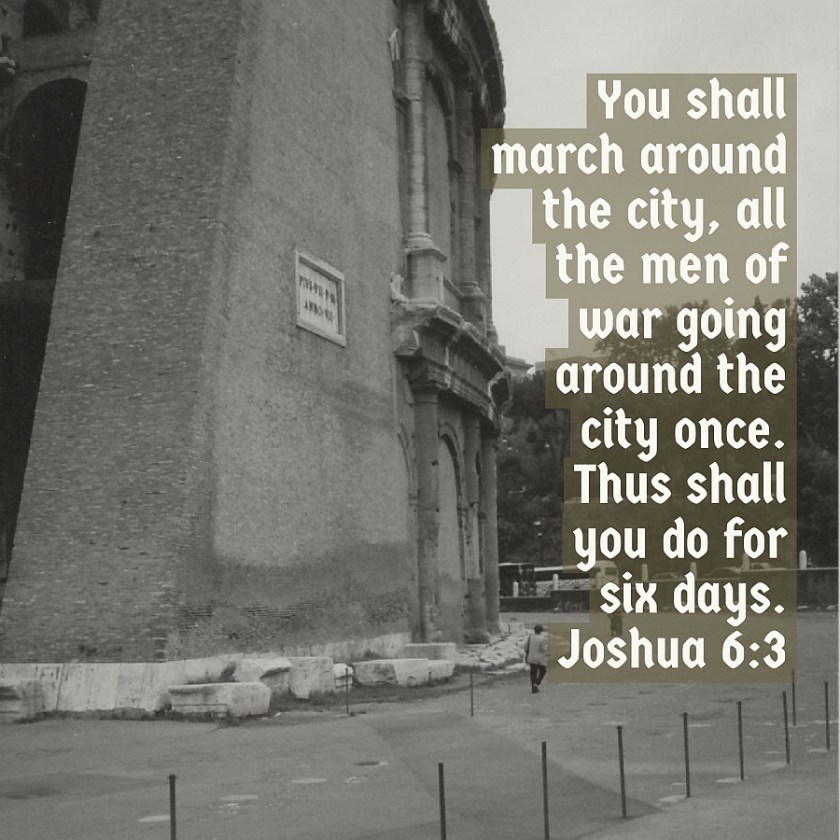
Her are some thoughts based on today’s Bible reading according to the Michael Coley Bible reading Plan, Joshua 1-5. I published the following essay about 5 years ago, in March 2013. It’s been excerpted to remove the discernment lesson about the television series The Bible, but you can read the original article here.

~~~~~~~~~~~~~~~~~~~~~~~~~~~~~~~~

The article below is on Dr. Adrian Rogers’ website “Love Worth Finding.”  Dr. Rogers is in heaven now with the Lord, but his work remains and continues to bear fruit for the kingdom.

The Scarlet Thread through the Bible
Dr. Adrian Rogers

Behold, when we come into the land, thou shalt bind this line of scarlet thread in the window which thou didst let us down by…and whosoever shall be with thee in the house, his blood shall be on our head, if any hand be upon him. Joshua 2:18-19

Rahab, the woman spoken to in this passage, was a harlot in the city of Jericho. As the Israelites came to possess the land, her city was destined for destruction — and she along with it. But she was delivered, and her life transformed, simply by tying a scarlet cord in her window.

This cord represented the blood of the Lord Jesus Christ, and it pointed toward the Lamb of God that takes away the sin of the world. In fact, all of the Bible is about Jesus Christ and His blood redemption, and you will find this scarlet thread throughout the Word of God.

The Prophecy of the Blood

From the very beginning of human history, it is revealed. When Adam and Eve sinned, God shed innocent blood in order to make them clothes from animal skins (Genesis 3:21). This is a picture of the covering of righteousness that we receive when the Lord Jesus Christ died for us.

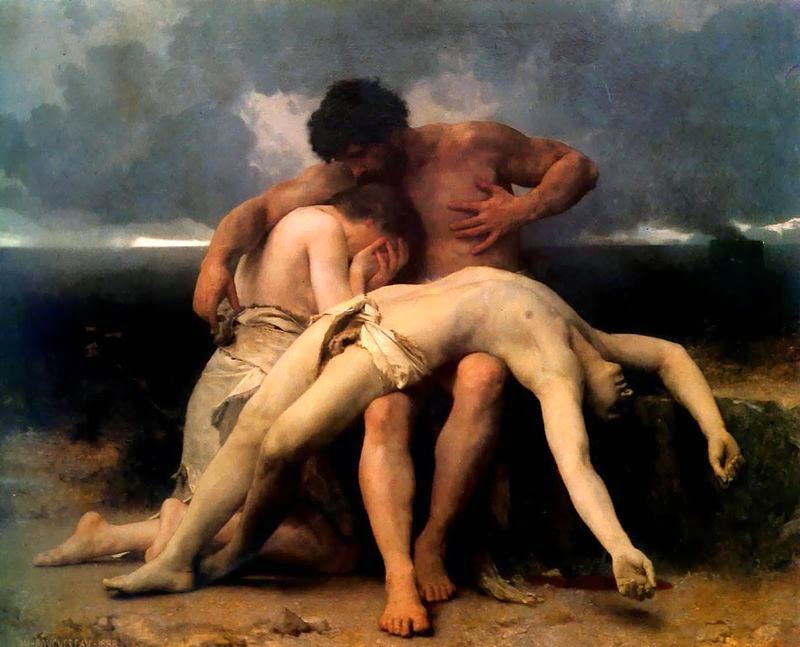
In Genesis four we read that Adam and Eve had two sons, Cain and Abel. They instinctively wanted to worship God. Cain sacrificed the fruit of the ground. Abel had already learned that God demanded blood, so he brought a lamb. God accepted the blood of Abel’s lamb, but He did not accept Cain’s offering. Why? Because “without the shedding of blood, there is no remission of sin” (Hebrews 9:22).

And God told Abraham to sacrifice his long-awaited son Isaac (Genesis 22). Just before Abraham plunged the dagger into the quivering heart of his son, an angel stopped him. Abraham saw a ram caught in a thicket. Isaac was set free, but an innocent animal’s blood was shed instead.

Then, God wanted to deliver His people from bondage in the land of Egypt. On the night of the Passover, God instructed each house to slay a lamb and put the blood on their door. God said in Exodus 12:13, “When I see the blood, I will pass over you.”

And in the tabernacle and later in the temple, thousands upon thousands of sheep, oxen, and turtle doves were killed and their blood spilt as sacrifices for sin.

And finally, the Lord Jesus Christ died upon the cross. His death was the fulfillment of all the prophecy and promises. Revelation 13:8 proclaims that He was slain before the foundation of the world. He came to die; He planned to die; He lived to die; and He was born to die.

Blood is throughout Scripture, but what does Christ’s blood mean to us?

The Power of the Blood

His blood redeems us. There was a price against us that we could not pay, but the blood of Jesus redeemed us. 1 Peter 1:18-19 says, “Forasmuch as ye know that ye were not redeemed with corruptible things…. But with the precious blood of Christ, as of a lamb without blemish and without spot.”

His blood brings us into fellowship with God. According to Ephesians 2:13, “But now in Christ Jesus ye who sometimes were far off are made nigh by the blood of Christ.” Without the blood of Christ, man is a long way from God.

His blood makes peace with God. Man, by nature, is at war with God; and we can only come to God on His peace terms — the blood atonement. The Bible says in Colossians 1:20, “And, having made peace through the blood of His cross, by Him to reconcile all things unto Himself….”

His blood cleanses. Not only does it remove the punishment of sin, it removes the pollution. I don’t care what sin you’ve committed; “the blood of Jesus Christ His Son cleanseth us from all sin (1 John 1:7).

His blood gives power over the devil. It’s the blood that Satan fears. Revelation 12:11 says, “And they overcame him [Satan] by the blood of the Lamb….” The devil doesn’t want you to learn about the blood. He hates it!

Before this planet was ever swung into space, God had determined in His heart that He would send His Son to die upon the cross. How wonderful it is to trace the scarlet thread of the blood of Christ woven throughout the Bible! How much more wonderful to experience its redemption personally. Praise God for the blood of His Lamb!

~~~~~~~~~end Dr. Rogers~~~~~~~~~

I want you to understand how important the Old Testament is. The scarlet thread runs throughout it. There are pictures and shadows and copies of the Messiah to come. See these verses-

Hebrews 8:5
They serve a copy and shadow of the heavenly things. For when Moses was about to erect the tent, he was instructed by God, saying, “See that you make everything according to the pattern that was shown you on the mountain.”

Hebrews 9:24
For Christ has entered, not into holy places made with hands, which are copies of the true things, but into heaven itself, now to appear in the presence of God on our behalf.

Hebrews 10:1
Christ’s Sacrifice Once for All – For since the law has but a shadow of the good things to come instead of the true form of these realities, it can never, by the same sacrifices that are continually offered every year, make perfect those who draw near.

The Old Testament as well as the New Testament is beneficial for all edification, correction, and reproof. Think about the scarlet thread that runs through the entire Bible…and the power of the Blood.


Posted in prophecy, Uncategorized

He is The Amen

calendar

“And to the angel of the church in Laodicea write: ‘The words of the Amen, the faithful and true witness, the beginning of God’s creation’. (Revelation 3:14).

Please read Revelation. It’s a majestic book, filled with wonders and prophecies and promises and our future. It is the only book that reveals Jesus as He is. And, it is promised to the reader that he will receive a blessing for reading it. So…

To each of the churches in these opening chapters, Jesus greets them as a different aspect of Himself. He is the Alpha & Omega, He who walks among the lampstands, the first and the last, he who has the sharp two-edged sword, him who has the seven spirits of God and the seven stars, and here in the last letter to the churches, the Amen. These are just a few of the titles Jesus expresses Himself as in the opening chapters of the book, which goes back to my statement, Revelation shows Jesus in all His glory and majesty.

From John MacArthur’s study Bible introduction to the book:

Revelation’s primary theological contribution is to eschatology, i.e. the doctrine of last things. In it we learn about: the final political setup of the world, the last battle of human history, the career and ultimate defeat of Antichrist, Christ’s 100-year earthly kingdom, the glories of heaven and the final state of the wicked and the righteous. Finally, only Daniel rivals this book in declaring that God providentially rules over kingdoms of men and will accomplish His sovereign purposes regardless of human or demonic opposition.

Those are some fantastic reasons to read the book!

In chapter 3, Jesus announces Himself as The Amen. What does that mean?

According to the MacArthur study Bible again, the Amen is a common biblical expression signifying certainty and veracity (cf Isaiah 65:16, “the God of truth”). As 2 Corinthians 1:20 says, all the promises of God are fulfilled in Christ, that is, all God’s promises and unconditional covenants are guaranteed and affirmed by the person and work of Jesus Christ.

Gill’s Exposition says,

Christ may be so called, because he is the God of truth, and truth itself; and it may be expressive of his faithfulness, both to God his Father, and to his people, in whom all the promises he either made, or received, are yea and amen; and also of the firmness, constancy, and immutability of Christ, in his nature, person, and offices, in his love, fulness of grace, power, blood, and righteousness; and is very appropriately assumed by him now, when he was about to give the finishing stroke to all covenant engagements, and to all promises and prophesies;

When we pray and say Amen, it is a verbal stamp on what has been said. Deepening the meaning of the Amen in this context, is that Jesus is the Word and is the living embodiment of all of God’s promises and works. We say Amen at the end of a prayer, Jesus IS the Amen.

We begin the New Year this morning with a hopeful look over the year’s calendar. All those days and weeks and months to fill up. It’s like empty scaffolding. We don’t know what’s ahead. We don’t know how these days ahead will be filled- with pain and tragedy, or joy and fulfillment, or a mixture of both, or… Whatever we do and whatever happens and however these days will be filled up and marked off, we do know one thing and it is certain.

Jesus is the Amen.

Isn’t it comforting to know that no matter what the New Year brings, what He has said is certain and utterly true. No matter what the world does to us, His faithfulness to His word and its exacting and sterling truth is the scaffold and framework for our days and weeks and months ahead. Grab onto it. Let it be your guide, your strength, your uphold, your protection, and your stronghold.

He is the Amen. He has said it. His titles of the Amen, the faithful and true witness, the beginning of God’s creation titles confirm the Lord’s faithfulness, sovereignty, and power to bring all things to their proper completion. Amen.

pisa2
Photo EPrata