The Bible Reading Plan for today is to read Psalm 6-8. I’ve resolved of late to read the introductions of the passages and not skip them. Also, to read the endings and read the notes, like these in the Psalms I’m about to discuss. If all scripture is profitable, then I shouldn’t skip the intros, conclusions, lists of names, genealogies, or musical directions, lol.
Often David or the other Psalmist would make notes to the musicians who were going to play the songs, like this that begins Psalm 6-
For the director of music. With stringed instruments. According to sheminith. A psalm of David.
Of course, once I read the note and see something like ‘Sheminith’, I got curious. Like, what is a Sheminith?
I read in Easton’s Bible Dictionary about Sheminith:
That the Hebrew of shemini is an ordinal number, eight. The Easton’s Bible Dictionary says sheminith is Eight; octave, a musical term, supposed to denote the lowest note sung by men’s voices (1 Chronicles 15:21; Psalm 6; 12, title).
Nobody really knows for sure. Other Bible dictionaries defined it slightly differently, but along the same lines. Some said, ‘we dunno, the word has passed out of use and understanding.’ It’s still interesting to look these things up, though.
Psalm 7 is a Shiggaion. Easton’s Bible Dictionary defines Shiggaion,
From the verb shagah, “to reel about through drink,” occurs in the title of Psalm 7. The plural form, shigionoth, is found in Habakkuk 3:1. The word denotes a lyrical poem composed under strong mental emotion; a song of impassioned imagination accompanied with suitable music; a dithyrambic ode.
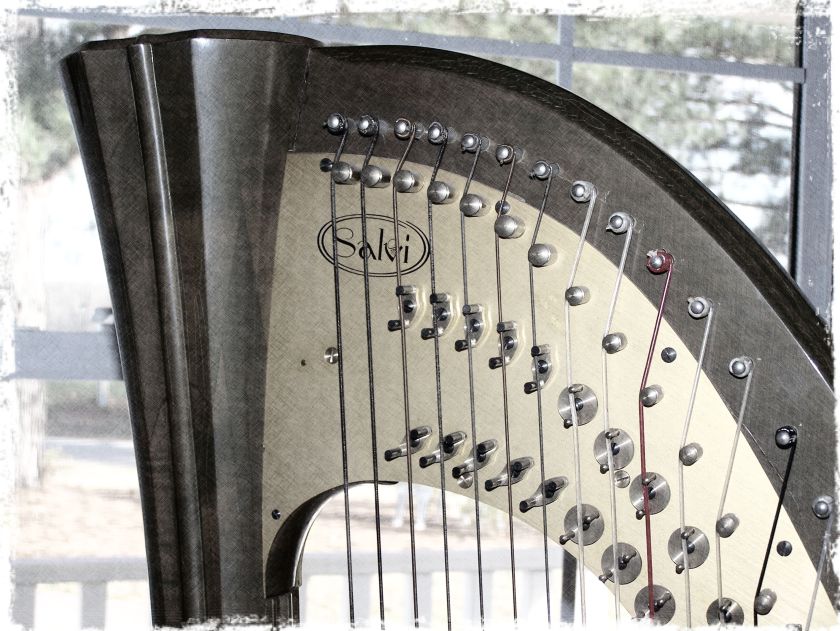
Psalm 8 is “according to The Gittith: A stringed instrument of music.”
This word is found in the titles of Psalm 8, 81, 84. In these places the LXX. render the word by “on the wine-fats.” The Targum explains by “on the harp which David brought from Gath.” It is the only stringed instrument named in the titles of the Psalms. Easton’s Bible Dictionary
Well, that was about as clear as mud.
I do know that once we’re in heaven, we’ll likely be singing. (Revelation 5:9). Will we be singing these Psalms in heaven, properly as David originally wrote them, (According to sheminith, a Shiggaion, or with The Gittith?). I hope so. Wouldn’t it be nice if we did!
Meanwhile I resolve not to skip the intros, conclusions, lists, or notations. All scripture is profitable… I don’t always understand how scripture profits me, but I trust that it does.
~~~~~~~~~~~~~~~~~~~~~~~~
Further reading
I always enjoy Phil Johnson’s knowledge of the Psalms and his clear delivery in explaining them.
Here is a page of Phil preaching the Psalms, including one we are to read today, Psalm 8. Interestingly, Phil introduces his sermon by explaining what can be known about the mysterious term ‘according to the Gitteth’.
Now the serpent was more crafty than any other beast of the field that the LORD God had made. He said to the woman, “Did God actually say, ‘You shall not eat of any tree in the garden’?” (Genesis 3:1)
We are introduced to satan early and his introduction contained an extremely negative assertion about his character. He’s crafty.
Satan is an angel. He is an unholy angel, as opposed to Gabriel or Michael who are holy angels. If you look at the angels’ activity you see just how powerful and intelligent they are. They administer judgment. (e.g. Revelation 8:6-13). They give the Law. (Acts 7:53, Hebrews 2:2, Galatians 3:19). They give the Gospel to the whole earth at once. (Revelation 14:6). They stand on the sun. (Revelation 19:7). They hold back the wind. (Revelation 7:1).
They’re powerful.
We’ll come back to that in a moment.
I’m enjoying the buzz around a couple of movies just out. Darkest Hour is the story of Winston Churchill’s early days as England’s Prime Minister. He was leading the United Kingdom through tough times as WWII rages on the continent and is about to hit home for Britain. Much of the focus of the movie is on Churchill’s oratory. It’s a movie largely without action and is tightly confined to the bunker tunnels and small rooms below the city. Churchill made several famous speeches which roused the populace, enabled changed minds and hearts to make decisions, and cemented the nation in unity to face the evil force that was soon to come upon them. It’s a movie about speeches.
Another movie just out is called The Post. It depicts the editor Ben Bradlee and owner/publisher Katherine Graham of the Washington Post during the critical years of the decisions about whether to release the Pentagon Papers, and leading up to their coverage of the Watergate Break-in, which eventually led to the downfall and resignation of American President Richard Nixon. It’s a movie about words.
Words, whether written or spoken have power. Where would we be without Thomas Paine’s Common Sense, Lincoln’s Gettysburg address, Kennedy’s ‘to the moon and back’, Reagan’s ‘tear down this wall’? We remember Chief Joseph’s surrender speech, ‘I will fight no more forever.’ Lou Gehrig’s farewell to baseball ‘luckiest man alive’ speech. President Reagan reassuring a shocked nation after the space shuttle Challenger exploded and the astronauts having ‘slipped the surly bonds of earth’ to ‘touch the face of God.’
Look at the impact of President Franklin Roosevelt’s Fireside Chats:
Fireside chats is the term used to describe a series of 28 evening radio addresses given by U.S. President Franklin D. Roosevelt between 1933 and 1944. Roosevelt spoke with familiarity to millions of Americans about the promulgation of the Emergency Banking Act in response to the banking crisis, the recession, New Deal initiatives, and the course of World War II. On radio, he was able to quell rumors and explain his policies. His tone and demeanor communicated self-assurance during times of despair and uncertainty. Roosevelt was a great communicator on radio, and the fireside chats kept him in high public regard throughout his presidency. Their introduction was later described as a “revolutionary experiment with a nascent media platform”.
I’m brought back to the early chapters of Genesis. The serpent. What was his mode of attack? Did he hold Eve hostage and force her to eat the fruit? Did he call for his legions of followers to surround them and attack? No. He did it with words. Satan attacks with words.
We should not pay attention to satan.
Of course we don’t pay attention to satan, you say. Of course not, silly! But we do. We come across a false teacher and we listen. We rationalize that we have the power to ‘eat the meat and spit out the bones’. We wail, ‘But he/she helped me so much!’ Of course false teachers are skilled at oratory. They can make fine speeches. They use words well. They’re crafty!
False doctrine is sin because false doctrine doesn’t originate from God. (John 7:16, Titus 1:2). God hates false doctrine. (Revelation 2:15). Several of the letters in the New Testament were written to address errors of false doctrine (Galatians 1:6–9; Colossians 2:20–23; Titus 1:10–11). Take false doctrine seriously. Why? Its words will affect you.
Why do we know that speeches, movies, newspapers, and advertising affect us, but mistakenly think that listening to false doctrine won’t?
The Bible says that those who listen to false teachers are heaping these teachers up so they can ‘suit their own passions.’ (2 Timothy 4:3). Don’t indulge your passions by falling into satan’s crafty trap of words.
For it was the Lord’s doing to harden their hearts that they should come against Israel in battle, in order that they should be devoted to destruction and should receive no mercy but be destroyed, just as the Lord commanded Moses. (Joshua 11:20).
The Bible Reading Plan passage for today is Joshua 11-15. I read and re-read this verse from chapter 11. It’s a hard passage. It’s Old Testament passages like these where God gets his stern and tyrant reputation.
The John MacArthur Study Bible helps here:
God turned the Canannites’ hearts to fight in order that Israel might be his judging instrument to destroy them. They were willfully guilty of rejecting the true God with consequent great wickedness, and were as fit to remain in the land as vomit spewed out of the mouth (Leviticus 18:24-25).
Individual and national sin is a serious offense against God. RC Sproul called it cosmic treason. And for all that, God is patient. He waited 400 years for the Amorites’ sin to come to full measure. (Genesis 15:16). He gave the false prophetess Jezebel who was teaching his children sexual immorality and eating food sacrificed to idols time to repent. (Revelation 2:21). Whether it is an individual person or a national sin, He is patient. It is said in 2 Peter 3:9 that God is not willing that anyone should perish, but that all should come to repentance. This is the same God. He is immutable, unchangeable, the same yesterday, today, and forever.
His patience and willingness to give time to repent does not mean that he will forget His promise to deal with sin. Sin is a crime and all crimes have punishments. For the Canaanites, that day eventually came, and they were judged for their cosmic treason.
Our God is in the heavens; he does all that he pleases. (Psalm 115:3).
This chapter 8 of the first book of the Bible, can be thought of as “Judgment and Grace” as pastor S. Lewis Johnson put it in his sermon. It is no surprise that Noah and his family worshiped and sacrificed upon emerging from the ark.
Not only was the ark and Noah and their experience, a revelation of judgment, it was also a beautiful display of grace. And therefore it is not surprising that the first thing that Noah and his family did after they emerged from the ark is to offer the sacrifices of the burnt offerings. ~S. Lewis Johnson
I was struck by the leaf in the dove’s beak.
When the dove came to him at evening, there was a plucked olive leaf in her beak. So Noah knew that the water on the earth’s surface had gone down. (Genesis 8:11).
In the previous verse 10, Noah sent out the bird but the waters were still upon the earth, and she found no place to put her foot. Noah waited the 7 days, and sent the bird out again. She returned this time, and with a freshly plucked leaf in her beak. Johnson said that olive trees tended to grow in the valleys, not the mountain tops, so the leaf indicated that the waters had indeed gone down from top to bottom.
In the space of a week, not only had the waters gone down but life had grown very quickly! Olive trees are extremely hearty and can survive most anything, so maybe this tree was a survivor of the flood. It’s amazing that life had sprung up so quickly after a global devastation such as this.
I believe that we will see such a rapid restoration after the devastating 7-year period of the Great Tribulation. The LORD is not going to renew the earth until after the period of the 1000-year kingdom has concluded. After that, He will melt the earth and then renew it because He will have administered judgment upon all the resurrected dead and sent them – and satan and his demons – to the outer darkness. Death will be no more. The earth with its graves and dead animals and cursed ground will be melted and the earth renewed completely so that death and sin will no longer even be present upon it.
But the Tribulation will take its toll on the earth. It is the uncreation if you will, the islands will have fled away and the mountains crumbled down and the grass and trees burned up and so on. (Revelation 6-16). Then the Lord Jesus will return and put a stop to the rebellion at Armageddon, (Revelation 19:19-21), save his remnant at Petra (Isaiah 63:1), and land on top of the newly split Mt of Olives (Zechariah 14:4).
Saved mortals will make it through the Tribulation alive to see this, and will enter the 1000-year kingdom. The earth will repopulate quickly and lives will grow long again. The earth refreshes itself rapidly so as to sustain the mortals alive and dwelling and being born and generations ensuing. (Isaiah 65:20).
Jesus is the Great Gardener and He will quickly refresh the earth at the end of time after the Tribulation Judgment as He did after the Flood Judgment.
This should help us ponder His omnipotence.
Matt 28:18 — “All power is given unto me in heaven and in earth.” Rev.1:8; John 17:2; Eph. I:20-22. Here is power over three realms: First, all power on earth: over disease (Luke 4:38-41); death (John 11); nature, water into wine (John 2); tempest (Matt.8). Second, all power in hell: over demons (Luke 4:35, 36, 41); evil angels (Eph.6). Third, all power in heaven: (Eph.1:20-22). Finally, power over all things: (Heb.2:8; 1:3; Matt.28:18). Source
In our Bible Reading plan today we are progressing through Romans. We are to read today chapters 5-6. Romans, a book that a famous pastor had said he thought is the greatest philosophical treatise of any kind ever written down anywhere. (Sorry, I forget which pastor said it). Romans certainly is demanding, and the thoughts I have about the first few chapters, especially the interplay between the Law & Grace, are immature and unformed. I dare not offer anything of my own because I don’t think it would be of value.
But except for this: Romans 5:5
and hope does not put us to shame, because God’s love has been poured into our hearts through the Holy Spirit who has been given to us.
I love the visual picture here, God’s love is a liquid poured out, gushing, lavishly splashing into our hearts. And that love is the Holy Spirit Himself, who is God. He is said to be almost the forgotten member of the Trinity. The Holy Spirit is introduced in this epistle. And here he is shown to be a full member of the Triune God and a token of God’s love for His people lavishly given to us.
Before salvation: Enmity. War. Rebellion. Struggle. Uncertainty.
After salvation: PEACE
So the apostle’s argument is this. We were enemies. When we were enemies, when we hated God, when we did not want him to minister to us, he came to us, and through the alluring power of the Holy Spirit, he wrought within us, in his own mysterious way, a change of our wills, a change of our disposition, so that the thing that we did not want we ultimately came to want. We, who hated him, by the work of the Holy Spirit, were reconciled as the Holy Spirit brought to us the saving work of the Lord Jesus Christ on the cross. As he says, “When we were enemies, we were reconciled to God through the death of his Son.”
The Holy Spirit’s part in this is that He draws us to Jesus, and He dwells in our hearts to sanctify us, each one of us, throughout our post-salvation lives. What joy.
There are a great number of young ladies who are in college, or who have just finished college, or are just beginning work-life, marriage, or children. They’re starting out. As a 56-year-old woman myself, (thirty years older than most of them!), I keep forgetting that they have grown up in the faith under a completely different paradigm than many other women of my age. They have seen years and even decades of forward-living women in the faith (most of them false) who claim that a woman can (only) make a difference in the name of Jesus if she is stamping out the global sex trade… or setting up social justice programs in Africa… or speaking to mega-audiences and selling buckets of popular studies and books … or being a global voice challenging pastors, men, and God for our seeming lack of impactful opportunities and therefore our alleged inability to make a difference. The world presents these female Christian lifestyles as normal. They’re not.
Of course there is nothing wrong with speaking to large audiences of women or writing books or helping the poor in Africa or giving aid to victims of the sex trade. The difficulty is that these attitudes and endeavors have become so endemic that many young women coming up think that unless you’re doing “A Big Thing,” then God isn’t pleased with your measly attempts for His name. Or, that you have no hope of making an impact for His name at all.
First of all, the women I linked to above are considered false teachers. Their stepping out into the world to stridently proclaim and stride and strut is not the Godly way of woman anyway.
God planted you where you are. If you are sensing a call to missions, then definitely follow that call after deliberation with elders and prayer. But for the vast majority of us women, our Christian lives will be solely contained in one geographic and unremarkable location, doing a menial-to-barely interesting job, perhaps marrying, and then perhaps having children. No globetrotting, sex-slave stamping, social justice righting, adoring audiences for us. We live obscure lives with little reach.
But wait. That’s not true. We might not have a great reach, but the Gospel goes out from every direction from every corner of the world, from women just like you and me. That Gospel turned the world upside down, and it still turns hearts upside down – and inside out. It still changes lives. It still makes a tremendous impact. Everywhere, even in Nowheresville.
“[I]n 1 Timothy 2:15, where Paul says, “[Women] shall be saved in childbearing, if they continue in faith and love and holiness with sobriety.” For most women, their greatest impact on society comes from raising godly children. If a women is godly and if God chooses to give her children whom she raises in the nurture and admonition of the Lord, she will have a profound influence on a new generation. Men may have the outward, overt leadership, but women have just as great an influence.”
Where would we be without Mrs Spurgeon, Charles’ mom. Monica, (actual spelling, Monnica) St Augustine’s mom- who prayed for her wayward son for years. Widow Anna Maria Moon raising 7 children on her own, Lottie’s mother. And so on! It’s not complicated. Raise the children.
What if you’re not a mother? Some women aren’t. Some women never become mothers. What then? Can we ladies make a difference for the Lord? Oh, yes!
But, poor wretch as I was, I was all this while ignorant of Jesus Christ, and going about to establish my own righteousness; and had perished therein, had not God, in mercy, showed me more of my state of nature.
But upon a day, the good providence of God did cast me to Bedford, to work on my calling; and in one of the streets of that town, I came where there were three or four poor women sitting at a door in the sun, and talking about the things of God. Being now willing to hear them discourse, I drew near to hear what they said, for I was now a brisk talker also myself in the matters of religion.
Now I may say, I heard, but I understood not; for they were far above, out of my reach, for their talk was about a new birth, the work of God on their hearts, also how they were convinced of their miserable state by nature; they talked how God had visited their souls with His love in the Lord Jesus, and with what words and promises they had been refreshed, comforted, and supported against the temptations of the devil. Moreover, they reasoned of the suggestions and temptations of Satan in particular; and told to each other by which they had been afflicted, and how they were borne up under his assaults. They also discoursed of their own wretchedness of heart, of their unbelief; and did contemn, slight, and abhor their own righteousness, as filthy and insufficient to do them any good.
And methought they spake as if joy did make them speak; they spake with such pleasantness of Scripture language, and with such appearance of grace in all they said, that they were to me as if they had found a new world…
At this I felt my own heart began to shake, as mistrusting my condition to be naught; for I saw that in all my thoughts about religion and salvation, the new birth did never enter into my mind, neither knew I the comfort of the Word and promise, nor the deceitfulness and treachery of my own wicked heart
Four women having a Godly conversation in a doorway … became part of the conversion story of the man who wrote the most lasting and beloved Christian work in history. Bunyan’s Pilgrim’s Progress has never been out of print. Think of what an influence that book has had on millions of people in the last 400 years! Never underestimate the impact a Gospel-driven public conversation can have. It’s not complicated. Talk about the biblical Jesus with love and passion.
But what if you’re not a wife, not a mother, and you work in a menial, out of the way job? Can you as a woman have an impact there? Yes! In 1-2 Thessalonians by Gregory K. Beale we read-
One well-known theologian recounts how the diligent work of a so-called ordinary office worker led to his conversion. An executive at a London corporation would often pass by an office where several typists worked before the computer era. The executive noted that one particular woman was more diligent in the way she typed, working faster and taking fewer breaks than the others. After a few weeks, he asked a friend at work why she was so unusually industrious. The friend responded, “Oh, that’s Mildred. She is a Christian.” The executive pondered this and after a few more weeks asked the typist herself why she worked in such an indefatigable manner. She responded, “I’m a Christian, and I serve Christ. I work heartily for Him, no merely for my human boss.” The conversation led to the executive investigating the faith further and eventually becoming a Christian. A few years later, he was speaking at his church about his conversation, and someone in the church became a Christian through his address. The person has now became a prominent theologian and enjoys talking about the typist as an illustration of the faith of Christians as it is expressed through “ordinary” work in every walk of life is vital for the witness of the Gospel”
There is nothing too menial. Is what you’re doing more menial than Christ leaving glory as King and living and working as an obscure carpenter for thirty years? Is what you’re doing (or me) more menial than Jesus washing the disciples’ feet? Paul was a brilliant, learned, famous lawyer, but post conversion he was an itinerant tentmaker. Our ordinary, menial, mundane work can be a glorious witness of the Gospel when it’s joyfully and properly expressed through whatever work we have been called to do. It’s not complicated. Work hard and display a strong ethic.
We work for a human boss, but ultimately we labor for Jesus. Therefore as is said in the Traeger and Gilbert book The Gospel at Work, one of the key themes of The Gospel at Work is that “who you work for is more important than what you do.”
Ladies, you can make Jesus’ name known in whatever sphere you dwell and whatever stage of life you’re in. Our work ethic and our Godly conversations will be noticed. In heaven we might be surprised at all the things we said and did that we didn’t know influenced some person who saw the Christ-likeness in us. No sphere is too small and no job is too menial. You can make a difference.
Eugène Boudin – Washerwomen by the River
Laveuses sur la rivière (Washerwomen on the river) is an early Lumière brother film produced in 1897. This film depicts women washing clothing along the riverbank.
Have you polished, adjusted, and thanked God today for your spiritual armor? We should be armed and ready, from head to toe, and praising the Lord for His generosity in protecting us from the demons and from the evil one himself! If we are on guard, rooted in His word, and seeking His face, we can always spot the real from the imitation, the Godly miracle from the demonic copy, the truth from a lying sign. It is a skill that needs honing, and we will need it more than ever as each day progresses. Be ready and sharpen that sword: read your Bible today!
We hear a lot about the big moves of the Holy Spirit. We see Youtube clips of young millennials falling to the floor, or standing with arms upstretched in front of smoke filled stages, pulsing lights, glitter, laughing and sobbing. Afterward they smile tiredly, saying “The Holy Spirit really moved!” Or, “The Holy Spirit really showed up!”
As an aside, I dislike that phrase, ‘The Holy Spirit showed up.’ It’s crass. It’s akin to attending a funeral and saying to the bereaved, “So your wife croaked, eh?’ The Holy Spirit doesn’t ‘show up.’ He isn’t hailing a taxi running late, throwing a scarf around his neck while jumping out of the cab and huffing into the church. The Spirit doesn’t ‘show up’. The Holy Spirit governs the universe.
To the main point regarding big moves of the Spirit. Successive years of successive generations of younger church-goers have twisted Hebrews 11:1’s statement of what faith is:
Now faith is the substance of things hoped for, the evidence of things not seen.
Into –
Now faith is the substance of things we’ve come to tangibly possess, the evidence of things seen and experienced.
And when the people were gathered thick together, he began to say, This is an evil generation: they seek a sign... (Luke 11:29-30)
There are some, and these are generally the most uneducated, who expect to experience remarkable dreams or to behold singular visions. Others we have met with, who suppose that in order to being saved they must feel some very peculiar physical sensation. Now you must not look for this. You must not put physical contortions or sensations as a test before the Lord, and say you will not believe in Him otherwise.
You seek what is quite unnecessary. What do you want a sign for? You want, you say, a token of God’s love. What token of God’s love to you can ever be wanted, now that He has given His only-begotten Son, first to live on earth, and then to die in pains extreme, the just for the unjust, “that whosoever believeth in Him should not perish, but have everlasting life”! I blush for you, that you should ask any token of God’s love while Jesus Christ is before you…
I must tell you what is more, you are acting the part of an idolater. What does an idolater do? He says, “I cannot believe in an unseen God; I must have a golden calf or an image, that I can see with my eyes and touch with my hand.” You say just the same. You cannot believe God’s naked word, you demand something you can feel, something you can see. Sheer idolatry.
You might feel an overwhelming sense of joy, or peace, or well-being, or love for Jesus at times. These emotional times can occur when prayer is answered, providence is seen, worship is genuine, or Bible reading has deepened your view of the Savior. Strong emotion is good and appropriate. But to rely on such moments as proof of the Spirit’s presence casts a vain hope upon the shores of the Rock which stands above all. Your sure faith is in Him and His word that reveals Him.
Depending on signs is seeking a golden calf of experience over faith.
If you’re looking for a move of the Spirit, a miracle, sign, or wonder, there are many that we can name which exalt Jesus. Unsaved men are helpless and unable to come to God unless the Spirit draws them. (John 6:44). He saves by grace. Any new believer is a miracle, because they cannot save themselves. Sanctification is a miracle of God, because only by the Spirit can we resist sin and grow in His likeness. Providence is a miracle of God because He sustains the universe by the power of His word every minute, and He ordains every event that happens to all 8 billion people on earth at every second.
Stop looking for glitter dust falling from the ceiling, for personal prophecies, and visible signs when we already have the redemptive, sanctifying, providential work of the Lord occurring all over the world every second.
For all those true believers who love the Lord, the promise is a wonderful promise. … I think it’s time in the church of the Lord Jesus Christ to give honor to the Holy Spirit, to worship Him, to love Him, to ascribe to Him the glory that He is due and to stop the nonsense that brings dishonor on His holy name.
Our Bible Reading today brings us to Job 3-4. The speeches have begun. Job’s friend Eliphaz reproves Job for insisting on his innocence. To bolster his argument, Eliphaz claims to have had a vision or dream coincidentally on just this topic, coincidentally just recently. (Job 4:12-16). In relating this information, the words Eliphaz chooses to use are interesting. He said, “Now a word was brought to me stealthily; my ear received the whisper of it.” Barnes’ Notes explains word, secretly, and little-
And mine ear received a little thereof – Dr. Good translates this, “And mine ear received a whisper along with it.” Noyes, “And mine ear caught a whisper thereof.” The Vulgate, “And my ear received secretly the pulsations of its whisper” – venas susurri ejus. The word rendered “a little,” שׁמץ shemets, occurs only here and in Job 26:14, where it is also rendered little. It means, according to Gesenius, a transient sound rapidly uttered and swiftly passing away. Symm. ψιθυρισμός psithurismos – a whisper. According to Castell, it means a sound confused and feeble, such as one receives when a man is speaking in a hurried manner, and when he cannot catch all that is said. This is probably the sense here. Eliphaz means to say that he did not get all that might have been said in the vision. It occurred in such circumstances, and what was said was delivered in such a manner, that he did not hear it all distinctly. (Barnes’ Notes on the Bible)
Some say Eliphaz did not really have a revelation from God, that he was simply using this claim to bolster his argument. Others say he truly did have a revelation, that it was truly from God. Here are two stances, yea and nay.
Argument that Eliphaz really had the revelation and that it was from God:
Some indeed have thought that this was a mere fiction of Eliphaz, and not a real vision; yea, some have gone so far as to pronounce it a diabolical one, but without any just foundation; for there is nothing in the manner or matter of it but what is agreeable to a divine vision or to a revelation from God; besides, though Eliphaz was a mistaken man in the case of Job, yet was a good man, as may be concluded from the acceptance of a sacrifice for him by the Lord, which was offered for him by Job, according to the order of God, and therefore could never be guilty of such an imposture; nor does Job ever charge him with any falsehood in this matter, who doubtless would have been able to have traversed and exposed him; (Gill’s Exposition of the Entire Bible)
Argument that Eliphaz really did not have the revelation and/or that it was not from God:
Apparently the words Eliphaz claimed he heard in his dream are given in these verses. For three reasons it is doubtful that the words were a revelation from God:
(a) “a word” (v. 12), not “a word of the LORD,” came to Eliphaz;
(b) the word came “secretly” (i.e., in an elusive manner, v. 12); and
(c) the message seemed to picture God as unconcerned about man (vv. 17–21).
Zuck, R. B. (1985). Job. In J. F. Walvoord & R. B. Zuck (Eds.), The Bible Knowledge Commentary: An Exposition of the Scriptures
Personally, I tend to the latter, that Eliphaz did not receive a revelation from God. The above 3 evidences are pretty compelling to me. Going back to Barnes’ Notes, that the word Eliphaz uses indicates some of the message slipped away before he could catch it, Does God mumble? No, He does not. But one cannot be dogmatic. In the end, it doesn’t matter, because the words are recorded and there they shall remain.
However, a caution for us today. We know the canon is closed. God is not speaking now, except through His Son, the word (Hebrews 1:1-2). However, plenty of people who claim to be elders or teachers, august persons as Eliphaz truly was, say they have a received a word, or even a “fresh word” which they use cravenly to bolster their arguments.
“Be not deceived; God is not mocked: for whatsoever a man soweth, that shall he also reap“. (Galatians 6:7, KJV). If you use God as a cover to imbue some sort of status or honor or importance to your words, you will reap a whirlwind which will rain down upon you. God spoke to people frequently in the former days, and Eliphaz’s claim of direct revelation went unremarked by Job. But as Hebrews shows us, today is another matter. Be careful.
Our Bible Reading Plan today brings us to Psalm 3-5. I was struck by this scene-
O LORD, how many are my foes! Many are rising against me; many are saying of my soul, “There is no salvation for him in God.” Selah But you, O LORD, are a shield about me, my glory, and the lifter of my head. I cried aloud to the LORD, and he answered me from his holy hill. Selah
(Psalm 3:1-4)
David is running from Absalom, his son, who wanted to kill David. How heartbreaking when your own child seeks to murder you! Absalom had undermined David and sought to usurp David from the throne and take it over. At a tipping point, David feared for his life and fled Jerusalem. He composed this Psalm.
David was dejected and depressed. He was surrounded by enemies which were Absalom’s allies. David couldn’t trust anyone. But David had God. David notes that he has God’s protection as a shield, His glory, and His tenderness.
God’s tenderness?
David has enough of a relationship with Jehovah that David could express it in terms this intimate- God cares for each of His people so much that He veritably lifts our head. He lifts us out of our despondency. God- the lifter of my head.
the one who lifts up my head: A lifted head signaled confidence and pride (27:6), while a lowered head signaled defeat and disgrace (Judg 8:28). Barry, J. D., Faithlife Study Bible (Ps 3:3).
When we’re despondent and depressed, our head is down. Our shoulders slump. Our countenance is low. In Genesis 4:5b when God rejected Cain’s offering, it says,
So Cain was very angry, and his face was downcast
What the verse made me think of is when a toddler is upset and crying and sad. You go to them and you wrap them in your arms, and you want to talk to them, but they’re looking down or away. You take your hand and cup their chin and you raise their face to yours. We are a lifter of heads to our children, and so, God is lifter of heads to His children- us.
He is tender. Matthew Henry explains how God lifts our head:
Joy and deliverance: “Thou art the lifter up of my head; thou wilt lift up my head out of my troubles, and restore me to my dignity again, in due time; or, at least, thou wilt lift up my head under my troubles, so that I shall not droop nor be discouraged, nor shall my spirits fail.”
If, in the worst of times, God’s people can lift up their heads with joy, knowing that all shall work for good to them, they will own it is God that is the lifter up of their head, that gives them both cause to rejoice and hearts to rejoice. ~Matthew Henry’s commentary on the whole Bible: complete and unabridged in one volume.




 In our