Kay Cude poetry, right-click in new tab to enlarge. Used with permission
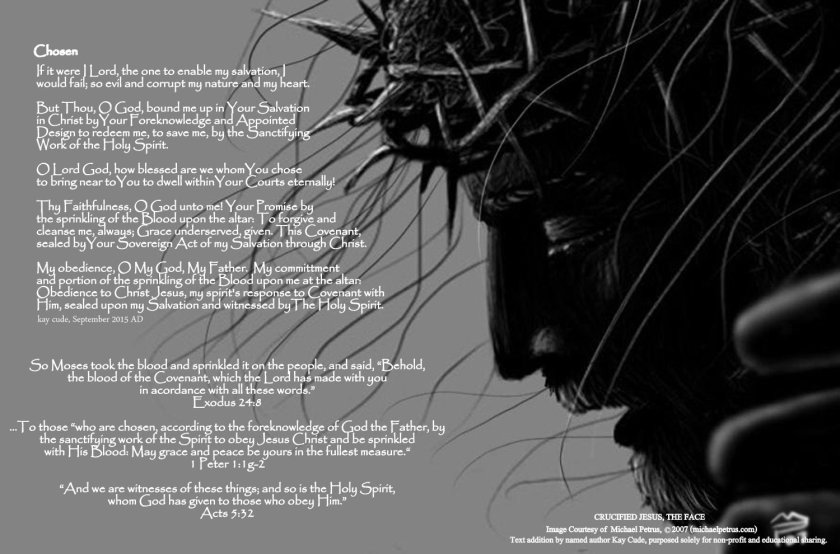
Kay Cude poetry, right-click in new tab to enlarge. Used with permission
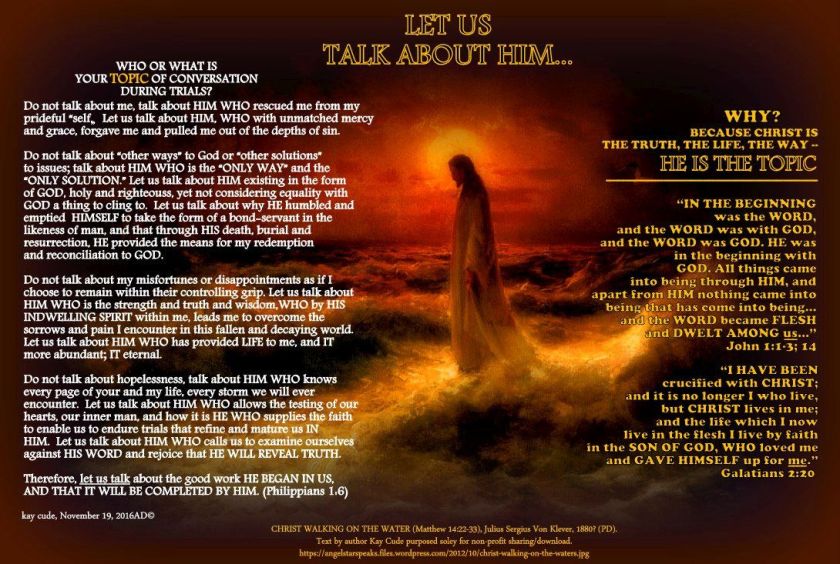
Kay Cude poetry. Used with permission. Click to enlarge
Artist’s statement:
The beginnings of a trial can be tumultuous and heart-wrenching, as well as physically and emotionally exhausting. But as we seek Scriptural guidance and encouragement from fellow believers, we quickly see that all of our communication and advice must center upon Christ and our personal relationship with Him. It is when one relies upon “other” solutions (or self), that one quickly experiences the futility of our “natural” reasoning and responses. When our trials exclude Christ as the resource of resolution, fleshly reactions will lead us into deeper distress with greater turmoil; an impasse can arise and anger, hurt feelings, confusion and chaos usually pursue.
I don’t like painful trials; I don’t know anyone who does. Yet I am so very grateful that Christ captures my attention during those times and makes it abundantly clear that He is the only source who can truly sustain, teach, discipline and encourage me while He refines and strengthens me, in and for Him. It is Christ who must always be the primary topic during our trials, because without the working of His indwelling spirit, our words and actions become futile.
right-click to open larger in new tab
By Elizabeth Prata
Yesterday I posted about how Jesus Intercedes for Us. My goal was to encourage and assure ladies that the Triune God hears our prayers, supplications, appeals, and repentances.
Doesn’t it just crush you to pray to Jesus…and know He hears us? It’s incredible, and a privilege we always remember in gratitude.
As Isaiah cried in his wonder and grief, “I am a man of unclean lips!” (Isaiah 6:5). In my case, a woman of unclean lips. Why should I be able to use these lips to pray to Jesus when I am the chief of sinners, wretched woman that I am? What is man that God should be mindful of us? (Psalm 8:4). Why should He hear us?
But He does.
Though ‘El Shama’ is not an official name of God, it refers to the fact that God hears…He listens. God told Hagar to name her soon to be born son Ishmael. Ishmael is is a combination of el and shama, “God hears” or “God listens”. The name would be a reminder to Hagar and all who knew them that He heard Hagar’s cry in the wilderness. (Genesis 16:11). He listens.
Psalm 17:6 says
I have called on you, for you will hear me, O God: incline your ear to me, and hear my speech.
Gill’s Expositions says of the Psalmist’s plea in verse 6,
“for thou wilt hear me, O God; God is a God hearing prayer; he is used to hear his people, and they have frequent experience of it, and they may be assured that whatsoever they ask according to his will, and in the name of Christ, he will hear; and such an assurance is a reason engaging the saints to a constant calling upon God, Psalm 116:2; and such confidence of being always heard Christ had, John 11:41;”
1 John 5:14 says,
And this is the confidence that we have toward him, that if we ask anything according to his will he hears us.
Did Peter forever relive his anguish each morning of his remaining life, when he heard the rooster crow the day awake and remembered his own perfidy? Owww, Peter, I understand your grief, the pain of betraying Jesus in word or in deed from our own sinful actions. Yet…Jesus prayed for Peter. Luke 22:32. He did not pray for Judas. Both men betrayed Jesus, but Jesus prayed for Peter.
If you’re a Christian, Jesus prays for you, too. It’s staggering to consider that the God of the Universe prays for us. He hears us, and He prays for us. We have a superlative God, One who is true and kind and loving and compassionate. Sister, no matter what you are going through, Jesus hears your prayer and He takes your cares to the Father in prayer. Be encouraged.

By Elizabeth Prata
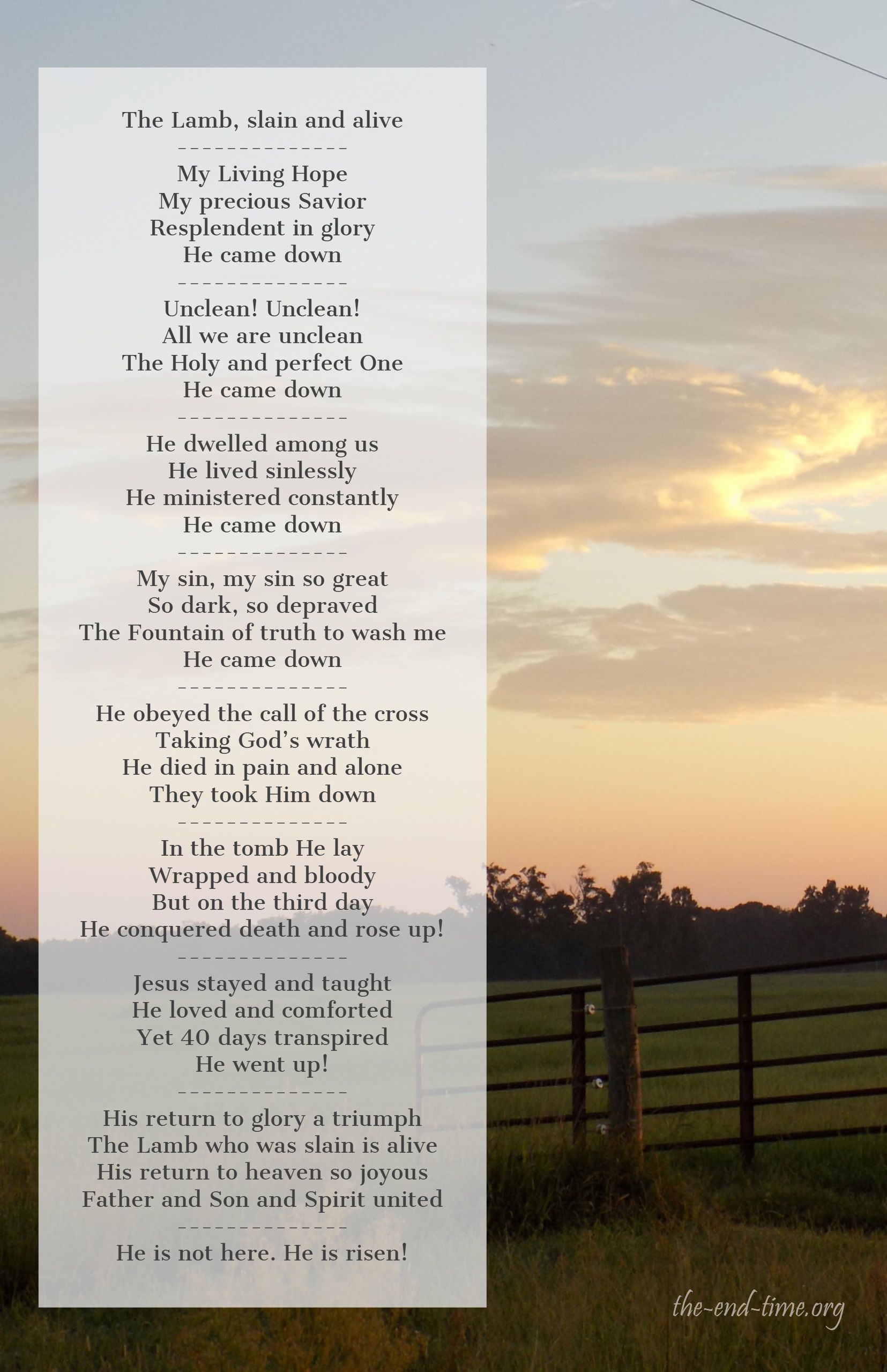
The Lamb, slain and alive
By Elizabeth Prata
My Living Hope
My precious Savior
Resplendent in glory
He came down
Unclean! Unclean!
All we are unclean
The Holy and perfect One
He came down
He dwelled among us
He lived sinlessly
He ministered constantly
He came down
My sin, my sin so great
So dark, so depraved
The Fountain of truth to wash me
He came down
He obeyed the call of the cross
Taking God’s wrath
He died in pain and alone
They took Him down
In the tomb He lay
Wrapped and bloody
But on the third day
He conquered death and rose up!
Jesus stayed and taught
He loved and comforted
Yet 40 days transpired
He went up!
His return to glory a triumph
The Lamb who was slain is alive
His return to heaven so joyous
Father and Son and Spirit united
He is not here. He is risen!
By Elizabeth Prata
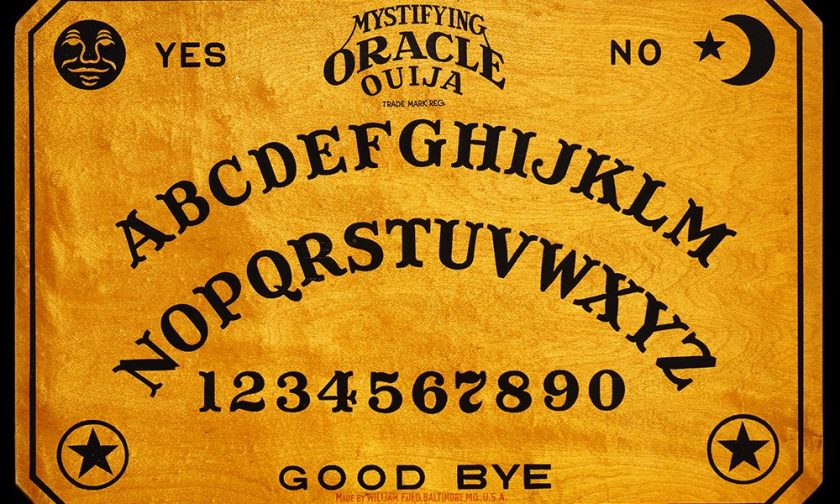
The NY Times published an article titled The modern charm of practical magic. I found it interesting for many different reasons. I was not saved by grace of the Lord Jesus until I was 42 years old. I spent all of my adulthood prior to the salvation moment, searching for the magic key to the magic in life, the unexplainable, explained. I dabbled in lots of different kinds of magic. Ouija boards, Kirlian aura photography, dreamcatchers, sage burning, Reiki, astral projection, summoning spirits & spirit guides, clairvoyance…
We all want to know what’s on the other side. We do enjoy peeking behind the veil, knowing the unknowable. Because, the unsaved person knows there is a higher power. (Romans 1:19-20). They just deny Who it is. ‘Oh it can’t be God. It must be runes…solstice…labyrinths…”
The NYT article says that they notice more than ever, people seeking answers through magic,
You may have noticed it at work. Perhaps your co-worker has ornamented her cubicle with rose quartz crystals? Has a friend uploaded an I Ching app onto his phone? Or maybe your boyfriend blamed his failure to respond to your text messages on Mercury being in retrograde?
Why magic, and why now? The lack of religious faith so prevalent in our age is an anomaly in history. Magic, which usually does not demand faith in a particular deity, or the sometimes exclusionary imperatives of organized religion, allows people to access a sense of the miraculous on the level of the quotidian.
The article concedes the yearning for a higher power but subtly warns against it actually being God,
There is relief to be found in simply accepting a higher order, in letting go, but what of appeals to reason? Is it not important to disbelieve things that aren’t real? Might faith in the healing powers of a vibratory sound bath lead the next day to outlandish conspiracy theories?
I liked this NY Times article, for many reasons but mainly for its use of my favorite word, quotidian. Where else are you going to read an essay where the author uses such a fancy word which means mundane?
The Christian is bombarded with practical magic all the time. Did you know that? The fads are part of the devilish worming into your home of these magical activities. Labyrinths, Breath prayer, mantras, prayer beads, Mandala coloring books, the false gospel of telling you your words have power, drawing prayer circles, horoscopes, seeking the Presence (which is actually summoning spirits)…and more, are just different kinds of old magic that satan is using to take your eyes off Jesus.
Beware of the charm of practical magic, brethren. The warning is not just for unbelievers, but for believers. Satan insinuates practical magic into our lives under the guise of it being Christian, but it never is. We have the answers. We have the mind of Christ. (1 Corinthians 2:16). Our answers are in the all-sufficient Bible. We do not need additional practices that promise to deliver information, (but never does), or promises to give added insight (but won’t) or gives a special closeness to Jesus (but never does).
Here are some resources about the dangers of Christian magic:
Desiring God:Jesus vs. the Occult
Critical Issues Commentary: Contemporary Christian Divination
GotQuestions: What does the Bible say abut Divination?

Right-Click to enlarge in new tab
By Elizabeth Prata
Gadara, where Jesus healed a demoniac
When the herdsmen saw what had happened, they fled and told it in the city and in the country. 35 Then people went out to see what had happened, and they came to Jesus and found the man from whom the demons had gone, sitting at the feet of Jesus, clothed and in his right mind, and they were afraid. 36 And those who had seen it told them how the demon-possessed man had been healed. 37 Then all the people of the surrounding country of the Gerasenes asked him to depart from them, for they were seized with great fear. (Luke 8:34-37).

Sychar, where Jesus met a woman at the well
Many Samaritans from that town believed in him because of the woman’s testimony, “He told me all that I ever did.” 40 So when the Samaritans came to him, they asked him to stay with them, and he stayed there two days. 41 And many more believed because of his word. 42 They said to the woman, “It is no longer because of what you said that we believe, for we have heard for ourselves, and we know that this is indeed the Savior of the world.” (John 4:39-42).
In one town, they saw Jesus perform a miracle, delivering the man from his legion of demons. Jesus demonstrated his sovereignty over creation, including the demons in the spiritual realm. The people saw, and rejected.
In another town, one woman’s testimony, a well-known immoral woman, seemed to have been changed. Her shame was gone, or at least diminished in the face of the incredible news that this man who told her all she ever (shamefully) did (but seemed to love her anyway), could be the Christ.

Things to ponder:
1. Just because they witnessed a miracle does not mean that belief always follows. Some believed because of the signs (John 2:11, John 2:23, John 11:45). Others saw signs and miracles and did not believe (John 11:46).
2. Far from being dry, dusty, and unnecessary, doctrine leads one to faith and repentance. Doctrine is the act of teaching or that which is taught. “Doctrine is teaching imparted by an authoritative source.” (GotQuestions). Like the Bereans who consulted the word after hearing Paul, the townsmen of Sychar were open to hearing Jesus teach. They listened and heard. “And many more believed because of his word”.
3. Some in the same crowd or the same room or in the same family believe, and others don’t. That’s the way it always has been and always will be. Some wonder why that is when we all have free will. Our will isn’t as free as one thinks it is. Our will is a slave to sin, it’s bound. Belief comes when Jesus opens ears and eyes to see and repent, gives a spirit of repentance. He intervenes from outside of earth, outside of ourselves, from heaven and breaks the binding of our soul to sin by giving us the Holy Spirit. There is nothing in us that can awaken our dead soul. Picture Lazarus dead in grave cloths, awakened by the sovereign call of Jesus. That was a picture of God’s sovereign election of individuals to save whom He decided in eternity past to save, before history began. Did Lazarus have free will? Only to remain dead.
The Reformed view of election, known as unconditional election, means that God does not foresee an action or condition on our part that induces Him to save us. Rather, election rests on God’s sovereign decision to save whomever He is pleased to save. (Source: Ligonier, Tulip & Reformed Theology: Unconditional Election)
Two towns, Gadara and Sychar. Two individuals in the same family, the unconverted and the saved. One rejects and departs, one repents and believes. Continue to pray for those in unbelief.

Kay Cude poetry. Click to enlarge. Used with Permission

Artist’s Statement:
I was compelled to do a piece about “unity in Christ” and what Christ means, not what “we” assume He means. [The picture] is Christ the Lamb of God who manifested all that “unity” of the redeemed in God the Father and God the Son!
For more information on the topic of unity, please see Mike Oppenheimer’s (Let Us Reason) pieces on “UNITY”, (“The Gospel of UNITY,” and “Unity Without Truth or Christ,”
Photo and poetry below. Used with permission.

Kay Cude is a Texas Poet. Used with permission.
 the-end-time.org