Posted in christmas, incarnation, prophecy, shiloh, simeon

Simeon’s Song

Rembrandt: Simeon’s Song

One of my favorite parts of the Christmas Story of Jesus’ Incarnation is Simeon’s Song.

“And, behold, there was a man in Jerusalem whose name was Simeon. And the same man was just and devout, waiting for the Consolation of Israel: and the Holy Spirit was upon him.” (Luke 2:25).

Of those verses, Charles Spurgeon said it best:

WHAT a biography of a man! How short and yet how complete! We have seen biographies so wordy, full one half is nonsense and much of the other half too dull to be worth reading. We have seen large volumes spun out of men’s letters. Writing desks have been broken open and private diaries exposed to the world. Nowadays if a man is a little celebrated, his signature, the house in which be was born, the place where he dines and everything else is thought worthy of public notice.

Short biographies, which give a concise and exact account of the whole man, are the best. What do we care about what Simeon did—where he was born, where he was married, what street he used to walk through, or what colored coat he wore? We have a very concise account of his history and that is enough. His “name was Simeon.” He lived “in Jerusalem.” “The same man was just and devout, waiting for the Consolation of Israel: and the Holy Spirit was upon him.” Beloved, that is enough of a biography for any one of us. If, when we die, so much as this can be said of us—our name. Our business, “waiting for the Consolation of Israel.” Our character, “just and devout.” Our companionship, having the Holy Spirit upon us—that will be sufficient to hand us down, not to time, but to eternity memorable among the just and estimable among all them that are sanctified!

At the time in Israel, faith was in short supply. Of course, Christianity didn’t exist yet, it would fully flower in their generation, but not yet. Judaism, which was supposed to have brought the light to the world, had become dark and corrupt- unrecognizable to the One it was supposed to point to. (Jeremiah 7:11). This was a time when what was supposed to bring the Light was at its darkest and most corrupt. Where was faith? Where was a right heart? Where was a mind with a right understanding of the promise of Israel? In a few people, and as we see here, it was in Simeon.

Simeon’s character was enumerated in Luke 2:25 gloriously and concisely. Note that his entire being was laying in hopeful wait for the Messiah. His old body tottered up to the temple each day, waiting and waiting, for what? To be with the Messiah that was promised, maybe even to say (as Spurgeon proposed) “Perhaps He will come today.”

We can learn from Simeon’s example. Despite the corruption ongoing all around him, despite national occupation and oppression by a hostile regime, despite widespread apostasy, despite greed, pride, and the blackened hearts of the priests, scribes and Pharisees who were supposed to shepherd the people, Simeon persevered in joyful expectation and faith.

He had the Spirit with him, but we have the Spirit IN us! We have the New Testament, knowing the second advent will occur, that the rectification of all that is evil will happen. We know that Jesus will return to take His place on HIS earth as rightful owner, finally and blessedly crushing the head of the serpent. (Genesis 2:15).

Upon seeing the Babe presented at the Temple, Simeon “took him up in his arms and blessed God”… Let us take Jesus up into our hearts and minds with all our strength and soul, and let us bless God for Him, Shiloh.

The sceptre shall not depart from Judah, nor a lawgiver from between his feet, until Shiloh come; and unto him shall the gathering of the people be. (Genesis 49:10).

Posted in hail, prophecy

A little known prophecy in Job

I’m sure you have  read (and admired) the following verse from Job a million times. But have you ever considered the prophetic aspects of this powerfully packed scripture? Job 38 is the climactic chapter where God speaks to Job about His own sovereignty over creation, time, and over all the peoples of earth.

“Have you entered the storehouses of the snow, or have you seen the storehouses of the hail,
which I have reserved for the time of trouble, for the day of battle and war?” (Job 38:22-23)

Have you ever noticed the phrase, “the time of trouble”? Other translations say reserved for “the time of distress”. You will also notice the reference to “the day” of battle and war. These are standard phrases referring to the final days of the Tribulation. (For example, Jeremiah 30:7, Obadiah 1:14, Joel 2:11).

God has used hail before in judgment and He will do so again. In the past, He used hail during the plagues He sent to Pharaoh, in themselves pictures of the revelation judgments of the coming Tribulation.

“The hail struck down everything that was in the field in all the land of Egypt, both man and beast. And the hail struck down every plant of the field and broke every tree of the field“. (Exodus 9:25)

The future judgment will contain another plague of hail-

And great hailstones, about one hundred pounds each, fell from heaven on people; and they cursed God for the plague of the hail, because the plague was so severe. (Revelation 16:21)

Gill’s Exposition says of the Job 38 verse,

Of hail we have instances in Scripture, as employed against the Egyptians and Canaanites, Exodus 9:25; and of a reserve of it in the purposes of God, and in prophecy against the day of battle with antichrist, Revelation 16:21.
And though there are no instances of snow being used in this way in Scripture, yet there is in history. Strabo reports, that at Corzena and Cambysena, which join to Mount Caucasus, such snows have fallen, that whole companies of men have been swallowed up in them; and even armies have been overwhelmed with them, as the army of the Gauls and such quantities have been thrown down from mountains, on which they have been lodged, that towns, towers, and villages, have been laid prostrate by them and in the year 443, a vast snow destroyed many.

I am so awed by prophecy. The (probably) oldest book of the bible, Job, contains a prophecy that is parallel to the last book of the bible, Revelation. God has His plan and who can thwart it? He has set aside some for eternal condemnation and others for eternal joy. He has stored aside His wrath to be unleashed upon them, and hail will be part of that stored-up unleashing. He is precise and will do what He says and it will come to pass to the Nth degree.

The bible is awe-inspiring in its depiction of our God, who authored it and revealed to us what He wants us to know. Part of that knowing is seeing His prophetic mind and His plans come to pass. I praise Him for all His plans, ways, perfections, prophecies.

The purpose of prophecy is:

The disclosing of the will and purposes of God through inspired or Spirit-filled human beings. The OT emphasises the importance of prophecy as a means of knowing God. Many OT prophecies find their fulfilment in Jesus Christ.

Manser, M. H. (2009). Dictionary of Bible Themes: The Accessible and Comprehensive Tool for Topical Studies. London: Martin Manser.

1. Contents of Prophecy

That which is given by the Spirit to the prophet can refer to the past and to the present as well as to the future. However, that which is revealed to the prophet finds its inner unity in this, that it all aims to establish the supremacy of Jehovah. Prophecy views also the detailed events in their relation to the Divine plan, and this latter has for its purpose the absolute establishment of the supremacy of Jehovah in Israel and eventually on the entire earth.

von, O. C. (1915). Prophecy, Prophets. In J. Orr, J. L. Nuelsen, E. Y. Mullins, & M. O. Evans (Eds.), The International Standard Bible Encyclopaedia (Vol. 1–5, p. 2464). Chicago: The Howard-Severance Company.

Above all, prophecy shows who is LORD over all creation. It points to Jesus. It is history unfolding as it was laid down from the beginning. The LORD has stored up hail and snow, reserved for the day of distress. He will do it.

Posted in day of the lord, imminent, prophecy, rapture, S. Lewis Johnson

What does it mean when the Prophets say "The Day of the LORD is near?"

I was listening to S. Lewis Johnson preach Obadiah. in a sermon titled “The Prophet of Edom’s Doom.” In Obadiah 1:15, the Prophet of God says,

For the day of the Lord is near upon all the nations.

Any reader of the bible, Old Testament or New, casual reader or diligent, will have read that expression. It is rendered frequently. For example Ezekiel 30:3 states the Day is near, so does Joel 1:15, Joel 2:1, Zephaniah 1:14, and so on. Were all the prophets wrong? It has been two thousand years! What can we make of this?

S. Lewis Johnson explains.

Now, he [Obadiah] says the day of the Lord draws near on all the nations. Well, of course, that would lead us to ask the question, “Well, now what a minute, the day of the Lord has not come yet. It’s been hundreds of years since the prophet Obadiah prophesied and not only has it been hundreds of years but we don’t have anything in the immediate future to indicate that the day of the Lord is nigh at hand. The catching up of the church has not even taken place yet, so how can he write near? Was he wrong? Did the prophet speak not unto inspiration when he said the day of the Lord is near? What do we mean when we say near in the sense of the prophetic word?

Well, probably we mean something like imminent; that is, it may come at any moment. We don’t mean it must come at any moment. That’s evident from the Biblical teaching in the Old Testament as we see here and also in the New Testament. So the term really means something like it is imminent, it may come. Now, it so happens we know that the day of the Lord has not come and it’s been a long time.

One of the students of the Book of Obadiah, a very good student has said, “Now, when we say that a prophetic event is imminent just what do we mean?” The following illustration is helpful. With a little care one may balance a heavy book on the edge of a table. There the book remains poised. Let the room remain absolutely quiet and the book may stay there indefinitely yet at any moment a slight jar may cause it to fall.

No one can predict the precise instance of its drop, for its fall is imminent. So it is with the next event in the prophetic schedule. He says, “The rapture may come in our day or it may linger far beyond our time. Not itself, the day of the Lord, it is the vestibule of that day.”

EPrata photo

Therefore since the Day of the LORD is near, the rapture is nearer. Let this be a comfort to you.

Posted in israel, jerusalem, prophecy, synagogue

Israel in prophecy: Peace talks, Jerusalem divided? ISIS blows up pipeline, Synagogue attack

Israel and especially Jerusalem has been in the news a lot lately. Israel is the ground zero for prophecy. As Joel Rosenberg wrote in his non-fiction book Epicenter, that part of the world is prophetically known as the epicenter because “the eyes of the nations are riveted upon Israel and the Middle East, the epicenter of the momentous events shaking our world and shaping our future.”

For thus says the Lord of host, After glory He has sent me against the nations which plunder you, for he who touches you– that is Israel–touches the apple of His eye. (Zechariah 2:8)

He found him in a desert land, and in the howling waste of the wilderness; he encircled him, he cared for him, he kept him as the apple of his eye. (Deuteronomy 32:10)

Keep me as the apple of your eye; hide me in the shadow of your wings, (Psalm 17:8)

“Israel is very precious to God; and they who vex and harass him are as they who hurt that which God prizes inestimably, and which a mere touch offends and injures.” (Pulpit Commentary)

And yet we know that in the end of time no one on earth will be Israel’s friend. Zechariah 12:3 says that at the time of the very end, all nations will be gathered against her. This is to show that God alone is Israel’s protector. All who try to move Jerusalem, the immovable rock, will injure themselves, the prophecy states.

By these verses and others we can see and know that the hatred against Israel and the Jews is irrational. This is because it is from satan. This rage and hatred of Israel will only become worse as time goes on and God executes His final plans for human history.

Why do the nations rage
and the peoples plot in vain?
2The kings of the earth set themselves,
and the rulers take counsel together,
against the Lord and against his Anointed, saying,
3“Let us burst their bonds apart
and cast away their cords from us.”
(Psalm 2:1-3)

For the last few weeks tensions and violence in Jerusalem has inched up to the nearly unbearable zone. Fox News has a timeline. Here is an excerpt

Nov. 5: A Hamas militant slams a minivan into crowd waiting for a train in Jerusalem, killing two.

Nov. 8: Israeli police shoot and kill an Arab Israeli protester at a demonstration in northern Israel. Video indicates the man was walking away from the officer when shot.

Nov. 10: Palestinian attackers kill two Israelis in Tel Aviv and the West Bank in separate stabbing attacks.

Nov. 13: U.S. Secretary of State John Kerry meets Israeli Prime Minister Benjamin Netanyahu and Jordan’s King Abdullah II in Amman; the trio agrees on steps to defuse tensions at Jerusalem holy site.

Nov. 14: Israel lifts age restriction at holy site; Friday prayers go off without incident.

Nov. 16: Police say Israeli man stabbed in the back by an “Arab” attacker in Jerusalem and wounded. Assailant escapes.

Nov. 17: Israeli government says it will step up punitive demolitions, gives notices to families of Palestinian attackers

Nov. 18: Two Palestinians storm Jerusalem synagogue, kill four five and wound six.

November 7:
Call to Mobilize Reservists to Secure Jerusalem

Avi Naim, head of the Beit Aryeh council in western Samaria, called to mobilize reserve forces to stabilize the security situation in Jerusalem on Friday, in a special interview with Arutz Sheva. “The situation is explosive and sensitive,” Naim stated. “There is the guiding hand of [Palestinian Authority Chairman Mahmoud] Abbas there, who wants to burn the city [down], and the fact that there are no incidents in Judea-Samaria.” “[Jerusalem] needs reinforcements, and we should call up the reserves, so the [IDF] is seen everywhere and so that we take a firm hand [against terrorists],” he added.

Remember, the end of November was supposed to be a drop-dead date for finalization of peace talks, long-stalled but supposedly resumed in October. The goal in early November was this:

The Palestinians are expected to submit a resolution to the UN Security Council by the end of November or early December that calls for an end to the occupation and the recognition of a Palestinian state along 1967 lines.

Joel 3:2 prophesies judgment upon the nations for the way they treated Israel, which the verses above show God considers His own, near to Him as the apple of His eye. Dividing His land is something He will render wrath for, and dividing Jerusalem is an even worse idea. Yet Luke 21:24 shows us that the Gentiles trample Jerusalem anyway.

They will fall by the edge of the sword and be led captive among all nations, and Jerusalem will be trampled underfoot by the Gentiles, until the times of the Gentiles are fulfilled.

Revelation 11:2 says it will be for 42 months.

but do not measure the court outside the temple; leave that out, for it is given over to the nations, and they will trample the holy city for forty-two months.

November 8
EU urges two-state capital in Jerusalem as tensions soar
Europe’s top diplomat on Saturday called for a Palestinian state sharing Jerusalem as its capital with Israel, hours after the police killing of an Arab-Israeli further fanned tensions. … “I think Jerusalem can be and should be the capital of two states,” the new EU foreign policy chief told reporters in the Israeli-occupied West Bank city of Ramallah. The status of Jerusalem is a sensitive issue that has blocked peace efforts for decades.

November 13
Martin Sherman wrote an opinion piece on the Jerusalem Post asking a terrible question,

Into the Fray: On the cusp of carnage?
A perfect storm brewing

A perfect storm is brewing for Israel. On virtually every front, ominous clouds are gathering, and should the menacing maelstroms they portend hit together, it is far from certain that the Jewish state will survive the destructiveness of their combined impact. Since I began writing this Into the Fray series in mid- 2011, I have warned repeatedly of the perils of the government’s policy of counterproductive compromises and concessions. I cautioned that this “cavalcade of capitulation” will elicit nothing from our adversaries other than demands for more – and more far-reaching – concessions, as indeed it has. In my column of December 2, 2011, I wrote: “By adopting a policy of continually trying to avoid confrontations in which it can prevail, Israel may eventually find itself forced to engage in a confrontation in which it cannot.”

Precisely such a perilous predicament is now beginning to develop before our eyes.

Across every border Israel shares with its Arab neighbors, within its own borders, and far removed from them, a formidable range of threats – from damaging economic sanctions and international isolation, through murderous terrorist attacks, jihadi insurgency and domestic insurrection, to the specter of weapons of mass destruction and a nuclear Iran – is coalescing with disturbing speed into a multi-faceted menace that jeopardizes the survival of the Jewish nation-state to a degree arguably unprecedented since its inception.

There is one yet-to-be fulfilled prophetic confrontation that Israel engages in which they cannot and do not win: The Gog-Magog battle of Ezekiel 38-39. In that confrontation, Israel is taken by surprise, and would lose, unless the LORD had directly intervened.

November 15
ISIS Blows Up Egypt-Jordan Gas Pipeline
The pipeline through Sinai exports Egypt’s natural gas to Jordan, Syria and Lebanon. Jordan is in the anti-ISIS coalition.

The Islamic State’s Sinai Peninsula terror organization, which was named Ansar Bayt al-Makdas until it swore allegiance to Islamic State (aka ISIS), has blown up the pipeline carrying gas from Egypt to Jordan. The pipeline, which is 1,200 km long, and was built at a cost of $1.2 billion, is used for exporting natural gas to Jordan, Syria and Lebanon. In the past, it was repeatedly attacked by Islamist terror groups, until Egypt’s gas exports to Israel were halted. The Islamic State’s Sinai Peninsula notified the press that it would not allow gas to be exported to Jordan unless ISIS head Abu Bakr al-Baghdadi allowed it. It said that the attack was a response to Jordan’s participation in the military coalition against ISIS.

Speaking of being on the cusp of carnage, though in his opinion piece Mr Sherman was speaking of general war between nations, there was carnage today, sadly and mournfully.

Four Five killed in attack on Jerusalem synagogue

Four Israelis were killed and eight more wounded in a frenzied assault by two Palestinian men on Jewish worshippers praying at a Jerusalem synagogue in the most lethal incident in the city in years. The two assailants who launched their attack with meat cleavers and a gun during early morning prayers were then killed by police officers in the ensuing gun battle at the scene of the attack. The deaths occurred as the two men – identified by family members as cousins Ghassan and Uday Abu Jamal from the East Jerusalem district of Jabal Mukaber – burst into the Bnei Torah synagogue in Har Nof, an ultra-Orthodox Jewish neighbourhood of West Jerusalem.

Israel vows harsh response to synagogue attack

Israel vowed harsh retaliation Tuesday for a Palestinian attack that left four rabbis hacked or shot to death on the blood-smeared floor of a synagogue in Jerusalem, a major escalation of already-high tensions after weeks of religious violence. The attack during morning prayers in the west Jerusalem neighborhood of Har Nof was carried out by two Palestinian cousins wielding meat cleavers, knives and a handgun. They were shot to death by police after the deadliest assault in the holy city since 2008. Three of the dead were born in the United States and the fourth was born in England, although all held dual Israeli citizenship. Six others were wounded, including two police officers.

Tuesday’s attack, however, appeared to mark a turning point, with the gruesome scene in a house of worship shocking a nation long accustomed to violence. The government released a photo of a bloody meat cleaver it said came from the crime scene. Government video showed blood-soaked prayer books and prayer shawls on the floor of the synagogue. A pair of glasses lay under a table dripping in blood, and thick streaks of blood lined the floor.

Source

Tears.

How Long, O Lord?
To the choirmaster. A Psalm of David.
13 How long, O Lord? Will you forget me forever?
How long will you hide your face from me?
2 How long must I take counsel in my soul
and have sorrow in my heart all the day?
How long shall my enemy be exalted over me?
3 Consider and answer me, O Lord my God;
light up my eyes, lest I sleep the sleep of death,
4 lest my enemy say, “I have prevailed over him,”
lest my foes rejoice because I am shaken.
5 But I have trusted in your steadfast love;
my heart shall rejoice in your salvation.
6 I will sing to the Lord,
because he has dealt bountifully with me.
(Psalm 13:1-6)

Posted in death, eternity, life, prophecy

Deathbed words. Do we die before our time?

Source: The Graphics Fairy

I read this on Facebook from No Compromise Radio

“Deathbed words: “I am dying before my time and my body is going to return to the earth.This is the fate of Napoleon the Great.”

The dead always think it’s too early to die. It is never too early to die. It’s always just right.

God numbers our days and they are determined from long before the foundation of the world. He has appointed each one of us to a time, and a nation and a place. He stretches out our days or years to the exact amount of time He wants us to walk the earth. He appoints some to His wrath and others to His joy.

For God has not destined us for wrath, but to obtain salvation through our Lord Jesus Christ, (1 Thessalonians 5:9)

The appointment of God’s grace is here mentioned as the efficient cause of our salvation; and the Lord Jesus Christ, as the Mediator through whom salvation is bestowed. (Pulpit Commentary)

If there are some appointed to salvation then that means there are some appointed to wrath. Gill’s Exposition says,

For God hath not appointed us to wrath,…. To destruction and ruin, the effect of wrath; though there are some that are vessels of wrath, fitted for destruction, of old ordained to condemnation, and who are reserved for the day of evil;

And many of those who sleep in the dust of the earth shall awake, some to everlasting life, and some to shame and everlasting contempt. (Daniel 12:2)

I’d said at the start that the dead (unsaved people) always think that their death is too early. No one who is unsaved think their death comes too late. Or rarely do they think so. But we all have a number of days.

“Man who is born of a woman
is few of days and full of trouble.
2He comes out like a flower and withers;
he flees like a shadow and continues not.
3And do you open your eyes on such a one
and bring me into judgment with you?

4Who can bring a clean thing out of an unclean?
There is not one.
5Since his days are determined,
and the number of his months is with you,
and you have appointed his limits that he cannot pass,
6look away from him and leave him alone,
that he may enjoy, like a hired hand, his day. (Job 14:1-5)

Matthew Henry says of the Job passage, and eloquently too,

Job enlarges upon the condition of man, addressing himself also to God. Every man of Adam’s fallen race is short-lived. All his show of beauty, happiness, and splendour falls before the stroke of sickness or death, as the flower before the scythe; or passes away like the shadow.

Source: The Graphics Fairy

The dead have only a short life to cling to, but the living have Jesus, who is the Giver of Life and the Eternity in which we dwell. Since they know, and we know, our days on earth are short, how will we spend them?

I hope it is that we will share life. Share the Gospel today. For some, death will come early. At least, compared to eternity, it will feel very early.

No Compromise Radio also posted these deathbed words from a person who knew Jesus:

“Live in Christ, die in Christ, and the flesh need not fear death.” ~John Knox

Posted in apologetics, doctrine, prophecy, rapture

Rapture is biblical

Here is an article by Joel C Rosenberg about the biblical fact of the rapture and why it will be before the Tribulation. It is the best one-stop shop defense of the doctrine I’ve seen.

I was shocked/not shocked to see that the new Left Behind movie released recently has sparked lots of rapture haters, from Christians no less, who fervently denounce this as a biblical doctrine at all! I am surmising from Mr Rosenberg’s title that this is one reason he wrote the essay in defense. It is a good, fast apologetics course in itself and I thought this piece was one of the best Joel has done in a long time.

The essay explores the following subjects

  • What exactly is “The Rapture”?
  • Is “The Rapture” a Biblical concept, or merely a fictional plot device?
  • What does the term mean?
  • What are the implications of “The Rapture”?

“Hollywood tackles the End Times with “Left Behind” film. But is “The Rapture” a Biblical concept, or a fictional plot device?“

Posted in heresy, jesus, prophecy

Apostasy: the church’s carbon monoxide

Carbon monoxide poisoning occurs after enough inhalation of carbon monoxide (CO). Carbon monoxide is a toxic gas, but, being colorless, odorless, tasteless, and initially non-irritating, it is very difficult for people to detect.

Carbon Monoxide poisoning is deadly! Now that the heating season is here, we should be careful with woodstoves, gas stoves, and other heaters that incorrectly set or maintained, can emit this deadly gas. So what is carbon monoxide (CO) and how is it produced?

Carbon monoxide (CO) is a deadly, colorless, odorless, poisonous gas. It is produced by the incomplete burning of various fuels, including coal, wood, charcoal, oil, kerosene, propane, and natural gas. Products and equipment powered by internal combustion engines such as portable generators, cars, lawn mowers, and power washers also produce CO.

What are the symptoms of CO poisoning?

  • Headache
  • Fatigue
  • Shortness of breath
  • Nausea
  • Dizziness

High level CO poisoning results in progressively more severe symptoms, including:

  • Mental confusion
  • Vomiting
  • Loss of muscular coordination
  • Loss of consciousness
  • Ultimately death
~~~~~~~~~~~~~~~~~~~~~~~~

Heresy monoxide poisoning occurs after enough inhalation of heretical monoxide (HO). Heresy monoxide is a toxic gas, but, being colorless, odorless, tasteless, and initially non-irritating, it is very difficult for people to detect. Now that Perilous Times are here, (2 Timothy 3:1) we must carefully shepherd our faith, which incorrectly maintained, can succumb this deadly gas.

What is heresy (HO) and how is it produced?

Heresy (HO) is a deadly, colorless, odorless, poisonous gas. It is produced by the incomplete burning of various sins, including greed, envy, adultery, gossip, fornication, idolatry, and thievery. Products and equipment powered by internal combustion of false teachers, unsaved pastors, unqualified deacons, vision casters, and power mongers also produce HO. It infiltrates silently on the backs of words containing ideas contrary to what is written in the bible and entertained in the mind for any length of time. What makes it deadly is that it is difficult to detect and initially non-irritating and non-threatening.

What are the symptoms of HO poisoning?

  • Headache from listening to emergent sermons
  • Fatigue from battling false doctrines
  • Shortness of breath from gasping at the loudness of rock and roll “worship”
  • Nausea from platitudes from the pulpit
  • Dizziness from being tossed back and forth over the waves (Eph 4:14)

High level HO poisoning results in progressively more severe symptoms, including:

Mental confusion
Vomiting
Loss of muscular prayer life
Loss of conscience
Ultimately death

To avoid Heresy Poisoning, breathe the pure air of biblical doctrine, congregate with fellow believers, pray constantly, remain vigilant about burning off sins completely, by casting them to the feet of Jesus and repenting of them.

Posted in church, encouragement, end time, fellowship, gather together, prophecy, putnam

Churching Alone: The Collapse of American Churches

In 2000, an important book was published. Robert Putnam wrote Bowling Alone: The Collapse and Revival of American Community.

Since the founding of America, we as a nation have always emphasized the importance of a strong and active civil society to the consolidation and perpetuation of democracy. When Thomas Paine wrote “Common Sense” before the American Revolution, people grabbed up his pamphlet and brought it to the tavern to discuss. Taverns and public squares were abuzz with discussions of ideas, concepts, philosophies. A robust public conversation with personal engagement among neighbors was the foundation of democracy.

I grew up in Rhode Island, the 13th state in the American Colonies, a place where there are more pre-colonial buildings still standing than anywhere else in the US. The first American Jewish synagogue is in Newport. (Touro). The first Baptist church is in Newport. A letter written in 1790 from George Washington to the RI Hebrew Congregation, assuring them, citizens of a newly independent United States, of tolerance and freedom of religion. Washington wrote,

May the children of the stock of Abraham who dwell in this land continue to merit and enjoy the good will of the other inhabitants — while every one shall sit in safety under his own vine and fig tree and there shall be none to make him afraid.

But back to the old days. Men discussed ideas together in public spaces- taverns, the town square, the general store, front porches. They argued, persuaded, they met, they wrestled with ideas and formed community. It was that wrestling and knitting that made us strong enough as a collective of disparate farmers, millworkers, sailors, and the like, to dare to poke the eye of the mighty United Kingdom, and fight for freedom, including freedom to assemble and freedom to worship.

In this paper, the Daily Life of the American Colonies: The Role of the Tavern in Society Noon Inn Barroom, we learn of the importance of a citizenry discussing ideas together,

In the century or so leading up to the Revolution, colonial taverns and inns were an essential part of the community. Horses need frequent rests, travel by coach and horseback were far from comfortable. In Massachusetts on the roads leading to Boston, taverns and inns were spaced about every eight miles, which worked out to a reasonable journey in the winter cold before a person needed to warm up, inside and out.

The main reason for the importance of the colonial era tavern was as a social hub. Issues of the day were discussed and hammered out here, in fact, often in official settings. The City Tavern in Philadelphia, was the site of the first continental congress. The Virginia legislature met in the taverns of Williamsburg. And the initial investigations of the Salem Witch trials were supposed to be held at Ingersoll’s ordinary, [a name for a small tavern] though it was in the end was too small for the crowds.

To the common man, the tavern was where you learned the current prices for your cash crops. It was where you could find a newspaper, often read aloud for those who couldn’t read. It’s where local issues were debated and local governments met. The colonial era tavern was the link to the outer world for those in rural areas, and a place where you could meet your neighbors for conversation, games and diversion.

Entertainment included gambling; on horse racing, cockfights as well as cards. Actually the colonists were known to gamble on almost anything, including guessing the weight of pigs, a practice eventually outlawed on Long Island as it led to too many fights. The tavern also served as courthouse, where you learned of new business opportunities and worked out trades with your neighbors.

The tavern also served as post office. Originally the practice was to put your posts on a table, which travelers would then take along the route with them. It was commonly accepted that the travelers had the right to read your mail, providing a bit of entertainment along the way. Mail arrived in the community in the same way that it left, eventually becoming more organized and efficient.

In addition, recruitment and deployment of the militia took place in the taverns. Prior to the battle of Lexington, the militia organized and fortified themselves at Buckman’s tavern, before marching out onto the Lexington Green and into the history books.

In Newport RI, where our family would often drive on a Sunday, the White Horse Tavern still stands. It was constructed before 1673, is one of the oldest tavern buildings in the United States. It is located on the corner of Farewell and Marlborough streets in Newport. We used to eat brunch there. I’d sit in one of the many small rooms, with small fireplace blazing, hardwood floors and ladderback wooden chairs, and wonder about the Colonists who lifted a tankard in debate as to whether to separate from England.

In Wikipedia it is stated,

“In the first half of the 19th century, Alexis de Tocqueville had observations about American life that seemed to outline and define social capital. He observed that Americans were prone to meeting at as many gatherings as possible to discuss all possible issues of state, economics, or the world that could be witnessed. The high levels of transparency caused greater participation from the people and thus allowed for democracy to work better.”

White Horse Tavern, Newport, in 2009. Wikipedia

And they continued steadfastly in the apostles’ doctrine and fellowship, and in breaking of bread, and in prayers. (Acts 2:42 KJV)

If the foundation of a democracy was forged by citizens together in community, discussing things of import, ideas traded, dispensed with, held onto; how much more should those behaviors be replicated in the church? Where do the community of Christ’s members gather, discuss, flesh out biblical ideas, knit ourselves together in His name? Where are the robust discussions, healthy praises to Jesus, songs and fellowship? Because it’s not in church. And increasingly, it’s not in homes, either. Forget the public square, if a gathering occurs, say at Cracker Barrel, the talk is rarely biblical. Other times, Christians are prevented from speaking of Jesus in public.

Public domain

Corporate worship is extremely important. In this sermon by Phil Johnson called A Foretaste of Glory Divine. Pastor Johnson explains the verse from Psalm 122.

Notice the plural pronouns in the first two verses: “I was glad when they said to me, “Let us go to the house of the LORD.” Our feet are standing Within your gates, O Jerusalem.” One of the distinctive joys David is writing about here is the corporate nature of this worship experience. He had spent much of his youth alone on the hills tending sheep and meditating on the truth of God in solitude and that’s certainly a good and valid exercise. But it cannot take the place of fellowship and public worship with the multitude of God’s people. That is why the feasts were so important in Israel. Verse 4: “The tribes go up, even the tribes of the LORD–An ordinance for Israel–To give thanks to the name of the LORD.”

And,

There’s a sanctifying influence in the gathering of believers that you will not benefit from if you think watching a church service on TV or streaming church on the Internet is a valid substitute for real live participation in the public worship of God’s people. Hebrews 10:24-25: “Let us consider how to stir up one another to love and good works, not neglecting to meet together, as is the habit of some, but encouraging one another, and all the more as you see the Day drawing near.”

There are two problems in today’s ‘churching alone’ era. One is that people increasingly satisfied to stay at home and watch someone on TV or streamed online. The second and the greater problem is that when people do attend church for any reason at any function, rare is the talk of doctrine. We might sing some ‘me-oriented’ songs, listen to a (too-short/self-help/topical) sermon. And then when the last ‘Amen’ is said, people are out the doors, never to speak of Jesus again until next week.

When believers gather these days, too often it is not really to worship God but merely to entertain one another. ~Phil Johnson
What are we losing by ‘churching alone’? What are the effects on the church when its members forgo social intercourse, fellowship, and good discussions and praises to the Lord? Wikipedia summarizes Putnam’s book,

Putnam surveys the decline of “social capital” in the United States since 1950. He has described the reduction in all the forms of in-person social intercourse upon which Americans used to found, educate, and enrich the fabric of their social lives. He believes this undermines the active civil engagement which a strong democracy requires from its citizens.

iPhone wallpaper

When we ‘church alone,’ whether at home or alone as an island at church, our biblical lives are not enriched. When we are not educated in biblical literacy, we weaken. When we are weak, the scarlet thread of our lives that should be evident when we gather with others isn’t connected. And the Preacher said in Ecclesiastes 4:12,

And though a man might prevail against one who is alone, two will withstand him—a threefold cord is not quickly broken.

If Putnam’s notion of social capital is an investment in social relations with expected returns in the marketplace, then in the church world, social capital is investment in spiritual-social relations with expected returns in the church. In Acts 2 we see the priority of fellowship, and along with that came praise for the Lord. (Acts 5:42)

It seems clear that the more we meet in His name, breaking bread, having fellowship, and discussing His doctrine, then the more we have glad hearts, generous spirits, and praise for Jesus on our lips. It stands to reason that the opposite is true too; less we get together, the fewer times we discuss His doctrines, break bread, and have glad hearts, and thus we praise Him and proclaim Him less.

And day by day, attending the temple together and breaking bread in their homes, they received their food with glad and generous hearts, (Acts 2:46)

And truth be told, if we do get together, how often do we really discuss His doctrines as the verse in Acts 2:42 states the first church did? Not a lot.

Whoever isolates himself seeks his own desire; he breaks out against all sound judgment. (Proverbs 18:1)
Yet personal engagement at an all-time low. The previous networking availabilities in church, such a personal visits, dinners on the ground, home gatherings, have gone the way of the dinosaur. People don’t do that anymore. We do not ‘continually devote ourselves to… fellowship.’

More often than not, the way this generation engages today is via social media online. Visiting in person is a relic from the past.

What do colonial times in the 1770s to 1800 have to do with today’s church? Cut to 100 years later, the 1900s. There was still a public square. Before television, before the internet, people sat and talked. They had coffee. They visited. They had Sunday suppers. They sat by the pot bellied stove at the feed store and talked. People played bridge, gathered for parties, told stories. They discoursed.

The iconic Andy Griffith show reflected this reality- front porch sitting was a favored past time.
It was a time when people were invested in each other’s lives. They know when someone wasn’t feeling well. Or wasn’t themselves. They knew when someone was struggling. They celebrated victories and pitched in during hard times.

We have lost that.

We’re “crazy busy” now.

Yet the youngsters don’t know any other way of engaging except what they see online or through their parents or other trusted adults. They think fellowship is gathering at a google hangout.

I’m not saying anything that is unknown to anyone living in the year 2014. It’s old news that we do not socialize anymore. Here is the new news. New, at least to me.

We are forgetting HOW to socialize.

The influence of personal cellphones and texting have infiltrated our psyche to the extent that front porch sitting, passing the time, just being with someone is a lost art.

If people socialize at all in person now, it includes a phone interruptions and texting, looking at email, or a myriad of other things that distract from looking fully into someone’s eyes and listening to what they are saying with full attention.

This is my favorite episode from Andy Griffith. A business man in a hurry breaks down in Mayberry on a Sunday. Initially chafing at the slow pace of life and the almost uniform commitment by its inhabitants to the priority of fellowship on the Lord’s Day, the man eventually succumbs to the love shown to him- and he slows down.

Will you visit someone this week? Will you sing with them, or speak of the glories of our savior, or read the bible together? Will you linger at church for a while afterward and praise the sermon and flesh out some of its points- coming to happy agreement with a fellow believer? Let us not “church alone.” The foretaste of glory divine Mr Johnson was preaching on is the corporate gathering of believers on earth being the glad foretaste of the gathering in praise of all of history’s saints at the end of time. What a true foretaste- glorying in the Lord together, never alone forevermore.

Then the Lord God said, “It is not good that the man should be alone; I will make him a helper fit for him.” (Genesis 2:18)

Man in a Hurry- full episode
Posted in daniel, encouragement, prophecy

The UN tries to solve the world’s unsolvable problems

I read an interesting article last week. It concerns the opening of the United Nations General Assembly. The UN website states the purpose of the General Assembly:

The General Assembly (GA) is the main deliberative, policymaking and representative organ of the UN. Decisions on important questions, such as those on peace and security, admission of new members and budgetary matters, require a two-thirds majority. Decisions on other questions are by simple majority.

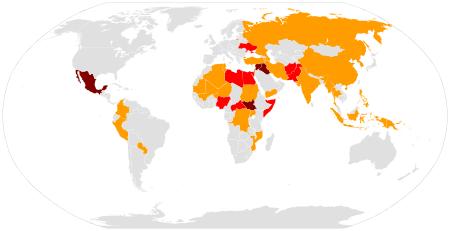
Every year in September, the world gathers at the UN Headquarters in New York. The Secretary-General of the UN gives his “State of the World” speech. This year’s speech (the 69th) was much darker, with much less hope than previous years. Here are some excerpts from this year’s speech by Secretary General Ban Ki Moon.

“This year, the horizon of hope is darkened. Our hearts are made heavy by unspeakable acts and the deaths of innocents,” he told the assembled leaders from 193 nations. “Not since the end of the Second World War have there been so many refugees, displaced people and asylum seekers. Never before has the United Nations been asked to reach so many people with emergency food assistance and other life-saving supplies,” he said.

“It may seem as if the world is falling apart, as crises pile up and disease spreads. But leadership is precisely about finding the seeds of hope and nurturing them into something bigger. That is our duty. That is my call to you today.”

Another article about the UN Opening Day session reports a bleak world picture as well. It was published this morning before the Secretary-General gave his speech.
Here are some excerpts from this article.

World leaders meet with multiple crises on agenda

UNITED NATIONS (AP) — Facing a world in turmoil from multiple crises ranging from wars in the Mideast and Africa to the deadly scourge of Ebola and growing Islamic radicalism, leaders from more than 140 countries open their annual meeting at the United Nations on Wednesday with few solutions.

Looking at the array of complex challenges, Norway’s Foreign Minister Borge Brende told The Associated Press: “It’s unprecedented in decades, that’s for sure.”

Secretary-General Ban Ki-moon, who will deliver his state of the world report at Wednesday’s opening of the General Assembly ministerial session, gave a bleak preview to reporters last week: The world is facing “multiple crises,” with all featuring attacks on civilians and having dangerous sectarian, ethnic or tribal dimensions.

World problems have always been difficult. The world after WWII when the UN was formed was very different than the world that had existed before the war began. Two atomic bombs had been dropped, ushering in the atomic age, and then the space age came in. Every generation has had to deal with complex problems and policy makers at this highest level have always gone into the UN General Sessions knowing that.

However, every generation has had to deal with problems that have been incrementally more difficult than the generation before. It was only a matter of time until the problems outpaced man’s ability to solve them. I think we are reaching that tipping point.

Source
It is a restless, sinful world, nation against nation.
Isaiah 17:12, Isaiah 57:20, Matthew 24:7.

These world problems will only grow more seemingly unsolvable. The unsolvable problems will grow so large and wearisome to the people that they will stagger under the weight of tension from the world coming apart at the seams, not only as Ban Ki Moon said, but also as US Vice President Joe Biden said this week:

“The international order that we painstakingly built after World War II and defended over the past several decades is literally fraying at the seams right now.”  ~Joe Biden

He’s right, the world IS coming apart at the seams. Not uncontrollably, but under the sovereign and perfect eye of God. The world will continue to stagger under threat of global pandemic, tribal uprisings, civil uprisings, moral decay, government enforced cultural perversity, famine, drought, …until one king comes along and he’s got the answers-

And at the latter end of their kingdom, when the transgressors have reached their limit, a king of bold face, one who understands riddles, shall arise. (Daniel 8:23).

This man understands riddles, he is cunning, comes out of nowhere, he will seem greater than his companions (Daniel 11:21, Daniel 7:8, Daniel 7:20).

He will be energized by satan, and remember, satan is described in Ezekiel 28 as an angel “full of wisdom”. Satan is an angel ascribed the term ‘wisdom’ many times in that chapter- but his wisdom was corrupted by his pride and arrogance. This same wisdom, though corrupt and evil now, is still endowed to satan. He hasn’t lost it. He gives it to the antichrist, who appears on the world scene like a god. After a while the antichrist will believe his own propaganda, that is actually IS a god, and force all to worship him. (Daniel 8:25)

The world will accept him. Weary of problems, they just want some relief. This man promises it.

I have come in my Father’s name, and you do not receive me. If another comes in his own name, you will receive him. (John 5:43, Revelation 13:3)

What a heartbreaking moment. An ignorant world rejected Jesus, the precious Creator and Savior, but will accept the one called The Beast and Man of Sin.

But our Savior did not leave us without hope. He will rapture us when He is ready to get His bride, and He will render the due judgment on the unholy world that it deserves. All we have to do is persevere. Persevering is the sign that we are saved, it is the assurance of the seal of hope we have within us. It is the signal the the power of the Spirit is working in us to help us be His light in this present darkness. (Ephesians 6:12.)

They went out from us, but they were not of us; for if they had been of us, they would have continued with us. But they went out, that it might become plain that they all are not of us. (1 John 2:19)

If they go out from us, they never were of us. Therefore, staying in Him proves we are of Him. Persevere! 2 Timothy 2:12, Galatians 6:9, Revelation 3:11. It all has a very happy ending!

Posted in biocontainment, ebola, nebraska, pestilence, prophecy

How many hospital beds are there in the US prepared to handle Ebola? The answer may astound you

Training exercise, Nebraska Biocontainment Unit brochure

The Nebraska Medical Center, Omaha Nebraska, put out a press release in July 2014. It stated,

Ebola Outbreak: Qualified and Prepared

In late July 2014, representative from the U.S. State Department recently visited The Nebraska Medical Center to take a closer look at the capabilities of our 10 bed Biocontainment Unit. There are no current plans for Ebola patients to be transferred here. This was strictly a fact-finding mission, to make government officials aware of the unit’s capabilities in case the need arises for treatment of additional patients with the Ebola virus here in the U.S. The unit has been operational for nearly ten years and is one of four such units in the country equipped to handle an outbreak of this nature.

A few thoughts:

–Ten beds? In an outbreak where a ‘biocontainment unit’ is needed, 10 isn’t that many beds.

–One of four Units in the US? Where are the other three? Maybe they have more beds. The National Institute of Health (NIH) Clinical Center, Bethesda Maryland, has 3 beds. Emory Hospital, Atlanta has 3 beds and St Patrick’s Hospital, Missoula Montana has 3 beds. Nineteen beds total in the US. Oops, Nebraska’s ten seems like an embarrassment of riches compared to paltry 3 in the other places.

–I guess those ‘no current plans’ to receive patients in July turned into ‘you must open for business now’ in October

It is hopeful to read that “And any hospital equipped to care for a tuberculosis patient can care for an Ebola patient, according to Dr. George Risi, an infectious disease specialist who recently returned from spending 20 days in a Sierra Leone Ebola ward.” But it still doesn’t make it a Biohazard level-4 facility.

Ebola virus causes a medical response to a Biohazard Safety level-4 (BSL-4). It is the highest level.

Biosafety level 1
This level is suitable for work involving well-characterized agents not known to consistently cause disease in healthy adult humans, and of minimal potential hazard to laboratory personnel and the environment (CDC,1997)

Biosafety level 2
This level is similar to Biosafety Level 1 and is suitable for work involving agents of moderate potential hazard to personnel and the environment. It includes various bacteria and viruses that cause only mild disease to humans, or are difficult to contract via aerosol in a lab setting, such as C. difficile, most Chlamydiae, hepatitis A, B, and C, orthopoxviruses (other than smallpox), influenza A, Lyme disease, Salmonella, mumps, measles, scrapie, MRSA, and VRSA.

Biosafety level 3
This level is applicable to clinical, diagnostic, teaching, research, or production facilities in which work is done with indigenous or exotic agents which may cause serious or potentially lethal disease after inhalation. It includes various bacteria, parasites and viruses that can cause severe to fatal disease in humans but for which treatments exist, such as Yersinia pestis (causative agent of plague), Francisella tularensis, Leishmania donovani, Mycobacterium tuberculosis, Chlamydia psittaci, Venezuelan equine encephalitis virus, Eastern equine encephalitis virus, SARS coronavirus, Coxiella burnetii, Rift Valley fever virus, Rickettsia rickettsii, several species of Brucella, rabies virus, chikungunya, yellow fever virus, and West Nile virus.

Biosafety level 4
This level is required for work with dangerous and exotic agents that pose a high individual risk of aerosol-transmitted laboratory infections, agents which cause severe to fatal disease in humans for which vaccines or other treatments are not available, such as Bolivian and Argentine hemorrhagic fevers, Marburg virus, Ebola virus, Lassa virus, Crimean-Congo hemorrhagic fever, and various other hemorrhagic diseases. This level is also used for work with agents such as smallpox that are considered dangerous enough to require the additional safety measures, regardless of vaccination availability.

Source for above, Wikipedia

Praise God there are medical personnel willing to work with BSL-4 patients!

I was glad to read that the patient being monitored at Queens Hospital in Honolulu does NOT have Ebola, according to reports.

Interesting article below. The author does a lot of math… and a little scaremongering. Though the numbers she uses are like-to-like, the scenario between W. Africa and the US has a few additional variables than simply numbers. In West Africa, rural clinics are so poor they habitually reuse needles. As a result, standards are different. Also, governments vary in their responses and protocols.

Though a disease will do what it will do whether it emerges in West Africa or the US, there is more to compare than just numbers to numbers. However, in one article I read, the medical personnel interviewed said that by simply applying IV drip, anti-coagulant and electrolytes, one can reduce Ebola’s mortality rate from 80% to 40%. That sounds like a great reduction, but when you consider that the Spanish Influenza killed 3-5% of the world’s population…and had a mortality rate of 10-20%, then 40% doesn’t sound so great anymore. Anyway, for what it’s worth, here is the article.

There are only 19 level 4 bio-containment beds in the whole of the United States…and four in the UK

And the beat goes on… “Two Washington area hospitals said within hours of each other Friday that they had each admitted a patient with symptoms and travel histories associated with Ebola.”