Posted in bible, encouragement, judgment, prophecy, tribulation

End time encouragement from a long-past prophet: Habakkuk

My friend, Pastor Phil Andrukaitis of the First Baptist Church of South Portland Maine, preached on Habakkuk 3 recently. I am on the email list for the sermon notes, and I was struck by how encouraging the notes were. Because:

  • it is always good to be energized by the profound truths of God’s word
  • it is always wonderful to remember that prophecy points to the sovereignty of God
  • it is comforting to see there are faithful pastors laboring in all parts of this country and the world, serving and ministering to our Lord

I asked Pastor Phil to reprint the notes. They include a thoughtful and discerning introduction. Please be encouraged with either or both, the introduction or the sermon notes themselves. I added the photos and artwork. They are not original to the sermon.

Please continue to pray for pastors all over the world who preach the Gospel faithfully and discerningly. There are 4,500 pastors meeting in Sun Valley CA right now at the annual Grace Community Church/Masters College Shepherds’ Conference. There are thousands of other pastors right now working out sermon notes, praying in tears for their sheep, visiting the sick, building a new church, or doing any of the myriad and seemingly impossible things God calls His under-shepherds to do.

Pastor Phil Andrukaitis

It is only by the Holy Spirit that these men are able to lift themselves up each day under the workload, to have the word of God illuminated to them, to have kindness and comfort to offer the grieving or sin-stricken, to have strength to have the difficult conservations and uncomfortable confrontations.

And when I came to you, brethren, I did not come with superiority of speech or of wisdom, proclaiming to you the testimony of God. For I determined to know nothing among you except Jesus Christ, and Him crucified. (1 Corinthians 2:1-2)

Good pastors are a gift from God.

And I will give you pastors according to mine heart, which shall feed you with knowledge and understanding. (Jeremiah 3:15)

The introduction and sermon are long. Print it out, mull it over, return to it when you have time. These are God’s words, delivered through a pastor’s heart, and offered in love and truth to comfort you.

SERMON INTRODUCTION

Phil Andrukaitis
Good afternoon my family and friends,

As a pastor, I have a divine responsibility to shepherd my flock [and to encourage other Christians] by strengthening their faith with the Bible and by preparing them for future trials and tribulations, which lie ahead for all of us. Knowing my own weaknesses and failings, I still press on to model my faith with my life, as this is part of the process of making disciples.

Question: My family and friends, are we ready to experience the difficult times that are coming to our country? As I read the Book of Habakkuk, this prophet of God was told what was in store for his nation. This news was so disturbing for Habakkuk, it caused him to tremble. I believe God is allowing discerning Christians, along with many American citizens, to see ominous signs for our nation. And some folks are trembling.

The concept of the Rapture is embraced as an escape plan among many Christians. While I believe Scripture promises the church to escape the “Great Tribulation,” the church may very well experience smaller tribulations [e.g., the collapse of our economic system, martial law, restricted freedoms, fear in the streets, etc.] before the actual rapture of the church.

My brothers and sisters, I urge you in the name of the Lord not to dismiss current events or to become discouraged by them. Rather, we are to embrace God and His Word, as did Habakkuk. Therefore, let each Christian embrace his God-given assignment and enable the church to fulfill the Great Commission, making disciples of Jesus Christ.

I pray that Habakkuk’s message will strengthen your faith and prepare you to stand firm on the Rock of our salvation, Jesus Christ.

Your servant in Christ,
Pastor Phil

SERMON TRANSCRIPT

This morning, I begin this sermon not with a story to illustrate the passage; rather, with the text itself. It is one of the most magnificent pieces of Hebrew poetry [comparable to Psalm 23]; the closing verses in the Book of Habakkuk (3:17-19 – NASB):

Though the fig tree should not blossom and there be no fruit on the vines; though the yield of the olive should fail and the fields produce no food; though the flock should be cut off from the fold and there be no cattle in the stalls; yet, I will exult in the LORD, I will rejoice in the God of my salvation. The Lord GOD is my strength, and He has made my feet like hinds’ feet, and makes me walk on my high places.

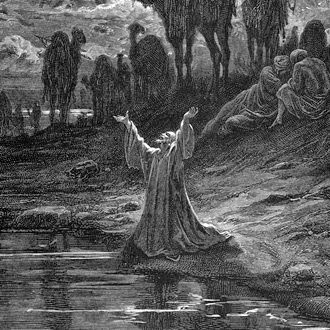
Gustav Dore: Habakkuk crying out in prayer

Did you hear Habakkuk’s words with your soul? But wait: Unless we understand these words in the context of the chapter, in the context of the book, and in the context of its setting, Habakkuk’s words of praise would be wrongly interpreted and misapplied to our lives. Therefore, let us begin with the fact that Habakkuk is a devout servant of God who…

  • grieved over his nation’s wickedness,
  • wrestled with theological perplexities,
  • and shook with fear when God told him what was coming to the nation.

God was bringing judgment to His people. Yet, Habakkuk declared his faith and expressed praise to the Lord GOD, in spite of the news he learned (Habakkuk 3). How is that possible?

So as not to get ahead of myself, permit me to ask you two questions: First, what was the most gut-wrenching, painful experience you have ever had? Second, how long did it last and what were the consequences? Perhaps some of you have experienced one or more of the following:

• The death of a parent, spouse, child, or friend
• An act of violence committed against you [rape, beaten, robbed, etc.]
• News that your health is failing – you have only three months to live
• The rejection of your spouse [divorce]; the betrayal of a friend; the discipline of a church
• The consequences of a sinful decision that brought overwhelming guilt and shame

Okay, now that you are in the moment for just a moment, what were your thoughts towards God when you were in that time of trouble? Were you praying? Were you crying? Were you afraid? Were you angry? Did you doubt God’s love? Were you filled with despair? How did you get through this painful experience?

Transitional Sentences

Having jolted your memory, you are now ready to connect with the prophet’s words and emotions; but just for a little bit. I do not want to offend anyone by minimizing your gut-wrenching painful experience, but when God told Habakkuk what was coming to the nation, within the prophet’s lifetime, Habakkuk wrote,

I heard and my inward parts trembled, at the sound, my lips quivered. Decay enters my bones, and in my place I tremble. Because I must wait quietly for the day of distress, for the people to arise who will invade us (Habakkuk 3:16 – NASB).

Yet, immediately following these words,

• Habakkuk did not stare at the horrific news he just received.
• Habakkuk did not become paralyzed in his walk with God.
• Habakkuk did not run away from God; rather,
• Habakkuk grounded himself in what he knew to be true about God and praised the Lord.

Historical Setting

Okay, before we proceed further, you might be asking, who is Habakkuk? There is nothing known about the prophet’s personal life. While students of Scripture have speculated that Habakkuk was of a priestly family, the Scripture is silent on this issue.

Habakkuk’s name means, “to embrace.” Based on the prophet’s words, it appears that Habakkuk embraced God [God’s glory, will, purity, heart, people, and suffering]. While all the other prophets spoke for God to the people, Habakkuk speaks openly to God about people.

Habakkuk wrote this book approximately 2 years before the first of three deportations to Babylon [B.C. 605, 597, 586]; 20 years before king Nebuchadnezzar eventually destroyed Jerusalem with a great slaughter. Habakkuk was a contemporary of Jeremiah. Moreover, there is a sense in the text that Habakkuk is also living in Jerusalem.

• We know that Jeremiah lived through the two-year siege of Jerusalem. Jeremiah describes God’s wrath against Jerusalem (Lamentations 2), whereby the Babylonian military forces first starved the people into submission and then broke through Jerusalem’s wall, slaughtering, plundering, and destroying the people and the city.

• However, as for Habakkuk, we do not know if he perished in the two-year siege or died by the sword when the Babylonian forces ransacked the city. However, when the prophet heard the news from God, what was to come, it is no wonder the prophet shook with fear.

I heard and my inward parts trembled, at the sound, my lips quivered. Decay enters my bones, and in my place I tremble. Because I must wait quietly for the day of distress, for the people to arise who will invade us (Habakkuk 3:16 – NASB).

In order to understand more fully Habakkuk’s prayer of praise in Chapter 3, let us review quickly a summary of the Chapters 1 and 2.

Summary Points in Chapter 1

Habakkuk’s 1st Complaint (1:2-4)

• God, why do You seem so indifferent to my prayers?
• God, why did You allow Israel to go so far with their sins?
• God, why do You not bring justice to the land?

Evidently, the time for divine judgment was now. From the Book of 2nd Chronicles, the godly reforms King Josiah instituted were reversed by his wicked sons, especially by king Jehoiakim. Consequently, Israel was rife with the following sins:

The people were idolatrous, especially as they sacrificed children upon the altars of demons, for financial and agricultural prosperity.

  • Corruption in the highest political and religious offices were the norm [Observation: perhaps that is why the nobility were first to be carried off in the first of three deportations to Babylon].
  • Jerusalem’s officials abused their authority and power, bringing injustice to the widows and the poor.
  • Bloodshed and crime were rampant throughout the land.
  • The Word of God was rejected; so were the prophets, as they were persecuted.
  • Consequently, the people of the land refused to repent of their sins.

God’s Reply to Habakkuk’s 1st Complaint (1:5-11)

God said, I am bringing the Chaldeans [Babylonians] to judge My people [Israel].

Habakkuk’s 2nd Complaint (1:12-2:1)

• But God, the sinfulness of the Chaldeans is worse than the sinfulness of the Jews!
• God, how can You endorse evil people to do Your divine work?
• God, You are too holy to look upon sin.
• God, the cruelty of the Chaldeans is known worldwide! They will destroy us!

To feel the horror that filled Habakkuk’s soul, imagine ISIS forces overwhelming this nation, as they are overwhelming the nations of Iraq and Syria.

Summary Points in Chapter 2

God’s Reply to Habakkuk’s 2nd Complaint (2:2-20)

• God declares: The just shall live by faith [present the gospel]
• God declares: I will judge the Chaldeans for their sins [5 woes]

–greed and aggression (5-8)
–exploitation and extortion (9-11)
–violence (12-14)
–immorality (15-17)
–idolatry (18-20)

Summary Points in Chapter 3

Even though Habakkuk did not understand everything about God and the course of action He was taking against Israel, the prophet offers a powerful prayer of praise.

First, Habakkuk makes a request of God (2).

–Revive Your work.
–Make Your work known.
–Be merciful when You express Your wrath.

Observations about Habakkuk’s request

1. Habakkuk knows what is coming and expressed his fear, along with his faith in God.

2. Understanding that God is holy, Habakkuk knew that God must judge sin. Habakkuk does not ask for personal deliverance, ease of suffering, defeat over the Chaldeans, or for Israel’s deliverance.

3. Rather, Habakkuk asked for God’s will to be done. Hmmm, this is reminiscent of the Lord’s Prayer. Consider the following questions: Are we more concerned about…

…our personal welfare or God’s will in our lives?
…which political party will win next year’s election or purity of the church?
…becoming more like Christ or securing material possessions?
…our comforts in this life or the kingdom of God?

Do you seek the shadow of the Jesus’ cross looming over this passage? Habakkuk asks, “in wrath remember mercy.” Habakkuk knew that God could no longer tolerate Israel’s sin. God’s righteous character demands that He judge sin.

God is still the same God today. He does not change. He cannot look upon our sin without judging us. That is why God sacrificed His Son on the cross for our sins. When Jesus hung on the cross, He alone bore the wrath of God so that you and me could escape God’s wrath. Indeed, God did remember His mercy while pouring out His wrath on His Son. We do not deserve to be saved. God held back the judgment we deserve [mercy] and gave to every sinner who has believes, eternal life [grace].

Listen, my friends, there is no sin in your life beyond the cross. Even though no one else knows about your sin, God knows. Come to Him in faith, believing that the blood of Jesus cleanses you from all your unrighteousness.

And to my brothers and sisters in Christ, God continues to bestow mercy and grace on our lives. Forsake the sin that so easily cripples your walk with God by calling out to Him to revive your heart for Him.

Second, Habakkuk remembers the deeds of God (3:3-15).

God displayed His majesty to the world.
God displayed His power over the nations [the Exodus and the plagues].
God displayed His presence among His people [Mount Sinai].
God displayed His glory, causing the nations to fear Him [Joshua 10].

What was God’s purpose in all of His deeds? The answer is clear: To demonstrate to His salvation for a people He loved.

Applications from Habakkuk’s remembrance

1. Read Scripture and understand how God has demonstrated His faithfulness in the past. A good place to begin would be at the cross. Think through how God took steps to bring Jesus into this sin-cursed world. In your mind, imagine yourself among the fickle crowds that called for the death of Jesus. See with your mind’s eye how Jesus carried His cross for you; the soldiers who nailed Him to the cross. Listen to His last words from the cross. These actions on our part have a way of strengthening our faith and making more intimate our personal relationship with Jesus.

2. Think back how God has delivered you in the distant and recent past. Be sure to tell others about His faithfulness.

3. Parents and grandparents, how are we demonstrating our faith and what values are we setting before our children? It is true that many young people are leaving the church. Might the problem lie in our homes and the manner in which we live out our faith?

Third, Habakkuk confesses his fear because he knows what lies ahead of him (16).

Habakkuk knew what was coming. If the Spirit of God told us of our future, I do not think we would be able to handle it, as God permits a measure of intense suffering for many of us. Read Peter’s first letter as suffering is a major theme he addresses (1st Peter 2:20-25; 3:13-17; 4:12-19).

Is it any wonder then, that we often times design our lives to avoid future suffering? God’s Word says, “Many are the plans in the heart of man, but the answer comes from the Lord.” God desires that we learn to walk by faith and not by sight or to solely lean on our own understanding (Proverbs 3:5-6). Therefore, as Habakkuk’s heart melted in fear, his faith did not paralyze his walk with God.

Applications from Habakkuk’s confession

I do not read tea-leaves. I do not listen to Glenn Beck. I am not a pessimist. However, you do not have to be a rocket scientist to see that difficult days lie ahead for this nation.

God has not spoken to me, as He did to the prophet Habakkuk; however, His Word speaks to all of us. And our country, like ancient Israel, is rife with the same sins. God is going to judge America for her many sins. The question is, when will this judgment fall?

As your pastor, I have a divine responsibility to strengthen your faith with the Word of God and by modeling my life before you; making disciples of Christ.

My brothers and sisters, are our souls ready to experience what is coming to our country? God told Habakkuk what was coming and the news caused him to tremble. God is allowing us to see the signs in our country and across the world and I sense that people are beginning to tremble.

I believe many of us think that the Rapture is the church’s escape plan. Yes, I believe Scripture promises the church to escape the Great Tribulation; however, there will be many smaller tribulations, [like the collapse of our economic system, martial law, restricted freedoms, fear in the streets, etc.] that impact the church.

My brothers and sisters, I urge you in the name of the Lord not to dismiss current events or to become discouraged. Rather, we are to embrace God, as did Habakkuk, seek to fulfill our mission as a church, bringing Jesus into the lives of others.

With that being said, let us look at the final portion of Habakkuk’s prayer of praise.

Fourth, Habakkuk praises God because… (17-20)

–God’s sovereignty never changes (17).
–God’s salvation is sure (18).
–God’s strength will help us walk with Him (19)

Though the fig tree should not blossom and there be no fruit on the vines;
though the yield of the olive should fail and the fields produce no food;
though the flock should be cut off from the fold and there be no cattle in the stalls;
yet, I will exult in the LORD, I will rejoice in the God of my salvation.
The Lord GOD is my strength, and He has made my feet like hinds’ feet,
and makes me walk on my high places.

Applications from Habakkuk’s praise

When the Chaldeans ransack the nations, they wiped out the permanent crops [figs, grapes, olives], the basic food and the flocks. In other words, God oversaw the destruction of Israel’s economy. What did that mean for the people of Israel? There was no food in the land. The absence of social services, like those of today, guaranteed that the young, the old, and the sick would most likely die of starvation.

What do we say today, when any of us lose our job and become unemployed; when the insurance runs out; when social security check is denied? Even worse, what might be our reaction should Wall Street collapse, wiping out all of our savings?

A word to the wise and prudent: Our country is on the verge of economic collapse. Even now, America is financially bankrupt, not to mention morally and spiritually bankrupt. Even though many people may lose everything, God remains in control. After all, He is responsible for removing those things in our lives.

Conclusion

This is Communion Sunday. Someone has said that God tries our faith so that we may try God. When God gives His people unwanted burdens, God also provides His undeserved blessings. Therefore, thankfulness comes from what is in our hearts, not what is in our hands.

Even though I have lost everything [consider Job], I will rejoice in the Lord for He has guided my steps into this experience. May each of us cultivate a heart like that of Habakkuk, of Job, and of Jesus. Amen.

—————————————————————-

First Baptist Church 879 Sawyer Street ~ South Portland, Maine 04106
Office: (207) 799-4565 Fax: (207) 799-5922
Website: http://www.spfbc.com Email: southportland.fbc@gmail.com
Posted in God, hell, holy, judgment, torment

Jesus will return to judge the living and the dead

The Glorious Return

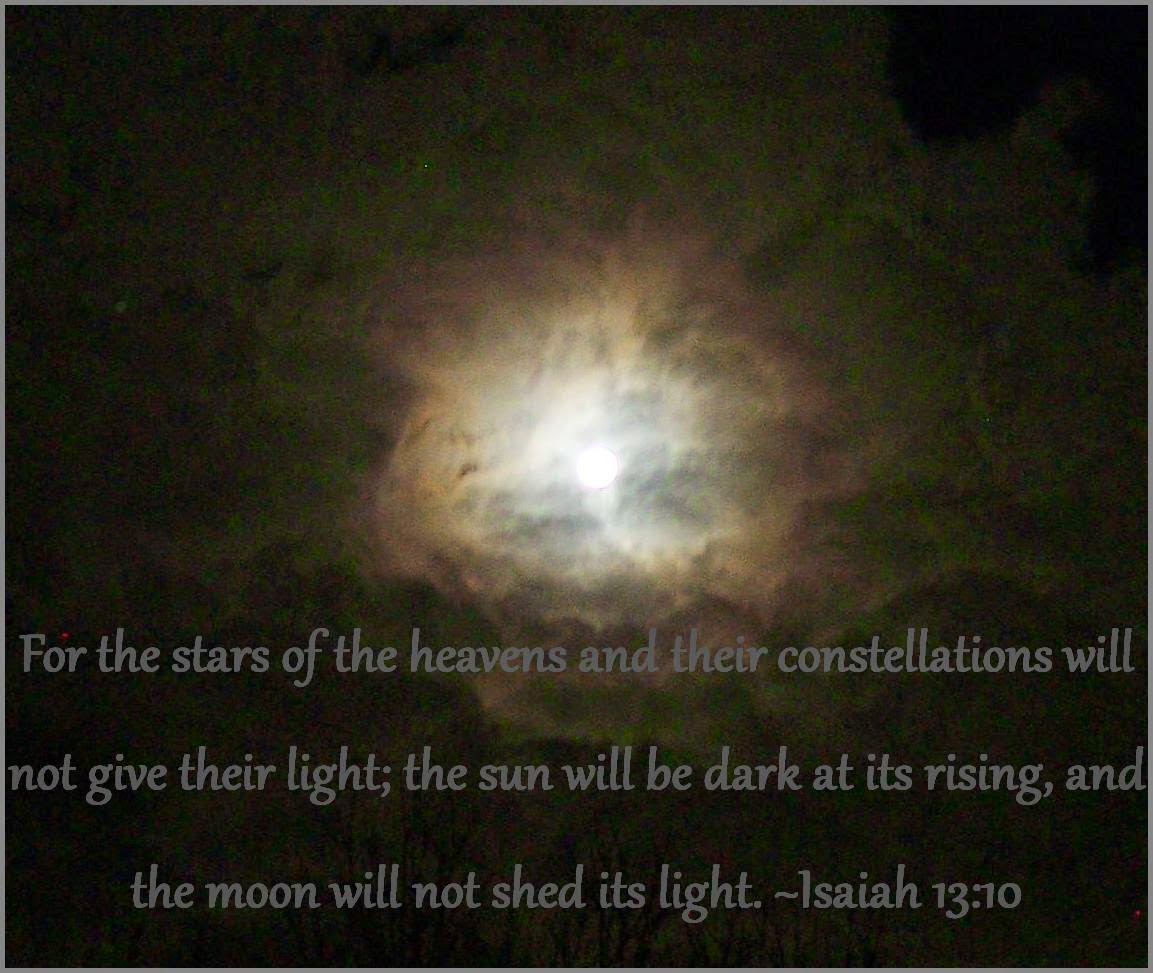
29“But immediately after the tribulation of those days THE SUN WILL BE DARKENED, AND THE MOON WILL NOT GIVE ITS LIGHT, AND THE STARS WILL FALL from the sky, and the powers of the heavens will be shaken. 30“And then the sign of the Son of Man will appear in the sky, and then all the tribes of the earth will mourn, and they will see the SON OF MAN COMING ON THE CLOUDS OF THE SKY with power and great glory. 31“And He will send forth His angels with A GREAT TRUMPET and THEY WILL GATHER TOGETHER His elect from the four winds, from one end of the sky to the other. (Matthew 24:29-31)

I charge you in the presence of God and of Christ Jesus, who is to judge the living and the dead, and by his appearing and his kingdom: (2 Timothy 4:1)

And inasmuch as it is appointed for men to die once and after this comes judgment, (Hebrews 9:27)

But they will have to give account to him who is ready to judge the living and the dead. (1 Peter 4:5)

The Judgment of Babylon

God will judge all people for their lives. No one these days likes to think about the LORD as judge, not even some Christians. Of course, the difference between Christians and non-believers is that though our lives will be examined and assessed, we will not be judged in wrath. Jesus exhausted God’s wrath for our sins while He was on the cross. There is no condemnation for us now. (Romans 8:1). Even at that, it is still excruciating to think of Jesus staring at our heart and soul with His piercing eyes (Revelation 1:14) and know all our words, deeds, and even motives as He sends our works through the fire to either become silver and gold, or burn away as hay and stubble. (1 Corinthians 3:12)

For those who are not in Christ, the judgment will be terrible. Who can stand?

The arrogant cannot stand in your presence. You hate all who do wrong; (Psalm 5:5)
The LORD reigns forever; he has established his throne for judgment. (Psalm 9:7)
He rules the world in righteousness and judges the peoples with equity. (Psalm 9:8)

God is holy and He judges. He knows each and every word the unsaved say. He sees all their deeds. He knows motives in the heart. Nothing is hidden from Him.

Sheol and Abaddon lie open before the LORD, How much more the hearts of men! (Proverbs 15:11)

Make no mistake. Jesus is a loving God, but He is a holy God who judges all men.

As a part of his sovereignty and authority, God is executor of his righteousness within the created order. Jesus Christ shares in this ongoing work.

(Source: Manser, M. H. (2009). Dictionary of Bible Themes)

He judges individuals, nations, rulers, families, cities, and His own people. The eternal punishment of the ungodly is sure. (certain Ro 1:18 See also Pr 10:24; Isa 13:11; 26:21; 66:16; Jn 5:28-29; Eph 5:6; Col 3:6; 1Th 5:3; Heb 2:2-3. Source: Manser). It will be everlasting,(2Th 1:8-9, Isaiah 33:14), and the wicked will be forever separated from God’s presence.

God is serious business. He means what He says, that all rebellion will be judged and punishments meted out accordingly. I am firm on this today because as I said earlier, man does not like to think of God’s judgments. But we must.

They diminish His holiness by vain talk and babblings about visions, as Beth Moore does when she says God calls her “Honey” and “Babe” in her alleged visions. They besmirch His majesty and His wrath by writing books about erotic encounters, as Anne Voskamp did in her book One Thousand Gifts (“I fly to Paris and discover how to make love to God.” etc.) They blaspheme Him like in The Shack by William P. Young, by portraying God as a female pancake making Aunt Jemimah who says “Sin is its own punishment, devouring you from the inside. It’s not my purpose to punish it; it’s my joy to cure it.”

Oh, but God does both.

God is a MAJESTIC JUDGE, potent in holiness and coming in wrath to judge all the living and the dead.

The following verses speak to judgment

JUDGMENT.
The General: 1 Chr. 16:33; Job 14:17; Job 21:30; Job 31:13–15; Psa. 9:7; Psa. 50:3–6; Psa. 96:13 Psa. 98:9. Eccl. 3:17; Eccl. 11:9; Eccl. 12:14; Ezek. 18:20–28; Dan. 7:9, 10; Amos 4:12; Matt. 3:12 Luke 3:17. Matt. 7:22, 23; Matt. 8:29 With 2 Pet. 2:4; Jude 6. Matt. 11:22 Matt. 10:15. Matt. 12:36, 37, 41, 42 Luke 11:31, 32. Matt. 13:30, 40–43, 49, 50; Matt. 16:27 Mark 8:38. Matt. 22:13 vs. 11–13.; Matt. 23:14; Matt. 25:1–14 [Luke 19:12–26.] Matt. 25:15–46; Mark 4:22; Mark 13:32; Luke 10:10–14; Luke 12:2–5; Luke 13:24–29; Luke 20:45–47; John 5:22; John 12:48; Acts 2:19–21; Acts 10:42; Acts 17:31; Acts 24:25; Rom. 2:5–10, 12–16; Rom. 14:10–12; 1 Cor. 3:13; 1 Cor. 4:5; 1 Cor. 6:2; 2 Cor. 5:10; 2 Thess. 1:7, 8; 2 Tim. 4:1, 8; Heb. 6:2; Heb. 9:27; Heb. 10:27; 1 Pet. 4:5, 7; 2 Pet. 2:4, 9; 2 Pet. 3:7, 10–12; 1 John 4:17; Jude 6, 14, 15, 24; Rev. 1:7; Rev. 6:15–17; Rev. 11:18; Rev. 20:11–15; Rev. 22:12.

According to Opportunity and Works: Gen. 4:7; Job 34:11; Prov. 11:31; Prov. 12:14; Prov. 24:11, 12 Psa. 62:12; 2 Tim. 4:14. Isa. 3:10, 11; Isa. 5:15, 16; Isa. 24:2; Isa. 59:18; Jer. 17:10, 11; Jer. 32:19; Ezek. 7:3, 4, 27; Ezek. 9:4–6; Ezek. 16:59; Ezek. 18:4 [vs. 5–9.] Ezek. 18:19–32; Ezek. 33:18–20; Ezek. 39:24; Hos. 4:9 Hos. 12:2. Amos 3:2; Zech. 1:6; Matt. 10:14, 15 Matt. 11:24; Mark 6:11; Luke 9:5; 10:12–15. Matt. 12:37; Matt. 23:14 Luke 20:47. Mark 14:21; Luke 11:49, 50 v. 51.; Luke 12:47, 48 [See parable of the vineyard, Isa. 5:1–6. Of the farmer, Isa. 28:24–28. Of the wicked tenant farmers, Matt. 21:33–36. Of the talents, Matt. 25:14–30.]Luke 13:6–9; Luke 19:12–27; Luke 21:1–4; John 3:19, 20; John 5:45; John 9:41; John 12:48; John 15:22, 24; Rom. 2:5–12, 27; 1 Cor. 3:8, 13–15 v. 12.; 1 Cor. 4:5; 2 Cor. 2:15, 16; 2 Cor. 11:15; Gal. 6:5–10; Eph. 6:7, 8; Col. 3:25; 1 Tim. 1:13; Heb. 2:2, 3; Heb. 10:26–30; Heb. 12:25; Jas. 2:12, 13; 1 Pet. 1:17; 2 Pet. 2:20, 21; Rev. 2:23; Rev. 20:12, 13.

(Source: Swanson, J., & Nave, O. (1994). New Nave’s Topical Bible. Oak Harbor: Logos Research Systems.)

Why am I writing about judgment? Because it is infrequently discussed these days. It is an unpalatable topic for too many people. But our God is holy and He is glorified in judging the wicked. Judgment in Holiness is one of His sovereign attributes and as such is is profitable for men to ponder His great and mighty decisions.

Anyone not in Christ has not been forgiven of their deeds, which are hostile to God and against Him as enemy. He will judge them and they will then endure eternal torment in hell forever to pay the penalty for those sins. DId you know that…

And they shall go out and look on the dead bodies of the men who have rebelled against me. For their worm shall not die, their fire shall not be quenched, and they shall be an abhorrence to all flesh.” (Isaiah 66:24)

Matthew Henry Commntary speaks of that verse from Isaiah-

But our Saviour applies it to the everlasting misery and torment of impenitent sinners in the future state, where their worm dies not, and their fire is not quenched (Mk. 9:44); for the soul, whose conscience is its constant tormentor, is immortal, and God, whose wrath is its constant terror, is eternal. (3.) What notice shall be taken of it. Those that worship God shall go forth and look upon them, to affect their own hearts with the love of their Redeemer, when they see what misery they are redeemed from. As it will aggravate the miseries of the damned to see others in the kingdom of heaven and themselves thrust out (Lu. 13:28), so it will illustrate the joys and glories of the blessed to see what becomes of those that died in their transgression, and it will elevate their praises to think that they were themselves as brands plucked out of that burning. To the honour of that free grace which thus distinguished them let the redeemed of the Lord with all humility, and not without a holy trembling, sing their triumphant songs.

Henry, M. (1994). Matthew Henry’s commentary on the whole Bible: complete and unabridged in one volume (p. 1218). Peabody: Hendrickson.

Oh, yes, the gratitude that we are spared! The humble thankfulness with which we sing His praises. Our Redeemer! We are a blessed group, never forget His lovingkindness to those whom He chose for Himself. We are His trophy of grace, and looking upon the wicked in torment, how much more will be fall to our own knees in crushed and broken contriteness and relief to worship such a God!

Why we receiving a kingdom which cannot be moved, let us have grace, whereby we may serve God acceptably with reverence and godly fear (Hebrews 12:28)

Posted in gay pride, homosexuality, iraq, ISIS, israel, jesus, judgment

Tel Aviv, Sodom’s new headquarters; part 2 ISIS and prophecy

In both the introduction, Do the events of today in Iraq have prophetic import? and in Part 1, “Has the Assyrian Empire just revived? ISIS, Baghdad, and the Middle East in prophecy part 1,” I discussed the terrible unfolding events of the near-collapse of Iraq as the terror militant group ISIS drives forward to capture huge swathes of Iraq, Syria and part of Turkey. I’d said that though we don’t know for certain if these are directly prophetic events, but that such sudden moves in bible lands are always worth watching and worth praying over.

Over 800,000 Iraqis are fleeing the incoming army of rabidly ferocious ISIS soldiers. The refugee situation in the area is horrific, with millions of displaced Syrians already in ever-growing refugee camps in Lebanon, Turkey, and Jordan, and even Italy. Where are these Iraqi refugees going to go?

They are fleeing because the ISIS group is known for violence, bloodshed, and brutality. The UK newspapers are reporting streets lined with heads, as beheading of even surrendering opposition takes place. Targeting of civilians is common. God, being holy and just, is not pleased with such sin.

I made the comment that the lands the ISIS insurgent group has re-taken are lands that match the heart of the old nation of Assyria, the once most feared empire on earth. Things don’t change, I’d written, because the enmity between them and God was put there in the Garden after the Fall (Genesis 3:15). It will remain until Jesus returns.

In the bible it is equally clear that He uses nations to render judgment for sin. In the past He especially used Assyria as ‘His rod’ to punish Israel for their sins.

He used Isaiah and Micah and Hosea to warn, and “Yet the Lord warned Israel and Judah by every prophet and every seer” (2 Kings 17:13). Israel did not repent and the invasion came to pass.

Isaiah gave one of the warnings:

Woe to Assyria, the rod of My anger And the staff in whose hand is My indignation. I will send him against an ungodly nation, And against the people of My wrath I will give him charge, To seize the spoil, to take the prey, And to tread them down like the mire of the streets. Yet he does not mean so, Nor does his heart think so; But it is in his heart to destroy, And cut off not a few nations.” (Isaiah 10:5-7)

Here is the result: Israel did NOT repent,

Then the king of Assyria invaded the whole land and went up to Samaria and besieged it three years. 6In the ninth year of Hoshea, the king of Assyria captured Samaria and carried Israel away into exile to Assyria, and settled them in Halah and Habor, on the river of Gozan, and in the cities of the Medes. (2 Kings 17:5-6)

Wikipedia gives an overview: “The Northern Kingdom of Israel was conquered by the Neo-Assyrian monarchs, Tiglath-Pileser III (Pul) and Shalmaneser V. The later Assyrian rulers Sargon II and his son and successor, Sennacherib, were responsible for finishing the twenty-year demise of Israel’s northern ten-tribe kingdom, although they did not overtake the Southern Kingdom.”

In that case God used Assyria as His rod to punish Israel for their disobedience and preserved a remnant for Himself (the Southern Kingdom).

What was Israel doing that ignited God’s ire so much? 2 Kings 17 records one warning:

“they had feared other gods, and had walked in the statutes of the nations whom the LORD had cast out from before the children of Israel, …

And they abandoned all the commandments of the Lord their God, 

So they left all the commandments of the LORD their God, made for themselves a molded image and two calves, made a wooden image and worshiped all the host of heaven, and served Baal. …

And they caused their sons and daughters to pass through the fire, practiced witchcraft and soothsaying, and sold themselves to do evil in the sight of the LORD, to provoke Him to anger. …

the LORD removed Israel out of His sight, as He had said by all His servants the prophets. So Israel was carried away from their own land to Assyria, as it is to this day.

God doesn’t change, His expectations for His people do not change. He expects His people Israel and His Bride the Church to be holy, to seek after Him and Him alone. Does one believe that God will overlook this, going on in Tel Aviv, Israel this very day?

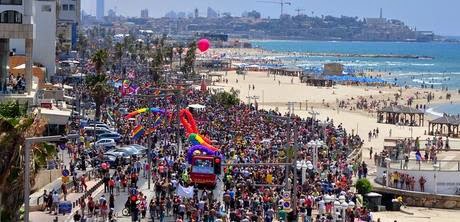
Gay Pride flag flies in US embassy in Tel Aviv Israel
Welcome to Sodom’s New Headquarters
The U.S. Ambassador to Israel, Dan Shapiro, has hoisted the gay pride flag over the embassy building in Tel Aviv. Todd Starnes grabbed the pic from the embassy’s Facebook page.”

The UK Independent reports backlash!
“The US embassy in Tel Aviv faced a backlash of criticism after it raised the rainbow flag next to the American flag above its office for the first time in history earlier this week. On Tuesday, Daniel Shapiro, the US ambassador to Israel, made the announcement that the rainbow flag had been raised during Tel Aviv’s Pride Week, which runs until 14 June. “For the first time in history,” Mr Shapiro wrote on the embassy’s Facebook page, “the US Embassy in Tel Aviv has raised the Pride flag together with our American flag. We are proud to join with the municipality of Tel Aviv-Yafo and its residents in celebrating LGBT Pride Week.” … But Mr Shapiro’s announcement was met with a barrage of angry comments from users claiming it did not represent the views held by American citizens, with many demanding the flag be taken down immediately.

The Jerusalem Post reports that as Tel Aviv “celebrates” Gay Pride week, Tel Aviv is the world’s “best gay city.”
People of all ages, races, nationalities and sexual identities, many scantily clad and adorned in rainbow flags, crammed into the vibrant park-space in central Tel Aviv to listen to local musical performances, visit stalls of organizers and activists, hear an introduction from Tel Aviv mayor Ron Huldai, and show off the best of LGBTQ culture. It is no surprise that this event was so heavily attended; the only state in the Middle East that does not outlaw homosexuality, Israel, and specifically Tel Aviv, is host to a large and vibrant LGBTQ activist community. … The parade ended in a massive beach party at Charles Clore Park, after which attendees dispersed to explore the best that “the world’s best gay city” had to offer. “

Source

Twitter comment regarding the above photo: “100,000+ people have gathered in for gay pride parade. Imagine that anywhere else in the Middle East.

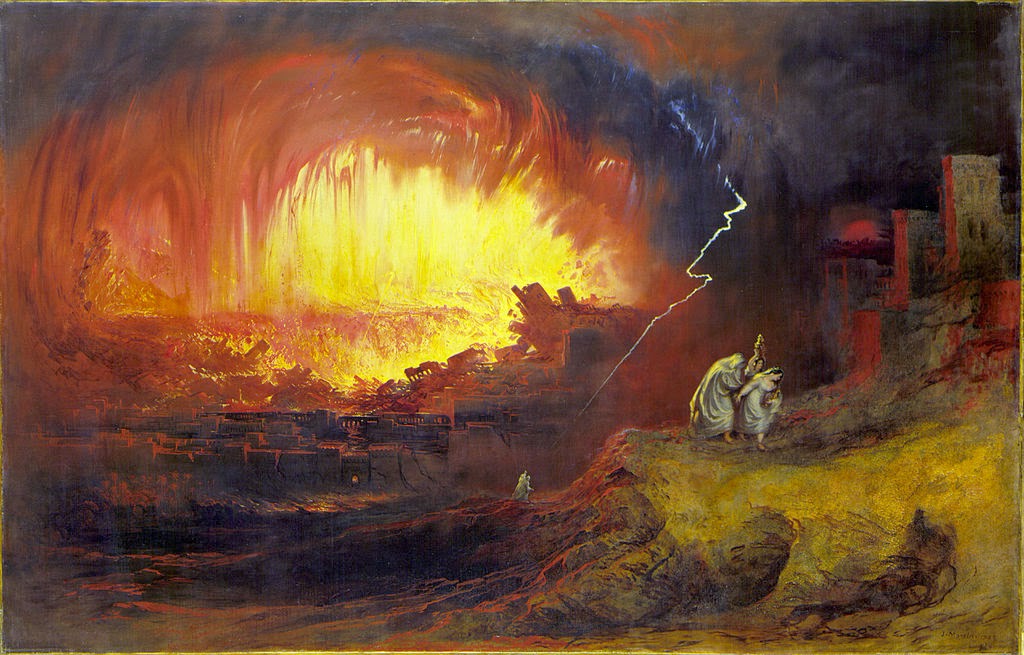
I submit to you the point of this essay: that the beheading violence from the ISIS soldiers in Mosul Iraq is just as violent and abhorrent to God as the kissing queers on the Israeli beach. Does one think that our Holy God who was outraged at the sodomy at Sodom and Gomorrah would not also be angry at the sodomy at the new Sodom, Tel Aviv? He is.

He will bring judgment to Israel, and punish them severely. This is coming. It is prophesied.

Revelation 11:8 makes reference to Jerusalem being metaphorical Sodom!

and their dead bodies will lie in the street of the great city that symbolically is called Sodom and Egypt, where their Lord was crucified.

He will punish.

“I am going to make Jerusalem a cup that sends all the surrounding peoples reeling. Judah will be besieged as well as Jerusalem.” (Zechariah 12:2)

For I will gather all the nations against Jerusalem to battle, and the city shall be taken and the houses plundered and the women raped. Half of the city shall go out into exile, but the rest of the people shall not be cut off from the city.” (Zechariah 14:2)

but do not measure the court outside the temple; leave that out, for it is given over to the nations, and they will trample the holy city for forty-two months.” (Revelation 11:2)

Does America, that bastion of homosexual ‘equality’, think it will escape the judgment of Holy God? Our sins are so many. Sodom didn’t escape. Gomorrah didn’t escape. Admah didn’t. Zeboiim didn’t. Jerusalem won’t. This news from earlier today

When Abu Bakr al-Baghdadi walked away from a U.S. detention camp in 2009, the future leader of ISIS issued some chilling final words to reservists from Long Island. “See you in New York.”

Army Col. Kenneth King, then the commanding officer of Camp Bucca, didn’t take these words from Abu Bakr al-Baghdadi as a threat. Al-Baghdadi knew that many of his captors were from New York, reservists with the 306 Military Police Battalion, a unit based on Long Island that includes numerous numerous members of the NYPD and the FDNY. King had not imagined that in less that five years he would be seeing news reports that al-Baghdadi was the leader of ISIS, the ultra-extremist army that was sweeping through Iraq toward Baghdad. … King says “He was a bad dude, but he wasn’t the worst of the worst.” That is the face that King was so surprised to see this week as the man who had become the absolute worst of the worst, so bad that even al Qaeda had disowned him. The whole world was stunned as al-Baghdadi now told his enemies “I’ll see you in Baghdad.”

Israel’s judgment will be severe, as it will be for all those on earth enduring the punishment of wrath from a Holy God. Sin must be dealt with. One can wait and have the angry God deal with you regarding your sin, or you can deal with it now, during the Age of Grace.

and saying, “The time is fulfilled, and the kingdom of God is at hand; repent and believe in the gospel.” (Mark 1:15)

What IS The Gospel? From Bible.org,
In a day of depressing headlines and uncertainty all around us, good news is very welcome. What better news could there be than as the old hymn says: “The vilest offender who truly believes, that moment from Jesus a pardon receives?” When Christians refer to the “Gospel” they are referring to the “good news” that Jesus Christ died to pay the penalty for our sin so that we might become the children of God through faith alone in Christ alone. In short, “the Gospel” is the sum total of the saving truth as God has communicated it to lost humanity as it is revealed in the person of His Son and in the Holy Scriptures, the Bible. If you aren’t sure whether or not you are God’s child, you might want to read God’s Plan of Salvation.

Be saved today! Be saved from his wrath and the coming judgment. Meet Jesus as friend, father, Groom.

Saved, Saved:

Posted in faithless, jesus, judgment, prophecy

What is the clearest sign of the approaching return of Jesus Christ?

There is no doctrine I can mention which someone purporting to be a Christian doesn’t refute.

In the old days, lol, five years ago when I started this blog, some people would argue about the timing of the rapture, whether sprinkling or dunking is a proper method for baptism, or whether Methodist or Baptist was a more conservative denomination. These are examples of doctrines and opinions which are not foundational to Christianity. In other words, if one believes one or another, it doesn’t mean they are not a Christian.

An essential doctrine of Christianity is one which distinguishes a person from all pagan religions. It establishes them as a child of God. An example of an essential doctrine is that one must believe that one is a sinner, destined for hell, and that Jesus the Son of God lived a sinless life on earth, died as the atoning sacrifice for our sins and rose again and went to heaven, and will return in glory to judge the living and the dead. Ha ha, I just gave the Gospel.

One must believe that Jesus is the Son of God and is God. One must believe that hell is real and sinners spend an eternity there, while repented sinners will go to be with Jesus in heaven. One must believe Jesus was both God and man. One must believe that salvation is by God’s grace through faith alone.

And so on.

Essential doctrines are the foundation of the faith structure. No builder says, “ah, we don’t need foundation forms, let’s just pour the concrete now.” All structures need a firm foundation, and so does faith. These are the foundational doctrines of which I speak.

Wiki commons

Five years later, the entire foundation has collapsed. Not of the Christian faith structure, because that is eternal, but belief in the foundational doctrines that many alleged Christians now challenge, or even set aside. There is no doctrine I can put forth as propositional (true or false, no in between) that some “Christian” doesn’t challenge as unnecessary. There isn’t one doctrine we can agree is untouchable in its necessity in the pantheon of things Jesus taught. Even the foundational ones.

Many other religions change their foundational doctrines at will, as needs change or cultures change. Mormons believed that polygamy was essential, until they didn’t. Islam has its additions/changes, and contradictions. Buddhist doctrines came in and went out, as they worked or didn’t work. Hinduism adds gods and now they are up to 330 million. Or 33 million. Who can keep track. Catholicism has added to the bible with its apocrypha (extra-biblical books written between the OT and NT times). Catholicism changes constantly because they depend on tradition, and as new traditions occur they were added into the pantheon of false beliefs. False religions change because they are doctrines of man. The doctrines of God don’t change.

Yes some want to change these doctrines, water them down, or delete them entirely.

And then many will fall away and betray one another and hate one another.” (Matthew 24:10).

–Is hell eternal? Nah, love wins, said Rob Bell.
–Does God punish sin? God is love and His mercy and He will forgive all. We’re all one, says Neale Donald Walsch.
–Is the revelation from God complete? No, more is coming in, say Sarah Young and Beth Moore.
–How important is it for people to understand they’re sinners? Not that important, says Joel Osteen.
–Is Jesus God? Probably not but He taught great things. Thomas Jefferson certainly thought he was a good teacher, but nothing more.
–Is Jesus the only way to heaven? Not if you’ve lived a sincere life, says Billy Graham.

You see how many doctrines that are fundamental to our belief structure are being set aside and/or challenged. This is apostasy.

For it is time for judgment to begin at the household of God; and if it begins with us, what will be the outcome for those who do not obey the gospel of God?” (1 Peter 4:17)

Apostasy is a judgment upon those who are not Christians and it is a chastening upon those who are. Apostasy is a testing and an opportunity for true Christians to exalt Christ. The more apostasy around us, the more we are tested.

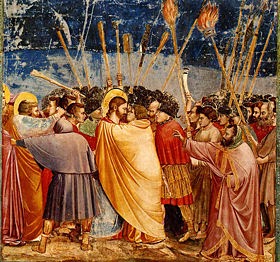
Judas betrays Jesus with a kiss. Judas Iscariot,
one of the Twelve Apostles, became an apostate. Public domain

And the ones on the rock are those who, when they hear the word, receive it with joy. But these have no root; they believe for a while, and in time of testing fall away.” (Luke 8:13).

The collapse has been rapid and stunning. I’ve watched through the lens of the bible and by writing on this blog nearly every day, and I’ve seen a swerve away from these precious doctrines. It pains me to see friends carried away by wolves. These folks are prey and it hurts to see them hurt. It is agonizing to see a church fall. It is very hard to see the celebrity pastors, and unknown pastors too, take so many down with them, particularly their families.

But it is prophesied and what is more, it is a judgment from God. When you’re persecuted for standing on truth amid a bevy of goats swirling around as your church weakens like the Swiss cheese photo above, count it all joy. Jesus said to rejoice in sufferings, and apostasy and what comes with it does make us suffer. Some are even harassed and dismissed because of it. But rejoice. I know that is hard. John MacArthur spoke to that in his sermon on the 1 Peter 4:17 verse titled The Fiery Trial, Part 2:

Paul Gorbould, Creative Commons

Sometimes this is quite challenging, to be honest with you. When I have been battered around a little bit and say to myself, “Well, I should expect it, after all if I desire to live a godly life and preach the truth of God and if I want to hold the standard of holiness very high and if I want to hold the standard of doctrinal purity and biblical truth very high, I can expect to get this, so I must be ready for it.” I can usually handle that. It’s moving to that second one where I rejoice over it that challenges me…where I say, “Thank You, Lord, this is really wonderful, I’m loving every minute of this.” I find that sometimes a bit much. But I by the grace of God if I have the time to meditate on it and to lay it before the Lord, I find that the Spirit of God fills my heart with joy and it’s usually the joy twofold, the joy of participation in the sense that no matter what I might suffer it is small compared to what Jesus Christ suffered and yet I am a partaker of His suffering. And the second element that hits me hard is that whatever suffering I may incur in this life shall be more than rewarded in the eternal joy which shall be mine forever in the presence of the Lord. Rejoice in it.”

Here is a short answer by Jacob Prasch to the question, ‘what is the clearest sign of the coming of Jesus Christ?’ I understand that Mr Prasch is a polarizing figure and I make no claim to endorse or not endorse his ministry. I just liked what he said here. And despite his brashness in speaking this answer, I agreed with it completely. Every word.

Hear hear

Here is Dr Thomas Ice in a recent essay titled Drowning in Apostasy. I also liked his answer.

The following is a list of the seven major passages that deal with the last days for the church: 1 Timothy 4:1-3; 2 Timothy 3:1-5; 4:3-4; James 5:1-8; 2 Peter 2:1-22; 3:3-6; Jude 1-25. Every one of these passages emphasizes over and over again that the great characteristic of the final time of the church will be that of apostasy. The New Testament pictures the condition within the professing church at the end of the age by a system of denials.

Denial of GOD — Luke 17:26; 2 Timothy 3:4-5
Denial of CHRIST — 1 John 2:18; 4:3; 2 Peter 2:6
Denial of CHRIST’S RETURN — 2 Peter 3:3-4
Denial of THE FAITH — 1 Timothy 4:1-2; Jude 3
Denial of SOUND DOCTRINE — 2 Timothy 4:3-4
Denial of THE SEPARATED LIFE — 2 Timothy 3:1-7
Denial of CHRISTIAN LIBERTY — 1 Timothy 4:3-4
Denial of MORALS — 2 Timothy 3:1-8,13; Jude 18
Denial of AUTHORITY — 2 Timothy 3:4 [2]”

As can be observed from the above characterizations, apostasy occurs in two basic areas: 1) doctrinal defection from the Bible, and 2) immoral or ungodly behavior. The clear course of the last days for the church consists of constant warnings to the believer, especially to pastors and leaders, to be on guard within the flock against doctrinal defection, commonly known as apostasy. Such a characteristic provides for the believer today a clear sign that we are in the last days of the church age.

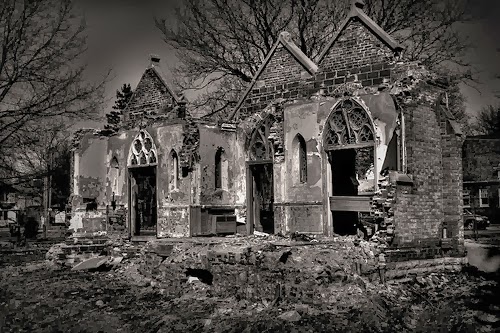
Forsaken Fotos, Creative Commons

Judgment began in the house of God. It continues. It is most evident in the form of apostasy. The faithless who in fact worship demons fall away, and as they fall, they tumble the walls of the church with them, exposing the goats and shearing the sheep.

The Lord’s return must be very close. As apostasy rises we rejoice that the Lord has a plan. He plans to return after He allows faithlessness to run its course. He will establish His holy hill, and the government will be upon His shoulders. No one will disbelieve again. No one will fall away again. No one will be persecuted for speaking the truth again. Hold on, dear brethren. Let the Lord find you standing when He returns.

by Aeterium

Posted in judgment, mark of the beast, sin, wrath

Can you be forgiven if you take the mark of the beast?

Jesus is long-suffering. He hates sin,  but He withholds judgment upon sinners until the full measure of His anger He deems is ready to be poured out onto the world. The greatest news is, God sent His Son to absorb all of God’s wrath for sin onto Himself, so that those who repent and believe would not have to endure that same wrath.

However, those who reject Jesus and His substitutionary atonement, disbelieve His death and resurrection, fail to adopt His Gospel, do not repent, will endure the wrath of God for their sins. Jesus is longsuffering, but He is not a patsy. He’s not even tolerant. He hates sin and He hates all who do iniquity. (Psalm 5:5). At some point, He will unleash all His wrath and the world will then know just how much He hates sin.

That unleashing is called the Tribulation, (Matthew 24:9) also The Time of Jacob’s Trouble (Jeremiah 30:7). Jesus said the wrath is stored up for individuals and for the world. He will unseal 7 seal judgments, which are the first set of three series of judgments which include Trumpet Judgments and Bowl Judgments (or four, if you count mysterious Seven Thunders of Rev 10:4).

calling to the mountains and rocks, “Fall on us and hide us from the face of him who is seated on the throne, and from the wrath of the Lamb, for the great day of their wrath has come, and who can stand?” (Revelation 6:16-17)

Jesus literally releases the full strength of His wrath and also unleashes Hell upon earth. The times will be unimaginable for the people left behind on earth after the rapture. The mind cannot comprehend its horrors.

I’ve mentioned His wrath, but next let’s discuss His grace. One of the amazing things about God’s grace is that He continues to reach humans with the news of His forgiveness. We are wretched creatures, constantly rebelling and opposing Him. Yet He extends the hand of grace and many have believed and many more will believe, even in the Tribulation. (Revelation 7:14; Revelation 7:17).

Throughout the Tribulation Jesus sends many messengers with the Good News. He extends His grace even amid wrath. He seals 144,000 to super-evangelize the world. The martyrs themselves are a witness for Him due to their willingness to die for His name. He sends His Two Witnesses (I suspect they will be Enoch and Elijah) to testify of Him. And He sends three angels who proclaim the eternal Gospel, speak of judgment on Babylon, and warn of eternal doom if anyone takes the mark of the Beast. By this time, every nation, tribe and tongue will have heard the Gospel. (Revelation 14:6). Jesus forgives all, every sin, and this continues throughout the first part of the Tribulation, just as it had since the age of Grace began when Jesus rose from the dead, having atoned for every sin. He forgives all sins, except for one. There is one sin that is unforgivable.

Taking a break from the overview of the Tribulation’s wrath and the run-up to Revelation 13’s Mark of the Beast, let’s discuss for a moment this “unforgivable sin”. It is found in Mark 3:28-29, and Matthew 12:31-32

Therefore I tell you, every sin and blasphemy will be forgiven people, but the blasphemy against the Spirit will not be forgiven. And whoever speaks a word against the Son of Man will be forgiven, but whoever speaks against the Holy Spirit will not be forgiven, either in this age or in the age to come.

This is a very serious thing. There is one sin that a person can commit which Jesus will never forgive. What IS this sin?

The Bible Gateway blog explains it this way: it is willful rejection of Jesus in an onoging attitude of rebellion. “Blasphemy against the Spirit is not unforgivable because of something done unintentionally in the past, but because of something being done deliberately and unrelentingly in the present.

The Gospel Coalition blog explains it this way:  I suggest it’s a specific, active, and final choice to declare the person and work of Jesus as being demonic in origin

Dr. Henry Morris states it as “speaking against the Holy Spirit has been interpreted in various ways, but the true meaning cannot contradict other Scripture. It is unequivocally clear that the one unforgivable sin is permanently rejecting Christ (John 3:18; 3:36). Thus, speaking against the Holy Spirit is equivalent to rejecting Christ with such finality that no future repentance is possible.”

Dr John MacArthur describes the unforgivable sin as: “But the one who won’t be forgiven is the one called the apostate who gets full exposure to the truth, full exposure to the gospel, full revelation and makes the final conclusion…it’s not true, I reject Christ.

It’s a sin to have heard the facts, to have had the Gospel given to you, and to make a deliberate, willful, conscious decision that it is not true, to reject it completely and utterly, and to continue in your sins. That is unforgivable.

Hebrews 2:3 mentions it: “How shall we escape if we neglect such a great salvation? It was declared at first by the Lord, and it was attested to us by those who heard,”

The word neglect means to ignore, to put little value on it. Hebrews 10:26-27 also mentions this

For if we go on sinning deliberately after receiving the knowledge of the truth, there no longer remains a sacrifice for sins, but a fearful expectation of judgment, and a fury of fire that will consume the adversaries.

This means that if you have received full information about Christ, and reject it, it is as if you stepped over His body – which He sacrificed for your sins – and now you can only expect judgment,and in fury and fire, too.

Back to the Tribulation- In Revelation 13:15-17 there is a choice people are given. They may participate in the world economy (and thereby eat) but they have to worship the Devil to do it. Or they can reject the devil and accept Christ, but they will be hunted and killed. Here is the scripture which describes this choice: (“It” refers to the False Prophet)

And it was allowed to give breath to the image of the beast, so that the image of the beast might even speak and might cause those who would not worship the image of the beast to be slain. Also it causes all, both small and great, both rich and poor, both free and slave, to be marked on the right hand or the forehead, so that no one can buy or sell unless he has the mark, that is, the name of the beast or the number of its name.

Taking the mark is a mark of worship to the devil, who by then indwells the antichrist. It is a deliberate choice given the world, to worship satan or worship Jesus. The world knows this because three angels flying at midheaven circle the globe to first give the gospel of Jesus Christ, (“Then I saw another angel flying directly overhead, with an eternal gospel to proclaim to those who dwell on earth, to every nation and tribe and language and people. Revelation 14:6), to declare judgment of Babylon and third, to warn them NOT TO TAKE THE MARK.

And another angel, a third, followed them, saying with a loud voice, “If anyone worships the beast and its image and receives a mark on his forehead or on his hand, he also will drink the wine of God’s wrath, poured full strength into the cup of his anger, and he will be tormented with fire and sulfur in the presence of the holy angels and in the presence of the Lamb. And the smoke of their torment goes up forever and ever, and they have no rest, day or night, these worshipers of the beast and its image, and whoever receives the mark of its name.” (Revelation 14:9-11).

The people of earth by then have had the fullness of all God’s revelation to them through the bible, His son, the prophets, the angels, His Church, the witnesses and the sealed virgins…if they take the mark and worship the beast, they are sinning the unforgivable sin and in a way that for the first time ever, is demonstrable and evident. In the case of Tribulation non-believers who take the mark, they are not only showing their allegiance to satan and their rejection of Jesus, they are permanently modifying their body to show their rejection of Jesus and decision to worship satan instead. They are enacting it and cementing it with their very body, by accepting the mark of the devil on them as the emblem of worship. They reject Jesus and worship of Him, and thus blaspheme the Spirit. It’s over.

It is my contention that this moment divides the believers from the unbelievers in one final, conscious moment of choice. After the mark is places on the hand or the forehead, or refused, marks the final chasm between believer and non-believer.

The scriptures in Revelation 14:9 are clear: take the mark and endure wrath forever. You cannot be saved if you take the mark.

This turning point is also remarked on by the angel in Revelation 4:13a who says, “And I heard a voice from heaven saying, “Write this: Blessed are the dead who die in the Lord from now on.”

One may ask why am I writing about this if the church isn’t going to be here and we always look for Jesus and not toward satan? Because satan is adulterating this simple truth as well. As long as he can sow confusion and persuade even one person to delay their day of salvation, then he has accomplished his evil purposes. The fact of a person’s devilish eternal choice in Rev. 13 matters it matters because when they enter the Tribulation, they are at extreme risk of believing the lie (2 Thessalonians 2:11) and won’t be able to decide.

The moral is always the same: believe on the name of Jesus Christ now. Do not delay your repentance and your appeal to Him, the Judge, for pardon. You are not promised a tomorrow. If you do receive a tomorrow, the rapture may come and you will be left behind to face hell on earth and God’s wrath. When that happens, you are at risk for believing the lie and losing your soul because of the delusion coming upon the world.

Jesus Christ is worthy of honor and glory and praise and love and worship because of who He is. He is the unique Person of the universe, extending His hand of grace to you now. Your sins will have to be dealt with- either through your repentance and His forgiveness, or by your torment and punishment for them in hell forever.

Posted in grace, homosexuality, judgment, romans

"California teen named nation’s first transgender homecoming queen"

Tommy Hunter posted this on Facebook group Christ in Prophecy. I am re-posting it here because I agree with every word. See the news item this gentleman was talking about that prompted his comment below:

“Does anyone else feel like you’ve been awakened in the Twilight Zone?!?!? I know I do!!! I’m blown away how people have thrown rational thinking out the window to embrace the vilest lifestyles as normal under the banner of “acceptance”!!!! This is just another fulfillment of Romans chapter 1!!!! The selective judgments that have occurred throughout America will soon become national judgments.”

And the news item:

In what is being described as the first known event of its kind, a transgendered teen was named as her high school’s homecoming queen on Friday. “I am so proud to win this not just for me, but everyone out there,” 16-year-old Cassidy Campbell said after receiving her crown during the halftime of Marina High’s homecoming football game Friday night in Huntington Beach, CA. The Los Angeles Times published a slideshow of photos from the homecoming event, which you can view here. Cassidy rose to national prominence when it was reported that she was entering the contest. “Just to be true to themselves and to let people know around them and to not keep it bottled up inside,” Campbell said about what her win should mean for fellow members of the transgendered community.

KTLA reports that “Cassidy Lynn Campbell was born Lance Campbell, but has been living as a woman for the past three years.” So if he is 16 years old now and has been living as a girl for the last three, that makes him changing to a female at age thirteen.

When the article says the transgender ‘community’ let’s put that into perspective. Unlike the mirrors on the sides of cars that say “objects may be larger than they appear” transgenderism is smaller that it appears. Though the homosexual lobby likes to put forth that the gay population is huge, it is not.

“The Williams Institute at the UCLA School of Law, a sexual orientation law and public policy think tank, estimates that about 3.8% of Americans identify as gay, les-bian, bisexual or transgender (2011, source).”

So, the ‘transgender community’ is microscopic, amoeba-like, minuscule and tiny. Yet the noise they make is turning the world upside down, isn’t it.

What is transgenderism? GotQuestions has the answer

Transsexualism, also known as transgenderism, Gender Identity Disorder (GID), or gender dysphoria, is a desire to change one’s sex or to fulfill the role of the opposite gender. Transsexuals / transgenders usually describe themselves as “trapped” in a body that does not match their gender. They will probably practice transvestism / transvestitism and may also seek hormone therapy and/or surgery to bring their bodies into conformity with their perceived gender.”

“The Bible has plenty to say about human sexuality. Most basic to our understanding of sex is that God created two (and only two) genders: “male and female He created them” (Genesis 1:27). All the modern-day speculation about numerous genders—or even a gender “continuum” with unlimited genders—is unbiblical.

What is happening in a society that affirms and celebrates this kind of sexual sin? The answer is in Romans 1, as John MacArthur explains.

It is that judicial act of God, whereby He lets the sinner go. In other words, He stops convicting. He stops calling. It’s Genesis 6, where God says, “My Spirit will not always strive with man.” There comes a point when God says, “That’s it. I’m letting you go,” and when God lets a society go, Verse 24 [in Romans] says, “He gives them over to uncleanness.” That’s sexual sin, and then Verse 26, He gives them up to vile passions, and women exchange the natural use for what is against nature, but likewise, the men, leaving the natural use of the woman, burned in their l-usts for one another, men with men, committing what is shameful, so you have lesbianism and homosexuality.”

“When God gives a society up, they plunge into sexual sin, and then they sink deeper into homosexual sin, so while homosexuality is a forgivable sin, and, categorically, no worse than others, when it happens on a societal level, it is evidence that when a society affirms it; when it becomes normal in a society, that is evidence that God has turned that society over. If you look at America, you could look back to the sexual revolution of the ’60s, which has now become a homosexual revolution of the ’90s, in which the homosexuals have redefined themselves as a minority, like a racial group of people demanding rights. 

And so I think, while it is, as far as individual sin goes, no more damning than any other sin and as forgivable as any other sin. When it becomes the pattern of a society, it is evidence that God has turned that society over to that sin. It may be at that point an evidence that many in that society are not redeemable because they have gone past the age of grace.

And that is a sad state of affairs, to see that so many in society are not redeemable because God has given them over. I agree with Tommy Hunter’s comment above, and I’d go one step further, It is an evidence that God has turned us over and the Age of Grace for American has closed for our society. We ARE under national judgment.

Posted in in christ alone, judgment, presbyterians, sin, wrath

Presbyterian Denomination denies the doctrine of the wrath of God by 2/3 vote via hymn deletion

I ran across this article from the “Alabama Baptist” magazine. It is about a fight they are having in the Presbyterian denomination PCUSA over the traditional hymn “In Christ Alone.” It is titled Why disagree about the words in a hymn?

Presbyterian USA objected to the lyric in the hymn “Till on that cross as Jesus died/The wrath of God was satisfied”. Huh? Yes indeed, they wanted to change that line referring to God’s wrath, to the following: “Till on that cross as Jesus died/The love of God was magnified.”

The writers of the song would not allow the change, so the PresbyterianUSA denomination dropped the song entirely from their hymnal. They “voted 9–6 not to use the song because the theology of the disputed phrase reflected the view of a part of the Presbyterian Church but was not appropriate for the diverse membership as a whole” it is stated in the Alabama Baptist article I linked to above.

Since when is God’s wrath not part of the whole counsel of God, profitable for reproof and rebuke? The article included this quote from Professor George:

“Beeson Divinity School Dean Timothy George was more balanced in his reaction. He wrote, “God’s love is not sentimental; it is holy. It is tender but not squishy. It involves not only compassion, kindness and mercy beyond measure, but also indignation against injustice and unremitting opposition to all that is evil.” George cautioned that to ignore God’s wrath can result in “a less than fully biblical construal of who God is and what He has done, especially in the redemptive mission of Jesus Christ.”

The author of this article in the ‘Alabama Baptist’ is Dr. Bob Terry, graduate of Southern Baptist Theological Seminary in Louisville, Ky. Dr Terry is the President and editor of the Alabama Baptist. Dr Terry has one of the longest tenures as a state Baptist paper editor, 30 years! He wrote in the article,

“Yet there remains a question about whether God was an angry God at Golgotha whose wrath had to be appeased by the suffering of the innocent Jesus. … “Some popular theologies do hold that Jesus’ suffering appeased God’s wrath. …That is not how I understand the Bible and that is why I do not sing the phrase “the wrath of God was satisfied” even though I love the song “In Christ Alone.” … But God is not the enemy. He is our seeking Friend (Luke 15). That is why I prefer to focus on His love evidenced at Calvary rather than on His wrath.” [underline mine].

So you see the problem is not just among Presbyterian-USAs. Dr Terry of the Alabama Baptists went on to parse whether Jesus was the object of reconciliation or the subject, splitting diversionary hairs while diminishing the doctrine of wrath entirely.

The Alabama Baptist is a 170 year old paper that reaches 80,000 homes weekly and has a readership of 200,000 souls. That is quite the voice and quite the influence.

Making the argument about whether Jesus was the object of God’s wrath or the subject of it is not a legitimate argument, because we all know that Jesus was not the subject. He endured the wrath not because He was sinful. He was sinless. The subject of the wrathful conversation God was having was with sinful mankind through sinless Jesus. Jesus was the object upon Whom God leveled his anger so that it would be exhausted. [FMI, see Jerry Bridges link below]

If we all agree on the basic tenet that Jesus was certainly not the subject of God’s wrath, then that is why we can see that parsing object-subject discussions subtly shifts the conversation away from the proper focus: wrath.

We are the subject of God’s wrath. He leveled that wrath against mankind in the Flood, (Genesis 6:6-7) and also against those fallen angels who had sinned with human women, too. (2 Peter 2:4). God again easily could have leveled His wrath against mankind, at any time thereafter, but He chose to place it on and through Jesus, who was the spotless Lamb, so that it will have been satisfied in holiness but exhausted against now-reconciled man.

Yet that is what the Presbyterians were dickering about. Though their committee speaker denies it now, “in an original, more unguarded, account Mary Louise Bringle wrote for the Christian Century, Bringle admits that wrath was the real issue. She admitted that the hymn selection committee argued whether “the cross is primarily about God’s need to assuage God’s anger.”

Therefore, the Presbyterian Denomination committee’s 2/3 vote is an affirmation of the opposite: they believe that the cross is NOT primarily about God’s anger.

So often these days (not our local congregation, thankfully) we do not hear sermons from preachers speaking of God’s wrath, or sin, or judgment. Satan twists doctrine by suppressing unwanted truths to those who want their ears tickled just as much as he perverts doctrine through changing it, and the Presbyterians are only too happy to comply.

The foundational tenets of the faith are being attacked on every side, either through overt perversion of subtle suppression. This is nothing new. Immediately after the resurrection, the resurrection was denied, Jesus’s deity was denied, grace was denied, Jesus human-ness was denied. Today, hell is being denied, God’s wrath is ignored in favor of His love, the Trinity is under fire, and the reason for the cross is being muddled. It’s a good reminder that satan is always at work in every aspect of church life and to be on guard not only for the presence of bad doctrine but also the absence of good doctrine- not just in the sermons but in the hymns/praise music too.

~~~~~~~~~~~~~~~~~~~~~~

Further Reading

Committee Head Covers Up “In Christ Alone” Controversy

What a poor witness. Huffington Post tweeted the following:
“Presbyterians engaged in a vicious hymnal battle”

Jerry Bridges on God’s wrath, exhausted upon Christ

Posted in beth moore, contend for the faith, discernment, false teacher, judgment, personal revelation

Examining Beth Moore’s statement: the ‘Bride is paralyzed by unbelief’

Last night, I was thinking about something Beth Moore said. I want to look closely at the content of what Beth Moore said in this example I will show you. I am personally offended by it and I’m spiritually grieved by it.

In a LifeToday with James Robison, a televised Christian program, Mrs Moore said, [deleted from Youtube, can now see the video here) ,

“We could live our whole believing lives through, and never make it to our promised land. We get to heaven and go ‘You were not faithful to me! You didn’t do what you said you were gonna do!’ ‘Child, I was holding every single bit of that for you. But I will insist that you cooperate with me.’ What it says over and over in this particular chapter, the number one hindrance to our calling becoming a reality, is unbelief. This is the heart of our study. Listen carefully. What God began to say to me about five years ago, and I’m telling you it sent me on such a trek with Him, that my head is still whirling over it. He began to say to me, ”I’m gonna tell you something right now, Beth; and boy, you write this one down. And you say it as often as I give you utterance to say it: ‘My Bride is paralyzed by unbelief. My Bride is paralyzed by unbelief’ … Starting with you.’ ” … Amen.”

Let’s examine each part of what she said through a biblical lens.

1. Her ‘oh, no’, scare tactic, try-harder faith is on display here. This is Legalism, also exemplified here. Example; “We could live our whole believing lives through, and never make it to our promised land.” Really? We can lose our salvation and not make it to heaven? That’s not what the Bible says. (John 3:16, Romans 8:38-39, John 10:28-29). Perhaps she was talking about unbelievers, one may protest. No, she said “believing lives.” Another may protest that perhaps she meant believers may not make it to our promised land here on earth. But this is not what the Bible teaches, either. The Bible says we are not promised ease on earth. (John 16:33; Acts 14:22). As a matter of fact this earth isn’t even our home. We should not consider earth our promised land whatsoever.

2. She degrades the holy relationship with an almighty God and promotes an earth-centric focus. Example: “We get to heaven and we might say something like this to GOD: “You were not faithful to me! You didn’t do what you said you were gonna do!” Really? When we get to heaven we are going to still be greedy for the things on earth? No. (Matthew 6:20-21).

When we get to heaven we are going to argue with God? Not hardly. We will be so overcome by His glory we will fall down. (Revelation 4:10, Isaiah 6:5, Revelation 1:17). Even Daniel when confronted with an angel from heaven, he fell down. (Daniel 10:8). But Mrs Moore teaches that when we get to heaven we’re going to cry for the things of earth and make a charge against God for their lack. This is ludicrous. In my opinion, it is blasphemous.

In actuality, Zephaniah tells the people, “Be silent before the Lord GOD! For the day of the LORD is near; the LORD has prepared a sacrifice and consecrated his guests.” (Zephaniah 1:7). And the LORD tells Zephaniah to say it again, “Be still before the LORD, all mankind, because he has roused himself from his holy dwelling.”‘ (Zephaniah 2:13).

3. She says she is a prophet. No, she doesn’t come right out and say “I am a prophet”. But she uses personal revelation and biblical language about the context of her supposed revelations to teach people that she is hearing from God and has a message from Him to proclaim. Example: “boy, you write this one down. And you say it as often as I give you utterance to say it:”

Read how God interacted with the Prophets:

“Therefore say to them, Thus declares the LORD of hosts” (Zechariah 1:3)
“Write therefore the things that you have seen, those that are and those that are to take place after this.” (Revelation 1:19)
“Then the LORD replied: “Write down the revelation and make it plain on tablets so that a herald may run with it.” (Habakkuk 2:2)
“Therefore speak to them and say to them, Thus says the Lord GOD:” (Ezekiel 14:4)
“Boy, you write this one down. And you say it as often as I give you utterance to say it:” (Moore 1:1)

Just kidding on that last one.

Either Beth Moore is a prophet like John and the rest, or she should heed what Ezekiel, a true prophet, has proclaimed from the LORD,

“Her prophets have smeared whitewash for them, seeing false visions and divining lies for them, saying, ‘Thus says the Lord GOD,’ when the LORD has not spoken.” (Ezekiel 22:28).

4. She confuses people with internally contradictory statements. Example: “My Bride is paralyzed by unbelief.” First, who is the bride? Let’s get clear on that. GotQuestions says, “The imagery and symbolism of marriage is applied to Christ and the body of believers known as the church. These are those who have trusted in Jesus Christ as their personal savior and have received eternal life. In the New Testament, Christ, the Bridegroom, has sacrificially and lovingly chosen the church to be His bride (Ephesians 5:25-27).”

So the Bride is the Church. The Church is the body of believers.

So what Moore is saying is that the global church is in a state of paralyzing unbelief. She says God told her that the church doesn’t believe. This is impossible. If you believe, you’re a member of Christ’s church. If you do not believe, you aren’t. She speaks a self-refuting idea.

Also, about being “paralyzed”. If we take her statement to be true, then what she is saying is that the global body of believers on earth, the Bride, is not operating in the Holy Spirit. If the Spirit dwells in every true believer, (and He does) and every believer is frozen and paralyzed, (what she says) then this means the Spirit is not operating, or can’t. She is saying God said the Spirit is paralyzed, frozen, and inoperable. Can this be so? No. (2 Corinthians 4:6-7). Worse, she is saying Jesus told her this. Worst of all, she said Jesus told her to teach it.

The truth is, the Spirit indwells every believer, (Romans 8:4, Ephesians 1:13b-14), and we already know that the body of Spirit-filled believers is the Bride, so what Moore is saying is that the church isn’t working. In fact, the Bible says Christ is in us, and Christ is always working. John 5:17 and Ephesians 2:2 testify that all three Persons of the Trinity are always working. To say that He isn’t, that the Spirit in His Church is paralyzed, is malignant in the extreme. I’m serious. Only satan would say that the Holy Spirit, Jesus and God is frozen and paralyzed. It is the Modern Blasphemy of the Holy Spirit. Below, John MacArthur from the linked sermon:

“A way to perceive this would be to see it as a contrast to what we see in Matthew chapter 12, for example. The leaders of Israel committed the unpardonable sin and what was that unpardonable sin? It was attributing to Satan the work of the Holy Spirit. You remember that? It was attributing to Satan the work of the Holy Spirit, Matthew 12:31-32. What’s going on today is the opposite, attributing to the Holy Spirit the work of Satan. That’s what’s going on. Attributing to the Holy Spirit the work of Satan. Satan is alive and at work in deception, false miracles, bad theology, lying visions, lying dreams, lying revelations, deceptive teachers who are in it for the money and power and influence. Satan is alive and well and the work of Satan is being attributed to the Holy Spirit, that is a serious blasphemy just as attributing to Satan the work of the Holy Spirit is a serious blasphemy.”

5. Extra-biblical revelation is not to be trusted. I’ve focused on Moore’s claims of personal revelation before, here and here.

What does the Bible say about forthcoming revelation of God? (Hint: It ain’t happening).

Source

“But in the days when the seventh angel is about to sound his trumpet, the mystery of God will be accomplished, just as he announced to his servants the prophets.” (Revelation 10:7)

Did you catch that? Just as he announced (past tense). God announced to His prophets what He was going to do.  (Amos 3:7). That announcement is contained in the Bible. He has been working and will continue to do work. God’s work on earth will not be finished until the last trumpet, as Revelation shows us, but His announcement of it was. The revelation of His work on earth is concluded. Yet Beth Moore is making additional proclamations from God. Either God is lying, or Moore is. (Hint: Jesus IS the Truth, and the truth is in Him; John 14:6, Ephesians 4:21).  Friends, the canon is closed and the announcement of what God plans to do was already proclaimed.

Gill’s Exposition on Revelation 10:7 says: “As He said to Isaiah 60:3, &c. and Isaiah 66:8; and to Daniel, in Daniel 2:44 Daniel 7:25; and to Zechariah, in Zechariah 14:9, and others;” Beth Moore’s name is not on that list.

For those who want to cling to Beth Moore as a teacher and defend her, saying perhaps that she didn’t mean what she said: I’m sorry. The Bible says that teachers are held to a higher standard. (James 3:1). In order to even BE a teacher one must be mature, self-controlled, vigilant and possess a host of other qualifications that qualify a deacon/teacher/overseer. This is so they will teach rightly and they can spot a false doctrine in the first place- one aspect of protecting and feeding the flock. (Acts 20:28, John 21:17). Teachers are supposed to teach rightly. (2 Timothy 2:15).

Teachers rightly dividing the word for their pupils are raising up pupils who can then turn to the scriptures to see if these things are so. (Acts 17:11). This makes the student stronger. How can a student of Beth Moore examine the scriptures to see if these things are so, if they came from her head, or a vision, and not the Bible? They can’t. And so in this way, she actually raises up people who do not rely on the word, and are weaker.

The word is all-sufficient. (2 Timothy 3:15-17). That’s why we rely on it!

We don’t judge  a teacher as false by one thing they said, once. We give the benefit of the doubt, and watch carefully for a long time, comparing their words and teachings to scripture. One misstep does not make a false teacher, perhaps, but a long pattern of variance with the Bible, does.

Mrs Moore has passed the time of benefit of doubt and has proven over long years that her words, doctrines and actions are not to be trusted. I am not the only person who has compared what she says and does to the sterling Word and found that she is not to be recommended. The Christian Apologetics and Research Ministry has found the same, and so has Rev. Mike Abendroth of Bethlehem Bible Church, and Rev. Jim Murphy of First Baptist Church at Johnson City, NY, and Shai Linne, Modern Reformation, and Pastor Tim Challies, and so on.

In this post, I’ve striven to not only open your eyes to the poor theology and confusing doctrines of Beth Moore, but I’ve also striven to show you how to parse these things for yourself. To stop and really think about what a teacher is saying, phrase by phrase, and to compare it carefully to the Bible. The Bereans sought the scriptures to see if these things were so, and that bespeaks of having a constant stance of asking ‘are these things so?’ If they believed Paul on his face they would not have sought the scriptures, would they? Constantly testing all things, all spirits, is what we are called to do. (1 John 4:1). And don’t stop there. If you have found things that are NOT so, don’t keep it to yourself. The church at Thyatira tried to do that, (Revelation 2:20) and were charged by Jesus for it. Speak up. Be brave.

Do not rely on external feelings or teachers who claim to have had an experience. This today from No Compromise Radio, quoting BB Warfield:

Source

“In the history of Christian thought mysticism appears accordingly as that tendency among professing Christians which looks within, that is, to the religious feelings, in its search for God. It supposes itself to contemplate within the soul the movements of the divine Spirit, and finds in them either the sole sources of trustworthy knowledge of God, or the most immediate and convincing sources of that knowledge, or, at least, a coordinate source of it alongside of the written Word . . . There is nothing more important in the age in which we live than to bear constantly in mind that all the Christianity of Christianity rests precisely on “external authority.” (Benjamin Breckinridge Warfield, The Biblical Review, ii. (New York: The Biblical Seminary, 1917), 169-191.)

And what is that external authority? The One True God as revealed in the Holy Bible. Sola Scriptura!

Source
Posted in bible, judgment, new earth, ruin porn

Why are people attracted to ruin? (A beautifully decaying world)

In the beginning, God created a perfect universe, the beautiful stars, and a habitation for His people, humans. Earth was perfect. Rivers were sparkling and drinkable. Trees and flowers were lush and abundant. And Adam and Eve were His triumph, people with whom to have fellowship with Him. I can’t imagine how beautiful it all was, but I know He is going to restore it. (Revelation 21:1; Ezekiel 47:1-12).

When Eve and then Adam sinned, God cursed the earth. (Genesis 3). Thorns sprung up. Animals turned to carnivores. Sweat and blood and labor and toil became the characteristics of man’s life.

Despite the present despoiling of the earth after all these thousands of years, it is still beautiful in many places. Like this-

Photograph by Ireena Worthy on Flickr

Photograph by Mario Neumann (scuba.hamburg on Flickr)

Photograph by Nick Lippert (via Komo News)

There are many more beautiful photographs here: Top 100 photographs of the year 2012

I’ve said over an over that this present time, and every day thereafter, draws humankind closer to the moment when there will be a final dividing line. The middle ground that the Lord has graciously allowed is disappearing day by day. After Revelation 13 when humankind is forced to choose between the beast or the Lord (Rev 13:16-17), the final destinies will be set. Every day we go forward in time is another day that widens the gap between believer and unbeliever. it all is drawing down to that.

And each day we go forward widens the gap between believers and unbelievers. Every day, more apostates are unmasked. Every day more and more false prophets and preachers infiltrate pulpits. Every day more thousands fall for satan. It widens, until the earth is a battleground of them versus Jesus. (Revelation 16:14-16).
“It’s a bizarre, post-apocalyptic landscape that captures a traumatic moment in time.”Therefore the curse is proceeding apace, also. Amid the beauty of those scenes above, and many, many more, we have scenes of ruin.

Strange Geographies: The Mojave Desert’s Airplane Graveyard

Submerged ghost town comes up for air
In this May 7, 2013 photo, birds fly over the village of Epecuen, Argentina. Epecuen village was once home to 1,500 residents before it started flooding on November 10, 1985. After heavy rains the lake Epecuen burst its banks. It only took 20 days for the town to submerge beneath almost 10 metres (30 feet) of water forcing everybody to leave. As the years passed slowly the water started to recede. Nowadays the town that was never rebuilt, and was famous for therapeutic salty waters that surrounded it, is once again becoming a tourist destination but for the ruins that have been left. (AP Photo/Natacha Pisarenko)

Tank graveyard on Afghanistan

Photo: Ilya Varlamov

I thought these next two photos were eerily similar. Pompeii was the Roman-era vacation seaside resort town of about 20,000 people, that was covered in ash in 79AD when Mt. Vesuvius erupted, obliterating the town in ash in just a few days. Before the curse, volcanoes didn’t erupt. After the curse, earth became our enemy. The town was submerged under ash for 1500 years, and re-emerged after it was re-discovered in 1748. Excavations have been ongoing ever since. Today, Pompeii is a huge tourist draw with 2.5 million visitors arriving each year to view the ruins.

The photo below that is of the Argentine lake resort town of Epecuen, formerly home to about 20,000 people that was suddenly submerged with water when the lake overflowed its banks in a violent rainstorm. Within days the town was obliterated.

“It’s a bizarre, post-apocalyptic landscape that captures a traumatic moment in time.”

“I came to see the end of the world!”

Why do people travel 6 hours to the town of Epecuen from Buenos Aires to view ruins? What attracts people to the post-apocalyptic visions? The NY Times examined the whys and wherefores of what it is about ruin and blight that attracts tourists. Detroit is the UN capital of ruin porn, a visual genre that not only photographers and artists explore, but tourists to also, coming to the city specifically to stare at ruined buildings. People are simply fascinated by it, as they demonstrate by driving to Epecuen over rough country roads. The NY Times article states,

“Meditation on ruin is a long and noble tradition. In Renaissance Italy, antiquarians like Leon Battista Alberti and Poggio Bracciolini began to promote the study and preservation of Roman ruins, which, to that point, had been unsystematically pushed aside as the city expanded. According to Alberti’s biographer, Anthony Grafton, they also “made fun of those who became too depressed” about the ruins, like poor, oversensitive Cyriac of Ancona, who “seemed to mourn the fall of Rome with excessive emotion.” “

We think nothing of viewing the Colosseum in Rome, a ruin, but ponder the whys of people driving to Detroit to look at falling down buildings. Perhaps the ancient has more mystique, and thus pondering the ruins of today is just plain morbid? A Paris family flew to Detroit to see the ruins of the once-beautiful Packard Plant, and when asked what appealed to them about Detroit, “One of them gleefully exclaimed, “I came to see the end of the world!”

In this article titled the Psychology of Ruin Porn, ruin photographer Matthew Christopher said, “I’d like the viewer to step back just a bit and to see the horror story that’s implicit in the image,” he says. “These pictures document physical conditions that are the direct consequences of failed economies.”

I agree with his assessment but would edit it to a biblical stance. When people are drawn to modern ruin, either in images or to places, it is to personally interpret not just the physical conditions that are the direct consequence of failed economies, but to document physical conditions that are the direct result of sin and the curse.

See, all people respond to the creation. All. People.

“For what can be known about God is plain to them, because God has shown it to them. For his invisible attributes, namely, his eternal power and divine nature, have been clearly perceived, ever since the creation of the world, in the things that have been made. So they are without excuse.” (Romans 1:19-20)

Romans 1:18 says tough that people deliberately suppress the truth. The feel it. They know it. They suppress it. Yet their fascination with it peeks out in trips to ruins, to ponder the explosiveness of a long-dormant volcano, a once-placid lake becoming a killer, weapons of ear dying in the desert. The earth is blighted by disease,war, and cataclysms, and we cannot help but ponder the power of it all. The fascination with ruin, pure and simple, is people pondering their eternity, thinking they have escaped such a ruin themselves. But they have not.

The same is true for people who travel far and wide to view the beauty of the earth. They are responding to God’s eternity set within their hearts.

The Lord has dominion over all. As we see in this verse from Ezekiel 21:27, it is prophesied of Israel–

“A ruin, ruin, ruin I will make it. This also shall not be, until he comes, the one to whom judgment belongs, and I will give it to him.”

Yet the Lord’s dominion extends also to the church and the whole world. Wesley’s notes explains, “Shall be no more – Never recover its former glory, ’till the scepter be quite taken away from Judah, and way be made for the Messiah. He hath an incontestable right to the dominion both in the church and in the world. And in due time he shall have the possession of it, all adverse power being overturned.”

Ultimately, all earth will be a ruin before the Lord renews it. That is why we do not cling to the cities of today, nor do we exult in their passing, for that means the unsaved people within them are passing into eternity of hell. The writer of Hebrews said, “For here we have no lasting city, but we seek the city that is to come.” (Hebrews 13:14)

~~~~~~~~~~~~~~~~~~~~

Other essays on this topic:

Things Fall Apart

Ruin porn