Posted in elder women, encouragement, Michelle Lesley, sharon lareau, susan heck

Where are the mature women writers?

It’s been a long week. The time change has thrown me for a loop, I know that. And two weeks of solid rain and darkness and fog hasn’t helped either. When it’s this rainy and dark all you want to do is stay cuddled up in bed and mutter “stay away, cruel world.” When I do get to work, (because God said if a man will not work, he will not eat, 2 Thessalonians 3:10), the kindergarteners, the constant rain and no outside recess makes for a very un-fun atmosphere. They’re cranky too!

I notice that Tim Challies posted an essay of Aimee Byrd’s who had re-posted it from Lisa Spence, called “Where are the mature women writers?

Lisa expresses her gratitude that there are many younger women passionately writing and given a platform to do so, but laments the lack of more experienced, mature voices to speak to the issues that we are confronted with after the toddler rearing years. … Many of the big conference platforms and marketed book deals are invested in the younger women. I’m glad to see that young women have more resources to choose from these days, but what if we want to read about more than being a mother or the beginning foundations of the faith? Where are the more academic or doctrinal contributions from women? Where are the women being included in theological conversations with men that are not on mere token women’s issues? There are some, but the ratio is way out of whack.  

I agree that the Christian media darlings are usually the younger, more vivacious, excitable women. These are women who write as the author notes, about foundational theological issues or about being mommy to young children. Where are the women with a more mature understanding, going through middle years life issues, or who simply possess a greater wisdom and speak it calmly, even staidly?

There may be fewer of these women and the ratio may be out of whack, but for heaven’s sake, it’s not like there’s a complete dearth of middle years women who write and blog and speak.

There’s 59-year-old, married for 40 years Susan Heck, “With The Master“. Mrs Heck is a mother and a grandmother.

Michelle Lesley is a homeschooling mom of 6, involved in music ministry, and is an author. She blogs at Michelle Lesley Books.

Mrs Sharon Lareau is a 27-years-married woman in New England who home-schooled her children for 18 years. She has health issues which render her homebound and which impact her ministry. Grace abounds in her writing. Her nook is at Chapter3Ministries.

New Englander DebbieLynne Kespert is married and also has cerebral palsy which necessitates the use of a headstick to write. She writes at The Outspoken Tulip.

Georgian Martha Peace is a 50-year married mother of two and grandmother of 12. Mrs Peace is both an author and a speaker. She writes at http://www.marthapeace.com/

And just for a change of pace, there’s me. I am a 55-year-old childless, single woman devoting time outside of work to Jesus, as 1 Corinthians 7:34 says the unmarried or childless woman is to do. I can’t vouch for how wise I am but I do blog theologically. 🙂

This list comprises women of diverse interests and stages and physical abilities of middle years life. I know that there are many more mature, middle years women who blog about the issues we face and the deeper theological thoughts gracefully given to us from years/decades of living in submission to the Lord and His word. I suspect one reason these elder women labor in relative obscurity compared to the younger, media-oriented women is that they just roll up their sleeves and with little fanfare, go about the Lord’s business.

Posted in encouragement, holy, Lamb

Be ye reconciled to God

And Isaac said to his father Abraham, “My father!” And he said, “Here I am, my son.” He said, “Behold, the fire and the wood, but where is the lamb for a burnt offering?” Abraham said, “God will provide for himself the lamb for a burnt offering, my son.” So they went both of them together. (Genesis 22:7-8)

The Sacrifice of Isaac is a familiar chapter to most Christians. We study it in Sunday School, it’s taught in VBS, we read it familiarly as mature Christians, our eyes having passed over the verses many times.

But sometimes the gravity of the moment just grabs you and won’t let go. The Father DID provide the Lamb for the sacrifice. The grandest, most beautiful, most terrible moment in all of history or ever shall be, was the death of Jesus on the Cross at Calvary.

Therefore, we are ambassadors for Christ, God making his appeal through us. We implore you on behalf of Christ, be reconciled to God. He made Him who knew no sin to be sin on our behalf, so that we might become the righteousness of God in Him. (2 Corinthians 5:20-21)

Ambassadors have all the authority of the sending nation behind them. As Christ’s ambassadors, we have all the authority of heaven behind us!

Sometimes just thinking about how Jesus died for us and absorbed the wrath that was rightfully due me, is overwhelming. Sometimes thinking of how despite my craven sinful nature, God cleaned me and forgave me. Sometimes thinking of the fact that God uses me, a poor clay vessel, for His glory, is just too immense for my mind to absorb.

The Christian journey is sometimes not easy, and it is always demanding, but it is also the most joyous and entrancing life a person could ever imagine. If you have not turned to Jesus for forgiveness of your sins, sins that incur the wrath of a Holy God against you every minute of every day, please do it. The life, death, and resurrection of Jesus of Nazareth split history. The event divided the world into two paths. One is narrow and leads to everlasting life. The other path is broad and many find it, and will descend to hell for everlasting wrath.

The Father did provide the Lamb. And He is exalted.

The Lamb Exalted
Then I looked, and I heard the voice of many angels around the throne and the living creatures and the elders; and the number of them was myriads of myriads, and thousands of thousands, saying with a loud voice, “Worthy is the Lamb that was slain to receive power and riches and wisdom and might and honor and glory and blessing.” And every created thing which is in heaven and on the earth and under the earth and on the sea, and all things in them, I heard saying, “To Him who sits on the throne, and to the Lamb, be blessing and honor and glory and dominion forever and ever.” (Revelation 5:11-13)

Posted in divine will, encouragement, surrender

I surrender all

We sang “I Surrender All” at church today. An oldie and a goodie. This American hymn was written in 1896 by art teacher and musician Judson Van DeVenter. Winfield S. Weeden put it to music.

Words of Judson W. Van DeVenter, 1896:

The song was written while I was conducting a meeting at East Palestine, Ohio, in the home of George Sebring (founder of the Sebring Campmeeting Bible Conference in Sebring, Ohio, and later developer of the town of Sebring, Florida). For some time, I had struggled between developing my talents in the field of art and going into full-time evangelistic work. At last the pivotal hour of my life came, and I surrendered all. A new day was ushered into my life. I became an evangelist and discovered down deep in my soul a talent hitherto unknown to me. God had hidden a song in my heart, and touching a tender chord, He caused me to sing.

Here are the lyrics:

All to Jesus, I surrender;
All to Him I freely give;
I will ever love and trust Him,
In His presence daily live.
Refrain
I surrender all, I surrender all,
All to Thee, my blessèd Savior,
I surrender all.
All to Jesus I surrender;
Humbly at His feet I bow,
Worldly pleasures all forsaken;
Take me, Jesus, take me now.
Refrain
All to Jesus, I surrender;
Make me, Savior, wholly Thine;
Let me feel the Holy Spirit,
Truly know that Thou art mine.
Refrain
All to Jesus, I surrender;
Lord, I give myself to Thee;
Fill me with Thy love and power;
Let Thy blessing fall on me.
Refrain
All to Jesus I surrender;
Now I feel the sacred flame.
O the joy of full salvation!
Glory, glory, to His name!
Refrain

After we sang it, I was thinking about what, exactly, we give to Jesus. We give to Him our will, our life, our mind, our strength, our soul. We give Him our sin. It is all we have to offer.

Paul says in Romans 6:19b,

so now offer yourselves as slaves to righteousness leading to holiness.

Jamiessen-Brown-Fausset Commentary says of Romans 6:13-19,

Neither yield ye your members instruments of unrighteousness unto Sin, but yield yourselves—this is the great surrender.

We read the following excerpt from Bible.org, Mark #9 of the mature Christian: surrender

As mentioned in the last study and as seen in the life of Christ, servanthood is ultimately the outcome of one who, having first surrendered himself to God, is able to give himself sacrificially for God and others. This element of surrender is seen in the single-minded devotion of the Jesus who came to do the will of the One who sent Him and to complete His work (John 4:34). But Christ’s single-minded devotion or commitment to the will of the Father was the result of the surrender of His life and will to the Father’s agenda. Such surrender meant giving Himself sacrificially for our redemption in keeping with the Father’s plan (John 3:16).

Thus, as qualities that characterized the Lord Jesus, surrender and self-sacrifice form two more vital marks of spiritual maturity. These two qualities, however, are here treated together because they are so related as cause and effect or root and fruit. Further, because they are so much a part of the character of Christ and true maturity, they deserve special mention in any list of qualities of spiritual maturity and leadership.

Surrender

The first step (the root) is surrender. To surrender means to relinquish possession or control to another, to submit to the power, authority, and control of another. The entire New Testament, as summarized in Philippians 2:6-8, shows us that Christ was willing to surrender His rights and prerogatives as the second person of the Trinity to the will and purpose and plan of the Father. Then, out of that surrender came the willingness to sacrifice for God’s plan no matter what the plan called for. Surrender, then, is part of the pathway to maturity and effective Christ-like ministry.

Prayer:

Lord, I surrender all to You. I know I am a sinful creature and though I claim I surrender and say I pick up my cross to follow You, I retreat, waver, and stumble. Lord, help me surrender my own will to Yours and follow You wherever it takes me. You are worth it. I have nothing to commend myself to you except gratitude for the great exchange of Your blood for my sinful life.

Posted in chris powers, encouragement, full of eyes, joy, titus

Awaiting the Blessed Hope

Here is a beautiful drawing from Chris Powers of Full of Eyes Ministry. His picture brings to life the verse from Titus 2:12-14,

training us to renounce ungodliness and worldly passions, and to live self-controlled, upright, and godly lives in the present age, waiting for our blessed hope, the appearing of the glory of our great God and Savior Jesus Christ, who gave himself for us to redeem us from all lawlessness and to purify for himself a people for his own possession who are zealous for good works.

I’m waiting for the Blessed Hope, so eagerly and excitedly.

Chris’ artist statement is:

In these verses, Paul’s point seems to be that the grace of God teaches us to be godly pilgrims in this life, living in the world as faithful people of God, and yet always waiting, always hoping, always looking for the appearing of our great God – Jesus Christ. I have always been struck by the beauty of Paul’s contrasts here….directly after affirming that Christ is “our great God and Savior,” he adds “who gave Himself for us.” Christ’s deity and His sacrificial death are placed side by side as a reminder of the depths of His love and the beauty of His character…..our God is the One who gave Himself for us….and the God who gave Himself for us is the One whose glory will one day dissolve earth an heaven in His appearing……how stunning it will be for believers on that day! 

The One whose beauty is splintering the skies and whose majesty is terrifying the nations,  that same one  is the one who loves us and gave Himself for us….wonderful.
In this image I wanted to show that the believer is a pilgrim and yet always lives with the “sight” (by faith) of Christ’s appearing before their eyes….He is our great hope.

Chris Powers illustration, Full of Eyes Ministry

I can’t imagine what it will be like when we hear the trumpet and the Voice calling us home! I can’t imagine our joy, and our amazement and our relief and our surprise and our worship. I can’t imagine what it will be like to live in a body that is un-corrupt and free from sin!

The Christian life is hard. As we grow more toward the holy end of the spectrum the more we hate our own bodies, minds, and hearts. Not because we have low self-esteem, as I used to think before I was saved, but because we know how our sinful acts blot the name of Jesus and are against Him and Him alone. We love Him so much, He being of perfect character and beauty, that when we sin it’s hurtful to our own selves more and more. Our very bones groan in agony. Psalm 6:1-3 captures it

O LORD, rebuke me not in your anger,
nor discipline me in your wrath.
2Be gracious to me, O LORD, for I am languishing;
heal me, O LORD, for my bones are troubled.
3My soul also is greatly troubled.
But you, O LORD—how long?

And that brings us back to the Titus 2:12 verse. The spirit is training us to renounce ungodliness and live self-controlled upright lives, while we wait for the Blessed Hope. He is Blessed, and the Hope is great! Turn your countenance toward heaven, see the joy set before you (by faith) and know that one day, our joy will be by sight.

Posted in encouragement, praise, scripture photo, worship

Scripture photo: Love unmerited; and a praise to the Lord

I attended a church service today that was so sweet, so fresh, so fine, it sparked my thirst for seeing Jesus face to face all the more. Heaven’s worship is going to be so wonderful, I can hardly think on it!

The service began with five baptisms at the middle service. The pastor said there were several baptisms at the early service and several more would be conducted at the later service. Upon stating their desire for baptism, the prospective baptizees must complete a four week ‘new member’ course prior to being immersed. Baptism at this church is a serious thing, being a weighty ordinance of the Lord, and it is not undertaken casually. Therefore, knowing this, I celebrated their obedience into the faith all the more! I always tear up at baptisms, and this one was so beautiful I did have many more tears than usual. The elderly lady sitting next to me put her arm around me and said “Is one of them yours?” I said “No, but yes, they all are, now. They are my family.”

And Peter said to them, “Repent and be baptized every one of you in the name of Jesus Christ for the forgiveness of your sins, and you will receive the gift of the Holy Spirit. (Acts 2:38)

What a blessing to see new believers step forward and openly declare their intent to follow Jesus. Some of the baptizees were adults, some were college aged, some were younger. One man was an exchange student from China. What a wondrous display of the Holy Spirit’s move, to bring a person here to be baptized into the faith and when his school term ends, will return to plant his own seeds.

I planted, Apollos watered, but God gave the growth. (1 Corinthians 3:6)

After some good music, “Holy Holy Holy is the Lord God almighty…” the pastor said that next Sunday the congregation will come together to vote on purchasing a house and 4-acre parcel adjacent to the existing 16-acre campus, it will complete their long-term vision. They believe they are meant to be in that spot, stay in that spot, and to grow disciples who in turn go out and plant churches in the neighborhood, county, state, nation, and the world. And they are doing this. They are committed to this biblical model, and it is a joy to see their obedience to it and the Spirit’s working through them in it.

Go therefore and make disciples of all nations, baptizing them in the name of the Father and of the Son and of the Holy Spirit, teaching them to observe all that I have commanded you. And behold, I am with you always, to the end of the age. (Matthew 28:19-20)

The sermon was at once Jesus-exalting and personally humbling as the pastor exposited the word of God and gravely and lovingly explained a parable from Matthew. What a balm to receive the word from a mature preacher who understands the scripture and is eager and sober in explaining it to his flock.

And I will give you shepherds after my own heart, who will feed you with knowledge and understanding. (Jeremiah 3:15)

After the sermon we had the privilege of praying over and commissioning a couple with their baby who are finishing their furlough and are returning to their mission field into East Asia. Anyone who wanted to pray aloud for this humble and obedient couple was invited forward to do so. Hands were laid upon them, tears were shed, and hope was ignited that many living in darkness would hear the Gospel and be saved.

And he did not permit him but said to him, “Go home to your friends and tell them how much the Lord has done for you, and how he has had mercy on you.” And he went away and began to proclaim in the Decapolis how much Jesus had done for him, and everyone marveled. (Mark 5:19-20)

I know the state of the visible church and it is not good. But the gates of Hades will not prevail against the church that Jesus is building and where there IS a solid visible congregation, it is a beautiful thing.

Built on the foundation of the apostles and prophets, Christ Jesus himself being the cornerstone, in whom the whole structure, being joined together, grows into a holy temple in the Lord. In him you also are being built together into a dwelling place for God by the Spirit. (Ephesians 2:20-22)

The worship of the Holy head of our church, Jesus Christ, no matter where you are, is a life-affirming, sobering, joyful, glad thing, and something we have privilege to do each day for all eternity when we arrive en masse at New Jerusalem at the rapture. O blessed day.

Praise the Lord! I will give thanks to the Lord with my whole heart, in the company of the upright, in the congregation. (Psalm 111:1)

Posted in bible, encouragement, sailing

In the lee of Jesus

Love to Jesus

Lord Jesus, if I love thee my soul shall seek thee, but can I seek thee unless my love to thee is kept alive to this end?

Do I love thee because thou art good, and canst alone do me good?

It is fitting thou shouldest not regard me, for I am vile and selfish; yet I seek thee, and when I find thee there is no wrath to devour me, but only sweet love.

Thou dost stand as a rock between the scorching sun and my soul, and I live under the cool lee-side as one elect.

When my mind acts without thee it spins nothing but deceit and delusion; when my affections act without thee nothing is seen but dead works.

O how I need thee to abide in me, for I have no natural eyes to see thee, but I live by faith in one whose face to me is brighter than a thousand suns!

When I see that all sin is in me, all shame belongs to me; let me know that all good is in thee, all glory is thine.

Keep me from the error of thinking thou dost appear gloriously when some strange light fills my heart, as if that were the glorious activity of grace, but let me see that the truest revelation of thyself is when thou dost eclipse all my personal glory and all the honour, pleasure and good of this world.

The Son breaks out in glory when he shows himself as one who outshines all creation, makes men poor in spirit, and helps them to find their good in him.

Grant that I may distrust myself, to see my all in thee.

The Valley of Vision: A Collection of Puritan Prayers and Devotions, Edited by Arthur Bennett

I simply love the Valley of Vision Puritan devotionals. They are so Jesus-centered. It’s refreshing to read and ponder written prayers devoid of anything from today’s toxic effects of me-centered, prosperity, self-esteem nonsense.

EPrata photo

I lived aboard a small yacht for two years, and through that experience I have a deep appreciation for the biblical allusions related to anything nautical. The Lighthouse, the stormy seas, the waves, reefs, and lee-side are all familiar to me and I can deeply identify with them. I suppose it is the same with the believing farmers and fishermen regarding the agricultural or fishing metaphors. Not that one needs to have had a certain life experience before understanding, but the life experience Jesus causes us to have does deepen some aspects of the Word and we gravitate to them on a different level. It’s like when a person becomes a parent for the first time, they understand the biblical verses related to parenting on a different level then they did before.

Though our boat is at anchor in this photo, we spent many a day that looked like this as we tried capturing wisps of wind occurring here and there and so inching along over tiny waves.

The sailor is ever restless. We want to go and we thus pray for wind. The wind comes but it’s not enough, or it’s too much, When the boat finally settles on a loping rhythm up and down the waves, the sailor wishes he was in port. Of course the moment one is in port, one wishes for the freedom of the sea. And so it goes.

The frustration of no wind can’t be overstated. The luffing sails, slack and listless seem almost an affront. One cannot manufacture wind. One cannot control the wind. One only waits, hopes, prays, and looks. The sailor learns patience. The sailor learns to relinquish control.

The wind blows where it wishes, and you hear its sound, but you do not know where it comes from or where it goes. So it is with everyone who is born of the Spirit. (John 3:8)

The opposite is a problem, too. Too much wind can damage the boat, set the sailor off his course, or even swamp him and all will be lost at sea. The storms can be terrifying to the pagan.

But the LORD hurled a great wind upon the sea, and there was a mighty tempest on the sea, so that the ship threatened to break up. 5Then the mariners were afraid, and each cried out to his god. (Jonah 1:4-5a)

Luke wrote of the travails Paul endured when he put on a ship that set forth too late in the year. In their part of the world, winter was a time when many storms brewed up and winds became contrary in a moment.

The Storm at Sea

Now when the south wind blew gently, supposing that they had obtained their purpose, they weighed anchor and sailed along Crete, close to the shore. But soon a tempestuous wind, called the northeaster, struck down from the land. And when the ship was caught and could not face the wind, we gave way to it and were driven along. (Acts 27:13-15).

And putting out to sea from there we sailed under the lee of Cyprus, because the winds were against us. (Acts 27:4).

Sailors know the prevailing wind‘s direction given the time of year. Prevailing winds are winds that blow predominantly from a single general direction over a particular point on the Earth’s surface. They try to use islands as their shelter, making it a lee. This means if the prevailing wind comes from the east toward the west, if you sail or anchor on the west side, the island has blocked the wind and you will have more peaceful waters upon which to sail or sleep. Like this:

source

As the poet stated in Valley of Vision, “I live under the cool lee-side as one elect.” We have a great and powerful Mountain, our Rock to shelter and protect us from the storms and winds that try to blow us off course or drown us. Our Lord is our ever-present oasis of safety. Thus, thanks to Jesus Christ, it is well with our sail soul.

Posted in encouragement, new jerusalem

Vehicle Assembly Building vs New Jerusalem

That’s me in the 1990s visiting Cape Canaveral, where the Vehicle Assembly Building (VAB) is located. The VAB is the building NASA uses to put together missiles, rockets and the Shuttle to go into space.

The Cape itself is interesting, and I was fascinated by the building. I’m a patriot, I love the United States. I believe it’s the greatest country ever established and it is beautiful and diverse and its principles upon founding were good ones. I love living here and I loved the trip across its land my husband and I took in the ’90s in our VW Camper van. From sea to shining sea, indeed.

So when we got to Florida, both of us being science geeks, we camped at Titusville, a city on the east coast of FL in the region known as the Space Cast. The Space Coast is host to Kennedy Space Center and Cape Canaveral Air Force Station. All of NASA-launched manned spaceflights (running from Project Mercury in 1961 to the end of the Space Shuttle program in 2011) departed from either KSC or Cape Canaveral. That area of Florida is beautiful and the museums to attend and US history to be learned there is terrific.

The Vehicle Assembly Building (VAB) is a magnificent monument to man’s determination to achieve, to adventure, and to reach out toward the limits of what we may be able to do and see and build. The facts around the VAB, according to Wikipedia, are as follows:

The Vehicle (originally Vertical) Assembly Building, or VAB, at NASA’s Kennedy Space Center (KSC) is a building designed to assemble large space vehicles, such as the massive Saturn V and the Space Shuttle. The future Space Launch System (SLS) will also be assembled there. 

At 129,428,000 cubic feet it is one of the largest buildings in the world by volume. The building is at Launch Complex 39 at KSC, halfway between Jacksonville and Miami, and due east of Orlando on Merritt Island on the Atlantic coast of Florida. 

The VAB is the largest single-story building in the world, was the tallest building in Florida until 1974, and is still the tallest building in the United States outside an urban area. 

The VAB is 526 feet tall, 716 feet long and 518 feet wide. It covers 8 acres, and encloses 129,428,000 cubic feet of space. The building has at least 10,000 tons of air conditioning equipment, including 125 ventilators on the roof supported by four large air handlers (four cylindrical structures west of the building) to keep moisture under control. Air in the building can be completely replaced every hour. The interior volume of the building is so vast that it has its own weather, including “rain clouds form[ing] below the ceiling on very humid days”

Since the VAB is visible out to sea for miles upon miles and dwarfs the nearby lighthouse, when we lived on our sailboat we used the building as a landmark to guide us in to port. I think it’s amazing that the VAB is so large it generates its own weather system. The engineers of the 1950s and early 1960s who were part of the Space Program at the inception must have been brilliant and admirable men. Someone along the way knew that in order to build rockets there must be a building in which to assemble them, and engineers set about developing the plans to create such a large structure to suit the purpose. It is a tremendous building and it’s used for a tremendous purpose and we Americans have every right to be proud of it.

But it’s nothing. It is all vanity, striving after wind.

In the end time when the seal, trumpet, and bowl judgments of Revelation occur, the building will be swallowed by hurricanes or tsunamis or some other disaster. Man’s work, this large building, will fall. You want to know something extraordinary? There is another large, square building that exceeds the dimensions even of this fantastic Florida structure. We will live in it, and it is magnificent compared to the VAB, as stunning as that building is. It is called New Jerusalem, and it is at once mansions, a city, and a nation. It is our future home.

The VAB encloses 129,428,000 cubic feet of space. New Jerusalem encloses 3 billion cubic miles. The VAB is 529 feet tall. New Jerusalem is 1,500 miles tall. We are so proud of man’s accomplishment but God’s city is so much larger, more magnificent, so impressive, it stuns the mind.

Here is a map showing the location of the VAB. The dot on the map to which the hand is pointing is NOT representative of its size. As impressive as the VAB is, it is an insignificant, invisible dot on a map of one single state.

Here is a representation of the New Jerusalem compared in size to the landforms underneath it.

Source

Source

Here is a synopsis of the size of New Jerusalem from the website Tour of Heaven. (A biblical tour, not a personal visit!)

Size of New Jerusalem
How large is the city? That varies slightly depending on the version of the Bible. The ESV and NIV versions say it is 12,000 stadia in length and width (Rev. 21:16), where a stadia is 607 feet. This translates to 1,400 miles, which is what the NLT Bible says. However, the KJV and other versions say 12,000 furlongs, which translates to 1,500 miles. 

Regardless of whether the city is 1,400 miles or 1,500 miles in length and width, it is shaped like a square at the base. This means New Jerusalem is larger than India with nearly 2 million square miles. These measurements are meant to be literal since they are described as man’s measurements (Rev. 21:17). 

Even more astounding than the size at the base is the height that is also at least 1,400 miles (Rev. 21:16). This goes well beyond Earth’s atmosphere and into space. If a building in the city is this high and has a generous 12 feet per story, the building would be over 600,000 stories! 

To give you a better idea just how big New Jerusalem is, above are some representations of what it would look like on Earth if the city is shaped like a cube. 

Over North America:
If you are 1 mile away from the city, you would not see the top but might if you are 10 miles away. At 5,000 miles away, it would appear more than 130 times larger than the moon. To appear the size of the moon, you would have to be 160,427 miles away.

Because the city is at least 1,400 miles in length, width and height, it could be shaped like a cube or pyramid. Does the height refer to the wall that surrounds the city or the tallest building? Rev. 21:17 says the wall around the city is about 200 feet, but ESV, NASB and KJV bibles don’t specify whether this is the thickness or height. The NIV bible says this is about 200 feet thick, but the footnote says “or high”. A cube-shaped city would make sense in the sense the Most Holy place in Solomon’s temple (1 Kings 6:20) was shaped like a cube. However, scripture does not provide a definitive answer as to whether the city is cube or pyramid-shaped.

WOW!! At The Cripplegate, they write about the New Jerusalem too.

Have you ever thought about heaven as a city?
In the apostle John’s account of the new earth in Revelation 21-22, prominent attention is given to the New Jerusalem, the capital of the eternal heaven. Nearly half of Revelation 21 is devoted to describing the physical properties of the magnificent metropolis. Its glorious splendor will be the heart of the new earth, for it is here that God Himself dwells. 

According to Revelation 21:15–17, the measurements of the New Jerusalem are immense, approximately 1,500 miles long on each side. By way of illustration, if one corner of the city were placed on Los Angeles, a second corner would sit on Mexico City, a third corner on St. Louis, Missouri, and the final corner on Edmonton, Alberta. If the center of the New Jerusalem rested where the current Jerusalem stands, it would stretch across three continents from Greece to Iran to Saudi Arabia to Libya. The current city of Los Angeles has an area of 468 square miles. The state of California comprises roughly 164,000 square miles. But the New Jerusalem will encompass over 2 million square miles. That is the equivalent of 14 states of California put together; or 4,807 cities of Los Angeles combined.

So the biggest building in the US outside a metropolitan area, a building taller than the Great Pyramid at Giza, is really a fleck of a piece of dust compared to the city of God that Jesus has been preparing.

One more stunning fact from The Cripplegate:

The massive city houses a total volume of more than 3 billion cubic miles. In light of the city’s immensity, some commentators have speculated that the resurrection bodies of the redeemed may not be subject to gravity. If so, the residents of the New Jerusalem would be able to traverse through space not only horizontally, but also vertically, making every part of this glorious cube inhabitable and accessible to the citizens of the New Jerusalem.

DOUBLE WOW!

I’ve been looking at the dimensions of the New Jerusalem and I have not even mentioned its beauty nor its purpose. Read Revelation 21 and 22 for more information on the city’s dazzling components. When I see the VAB and think of how man thinks he has achieved something, I like to compare to how majestic, big, and creative our God is. The VAB is big, New Jerusalem is bigger. The VAB is impressive, the New Jerusalem is stunningly magnificent. What man can do is fine, what God can do dumbfounds us.

For My thoughts are not your thoughts, Nor are your ways My ways,” declares the LORD. 9″For as the heavens are higher than the earth, So are My ways higher than your ways And My thoughts than your thoughts. (Isaiah 55:8-9)

———————————

Further Reading

FMI on the Vehicle Assembly Building, interior shots and fun stuff, go here.

Largest buildings in the world
Posted in Book of Revelation, encouragement, genesis, jesus, prophecy

The Tree of Life

It is profitable to ponder God’s role as vine-dresser, and the agricultural metaphors of the branch, the tree, and the pruning, and the fruit.

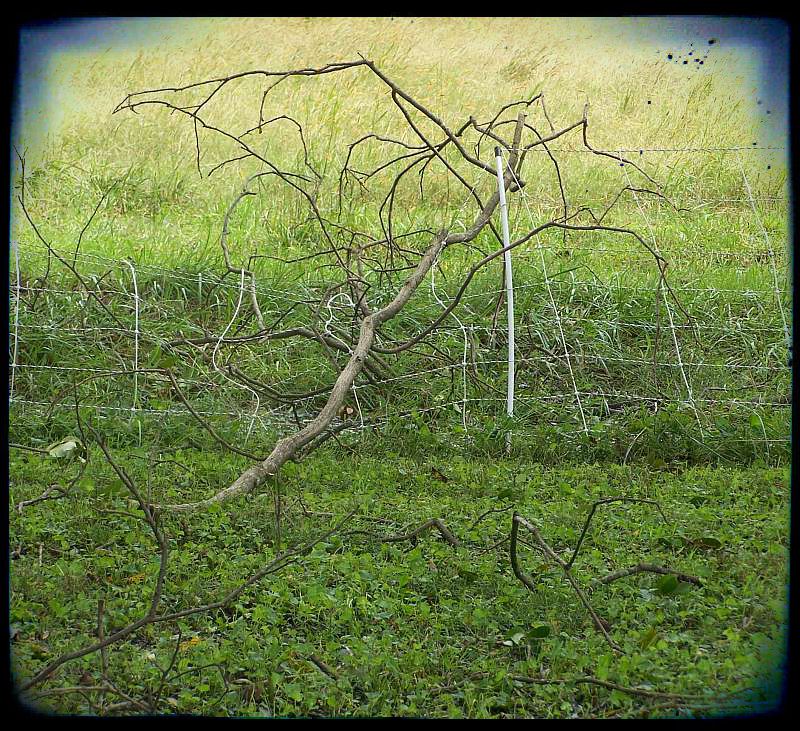
I was listening to a sermon about us being the branches connected to the vine, (John 15:4). We had a rain-wind event here and a tree in the yard lost a good portion of itself. Can this branch produce any fruit? No. Apart from the tree, it can do nothing. That is any lost person who is apart from Jesus and any saved person operating in the flesh and not the Spirit.

EPrata photo

In addition to the branch, I was also thinking of the agricultural metaphors of vine, tree, branch, fruit, and then…I started thinking about the Tree of Life.

I like trees, and I love the Tree of Life. I like thinking about God’s tree, the life He gives us, and the tree of life in Heaven we will see. Here are some mentions in scripture of the Tree of Life. It is mentioned in Genesis and Revelation (nice bookends), and also in other places.

The Tree of Life defined:

One of two trees situated in the centre of the Garden of Eden. It is also mentioned in Revelation, where it symbolises life and salvation. [Manser, M. H. Dictionary of Bible Themes]

The tree of life as a metaphor:
Pr 15:4 See also Pr 3:13-18; 11:30; 13:12. [Manser, M. H. (2009). Dictionary of Bible Themes]

The Tree of Life described:

Some people wish they had a tree which grew money, but there is an even better tree—the “tree of life.” The term in Greek, xulon zōēs, denotes “a tree that gives life”—that is, eternal life (John 20:31). This tree symbolizes the eternal life God has made available to humanity. We see this tree in the very beginning of the Bible and at the very end. 

The “tree of life” was placed by God in the midst of the garden of Eden (Gen. 2:8–9). God told Adam that he could eat from every tree of the garden except the “tree of the knowledge” of good and evil (Gen. 2:16–17). When Adam and Eve disobeyed God by eating from the tree of the knowledge of good and evil, they were expelled from the garden lest they “take also of the tree of life, and eat, and live for ever” (Gen. 3:22). The Genesis narrative suggests that God intended the “tree of life” to provide Adam and Eve with a symbol of life in fellowship with and dependence on Him. Human life, as distinguished from that of the animals, is much more than merely biological; it is also spiritual—it finds its deepest fulfillment in fellowship with God. 

The book of Revelation contains the only references to the “tree of life” in the New Testament (Rev. 2:7; 22:2, 14, 19). The Bible begins and ends with a Paradise in the midst of which is a “tree of life.” The way to the “tree of life,” which was closed in Genesis 3, is open again for God’s believing people. This was made possible by the second Adam, Jesus Christ. He died on the cross for the sins of all humanity—from Adam to you and me. Those who have washed their robes in the blood of Christ (Rev. 7:14) and have sought forgiveness of their sin through the redemptive work of Christ, receive the right to the “tree of life” (Rev. 22:14), but the disobedient will have no access to it. This tree will give constant, continuous life to all who partake of it, for it symbolizes the eternal life of God made available to redeemed humanity. [Carpenter, E. E., Holman Treasury of Key Bible words]

And out of the ground the LORD God made to spring up every tree that is pleasant to the sight and good for food. The tree of life was in the midst of the garden, and the tree of the knowledge of good and evil. (Genesis 2:9)

And the LORD God said, “The man has now become like one of us, knowing good and evil. He must not be allowed to reach out his hand and take also from the tree of life and eat, and live forever.” (Genesis 3:22)

After he drove the man out, he placed on the east side of the Garden of Eden cherubim and a flaming sword flashing back and forth to guard the way to the tree of life. (Genesis 3:24)

through the middle of the street of the city; also, on either side of the river, the tree of life with its twelve kinds of fruit, yielding its fruit each month. The leaves of the tree were for the healing of the nations. (Revelation 22:2)

Blessed are those who wash their robes, so that they may have the right to the tree of life and that they may enter the city by the gates. (Revelation 22:14)

The fruit of the righteous is a tree of life, and whoever captures souls is wise. (Proverbs 11:30).

The Garden must have been so beautiful. I can’t wait until all is restored (Isaiah 51:3). Heaven where the Tree is must be so majestic. What the tree symbolizes is even more wonderful- eternal fellowship in righteous and holy life with God. Thank you, Lord, for all you have given us now and all we have to look forward to, forever.

The Tree of Life in art:

In Gustav Klimt’s famous mural, The Tree of Life … signifies the connection between heaven and earth and the underworld. For Klimt’s admirers, the mural also has another significance, being the only landscape created by the artist during his golden period. Klimt used oil painting techniques with gold paint, to create luxurious art pieces during that time.

The concept of the tree of life is illustrated by Gustav Klimt’s painting, in a bold and original manner. The swirling branches create symbolism, suggesting the perpetuity of life. The branches twist, twirl, turn, spiral and undulate, creating a tangle of strong branches, long vines and fragile threads, an expression of life’s complexity. With its branches reaching for the sky, the tree of life roots into the earth beneath, creating the connection between heaven and earth…While the artist uses a richness of symbols, gold for paint and other luxurious techniques to illustrate a magical world, the presence of a single black bird draws the viewer towards the central part of the painting. The black bird is a reminder that everything that has a beginning also has an end, as black birds have been used as a symbol of death by many cultures… (source)

Posted in abide, encouragement, macarthur, scripture photo

Scripture photo and sermon recommendation

I recommend this recent series from John MacArthur, on John 15:1-11

I am the true vine, and My Father is the vinedresser. 2“Every branch in Me that does not bear fruit, He takes away; and every branch that bears fruit, He prunes it so that it may bear more fruit. 3“You are already clean because of the word which I have spoken to you. 4“Abide in Me, and I in you. As the branch cannot bear fruit of itself unless it abides in the vine, so neither can you unless you abide in Me. 5“I am the vine, you are the branches; he who abides in Me and I in him, he bears much fruit, for apart from Me you can do nothing. 6“If anyone does not abide in Me, he is thrown away as a branch and dries up; and they gather them, and cast them into the fire and they are burned. 7“If you abide in Me, and My words abide in you, ask whatever you wish, and it will be done for you. 8“My Father is glorified by this, that you bear much fruit, and so prove to be My disciples. 9“Just as the Father has loved Me, I have also loved you; abide in My love. 10“If you keep My commandments, you will abide in My love; just as I have kept My Father’s commandments and abide in His love. 11“These things I have spoken to you so that My joy may be in you, and that your joy may be made full.

The Benefits of Abiding in Christ, Part 1

The Benefits of Abiding in Christ, Part 2

The Benefits of Abiding in Christ, Part 3

Posted in discernment, encouragement, ephesians, galatians, holy spirit, jesus

What is the fruit of the Spirit and how does it grow?

EPrata photo

We Christians know that a false teacher is identified by his fruits. It states in Matthew 7:16,

You will recognize them by their fruits. Are grapes gathered from thornbushes, or figs from thistles?

We know that a Christian will be identified by his fruit, too.

But the fruit of the Spirit is love, joy, peace, patience, kindness, goodness, faithfulness, gentleness, self-control; against such things there is no law. (Galatians 5:22-23)

No Christian is ever a fruit-free zone. As John MacArthur said of the Matthew verse,

Now, listen to me, people: all Christians bear fruit. Did you get that? There’s no such thing as a no-fruit Christian. There’s a lot of little fruits, got nothing but a few shriveled raisins hanging on, but there’s no such thing as a no-fruit Christian. If there’s life, there will be product. (source)

So what IS this fruit that is supposed to be visible in us? And notice that in the Galatians verse the word fruit is singular. It’s fruit of the Spirit, not fruits of the Spirit. The difference between the fruits that false teachers or false professors produce and the fruit that the Christian produces is that the former is produced from the flesh and the latter is produced by the Spirit through the Christian. Here’s more, from Matthew Henry:

And here we may observe that as sin is called the work of the flesh, because the flesh, or corrupt nature, is the principle that moves and excites men to it, so grace is said to be the fruit of the Spirit, because it wholly proceeds from the Spirit, as the fruit does from the root: 

and whereas before the apostle had chiefly specified those works of the flesh which were not only hurtful to men themselves but tended to make them so to one another, so here he chiefly takes notice of those fruits of the Spirit which had a tendency to make Christians agreeable one to another, as well as easy to themselves; and this was very suitable to the caution or exhortation he had before given (v. 13), that they should not use their liberty as an occasion to the flesh, but by love serve one another. 

He particularly recommends to us, 

—love, to God especially, and to one another for his sake,
—joy, by which may be understood cheerfulness in conversation with our friends, or rather a constant delight in God,
—peace, with God and conscience, or a peaceableness of temper and behaviour towards others,
—long-suffering, patience to defer anger, and a contentedness to bear injuries,
—gentleness, such a sweetness of temper, and especially towards our inferiors, as disposes us to be affable and courteous, and easy to be entreated when any have wronged us,
—goodness (kindness, beneficence), which shows itself in a readiness to do good to all as we have opportunity,
—faith, fidelity, justice, and honesty, in what we profess and promise to others,
—meekness, wherewith to govern our passions and resentments, so as not to be easily provoked, and, when we are so, to be soon pacified,—and temperance, in meat and drink, and other enjoyments of life, so as not to be excessive and immoderate in the use of them.

EPrata photo. Figs in Georgia

Source Matthew Henry, (1994). Matthew Henry’s commentary on the whole Bible: complete and unabridged in one volume (pp. 2303–2304). Peabody: Hendrickson.

——————————————–

Here is another great commenter on the Christian’s fruit of the Spirit.

There is a pointed contrast here. As verse 16 indicated, there is no need for a believer to display the works of the flesh. Rather, by the Spirit’s power he can manifest the nine graces that are now listed. It is important to observe that the fruit here described is not produced by a believer, but by the Holy Spirit working through a Christian who is in vital union with Christ (cf. John 15:1–8). The word “fruit” is singular, indicating that these qualities constitute a unity, all of which should be found in a believer who lives under the control of the Spirit. In an ultimate sense this “fruit” is simply the life of Christ lived out in a Christian. It also points to the method whereby Christ is formed in a believer (cf. 2 Cor. 3:18; Phil. 1:21). 

The first three virtues are habits of mind which find their source in God. Love (agapē) is listed first because it is the foundation of the other graces. God is love and loves the world (cf. 1 John 4:8; John 3:16). Such self-sacrificing love that sent Christ to die for sinners is the kind of love that believers who are Spirit-controlled manifest. Joy (chara) is a deep and abiding inner rejoicing which was promised to those who abide in Christ (cf. John 15:11). It does not depend on circumstances because it rests in God’s sovereign control of all things (cf. Rom. 8:28). Peace (eirēnē) is again a gift of Christ (cf. John 14:27). It is an inner repose and quietness, even in the face of adverse circumstances; it defies human understanding (cf. Phil. 4:7). 

The second triad reaches out to others, fortified by love, joy, and peace. Patience (makrothymia) is the quality of forbearance under provocation (cf. 2 Cor. 6:6; Col. 1:11; 3:12). It entertains no thoughts of retaliation even when wrongfully treated. Kindness (chrēstotēs) is benevolence in action such as God demonstrated toward men. Since God is kind toward sinners (cf. Rom. 2:4; Eph. 2:7) a Christian should display the same virtue (cf. 2 Cor. 6:6; Col. 3:12). Goodness (agathōsynē) may be thought of both as an uprightness of soul and as an action reaching out to others to do good even when it is not deserved. 

The final three graces guide the general conduct of a believer who is led by the Spirit. Faithfulness (pistis) is the quality which renders a person trustworthy or reliable, like the faithful servant in Luke 16:10–12. Gentleness (prautēs) marks a person who is submissive to God’s Word (cf. James 1:21) and who is considerate of others when discipline is needed (cf. “gently” in Gal. 6:1; 2 Tim. 2:25; “gentle” in 1 Cor. 4:21; Eph. 4:2; “gentleness” in Col. 3:12; 1 Peter 3:16). Self-control (enkrateia; this noun is used in the NT only here and in Acts 24:25; 2 Peter 1:6) denotes self-mastery and no doubt primarily relates to curbing the fleshly impulses just described. Such a quality is impossible to attain apart from the power of God’s Spirit (cf. Gal. 5:16). As a final summary statement Paul affirmed that there are no prohibitions (lit., there is not a law) against such virtues. In a litotes (understatement) he asserted that obviously no one would make laws against people who practice such things.

Source: Campbell, D. K. (1985). Galatians. In J. F. Walvoord & R. B. Zuck (Eds.), The Bible Knowledge Commentary: An Exposition of the Scriptures (Vol. 2, pp. 608–609). Wheaton, IL: Victor Books.

EPrata photo. Grapes in Tuscany

A false teacher or false Christian will not consistently be growing in those nine graces. Though a Christian can seem to stall out for a while in his or her growth, the trajectory will always be upward. He will always be increasing. This is because of the gracious ministry of the Holy Spirit, who always points to Christ and is always conforming us in His likeness.

An even more important question than what is the fruit of the Spirit, is how can we work in the Spirit to have Him develop fruit in us? For that, we go back and look at verse 16 in Galatians 5. That verse tells us.

But I say, walk by the Spirit, and you will not gratify the desires of the flesh. (Galatians 5:16).

S. Lewis Johnson preached the following on how to walk in the Spirit.

You know, when the Lord Jesus says, “You are fishers of men,” fishermen understand a great deal about witnessing because they know fishing. Fishing enables you to understand a great deal about how to witness. Well if you want to know how to walk by the Spirit, study walking. Have you ever noticed how babies learn to walk? They don’t theorize, they don’t sit in their high chair and look and see father and analyze what he’s doing. You won’t find any child who said, “Walking is rather easy, I’ve analyzed it philosophically. What you do is you put one foot out, transfer your weight to that foot, then move the next foot out, transfer your weight to that foot. Keeping them apart so that you have good balance.” And then the child to take the highchair and put it over its head, slide out and walk. You don’t do that. You don’t find that. You’ll never find it.

Reason I know that is that my children didn’t do it that way. Nor do my grandchildren do it that way. How do babies learn to walk? Well in the first place they roll over on the bed. You remember when they rolled over the first time, “Look, Johnny has rolled over on the bed.” Of course he rolled off and hit his head, but nevertheless he rolled. He’s rolling. And then he’s sitting up. And then he’s crawling. And then he’s on his feet, hanging on to pieces of furniture. And he’s now able to make his way from one piece of furniture to another piece. He collapses against the side of it, but nevertheless he can make it. And finally he takes one step and then collapses. Either sits down from fear or topples over from excess of courage. And soon he’s walking. Very unsteadily. This happens over a period of time. Finally he can walk, but of course he never reaches the place where he cannot fall. And as he gets older and older and reaches his maturity, walks well. (source)

It sounds simple, doesn’t it? Most of the Christian life sounds simple to do. But anyone who ever battled the flesh knows that it is not simple. Not at all. It is a daily battle to walk in the Spirit and not stumble. It is a daily battle to pick up one’s cross and follow Jesus. But the Lord is so gracious, He sent the Spirit to dwell IN US (something that amazes me every day). The Spirit’s kindness in molding us like Christ and nudging, prompting, convicting, occasionally chastising us- He is our constant Friend. What a worthy goal- be more like Christ today than tomorrow! What a worthy Helper, aiding us in this walk. His work with His forgiven sinners is so simple but so complex, so magnificent, so eternally glorifying to Jesus, it is astonishing especially given how depraved we really are.

Praise the Spirit today in growing His fruit in you. And pray to request more of the same tomorrow. And the day after that. And the day after that…

that according to the riches of his glory he may grant you to be strengthened with power through his Spirit in your inner being, (Ephesians 3:16)