We are in the section of my Advent thirty day flow where we examine PROPHECY, ARRIVAL, and EARLY LIFE of Jesus.
In this section I chose verses that reflect the prophecies that predict His coming. Prophecy warns of coming judgment but it also comforts in that it foretells the holy and wonderful resolution of all things for the believer. This resolution didn’t begin with Jesus’ incarnation as a babe in the manger, it began before the foundation of the world when the God-head held an intra-council discussion and Jesus voluntarily chose to become the sacrificial Lamb.
Thirty days of exalting Jesus through selected verses with pictures representing the prophecy, life, death, resurrection, and Second Coming of our Savior.
History tells us this is exactly what happened, with David’s royal dynasty all but dying out as a result of God’s judgment of His people through Assyria and Babylon. Nevertheless, Isaiah also saw that while the Davidic line would seem to be dead, life would remain within the stump. A shoot—life barely detectable at first—would emerge. But once this shoot went forth, it would become a mighty tree.
He comes forth out of the stem, or stump, of Jesse. When the royal family, that had been as a cedar, was cut down, and only the stump of it left, almost levelled with the ground and lost in the grass of the field (Dan. 4:15), yet it shall sprout again (Job 14:7); nay, it shall grow out of his roots, which are quite buried in the earth, and, like the roots of flowers in the winter, have no stem appearing above ground. The house of David was reduced and brought very low at the time of Christ’s birth, witness the obscurity and poverty of Joseph and Mary. The Messiah was thus to begin his estate of humiliation.
Jesse [Jĕs’se]—jehovah exists or firm. The son of Obed and father of David, and grandson of Boaz and Ruth, and an ancestor of Christ (Ruth 4:17, 22). Jesse had eight sons and two daughters by different wives (1 Sam. 17:12-14, 25). Isaiah speaks of “the stock of Jesse,” a phrase indicating that it was from Jesse the Messiah would come. The humble descent of the Messiah is contrasted with the glorious kingdom He is to have (Isa 11:1).
Thirty days of exalting Jesus through selected verses with pictures representing the prophecy, life, death, resurrection, and Second Coming of our Savior.
Charles Spurgeon on the prophecy of the virgin birth: “And, first, we see here, in speaking of this birth of Christ, a miraculous conception. The text says expressly, “Behold, a virgin shall conceive and bear a Son.” This expression is unparalleled even in Sacred Writ! Of no other woman could it be said beside the Virgin Mary, and of no other man could it be written that his mother was a virgin.“
“There is the finite and the Infinite, there is the mortal and the Immortal, corruption and Incorruption, the manhood and the Godhead, time married to eternity! There is God linked with a creature, the Infinity of the august Maker come to tabernacle on this speck of earth—the vast unbounded One whom earth could not hold and the heavens cannot contain—lying in His mother’s arms! He who fastened the pillars of the universe and riveted the nails of creation, hanging on a mortal breast, depending on a creature for nourishment! Oh, marvelous birth! Oh, miraculous conception! We stand and gaze and admire. Verily, angels may wish to look into a subject too dark for us to speak of! There we leave it, a virgin has conceived and borne a Son“. A sermon, The Birth of Christ
Charles Spurgeon on Christmas: “Though creation may be a majestic organ of praise, it cannot reach the compass of the golden canticle—Incarnation! There is more in that than in creation, more melody in Jesus in the manger, than there is in worlds on worlds rolling their grandeur round the throne of the Most High.” Sermon “The First Christmas Carol“, A sermon by Charles Spurgeon, Dec 20, 1857
We should think of the Savior, all the year, every day. (Philippians 4:8). But the Christmas season is a special time when we think more pointedly about His incarnation, life, death, burial, ascension, and return. Who is this Jesus? He was born, lived, died, rose again, and promised to return, to bring eternal life to those who believe and eternal death to those who reject. He tore the veil of human history, and changed everything.
I use my photographs of God’s beautiful creation and overlay a verse on them to publish every day. For Advent, the theme is Thirty Days of Jesus. Thirty verses, thirty photos of God’s creation that reflect His life and ministry.
Of course, “And there are also many other things which Jesus did, which if they were written one after the other, I suppose that even the world itself could not contain the books that would be written,” says John 21:25. So I broke the series up into mini-themes, in order to present highlights.
I chose three mini-themes for this month’s scripture Advent photos that I believe will create a satisfactory narrative of Jesus’ life.
PROPHECY, ARRIVAL, and EARLY LIFE, 15 verses.
In this section I chose verses that reflect the prophecies that predict His coming the first time.
Then the beautiful verses that announce His arrival on the blessed morn.
Then a section are verses that mention Jesus as a child and boy, before He began His ministry.
PREEMINENCE OF THE SON, HIS WORKS & MINISTRY, 15 verses
The Son 5 verses over 5 days
Beginning with verses that declare the Son, are verses that focus Him as the Second Person of the Trinity. His sonship is integral to His earthly ministry as the subordinate Person to God the Father. These verses reflect that reality.
Works & Ministry, 10 verses
This section, published over ten days, will present verses that detail His attributes while He was on earth; Jesus as servant, teacher, shepherd, healer, and so on. Of course, not completely. He has so many attributes. He has ALL the attributes, but in total holiness!
RESURRECTION, ASCENSION, & RETURN
This last section Christ is unique in that He is the firstfruit of resurrection. He is unique in that He descended from heaven and ascended to heaven. Of the John 3:13 verse, says that only He is qualified to speak of heaven, being the only One who has been intimately involved with all its doings, and only he has seen the Father and come down from there and returned.
Jesus was raised to life and brought back to heaven, and several verses in this section will illustrate what He is doing while we wait the long centuries for the fulfillment of the end of all things, His glorious final return. The last verses will present Jesus in His glory, as He is in heaven now.
The flow mirrors the Revelation 1:8 verse, where it is declared,
“I am the Alpha and the Omega,” says the Lord God, “who is and who was and who is to come, the Almighty.”
Let’s enjoy the season. I pray that it does not become a hectic, shopping slog, frantic with focus on gifts and cleaning houses and to-do lists, though given family obligations and work colleague expectations, some of that is always inevitable. But don’t let it encroach more than it has to. Jesus is the reason for this season. If you’re a believer, this season is a gateway to a new year filled with many reasons each day to glorify God and enjoy Him forever.
All the nations you have made shall come and worship before you, O Lord, and shall glorify your name. (Psalm 86:9)
Your people shall all be righteous; they shall possess the land forever, the branch of my planting, the work of my hands, that I might be glorified. (Isaiah 60:21).
For from him and through him and to him are all things. To him be glory forever. Amen. (Romans 11:36)
or you were bought with a price. So glorify God in your body. (1 Corinthians 6:20).
“Worthy are you, our Lord and God, to receive glory and honor and power, for you created all things, and by your will they existed and were created.” (Revelation 4:11).
Every year, I present an advent calendar-blog of sorts. I called it “Thirty Days of Jesus”. I offer a scrpture, an accompanying picture, and some resources to click on furhter if the reader desires.
The series lasts a bit more than 30 days since there is an introduction and a few verses as a postlude. It will begin tomorrow (Sunday Nov 26) and go through New Year’s Eve.
I do it because it helps give me a bit of a break from writing a new blog and recording a new podcast every day, yet still present solid theological content to people who read or listen here, a major goal of mine. It also helps me focus on the reason for the season.
If something big comes up I’ll write about it. But if not, then I won’t.
When I return Monday to school, I’ve got 18 1/2 school days until Christmas Break. It is a fun time of year with the kids. A fun time of year all around!
I changed my outside decorations the morning after Thanksgiving to a Christmas theme.
I ended up putting the Three Wise Men ornament down one level so It hangs below the green candle. Better balance visually.
At school, I wandered down the hall and enjoyed looking at all the kids’ projects hung up for display. I noticed one where the child had innocently renamed the famous Christmas song “Hark the Herald Angels Sing” to “Heart the Herald Angels Sing.” I thought that was cute.
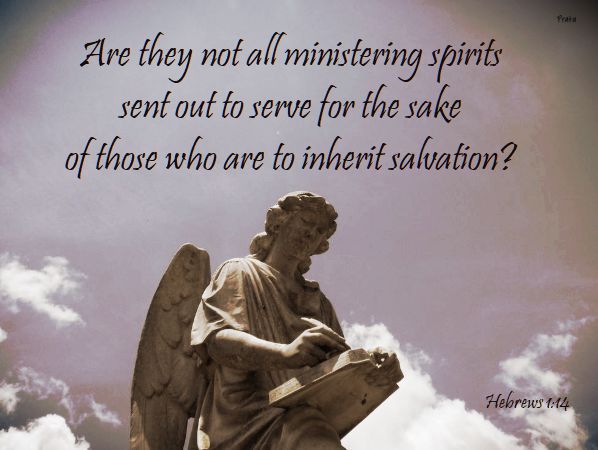
Many Christmas songs refer to angels singing. Not just Hark the Herald Angels sing, but also in the song, “Angels we have Heard on High”, the first lyric goes,
Angels we have heard on high Sweetly singing o’er the plain
And the chorus is,
Come to Bethlehem and see Christ Whose birth the angels sing;
Also, “It Came Upon A Midnight Clear”, where we read the lyrics,
The world in solemn stillness lay, To hear the angels sing
Lots and lots of songs state that the angels sing. But does the Bible say the same? No. Angels (probably) don’t sing. Or maybe they do. But I don’t think so.
The idea of angels singing on the night of Christ’s birth has become so common that many are surprised to learn that the Bible does not unequivocally state this. This example provides a good opportunity to discuss traditions. In and of themselves, traditions are not wrong, but they must be based on and consistent with Scripture. If they contradict Scripture, then they must be rejected.
At the same time, we don’t want to be guilty of going too far in the other direction. Just because the Bible doesn’t explicitly state that they did sing does not necessarily mean that they did not. Some have even argued that angels do not or cannot sing at all, but those who make this claim must adequately address Job 38:7 and other passages that seem to support the idea that they can and have sung. Furthermore, there is no biblical or logical reason why they could not sing. Angels are highly intelligent beings who are capable of speaking. Why would they be incapable of putting those words into song, especially since other beings in heaven sing (Revelation 5:9–14)?
One of the points of this series on misconceptions is to lead us all to look closely at what the Bible teaches. Far too often traditions have been the basis of our thinking, and we end up believing things that are not found in Scripture. We have heard and sung about angels singing on that night so often that many do not bother to look closely at the text.
I agree. It’s one of those concepts that has embedded itself into culture so deeply we tend to stop looking at scripture to see if it is so.
Singing and praising are closely connected but not necessarily the same. God could have endowed his humans with an innate tendency to praise in song, and perhaps did not give that same tendency to angels, who mostly are declared in the Bible to proclaim and to praise and to shout but not to sing.
And suddenly there was with the angel a multitude of the heavenly host, praising God, and saying [not singing], Glory to God in the highest, and on earth peace among men in whom he is well pleased. (Luke 2:9-14). They should have been singing. And the only place they seem to be singing is on the Christmas cards that I get. But they don’t sing in the Word of God. If there ever was a time when angels should have been singing, it was here in the Gospel of Luke when that angel made the announcement of the birth of Christ.
McGee says that he believes angels do not sing because they were never lost sinners and were never redeemed. “It is to the redeemed that God has given a song,” McGee wrote. And for the record, as Chaffey mentioned, McGee did adequately address Job 38:7 in his sermon. I tend to agree with McGee on the concept of angels not singing and also his interpretation of Job 38:7.
However, Charles Spurgeon did believe angels sang. In his sermon, “The First Christmas Carol“, Spurgeon preached,
And mark how well they told the story, and surely you will love them! Not with the stammering tongue of him that tells a tale in which he hath no interest; nor even with the feigned interest of a man that would move the passions of others, when he feeleth no emotion himself; but with joy and gladness, such as angels only can know. They sang the story out, for they could not stay to tell it in heavy prose. They sang, “Glory to God on high, and on earth peace, good will towards men.” Methinks they sang it with gladness in their eyes; with their hearts burning with love, and with breasts as full of joy as if the good news to man had been good news to themselves.
Pastor Gabe Hughes, the WUTT guy, has a 90-second spot on whether angels sing:
Whether you believe angels sing or do not sing isn’t the point. It is that we should always examine our traditions (including Christmas carols) to remind us that ultimate truth comes from the Bible. Always examine these things to see if they are so.
This year, I deleted the Wise Men from my nativity sets. I put away the one where I couldn’t take out the Wise Men and bought another where it was just Mary & Joseph and the baby. On the night Jesus was born, the Wise Men were not there, they appeared later when the baby was “a child”.
I’ll end with Spurgeon’s joyous sermon closing he delivered on December 20, 1857 at the Music Hall, Royal Surrey Gardens-
May God give you peace with yourselves; may he give you good will towards all your friends, your enemies, and your neighbors; and may he give you grace to give glory to God in the highest. I will say no more, except at the close of this sermon to wish every one of you, when the day shall come, the happiest Christmas you ever had in your lives.
We heard angels sing! (or here): Mincaye, Dawa, & other of the Auca tribe who were present on the beach who speared the Ecuador missionaries Nate Saint, Jim Elliot, Pete Fleming, Roger Youderian, and Ed McCully in 1956 say they saw lights above the trees, saw beings above the trees, and heard a choir singing. Choir of angels? Maybe. Ray Ortlund thinks the LORD sent the angels to bear witness to the missionaries’ martyrdom.
Our Sunday School class is going through the book of Esther. We had spent 26 weeks going through the Doctrine of Providence, when that class concluded, one of our teachers thought going through Esther would be a good extension of the subject. I love the doctrine of Providence and I hadn’t deeply studied Esther before, so I hopped into his class.
We read of Haman, of course, the main antagonist. And then we read two times of Haman’s wife, Zeresh. She is mentioned in Esther 5:14 where Zeresh listened to her husband’s woes about hating Mordecai. She was the one (along with Haman’s friends) who suggested building the gallows. THAT cheered Haman up! Nothing like killing a man you hate to make you happy! Then Zeresh is mentioned again in Esther 6:13 where she (along with his friends) said oops, your star is falling, your influence will dry up and you won’t win against Esther.
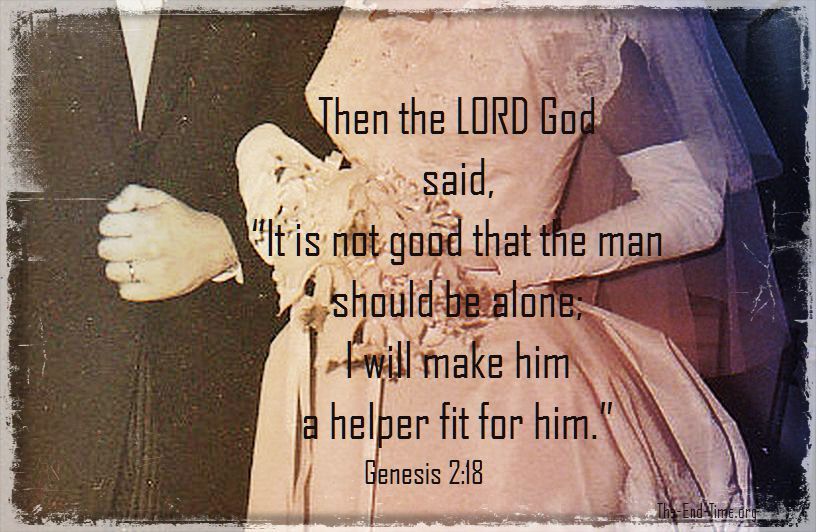
Those two were a power couple in a negative way. That thought got me thinking about couples. There are those who spurred each other on in Godly ways, a united pairing displaying God’s glory. And I thought of couples who spurred each other on to evil deeds and eventually fell. And then couples where only one of the two was obedient and faithful and hung in there to give God glory. Let’s take a look at a few, and not the most famous ones, either.
EPrata collage
BOTH ARE GOOD
Priscilla and Aquila: This was a married pair mentioned in the New Testament 6 times in four different NT books! Each time they are mentioned they’re always mentioned together. They were a pair, united by marriage in the Lord, working solidly with each other for God’s glory. They taught, they hosted, they labored at their trade, they were consistent and committed. Together they were a super-duo, relying on the Spirit and advancing the church with their dutiful example.
EPrata collage
BOTH ARE BAD
And then we have Couples who spurred each other on to bad works. Their pairing in marriage seemed to combine not the holiest of attitudes in them to greater heights, but the more depraved attitudes in them combining to descend them to greater depths.
Ahab and Jezebel. The Bible notes that the pair were evil each in their own way displeasing God constantly. (1 Kings 16:33). Jezebel incited her husband to many wicked deeds, which he willingly performed. (1 Kings 21:25). Two bad apples combining to make a polluted apple pie, this combo did much damage to the people around them.
Ananias and Sapphira: These two were counted in the early church as members, perhaps believers (more on that in a minute), and who joined in with the initial thrust to donate. They sold some land and promised the yield to the church. When Ananias stepped forward to give it at Peter’s feet, he actually only provided part of it, and Peter by knowledge of the Spirit caught Ananias in the lie. Ananias was struck dead. Sapphira a few minutes later, she, having confirmed her husband’s lie. They both colluded against the Holy Spirit and they separately confirmed greed in their heart.
There is great debate about whether the duo were actually believers or not. Piper thinks no, that they were phony Christians. MacArthur thinks yes, they were believers.
But isn’t it awful to leave people wondering if you were actually a true believer at all? Was theirs a case of bad company corrupting good character? Did one infect the other with leaven, spoiling the whole marriage? Was one unable to overcome the flesh and influence the other toward evil? Or were both simply greedy and allowing that one prevalent sin to have them?
ONE GOOD, ONE BAD
Lot and Mrs Lot: We do have many examples of these pairings: Lot and Mrs Lot. Mrs Lot was unveiled at the last minute as clinging to the world, not looking ahead to righteousness. Yes, Lot did some stupid things, but the Bible calls him righteous. (2 Peter 2:7). He must have done something right, his married daughters came with him instead of staying with their husbands. (A Lot of Righteousness). Mrs. Lot clung to the world (and became part of it).
Abigail and Nabal: Another one-good-one bad pairing we find in Abigail and Nabal. Their story is recorded in 1 Samuel 25. Nabal was described as “harsh and evil in his dealings”. His own servants and his wife described Nabal as “a worthless man”. Yet Abigail’s patience in living with this brute is obvious, and her intelligence in approaching David to persuade him to leave off murdering Nabal and his men, is also seen. Abigail is blessed by David in Yahweh’s name: David said, “blessed be your discernment, and blessed be you, who have kept me this day from bloodshed…” (1 Samuel 25:33).
In the same way, you wives, be subject to your own husbands so that even if any of them are disobedient to the word, they may be won over without a word by the behavior of their wives, as they observe your pure and respectful behavior. (1 Peter 3:1-2).
In this case, Nabal was not won over, David was. Nabal died soon after and David proposed marriage to Abigail.
A bad marriage is hard. A good marriage is hard. But if one of the pair isn’t saved, it just makes things so difficult because you are both pulling in different directions. Even if both claim to be saved but one is a lot less mature in the faith, again, difficulty.
“We’ve all heard it said that marriage exposes our own sin and selfishness, and that the marriage relationship sanctifies us with an intensity that can be, at times, quite uncomfortable.” ~Two Sinners and One Sinless, CBMW, By Elisha Galotti.
Job and Mrs Job: When the chips were down (waaaaay down), Mrs Job told her husband he might as well “curse God and die”. Maybe she blamed Job, more likely she blamed God, doubting Him. In Job 2:9 she blurted to her husband,
“Do you still hold fast your integrity? Curse God and die!”
It seems that perhaps Mrs Job was annoyed to the extreme of her husband’s acceptance of God’s work in their lives. Thankfully Job did not take his wife’s ‘advice’ and eventually all was restored to Job. Interestingly, we read nothing of Mrs Job in her husband’s restoration happy ending. We read he received a house, more animals than before, and additional children, who grew to receive an inheritance and the Bible even records the names of the first 3. But no name for Mrs Job and no mention of her in the epilogue. Perhaps she had reaped what she had sown.
Hosea and Gomer: This pairing was again one of extreme difficulty and heartache. Hosea was righteous and Gomer was a troubled sinner for most of the marriage. She was an adulteress, she had an illegitimate child(ren, perhaps 3), she caused Hosea years of pain and embarrassment. Hosea patiently and lovingly sought Gomer, forgave her, took her back in with patience and deep commitment. Eventually she settled. Hosea’s love for his sinning wife was not diminished by her sin, he maintained loving faithfulness. From that, Hosea grew in deeper understanding of the forgiving love of God.
Hosea and Gomer, from the Bible Historiale. Den Haag, Date 1372
Marriage is two sinners each trying to subdue their own flesh nature. Without Christ, it can be a conflagration. With Christ, it’s still hard. I pray that if you, dear reader are in a difficult marriage, that you diligently search out Bible verses addressing your situation. And I humbly ask you to think of the couples in the Bible who each made a successful marriage, and what made some of their marriages unsuccessful.
The key point is, you are not alone. The Holy Spirit is with you.
We believe in the power of the Holy Spirit—the power that brought about resurrection life, softened hearts of stone, and gave eyes of faith when we were blinded by sin. Yet sometimes in marriage, in the dismal moments of anger, hostility, or painful hurt, we forget that we’re not doing this alone. Sometimes in our sin and failures, we forget that the power and help of the Holy Spirit is ever present, ever helping, ever convicting, guiding, prompting and empowering us to do what is right. ~Two Sinners and One Sinless, CBMW, By Elisha Galotti
For all who are led by the Spirit of God are sons of God. For you did not receive the spirit of slavery to fall back into fear, but you have received the Spirit of adoption as sons, by whom we cry, “Abba! Father!” The Spirit himself bears witness with our spirit that we are children of God, and if children, then heirs—heirs of God and fellow heirs with Christ, provided we suffer with him in order that we may also be glorified with him.
What is adoption? “A. Adoption is an act of the free grace of God, in and for his only Son Jesus Christ, whereby all those that are justified are received into the number of his children, have his name put upon them, the Spirit of his Son given to them, are under his fatherly care and dispensations, admitted to all the liberties and privileges of the sons of God, made heirs of all the promises, and fellow-heirs with Christ in glory.“
Think of that for a moment…how great and bountiful this gift is.
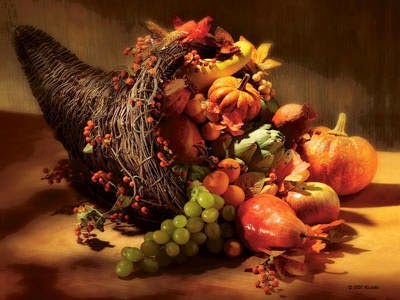
At Thanksgiving we often see the American symbol of the ‘horn of plenty’ also known as the Cornucopia. The horn is filled to overflowing with harvest items from this time of year, such as this depiction from American Greetings freebies:
Adoption is an act of the free grace of God, in and for his only Son Jesus Christ, whereby all those that are justified are given gifts from HIS harvest of plenty. Picture the overflowing cornucopia of plenty from Jesus with His harvest treasures:
–received into the number of his children, –have his name put upon them, –the Spirit of his Son given to them, –are under his fatherly care and dispensations, –admitted to all the liberties and privileges of the sons of God, –made heirs of all the promises, and –fellow-heirs with Christ in glory.
All Christians have these and so much more to be thankful for. I know I am grateful for the opportunity to be grateful to Jesus forever.
There are 3 or 4 blogs I’ve written over the years, which remain in the top 5 searched and read. The one I did about two divorces, Summer White and Melissa Moore is one of those that continues to generate high interest, for some reason. I wrote it seven years ago in 2016 but here in 2023 the essay still remains highly read.
Both women compared in my essay are daughters of a more famous Christian teacher, Summer being the daughter of Dr. James White, and Melissa being the daughter of Beth Moore. Both women say they are believers. Both women went through a divorce at close to the same time. Only one did it biblically, the other did it unbliblically.
Divorce is a serious event in a believer’s life. There are few biblical reasons one may be unsinfully divorced, and a myriad of reasons one would be sinfully separated from a husband. The Bible says in 1 Corinthians 7:10,
But to the married I give instructions, not I, but the Lord, that the wife is not to leave her husband
In my research for the 2016 essay, I obtained first hand statements, primary documents, and court documents. None of it was gossip. It was all from the women’s own mouth (or pen) or from unimpeachable sources like the court, which are public documents. All of it was public.
Summer divorced well, praying, being patient, attempting reconciliation, counseling, submitting to her elders and finally separating for biblical reasons with support from her overseers.
Melissa did not appear to divorce well. Her basis for her divorce was stated in court and sworn to, was “discord or conflict of personalities” with no hope of reconciliation due to irreconcilable differences. Here is the snippet from the court document: click for larger
Of course there is always more to any person’s story, but the sworn basis for her divorce was personality conflict and that is what we go forward on. Melissa was the initiator, by the way, contradicting the command in 1 Corinthians 7:10. Unlike Summer, who was also initiator but her reasons were biblical. Melissa’s public basis for her divorce, weren’t.
The danger with an unbiblical divorce is displeasing God and sinning. Another danger is the woman’s remarrying. There are only two ‘allowable’ causes for divorce, sexual sin or desertion. A woman who divorced unbiblically and remarries is now considered an adulteress, since the original marriage’s dissolution was not sanctioned biblically by God. (Luke 16:18)
Melissa Moore seems now to be in just such a state. Her own words follow:
July 2013:
February 2023:
August 2023:
November 2023:
Beth Moore exulted in her daughter’s joy. I am glad for their joy, and glad they seem to have a close and loving relationship. In fact, Melissa is an employee at her mother’s organization Living Proof (Salary $146,350). Melissa writes curricula and Bible studies with her mother. I am glad they are happy.
However, this happiness is not in the Lord, which makes all the difference. It’s one thing to unbiblically divorce, but compounding nd complicating the sin is remarriage. Melissa is now considered an adulteress according to Mark 10:11-12 and will have severe consequences on Judgment Day, as all unrepentant sin will be addressed. (If her former husband has passed away then it makes a difference to the scenario…)
“The Bible also gives a word of caution to anyone who is considering marriage to a divorcee. If the divorce was not on biblical grounds and there is still a responsibility to reconcile, the person who marries the divorcee is considered an adulterer.” (Mark 10:12)”. Source
One would hope that Melissa had repented of her appearing to divorce unbiblically. Such repentance should be public, since she is a public figure and has written about this publicly. But I have not seen such a statement.
So, why am I writing this?
1. If a ‘Bible’ teacher does not submit to the scriptures, then does she have the credibility to teach the scriptures? No. On the other hand, if a Bible teacher or theologian does submit to scripture, and continues to do so even when it is hardest or most embarrassing, it enhances their credibility as a teacher. 2. Divorce is a serious event in a believer’s life, though in today’s world both secular and Christian, it is made light of (i.e. How many church disciplines have you heard of for unbiblical divorce?), 3. Living Proof is a huge and continually influential ministry, yet the lifestyle of both women who run it are unbiblical. This will permeate their “studies” and material like gangrene (2 Timothy 2:17-18, 1 Timothy 4:16). See #1. 4. Marriage is supposed to be a picture of the union of Christ with the Church- “The relationship of Christ and the church, the gospel, is all about the marriage of a bride and groom; we, Christians, are the bride and Christ is the groom. This union of Christ and the church is the real marriage and our marriages are to serve as that portrait, that image of the ultimate reality.” Challies. Abandoning one’s spouse for unbiblical reasons or for a better prospect destroys this picture. When one is a celebrity Bible teacher in the public eye, it magnifies- and normalizes- the destruction.
If you, dear reader, are considering a divorce or even a separation from your husband, please slow down and seek counsel from trusted overseers. Casting away what God has ordained is a serious business. I’ve had women say to me that their divorce was OK because they were “unhappy and God wants me to be happy”. I’ve had women come to me for advice on separation and when I quote 1 Corinthians 7:10 and say a woman may not separate from her husband, become angry at me for bringing it up. I’ve seen biblical divorces and unbiblical divorces, even a case of church discipline over an unbiblical one. The pastor cried when he reported his unfortunate turn of events. It’s serious, women!
Please take marriage and potential divorce biblically, avoid Beth Moore’s ministry because it’s laced with unbiblical lives which taint the biblical ‘teachings’. If you are in a good marriage, rejoice that the Lord has united one man and one woman into one flesh forever!
Note: I made a typo in the episode number. It’s really ep 512. Spotify doesn’t allow for post-publication corrections.
I was asked to review the new Bible study by Katie Noble, called God Our Home. I am not familiar with Katie Noble, but as an older woman who has watched an entire generation been polluted by faddish, unbiblical trends, I’ve increasingly seen seen the material of the younger women who produce books and devotionals to be in more error than is wise to consume.
So, going in, I kept Matthew 10:16 in mind, and tried to be shrewd as a serpent, innocent as a dove.
Katie Noble’s books and studies and other works are not available on any other platforms except her own, Hosanna Revival. They are not on Amazon nor on Google Books, so I could not get any previews of the contents. On Hosanna Revival, there was an opportunity to download week 1 of the God Our Home new devotional study for free, which I did.
As I was reading the chapter, several items struck me.
Early on, Noble references and quotes Dallas Willard. Willard was a philosopher/Quaker/Arminian/Catholic-friendly promoter of contemplative spirituality and spiritual formation. He claimed direct revelation from God. Here, Bob Dewaay at Critical Issues Commentary critiques Willard and his spiritual formation. Willard is a false teacher. Katie Noble, if she had discernment, would not quote him or promote him in her Bible study.
And sure enough, soon after the Dallas Willard mention in her week 1 of the God Our Home study, came an explanation of how to do Lectio Divina, a spiritual practice of the Catholics, who are a false religion, and one that Willard adapted and promoted to Protestants. Lectio Divina started to be very popular around 2012 and is still popular today, as we can see from Noble’s Week One lesson.
GotQuestions outlines what Lectio Divina is and sets out some bullet points of concern with the practice, which are sadly mentioned as positives on Noble’s week one page on how to do Lectio. This is strike two.
Concerningly, here is what Noble said about Lectio which buys right in to the main problem with Lectio and most spiritual formation practices:
“We won’t only be engaging our minds, however. We’ll also train ourselves in meditative contemplation of the Scriptures: the practice of quieting our hearts to sit in the presence of the Holy Spirit… Do not fall into the trap of believing that intellectual study is more valuable than soul-level communion with God.”
The Spirit enlivens our soul through the MIND.
The word of God transforms the MIND.
Katie Noble is flat wrong when setting the basis for her lessons in the heart in addition to or instead of the mind. Jeremiah 17:9 says,
The heart is more deceitful than all else And is desperately sick; Who can understand it?
The Spirit communes with our soul via the mind.
GotQuestions says of Lectio Divina, “The subjective, personal focus of lectio divina downplays objective, methodical Bible study.”
Lectio downplays the mind where biblical prayer engages the mind.
Lectio divina emphasizes experience, inner impressions, and suggests direct revelation. It is to be avoided. It’s disappointing that Noble teaches how to do it in week one.
If Dewaay’s essay linked above is too long, here is Challies with a shorter one on the dangers of Lectio Divina.
Noble also quotes John Mark Comer, who is another spiritual formation/subjective experience/Holy Spirit presence guy. This is a third strike. Remember, this is only the first chapter.
Marcia Montenegro, a former New Ager herself, writes about her concerns with John Mark Comer. He is a Contemplative along the lines of Willard, and he promotes the pagan Enneagram.
The theologically solid and discerning duo Darrell Harrison and Virgil Walker at the Just Thinking podcast have produced a thoroughly discerning look at the pagan enneagram, published on November 22, 2023.
Though the three concerns I’ve indicted above should be enough it dissuade women from delving into Noble’s version of Christianity, and this last one might be nitpicky to some, but a concern I have is in the introduction. I know intros are chatty and attempt to quickly connect the reader with the material. However, Noble outlines her basis for the book as the reader having negative emotions which the study will resolve. She wrote,
“If you’re disillusioned and disappointed today, if you’re feeling isolated, inadequate, anxious, and embarrassed, you’ve picked up the right book. The pages to come are specifically written to capture our wandering hearts and set them on the path homeward to God himself.”
Jesus is not a stopgap for our feelings, nor a band-aid or an overlay. We come to a Bible study wanting to know more about Him, not wanting to find a vehicle for self-help or to resolve emotions.
Noble says some good things, says other things that SOUND good but aren’t, and says some bad things. It’s a mix. All that from one chapter. I hesitate to think what material may be in the remainder of the ‘study’.
But I would not recommend her study on the basis that she promotes contemplative spirituality and lectio divina, and references several false teachers. Even if the entire remainder of the study is good, it’s too much of a risk for a newbie to be exposed to these dangerous and unbiblical practices and teachers of contemplative spirituality and enneagram. And if the remaining study is continually serving up false doctrines and false teachers like chapter 1 did, then that also confirms the “not recommended” stance.
Alternatives that are recommended are anything by Susan Heck – her ministry is titled With the Master, or Martha Peace. How to Eat Your Bible by Nate Pickowicz. Sarah Ivill’s books of the Bible studies or her Christian Living books, available thru Reformation Heritage Books.
There is also available in audio series of lessons at the women’s ministry at Grace Community Church called Every Woman’s Grace. The current series is Hebrews. There are written lesson materials one can download for free. Here is the link to the many past series. These are solid studies.
My caution for women today is to be super skeptical of modern devotionals and modern studies. It’s been about 30 years of women being exposed to Contemplative Spirituality (the start of that is seen as Claude King and Henry Blackaby’s “Experiencing God” study, which introduced direct revelation, contemplative methods, and Dallas Willard to Protestants).
That exposure beginning in 1990 and caught fire in Protestant quarters, has by now settled into the faith as a normal spiritual experience. It isn’t. Look for Bible studies if they are modern with discernment, like Every Woman’s Grace, Susan Heck, or Martha Peace. Or choose older ones (also with discernment) pre-pollution of contemplative spirituality and direct revelation.
Katie Noble’s “God Our Home” sadly, is not recommended.










 the-end-time.org