Posted in advent, theology

Thirty Days of Jesus: Redux

By Elizabeth Prata

Christmas is coming. It’s a blessed time of year.

We always think of the Savior, all the year, every day. (Philippians 4:8). But the Christmas season is a time when we think more pointedly about His incarnation, life, ascension, and return. Who is this Jesus? He was born, lived, died, rose again, and promised to return, to bring eternal life to those who believe and eternal death to those who reject. He tore the veil of human history, parted it into BC and AD, and changed everything.

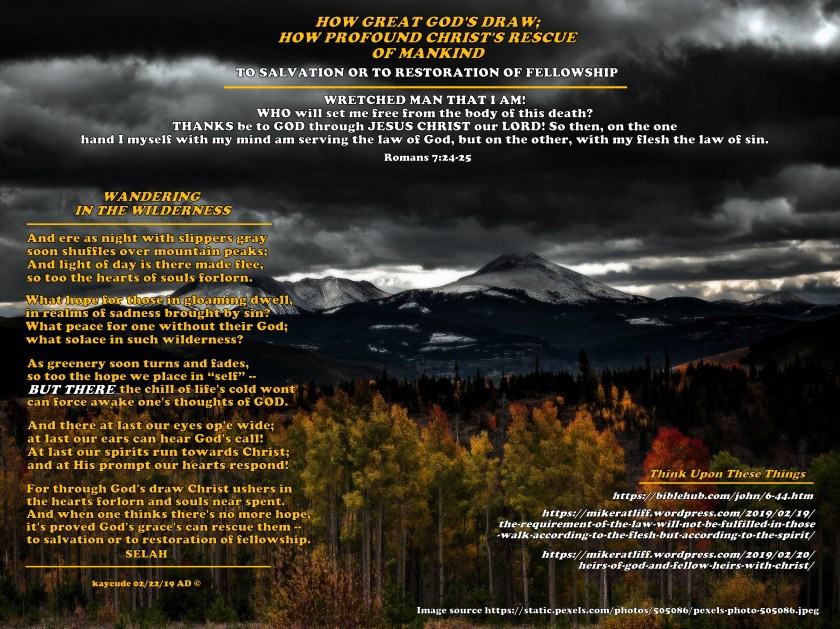
My contributions to the faith and fellowship of the saints is tiny, but I do my best with the resources He has given me. One thing I do is I use my photographs of God’s beautiful creation and overlay a verse on them, and post to social media each day. I organize them into weekly themes, for the saints to read and perhaps be encouraged by. Some people email or tell me in real life that they enjoy the scripture photos I put up each day. I’m always surprised by this, but in the end, that’s the point of the endeavor- to keep Jesus and His aroma of life before people, to encourage, stimulate, or convict.

I decided in addition to a weekly theme, (this week it’s “goodness”) that I’d do a monthly theme: Thirty Days of Jesus as an advent homage. Thirty verses, thirty photos that reflect His life and ministry.

The entire Bible is about Jesus of course, and it was very hard to select verses and not feel bad about the ones I was leaving out! I chose three mini-themes for this month’s scripture photos that I believe will flow.

PROPHECY, ARRIVAL, and EARLY LIFE, 11 verses.

In this section I chose verses that reflect the prophecies that predict His coming. Prophecy warns of coming judgment but it also comforts in that it foretells the holy and wonderful resolution of all things for the believer. That resolution will be in Christ and through Christ. Then since it’s Christmas, the beautiful verses that announce His arrival on the blessed morn. The third mini-section are verses that mention Jesus as a child and boy, before He began His ministry.

PREEMINENCE OF THE SON, HIS WORKS & MINISTRY, 15 verses

THE SON, 5 verses

Beginning with verses that declare the Son, I’ll share verses that focus Him as the Second Person of the Trinity. His sonship is integral to His ministry as the subordinate Person to God the Father. These verses reflect that reality.
Christ is preeminent. Always and forever. Let us exult in these verses which proclaim a truth that should enlarge our heart and shake our soul with wonder.

MINISTRY, 10 verses

This section will present verses that detail His attributes while He was on earth; Jesus as servant, teacher, shepherd, healer, and so on.

RESURRECTION, ASCENSION, & RETURN

Christ is unique in that He is the firstfruit of resurrection. He is unique in that He descended from heaven and ascended to heaven. As GotQuestions explains of the John 3:13 verse,

Jesus explains why He is uniquely qualified to teach of the kingdom of God—namely, because He alone came down from heaven and possesses the knowledge to teach people about heaven. Jesus alone has seen the Father, and He alone is qualified to declare God and make Him known.

Jesus was raised to life and brought back to heaven, and several verses in this section will illustrate what He is doing while we wait the long centuries for the fulfillment of the end of all things, His glorious return. The last verses will present Jesus in His glory, as He is.

The flow mirrors the Revelation 1:8 verse, where it is declared,

“I am the Alpha and the Omega,” says the Lord God, “who is and who was and who is to come, the Almighty.”

This is no great project, to be sure. But I wanted to organize my thoughts ahead of the season and selecting verses that detailed the flow of Jesus’ life seemed a good way to do it. The photos are free for anyone to use and by the end, perhaps someone would like to make a bundle for their own purposes, printed out or digital.

THE PHOTOS

I enjoy using my photographs because an important-to-me aspect of His deity is Creator. Paul constantly exhorted the pagans with sermons and entreaties that distinguished his like-nature with them as man and the holy perfection of the Christ-nature Creator of all things. Paul frequently used creation as a foundation to proclaim Christ’s gospel. I came partway to Christ that way, by viewing the creation and understanding there is a God, and Romans 1 has great meaning for me. I knew there was a God, but I suppressed the truth of Jesus, just as the verse at Romans 1:18-19 says the pagans do.

Now that I’ve received grace, I’m viewing His creation through spiritual eyes and give homage to the Creator. Therefore, I enjoy photographing it with a mind of thanks for all He has made. The photos are the backdrop to this thought. If I die or I am raptured tomorrow, or in ten more years, I want to be found still exhorting Christ with zeal and truth.

Let’s enjoy the season. I pray that it does not become a hectic, shopping slog, frantic with focus on gifts and cleaning houses and to-do lists, though given family obligations and work colleague expectations, some of that is always inevitable. But don’t let it encroach more than it has to. Jesus is the reason for this season. If you’re a believer, this season is a gateway to a new year filled with many reasons each day to glorify God and enjoy Him forever.

All the nations you have made shall come and worship before you, O Lord, and shall glorify your name. (Psalm 86:9)

Your people shall all be righteous; they shall possess the land forever, the branch of my planting, the work of my hands, that I might be glorified. (Isaiah 60:21).

For from him and through him and to him are all things. To him be glory forever. Amen. (Romans 11:36)

or you were bought with a price. So glorify God in your body. (1 Corinthians 6:20).

“Worthy are you, our Lord and God, to receive glory and honor and power, for you created all things, and by your will they existed and were created.” (Revelation 4:11).

Posted in theology, word of the week

Word of the Week: Fruit of the Spirit, Goodness

By Elizabeth Prata

But the fruit of the Spirit is love, joy, peace, patience, kindness, goodness, faithfulness, gentleness, self-control; against such things there is no law. (Galatians 5:22-23).

What is goodness? If you ask most people, they would declare that they “are a good person.” But is man’s view of goodness the same as God’s? No.

The word for goodness as it’s used in Galatians 5:22 is agathōsýnē occurs four times in the NT. Paul and only Paul uses it. It is apparently strictly a biblical term, i.e. it does not seem to appear at all in secular Greek. The occurrences of this particular Greek word for goodness appear in Galatians 5:22, Romans 15:14, Ephesians 5:9, 2 Thessalonians 1:11.

Goodness (agathōsynē) may be thought of both as an uprightness of soul and as an action reaching out to others to do good even when it is not deserved. (The Bible Knowledge Commentary: An Exposition of the Scriptures, J. F. Walvoord)

In the note on Romans 3:12 (All have turned aside; together they have become worthless; no one does good, not even one) MR Vincent explains goodness,

It is rendered kindness in Eph. 2:7; Col. 3:12; Gal. 5:22. Paul, and he only, also uses ἀγαθωσύνη – agathōsynē for goodness. The distinction as drawn out by Jerome is that agathōsynē represents a sterner virtue, showing itself in a zeal for truth which rebukes, corrects, and chastises, as Christ when He purged the temple. [The normally occurring Greek word for goodness], chréstotés is more gentle, gracious, and kindly. (Vincent, M. R., 1887, Word studies in the New Testament (Vol. 3, p. 35).

John MacArthur explains

There’s a third virtue in this little trio – and we’ll close with that one. “Goodness” is it, goodness, verse 22: agathōsunē. Goodness was a deep-down virtue of moral sweetness, moral excellence; and we can’t even find the word in secular Greek sources. It sort of was coined by believers as a way to express a kind of goodness that was deeper than anything the world experienced. It usually is compared with righteousness; and that’s really helpful to kind of get the meaning of it.

In Ephesians chapter 5 we read in verse 9, “The fruit of the Light” – the Light, capital “L,” the divine Light, the heavenly presence our Lord. “The fruit of the Light consists in all goodness and righteousness and truth.” So there “goodness” is connected to “righteousness.” And I think that’s very helpful, because righteousness can tend to be the hard edge. Righteousness can tend to be the stern aspect of Christian character, right?

You are righteous: you have righteous standards, you have righteous convictions, you know what is right, you expect people to do what is right, you uphold the standard of what is right, you defend what is right. That is the sterner aspect of Christian character. But the backside of that – and that’s what Light produces, according to Ephesians 5:9 – the backside of that righteousness is goodness. That’s the soft side of your convictions.

That’s the kindlier expression of your convictions. It’s right to have those convictions, it’s right to hold those convictions, it’s right not to compromise those convictions, but it’s also right to be full of goodness so those convictions don’t wind up bashing people.

When you have the full knowledge, the full understanding of the Word of God, when you have the full picture, it doesn’t just make hard-nosed convictions, it produces strong, immovable convictions that have a soft side of goodness. Look, you don’t have convictions stronger than God, right? And yet the goodness of the Lord extends to the highest heavens.

So if interpreters say goodness as it’s used here means a strong moral rectitude, an excellence and uprightness, tinged through and through with gentleness and kindness, how does that relate to your and my actions? Our growth in sanctification? Are we growing a righteous goodness in our lives?

I’ve seen the sad slide of people drawn into harsh discernment ministries who believe they are standing up for Jesus, but are simply bashing people with a hardness that is far from ‘good.’ I’ve also seen people soften into jellyfish in refusing to correct or rebuke, claiming that kind of hardness isn’t “good.” The Christian life is one where we seek God’s guidance through His word at all times, so we stay on the center line.

Prayer: Valley of Vision

Thou hast revealed to me myself
as a mass of sin,
and thyself as the fullness of goodness,

The rest is here, it is worth the read

fruit goodness verse 1

Posted in movie review, theology

Movie Review- American Gospel: Christ Alone

By Elizabeth Prata

American Gospel: Christ Alone explores the core question of Christianity, ‘What is the gospel?’ through the distorting lens of American culture. It is written and directed by Brandon Kimber and features interviews from many well-known American preachers and some not so well known. What IS the Gospel, is explored in detail and biblically. Even those familiar with the Gospel of Jesus Christ will come to a deeper understanding and appreciation for the miraculous method for salvation Jesus enacted by his life, death, and resurrection.

It also features testimonies and anecdotes by lay people who have undergone a radical conversion either from atheism, or a false version of Christianity. Their stories of finding joy in experiencing the true Gospel revealed to them by the grace of the Holy Spirit is deeply moving.

The film also examines how this wondrous Gospel has been twisted in America into a prosperity recipe for the accumulation of wealth, a piling up of fleshly desires, with Jesus simply as a Genie dispensing to us the lusts of our heart. Wrath, death, sin, sacrifice, and cross are words that have been removed in our alteration of this Gospel, and exported to the world as the normal face of Christianity.

It is this fact that wounds most deeply, and is done simply by contrasting the biblical version of true Gospel with the gross and putrid exports from well-known prosperity preachers. The comparison is done fairly and humanely, with pointed but loving testimony from many people, including Costi Hinn, nephew of the famous faith healer prosperity preacher Benny Hinn. Truly, one wants to fall on one’s face begging the Lord for forgiveness and repentance for them and for ourselves if we have ever had any part in it. The sterling brightness of the Gospel shines brightly in this film, and anything that approaches it in lies or twists are immediately seen for what they are: gross deceptions and hateful rebellion.

Coming in at 2 hours and 18 minutes, it’s long, but it doesn’t feel long. For me, it took even more time to watch, however. I paused the film numerous times to pray, cry, pace, or open my Bible and read. The truths presented in the film take time to absorb. For me, it was a trial to my heart, but a good one.

This film is edited to perfection. The cinematography is stupendous. The men interviewed the film are articulate, obviously grace filled, and loving. The documentary can be rented for $4.99 with a 48-hour watch window, or purchased for permanent download or on DVD.

Highly Recommended.

For a weekend pairing I’d suggest watching American Gospel and Spotlight, the secular film chronicling the investigation into the first Catholic priest pedophile scandal in Boston during the early 2000s. Both films show (though Spotlight inadvertently) the power of the Gospel and the devastation of a false one.

american gospel

Posted in discernment, theology

Forget ‘What color is your parachute?’, Beth Moore wants to know the color of the hands that wrote the books on your shelf

By Elizabeth Prata

Just as our minds can’t conceive of how MUCH Jesus loves His own, we can’t conceive of how deep sin will go. (1 Corinthians 2:9). Just when we think sin can’t get any worse, it does. (Genesis 6:5).

False teaching is a plague on the church. It destroys the sinner. It hinders the Christian’s walk. It makes a blot on Jesus’s name. It should not be ignored.

For many years Beth Moore has been propagating false teaching. It’s always been there. It’s always been that way, if one cared to look.


Any
variation from the true Gospel is devastating. It’s of satan, and we know satan comes to steal, kill, and destroy. (John 10:10). It matters not that the package it comes in seems ‘pretty close’ to true doctrine. So what that an N almost looks like an M. It’s not and it alters the word it’s in completely. Moon isn’t Noon. Mail isn’t Nail.

Remove the second ‘b’ from Bible and you get bile. So, pretty close isn’t good enough.

Beth Moore has been twisting the faith for almost 30 years. She is a type of Jezebel spoken against by Jesus in Revelation 2:20. Her mysticism, direct revelation, Bible twisting, lavish lifestyle and more, has caught many an unwary women into her webs of lies. That is what false teachers do, and she is extremely successful at it. Rather than be stricken by Jesus, He has graciously allowed to gather momentum, influence, and followers for all this time. Only Jesus knows how long He will allow her to continue, and whether her comeuppance will happen before her death as well as after. But for now, it is the duty of those who see the N in the stream of M’s to call attention in clarion shouts that this thing is not like the others.

Though one knows God is sovereign, one can still be alarmed that Moore’s power and influence is only growing as time goes on. Of late, in addition to the usual Bible travesties, Beth Moore’s advancement along the wide road has picked up some additional new litter by the side of the way. The litter is wokeness, relevance, and attention to worldly systems.

Perhaps feeling that there were no new theological worlds left to conquer, or perhaps the Bible world was growing stale for her, or maybe she just needed new friends, Moore has plunged into expounding on new vistas having nothing to do with Jesus. As Kris Williams (@Kdubtru ) said on Twitter this week, unrelated to Beth Moore,

Church history has repeatedly and clearly proven one thing: Once the highest view of Scripture is abandoned by any theologian, group, denomination, or church, the downhill slide in both its theology and practice is inevitable.

If one has tendencies to chronicle and track these things, (as I do) one can see that Moore’s downhill slide into ‘wokeness’ began earlier this year. In March to be exact.

Her non-sleepiness was followed by a sudden venture into political waters that same week, with this tweet,

This political awakening was followed by successive and incessant tweets and blogs taking on social justice, racism, and just rebuking the church wholesale. Perhaps you’ve noticed a distinct absence of Bible verses. There are references to biblical principles, and mentions of the Bible, but very few verses and hardly addresses at all. I’ve asked her about this. No response. Her social media is used quite often to bemoan secular woes now.

In April the MLK50 Conference happened. Moore was asked to be a speaker. Moore suddenly ‘woke’ to racial issues and began promoting them as a substitute for Gospel issues.

Moore’s foray into political ‘relevance’ was followed by the famous “Letter to My Brothers” in May of this year which accused basically every Christian man of not liking Moore and thus were misogynists hating on all women since the beginning of the church.

June saw a surge of interest in putting Moore up for president of the largest Protestant denomination in the world, the Southern Baptist Convention. Along the way discussions about women’s egalitarianism, social justice, and a host of other secular, fleshly issues ensued.

By October of this year the powerhouse secular media had taken note of Moore. Both The Atlantic and the Washington Post published lengthy stories about her. New vistas indeed. The Atlantic talked about how she is “taking on Trump”, and the Post talked about how she is “changing the face of evangelical leadership.”

Moore talks about how she stayed quiet for decades but now must speak up, she must. A cynic would say that she has amassed enough worldly goods and influence to risk stepping into secular arenas to conquer, and this seems to be working for her. Maybe the risk wasn’t so large after all.  In the spirit if the breathless titles on the TV show The Unbreakable Kimmy Schmidt, here are three titles regarding Beth Moore’s latest delinquencies.

Beth Moore Challenges Da Man!
(But Metha Leanne Todd pushes back)

This past May’s “Letter to My Brothers” Moore takes exception, on behalf of all evangelical women whether they have asked her to or not, to the “way we women have been treated” in the visible church. And the way Moore herself has been treated, and according to Moore, it ain’t good. There’s a gulf, a huge gulf fixed, between male leaders and women leaders, and that gulf is filled to the brim with disrespect, maltreatment, and perhaps most mystifying of all, ‘peculiarities accompanying female leadership’. Clearly, this must stop.

Her letter did not go unnoticed. Not by the bigwigs, nor by the little people, like this articulate CNA CareGiver in Texas-

The rebuke went on, the above is just an excerpt. Full post here.

Hypocrisy Moment:

From Moore’s Open Letter to Brothers:

A few years ago I told my friend, Ed Stetzer, that, whenever he hears the news that I’m on my deathbed, he’s to elbow his way through my family members to interview me about what it’s been like to be a female leader in the conservative Evangelical world.

Interesting that a religious teacher who claims to have been a slave to Christ for 30+ years, says that when she’s on her deathbed, her only thought will be talking about herself and her life as a “leader,” and not the coming glories she will experience because of the cross and Christ.

Beth Moore battles misogyny!
(But Kathleen Peck pushes back)

Pushing hard on the ‘women oppressed’ mantra, this month Moore was featured in a lengthy podcast interview: Beth Moore on Misogyny: The blurb goes- “Moore reflects on her journey as a woman in ministry, how she developed an authentic style of teaching that ministers to thousands of women, and her battle against misogyny in the church.”

It is an encouragement to see women like Ms Todd above and Ms Peck below, with courage and insights pushing back against false teachers like Moore.

Yes!

Of Interest-
Wretched Radio’s report on Al Mohler’s take on a woman for President of the SBC (11 minutes)
Friel quote from that episode: “Liberalism always starts with women’s issues. It’s the easiest one to get compromise on.”

Hypocrisy Moment:

It’s interesting that Moore, President of her own Corporation, earning a multi-million dollar income, owner of a three-storey office building in Houston, co-signer of her own family trust, and accumulator of four luxury homes and a boat, who has for decades enjoyed acclaim, leadership, and a wide influence and platform within evangelicalism, a woman who is jetted by private plane by one of the largest Christian Companies in the world, (because she makes us so much money, says one LifeWay worker), now complains about the ‘injustices women in evangelicalism’ have endured.

Beth Moore Battles Racism!
(But Dr. Oakley pushes back)

I’d say more about the insipidness of the ‘shade of hands’ tweet, but Dr Oakley nailed it.

Hypocrisy Moment:

There are 10-members on the Board of Directors at Living Proof. Four of them are Moores; Beth, husband Keith, daughter Melissa and daughter Amanda. They are white. Daughter and Board Member Melissa co-writes and researches Bible studies with her mom, Beth. Is it that perhaps “white hands” and only “white hands” at Living Proof  are theologically shaping the clay?

Conclusion

Moore has been in the business of teaching Bible for many years. Moore says she has had some sort of extreme “existential crisis” for the last 18 months, then came out earlier this year as a social justice, women affirming, race promoting warrior rebuking one and all for her own perception of things wrong with the global church. She has been virtue signalling, something Jesus hated (Matthew  6:1, 2, 5, 7, 16, 23:14). Her interests now are politics and secular causes. Drift from her initial mission is obvious.

Only time will tell where this slide will bring Moore, but it is more imperative than ever to raise the cry that this woman is dangerous and should be avoided

I appeal to you, brothers, to watch out for those who cause divisions and create obstacles contrary to the doctrine that you have been taught; avoid them. (Romans 16:17).

Posted in theology

Thankful

By Elizabeth Prata
First published on Thanskgiving Day 2016

Why did the turkey cross the road?
To prove he wasn’t chicken!

Enjoy your meal, breaking bread with friends and family.

For 43 years I rebelled against Christ, and He plucked me from my mire and saved me anyway. Today I’m thankful for grace.

Happy Thanksgiving everyone. I hope your travel goes smoothly, your meal is delicious, and your family is tame.

Posted in encouragement, theology

Throwback: Lot Received So Much Mercy

I’m doing a Throwback today and tomorrow. Happy Thanksgiving everyone!

This first appeared on The End Time one year ago, 11/21/2017

Picture by Violet Nesdoly, patterned after
“Escape for thy life” by Julius Schnorr von Carolsfeld

The story of Lot is an interesting one. Abraham’s nephew, we’re familiar with Lot’s origins from Genesis 11:27,

Terah became the father of Abram, Nahor and Haran; and Haran became the father of Lot.

When Haran died, Terah took in Lot and raised him. Later when Abram heard God and prepared to leave his home in obedience, Lot went with his uncle Abram. (Genesis 12:4).

Much later as their joined herds grew so large that the pastures would not feed them all, Lot chose the plain toward Sodom and Abram let Lot have that choice and Abram went the other way. The two separated. It wasn’t long after that Lot was living IN Sodom and had become one of its elders sitting at the gate. You know all this. Lot received mercy through all these choices and his downward spiral.

Now, when the outcry against Sodom had grown terrible, God sent Jesus and two angels to destroy Sodom and the other 4 cities of the plain (Gomorrah, Admah, Zeboiim, and tiny Zoar). Abram pleaded to save Sodom for the sake of ten righteous people that may live in it. Unfortunately, the city was so wicked, ten righteous could not be found, and its destruction was scheduled. The Lord again offered mercy to Lot and here are the examples.

He sent the two angels into the city to warn Lot, his wife, and any family members. We see again that Lot’s character isn’t the best. Lot knew the angels were from God and he understood that judgment was coming. He even had seen the angels perform a miracle by striking all the men of the lustful mob blind. Even at the very last moments of Sodom’s life as a city, Lot was still making incredibly bad choices.

Pleading with the mob, he offers them his virginal daughters to rape instead. That was a craven and unconscionable thing for a father to do.

Behold, I have two daughters who have not known any man. Let me bring them out to you, and do to them as you please. Only do nothing to these men, for they have come under the shelter of my roof. (Genesis 19:8).

Then when Lot attempted to warn his sons-in-law, Lot’s witness was so poor that they thought he was joking. Lot was not spiritually convincing in the least.

So Lot went out and said to his sons-in-law, who were to marry his daughters, “Up! Get out of this place, for the Lord is about to destroy the city.” But he seemed to his sons-in-law to be jesting. (Genesis 18:14).

Even then, Lot lingered. We all know that Mrs Lot turned her head and looked back, violating the angels’ command, but Lot lingered in Sodom too!

But he lingered. So the men seized him and his wife and his two daughters by the hand, the Lord being merciful to him, and they brought him out and set him outside the city. (Genesis 19:16).

Even through all this, the Lord is still offering Lot mercy. But when the angels told Lot to run and go fast away from Sodom to the hills, he whined and complained that he couldn’t! He asked instead to be allowed to run to Zoar.

I’d like to think that if two of God’s holy angels arrived and told me to leave because the place where I lived was about to be destroyed, I’d listen. Moreover, I’d like to think that I wouldn’t disobey, and would not be bold enough to negotiate the terms! But Lot did.

Behold, your servant has found favor in your sight, and you have shown me great kindness in saving my life. But I cannot escape to the hills, lest the disaster overtake me and I die. 20 Behold, this city is near enough to flee to, and it is a little one. Let me escape there—is it not a little one?—and my life will be saved. (Genesis 19:20).

And finally, even though the angels told Lot that they would not overthrow the little town Lot spoke of, Lot was still afraid!

Now Lot went up out of Zoar and lived in the hills with his two daughters, for he was afraid to live in Zoar. So he lived in a cave with his two daughters. (Genesis 19:30).

In 2 Peter 2:7 Lot is called righteous. Three times.

Take comfort from Lot’s string of decisions. I am sure that I have made such poor decisions in my Christian life, one after another. I surely would have deserved death. But the Lord strove with Lot and allowed the angels to grant him favor after favor. The Lord loves whom He loves and He has mercy upon whom He has mercy.

Do you know why Lot was called righteous by Peter under the inspiration of the Holy Spirit not just once but three times in the verses from 2 Peter?

“because he was oppressed by the sensual conduct of unprincipled men, for by what he saw and heard that righteous man while living among them felt his righteous soul tormented day after day with their lawless deeds.” (2 Peter 2:7)

Lot hated sin.

That’s it. The Lord has mercy on fathers who fail their daughters, on morally weak men, on stumblers and whiners and bumblers. Like I am, and you are. When we hate sin, our own and others’, we are on the right side of God – for He is holy.

Take comfort in Lot’s example. Hate sin, love God, and trust that He has mercy for those who strive to holiness and fight against sin.


Posted in encouragement, theology

Gratitude abounds, the LORD is so worthy to be loved and praised!

By Elizabeth Prata

From electing love to glorifying love, you are loved by God. You were chosen in Him before the foundation of the world. He loved you in Christ before time began, and He will love you in Christ when time is over. The committed love of God for His people is as eternal as God is. There’s no time with God. He doesn’t learn anything. He doesn’t arrive on a new idea. He doesn’t come up with new people to redeem. He has always loved His own as long as He has existed. ~John MacArthur, Remembering All His Benefits

gratitude 2

This is an incredible sermon about the praise and gratitude of Psalm 103. Psalm 103 has had more music sung about it or from it than any other (except perhaps Psalm 23). The only name mentioned in the Psalm is YHWH. There is no historical note or context. It is pure praise and love and devotion toward Yahweh.

Bless the Lord, O my soul,
And all that is within me, bless His holy name.
2 Bless the Lord, O my soul,
And forget none of His benefits;
3 Who pardons all your iniquities,
Who heals all your diseases;
4 Who redeems your life from the pit,
Who crowns you with lovingkindness and compassion;
5 Who satisfies your years with good things,
So that your youth is renewed like the eagle.

6 The Lord performs righteous deeds
And judgments for all who are oppressed.
7 He made known His ways to Moses,
His acts to the sons of Israel.
8 The Lord is compassionate and gracious,
Slow to anger and abounding in lovingkindness.
9 He will not always strive with us,
Nor will He keep His anger forever.
10 He has not dealt with us according to our sins,
Nor rewarded us according to our iniquities.
11 For as high as the heavens are above the earth,
So great is His lovingkindness toward those who fear Him.
12 As far as the east is from the west,
So far has He removed our transgressions from us.
13 Just as a father has compassion on his children,
So the Lord has compassion on those who fear Him.
14 For He Himself knows our frame;
He is mindful that we are but dust.

15 As for man, his days are like grass;
As a flower of the field, so he flourishes.
16 When the wind has passed over it, it is no more,
And its place acknowledges it no longer.
17 But the lovingkindness of the Lord is from everlasting to everlasting on those who fear Him,
And His righteousness to children’s children,
18 To those who keep His covenant
And remember His precepts to do them.

19 The Lord has established His throne in the heavens,
And His sovereignty rules over all.
20 Bless the Lord, you His angels,
Mighty in strength, who perform His word,
Obeying the voice of His word!
21 Bless the Lord, all you His hosts,
You who serve Him, doing His will.
22 Bless the Lord, all you works of His,
In all places of His dominion;
Bless the Lord, O my soul!
(Psalm 103)

He has forgotten all our sins! Let us always remember Him and all His kindnesses toward us, each day. Please take a look at the 16 items that come in just The Salvation Package. And the LORD gives so much more.

Then please take a listen to this sermon that will no doubt ignite your gratitude and cause singing from the wellsprings of your soul. John MacArthur upacks Psalm 103 and in so doing makes God’s love toward His people real and devastatingly poignant. And then,

[N]othing more clearly demonstrates our remaining sin than the ease with which we forget such staggering love and blessing.

This sermon will help you remember all His blessings, and gratitude will flow and praise will come and worship will happen. I promise.

Sermon:

Remembering All His Benefits

Lord, May there always be a fountain of praise and worship from my soul to Him!

Posted in discernment, theology

Good advice from Charles Spurgeon about Twitter polls

By Elizabeth Prata

On Twitter there is a function that lets you put up a poll. Typically, there is a question followed by three or four answers. You can choose one and then go see the current results.

I’ve had qualms about polls for a while now, but was unable to put my finger on why, until this morning when I read Spurgeon’s Morning Devotional.

I can understand the reason some people put up polls. Some may want to gather information for a book they are researching. Some may be genuinely curious about a position people in their Twittersphere hold.

poll.jpg
However, it has been my experience that many of the poll questions ask the kind of questions where answers can’t really be stated from scripture. They are the kind of questions that ask how many angels can dance on the head of a pin or can God make a rock so big he can’t pick it up type of queries.

These lead to debates, to brothers arguing, to lurkers witnessing the exchanges and subsequently becoming dismayed. They’re a temptation for me. At any rate, time is wasted that could be more edifying doing something else. I’ve become a little frustrated with Twitter polls.

I’d mentioned Spurgeon’s morning devotional. We know Spurgeon lived and died well before social media was invented. So how could he possibly have anything to say about Twitter or Facebook polls? Well, if one relies on the scripture for all doctrine, for reproof, for correction, for instruction in righteousness, (2 Timothy 3:16) then, yes, there is an instruction for us here. Spurgeon draws it out below.

Brothers, Sisters, Myself, before putting up a poll, let’s consider the scripture being expounded here. In paragraph 2, Spurgeon even gave some excellent examples of non-starter questions. I believe these kind of questions and polls set the platform for needless strivings and contentions. I’ve seen it happen. Let’s do everything we can to provide opportunities for peaceful interactions, edifying and grace-filled.

Meditation for this Morning
“Avoid foolish questions.”—Titus 3:9.

OUR days are few, and are far better spent in doing good, than in disputing over matters which are, at best, of minor importance. The old schoolmen did a world of mischief by their incessant discussion of subjects of no practical importance; and our Churches suffer much from petty wars over abstruse points and unimportant questions. After everything has been said that can be said, neither party is any the wiser, and therefore the discussion no more promotes knowledge than love, and it is foolish to sow in so barren a field.

Questions upon points wherein Scripture is silent; upon mysteries which belong to God alone; upon prophecies of doubtful interpretation; and upon mere modes of observing human ceremonials, are all foolish, and wise men avoid them.

Our business is neither to ask nor answer foolish questions, but to avoid them altogether; and if we observe the apostle’s precept (Titus 3:8) to be careful to maintain good works, we shall find ourselves far too much occupied with profitable business to take much interest in unworthy, contentious, and needless strivings.

There are, however, some questions which are the reverse of foolish, which we must not avoid, but fairly and honestly meet, such as these: Do I believe in the Lord Jesus Christ? Am I renewed in the spirit of my mind? Am I walking not after the flesh, but after the Spirit? Am I growing in grace? Does my conversation adorn the doctrine of God my Saviour? Am I looking for the coming of the Lord, and watching as a servant should do who expects his master? What more can I do for Jesus?

Such enquiries as these urgently demand our attention; and if we have been at all given to cavilling, let us now turn our critical abilities to a service so much more profitable. Let us be peace-makers, and endeavour to lead others both by our precept and example, to “avoid foolish questions.”

Posted in theology, word of the week

Sunday Word of the Week: Fruit of the Spirit, Kindness

By Elizabeth Prata

But the fruit of the Spirit is love, joy, peace, patience, kindness, goodness, faithfulness, gentleness, self-control; against such things there is no law. Galatians 5:22-23

kindness here in Greek (xrēstótēs) means a useful kindness, referring to meeting real needs, in God’s way, in His timing (fashion). Hence 5544 (xrēstótēs) is listed as a fruit of the Holy Spirit (Gal 5:22). With the believer, 5544 /xrēstótēs (“divine kindness”) is the Spirit-produced goodness which meets the need and avoids human harshness (cruelty). Strong’s

People have shown me kindness before in the big things in meeting physical needs, which is always amazing and welcome. Kindness shown in the little things too, are also a welcome act and often more precious than the big acts. A hug well-timed, a kind word, a surprise donation, a small gift for no reason, deference shown, restraint in a tough situation, all these are kindnesses. Below in Further Resources, Alistair Begg preaches that kindness softens peoples’ hearts to hear the Gospel.

At Ligonier, we read that patience and kindness are tied together. Excerpt:

Whoever pursues righteousness and kindness will find life, righteousness, and honor” (Prov. 21:21).

As we continue our study of Christian character, let us remember that the fruit of the Spirit as listed in Galatians 5:22–23 provides a helpful way to see if we are imitating Christ. Jesus alone perfectly displayed these fruits in His life, and we must strive to do the same if we have trusted in Him. As we seek to follow the example of Christ, we must recognize that we are able to follow Him on account of the Holy Spirit. …

The Lord has not only been patient to us, He has been kind. Therefore, we must mimic this kindness in our dealings with other people. We must avoid the temptation to be petty in our dealings with other people. We must overlook minor faults in love, and we will only be able to do this when we are patient, recognizing that not every situation is equally deserving of our correction.

In Acts 28:2 we read that

The native people showed us unusual kindness, for they kindled a fire and welcomed us all, because it had begun to rain and was cold.

They showed us not little kindness. So far were they from making a prey of this shipwreck, as many, I fear, who are called Christian people, would have done, that they laid hold of it as an opportunity of showing mercy. …

When in the extremities of bad weather we find ourselves fenced against the rigours of the season, by the accommodations of a warm house, bed, clothes, and a good fire, we should think how many lie exposed to the present rain, and to the cold, and pity them, and pray for them, and help them if we can. ~Matthew Henry’s commentary on the whole Bible

The Maltese people came out in the torrential rain to serve and save those drenched sailors washed up on shore. It was winter, cold, storming, and these people put themselves out in order to show kindness. There were several hundred sailors, on commenter says. It must have been no small thing to mount a bonfire large enough to warm all of them, and in the drenching winter rain, too.

In the end, kindness defined is simple but doing it Christ’s way is hard. We must meet needs (extravagantly) and avoid harshness (at all times). Be kind.

Further Resources

Alistair Begg sermon – Cultivating Kindness

Ligonier Devotional – A Call to Kindness

word cloud

Posted in christmas hymns, theology

Christmas Carols are on, including The Coventry Carol

By Elizabeth Prata

Being home now on Thanksgiving Break all week has put me into the holiday mood. I started listening to Christmas carols this morning. At The Special Store (vintage estate resale store) yesterday I’d seen an Anne Murray CD called Christmas, issued in 2008. It was damaged unfortunately, but the songs on it were all the ones I liked, including The Coventry Carol. I was disappointed it was too damaged to buy but I am glad the song list reminded me of The Coventry Carol.

The Coventry Carol is a dirge, a lament for the dead. Wikipedia explains this medieval song’s origin

The “Coventry Carol” is an English Christmas carol dating from the 16th century. The carol was traditionally performed in Coventry in England as part of a mystery play called The Pageant of the Shearmen and Tailors. The play depicts the Christmas story from chapter two in the Gospel of Matthew: the carol itself refers to the Massacre of the Innocents, in which Herod ordered all male infants under the age of two in Bethlehem to be killed, and takes the form of a lullaby sung by mothers of the doomed children.

Why, one might ask, would I be excited to have a Christmas CD that included among the joyous songs about the savior’s coming, a dirge about dead children?

Well, as stated above, the song is part of a traditional play that enacts the Gospel of Matthew chapter 2. So it’s biblical. The massacre of the innocents was a terrible display of man’s cravenness and a part of the bloodshed that Christ’s coming initiated and has not yet abated.

Christ’s coming was incredible, joyous, and an opportunity for salvation of mankind in general and salvation effectually for all those who are called. But Christ came to die. His intent and point was death, as the sacrificial lamb. (Matthew 20:28). His coming as the babe often overshadows that fact.

The bloodshed began almost immediately, with Herod slaughtering the innocent children, just so he could retain temporary and pitiful ower in his part of the backwater kingdom of Israel. This caused Jesus’s family to flee their home and live as exiles for many years in Egypt. And the sorrows continued. The Christmas story is wonderful, but it has its parts that are bloody, depraved, and sad. I first wrote about The Coventry Carol in 2016, here in the essay The Saddest Christmas Carol Ever, which explains more.

Lully, lullay, thou little tiny child,
Bye bye, lully, lullay.
Thou little tiny child,
Bye bye, lully, lullay.
O sisters too, how may we do
For to preserve this day
This pore yongling for whom we do singe
By by, lully, lullay?
O sisters too, how may we do
For to preserve this day
This poor youngling for whom we sing,
“Bye bye, lully, lullay”?
Herod, the king, in his raging,
Chargid he hath this day
His men of might in his owne sight
All yonge children to slay,—
Herod the king, in his raging,
Chargèd he hath this day
His men of might in his own sight
All young children to slay.
That wo is me, pore child, for thee,
And ever morne and may
For thi parting nether say nor singe,
By by, lully, lullay.
That woe is me, poor child, for thee
And ever mourn and may
For thy parting neither say nor sing,
“Bye bye, lully, lullay.”