Posted in discernment, Uncategorized

Strong women, who can know?

Alistair Roberts wrote at Mere Orthodoxy about the need to dispense with the strong female character. It’s a well-written, if long, article. He made some excellent points. Then he followed up with another article at his own site, Alistair’s Adversaria, reacting to some push-back, here.

I want to include a few excerpts from his good original article and then continue with my own thoughts. We may need to dispense with the ‘strong female character’ as Roberts suggests, or as I propose, we may need to redefine what a strong female character is in the first place.

Popular culture is the focus of some of the most determined attempts to shift attitudes on a host of issues within society at large, and such forms of representation are an important dimension of this. While popular media and the various ‘messages’ within it may often appear innocuous, they are frequently anything but. Behind them lie concerted efforts to change the public’s thinking and perception on key matters and some carefully calculated agendas. The supposed shallowness of pop culture is deceptive: It is a realm where brilliant and talented people go to try to shape minds at their most unguarded and impressionable. It is on the ground of entertainment media that the so-called culture wars have largely been lost.

Yes! Yes! Yes! Entertainment is never innocuous. What we absorb in entertainment has an agenda, a worldview, and a purpose. It’s not merely to entertain you and me, it is to change our perceptions, and this happens more easily when we are at our most unguarded.

RE more recent portrayals of Disney Princesses:

Yet, despite their likeableness and roundedness as characters, these new princesses betray some concerning anxieties about women’s place and agency within the world. Within the kickass princess trope lurks the implication that, to prove equality of dignity, worth, agency, and significance as a character, all of a woman’s resolve, wisdom, courage, love, kindness, self-sacrifice, and other traits simply aren’t enough—she must be capable of putting men in their place by outmatching them in endeavors and strengths that naturally favor them, or otherwise making them look weak or foolish.

That is very well said!

His article becomes tremendous toward the end. The section titled The Heroism of Lady Wisdom recounts the strong female through God’s eyes. The woman at home, raising children, is where the real strength is-

Our failure to see the heroism and the strength of such a diligent and active woman is a failure to see the world as God does. The strength of such a woman is not that of conformity to more typically male forms of strength, but rather of the reflection of the work of the master creator, Lady Wisdom, within her own world of activity.

Women can be trained in martial arts and sword play. It takes strength of the physical type to perform those feats. Of course, women lack the same upper body strength as men and cannot replicate male feats of warlike strength exactly, but thanks to animation and CGI, we can overlook that fact.

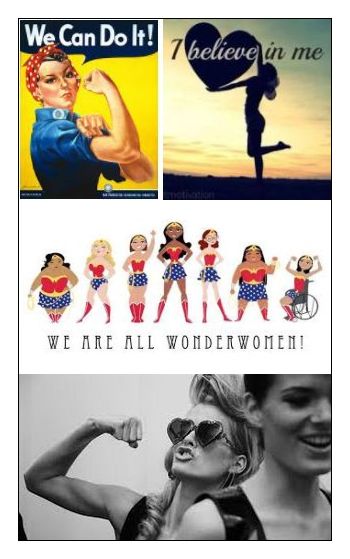
If you do a Google image search for ‘strong women’ you get photos like these:

strong

But truly, who is stronger, Mulan, or Lydia? Lydia hosted a home church. (Acts 16:40). She was a working woman, but she also prepared endlessly for guests, cleaning and readying the domicile so that the main concentration could be on studying the Word and fellowshipping with one another. Dorcas/Tabitha sewed endlessly for charity. (Acts 9:36). She made garments and sat among other women, edifying and speaking and loving. It’s harder to unfailingly love through the years than it is to swing a sword once or twice.

Jael swung a hammer and drove one tent peg for a few minutes. (Judges 4:17-22). Yet Leah was used by Laban her father and unpreferred by her husband, but submitted to them both, uncomplainingly raised 6 boys, and was faithful to God all her days. Which takes more strength, a few moments of physical exertion, of a lifetime of putting God first? Who is the woman of valor?

Hannah was barren, a devastating indictment in the culture’s eyes. She was tormented by her husband’s other wife. She asked for a son and vowed to give him back to God- and then did. Which takes more strength, the woman of Abel-Bethmaach who negotiated a peace treaty, (2 Samuel 20:16-21a), or Hannah? Could you give up your son and only see him once a year? Withstand insults and torment from a competing wife and turn only to the Lord for comfort and petitions? I know my answer. I’d complain and gossip and plot against the jealous other wife. Hannah showed strength of character not just in one Bible event like the wise woman of Bethmaach, but maintained Godly character for years. What woman is “stronger”?

Mary is to me one of the strongest women of the entire Bible. As a virginal teenager (probable age) betrothed but not yet connubially married, she was told that she would conceive and bear a child by the Spirit. Adultery was a crime for which people were stoned. Mary faced it and said to angel Gabriel, ‘let it be done to me as God wills.’ She gave birth in the cold and among animals. She lived with the whispers of adultery and attendant humiliation and doubts about her character all her life. She was told at His birth she would see Him die horrifically. And she did see her Son die horrifically. She was obedient, she bore it- and praised God through it. Isn’t that strength? Could you do as Mary did?

Our culture sees external fighting as strength. Feminists create women who appear in movies and shows, proficient in martial arts, wars, battles involving swords, knives, or guns as ‘strong’ women.  It’s the trope that’s constantly pushed in front of us. Rapunzel, Merida, Elsa, Wonder Woman, Rey, are all presented to us in entertainment as the external female strong ideal because they wield weapons. They’re called strong because of their derring-do. They’re lauded because they make men look foolish. But the REAL battle is not with swords, but is the internal fight against sin. Truly strong women wield the sword of the Word. (Ephesians 6:17). Truly strong women help their husbands, support and care for them, (Genesis 2:18; 20b) not make them look weak or foolish.

There are so many named and unnamed Godly women in the Bible who fought their own sin-nature and demonstrated quiet strength for years. Real strength is obedience to God, submission to our roles, and resisting sin always. Be strong, women, be strong.

Further Reading

Essay: Bad Examples of Women Pastors (But Great Examples of Godly Women)

Sermon: The Proverbs 31 Woman


Posted in discernment, Uncategorized

Questions: Preaching Christ from every text?, Muslim dreams, Female submission

Here are answers to some pressing questions I’ve seen asked over the last few weeks.

Should we preach Christ from every text? Answer: no. By Abner Chou, The Master’s Seminary, October 2017.

In essence, the Christocentric hermeneutic attempts to find Christ as the subject or topic of every text. It desires to show that every text relates directly to Christ. Which is why some say it is the only true Christian preaching. The problem ensues when the Christocentric hermeneutic applies that mindset to texts that don’t call for it.

~~~~~~~~~~~~~~~~~~~~~~~~~~~~

Are droves of Muslims coming to faith in Christ via dreams and visions? Answer: No. Gary Gilley explains by comparing to scripture, in this essay from 2016.

Jesus used a variety of approaches when speaking with unbelievers, depending on the individual or group (e.g., Nicodemus, Rich Young Ruler, Woman at the Well), but typically He identified who He was, confronted their sin, called them to repentance, called them to believe in Him, cautioned them to count the cost of discipleship, and admonished them to take up their crosses daily and follow Him. He didn’t state all those elements in every case, but collectively they constituted the thrust of His message

By way of contrast, Isa [Muslim version of Jesus] typically identifies who he is (or the dreamer instinctively knows who he is) and tells the dreamer he loves him and wants him (the dreamer) to follow him (Isa). Sometimes the dreamer is overwhelmed with a sense of love and peace just by being in Isa’s presence (which was never the case with unbelievers in the presence of Jesus). So the message that emerges is one of believing in Isa and following him apparently apart from the Holy Spirit convicting of sin, righteousness, and judgment (John 16:8).

~~~~~~~~~~~~~~~~~~~~~~~~~~~~

Do women have to submit to all men? How can we demonstrate that although the roles of men and women in the church (and the home) are very different, we are equal in value in the sight of God?

To answer your question, women are to submit to their husbands.

Wives, submit yourselves to your own husbands as you do to the Lord. (Ephesians 5:22)

All church members are to submit to their overseers.

Obey your leaders and submit to them, for they are keeping watch over your souls, as those who will have to give an account. Let them do this with joy and not with groaning, for that would be of no advantage to you. (Heb 13:17)

We are all to submit to God.

Submit yourselves therefore to God. Resist the devil, and he will flee from you. James 5:7.

We all have to submit to government. Romans 13:1-7; 1 Peter 2:13-17

Women do not have to submit to random males.

We believers are all of equal value in the sight of God. This value is from above, it is not attached to man-made standards of who has what role. We do not have to demonstrate this love, God already has.

So God created man in His own image; in the image of God He created him; male and female He created them (Genesis 1:27).

But God demonstrates His own love toward us, in that while we were still sinners, Christ died for us. (Romans 5:8).

wedding verse