For those of us who love God and seek to obey at all pints (but knowing we fail, so we repent and try again), the persistent and entrenched disobedience of some self-proclaimed Christian women is a puzzle to us.
But then again, we read our Bibles and see 1 John 2:4 which says, The one who says, “I have come to know Him,” and does not keep His commandments, is a liar, and the truth is not in him;
And we say, those who constantly disobey, (especially by preaching in church, which is a gross abomination to Jesus), who are unteachable, who reject correction, who preach a different gospel, who deny the sufficiency of the Bible by their direct revelatory stories and puffed up visions, who abandon their career of motherhood & children at home to pursue a career, whose fruit is only thorns and is bad…must not be saved.
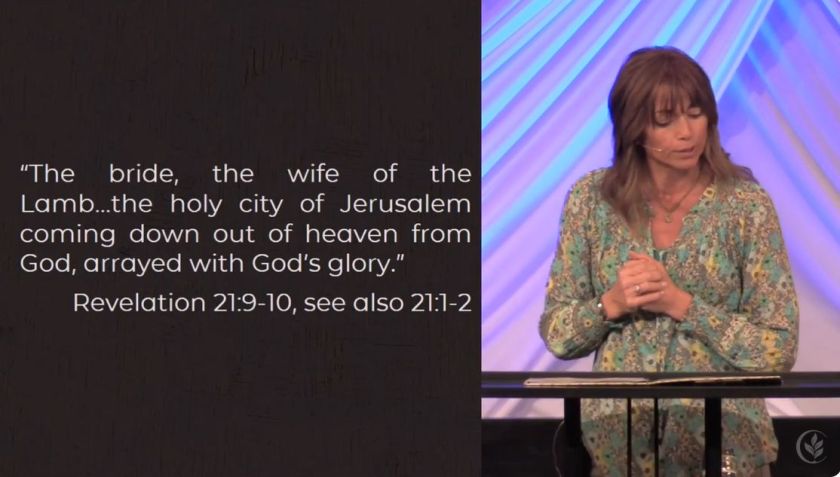
And then we receive pushback on every point above. So it’s still a puzzle when the Bible is so clear on certain points which are easy to understand and interpret. In the collage above are some of the more prominent women who stand behind a pulpit in a church they claim is Jesus’, and preach.
Because if they had the Holy Spirit in them, He would not allow them to continue on a consistent path of rebellion. He would correct them either by opening their eyes to the proper verses, or by some drastic measure to awaken them to their transgressions. Do you think the Holy Spirit is in a woman who, for decades, disobeys? Can a Christian have a seared conscience over their persistent and public sin? Dishonoring Jesus along the way and creating stumbling blocks for the weaker sisters?
No. He killed Ananias and Sapphira to demonstrate how serious He is about sin in the church. He sent 7 letters to the churches in Revelation to show how serious He is about His church.
Above we have- Beth Moore at St Timothy’s, Aimee Byrd at Covenant Church, Rev Nancy Frausto at Seminary of the Southwest, Sadie Robertson Huff at Auburn Community Church (only age 22!), Christine Caine at Life Church, Priscilla Shirer at Concord Church.
“women should keep silent in the churches”. 1 Corinthians 14:33-34.
Ladies, be discerning. Above all, be humble. It takes humility to say ‘I followed this or that woman for a while and invested in her, with my heart, money, time, or energy, but my investment in her was misguided. Let me learn to discern better, let me be pure in my approach to obeying Jesus, let me abandon that which makes me stumble on my walk and turn to “…whatever is true, whatever is honorable, whatever is right, whatever is pure, whatever is lovely, whatever is commendable, if there is any excellence and if anything worthy of praise, think about these things.” (Philippians 4:8).
If you see a woman standing at a pulpit on a Sunday morning at church service and open her Bible and preach to the congregation, she is in rebellion. Though satan is subtle, and hides his schemes secretively many times, this one is an easy spot. If the woman preaches consistently (not just a one-time mistake), she is in rebellion and you can learn nothing from her.
If you followed her for a while, just talk to Jesus about it. Repent and ask Him to give you better discernment. He will!
There is an easy way to tell if a teacher you like, follow, admire, or ‘learn from’ is false. I’m going to reveal this heretofore (not so) hidden way to detect false teachers. I could go on like the liberal theologians who say ‘this is a new method for interpreting’ or ‘I have a freshly discovered method…’ but I won’t. It’s been there all along. Here it is. Are you ready for this shocking message?
The one who says, “I have come to know Him,” and does not keep His commandments, is a liar, and the truth is not in him;” (1 John 2:4).
People who say “Jesus, Jesus” but sin against him constantly by living a life contrary to His commands, or teach falsely, do not have the truth in them. In other words, they are not saved.
They are revealed to be hypocritical. As John wrote in the verse above, a person cannot have an authentic relationship with Jesus and obstinately and consistently oppose His commandments with their actions.
The inward transformation of a person results in outward transformation (compare Matt 15:11). The work of Christ in a person necessitates them acting on His behalf, out of love (1 John 3:17). Source Faithlife Study Bible
Jesus made it very easy for us. Yet so many people say “but, but, but” and make layers upon layers of excuses.
“But she talks about Jesus all the time!” Of course they do. They talk about knowing Jesus right up to the moment they face Jesus and claim to His face that they know him. But they don’t. And he says so.(Matthew 7:22-23).
“But she does so many nice things!” I know. So did the Pharisees. Outwardly they did all the right things, seemingly. But Jesus said, “Woe to you, scribes and Pharisees, hypocrites! For you are like whitewashed tombs which on the outside appear beautiful, but inside they are full of dead men’s bones and all uncleanness.” (Matthew 23:27). Inside they were dead. They did not have the truth in them.
dead inside
“But she only to men preaches a little“. Sorry, but “whoever keeps the whole Law, yet stumbles in one point, has become guilty of all.” (James 2:10). Even a small sin, or a single transgression against God’s law, means they are guilty and due his or her just penalty.
“But lifestyle doesn’t count, and her doctrine is fine!” Sorry, but Titus 2:3-5 is only one of several standards for Christian women to adhere to a certain lifestyle. “Older women likewise are to be reverent in their behavior, not malicious gossips nor enslaved to much wine, teaching what is good, so that they may encourage the young women to love their husbands, to love their children, 5to be sensible, pure, workers at home, kind, being subject to their own husbands, so that the word of God will not be dishonored.” It is dishonoring to God to live otherwise. Men too. Lifestyle counts. So does character. Are they divisive? Slanderous? Combative? Unteachable? Then they are false.
“But you don’t know their heart!” Yes we do. In true Christians, “The Holy Spirit implanted in us a heart that can understand and love spiritual truth” says Tom Pennington in his sermon Recognizing False teachers. A false teacher is not saved and thus does not have the Holy Spirit indwelling his heart. You can detect what is in their heart because the Bible tells us these people are greedy, liars, deceivers, hypocrites, and more.
Jesus said, “By their fruit you shall know them”. Not ‘maybe, but you WILL know them. We cannot see their heart but what comes out of their mouth is what defiles them, and then we can see the evidence. Making a determination based on evidence (their fruit) is not ‘seeing their heart’. It’s making an intelligent and accurate assessment of their output.
Figs. Their fruit is rotten. EPrata photo
For example, didn’t the Pharisees make a show of praying, fasting, and worshiping? But we can see the evidence of their self-serving attitude in their lengthened tassels, announcements of fasting, pretentious prayers at the street corners, choosing the chief seats. Look beyond their show. See the fruit.
Barnes Notes says of the 1 John 2:4 verse, “Is a liar – Makes a false profession; professes to have that which he really has not. Such a profession is a falsehood, because there can be no true religion where one does not obey the law of God.“
Gill’s Exposition says, and the truth is not in him; there is no true knowledge of God and Christ in him; nor is the truth of the Gospel in his heart, however it may be in his head; nor is the truth of grace in him, for each of these lead persons to obedience.
Did you catch that reference to the heart? The truth of the gospel is not in his heart. “What is in the heart will emerge, and corrupt theology will result in a corrupt life. False teaching and perverted living are inseparable, and eventually will become manifest.” (Grace to You, “What are the Marks of a False Teacher?“)
We over-complicate things. Just go back to the Bible. A false teacher will claim to know Jesus but constantly, unrepentantly, and long term, be disobedient to His commandments.
On February 28 to March 1st, 2025, there will be a global live streaming event called Gather25. It is the new version of the ten-year-old IF:Gathering, founded by Jennie Allen. In the past, the gathering has been a local annual conference to which attendees pay to attend in person and listen to messages by speakers. The usual conference arrangement.
This year, the conference will be mostly virtual. It will be beamed live globally, according to the scant information at Gather25.com ‘s website, “For 25 hours, Gather25 is inviting believers across the world to pray, repent, worship, and discover how the love of Jesus is transforming the world through everyday people.”
from Gather25.com website
It is led by Jennie Allen, in America, of course, and “Teachers, Worship Leaders, Storytellers, and Prayer Guides” from around the world, such as Malaysia, Nigeria, Australia, Mexico and other locations. Some of the names leading and teaching and praying are familiar to us here in the US, such as Christine Caine, Sadie Robertson Huff, Rick Warren, Priscilla Shirer, Louie Giglio, Kari Jobe, David Platt, Jenn Johnson, Ann Voskamp, and Francis Chan. Others from abroad may not be familiar to us, such as Dr. Peter Tan-chi, Taya, Sinach, Patrick Fung, and so on.
From the website: “Through live-streaming technology, the Global Church will connect together for prayer, worship, repentance and commissioning. Each continent will host a portion of the 25 hours. There will be stories told of what God is doing on each continent. There will be powerful times of worship. And there will be a worldwide “sending out” of the workers to the harvest“.
Back in 2014 when the first gathering was held, there were no public announcements or advertisements, it was mostly word-of-mouth that people learned of its existence. Blogs and social media were the primary venues for alerting interested people. Further, the speaker list those first few years was a secret, you could not know who was speaking, thus a discerning person could not vet the person who may or may not be delivering truth. Despite the secrecy, tickets for that first in-person conference sold out in 42 minutes. Since then, IF:Gathering has proved immensely popular and has only grown.
From Gather25.com website
But even before the first actual conference in 2014, seven years prior, Jennie was going about her day, or night, she’s unclear on which, she “heard a voice from the sky”. Allegedly this ‘voice’ told her to “gather and equip your generation.” She was astounded by this and was flummoxed as to how to go about it because she was a stay-at-home-mom without resources, but from the beginning of when she heard the voice, according to her, she’d wait to see how ‘God’ would equip her.
If that anecdote Allen told at her first event in 2014 wasn’t enough to turn off a Christian woman, Allen’s premise for the ‘ministry’ is this: “IF God is real, then what?“
How can a ministry purporting to teach about God to women begin with supposing He may not be real?
From Gather25.com website. Notice it says ‘from every denomination, for anybody who follows Jesus…including a ‘denomination’ that is heretical? Mormons? Catholics? Orthodox? Dangerous! We should not be blindly affirming people outside of the faith as in the faith. Mt 7:21-23 applies!
Gather25’s stated “mission is to mobilize our world’s 2.5 billion Jesus followers to share the Gospel with the 5.5 billion people who do not know Him“. This is a good thing, right? Energizing people with prayer, focusing on repentance, commissioning them as Matthew 28 tells us to? Well, hold on. All that glitters is not gold. Just as with Allen obeying a voice from the sky and basing her organization on doubting God’s existence, most of the American teachers and leaders listed as part of Gather25 are false teachers. It has always been so even with the in-person IF:Gathering. It is a percolating vat of false-false-false teachers, doctrine, and music. And likely all or most the rest of them from other continents are false too.
And like in any horror movie, while you’re not looking, the evil monster grew tentacles and comes at you from different directions. IF:Gatheringgrew numerous ministry arms of ministry such as IF:Local, IF:Equip, IF Table, IF:TV, IF:Lead, and IF:Pray. Allen said the central hub of “making disciples” is a major part of all of these.
I have concerns about a woman-led, no male oversight, para-church ministry making disciples. That is the church’s job, to preach unto repentance, be baptized into a local body with male leaders, who observe your growth, decide when you are ready for ministry, then repeat, multiplying men (and women) for local ministry. Granted, some are set apart to leave the local church for missions or evangelizing, but not without having been home-grown, as they say. The Bible does not show any design or structure for making disciples that’s distinct from the local church.
The IRS tax forms for IF:Gathering state their mission- “To gather a new generation of women, equip them with the tools to know God more deeply and live out their purposes and unleash a movement to promote healing and reconciliation around the world.”
What IS global ‘healing’ and ‘reconciliation around the world’?
According to IF:Gathering’s first mission statement, we read this from their IRS tax return: We hope to prepare women around the world to know God more deeply and to live out their purposes by sharing comments and feelings about daily passages posted online.
Feelings.
Jennie heard the ‘voice’ one day 7 years prior to her first IRS tax return for her by-then incorporated company. She is listed a President/CEO from the years 2013-2020, working 40 hours per week. From 2021 to the present, she is listed as Founder, still affirming to the IRS she works 40 hours per week. Jennie has 4 children. When she first heard the voice and began her journey toward incorporation in 2013 and the first gathering in 2014, her children were under the age of 5. She was raising four young children AND working 40 hours/week as President and CEO of a growing company?
This should not be. The biblical standards for women are that their primary orientation should be toward the home, in the home, and focused on raising her children, not siphoning women from their own churches to promote ‘reconciliation around the world’.
I have written warnings about Allen and her IF:Gathering numerous times. Her premise is false, her organization competes with and siphons women away from the local church, it presents false doctrine by false teachers, and affirms a working mother lifestyle to which the Bible disagrees. The only thing Jennie Allen ‘gathers’ is false doctrine and making false disciples.
Recently Amy Spreeman and Michelle Lesley focused on the new Gathering25 in an episode on their podcast A Word Fitly Spoken, which I commend to you. Their research and warnings about this new version of IF are biblically based and well done, as always.
Shakespeare famously said “all that glitters is not gold”. We must be discerning. Just because an organization says the right words such as commissioning, repentance, prayer, Jesus, et cetera, does not mean they know the Jesus to whom the pray, teach about, or commission into ministry. And by the way, it is up to the local church to commission. How can a speaker in Africa commission some woman in Idaho for biblical ministry?! How does a leader in Australia know if some lady in Britain is ready to serve Jesus?
I remember 11 years ago Beth Moore led a “commissioning” at the Unwrap the Bible conference. I looked askance at that ‘commissioning’, too.
Please be discerning as to who you allow into your home, mind, and heart. I’d suggest to avoid this Gathering25, and focus on gathering at your own local church and serve there, and in your home, as Jesus designed it to be.
I was thinking about the difference between wisdom and discernment, since I read Proverbs 4 today. Which is a good set of verses to refer to again and again!
Wisdom is the result of applying knowledge through discernment. There is a difference in knowing things and being able to use the wisdom gained to advance your holiness.
Abigail- is a good biblical example of how wisdom gained and applied thru discernment. Abigail was the wife of a brute of a man, that’s the Bible’s description. He was Nabal, a name that means foolish. He kept sheep near Carmel and he wasn’t well liked by anyone, including his servants or his wife. David had asked Nabal for food to feed his men and Nabal refused. Incensed, David swore to kill Nabal. Abigail pleaded with David, at no small risk to herself, I might add, and her gentleness and discernment, tact and wisdom calmed David. He was impressed. SO impressed, he married Abigail when Nabal died. (1 Samuel 25:1-42; 2 Samuel 3:3).
Hebrews 5:14 reminds us that discernment is a skill and as such, we must train ourselves in it.
Hebrews 4:12 reminds us that discernment is precise. There should be no reply like, ‘well nobody’s perfect’, or ‘eat the meat and spit out the bones’. If we train in discernment, apply it with tact and wisdom, it will do its job to hearts and minds, and in so doing will glorify the Lord.
Romans 12:2 tells us that discernment not only helps us train but it helps us find the will of God, which nothing on this earth is more important.
1 Kings 3:9- Solomon knew there was nothing more important, discernment was the one thing he asked for when given opportunity by God.
Hosea 14:9- discernment allows the God fearer to walk uprightly and it is something that makes the transgressors stumble.
But HOW do we train in discernment? How do we gain it? As Joseph said to the cupbearer, baker, and Pharaoh, it is not in himself, but God delivers wisdom (in Joseph’s case, to interpret dreams, but you get the point). We obtain discernment, according to Sinclair Ferguson at Ligonier, from his article What Is Discernment?
How is such discernment to be obtained? We receive it as did Christ Himself—by the anointing of the Spirit, through our understanding of God’s Word, by our experience of God‘s grace, and by the progressive unfolding to us of the true condition of our own hearts.
You knew I was going to say that, right? That gaining wisdom and applying discernment comes from steady study in God’s word? THAT is where all truth, knowledge and beauty lies. Add prayer, a constantly transforming mind, add alert to occasions where discernment can be used, then repeat. Just as a boxer trains his footwork repetitively, just as a basketball player throws the ball to the basket in practice again and again, so we train in discernment repeatedly.
Discernment is a skill and as the verse in Hebrews 5:14 says, we must train. Have you been to the spiritual ‘gym’ lately?
Jennie Allen is the founder of the global conference for women called IF:Gathering. She founded it in 2013 based on a “voice from the sky” to use Allen’s words, telling her to equip and disciple this generation. IF:Gathering was born, “Inspired by the question “If God is real… then what?”
No. Romans 1 tells us that every single soul knows God is real, they just suppress the truth in unrighteousness.
I admire people who are committed to prison ministry. It’s important to heed the Lord’s commission to try and reach every tribe, tongue, and nation no matter where they are, in the 10/40 window of the hard and closed countries or behind bars where they cannot come to us in church so we must go to them.
But like everywhere, we need to be careful who we allow ‘in’ to our mind and soul. Women in prison are a captive audience, so it’s even more important to properly vet the speakers coming to teach. It is sad that the organization God Behind Bars chose Allen to minister to women.
Why?
Allen as mentioned above, she believes that disembodied voices from the sky are God. So, she believes in extra-biblical revelation. She also finds no worries in preaching to men, employs spiritual formation practices such as Enneagram, seeks unity at the expense of truth, and partners with terrible false teachers.
Below is a clip of Allen’s appearance at a max security women’s prison near Las Vegas. Allen wrote on her Instagram, “160 women attended in a maximum security prison in Las Vegas. 130 stood up to pray to receive Christ and we baptized 110.”
Mass conversion events like these always make me skeptical. These type of events are often musically manipulated, emotional events. Mass conversions are rare. Even Jonathan Edwards after the success of his piercing sermon Sinners in the Hands of an Angry God which sparked the Great Awakening, was skeptical of the genuineness of the people rushing to claim they were converted. As John MacArthur has said,
So you must enter, you must enter this gate, you must enter alone, you must enter with a certain amount of violence (difficulty), and you must enter naked, in a sense—with nothing in your hands. You can’t go through the narrow gate with your baggage; it’s a turnstile.
On the other hand, you could choose the wide gate, easily found, easily marked with all kinds of false teachers pointing you in that direction. Lots of crowds, no difficulty, no self-denial. Bring your baggage, bring your sin, bring your self-will. No repentance, no surrender, no submission to Christ. It’s the gate of self-indulgence. It’s for those who want a little religion, but religion that doesn’t ask them to give up everything.
To be fair, it’s just a clip, so I don’t know if she preached a good sermon or not.
But to be realistic, she has never taught rightly so…likely when Allen says “Colleges to prisons! What do they have in common? They are all DESPERATE for God” I must ask myself, ‘Yes, Jennie, but WHICH God are they hungry for? Because your God is not the God of the Bible.”
When she speaks in interviews about submission to elders in one’s church, for example, it’s only if they are not controlling. And only if it doesn’t impinge on her ambition to preach.
I do mourn the false theology Allen probably gave in that prison. I HOPE it was a message solidly exegeted from the Bible to women’s souls in holiness and rightly dividing the word. I HOPE so. But I fear it was not.
I wonder how many of those women’s repentance was real or not, how many will continue to walk toward holiness as the emotionalism of the event wears off. It’s a grief to know that these false teachers spread their brand of faux-Christianity to unsuspecting women.
Satan is active everywhere, roaming the earth to see whom he may devour. We need to be just as active. I know it seems that the numbers are skewed in the direction of satan, i.e. that there are many more of them than there are of us. But God in His power will save whom He wants to save and He has no difficulty doing it. Yes, it is disheartening to see satan’s activity but it is more than heartening when one genuine believer is converted, adding to the trophies of grace in Jesus’ kingdom for His glory.
While I genuinely doubt all 130 women in the event were truly saved, I know that the Lord would probably have saved one or two, or a few. And they will be a light and a witness to His grace in that prison while they live, and then forevermore.
Growing up in my town in the 1960s, there was a train track running along the shoreline. Behind the tracks there was a busy wharf with fishermen, moorings for recreational boaters, and shoreside homes and their children running about. There were a lot of train crossings, and many of them weren’t guarded by automatic gates and warning signals.
Sadly, we frequently read back then in our local paper of crossing fatalities, both vehicular and pedestrian. To my impressionable ears it seems like almost a weekly occurrence. It wasn’t that frequent but I do remember my father, who was on the town Zoning Committee for a time, talking about the Town Council’s plans to automate and/or close some of the crossings to reduce potential for fatalities.
I was recently made aware of a youth conference happening this coming January called the CrossCon. Speakers at this conference aimed at 18-25 year olds include David Platt and Kevin DeYoung.
Kevin DeYoung has been a solid pastor, preaching truth for a long time. David Platt has been on a downward trajectory ever since his seminal book Radical was published, since he affirmed dreams of Isa as a legitimate evangelization method, and is currently outed as a wolf in the recent documentary The Real David Platt:The Hijacking of McLean Bible Church.
What is DeYoung doing partnering with Platt at this conference?
If you ever watch any cooking competitions and a chef contestant mixes cheese and seafood, you know it never goes well. Those two ingredients simply do not mix. They taste terrible. Or like our friends the Brits say, “chalk and cheese”, meaning, two things that are completely different from each other.
The Bible calls it discernment.
It’s the same with conferences. Uniting with speakers or musicians of questionable spiritual doctrine dirties the more solid speaker and reduces their religious credibility. It also disobeys God. Such partnering presents a confusion to the less discerning or new in the faith. Last, such ‘unity’ presents a false unity.
We live in the age of “tolerance”. It’s not the tolerance you and I might have grown up with. The Merriam Webster dictionary defines tolerance as
sympathy or indulgence for beliefs or practices differing from or conflicting with one’s own, or : the allowable deviation from a standard
Christians can have sympathy for people who believe in different gods, but we can never indulge them in their wrong beliefs. And any deviation from the standards set by God’s word is not tolerable either.
There is a throng of false teachers whose fetish in teaching is grace only, usually focusing on “love” to an extreme, and never mentioning sin/repentance/wrath. After a decade or more of love-love-love, people have just as twisted understanding of what love is as they do the new version of tolerance. For women, the ‘love’ teaching even drills further down into weird teaching that Jesus is my romantic boyfriend, a type of eros love the Bible never describes.
That, in combination with a lack of ability or willingness to study and understand scripture, has brought forth a horde of folks ready to squash anyone whose understanding on these matters is biblically based on scripture.
This effect of the false teachers’ teaching was brought home to me as I was having conversations on social media about the need to separate from some professing believers at prescribed times is a matter of command and prescription. When you look at the myriad scriptures, there are actually quite a few situations when brethren are supposed to divide from other brethren.
This fact was met with incredulity, horror, and anger as one after another of these women, and some men, pushed back against this notion. Sharing the scriptures does not resolve anything. It often actually makes them angrier. Many simply ignore the shared scriptures and resort to calling names.
So I thought I’d do a study on what the Bible says about our associations with other people and when to leave a brother alone. This is hopefully to show that as with many other circumstances in our earthly life as humans, the Holy Spirit has given us wisdom and understanding about our associations, friendships, and fellowship.
While it seems “unloving” or dare I say “intolerant” to separate from a brother, there are sometimes good reasons for it, as we’ll see.
Unity at all costs? No.
In many cases, when discerning brethren warn about this or that false teacher, the person will say, “Did you go to him?” meaning, did you have a private conversation with that public teacher before you said anything negative about his or her public teaching? This refers back to Matthew 18. Going to a false teacher prior to critiquing his or her lessons is not necessary, because they are public teachers. They are outside your own church. The Matthew 18 process is church discipline for sinning Christians inside your church. FYI, the Matthew 18 process for sinning church members does end with separation, with an excommunication if the church member is unrepentant and uncorrectable.
It’s baffling to think that naysayers will cling to Matthew 18:15-17 in the first place (‘Did you go to him?’) but avoid the end result of that same process just 3 verses later, which is separation (You’re so mean and intolerant!’).
The individual person’s involvement in this Matthew 18 scenario is in step 1 and 2. When it gets to steps 3 and 4, it is the pastor’s duty to make this judgment call, and the individual sister’s responsibility to submit to the assessment of her leaders in church. The reason for this called-for separation; to prevent sin from spreading.
A little leaven leavens the whole lump of dough. (Galatians 5:9).
Separating from the sinning professing believer is sometimes necessary
In another case of called-for separation, we see in 1 Corinthians 5:9, 11 of Paul that,
I wrote you in my letter not to associate with sexually immoral people;But now I am writing to you not to associate with anyone who bears the name of brother if he is guilty of sexual immorality or greed, or is an idolater, reviler, drunkard, or swindler—not even to eat with such a one.
Paul expected the Corinthians to disassociate with all who said they were brothers but had a consistent pattern of sin, particularly sexual sin. In the culture of the day eating with someone was a sign of acceptance. Therefore if breaking bread with a homosexual, an adulterer, incestuous person, fornicator etc it was a sign that their behavior was accepted by Christians, who otherwise called for holy living.
Paul said that sexual sin was a sin that brethren were not to tolerate, even to the point of breaking fellowship, because as he explains the verses in 1 Corinthians 6:15-19,
The believer’s body is not only for the Lord here and now (v. 14), but is of the Lord, a part of His body, the church (Eph 1:22,23). The Christian’s body is a spiritual temple in which the Spirit of Christ lives, therefore when a believer commits a sexual sin, it involves Christ with a harlot. All sexual sin is harlotry. (John MacArthur Study Bible note.)
So, that’s pretty obvious why we are to separate.
Here is another example regarding the limits of Christian fellowship.
So when you are assembled and I am with you in spirit, and the power of our Lord Jesus is present, 5 hand this man over to Satan for the destruction of the flesh, so that his spirit may be saved on the day of the Lord. (1 Corinthians 5:4-5).
This is the famous case of a man sleeping with his father’s wife. The Corinthians were tolerating it. In today’s parlance, were they trying to “be loving”? Would they think it “mean-spirited” to ostracize this man from their fellowship? Paul pulled no punches with what they were to do.
And of course, we know not to associate with false teachers, as Apostle John instructed in 2 John 1:10 where even participating with the unrepentant sinner for the one who gives him a greeting participates in his evil deeds as verse 11 states
Turning a believer over to satan puts him back into the cold world to be on his own, apart from the care and support of Christian fellowship inside the warmth of the church, as John MacArthur explains in his commentary.
That person has forfeited the right to participation in the church of Jesus Christ, which He intends to keep pure at all costs. MacArthur, Commentary
As always, the goal is reconciliation. Making this shocking move would let the believing sinner know the limits of tolerance. It bears repeating, there are LIMITS to our tolerance for false teaching and for sin in professing believers
We have another example of separation in 2 John 1:8-11.
Here in this epistle John is giving limits to Christian hospitality. We are to separate from people who go beyond the teaching of Jesus. Do not even greet those who teach beyond what is written. Back then hospitality was important because there were no hotels, so traveling teachers lodged with believers.
John isn’t prohibiting people from sharing the Gospel with unbelievers, or even those in cults and false religions. We always want to evangelize. But do remain apart from and do not even welcome those false teachers, because welcoming them to your home affirms their teaching and gives them credibility. Housing and welcoming false teachers who labor in the faith (to deceive followers) would confuse people and offer a massive stumbling block.
In-person housing of itinerant o traveling pastors happens today, as we learned about Robert Morris who stayed over at his friend’s house when traveling, or Steve Lawson who lodged with hospitable friends also. But both are now outed rebels who we sadly learned were behaving in monstrous ways.
But most of us do not host traveling teachers any more like in the Bible days. ‘Do not welcome them into your house’ more often means do not simulcast their speeches into your home, or buy their books and bring them to a women’s study, and so forth.
Beth Moore reading the epistle at her church last week. False teachers love to be front and center, don’t they? But separation must occur even if it means declining a speaking invitation to a conference or church
This separation edict applies also to standing on a stage with obvious false teachers, as John Piper did with Beth Moore and Francis Chan at Passion conference 12 years ago. Or as Piper did with Mark Driscoll 2 years later. Despite hundreds of emails and internet concern that Piper was publicly platforming and supporting Driscoll, Piper unabashedly went ahead. Piper later even said he had no regret. Is there anyone that Piper will separate from? Apparently not. Piper said in his ‘no regret’ interview that he only wished he had been a better friend to Driscoll.
Biblically, a good friend is one who will obey God and separate to display the seriousness of the person’s sin and that there are biblical limits to tolerating it, in hoes that grace will come and re-infuse that person’s life with truth.
And now here is Piper scheduled to speak with Platt at CrossCon, where Platt has affirmed Isa dreams as an evangelizing method, and has been outed in a documentary as being a conniving, thieving, CRT loving liberal who excommunicates people who question Platt’s actions which were contrary to their church’s constitution. (More here).
It might seem “unloving” to say that there comes a point where we don’t offer the Gospel to a lost person but there are even limits to associating with the unsaved.
Do not give what is holy to dogs, and do not throw your pearls before swine, or they will trample them under their feet, and turn and tear you to pieces. (Matthew 7:6)
Jesus’ point is that certain truths and blessings of our faith are not to be shared with people who are totally antagonistic to the things of God. … Jesus did not give all of his teaching to everyone who happened to be listening. (Matthew 11:25, 11:11-13). … There will be times when the Gospel we present is absolutely rejected and ridiculed and we make the judgment to turn away and speak no more. MacArthur Commentary
We are given the same admonition in Matthew 10:14 where we are told to shake the dust off our feet and move on.
Even Jesus closed His public ministry at a certain point, after He had given sign after sign and miracle after miracle and taught all the days long, and many were still questioning, demanding, and rejecting. So He closed it down and privately taught only the believers and eventual apostles. After His resurrection He only appeared to believers.
One commenter gives a word of caution though,
But while the indiscriminately zealous have need of this caution, let us be on our guard against too readily setting our neighbors down as dogs and swine, and excusing ourselves from endeavoring to do them good on this poor plea. Jamieson Faussett Brown Bible Commentary
We have seen that with love and discernment, there are times to make a judgment call and separate from people who profess Christ but persist in unrepentant sin, and to separate from even the lost who consistently reject. Against the backdrop of the ‘lovey tolerance’ of today, doing so seems harsh and cruel to those who seemingly have no limit to sin. But do we today care more about the feelings of the unrepentant professing believing rebel than the Savior who died to give us power by the Spirit to slay those sins?
Look at Acts 5:13,
But none of the rest dared to associate with them; however, the people held them in high esteem.
The watching pagans respected the followers of Jesus, but feared to join them. Why? Were they scary? No, they were respected, not feared. The fear came because it was obvious that the followers were serious about sin and hypocrisy in the church. Ananias and Sapphira had just been killed dead in front of everyone in the church. The followers were obviously part of something that was holy and pure. Bystanders respected their witness and were counting the cost of joining. Only serious sin-slayers need apply.
Nowadays people are encouraged to follow Jesus and bring their sin with them.
We love our neighbor in the next pew, yes, but loving that believer doesn’t mean overlooking their sin. Sadly there are times and cases when separation from the believers we associate with is called for. With everything, do so cautiously, in love, and after study and prayer. Some of these situations are pretty clear and others are more gray. Err on the side of love, but remain strong in respecting biblical limits of associations and fellowship. We strive to be strong in both doctrine and life.
About the “Cut to the Chase” series: short, bullet point discernment pieces warning about various teachers. In the Cut to the Chase I include links at the end if you care to go to the longer essays.
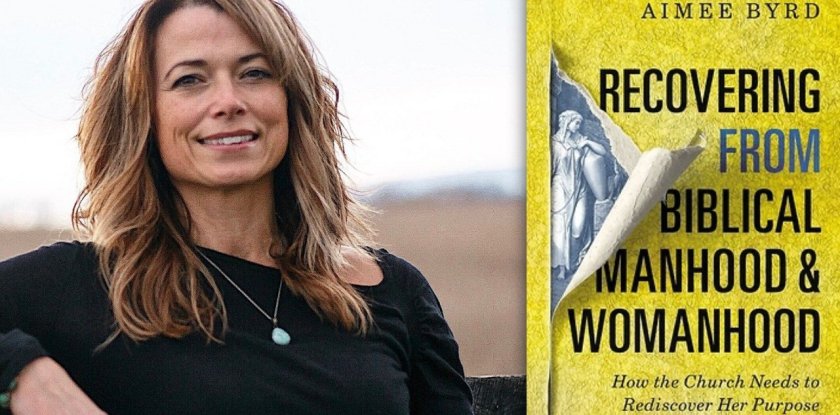
Aimee Byrd was a member of the Orthodox Presbyterian Church (OPC). She burst onto the scene in 2013 with her book The Housewife Theologian. She was selected to be co-host at the Alliance of Confessing Evangelicals along with intellect Carl Trueman and theologian Todd Pruitt, where she settled for a few years. She wrote more books and was a published essayist and became a sought-after speaker.
But slowly as Aimee began to espouse and proclaim her more feminist stances, alarm was raised about her from various camps in the faith. By 2020 Aimee was ‘gone’. Gone from the complementarian stance she’d once espoused, and openly rejecting biblical gender roles. Let’s cut to the chase-
Dr. Jonathan Master, seminary president and theAlliance Of Confessing Evangelicals’ editorial director publicly asked Aimee some questions about her then-new stance, which were posted after she had refused to answer them privately: Questions for Aimee
Aimee’s public response to Dr. Master: “Peeling Yellow Wallpaper” simply demonstrated her further entrenchment into feminism, a rebellious spirit, and a hardening to correction.
The Council for Biblical Manhood and Womanhood reviewed Aimee’s polemical and startling book containing her newly revealed feminist stance, here. They disliked it strongly.
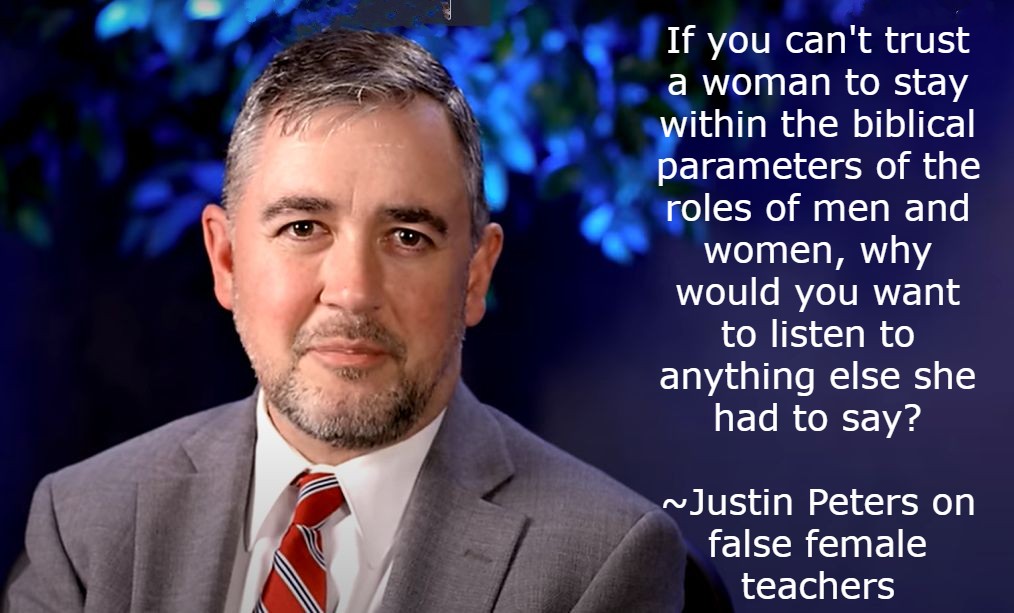
Women are not to preach. To do so despite clear instructions in the Bible shows a blatant disregard for the Jesus they profess to love. “If you love Me, you will keep My commandments” Jesus said in John 14:15. And as Justin Peters said,
3. Aimee is divisive and hardened to correction. This violates Proverbs 15:32, “One who neglects discipline rejects himself, But one who listens to a rebuke acquires understanding.”
In fact, Aimee knew she would be publicly excoriated for her preaching, saying at the opening of her sermon at Covenant Church,
I had to do some, you know, real soul work and prayer work to accept that invitation, not only for my own views on that issue, but just knowing ‘Hey, this is going to be on the internet’ and there’s going to be a public smearing of me after this…
And rightly so. But those with a seared conscience believe they are unjustly being smeared rather than being rightly rebuked.
Also Proverbs 1:7 “The fear of the LORD is the beginning of knowledge, but fools despise wisdom and discipline.”
Aimee left her denomination rather than submit to its teaching.
4. Aimee ordained herself so that she can officiate weddings.
In an essay on her blog titled “By the Power Vested in Me” Aimee declared her joy in being able to officiate her brother’s wedding after completing a quick course and obtaining a certificate of ordination. She obtained this certificate from American Marriage Ministries, which believes that “All people, regardless of race, gender, or sexual orientation, have the right to marry.”
AMA’s requirements to become an ordained minister are to fill out this form. That’s it.
But, Aimee says, “I have a high regard for the pastorate.” Obviously she does not. She said in her essay that when her brother asked her to officiate his wedding, she wanted to make sure “if I say no, I want it to be for good reason.” So she consulted culture and history. The Bible is not a good enough reason?
All Cut to the Chase essays here. Discernment on Joyce Meyer, Priscilla Shirer, Beth Moore, David Platt, Jackie Hill Perry, Lori Alexander (The Transformed Wife), Jen Wilkin
In part 1, I offered a short history of the “God told me” phenomenon (from my personal perspective). I gave some examples of highly platformed Christian celebrities who say they have conversations with God outside of scripture. Some of these ladies claim this constantly; and shockingly, very casually.
In this part let’s look at what hearing the voice of God means, if He is actually speaking outside of the Bible, and finally, how do we rebut the claim using scripture?
Most practitioners of God told me (GTM) would absolutely affirm that He speaks through scripture. But they claim He ALSO speaks individually to proffer advice for daily living, for decision making, or just for comfort, intimacy, or to have a chat.
People claim He does this through the “still small voice” of 1 Kings 19, visions, dreams, appearances, or whispers. Some even claim that it is necessary to be hearing from God outside of scripture in order to have a healthy, thriving intimacy in true faith. Others say that His personal advice is more of “an inner peace” that settled over them when making a decision or entering a crossroads.
As an aside, I’ve never been a fan of the inner peace. Some decisions are scary and actually roil the spirit with turbulence. In addition, the “inner peace” can be wrong- witness Jonah sleeping peacefully as he tried to go in the opposite direction of where God wanted Jonah to go. Some decisions may be costly, or painful for you or others. (Achan comes to mind). Of those decisions you don’t have peace about – but if your conscience is clear – then go ahead. It’s just not true that we have perfect peace all the time if we are interpreting an omen or sign correctly.
One must ask one’s self, “Why do I need to hear from God outside of scripture? What is lacking in my view of God and His word that makes me need to hear more?” Yet God already told us – in His word – that all scripture is sufficient.
All Scripture is inspired by God and beneficial for teaching, for rebuke, for correction, for training in righteousness; so that the man or woman of God may be fully capable, equipped for every good work. 2 Timothy 3:16-17. This is the go-to scripture for the GTM rebuttal.
Let’s take the verse bit by bit.
All means in the Greek, all, every part, the whole. God-breathed, meaning inspired from God. If it is from God, it is perfect. Beneficial means useful, profitable What is scripture profitable for? teaching (instruction), reproof (expose discipline), training (training of children, discipline), correction (setting straight), righteousness– what kind of righteousness? righteousness of which God is the source or author, but practically: a divine righteousness.
What else IS there? Scripture does all that for us! One would have to ask the GTM lady, which part is NOT sufficient for teaching? Which part is NOT beneficial? Which scripture did God make a mistake on and has to subsequently correct, if it isn’t all God-breathed?
So that man may be fully equipped for every good work.” (“entirely outfitted”) is used in the passive voice in 2 Tim 3:17, stressing the end-impact of Scripture on the receptive believer. Indeed the Bible thoroughly fits (“furnishes”) each believer to live in full communion with God” says Strong’s Greek.
Why is the GTM lady needing more than that?
From Jim Osman in God Doesn’t Whisper, about Priscilla Shirer:
She believes subjective revelations through whispers and impressions are an essential way we enjoy an “intimate and interactive” relationship with God. She writes, “I mean, come on, do you really think He loved you enough to die for you, but not enough to talk to you?”[47] Given that she promotes private revelations in her books, it wouldn’t be unfair to say she means something akin to this: “Do you really think God loved you enough to die for you and then just leave you with the Bible?!”
Indeed, people who say they hear from God are not only angering God with their lies, but are dismissing the very Word He breathed into existence for us, preserved for us, nailed to the cross for us, shed blood over, raised up martyrs to get to us, and gifted to us out of His love.
What a slap in the face is direct revelation! What it actually is, is an attitude that God’s word is defective because it doesn’t hold personally tailored instructions for us in how to live our life in Him.
Be diligent to present yourself approved to God as a worker who does not need to be ashamed, accurately handling the word of truth. (2 Timothy 2:15).
God’s word doesn’t contain instructions for how to an oil change in the car, but that doesn’t mean it isn’t perfect for instructing us in daily living. Scripture does that through principles, and also of course, its direct commands.
By this we read that there is a way to accurately handle truth, and intuit that there is a way to INaccurately handle truth. If we are to believe that people hear directly from God, we cannot test what they heard against scripture. And if this is so, there is no way to tell if someone is inaccurately handling truth.
“Proverbs 8 reminds us that wisdom is possessed by God and utilized and embedded in the depths of the Earth the heights of the mountains, the way things operate and even Transcendent over the dust by which man is Created from. So what does that tell us? That tells us that to make sense of anything in life and to rightly view everything in life you must have the scripture.” ~Abner Chau, ACBC, “The Sufficiency of Scripture, link below.
2 Peter 1:20 states that “no prophecy of Scripture is a matter of one’s own interpretation.” Peter explains in the next verse that scripture was given by the Holy Spirit through men. Since Scripture is of divine origin, its meaning is fixed by divine intent. There is one interpretation based on the One author’s intent for us to know.
You can rely on the word of God which is transcendent and certain, or impressions and voices. Garry Friesen said in his book Decision Making and the Will of God, “If the source of one’s knowledge is subjective, then the knowledge will also be subjective—and hence, uncertain.”
Friesen goes on, “For in nonmoral areas, Scripture gives no guidelines for distinguishing the voice of the Spirit from the voice of the self—or any other potential “voice.” And experience offers no reliable means of identification either (which is why the question comes up in the first place). . . . Tremendous frustration has been experienced by sincere Christians who have earnestly but fruitlessly sought to decipher the code of the inward witness.“
For some, wanting to hear the voice of God personally tell them things is out of a sense of earnest obedience, though, going about it wrongly. For many others, however, it is a pride issue, an attempt to elevate themselves above the run-of-the-mill layman in having something special or extra to say. They claim to have an inside track.
However we are all grace-forgiven sinners at the foot of the cross. If you are in Christ, you are on equal ground with everyone else.
“Scripture never commands us to tune into any inner voice“, says John MacArthur. “We’re commanded to study and meditate on Scripture (Joshua 1:8; Psalm 1:1–2). We’re instructed to cultivate wisdom and discernment (Proverbs 4:5–8). We’re told to walk wisely and make the most of our time (Ephesians 5:15–16). We’re ordered to be obedient to God’s commands (Deuteronomy 28:1–2; John 15:14). But we are never encouraged to listen for inner promptings.” ~John MacArthur
“On the contrary, we are warned that our hearts are so deceitful and desperately wicked that we cannot understand them (Jeremiah 17:9). Surely this should make us very reluctant to heed promptings and messages that arise from within ourselves.” ~John MacArthur
Conclusion:
Saying GTM violates the sufficiency of scripture, it takes God’s name in vain, sets up a two-tier system of hearers and non-hearers (a breeding ground for pride and resentment), it trivializes God, and it’s just plain wrong.
Please instead, read the word, pray to the Spirit to illuminate its meaning to you, and ask Jesus to rightly guide you into all righteousness. That is all we need, His word, prayer, and subduing the flesh.
If you want fresh revelation, turn to the scriptures with a fresh prayer coming out of your lips. Scripture never has an expiration date. The Spirit will illuminate the Bible to you.
If you reject the sufficiency of Scripture — or even if you simply look to supplement it with fresh, personal revelation from God — you cut yourself off from the only reliable source of God’s truth. ~John MacArthur
Further Resources
G3 Cessationist Conference Oct 3-5, 2024. More resources there! It is in conjunction with the Cessationist Movie.
The biggest topic I used to receive pushback on was naming a false teacher. People got angry when their favorite pet teacher was outed as false, thus, out flowed their invective. But lately the most pushback I receive is when I say that God is not speaking to us audibly or personally in these days. People are REALLY defending that one!
It’s sad how embedded the notion of God still speaking directly and audibly to people has become in such a short time. It’s particularly crushing to see that Celebrity women with large platforms are promoting this, and have been for years. Almost an entire generation now.
Is He whispering? Sending signs or omens? Should we seek intuitions, feelings, nudgings, whispers, small voices, and promptings that we might sense inside of our brain? Or even hear audibly?
Does God give new revelation today? Did He tell Beth Moore to go to a zoo and watch a napping baby koala together or build a snowman with Him? Did He respond to Sarah Young’s yearning “for more” than scripture by giving her so many personal devotions? Did He awaken IF:Gathering’s founder Jennie Allen one night and tell her to gather and equip this generation? Did He walk with HGTV’s Fixer Upper Joanna Gaines in her garden and tell her that He has a calling for her and that one day she will have a platform taking Magnolia further than she ever dreamed? Did Priscilla Shirer write an entire Bible study to teach us how we can prepare to “hear God’s voice and receive wisdom from Him”? These women have all claimed to have heard from God, AND put His alleged words in quotes.
A short history of “God told me”
I mention these particular women because they are (or were) not fringe, not in a cult, and not outside the bounds of orthodoxy when they first began claiming direct revelation. Oh, for years false prophets had been claiming God spoke to them, but they were never taken seriously. From around 90 AD when the canon was completed in the Book of Revelation to the 20th century, it was a given that the mainline church believed God’s new revelations were concluded. His final word was THE Word.
So why is it so rampant now?
top row l-r: Jennie Allen, Priscilla Shirer. Bottom row, Beth Moore, Sarah Young of Jesus Calling
Justin Peters addressed this issue at the Truth Matters conference in 2019 (one of many tmes he has addressed the problem). The title of his talk was “Hearing from Heaven: How to Know the Voice of God” He said-
I would submit to you that the resource, the book that is singularly most responsible for introducing charismatic theology into at least theoretically non-charismatic churches is Experiencing God by Henry Blackaby that came out in 1991. If you go back before 1991, at least in non-charismatic churches, almost everyone would have understood that God speaks to us through the Bible, we speak to Him in prayer. Today hardly anybody understands that; and I believe experiencing God is singularly most responsible for introducing these notions into non-charismatic churches.
I agree with this perspective. I remember when the book came to my former church. There was a huge buzz about it and immediately groups were formed to go through the study. We were told that it was going to change our life, make a huge difference in our walk, and so on.
Southern Baptist Convention member Beth Moore soon latched onto this notion that God speaks to us directly and from her earliest days promoted the idea through constant sharing of anecdotes of what He was supposedly telling her. Her very first “Bible study” called A Woman’s Heart: God’s Dwelling Place was published in 1995. Every page of the 200 page workbook (!) Moore asked the student to write on the blanks the answer to the following 2 questions: [underline mine]-
“At the conclusion of each lesson you will find two questions: 1) How did God speak directly to you today? 2) What is your response to Him?”
“By the conclusion of each lesson you should be able to identify something in particular that you believe He was saying directly to you.”
Due to Moore’s large platform and general respect (back then) for the Southern Baptist Convention’s orthodoxy, her idea grew tentacles among women’s ministries and went everywhere from there.
In 2004 Sarah Young’s book Jesus Calling was published, where young outright said she heard from God. This book also made a huge impact and picking up the baton from Moore, the notion began forging new trails into the heart and mind of conservative women. It was no longer a fringe notion, since Blackaby and Moore were in conservative churches, not Charismatic nor Pentecostal…nor were either of them being chastised for their presumption that Jesus chooses special people to whom he gives special revelation directly and apart from the Bible. Sarah Young’s book became a brand and a cottage industry.
in 2014 Jennie Allen held her first IF:Gathering, in which she related to her audience that God woke her up one night to tell her, or whisper, or both, she couldn’t decide exactly, to gather and equip this generation, something not even Paul was charged with.
And now it’s 2024 and everyone and their sister seems to say, “God told me”. Luke Smallbone of the Christian musical group For King and Country said this month,
From Smallbone’s Instagram reel
It was actually a sweet moment. He was saying he had felt far from God, hadn’t dived into the Word in a while, and was repenting of that. Great. But he continued, “I felt God say to me, ‘Luke’, and I listened, and I felt him say, “I’ve missed you”.
While the sentiment is true, God does love us and wants us close to Him, it is unhelpful for Luke to claim that he heard God personally deliver the comfort. It is just plain wrong to put it in quotes. Even though Luke said ‘I felt God was saying’ it is still wrong. Luke didn’t say “I went to the scripture and the Holy Spirit, through the word, comforted me”. No he alleges he had a conversation. Tellingly, he did not turn to scripture for comfort nor did he advise his followers to do so. He just said “When life gets a little hectic, listen to what God is saying.”
A little leaven leavens the whole lump of dough. (Galatians 5:9).
And “God told me” IS leaven.
In the next part, what direct revelation is (leaven) and isn’t (happening now), and how to respond to people who claim to have heard from Jesus.
FurtherResources
G3 is hosting the Cessationist Conference Oct 3-5, 2024. “Join us in October of 2024 as we carefully consider key biblical arguments for the cessation of the miraculous gifts of the Spirit.”





 the-end-time.org