Posted in prophecy, Uncategorized

Mail Call #6: What can you tell me about Australian Prophecy Teacher David Asscherick?

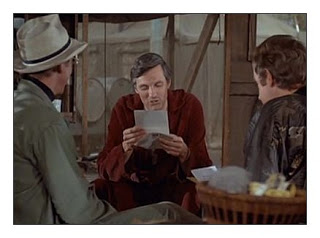
Mail Call was always exciting on the TV show M*A*S*H

Occasionally I receive email or Facebook messages asking questions about various topics and issues within the faith. Here is a question I received recently about a phenomenally popular teacher Down Under, David Asscherick. Continue reading “Mail Call #6: What can you tell me about Australian Prophecy Teacher David Asscherick?”

Posted in encouragement, Uncategorized

God is a gentleman … or is He?

A common rebuttal to the doctrine of God’s sovereignty in salvation by people who insist that man can “choose Jesus” is the statement,

“God is a gentleman and would never force Himself on anyone.”

This statement is supposed to support the notion that man can enact salvation for himself by ‘accepting Jesus’ or some such notion. God might make it available, enticing, even, but ultimately, we choose.

Not so.

I wrote about God’s sovereignty in salvation in 2015, rebutting the ‘God is a gentleman’ notion, here:

Is God a gentleman? The illusion of a Gentleman God

Today I want to look at other cases besides salvation where God is certainly not a ‘gentleman’ (a foolish statement anyway, because God is God and not man, even a gentle man).

So I ask the question, using reverse logic, if God is a gentleman and never forces someone to convert, then why is He not a gentleman in these situations?

The spirit:

So the God of Israel stirred up the spirit of Pul king of Assyria, the spirit of Tiglath-pileser king of Assyria, and he took them into exile, namely, the Reubenites, the Gadites, and the half-tribe of Manasseh, and brought them to Halah, Habor, Hara, and the river Gozan, to this day. (1 Chronicles 5:26).

The king’s heart is a stream of water in the hand of the LORD; he turns it wherever he will. (Proverbs 21:1).

The heart:

But the Lord hardened the heart of Pharaoh, and he did not listen to them, as the Lord had spoken to Moses. (Exodus 9:12).

for God has put it into their hearts to carry out his purpose by being of one mind and handing over their royal power to the beast, until the words of God are fulfilled. (Revelation 17:17).

The mind:

As Samuel was offering up the burnt offering, the Philistines drew near to attack Israel. But the LORD thundered with a mighty sound that day against the Philistines and threw them into confusion, and they were defeated before Israel. (1 Samuel 7:10).

God can and does intervene in man’s affairs. He governs man’s spirit, man’s mind, and man’s heart. He does so in man’s life, his salvation, and his death. God is God and there is no other.

I will extol you, my God and King,
and bless your name forever and ever.
2 Every day I will bless you
and praise your name forever and ever.
3 Great is the Lord, and greatly to be praised,
and his greatness is unsearchable.
Psalm 145:1-3

Posted in Uncategorized

Joseph is a picture of Jesus, Jesus is the true and better Savior

There are lots of “types” in the Bible. A fancier name for it is Biblical Typology. Biblical Typology is…

…a special kind of symbolism. (A symbol is something which represents something else.) We can define a type as a “prophetic symbol” because all types are representations of something yet future. More specifically, a type in scripture is a person or thing in the Old Testament which foreshadows a person or thing in the New Testament. For example, the flood of Noah’s day (Genesis 6-7) is used as a type of baptism in 1 Peter 3:20-21. The word for type that Peter uses is figure.

Another example of a type is in Hebrews 9:8-9: “the first tabernacle . . . which was a figure for the time then present.” The blood sacrifices of lambs prefigured or was a type of the actual sacrifice of the Lamb of God. And so on.

Ligonier defines typology as

Typology is based on the fact that God works in recurring patterns throughout history and says that a past event or person can prefigure or serve as a type of a future person or event.

Joseph, son of Jacob, is in many respects one of the strongest types depicting the Savior. At our church we are going through Genesis and the latter portion of all the books of Genesis detail Joseph’s story. Sold into slavery, descended into the pit (jail), Joseph interpreted the Cupbearer’s and Baker’s dreams and said to them as they were called to Pharaoh’s side, “Remember me”. Joseph was forgotten, … until the Cupbearer heard that Pharaoh needed someone to interpret Pharaoh’s dream. Joseph was called to the King’s side-

Then Pharaoh sent and called Joseph, and they quickly brought him out of the pit. And when he had shaved himself and changed his clothes, he came in before Pharaoh. (Genesis 41:14)

And Pharaoh said to Joseph, “See, I have set you over all the land of Egypt.” Then Pharaoh took his signet ring from his hand and put it on Joseph’s hand, and clothed him in garments of fine linen and put a gold chain about his neck. And he made him ride in his second chariot. And they called out before him, “Bow the knee!” Thus he set him over all the land of Egypt. Moreover, Pharaoh said to Joseph, “I am Pharaoh, and without your consent no one shall lift up hand or foot in all the land of Egypt.” (Genesis 41:41-44).

When all the land of Egypt was famished, the people cried to Pharaoh for bread. Pharaoh said to all the Egyptians, “Go to Joseph. What he says to you, do.” (Genesis 41:55)

Moreover, all the earth came to Egypt to Joseph to buy grain, because the famine was severe over all the earth. (Genesis 41:57)

Hopefully you notice the similarities. Joseph was reviled, sold as a slave, they put an iron fetter around his neck. (Psalm 105:17-18). He was in the pit, forgotten and ignored. One day in a moment, a twinkling, he was exalted and put in second place, only the King was higher than he. He rode in the second chariot. He was given a fine garment and his iron collar replaced with a chain of gold. All were told to bow the knee to Joseph, just as they will bow the knee to Jesus (Romans 14:11, Philippians 2:10). Joseph saved all in the land, all the earth.

The almost exact language was used by Pharaoh about Joseph as Mary had stated at the Wedding at Cana.

“Then Pharaoh told all the Egyptians, “Go to Joseph and do what he tells you.” (Genesis 41:55 NIV)

His mother said to the servants, “Do whatever he tells you.” (John 2:5).

Of course, typology only goes so far. Joseph gave grain (bread) to the people to save their life, but Jesus IS the bread of life. However, it’s interesting to note types as you read along to note types as you read along to think more deeply about what God is showing us through His word.  Here are some further resources for you on typology.

Ligonier: Typology vs. Allegory.
Carm: Dictionary- Type
GTY: Melchizedek, a Type of Christ

Posted in discernment, Uncategorized

“What recommendations do you have for Women’s Studies?”

A friend asked me to recommend some women’s studies for a new church plant. Though there are many fine Bible studies aimed at women or by women on the market, I don’t prefer them. First, these times if apostasy means women are especially vulnerable to it, and there are tons of false teachers out there of the female persuasion. Even solid teachers who have for decades developed good curricula of late have made a turn for the worse. (I’m thinking of Kay Arthur, among others). What is recommended today might be apostasy-ridden tomorrow when the woman creates her next curriculum. Though men are not immune from the same, it is a fact that satan attacks women with impunity. (Eve, symbolic Jezebel of Revelation 2, 2 Tim 3:6, etc)

J. Ligon Duncan and Susan Hunt do express the need for women’s ministry in the local church in their excellent book, Women’s Ministry in the Local Church. I would say if one is going to start a women’s ministry in a new church or resurrect a suspended ministry in an old church, to know why you are doing it and what the Bible has to say about it. Don’t have a women’s ministry just to have one. That’s where the Duncan book comes in. An excerpt from the Dallas Theological Seminary’s review of it states,

The book builds on five foundational themes taken from Paul’s pastoral letters: the Gospel, truth, sound doctrine, discipleship, and covenant. From these themes Duncan and Hunt identify five key passages, each emphasizing a different element that they feel is necessary for developing a healthy women’s ministry: 1 Timothy 2:9–15 (submission), 1 Timothy 3:11 (compassion), 1 Timothy 5 (community), Titus 2 (discipleship), and 2 Timothy 3:1–17 (Scripture). Each section offers a solid interpretation of the text, gives biblical examples of women who exemplify the meaning, and lists practical ways to carry out each element in a women’s ministry. Each chapter ends with testimonies from men and women who have implemented that principle in their own ministry experience.

The authors give five reasons why women’s ministry is important in every healthy evangelical church, and they warn of the adverse effects to marriages, families, and churches if women fail to have opportunities to meet and serve together.

I’m not opposed to all women’s ministries of course, but I’m advising care and thought into the creation of it and a watchful eye from the elders to ensure its solidity over time.

What I’d shared with my friend is the second reason I’m not all that excited about women’s ministries led by women is that all too often the ministry delves into topics aimed at women only, meaning, dating, courtship, marriage, and children. While they are important and worthy topics, first, it marginalizes single women by definition. Second, many times these topics are dealt with emotionally and not as theologically as one would prefer. I prefer theology for all ministries, men’s, women’s, and youth. Even children.

As for women, my specific target audience, if satan targets women then it behooves the church elders to formulate a plan for combating that attack. Grounding women in solid theology seems the best method. And yet women are often the last to be offered solidly theological studies in which to delve.

Even at that, the women who nod most vigorously during a solid theological sermon are often the first to gush about the latest Beth Moore study/Lysa TerKeurst book/Sarah Young devotional. That’s why I appreciated the chapter on Scripture in Duncan & Hunt’s book about women’s ministries.

There are three issues with the church ministries’ approach I’ve noticed over time, I’d mentioned in the conversation, and I’ll flesh out further here. (Twitter limits are so exasperating sometimes!) Women as well as men-

1) deny the beginning,

2) mock the end,

and

3) are biblically illiterate with most everything in between.

To ground women in the beginning, Genesis 1-11 studies help. I believe the following studies from Genesis would make a wonderful addition to the rotation of any women’s or men’s ministry. We must know what we believe and why. Genesis provides that foundation. If more youths, especially girls, were taught the basics that are contained in Genesis, perhaps when they reach age 20 they would not be Already Gone.

A good resource is Genesis 1 to 11- Before Abraham, Creation, Sin, and the Nature of God (MacArthur Bible Studies)

Another good resource for Revelation: This book promises blessing yet too many people fear it, especially women. Here is a booklet that will help, “Jet Tour Through Revelation” ($2 for the booklet or click here to read it free of charge)

Biblical illiteracy: For a new church, I recommend Justin Peters’ seminar “Clouds Without Water“, which discusses what discernment is and why it is important, as well as critiquing the word-faith movement;

or

This free booklet (free for a limited time as of July 2016) “Discernment: Spiritual Survival for a Church in Crisis“.

9Marks: Anything from 9Marks, an organization designed to help church plants and older churches become and stay healthy.

So that’s it. I might be somewhat if an anomaly, single and childless yet in my mid 50’s. I’m a Titus 2 elder woman who has nothing to say about marriage or child rearing except what the Bible says, not from experience. Perhaps that is why I focus on theology so much. Of maybe it is the Holy Spirit impressing on me that women, man, youth or child, you’re never too young or too old to study God, which is simply what theology is.

Posted in prophecy, Uncategorized

Spiritual Warfare: What is it?

Source: Pixabay

Many people are confused about what spiritual warfare is.

Is it marching around a neighborhood hollering at satan to get away?

Is it hands-on involvement in demon-deliverance activities?

Is it “claiming dominion” over dreams?

It’s none of those things.

The Bible shows us and tells us what spiritual warfare is.

Continue reading “Spiritual Warfare: What is it?”

Posted in encouragement, Uncategorized

Why I am grateful for apostasy

If you listen to old time radio pastors from the 1930s through 1950s and later, each one at some point, has said that this generation of church-going Christians or this era of Christianity is going downhill. Charles Spurgeon famously published an anonymous article actually written by his friend Robert Shindler (with input from Spurgeon himself) addressing a visible downgrade in an 1887 issue of his magazine, Sword and Trowel. That article, and its follow up, famously brought the “Down-grade controversy” to the public’s attention.

A hundred and fifty years before Spurgeon, Jonathan Edwards wrote about the devil’s triumph in squelching a religious revival in New England and a lack of religious affections that had become evident in the people.

We can trace the genealogy of apostasy back to Genesis 6, or to Genesis 3. So is it anything new to say that this generation of church-going Christians, that visible Christianity itself is downgrading itself in a compounding manner, faster and faster as we go? No.

Now the Spirit expressly says that in later times some will depart from the faith by devoting themselves to deceitful spirits and teachings of demons, (1 Timothy 4:1)

Continue reading “Why I am grateful for apostasy”

Posted in Uncategorized

Discernment Lesson: Comparing a Beth Moore & Martyn Lloyd Jones teaching on on the same verse

I recently did a discernment lesson on the most popular story Beth Moore tells, The Hairbrush Story. Chris Rosebrough has dismantled it sentence by sentence, and I pointed readers to that link, and then offered some of my own insights.

Because writing a discernment lesson about a false teacher takes so much time, which means I have to spend a lot of time wallowing in her muck, it necessitates a spiritual wash afterwards. I got curious about Moore’s teaching on Ephesians 3:19, which The Hairbrush Story was allegedly about. She focused on the part of the verse which promises the full measure of God (NIV), or the fullness of God (ESV).

and to know the love of Christ that surpasses knowledge, that you may be filled with all the fullness of God. (Ephesians 3:19)

I love Martyn Lloyd Jones’ sermons, especially on Ephesians, which I am going through anyway. I decided to listen to his treatment of the verse, the same verse, the one and only verse, and see what I could learn. After hearing Moore, I really did want to know more about the full measure of Christ it is a majestic topic. The phrase kept rolling around in my head. So I headed over to the Martyn Lloyd Jones (MLJ) Trust Sermons and listened so my mind could be cleansed from the mud and I could learn about Jesus from a credible preacher. I found the MLJ sermon All the Fullness of God

As I was pondering these things, a tweet came up from my twitter friend Landon Chapman at Entreating Favor website and Fire Away! podcast. Here it is:

This is very, very wise. I take his advice to heart.

I have never immediately compared a false teacher’s lesson on a verse to a credible teacher’s treatment of it. Of course I always compare the false teacher’s lesson to the Bible. Also, it’s not often I can find a false teacher having focused solely on one verse for the point of her lesson and then find a preacher who also preached on that exact sole verse. Comparing would be easy. Not uncomplicated or fast, but easy as in apples to apples. The Moore teaching was still fresh in my mind, as I listened to Jones’. I listened to MLJ’s sermon three times in fact.

I found that Beth Moore and Martyn Lloyd Jones, having taught the same single verse, came to exactly opposite conclusions. Totally at odds with each other. One says yes, the other no. One says black, the other says white. One says up, the other down. By the picture below, you can easily see which Bible teacher’s teaching I found biblical.

Lloyd Jones’ well known nickname; A nickname I dub Moore

Moore taught that the full measure of Christ in us believers is something we do not currently possess.
Jones taught that the fullness of Christ is something we currently do possess.

Moore taught that we could possess it IF we do certain things.
Jones taught that the fullness is something every believer already has as a gift.

Moore taught that the reason we want the full measure of Christ is so we can get blessing and power.
Jones categorically rejects this.

Moore taught that the fullness was a feeling.
Jones taught that the fullness was a doctrine.

Moore taught that we want the full measure of Christ so we can get something, power, love, blessing.
Jones taught that having the fullness of Christ is something we aspire to because Christ is the prize.

They even have a different summation point-

Beth Moore teaching the point of lesson: “I’ve got to know somebody totally loves me.”
Lloyd Jones says the point of the verse is: “It is the highest doctrine of all.”

I won’t go on, you can see it on this chart I made. I included the links from which I delved into each lesson, and the minute at which I heard each teaching so if you care to check it out yourself, you can. Below the chart are the two illustrations each teacher gave. Moore’s was with the measuring cup and Jones’s was about a bottle. They come to opposite conclusions. Moore believes the fullness has a quantity to it and Jones says the full measure is about the quality of it.

Note: MLJ preached the Ephesians series between 1957 and 1980. Moore’s hairbrush story was re-published on LifeToday in 2012 and that is where I reviewed it, though she had delivered it at least as early as 2011 and maybe a year or two earlier than that. The comments in the chart are direct quotes.

The illustration: Moore’s measuring cup and liquid.

With this visual prop, Moore was teaching that we do not possess the full measure. However if we do certain things in our own power and then ask for the fullness, Christ will give it AND “the power that comes with it”. In Moore’s interpretation, we are all 16 oz measuring cups and some of us have 2 ounces of the fullness and others of us have 4 ounces and others get to be filled up completely. A total filling is not something that will happen on this side of eternity anyway.

Lloyd-Jones teaches the opposite. He focuses on ton the vessel but on the quality of the filling. He said we already possess the fullness of Christ in us when we’re saved. He said the power of God (omnipotence) is an attribute of God that is NON-communicable. MLJ also said the fullness is not a quantity, but a quality. Why?

because the amount varies. It varies in the same man from time to time. It varies from one of us to the other, and yet we all can have the fullness.

Here is an illustration to show how you can possess the fullness and yet have more of it. Take a bottle and put it into the sea. You can fill it. Then you can say that bottle is full of the sea. Then you can take a great tank and do the same thing. They both have a fullness but they haven’t the same amount. And the sea is always the sea. The little bottle full of sea has just the same characteristics of the sea in fullness as the tank has.

The drastic difference between the two teachings comes from their view of Jesus and of self. Jones’ eyes are on Christ, Moore’s is on herself. With her, the fullness is something we get, power comes with it, we do things with this power, we get blessing, we receive affirmation of love, and we can have more of it. We, we, we. Her eyes are on self.

Jones shows us where our eyes should be. Not on the bottle, not on the amount that is IN the bottle, not on the tank, not on anything we might think we get, but on the SEA. It is what is IN us that matters. It’s all about Christ in us, His righteousness, His fullness. It has nothing to do with our works, our deeds, our emptying, our effectiveness, our requests, or anything whatsoever to do with us. He bestows His fullness of Himself to us on salvation. It is all about Christ.

For this reason I bow my knees before the Father, from whom every family in heaven and on earth is named, that according to the riches of his glory he may grant you to be strengthened with power through his Spirit in your inner being, so that Christ may dwell in your hearts through faith—that you, being rooted and grounded in love, may have strength to comprehend with all the saints what is the breadth and length and height and depth, and to know the love of Christ that surpasses knowledge, that you may be filled with all the fullness of God.

Now to him who is able to do far more abundantly than all that we ask or think, according to the power at work within us, to him be glory in the church and in Christ Jesus throughout all generations, forever and ever. Amen. (Ephesians 3:14-21)

[By Elizabeth Prata]
Posted in Uncategorized

Abimelech learned that sin is sin against God

We underestimate sin. We underestimate its power. We underestimate its effect. We underestimate its presence. And we certainly underestimate how God feels about it. Most of all, we underestimate against whom we are really sinning against.

The story in Acts 9 is familiar. The scene is the road to Damascus, and a man named Saul was breathing out threats and killing the Lord’s disciples. Jesus spoke to Saul, soon to be Paul, and asked in verse 4: “Saul, Saul, why are you persecuting Me?”

What? Saul was killing the disciples, not Jesus. Ah, but this verse shows us how intimately Jesus is involved in our lives, how tightly we are one, how, when you come against one of His children you come against Him. Saul was not just railing against the name of Christ in the disciples, but coming against Christ Himself.

for the union between Christ and his people is so close, that what is done to them is done to him. ~Gill’s Exposition
There is another scene in the Bible that displays a similar sentiment. It’s in Genesis 20. Abraham fears for his life and lies to Abimelech king of Gerar that Sarah is his sister so they won’t kill Abraham in trying to get to Sarah. Based on what Abraham said, Abimelech took Sarah.

Now comes the interesting part. Genesis 20:3 says what happened next was,

God came to Abimelech in a dream by night and said to him, “Behold, you are a dead man because of the woman whom you have taken, for she is a man’s wife.”

I wrote about one aspect of the verse a few days ago, here in an essay titled Beware of desiring a dream/vision, word from the Lord. God said to Abimelech, ‘Behold you are a dead man’?! The dreams and words from God the false teachers say they receive today are far from that powerful – and deadly. Anyway, Abimelech pleads his case. He replies inGenesis 20:4-5,

“Lord, will you kill an innocent people? Did he not himself say to me, ‘She is my sister’? And she herself said, ‘He is my brother.’ In the integrity of my heart and the innocence of my hands I have done this.”

God agrees with him. Abimelech had gone forward based on the information that was given to him, that Sarah was single. Given that he thought she was single, he took Sarah. However it was still sin.

Here is the climactic verse for the point of this essay:

God said to him in the dream, “Yes, I know that you have done this in the integrity of your heart, and it was I who kept you from sinning against me.” (Genesis 20:6). emphasis added.

There it is again. Abimelech learned the hard way that he was sinning. Worse, he learned that was sinning against God Himself. It didn’t matter that Abimelech hadn’t known Sarah was married. It didn’t even matter that Abimelech didn’t know God. Note that God did not say, ‘you would have been sinning against Abraham, the husband.’ Abimelech would have been sinning against Abraham. Ultimately though, all sin is performed against our Holy God. The King would be sinning against God if he had gone through with what he’d intended with Sarah. Here comes to mind the axiom, ‘Ignorance of the law is no excuse”.

Genesis 39:9 recounts a similar scene,

Joseph was being tempted to commit adultery with Potiphar’s wife. In resisting her, he said, “My master has withheld nothing from me except you, because you are his wife. How then could I do such a wicked thing and sin against God?” It is interesting that Joseph did not say that his sin would be against Potiphar. This isn’t to say that Potiphar would be unaffected. But Joseph’s greater loyalty was to God and His laws. It was God he did not want to offend. ~GotQuestions

Psalm 51:4 says “Against you, you only, have I sinned and done what is evil in your sight, so that you may be justified in your words and blameless in your judgment.”

All our sins are against a just and Holy God. Our sins might be toward a co-worker, a sibling, a passerby. But all sins are against God. We should keep this in mind.

No proof of the fullness of sin, after all, is so overwhelming and unanswerable as the cross and passion of our Lord Jesus Christ and the whole doctrine of His substitution and atonement. Terribly black must that guilt be for which nothing but the blood of the Son of God could make satisfaction. Heavy must that weight of human sin be which made Jesus groan and sweat drops of blood in agony at Gethsemane and cry at Golgotha, “My God, My God, why have You forsaken Me?” (Matt. 27:46). Nothing, I am convinced, will astonish us so much, when we awake in the resurrection day, as the view we will have of sin and the retrospect we will take of our own countless shortcomings and defects. Never until the hour when Christ comes the second time will we fully realize the “sinfulness of sin.” JC Ryle

We should keep this in mind also-

but God shows his love for us in that while we were still sinners, Christ died for us. (Romans 5:8)

Greater love has no one than this, that he lay down his life for his friends. (John 15:13)

Our knowledge of the sinfulness of sin and our resulting feeling of guilt is tempered by our love for Jesus who atoned for that sin. It is this love for Him that makes us want to mortify it in ourselves all the more. And so it goes, until the Day when we awaken, and see the true effect of sin, and say “what hath God wrought!” (cf Numbers 23:23)


[By Elizabeth Prata]

Posted in Uncategorized

One of God’s judgments on people are false teachers

Repost from March 2012 with some edits added.

For the time will come when they will not endure sound doctrine; but wanting to have their ears tickled, they will accumulate for themselves teachers in accordance to their own desires.” (2 Timothy 4:3)

“False teachers are God’s judgment on people who don’t want God, but in the name of religion plan on getting everything their carnal heart desires. That’s why a Joel Osteen is raised up. Those people who sit under him are not victims of him but he is the judgment of God upon them. And they want exactly what he wants, and it’s not God.” ~ Paul Washer

We often think that the verse means that people who sit under a Joel Osteen or a Beth Moore are hapless victims, fallen prey to the insidious destruction of the prowling false teacher. No. The verse clearly shows us that people are the agitators, they are their own catalysts for false teachers being raised up. The people “accumulate for themselves” teachers who match their passions.

Notice that the onus of the act is on the people, NOT the teachers (not that I am saying the teachers escape culpability). But the people who have passions search out and look for false teachers that match those passions, and “accumulate for themselves” these teachers. And the teachers are only too happy to comply, because there is money in it, the usual reason false teachers want to be false teachers. (2 Peter 2:3). Paul Washer said someone like an Osteen is not making victims of the people he IS the JUDGMENT upon the people! In other words, they asked for him, they got him!

So people who want affirmation of their emotions in mystical visions, seek out a Beth Moore. People who seek prosperity and are greedy at heart seek out a Joel Osteen. People who are focused on the body and healing seek out a Benny Hinn. And so on. Prideful people who want to think they are earning their own salvation seek out the Pope. They accumulate for themselves the false teacher…

Here is Washer, explaining the verse:

[By Elizabeth Prata]