
Posted in theology

Discernment Lesson, part 2: Is discerning really attempting to “know the heart”?

By Elizabeth Prata

EPrata photo

On February 2 I was interviewed by two wonderful ladies of the faith, Amy Spreeman and Michelle Lesley. Their podcast is called A Word Fitly Spoken, a great title for a podcast!

The result of the podcast is here, it was broadcast already and I’m humbled by the opportunity to speak of Jesus, doctrine, and discernment as our wide ranging conversation went.

Their website for A Word Fitly Spoken podcast is here, where you can catch ALL their podcasts! I recommend the podcast and also their individual efforts in the faith, Michelle’s website Michelle Lesley- Discipleship for Christian Women and Amy’s at Berean Research and Naomi’s Table Bible Studies for Women. You can also check out her archives from earlier work at aspreeman.com.

When I was preparing for the interview, I made notes. I wanted to post those (I’ve gained Amy’s permission) and flesh the concepts out a bit. This is part 2 of that post. Part 1 is here-

Discernment lesson, What is it, why do we need it? Part 1

Now on to part 2:

Is discerning whether a teacher is false really attempting to “know the heart”?

When I do a discernment essay, I am often chastised with an old chestnut of a comment that’s becoming practically standard for people without discernment to say. It is,

“You’re being a Pharisee, Only God knows the heart!”

I get that a lot. Is the practice of discernment really attempting to put ourselves in God’s place in knowing the heart of a person? No. As we looked at yesterday, discernment is advised, even commanded, in most New Testament books. The wisdom book of Proverbs continually lauds wisdom in spiritual matters. Evaluating a teaching and coming to a solid conclusion that it is profitable is an activity that brings glory to Jesus. Doing so and concluding that a teaching is unprofitable in no way attempts to “know the heart” of that false teacher.

But you know, the Bible DOES show us the heart. We can know the heart of a false teacher because the Bible tells us. If the teacher is speaking falsely, their heart is full of deceit, and from the heart flows life. (Matthew 12:34). Here are some of the verses which speak to a false teacher’s heart:

(Their hearts are) full of deceit. Colossians 2:8

(Their hearts are) filled with their own appetites. Romans 16:17-18

(Their hearts are) disguised with light. 2 Corinthians 11:13-15

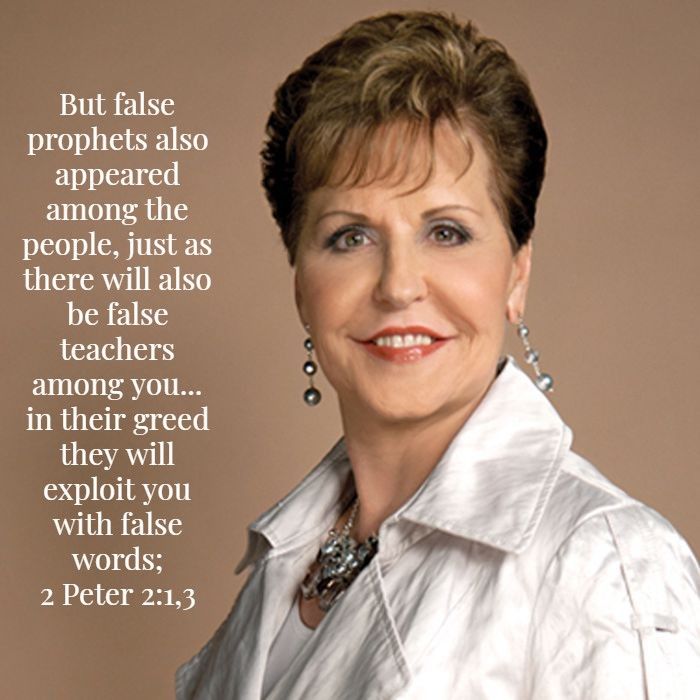
(Their hearts are) full of greed. 2 Peter 2:3

(Their hearts are) ravenous. Matthew 7:15.

(Their hearts are) inwardly full of sensuality. Jude 1:4

(Their hearts are) full of secrets, such as destructive heresies. 2 Peter 2:1

(Their hearts are) full of intent to exploit. 2 Peter 2:3

(Their hearts are) full of fleshly passions. 2 Timothy 4:3

(Their hearts are) puffed up with conceit. 1 Timothy 6:4

(Their hearts are) understand(ing) nothing. 1 Timothy 6:4

(Their hearts are) cunning and crafty. Ephesians 4:14

(Their hearts) serve the creature. Romans 1:25

EPrata photo

(Their hearts are) slaves of corruption. 2 Peter 2:19.

(Their hearts) deny the Master who bought them. 2 Peter 2:1

(Their hearts) prophesy lies. Jeremiah 23:26

So although we are not God and we can’t read the heart directly, we can know the heart to the extent the Bible speaks of it. Ultimately though, we evaluate the teaching that comes out of their mouth. If it is bad, avoid it.

Discernment doesn’t stop at evaluating

We are called to do certain things after discerning. Once we discover a teaching may be riddled with falsity, we have to ACT on it. Keeping your conclusion as head knowledge is no good. We are supposed to perform certain actions-

Now I urge you, brothers and sisters, keep your eye on those who cause dissensions and hindrances contrary to the teaching which you learned, and turn away from them. Romans 16:17-18. Mark & avoid. You can’t mark a teacher as false unless you discern that they are. Discerning means evaluating their teaching by comparing it to the Bible.

Matthew 7:15 says to  Beware of false prophets. We have to know who to beware of, and we won’t unless we have discerned their teaching as unprofitable.

2 Thessalonians 3:14 take note of those who do not obey and keep away

Ephesians 5:11 Have no fellowship with the fruitless deeds of darkness, but rather expose them.

Philippians 1:9–10 And this I pray, that your love may overflow still more and more in real knowledge and all discernment, so that you may discover (Greek- test, approve) the things that are excellent, that you may be sincere and blameless for the day of Christ;

Discernment isn’t just about doctrine, lifestyle matters, too!

Often times people who are undiscerning dislike when I write of a false teacher’s lifestyle. They say I should mind my own business, that how they live is of no concern of mine.

O, but it is.

It is important to discern their lifestyle as well as their doctrine. Those two cannot be separated. Why? First, in speaking in general of a Christian life, there are many commands for us who are saved to live a certain way. Some of those commands are extremely specific.

Secondly, there are lifestyle commands for Christians who are in eldership or desiring to be teachers or deacons. In fact, most of the qualifications for teachers or deacons are lifestyle oriented, not skill oriented. (1 Timothy 3) (Titus 1). HOW we live matters to Jesus, because we are supposed to be a light to the Gentiles with not only what we say but how we live. We cannot have a good witness if we are living like pagans. The same goes for teachers of the Word, even more so, since they will be judged more strictly.

In discernment, lifestyle matters as well. We know that false teachers are greedy (2 Peter 2:3). Displaying profligate wealth for its own sake indicates a heart of greed and likely false teaching to match.

The words disobedient, undisciplined, and ungodly are words that are often mentioned in verses with discernment.

For example, 2 Thessalonians 3:6 advises us to keep away from those who are living an undisciplined life. The word in this verse means unruly and insubordinate to God’s word. You do not want to follow a teacher whose teaching you like but lives as a mouthy, argumentative, divorced adulteress, now, do you? If a female teacher (or male) initiates a divorce without cause, can you believe the rest of what they teach, since they are already rejecting the verses about God’s standard for marriage? No. If they reject one part of the Bible, they are likely to reject other parts, and teach it so.

Finally, 1 Timothy 4:16 warns all of us to watch our life and doctrine closely. Not just doctrine, but how we live too.

Conclusion

So those are some ideas about discernment. I hope they are helpful in prompting you (and me too) to always treat discernment with respect, and to practice it. Seeing Jesus clearly is the goal of life, we cannot see him clearly and bring Him his due glory if we are looking at Him with mud on our binoculars. Pure doctrine helps us see him more clearly than false doctrine can.

Posted in theology

Discernment lesson, What is it, why do we need it? Part 1

By Elizabeth Prata

EPrata photo

On February 2 I was interviewed by two wonderful ladies of the faith, Amy Spreeman and Michelle Lesley. Their podcast is called A Word Fitly Spoken, a great title for a podcast!

The result of the podcast is here, it was broadcast already and I’m humbled by the opportunity to speak of Jesus, doctrine, and discernment as our wide ranging conversation went.

Their website for the podcast is here, where you can catch ALL their podcasts! I recommend the podcast and also their individual efforts in the faith, Michelle’s website Michelle Lesley- Discipleship for Christian Women and Amy’s at Berean Research and Naomi’s Table Bible Studies for Women. You can also check out her archives from earlier work at aspreeman.com.

When I was preparing for the interview, I made notes. I wanted to post those (I’ve gained Amy’s permission) and flesh the concepts out a bit. This is that post.

The Holy Spirit dispenses gifts as He wills (1 Corinthians 12:11) and it is my settled conviction He has given me a gift of discernment. I strive to employ this gift for the edification of the saints in my life and also online. Why? We are to use the gifts He dispenses for the common good. (1 Corinthians 12:7).

Let’s start with a quote from A.W. Tozer, who said,

“Among the gifts of the Spirit scarcely one is of greater practical usefulness than the gift of discernment. This gift should be highly valued and frankly sought as being almost indispensable in these critical times. This gift will enable us to distinguish the chaff from the wheat and to divide the manifestations of the flesh from the operations of the Spirit.”


What is Discernment?

Discern is from the Greek word diakrino. It means to separate thoroughly. Defined, it means,

The sound judgment which makes possible the distinguishing of good from evil, and the recognition of God’s right ways for his people. It is necessary for the understanding of spiritual realities and, on a practical level, for right government and the avoidance of life’s pitfalls.

Tool for Topical Studies. Martin Manser.

Types of Discernment

There’s the type of discernment every Christian should train up in, as this verse reminds us: But solid food is for the mature, who because of practice have their senses trained to distinguish between good and evil. (Hebrews 5:14)

Then there’s discernment as a special gift of the spirit, above and beyond the training one receives as a Christian without that gift, as this verse states, and to another the effecting of miracles, and to another prophecy, and to another the distinguishing of spirits, to another various kinds of tongues, and to another the interpretation of tongues. (1 Corinthians 12:10)


General Discernment verses:

The Bible is strong on discernment. It is important. Every book of the New Testament except Philemon warns about the dangers of false teachers and the potential destruction of the faith of a Christian who allows false doctrine into their life. It’s important. Discernment is not an extra. It is not negotiable. It is one of the most important skills any Christian can train up in.

Let no one deceive you with empty words, for because of these things the wrath of God comes upon the sons of disobedience. Therefore do not be partakers with them; for you were formerly darkness, but now you are Light in the Lord; walk as children of Light (for the fruit of the Light consists in all goodness and righteousness and truth), trying to learn what is pleasing to the Lord. (Ephesians 5:6-10)

Beloved, do not believe every spirit, but test the spirits to see whether they are from God, for many false prophets have gone out into the world. (1 John 4:1)

Focus on this verse for a moment, don’t let it slide by:

Do not be conformed to this world, but be transformed by the renewal of your mind, that by testing you may discern what is the will of God, what is good and acceptable and perfect. (Romans 12:2)

Only the sure word transforms the mind. False doctrine does not transform the mind. When you deliberately ingest false doctrine, for every gain you make in your forward walk, you go backward two steps. Strive with all energy to stay in the pure word and don’t allow it to be polluted with lies from false teachers. You can read a short treatment on this thought here.


Why else did God give us discernment?

God gave His word to us for two reasons: In addition to revealing Himself, it’s to show us the way to salvation and to tell us how to live post-salvation. God has standards for holiness, worshipful living, morals, etc., and if we are to worship Him properly, we need to know who He is and what He expects. I always go to the verse in Acts 1:11,

Which also said, Ye men of Galilee, why stand ye gazing up into heaven? this same Jesus, which is taken up from you into heaven, shall so come in like manner as ye have seen him go into heaven. [bold added]

We must worship this same Jesus as the one who had been revealed to us in the Bible. Not the liberal Jesus, not the boyfriend Jesus, not the woke Jesus, but this same Jesus. False teachers work hard to skew our vision of who Jesus is. How do we know if we are being fed a different Jesus? Discernment. What a tragedy it would be to get to heaven only to discover that you’d been worshiping, praying to, and learning about a different Jesus all along!

If you desired a job with, say, Coca Cola, a good job seeker learns as much as she can about the company so when you go into an interview you can demonstrate your interest and loyalty by sharing what you know about Coke. But if you’d instead listened to someone else tell about Coke and never checked their facts, and never read a Coca Cola annual report yourself, and in the interview you discover all the facts you proudly shared was from the company Pepsi- its competitor! Would you get the job? No!

How much more is learning about Jesus important?

Proper Discernment is not Judging nor is it Criticalness

Let’s separate discernment from “being critical.” We can use the word discern for the judgment that God encourages, and criticize for inappropriate judgments. And God DOES enocourage good judgment:

Judge not according to the appearance, but judge righteous judgment. John 7:24

Discerning is not judging unto condemnation. Discerning is judging (evaluating, deciding, determining) whether a teaching aligns with the Bible.

You discern all day long, in other words, evaluate. You discern that the tuna sandwich in the break room cafeteria looks little ragged and choose to eat the ham sandwich instead. You interview two candidates for a job and discern which to choose. You discern which rental application to accept. You sift through information all day and make choices as to which is good and which is not so good and you pick one.

How much more important is discerning which teaching to accept and which is not so good? These are the words of the King of the Universe, the Ancient of Days, the Sustainer of Worlds we’re talking about. Holy God!

Pure teaching is holy, false teaching is profane. False teaching will always have good teaching laced within it. It’s like a fake M&M. There’s candy coating on the outside to make it look attractive, but a worm on the inside to poison you. But you can discern a real M&M from a fake one. The candy coating isn’t as bright. The ‘M’ is not a capital. The Ampersand is crooked. You discern.

Paul even likened false teachings to gangrene, a disease that rots flesh by cutting off blood supply. (2 Timothy 2:17). It is incumbent on all of us to be able to spot the symptoms of a disease of false teaching before it spreads- for others’ health and our own. Most importantly for the name of Jesus Christ

Discernment is ultimately about Jesus.

Part 2 tomorrow!

Posted in theology

Can we eat the meat and spit out the bones?

By Elizabeth Prata

The Bible says “And do not be conformed to this world, but be transformed by the renewing of your mind, so that you may prove what the will of God is, that which is good and acceptable and perfect.” (Romans 12:2).

Only the pure word of God transforms the mind. Strive to keep your doctrine as pure as possible. If you are of the ‘eat the meat and spit out the bones’ type, please know that for every ‘bone’ you ingest you make your forward walk move backward. Bones are not pure. They do not help your mind transform. They pollute your soul.

Think of it this way.

Continue reading “Can we eat the meat and spit out the bones?”
Posted in theology

Discerning Joyce Meyer: reply to commenter

Elizabeth Prata

When I make dogmatic comments on various social media about this or that person being a false teacher, invariably I receive push-back. It usually consists of one of two opinions- either they use ad hominem to accuse me of being critical, judgmental, or otherwise something negative. Or, they say they had a positive experience following the teacher and due to the experience they had, it proves the teacher is true. A sort of ‘I know s/he isn’t false, because s/he helped me!’

Either type of comment displaying zeal without wisdom also usually include some old chestnuts recycled from undiscerning person to undiscerning person. They include, Judge not, don’t touch God’s anointed, did you go to her … and so on.

I say zeal without wisdom and undiscerning, because these commenters know just enough of what is in the Bible but not at all what it means.

Continue reading “Discerning Joyce Meyer: reply to commenter”
Posted in encouragement, Uncategorized

Why I am grateful for apostasy

By Elizabeth Prata

If you listen to old time radio pastors from the 1930s through 1950s and later, each one at some point, has said that this generation of church-going Christians or this era of Christianity is going downhill. Charles Spurgeon famously published an anonymous article actually written by his friend Robert Shindler (with input from Spurgeon himself) addressing a visible downgrade in an 1887 issue of his magazine, Sword and Trowel. That article, and its follow up, famously brought the “Down-grade controversy” to the public’s attention.

A hundred and fifty years before Spurgeon, Jonathan Edwards wrote about the devil’s triumph in squelching a religious revival in New England and a lack of religious affections that had become evident in the people.

We can trace the genealogy of apostasy back to Genesis 6, or to Genesis 3. So is it anything new to say that this generation of church-going Christians are weak or falling away, that visible Christianity itself is downgrading itself in a compounding manner, faster and faster as we go? No.

Now the Spirit expressly says that in later times some will depart from the faith by devoting themselves to deceitful spirits and teachings of demons, (1 Timothy 4:1)

Continue reading “Why I am grateful for apostasy”
Posted in dscernment, false teacher, joel osteen

Joel Osteen’s evil gospel

By Elizabeth Prata

The Bible tells us that there will be false teachers, wolves and heretics. They have malintent, in other words, they want to do you and your church harm. They aren’t simply misguided or temporarily misunderstanding kind people, they are predators out to get you.

They “will secretly introduce destructive heresies,” 2 Peter 2:1
They “distort the truth in order to draw away disciples after them”. (Acts 20:30b)
They are “rebellious people, full of meaningless talk and deception” (Titus 1:10b)
They “are detestable, disobedient and unfit for doing anything good”. (Titus 1:16b)

They have an agenda of purposeful deception, (Acts 20:30) and their motive for this deception is dishonest gain. (1 Timothy 6:5).

Continue reading “Joel Osteen’s evil gospel”
Posted in theology

Discernment Week: Wrap-up

By Elizabeth Prata

Here on The End Time I spent the last week writing and podcasting about discernment. I did my best to show what discernment is; both the gift some possess and the training up in that we all should do. I showed how discernment operates in the church, and gave some examples of people who do discernment well. Discernment is biblical wisdom applied in order to test what is good and hold onto it.

Here are all the essays:

Discernment Week - What is discernment and why do we need it?

Discernment week - How to Train in Discernment

Discernment week - Discernment isn’t easy and most times, you won’t be thanked

Discernment week - Who Does Discernment Well? Some Great Examples

Discernment week - God Takes Away Discernment

FURTHER RESOURCES

The End Time- This is why we don’t EVER ‘eat the meat and spit out the bones’

Port Royal Baptist Church- Gift #9, Discernment (.pdf) outline/bullet points. Helpful

Tim Challies essay- Gain Discernment in 5 easy steps

Phil Johnson sermon- The Spirit of God vs. The Spirit of This World

EPrata photo
Posted in theology

Discernment #5: God takes away discernment

By Elizabeth Prata

One of the biggest problems the church has, maybe THE biggest, is a widespread lack of discernment. It’s true that many have infiltrated the church who are not true converts, so it stands to reason they lack discernment. But many true believers have failed to hone their discernment through training (Hebrews 5:14). There’s another reason that the church may lack discernment besides infiltration of false believers, and the presence of true believers who haven’t grown much: the Lord.

He deprives the trusted ones of speech, And takes away the discernment of the elders. (Job 12:20).
Job 17:4
You have closed their minds to understanding; therefore You will not exalt them. (Job 17:4)

John Gill (1697 – 1771) was an English Baptist pastor, biblical scholar, and theologian who also wrote a commentary of the Bible. He says of the Job 12:20 verse in Gill’s Exposition of the Entire Bible -first Gill addresses the different ways that God takes away speech of the wise,

"it seems strange that he should remove the speech of "trusty" or "faithful" men, that speak the truth, and are to be credited and believed; and as the preceding words are understood of ecclesiastic persons."

Next, Gill shows the different ways God has taken away the faculty of man’s speech:

"He removeth away the speech of the trusty,.... Speech is proper to mankind, and a benefit unto them, whereby they can converse together, and communicate their minds to each other. This is the gift of God, he gives to men in common the faculty of speaking;
--to some the tongue of the learned to speak various tongues, either in an ordinary or in an extraordinary manner; and he that gives can take away;
--he that made man's mouth or lip can make it speechless, as he does at death; when he takes away man's breath, he takes away his speech; the state of the dead is a state of silence;
--and sometimes he does it while living, by striking dumb, as he did Zechariah the father of John the Baptist;
--as in the builders of Babel, he took away the speech they had, and gave them another;
--and sometimes he suffers not men to speak what they would, but what is contrary to their inclinations and desires, as in Balaam, who would willingly have cursed Israel, but could not. --end Gill Commentary

As for the lack of discernment in speech, the LORD takes it away in various ways, also. Gill continues in the second part of the Job 12:20 verse-

and taketh away the understanding of the aged; or "elders"; elders in age, with whom understanding, reason, judgment, counsel, and wisdom, by all which the word is interpreted, may be thought to be; yet all this God can take away, and does when he pleases, and they become like children in understanding.
--through the infirmities of old age their memories fail them,
--their reason is impaired,
--their understanding and judgment are weakened,
--they become unfit to give advice themselves,
--are easily imposed on and drawn aside by others as may be observed in Solomon, the wisest of men, when he was grown old. --end Gill

Why would do do this? Why would he strip away the wisdom and discernment of those mature believers who have acquired it? The Bible Knowledge Commentary by RB Zuck et al says,

"Also all people are under God’s control. He humbles counselors (was Job referring to his three friends?), judges.… kings.… priests, well-established officials, advisers … elders.… nobles, and the mighty. By stripping away their wisdom and power, God reveals His superior wisdom and power." 

The Lord God is in control of all things; the earth, universe, angels, demons, and humans. He is in charge of all humans’ intellect. He gives discernment and He takes it away. We don’t know if the dearth of discernment plaguing the church currently is due to a failure of humans to be biblically literate and train themselves, or God’s judgment on humans, a mixture of both, or something else entirely. Persistent, unrepentant sin will impact a person’s ability to discern, certainly.

One thing we know for sure, it was Paul’s fervent prayer that the people would grow in discernment. I think the old adage “Use it or lose it” applies to all of us now and at all times!


FURTHER RESOURCES

This is a super helpful, practical lesson on how to begin honing your discernment, by Sharon Lareau. “Learn Discernment and Stay Safe from False Teachings

Wretched: Rules for Discernment

The Gospel Coalition: 10 Habits of Discerning People

The End Time: Chewing the Meat and Spitting the Bones- Is this Biblical?

Posted in theology

Discernment #4: Who does discernment well? Some great examples

By Elizabeth Prata

In my continuation of “Discernment Week” here at The End Time, today we look at some examples of people using their gift of discernment for the edification of the saints and do it well.

You should look for people in your church who are noted for having a nose for discernment and have a long track record of grace-filled teaching of discernment helps that are accurate

The Spirit dispenses the gift to people for the help to the local body, and there should be someone in your church who can help you train in the skill or to answer questions about certain issues/fads/teachings that arise if they are starting to impact you.

Continue reading “Discernment #4: Who does discernment well? Some great examples”