Posted in discernment, Uncategorized

What the devil cannot do

martyn lloyd jonesHere is Martyn Lloyd Jones with a few thoughts on something the devil cannot do.

Putting God first…herein lies the stifling of the passions that defeat us. Herein lies the quietness that calms our tumults. Herein lies the peace of knowing that our sins are forgiven and forgotten by God and so they can be forgotten by us.

When men seek things before they seek God, they throw themselves into what has come to be known as the ‘rat race’. An earlier phrase described it as ‘the pace that kills’. But it was never the pace that killed, it was the fear of tomorrow that made the pace necessary.

The devil has never praised God. He can make people happy. But whisky can make people happy. The fact that a thing can make you happy doesn’t prove it’s right. There are drugs that can make you happy. You see, the devil can come, and he can counterfeit all these things. If a man says “I am happy”, it doesn’t prove he is a Christian. It can be counterfeited. There is only one thing I know of that the devil cannot counterfeit: praising God. The devil never does that. Never. The devil has made anybody praise God.

He can counterfeit a belief in God. But that’s a very different thing. The Apostle James tells us in his epistle, ‘the devils also believe, and tremble.’ The devil has never praised God. He can persuade people that they believe in God. If it suits his purpose he can transform himself into an angel of light, and encourage people to believe in God and to be religious. He is doing that to large numbers today. But there’s one thing he’s never done and he can’t do it, and that is to make people praise God. He can give you a counterfeit intellectual interest. He can give you a counterfeit interest in God’s people. A counterfeit interest in communion service. A counterfeit interest in prayer, a counterfeit joy and gladness. He has never made anybody praise God. Why? Because he hates God.

But these people [in Acts 2] were praising God. That is why I say in many senses it is the ultimate test of the profession of the Christian faith – praising God! My friends, are you praising God? I’m not asking if you believe in Him, or if you try to worship Him. I’m not asking if you make requests of Him. I’m asking one thing only. Do you praise God?

Sermon- Praising God, Acts 2:46-47.

It occurred to me that this test would apply to a false teacher. Someone who teaches about God but is not saved, (2 Timothy 3:5) and who is the son of the devil will never praise God. Sons of the devil, those who are energized by satan and are in bondage to satan, cannot praise God because the devil cannot praise God. His minions can’t either. Use it as a test, as MLJ noted. Not that a false teacher can’t say the words, though oftentimes they can’t, they choke on them. They might say off-handedly, “Praise God it rained!” but a life lived in praise to Him, sincere, thorough, zealous praise, will never pass their lips. Look for it…or in this case, the absence of it.

Posted in discernment, Uncategorized

Why fearing the Lord is a good thing; cultivate it

How would you react if you were suddenly face-to-face with God?

That is the question John MacArthur asked in his blog series adapted from his book Worship: The Ultimate Priority. If one relied solely on the anecdotes of the many false teachers who claim to have personally been in in His presence, one would think that coming face-to-face with God was either as normal an occurrence as running into your neighbor at the grocery store, or as casual as a backyard BBQ.

Whatever happened to the fear of God? is the title of MacArthur’s blog essay and it is a great question. In the Bible, even those men who were in right standing with God were terrified, cowed, and humbled at meeting Him in person. For example, MacArthur wrote,

in Genesis 18 Abraham confessed in the presence of God that he was dust and ashes. Similarly, Job said after his pilgrimage, “I have heard of You by the hearing of the ear; but now my eye sees You; therefore I retract, and I repent in dust and ashes” (Job 42:5–6). Ezra 9 records the high priest’s profound sense of shame as he came before the Lord to worship. Habakkuk had a vision of God’s power and majesty, and his knees began to knock: “I hear, and my body trembles; my lips quiver at the sound; rottenness enters into my bones; my legs tremble beneath me” (Habakkuk 3:16 ESV).

Isaiah said he was “undone”, or “I am ruined”. The Hebrew word in that verse is damah and it means to cease, cause to cease, cut off, destroy. The flesh of sinful man, even a justified man declared righteous, is immediately reduced to a metaphorical pile of ashes when contrasted in person to the august glory of the Ancient of Days. The Fear of God article gives many more examples of this contrast between man and God, and expands the verses to illustrate the spiritual importance of the fear of God.

Yet in our day, according to so many false teachers who claim direct revelation, we have the sweet and sensitive voice coming out of the celestial realms to envelop women with a warm, misty romance. Moore says He calls her “honey” and “babe”, and they go on a play date together to the zoo. They “have a blast”. Joanna Gaines said she talked with Jesus in a garden, and she recalls, “I remember hearing God say, ‘Joanna, there’s going to come a time when I’m going to say for you to go, and I’m going to need for you to step out and go.'” Jesus has needs? In the Bible He commanded. Gaines’ 21st century language is a giveaway the entity she walked and talked in a garden with was not the Jesus of the Bible. According to Kim Walker-Smith, she was personally visited by a Jesus that flailed His arms and ran yelling Woo-hoo! because He is so happy to be in HER presence. Smith said she fell into His lap, and she was so self-absorbed her two questions she asked the LORD OF THE UNIVERSE that were about herself.

Whatever happened to the fear of God? Let MacArthur’s question echo in your ears, mind, and heart.

The book by Jerry Bridges called The Joy of Fearing God is a good one for people to read today. The book’s synopsis says,

For most of us, fear is something we try to avoid. And fearing God hardly sounds like an occasion for joy. But Jerry Bridges shows how the fear of the Lord is actually the key that opens the door to a life of true knowledge, wisdom, blessing, and joy.

None of the visions of God presented in His own Word present a relaxed disciple sipping lattes at the zoo together or El Elyon running around yelling woo-hoo. Those visions and claims are irreverent in the extreme. The true visions in His word show the majesty, holiness, and power of a God who chooses to love us despite our depraved state. Bridges says,

There are more than 150 references to the fear of God in the Bible. While the majority of these occur in the Old Testament, there are a sufficient number in the New Testament to convince us that fearing God is indeed an attitude of heart we should cultivate today.” ― Jerry Bridges, The Joy of Fearing God

That worshipful cultivation is urged in MacArthur’s essay as well. He ended his essay by saying,

Peter “fell down at Jesus’ feet, saying, ‘Go away from me Lord, for I am a sinful man, O Lord!'” (Luke 5:8). All he could see was his own sinfulness when confronted with the power and presence of our holy God. We need to cultivate that same attitude, remembering that we not only live our lives before the eyes of a holy God, but that His Holy Spirit dwells within us. Being ever mindful of God’s presence is vital if we’re going to live worshipful lives that glorify Him.

The life of the true disciple who worships in reverent fear is one that is drenched with joy. The irreverent false teachers’ attitudes of being relaxed and unconcerned in His ‘presence’ is a dead giveaway that the personage they are ‘meeting’ is not our Holy God. MacArthur tells the story of a man who told him that Jesus comes into the bathroom while he is shaving and puts His arm around him, which helps the man’s bursitis.

I thought, “Do you keep shaving? If you can keep shaving, then it isn’t Jesus. If holy God came into the bathroom while you were shaving, you would fall to the floor so hard that you would kill yourself!” It is an awesome thing to confront an infinitely holy God!

It is an awesome thing to be confronted by an infinitely holy God, even though we believers are His children! Live worshipful lives that glorify Him, and it begins with a reverential fear of who He is.

Posted in ebook, Uncategorized

Announcing my new eBook: Encouragement In Grace

I am happy to announce that I have written an eBook which is now for sale at Amazon! It’s titled “Encouragement In Grace: Devotions & Inspirations for Christian Women” by Elizabeth Prata. The book is the first in a series of three I’ve written. The second two, Prophecy In Grace and Discernment In Grace will be published later.

Jesus saved me, in grace. His grace is sufficient, His grace sustains me, and it’s His grace that is so amazing. So I named the series In Grace as a tribute to Him who is grace personified.

I pray the essays in the eBook shine His glory back onto Him.

Thanks!

Cover photo by EPrata, cover design by Liliana McAndrew

Posted in encouragement, Uncategorized

Children are a reward not just for parents

Behold, children are a heritage from the LORD, the fruit of the womb a reward. (Psalm 127:3)

Children are a blessing and the verse above refers to children born to biological parents.

Many verses speak about children. The Bible makes it equally clear that all children (especially orphans) are to be regarded as vulnerable and to treat them kindly. Jesus holds them in high regard. They are to be trained up in the way they should go. They should not be provoked. They should be unhindered in their approach to God and His laws. They are to be protected else a millstone hung around the neck of one who causes them to stumble. They are a crown to the aged and streets full of happy children playing are a sign of God’s favor. They are an answer to prayer. Orphans (“the fatherless”) are objects of care and concern.

With all the attention given children, we know that the Lord cares for them. In thinking of kids, we often restrict ourselves to thinking of the family. I propose that anyone who works with children has a God-given privilege to adhere to the Bible’s verses regarding them, as well. The children are a heritage for the parents, but also for the teacher, the foster mother, the nanny, the social worker, the nursery school administrator, the playground monitor. Each and every child is a gift from the Lord, to each person the Lord has assigned to watch over them.

Then Esau looked up and saw the women and children. “Who are these with you?” he asked. Jacob answered, “They are the children God has graciously given your servant.” (Genesis 33:5).

Children are a gracious gift, If you work with children in any way, you are blessed.

Posted in prophecy, Uncategorized

The pro-consul believed in the doctrine, not the miracle

Believe in the teaching of the Lord Jesus Christ, not in the miracles.

Miracles happen every day. God is always at work, and even now, Jesus is working. One miracle is that God revives dead hearts and makes new creations out of unbelievers. Another is the miracle of the very earth upon which we stand. (Romans 1:20, Jeremiah 51:15, Job 12:7). Healings by God also occur, as families affected by them can attest.

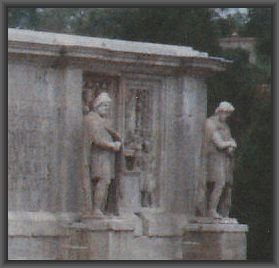
rome forum marble
EPrata photo

The pro-consul was astounded. Acts 13:12 says. In the New Testament days immediately after Jesus’ resurrection and ascension, the Apostles were given power to perform miracles. One of these was the miracle that occurred by Paul in front of the pro-consul Sergius Paulus, a man of intelligence, so says Acts 13:7. Paul confronted a false prophet, a magician called bar-Jesus, and pronounced him false and then the power of God descended and caused the false prophet to go blind on the spot. The Pro-consul saw this happen.

Then the proconsul believed, when he saw what had occurred, for he was astonished at the teaching of the Lord. [underline mine]

Did the pro-consul believe in the miracle? NO. He believed the teaching of Jesus Christ. He understood the miracle was authentic, but it was the teaching in which he was moved.

The MacArthur Commentary says,

The missionaries’ victory was not only negative, as seen by the defeat of bar-Jesus, but also positive. Satan’s emissary had been defeated and silenced, and now Paul and Barnabas were about to win the battle for Sergius Paulus’ soul: … as so often is related in Acts, God used a miracle to confirm the authenticity of His messengers, and the truth of His word. Significantly, it was the teaching of the Lord, not the miracle he had just witnessed, that prompted the proconsul to believe. He was amazed at the teaching of the Lord, not at the miracle.

Remember, doctrine matters.

———————————————

Further Reading

Why Doctrine Matters by Albert Mohler

Doctrine is, quite literally, the teaching of the church–what the church understands to be the substance of its faith. It is no substitute for personal experience

Why Doctrine Matters, by Ligonier

Doctrine is Biblical. Our English word doctrine is derived from a Latin word, doctrina, which means, “that which is taught.” In Christian usage, it refers to Christian teaching about Scripture, God, man, Christ, salvation, church, and the end of all things.

Doctrine Matters: Eternal Life Depends on It, by Kevon DeYoung

If you are interested in abiding with Jesus and abiding with the Father, you will care about the truth abiding in you. We will not know God unless we know the truth. Which is another way of saying: You do not get to heaven without theology. The promise of 1 John is that if the truth abides in you, you abide in God and you will receive what is promised to you: namely, eternal life.

Posted in discernment, Uncategorized

Beware using Bible Gateway

I have several go-to Bible sites on my laptop. One is BibleHub, which contains the entire Bible, a lexicon, commentaries, maps, Strong’s, parallel views of verses, and much more.

I also have in my bookmarks BibleGateway, (BG) which has the Bible of course, devotionals, a helpful list of all the named and unnamed men and women in the Bible with short bios, and much more.

BibleGateway is a favorite of many, and it’s a favorite of mine, as well, which is why it’s hard to write this. I’ve noticed both on BibleGateway’s twitter stream and on their website that they are promoting some decidedly UN-Bible-like people.

I grabbed screen shots on BG’s Twitter stream and on the BG website to show you what I mean. I did not have to search hard. I did not have to search long. These are not cherry picked screen grabs gathered over years. They are selected grabs gained over the last few weeks. I actually had to delete a few I’d grabbed because the blog essay was getting too long.

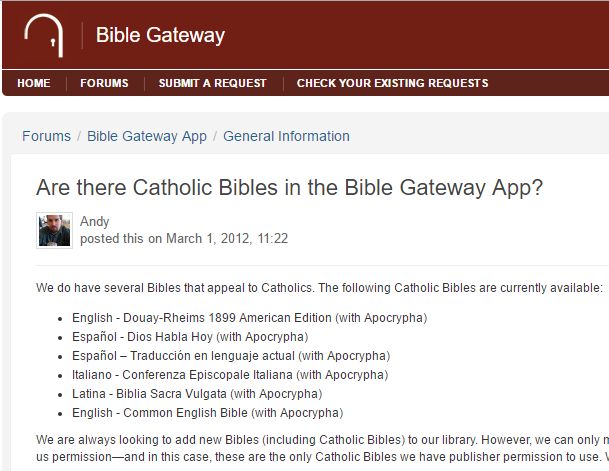
1. Bible Gateway promotes Catholic dogma, apps, and Bibles. Christianity is Christianity, Catholicism is Catholicism, and they are at odds with each other. Catholicism is not a Christian faith. If one includes Catholic material on a Christian site one may as well include Buddhism, Hinduism, and Islam. FMI on why Catholicism is not Christianity, go here.

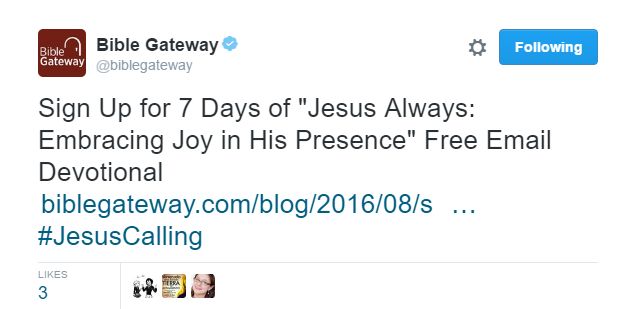
2. Bible Gateway promotes Charismatic author Sarah Young of Jesus Calling and other mystical devotionals in her ongoing cottage industry of falsity. Young’s books undermine the sufficiency of scripture. Young is a huge problem especially for younger undiscerning women who are at risk, and BG is not helping by legitimizing her false works. The Jesus Calling and other Young devotionals were in heavy rotation throughout July/early August. FMI on Sarah Young’s serious doctrinal errors, go here.


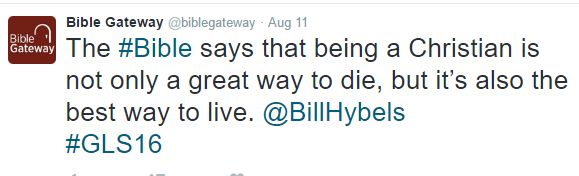
3. Bible Gateway promotes Bill Hybels. The shot below is of the BG’s twitter stream. #GLS16 refers to a Hybel-led conference called Global Leadership Summit of a gathering of false teachers at Hybels’ Willow Creek campus plus global leaders, to promote business practices in church leaders. The line-up includes false teachers Hybels and TD Jakes, and lifestyle guru John C. Maxwell, among other secular speakers. FMI on why Hybels’ brand of business-driven church growth movement is false, go here.

4. Bible Gateway promotes material by false pastrix Christine Caine, who is also founder of the feminist Propel Women movement. FMI on why Caine is false, go here.

beware

5. Bible Gateway encourages using material by Roman Catholic-dabbler and mystic Dallas Willard, teacher of contemplative prayer, spiritual formation, universalism, and other false disciplines. FMI on why Willard is false, go here.


This one below is only one of many dozens of tweets sent out by BG and retweeted by followers, touting the new Bible search function BG has developed. It seems you can now search the Bible at BibleGateway using…emojis. Just because the culture has made the Emoji Bible a “success” does not mean we need to cave to the culture and create search functions with them. The Bible is the WORD of God, not the rebus pictures of God. Here is a screen shot of the introduction of the BG emoji search function:

Remember when you were in kindergarten, the easy books you were first learning to read? They inserted pictures for some of the words to make it easier to read and have the child feel successful.

The juvenilization of Christianity continues, helped by Bible Gateway.

Promoting Caine, Hybels, Willard, Young, and other false teachers such as CS Lewis, Beth Moore, Proverbs 31 ministries, and Rick Warren, as well as unbiblical conferences such as “Unwrap the Bible” with Roma Downey, displays a tremendous lack of discernment. Worse, it puts unhealthy and undoctrinal doctrines in front of millions of people.

As for myself, sure, I know who to look up and who to avoid, but when I search for a verse or an address, I don’t want to be confronted every time by false teachers and deal with the site’s excited urgencies to try this or that false teacher’s material. It’s depressing. It’s discouraging. I want Bible, not rebus pictures and a lengthy and constant list of false teachers I have to avert my eyes from on the screen.

My essay today is to just make you aware, that once again, a previously solid ministry has allowed a flood of falsity through its gates, and to beware.

Posted in discernment, Uncategorized

A Warning to Miracle-mongers

I abhor miracle-mongers. These are the people who clamor to see or experience a miracle but do not know the first thing about the other attributes of God. These are the people who come to church only in hopes to see a sign. The pray for glory dust to fall down so they can say Jesus showed up. They pray for healed legs so they can run toward sin. People like that existed in Jesus’ day and in our day too. (John 6:2, John 12:18).

Be warned, miracle-mongers, “most of the miraculous events in the Old Testament killed people.” Most of the miracles in the OT (and some in the NT- Ananias, Sapphira) simply, flatly, killed people, as a demonstration of God’s justice and holiness.

John MacArthur preached,

His justice is demonstrated at the cross. It is God who said the soul that sends it must die. It is God who says the wages of sin is death, and death there will be. Death there must be. And justice prevails at the cross. God is so just, so just, that He will even take the life of His own beloved Son. If the sins of the world are to be laid on His Son, then His Son must take the death that they deserve. You will never see a greater illustration of the justice of God. You can look in the past. You can look in the Old Testament. You can see most of the miracles in the Old Testament killed people. If you’re looking for miracles in the Old Testament, most of the miraculous events in the Old Testament killed people, drowned entire armies, drowned the entire world, burned up people, holes opened in the ground and swallowed them up. People were literally killed by angelic beings. Most of the Old Testament miracles were miracles of divine judgment.

“So Jesus said to him, “Unless you see signs and wonders you will not believe.” (John 4:48)

Do you love Jesus for who He is? Or for what He can do for you? A warning to those who seek and cling to and desire miracle after miracle, be careful what you wish for–

For false Christs and false prophets will appear and perform great signs and wonders that would deceive even the elect, if that were possible. (Matthew 24:24).

miracle growth

Posted in Uncategorized

I Love Being a Christian video: Jesus Paid the Price

When you are released from the burden you sense but can’t define, (sin), when you are freed from the chains of slavery to it, when you are forgiven and loved perfectly by The Perfect, you will rejoice, as all Christians do. You will love being a Christian. Repent now, for the kingdom is at hand.

15 and saying, “The time is fulfilled, and the kingdom of God is at hand; repent and believe in the gospel.” (Mark 1:15)

Posted in discernment, Uncategorized

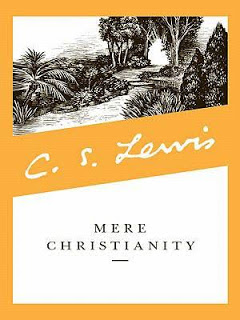
C.S. Lewis: A Trojan horse for bad theology?

There are certain Christian celebrities one becomes aware of who seem untouchable in their status as adored and beloved. These particular celebrities are held in such high regard that it’s not often that people actually study their theology to see if they are approved. One of these is Clive Staples Lewis (C. S. Lewis).

Early in my walk, on the basis of nearly universal acclaim and heartily positive recommendations, never mind being quoted from the pulpit, I bought and consumed his books.

Over time I’ve read The Screwtape Letters, The Great Divorce, Mere Christianity, and Miracles; and some essays such as The Weight of Glory. I didn’t like any of them. Well, maybe Screwtape was amusing and accurate in the way the demon Screwtape taught his protege nephew demon to harass a Christian, but overall I was either bored by or confused by his works.

I don’t think it was that I lacked the intellect to understand what Lewis was teaching. I did all right in school. I didn’t think it was that Lewis lacked the skill to make his point, Screwtape showed me that. Lewis had tremendous authorial  skill, nuance, and delicacy to bring his meaning to the fore. So what was it? It couldn’t be his theology…could it?

It could.

The verse in 2 Timothy 3:7 refers to some silly women who are being held up as a negative example of those who learn but do not understand. But we can hold up their example for men as well. The verse says,

Ever learning, and never able to come to the knowledge of the truth.

Barnes Notes explains this issue well.

And never able to come to the knowledge of the truth – They may learn many things, but the true nature of religion they do not learn. There are many such persons in the world, who, whatever attention they may pay to religion, never understand its nature. Many obtain much speculative acquaintance with the “doctrines” of Christianity, but never become savingly acquainted with the system; many study the constitution and government of the church, but remain strangers to practical piety; many become familiar with the various philosophical theories of religion, but never become truly acquainted with what religion is; and many embrace visionary theories, who never show that they are influenced by the spirit of the gospel. Nothing is more common than for persons to be very busy and active in religion, and even to “learn” many things about it, who still remain strangers to the saving power of the gospel.

In my opinion, that is Lewis, who has learned much but never got to the core of the true nature of the religion. Even his beloved Narnia chronicles have extremely problematic theology.

The Bible warns us that the antichrist and lesser false teachers use language to flatter and puff up their hearers and themselves. And it warns that there will be those taken in by flatteries and high-minded philosophies. I know I am one of those who is at risk for being attracted to how a teacher uses language and promotes his teachings in unique and skillful ways. I just love language. CS Lewis no doubt was a great user of language and his high-minded philosophies sound and look good- at first.

But let’s delve.

CS Lewis – his style dupes many Christians…his style is a Trojan horse for bad theology. ~ Mike Abendroth

In this podcast series, Pastor Mike Abendroth discusses the problem of Christians who accept at face value the things that seem like they are from God, because their style is so attractive. Abendroth explains the importance of thinking, and shows that though Lewis has a skillful way with words, and has said many wonderful, truthful things, the theology behind his words is at odds with the Bible in many cases. For example:

Good: “A man can no more diminish God’s glory by refusing to worship Him than a lunatic can put out the sun by scribbling the word ‘darkness’ on the walls of his cell.” Source: The Problem of Pain.

Good: “If I find in myself desires which nothing in this world can satisfy, the only logical explanation is that I was made for another world.” Source: “Mere Christianity”

Bad: “If by saying that man rose from brutality you mean simply that man is physically descended from animals, I have no objection.” Source: The Problem of Pain.

Bad: Concerning the doctrine of “total depravity,” Lewis wrote: “I disbelieve that doctrine.” Source: The Problem of Pain.

Abendroth advises caution when reading Lewis and also advises that if you are going to mention him to others, do so with qualifications. Abendroth said he does not quote Lewis from the pulpit, because he does not want his flock reading Lewis. Abendroth continues the discussion of CS Lewis’ theology in podcast Part 2, which is linked below.

In the essay from Southern Baptist Theological Seminary (SBTS) written by Aaron Cline Hanbury, the author focuses on Lewis’ theology and the statements regarding the errant portions made by Martyn Lloyd-Jones shortly after Lewis’ death in 1963, and continues examining the reservations current evangelicals have of Lewis today. For example,

Kevin DeYoung, blogger, author and senior pastor of University Reformed Church in Lansing, Mich., sees “two significant problems” with Mere Christianity. These problems he lists are the doctrine of the atonement and inclusivism, according to DeYoung’s 2011 post on his website.

Concerning inclusivism, DeYoung cites a passage from Lewis’ most popular non-fiction work where Lewis asserts that “there are people in other religions who are being led by God’s secret influence to concentrate on those parts of their religion which are in agreement with Christianity, and who thus belong to Christ without knowing it.”

DeYoung says that Lewis fails to understand the work of the Holy Spirit in a biblical way.

In this blog post by Mike Duran, former pastor and currently an author, the question is asked, How “Christian” was C.S. Lewis… and Why is He an Evangelical Hero? Duran writes,

His books have influenced more Christians than possibly any other author; his stories are classics, beloved by children and adults alike. There are foundations to his legacy, a movie about him, bumper stickers that quote him and his caricature can be found on t-shirts and coffee mugs. C.S. Lewis is the poster boy for “Christian thinkers,” inspiration for vast numbers of Christian authors, an icon in the already crowded pantheon of religious heroes.
But does he deserve the acclaim? Not only do some question the uncritical embrace of Lewis by American evangelicals, they question his Christian faith.
Christianity Today columnist Bob Smietana, in an article entitled, C.S. Lewis Superstar, sums up the essence of the “Lewis resistance”:

Clive Staples Lewis was anything but a classic evangelical, socially or theologically. He smoked cigarettes and a pipe, and he regularly visited pubs to drink beer with friends. Though he shared basic Christian beliefs with evangelicals, he didn’t subscribe to biblical inerrancy or penal substitution. He believed in purgatory and baptismal regeneration. How did someone with such a checkered pedigree come to be a theological Elvis Presley, adored by evangelicals?

You might be surprised to see that there is any concern over the theology and writings of CS Lewis at all, given the hoopla over Lewis’ intellectual prowess and authorial skill on matters of Christianity. That is the point. The CS Lewis adoration was never present in Lewis’ own life and was not even present for several decades after his death. Abendroth notes that there has to be a reason that Lewis started to become so unthinkingly popular in the 80s, 90s, and onward. He noted that in the 1998 Christianity Today poll Lewis was rated most influential evangelical writer, an acclaim Lewis never enjoyed in his living and writing days of the 1930s, 40s, and 50s. In 2005 Lewis was on the cover of Christianity Today, with the accompanying headline “CS Lewis, Superstar.” Abendroth surmised that the reason for the popularity is that Christians have of late become undiscerning and prefer style over substance rather than the mental work of study and discernment. He quoted Henry Ford, who said “Thinking is the hardest work there is, which is probably the reason so few engage in it.”

I think this excerpt from the SBTS piece on Lewis makes Abendroth’s point of style over substance. The SBTS piece quoted how Pastor John Piper handles the problem of Lewis,

“Lewis is not a writer to which we should turn for growth in a careful biblical understanding of Christian doctrine,” Piper said. “There is almost no passage of Scripture on which I would turn to Lewis for exegetical illumination. … His value is not in his biblical exegesis. Lewis is not the kind of writer who provides substance for a pastor’s sermons.”

And yet Piper, like DeYoung, sees value in Lewis’ work that transcends — but does not excuse — his theological shortcomings. For Piper, the value of Lewis is the way he brings together “the experience of joy and the defense of truth” in his writing. [emphasis mine]

In other words, CS Lewis’ biblical substance isn’t there, but the way he writes sure is a nice experience.

In my own opinion, after having read through the aforementioned Lewis books and having studied Lewis’ theology, I ask the same question The Trinity Foundation asked, Did CS Lewis Go to Heaven?

Lewis accepted evolution for much of his life, taught and believed in the unbiblical doctrine of purgatory, denied sufficiency of scripture, denied inerrancy of scripture, misunderstood the work of the Holy Spirit, promoted open theism, denied the penal substitutionary atonement, and was muddy and unclear on a number of other doctrines. Can one even BE a Christian who denies and twists such foundational doctrines? Can one deny the very things that make one a Christian and yet still be called a Christian? Does Lewis get a pass simply because he was a good writer…but Benny Hinn is unmasked as a fake because he isn’t?

The point Pastor Abendroth made was also that we need to think for ourselves. As he said, and I reiterate, I personally do not recommend C. S. Lewis, but I’m not advocating immediately throwing out all books written by Lewis that may be standing on your bookshelves. Think about these things and come to your own conclusions. There is no doubt CS Lewis was a scholar and a philosopher who made significant contributions to the world. It’s up to you to decide how much of a contribution he made to Christianity.

~~~~~~~~~~~~~~~~~~~~~~~~~~~~~

Sources and Further Reading/Listening

Essay, Southern Baptist Theological Seminary- CS Lewis: Elephant in the Room

Podcast, Bethlehem Bible Church/No Compromise Radio-

CS Lewis: Saint or Sinner? Part 1

CS Lewis: Saint or Sinner? Part 2

Essay, Mike Duran- How ‘Christian’ was CS Lewis & Why is he an Evangelical Hero?

Did CS Lewis Go to Heaven?

Posted in Uncategorized

Joseph is a picture of Jesus, Jesus is the true and better Savior

There are lots of “types” in the Bible. A fancier name for it is Biblical Typology. Biblical Typology is…

…a special kind of symbolism. (A symbol is something which represents something else.) We can define a type as a “prophetic symbol” because all types are representations of something yet future. More specifically, a type in scripture is a person or thing in the Old Testament which foreshadows a person or thing in the New Testament. For example, the flood of Noah’s day (Genesis 6-7) is used as a type of baptism in 1 Peter 3:20-21. The word for type that Peter uses is figure.

Another example of a type is in Hebrews 9:8-9: “the first tabernacle . . . which was a figure for the time then present.” The blood sacrifices of lambs prefigured or was a type of the actual sacrifice of the Lamb of God. And so on.

Ligonier defines typology as

Typology is based on the fact that God works in recurring patterns throughout history and says that a past event or person can prefigure or serve as a type of a future person or event.

Joseph, son of Jacob, is in many respects one of the strongest types depicting the Savior. At our church we are going through Genesis and the latter portion of all the books of Genesis detail Joseph’s story. Sold into slavery, descended into the pit (jail), Joseph interpreted the Cupbearer’s and Baker’s dreams and said to them as they were called to Pharaoh’s side, “Remember me”. Joseph was forgotten, … until the Cupbearer heard that Pharaoh needed someone to interpret Pharaoh’s dream. Joseph was called to the King’s side-

Then Pharaoh sent and called Joseph, and they quickly brought him out of the pit. And when he had shaved himself and changed his clothes, he came in before Pharaoh. (Genesis 41:14)

And Pharaoh said to Joseph, “See, I have set you over all the land of Egypt.” Then Pharaoh took his signet ring from his hand and put it on Joseph’s hand, and clothed him in garments of fine linen and put a gold chain about his neck. And he made him ride in his second chariot. And they called out before him, “Bow the knee!” Thus he set him over all the land of Egypt. Moreover, Pharaoh said to Joseph, “I am Pharaoh, and without your consent no one shall lift up hand or foot in all the land of Egypt.” (Genesis 41:41-44).

When all the land of Egypt was famished, the people cried to Pharaoh for bread. Pharaoh said to all the Egyptians, “Go to Joseph. What he says to you, do.” (Genesis 41:55)

Moreover, all the earth came to Egypt to Joseph to buy grain, because the famine was severe over all the earth. (Genesis 41:57)

Hopefully you notice the similarities. Joseph was reviled, sold as a slave, they put an iron fetter around his neck. (Psalm 105:17-18). He was in the pit, forgotten and ignored. One day in a moment, a twinkling, he was exalted and put in second place, only the King was higher than he. He rode in the second chariot. He was given a fine garment and his iron collar replaced with a chain of gold. All were told to bow the knee to Joseph, just as they will bow the knee to Jesus (Romans 14:11, Philippians 2:10). Joseph saved all in the land, all the earth.

The almost exact language was used by Pharaoh about Joseph as Mary had stated at the Wedding at Cana.

“Then Pharaoh told all the Egyptians, “Go to Joseph and do what he tells you.” (Genesis 41:55 NIV)

His mother said to the servants, “Do whatever he tells you.” (John 2:5).

Of course, typology only goes so far. Joseph gave grain (bread) to the people to save their life, but Jesus IS the bread of life. However, it’s interesting to note types as you read along to note types as you read along to think more deeply about what God is showing us through His word.  Here are some further resources for you on typology.

Ligonier: Typology vs. Allegory.
Carm: Dictionary- Type
GTY: Melchizedek, a Type of Christ