Posted in go in and com out, I am the door, threshing floor, winepress

Jesus is the Door, part 2: they will go in and come out

I am still meditating on Jesus as the Door. It is a beautiful statement.

I am the door. If anyone enters by me, he will be saved and will go in and out and find pasture. John 10:9

Matthew Henry’s Concise Commentary says:

Many who hear the word of Christ, do not understand it, because they will not. But we shall find one scripture expounding another, and the blessed Spirit making known the blessed Jesus. Christ is the Door. And what greater security has the church of God than that the Lord Jesus is between it and all its enemies? He is a door open for passage and communication. Here are plain directions how to come into the fold; we must come in by Jesus Christ as the Door. By faith in him as the great Mediator between God and man.

What does ‘go in and come out’ mean? Is it that we will go in and come out of salvation? Not so! Our salvation is eternally secure.

Romans 8:28-30- We find in those verses that everyone who has been redeemed by Jesus Christ, without exception, will be glorified. (MacArthur: Is Your Salvation Secure?)

So what can coming and going mean?

Pulpit Commentary:

“Go in and out” is a phrase frequently used “to denote the free use of an abode by one who is at home in the house” (Deuteronomy 28:6; Deuteronomy 31:2; Acts 1:21). The believer who enters into fellowship with God, and is “saved,” does not “go in and out” of that state, but can as a child share by turns the Divine repose of the home.

In listening to Steve Lawson preach on the verse, going in and out also means being able to freely conduct activities in the wider sphere of the community. People can go to the marketplace and do business (1 Corinthians 10:25, Acts 16:19), travel, thresh, and plant, to name a few examples. We remember how Gideon was so afraid of the constantly marauding Midianites that he threshed inside the winepress.

A threshing floor at a high place

The threshing-floors—open circular places in the fields where the corn was trodden out by oxen—would naturally be the first places where an invading enemy would come to forage, as in 1 Samuel 23:1, says Ellicott’s Commentary.

When threshing, the wheat is thrown high in the air and the wind blows away the chaff and the kernels fall to the ground. This would have been a wonderful sign, akin to a smoke signal, to the armies coming to forage.

Threshing activity in the fields would have been a dead giveaway to the
advance party of any enemy army

Gideon was fearful of going in and out, so he chose to thresh in the winepress. Winepresses were sunk into the ground and walled by stone. There would have been no wind to blow the chaff and the confined space would have made threshing very difficult. This is one example of the hardship of those who cannot go in and come out.

winepresses were not suitable for threshing, but Gideon felt so afraid
he could not go in and come out safely.

Mr Lawson preached this verse just a few days after the Boston Marathon bombings. He said that the entire city was on lockdown. People were simply not allowed on the streets. Not a car, not a person could be found. Police presence was everywhere. The citizens could not go in and come out. It as the same during the recent Baltimore City riots. There was a city-wide curfew and after that hour no one was allowed on thee streets.

who shall go out before them and come in before them, who shall lead them out and bring them in, that the congregation of the LORD may not be as sheep that have no shepherd.” (Numbers 27:17)

Imagine when the promise in John 10 is fulfilled! For both Israel and the Church, we will be in perfect safety. No persecution, no attacks, no armies. Just peace in green pastures and rest! We will go in and come out, and all because JESUS made it secure, forever.

Posted in discernment

"It Matters Who We Share, Pin, and Re-Tweet"

Please check out Michelle Lesley! What I have read so far is sterling stupendous. Here is a taste.

When I see friends posting and re-posting quotes from false teachers, I go into fits of agony. In this essay, she writes about how important it is to be mindful and careful of who we re-post, re-tweet, and otherwise promote on social media. It matters, for five reasons.

It Matters Who We Share, Pin, and Re-Tweet

Scroll…scroll…wince…

Scroll…scroll…wince…

I find myself wincing a bit when I see people –who I know genuinely love Jesus—sharing, pinning, and re-tweeting quotes from false teachers such as Joel Osteen, Joyce Meyer, T.D. Jakes, and Christine Caine, just to name a few. Why? What’s wrong with the encouraging, even biblical, at times, things these people say? … But, still, the quotes we share and the people who said them matter. Why?

In this post, we learn 7 Godly Responses When Someone Says You’re Following a False Teacher

Or this-

Five Reasons It’s Time to Start Exercising “Moore” Discernment

I’m a sucker for lists.

Jeff Maples at Psalm 12 Outreach posted an excellent essay titled The rise of the feminine Church of Eden. I’ve written about the “Christian Feminists” before, notably in a three-part essay. I’d compared what these women say to what they do, and to scripture and despite their protestations and Christianese language, they are living a very feminist life. However, Mr Maples takes it from a different perspective, a man’s. He urges husbands to step up and provide the obviously missing oversight to their wives so they would not be taken in by false doctrines these feminist teachers and preachers promote. It is a very good article.

The End Time: How the Christian secret feminists are reforming the definition of biblical womanhood. Part 1

No Compromise Radio: Where is Beth Moore’s Husband?

Posted in good shepherd, I am the door, sheep, shepherd, the worthless shepherd

Jesus as Shepherd, and I AM the Door

Shed door, inside are sheep! EPrata photo

To plumb the Bible’s depths is such a treasure and a pleasure. It never ends. I’ve been studying about the Shepherd and one of His I AM statements, “I AM the door”.

The Bible mentions shepherds and shepherding over 200 times. Jesus uses the metaphor of the Shepherd often, and said here in arguably the most famous statement,

I am the good shepherd. The good shepherd lays down his life for the sheep. (John 10:11)

Did you ever notice there were a lot of shepherds in the bible? There were even the unnamed shepherds watching their flocks by night, the first recipients of the Good News.

Numerous biblical characters are associated with the occupation of shepherding: Abel (Gen. 4:2), Abraham (Gen. 13:7), Isaac (Gen. 26:20), Jacob and his sons (especially Joseph, Gen. 30:36; 46:32), Laban (and his daughter Rachel, Gen. 29:9), Moses (Exod 3:1), and David (1 Sam. 16:11). Source Holman treasury of key Bible words, Carpenter, E. E.

Shepherds’ work was never ending, lonely, and dangerous. They had few tools, the rod as a crook to extracting sheep from difficulty and the staff or club for fending off wild animals; (1Samuel 17:34-37). We know David also had a slingshot. Shepherds also had pouch for food and used their wrap as a cloak and also a blanket.

There was not a lot of grass so shepherds had to move the flock often. Sheep are followers. If one sheep walks over a cliff the rest will follow. They don’t defend themselves against prey, they simply huddle up and then there’s a slaughter. They are scared of moving water and will only drink from still water, (“He maketh me lie down near still waters”) but if they fall into moving water they will drown.

EPrata photo

When night-time came the shepherd had two options. Using one of his tools, the rod, he could lead the sheep (never drive them) into a sheepfold in the field. (Luke 2:8) This was simply a crudely made rock enclosure, usually a circle, so-high and topped with thorns to prevent prey or robbers scaling it to get in (John 10:1).

The shepherd brought the sheep to the fold one by one. He’d let down his rod to bar it from coming in, and he would inspect the sheep from head to toe. He was looking for injuries, disease, or anything that might need attention. The lanolin, a waxy substance the sheep excrete to keep their wool dry, often hid cysts or cuts, so he had to closely inspect each sheep before lifting up his rod to allow them entry.

Just as the lost are closely examined at the Great White Throne Judgment as seen in Revelation 20:11-15. The saved are allowed in but we are still inspected. (Romans 14:10-12, 2 Corinthians 5:10)

The shepherd also counted the sheep as they went in, to see if any were still out there, or for tithing purposes. (Matthew 18:12; Jer. 33:13).

I will make you pass under the rod, and I will bring you into the bond of the covenant. (Ezekiel 20:37)

And every tithe of herds and flocks, every tenth animal of all that pass under the herdsman’s staff, shall be holy to the Lord. (Leviticus 27:32)

The sheepfold had no door. The shepherd placed his rod and staff across the opening and bedded down at the threshold, becoming the door.

I am the door. If anyone enters by me, he will be saved and will go in and out and find pasture. (John 10:9)

I’ll discuss the going in and out in another blog essay. The other option was to lead the sheep to a community sheepfold or a privately owned sheepfold in town. (Zephaniah 2:6). Sometimes the shepherd would make use of his lean-to or another enclosure in town, going through the same process with the rod as each sheep entered. This time, the shepherd would have hired a hireling to watch the sheep at night, and he’d go to his own bed until morning. Sometimes hirelings were not worthy and ran away. (John 10:13)

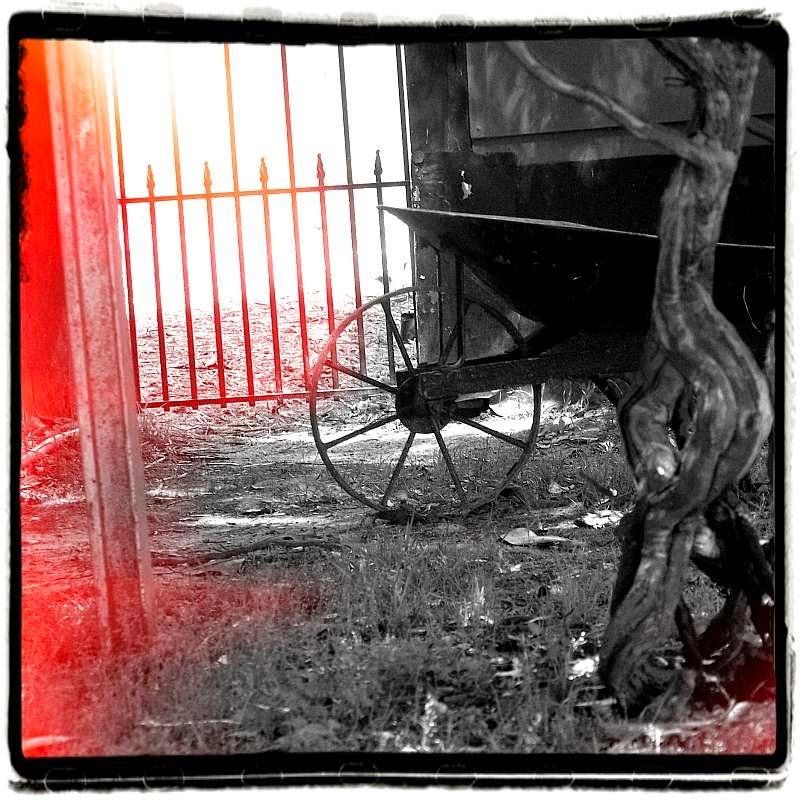
EPrata photo. Actual sheepfold door, with wheelbarrow

In the cities of the hill country, in the cities of the Shephelah, and in the cities of the Negeb, in the land of Benjamin, the places about Jerusalem, and in the cities of Judah, flocks shall again pass under the hands of the one who counts them, says the Lord (Jeremiah 33:13)

He is the Good Shepherd. He is the door, where inside the sheep are counted, examined, protected, loved, and cared for.

Posted in earthquakes, michigan earthquake, prophecy, volcanoes

Rare quake shakes Michigan, "strongest ever". Other earth updates

What Was That Rumble? Officials Confirm 4.2 Magnitude Earthquake Hits Michigan
May 2, 2015 12:42 PM

Source

KALAMAZOO (WWJ) – If you thought you felt an earthquake on Saturday — you did. And It was one of the strongest quakes ever experienced in Michigan. Officials with the United States Geological Survey said an earthquake with a magnitude of 4.2 and a depth of focus of 5.9 km was measured around 12:23 p.m. about nine miles southeast of Kalamazoo. Multiple residents in several different regions beyond Kalamazoo — from Mount Pleasant and Sterling Heights to Lansing and even as far as Cleveland, Ohio — reported feeling a rumble and the ground shake for between five and 10 seconds. No damage or injuries have been reported. The strongest earthquake in Michigan history was a 4.6 magnitude in nearly the exact same location in August 1947.

 History of earthquakes in Michigan
The U.S. Geological Survey says the earliest record of earthquake tremors in Michigan came from a series of shocks in Missouri about 1811.

In 2010 a large earth crack appeared in Upper Michigan.
One day the land was flat and filled with trees shooting straight into the air. Twenty-four hours later there’s a 600-foot-long crack, 4-feet deep twisting its way through the woods – and those vertical trees are now pointed 30 degrees left and right where the earth has mounded 15 feet high. No, it’s not a disaster movie; it’s what happened Monday at the home of Eileen Heider on Bay de Noc Road in Birch Creek. Heider was sitting in her recliner watching TV at about 8:30 that morning. “The chair shook for a few seconds and I thought the spring in the chair went,” she said. … The next day Heider’s friend, Doug Salewski, found a hole in the ground and a 200-yard crevasse a short ways away which wasn’t there before. Heider went to investigate and said the crack was three-feet wide and about five-feet deep in spots. 

———————————–

Steve Herman, reporter for Voice of America, Asia, reports, USGS: M6.1 #quake SE of #Japan (Too small to trigger significant tsunami).

LONDON: An earth tremor of magnitude 5.7 struck 185km south-southeast of Japan’s Izu islands on Saturday (May 2), the United States Geological Survey said. The USGS at first put the quake at 6.1, but later revised it to a weaker reading. The tremor was at a shallow depth of 10km.

———————————– 

Underwater Volcano May Be Erupting Off Oregon
An underwater volcano off the coast of Oregon has risen from its slumber and may be spewing out lava about a mile beneath the sea. Researchers were alerted to the possible submarine eruption of the Axial Seamount, located about 300 miles (480 kilometers) off the West Coast, by large changes in the seafloor elevation and an increase in the number of tiny earthquakes on April 24. Geologists Bill Chadwick, of the Pacific Marine Environmental Laboratory and Oregon State University, and Scott Nooner, of the University of North Carolina, Wilmington, successfully forecast the eruption in a blog post in September 2014.

———————————–

You might remember the Japan 9.0 Quake of 2011 shifted the earth off its axis, shortened the day and moved the island 8 feet. Is anything too hard for the LORD? (Jeremiah 32:27).

Nepal Earthquake Shrank Mount Everest, Lifted Areas Near Kathmandu 3 Feet
Nepal’s massive 7.8-magnitude earthquake transformed the land the was shaken by the natural disaster, pushing areas near the city of Kathmandu higher in elevation and making Mount Everest slightly shorter. It won’t be enough to unseat Everest as the world’s tallest peak, but according to studies performed after last weekend’s temblor, the mountain is now an inch shorter than before the quake. On the other hand, some locations just outside Nepal’s capital city of Kathmandu were lifted 3 feet higher than before the tragic event, the study also found.

———————————– 

Lava lake on Hawaii’s volcano overflows in spectacular show
HONOLULU (AP) — A lake of lava on Hawaii’s Kilauea volcano has been rising over the past week and, at times, overflowing in a spectacular show. Video posted online by visitors shows lava splashing over the side of the vent rim. Janet Babb, a geologist with the U.S. Geological Survey Hawaiian Volcano Observatory, said Thursday that this is the first time lava from this vent has come into view from a public platform within Hawaii Volcanoes National Park on Hawaii’s Big Island. “It’s always been out of view for visitors who were in the park public viewing areas,” she said. But this past week, because of lava is rising inside the volcano, the lava lake rose high enough that it was visible, she said. The last time molten lava was visible in the crater was in 1982 when a fissure erupted. The last time there was a lake was in 1974.

———————————– 

Chile’s Calbuco Volcano erupts for third time in 8 days

———————————– 

Bulusan volcano erupts
Mount Bulusan in the province of Sorsogon erupted on Friday morning, causing an explosion of steam and ash that lasted five minutes followed by 40 volcanic quakes, government seismologists said. While the Philippine Institute of Volcanology and Seismology (Phivolcs) did not raise the alert level at the volcano, it warned the public against venturing into Mount Bulusan’s four-kilometer permanent danger zone because of possibility of sudden explosion. Ed Laguerta, Phivolcs resident volcanologist, told The Manila Times that the explosion scattered ash in Puting Sapa and Sangayon villages of Juban town and in Cogon, Gulang-Gulang and Tinampo villages of Irosin town. “This is just a minor explosion [that] coincided with Labor Day celebrations. We’re closely monitoring the [volcanic] activity if it will escalate in the coming days,” he said.

Around 10:30 a.m., when the crater became visible, dirty-white steam was seen coming out of it. Phivolcs seismologists said Mount Bulusan, one of the most active volcanoes in the country, exploded at 8:09 a.m. The volcano has erupted 15 times since 1885 and is considered as the 4th most active volcano in the Philippines after Mayon, Taal and Kanlaon. Bulusan last erupted in 2011.

Posted in bible, hermeneutic, life verse, what this verse means to me

Rejecting "Life verses" and "What this verse means to me" because interpreting the Bible is not a Rorschach test

Hermeneutics. It’s not a word you hear often inside of churches. In our watered down state, preachers and pastors rarely use the “big words” any more. If they do, they’re abashed and even apologize for saying theological words like ‘justification’ or ‘inerrancy.’ However hermeneutics is a battleground in our continued spiritual warfare against the schemes of the devil. You have to know what it is.

From the Compact Dictionary Doctrinal Words by Terry L. Mithe, hermeneutics is

From the Greek hermeneutikos, “interpretation.” Hermeneutics is the science of the study and interpretation of Scripture, the branch of theology that prescribes rules by which the Bible should be interpreted. Biblical hermeneutics strives to formulate guidelines for studying scripture that help recover the meaning a biblical text had for its original hearers.

There are three essays and a quote regarding hermeneutics I came across yesterday which illuminate the practice of hermeneutics and also illustrates the problems today with casual interpretation and practices infiltrating the Christian life, such as “life verses” and “what this verse means to me”.


1. Erin Benziger at Do Not Be Surprised and her personal experience of being taught a verse that had a particular meaning to the teacher and the teacher only
2. John MacArthur explaining the fallacy of teaching ‘What does this verse mean “to me?”‘
3. Craig A. Parton comparing the similarity of the principles behind legal interpretations and biblical hermeneutics

The first is from Friday’s This N That posting by Erin Benziger at Do Not Be Surprised. She wrote,

I recently attended a simulcast event for a popular women’s ‘Bible teacher.’ Not long after I settled into my seat, a woman from the host church stood up to welcome us and to share with us her ‘life verse.’ The divine irony of this was that the most recent episode of Equipping Eve, in which I discussed the life verse craze, was airing that very same day. I couldn’t help but smile, but my amusement was short-lived as I heard this woman say, “Now, what this verse means to me is…”

I listened to this most recent episode of Equipping Eve regarding live verses (and labyrinths) and it’s a good episode.

Biblical interpretation is not a Rorschach test “What do you see in the inkblot?”

Benziger then went on to post-

So, what does John MacArthur say about the ‘what does this verse mean to you’ method of interpreting Scripture?

I read MacArthur’s essay, it’s good. I highly recommend it. Here is an excerpt:

What Does This Verse Mean “to Me”?
Titus 1:9, Romans 12:1-2 June 16, 2009

That’s a fashionable concern, judging from the trends in devotional booklets, home Bible study discussions, Sunday-school literature, and most popular preaching. The question of what Scripture means has taken a back seat to the issue of what it means “to me.” The difference may seem insignificant at first. Nevertheless, our obsession with the Scripture’s applicability reflects a fundamental weakness. We have adopted practicality as the ultimate judge of the worth of God’s Word.

In just one sentence, MacArthur punctures the practice. We cannot adopt a scripture because it has personal applicability to us and dispense with other verses because they don’t. MacArthur continues,

No believer can apply truth he doesn’t know. Those who don’t understand what the Bible really says about marriage, divorce, family, child-rearing, discipline, money, debt, work, service to Christ, eternal rewards, helping the poor, caring for widows, respecting government, and other teachings won’t be able to apply it. Those who don’t know what the Bible teaches about salvation cannot be saved. Those who don’t know what the Bible teaches about holiness are incapable of dealing with sin. Thus they are unable to live fully to their own blessedness and God’s glory. True doctrine transforms behavior as it is woven into the fabric of everyday life. But it must be understood if it is to have its impact. The real challenge of the ministry is to dispense the truth clearly and accurately. Practical application comes easily by comparison.

Solid biblical hermeneutics searches for truth under the premise of “What did God intend for me to know about Himself in this passage?” versus today’s practice of me-centered interpretations asking “What does this verse mean to me?” The latter leads to a false kind of open-mindedness regarding interpretation. In theology at some point you need firmness, it’s imperative to obtain a settled authoritative stance on at least the fundamentals of the faith.

Dogmatic theology gets its name from the Greek and Latin word dogma which, when referring to theology, simply means “a doctrine or body of doctrines formally and authoritatively affirmed.”

Biblical hermeneutics appropriately conducted leads to an illumination of the scriptures which leads to a Spirit-settled understanding which leads to an authoritative witness with conviction. S. Lewis Johnson this in his sermon “Paul’s Right to Compensation.” In highlighting the importance of dogmatism he compared the ridiculousness of open-minded non-dogmatism in the secular world:

Now, I’ve been talking like I’m dogmatic, haven’t I? I’ve been trying to inject a little bit of the apostolic dogmatism in it. The world has little use for people without convictions when — for example, when your child becomes very, very sick and you want to call a doctor, you don’t call a doctor who is open-minded about personal disease, do you? Or we don’t send our children to school if we know the teachers are open-minded about the multiplication tables and things like that. We don’t do that. We want someone that we have confidence in…

The third piece I stumbled across was an excellent discussion of the science of the interpretation of Law, by Craig A. Parton from Patrick Henry College. It seems to have been written about ten years ago, on the heels of an important Supreme Court decision. It’s titled,

Remember, hermeneutics is the science of the study and interpretation of Scripture, the branch of theology that prescribes rules by which the Bible should be interpreted. There are prescribed rules for interpreting Law, as well. Why are we content with leaving the interpretation of medical issues and legal issues to the doctors and lawyers, intuitively understanding that their years of training and education allow them this right, yet when it comes to the Word of God, it’s a free-for-all? Mr Parton wrote in his introduction,

[T]he issue that defined the end of last century and defines our current day is one that few Christians could have ever seen coming. It was, simply, the question of hermeneutics or interpretation. As powerful efforts were made by historical, legal and literary apologists (e.g. the likes of Lewis, Chesterton, and Montgomery) to establish the facticity of Christian revelation and its utter and complete trustworthiness, the enemy was forced to shift the field of battle. Instead of launching frontal assaults on the sufficiency of the evidence for the case for Christianity (a difficult chore indeed in light of the evidence for the resurrection alone and its fundamental legal and evidential adequacy), the questions surrounding interpretation sought to make the inquiry futile–or worse, just another viewpoint in the marketplace of relativistic worldviews…

Scalia has taken an approach to the interpretation of the Constitution that is directly in line with the traditional “historical grammatical”school of creedal Christianity, a method engaged in by serious Biblical interpreters for centuries prior to the Age of the Enlightenment.

There are valuable lessons to be learned from how Justice Scalia has articulated his position and how it has stood up to the postmodernist arguments of the likes of Supreme Court Justice Anthony Kennedy and Professor Lawrence Tribe of the Harvard Law School. Scalia’s approach is a powerful apologetical anecdote to postmodernism and its oft-used and abused mantra that “even if the New Testament text is reliable, ultimately it all comes down to a matter of interpretation and interpretation is a subjective undertaking.”

Not so, says Scalia. Not so, says the orthodox Christian interpreter.

OK, that was an interesting introduction, excerpted as it was. There is a science of interpretation that adheres to rules and has rigor, which is increasingly being set aside for open-minded views which only serve to confuse the Christian. In his article, Mr Parton outlined the legal approach with the Christian approach, quoting Justice Scalia in three main points,

1. The actual words control every interpretation of a text and no interpretation should suffer to contradict the natural and plain sense of the text.

In this case, I’ll offer you the example of a plain and simple verse that should be easily interpreted: “The wages of sin is death.” (Romans 6:23). Yet people dispute the interpretation of wages, redefine sin, and claim death is annihilation, not eternal conscious torment. They also redefine and dispute eternal (as in eternal punishment), wrath, and refute plain texts such as “women may not teach men in the church” and “homosexuality is sin”(no, it’s lack of hospitality is sin…”. Yet the plain meaning is clear. Next,

2. The meaning of a text should never be created from external sources (nor, we might add, from the pressure of current events or evolving public opinion) and then imposed on a text to render a meaning contrary to the clear language.
For Justice Scalia, when a text is clear on its face, that ends the matter. To then plumb the depths of secondary sources to impose a meaning contrary to the clear text would be to engage in pure divinization. Lord Bacon summed it up nicely: Non est interpretatio, sed divinatio, quae recedit a litera (“Interpretation that departs from the letter of the text is not interpretation but divination.”)

When we say “what this verse means to me,” particularly about a clear, plain textual meaning of a verse, it is an interpretation coming from external sources: outside of the word of God. The third principle Parton outlines in his comparison of biblical interpretation and legal interpretation is

3. There is one best interpretation of a passage.

Traditional Biblical interpretation stresses the “sensus literalis unus est”–the one proper and intended sense of the text. This is determined from the words of the document itself. The law supports this approach unreservedly, and the rules of evidence in California set this forth in a number of specific principles of contract–or document–construction.

Does a pastor ascend the pulpit on a Sunday morning after a week of study, and say, “Open to John chapter 3, here is what the verse means to me. It may mean something different to you.” No. Not a good pastor anyway.

Via the Iranian Atheist agnostic movement.
“What this verse means to me” is only a step away
from how we view scripture as per this atheist flowchart.

In contrasting the “this verse means to me” approach with the biblical approach, we now turn to Acts 8:26:40. The Spirit directed Philip the evangelist to go up to the Ethiopian Eunuch, who was seated in his chariot reading scripture, Isaiah 53 as it turns out. How did Philip begin the teaching lesson? Did He say, “Oh, I see you are reading scripture. What does the verse ‘“Like a sheep he was led to the slaughter and like a lamb before its shearer is silent, so he opens not his mouth’ mean to you?”

Of course not. We read in Acts 8:30-31 that Philip asked, “Do you understand what you are reading?” This indicates there is one understanding, not many understandings dependent on personal applicability, whether the reader likes it, or how it fits into their culture or era.

In humility, the Eunuch said, “How can I, unless someone guides me?” indicating that interpreting a verse is not about a mutual exchange of different interpretations relative to an individual’s personal meaning, but a teacher-student relationship wherein one submits to the other’s greater knowledge and listens. (Always check for proper interpretations as a Berean afterward as per Acts 17:11). What happened next was,

Then Philip opened his mouth, and beginning with this Scripture he told him the good news about Jesus. (Acts 8:35)

Philip told him. Dogmatically, authoritatively. That’s what a teacher does, he studies, submits himself to the Spirit and seeks the interpretation. Then he tells the Good News. Do we say “I will share the Good News. It’s Good News to Me. Maybe it won’t be to you.” Heavens, no!

Parton ends his essay about interpreting the Law and the Bible,

Second, lawyers deal with facts and evidence. As importantly, they deal with verdicts, some of which literally involve life and death for the parties. The law therefore has a distinct advantage over speculative postmodern literary criticism which remains insulated in comfortable academia, often totally isolated from the a world where postmodern approaches are totally and thoroughly unworkable.[13] In the final analysis, a Court hearing a case of contractual interpretation will decide that one party–and one party only–has the correct interpretation of a document. Any judge presiding over a case of contract interpretation who concludes that “everybody is entitled to their own interpretation” and that “all interpretations are equal” would be given time off to pursue other more productive occupations…

If a Judge is duty bound to search the documentation until he can offer a delivery of the ONE interpretation, how much more so should we do this in the scriptures?!

This is not to say that we aren’t humble. Philip was humble when he submitted to the Spirit’s order to go where he didn’t know and approach the person he didn’t know and explain the scriptures to him. The Eunuch was also humble in his reply.

The difference between errant dogmatism and correct dogmatism in hermeneutical interpretation is the Holy Spirit. He will settle you, if you earnestly seek the Lord and submit to His teaching. Once a passage or doctrine is settled in your mind due to the Spirit’s illumination, then is the time to explain, exhort, and defend.

This has been a lengthy explanation of why we should not say “here’s what the verse means to me.” It means what it means, and if you don’t know, study more and be quiet until you do. You’re not displaying sincere humility when you approach scripture by saying, “well I’m not sure, but what it means to me is…” you’re actually prideful, because you’re ignorant but speaking up anyway. ‘What the verse means to me’ only confounds, confuses and doesn’t help someone arrive at the crystal clear beauty of what Jesus is saying and who He is. Matthew Henry explains Peter’s verse in 2 Peter 1:20, “knowing this first of all, that no prophecy of Scripture comes from someone’s own interpretation“. Peter is talking about the origin of scripture and man’s responsibility to interpret it.

Observe, No scripture prophecy is of private interpretation (or a man’s own proper opinion, an explication of his own mind), but the revelation of the mind of God. … But though the scripture be not the effusion of man’s own private opinion or inclination, but the revelation of the mind and will of God, yet every private man ought to search it, and come to understand the sense and meaning thereof.

Henry, M. (1994). Matthew Henry’s commentary on the whole Bible: complete and unabridged in one volume (p. 2436). Peabody: Hendrickson.

We don’t need a life verse to see His beauty from Genesis 1:1 to Revelation 22:21, from the opening “In the beginning” to the last “Amen”. Life verses only diminish the majesty of the total picture. “What this verse means to me” is making yourself the idol instead of searching for what God intended for us to know.

Posted in creator, hubble, spiritual warfare, wrath

Some good stuff: Importance of preaching Divine Wrath, Tithing is not a New Testament command, Reality of Spiritual Warfare, 25 Years of Hubble (allowing us to see God’s handiwork)

Some good stuff:

John Martin – The Great Day of Divine Wrath

I’m big on wrath. What are we “saved” from, if we never teach, witness about, or preach the wrath? How can we understand the majesty, depth, and generosity of His love if we do not first understand the wrath? This article appeared at Ligonier and is written by one of the preachers I enjoy most, Steven Lawson:

Is It Necessary to Preach Divine Wrath?

The Genevan Reformer John Calvin said, “Preaching is the public exposition of Scripture by the man sent from God, in which God Himself is present in judgment and in grace.” Faithful pulpit ministry requires the declaration of both judgment and grace. The Word of God is a sharp, two-edged sword that softens and hardens, comforts and afflicts, saves and damns.

1 Corinthians 9 is a tremendous chapter, embedded as it is between 8 and 10, where Paul lengthily expounds about eating meat sacrificed to idols. In reading the passage, I found some parts of chapter 9 difficult to understand. My puny mind and all. I turned to another of my favorite preachers, S. Lewis Johnson, after I’d read the particular passage. He expounded on it in a tremendous way. In one part of the sermon, he took a little side trip. Oh, our beloved preachers and their rabbit trails, lol. Here is the side trip down tithing lane in his sermon “Paul’s Right to Compensation“:

Now, we know that of course in the Old Testament, the Levitical priests carried out the ministry, and they were supported by the children of Israel, the other tribes. They were supported by the tithe. The tithe was not a gift. The tithe was income tax. They had to pay a tenth to the support of the priests, and so the priests carried on the work of the Lord, and they were supported by the children of Israel because they were taxed, ten percent. Clinton hasn’t brought that up yet. But nevertheless, in the Old Testament that’s the way it was done. The Old Testament speaks of tithes and offerings. Offerings were in addition to the tithe. Tithe was income tax. It’s so amazing to me, so amazing to me that we can hear ministry to the effect that we ought to give tithes. Tithes are the big thing in most of our churches, tithes. If you’ll just simply take your Concordance out and look at the New Testament and look up the term “tithe,” and you’ll see that it is never used of anything other than something that happened as history, as history, not now.

I remember my father, when the church in Charleston was putting up a new addition, First Presbyterian Church there, the Old Scots Church. And it was later on, I had been a minister of the gospel for a good time, and we had a number of talks. He was an elder in the church, and he handed me the literature. And he said, “Well, what do you think about this? Do you think — what do you think he was implying what I thought he should give? Well, I wasn’t going to give him any advice at all, but I read the material. And it was an appeal to the members of the First Presbyterian Church of Charleston to give for the new addition. Tithes was mentioned I don’t know how many times. I may still have that in my — in my notes somewhere. I thought it was a good illustration. I could use it in preaching.

But tithes, tithes were mentioned, and I had an opportunity to mention to my father that, as far as the tithe is concerned, the tithe is an Old Testament income tax. And I do know that he happened to give an offering. He told me later, he had given an offering. But we just, I feel, after all these years as old as I am, the biggest mistake made in a local church is failure to read the Bible, failure to read the Bible. The elders, deacons, and members, failure to read the Bible. Expect others to do it for us. Let Dr. Johnson tell us what the Bible has to say. No. If it depended on me, somewhere you’d go wrong because I’d go wrong somewhere. But read the Bible.

So, no, tithing was a national tax in the OT, rendered to support the temple upkeep and support the priests. It is not a NT mandate. Don’t let anyone pressure you otherwise.

Another little gem from SL Johnson’s sermon,

Lord Bacon, who was not a religious man to my knowledge, authored an aphorism regarding the interpretation of legal documents that bears directly on the interpretation of the Biblical records as well. He said, “Interpretation that departs from the letter of the text is not interpretation but divination.” That’s precisely what it is. It’s you adding things to the text as if you are an authority like the Lord God in heaven, the divine being.

EPrata photo

I really enjoyed this article from Answers in Genesis about the reality of spiritual warfare. If one peeve of mine is that the wrath is hardly preached, the reality of the spiritual war is even less so.

The Reality of Spiritual Warfare in the Home
by Dr. Robert H. Carpenter on December 13, 2007

One of the sad realities within the local church today centers on the fact that numerous born-again Christians have little or no knowledge of the spiritual warfare that takes place all around us. The Bible is crystal clear in proclaiming that there is a battle raging in the heavenlies as the forces of evil continue to wage war against not only the Creator, but also against all who trust in Christ Jesus as Savior and Lord.

Look at what our Creator has done! Just look at it!

Visit Hubble’s 25th anniversary website to see the curated collection of Hubble’s anniversary images. In contrast, this Flickr set contains one image from each year that Hubble has been in orbit.

Explore beautiful Hubble Space Telescope images from each year the telescope has been in orbit

Yours, O LORD, is the greatness and the power and the glory and the victory and the majesty, indeed everything that is in the heavens and the earth; Yours is the dominion, O LORD, and You exalt Yourself as head over all”. (1 Chronicles 29:11)

Posted in bible, encouragement, gideons, gideons international, word

Gideons hand out 2 BILLIONTH Bible!

Gideons International reports:

The Gideons International has just surpassed the two billion mark in distributing Bibles and New Testaments.

The distribution of the first one billion Bibles and New Testaments by Gideon members spanned 93 years (1908 to 2001). This second billion was attained in less than 14 years (2002 to 2015).

To celebrate what God has accomplished through this ministry, The Gideons are scheduling representatives of their membership to present a Two Billionth Commemorative Bible to as many of the leaders as possible in the countries in which they are organized.

The Gideons currently distribute over 80 million Scriptures annually, and the numbers are growing, especially in places like Brazil, India, and Asia. Through the efforts of over 300,000 members in 200 countries, territories, and possessions, The Gideons share more than two Scriptures every second of every day—in over 90 languages.

More Than Just A Number
As we rejoice in this two-billionth Scripture placement, we are mindful that the real significance is what the number represents.

“It is more than just a number,” says International President Dr. William E.G. Thomas. “We are placing Bibles because they save souls. Behind every number is a face, behind every face a story, behind every story a priceless soul that could live throughout eternity.”

The impact of these Scriptures can be seen through the many testimonies we’ve shared with you on this blog. These are real stories of souls saved and lives changed as a result of someone coming to a saving knowledge of Jesus through a copy of God’s Word provided through The Gideons International. And as the Lord is faithful to His promise in Isaiah 55:11, we can be assured that each Scripture placed touches a life, and often, many lives.

We Are So Grateful
We are also deeply grateful for the pastors, churches, and individual donors who support us through their prayers and gifts.

Most of all, we thank God, to Whom we give all the glory for each and every Scripture distributed, and for every soul saved as a result. Until He comes again, we will continue to seek His will in taking His Word to all the nations.

Please share this praise for our two billionth Scripture with your pastor, friends and family.

Would you like to make an impact right now? Click here to Give God’s Word.

Posted in jesus, prophecy, restrainer, sin

The four sin-restraining mechanisms presently operating in the world (not too well, obviously)

I was listening to a sermon from John MacArthur, delivered this past February 2015, apparently to a group of law enforcement officers. It’s called How God Restrains Evil in Society. To sum up the main points, there are four ways God restrains evil:

1. The conscience. Everyone has the law written on their heats. “They show that the work of the law is written on their hearts, while their conscience also bears witness, and their conflicting thoughts accuse or even excuse them” (Romans 2:15). This means that intrinsically, people intuit right from wrong. Their conscience tells them when they’ve drifted into the ‘wrong’ side of the street.

2. The Family.

While conscience is a personal restraint, family is a relational restraint. Family is the building block of society. Family is the building block of civilization. God has established the family to be a loving, truthful, exemplary place that restrains evil in the next generation.

3. The Civil Authority (including law enforcement).

This is a societal restraint. Biblically, the prime duty of civil authority – if you look at the Bible, the Old Testament and New Testament – it’s not charity, it’s not economics. The primary duty of civil authority is the moral well-being of its citizens. It is restraining sinners and rewarding those who do good so that we can be civilized; enjoy a measure of peace and joy in life and God’s creation.

4. The Holy Spirit through the church

The final restraint is the church; the church. That is a spiritual restraint. And when I talk about the church, I’m talking about the organized church because there are a lot of false churches and a lot of phony religion as you all know very well. I’m talking about true Christians, true believers. What makes us a restraint is because God has done a work in us that is internal. (2 Thessalonians 2:7)

A little side trip regarding the Holy Spirit as Restrainer-

The Holy Spirit of God is the only Person with sufficient (supernatural) power to do this restraining. … How does He do it? Through Christians, whom He indwells and through whom He works in society to hold back the swelling tide of lawless living. How will He be taken out of the way? When the church leaves the earth in the Rapture, the Holy Spirit will be taken out of the way in the sense that His unique lawlessness-restraining ministry through God’s people will be removed (cf. Gen. 6:3). The removal of the Restrainer at the time of the Rapture must obviously precede the day of the Lord. Paul’s reasoning is thus a strong argument for the pretribulational Rapture: the Thessalonians were not in the Great Tribulation because the Rapture had not yet occurred.

Constable, T. L. (1985). 2 Thessalonians. In J. F. Walvoord & R. B. Zuck (Eds.), The Bible Knowledge Commentary: An Exposition of the Scriptures (Vol. 2, p. 719). Wheaton, IL: Victor Books.

It is so saddening to see the restraints lift. In each case I believe it is plain to see that sin is advancing beyond the previous beachheads.

1. The Conscience
There is force and fervor in the declarations of the individual who suppresses the truth in unrighteousness, searing their conscience. Gay pride, (a monstrous reversal where sodomy was against the law until recently but is now celebrated ‘proudly’) polygamous marriage, (“what’s one more? It doesn’t change the definition of marriage”) child molestation (“it’s how I show love”), pornography (“it doesn’t hurt anyone”) are but a few examples of how the sinner is attempting to normalize sin to the expense of their conscience- and eternal destiny.

2. The Family
As for the family, we saw a stark example of a mom restraining sin in her son this week. In Baltimore as the riots were ongoing over the muddy circumstances of the death of Freddie Gray in police custody, a mom spotted her son throwing bricks with the rioters and she marched in and smacked him down and boxed his ears and took him by the proverbial earlobe to home.

www.abc2news.com

The NY Post opinion piece stated:

Parents have authority that a badge cannot confer. Son realized the person who knows him best, and is more interested than anyone else in his well-being, was right. So he submitted to her superior authority. Crime, conviction and punishment all happened without the criminal justice system getting involved.

What’s interesting is the fact that so many people are hailing the Baltimore mom for…doing her job. This is because society infrequently sees strong parenting, or parenting with authority. Parents long ago capitulated their jurisdiction and ceded their ground to the children. It’s most exhibited in the parent who constantly asks their child for permission to do such and such. “Do you want to go home now?” “Can you please put down the screwdriver?” “Do you need a nap?” The questions should be “Why are we thrilled a mom hunted down her son and prevented him from wrong doing? Where is his dad? Why did the mom have to wade into a dangerous situation to extract her son? And…where were all the other parents of the teens out there in the riot and why didn’t they come get their kids?

3. Civil Authority
I believe anyone who has eyes can see the difficulty in being a law enforcement officer in these days. The law is little regarded and sinful behavior is increasing. Flash mobs (pleasant public pop-up groups of people who sing in harmony to surprised and happy spectators) have shifted to angry mobs lobbing bricks and beating police. The Baltimore Police lost control and were overwhelmed with the fierceness of the reaction to Freddie Gray’s death, circumstances which are still being investigated by the way.

But in very recent years the Baltimore incident is not alone in showing the suddenness of fierce rioting and police losing control. London (2011), Vancouver (2011), Egypt (2012), Ferguson MO (2014) are all top-of-the mind examples of rioting where civil authority was not strong enough to restrain sin, i.e. where police lost control.

Communities are responding with ever-increasing heavy-handed tactics. Rolling out the SWAT team as a first-pass instead of a last resort for example. Purchasing military-grade equipment, is another example. Showy drills and practices is yet another example of the show of force the civil authority is forced to make in response to increasing lawlessness of both the legal and spiritual kind.

There is some push-back to the military intrusiveness into civil authority. One Texas town was concerned enough with troops drilling with military grade equipment they sent the State Guard to monitor them so martial law would not be instilled.

Texas Gov. Greg Abbot ordered the Texas State Guard to monitor federal troops as they conduct Jade Helm 15 military exercises later this year that some fear are a prelude to declaring martial law. … Operation Jade Helm 15 is a massive training exercise involving 1,200 special operations troops operating clandestinely in several southwest states, including Texas, which, for the duration of the exercise, has been designated a hostile country.

The Governor is being made fun of and called paranoid, but martial law was put in place in Boston after the terrorist bombing at the Marathon, and again in Baltimore as the riots erupted. The problem is not martial law, when it’s temporary until a riot or terrorist situation is under control. It’s forgetting to lift martial law afterwards.

Not many towns like the one in Texas resist the heavier handed displays of force to combat rising lawlessness. It’s a circle the drain situation because the more citizens disobey the law the fiercer the law enforcement gets, the harder the lawless ones push, and so on. The bottom line is that civil authority such as laws, police, and jails are beachheads that have been penentrated and are presently being overrun.

4. The church
This is a sad one too. It is ‘organized religion’ that is the restrainer at present (energized by the Spirit) but organized religion is under attack- from inside. “Christians” decry organized religion and want only a “relationship with Jesus”, but the Church is a restraining force Jesus instituted for the benefit of society through one-on-one evangelizing and for making disciples. Change occurs on the inside of a person by Jesus making a new creation. The soul-by-soul salvation and protection and growth of the new babes in Christ takes place in the church through the mechanism of organized religion. When religion is organized it is easier to submit to those in authority because you actually know who they are. It is easier for the pastor to hold those who are part of the organization accountable because he actually knows who they are. But many liberals want to do away with the organized religion part, making ‘Jesus followers’ like free-floating amoebas occasionally bumping into one another and then drifting around in a primordial soup of feel good platitudes that passes for purity.

This attitude is a direct attack on the force that Christians have in restraining sin. Combine that attack with apostasy and many tares infiltrating the church and you have a visible ‘church’ that can’t, won’t, or doesn’t know how to restrain sin.

One example of this is the decree that famous pastors have signed announcing they will not follow the law if the Supreme Court institutes gay marriage for all the land. Many, many of the signatories are not of the faith. Signatories include Orthodox priests, Catholic priests, James Robison, Rick Joyner, Rod Parsley, Sid Roth, John Hagee, Franklin Graham, Johnathan Cahn, female pastors, self-styled prophets, false; all of them. It is nice to politically stand for marriage but it is not biblical to partner with darkness to do it. We change people from the inside by giving the Gospel and the Spirit birthing them again.

Yet the world is reporting that the ‘church’ and ‘pastors’ are objecting to the pending decision by SCOTUS. Yet those above are not the church. They are tares. Sin isn’t being restrained, not with that crowd.

If these 4 vanguards of sin-restraint, (conscience, family, civil authority and the church) are weakening to such a degree, how much closer would the rapture be when the Church is totally taken out of the way and he who has been restrained (antichrist) is let loose? How long until the man of sin is released onto a world that wants to ‘be free’? How long until no one will tell anyone else that what they are doing is wrong, and which offends a holy God? Sinners, be careful what you ask for.

As for us, we continue to be holy as He is holy, relying on the Spirit to continue in the faith. Shine brightly, the light of holiness and purity will be a beacon to those who are either being drawn to Him or are being repelled and want to shield their eyes.

What should we do in these times? Protect our restraining mechanisms.

1. Conscience
Let us draw near with a true heart in full assurance of faith, with our hearts sprinkled clean from an evil conscience and our bodies washed with pure water. (Hebrews 10:22)

2. The Family
The strong, biblical family is a stepping stone to keeping the church pure-
For if someone does not know how to manage his own household, how will he care for God’s church? (1 Timothy 3:5).

3. Civil Authority.
Rome was a brutal and evil empire in many respects. The first century saints were told to submit to it. (1 Peter 2:12, Romans 13:5). We do the same. Unless we are forced by law to directly contradict God’s law, we submit to civil authority. And don’t let your kids throw bricks at police.

4. The Church
Built on the foundation of the apostles and prophets, Christ Jesus himself being the cornerstone, in whom the whole structure, being joined together, grows into a holy temple in the Lord. In him you also are being built together into a dwelling place for God by the Spirit. (Ephesians 2:20-22)

Keep the church pure by being pure yourself. Also, respect doctrine and keep it pure. Speak up in humility when errant doctrine infiltrates your church. And pastors, practice rightly biblical church discipline so the church will remain strong. We need the church to restrain sin in the world. Pray.

Posted in discernment, joel osteen, victoria osteen

The “good” in God’s plan for your life

By Elizabeth Prata

Here was an exchange on Twitter that occurred, one of many through the years.

The Prosperity gospel/Word of Faith that the Osteens and their kind promote is a deathly error. It drags away the unwary, it devastates the witness of the true Christians, and it condemns the Osteens to hell.

The “good” plan for your life, according to the Osteens, is a healthy checkbook, a large house, health, and happiness.

However the “Good” that Jesus plans for us may or may not include any of the above. Peter was told by Jesus that Peter will stretch out his hands and go where he will not want to go (crucifixion. John 21:18). Paul was told he will be tormented in every city will he ever travel to.

And now, behold, bound in spirit, I am on my way to Jerusalem, not knowing what will happen to me there, except that the Holy Spirit solemnly testifies to me in every city, saying that bonds and afflictions await me.” (Acts 20:22-23)

Stephen was bashed in the head with rocks, dying a martyr’s death. This does not sound like “a good plan for your life.”

What satan offered Eve was a temptation involving the lust of the flesh, the pride of the eyes and the pride of life. (1 John 2:16). In other words, the world. And the Osteens offer the world, too, wrapped in a veneer of prosperity and ‘happiness’.

Was Stephen happy when he was being stoned? No but yes. He was in pain but also saw the Jesus in glory standing at the right hand of the Father. Was Paul “happy” when he was beaten and left for dead? Or put in chains in jail? No but yes. He wrote in Philippians 4:4, “Rejoice in the Lord always; again I will say, rejoice.

I have a feeling if Victoria Osteen was beaten and left for dead she would not have the wherewithal nor the capacity to shout Rejoice! That is because the Osteens attach happiness to their worldly circumstances. Paul did no such thing. He rejoiced with friends at supper, while teaching in the synagogue making disciples, sewing a tent, or while sitting in chains in the sewer sludge. That’s because his ‘happiness’, prosperity, joy, came from above, not the world.

The ‘good’ in God’s plan is Good not because we receive pleasant things from the world. It is good because:

  • God made the plan and everything God does is good. We proclaim this by faith, and
  • All things work together for the good of those who love Him, to them who are the called according to his purpose. Romans 8:28, and
  • God receives glory from the perfect outworking of His plan. The good is the glory He gains when saints acknowledge Him as good, no matter their circumstances. The ‘good’ in our lives is Jesus, not the world nor the things in it.

We do not seek the things the world calls good, but the things that God calls good. 

We do not say in our greetings and our letters and our prayers, “I want a mansion, perfect health, and a fat checkbook for myself” but we say –

May mercy, peace, and love be multiplied to you (Jude 1:2) because it was multiplied to us. Now that’s good!

~~~~~~~~~~~~~~~~~~~~~~~~~~~~

Further Reading 

Al Mohler: The Osteen Predicament

Posted in bible, encouragement, refresh, word

And now a word from our sponsor: the Word of God

Saturday was a great morning and I’ll tell you why. Last week was the beginning of State Testing, it’s a demanding time for the kids and test administrators, proctors, and everyone else. Very stressful. On Friday I had a bad day after receiving some news about a student. I arrived home Friday feeling beaten up, wrung out, run over, and cast off. I was wiped out.

Did you ever get home from a long week and your body just throbs? Pulses with stress and worldly pollution and reverberating with clanging and noise you just can’t seem to get out or clear your head? That was Friday night.

Saturday morning I slept late, always nice. (until 7:00 am!). I got my Bountiful Basket from a friend who who kindly picks it up for me in Athens when she goes to get hers, and we meet halfway between. I came home and roasted broccoli, butternut squash, orange peppers, and spaghetti squash. On BB weekends which occur every other Saturday, when I process the produce and cook, I listen to sermons. I enjoy Refnet, Reformation Network. It’s a 24-hour online radio station featuring expositional sermons, prayers from the Valley of Vision, music and hymns, devotionals, some talk on news issues from a Christian perspective, and plain old reading of the word, uninterrupted and unadulterated. It’s a great network. No ads, and it’s free.

So on Saturday morning while my hands worked, my mind was busy listening. I listened to three sermons on RefNet.fm while I cooked: Alistair Begg on David and Goliath (which is not about facing your giants but is about the might of God), RC Sproul on Mary’s Magnificat (brought me to tears), and John MacArthur on predestination in Romans 8, gorgeous.

Reformation Network: 24-Hour Internet Radio Committed To the Historic Christian Faith

As for the prayers, I heard one from the Valley of Vision that just about killed me, it was so beautifully written. Here is just part of it:

Lord Jesus, give me a deeper repentance, a horror of sin, a dread of its approach. Help me to flee it and jealously to resolve that my heart shall be yours alone. Give me a deeper trust, that I may lose myself to find myself in you, the ground of my rest, the spring of my being. Give me a deeper knowledge of you as Savior, Master, Lord, and King. Give me deeper power in private prayer, more sweetness in your Word, more steadfast grip on its truth. Give me deeper holiness in speech, thought, action, and let me not seek moral virtue apart from you. The Valley of Vision (Puritan Prayer)

When people are stressed or overwhelmed they do a lot of things. They work out. They go for a walk. They cook ;). They enjoy their hobby/game/movie. For the Christian, there is no better stress reliever than the Word. Read it or listen to it. I don’t know how to explain the supernatural advance of the Spirit in us, but when I listen to the reading of the word and sermons explaining the word and music that praises the Lord, it does something to me. It washes me from the inside. It restores me, cleans me, revives me.

After a few hours, my heart was expanded with love for Jesus, my head was full of scripture, and my belly was satisfied with food He had provided.

The law of the LORD is perfect, reviving the soul; (Psalm 19:7a)

he refreshes my soul. He guides me along the right paths for his name’s sake. (Psalm 23:3)

I am exceedingly afflicted; Revive me, O LORD, according to Thy word. (Psalm 119:107)

for he satisfies the thirsty and fills the hungry with good things. (Psalm 107:9)

He gives strength to the weary and increases the power of the weak. (Isaiah 40:29)

Power-
and what is the immeasurable greatness of his power toward us who believe, according to the working of his great might (Ephesians 1:19)

The reviving energy of the Word is part of the great power He bestows on us.

The word “power” (dynamis; cf. 3:20) means a spiritually dynamic and living force. This power of God is directed toward believers. Paul then used three additional words to describe God’s power. It is according to the working (energeian, “energetic power,” from which comes the Eng. “energy”) of the might (kratous, “power that overcomes resistance,” as in Christ’s miracles; this word is used only of God, never of believers) of God’s inherent strength (ischyos) which He provides (cf. 6:10; 1 Peter 4:11). This magnificent accumulation of words for power under scores the magnitude of God’s “great power” available to Christians.
Hoehner, H. W. (1985). Ephesians. In J. F. Walvoord & R. B. Zuck (Eds.), The Bible Knowledge Commentary: An Exposition of the Scriptures (Vol. 2, p. 620). Wheaton, IL: Victor Books.

What a good and loving God we have. His word is eternal and strong, it refreshes, revives, strengthens, and enlivens. Don’t put off reading it or listening to it.

Before reading/listening to the Word

After reading/listening to the Word