Posted in theology

Michal: She despised her husband in her heart

By Elizabeth Prata

Michal was wife of king David. Her name “describes an admiring acknowledgment of the transcendent unapproachable majesty of the divine nature” according to “All the Women of the Bible” (which is a very handy reference at Bible Gateway, for free).

Sadly, she did not live up to her name. Let’s see what happened.

Michal was daughter of King Saul, and she fell in love with David. Hard. David was handsome, accomplished, and beloved by many. Michal was entranced. David was going to be king, so that meant she would be queen. She even defied her father, King Saul, when she learned that King Saul plotted to kill David. She was married to him by now, and she informed David of the plot, and made a dummy to put in the bed so David could escape, and lied, saying David had threatened to kill her if she didn’t let him go.

Continue reading “Michal: She despised her husband in her heart” →
Posted in theology

Sassy? Don’t be!

By Elizabeth Prata

Twitter is interesting and it is also depressing. I swing between the two. I haven’t posted much, but I read a lot and I watch the flare-ups come and go.

An outburst happened a few days ago that got me thinking. I’m a Yankee transplant, a New Englander who moved to the deep South 15 years ago. There IS a cultural difference between the two regions. Sometimes it isn’t that noticeable and sometimes it is massively evident. The vocabulary is different, for example. I push a shopping cart at the grocery store, Georgians push a buggy. I press the remote button, they mash it. Pajama parties are spend-the-night parties. Sneakers are tennis shoes. Wastebasket is a trash can. And don’t EVER say a barbecue is pushing around a patty of hamburger over open coals, no ma’am. BBQ is an entirely different process, yielding entirely different food.

Continue reading “Sassy? Don’t be!” →
Posted in bible jesus, hell, punishment

Back to Basics: What is hell?

This “Back to Basics” series explores some of the more basic doctrines of the Bible Believing faith of Christianity. After the rapture there will be millions of new believers who must come to grips, and quickly, with the basic tenets of our faith. This series is a primer. Other entries in the series are

Hello, Holy Spirit!
What does it mean to be born again?
What’s the Gospel?
What is prayer?

Hell is real. The current American culture doesn’t want to believe that hell is real. Liberal Christians all around the world don’t believe it is real either. Rob Bell wrote a book called “Love Wins” in which he says “A staggering number of people have been taught that a select few Christians will spend forever in a peaceful, joyous place called heaven, while the rest of humanity spends forever in torment and punishment in hell with no chance for anything better…. This is misguided and toxic and ultimately subverts the contagious spread of Jesus’ message of love, peace, forgiveness, and joy that our world desperately needs to hear.” It should be noted that Mr Bell has become apostate by now.

Of course, Mr Bell is completely wrong, at least about the doctrine of hell being a misguided teaching. Jesus taught it. Was Jesus misguided? Certainly not.

Continue reading “Back to Basics: What is hell?” →
Posted in theology

God takes away discernment

By Elizabeth Prata

One of the biggest problems the church has, maybe THE biggest, is a widespread lack of discernment. It’s true that many have infiltrated the church who are not true converts, so it stands to reason they lack discernment. But many true believers have failed to hone their discernment through training (Hebrews 5:14). There’s another reason that the church may lack discernment besides infiltration of false believers, and the presence of true believers who haven’t grown much: the Lord.

He deprives the trusted ones of speech, And takes away the discernment of the elders. (Job 12:20).

John Gill (1697 – 1771) was an English Baptist pastor, biblical scholar, and theologian who also wrote a commentary of the Bible. He says of the Job 12:20 verse in Gill’s Exposition of the Entire Bible -first Gill addresses the different ways that God takes away speech of the wise, “it seems strange that he should remove the speech of “trusty” or “faithful” men, that speak the truth, and are to be credited and believed; and as the preceding words are understood of ecclesiastic persons.”

“He removeth away the speech of the trusty,…. Speech is proper to mankind, and a benefit unto them, whereby they can converse together, and communicate their minds to each other. This is the gift of God, he gives to men in common the faculty of speaking;
–to some the tongue of the learned to speak various tongues, either in an ordinary or in an extraordinary manner; and he that gives can take away;
–he that made man’s mouth or lip can make it speechless, as he does at death; when he takes away man’s breath, he takes away his speech; the state of the dead is a state of silence;
–and sometimes he does it while living, by striking dumb, as he did Zechariah the father of John the Baptist;
–as in the builders of Babel, he took away the speech they had, and gave them another;
–and sometimes he suffers not men to speak what they would, but what is contrary to their inclinations and desires, as in Balaam, who would willingly have cursed Israel, but could not. –end Gill Commentary

As for the lack of discernment, the LORD takes it away in various ways, too. Gill continues in the second part of the Job 12:20 verse-

and taketh away the understanding of the aged; or “elders”; elders in age, with whom understanding, reason, judgment, counsel, and wisdom, by all which the word is interpreted, may be thought to be; yet all this God can take away, and does when he pleases, and they become like children in understanding.

–through the infirmities of old age their memories fail them,
–their reason is impaired,
–their understanding and judgment are weakened,
–they become unfit to give advice themselves,
–are easily imposed on and drawn aside by others as may be observed in Solomon, the wisest of men, when he was grown old. –end Gill

The Bible Knowledge Commentary by RB Zuck et al says, “Also all people are under God’s control. He humbles counselors (was Job referring to his three friends?), judges.… kings.… priests, well-established officials, advisers … elders.… nobles, and the mighty. By stripping away their wisdom and power, God reveals His superior wisdom and power.”

The Lord God is on control of all things; the earth, universe, angels, demons, and humans. He is in charge of all humans’ intellect. He gives discernment and He takes it away. We don’t know if the dearth of discernment plaguing the church currently is due to a failure of humans to be biblically illiterate and train themselves, of God’s judgment on humans, a mixture of both, or something else entirely. One thing we know for sure, it was Paul’s fervent prayer that the people would grow in discernment. I think the old adage “Use it or lose it” applies now!


This is a super helpful, practical lesson on how to begin honing your discernment, by Sharon Lareau. “Learn Discernment and Stay Safe from False Teachings“

Posted in theology

Prata Potpourri: Out of the prosperity gospel, SBC pastors’ wives lunch, helping the suffering, recovering a chair, more

By Elizabeth Prata

It’s spring here in Georgia. Daffodils are blooming, temperatures are rising, we get daily rain showers. And the birds are back. I love the cycle of the earth’s seasons, and how the Lord sustains their rotation. Genesis 8:22 says

While the earth remains,
Seedtime and harvest,
Cold and heat,
Summer and winter,
And day and night
Shall not cease

And that is surely a comfort.

Here are a few links for your perusal this week.

Continue reading “Prata Potpourri: Out of the prosperity gospel, SBC pastors’ wives lunch, helping the suffering, recovering a chair, more” →
Posted in theology

Legacy Standard Bible: Do we really need another translation? (Yes!)

By Elizabeth Prata

John MacArthur and Abner Chou, among others, spoke about the newly published Legacy Standard Bible. They discuss in this video why the group felt another translation was necessary, and what is different about the Legacy Standard Bible: here.

Many translations these days translate the Greek word doulos as servant, or bond-servant. The word actually means slave. We are either slaves to sin or slaves to righteousness, according to Romans 6:15-17. It makes a subtle difference in our minds as we read, read and re-read in the Bible the words that tell us who we are. Slave is powerful. Servant less so. We complain about the same thing in conversation and in modern books, when we constantly read or hear “broken” as a synonym for sin. Sin is a powerful word. Broken, less so.

In the same vein, God is particular about His name. As we read, read, and re-read the word Lord, or even LORD, it doesn’t quite capture who he is. Lord is a title, not a name. He has identified Himself as YAHWEH (Hebrew), or I AM (Greek). God said who He is. He declared the name He wants to be remembered by- His memorial name (Exodus 3:15).

Source

Don’t you get irritated when someone you’ve met recently continues to misidentify you, or misuses your name? I introduce myself as Elizabeth, and it irks me when someone immediately says, ‘Nice to meet you, Liz’! Don’t we see on TV shows time after time, when someone wants to mess with a character or passively aggressively mock them, they change their name on purpose or mispronounce it? There’s a reason for that. We all understand the irritation shown by the character to attempts to correct the person who misuses their name.

We are protective of our names. It’s who we are, how we present to the world. The Legacy Standard Bible translates the memorial name of God as noted above, YAHWEH or I AM. And the word doulos as slave, too. It is because of these and other reasons, that this new translation that isn’t new, it just reverts closer to the authorial intent, has been published.

This is a short clip of an explanation, and at the Legacy Standard Bible channel on youtube there is a lot more explanation as to the uniqueness of the Legacy Standard Bible and the translation process.

If you’d like to acquire one, the Legacy Standard Bible New Testament with Psalms and Proverbs is available for pre-order in 3 colorful, faux leather covers, along with Goatskin and Cowhide options. Use code LEGACY for $10 off each edition.

Further Reading:

Legacy Standard Bible home page

Why are there so many translations, and which one is best? (GotQuestions)

Chronological List of Major English Bible Translations (Christian Research & Apologetics Ministry, CARM)

Bible translations articles (Ligonier)

Posted in theology

Alone time? Is it biblical?

By Elizabeth Prata

Is taking some time to refresh yourself on the weekends dropping the ball on our biblical duty to care for others, first? This was a discussion with a reader. I know I sometimes feel like I’m failing my Lord if I’m not using every single minute for His name, to be busy doing something. I feel guilty on Saturdays when I use the day to do home chores, take a nap, and refresh myself alone. I am busy as per 1 Thessalonians 4:10b-11,

But we urge you, brothers and sisters, to excel even more, and to make it your ambition to lead a quiet life and attend to your own business and work with your hands, just as we instructed you, (1 Thessalonians 4:10-11).

I even named my other blog The Quiet Life because I take this verse so seriously.

I think it is wise to know your limits, and what you need. We aren’t doormats. We do pour out our lives for others but not in ways that leave us nothing to pour. Mindful busy-ness is the key.

Let’s look to the scriptures for an example- “But Jesus Himself would often slip away to the wilderness and pray.” (Luke 5:16)

Clarke’s Commentary on the Bible, on Luke 5:16
“And he withdrew himself into the wilderness – Or rather, He frequently withdrew into the desert. This I believe to be the import of the original words, ην ὑποχωρων. He made it a frequent custom to withdraw from the multitudes for a time, and pray, teaching hereby the ministers of the Gospel that they are to receive fresh supplies of light and power from God by prayer, that they may be the more successful in their work; and that they ought to seek frequent opportunities of being in private with God and their books.” 

Jesus withdrew often, to think, recharge, pray. Once you see it in the Gospel, it’s everywhere. “Jesus withdrew”…

Alternately, it’s good not to let a short period of refreshment turn into a pattern of laziness. I find that listening to or reading Reagan Rose’s Redeeming Productivity podcast & blog helps keep the idea of productive productivity in the forefront of my mind. Overstressing ourselves or constant busy-ness for the sake of being busy is more tiring than intentional productivity punctuated with short periods of refreshing.

The Craziness of Laziness, podcast
How to Stop Being So Lazy, blog

However you take your re-charging, by walking or hiking, playing a sport, quiet alone time in nature, reading, I do think it’s important to combine those times with prayer and quiet contemplation amid the busy pouring out the Bible calls us to do.

Posted in theology

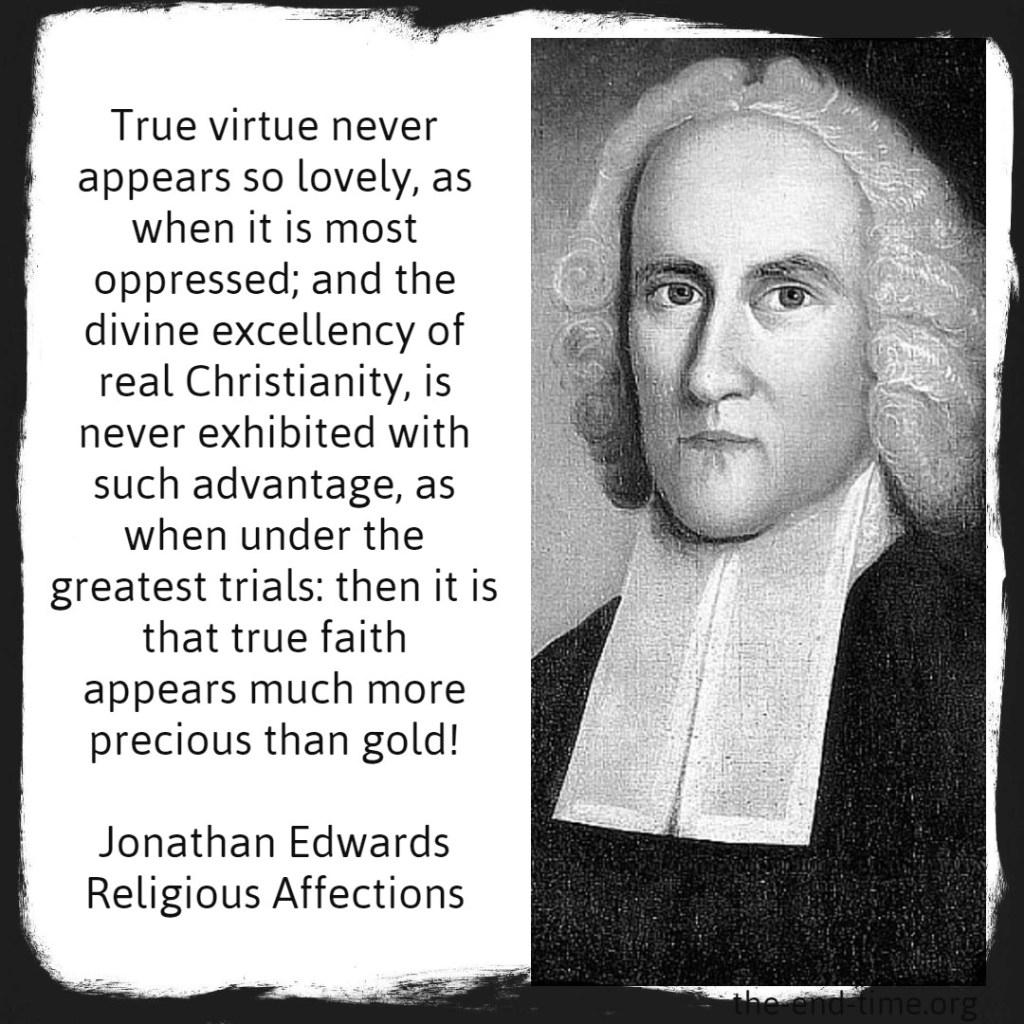
True Virtue: Oppressed and Beautiful

By Elizabeth Prata

The monthly letter to subscribers of Grace To You (Grace Partners) by John MacArthur is so incisive, convicting, and pertinent, I thought I’d share it here:

“One of the unhealthy effects of living in a prolonged era of relative comfort, convenience, and acceptance is that it curbs our appetite for heaven. When the sailing is smooth, heaven loses some of its luster. People who are satisfied by temporal things and content with the here and now don’t find the glories of heaven very compelling.”

“While we are right to preach against the prosperity gospel and the ‘your best life now’ philosophy of Joel Osteen and others like him, believers sometimes slip into a similar mindset that views political, social, and economic stability as rights guaranteed by God, expecting nothing less than heaven on earth.”

“But by His grace, God is using these unprecedented circumstances to correct and sanctify people’s thinking. As the moral decline of our culture accelerates, political foundations crumble, the fleeting nature of material wealth becomes more apparent, and cultural and social pressures against true Christianity mount, the world is losing its allure and heaven is becoming more and more appealing.”

“If the trials of the past year accomplish nothing else in believers except to redirect our affections and hopes toward the eternal home God is preparing for us—and preparing us for—we should consider them a profound blessing.” —John MacArthur