Posted in encouragement, Uncategorized

The dignity of our spiritual release

I was reading the Valley of Vision, A collection of Puritan Prayers and Devotionals, which is a stunning book, by the way. It’s one of the top three books on my shelf, after the Bible and barely before Pilgrim’s Progress.

In my version, there is a prayer on page 60 titled simply, “A Christian’s Prayer”. One particular line spoke to me deeply. The Christian who was praying (writing) the prayer wrote,

May I remember the dignity of my spiritual release

Continue reading “The dignity of our spiritual release”

Posted in discernment, Uncategorized

Mail Call: Why don’t they check against the Bible?

I receive questions and emails about theological topics from readers, as most bloggers do. My email address is listed in the ‘About This Blog’ tab. Sometimes someone will ask a question in a comment. There’s a comment in the queue in which someone asked me a great question that I haven’t posted yet. I will, I am working on an answer.

One particular question I frequently receive is on the topic of discernment. Some people have been given the spiritual gift of discernment. All Christians are supposed to exercise discernment, whether they have the gift or not. (Acts 17:11, 1 Thessalonians 5:21, 1 John 4:1). However, for the edification of the local and global body, as an early warning system, the Spirit has given an extra measure of discernment. The folks possessing this gift can detect false doctrine or a false teacher. People with this gift can detect whether the spirit working in a person is the Holy Spirit or another spirit. They can spot a counterfeit, or detect something off in a person’s life, teaching, or words. And so on.

People with this gift see truth so clearly, cling to it so tightly, and react so joyfully, it’s sometimes hard for them to understand how or why everyone can’t see what they see, understand what they know, detect what they detect. it’s perplexing to them. They love the scriptures so much they wonder why any and all Christians don’t leap into truth every chance they get. So the discerning person will gently point out that a certain teacher is false. They’ll share that the teacher is using them as merchandise, or is promoting an ungodly agenda. And the reaction of the hearer will be one of dismissal, apathy, or anger. In most cases, there will be a refusal to even go to scripture and hear out the case. And here comes the mail call question.

Q. Are they misinformed (as I once was) because they absolutely rely on misinformation and will not seek to find confirmation for or against a teacher who says questionable things?

It’s heartbreaking to see loved ones in one’s family or church or work life pursue ungodliness by following false teachers. It’s even worse when they decide to cling more tightly to that false teacher instead of investigating the issue. In discernment discussions, we often refer to Acts 17:11. I’d like to point out something in the verse that isn’t discussed much- the comparison

Paul noted in Acts 17:11 that “these Jews were more noble than those in Thessalonica; they received the word with all eagerness, examining the Scriptures daily to see if these things were so.”

What this tells us is that, just like today, not everyone checked the scriptures to see if what Paul was telling them was so. Not all people hear and then eagerly check. He said the Bereans were “more” noble, which by virtue of the word more, we understand the Thessalonians were “less” noble. The Bereans were more noble than the Thessalonians because they checked, and the Thessalonians didn’t.

The scriptures record that in Thessalonica some did believe, but others (the Jews) were incited by the scriptures and mobbed Paul and forced him out of the city down to Berea. This tells us that not only do some people fail to test scripture but that some hold onto their version of scripture so hard they become varying degrees of enraged when their pet theories or philosophies are exposed.

Other times when they refuse to listen to you or to check to see if it is so, it’s because of a situation called ‘deception by investment.’ A believer has followed the false teacher for so long, or invested so much personal worth, (money buying their books, travel time to their conferences, etc) or have staked their own personal credibility in promoting this teacher, that they do not want to face the fact that they might have been wrong all this time. So their pride won’t allow them to check against the Bible and they continue on in their deception.

If this is hard to believe, remember, unsaved people suppress the truth very well despite the fact of the existence of the earth telling them every minute that God’s invisible qualities are readily seen. (Romans 1:18-19). For saved people or false converts, it’s the same thing. They suppress the truth that a certain teacher is false. We creatures are good at suppressing. It happens all the time, every day, to the saved and the unsaved.

The difference between a false convert refusing to have an ear to hear and the saved person who initially has a bad reaction to the news their favorite teacher is a false one, is the Spirit in them. If the person has the pagan spirit in them, over time they will continue to follow the false teacher.

The natural person does not accept the things of the Spirit of God, for they are folly to him, and he is not able to understand them because they are spiritually discerned. (1 Corinthians 2:14)

However, the Holy Spirit in a person will never allow them to continue sinning, and following a false teacher is sin. He will alert them by giving them ears to hear, and soon enough, the words you’ve shared will enlighten their mind and begin the transformation by virtue of being carried by the Spirit.

The Holy Spirit’s ministry is to point to Jesus, who is Truth. He will not allow a person to continue pointing to the false. So even if you initially receive a bad reaction (hopefully not a mob chasing you out of your town or your church!) if the person is truly saved, they will respond soon enough by repenting and falling away from that false teacher, or false doctrine, or false practice.

——————————————-

Further Reading

What is discernment and why is it important?

How to identify false teachers

Posted in encouragement, Uncategorized

How to witness-lite

I was saved when I was 43 years old. At the time just before grace came and released me from spiritual bondage, I was working two jobs. In the morning I’d work from 6:30-10:30 putting up Post Office mail. Sorting the mail behind the wall of PO Boxes, I could hear the conversations occurring in the lobby. There was a particular Bible-believing pastor who used to come in and cheerfully greet everyone. It wasn’t one or two seconds before he would mention Jesus. Not ‘Lord’, or “Him’, or ‘God’, but he’d say “Jesus”. Things like, “Isn’t it a great day on Jesus’ world?” or “How are you on this day Jesus made?”

I’d become inflamed when I heard the name of Jesus. I believed that there was a God, the existence of the world in its complexity made it obvious. I was one whom the verse in Romans 1:19-20 applies,

For what can be known about God is plain to them, because God has shown it to them. For his invisible attributes, namely, his eternal power and divine nature, have been clearly perceived, ever since the creation of the world, in the things that have been made. So they are without excuse. 

However, I was also one for which the previous verse applied, too,

For the wrath of God is revealed from heaven against all ungodliness and unrighteousness of men, who by their unrighteousness suppress the truth.


And, what truth was I suppressing? Jesus, for He IS the truth. Therefore any mention of Jesus by anyone, with all its attached concepts- sin, repentance, wrath, inflamed my heart and mind and I suppressed it all.

When I’d hear that name I’d push the mail into the PO Boxes a little harder, I’d grind my teeth, I’d mutter to myself, “Why doesn’t he shut up? Doesn’t he know nobody wants to hear that bunk? Doesn’t he know that nobody’s listening??”

Of course, lol, I was listening.

Soon after that, my carefully built fortresses I’d built in my heart and mind were as wafers and wisps in the face of Jesus’ power who, in His irresistible grace, in His timing, instantly crumbled them all down. I became a believer.

The lessons there were some I never forgot. Please allow me to share these few tidbits.

I know we feel funny when we witness to people. Sometimes we think we have to approach people in a way to share deep, complicated, theological truths in a private setting. Sometimes we beat ourselves up for missing an opportunity, or failing to be clear, or for being fearful we’ll forget critical component.

When we speak to each other as believers, or when we to those we interact with as we go through our daily life (clerks, tellers, cashiers, etc), we should say the name of Jesus, specifically. Saying His name in the public square has power. Not as in magic genie power, but because the name of Jesus is the only name, the name above all names, and the name upon which we come to salvation, the name of Jesus incites people.

Secondly, have conversations about Jesus in the public sphere. Speak of him in the college cafeteria, in the meeting before it begins, at the coffee counter. Just a quick exchange with the friend you’re with of what you learned about a specific verse, or reciting a scripture, or an insight regarding a parallel verse. Others around you hear these conversations. You may never know who heard them, as the pastor never knew I was listening, but the Holy Scriptures have impact upon whom the Lord decides they will have impact. Speak His truths in public, the word will not come back empty.

Of course we do want to witness as to the full message when we can. But when we can’t, don’t feel like you’ve failed. Speak His name or a few verses to someone in the public square. The name of Jesus and His word has power to chip away at the hardest of hearts.

Posted in discernment, Uncategorized

Concluding thoughts on the US Presidential election

Once again our electoral process worked and the American people went to the polls and voted for their candidate. Donald J. Trump, and American businessman, author, and entrepreneur, was the winner over Democrat candidate Hillary R. Clinton.

Hillary Clinton has been deeply embedded in the political machine her entire life. She rose to notice and prominence as a young 27-year-old lawyer in 1974 when she was on a junior member of the House Judiciary Committee’s temporary Impeachment Inquiry staff during the House of Representatives’ investigation of Watergate. Subsequently, she was appointed the first female chair of the Legal Services Corporation in 1978 and became the first woman partner at Rose Law Firm in 1979. She has been First lady of Arkansas when her husband Bill Clinton was governor, First Lady of the United States when her husband was elected President, Senator for the State of New York, and Secretary of State.

Her public life has been one of constant rising success, all the way to November 7, 2016 when she nearly won the American presidency, but lost it instead.

As it is, Republican nominee Donald Trump, an outsider who has never held an elected position, was elected.

I’ve never seen the world accept a defeat laying down. I’ve seen what the world does when its plans are thwarted, especially when it had pinned its hopes on one who is as deeply embedded in it as Hillary Clinton is.

If you were of the world, the world would love you as its own; but because you are not of the world, but I chose you out of the world, therefore the world hates you. (John 15:19)

Friends, continue to pray.

Rejoice always, pray without ceasing, give thanks in all circumstances; for this is the will of God in Christ Jesus for you. (1 Thessalonians 5:16-18).

Posted in prophecy, Uncategorized

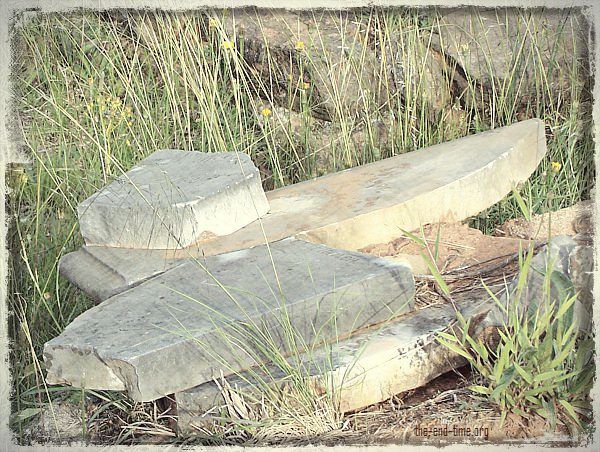
The earth groans, too

The creation itself groans under the weight of the curse laid upon it.

And to Adam he said, “Because you have listened to the voice of your wife and have eaten of the tree of which I commanded you, ‘You shall not eat of it,’ cursed is the ground because of you; (Genesis 3:17a)

For we know that the whole creation has been groaning together in the pains of childbirth until now. (Romans 8:22).

And some of the Pharisees in the crowd said to him, “Teacher, rebuke your disciples.” He answered, “I tell you, if these were silent, the very stones would cry out.” (Luke 19:39-40)

For the stone will cry out from the wall, and the beam from the woodwork respond. (Habakkuk 2:11)

the stones, &c.—Hitherto the Lord had discouraged all demonstrations in His favor; latterly He had begun an opposite course; on this one occasion He seems to yield His whole soul to the wide and deep acclaim with a mysterious satisfaction, regarding it as so necessary a part of the regal dignity in which as Messiah He for this last time entered the city, that if not offered by the vast multitude, it would have been wrung out of the stones rather than be withheld (Hab 2:11). Commentary Critical and Explanatory on the Whole Bible

A humble praise to the Lord of all creation, the One who has the very earth in His hands. The King of all Glory- Psalm 24:1-4

The earth is the Lord’s and the fullness thereof,

    the world and those who dwell therein,

for he has founded it upon the seas

    and established it upon the rivers.

Who shall ascend the hill of the Lord?

    And who shall stand in his holy place?

He who has clean hands and a pure heart,

    who does not lift up his soul to what is false

    and does not swear deceitfully.

In response to Bible reading, prayers, and devotional this week, I offer my own humble praise to the Lord, who will release the earth and all its believing inhabitants from the curse. Our hearts will be refreshed and made free from sin’s presence. The earth itself will flourish without tempest or stain. What a day that will be!

May the frothy brine

hurling itself upon the stony shores

and heaving in boundless surge

soon whisper your glorious name

in serene tranquility.

May the trees which quiver and shake

in unending winds

driven relentlessly against them,

soon stand as majestic towers of tranquility,

affirming your creative glory.

May the ground under the feet

of the righteous and wicked,

fields and foundations that reel like a drunkard,

soon quell in serene repose

placid under the nail scarred soles of the returning King.

May the earth disgorge its dead-

some to eternal life and others to unending contempt,

yet all to cry out that Jesus Christ is Lord,

to the glory of God the Father.

~ By EPrata

[Inspiring verses: Philippians 2:11, Zechariah 14:4, Isaiah 24:20, Luke 19:40]


Posted in prophecy, Uncategorized

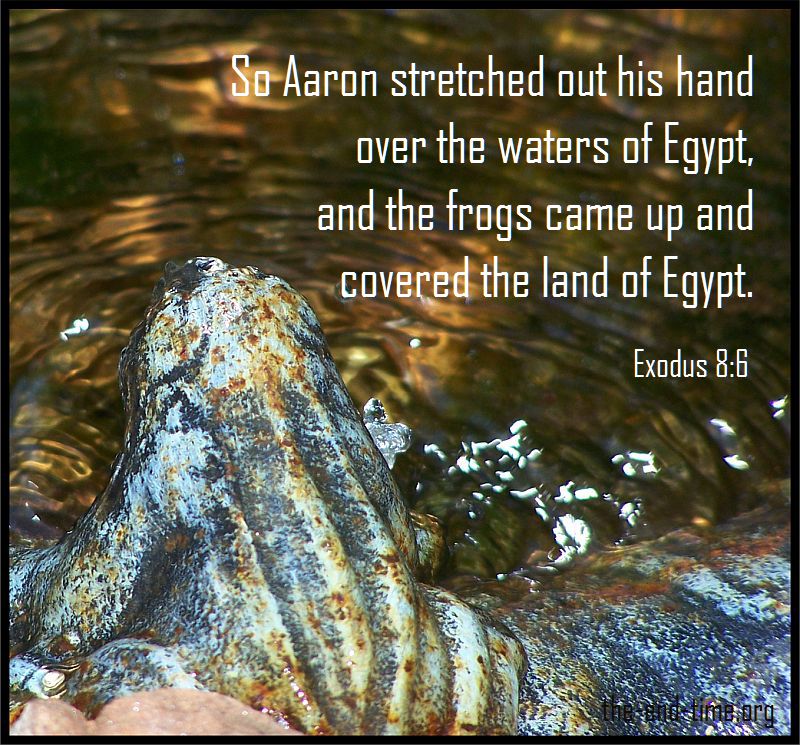
Is it raining frogs yet? Thoughts on US Presidential election

Bob Schieffer is a political reporter. Out of the total 58 elections the United States has enacted since the beginning of our elections process, Schieffer has covered 14 of them. His perspective is valuable by virtue of his lengthy experience as knowledgeable observer throughout 56 years. Yesterday he said the following:

I have seen a few [elections], but I’ve run out of ways to say I’ve never seen one like this. It’s as if the nation is enduring some kind of curse,” Schieffer said on the CBS Evening News Monday.”

Even the non-saved person such as Mr Schieffer knows and understands God’s hand upon the earth and on this nation. We have turned our back on God in all the ways possible and as a result, we are under judgment. God’s hand upon us is not one of soft care but hard abandonment. Romans 1:18-32 has the progression- we have had a sexual revolution, we then had a homosexual revolution, and now we have such reprobate minds we can’t even declare for certainty what our own biological gender is. The nation IS under a curse. Obviously the curse is so palpable that even the blinded mind can detect it.

Schieffer went on to say, “What should we expect next – that it will rain frogs? I wouldn’t bet against it.”

His reference of course is to the biblical plagues God sent upon the Egyptian Pharaoh who would not let the Israelite people go. The plague of frogs was the second plague, as we read in Exodus 7:25–8:15. I surmise that Schieffer’s reference here is to the unnatural conditions one finds in the United States, as compared to previous elections and conditions upon which candidates had promised to fix. How interesting that when one comes up against an unnatural condition, one’s mind turns to the Bible and its plagues or other events in which to compare.

Finally, Schieffer said,

“We tend to call every election the most important of our lifetime, but this one might well be. Those of you who are voting for the first time, take it from me – this election is not business as usual,” Schieffer said. “This one is different – and not in a good way.”

It does feel different. Time will show just how different. It says a lot on how far down the judgment path this nation has traveled since 2008 when many, many folks detected an evil supernatural quality to Obama, so much so that lots of folks thought he was the antichrist. And now they are feeling this election with its crop of candidates is worse? That’s saying something.

When God abandons a nation, He gives us the leaders we deserve. In His judgment against Judah and Jerusalem, He gave them mere boys to lead. (Isaiah 3:4). Later in Isaiah 3 we see that sometimes as a judgment He gives them women to rule over them. (Isaiah 3:12.)

In Isaiah 19:11-12 we see that the nation’s wise men had become foolish, their wisdom vaporizing like dew on a warm day. They could not deal with the crises at hand and had become helpless to fix them. This is because they were ignorant that God’s judgment was the cause.

If any of this sounds familiar, it should. These cycles of blessing and judgment have gone on since the Garden and they will until Jesus concludes His redemptive plan. Humans have always been either one of two things, sinful or righteous in God. If they are sinful they do not know God and worship the creation. Their foolish hearts are darkened and their minds cannot think correctly. If the people of a nation are righteous in Christ, they (we) submit to the temporal happenings with grace and good humor.

Despite the hoopla over the US Presidential Election, God’s redemptive schedule is still on track. Nothing is hindering it, nothing is throwing it off balance or behind schedule. Even if frogs rain down on post-election morning, I will still praise my Savior for His grace and works. This nation is enduring a curse. However, His children are never cursed. Our standing in Him is made righteous through Christ, and our citizenship is in New Jerusalem. Presidents come and go, but our Ruler is eternally on His throne.

Kiss the Son, lest he be angry, and you perish in the way, for his wrath is quickly kindled. Blessed are all who take refuge in him. (Psalm 2:12).

Posted in Uncategorized

Jachin and Boaz, two named Temple columns

I like columns. Did you know there were two particular columns that were part of Solomon’s temple, and that they had names? Since the terms describing these pillars have gone into history, and no explanation is given in the Bible as to why they are so named, these pillars remain mysterious. The Bible records their existence and look and that’s it.

Of course whenever there is a mystery there are a plethora of mystical and conspiracy theories regarding it. The Bible mysteries are no different. If you go off researching about the two pillars/columns, be wary of many of the search results.

Jachin and Boaz were the names of the pillars which were set up in front of the Sanctuary in Solomon’s Temple in Jerusalem (I Kings 7:15–22, 41–42; II Kings 25:13, 17; Jeremiah 52:17, 20ff.; II Chronicles 3:15–17; 4:12–13). According to Josephus in Antiquities of the Jews, Boaz (“In him/it [is] strength”) was on the left when entering Solomon’s Temple, while Jachin (“He/it will establish”) was on the right. The were made by Hiram. It seems that though opinion is divided, most scholars seem to believe these were freestanding pillars and performed no structural function in the temple.

He set up the pillars in front of the temple, one on the south, the other on the north; that on the south he called Jachin, and that on the north Boaz. (2 Chronicles 3:17).

The pillars had a size nearly six feet thick and 27 feet tall. The eight-foot high brass capitals on top of the columns bore decorations of brass lilies. The original measurement as taken from The Torah was in cubits, which records that the pillars 18 cubits high and 12 cubits around, and hollow, four fingers thick. (Jeremiah 52:21–22). Nets of checkerwork covered the bowl of each capital, decorated with rows of 200 pomegranates, wreathed with seven chains for each capital, and topped with lilies (1 Kings 7:13–22, 41–42). (Wikipedia).

I do not know a lot about the Temple but I’m looking forward to learning. Ligonier Connect has an online class I’m going to take over Christmas break called Understanding the Tabernacle. The Temple is the place where God decided to make His presence known and inhabit for a time, so I believe learning about it will be profitable and interesting. He was specific in its aesthetic and dimension, and so by virtue of His interest in the temple, my interest is also ignited.

Aesthetically, I’ve always loved pillars and columns, I suppose the tendency in us is to admire things that reach for heaven. We see that this tendency can be corrupted, as the pagans built Ashereh poles, and monuments, pillars, and altar cairns on the high places. The problem with Ashereh poles is mentioned constantly in the Old Testament. Warnings and admonitions about them appear in Exodus, Deuteronomy, Judges, both Books of Kings, the 2nd Chronicles, and the prophetic books of Isaiah, Jeremiah, and Micah. One can build a beautiful monument to a god, and worship there, but it has to be a monument to the One True God and worship there has to be true. (Leviticus 10:3). Of course, one does not have to build a soaring monument to God, one can worship Him in any humble building. But we sometimes still have the urge to offer worship to Him in a building that matches His majesty. Columns add to that majesty.

I’ve traveled to Europe and have seen the great cathedrals and churches. It’s a shame most of them are Catholic and therefore perform the same function as Ashereh poles. Any worship in those places only comes to dust and ashes. But I understand the desire to build something beautiful and soaring for the Lord. David felt it and inquired of the LORD in 1 Chronicles 17. David asked through the prophet Nathan, may he built a dwelling place for the LORD? The LORD praised David’s urge, but reminded David he had not rebuked previous kings and leaders for not building a temple. He said that a temple will be built, but David may not do it. Solomon will. In 1 Chronicles 22:8 we learn God’s reason- David had shed much blood because he was a man of war. David’s urge is something  many of us feel, we want the best for our Lord because He IS the best. The temple in heaven must be absolutely glorious and indescribable.

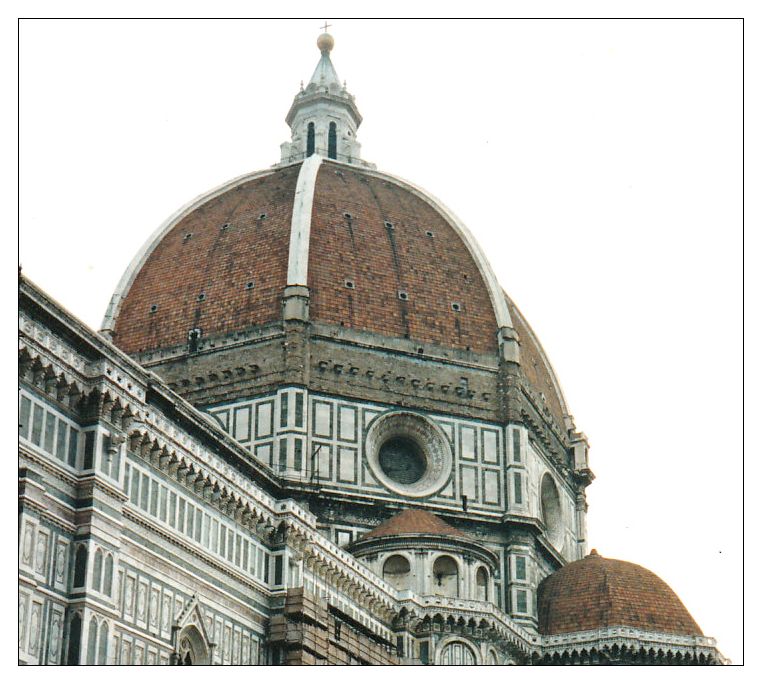
Florence Cathedral with the famous dome. Prata photo

There is a good book called Brunelleschi’s Dome, by Ross King, covering the incredible story of the largest masonry dome ever built. It adorns the top of the Santa Maria del Fiore (Saint Mary of the Flower) cathedral in Florence, Italy. The cathedral’s construction began in 1296 without knowledge of how the dome would be built to the architectural design they were following. The people were sure that by the time they got to the top, they will have figured out how to do it, lol. The cathedral was finished in 1436 with the dome engineered by Filippo Brunelleschi, in an ingenious way.

I remember reading Ken Follett’s monumental book Pillars of the Earth, a sweeping historical narrative covering the people designing and building a cathedral in 12th century England. It’s historically accurate and a ripping good yarn. I read it long before I was saved so I do not remember whether it can be safely recommended as a clean book to Christians. I do remember the author balanced both the sweep of epic cathedral building with finely drawn realistic characters.

Columns are soaring and beautiful. They adorn many a church in America, from humble to cathedral. The Temple will be interesting to study, as will the two named columns, Boaz and Jachim. There is so much to study, isn’t there? God surely has an incredible mind. We’re blessed He has shared some of it with us in His word.

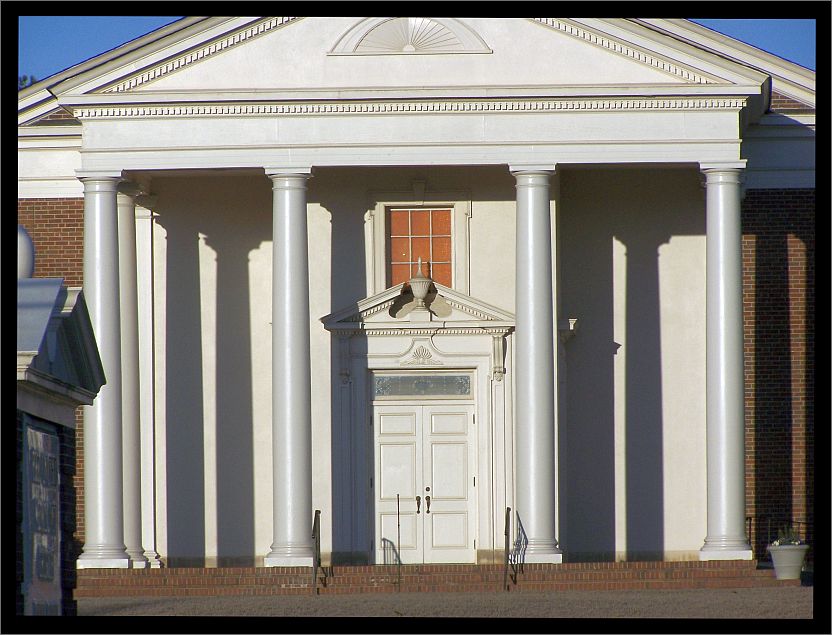
Columns of a Georgia Baptist Church. Prata photo


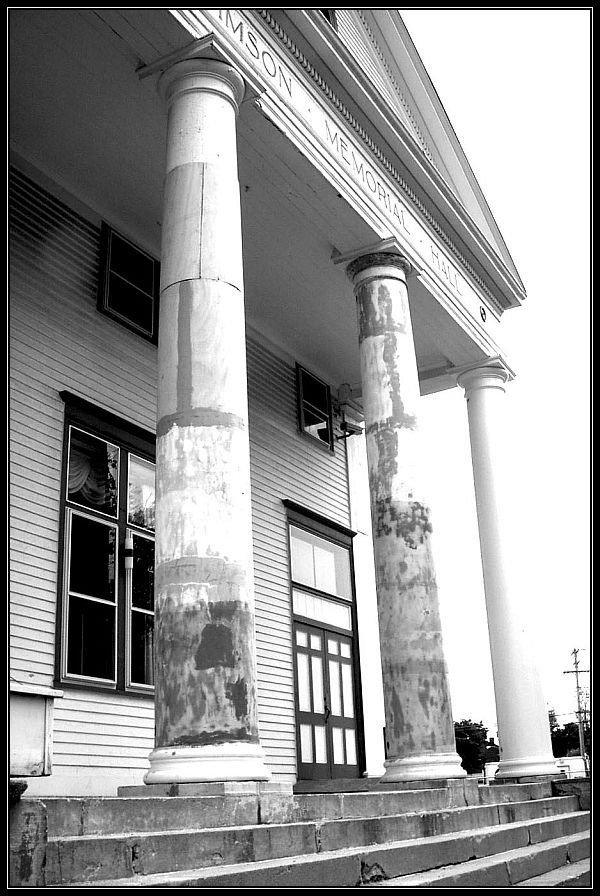
Columns under repair, New England secular building
Prata photo
A larger Georgia church with its columns. Prata photo
Posted in discernment, Uncategorized

Further discerning of Ravi Zacharias

In January 2016 I’d written an essay questioning whether well-known apologist Ravi Zacharias was solid and should be listened to or not. It’s called: On Discerning Ravi Zacharias: It’s time to say what needs to be said.

In discerning whether a teacher is qualified, we first look to the Bible for its benchmarks and standards to see if the teacher meets them according to their ability, gender, and age. We also look to their lifestyle and behavior, as the Bible exhorts.

What we don’t do is jump on one little error or mishap and make a global, dogmatic declaration about or against a teacher. We are patient, kind, and watchful with grace. Over time however, if the teacher’s errors or mishaps continue to accumulate, one becomes cautious in absorbing his or her material. At some point the Christian makes a final decision using their God-given level of discernment whether to follow that teacher any more or to abandon him.

That’s usually why I include in my essays several examples from a teacher I’m considering following or abandoning, and I also usually include the time frame. Because of grace, I need to see a total picture over time before deciding against someone who professes Christ.

In my January essay, I’d raised concerns about Mr Zacharias in the following spheres:

–Personal ethics. Allegedly inflated and exaggerated credentials, violating Titus 2:7 and 2 Timothy 2:15;

–Doctrine. Refusals to take positions on critical doctrines of the Bible (creationism, Calvinism, Catholicism, and eschatology) which violates Acts 20:20, Acts 20:27, 1 Peter 3:15 and Titus 2:1;

–Being unequally yoked. Partnering with Joyce Meyer in spiritual endeavors, and calling her “a great Bible teacher”), violating 2 Corinthians 6:14.

All these added up to highly doubtful solidity. I made the personal decision not to listen to Mr Zacharias any more and to refrain from recommending him to friends.

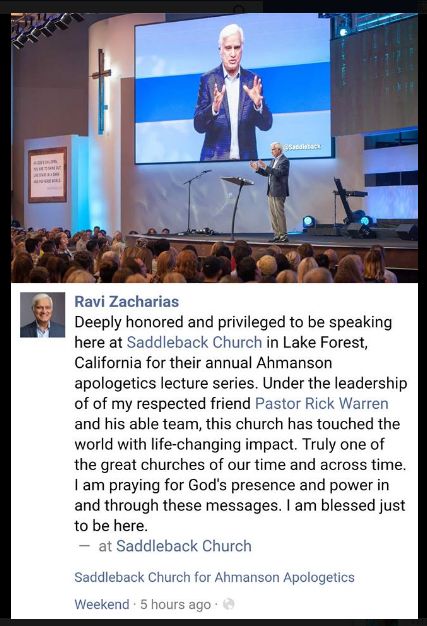
I read The Berean Examiner‘s screen shot today that Mr Zacharias had published on his Facebook page. Here is Mr Zacharias’s comment-

There are two obvious problems with Ravi’s compliment of Saddleback and Pastor Rick Warren. The first is that Rick Warren is an apostate pastor whose emphasis on entrepreneurial business practices, extra-biblical methodsmishandling of the Bible, pragmatism, waffling on major issues, and failure to preach the Gospel is of high concern and have done tremendous damage to the twentieth century church and have led many astray. Mr Warren’s errors have been seen over decades and discussed long enough so that any Christian with a modicum of discernment would be troubled. That Mr Zacharias partnered with Mr Warren and worse, praised him, is another strong strike against Mr Zacharias.

Second, Mr Zacharias’ comment that Saddleback is “one of the great churches…across time” is also troublesome. We can compare great churches across time. We have the Bible. The Lord Himself commended churches He declared worthy and these commendations of greatness are recorded in the book of Revelation. Let us take a look at these ‘great churches across time’ to see what made them great.

The Church at Philadelphia was a church commended by Christ and having no negative remarks associated with it. None. (Revelation 3:7-13). They were so commended by the Lord, He said He will make that church’s enemies “come and bow down before your feet, and they will learn that I have loved you.” (Revelation 3:9).

The church at Smyrna, recorded in Revelation 2:8-11, was also a great church across time because it was commended by Jesus with having no negative strikes against them. He said that that particular church was temporally poor but spiritually rich. Wow.

What Mr Zacharias is saying is that from across that time to ours, Saddleback compares favorably to those beloved Philadelphian and Smyrnian churches. I disagree, strongly.

The one part of Zacharias’s statement with which I agree is his comment that Warren and Saddleback has “touched the world for life-changing impact”. In my opinion, Rick Warren has been one of top negatively influential people of the entire twentieth century that has most negatively impacted the global church with a doctrinal pollution of untold proportions. Warrens’ band of pragmatic, market-driven, seeker sensitive, felt-needs doctrines are no better than those merchants Jesus condemned of making His Father’s house a den of thieves.

I am sorry to see these statements from Mr Zacharias but in the end I’m glad. It confirms for me the biblical and personal necessity of putting him aside and strengthens my resolve to warn against him.

—————————————–

Further Reading

On Discerning Ravi Zacharias: It’s time to say what needs to be said.

Posted in discernment, Uncategorized

Are we “broken”? Should we celebrate “brokenness”?

On this blog I’ve mentioned numerous times that words matter. The words we use within the faith to express things do matter a lot. “Our” words should not be changed, or ‘updated’. This is because the faith is born in the mind, kept in the mind, and fought in the mind. Words reflect our understanding of concepts, and when satan attempts to change those words, it changes our understanding of the concept. Therefore, sin is no longer sin, but a mistake. Faith is no longer faith, but following. We’re missional instead of disciples, and we have conversations around the truth rather than proclaim the truth. We’re authentic and on a journey rather than evangelists standing our ground.

Another word that is emerging to change our common understanding of the faith, is ‘broken’ or ‘brokenness’. Over time, the faith has been feminized from Paul’s descriptions of a gritty spiritual war, to a romantic fling with a heroic boyfriend. We’re not, as Paul said, athletes pressing on for the prize, nor are we soldiers fighting for the faith, but we are gentle doves with broken wings looking for someone to fix us.

An example of the prevalence of this word and its concept is author Ann Voskamp of One Thousand Gifts. She has written a new book which was released last week. Its title is, The Broken Way: A Daring Path into the Abundant Life. Rick Warren’s wife Kay added her blurb to the review of Voskamp’s new book, describing it thusly,

In The Broken Way, a deeply personal revelation, Ann Voskamp leads us on a journey toward embracing and celebrating the brokenness in each of us. The passionate words that pour from her soul will make you weep and shout hallelujah at the same time. (Kay Warren, Saddleback Church, Lake Forest, California)

Let’s take a look at what is at the root of this move toward the concept of brokenness.

You might have heard of the doctrine of ‘total depravity’. This does not mean that all humans are totally as bad as they could be. There is such a thing as benevolence in the world, people who help. Total depravity means that humans are born with a total inability to be pleasing to Christ. It is the biblical doctrine that human nature is thoroughly corrupt and sinful as a result of the Fall. Our sin-nature drenches us from head to toe, and there is not one spot, corner, or area of our nature that contains what Christ deems as goodness.

The doctrine understands the Bible to teach that, as a consequence of the the Fall of man, every person born into the world is morally corrupt, enslaved to sin and is, apart from the grace of God, utterly unable to choose to follow God or choose to turn to Christ in faith for salvation. Theopedia.

Total depravity, or total inability, is based on numerous verses. Here are two:

And you were dead in the trespasses and sins in which you once walked, following the course of this world, following the prince of the power of the air, the spirit that is now at work in the sons of disobedience—among whom we all once lived in the passions of our flesh, carrying out the desires of the body and the mind, and were by nature children of wrath, like the rest of mankind.” (Ephesians 2:1-3)

for all have sinned and fall short of the glory of God, (Romans 3:23).

Because we cannot please God in any way of our own works, we need something or someone external to the human condition to resolve this devastating status of our inherent nature. That is why God in heaven sent His Son Jesus from heaven to live the perfectly holy life required to please God, and die on the cross while absorbing His wrath, punishing sinless Jesus for our sins. Satisfied with this sacrifice, God raised Jesus to life and imputes Jesus’ righteousness onto those humans who are called to believe. We become wrath-free and righteous in His eyes.

To the point of this essay, we become a new creation. This change in condition is my all-important point.

Therefore, if anyone is in Christ, he is a new creation. The old has passed away; behold, the new has come. (2 Corinthians 5:17)

For neither circumcision counts for anything, nor uncircumcision, but a new creation. (Galatians 6:15).

Jesus replied, “Truly, truly, I tell you, no one can see the kingdom of God unless he is born again.” (John 3:3).

Brokenness bespeaks of fixing, not of being made new. By its own definition, it means the creature retains some inherent worth, and simply needs a fix in some area or other. To say ‘we are broken’ is to say that we are not totally depraved, not totally unable to please God, do not require anything more than a fix-up in one area or another of this body before becoming pleasing to Jesus.

Nothing could be further from the truth. We are familiar with the hymn Rock of Ages. In the third stanza, we sing- “Nothing in my hand I bring, Simply to the cross I cling;”

When we are born again, humans retain nothing, absolutely nothing we can reuse in service to the Savior. We are made new, we are a new creation. Teaching about our brokenness is an idea that undermines the critical doctrine of this truth of our position in Christ.

Moreover, when by grace we are saved, we are made whole. Colossians 2:10 says that when we are made a new creation, we have been made complete, full. Other verses speak to this-

Until now you have asked for nothing in My name; ask and you will receive, so that your joy may be made full. (John 16:24)

And concerning you, my brethren, I myself also am convinced that you yourselves are full of goodness, filled with all knowledge and able also to admonish one another. (Romans 15:14)

We begin our lives completely unable, offering nothing of use to Jesus, and when we’re saved, we become a new creation and are completely able to please Him. There is nothing about our lives before or after salvation that is “broken”. Our lives entering through the narrow gate is one of submission and humility. Our lives after entering the gate as we proceed on the path of sanctification include repentance and strength. We go from complete depravity to complete righteousness.

Voskamp’s book and Warrens’ exultation advising us to embrace the brokenness in us is wrong. To do this demeans the Spirit’s ministry which completed us in Christ and is sanctifying us for life. It ignores the verses such as the ones below which advise us to cast away those weights which hinder us in the task of worshiping God and pursuing holiness. I’m not picking solely on Voskamp’s book but any and all teachings so common today which tell women to wallow in brokenness. Hebrews 12:1b-2 advises us to-

lay aside every weight, and sin which clings so closely, and let us run with endurance the race that is set before us, 2 looking to Jesus, the founder and perfecter of our faith, who for the joy that was set before him endured the cross, despising the shame, and is seated at the right hand of the throne of God.

Lay aside the weight of our initial sin which hindered us, a hindrance which we lost at entering His gates. Lay aside accumulated broken feelings after salvation which weigh us down. We have the joy of Jesus. (John 15:11).

Women, you’re not helpless doves waiting to be fixed, you’re gracefully saved spiritual soldiers marching in truth toward glory.

Now, I understand the female notion of teaching to the emotions. I know it’s easier to teach that way, and it’s a basis for a study that will be better received by the students of it. This is because we’re all hurt in some way. Life on earth hurts. We are maligned and rejected. We accumulate a broken heart full of wounds. Our job may break us. Boot camp may break us. We may feel broken as a grieving surviving spouse, overcome by sadness or despairing in some way. Remember the old days when divorced couples were known as having a “broken marriage”? Or children of divorce were from a “broken home”? I understand that sometimes we feel broken. It’s a useful word that describes a temporary emotional state. But it has nothing to do with the permanence of our status before Christ.

Those are emotions, surface, temporal and fleeting. Our basic conditions as humans is either-or. We are either totally unable or we are totally righteous (in His eyes). When we are saved we come with a knowledge that there is nothing fixable in us, we leave with Him our entire nature as depraved sinners and enter His gates with joy, knowing His righteousness is now imputed to us. Nothing of the old is left.

The issue is, are we broken, or depraved?

Broken?
Or depraved?
photo by Sparrows-love-the-snow

Christian wholeness is a doctrine that exalts Jesus. That and “brokenness” are irreconcilable and contradictory. Every Christian should fully appreciate everything that Jesus has done for us to make us whole in every way. Even though some Christians may temporarily feel broken in some areas of their life, no Christian should be content in remaining broken nor should we seek to become broken. We definitely do not pursue brokenness, as Ann Voskamp’s book teaches, and Kay Warren exults! It’s not pious to do so. It’s sinful because it rejects Jesus’s work which made us into a new creation.

The Holy Spirit who resides in us does comfort us. He helps us. He restores relationships. He is not a fix-it guy of “broken” people, He is God who loves and manifests His glory when He is faithful to His promises to us to comfort, help, and restore.

You might think it’s picky to pick on the word brokenness. But you saw at the start of this essay the words that have already been co-opted and redefined by liberals. It’s important for believers to retain each word describing a foundational faith-concept. Understood, it is the yarn that knits us together into the tapestry of believers comprising the worldwide church. If you pull one yarn the sweater is soon corrupted. Protect our words, they are ours. What they mean communicate important information from God’s mind to fellow believers. They even mean something to unbelievers who hear and see us using them. Ladies, don’t wallow in brokenness, rejoice, because He has made us whole!

But Jesus turned him about, and when he saw her, he said, Daughter, be of good comfort; thy faith hath made thee whole. And the woman was made whole from that hour. (Matthew 9:22)

———————————————

The fluidity of word use and their meanings is rife in the world, that’s just the way it is.Yet Christ’s word is eternal, and the meanings of the words of faith should remain so.  George Carlin was a hilarious but profane atheistic comedian who died a few years ago. His incisive and accurate observations on many topics became well-known over his long career. Here is one riff from a comedy set he used to perform regarding how the secular world is unaware of changes in meanings of words. It’s a long and funny set, but too profane in its entirety to post a video of. I post instead a cleaned up excerpt from a transcript. It’s a useful little exercise in tracking word meaning changes over time.

Read the following and you’ll see just how many words have changed. (If you’re as old as I am, that is, lol.)

One of the reasons is because we were using that soft language. That language that takes the life out of life. And it is a function of time. It does keep getting worse. I’ll give you another example. Sometime during my life, toilet paper became bathroom tissue. I wasn’t notified of this. No one asked me if I agreed with it. It just happened. Toilet paper became bathroom tissue. Sneakers became running shoes. False teeth became dental appliances. Medicine became medication. Information became directory assistance. The dump became the landfill. Car crashes became automobile accidents. Partly cloudy became partly sunny. Motels became motor lodges. House trailers became mobile homes. Used cars became previously owned transportation. Room service became guest-room dining. And constipation became occasional irregularity.

Posted in poetry, Uncategorized

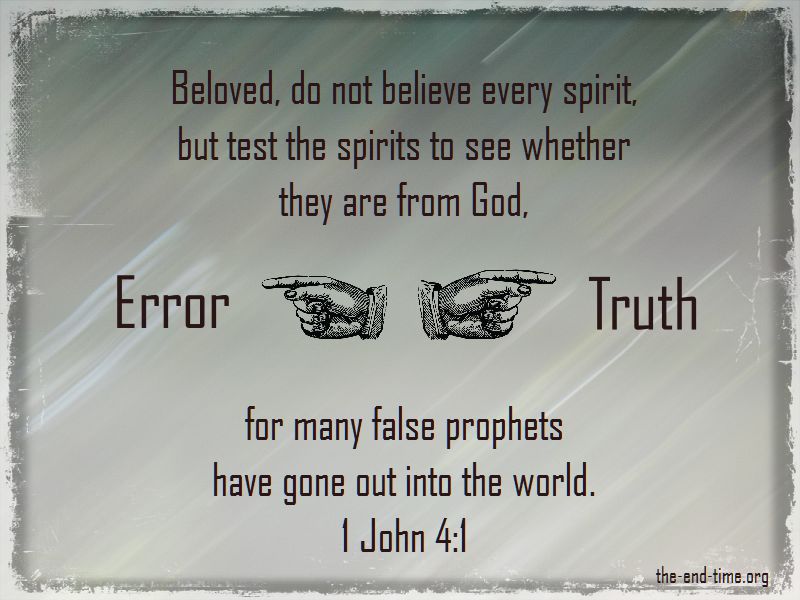
Kay Cude Poetry: What Manner of Man is This?

Kay Cude poetry. Used with permission. Click to enlarge.

Artist’s statement:

After finishing this piece, the more I read and reread Mark 4:37-41 and Colossians 1:16-18, the more I was overcome with tears. The Holy Spirit is so faithful to teach, especially at times when I am too busy “doing things” for Christ (in my own effort). How many more readings of these verses will it take for me to attentively remember that Christ’s continuing patience with me, my fears and my sometimes feeble faith is unbelievably profound and so very merciful?

How many times has Scripture told me, told all believers, to pay attention to Christ and His Word, and to not allow the storms of battering and fearful trials or heartaches overwhelm us? That He is sufficient; that He will enable us to glorify Him in our lives; that He will supply us with the appropriate words needed at perilous times of persecution and impending death? Or to remember that all things are under His authority and that He is preeminent and sovereign and that he will supply us the wisdom and endurance to continue on? Or that His Holy Spirit sustains us!

I am so thankful, so grateful, that He knows the hearts of His redeemed so intimately, and so very thankful that He rescued me!

kay-cude-manner-of-man