Posted in encouragement, Uncategorized

Who else longed to look into the Gospel besides angels?

We’re familiar with the part of the verse that tells us that angels long to look into these things. The full context of that verse is pasted below, it’s from 1 Peter.

Apostle Peter, formerly Simon, formerly a fisherman, is nearing the end of his life. It’s about the early 60s and Peter had been a leader of the church. The elect to whom Peter addressed his letter were beginning to suffer persecution, and his letter, which was to be circulated, was aimed at encouraging them. Peter strongly urges them to link doctrine and practice, a point he makes in chapter 1:12, 15, and he begins in the first chapter with elevating the glory of the Gospel. Here is where we remember that the Gospel is so great, so mysterious, that angels long to look into it.

Concerning this salvation, the prophets who prophesied about the grace that was to be yours searched and inquired carefully, 11inquiring what person or time the Spirit of Christ in them was indicating when he predicted the sufferings of Christ and the subsequent glories. 12It was revealed to them that they were serving not themselves but you, in the things that have now been announced to you through those who preached the good news to you by the Holy Spirit sent from heaven, things into which angels long to look.
(1 Peter 1:10-12).

In reading the passage I realized that not only angels longed to look into the mystery of the Gospel, its wonder, atonement, wrath, crucified and sinless God-Man. The Prophets also wanted to know about it. They, who had the Spirit in them, inquired of the LORD as to the aspects of this religion they were required to speak. Here is the wonderful Barnes with his Notes:

Of which salvation – Of the certainty that this system of religion, securing the salvation of the soul, would be revealed. The object of this reference to the prophets seems to be to lead them to value the religion which they professed more highly, and to encourage them to bear their trials with patience. They were in a condition, in many respects, far superior to that of the prophets. They had the full light of the gospel. The prophets saw it only at a distance and but dimly, and were obliged to search anxiously that they might understand the nature of that system of which they were appointed to furnish the comparatively obscure prophetic intimations.

They were writing to us and for us. It was revealed to them that they were serving not themselves but you, Peter wrote. Us. The elect saints in the church age would be the recipients of the further information than myriads of angels- who live with God- . and prophets – who personally spoke with God – longed to look.

Next time someone says they “want a fresh experience” or desire the Spirit to fall down and manifest some kind of event, or that they wish to hear Jesus personally calling, or that they feel stale and covet a miracle, please remind them of this glorious truth. We already have the benefit of the most glorious experience of all, the understanding of the plan of God with regard to His Son. The angels and the Prophets wanted to know about Him, who He would be, what would be his life and doctrine and character, and what would be the nature of the work which He would perform on behalf of the people. They didn’t know. They wished to know. They asked to know. They did not know. We do.

As Barnes says of verse 12,

By them that have preached the gospel unto you – The apostles, who have made known unto you, in their true sense, the things which the prophets predicted, the import of which they themselves were so desirous of understanding.

knowing that you were ransomed from the futile ways inherited from your forefathers, not with perishable things such as silver or gold, 19 but with the precious blood of Christ, like that of a lamb without blemish or spot. 20 He was foreknown before the foundation of the world but was made manifest in the last times for the sake of you 21 who through him are believers in God, who raised him from the dead and gave him glory, so that your faith and hope are in God. (1 Peter 1:18-21)
Have a blessed day, pondering these truths into which angels and Prophets inquired and longed to look.

Posted in encouragement, Uncategorized

Of Jesus’ love: My Value’s Fixed

Keith Getty’s song “My Worth Is Not In What I Own” is a lovely song. As Mr Getty describes the song at The Gospel Coalition, it

is a song that speaks to the subject of worth by reminding us that true significance is found in our identity in Christ. Kristyn and I recently wrote it with our good friend, Graham Kendrick, in an attempt to reclaim two glorious truths. The first is that we, as men and women created in the image and likeness of the Creator, are created with intrinsic worth.

But there’s another truth we want to convey: given our pervasive rebellion—what R. C. Sproul calls “cosmic treason”—against the king, we are all unworthy of the value with which he crowns us. Yet God sent his Son so our worth might be found in something far grander than ourselves. In Christ, no longer do we look to our own accomplishments and achievements to find significance. We look instead to his perfect work on our behalf, and there our souls find the true sense of identity we so crave. The chorus of our song draws from the rich imagery of 1 Peter, which depicts Jesus as an inheritance and treasure far greater than anything this world has to offer.

Getty goes on to describe some of the many themes within the song, but notes that the original thought was the phrase “my worth is not in what I own.”

However, another idea came to me that focuses on another part of the lyric. The value of the Gospel is inestimable. In 1 Peter, the passages from which Getty took the thoughts and doctrines for his song, angels and the Prophets longed to look into the glorious coming of the Savior. They were told they were serving not themselves but us. (1 Peter 1:12). They were extremely humbled and intrigued by the notion of the Savior and His coming in Gospel times.

In that sense, we who dwell in the Church Age, AKA the Age of Grace, AKA Gospel Times, have an inexpressible value, because we are saved by grace through faith in the Gospel. Since the Gospel is inestimably precious, we are inestimably precious. As the song says, “my value’s fixed.”

For those who struggle with low self-esteem, let this song and its lyrics and the verses behind it comfort you. Your value is fixed. Your identity is sure. After salvation, our value is linked to the Gospel which saved us by faith through the work of Jesus. Jesus cannot love us any less or any more than He does at this moment or since before the foundation of the world when He chose you. (Ephesians 1:4). His love for you is fixed and perfect.

If you struggle with a high self-esteem, then the same is true again. His cannot love you any less or any more than He does now. Your value is fixed. Nothing you say or do or work at or accomplish or are noted for will cause in Him an atom’s worth of further love, deeper love, or less love than expressed through His lovely Gospel and His saving. His love for you is not based on your worth, but His worth.

Be comforted by this. Be released from worry that anything you might say or do will cause a decrease in His love for you. Be released from the notion that anything you say or do will help yourself to greater love by Him. Your value is fixed in the palm of the One who already loves perfectly and completely.

14For this reason I bow my knees before the Father, 15from whom every familyc in heaven and on earth is named, 16that according to the riches of his glory he may grant you to be strengthened with power through his Spirit in your inner being, 17so that Christ may dwell in your hearts through faith—that you, being rooted and grounded in love, 18may have strength to comprehend with all the saints what is the breadth and length and height and depth, 19and to know the love of Christ that surpasses knowledge, that you may be filled with all the fullness of God. (Ephesians 3:14-18).


My Worth Is Not In What I Own

Keith Getty

My worth is not in what I own
Not in the strength of flesh and bone
But in the costly wounds of love
At the cross

My worth is not in skill or name
In win or lose, in pride or shame
But in the blood of Christ that flowed
At the cross

Refrain:
I rejoice in my Redeemer
Greatest Treasure,
Wellspring of my soul
I will trust in Him, no other.
My soul is satisfied in Him alone.

As summer flowers we fade and die
Fame, youth and beauty hurry by
But life eternal calls to us
At the cross

I will not boast in wealth or might
Or human wisdom’s fleeting light
But I will boast in knowing Christ
At the cross

Refrain

Two wonders here that I confess
My worth and my unworthiness
My value fixed – my ransom paid
At the cross

Refrain

Posted in encouragement, Uncategorized

Think about what Paul said- “We always thank God, the Father of our Lord Jesus Christ, when we pray for you…”

We always thank God, the Father of our Lord Jesus Christ, when we pray for you, 4since we heard of your faith in Christ Jesus and of the love that you have for all the saints, 5because of the hope laid up for you in heaven. (Colossians 1:3-5).

One of our pastors preached on Colossians last Sunday. He noted the above introduction in Paul’s letter. Paul prayed to Jesus in thanks for the saints.

Our pastor said, ‘What if we prayed like that? Instead of when we pray and getting straight to our petitions, or even instead of getting straight to thanking Jesus for what He’s given ourselves or done for us, we thank Him for our brethren?’

When was the last time I prayed in thanks for the saints around me, the saints around the world, the saints that have come before on whose works I rely? Hmmm, it’s been a while I think.

I am thankful for our elders. We have a Teaching Pastor, an Associate Pastor and two elders who lead us in preaching, confession time, prayers, and devotionals. They are Godly men, humble, and filled with a heart of love for Jesus and service to Him. I know I am blessed to be growing under such men, and I do thank Jesus for them. Therefore I say,

We always thank God, the Father of our Lord Jesus Christ, when we pray for you, 4since we heard of your faith in Christ Jesus and of the love that you have for all the saints, 5because of the hope laid up for you in heaven.

We have a cadre of elder folks who are seasoned, mature, kind, doctrinally solid, and constant in their attendance, devotions, and service. They aren’t coasting, they take nothing for granted, and they are always willing to lead, teach, encourage, or just silently be present. Therefore I say,

We always thank God, the Father of our Lord Jesus Christ, when we pray for you, 4since we heard of your faith in Christ Jesus and of the love that you have for all the saints, 5because of the hope laid up for you in heaven.

youths
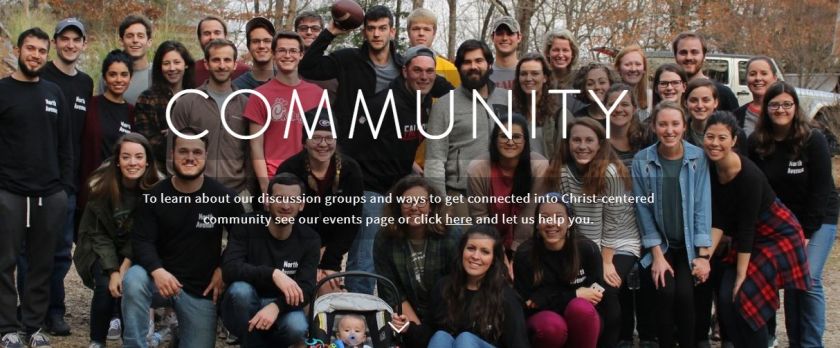
Some of our members on a retreat. http://www.nacathens.org

In a most remarkable blessing, the largest demographic of members and attendees in our church are youngsters. These are youths aged from upper teens to mid twenties. The college crowd. Many are in undergraduate or graduate school in the area. Their eagerness and fervor is a boon to us elder folks. Their zeal to serve is refreshing. Most of all, they love Jesus and devour His word. Despite a heavy class load or demanding work schedule, they arise before dawn or stay well after dark to attend Bible groups. They faithfully attend church services. They drive 40 minutes and stay two hours just to seek advice from an older member. They happily jump in to serve by setting up or taking down, the drudge jobs. They love each other and they joyously submit to leadership. They are amazing. Therefore I say,

We always thank God, the Father of our Lord Jesus Christ, when we pray for you, 4since we heard of your faith in Christ Jesus and of the love that you have for all the saints, 5because of the hope laid up for you in heaven.

Next time, I won’t lightly skim the intro to a letter, but as our elder preached, I’ll stop and truly ponder what the writer is saying. Paul dwelled on praise to Jesus for the brethren, and I want to adopt that same mindset in prayer by thanking Jesus for them both in my sphere and across the world.

Posted in encouragement, Uncategorized

Something positive, cute, and endearing

Today, a little something different. We’re all used to the world’s dark news. The negativity of the world and the evil that is all around us can be discouraging. Here’s something I hope will lift your day and bring a smile to you.

From the internets:

Clipboard02

The righteous who walks in his integrity— blessed are his children after him! (Proverbs 20:7).

From the BBC, their new kids’ network CBeebies. It’s 2-minutes:


Truly, I say to you, whoever does not receive the kingdom of God like a child shall not enter it. (Luke 18:17).

There is neither Jew nor Greek, there is neither slave nor free, there is no male and female, for you are all one in Christ Jesus. (Galatians 3:28).

Even though there is persecution, false teachers, racism, riots, and evil, there are still fathers who love their children, and there are children with a child-like perspective that someday we will all be blessed with. The faith of children, pure, unadorned, unadulterated, and loving. May I be like a child!

Always remember, as long as there is Jesus, there is Hope!

Have a blessed day!

Posted in discenrment, Uncategorized

Can we interpret the Bible by finding out what this verse means to me?

Have you ever gone to a Bible study and either they use a curriculum or the Bible itself, and the teacher reads a passage and then opens it up for comments by saying “What does this verse mean to you”? What is happening here is the teacher is confusing interpretation and application. There’s a book called Multiplyfrom Multiply Movement, which is David Platt and Francis Chan, written in 2012. Here is an excerpt fromlink to chapter 9 of their free book-

Know the Difference between Interpretation and Application 

Maybe the most common mistake made in Bible interpretation is when people focus too much on “what this verse means to me.” It’s not uncommon for Bible study groups to go around the circle as each person shares an individualized interpretation. Often these interpretations are made with little study and are heavily influenced by opinion and desire. Many times, the various interpretations are incompatible with one another. In this type of setting, the focus is not on what God is saying through the Bible. Instead, each person is focused on what he or she thinks the verse means. Whether it’s clearly articulated or not, this approach reveals the assumption that the Bible has a personalized meaning for each Christian. It might mean one thing to me, but another thing to you.

I’ll use an exaggerated example here, by saying, one man might respond by saying ‘Yes, this passage says to me that I can sin with impunity.” And the other man says, ” What it means to me is that I have to follow the Law.” Can it be both? No. As with any text, the author had one thing in mind when He wrote it. The fact that there are many different interpretations doesn’t mean that we can sow our own agenda into the Bible, come out with different interpretations, and think that that’s OK. It isn’t.

Sometimes when we talk about “what this passage means to me,” we are actually talking about application, rather than interpretation. With interpretation, we are asking what the passage is saying and what it means. With application, we are applying that meaning to our specific situation. Ultimately, each passage has one meaning, but it might have many different applications.

Application depends on our specific life situations, so we may all read the same passage and walk away with different applications. Interpretation, on the other hand, is all about discovering what God has actually said and what He intended to communicate. We should all read the same passage and walk away with the same meaning. Source:Multiply.

The Multiply book is free in pdf format and there are also 24 videos to match each week’s lessons.

In the Ligonier online class Principles of Biblical Interpretation, lecturer RC Sproul always says that there is ONE intended meaning for each passage in the Bible. There might be many applications, but the Author intended one meaning. I can give an example of this. In the passages describing the rapture and in the larger context of God’s plan for humankind in history, some interpret the rapture to occur before the Day of the LORD, or during the Day of the LORD, or after the Day of the LORD. Since it is one event and it happens only once, there can’t be an interpretation of the rapture that includes ‘what it means to me’ with three different timings.’ Only one of those timings is right and the other two are wrong.

John MacArthur at Grace Community Church preached against personal revelation and preached how to interpret the Word properly in this sermon from 2013.

And here is a general lecture on How To Study Your Bible: Interpretation from MacArthur.

Can we understand the one meaning the Author intended? With study, prayer, and the aid of the Holy Spirit, yes. Some passages are admittedly more difficult to understand. Also, we know we can’t understand all of the Bible in the same way the LORD does. However let me end with this story I’ve told and re-told. It fascinates me. Shortly after the Soviet Union fell, John MacArthur was asked by some pastors in the split-off nation of Kazakhstan to come give them a crash course in theology on various topics. The Communist Soviet Union had banned Christianity and when it fell, the secret pastors, new pastors, and new believers needed to get a good foundation in the open. MacArthur came.

At the end of the week, they asked to be taught on eschatology. MacArthur spent 8 hours teaching them from the Bible about last things. At the end of the teaching, they said, “Good. This is what we believe.” Having no access to commentaries, external sermons, or other teachings, and relying solely on the Bible, these pastors on one part of the world believed the same thing as another pastor in another part of the world, because they had interpreted rightly and understood the one intended meaning.

Won’t it be wonderful when we’re there and we all understand the same, and have a strong union in Christ with no error or sin? Meanwhile, in order to reduce the possibility of error, pray fervently and often, study diligently and well, and do not fall for the ‘what this verse means to me” claptrap. Stay true to discovering the wonders of the single, intended meaning of the passage you are reading.

Onward and upward!

Posted in discernment, Uncategorized

The arrogance of self-sufficiency

“I’m self-sufficient. I’m proud of it.”

That was me, before I was saved. I was saved by grace of Jesus Christ. My parents were intensely interested in raising their children as “self-sufficient” and “independent”. I heard those words so often. I had to ‘figure it out’ or ‘do for myself’ more times than not. By the time I reached adulthood, I was proud of all the things I could do by myself, for myself, leaning on no other. Asking for help was anathema.

Of course all the instilling of self-sufficiency was a stumbling block to bending the knee, realizing how hopeless I was on my own, and asking Jesus for help. The fact that He calls us and we don’t choose Him is a grace that will manifest itself in untold aspects throughout all eternity. I never would have asked. He chose me.

The pagan heart builds many idols. Any and all idols are in opposition to God. Idols are an enemy of God, and at enmity with Him. For me, the root of all that vaunted self-sufficiency is pride. I was proud of all that I could do. I was proud that I needed no one. I was proud of my capabilities- capabilities I’d cultivated and no one else.

Anything can be an idol. Self-sufficiency is one.

The Chaldeans were swimming in self-sufficiency. This idol permeated their actions and drenched their hearts in evil. Habakkuk proclaimed against it in chapter 2 of the book of Habakkuk. This prophet pronounced 5 woes on the Chaldeans (though they were not named, this was the original target audience.) As scripture has one meaning but many applications, these verses can and do apply to us today as we learn object lessons about doing for ourselves and not bowing to God’s will for us.

The fifth woe was the woe upon idolators (2:18–20). In poignant verses, God asks if idols can speak-

What profit is an idol when its maker has shaped it, a metal image, a teacher of lies? For its maker trusts in his own creation when he makes speechless idols! Woe to him who says to a wooden thing, Awake; to a silent stone, Arise! Can this teach? Behold, it is overlaid with gold and silver, and there is no breath at all in it.(Habakkuk 2:18-19).

Oh! How terrible for the idolater who asks dead wood and stone to speak! How sad we seek instruction from dead objects and not the Living God!

Any and all idols in our hearts teach us lies. We are the maker of the idol, so because of our sin nature, it teaches us the lie of sin. Can stone awaken and instruct us in the ways of righteousness?

“But I don’t worship idols,” you say. “I don’t ask stone or wood to speak.”

Do you seek instruction from horoscopes? The sun? “Mother Nature”? Do you rely on your intellect? Your capabilities? Your money? All idols! All dead!

The wages of sin is death. (Romans 6:23a). God speaks of this New Testament truth in the Old Testament in Habakkuk 2:8, 2:17…

The Good News is that the rest of the Romans verse continues after speaking of the wages of sin, by a glorious promise.

but the free gift of God is eternal life in Christ Jesus our Lord. (Romans 8:6b)

The antidote to self-sufficiency is humility. As this woman spoke so eloquently on Twitter this week,

Anna Crouse‏ @annacrouse_

Humility isn’t a burden or humiliation or oppressive weight but is the only posture that can receive the wondrous grace gifts of God

Instead of “I can do it” we say “I can’t do it. Lord I need you!”


Resources

Elyse Fitzpatrick: Idols of the Heart
Do you feel discouraged, even defeated, in your battle against habitual sin? Are you dismayed or surprised by the situations that bring out your fear, anger, or distress? Elyse Fitzpatrick delves into the heart of the problem: deep down, we’re all idol-worshippers who put our loves, desires, and expectations in God’s place—and then suffer the consequences of our misplaced affections. Yet God loves his people and can use even our messy lives and struggles for his glory. Fitzpatrick shows us how to better search and know our hearts, long for our gracious Savior, and resist and crush our false gods. Includes questions for further thought.

Posted in discernment, Uncategorized

The Tongue is a Rudder: A Sailing Story

I lived on a sailboat and cruised up and down the eastern seaboard for two years. Just as there is with any lifestyle, there are niches within that lifestyle. The circumnavigators go around the world, traveling for weeks across the seas from one continent to another. These folks are serious, and they generally have sold all they own and permanently live on their boat.

Then there were people like us who lived aboard and cruised along the shoreline. Live-aboard cruisers don’t usually venture far out to sea, though we may be without sight of land for hours or a day or so on an overnight passage. We usually keep our houses and relationship attachments, live this way for a period of time, and then return to life on shore. This is called “swallowing the anchor”. For liveaboards like is cruising is more of an adventure than a way of live.

Then there are the folks who own a sailboat and dock it at a yacht club and sail for a few hours on the weekend. Many of these folks dream of living aboard or circumnavigating but haven’t been able to do so yet.

Though there are tiers of sailors with varying levels of commitment and skill, the Sea can be kind or cruel to each one of us. When an emergency happens while sailing on the ocean it’s just as life threatening whether you’re near shore or in the middle of the ocean.

Annie C. Maguire wreck. Portland ME. EPrata photo
photo Collections of ME Historical Society. FMI on the wreck- Source

My husband and I had sailed from Maine to Florida with a variety of passages that included motoring down the Intracoastal Waterway,sailing across huge Rivers and Sounds, and making some offshore overnight ocean passages. We’d finally arrived at Fort Lauderdale’s Las Olas anchorage, the traditional launching off point to cross the Gulf Stream to the nearby nation of The Bahamas. It’s 50 miles, but a tricky 50 miles.

The Gulf Stream is a fast moving river of water atop the ocean. The Gulf Stream is about 60 miles wide and runs at an average surface speed of 5.5 mph. Since the boat can sail at around 5 mph it means that the combined speed plus the Gulf Stream’s fast northward push means you have to make exact navigation maths and be on constant vigilance. You could get pushed to Ireland if you’re not careful. A worse disaster would be pushed a few miles, or even a few feet off course and wind up on the rocks, shipwrecked on the shores of a foreign nation or in hazardous waters.

You need to stay on your toes regarding weather. You’ll be traveling in open ocean, the islands are low, some anchorages will be exposed on one or more sides, and there will be potentially rough passages through reefs and cuts between islands. Source

The warm waters of the Gulf Stream (red). FL is at bottom,
the topmost island left side is town of West End, Grand Bahama Island.

So you start off from Ft. Lauderdale and let the Gulf Stream push you north and your sails push you east toward the intended harbor. The biggest danger is a wind that flows from the north tot he south, and meets the Gulf Stream waters moving from the south heading north. The collisions of southerly flowing air and northerly flowing fast water makes for a steep waves. Steep waves are rough because the front part of the boat (the bow) goes up and then down fast. At least with a rolling wave the boat can roll with it. A steep chop makes the boat pound. Pounding is hard on everyone and is hard on the boat.

Because crossing over the Gulf Stream is a bit dangerous and not for the fainthearted, mariners usually take off from the anchorage in little groups. Safety in numbers. Not that if anything happens we can go from one boat to another to troubleshoot the problem, but if the worst happens we can rescue a person from the water or call for the Coast Guard for help and stand by.

So our little clutch set off in the dark hours, so we would arrive at a time when the rising sun would be over our shoulders and not in our eyes. The weather report was for gentle winds flowing north, which would actually help flatten the Gulf Stream waters.

All was well … sailing over the bounding main … for a while.

The wind unexpectedly shifted from the south to the north, creating that dreaded sharp, steep chop. The boats took a pounding. Then the rain and thunder and lighting started. It was dark and it was rough.Then…one of the boats’ rudders broke.

I think you know how important a rudder is. It is a tiny thing, relatively speaking, a small part of the boat. Not heavy like the motor, not showy like the sails. However it’s the most critical part, since it steers the boat. Without the rudder, our friend’s yacht was drifting helplessly in the storm, in the Gulf Stream, toward the reefs. They were at the mercy of waves, rocks, and winds. They had no control and it was terrifying.

When we put bits into the mouths of the horses to make them obey us, we can guide the whole animal. Consider ships as well. Although they are so large and are driven by strong winds, they are steered by a very small rudder wherever the pilot is inclined. In the same way, the tongue is a small part of the body, but it boasts of great things! James 3:3-5

A small rudder can guide the whole boat. A small muscle like the tongue can guide the whole body. With the rudder not guiding the boat, it was at the mercy of other more destructive things than the pilot’s inclination. Just like the tongue. The ‘pilot’ must be in control of the tongue so it does not become subjugated to other, more destructive things like slander, gossip, tale-bearing, and criticism. These are the rocks and reefs of relationships, as Jude describes in Jude 1:12-13, using the same sailing metaphors of waves, reefs, and winds.

I was busy handling our boat and my husband was on the VHF radio in contact with the stricken vessel. We all had slowed down and were kind of trying to circle around them and stay close. It was hard to do so in the storm. Eventually the other men talked him through and somehow he got his rudder fixed.

We were off course by then so we had to regroup and figure out how to get back on track. The winds were still high and we were in the hump of the Gulf Stream, the current was flowing fast. Entering West End Grand Bahama was a tricky maneuver of sliding between reefs through a narrow channel. We were off by a few feet. However you can see the destruction ready for the unwary in the Annie C. Maguire vintage photo above. They were only off by a few feet also.

Providentially, there was a Good Samaritan who happened to be carrying a VHF radio who happened to be walking the beach who guided us in. If he had not been there we would have ended up on the rocks. It’s another example of how the Lord protected me until the appointed time for salvation, 13 years later.

I’ll never forget the terror of our friends losing their rudder. Even though the James verse about taming the tongue by using marine metaphors is vividly alive for me, I still failed in this last week. I’ve repented. After listening to a lecture by Justin Peters on the importance of wholesome talk and the destructive inclinations of the tongue by gossip I will do better this week. I do not want to end up on the rocks for correction. I am the pilot. I am in charge of my boat. With the Holy Spirit to guide me safely to port, I know I have all the help I need.

EPrata photo

The dark blob in the foreground is a coral head. Their sharpness can rip the keel or underside of your boat like a razor. The boat with two men on it is grounded. The water gets shallow very fast in The Bahamas. In the middle horizon, those brown humps are the land, which is just a few feet above sea level. Now picture trying to find the right channel, in the dark, in a storm, on 0 sleep in the last 24 hours.

Posted in encouragement, Uncategorized

The Bible is so amazing

In my Bible reading there are some verses that have ‘jumped out’ at me lately:

do not be arrogant toward the branches. If you are, remember it is not you who support the root, but the root that supports you. (Romans 11:18).

He supports me. Isn’t that a lovely thought? I do not want to be arrogant and take HIS glory away.

~~~~~~~~~~~~~~~~~~~~~~~~~


Great indeed, we confess, is the mystery of godliness: He was manifested in the flesh, vindicated by the Spirit, seen by angels, proclaimed among the nations, believed on in the world, taken up in glory.
(1 Timothy 3:16).

As a writer, I admire the beauty among this economy of words. Only the Spirit could inspire such gorgeous writing that proclaims such truth!

~~~~~~~~~~~~~~~~~~~~~~~~~


For the LORD is righteous; he loves righteous deeds; the upright shall behold his face
. (Psalm 11:7).

To behold such glorious righteousness is a thought that both encourages me and makes me tremble. What a day that will be!

~~~~~~~~~~~~~~~~~~~~~~~~~


Riches do not profit in the day of wrath, but righteousness delivers from death
. (Proverbs 11:4).

I praise the Lord I do not have a lust for riches. I know people who do (did). Some spend their entire life accumulating, lusting for expensive things, hoarding wealth. Unless there was a miraculous deathbed conversion, they are languishing in a place where their riches do not profit them. Thank You Lord for Your righteousness that is indeed riches beyond measure.

~~~~~~~~~~~~~~~~~~~~~~~~~


Heaven and earth will pass away, but my words will not pass away
. (Matthew 24:35).

How amazing that we will personally hear Him speak these words someday!

~~~~~~~~~~~~~~~~~~~~~~~~~

The Bible is so rich, so beautiful. The many verses and passages and stories convict, inspire, point to the glory of the Lord…it’s staggering that this Book contains so much and is so everlasting.

bible bunyan