My father died in 2014. He was 81. He had never said “I love you” to his daughter.
Now he never will.
It’s a truth that doesn’t get any easier the older one gets. It’s actually harder to get used to the longer one drifts in time away from his death date, not easier.
He was a hard working man. He was a gifted raconteur. He was a wealthy man. He was a lot of things. But a father? Not so much. His ignoring of his kids as they grew, his intermittent but frequent abandonment of them as adults, his final, legal disownment of them as he aged all were stunning betrayals in the lives of three children, with untold consequences.
Every daughter can tell a different story about her father. Some stories are good, some are bad. Some are neutral. Some are bitter and some are sweet. Fathers, dear reader, have an effect.
There is a short film called The Father Effect. It is good.
The producer of this movie lost his own father to suicide when he was a boy. As he stated in the movie’s Mission page, the resulting film is his attempt
to educate, equip, & encourage men to be the dads God created them to be
Many of the people with whom I am connected through media and in real life have great parents who they honor and feel blessed to have grown up under. Others have disappointing stories they share, either freely or privately. Whatever the case with you, you know fathers have an effect on you for life. I worry for the fatherless who don’t have the solace of Jesus. For those among you who have had a less than blessed childhood, but are now safely home under Jesus’ wings, you know you have a REAL father. Jesus will love you forever, never abandon you, and is in fact, perfect. What a blessing this is. He is not only as Prophet, Priest, and King, but friend, brother, and Father.
The Encouraging Dads Project was an idea that came out of John’s experience in making The Father Effect Movie. As John talked to dads from all walks of life, he heard heartbreaking stories about how dads feel beat up, discouraged, and frustrated with their lives as dads. John was moved to do something to help encourage and inspire dads and The Encouraging Dads Project was born.
Take some time to encourage your Dad. Encourage a dad. Encourage a man who was a dad to you. Encouragement is free, and only takes a few moments. Send a letter, make a phone call, send a text, make a date to take him out for coffee. Tell him how special he is to you.
Dads, do the same for your daughters. If some time has gone by since you talked to her, take a moment to let her know how much she means to you, how proud of her you are, that you love her. My dad in all probability never confessed and repented and probably died outside of Christ. It was a sudden hit in a car crash. Boom. Gone.
He and I will not meet again, and I’m sorrowful for that. Eternity will go on and I will be loved perfectly by many fathers, and THE Father. I will forget the former troubling things, including Dad. He will remember everything, forever. If there is sorrow over your relationship with your dad, if you are on opposite sides of the salvation fence, let that fact weigh on you, and as the men in The Father Effect say, forgive.
Caption: “Our purpose in making this film is to create an awareness in fathers about the significant impact their words and actions have on their children and to help them become better fathers.”
And everyone who has left houses or brothers or sisters or father or mother or children or lands, for my name’s sake, will receive a hundredfold and will inherit eternal life. (Matthew 19:29).
I read Isaiah 23. In it, was Isaiah’s prophecy against Tyre. Tyre was a major city on the coast, to which many ships from afar brought their goods to trade and sell. Tyre was held in high esteem by all around. (Isaiah 23:8). It had prestige and renown. Is this your exultant city whose origin is from days of old, whose feet carried her to settle far away? 8Who has purposed this against Tyre, the bestower of crowns, whose merchants were princes, whose traders were the honored of the earth? 9The LORD of hosts has purposed it, to defile the pompous pride of all glory,c to dishonor all the honored of the earth. (Isaiah 23:7-9)
When a city becomes so vaunted, the leaders of the city become proud. Hence the reason for Isaiah’s oracle against Tyre. (Isaiah 23:9). They attributed their success and fame to themselves, and not to God.
Empire State Building, view from the East River. EPrata photo
This situation reminded me of the scene in Daniel 4. King Nebuchadnezzar displayed the same problem.
and the king answered and said, “Is not this great Babylon, which I have built by my mighty power as a royal residence and for the glory of my majesty?” (Daniel 4:30).
He attributed the city of Babylon’s success and fame to himself, and not to God. For his selfish boastfulness and pride, God determined to remove the kingdom from Nebuchadnezzar for 7 years, wherein he would live among beasts as a mad person and eat the grass of the field. When 7 years was over, God restored reason to the king and also the kingdom. Nebuchadnezzar praised God for all His glory.
When we see the glittering towers of the city, its cathedrals, towers, strongholds, and castles, we tend to become proud of our accomplishment in building them. We admire the Eiffel Tower, the Statue of Liberty, the Sears Tower, the Windsor Castle, the Taj Mahal… We enlarge our sea ports and construct airports and enjoy the trade and commerce merchants willingly bring to the city.
We applaud man’s ingenuity in building these majestic buildings, we love the fame and renown these landmarks bring to the city and we become boastful inhabitants. But we forget that we have no strength of our own, and no intellect, or ability unless God grants it.
EPrata photo
Tyre was razed in 332 BC when Alexander the Great conquered it. And Babylon, we know was felled in one night as described in Jeremiah 51:8 and Daniel 5:30.
If a prophet were to prophesy today, what oracle might be spoken about New York City? Los Angeles? Paris? Beijing? Tokyo? Ezekiel 38:20 prophesies a future day when all walls will crumble to the ground. This page shows how many times God said He will destroy a city for its pride and rebellion. We know He destroyed four Cities of the Plain in one night, Sodom, Gomorrah, Admah, Zeboiim.
The end result of pride, is destruction. This is reiterated in the New Testament, in today’s reading of Matthew 11. There is a section between verses 20-24 called “Woe to Unrepentant Cities” such as Chorazin, Bethsaida, Tyre, Sidon, and Capernaum.
Pride goes before destruction, and a haughty spirit before a fall. (Proverbs 16:18). The verse applies to cities as well. The Isaiah verse we’d read yesterday is warning about this.
Grace is a concept. But it’s not just a concept. Grace is a gift, but it’s not just a gift. Grace is a force. Think about how powerful grace is. Think about its power as it exists in Jesus, as it is delivered to the saints, its common state as it covers the world, and its special state as it enlivens the saints to do our work.
Here is an excerpt about grace from a sermon from John MacArthur called, Strength Perfected in Weakness, looking at this verse: 2 Corinthians 12:7-10.
or because of these surpassingly great revelations. Therefore, in order to keep me from becoming conceited, I was given a thorn in my flesh, a messenger of Satan, to torment me. 8 Three times I pleaded with the Lord to take it away from me. 9 But he said to me, “My grace is sufficient for you, for my power is made perfect in weakness.” Therefore I will boast all the more gladly about my weaknesses, so that Christ’s power may rest on me. 10 That is why, for Christ’s sake, I delight in weaknesses, in insults, in hardships, in persecutions, in difficulties. For when I am weak, then I am strong.
In speaking of the linchpin part of the passage, ‘my grace is sufficient for you’, MacArthur said,
But grace is not just an inert sort of concept; it is a force, it is a power. It is a power that transforms us. It is a power that awakens us from sleep. It is a power that gives us life in the midst of death. It is a power that is dynamic enough to transform us from the kingdom of darkness to the kingdom of God’s dear Son. It is the power that saves us. It is the power that keeps us, the power that enables us, the power that sanctifies us, and the power that one day will glorify us. You have to look at grace as a force, a divine force that God pours out into the lives of His people at all points to grant them all that they need to be all that He desires.
Grace is a gift. Grace is a state. and… Grace is a POWER.
Today and the next 5 weekdays I’ll publish something about discernment. So, Wolf Week! Lack of discernment is the cause of much trouble in the church and much confusion.
This inaugural entry to the week of discernment essays is called “We DO know the heart!”
When I publish a discernment essay, I am often treated to an old chestnut of a comment that is becoming practically standard for those without discernment to use as a reply:
He alone is sovereign and fully knows all hearts!
God is sovereign. God knows the heart. But we do too.
If a teacher’s doctrine has been proven false by comparing it with the Bible, then we DO know their heart! The Bible tells us this. Only God knows the hearts of the people, but if their teaching is not of the Lord, then the God who sees hearts has exposed those hearts to us by the verses of His word!
Of false teachers, the Bible says-
Their hearts are full of deceit. Colossians 2:8 Their hearts are filled with their own appetites. Romans 16:17-18 Their hearts are disguised with light. 2 Corinthians 11:13-15 Their hearts are full of greed. 2 Peter 2:3 Their hearts are ravenous. Matthew 7:15. Their hearts are inwardly full of sensuality. Jude 1:4 Their hearts are full of secrets, such as destructive heresies. 2 Peter 2:1 Their hearts are full of intent to exploit. 2 Peter 2:3 Their hearts are full of fleshly passions. 2 Timothy 4:3 Their hearts are puffed up with conceit. 1 Timothy 6:4 His heart understands nothing. 1 Timothy 6:4 Their hearts are cunning and crafty. Ephesians 4:14 Their hearts serve the creature. Romans 1:25 Their hearts are slaves of corruption. 2 Peter 2:19. Their hearts deny the Master who bought them. 2 Peter 2:1 Their hearts prophesy lies. Jeremiah 23:26
So whenever I expose a testimony as false or a teaching as false, or a teacher as false, using biblical proof, STOP saying that this is a bad activity because “only God knows the heart”. He does, that’s true, but He has shown us the heart of the false teacher in His word. He taught us this in His word for the purpose of being mature, discerning, and so we can learn for ourselves and also teach the younger to be edified and strong.
I focused on the phrase “fix your eyes upon Jesus” from Hebrews 12:2. I looked up the word “fix” and the Strong’s says
872 aphoráō (from 575 /apó, “away from” and 3708 /horáō, “see”) – properly, “looking away from all else, to fix one’s gaze upon” (Abbott-Smith).
How helpful. I should not glance, not peek, not glimpse, but FIX my GAZE upon him, looking away from all else and steadily drinking in all that He is.
Looking away from all else…what does that mean? It means not being attached to the things of this world. Your country, your job, your family, your spouse, your car, your ‘stuff’, your health, is not more important than Jesus. He is the source and the giver of those things. Fix your eyes on Him.
We need to spend more time with Jesus to look more like Him. Moses only got to see God’s ‘back’ and His face after being with God was so bright it had to be veiled. We have the privilege of looking at Jesus’ “face” as it were, through His word. I want my face to be shining, to have my being conformed to Him, to have my mind transformed. But it won’t happen unless I read the Bible. I must look away from all other distractions and FIX my GAZE on Jesus. A Bible skim won’t even do.
Poetry by Kay Cude. Used with permission. Right click on image to open larger in new tab. Artist’s statement below.
I keep returning to our (me!!) needing to “remember” God’s promises and provision. GOD THE I AM is the only fortress in Whom we find a righteous protector, defender and provider. He is the only place of eternal refuge from the world’s continuing tragedies and chaos. He is the stronghold Who is and Who will provide peace, wisdom, understanding, instruction and endurance.
But realize this, that in the last days difficult times will come. For men will be … 5 holding to a form of godliness, although they have denied its power; Avoid such men as these. (2 Timothy 3: 1-2,5).
As a kid on Easter morning in a secular household, it was all about the basket. The eggs, the chocolate, and toys. Even the fake green grass. Our baskets were always generously filled, and I especially loved the centerpiece of a large chocolate bunny on the mound of grass.
As a kid, if you see a 5 inch chocolate bunny you get very excited. You don’t think about how much to eat or not eat, you don’t think about the appropriate time of the day to eat it. You just rip the cellophane and chomp.
I remember being disappointed that the bunny was hollow. As a kid, I could not tell the difference between a solid bunny and a hollow one, they looked the same to my immature eyes. But when I bit into the ear it seemed to be a total gyp when it crumbled to bits because it had no interior support. The bunny had only a form of solidity.
We are told over and over in the Bible that the last days would be filled with deception, false pastors and false prophets, wolves in sheep’s clothing, antichrists, false apostles, false doctrine … and are repeatedly warned not to fall for it.
How can we tell if a bunny is solid chocolate or hollow? Test by eating it, you say? Satan is poison, his deceptions are poison. Who wants to eat poison? Ingesting falsity for too long will inevitably pollute. As mature Christians, we must be able to discern and detect hollow Christianity and false teachers who only have an appearance of Godliness early on, before it permeates the entire congregation, or our own heart.
Are you a child in Christ, seemingly mature but having fallen out of the habit of testing the scriptures for yourselves? Have you lost the ability to test the spirits? Are you, yourself hollow? Professing a form of godliness but denying its power? Have you departed from the spiritual disciplines of prayer, reading the word, giving, fellowship, and gathering with saints for worship? Abandoning these will hollow youout.
Ephesians 4:14 tells us not to be babes. “Then we will no longer be infants, tossed back and forth by the waves, and blown here and there by every wind of teaching and by the cunning and craftiness of men in their deceitful scheming.”
Pray for experience, wisdom, and discernment through a healthy relationship with the Holy Spirit.
Let us be mature, our faith be solid. We should not have only a veneer of godliness but be solid to the core, strong, with the interior support of the Holy Spirit. A counterfeit Christianity will reveal the person to be a child, rushing toward something that looks oh so good to eat but biting into the hollowness to be disappointed, but perhaps already hooked by its tastiness. Do not be a baby in discernment! Do not be hollow in faith!
But solid food is for the mature, who because of practice have their senses trained to discern good and evil. (Hebrews 5:14).
The word of God is a sure way to stay close to Jesus and grow in faith to mature, solid Christians, who in turn extend a hand to new babes in Christ and help them along. And so it goes.
I love to read. With the New Year and all the ‘Reading Challenges’ that emerged in January as people make decisions back at the start of the year, I’d decided to go back to reading for pleasure. This is an activity that had fallen by the wayside as I got busier, and my eyes grew more tired at night. Aging. It’s not for sissies, lol.
EPrata photo
I do need more often to shop my own shelves rather than buying more books! But I’m weak, lol. If I am of a mind to read fiction, I usually stick with the same novelists I’d read before (Grisham, Charles Martin, Will Thomas, and the like). When I find one author I like I tend to read more of their books, because the first one was ‘safe’ so I figure subsequent works have a higher likelihood of being be ‘safe’ too.
A while ago I had read The Rain, a self-published work by Chris Skates and Dan Tankersley. It is a fictionalized recounting of the Biblical Flood. There is a lot of ink in the Bible about the lead-up to the flood, the flood itself, and the aftermath. The authors didn’t have a lot of holes to fill. But still, dialog must be constructed, extra-biblical characters created, and some gaps must be filled by imagination. I thought they did a great job. I enjoyed the book.
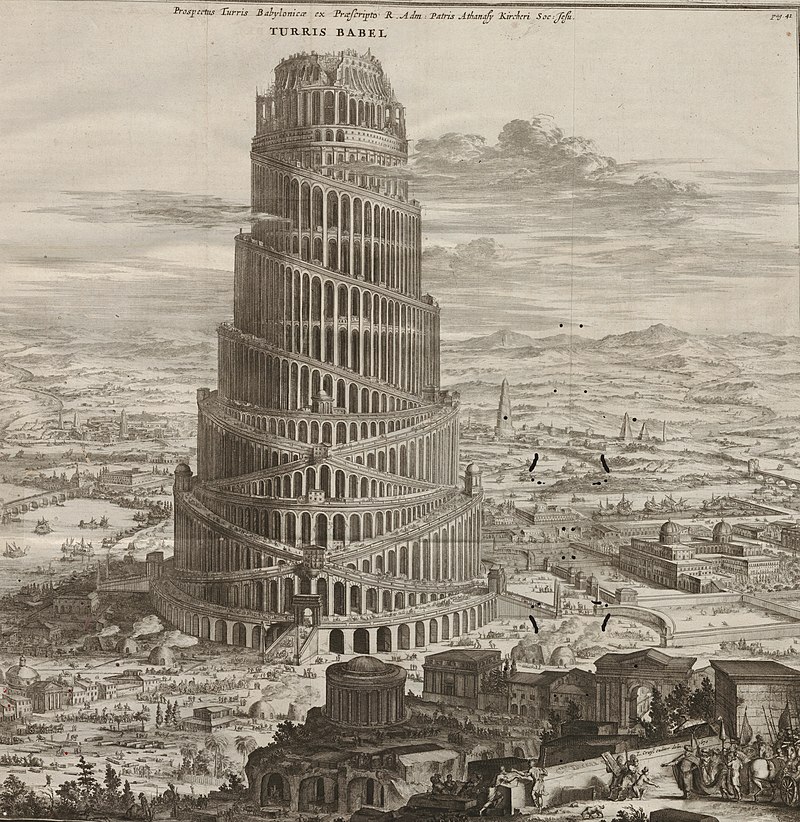
That’s why I was disappointed in their sequel, The Tower. To be sure, there is little ink in the Bible about the Tower of Babel. Only 245 words, I’ve heard. So the authors had to invent more. Theirs IS a book of fiction. So I get it. I am not quibbling about filling gaps in a fictionalized biblical story.
But two things bothered me about the book. Full disclosure: I read very little of it. First, the modern language. In The Rain, the dialog, while imagined, was of a tone that seemed old timey. It wasn’t stilted, but the authors kept modern words and idioms out of the characters’ conversations. They didn’t put idioms into the characters’ mouths that a person would say today. As a reader visualizing any scene in The Rain, I could picture the characters saying what they said.
In The Tower, the idioms, words, tone, and language were very modern. It was jarring. As an author, what you want to do is create a bubble for the reader to relax into. It’s a delicate bubble, but if you can hold the reader’s attention, they will descend into your world and stay IN the bubble. You don’t want to jar the reader out of your constructed reverie and become distracted. A distracted reader stops reading. This is what I learned in journalism class. You do not want to do anything to break that bubble.
Turris Babel from Athanasius Kircher, source wikipedia
In addition to modern language in The Tower that jogged me out of the bubble I was trying to stay inside of, the authors needed an editor. Badly. It was a self-published book as mentioned, and often than means not employing a skilled or professional editor, or even a copy editor. Copy editors check copy for wrong words, punctuation, mechanical errors in the text.
The authors used wrong words several times in the few pages I read. For example, gig for did. Site for sight, twice. Ugh. There is nothing that gets me more irritated than wrong homophones, unless it’s spelling errors. So this book had issues with the text itself. That, combined with the issues of language, meant I couldn’t read in relaxed fashion, I kept being booted out of 2300BC. I quit reading won’t pick the book up again.
If you would like information on the Tower of Babel from a credible Bible-based ministry, here is Answers in Genesis’ answer to the question, “When was the Tower of Babel Built?“
Some people object to fictionalizing stories from the Bible. Can we fictionalize biblical stories by recounting them and filling in gaps with our own imagined characters or situations? Hmmm, yes and no.
The most important point is, have you read enough of the Bible, OT and NT, to be familiar with what SHOULD be presented in a work of fiction based on a biblical story? If you’re reading a fiction book about Rachel, have you first read and are familiar with the actual Rachel of the Old Testament? If not, then you are at risk of accepting the author’s version of a true biblical person.
I thought The Rain did a good job of sticking to the biblical concepts. Though I personally have not read The Chronicles of Narnia, people tell me CS Lewis did a credible job with creating a biblical allegory that mirrored biblical concepts. As did John Bunyan in The Pilgrim’s Progress. The television series The Chosen did not do a good job of gap-filling, but twisted the Bible to suit man’s desire to diminish Jesus and hide attributes He has which make man uncomfortable.
The problem with fictionalizing, or making plausible leaps where the Bible is silent, is that very thing- our flesh gets in the way.
And our flesh has an agenda. So does satan.
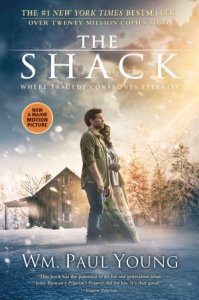
So in a way, Christian fiction books are the most unsafe books of all. Take the book The Shack, for instance. This was a runaway bestseller back in 2007-2008 and onward. It was sold in Christian bookstores as a Christian book. Its author, William Paul Young, wrote about a man who was staggering under heavy grief due to the kidnapping and death of his little daughter, her death had occurred in a derelict shack.
One day the man received a handwritten note in his mailbox to go to the same shack. Reluctant but curious, he goes, and there he ‘meets’ Jesus and the Holy Spirit in addition to being greeted by ‘God.’ It turns out that according to Young’s presentation of the Trinity, God is a woman, as is the Holy Spirit. The book goes on to present discussions between the persons of the Trinity and the man, regarding sin, evil, salvation, judgment, and other doctrines. The book teaches that sin is its own judgment and there is no other, that hell exists to purge away unbelief (not punish for sin), that there is universal reconciliation, among other aberrant, non-biblical doctrines.
Many credible leaders in the faith negatively reviewed the book. I reviewed it negatively also. A common rebuttal to our negative view of the book was, “Lighten up. It’s only fiction!” Or, “It’s only a novel!”
Dear reader, novels teach an author’s point of view, either subtly or overtly. It’s no different for Christian novels. Novels with Christian themes use narrative to teach. We must all be Bereans and check to see that these things in the ‘Christian’ book are so, in whatever form the doctrines are coming to us. Doctrine is taught in songs, poems, sermons, lessons, theological books…and fiction.
Dr. R. Albert Mohler Jr. serves as president of The Southern Baptist Theological Seminary. Dr. Mohler offers thoughts on the missing art of evangelical discernment as encapsulated by evangelical response to The Shack. He wrote:
“In evaluating the book, it must be kept in mind that The Shack is a work of fiction. But it is also a sustained theological argument, and this simply cannot be denied. Any number of notable novels and works of literature have contained aberrant theology, and even heresy. The crucial question is whether the aberrant doctrines are features of the story or the message of the work. When it comes to The Shack, the really troubling fact is that so many readers are drawn to the theological message of the book, and fail to see how it conflicts with the Bible at so many crucial points.” [underline mine]
EPrata photo
In that article, we see that Christian fiction is deliberately used to bring heretical ideas to the masses and worse, popularize them. Christian reader, beware! It’s not “just fiction”! Simply because a book is listed as Christian fiction does not mean we can let down our guard. We need to put up higher guards!
“When we think about the role of reading in our spiritual formation, we generally think of non-fiction books that help us understand scripture and theology, but fiction powerfully shapes the ways in which we think faithfully about God and the world.” C. Christopher Smith
Fiction is storytelling. Christian fiction walks a thin line between green pastures of heaven and boiling hot lava, in that the story an author is telling is based on the Bible but the Bible is not fiction. It’s history; true, and real. It’s dangerous to tinker with God’s word, yet stories must be told. CS Lewis did it well with Screwtape Letters and Bunyan with Pilgrim’s Progress. William Paul Young did it badly with The Shack, Dallas Jenkins with The Chosen.
Be discerning. The worst Christian fiction often popularizes heresy. The best Christian fiction prompts a reader to run to the Bible to absorb more truth. It also glorifies God.
Dr. Mohler said that even Christian fiction is a work of sustained theological argument. Let’s compare two books to see how this fleshes out: Elmer Gantry and The Shack.
One of my favorite books is Elmer Gantry by Sinclair Lewis. It tells the story of a false convert who rose to fame and celebrity pastor status, all the while not being a believer in any sense. The Bible tells us that this will happen, it’s a biblical concept. The message of the book was to illustrate how this can happen, not to promote that hypocrisy is to be accepted. The sustained theological argument of Elmer Gantry is that hypocrisy happens in religion and it is always bad. It wasn’t promoting hypocrisy or apostasy as good. Meanwhile, the sustained theological argument in The Shack is that God does not punish sin and everyone will eventually be reconciled to God.
We must be Bereans and test every theological argument that we absorb. If this sounds like a lot of work, it is. Paul repeatedly advised his readers to be vigilant. (For example, 1 Corinthians 16:13). We are on a battlefield in a war, and we don’t only hear the cannons booming, but we must be alert for snipers, too. When it comes to accepting things not of the Lord, it all matters. Christian books are never “just fiction.”
Blessed be the God and Father of our Lord Jesus Christ! According to his great mercy, he has caused us to be born again to a living hope through the resurrection of Jesus Christ from the dead, (1 Peter 1:3)
Well that says a lot! Each phrase is an encouragement. I’m focusing on living hope today. Our living hope is not a dead hope. It is not surmise, speculation, or empty ‘what if’. It is a living hope because we are IN Christ and He is living and He is our Hope.
Gill’s Commentary says
Saints are both begotten again to the grace of hope, and to the glory which that grace is waiting for”. Our hope is because of Christ, it is in Christ and it is Christ. It is a living hope
Genesis 22 has the story of the great test of faith of Abraham. God called to Abraham one day, and Abraham answered “Here I am!” God told Abraham to sacrifice his son Isaac, his only son, who Abraham loves. Abraham was to do this on Mt Moriah, a place God initially told Abraham would be a place He would tell Abraham. Not even initially knowing where, Abraham hastened to obey, and the two hiked to the fateful spot.
Theologians have examined this scene and compared it to Christ’s sacrifice so I am certainly not plowing new ground. I have no deeper insights. But in this day and age, with fears and tribulations, and griefs and apostasy, it is always refreshing to keep our eyes on Christ. It is always edifying to see how in the word, the LORD God has it all under control and His plan is unfolding from that day to this in magnificent fashion, and will continue to do so.
Italian Renaissance painter Caravaggio’s depiction of the sacrifice of Isaac:
Comparison of Old Testament texts with New Testament texts. Isaac pre-figures Christ.
The cross is the epitome of redemptive truth, foreshadowed in the acceptable sacrifice of Abel, foreshadowed in the ark of safety that saved Noah, foreshadowed in the sacrifice provided on Mount Moriah–a ram in the place of Isaac, prefigured in the deliverance of Israel from Egypt, where Moses said, “The Lord is my strength, and my song, and He has become my salvation.” We see the cross foreshadowed in the smitten rock in the wilderness that brought forth water to quench the thirsty people. We see the cross foreshadowed in the Levitical ceremonies, sacrifices and offerings. We see it foreshadowed in the serpent lifted up in the desert for healing. We see it even in Boaz, the kinsman redeemer. We see the cross detailed in Psalm 22 and Isaiah 53. We see the pierced and wounded Savior in Zechariah, chapter 12–all the way through Scripture. J. MacArthur
Scripture is amazing and wonderful. Read your Bible today.





 the-end-time.org