Posted in prophecy, Uncategorized

The pride of cities

In our Bible Reading Plan we’d read Isaiah 23. In it, was Isaiah’s prophecy against Tyre. Tyre was a major city on the coast, to which many ships from afar brought their goods to trade and sell. Tyre was held in high esteem by all around. (Isaiah 23:8). It had prestige and renown.

Is this your exultant city whose origin is from days of old, whose feet carried her to settle far away? 8Who has purposed this against Tyre, the bestower of crowns, whose merchants were princes, whose traders were the honored of the earth? 9The LORD of hosts has purposed it, to defile the pompous pride of all glory,c to dishonor all the honored of the earth
. (Isaiah 23:7-9)

When a city becomes so vaunted, the leaders of the city become proud. Hence the reason for Isaiah’s oracle against Tyre. (Isaiah 23:9). They attributed their success and fame to themselves, and not to God.

This situation reminded me of the scene in Daniel 4. King Nebuchadnezzar displayed the same problem.

and the king answered and said, “Is not this great Babylon, which I have built by my mighty power as a royal residence and for the glory of my majesty?” (Daniel 4:30).

He attributed the city of Babylon’s success and fame to himself, and not to God. For his selfish boastfulness and pride, God determined to remove the kingdom from Nebuchadnezzar for 7 years, wherein he would live among beasts as a mad person and eat the grass of the field. When 7 years was over, God restored reason to the king and also the kingdom. Nebuchadnezzar praised God for all His glory.

When we see the glittering towers of the city, its cathedrals, towers, strongholds, and castles, we tend to become proud of our accomplishment in building them. We admire the Eiffel Tower, the Statue of Liberty, the Sears Tower, the Windsor Castle, the Taj Mahal… We enlarge our sea ports and construct airports and enjoy the trade and commerce merchants willingly bring to the city.

We applaud man’s ingenuity in building these majestic buildings, we love the fame and renown these landmarks bring to the city and we become boastful inhabitants. But we forget that we have no strength of our own, and no intellect, or ability unless God grants it.

Tyre was razed in 332 BC when Alexander the Great conquered it. And Babylon, we know was felled in one night as described in Jeremiah 51:8 and Daniel 5:30.

If a prophet were to prophesy today, what oracle might be spoken about New York City? Los Angeles? Paris? London? Ezekiel 38:20 prophesies a future day when all walls will crumble to the ground. This page shows how many times God said He will destroy a city for its pride and rebellion. We know He destroyed four Cities of the Plain in one night, Sodom, Gomorrah, Admah, Zeboiim.

The end result of pride, is destruction. This is reiterated in the New Testament, in today’s reading of Matthew 11. There is a section between verses 20-24 called “Woe to Unrepentant Cities” such as Chorazin, Bethsaida, Tyre, Sidon, and Capernaum.

Pride goes before destruction, and a haughty spirit before a fall. (Proverbs 16:18). The verse applies to cities as well. The Isaiah verse we’d read yesterday is warning about this.

milan duomo
EPrata photo
Posted in discernment, Uncategorized

Do we possess that much power?

Church signs. Most of them are cringeworthy. The messages on them try to be clever, punny, funny, or light-heartedly serious. The worst simply promote false doctrine or are erroneous in terrible unintended double entendre ways.

None really work, or at least not the way the sign-writer intended them. Why not just put a Bible verse on there? Or announce the times of worship and welcome one and all?

A few days ago, a friend sent me an email that contained a motto from a streetside Baptist Church sign. The sign read,

“No one can separate you from the love of God but you”.

This is not true. If we could separate from God’s love, we would be God, because we’d be stronger than Him. Let’s look a bit closer:

  • First, the saved. Can they be separated from God’s love?
    We are sealed with the Holy Spirit. (Ephesians 1:13). Can man UNseal what God has sealed? No. We do not have that much power
  • Next, the unsaved: can they separate themselves from God’s love?
    If they refuse to repent, they can. But all people are so drenched in their sin nature and blinded to God’s love no one would ever repent by themselves, unless God drew them first. (John 6:44).

So no matter who you’re talking about, we cannot separate ourselves from God’s love. I reject the statement on that church sign as false. Friends, don’t believe every sign.

Posted in prophecy, Uncategorized

God’s grief over sin

While reading Psalm 14 in yesterday’s Bible Reading Plan, I was reminded of another set of verses. First, here is Psalm 14-

The fool says in his heart, “There is no God.”
They are corrupt, they do abominable deeds;
there is none who does good.

2The LORD looks down from heaven on the children of man,
to see if there are any who understand,
who seek after God.

3They have all turned aside; together they have become corrupt;
there is none who does good,
not even one.

4Have they no knowledge, all the evildoers
who eat up my people as they eat bread
and do not call upon the LORD?
(Psalm 14: 1-4).

We’re familiar with Paul’s reference to Psalm 14:3, in Romans 3:10. We are also familiar with the famous verse in Psalm 14, ‘the fool says in his heart, “There is no God.” ‘

But the tone of the Psalmist crying out to God because of peoples’ ungodliness, reminded me of the tragic verses in Genesis 6:5-6,

The LORD saw that the wickedness of man was great in the earth, and that every intention of the thoughts of his heart was only evil continually. 6And the LORD regretted that he had made man on the earth, and it grieved him to his heart.

It’s good to be reminded that as much as we grieve over sin, like the Psalmist, God grieves so much more. When your little one throws a tantrum, or steals his brother’s toy, or hits a kid at school, you’re angry and grieved because we know that behavior is not the best for your child. I wonder what God sees when He looks down upon His children on the earth. According to the Genesis verse, He grieves. We also know He is angry. (Romans 1:18).

Oh, how sweet it will be when all are reconciled in holiness to our Holy God, no more blot or stain to arouse His grief and anger. What a day that will be.


Posted in prophecy, Uncategorized

Wayback Wednesday: The Bride Awaits her Groom

This first appeared on The End Time in February 2012.


What a lovely and spotless bride Jesus is creating! We often look around and see the mud and grime of the world and despair. For those of us who are older, we remember innocent days when children played outside unsupervised, roamed the streets with sticks and balls and bats, safe and happy. We remember when crime was lower and people were nicer. Today is it pretty ugly out there, and that of course is because of sin. But…the Bride of Jesus is shining, spotless, and beautiful! Do not forget that! Wearing garments white as snow, standing by the crystal sea, singing praises to Jesus! His acceptance of all the wrath of God on our behalf made possible our entrance into heaven. Our ugly and putrid sins were forgiven through His sacrificial act.

This is the long betrothal period, when the bride is separated from her groom. The bride are all those people past, present and future in the Age of Grace who have believed on the atoning sacrifice of Jesus on the cross, and His resurrection. We are anxious, waiting. We are making preparations such as remaining faithful. We are looking forward to the wedding day when everything will be perfect and we will be ready! (Revelation 19:7)

All brides on her wedding day are beautiful. She is radiant, and glowing and smiling and happy. Her white garment is spotless and adorns and wraps her gracefully. All the believers are installed in New Jerusalem, the holy city, which takes on the characteristics of the bride herself, because we who are His bride are in it. (Revelation 21:2).

“I saw the Holy City, the new Jerusalem, coming down out of heaven from God, prepared as a bride beautifully dressed for her husband. And I heard a loud voice from the throne saying, “Now the dwelling of God is with men, and he will live with them. They will be his people, and God himself will be with them and be their God.”

We are finally united with our Groom!

The world is ugly and putrid and dripping with evil and poison and sin. But that is not us, thanks to Jesus our Christ. We are not of the world. Believers are spotless and beautiful in Christ’s eyes.

…Christ loved the church and gave Himself up for her to make her holy, cleansing her by the washing with water through the word, and to present her to himself as a radiant church, without stain or wrinkle or any other blemish, but holy and blameless.” (Ephesians 25b-27)

Stand up, you believers, and make ready for the Groom. You are so pure and lovely in His eyes. We who eagerly await Him are also eagerly awaited BY Him!

wedding

Posted in encouragement, Uncategorized

Gadara & Sychar: A Tale of Two Towns

A Tale of Two Towns

Gadara, where Jesus healed a demoniac

When the herdsmen saw what had happened, they fled and told it in the city and in the country. 35 Then people went out to see what had happened, and they came to Jesus and found the man from whom the demons had gone, sitting at the feet of Jesus, clothed and in his right mind, and they were afraid. 36 And those who had seen it told them how the demon-possessed man had been healed. 37 Then all the people of the surrounding country of the Gerasenes asked him to depart from them, for they were seized with great fear. (Luke 8:34-37).

Sychar, where Jesus met a woman at the well

Many Samaritans from that town believed in him because of the woman’s testimony, “He told me all that I ever did.” 40 So when the Samaritans came to him, they asked him to stay with them, and he stayed there two days. 41 And many more believed because of his word. 42 They said to the woman, “It is no longer because of what you said that we believe, for we have heard for ourselves, and we know that this is indeed the Savior of the world.” (John 4:39-42).

In one town, they saw Jesus perform a miracle, delivering the man from his legion of demons. Jesus demonstrated his sovereignty over creation, including the demons in the spiritual realm. The people saw, and rejected.

In another town, one woman’s testimony, a well-known immoral woman, seemed to have been changed. Her shame was gone, or at least diminished in the face of the incredible news that this man who told her all she ever (shamefully) did (but seemed to love her anyway), could be the Christ.

Things to ponder:

1. Just because they witnessed a miracle does not mean that belief always follows. Some believed because of the signs (John 2:11, John 2:23, John 11:45). Others saw signs and miracles and did not believe (John 11:46).

2. Far from being dry, dusty, and unnecessary, doctrine leads one to faith and repentance. Doctrine is the act of teaching or that which is taught. “Doctrine is teaching imparted by an authoritative source.” (GotQuestions). Like the Bereans who consulted the word after hearing Paul, the townsmen of Sychar were open to hearing Jesus teach. They listened and heard. “And many more believed because of his word”.

3. Some in the same crowd or the same room or in the same family believe, and others don’t. That’s the way it always has been and always will be. Some wonder why that is when we all have free will. Our will isn’t as free as one thinks it is. Our will is a slave to sin, it’s bound. Belief comes when Jesus opens ears and eyes to see and repent, gives a spirit of repentance. He intervenes from outside of earth, outside of ourselves, from heaven and breaks the binding of our soul to sin by giving us the Holy Spirit. There is nothing in us that can awaken our dead soul. Picture Lazarus dead in grave cloths, awakened by the sovereign call of Jesus. That was a picture of God’s sovereign election of individuals to save whom He decided in eternity past to save, before history began. Did Lazarus have free will? Only to remain dead.

The Reformed view of election, known as unconditional election, means that God does not foresee an action or condition on our part that induces Him to save us. Rather, election rests on God’s sovereign decision to save whomever He is pleased to save. (Source: Ligonier, Tulip & Reformed Theology: Unconditional Election)

Two towns, Gadara and Sychar. Two individuals in the same family, the unconverted and the saved. One rejects and departs, one repents and believes. Continue to pray for those in unbelief.

no-yes

Posted in bible reading plan, Uncategorized

Bible Reading Plan thoughts: Hagar in the desert

Hagar_in_the_desert
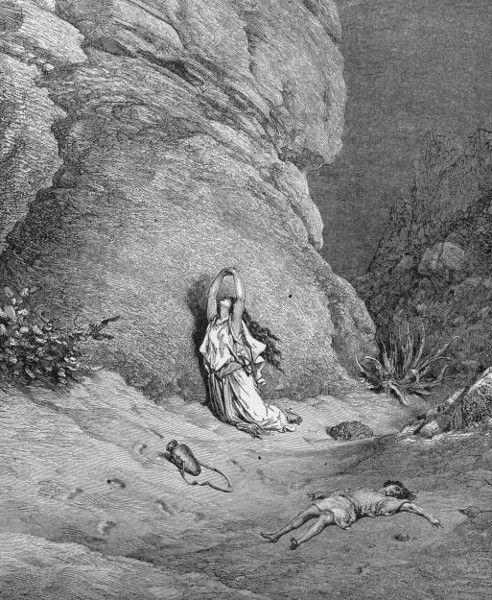
Hagar and Ishmael in the wilderness, by Gustave Doré

There are so many powerful moments in the bible. Where does one begin? Genesis 1, God creates everything, are verses that are awesome to ponder. The resurrection, when Jesus emerged from the tomb alive. God is all-powerful.

There are thunderous moments too. When Mt Sinai trembles, when God was in the earthquake, when He split the ground under Korah and closed it back up again. God is to be feared.

But there are tender moments too. The God of thunder and wrath and all-power is so tender. I’m not one of these who believes the wrathful God is the Old Testament turned into the sensitive (“boyfriend”) Jesus of the New Testament. Read Revelation and you see it is the same God of wrath and anger against unrighteousness and sin. In the Old Testament (as well as the New), there are very tender moments which show us our Holy God is everything. He is simply everything good- including tenderness.

In Genesis 16 we see Hagar running away from Sarai, who was abusing Hagar in jealousy because Abram got Hagar pregnant (at Sarai’s urging) and Hagar conceived. Sarai didn’t.

The angel of the Lord found her by a spring of water in the wilderness, the spring on the way to Shur. 8 And he said, “Hagar, servant of Sarai, where have you come from and where are you going?” She said, “I am fleeing from my mistress Sarai.” 9 The angel of the Lord said to her, “Return to your mistress and submit to her.” 10 The angel of the Lord also said to her, “I will surely multiply your offspring so that they cannot be numbered for multitude.” 11 And the angel of the Lord said to her,

“Behold, you are pregnant
    and shall bear a son.
You shall call his name Ishmael,
    because the Lord has listened to your affliction.
12 He shall be a wild donkey of a man,
    his hand against everyone
    and everyone’s hand against him,
and he shall dwell over against all his kinsmen.”
 She sat in the desert, alone,

So she called the name of the Lord who spoke to her, “You are a God of seeing,”[d] for she said, “Truly here I have seen him who looks after me.”
(Genesis 16:7-12).

In Genesis 21:15-19, slave girl Hagar had been misused by Sarah (and Abraham). She and her son Ishmael ran away to the wilderness, and there, thirsty, alone, and weak, they prepared to die.

When the water in the skin was gone, she put the child under one of the bushes. 16Then she went and sat down opposite him a good way off, about the distance of a bowshot, for she said, “Let me not look on the death of the child.” And as she sat opposite him, she lifted up her voice and wept. And God heard the voice of the boy, and the angel of God called to Hagar from heaven and said to her, “What troubles you, Hagar? Fear not, for God has heard the voice of the boy where he is. Up! Lift up the boy, and hold him fast with your hand, for I will make him into a great nation.” Then God opened her eyes, and she saw a well of water. And she went and filled the skin with water and gave the boy a drink.

“God heard”, “The Angel of God” [Jesus] called to her from heaven. He assured her. He made promises to her. He opened her eyes so she could drink. What direct, intimate ministration from Holy God in heaven!

Posted in discernment, Uncategorized

Speaking up for discernment ministries

Aw. Poor discernment ministries. They are getting such a bad rap these days.

Richard Caldwell tweeted,

That makes sense, and I agree. However the “scare quotes” might not be totally necessary. Discerning the true from the false is a Ministry. Not a “Ministry”.

Randy White says there’s a Sickness in Discernment Ministries(Not THAT Randy White)
I can only think of a few things that the church needs more today than discernment. But I am completely convinced that discernment ministry is not the way the church is going to gain this discernment.

Perhaps this author and I have a different view of the goal of discernment ministries. The individual Christian is the one responsible responsible for cultivating their discernment, not ministries external to the local church. They are a resource, not the sole training ground for the Christian. Hebrews 5:14 says,

But solid food is for the mature, for those who have their powers of discernment trained by constant practice to distinguish good from evil.

So, whether or not we specifically possess the spiritual gift, we’re supposed to practice discernment constantly and train ourselves to detect good from evil, or as Charles Spurgeon says, detecting right from almost right. The pastor, if he preaches expositionally verse-by-verse, helps his people learn discernment because they are getting a good grounding in the word. Daily study and weekly sermons and personal study are the training we need in order to discern. We don’t rely on outside ministries to train us. We do consult ministries as an additional resource. Discernment ministries can be a good educational source, but a secondary one. So, in that sense, no, external discernment ministries are not the way the church is going to gain this discernment – or shouldn’t. However, that isn’t their intent.

Pastor John Chester of Piedmont Bible Church and Parking Space 23, says that we need discernment. However, in his view, “many of my concerns about many of these ministries have been magnified as some prominent ones have degenerated into de facto internet gossip columns and platforms to pursue personal grudges against pastors, theologians and churches.” Further, he believes ‘they are unbiblical, they are unhealthy, they are not very helpful, they often have significant blindspots’ and Pastor Chester has sworn off them.

Yes, some of these ministries have devolved. That’s sad but true. But swearing off all discernment ministries because a few, and I say a few, have devolved, is throwing the baby out with the bathwater in my opinion. Satan has the purpose and ability to corrupt every ministry that’s based on a spiritual gift. He has corrupted Preaching. He has corrupted Helps. He has corrupted Missions. He has corrupted Serving, Teaching, Exhortation, Giving, and Leadership. Discernment is no different. Or maybe it is, because discernment is the gift that aids the Christian in detecting when any spiritual gift-based ministry locally or globally is going adrift.

Eric Barger writes When Discernment Turns Ugly, that “Until the Church rejects the venomous battering of Christians by other Christians merely pushing their pet theologies, we will continue to exist in various “us and them” camps where some are simply intent on impugning others for the sake of making points with their followers and proving themselves “right.” ”

Wow.

But again, I agree to a point. Some Discernment Ministries that devolve entrench themselves into an us-and-them camp. Paul warned about dividing into camps based on who the leader is. (1 Corinthians 1:12). This isn’t new. It’s an old tendency not restricted to Discernment Ministries. Not new are theological debates with entrenched sides and camps. (Synod of Dort, anyone?). Sometimes theological debates on gross or fine points of theology are important, and by necessity, whenever you have debates, there are sides. That’s OK sometimes. Good debates help the cause and keep the doctrinal lines clear. Bad debates can simply be ignored. It’s that simple.

Add to this, biblical illiteracy is at an all-time high. Phil Johnson, Executive Director of Grace To You and a pastor at GraceLife, and a conference speaker, said recently that he believes that the state of the church now equals or exceeds the doctrinal mess and moral decay evident in Corinth. Isn’t it interesting that just when biblical literacy and by extension, discernment, is most needed, discernment ministries are being tarnished and urged to be done away with? Another brick in the wall.

There is a great need for discernment.

Pastor Gabriel Hughes of First Southern Baptist Church in Junction City, KS and the voice of When We Understand the Text (WWUTT.com) said this week,

Just witnessed to 36 high school students, mostly churched. I asked them, “How do we talk to God?” Unanimously they said, “Prayer!” I then asked, “How does God talk to us?” They said revelations, visions, voices, dreams, someone said, “He just does.” No one said the Bible.

This week also, a pastor studying in a Maine seminary wrote a short letter to the editor at Lighthouse Trails, mourning the lack of discernment in seminaries and churches.
Letter to Editor: Pastor Studying at Christian College in Maine Discouraged by Lack of Discernment

Yet discernment ministries are getting slammed

Michelle Lesley does a gracious and expert job of defending discernment ministry. Again.
Answering the Opposition- Responses to the Most Frequently Raised Discernment Objections

You notice that lack of discernment in general arose during an era when expositional preaching is in decline. Topical, hip preaching based on felt needs and pragmatism (whatever works) was the fad these last couple of decades. And as a result, lack of discernment has risen. Since it is not to be found in many local churches, or is absolutely rejected when brought up, then the need for outside ministries filled that need for many. People searched for confirmation of the things they were identifying in various books, sermons, ministries and the like in their home churches. They weren’t getting help at home, so they went to web-based ministries. At least they were trying to follow the Hebrews verse. Good for them. Good for the good Discernment Ministries that were able to provide good information.

I was blessed. Back in 2011, I had a difficult time accepting that Beth Moore was a credible teacher. Yet everyone around me was applauding her and enthusiastically using her books and materials. I broached the question respectfully to a leader and received a less than respectful reply. Unknown to me then, I was also marked as a troublemaker. When the leadership later flogged Jentezen Franklin’s Daniel Fast book from the pulpit and urged us all to publicly contract to do his Fasting Plan, I again respectfully questioned it. I was veritably tossed out on my ear. But in between those two events I searched online for help with the Beth Moore issue and Franklin’s Daniel Fast issue. Chris Rosebrough was helpful with the Moore issue. He not only declared that she was wrong, but taught why, point by point. In this practical fashion, I learned how to discern. Tim Challies’ book reviews and John MacArthur’s expositional preaching helped so much also.

In my experience, far from Discernment Ministries promoting “venomous battering of Christians by other Christians merely pushing their pet theologies” as Eric Barger said above, I’ve seen venomous battering of Christians by other Christians for merely questioning their pet teachers. But these internal bickerings, protections of pet teachers and theologies, and take-downs, are invisible when they happen inside a church. More noisy and visible are the few Discernment Ministries crashing spectacularly. Those get the attention. But the real problem is inside churches that marginalize discerners, and fail to cultivate knowledgeable members through preaching strong and correct biblical doctrine.

To me, the big issue isn’t discernment ministries. It’s lack of discernment from elders, pastors, and leaders who are actively teaching inside local churches. And it’s lack of tolerance or respect to hear those members out when an issue does arise who either trying to follow Hebrews 5:14’s example, or specifically attempting to edify their home church via the spiritual gift of discernment .

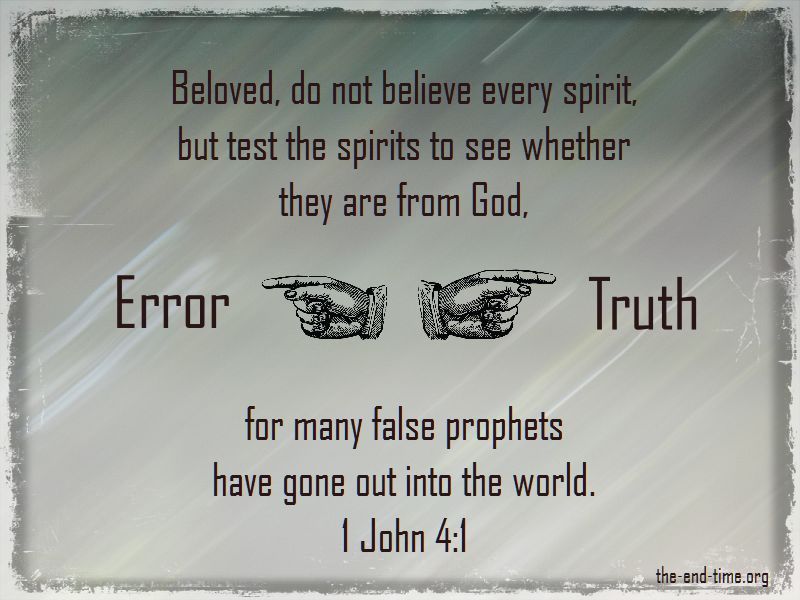
Beloved, do not believe every spirit, but test the spirits to see whether they are from God, for many false prophets have gone out into the world. (1 John 4:1)

Discernment is both a duty of every Christian and a spiritual gift given to some for the purpose of edifying the body.

As with all spiritual gifts, it’s incumbent upon the gift to use it wisely for the edification of the local body. (1 Corinthians 14:3-5, 12, 17, 26; Ephesians 4:12). If you have the gift of discernment, please use it wisely and humbly. We would say the same about those with the gift of giving, helps, leadership, teaching, mercy, and the rest.

Most discernment ministries (or ministries that partly deal with discernment among other issues) are good. Justin Peters Ministries, Michelle Lesley, Gabe Hughes/WWUTT, Tim Challies, DebbieLynne Kespert, Chris Rosebrough, Phil Johnson, Berean Research, CARM.org, and others manage to maintain a clean discernment ministry and also use their other gifts in balance, and do so wisely, humbly, and doctrinally. There are many others I could name.

This issue arose because some false brothers were brought in under false pretenses to spy on our freedom in Christ Jesus, in order to enslave us. (Galatians 2:4)

If there was somebody out there who could correctly help us avoid enslavement to false doctrines, why would we want to say no that that?

error and truth discernment

Posted in bible reading plan, Uncategorized

Bible Reading Plan thoughts: The power of greed

And behold, all the city came out to meet Jesus, and when they saw him, they begged him to leave their region. (Matthew 8:34)

Yesterday’s Bible reading in Matthew 8-10 has a tremendous scene where Jesus traveled to Gadara, where there were two demon-possessed men. The men were wild, unclothed, screaming demonically and tearing apart rocks and breaking the chains the people put on them to hold them back. They did not let anyone pass that area, and they lived in the tombs. If there was ever a living monster, these two men were it. (Luke 8:26-39 holds more details than the Matthew verse).

Imagine the pain the demon-possessed men were in. Their spiritual despair, their grief, their torment. Imagine the upset they caused for the people of the region, with commerce and trade and simple passage having to be altered just to avoid them. The night-time screams, the scared children, the harm that undoubtedly had come to hapless victims who ventured too near.

In a miraculous moment, Jesus healed the men and dispatched the demons. The man was clothed and in his right mind. All the people of the area came out to see it. What did they do? Did they praise Jesus for His sovereignty over all creation, even demons? Did they congratulate and welcome the man who was now returned to human habitability? Did they fall down and worship the One who was obviously the Messiah? No. They didn’t do any of that.

They were more concerned about their money. Their pigs were dead. “Jesus, go away! You ruined our commerce!”

Avarice is a strong motivator. Don’t underestimate greed. Greed is the basis for false teachers to perpetuate lies. (2 Peter 2:32; 2 Corinthians 2:17). Loving money too much is the root of all evil. (1 Timothy 6:10). How shocking and sad their greed blinded them to the wonders of God. They preferred the pigs.

pig
EPrata photo
Posted in bible reading plan, Uncategorized

Bible Reading Plan thoughts: Children of the kingdom thrown into outer darkness?

We might be startled to read these words (promises) from Jesus in today’s Bible Plan reading:

But the children of the kingdom shall be cast out into outer darkness: there shall be weeping and gnashing of teeth. (Matthew 8:12).

Aren’t the children of the kingdom of Jesus assured of entry into it? Yes. And no. It all comes down to, which children of the kingdom did He mean?

Barnes’ Notes explains:

The children of the kingdom – That is, the children, or the people, who “expected the kingdom,” or to whom it properly belonged; or, in other words, the Jews. they supposed themselves to be the special favorites of heaven. They thought that the Messiah would enlarge their nation and spread the triumphs of their kingdom. They called themselves, therefore, the children or the members of the kingdom of God, to the exclusion of the Gentiles. Our Saviour used the manner of speech to which they were accustomed, and said that “many of the pagans would be saved, and many Jews lost.”

Jews by ethnicity were not assured of entry to the Kingdom of Jesus. Jews by works of keeping the ceremonial law were not assured of entry into it. Only by faith in the Messiah, on the graceful foundation and simple childlike faith after repentance assures one of entry to it. Mary knew this. Simeon knew this. Anna knew this. In the Matthew verse, Jesus is warning the self-satisfied Jews not to rely on ethnicity, but upon faith in the One who created them.

"Death of the Strong Wicked Man"
William Blake illustration for Robert Blair’s poem “The Grave”.
Posted in bible reading plan, Uncategorized

Bible Reading Plan thoughts: Prophecy for Egypt

Our daily Bible Reading Plan for today is Isaiah 18-22. Isaiah 19 is one of my most favorite chapters in the Bible. I love God’s prophecies and this one at the end of chapter 19 is a great one.

The near future of Egypt is extremely dim. If you read Isaiah 19 it foretells of some dire things for the Egyptian people. The prophetic chapter is easy to read and understand. Toward the end of the chapter, the future becomes gloriously brighter as we read verse 20 to verse 25:

“When they cry to the Lord because of oppressors, he will send them a savior and defender, and deliver them. And the Lord will make himself known to the Egyptians, and the Egyptians will know the Lord in that day and worship with sacrifice and offering, and they will make vows to the Lord and perform them. And the Lord will strike Egypt, striking and healing, and they will return to the Lord, and he will listen to their pleas for mercy and heal them. In that day there will be a highway from Egypt to Assyria, and Assyria will come into Egypt, and Egypt into Assyria, and the Egyptians will worship with the Assyrians. In that day Israel will be the third with Egypt and Assyria, a blessing in the midst of the earth, whom the Lord of hosts has blessed, saying, “Blessed be Egypt my people, and Assyria the work of my hands, and Israel my inheritance.”

Those are the only three nations to be specifically mentioned as existing in the Millennium Kingdom and even more incredible is that each receives a specific compliment from the Lord unique to them. He considers Egypt His people…and why not, Hosea 11:1 reminds us, “When Israel was a child, I loved him, and out of Egypt I called my son.” He allowed Egypt to shelter His own Son when Herod was chasing Him.

The fact that He calls Egypt back to Himself in the above verses is so wonderful to read. Tears come to my eyes when I read of how specific His plans are and how perfectly they all come together.

There will be a highway…worshipers will flow to the Source.

highway.jpg