Earlier this week I reviewed the notable book Christy, the novel based on a true story of a woman teacher set in the fictional Appalachian village of Cutter Gap, Tennessee, in 1912. It was released as a faith book, and as such, aside from the wonderful descriptions of the scenery and well-drawn mountain folk characters, I reviewed it on that basis. It came up short.
One issue I’d had with the theology in the book was the ending. It ended with an illness and a trip to heaven, lengthy descriptions and all of what appears on the other side. In one scene, the character peering beyond the veil sees her friend who had died previously, noting that her worry lines were removed from her face and her youthful appearance and bounce in her step as she cavorted among the hillside flowers. The problem is that we don’t have our resurrection bodies yet, and no one knows what we “look” like in the current intermediate state, dead but awaiting resurrection into glorified bodies.
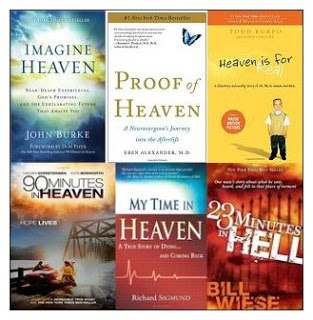
Leaving Christy aside for a moment, I’d like to focus on heaven tourism in general. It’s a cottage industry of late, many authors tout their trips to heaven, having claimed a visit there. Or hell, some have said they went to hell and returned to tell the tale.
Heaven is God’s abode. It is where he sits enthroned in majesty and power. It is where the holy angels worship Him, where the souls of the dead abide, where things are expressed and seen that no man may utter, as Paul noted in 2 Corinthians 12:4.
was caught up to paradise and heard inexpressible things, things that no one is permitted to tell
And yet, they tell.
Foremost, heaven is God’s abode. It’s where He dwells in His home.
Now, you, dear reader, have a home. You love your home. You pay for it, upkeep it, decorate it, raise children in it, have your life in it. As humble or as grand as your home may be, it’s yours and you are rightly proud of it.
Let’s imagine that you have a friend, maybe she lives across the country or she is an internet friend. She has never been in your home. She has never seen a photo of it. You’ve described it to her in words a few times, here and there but she has has no real knowledge of what your home is like in any real way.
Now let’s say that your friend has a popular blog with a million subscribers, or writes a book that sells millions of copies. She writes about your home. She writes that you have diamonds sewn into your curtains so as to make the sunlight twinkle as it streams in. You have gold faucets and a gold dipped bathtub, in which you bathe nightly in milk and honey. She writes that you have special light bulbs to make a lovely yellow-gold glow in the home, even though that costs you $1,000 a day. She writes that you have a thousand butlers lining the driveway to simply wave at you as you drive in, and an elevator pad to lift you and your car to the third floor of your home where when you step out, you are given champagne and a tiara served on a ruby-edged silver platter.
All these are fanciful lies, of course, but your friend wrote it anyway. She never referred to any of the letters you had written, describing your home the few times you mentioned it. She simply went forward and made up ridiculous scenes and wrote stupendously outlandish claims. Now she is getting rich from the lies.
How would you feel? Angry? Violated? Upset?
How does GOD feel when these people do that about HIS home? When people never consult the Bible, His love letter written to humankind, with the actual scenes from the Homeowner describing what it is like? How does He feel when people make money off their outlandish lies about His home?
We know the biblical reasons that the heavenly tourism books and blogs are wrong. No man has seen God…no man may express…No one who has No one has ascended into heaven except the One who descended from heaven… (John 1:18, 2 Corinthians 12:4, John 3:13).
I live in a two-room apartment all of 400 square feet. It is humbly filled with second hand furniture and hand me downs. I am proud of it and I like how it looks. I want it to appear homey and be comfortable in case someone comes over to visit. I’d feel angry and upset if someone wrote about what my home looked like if their writing was full of lies and delusions. That’s treachery. When such lies involve God’s home, it’s blasphemy.
What about respecting the honor and dignity of the Holy One of Israel? The Ancient of Days who sent His Son to die a cruel death and be separated from His Father and become a curse, so that He can make a way for us to be given a heavenly home? Do we disrespect it with fanciful tales of imaginary joyous reunions and large gates and sunlight on a hill? With lies and imaginings? Is this how we repay Him who is preparing a place for us?
Please avoid books and essays about visits to heaven. They are lies upon lies and they are not only unbiblical, they dishonor the Homeowner, our precious and loving Father God, His Son Jesus, and His Holy Spirit.
fixing our eyes on Jesus, the author and perfecter of faith, who for the joy set before Him endured the cross, despising the shame, and has sat down at the right hand of the throne of God. (Hebrews 12:2 NASB).
I press on toward the goal for the prize of the upward call of God in Christ Jesus. (Philippians 3:14) NASB)
The above two verses remind us to keep our eyes and attention fixed on the prize: which is Jesus! When we shift our gaze from Jesus to the things around us, we lose strength, energy, and focus. The example below is used a lot in sermons and devotionals to demonstrate this concept. It is an oldie but a goodie. The following was published on The End Time in July 2010.
Florence Chadwick was a young woman in 1952 but had already swum the English Channel, both ways, and broke records doing it. That morning in 1952 she stood on the shores of California with intent to swim the 26 miles to Catalina Island. It was foggy. She was used to fog, rough water, and cold, having swum in these conditions since when was 11 years old so she was prepared for any conditions that may beset her on the long swim. It was so foggy that Florence could not see the support boats motoring around her to scare away the sharks. However after 15 hours of rough water stroke after stroke, she felt like she wasn’t getting anywhere. Despite encouragement from her mother and others in the support boat next to her, Florence wearied and asked to be taken out of the water. She soon discovered that she was half a mile from her goal.
Above, the Lubec Maine shoreline. There is lighthouse in this photo. Can you see it?
[Photo by EPrata]
At a news conference the next day Florence said, “All I could see was the fog.…I think if I could have seen the shore, I would have made it.”
Florence tried again two months later. This time, she made it because she said that she kept a mental image of the shoreline in her mind while she swam.
This is the same scene as above after the fog rolled away. [Photo by EPrata]
Prophecy is not meant to BE the fog. It is knowable, profitable, and given to us for all education. It is a light to keep in our heart as to the immutable existence of God, His eternal promises, and the goal for every believer, to reach the eternal Lighthouse. Jesus meant for prophecy and His promises to the believer to be the mental image for us to hold dear as to the goal. Do not give up half a mile from the finish line! He is near, He is coming. Do not wander, drift, be swept away by currents taking you far from the goal. May every stroke of your swim toward eternity be as vigorous as the one before. Pray for that vigor. The Holy Spirit is there to help us: “And I will pray the Father, and he shall give you another Comforter, that he may abide with you for ever;” (John 14:16)
If you knew that the Rapture was tomorrow would it change your decision not to study the Bible today? Not to pray? Not to help someone? If you knew it was next week, or next year, how differently would you act as a Christian? You’re tired. We are all tired. The wages of sin splash up on us, and sometimes splash into us. It is wearying holding firm against the current. But keep the goal in mind! Some fine morning,t eh call will come, and the fog will lift and we shall see Him clearly, in blazing glory and light!
Christians today have many opportunities to attend any conference of one’s choosing. Might I say a plethora of choices?
There’s conferences for men.
T4G. Sing! MLK50. TGC West Coast. G3. Cutting It Straight. ShepCon. LigCon. Right Now.
There’s conferences for youth.
Passion. Urbana18. RiseUp. GraceLife Youth conference. Salt & Light. Momentum. Ignite. KingdomYouth.
There’s conferences for women (mostly false).
Living Proof Conference. Unwrap the Bible. IF:Gathering. The Word Alive. Women of Joy. Love Life by Joyce Meyer Ministries. Women of the Word. Women of Purpose. Extraordinary Women.
There’s conferences for (mostly) false teachers and (mostly) false Christians.
Bethel Conference. Catalyst Conference. Amplify. Charisma.
Of course there are many more. And many more on other continents. Conferences (and their simulcasts) are a thriving cottage industry in the global church. And of course each conference has its own claims of how good and necessary it is for you, the pastor/man/woman/youth/church planter/missionary/any demographic to attend.
The Outreach Summit is unlike any other church leader conference. Only at The Summit will you meet and hear from the pastors of the most innovative and fastest growing churches in America.
The Gateway Conference desires to share practical wisdom for cultivating real growth by …
MinCon quickly gained the reputation as a conference of excellence, offering an incredible hands-on experience at an affordable price for teams and churches all across the Pacific NW.
Catalyst West is a 2-day conference to help leaders like you build great churches, grow strong teams, and be a catalyst for change
We’ve gathered some of the nation’s best leaders to share their wisdom with you. (Small Town Pastor’s Conference has a list of leaders different from the other conference sharing wisdom with you…)
We’ve gathered some of the nation’s best leaders to share their wisdom with you. (Right Now Conference has different speakers than the other conference sharing wisdom with you…)
We hope that during your time with us, you will be able to relax, build new relationships, and leave more excited about this calling than ever before.
When you discover how to leverage your talents as an entrepreneur, leader, or pastor, you cultivate a more meaningful impact in your business or leadership endeavors. (This was a PASTOR’s conference…not a Google or Amazon business practice gathering, believe it or not)
Some of the ones I read sound like a business model more fitting for Google or AT&T than a church.
Is it too much of a good thing? Is it possible that there are too many conferences that, mixed with the good ones, the bad ones draw away congregants and introduce false notions? Can even the good ones be potentially problematic? I believe so. Though there are many good conferences, I believe the time has come to be more discriminating and skeptical of what today’s Christian conference is offering. Please bear with me as I share some thoughts on why many conferences can be dangerous to one’s spiritual health.
1. False confessions
A few years ago as I followed David Platt taking the reins of the International Mission Board as President in August 2014. Known for his dedication to missions, Platt was to speak at the annual Student Missions Conference at Urbana in St. Louis MO in December 2015 (as he usually does each year.) The conference is aimed at college students. Curious, I tuned in. The conference’s own language describes it as a “catalytic event” in a “sacred space”. A catalytic event means they want to use the speeches, emotional reactions from music, and teenage momentum to get attendees to DO something in missions. The conference is the catalyst for that. It’s their aim.
Though the conference is not aimed at non-Christians because it’s a mission oriented event and not an evangelistic conference, the organizers acknowledge that non-believers do attend. Therefore at the conclusion of the main event, speakers put out a Gospel call to make a decision for Christ. At Urbana 15, Mr Platt asked attendees who had “decided for Christ” to raise their glowsticks and wave them. It was later stated that 681 students did.
Is this how people come to the cross and enter the kingdom? By responding to a one-hour lecture and deciding, and waving a glowstick? Perhaps the Spirit did use the event to regenerate some, but in high-emotional and religious-pressured environments, at events where youths are separated from parents and other adults, is a concoction rife with potential for false conversions. I had a hard time believing that 681 people were converted at once, though @UrbanaMissions claimed 681 were by calling them new Christians. The same thing happens at the youth-aimed Passion conference. Photos, and more explanation about Urbana 15’s decisional regeneration and pronouncement of new believers, here.
2. False Doctrine
At far too many conferences lay the potential to propagate false doctrine. Churches are supposed to be tightly closed. There are membership standards, behavioral expectations, stringent qualifications for leaders, and biblical discipline. In the best of worlds, that is how it’s supposed to work. Because it used to be hard for satan to get into the pulpit, satan develops ways to get around that. The Sunday School curriculum, the Children’s Ministry leader, the book clubs for woman, the church library, parachurches. And now in modern times, with travel so easy – conferences. I don’t think I need to use many specifics here, you know what I’m talking about.
The ridiculous conferences are easy enough to spot, and even the solid ones have a hard time maintaining the gate these days, as the issue with Grace To You/Grace Community Church & TGC West Coast recently showed us. Executive Director of GTY, Phil Johnson, said of the of GCC Elders’ decision to bow out of hosting TGC West Coast’s “Enduring Faithfulness” conference was ultimately that,
Some of the seminars featured points of view or speakers that stand in stark opposition to what we teach at Grace Church and Grace to You. Other seminars seemed merely to miss the point of “enduring faithfulness” entirely, and some were also arguably tangential to any core gospel truths. We felt the seminars collectively failed to convey what is most necessary for cultivating true, steadfast faith.
3. Too Many Speakers to Vet
In the past, conferences used to feature just a few well-known speakers. By “well-known” I don’t mean celebrity pastors, but faithful pastors who have endured long and have a proven track record as to their doctrine. Nowadays, some conferences feature up to 200 speakers. While you could look up the keynote speakers to check, though that in itself is time consuming as the roster of keynote speakers grows, it is impossible to “vet” all the speakers of breakout sessions. So when one of the members of your church attends a breakout session, it could be led by someone who is teaching an unbiblical doctrine, or one that your church does not hold. As a matter of fact, given the times we live in and the methods satan uses, this is likely. In fact, this was one of the reasons that Grace Community Church elders decided to bow out of hosting The Gospel Coalition West Coast Conference. Though they had trust in the keynote speakers, a number of other speakers were added afterwards. As Phil Johnson explains, this was problematic.
Some of the seminars featured points of view or speakers that stand in stark opposition to what we teach at Grace Church and Grace to You.
Below on the left, a screenshot of the recent MLK50 conference speaker lineup, on the right, The Gospel Coalition West Coast Conference this coming October 2018. How is a parent/husband/discerning person supposed to vet all of them? Can’t.
4. Many Conferences Feature Stretched Complementarian Boundaries
One of the most hotly contested areas of doctrine in church culture (and secular culture) today is the role of women. The correct biblical stance is that women are not to be teachers of men, leaders over men, or pastors in the local church. They are not to have authority over men. (1 Timothy 2:12). However, women can teach children, or other women, or in a home setting as Priscilla did with Aquila. This tiny bit of leeway has given satan an inch, and he has taken it by a mile. I’ve noticed over the recent years how many women are now speakers at mixed-gender conferences. Young women at that.
While women are permitted to discuss biblical theology in a mixed group setting such as a Sunday school class, women teaching children or other women (Titus 2), or in a private setting such as with Apollos’ instruction that was gleaned from meeting with Priscilla and Aquila—biblical teaching, when among the church as a whole or a mixed audience should be led by men. It seems clear that Paul was addressing an issue that was taking place in the life of the church and needed to be corrected.
When it comes to teaching men in our present day, we have the conference culture that often stretches these complementarian boundaries. This is a dangerous practice, since conferences are designed to strengthen the church and to in many ways model what the local church should be promoting in their local assemblies—ie., expository preaching, sound biblical theology, and other important, if not essential, practices. Therefore, to have women stand and open the Bible and teach a group of men in a conference setting is not beneficial to the Church represented in the conference from many different local churches. Such stretching of the boundaries is a common practice in our day and we should be cautious when we see women teachers invited to speak to a mixed audience.
5. We are being made merchandise of
2 Peter 2:3 says that the false teachers will exploit the believers and make merchandise of us. Barnes’ Notes says,
Make merchandise of you – Treat you not as rational beings but as a bale of goods, or any other article of traffic. That is, they would endeavor to make money out of them, and regard them only as fitted to promote that object.
There are conferences that have a goal to teach well, and to serve hard. Shepherds’ Conference is one that I know of. But too often the case is the opposite. There is a reason many conferences’ blurbs sound like an entrepreneurial business advertisement- because they are a business. The larger the conference gets the more the organizers have to recoup money from renting the venue, paying accommodations and travel expenses, or the like. The false teachers flock there to flog their book, sell their latest book. Tee shirts, trinkets and more is all for sale.
I attended one conference where the food vendors inside the arena were selling food at fantastical prices. Simple game day type food like pizza and hot dogs were for sale at high prices. Perhaps the organizer had nothing to do with this and could not prevent it, but the atmosphere left one feeling, well, exploited. We had just arrived after a long drive, had no time to go anywhere else for food, and the conference was about to start. We were trapped and had no alternative but to pay the demanded prices.
Just as the money changers at the Temple began as a good idea, soon filthy lucre made its way into the courtyard and what started as a service soon became exploitation. It is no different now.
I think conferences can be great. Pastors can gather with other pastors and be refreshed. The ebullience of youth can accomplish much when properly directed. Woman believers, many of whom are stay-at-home moms, can collect with other women and be edified.
However there are dangers to be considered. When believers are away from their home church, especially youths and women, satan can enter in more easily. Remember what happens to the limping gazelle in all the wildlife programs. Separated out from the herd, they are vulnerable. (1 Peter 5:8)
False doctrine spread by false teachers or unknown or unvetted teachers can be propagated in their lectures or their books. These seeds of evil can be brought home and planted in the home church. Boundaries can be stretched, poor models of lifestyle presented, discontent sown. Please consider carefully when desiring to attend a large conference. Many are good. But of late, they can more often be an entrepreneurial business opportunity for the organizers, and you their potential merchandise … or spiritual target.
And whenever the harmful spirit from God was upon Saul, David took the lyre and played it with his hand. So Saul was refreshed and was well, and the harmful spirit departed from him. (1 Samuel 16:23).
Since the Lord rejected Saul as king, He withdrew His Spirit; and Saul received an “evil spirit.” The identity of this “evil” spirit has been disputed. Some believe that it was a demon. Others argue that it was a troubling spirit causing emotional disturbance (see Judg. 9:23). Some have suggested that the Lord permitted Satan to afflict Saul as punishment for his sin (see 2 Sam. 24:1 with 1 Chr. 21:1). What is clear is that this spirit was sent by the Lord (see 1 Kgs. 22:20–23) to show that Saul had been rejected. It caused Saul to experience bouts of rage and despondency. Christians do not have to fear that the Lord will remove His Spirit from them, since the Spirit is the believer’s permanent possession (Rom. 8:9, 12–17; Eph. 1:13; 4:30). Holman concise Bible commentary (pp. 114–115).
I wanted to note in this passage that the evil spirit came and went. The situation was different in the Old Testament, in that the believers were not given the Spirit to indwell them. In the NT, we are. Once indwelling, we can never again be lost nor will the Spirit depart. However if we are is absent the Spirit, no amount of moralizing behavior will keep the evil spirits away. Eventually they enter in. Or eventually, they return.
You see this expressed in the New Testament verse of Matthew 12:43-45.
When the unclean spirit has gone out of a person, it passes through waterless places seeking rest, but finds none. Then it says, ‘I will return to my house from which I came.’ And when it comes, it finds the house empty, swept, and put in order. Then it goes and brings with it seven other spirits more evil than itself, and they enter and dwell there, and the last state of that person is worse than the first. So also will it be with this evil generation.
The house being swept is the person deciding to straighten up and fly right. “I’ll be good!” they say, “I’ll be moral.” they promise. But without the Spirit’s seal in us, the evil will return at some pouint, and the person will be even worse off.
Think of drug addicts who leave rehab only to do worse drugs in their relapse. The drunk who had yet to hit bottom but hits a new low on the way down. The dieter who puts on more weight after the diet than before. The flirt who acts on his flirtation this time. The unaided flesh can’t be restrained.
As for Saul, Matthew Henry said:
How much better friends had they been to him if they had advised him, since the evil spirit was from the Lord, to give all diligence to make his peace with God by true repentance, to send for Samuel to pray with him and to intercede with God for him! then might he not only have had some present relief, but the good Spirit would have returned to him. But their project is to make him merry, and so cure him. Matthew Henry’s commentary on the whole Bible
Curing your evil without the Spirit is hopeless. Saul did not seek Him, and attempted to use music as a symptom reliever. Play the lyre, sweep the house, try and try again. You can only cover up symptoms for so long. We all need the only cure, the final cure: Jesus and His Gospel.
Above: The copy I am reviewing has a cover as in the upper left. The one I read as a teen is upper right. The lower left is the Kindle edition cover using a photo of the real Christy, (Leonora Whitaker), and lower right is another version of many covers that have been published in the last 50 years. Christy is still going strong.
Christy (1967) is a historical fiction Christian novel by American author Catherine Marshall, set in the fictional Appalachian village of Cutter Gap, Tennessee, in 1912. The novel was inspired by the work of Marshall’s mother, Leonora Whitaker, who taught impoverished children in the Appalachian region when she was a young, single woman. The novel explores faith, and mountain traditions such as moonshining, folk beliefs, and folk medicine. Christianity Today ranked Christy as 27th on a list of the 50 books (post-World War II) that had most shaped evangelicals’ minds, after surveying “dozens of evangelical leaders” for their nominations.
The book is listed as historical fiction, but the author Catherine Marshall said she drew heavily on her mother’s life for the actual events recorded in the book. For the events that did not occur in Mrs Whitaker’s life AKA Christy, such as the typhoid epidemic, the author researched diligently to present a historically accurate event that was true to the times and the place.
I love a teacher story so even though the book deals with many theological themes, I read it as an unsaved teenager for the teaching part, and enjoyed it fabulously. I got a notion a few years ago to revisit the book now that I am saved, in order to enjoy the theological parts as well. When I came across it at a Library Book Sale, I delightedly bought it.
On GoodReads, Christy has an average rating of 4.21 collected from 43,635 Ratings. There are 1,494 Reviews. Most of the reviews are 4 or 5 star. Wow.
On Amazon there are 76 ratings & reviews, and all of them are 5 or 4-star except for two ratings that reported a Kindle glitch.
I was hopeful.
I should know better.
Though thousands of people have given the book highest ratings, I must sadly depart from the crowd. I have three minds about the book Christy.
The Good, the Bad, the Upshot
1. As a secular story, it is an extremely well-written, absorbing (500-page) book that would capture any reader for the vivid descriptions of the majestic mountain locations and the well-drawn characters. The history alone and deep knowledge of lives lived in a long-ago time is enough to recommend the book. It definitely makes an impression from the first page.
2. As a faith story aimed at many Christian women, it stands alone in stark contrast to many books of its genre published today, in a good way. Modern faith stories have trivialized today’s woman in her struggles with a chosen career, uncertainty of effectiveness in missionary work, her doubts about what she believes, romance, mentoring, friendships, and more. Today’s faith stories usually include the silly main character (usually an antiques dealer or a florist) encountering a short-lived, superficial bump in the road made out to be a monumental struggle, a passing glance at some trite beliefs, and finishing with a direct whisper from God telling the girl to go marry Joe, and they lived happily ever after. Christy, on the other hand, delves into strong rapids swirling with rejection, fear, uncertainty, God’s plan, romance, death, marriage, and love for neighbor under adverse circumstances. It has guts. It has grit. To that end, it’s a true mission story.
3. As a faith story, it is a theological train wreck. I can’t recommend it at all based on the number of false theologies it introduces. There’s mysticism, Quakerism, direct revelation, biblical errancy, social justice, moralism, and more. Though there is mention of Jesus, more often the author chooses to use a generic name such as the “Authority”, or simply “Someone.” Someone? I was reminded of the verse in Acts 17:23, the monument “To An Unknown God”. Though the characters wrestle with evil, a lot, sin is never ever discussed. The main character is shocked by the level of superstition and darkness in the people to whom she is ministering, but the solution of the Gospel is never raised. They just try harder to get the people to be moral and to love well. God’s sovereignty is not presented, but man’s free will is.
The short version is that the book Christy: Heavy Social Justice + A Good Dose of Mysticism + A Dash of Moralism = A book the world loves
The long version is that the book is not “just fiction.” The novel presents itself as a theological faith story, and as such, it’s incumbent on us to review that faith and compare to the Bible. Here are the nuts and bolts.
The copy from which I’m quoting is Mass Market Paperback from Publisher Avon, published June 2006. On page 103, Christy seeks advice from her mentor, a Quaker woman named Alice. Now, please understand, that Quakerism, or as it used to be known, quietism, “does not reflect a biblical approach to spiritual life,” as John MacArthur is quoted. Much is made of Alice’s quiet spirit, her centered approach, her great still pools of eyes that looked piercingly at you and spoke of the ‘inner Light”.
Matt Slick writes of the Quaker beliefs and practices, that they believe in general (though there are many different manifestations of people populating the Friends’ Society) that the Bible is a guide but subordinate to direct revelation, they do not practice communion nor baptism, women can and are leaders and elders, (on Page 332 the pastor in the book deferred to Alice the Quaker to preach a funeral to the gathered community), salvation can be lost, and there is no such thing as total depravity. Never mind the complicated justification explanations. There is not talk of repentance since sin is downplayed. As a matter of fact, they believe sinless perfection can be achieved in the flesh. Many of these threads are overtly or subtly brought out in Christy.
In the book, on page 308, Alice teaches Christy that not only spiritual blessings but material blessings can be gained if we just “claim them.”
God has all kinds of riches for us. Not just spiritual riches either. His promises in the Bible are His way of telling us what’s available. But this plenty doesn’t become ours until we drive our stake on that particular promise and thus indicate that we accept that gift. That, Christy, is ‘claiming.’
This is a strange conversation to be having when the poverty around them was so dire that the unsanitary and impoverished conditions of a cabin she was visiting and its inhabitants made Christy vomit. Just ‘claim riches’? For shame, Miss Alice.
A few sentences later, Alice explains the problem is evil exists and not to compromise with it. She said we must fight it. How? “Listen for His orders on strategy against evil…” She did not instruct Christy to seek that advice from His word.
Subtly, the Quaker character steers Christy away from specifics of the Bible, mentioning the Bible a lot but not consulting it as the Word of God filled with Holy Spirit life and solutions to today’s issues. Given today’s young women who already have a tendency to listen for direct whispers and heavenly advice, the subtle dismissal of God’s word as authoritative and final is troubling and I would not put this book in front of young women for that reason alone.
Love is the key for Quaker Alice, and for the book’s characters in general. Not repentance. Yes, love is important. However the character teaches that we can have Jesus’ friendship “only if we are willing to let go our resentments and our hating and our feuding and our our name-calling and our shooting and love one another.” [emphasis theirs]. In essence, our works (loving well) brings Jesus to us, which is consistent with Quaker theology. The closest the character got to the Gospel in her sermon was to say to “trust our Friend, and He will root out bitterness and replace it with love.” We need more than trust, but to repent and believe. (Mark 1:15).
These theologies were evident in the book, spoken through this main character Miss Alice. This is what “Alice” was teaching “Christy” and thus, the reader.
The pastor in the story was a man who was not settled in his beliefs. He didn’t seem to be saved at all, as a matter of fact. In the end he seemed to give up the pastorate completely. He wrestled with many theological problems, and not the hard ones, either. He did not believe in biblical inerrancy, taught that the soul goes to sleep after death, wasn’t sure about our resurrection after death, (but humans are probably immortal because the flowers come back every spring, don’t they?) didn’t believe in Jesus’ miracles because they very likely have a natural explanation, and how one lives is more important than what one believes. “Dogma isn’t important. It’s the results in the community that count. As for the Bible, it’s an amazing book, the best book of wisdom that we have.” Pragmatism at its best.
These theologies were evident in the book, spoken through this main character. This is what “David” was teaching “Christy” and thus, the reader.
The missionaries wrestle with the problems of poverty and illiteracy and seek to solve them in human terms and works. On page 405, Christy is ruminating on the ideal (religion) versus the practical (everyday needs). She never sees the connection between the so-called “dogma” and the real life issues the people to whom they minister face. In their view, the people’s physical needs always outweigh their Gospel need, and they always will, because none of the three characters see man’s depravity as the root issue. Yet in fact, it’s the opposite: man’s spiritual need is much greater than poverty, illness, or illiteracy, as dire as they may be. Here on page 405 Christy finds the solution, which is no solution.
How would believing in the love of God solve problems like illiteracy of poverty for the highlanders? Now I saw the connection between Miss Alice’s certainty about the inner guiding Light and Grundtvig’s ideas. God did have a master plan for the Cove, and Grundtvig was saying that we could find that plan by looking deep into the human spirit.
Therein lies the rub. First, the characters try to solve the issues of the day by looking everywhere except the Bible. Second, did Christy come to the mountains to solve social ills, or to save souls? The social justice theology so prevalent at the turn of the last century was evident in the book, spoken through this main character. I’ll address social justice in a separate blog essay this week. Third, do we solve societal ills by ‘looking deep into our own spirit’? Or do we turn to THE Spirit and fall to our knees and ask Him to enter us as the seal of the guarantee, after repenting of our sins? We know the answer. Any place we look at in history where the Gospel took root, schools, orphanages, and hospitals sprung up, where prior to the Gospel, charity was little known.
The book ended with a trip to heaven, seeing people who had passed on, and reveling in the “Light” -but no Jesus was evident. Sigh. I’ll address heavenly trips in a separate blog essay this week.
As for the book presenting theology and not being “just fiction”, here is Dave James, Ministry Coordinator for The Alliance for Biblical Integrity speaking of these issues regarding the book The Shack. Substitute the title of The Shack for the title Christy and you have the meat of the argument-
So, then how should we classify this novel?
Is it theological fiction?
Or is it fictional theology?
If it is fictional theology, then it is theology that has no biblical basis. That would make it heresy by definition. So, one can’t claim that it is fictional theology and still defend it as a basis for personal spiritual growth, comfort and encouragement.
But what about theological fiction?
If it is theological fiction, then wouldn’t it have something of a parallel in the genre of historical fiction? How does historical fiction work? In general, it uses (and must use) true historical events as a framework for the book. For example, no historical novel could ever put the attack on Pearl Harbor in 1950. If it did, then such a book would be relegated to “fictional history” – and no one would take it seriously from an historical perspective.
However, many people do take The Shack very seriously. And those who do take it seriously now view God differently than they did before. In other words, their theology has changed. But their new theology is not found in the Bible. And not only is this new theology not biblical, it actually contradicts the theology of the Bible. Therefore, any emotional or spiritual impact that The Shack might have is based on something other than the truth – which in other words, is a lie. Quite obviously, believers cannot base their spiritual growth on a lie. If they try to do so, something might happen, but it can’t be called “spiritual growth.”
I cannot overlook the absence of the Gospel in Christy, the lack of focus on sin, the silence of the need for repentance, the constant mystical direct revelation, the emphasis on inner truth derived from voices and whispers and not the Bible, and the exalting of a Quaker as the steadiest, most mature religious person in the book.
1. Just social service work – bettering the material situation – does not change people. It takes, in addition, the love of God,
2. God does not love just the ‘good people’, He loves all of us,
3. Let us be proud of our mountain folk and their great heritage.
The Shack has already come and gone. Christy, fifty years later, has staying power. It’s spawned spin off book sequels, two television series, and a TV-movie. It’s still in print. In the Morgan Gap (the actual Cutter Gap) an annual ChristyFest is held. Not recommended. Leave Christy in her mountains, and seek better, more theologically sound women to spend time with, be taught by, and to be inspired by.
I’d much rather read and re-read Gladys Aylward’s book The Little Woman, about her years in inland China as a missionary.
Elisabeth Elliot’s travails in Ecuador.
Corrie ten Boom’s The Hiding Place.
Lottie Moon.
Amy Carmichael- A Chance To Die: The Life and Legacy of Amy Carmichael by Elisabeth Elliot. Give Me This Mountain by Helen Roseveare. My Heart In His Hands: Ann Judson of Burma by Sharon James. Secret Thoughts of an Unlikely Convert by Rosaria Butterfield. A Reformation Life: Katharina von Bora by Rudolf Markwald.
If you like inspiring teacher movies and books, try these
Music of the Heart, movie with Meryl Streep
Mr Holland’s Opus with Richard Dreyfus
Dead Poet’s Society with Robin Williams
Stand and Deliver with Edward James Olmos
To Sir, With Love with Sidney Poitier, book by by E. R. Braithwaite
Goodbye, Mr Chips, with Robert Donat; book by James Hilton
The Water is Wide with Jeff Hephner (2006) AKA Conrack (1974 with Jon Voight), book by Pat Conroy
Akeelah and the Bee with Laurence Fishburne,book by James W. Ellison
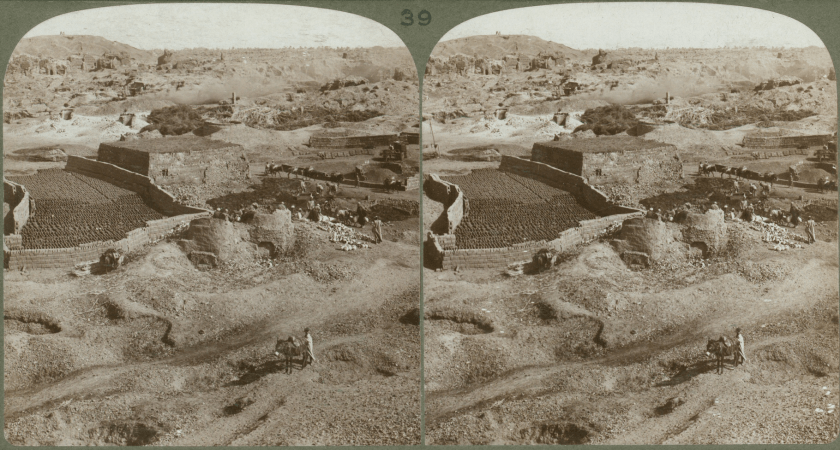
So the same day Pharaoh commanded the taskmasters over the people and their foremen, saying, “You are no longer to give the people straw to make brick as previously; let them go and gather straw for themselves. But the quota of bricks which they were making previously, you shall impose on them; you are not to reduce any of it. Because they are lazy, therefore they cry out, ‘Let us go and sacrifice to our God.’ Let the labor be heavier on the men, and let them work at it so that they will pay no attention to false words.” (Exodus 5:6-9)
Photos from Palestine from the late 1800s an early 1900s are a joy to view, because the methods of the people, dress, and vistas were largely unchanged from the days Jesus walked. It was only in the 1930s and 40s that development began in earnest and especially after Israel became a nation again in 1948 that things began to modernize and the old ways were vanishing.
In the 1800s, as travel became easier with trains and modern steam ships, many upper class men and women in Britain or America took a Grand Tour of Europe. Interest grew and soon many expeditions to Palestine took place. The Ottoman lands were such a curiosity that a plethora of Travelogues to the Middle East burgeoned in the 1700s to early 1900s.
Travelogues of Palestine are the more than 3,000 books and other materials detailing accounts of the journeys of primarily European and North American travelers to Ottoman Palestine. An in depth survey of Palestine topography, and demographics was done by the Cartographer, Geographer, Philologist. The number of published travelogues proliferated during the 19th century, and these travelers’ impressions of 19th-century Palestine have been often quoted in the history and historiography of the region…
One such travelogue book in my Logos Software is Earthly Footsteps of the Man of Galilee, and another is the one I’ve quoted below, Egypt Through the Stereoscope. The stereoscope is “a device for viewing a stereoscopic pair of separate images, depicting left-eye and right-eye views of the same scene, as a single three-dimensional image.” That’s why the image below is a double image.
I’m going through Dr Abner Chou of The Master’s Seminary lectures on Exodus. (Note- that link will expire on July 31, 2018, as Wikispaces is closing and hosted lectures will go away unless you download them prior). I find it interesting to see what the brick making operation might have looked like and enjoyed this view from a hill above an Egyptian brick-making operation taken from a Travelogue Expedition in the early 1900s written by Dr James Breasted. The book is available today and is considered culturally important.
Anyway, enjoy this long-ago view of making bricks in Egypt, and imagine thousands of years ago the cries of the Hebrews as they toiled under the merciless overseers and merciless baking sun. Then the Lord raised up Moses…
Caption-
Just north of the chief ancient city of the Fayum, we stand looking nearly eastward over the ruins of Crocodilopolis. Behind us stretches the Fayum, rising at last to the vast waste of the Sahara, spreading out to the far Atlantic. Beyond the trees that mark the sky-line before us the Nile is twenty-five miles away.
Deep down under these ancient crumbling walls lie the scanty remains of a town at least as old as the twelfth dynasty kings, who 2,000 years before Christ recovered this district from the waters of the lake. They built a temple here sacred to the crocodile god Sebek, after whom the city was called by the Greeks, Crocodilopolis.… When the Greek kings, the Ptolemies, came into power, they used the rich fields of the Fayum as gift lands with which to reward their soldiers.… Some of the greatest products of Greek thought have turned up among the house ruins, such as the Constitution of Aristotle, poems of Sappho and innumerable fragments of Homer.…
We see here modern natives engaged in brick-making by the same methods that were employed five thousand years ago. The soft mud is being fixed under the feet of a fellah, while another at a table molds it into bricks. These are taken while still in the molds and carried to the yard by a third native who gently detaches them from the molds and leaves them to dry in long rows.… In spite of the lack of firing they make a very desirable wall; in a practically rainless climate they stand well.
From Egypt Through the Stereoscope, by James H. Breasted, Ph.D., with twenty patent maps and plans, 1905
This encouragement essay first appeared on The End Time in February 2010.
——————————-
Christians who diligently focus on worship, study, encouragement, and ministry are doing the right thing. But Paul eagerly looked forward to his crowns and to the rewards awaiting him. He often encouraged his brethren with news of the future rewards and glory. “I have fought the good fight, I have finished the race, I have kept the faith. Finally, there is laid up for me the Crown of Righteousness, which the Lord, the righteous Judge, will give to me on that Day, and not to me only but also to all who have loved His appearing.” (2 Timothy 4:7-8). We are made a promise, “Be ye strong therefore, and let not your hands be weak: for your work shall be rewarded.” (2 Chronicles 15:7) It is right and also good to look forward to what the Lord has prepared for us, including rewards, for they are also His handiwork.
In 2000, miners accidentally broke through to a heretofore unknown chamber. It contained the most magnificent crystals ever seen anywhere on earth, absolutely stunning the geologists. Some of the crystals had grown to be 60 feet high. The place is called the Cave of Crystals and it is in Naica, Mexico. Because the chamber is exceedingly hot and humid and humans are overcome with the bad air within minutes, and also to preserve the display, the cave is closed to visitors except under strict circumstances. “This year, BBC Two sent Professor Iain Stewart into the cave, and he “got a rare glimpse of the subterranean spectacle while filming for the new BBC series “How the Earth Made Us.” If you ignore the show title and focus on the cave, you will be blessed. The trailer is only 1:20 minutes.
Now, Christian, capture the wonder and amazement of the beauty of these magnificent and translucent crystals and translate that to a tiny window of the beauty of the gems and crystals that are awaiting us in New Jerusalem!
The New Jerusalem
“Then I saw a new heaven and a new earth, for the first heaven and the first earth had passed away, and there was no longer any sea. I saw the Holy City, the new Jerusalem, coming down out of heaven from God, prepared as a bride beautifully dressed for her husband.” (Rev 21:1-2)
“The wall was made of jasper, and the city of pure gold, as pure as glass. The foundations of the city walls were decorated with every kind of precious stone. The first foundation was jasper, the second sapphire, the third chalcedony, the fourth emerald, the fifth sardonyx, the sixth carnelian, the seventh chrysolite, the eighth beryl, the ninth topaz, the tenth chrysoprase, the eleventh jacinth, and the twelfth amethyst. The twelve gates were twelve pearls, each gate made of a single pearl.” (v. 18-19)
“The great street of the city was of pure gold, like transparent glass.” (v. 21)
“I did not see a temple in the city, because the Lord God Almighty and the Lamb are its temple. The city does not need the sun or the moon to shine on it, for the glory of God gives it light, and the Lamb is its lamp.” (v. 22-23)
Oh, the tremendous beauty that is awaiting us with our Lord! His creativity is unparalleled. That He will share this beauty with us is amazing in itself, but that He is creating it for us, to dwell with him, is enough to bring me to my knees. When you watch this video of the gorgeous crystals, think of the street of gold in New Jerusalem, think of His light and His glory illuminating the entire city, the world, the universe. Think on this: “And if I go and prepare a place for you, I will come again, and receive you unto myself; that where I am, there ye may be also.” (John 14:3). The place He is preparing is so much more beautiful than the Crystal Cave at Naica, the mind cannot conceive its artistry.
Will YOU be there? You will be if you ask Him forgiveness of your sins and make Him the Lord and Savior of your life. Understand that sin cannot enter into the heavenly realms and that you, if you have sin in you, will be excluded from this glory. But if you repent of it and ask Him to forgive, you will be walking the street of gold with all the other forgiven sinners in eternity.
Christian, the Crystal Cave at Naica is not what awaits. What He is preparing for us is even better. Can our eyes take it in? Can our hearts remain beating or explode with joy at His grace and generosity? When you feel tired, when satan whispers ‘it’s not worth it’ or ‘why bother’, think on New Jerusalem’s beauty that the Lord took care to make for us, and persevere.
In part 1 of this two-part series, yesterday I’d written about what discernment is, and that there is discernment as a skill that all Christians are to train themselves in (Hebrews 5:14), and discernment as a gift of the Spirit given to some. (1 Corinthians 12:10).
In this final part 2, we look at how the gift of distinguishing of spirits is supposed to work.
One might think from the mushrooming of discernment blogs lately that all the discernment folks do is go around crying out all day like the Monster Shouter in the movie The Stand. Not so. Speaking is the very last thing a discernment person does after first employing other steps (this is in my opinion, developed from experience. Your mileage may vary).
First, if a person has the gift of discernment, its employment should always be paired with prayer. One’s initial response before employing the gift (or any gift) should always be to pray. Confessing one’s sin and being submitted to the word is important because this tunes a person in their walk. Then, if you have a discernment concern, don’t make a move without prayer. Discernment is a gift from the Spirit and thus, the Spirit operates it in the person’s life and for the betterment of the Body. So pray to the Spirit in the Spirit!
Next, I observe for a long time before making a move. I wait on the Lord- maybe the prayers will be answered and the situation resolved without further action. Maybe the person will repent, or see the light. I wait because the Lord might want to use another discernment person int he church and not me this time. I wait also because, I could be wrong. Being a trigger happy discernment person would confuse things and be a poor witness for Jesus.
The next step I employ is to be patient while all this is going on. I keep it to myself, or touch base with one mature person outside the situation to ask them to pray for me. Then I wait some more, patiently.
Picture discernment people standing alone at a high forward outpost, watching over the military field for invaders. Or on a Forest Fire tower watching out for the flame. You can see the invaders or the flames much earlier than can the people busy down in the fort. You sound an alarm, like “They are coming, they are on the horizon.” Or, “the flames are getting closer.” If your church had observed you and confirmed you have the gift, they will listen and take action. Others, sadly, will not listen to you until or unless they can see the flames, but by them often it’s too late, a lot of damage has been done.
In the old TV cowboy western show Bonanza, (1959-1973) the opening credits featured a map of the ranch. This is a piece of Americana. Then in the middle of the map you see a small flame, then quickly it grows and destroys the map.
In the church, the flame is some sort of sin, moral or doctrinal. It’s that the elders overlook divorce in its members, or one of the leaders is having an affair, or the pastor holds to a form of contemplative prayer. It’s that an influential female is giving copies of Jesus Calling to friends, or that the youth are hosting an IF:Gathering Local. These might not even be known or visible yet, but the person gifted with discernment will sense it. Sin grows and destroys. Left unaddressed, it will burn through the church, taking members in its wake.
Small sin, perhaps not yet uncovered. A person who can distinguish
between spirits can sense it.
Uh-oh, discord and division happens.
Left unaddressed, it could split or destroy the church. Revelation 2-3 shows how
greatly unaddressed sin in church angers Jesus.
Chapters 2 and 3 of Revelation are relevant to today, recording Jesus’ displeasure over tolerating lying prophetesses in the church, allowing false doctrine, being busy without love for Jesus, coasting on reputation, or being lukewarm in faith. The discernment person warns, exhorts, suggests, having seen and sensed the false prophetess early, the false doctrine when it crept in, the cooling of fervor, and so on.
I was a new member of a church once, where the pastor was very popular and had been at his post a long time. The church was growing in leaps and bounds. Yet I was distressed after hearing the sermon every week. I was disquieted in my spirit. I seemed to be the only unhappy one around. Discernment work is often lonely. Each week my mind kept nagging that the sermon was ’empty’ or as Gertrude Stein famously said about the city of Oakland, “There’s no there there.” I prayed for the Spirit to help me discern what was happening. Was my disquiet on my side, being unsubmitted, sinning, or displaying an unholy discontent, or did my disquiet have a moral or doctrinal basis?
Eventually the agitation grew to an unbearable level. This is where I moved beyond prayer, waiting, and patience, and entered the research stage. I googled some of the pastor’s main points and quotes. I compared to the Bible. It turned out that he was plagiarizing other sermons word for word and had been for at least 4 years before I got there. Some of the sermons were from Joel Osteen and Rick Warren. No wonder the goats were filling in the church, there were goat words issuing from the pulpit.
It was the Spirit’s gift of discernment that graciously allowed me to hear the emptiness behind the words. There was no truth to them because they were from a different spirit. It was His mercy that kept nagging at my mind and heart until the critical mass was reached. However I did not go forward based on a feeling. I prayed, researched, compared to scripture, and discovered that the words from the pulpit were lies from other liars. Jeremiah 23:30 addresses pulpit lies, false prophets stealing words from each other and claiming they are from God.
It was then I brought my information to an elder. The men took it from there. Once delivered to the men, my part as a person employing the gift reverted to the prayer level. I prayed that they would do the biblical thing in a biblical way.
It’s admittedly difficult as a woman with the gift of distinguishing of spirits. I need to be bold but humble, strong but meek. In this scenario described above, my role would not be to go all around to other members speaking and proclaiming what was going on behind the scenes, mounting up allies. It would not be to pressure the men. It would not be to confront the plagiarizing pastor. Instead, I prayed for the elders and deacons (and the pastor).
Anyone employing the gift should employ it humbly. It would be a terrible thing that instead of using the gift in proportion to our faith as Romans 12:6 advises, to go forward in incomplete information, pride, or bias.
Always, scripture says that the gifts are to build up the body. An individual training themselves up in discernment uses discernment when they hear a sermon or chooses a book. Those with the gift of discernment use it for not just themselves but the local body to build it up.
strive to excel in gifts that build up the church. (1 Corinthians 14:12)
A person with discernment relies on the word of God. Test all things against the word, (1 Thessalonians 5:21; 1 John 4:1). A believer with the gift of discernment is accountable to God for its use. Pouring Bible into one’s mind and heart is the best and only way to ensure that when a counterfeit comes along, the discernment person will be able to detect it early and certainly.
And, prepare to operate the gift in loneliness. Everyone loves the woman with the gift of mercy. She brings cake. She comforts. The discernment person lol, not so much. She brings distress. “What do you mean that the book I’m carrying around is authored by a different spirit? I love that author!” And they edge away from you in the pew.
It is all worth it though, if your discernment work builds the body, if it fulfills your ministry, and if it honors Christ. Again, as with every spiritual gift, honor Christ with it.
Discernment (“discerning of spirits”, 1 Corinthians 12:10) it is a gift that the Holy Spirit gives for the edification of the body (1 Corinthians 14:12).
Now, discernment is also a skill that all Christians should employ. Each individual believer is supposed to test the spirits so that one can see if what one is learning is good or untrue. (1 John 4:1, Acts 17:11, 1 Thessalonians 5:21).
However, some Christians have been given ‘an extra dose’ of discernment if you will, in the form of the Spirit’s gift. Sadly, many churches dismiss the existence of this gift as expired. Other churches just ignore the gift and its operation in the church. Others over-rely on the gift and see evil spirits around every corner and wind up focusing on demons instead of Jesus.
It is my stance that the gift of discernment is a permanent, edifying gift (as opposed to a temporary sign gift such as tongues, prophecies, or healing). It is in operation today in some believers- as a gift from the Spirit. So, what IS discernment exactly? It’s obvious to see how the gift of teaching, serving, exhorting, and mercy and administration operate in the church. But how is discernment supposed to operate in a local body for the edification of believers? This two-part series examines this question.
Here is information as to the first question, ‘What is discernment?’
In its simplest definition, discernment is nothing more than the ability to decide between truth and error, right and wrong. Discernment is the process of making careful distinctions in our thinking about truth. In other words, the ability to think with discernment is synonymous with an ability to think biblically. ~John MacArthur, Defining Discernment
If you search the internet for help on the practical uses and application of the gift of discernment in the local body, you will admittedly get all sorts of wacky theories in your results. The global church hasn’t been very helpful on how the gift of discernment should operate in the local body, and that oversight has left the door wide open to all sorts of approaches. What we do know is that all the gifts are supposed to edify the body.
People usually think that the gift of discernment is just a demon-detector. It can be, but not solely and not often. Discerning of spirits means the person is attuned to whether someone is speaking from the Spirit of God or from another spirit, and this usually applies to biblical wisdom. Here are some verses that focus on discernment, both the personal skill we all should hone, and the gift given to some for the edification of the body.
Beloved, do not believe every spirit, but test the spirits to see whether they are from God, for many false prophets have gone out into the world. (1 John 4:1)
And it is my prayer that your love may abound more and more, with knowledge and all discernment, so that you may approve what is excellent, and so be pure and blameless for the day of Christ, (Philippians 1:9-10).
To another the working of miracles, to another prophecy, to another the ability to distinguish between spirits, to another various kinds of tongues, to another the interpretation of tongues. (1 Corinthians 12:10).
The discerning sets his face toward wisdom, but the eyes of a fool are on the ends of the earth. (Proverbs 17:24)
Demon detecting is rare in my opinion but it does happen. I’ll relate two instances. This first one is an example from John MacArthur from 1976, of how a church member gifted with discerning of spirits could detect that a women was not speaking from the Holy Spirit:
I remember going into the prayer room one time, right here, and a certain occasion happened on a certain night. A girl came in there and began to speak and to pray. And one of our staff stopped right in the middle I demand to know what spirit that is. That’s not the Holy Spirit. That’s the gift of discernment and praise God it protected the church from a very difficult situation and moreover protected her. When it was all said and done God delivered her as well.
Another example is from myself. It was a similar situation. I was a member of a small Sunday School class. One day, an older man and an older woman not members of the church and unfamiliar to me, entered and sat down. A few people seemed to know them, from long ago. Immediately I got a bad feeling, and as a few more minutes went on, the feeling became worse. The man replied to a Sunday School Curriculum question and I could ‘hear’ and ‘know’ that his answer was from a different spirit. He seemed to latch on to me, and our eyes locked. He continued speaking, but it seemed more like a different language or an enchantment than a normal reply to a biblical question. I kept my eyes on him, said nothing, and prayed in my mind very hard. He continued speaking, almost seemingly in tongues. I don’t know what he said, it was in English, but it was from such a different spirit it might as well have been tongues. It sounded to my discerning ears like Polish, a language with a lot of sibilants.
Finally he stopped and I stared intently at him and prayed in my mind. The class was over soon and he chose not to attend the service, but left with his woman friend.
Afterward another person in the class said he knew and felt something going on between us, and noticed the atmosphere had thickened. I said it was spiritual warfare but it was over now. I was glad he spoke up because that way it was confirmed to me that it wasn’t just my imagination as to what had happened.
These kinds of things don’t happen often, but they do happen. Paul knew that a slave girl saying something perfectly normal was possessed by a demon. (Acts 16:16-18). Peter knew Ananias was lying to him (to the Spirit, Acts 5:1-3). Another time Paul looked intently at a crippled man and knew he had the faith to be healed. (Acts 14:9).
However the skill of discernment and the gift given to some more often means being able to compare what is being taught to scripture and testing accurately to see if it is from the Holy Spirit or another spirit.
How does the gift work in the local church? Imagine in your mind discernment people standing watch alone at a high forward outpost, surveying the military field for invaders. Or watching from a Forest Fire tower, spotting smoke. You can see the invaders or the smoke much earlier than can the people on the ground, busy in the fort. You sound an alarm, saying “They are coming, they are on the horizon.” Or, “I see smoke!”
If your church elders have observed you and confirmed you have the gift, they will (hopefully) listen and take action. Others, sadly, will not listen to you until or unless they can see the flames, but by then often it’s too late, a lot of damage has been done. Discernment people see and know things earlier. The early spotting helps protect the church, or alternately helps build someone up in faith as in spotting a promising young seminary candidate full of faith, or a young woman possessing unusual wisdom.
More tomorrow on specific steps in using the gift of “Discerning of Spirits”.
Scripture picture theme this week: The Blood. Each scripture photo will be accompanied by a song about the blood of Jesus. Never forget about the blood.
The Last Blood
Praise the Lord the saved are no longer under condemnation and wrath but are justified by the blood!