Posted in discernment, Uncategorized

Do believers need the Gospel?

By Elizabeth Prata

Paul opens his massive and majestic letter to the Romans with effusive rhapsodies of his love for the Roman believers and his gratitude for their faith- which he said is known the world over. He speaks of his intense desire to come to them so that he can be encouraged by their faith. Paul mentions them all the time to everyone. And so on.

First, we note Paul’s ministerial desire for his flocks and his obedient submission to his ordained role as Christian, pastor, sufferer. He is surely a super-Christian, if one such designation existed.

In the iconic movie The Princess Bride, Inigo is sailing a boat with all due speed in attempt to get away with a kidnapping. He looks back at one point and sees a distant boat on the horizon. The breeze is gentle and the night is long, so he has no worries. When he looks up again, he sees the boat is now close. And after a while, closer, then closer… This perplexing phenomenon causes him to utter the well-known line,
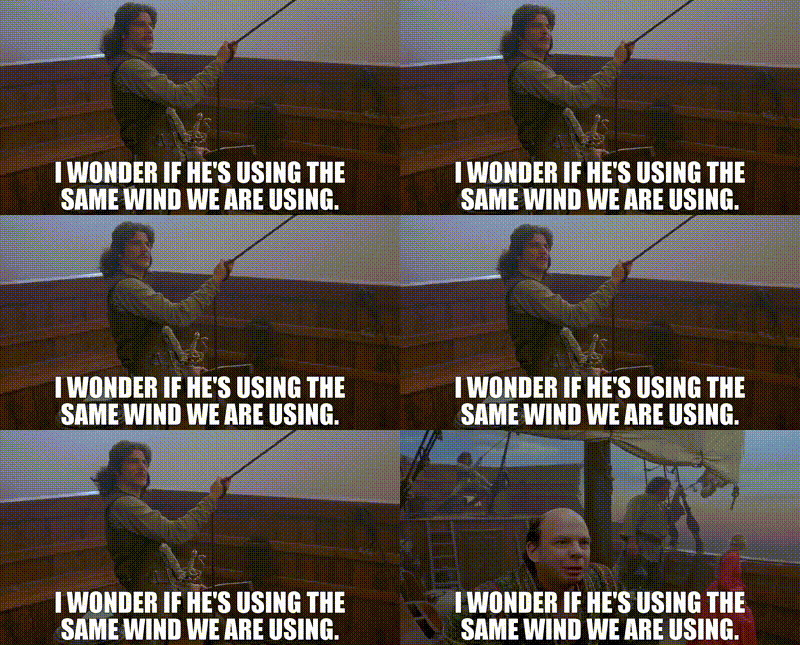
I wonder if he's using the same wind we are using.

It’s like that with Paul. We might say, “I wonder if he is using the same Spirit we are using?” and the answer would be “Yes”. I am awed by Paul’s fervor, dedication, diligence and deep obedience never having wavered. He died poured out as a drink offering, a rushing torrent of obedience and love spilling across the altar of his beloved Savior.

Then in verse 15 of chapter 1, Paul says this-

So I am eager to preach the gospel to you also who are in Rome. (Romans 1:15).

Wait, what?

Hadn’t Paul confirmed the Roman believers’ solid faith, their well-known faith, their doctrinal and loving faith? Yes.

Some could interpret the verse as Paul being anxious to come minister to them, which is definitely true. But he didn’t say only that. He said he is eager to come preach the Gospel at Rome to Greeks and barbarians, to the wise and the foolish, “and also to you.” The Greek word for Gospel in this verse is euaggelizó which means bringing or preaching the full Gospel of Christ.

Some could interpret this as Paul’s eagerness to preach the Gospel indiscriminately to all, and that would also be true.

But do believers need the Gospel?

The answer would be “Yes.”

The Gospel is not a once-for-all mechanism that saves a person from the wrath of God and installs him into the kingdom as a child of God. Not only. It is the launching pad, and the eternal linchpin. It is the indispensable necessity for life eternal in the believer on earth and forever. The Good News is always Good News, and it continues being so, even for believers. Especially for believers.

The Good News is the fullness of Jesus, the encompassing message, the total plan of God, the victory of Jesus over sin, death, and hell. It is a message of resurrection, triumph, power, and abundant life. We all need this message, every day! Paul knew this. The Gospel is the mighty rushing wind of power and sustenance for every believer on earth who lives by the Spirit. We are reminded of the verse from 1 Thessalonians 1:5a

because our gospel came to you not only in word, but also in power and in the Holy Spirit and with full conviction.

Paul said in the very next verse, Romans 1:16 these famous and everlastingly glorious words:

For I am not ashamed of the gospel, for it is the power of God for salvation to everyone who believes, to the Jew first and also to the Greek. 17For in it the righteousness of God is revealed from faith for faith,e as it is written, “The righteous shall live by faith.”

The faith we live by is that Gospel, Good News of the savior Jesus Christ. We needed it when we were foolish, wise, Greeks, and barbarians. Now that we are saved, it’s a message “And also to you.” The gospel necessity never ends.

gospel
Posted in Uncategorized

Warnings to 7 churches are so relevant today

By Elizabeth Prata

I know your works: you are neither cold nor hot. Would that you were either cold or hot! So, because you are lukewarm, and neither hot nor cold, I will spit you out of my mouth. For you say, I am rich, I have prospered, and I need nothing, not realizing that you are wretched, pitiable, poor, blind, and naked. I counsel you to buy from me gold refined by fire, so that you may be rich, and white garments so that you may clothe yourself and the shame of your nakedness may not be seen, and salve to anoint your eyes, so that you may see. Those whom I love, I reprove and discipline, so be zealous and repent. Behold, I stand at the door and knock. If anyone hears my voice and opens the door, I will come in to him and eat with him, and he with me. (Revelation 3:15-20)

Often forgotten in the prophecies are the warnings Jesus gives to the churches in Revelation. As with many prophecies, there is a near fulfillment that is and a far fulfillment. The 7 letters to 7 churches that open the Book of Revelation were actual letters sent to actual churches and actually read as warnings, encouragements or indictments against them. The second reason the letters were sent was to reveal seven different types of individuals/churches throughout history and instruct them in God’s truth.

The last verse is the one I want to point to. Jesus is not ‘knocking at the door of your heart’ in this verse. It is obvious he is knocking at the door of the church. The church had become (and will become, like it is now) so pale and non-Gospel oriented that Jesus is outside it! Just think of Joel Osteen’s church at Lakewood and you have a perfect fulfillment of the kind of church Jesus is warning about here. Mr Osteen never preaches sin or wrath or judgment because he doesn’t want to offend anyone, wanting to stay positive. But how can a person repent if they don’t know they are sinning? He refuses to put a cross on his stage, because it might prove an “obstacle to anyone who might come.” But if they are not coming to the cross, what are they coming to??? Jesus is standing outside Mr Osteen’s church, knocking to get in.

That sad indictment is repeated over many parts of the body of Christ today. I pray you find a good church that has solid beliefs, and participate there. Support your pastor, if he stands on the foundational principles of the faith, and preaches them. He is a rarity these days, and precious. Treat him like he is.

The decline of belief is symbiotic. If you attend a church like Lakewood for any length of time, then you will fade into lukewarmness because the fire of wrath and rebuke from a holy God has disappeared. With the full counsel of God being preached, His perfect message of sin & wrath/mercy & redemption is held up and you will grow in Christ-likeness. Without the cross preached, who are the Laodicean congregants growing into looking like? Man, not God.

Posted in prophecy, Uncategorized

We live our lives in a waiting room

By Elizabeth Prata

Life is a waiting room

It might seem strange to say this, but we are not living to live. Living is not the point of our living. Waiting is. We live while we’re waiting.

For the grace of God has appeared, bringing salvation for all people, 12training us to renounce ungodliness and worldly passions, and to live self-controlled, upright, and godly lives in the present age, 13waiting for our blessed hope, the appearing of the glory of our great God and Savior Jesus Christ, (Titus 2:11-13).

Paul is giving Titus some instructions and reminders as to our duties as Christians, to be done while we wait.

Matthew Henry’s Commentary on the Whole Bible reminds us also that this life is a preparatory for the one to come.

To look for the glories of another world, to which a sober, righteous, and godly life in this is preparative: Looking for that blessed hope, and the glorious appearing of the great God and our Saviour Jesus Christ. Hope, by a metonymy, is put for the thing hoped for, namely, heaven and the felicities thereof, called emphatically that hope, because it is the great thing we look and long and wait for; and a blessed hope, because, when attained, we shall be completely happy for ever.

In today’s time it’s not considered mature to speak of prophecy. I believe that’s wrong. I believe that because so many verses stress that we are to look forward, to hope in His coming promises, to wait for His return. I can’t think of a better encouragement than to dwell on His prophecies. This life is difficult. (John 16:33). It’s full of evil people and seducers waxing worse and worse. (2 Timothy 3:13). It’s full of disease, strife, challenge, and vigilance. (1 Corinthians 11:30, 2 Corinthians 12:7-10, Proverbs 28:25, Psalm 46:1,1 Peter 5:8).

We are being trained while we wait. But waiting is our task, our joy, our hope. We should look to His return for encouragement. He is the blessed hope!

Illustration by Chris Powers
Posted in encouragement, Uncategorized

An encouragement on fixing our eyes on Jesus

By Elizabeth Prata

We have 4 elders. One is the main teaching elder, though any of the men can teach at the pulpit. The other three men rotate in leading the confessional. The Confessional-teaching elder gives a short talk based on what the upcoming sermon will be and then stands silently as we individually confess and repent in our pews. Then he closes in an audible prayer. I appreciate the opportunity to set my heart and mind aright, and to confess, particularly when it’s a Lord’s Table Sunday.

On a past Sunday, our elder gave  a confessional talk that had so many wonderful points. I’m paraphrasing, but-

If You want to look like Jesus, look at Jesus.

Our elder made the statement that we should fix our gaze upon Jesus, not the latest comedy or sports teams. I ended up focusing on the phrase “fix your eyes upon Jesus” from Hebrews 12:2. I looked up the word “fix” and the Strong’s says

872 aphoráō (from 575 /apó, “away from” and 3708 /horáō, “see”) – properly, “looking away from all else, to fix one’s gaze upon” (Abbott-Smith).

How helpful. I should not glance, not peek, not glimpse, but FIX my GAZE upon him, looking away from all else and steadily drinking in all that He is.

I need to spend more time with Jesus to look more like Him. What a great line. Moses only got to see God’s ‘back’ and His face after being with God was so bright it had to be veiled. We have the privilege of looking at Jesus’ “face” as it were, through His word. I want my face to be shining, to have my being conformed to Him, to have my mind transformed. But it won’t happen unless I read the Bible. I must look away from all other distractions and FIX my GAZE on Jesus. A Bible skim won’t even do.

If you’re interested in hearing the Confessional, here it is, in all its 13 minute power. I pray it convicts you as it did me, in some way that will honor and glorify the Lord as a result. I know what I’m going to be doing when I get home.

May 13, 2018
We become like what we behold.
 
 
Posted in history, Uncategorized

Forerunner to the Reformation: John Wycliffe

By Elizabeth Prata

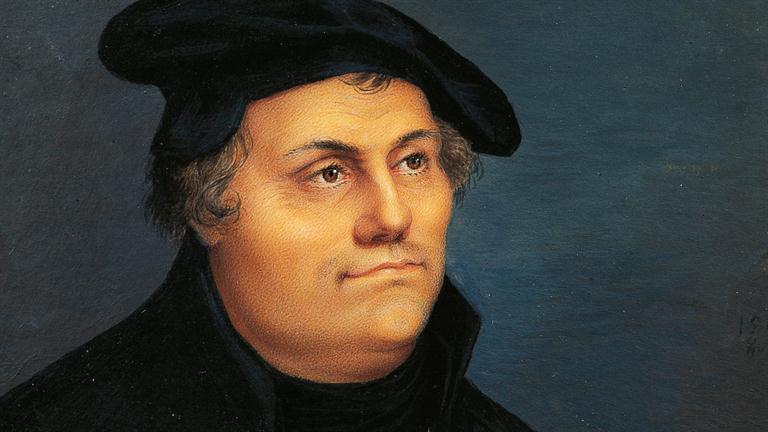
Martin Luther, 1483-1546

It is Reformation year 504. Five hundred and four years ago this October 31st, Martin Luther nailed his 95 theses to the door of the All Saints’ Church in Wittenberg, Electorate of Saxony within the Holy Roman Empire. Luther wrote,

Out of love for the truth and from desire to elucidate it, the Reverend Father Martin Luther, Master of Arts and Sacred Theology, and ordinary lecturer therein at Wittenberg, intends to defend the following statements and to dispute on them in that place. Therefore he asks that those who cannot be present and dispute with him orally shall do so in their absence by letter. In the name of our Lord Jesus Christ, Amen.

Here are the actual 95 theses if you want to read them:
The 95 theses

History.com sums the Reformation up this way-

Luther spent his early years in relative anonymity as a monk and scholar. But in 1517 Luther penned a document attacking the Catholic Church’s corrupt practice of selling “indulgences” to absolve sin. His “95 Theses,” which propounded two central beliefs—that the Bible is the central religious authority and that humans may reach salvation only by their faith and not by their deeds—was to spark the Protestant Reformation

Is there any event that is not connected in time by a previous event? Isn’t time a constant stream of events, all tumbling one after another, connected by their confinement to the visible riverbanks by the hands of God? Did the Reformation emerge all of a sudden, or were there catalysts and stepping stones laid first? Were there forerunners? I believe so.

As RC Sproul said, that before Luther there was Hus, (or Huss, spellings vary) who was preceded by Wycliffe, who was preceded by Augustin who was preceded by Paul who was preceded by Jesus.

The reason there are forerunners to Martin Luther and the Reformation is that Jesus never leaves Himself without a witness, and He as Master Husbandman tends soils so that there is always a soil ready to receive the Gospel. Even in “The Dark Ages”, the Gospel was doing its work in hearts. Salvations were always occurring.

Burk Parsons wrote of this connection from one era to the next, the vine as I envision it. It is planted by God and watered by Him, with men springing up along the vine as forerunners to His particular plan and path regarding the Reformation.

John Wycliffe was the morning star of the Reformation. He was a protestant and a reformer more than a century before Martin Luther ignited the Protestant Reformation in 1517. Through Wycliffe, God planted the seeds of the Reformation, He watered the seeds through John Hus, and He brought the flower of the Reformation to bloom through Martin Luther. The seed of the flower of the German Augustinian monk Luther’s 95 theses was planted by the English scholar and churchman John Wycliffe.

Josh Buice wrote that The Reformation Resulted in an Explosion of Gospel Missions. He started a preaching series in–

–2017 with an emphasis on the Reformation and how our salvation is directly connected to the work of the Reformers. R. C. Sproul writes, “The Reformation was not merely a Great Awakening; it was the Greatest Awakening to the true Gospel since the Apostolic Age.”

During the days that preceded the Reformation, the Bible had been locked away in a dark dungeon by the Roman Catholic Church.  They insisted that the Word of God must be heard by the priests, who would speak it only in Latin. The Roman Catholic Church insisted that the common person was unable to understand the Word of God without the aid of a priest. However, they were unwilling to release control of the Bible, and in order to prevent anyone from getting their hands on the Word of God—they would burn people at the stake as an example to all who resisted their authority.

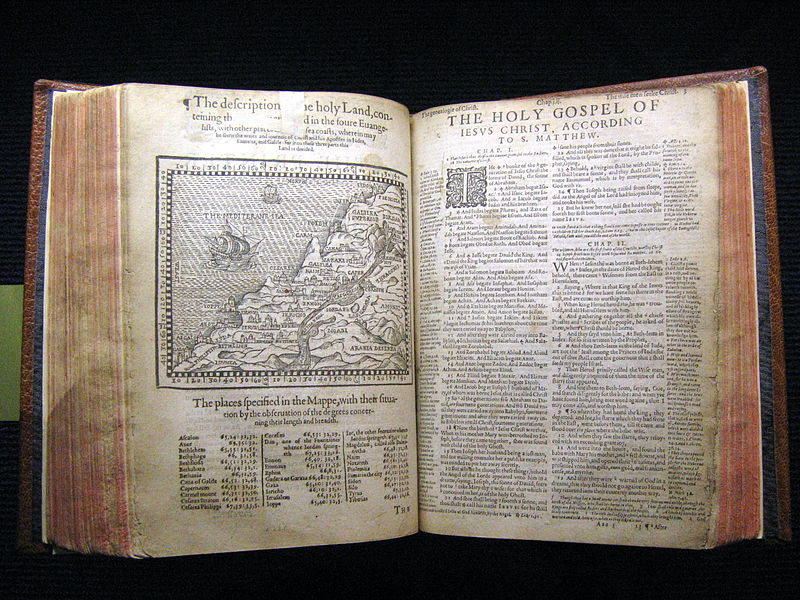
Under John Calvin’s leadership in Geneva Switzerland, thousands of missionaries were being trained and by 1562, over 2,000 churches had been planted in France. In 1560, the Geneva Bible was published which was greatly used in Europe and was also the Bible that was brought off of the Mayflower by the early Pilgrims of America. Through the Reformation, an explosion of gospel missions took place that shook the world.

Source Wikimedia Commons

The Reformation is an extremely important part of church history. One would think with the release of the Bible in the people’s language, the explosion of missions, the work of the Gospel in the hearts of many subsequent to the reformation, that our ecclesiology would progress in an upward trajectory. But satan does not like upward, only downward. He fights back. He fought back since the moment the first Geneva Bibles were released. And the Geneva Bible’s history is interesting in itself! It was the first Bible to be translated directly from the Hebrew. It had extensive notes and cross references, making it the first study Bible. It was translated so that the people could read it. More here.

Sadly, 500 years after the start of The Reformation, there is currently a definite softening toward the Catholic Church by many people who should know better.

Philosopher and poet George Santayana famously said,

Those who cannot remember the past are condemned to repeat it. (The Life of Reason: Reason in Common Sense. Scribner’s, 1905: 284)

We must remain vigilant because we are not unaware of satan’s schemes. (2 Corinthians 2:11). We should learn the past in order to remember the past and to push forward with clear, honest, uncomplicated Gospel evangelization. We shouldn’t ever remain ignorant of what has happened in the past of our church history. This is the 500th year of the Reformation. Here are some resources for you to learn more:

The Heresies of the Catholic Church

Evangelical Syncretism: Rethinking the Reformation

John MacArthur and RC Sproul on Sola Scriptura and the Reformation

Undermining the Headship of Christ (The line between John Hus and Martin Luther is explained here).

A History of the Reformation, article by RC Sproul

Memoirs of a Medieval Woman: this is a biography of Margery Kempe, taken from her dictated autobiography. She was born sometime around 1373 and died after 1438, which makes her a devotee of the Catholic Church at a time when both the rise of the Lollards (Wycliffe followers) was gaining traction and also the incessant Catholic pilgrimages to Jerusalem were occurring. It is also set in the time just prior to the Council of Constance. This Council was held between 1414 and 1418, principally to reunite Christendom from the ‘too many popes’ syndrome (schism) but also to examine the teachings of John Wycliffe and Jan Hus and to reform the RCC as a reaction to the attack on the Church’s authority.

Wikipedia lists her as “an English Christian mystic, known for dictating The Book of Margery Kempe, a work considered by some to be the first autobiography in the English language.” Kempe wrote of it all from a first person perspective. I liked the book for its attention to vivid detail on the practices of the Catholic Church, the realities of the pilgrimage journeys to the middle East, the ecstatic visions and examination of same by any and all church authorities Margery could get to listen (anchorites, priests, bishops, other mystics like Julian of Norwich, lay people…)

Posted in encouragement, Uncategorized

Reformation history; Jenny Geddes and her stool

By Elizabeth Prata

the women should keep silent in the churches. For they are not permitted to speak, but should be in submission, as the Law also says. (1 Corinthians 14:34).

Paul was exhorting about orderly worship here. Worship had gotten out of hand. Worship must be orderly, quiet, and respectful, that was the watchword. And Paul gave that word in this passage.


Is there a time for a woman to holler and throw stools at the pastor? Apparently there was for Jenny Geddes. She’s gone down in Reformation History as someone who stood up for Jesus. Here’s how.

Jenny Geddes (c. 1600 – c. 1660) was a Scottish market-trader in Edinburgh, who is alleged to have thrown her stool at the head of the minister in St Giles’ Cathedral in objection to the first public use of the Anglican Book of Common Prayer in Scotland. The act is reputed to have sparked the riot which led to the Wars of the Three Kingdoms, which included the English Civil War.

Well, that’s some stool. It all happened on July 23, 1637 in Edinburgh.

Always independent, the Puritan Scots had become suspicious of the increasing encroachment of liturgy and rigid traditions a la the Roman Catholic Church. They had observed King Charles Is’ coronation rites and were displeased with his use of Anglican rituals. Next came forced use of the Book of Common Prayer, a high Episcopalian book, with its readings in the Apocrypha. King Charles issued a warrant in 1635 declaring his spiritual power over the Church of Scotland, insisting that the Church would be issued with a new book of liturgy which would be read at services. And on July 23, 1637 in St. Giles Cathedral, the Common Book of prayer was opened and John Hanna, Dean of Edinburgh, began to read.

It was all too much for Jenny. ScotClan has the history,

Jenny Geddes sat fuming on her “fald stool” or a “creepie-stool” meaning a folding stool. Finally she had heard enough and stood up and cried; “Deil colic the wame o’ ye, fause thief; daur ye say Mass in my lug?” meaning “Devil cause you severe pain and flatulent distension of your abdomen, false thief: dare you say the Mass in my ear?” And at that she hurled her stool straight at the Dean’s head. This sparked a full scale riot in the church. one congregation member who had been heard uttering a response to the liturgy was thumped with Bibles. The Dean took cover and the Provost summoned his men to put down the disturbance. The rioters were soon ejected from St Giles and the Bishop of Edinburgh appealed for calm. However this was not going to end quietly…

The national spiritual unrest was real, but overlaid upon the spiritual unrest was political unrest too. Hence the riots that sparked the Wars of the Three Kingdoms, and then the English Civil War. You can read about that part of the history elsewhere.

Jenny Geddes’ anger at the encroachment of evil into the pure worship service reminded me of another, more recent ‘Jenny Geddes.’

On November 10, 2013, Memorial Church of the Reformation in the city of Speyer, Germany hosted Karl Jenkins’ performance piece, titled “A Mass for Peace- “The Armed Man” where as part of the performance, the Islamic call to prayer is performed by an Imam.

German woman Heidi Mund had heard of this performance, grabbed her flag on which is emblazoned “Jesus Christ is Lord” headed to the church, and bought her ticket. But first, Ms Mund said, she prayed. To make matters even more emotional, the church the performance was to be held at was the Memorial Church of the Protestation in Speyer Germany, constructed specifically in 1900 where,

Its construction was supposed to be a reminder of the protest action that the imperial evangelical states brought to bear in 1529 at the Reichstag in Speyer. The Luther memorial in the vestibule and the adjacent statues of local Protestant rulers serve as reminders of this event.

Having no particular plan, she quietly listened to the music and readings, but when the Imam began praying to Allah in Arabic and saying, “Allahu Akbar!” she felt what she called a holy anger rising up in her. Much like Jenny Geddes, who was righteously aggrieved with the blasphemy in her midst, Mund stood up at this “interfaith event” and fearlessly began shouting that Lord Jesus alone is God and proclaimed His supremacy over all the earth.

If we are confronted with something of like kind, what would be our reaction? There is a time to sit silently and submissively, but is there ever a time for disruption and holy anger? Jenny Geddes threw a stool, narrowly missing the preacher’s head. Physical violence is never appropriate. How would we react to the incursion of evil into a holy place, a place set aside for the proclamation of the pure word? Just food for thought.

Both Geddes and Mund knew of what was to happen during the service. Neither were surprised. Mund prayed ahead, one can surmise that perhaps Geddes had also prayed ahead. In one way or another, we are all confronted with false doctrine creeping in. Start praying ahead for strength in the Lord to react in ways that honor and glorify Him.

————————————
Further Reading

Trivia: Scottish Poet Robert Burns named his mare Jenny Geddes

Excerpt from William Breed’s 1876 version of the story, from Jenny Geddes, or, Presbyterianism and its great conflict with despotism

Posted in encouragement, Uncategorized

What are we all good at?

By Elizabeth Prata

(Podcast link below)

Sinning. Every human on the planet, no matter his or her age, is good at sinning. Hands down. Me included.

EPrata photo

Look at this example from scripture.

Woe to you, blind guides, who say, ‘If anyone swears by the temple, it is nothing, but if anyone swears by the gold of the temple, he is bound by his oath.’ You blind fools! For which is greater, the gold or the temple that has made the gold sacred? And you say, ‘If anyone swears by the altar, it is nothing, but if anyone swears by the gift that is on the altar, he is bound by his oath.’ You blind men! For which is greater, the gift or the altar that makes the gift sacred? So whoever swears by the altar swears by it and by everything on it. And whoever swears by the temple swears by it and by him who dwells in it. And whoever swears by heaven swears by the throne of God and by him who sits upon it. (Matthew 23:16-21).

What this section of scripture is about is Jesus pronouncing woes upon the Pharisees. The Pharisees were one of the two ruling classes in Israel, the Sadducees being the other. The Pharisees had twisted the faith into something unrecognizable, laying incredible burdens down on the people, (like over 600 laws!) failing to minister to sinners, making sons of hell twice as worse as they were, and being total hypocrites. When Jesus pronounced His many woes upon them, this particular set of woes involved swearing by the LORD and lying.

The Pharisees had cunningly devised a way to appear to swear by the Lord but be able to get out of it later. As Romans 1:18 says, we all know the truth but we suppress it in unrighteousness. They knew what they were doing but they were devising evil in rationalizing what they THOUGHT were clever ways to wriggle out of it.

They THOUGHT that if they swore an oath by the temple and not by the gold of the temple, they could break their oath later with no repercussions. Or swear by the altar and not the gift on the altar, or by heaven and not by the throne in heaven. As President Bill Clinton famously said when he was trying to avoid an answer, “It depends on what the meaning of is is.”

Photo Pixabay.com. cc.

Look how finely they were splitting hairs! They were dead wrong, as we read Jesus’ excoriation of their sly practices. All the hairs matter.

But you see how we as humans excel at sinning and rationalizing our sin. We’re really, really good at it. “It wasn’t that bad.” “It wasn’t a real promise.” “No one keeps promises anymore.” “I’m not gossiping, I’m sharing a prayer request.” “It wasn’t as bad as that other guy’s sin over there.” “No one saw.”

All rationalizations are simply self-justifications. And there is only One who justifies, Jesus. Our pitiful attempts to justify ourselves when we sin are just evil blasphemies and vain delusions. When we transgress God’s laws, we injure ourselves and dig ourselves deeper into the pit we will eventually fall into. (Matthew 15:14)

As I go through the day I ask Jesus to show me where I am sinning but I’m rationalizing it away. Where I am too ignorant or blind to see my own sin. I ask Him to help me sin less against Him tomorrow than I did today, by the Spirit’s conviction and strength. I am not only the Chief of Sinners, I am Queen of Rationalizations! Open the eyes of my heart, Lord. I pray mine and your walk grows purer with each day and each step. Paul was so wise to pray this for his people:

I pray that the eyes of your heart may be enlightened in order that you may know the hope to which he has called you, the riches of his glorious inheritance in his holy people, (Ephesians 1:18).

Lord open the eyes of my heart so I may see and repent of the sins that lurk there.
All the ways of a man are pure in his own eyes, but the LORD weighs the spirit. (Proverbs 16:2).

Your eyes are too pure to look upon sin but my eyes are too depraved to see holiness. I need Your eyes, Lord.

648: Are false teachers really so bad? The End Time Blog Podcast

Yes, they are.I discuss Alisa Childers' shift toward engaging with false teachers to reach the lost. While some support this view, I warn against the dangers of false teachers, asserting they corrupt faith and lead believers astray. I emphasize the importance of avoiding such influences, offering evidences of biblical warnings regarding sin and temptation.
  1. 648: Are false teachers really so bad?
  2. 647: 'Should I do events if there is a false teacher present?' Navigating cultural moments with discernment
  3. 646: The Consequences of Celebrating Death: A Biblical, Ethical, and Moral Reflection
  4. 645: Finding Peace in a Darkening World
  5. 644: Celebrating Death: A Disturbing Reality