Posted in discernment, Uncategorized

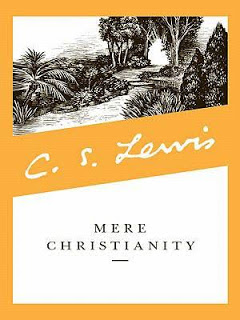
C.S. Lewis: A Trojan horse for bad theology?

There are certain Christian celebrities one becomes aware of who seem untouchable in their status as adored and beloved. These particular celebrities are held in such high regard that it’s not often that people actually study their theology to see if they are approved. One of these is Clive Staples Lewis (C. S. Lewis).

Early in my walk, on the basis of nearly universal acclaim and heartily positive recommendations, never mind being quoted from the pulpit, I bought and consumed his books.

Over time I’ve read The Screwtape Letters, The Great Divorce, Mere Christianity, and Miracles; and some essays such as The Weight of Glory. I didn’t like any of them. Well, maybe Screwtape was amusing and accurate in the way the demon Screwtape taught his protege nephew demon to harass a Christian, but overall I was either bored by or confused by his works.

I don’t think it was that I lacked the intellect to understand what Lewis was teaching. I did all right in school. I didn’t think it was that Lewis lacked the skill to make his point, Screwtape showed me that. Lewis had tremendous authorial  skill, nuance, and delicacy to bring his meaning to the fore. So what was it? It couldn’t be his theology…could it?

It could.

The verse in 2 Timothy 3:7 refers to some silly women who are being held up as a negative example of those who learn but do not understand. But we can hold up their example for men as well. The verse says,

Ever learning, and never able to come to the knowledge of the truth.

Barnes Notes explains this issue well.

And never able to come to the knowledge of the truth – They may learn many things, but the true nature of religion they do not learn. There are many such persons in the world, who, whatever attention they may pay to religion, never understand its nature. Many obtain much speculative acquaintance with the “doctrines” of Christianity, but never become savingly acquainted with the system; many study the constitution and government of the church, but remain strangers to practical piety; many become familiar with the various philosophical theories of religion, but never become truly acquainted with what religion is; and many embrace visionary theories, who never show that they are influenced by the spirit of the gospel. Nothing is more common than for persons to be very busy and active in religion, and even to “learn” many things about it, who still remain strangers to the saving power of the gospel.

In my opinion, that is Lewis, who has learned much but never got to the core of the true nature of the religion. Even his beloved Narnia chronicles have extremely problematic theology.

The Bible warns us that the antichrist and lesser false teachers use language to flatter and puff up their hearers and themselves. And it warns that there will be those taken in by flatteries and high-minded philosophies. I know I am one of those who is at risk for being attracted to how a teacher uses language and promotes his teachings in unique and skillful ways. I just love language. CS Lewis no doubt was a great user of language and his high-minded philosophies sound and look good- at first.

But let’s delve.

CS Lewis – his style dupes many Christians…his style is a Trojan horse for bad theology. ~ Mike Abendroth

In this podcast series, Pastor Mike Abendroth discusses the problem of Christians who accept at face value the things that seem like they are from God, because their style is so attractive. Abendroth explains the importance of thinking, and shows that though Lewis has a skillful way with words, and has said many wonderful, truthful things, the theology behind his words is at odds with the Bible in many cases. For example:

Good: “A man can no more diminish God’s glory by refusing to worship Him than a lunatic can put out the sun by scribbling the word ‘darkness’ on the walls of his cell.” Source: The Problem of Pain.

Good: “If I find in myself desires which nothing in this world can satisfy, the only logical explanation is that I was made for another world.” Source: “Mere Christianity”

Bad: “If by saying that man rose from brutality you mean simply that man is physically descended from animals, I have no objection.” Source: The Problem of Pain.

Bad: Concerning the doctrine of “total depravity,” Lewis wrote: “I disbelieve that doctrine.” Source: The Problem of Pain.

Abendroth advises caution when reading Lewis and also advises that if you are going to mention him to others, do so with qualifications. Abendroth said he does not quote Lewis from the pulpit, because he does not want his flock reading Lewis. Abendroth continues the discussion of CS Lewis’ theology in podcast Part 2, which is linked below.

In the essay from Southern Baptist Theological Seminary (SBTS) written by Aaron Cline Hanbury, the author focuses on Lewis’ theology and the statements regarding the errant portions made by Martyn Lloyd-Jones shortly after Lewis’ death in 1963, and continues examining the reservations current evangelicals have of Lewis today. For example,

Kevin DeYoung, blogger, author and senior pastor of University Reformed Church in Lansing, Mich., sees “two significant problems” with Mere Christianity. These problems he lists are the doctrine of the atonement and inclusivism, according to DeYoung’s 2011 post on his website.

Concerning inclusivism, DeYoung cites a passage from Lewis’ most popular non-fiction work where Lewis asserts that “there are people in other religions who are being led by God’s secret influence to concentrate on those parts of their religion which are in agreement with Christianity, and who thus belong to Christ without knowing it.”

DeYoung says that Lewis fails to understand the work of the Holy Spirit in a biblical way.

In this blog post by Mike Duran, former pastor and currently an author, the question is asked, How “Christian” was C.S. Lewis… and Why is He an Evangelical Hero? Duran writes,

His books have influenced more Christians than possibly any other author; his stories are classics, beloved by children and adults alike. There are foundations to his legacy, a movie about him, bumper stickers that quote him and his caricature can be found on t-shirts and coffee mugs. C.S. Lewis is the poster boy for “Christian thinkers,” inspiration for vast numbers of Christian authors, an icon in the already crowded pantheon of religious heroes.
But does he deserve the acclaim? Not only do some question the uncritical embrace of Lewis by American evangelicals, they question his Christian faith.
Christianity Today columnist Bob Smietana, in an article entitled, C.S. Lewis Superstar, sums up the essence of the “Lewis resistance”:

Clive Staples Lewis was anything but a classic evangelical, socially or theologically. He smoked cigarettes and a pipe, and he regularly visited pubs to drink beer with friends. Though he shared basic Christian beliefs with evangelicals, he didn’t subscribe to biblical inerrancy or penal substitution. He believed in purgatory and baptismal regeneration. How did someone with such a checkered pedigree come to be a theological Elvis Presley, adored by evangelicals?

You might be surprised to see that there is any concern over the theology and writings of CS Lewis at all, given the hoopla over Lewis’ intellectual prowess and authorial skill on matters of Christianity. That is the point. The CS Lewis adoration was never present in Lewis’ own life and was not even present for several decades after his death. Abendroth notes that there has to be a reason that Lewis started to become so unthinkingly popular in the 80s, 90s, and onward. He noted that in the 1998 Christianity Today poll Lewis was rated most influential evangelical writer, an acclaim Lewis never enjoyed in his living and writing days of the 1930s, 40s, and 50s. In 2005 Lewis was on the cover of Christianity Today, with the accompanying headline “CS Lewis, Superstar.” Abendroth surmised that the reason for the popularity is that Christians have of late become undiscerning and prefer style over substance rather than the mental work of study and discernment. He quoted Henry Ford, who said “Thinking is the hardest work there is, which is probably the reason so few engage in it.”

I think this excerpt from the SBTS piece on Lewis makes Abendroth’s point of style over substance. The SBTS piece quoted how Pastor John Piper handles the problem of Lewis,

“Lewis is not a writer to which we should turn for growth in a careful biblical understanding of Christian doctrine,” Piper said. “There is almost no passage of Scripture on which I would turn to Lewis for exegetical illumination. … His value is not in his biblical exegesis. Lewis is not the kind of writer who provides substance for a pastor’s sermons.”

And yet Piper, like DeYoung, sees value in Lewis’ work that transcends — but does not excuse — his theological shortcomings. For Piper, the value of Lewis is the way he brings together “the experience of joy and the defense of truth” in his writing. [emphasis mine]

In other words, CS Lewis’ biblical substance isn’t there, but the way he writes sure is a nice experience.

In my own opinion, after having read through the aforementioned Lewis books and having studied Lewis’ theology, I ask the same question The Trinity Foundation asked, Did CS Lewis Go to Heaven?

Lewis accepted evolution for much of his life, taught and believed in the unbiblical doctrine of purgatory, denied sufficiency of scripture, denied inerrancy of scripture, misunderstood the work of the Holy Spirit, promoted open theism, denied the penal substitutionary atonement, and was muddy and unclear on a number of other doctrines. Can one even BE a Christian who denies and twists such foundational doctrines? Can one deny the very things that make one a Christian and yet still be called a Christian? Does Lewis get a pass simply because he was a good writer…but Benny Hinn is unmasked as a fake because he isn’t?

The point Pastor Abendroth made was also that we need to think for ourselves. As he said, and I reiterate, I personally do not recommend C. S. Lewis, but I’m not advocating immediately throwing out all books written by Lewis that may be standing on your bookshelves. Think about these things and come to your own conclusions. There is no doubt CS Lewis was a scholar and a philosopher who made significant contributions to the world. It’s up to you to decide how much of a contribution he made to Christianity.

~~~~~~~~~~~~~~~~~~~~~~~~~~~~~

Sources and Further Reading/Listening

Essay, Southern Baptist Theological Seminary- CS Lewis: Elephant in the Room

Podcast, Bethlehem Bible Church/No Compromise Radio-

CS Lewis: Saint or Sinner? Part 1

CS Lewis: Saint or Sinner? Part 2

Essay, Mike Duran- How ‘Christian’ was CS Lewis & Why is he an Evangelical Hero?

Did CS Lewis Go to Heaven?

Posted in discernment, Uncategorized

Spiritual Armor

Have you polished, adjusted, and thanked God today for your spiritual armor? We should be armed and ready, from head to toe, and praising the Lord for His generosity in protecting us from the demons and from the evil one himself! If we are on guard, rooted in His word, and seeking His face, we can always spot the real from the imitation, the Godly miracle from the demonic copy, the truth from a lying sign. It is a skill that needs honing, and we will need it more than ever as each day from now on progresses. Be ready and sharpen that sword: read your Bible today!

Here are some great resources on the topic of spiritual armor and spiritual warfare.

GotQuestions: What is the Full Armor of God?

Grace To You: The Believer’s Armor: God’s Provision for Your Protection

Free Booklet: The Armor of God

Acts 17:11 Ministry- Bible Study: The Full Armor of God

Book by Jim Osman: Truth Or Territory | A Biblical Approach to Spiritual Warfare

Posted in Uncategorized

Joseph is a picture of Jesus, Jesus is the true and better Savior

There are lots of “types” in the Bible. A fancier name for it is Biblical Typology. Biblical Typology is…

…a special kind of symbolism. (A symbol is something which represents something else.) We can define a type as a “prophetic symbol” because all types are representations of something yet future. More specifically, a type in scripture is a person or thing in the Old Testament which foreshadows a person or thing in the New Testament. For example, the flood of Noah’s day (Genesis 6-7) is used as a type of baptism in 1 Peter 3:20-21. The word for type that Peter uses is figure.

Another example of a type is in Hebrews 9:8-9: “the first tabernacle . . . which was a figure for the time then present.” The blood sacrifices of lambs prefigured or was a type of the actual sacrifice of the Lamb of God. And so on.

Ligonier defines typology as

Typology is based on the fact that God works in recurring patterns throughout history and says that a past event or person can prefigure or serve as a type of a future person or event.

Joseph, son of Jacob, is in many respects one of the strongest types depicting the Savior. At our church we are going through Genesis and the latter portion of all the books of Genesis detail Joseph’s story. Sold into slavery, descended into the pit (jail), Joseph interpreted the Cupbearer’s and Baker’s dreams and said to them as they were called to Pharaoh’s side, “Remember me”. Joseph was forgotten, … until the Cupbearer heard that Pharaoh needed someone to interpret Pharaoh’s dream. Joseph was called to the King’s side-

Then Pharaoh sent and called Joseph, and they quickly brought him out of the pit. And when he had shaved himself and changed his clothes, he came in before Pharaoh. (Genesis 41:14)

And Pharaoh said to Joseph, “See, I have set you over all the land of Egypt.” Then Pharaoh took his signet ring from his hand and put it on Joseph’s hand, and clothed him in garments of fine linen and put a gold chain about his neck. And he made him ride in his second chariot. And they called out before him, “Bow the knee!” Thus he set him over all the land of Egypt. Moreover, Pharaoh said to Joseph, “I am Pharaoh, and without your consent no one shall lift up hand or foot in all the land of Egypt.” (Genesis 41:41-44).

When all the land of Egypt was famished, the people cried to Pharaoh for bread. Pharaoh said to all the Egyptians, “Go to Joseph. What he says to you, do.” (Genesis 41:55)

Moreover, all the earth came to Egypt to Joseph to buy grain, because the famine was severe over all the earth. (Genesis 41:57)

Hopefully you notice the similarities. Joseph was reviled, sold as a slave, they put an iron fetter around his neck. (Psalm 105:17-18). He was in the pit, forgotten and ignored. One day in a moment, a twinkling, he was exalted and put in second place, only the King was higher than he. He rode in the second chariot. He was given a fine garment and his iron collar replaced with a chain of gold. All were told to bow the knee to Joseph, just as they will bow the knee to Jesus (Romans 14:11, Philippians 2:10). Joseph saved all in the land, all the earth.

The almost exact language was used by Pharaoh about Joseph as Mary had stated at the Wedding at Cana.

“Then Pharaoh told all the Egyptians, “Go to Joseph and do what he tells you.” (Genesis 41:55 NIV)

His mother said to the servants, “Do whatever he tells you.” (John 2:5).

Of course, typology only goes so far. Joseph gave grain (bread) to the people to save their life, but Jesus IS the bread of life. However, it’s interesting to note types as you read along to note types as you read along to think more deeply about what God is showing us through His word.  Here are some further resources for you on typology.

Ligonier: Typology vs. Allegory.
Carm: Dictionary- Type
GTY: Melchizedek, a Type of Christ

Posted in discernment, Uncategorized

Wondering about the Babylon Bee: Do we need satire?

I love The Onion. When I was a newspaper publisher and editor I loved reading the headlines and laughing at how closely the writers of that satirical newspaper came to making their fake headlines seem almost real. It takes skill and nuance to consistently produce satire, and often there are just as many misses as there are hits with less talented writers and humorists.

When the Babylon Bee, a satirical Christian digital newspaper, came out, I loved it. The writers are hilarious and consistently produce nearly true or could be true headlines almost every day. I’ve quoted the Bee a few times, always admiringly. I mean, who doesn’t laugh at these satire news headlines?

  • Sermon On Tithing Moves Congregation To Commit 10% Of Their Attention…
  • Megachurch Apologizes After Statement Of Faith Found On Its Website
  • Local Man Waiting For Second Person To Gather So Jesus Can Show Up
  • New Journaling Bible To Eliminate Scriptural Text Entirely

All those are hilarious takes on the foibles and issues facing Christians today. The Bee takes on Christian Living, Church Life, Theology, Megachurches, Politics…no sphere is sacred and all have been lampooned. Most, devastatingly so.

However, I’ve had a growing sense of dismay over the Bee’s existence these last few months. Recently I posted this on The End Time Facebook Page:

“The Babylon Bee (BB) is an American Christian satirical news media outlet. African News Updates (ANU) is an African news AND satire outlet. All of the BB is satire. Some of the ANU site presents real news and some of it is satire, but they’re labeled. The top story is from the Babylon Bee, posted July 19, and is satire. The bottom story is from African News Updates, posted July 14 and is NOT satire. It’s real news and it’s horrible.” The two stories are not related…except for the fact that visible Christianity is getting so ridiculous it’s hard to tell when it’s fake and when it’s real. I say “visible Christianity” because the true church is always beautiful in God’s eyes.”

And that is the issue. The world of Christianity is so wayward today that many of the satires on the Babylon Bee could actually be happening. And so, many people post and re-post them as actual. I was thinking about this issue a great deal but was unsure how to approach my thoughts which had not yet coalesced.

Then today I came across the Wretched Daily Clip from Todd Friel, which mentioned this exact issue before moving on to explain the theology. Friel said,

Several people also sent me an article, and I have to confess to you that it’s tragic that they did…not that they themselves are the tragedy, but because we are living in a world right now where this could be possible…the headline is about a megachurch that debuts a water slide baptismal.

I thought it was sad that people had sent in the article as a truthful article with the statements of, ‘shucks, what is the world coming to, Todd?’ More and more people believe the Babylon Bee articles are real, because as Friel said, it is possible. Outlandish is no longer outlandish. The ridiculous is the new normal. An entire generation of youth have grown up with the kind of Christianity the Bee lampoons, who don’t know it’s wrong.

My concern in writing a blog has always been to produce clarity, provoke thought, and of course, exalt God. My fear has always been that I would instead be adding to the general confusion. My grief would be to write something that leads someone astray.

So today my question is, do we need a Babylon Bee? Does the Babylon Bee exalt God? Provoke thought? Promote clarity? Or does it add to the general confusion? I submit that it does the latter.

Not that clarity, thought, and exaltation are the only ‘good’ in Christianity. Humor and laughter are fine. I’m not a fuddy duddy. However, my own opinion is that we are so far gone that the sting of a Bee is lost on a crowd that believes its stories to be real. In 1950, I could envision that a media outlet such as the Babylon Bee would immediately be seen as satire. Pastors wore suits and ties, preached from the Bible and not from anecdotes, didn’t arrive on a zipline, didn’t have a smoke machine, and were intentional about their call for their congregation to pursue holiness. Nowadays, not so much.

The sad thing is that the point is made by the end of Friel’s 2 minute clip. The satirical waterslide baptism? It turns out that one of his staff members informed Friel that there actually is a church that baptizes their kids in a pool with a fire truck and confetti shoots out of a cannon when the child comes up out of the water.

So…do we need a Babylon Bee?

~~~~~~~~~~~~~~~~~~~~~~~~~~~

Sources:

Wretched Daily Clip

Babylon Bee

Posted in discernment, Uncategorized

Relying on tradition and incomplete knowledge can be devastating

Tradition is the enemy of truth.

People hear things over and over and eventually take them as truth. Instead of searching them out diligently, they accept sayings as Biblical truth. They begin to think they are in the Bible or that God said it. Case in point, the phrase, “Cleanliness is next to Godliness” is not in the Bible. Nor is “the Sinner’s Prayer”. Nor is salvation by “Accepting the Lord.” These are the traditions we grew up with in the American millennium era.

Traditions are nothing new. In the Bible days, the Pharisees had many traditions also. For example, tithing cumin and mint was not a biblical law. (Matthew 23:23). Walking no more than 2000 cubits on the Shabbat had not originated in the Law. They were traditions. The latter arouse from a twisting of Joshua 3:4.

Here is where tradition begats laziness and self-satisfaction.

They replied, “Are you from Galilee too? Search and see that no prophet arises from Galilee.” (John 7:52).

This was the Pharisees’ contemptuous retort to Nicodemus’ attempt to defend Jesus on one point. Their rage and self-satisfaction and scorn was so towering that they forgot that Micah and Jonah and Elisha did come from Galilee, (Micah 1:1, Joshua 19:13, 1 Kings 17:1) and perhaps also Nahum and Hosea had come from Galilee. Rage blinds, as it did to the Pharisees here and on multiple other occasions. Their rage against Jesus blinded them so thoroughly, their self-righteous power-hungry minds were so set against a backwater like Galilee, the Pharisees forgot that prophets do, indeed, come out of Galilee.

Another devastating behavior stemming from tradition that blinds us to the truth is the failure to search the scriptures but instead to think you already know. Behind this wall lies truth. However, the Pharisees had built a wall against it, brick by brick. Each brick was a tradition that eventually blocked their own access to truth.

EPrata photo

In John 7:42 we read their assertion,

Has not the Scripture said that the Christ comes from the offspring of David, and comes from Bethlehem, the village where David was?”

They were correct, but incompletely so. Yes, the scriptures say that the Messiah will come from Bethlehem. (Micah 5:2). Yes, the Pharisees correctly knew Jesus lived in Galilee, the town of Nazareth. But if they had bothered to search their facts even momentarily, they would have discovered that Jesus had been born in Bethlehem. The Romans conducted a census, if you remember, and the census records were available. Romans kept good records. They could have checked the Temple records, Joseph and Mary did all that was required by Law, and they both came from the lineage of David. (Luke 2:22). Or, they could have simply asked Joseph, Mary, or Jesus where He had been born. But they thought they knew, without searching for the facts. This is willful ignorance.

Do you ever settle in the pew and look at the bulletin and see that the sermon is going to be on a passage you’re extremely familiar with? Does your heart sink, your mind saying, “Aw, man, I already know this one”? I dare to suggest, that is Pharisee talk. The scriptures speak every time they are delved into. It is our job to search them out, even if we think we already know. It isn’t that the scriptures aren’t fresh, it’s that our eyes get dull.

It’s a truism that a little knowledge can be a dangerous thing, meaning that a small amount of knowledge can delude people into thinking that they are more expert in their field than they actually are. The Pharisees’ knowledge was prodigious, but it was head knowledge without love, and combined with tradition, pride, and self-righteousness, they failed at the critical moment to recognize the Messiah they had been waiting for. (2 Timothy 3:7).

Let’s be careful not to assume the facts, but search them out. Let’s be diligent to investigate. Nicodemus did. Annas didn’t. Let’s not rest on tradition, assuming it’s Biblical. Cleanliness isn’t next to Godliness, holiness is. Search the scriptures diligently with fresh, open eyes. Pray to the Spirit to illuminate them to you. It’s harder to do the longer you’re a Christian to keep fresh eyes on the Bible, but the Spirit is always fresh and will open your mind to the truths in every case. Peter said that Jesus had the words of eternal life. Eternal words never get stale.

Posted in encouragement, Uncategorized

Do you have the peace that passes all understanding?

And the peace of God, which surpasses all understanding, will guard your hearts and your minds in Christ Jesus. (Philippians 4:7)

Even if the worst happens on our shores (war, earthquake, tsunami…) I have the peace that passes all understanding. He is in control and our anguish and our life is but a breath, so it will only be for a short time. I pray you have that peace as well. Barnes Notes explains the peace that passes all understanding so well.

Which passeth all understanding – That is, which surpasses all that people had conceived or imagined. The expression is one that denotes that the peace imparted is of the highest possible kind. The apostle Paul frequently used terms which had somewhat of a hyperbolical cast (see the notes on Ephesians 3:19; compare John 21:25, and the language here is that which one would use who designed to speak of that which was of the highest order. The Christian, committing his way to God, and feeling that he will order all things aright, has a peace which is nowhere else known. Nothing else will furnish it but religion. No confidence that a man can have in his own powers; no reliance which he can repose on his own plans or on the promises or fidelity of his fellow-men, and no calculations which he can make on the course of events, can impart such peace to the soul as simple confidence in God.

Are you saved? If so, then demonstrate that faith by clinging to Him, His promises, and His Truth. It is the best- the only- safe port in a storm! This is a great time in the United States to be peaceful, for others will see your calmness and through the grace of the Holy Spirit, they will ask you…”what is it that you have…?” and you will have the inestimable privilege of saying, “Let me tell you about Jesus…”

If you are not saved and you see someone who seems calm and graceful all the time, whose countenance seems glowing. (Exodus 35:35) it is because we have what Jesus has given us- His peace. We have been with God. We are no longer at war against Him but have become friends and sons of the Most High God. He imparts a peace that allows His children to look upon earthly circumstances with an eternal perspective.

Dear unsaved person, your good works are not enough to get you to heaven. Being really, really nice is not enough to get you to heaven. You can never do enough to get to heaven. The only way is through Jesus. You wonder what is it about Christians that makes them (us) seems o gentle and calm and they just look different? It’s His peace. The sin struggle is over. The unanswered questions about why we are here and how the world was born and why people are like they are…these questions are answered. Right now would be a good idea to start praying seriously to the Lord above to resolve your internal war. You are a God-hater, perhaps actively but certainly passively. Do you want peace and rest from always striving and yet not knowing? (2 Timothy 3:7). He will provide His peace, upon repentance and faith in His resurrected self.

Posted in discernment, Uncategorized

Sage advice from devils

This was first published in January 2009 at The End Time. This version is edited.

————————————-

Ceremony purges White House of evil spirits

On Monday, January 19th at 6:00 pm, hundreds gathered at Dupont Circle in Washington DC for a ceremony performed by a “shaman.” The ceremony was intended to ‘clean the White House of ‘evil spirits.’ Organizer Kate Clinton used the method called by pagans and witches, “saging” or “smudging.” Two thousand participants stood outside the nations’ First Home and waved lit bundles of sage around and hugged and chanted. Participants said they were “into the moment” and the crowd was “radiating the love.”

Saging is a process. The adherent bundles sage, ignites them and leaves them to smolder.  The resulting thick blue smoke supposedly has a cleansing effect and removes ‘unwanted energy’ from the area.

Many people do not notice how pervasive occultism in our society is. We are so used to charms, amulets, spells, rituals, ceremonies, wiccans, wizards (Harry Potter) that we forget the bible says No! No! No! to it all. The Bible speaks to the practice of the occult, which includes astrology, sorcery, magic, paganism…God condemns the whole practice of the occult. Repeatedly.

In the book by CS Lewis called “The Screwtape Letters,” Wormwood the demon is instructing his nephew, an acolyte demon. The issue is their target’s Christianity. The target isn’t that receptive tot he ‘unwanted energy’or influence of the demons. Screwtape says, “For a long time it will be impossible to remove spirituality from his life. Very well then, we must corrupt it.”

“Now the Spirit speaketh expressly, that in the latter times some shall depart from the faith, giving heed to seducing spirits, and doctrines of devils. (1 Timothy 4:1)

I think we’re there.

Posted in discernment, Uncategorized

The problem with tolerating false teachers is…

A friend and I were talking about the younger church generation. A kind of “Kids these days” conversation, lol.  She said, “They’ve been swimming in Beth Moore stuff for so long they don’t know if they are even in troubled water.” She and I, and others I’ve spoken with, notice the younger generation of 16-25 year olds simply do not have a solid theological grounding. They do not approach Bible study credibly. They infuse it with feelings, mysticism, romanticism, and subjective experience. They think this is the norm.

This is wrong.

And it is our fault.

This problem is what I dub the ‘Symbolic Jezebel problem’. It’s a generation thing. You see, in Revelation 2 metaphorical Jezebel who was a false prophetess of Thyatira. She was tolerated (one would assume, by the elders of the local church) for so long, unfortunately another generation of spiritual daughters had sprung up under her influence with her false teaching as a model. The ones coming up didn’t know any better, because they had false prophetess ‘Jezebel’ as their example. They must have figured this is the right way to practice the faith, because after all, the elders were not saying anything. It was tolerated. The issues were her false teaching, her false prophesying and the fact that she was teaching in a position of authority in the church. There’s a lot wrong right there. Jesus said to this church-

But I have this against you, that you tolerate that woman Jezebel, who calls herself a prophetess and is teaching and seducing my servants to practice sexual immorality and to eat food sacrificed to idols. 21I gave her time to repent, but she refuses to repent of her sexual immorality. 22Behold, I will throw her onto a sickbed, and those who commit adultery with her I will throw into great tribulation, unless they repent of her works, 23and I will strike her children dead. (Revelation 2:20-23).

The other day I was talking with a 25-year-old. He was frustrated his peers could not see the truth that certain teachers are false or they could not understand why they approaches to study and communing with God were false (liver shivers, manifestations, circle praying, contemplative prayer…etc). I’d replied that his generation was the first one to have grown up completely under the false emergent, purpose driven, emotional, romantic, mystical model. An entire generation has been exposed to false teachings of one sort or another that have been tolerated by elders.

Beth Moore has been teaching locally since 1984 and went public with incorporating Living Proof Ministries in 1994. She’s nearly 60 now, Christine Caine is turning 50 next month. Lysa TerKeurst is 47. “Experiencing God” the terrible mystical curriculum that took the SBC by storm was published in 1976 and grew to monstrously popular proportions in the 1980s. All this is 25-30 years ago and we are reaping the terrible penalty for it now with our soft youth who are growing up as the the next generation of leaders. The problem is seen in this 2015 headline from Christianity Today, which unwittingly puts its finger dead center on the problem-

What Happens When We See Women Teach the Bible; A figure like Beth Moore shows evangelical women what’s possible.

No. It’s about what happens when we see not what’s possible, but what’s tolerated.

These young kids coming up who are 16 or 20 or 25 have been exposed to these things from their birth, even in homes that are solid (because it creeps in anyway). These teachers have been at it for a long time. Forty years is the length of a generation.

We tolerate a Moore, we accept a Experiencing God, we teach subjective methods of Bible study, and incrementally it all adds up. Inch by inch and then foot by foot and then mile by mile, we are on a downward slide that accelerates from a snowball to a tsunami. The generation of kids who use this stuff become the next generation of leaders, and promote it all over again to a new generation coming up. That is what is happening now.

What can you do about it? The Apostles of the first century church and their leader successors spent a great deal of time stamping out error, falsity and heresy where it sprang up. They didn’t let it go, They didn’t tolerate it, except in the case of the Thyatiran church, where Jesus personally dictated a letter telling them they were in danger of being smited by His hand! Jesus takes error seriously, the Apostles took error seriously and we should too. Error kills. (Galatians 5:9, John 10:10).

What should we do?

Repent of your personal sin so that your heart and mind can stay clear.

Don’t overlook the small errors that pop up when they occur in your sphere. Satan’s tentacles will gradually creep in (2 Timothy 3:6). Notice them and address them. Would you ignore a spark on a haystack just because it’s small and pretty? No the spark has the power to ignite a conflagration and destroy the entire thing. What happens in your garden if you let a few weeds go, and you don’t pull them up? Pick your battles (because you’re not a lone ranger, others in your church have the gift of discernment and exhortation, too 😉 and speak up. I know it’s tiring. I know it’s a message that is increasingly unwanted. But do it.

Also, stay in the Word. Keep reading and delving into who Jesus is and His character and nature. It is the way we stay sharp and grounded and on the Rock.

I do not have a new message here. I always say to repent, pray, and stay in the word. That’s because this is what Jess says to do. The messages in the Bible are true and right, and if we follow them, and continue to do our duty by Him, we will be all right.

Cast your burden on the Lord, and he will sustain you; he will never permit the righteous to be moved. (Psalm 55:22).

——————————————–

Further Reading

The Gigantic Problem Beneath the Really Big Problem

Six Ways the World will Pressure you to Conform

Does ‘Judge Not’ Mean we Should not Rebuke Error?