Posted in righteousness, slave, theology

We are slaves of Christ, and God owns our body

We are not just servants of Jesus, not just bond-servants, but slaves. Yes, we are co-heirs, friends, and sons, but we are His slaves. Let’s focus on that relationship for a minute.

John MacArthur:

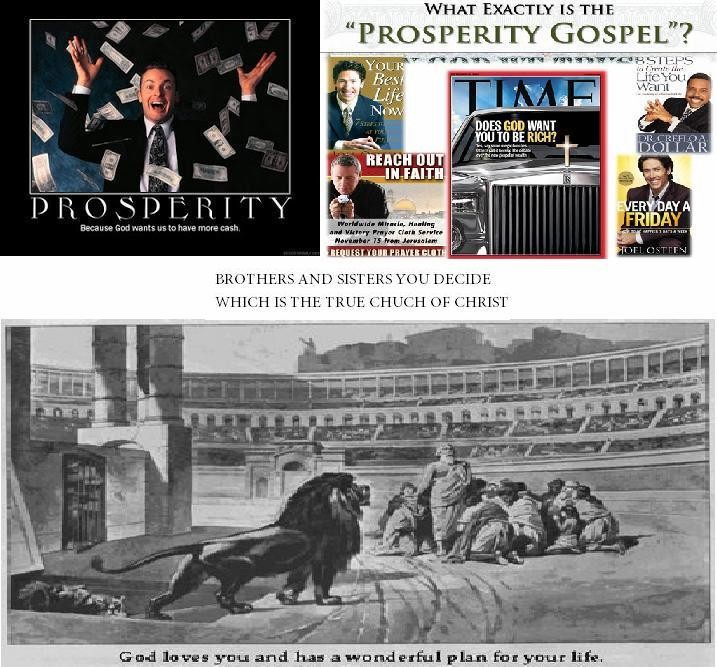
Being a slave of Christ may be the best way to define a Christian. We are, as believers, slaves of Christ. You would never suspect that, however, from the language of Christianity. In contemporary Christianity the language is anything but slave language. It is about freedom. It is about liberation. It is about health, wealth, prosperity, finding your own fulfillment, fulfilling your own dream, finding your own purpose. We often hear that God loves you unconditionally and wants you to be all you want to be. He wants to fulfill every ambition, every desire, every hope, every dream. In fact, there are books being written about dreams as if they are gifts from God which God then having given them is bound to fulfill. Personal fulfillment, personal liberation, personal satisfaction, all bound up in an old term in evangelical Christianity, a personal relationship. How many times have we heard that the gospel offers people a personal relationship with Jesus Christ?

What exactly does that mean? Satan has a personal relationship with Jesus Christ and it’s not a very good one. Every living being has a personal relationship with the living God of one kind or another, leading to one end or another. … But what exactly is our relationship to God? What is our relationship to Christ? How are we best to understand it? You do have a personal relationship to Jesus Christ, you are His slave. That’s putting it as simply as I can put it. ~Slaves for Christ

Few of us go so far as to re-align our thoughts with the fact that we are His slaves. Fewer of us would go even further to explore the full implications of that fact.

“But now, O you are our Father; we are the clay, and you are our potter; we are all the work of your hand.” (Isaiah 64:8)

“But who are you, a human being, to talk back to God? “Shall what is formed say to the one who formed it, ‘Why did you make me like this?'” (Romans 9:20)

“Do you not know that if you present yourselves to anyone as obedient slaves, you are slaves of the one whom you obey, either of sin, which leads to death, or of obedience, which leads to righteousness? But thanks be to God, that you who were once slaves of sin have become obedient from the heart to the standard of teaching to which you were committed, and, having been set free from sin, have become slaves of righteousness.” (Romans 6:16-18).

“Jesus replied, “Very truly I tell you, everyone who sins is a slave to sin.” (John 8:34)

God made us. He owns not just our heart, and our mind, but our body. Ask Isaiah.

“at that time the LORD spoke by Isaiah the son of Amoz, saying, “Go, and loose the sackcloth from your waist and take off your sandals from your feet,” and he did so, walking naked and barefoot. Then the LORD said, “As my servant Isaiah has walked naked and barefoot for three years as a sign and a portent against Egypt and Cush, (Isaiah 20:2-3).

God saw fit to use Isaiah’s body AS the message He wanted to send to the people. Isaiah obeyed. We read in verse 2 the LORD said, and in verse 3 cut to three years later, Isaiah did. Did the LORD say, if you don’t mind…please… I know this is embarrassing, but…” No. The Lord who is the Potter said to the clay, ‘I formed you and now I want the vessel that is your body to be a sign. Naked.’ Isaiah surrendered to God, and when the call came to do this thing, he obeyed. What a marvelous lesson in being a slave to righteousness. How would you like to be a walking naked billboard from God to everyone in your town?

We are slaves. Ask Job. God used his body, too. Satan charged Job in the presence of God of worshiping God only because God had put a hedge around Job. God told satan that he was allowed to test Job but not to touch his body. (Job 1:6-12). Satan took Job’s property and children.

However Job remained steadfast so satan asked God for further access. This time the LORD said satan could touch his body. (Job 2:5-7). Job’s body broke out in loathsome sores from head to toe. In all this Job did not sin with his lips. (Job 2:10).

God made us and will deal with us as He deems fit. Not just the mind, nor the heart, but the body. We are His slaves and He owns us. Ask Mary.

Luke 2:26-38 describes the scene where an obedient girl, a young virgin betrothed, was told that she will conceive a son by the Holy Spirit. In the day of Jesus and before, it was a mark of honor and duty for a woman to conceive a male child. The family must grow and the tribe must be maintained. It was a black mark on a woman not to have children, and worse, not to have boys, and the lack caused deep distress in the woman who was barren. (1 Samuel 1:10). Hannah, in 1 Samuel 1:2; Manoah’s wife, in Judges 13:2-3; Sarai, in Genesis 11:30; and Elizabeth in Luke 1:36 all were women in disgrace because of their barrenness, but received news of their forthcoming child gladly. Not so Mary. Her situation was not a social blessing but a social disgrace, because she was not married. Yet she said,

“I am the Lord’s slave,” said Mary. “May it be done to me according to your word.” (Holman Standard Christian Luke 1:38). Though the word is translated servant or bondservant in most of the other translations, in Greek it is doulos, slave. Mary knew that if the LORD wanted to use her body to instill a child by the Spirit, He would, and she would obey, no matter the social cost. Even 33 years later, she was still haunted by the stigma of uncertainty of proper birth, when the townspeople charged Jesus and said, “Is not this the carpenter, the son of Mary and brother of James and Joses and Judas and Simon? And are not his sisters here with us?” And they took offense at him.” Mary’s son, not Joseph’s son, the proper way to declare birth genealogy. Mary knew this and she said, ‘I am His slave, let it be done to me.’ O, that we all could obey so gracefully! What a lesson for us.

The three examples go from the Lord’s use of our body from superficial to deep. Isaiah walked naked. Job was beset with sores on his skin. Mary was used all the way to the interior of her body- her womb. We are His clay.

Once you think about how the LORD chooses to use us, it becomes clear that we do not own our body at all. Look at the verses in where He gives a blessing:

“You shall serve the Lord your God, and he will bless your bread and your water, and I will take sickness away from among you. None shall miscarry or be barren in your land; I will fulfill the number of your days.” (Exodus 23:25-25)

Here the LORD shows that he controls the wombs of the women and the bodies of the tribe by declaring healthy child-bearing, no illnesses, and healthy living until the number of days is fulfilled.

Herod was struck with worms. (Acts 12:23)

In John 9:1-3, a man had been blind since birth. He spent all his days, decades perhaps, blind, until the moment that the Potter should deem it the time to release him from blindness. Why did God use the man’s body this way?

“As he passed by, he saw a man blind from birth. And his disciples asked him, “Rabbi, who sinned, this man or his parents, that he was born blind?” Jesus answered, “It was not that this man sinned, or his parents, but that the works of God might be displayed in him.”

We are slaves, through and through. Not just our mind and heart, but our body. We do not just ‘serve’ Him, but He bought us with His blood. Redeemed us, with His blood. Purchased us with His blood. (Revelation 5:9, Acts 20:28, 1 Corinthians 6:20). Slaves are bought, and we are.

He owns us and can do with us as He wills. May it be to our benefit and His glory that we accept this as Isaiah, Job, and Mary- in worshipful submission.

“I am the Lord’s slave,” said Mary. “May it be done to me according to your word.”

‘Who is this that hides counsel without knowledge?’
Therefore I have uttered what I did not understand,
things too wonderful for me, which I did not know.
‘Hear, and I will speak;
I will question you, and you make it known to me.’
I had heard of you by the hearing of the ear,
but now my eye sees you;
therefore I despise myself,
and repent in dust and ashes.” (Job 42: 3-6)

Posted in theology

Absent from the body…

Published on Jan 17, 2013 by “I’ll Be Honest”, part of Grace Community Church of San Antonio, TX, Pastor Tim Conway.

At last year’s Fellowship conference Pastor Tim exhorted the brethren that some of us may not be there next year. During the very next year Bob Jennings at 63, and Ayla Petteruti at 23, went to be at home with the Lord.

Now is the time of your salvation!

Posted in theology

Milestone upcoming

Less than 10,000 views and I hit 2 million! What can I say, I’m a sucka for stats…

But what it really means is Jesus proclaimed 2M times. I am grateful have an eternity to proclaim Him 2 google-gazillion more

Posted in theology

Yom Kippur begins today

At around noon EST, the highest holy holiday in Israel begins, Yom Kippur.

“Also known as Day of Atonement, Yom Kippur is the holiest day of the year for the Jewish people. Its central themes are atonement and repentance. Jewish people traditionally observe this holy day with a 25-hour period of fasting and intensive prayer, often spending most of the day in synagogue services. Yom Kippur completes the annual period known in Judaism as the High Holy Days or Yamim Nora’im (“Days of Awe”).

“Yom Kippur is the tenth day of the month of Tishrei. According to Jewish tradition, God inscribes each person’s fate for the coming year into a book, the Book of Life, on Rosh Hashanah, and waits until Yom Kippur to “seal” the verdict. During the Days of Awe, a Jew tries to amend his or her behavior and seek forgiveness for wrongs done against God (bein adam leMakom) and against other human beings (bein adam lechavero). The evening and day of Yom Kippur are set aside for public and private petitions and confessions of guilt (Vidui). At the end of Yom Kippur, one hopes that they have been forgiven by God.”

Source- Wikipedia.

Further Resources:

Judaism 101: Yom Kippur
Jewish Virtual Library: Yom Kippur’s importance

News for Yom Kippur:

Yom Kippur: 64% fast, 46% pray
“Public consensus over Day of Atonement continues: Even those who don’t mark day in traditional manner devote it to ‘quality time’ with themselves or their family; only 0.5% of Israelis plan to travel”

Opinion piece: Jerusalem Post: “Time for Atonement“

Gnosticism infiltrating the highest holy day for Jews, too:

Manayunk congregation’s Yom Kippur service will take a nontraditional, meditational turn

I feel the Yom Kippur holy day is a time for high alert. Remember, 39 years ago, Egypt and Syria launched a surprise attack on Israel on this holiday. Be in prayer for the Jewish people, and the lost Muslims too…

Posted in theology

Scriptural interlude

“For Christ also suffered once for sins, the righteous for the unrighteous, that he might bring us to God, being put to death in the flesh but made alive in the spirit, in which he went and proclaimed to the spirits in prison, because they formerly did not obey, when God’s patience waited in the days of Noah, while the ark was being prepared, in which a few, that is, eight persons, were brought safely through water. Baptism, which corresponds to this, now saves you, not as a removal of dirt from the body but as an appeal to God for a good conscience, through the resurrection of Jesus Christ, who has gone into heaven and is at the right hand of God, with angels, authorities, and powers having been subjected to him.” (1 Peter 3:18-20)

Soon, brethren, we will meet, over yonder, where the glory surrounds God’s throne and Jesus walks with pierced feet.

Posted in theology

Aurora Shooting: Christian mom who was there testifies to the Goodness of God

This Christian mom of two teenagers was in Theater 9 on Friday, July 20, 2012 when James Holmes opened fire on the audience in the United States’ worst mass shooting. She testifies to the goodness of Jesus through the massacre. It is a must read.

So you STILL think God is a merciful God?!
“So, you still believe in a merciful God?” Some of the comments online are genuinely inquisitive, others are contemptuous in nature. Regardless of the motive behind the question, I will respond the same way.

“Yes.”

“Yes, I do indeed.”

“Absolutely, positively, unequivocally.”

Read on to hear why. [Ht Kim at The Mystery of the Ages]

Posted in theology

How does apostasy happen?

Apostasy happens slowly. That’s how it happens.

Let’s take a look at 1st Timothy:

“Now the Spirit expressly says that in later times some will depart from the faith by giving heed to deceitful spirits and doctrines of demons, through the pretensions of liars whose consciences are seared, who forbid marriage and enjoin abstinence from foods which God created to be received with thanksgiving by those who believe and know the truth. For everything created by God is good, and nothing is to be rejected if it is received with thanksgiving; for then it is consecrated by the word of God and prayer.” (1 Timothy 4:1-5 RSV).

The Spirit says, so this is a true saying. He also says it expressly. Other translations use the world clearly or explicitly.The Spirit wished to impart a clear and pointed teaching, not in metaphors or parables or symbols but in clear words, for emphasis. He expressly says some will depart from the faith. Not that they ever were true Christians (though many would have thought they were) but that they would leave the doctrines that undergird our faith and give expression to it. How would they do this? The Spirit continues: they gave heed to deceitful spirits and doctrines of demons.

They gave heed. This means that they yielded some small part of their mind or their heart to some small portion of untruth, even for a moment. But that is all it takes. Remember the first words of satan in the bible, Genesis 3: “Hath God said?” This is a direct attack on His word, and Eve gave heed to it. You know the rest.

“But understand this, that in the last days there will come times of stress. For men will be lovers of self, lovers of money, proud, arrogant, abusive, disobedient to their parents, ungrateful, unholy, inhuman, implacable, slanderers, profligates, fierce, haters of good, treacherous, reckless, swollen with conceit, lovers of pleasure rather than lovers of God, holding the form of religion but denying the power of it. Avoid such people.” (2 Timothy 3:1-5 RSV)

These who fall away from the faith have a form of religion. The outward appearance is one that fools people -for a while- that they are true believers.

Paul wrote about Demas three times. Demas was a co-worker alongside Paul for many years. Demas was with many wonderful men of the faith: Luke, Epahras, others. He had traveled, witnessed, prayed, served for many years.

We see Paul mention him in Colossians-
1. Our dear friend Luke, the doctor, and Demas send greetings. (Colossians 4:14)

We see Paul mention him in Philemon: 
2. Mark, Aristarchus, Demas, and Luke, my co-workers. (Philemon 1:24) 

We see Paul mention him in 2 Timothy:
3. for Demas, because he loved this world, has deserted me and has gone to Thessalonica. (2 Timothy 4:10)

Worker, worker, gone. That’s it. He’s gone. How? Why? Because Demas loved the world. Obviously the Father had not been in him, because you can’t have the world AND the Father in you. (1 John 2:15). One or the other will win out, and it will be whichever one you give heed to.

So did Demas leave suddenly? Physically, probably yes, his departure was probably abrupt. But how long had the apostasy been in him? All along. You sink slowly. Let’s look at an incident that I believe illustrates this. Peter was not apostate, but the metaphor here is interesting because of the physics of it. Remember when the storm was tossing the boat, and Jesus walked over to the men in the boat on top of the water? Peter asked the Lord, if that is really you, then I will walk on water. And Peter got out of the boat, and for a minute he walked on water too. But when he noticed the stormy circumstances and took his eyes off Jesus, is when he lost it. Most people teach that passage as an illustration of how we have to keep our eyes on Jesus, and it is true, we do. But I’m interested here in the phrase, began to sink:

“But when he saw the wind, he was afraid, and beginning to sink he cried out, “Lord, save me.” (Matthew 14:30).

Every translation records the same, “began to sink.” Think about it. Peter was a burly guy: using his body and his hands to make a living fishing. He had muscles. He was probably 175-200 pounds. Solid muscle. If you toss a 200 pound boulder in the water, does it begin to sink? Or does it sink? Plunk, gone? The latter, it just goes under. But here the bible records Peter sinking incrementally.

That’s what happens in apostasy, you slowly sink under the waves of sin, until you’re completely covered. Apostasy is an incremental departure. It is like in Hebrews where it says:

“Therefore we must pay much closer attention to what we have heard, lest we drift away from it. (Hebrews 2:1)

The Greek word pararrhyéō (“drift away from”) only occurs in Heb 2:1 where it refers to going spiritually adrift – “sinning by slipping away” (from God’s anchor). 3901 /pararrhyéō (“gradually drift away”) means to “lapse” into spiritual defeat, describing how we slowly move away from our moorings in Christ. (source)

How can you make sure you love Christ and not the world, that apostasy has not crept in, that you are not drifting away? Of course our wonderful bible has the answer:

“Examine yourselves, to see whether you are in the faith. Test yourselves. Or do you not realize this about yourselves, that Jesus Christ is in you?—unless indeed you fail to meet the test!” (2 Cor 13:5)

So…how do we examine ourselves? Here is one page using scripture that helps guide us through the common tests:

Are You A Christian?
TEST 1: Gospel Belief and Confession of Faith
2) Born Again / Sonship / Correction;
3) Repentance / Deliverance from Sin;
4) Good Works by Grace, and
5) The Fruit of the Spirit. 

Don’t sink, don’t leave, don’t drift. Examine yourself and stay in the faith!