Posted in theology

Sunday Word of the week: Perspicuity (of scripture)

By Elizabeth Prata
8341e-word2bcloud

The thread of Christianity depends on a unity from one generation to the next of mutual understanding of our important words. Hence the Word of the Week.Do we need “Bible codes”? Is scripture unclear enough so that only a few, more knowing, can understand it? It is too much to expect that the layman study it?

No. No. And no.

The perspicuity of scripture means that the Bible can be understood by anyone. The Holy Spirit illuminates it to us. For the most part, scripture is clear, if one studies it properly (and is saved, “And even if our gospel is veiled, it is veiled to those who are perishing” 2 Corinthians 4:3, also 2 Corinthians 3:14).

Yes, Peter said that Paul wrote some things that are hard to understand, (2 Peter 3:16), but scripture itself can be understood clearly, without codes, mystics, or pretzel logic.

THE PERSPICUITY OF SCRIPTURE
Larry D. Pettegrew
Professor of Theology

The basic doctrine means that the Bible can be understood by people through the enlightenment of the Holy Spirit and that people need to search the Scripture and judge for themselves what it means. Scripture itself attests its own perspicuity, but not to the point that it cannot be misunderstood or is in every point equally simple and clear. The doctrine does not rule out the need for interpretation, explanation, and exposition of the Bible by qualified leaders.

The doctrine does mean that Scripture is clear enough for the simplest person, deep enough for highly qualified readers, clear in its essential matters, obscure in some places to people because of their sinfulness, understandable through ordinary means, understandable by an unsaved person on an external level, understandable in its significance by a saved person through the illumination of the Holy Spirit, and available to every believer whose faith must rest on the Scriptures.

Further reading

Grace to You: The Clarity of Scripture part 1

Ligonier: The Clarity of Scripture

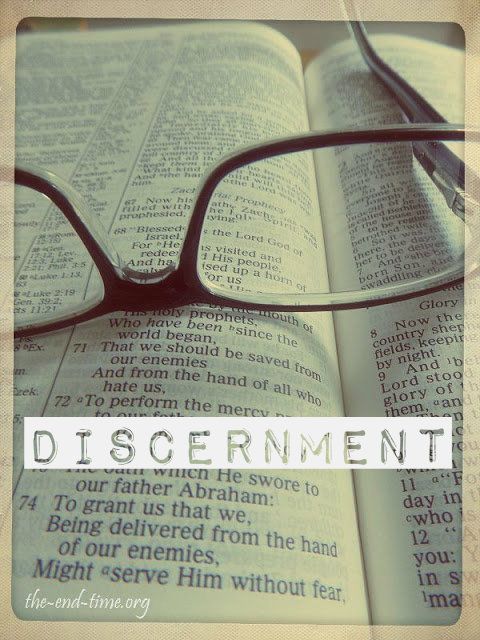
bible with glasses

Posted in encouragement, theology

Many Christian Celebrity Moms are Distorting Biblical Motherhood; Part 2

By Elizabeth Prata

Part 1 here


Photo: Susannah Spurgeon with her twin boys, Thomas and Charles


Yesterday in part 1
I looked at the problem: how the images and life-lessons of many celebrity self-identified Christian women tout a feminist lifestyle, often in the process neglecting their biblical duty as mother. I named names and offered their own words. No, these women don’t say they live like feminists, but their actions show that they have willingly or unwittingly adopted that philosophy of womanhood, including mothering.

The problem with celebrity in Christian circles is the same as celebrity everywhere: that’s the image you’re going to see most often. Christian moms don’t see the real model of biblical motherhood as often because they are at home, working. These celebrity-feminist living women are on television, portrayed in media interviews, talk shows…they write books, they speak at conferences, they publish devotionals and Bible lessons etc, so the images of motherhood we see and we hear from them are ones of distortion. At the least, it’s confusion. Christian women read what their role is in the Bible, then see what seems to be many women identifying as Christian going off on social justice projects in Africa, traveling across the country on media interviews, using day care and nannies so they can write at home… about being a mom, all without note or rebuke from elder men of the faith. By default it seems that that kind of CEO-busy-mom lifestyle is accepted. It’s confusing for women. It’s discouraging, too.

I was raised by a divorced, feminist mother during Second Wave Feminism sweeping the country in the 60s and 70s. I was told that women could and should go into the public spheres of work and career if they wanted to, and to go as high as they desired according to their desires and skills.

My goal prior to my conversion, was to be a teacher and a wife. I wanted to help children, then arrive home before my husband and make a nice homelife for him, and do the same during the summer when school was out of session. I was mocked by feminists for wanting to orient my life at home. For wanting this lifestyle, I was discouraged, bullied, and dismissed as a ninny.

So I have a bit of an idea of what it is like for Christian wives and mothers who declare their intent to stay at home, raise their children, and live a godly life according to the Bible (which includes society’s hated word “submission”.)

~~~~~~~~~~~~~~~~~~~~~~~

So what IS biblical motherhood, not according to the Christian celebrity culture, but according to the Bible?

and so train the young women to love their husbands and children, 5 to be self-controlled, pure, working at home, kind, and submissive to their own husbands, that the word of God may not be reviled. (Titus 2:4-5).

Eve acknowledged that children are from the LORD, He gives that gift to women.

Now the man had relations with his wife Eve, and she conceived and gave birth to Cain, and she said, “I have gotten a manchild with the help of the LORD.” (Genesis 4:1)

Behold, children are a heritage from the Lord, the fruit of the womb a reward. Like arrows in the hand of a warrior are the children of one’s youth. (Psalm 127:3-4).

Why do so many women accept gifts from God such as the fruit of the Spirit, or their prosperity, or their physical home, with joy and in gratitude and due obedience to shepherd them well, but fail to do the same with their children? It should not be so. Therefore:

1. A Christian mother acknowledges her children are a gift from God,
not solely a production of biology.

It’s hard to be a mom. It takes skill, wisdom, patience, hard work, mental energy, persistence, and so much more. CEO’s managing several hundred employees multi-task daily chores, balance a complicated schedule, budget the company’s funds, and train the staff. Moms do the same. Motherhood is the most demanding job on the planet. Kings have a slew of counselors, Presidents have their Cabinet, CEO’s have their staff, but a mom mainly works at home alone all day. Her husband helps, but mainly it’s a thankless and lonely job- only noticed if she fails. Therefore:

2. A Christian mom relies on help from Jesus. She acknowledges it is He who is her main support, and praises Him for it.

My help comes from the Lord, who made heaven and earth.” (Psalm 121:2, NASB).

A Christian mom knows that what she says is important, but what she does is equally as important. Children watch like hawks and know hypocrisy when they see it. Their minds are patterned after what they absorb, part of which is what they see mom and dad doing. Children watch parents so moms must live what she says. She is a model, from which a child can learn by watching the most important people in the world to them live a life of of Godly living. (Deuteronomy 4:9,  Proverbs 11:3; Psalm 37:18, 37; Philippians 4:6-7).

To that end, a Christian mom is submissive to her husband. The numerous verses about this fact gives some idea of the import God lays on this concept of submission. (Ephesians 5:22, 24; Colossians 3:18; Titus 2:5; 1 Peter 3:1, 5). The husband is the leader of the home. The husband and wife complement each other in their roles. It works because it is designed by God. Therefore:

3. A Christian mom lives and models the complementarian lifestyle the Bible commands, which includes submission to the husband.

By the way, I thought this was funny:

A submissive wife is a call to arms in today’s society. It is an act of war even to say the word. The world hates it. Since the Christian church has been infiltrated by so much of the world, many Christian moms who desire to follow the biblical model for marriage and parenting will receive opposition to both the word and the act of submission. Prepare for it. This is where your warrior princess comes into play. Yes, you are a warrior princess, but not the sword-wielding boisterous woman striding the world, slaying dragons and forming companies. It is an act of courage against satan & his world to withstand his temptations to be assertive/domineering.

Wives, be subject to your husbands, as is fitting in the Lord. (Colossians 3:18).

A Christian wife/mom loves her husband. You might notice I’ve written a lot so far about how a Christian mom operates according to the Bible but nothing about children yet. This might seem counterintuitive, but it’s actually the proper order.  Number 1 & 2 dealt with the Christian wife/mom’s identity in Christ. She acknowledges him as primary in her life and relies on Him for all. Then we moved to #3, the husband/marriage. A Christian mom is a wife before she is a mom. It is her early days of marriage where she learns submission. Yet in submission, a Christian wife/mom never loses her identity (something the world threatens us with when we use the dreaded s-word). She remains a daughter of the King, a child of God always. Her identity is secure, no matter what.

4. A Christian mom will love her husband, show it, choose it,
and display it through her actions.

So a Christian mom loves her husband. This sometimes is a tough one. The people we are closest to are the ones we tend to be most aggravated by or feel it’s easy to correct. Familiarity breeds contempt is a secular proverb meaning “extensive knowledge of or close association with someone or something leads to a loss of respect for them or it.” Also, “People do not respect someone they know well enough to know his or her faults.” There is no one a wife or mom will be more familiar with than the man with whom she shares a bed.

So often she will begin to lose respect for him, and the familiarity if their intimate relationship will allow her to feel free to criticize or nag. Children easily pick up on atmospheres of tension, resentment, and discord. A Christian mom is responsible for creating an atmosphere of security, love, and harmony.

A song of ascents. Of David.
How good and pleasant it is when God’s people live together in unity! It is like precious oil poured on the head, running down on the beard, running down on Aaron’s beard, down on the collar of his robe. (Psalm 133:1-2)

Don’t nag. Love is a choice. If loving one’s husband is such a given, why does the Bible have to say it so often? If loving one’s husband is so easy, why are elder women commanded to “train” the younger women to love their husbands? (1 Peter 4:8; Ephesians 4:2-3; Titus 2:4). It’s hard to love him sometimes. Therefore,

Above all, keep fervent in your love for one another, because love covers a multitude of sins. (1 Peter 4:8)

Spending time with your children is so important. Helping them walk, reading to them, playing peek-a-boo, watching their sports games, working on a school project together…these are the things that children long for, need, and remember. It’s basic that spending time with the children plural and one-on-one time with them offers opportunities for teachable moments. It gives them self-esteem, creates family unity, and is a marker of love. You spend time with those you love. Children are a joy.

Whenever a woman is in labor she has pain, because her hour has come; but when she gives birth to the child, she no longer remembers the anguish because of the joy that a child has been born into the world. (John 16:21)

He makes the barren woman abide in the house As a joyful mother of children. Praise the LORD! (Psalm 113:9)

5. A Christian mom will educate her children

I’m not speaking of homeschooling. That’s a choice each parental couple makes. I’m speaking of educating the children in the Lord.

Stay at home mothering is cumulative. You don’t see the effects until the child is grown, and sometimes not even until after then. You build a widget, you see a widget. You raise a child, and it might take 20 years to see what unfolds in his or her character once for all.

It is here, in the spiritual realms,mothers have a tremendous impact, especially on their sons.

In his series Christian Men and their Godly Moms, Tim Challies wrote:

It may surprise us, though, to learn how many of our Christian heroes were shaped by the attentiveness and godliness of their mothers. Even though they may have had fathers who were present, involved, and godly, still they would insist that their primary spiritual influencer had been their mother. One of history’s greatest preachers would say with affection, “I am sure that, in my early youth, no teaching ever made such an impression upon my mind as the instruction of my mother,” while one of its most committed evangelists would say, “I learned more about Christianity from my mother than from all the theologians in England.” An eminent theologian would state, “To our mother, my brother and myself, under God, owe absolutely everything.”

A great defender of the faith would write about an overwhelming moment of doubt, then relate how he found deliverance: “My mother [spoke to me] in those dark hours when the lamp burned dim, when I thought that faith was gone and shipwreck had been made of my soul. ‘Christ,’ she used to say, ‘keeps firmer hold on us than we keep on him’.”

Train up a child in the way he should go; even when he is old he will not depart from it. (Proverbs 22:6)

It is so counter-cultural today for a mother to orient her life primarily toward her husband and children, that author and podcaster Rachel Jankovic created a webinar titled “Motherhood: A Call to Arms. The webinar is described thus:

As mothers who seek to honor the Lord in our callings, it is important for us to be thoughtful and clear headed about our ultimate goal: raising men and women who love the Lord.

A good understanding of how God uses mothers who fear Him will help equip us to cheerfully accomplish our daily work, keeping our eyes on the goal. Without a big vision for our work we can become lost in the details, losing perspective and becoming vulnerable to all kinds of discouragement.

In this webinar we are going to look at what Scripture has to say about us, our work, and children, and we will talk about how we can practically apply those things in our everyday dealings with our future men and future women.

She titled her webinar in military language because she believes that motherhood is on the offensive. Normally when we read about motherhood it’s phrased in sentimental language urging peaceful harmony. Jankovic’s language is deliberately military.

Parents, especially mothers, “You are as much serving God in looking after your own children, training them up in God’s fear, minding the house, and making your household a church for God as you would be if you had been called to lead an army to battle for the LORD of Hosts!” ~Charles Spurgeon

She said, “Christianity in recent years has been dominated by a sentimental approach to motherhood.” We see constant scriptures with hazy fields of flowers and calling everything precious. “Motherhood is not like that. Motherhood is real.” She believes women need to know both the reality of motherhood and the joy.

From the mouth of infants and nursing babes
You have established strength
Because of Your adversaries,
To make the enemy and the revengeful cease
(Psalm 8:2), (commentary here)

Jankovic said, “We have been taught …the culture has worked very hard to make us believe that ’empowered women’ are women who have somehow risen above their own fertility. The world’s women are so desperate to teach us that if you have detached yourself – no matter the means – [abortion] from your own fertility, that you have a better shot at being your own true self, and I would say, your most valuable self.”

Motherhood is important because as Rachel Jankovic’s husband said, ” ‘This is the only work you’re doing that will last forever- is those children.’ It’s true. Nothing else I will ever do is eternal.”

Christian moms, your children are your contribution to God’s Kingdom.

———————————–

Many Christian Celebrity Moms are Distorting Biblical Motherhood; Part 1

———————————–

For further reading

Tim Challies: Christian Men and their Godly Moms (entire series)

John MacArthur: God’s High Calling for Women (topical series)
John MacArthur: God’s High Calling for Women (study guides)

Answers in Genesis: The Role of a Godly Mom

Compelling Truth: What Should a Christian Mother be like According to the Bible?

Posted in discernment, theology

Many Christian Celebrity Moms are Distorting Biblical Motherhood; Part 1

By Elizabeth Prata

This part one will present the problem. Part two discusses the biblical correction/solution.

She lived and labored for her boys and her husband. At home she was a wife and mother and a model of what each should be. She taught the Bible to her sons and pleaded with them to turn to Christ. Thomas traced his early conversion to her pleading and her example.”
~Thomas Spurgeon’s memory of his mother Susannah, wife to preacher Charles Spurgeon.

Images and PR (public relations) matter. Ask the advertising, marketing, and PR industry why they spend so much money on it every year. The images and concepts they perpetuate onto the consuming public are important because those are the images and concepts they want people to adopt. The constant barrage of them, they hope, will cause a shift in their target audience’s perception of reality.

Even unintentional PR causes a shift in reality. If images and concepts are constant enough, eventually the mind begins to accept them as real.

Second-Wave Feminism emerged in the secular culture from roughly the mid-1960s to the mid-1980s. Since the Christian world is slower to adopt secular fads, the last twenty years or so in Christian world has followed suit with its own version of feminism. One reason this distortion has occurred is partly because of Christian(ish) female celebrities living and touting a life of motherhood that’s far from the biblical model, all the while claiming it is.

Eventually, the distortion became the reality in Christian circles, at least for many. Others who are more discerning became confused nonetheless.

These women write Bible “lessons” that sell by the millions. They write devotionals that women clamor for. They appear on television and social media, teaching and touting the ‘have it all’ life. They write books. They’re active in churches as speakers.

Here are a few examples of these women who claim to be Christian and to put their motherhood first as the Bible commends, but don’t. They include Beth Moore, Rachel Hollis, Raechel Myers, Diana Stone, and Joanna Gaines. I’d like for you to get a true sense of how repugnant these lives are by carefully reading their words and seeing their deeds. I also offer them as proofs you can use to contrast the lives of these celebrity Christian (ish) mothers and what the Bible calls mothers to be in the eyes of Jesus.

1. Beth Moore

Beth Moore said to Christianity Today in 2010 that her man demanded a regular home life, so she only travels every other Friday and comes right back home the next day.

“We walk the dogs together and eat out together all the time and lie on the floor with pillows and watch TV,” Moore says. “My man demanded attention and he got it, and my man demanded a normal home life and he got it.”

That’s nice. But it’s disingenuous in the extreme. The reality is that when I researched her schedule (in 2012), Mrs Moore was gone from home at least 20 weekends per year on her Living Proof tours- which usually occur on the weekends. On top of that, Mrs Moore taped sessions for her weekly show on the Life Today (these days, she has her own show), she travels for weeks on book tours, travels or tapes sessions for interviews, spends extended private time for weeks in a cabin by herself in Wyoming to write (as stated in the preface to “When Godly People Do Ungodly Things”). She is the President of her own company that in 2011 brought in 4.1 million dollars, with an excess after expenses of 1.3M. Her tax forms say that she spends 50 hours per week working for Living Proof.

And she did all this when she was raising younger children. A ‘normal home life’? Hardly.

In fact, my contention was confirmed and vindicated several years after writing that essay when the magazine The Atlantic quoted both Moore children (adults now) as saying when they were growing up “they ate a lot of takeout”. The article also stated that “Though she often performs domestic femininity for her audience, in her own life she has balanced motherhood with demanding professional ambitions. … Moore has never cared much for the delicate norms of Christian femininity. Her days are tightly scheduled and obsessively focused on writing.”

——————————————

2. Diana Stone

Diana Stone formerly wrote for the website She Reads Truth, developing female-oriented Bible devotionals for social media, as well as writing for the Huffington Post, New York Times, and other print and social media platforms. We read in Diana Stone’s bio that, “You can find her in the mornings with a cup of coffee and her Bible flung open, preparing for the day ahead.” Awww, admirable! “With a sweet daughter in tow, Diana clings to God’s Word daily.”

Mrs Stone relaxes with the Bible “flung open” … after she drops her daughter to daycare.

At the time of the writing, in 2014, for the past two and a half years, the couple had employed a part time nanny care for their daughter in their home so Mrs Stone could work as a freelance writer. After bumping along with several nannies, they eventually decided to put their child in daycare so Mrs Stone could continue to write at home.

“There’s a constant tug on me to be in both worlds 100%. Work should come first. Life should come first. What is a priority? Who gets my time that day – and is choosing one over the other wrong? When I’ve committed to being a mama and being paid to write, both need my top priority.” Source

First of all, there should be no distinction between “life” and “work.” Colossians 3:23 says “Whatever you do, work heartily, as for the Lord and not for men,”

Secondly, Behold, children are a heritage from the Lord, the fruit of the womb a reward. (Psalm 127:3).

Thirdly, you commit to the children, to being a mother. If committing to work that causes you to wonder “who should get your time that day”, you’re doing biblical mothering wrong.

Mrs Stone’s mothering got in the way of writing about being a mom, so the mothering was outsourced.

————————————

3. Raechel Myers

Raechel Myers is founder of She Reads Truth, a Bible devotional social media company. She identifies herself also as a sewist, writer, photographer, designer, author, CEO of a Limited Liability Company, Conference Fundraiser, Conference speaker, and world traveling Justice Activist. Oh, and mom. And wife.

In addition to her work at She Reads Truth, Myers makes trips to Africa to help women develop self-sustaining micro-economies. In an Instagram photo Raechel Myers published, her two young children are perched on a chair and on a table watching a laptop playing a video of their mother being interviewed at If:Gathering, with this caption,

“My husband just texted me this photo of the kids watching our @shereadstruth interview at the @ifgathering. Seeing my baby girl perched on the table watching her mommy talk about her Jesus- so blessed!!!!”

Perching your children on a table while daddy babysits so they can see you talking about Jesus to others through a screen is definitely not biblical motherhood. Another CEO-mother with divided time and loyalties.

————————————

4. Rachel Hollis

Rachel Hollis is an author, CEO of her event-planning company, speaker, social media darling, television broadcast guest commentator, podcaster, conference producer, and has been dubbed as a “motivational powerhouse for women.” She has four children. Here is her bio:

I’m Rachel Hollis, a proud working mama with four kids and an ultra hunky husband. I worship coffee like a deity, I read books like my life depends on it and think vodka with La Croix is one of the greatest inventions of the last decade. When it comes to women, there always seems to be a question about how we can balance everything. Girl, I don’t even try!
I’ve got four kids (one of which is the gorgeous queen I’m holding above) and whether I’m at home with them or at Chic HQ with the team, life is never calm and balanced. Instead, I embrace my chaos and seek only to feel centered amongst the flurry. The babies and housework and spreadsheets and meetings and 5th birthday parties to plan, along with a million other things that might overwhelm me? They are just a list of my many, many blessings.

Did you get all that? Read it carefully. Her opening lines referred to worshiping coffee as a deity and drinking Vodka. Her life is so busy she can’t prioritize her children or figure out a way to balance all her work outside the home with her kids, so she doesn’t even try. Her life, according to her, is chaos, a flurry, overwhelming, never calm, and unbalanced.  Kids love lives like that. Sadly, this is the norm that’s being presented to Christian women as motherhood: Happy-go-lucky chaos with the kids coming in last.

———————————–

Joanna Gaines is a television personality and co-star along with her husband of Fixer Upper, which a few months ago just ended a five-year broadcast run. Joanna maintains she is a mom first, stating at every opportunity possible that they remained committed to filming in Waco only because they wanted to be near their young children since the couple is dedicated to parenting first. Family first. etc and ad nauseum.

However, that is patently not so.

What they’ve got going is-

–a television show,
–home renovations,
–a realty office with employees,
–4,000-square-foot store with 140 employees,
–two vacation rental properties (not B&B’s),
–speaking engagements at $62,000 per,
–Magnolia Farms and its own apparel line,
-Magnolia Silos,
–Magnolia Villas, a gated subdivision of 37 garden homes in a pocket neighborhood. Chip’s first house flip earned him $30,000 15 years ago. Today he said he invested seven figures for the gated community,
–a new partnership with case goods manufacturer and importer Standard Furniture to create a comprehensive furniture collection called Magnolia Home. Joanna is designing the pieces,
–a bakery,
–Magnolia Market’s online business, ships 700 packages a day, employing 32 people,
–an autobiography due out in Fall 2016,
–a 600 square foot working garden,
–a 40-acre working farm with chickens, goats, cows, turkeys, horses, cats, dogs and bottle calves. Over 60 animals in all,
–craft workshop with tickets costing $100 per,

Chip and Joanna have added more companies, projects, and tasks since 2016 when this list was compiled. This month, the couple announced this month they are expecting a fifth child.

————————————–

In my 2016 essay about Joanna and her version of motherhood, I called her a hypocrite for saying one thing about motherhood, but doing the opposite. I was slammed for saying so. I can’t relate to you just how slammed I was. I received a torrent of abuse, criticism, and outrage just for pointing out the physical impossibility of actually living according to what they were saying. There are not enough hours in the day for Joanna to do all she needed to do for the companies AND biblically mother her children.

Daryl Austin of USA Today wondered the same thing. In his piece he asked, ‘The Gaines family says they put family first, but do they have time to live it? He listed all Joanna is into work-wise, then said:

That’s all incredible. For anyone else, I would be shouting my admiration from the rooftops. But I see Chip and Joanna differently, because they don’t want to be seen simply as a couple that can do it all. They want to be seen as a couple that can do it all while at the same time making their family their top priority.

This is just not possible, and it does a disservice to the parents who really are putting their children first. No matter how rich and famous, we are all limited by the same 24 hours in a day. You cannot do all they’ve done (or even a fraction of it) and still have any real time left over for family. Frankly, I wonder where they even find the time to brush their teeth, let alone spend quality, one-on-one time with each child daily.

Daryl Austin again:

Unchecked ambition for any of us is a bottomless pit. We live in a world where every social media user compares his worst to everyone else’s best, and mommy bloggers work tirelessly to portray unattainable perfect homes and families. Instead of correcting distorted realities, Chip and Joanna are adding to the problem. Not just in what they say, but also in what they show.

Many of the women above do display an unchecked ambition, distorting what God said a home should be like and turning it into a temple for self-gratification and career fulfillment. They SAY they love being a mom, but what they DO is show us they worship themselves. Many regular women suffer from this distorted reality. It’s confusing, being told that a career of helpmeet and mother is God’s desire if possible, yet seeing unchecked ambition, private jet flights, book tours, and fame as equally desirable- and attainable.

There are thousands and millions of behind-the-scenes Christian moms who are doing exactly what the Bible says to do in their roles. The sad part is that the image of the CEO-busy-divided loyalty-mom is the one that is seen. Their reach and influence has unfortunately normalized the have-it-all working moms’ lifestyle who give lip service to mothering, but in fact are fomenting a distorted reality for real Christian mothers and mothers-to-be.

Today, I wrote of what biblical motherhood isn’t. Tomorrow, the solution: Biblical Motherhood according to Jesus. What it is, why it’s important, and how it’s actually a call to war.

Susannah_photo
Susannah Spurgeon with her twin boys, Thomas and Charles

Posted in discernment, theology

Throwback Thursday: Does God Speak in Unidentified Promptings?

By Elizabeth Prata

This post first appeared on The End Time in September 2016

A quick lesson on discerning a meme. I saw this on Facebook. Here is a lesson on how to parse the silly sayings we see on social media. Let;s take it apart phrase by phrase and really think about what it is trying to communicate.

“Unidentified promptings” contradicts his word on the face of it, because He always identified Himself as the One speaking. Even when God spoke to pagans they knew this was an authoritative and undeniable voice of a God they must obey.

Would God speak behind a veil of uncertainty as to the source? No, never. Further, the Lord never spoke unclearly to an audience. He was always open and authoritative when He spoke. (Matthew 7:29). Did the Lord say “I shall give Pharaoh unidentified promptings to let My people go”? (Exodus 4:22). Does Exodus 7:17 say, “Thus prompts the LORD in unidentified manner, In this thou shalt strongly suspect through an inner voice that I am the LORD: behold, I will smite with the rod that is in mine hand upon the waters which are in the river, and they shall be turned to blood. Probably. If you discern the prompting correctly.”

In addition, if the promptings are unidentified, how do you know they are from God? We know the devil speaks. (John 8:44). We know our own heart speaks too, for out of it come evil thoughts–murder, adultery, sexual immorality, theft, false testimony, slander; says Matthew 15:19. Why would you want to risk acting upon something that could either be from the devil or your own dark heart?

Third, do you ever act on unidentified promptings in other cases in real life? If an unidentified voice whispered over the intercom at work to go do something, would you? If an unidentified voice left on your phone messages urged you to an action, would you do it? No. You’d probably say ‘This is creepy’ and delete the message or ignore the intercom. Why risk following an unidentified prompting that more than likely is coming from the devil or your own foolish heart?

Next, ‘promptings’ cannot be confirmed by the word. A prompting is a nebulous, gossamer thought like the last remnant of a dream you’re trying to hold on to before full consciousness erases it. How can the word of God confirm something so tenuous? In the Bible, is there a Book of Unidentified Promptings to which we turn blank pages and write our own indefinite and unclear words in invisible ink?

Last, ‘promptings’ are not a communication. They are an unidentified feeling, more than likely generated by ourselves from ourselves to ourselves.

Leave the unidentified promptings alone. Better to just read God’s word, make decisions according to His commands and precepts, and take responsibility for them.

Posted in book review, theology

Girl, Wash Your Face (Book Review)

By Elizabeth Prata

1. HOW (CHRISTIAN-ISH) PEOPLE GET FAMOUS

It’s no longer just movies or television that launches the latest It Girl celebrity. It’s social media. A person who starts a blog, web page, Instagram, Twitter or myriad other social media platforms, if they hit the right note, the right moment, and persevere with quantity (and hopefully quality content) they can gather thousands if not millions of “followers”. From there, Publishers take note. Someone who already has a built-in audience is more attractive to them as a potential client than someone who is not.

Rachel Hollis is a Los Angeles event planner turned entrepreneur turned podcaster turned TV guest commentator, social media darling, and author. Almost ten years ago she started her blog, The Chic Site. Her honest voice and her winsome (and savvy) ability to connect through writing and speaking about lifestyle, has launched Hollis to front place on bestseller lists, top entrepreneur lists, and most any other list you can list.

Though Hollis has written several novels in the Romance genre, her latest book has hit the bestseller lists like a tsunami. It’s a How-To/Advice book called Girl, Wash Your Face. Seventeen weeks ago, it vaulted to the top of the Advice/How-To NY Times bestseller list and has stayed there. Published 6 months ago as of this writing, the self-help advice book has over 4,000 reviews, 96% of them 4 or 5-star. It’s currently #4 on Apple’s iBooks list.

2. ABOUT CHRISTIAN PUBLISHING

Thomas Nelson Publishing published Girl, Wash Your Face. Thomas Nelson writes of the book,

With wry wit and hard-earned wisdom, popular online personality and founder of TheChicSite.com Rachel Hollis helps readers break free from the lies keeping them from the joy-filled and exuberant life they are meant to have.

So, according to Hollis, I’m supposed to be having a joy filled life of exuberance but the world has lied to me and I’m not living that life but Hollis is going to help me achieve it with her advice. Rachel Hollis is 35 years old.

Publisher’s Weekly says,

Hollis implores readers to stop worrying about external pressures to always do more and, instead, to find fulfillment by getting in touch with their own desires and feelings.

Wasn’t getting in touch with her desires what got Eve (and Adam and all of humanity) into trouble with God? (Genesis 3:6).

Longer ‘About the Book’ from Thomas Nelson:

As the founder of the lifestyle website TheChicSite.com and CEO of her own media company, Rachel Hollis developed an immense online community by sharing tips for better living while fearlessly revealing the messiness of her own life. Now, in this challenging and inspiring new book, Rachel exposes the twenty lies and misconceptions that too often hold us back from living joyfully and productively, lies we’ve told ourselves so often we don’t even hear them anymore.
With painful honesty and fearless humor, Rachel unpacks and examines the falsehoods that once left her feeling overwhelmed and unworthy, and reveals the specific practical strategies that helped her move past them. In the process, she encourages, entertains, and even kicks a little butt, all to convince you to do whatever it takes to get real and become the joyous, confident woman you were meant to be.
With unflinching faith and rock-hard tenacity, Girl, Wash Your Face shows you how to live with passion and hustle–and how to give yourself grace without giving up.

Do you see the problem? As the book blurb describes, as we women grew up, the world lied to us. We believed it. So now we cannot live productively or joyfully unless we give ourselves grace, use our own strength and tenacity to pull ourselves up by the bootstraps and be who we were meant to be.

All without a solid mention of Jesus in the book.

What is Thomas Nelson’s Christian mission?

Thomas Nelson is committed to one central mission: inspiring the world by meeting the needs of people with content that promotes biblical principles and honors Jesus Christ.

3. MY THOUGHTS ON THE BOOK

I read the introduction, Table of Contents, chapter 1, 2, and 3, the end notes/acknowledgements, and the study guide.

Mrs Hollis is definitely a skilled writer. For those of you who are moms, especially millennial moms, this book may well appeal to you. Hollis structures her book by titling each chapter with one of the “lies” women “have been told”, spends the chapter discussing that “lie’s” impact on her upbringing and life, and concludes with ‘helpful tips’ on what helped her overcome the “lie”. I’m placing the word “lie” in scare quotes for a reason that will be discussed in the Conclusion. Here are the chapter titles.

Introduction: Hey Girl, Hey!
1. The Lie: Something Else Will Make Me Happy
2. The Lie: I’ll Start Tomorrow
3. The Lie: I’m Not Good Enough
4. The Lie: I’m Better Than You
5. The Lie: Loving Him Is Enough for Me
6. The Lie: No Is the Final Answer
7. The Lie: I’m Bad at Sex
8. The Lie: I Don’t Know How to Be a Mom
9. The Lie: I’m Not a Good Mom
10. The Lie: I Should Be Further Along by Now
11. The Lie: Other People’s Kids Are So Much Cleaner/
Better Organized/More Polite
12. The Lie: I Need to Make Myself Smaller
13. The Lie: I’m Going to Marry Matt Damon
14. The Lie: I’m a Terrible Writer
15. The Lie: I Will Never Get Past This
16. The Lie: I Can’t Tell the Truth
17. The Lie: I Am Defined by My Weight
18. The Lie: I Need a Drink
19. The Lie: There’s Only One Right Way to Be
20. The Lie: I Need a Hero

I hesitated to include these chapter headings that represent ‘the lies’ we as women have been told, (or that we believe on our own impetus) because they speak to the common experience of many women. It’s not that to which I object. It’s the fact that she fails to identify the “lies” as a secular worldview with all that entails, and her solutions are self-sufficient and not Jesus-oriented.

The section on her brother’s suicide brought tears to my eyes. Rachel is transparent, holding nothing back about her own foibles and mishaps. She is real. She’s engaging, and that is always the trouble with popular female speakers and authors. Sometimes, being empathetic and nurturing, we women focus on how winsomely the story is told and how it made us feel rather than comparing it to the Bible to see if it is so.

Regarding the spiritual aspects of the material I’d read, I did not see much mention of Jesus as our only aid. Nor His grace as the strength we need. His word wasn’t appealed to as the source of wisdom and truth. Of the practical life’s how-to aspects, I read a lot of self-effort, self-care, and self-truth. For example:

The truth? You, and only you, are ultimately responsible for who you become and how happy you are. That’s the takeaway. (Girl, Wash Your Face, p. xi, preface)

I wish she had written that the takeaway for the book was that Jesus is our Lord and Master and that I am ultimately and solely responsible for my sin and my response to it. Or that I am responsible for obeying Jesus and it is obedience to Him that brings joy. But, she didn’t say either of those things nor anything close to it in the parts I read.

As a little girl (a preacher’s daughter, no less) the fruits of the spirit were drilled in early. For those of you who aren’t familiar, one of the apostles (Jesus’ BFF’s) listed out these nine attributes that Christians should have. “But the fruit of the Spirit is love, joy, peace, forbearance, kindness, goodness, faithfulness, gentleness and self-control.” Galatians 5:22. But the thing is, these are attributes we should all have regardless of where you grew up or what you believe in. And so I wanted to make fruit of the spirit bracelets and I thought that we could all wear them as a reminder of the attribute we most need to work on in our own lives. Source: The Chic Site

I’ve personally never heard a Christian writer refer to the Apostles, on whom the foundation of the Church is laid (Ephesians 2:20) as “Jesus’ BFFs”.

That aside, it is error to say that love, joy, peace, forbearance, kindness, goodness, faithfulness, gentleness and self-control are attributes we should all have regardless of what one believes in. We all do not have those attributes. People who are unsaved mimic those attributes. It is only a mimic because the genuine article comes from Jesus. If one is unsaved the goodness one displays does not please God because it is born of the flesh, not borne of the imputed righteousness God sees when He looks at us and our works. (John 15:5). The two are night and day.

Judging each other actually makes us feel safer in our own choices. Faith is one of the most abused instances of this. We decide that our religion is right; therefore, every other religion must be wrong. Within the same religion, or heck, even within the same church, people judge each other for not being the right kind of Christian, Catholic, Mormon, or Jedi. I don’t know the central tenet of your faith, but the central tenet of mine is “love thy neighbor”. Not “love thy neighbor if they look and act land think like you.” Not love thy neighbor so long as they wear the right clothes and say the right things. Just love them. (Girl Wash Your Face, p. 40)

This paragraph teaches blasphemy and idolatry. One cannot call one’s self a Christian and accept the false religions as part of the pantheon. Worse is to dismiss the differences. The central tenet of Christianity is faith in Jesus and repentance of sins. It is-

that Christ died for our sins in accordance with the Scriptures, 4 that he was buried, that he was raised on the third day in accordance with the Scriptures, (1 Corinthians 15:1-4)

Sadly we women are told repeatedly that judge not and love thy neighbor IS the faith. This is simply more claptrap from Hollis.

In sum, the book is about lies women have been told by society, media, family, or the devil and author Hollis dispels those lies by assuring women they are strong and courageous and beautiful and warrior and made for more, and all that.

via GIPHY

CONCLUSION

Takeaways from this essay:

1. Just because someone calls themselves Christian and is really, really famous right now, doesn’t mean they have an orthodox Christian message to share. As a matter of fact, the warning in Luke 6:26 indicates just the opposite.

2. While there are many good Christian Publishing Companies (Westminster Books, Banner of Truth, etc), Christian Book Publishers for the most part…aren’t. Just because a company calls itself “Acme Christian Publishing Company,” doesn’t mean they are selling you edifying books. Discernment is important. Usually, the more popular a book or author is, or the more the secular world knows about him or her, it means the opposite. See #1.

3. The “lies” Hollis claims to be busting is simply the secular world view. That’s normal, the whole world is in the sway of the evil one (1 John 5:19). The world lies to us. Always. That Hollis is giving you engaging self-help tips on how to deconstruct those lies and push on toward higher/better/more clear living, absent the Bible’s instruction, is just more lies. She is sending you from one end of a secular world view, to another. You will come full circle.

Picture it this way. Being inside her world is like being in a balloon. She is sending you all around inside it, from one end to another. But it’s always the same view because you’re always inside that balloon. ONLY the Bible is the sword that pierces soul from spirit. (Hebrews 4:12). It punctures that false world view and exposes your eyes and mind to the truth, which is outside the balloon (flesh).

Look at Hollis’ Twitter bio. What’s missing? And what’s there?

Nothing about being a mother. Nothing about Jesus. The ‘Ms.” speaks volumes.

When you wash your face and look in the mirror, do you see a sinning but forgiven, meek, humble woman with a Christ-like countenance of Jesus reflecting back? Or do you see a strong, empowered, warrior princess grrrl, living a life of self-sufficient ‘passion and hustle?’ If you see the latter, you’re being lied to.

Girl, Wash Your Face: Not recommended.


Posted in encouragement, theology

An encouragement: Keep a tender conscience

By Elizabeth Prata

I hope this fine late summer week has offered you beautiful glimpses of God’s creative intellect and His wonderful power. I posted the other day about a rainbow extending from left to right directly in front of me, and how for the first time I even saw the end of the rainbow pooling in colors right there on the ground. (No pot of gold, sorry 😉

I’m looking forward to the weather easing into fall. Though this summer was quite mild, not brutal like those hot box summers in Georgia of the recent past, I’m still looking forward to pumpkins, fall leaves, and cooler temperatures.

We always enjoy the march of the seasons. “He appointed the moon for seasons: the sun knoweth his going down.” (Psalm 104:19, KJV).

Wherever we are in the world, reading this blog, we see and understand the times and seasons. In spring, we look for the robin, the crocus, the ladyslipper. In summer we look for puffy clouds, rain showers, cicadas. The orderliness and consistency of the seasons since His ordination of them is a comfort. Yet even in Jeremiah 8:7 it is said of the seasons, meaning HIS season,

Yes, the stork in the heaven knows her appointed times; and the turtle and the crane and the swallow observe the time of their coming; but my people know not the judgment of the LORD.”

In the natural history of Israel, Barnes notes explains, “Jeremiah appeals to the obedience which migratory birds render to the law of their natures. The “stork” arrives about March 21, and after a six weeks’ halt departs for the north of Europe. It takes its flight by day, at a vast height in the air (“in the heaven”). The appearance of the “turtle-dove” is one of the pleasant signs of the approach of spring.”

As for the part of the Jeremiah verse which speaks to His judgments, Matthew Henry holds sway here:

“Sin is backsliding; it is going back from the way that leads to life, to that which leads to destruction. They would not attend to the warning of conscience. They did not take the first step towards repentance: true repentance begins in serious inquiry as to what we have done, from conviction that we have done amiss. They would not attend to the ways of providence, nor understand the voice of God in them, ver. 7.

They know not how to improve the seasons of grace, which God affords. They would not attend to the written word. Many enjoy abundance of the means of grace, have Bibles and ministers, but they have them in vain. They will soon be ashamed of their devices. The pretenders to wisdom were the priests and the false prophets. They flattered people in sin, and so flattered them into destruction, silencing their fears and complaints with, All is well. Selfish teachers may promise peace when there is no peace; and thus men encourage each other in committing evil; but in the day of visitation they will have no refuge to flee unto.”

How perfect and prescient His Word is! Let us enjoy the seasons of grace that Jesus offers His children.

In Numbers, where God is dispensing instruction to the Priesthood, God said, “I am giving you the service of the priesthood as a gift.” (Numbers 18:7b). It is a gift to serve Him. It is a gift to dedicate one’s life to him. It is a gift to be close to Him. It was a gift to the people who needed priests. He also gave the Prophets as a gift and in the New Testament, the gift of prophecy is also a gift. (1 Corinthians 12:10; Romans 12:6).

I feel deeply for Jeremiah the Prophet, who was known as The Weeping Prophet. Jeremiah lived in a time when the People’s pride was dragging them backward into sin and away from the LORD. (Jeremiah 13:15-27- “Pride precedes captivity”.) He lived when the people’s sins had piled up. Jeremiah was the last prophet sent to preach to the Southern Kingdom. The searing effects of their sins had hardened them so much that no one ever listened to Jeremiah. He never had one convert. “Yet they did not obey or incline their ear, but followed the counsels and the dictates of their evil hearts, and went backward and not forward.” (Jeremiah 7:24). Seasons of sin means seasons of bondage.

We speak of His love these days and His joy, peace in knowing Him. All these things are good to have and feel and be. But where is the grief? Where are our weeping prophets (Christians) today? Do we repent in grief for our sins?

Jeremiah begged them not to succumb to the false gods who lulled them into security and which did not make them feel guilty or convict them of sin. They did not listen, and they were destroyed. It shall be so again.

Meanwhile, keep up the good fight, persevere. Repent of the big things and the little things. Keep a tender conscience. Enjoy the gift of His Spirit and His people, and His church, and His word. Soon enough, our faith will be made sight, and we shall see Him as He is. What a day that will be!

hope 7

Posted in discernment, theology

“Evil is a made-up concept”

By Elizabeth Prata

  • “I’m a good person”
  • “People are basically good.”
  • “There’s no such thing as evil.”
  • “Can we all just get along? Can we get along?” (Spoken by Rodney King whose 1992 acts of resisting arrest and beating by LA police was videotaped by amateur video & sparked massive riots in the city).

The unsaved mind rejects evil in the world. Why? Because then they would have to face their own evil. As cartoonist Walt Kelly’s character Pogo famously said,

“We have met the enemy and he is us.” 

In contrast to the world’s view of humanity, the Bible says of us humans that we are enemies of God, doing evil in His sight all day long. (Genesis 6:5).

  • “as it is written: “None is righteous, no, not one”; (Romans 3:10)
  • For all have sinned, and come short of the glory of God; (Romans 3:23)
  • The heart is deceitful above all things, and desperately sick; who can understand it? (Jeremiah 17:9)
  • For out of the heart come evil thoughts, murder, adultery, sexual immorality, theft, false witness, slander. (Matthew 15:19)

Emerging this month is a tragic story out of Tajikistan. Two idealistic and optimistic twenty-somethings from the US decided to quit their jobs and see the world. Being avid cyclists, they decided to do it by bicycle. They pooled their life savings, which wasn’t much since they were 27 year olds who’d just started their professional careers in Washington DC.

I can understand that urge to be a part of the world by seeing it and experiencing it. I did that with my husband. We both quit our jobs, and being avid sailors, bought a boat and sailed down the coast of the US to the Bahamas to see what we could see. Some people just have a wanderlust.

These two twenty-somethings remarked again and again that the people they met along the way were kind and hospitable to strangers.

As they biked along with two others they had met, one from Switzerland and one from the Netherlands, a car loaded with men spotted the group. The men turned the car around, sped up, aimed for them, rammed all four cyclists, ran them over, and then on the dusty roadside they stabbed the cyclists to death like dogs. They later claimed allegiance to ISIS and vowed to kill all unbelievers.

Jay Austin and Lauren Geoghegan had documented their journey on their blog and on Instagram. They basked in the hospitality of strangers, reciprocated kindness, and loved the world as it unfolded before them. Some say they saw it through dreamers’ eyes.

An unsanctified mind overlooks the evil we do, rejecting that our own evil is against a holy God for which we deserve punishment. The world is evil. It is under the dominion of the evil one. Unsanctified minds see the world as good, because they are so embedded in evil they don’t see it. The cyclists tragically misunderstood human nature, in choosing to believe that the surface kindness they experienced went deeper than it did.

Here is Jay explaining their worldview, written in a blog last April as they entered Morocco.

You watch the news and you read the papers and you’re led to believe that the world is a big, scary place. People, the narrative goes, are not to be trusted. People are bad. People are evil. People are axe murderers and monsters and worse.

I don’t buy it. Evil is a make-believe concept we’ve invented to deal with the complexities of fellow humans holding values and beliefs and perspectives different than our own—it’s easier to dismiss an opinion as abhorrent than strive to understand it. Badness exists, sure, but even that’s quite rare. By and large, humans are kind. Self-interested sometimes, myopic sometimes, but kind. Generous and wonderful and kind. No greater revelation has come from our journey than this.

There is a difference in believing that we can connect with people on a friendly level despite differences in shared values, and realizing that we humans are all the same because we share the most fundamental similarity of all: an inherent evil.

Evil most certainly is not a make-believe concept. Satan was highest and most beautiful of the cherubim until the day evil was found in him. (Ezekiel 28:15). He perpetuated his unrighteousness with Eve and Adam, persuading them to rebel against God. Ever since, humans have been born evil. (Psalm 51:5).

I was born evil. Jay and Lauren were born evil. They did evil every day of their lives (Romans 5:12). It is important to recognize evil for what it is. Baker’s Evangelical Dictionary of Biblical Theology defines evil by first stating that what is morally good is not what human society decides is in its best interest, but what the revealed will of God declares. Evil is opposition to God’s declared will. Psalm 5:6 says that God hates evil.

Recognizing one’s one evil and our own culpability before a holy God is a first step in understanding our need for Jesus. His Gospel commands us to repent of evil. If one denies that evil exists, then one is effectively stating that one does not need Jesus. We need Him to rescue us from our evil. It’s strange to think that the hopeful, evil-denying bikers are seen by God as just as evil as the ISIS men who stabbed them to death.

The question of the reality of evil, is not just a philosophical debate. When one eventually enters the other side of the veil, there are two destinations. One is for evil people. The other is for forgiven evil people. Evil is indeed real. But the grace of God gave us His Son, who took on all of God’s wrath for those evil deeds we do, and God punished Him instead of us evil-doers. If we repent of our evil deeds and ask Jesus to forgive us, He will. Otherwise, on His Day when many say to Jesus that they were good people,

Then I will tell them plainly, ‘I never knew you. Away from me, you evildoers!’ (Matthew 7:23 NIV)

This isn’t an academic issue. It’s a heart-rending issue. I’m not making light of the cyclists. In the world this very day, four sets of parents are mourning the loss of their children. Mothers are weeping and fathers are mourning. Evil is very real. The parents know it. Evil took their children. But the fatal flaw in that thinking is believing that they themselves are not evil.

Satan delights in deluding people that evil either doesn’t exist, or it’s a problem ‘out there’… or ‘somewhere else.’ The reality is, evil is in every heart. Only repenting to Jesus for our evil thoughts, speech, and deeds can absolve us of being punished for it.

If Jay and Lauren were not saved (and I suspect they were not), it is too late for them. It is not too late for any person still consciously drawing breath to appeal to the Son for forgiveness of our own evil.

FMI on the cyclists:

The Danger of Being Dreamers

ISIS Terror Attack on Cyclists

I’m always interested in passing along sermons, essays, or books that discuss evil from a biblical perspective. There are a lot of kooks out there ‘teaching’ about the devil and his demons. This sermon from Grace Community Church is good. I listened to all of it. It’s called The Domain of Darkness,  and teacher Chris Gee focuses on satan, demons, hell and what the Bible has to say about them.


Posted in encouragement, rainbow, theology

Driving through a rainbow

By Elizabeth Prata

We had a marvelous church service this afternoon. We meet at 3:00 to 4:30, talk a while after, then head to small groups at various locations. We have 4 elders. The main teaching elder is Mark, and the other three men rotate doing a confessional/devotional before the sermon. Our order of service goes like this:

Opening prayer by Mark
Two hymns, stand, all sing
Confessional, where one of the elders speaks briefly, asks us questions, to which we respond in our pews silently by confessing our sins before God and praying. This helps prepare our hearts to hear the word.
Song. We remain sitting and can either sing along with the musicians on stage or continue praying/confessing silently.
Sermon.
Two more hymns.
Prayer and dismissal

Anyway we are going through the book of John and we’re all loving it. Afterward I was headed home and one of those summer rain showers came along. The pavement was dry and then sprinkles dotted the windshield then rain-soaker with wipers on high then dry again. Repeat. Ahead I saw the largest rainbow arcing across the road starting at the ground and making a bow from left to right. It stayed for the longest time. I thought of the verses in Genesis 9:12-16-

And God said, This is the token of the covenant which I make between me and you and every living creature that is with you, for perpetual generations:

13 I do set my bow in the cloud, and it shall be for a token of a covenant between me and the earth.

14 And it shall come to pass, when I bring a cloud over the earth, that the bow shall be seen in the cloud:

15 And I will remember my covenant, which is between me and you and every living creature of all flesh; and the waters shall no more become a flood to destroy all flesh.

16 And the bow shall be in the cloud; and I will look upon it, that I may remember the everlasting covenant between God and every living creature of all flesh that is upon the earth.

As I approached the next rainshower I noticed that the colors on the left side of the rainbow, the side closest to me, could be ween slicing down among the trees, and even to the ground! I have never see the spot where the rainbow touches down, but tonight I did. I looked and looked and then since the road curved, soon I drove right through it.

It felt cool to be driving physically <i>through</i> the colors of the rainbow. I enjoyed pondering God in His work of Creator, and His work of mercy in sending His Son in order to spare us His wrath, and His work of faithfulness to His promises. The LORD is magnificent and good.

Let the Redeemed of the LORD Say So

1Oh give thanks to the LORD, for he is good,
for his steadfast love endures forever!
2Let the redeemed of the LORD say so,
whom he has redeemed from troublea
3and gathered in from the lands,
from the east and from the west,
from the north and from the south.

4Some wandered in desert wastes,
finding no way to a city to dwell in;
5hungry and thirsty,
their soul fainted within them.
6Then they cried to the LORD in their trouble,
and he delivered them from their distress.
7He led them by a straight way
till they reached a city to dwell in.
8Let them thank the LORD for his steadfast love,
for his wondrous works to the children of man!
9For he satisfies the longing soul,
and the hungry soul he fills with good things.
Psalm 107:1-9

rainbow
I took this pic through the tinted front windshield of my car. It was vivid in real life. The bow extended across the entire sky


rainbow to ground
Look at the left and follow the rainbow down to the ground
Posted in theology

A Day in the Life of a Seller of Purple

By Elizabeth Prata

What was a day in the life like for a person who lived in New Testament Bible times? It depended on what trade the person made their living. Let’s look at the woman of Thyatira, Lydia, a seller of purple.

Lydia is mentioned only a few times in the New Testament, in Acts 16:11-15, and v. 40. She was a worshiper of God, which meant that she was seeking a deeper spiritual life than the pagans around her, though not yet a proselyte. Proselyte was the name given by the Jews to foreigners who adopted the Jewish religion, but Philippi had a negligible number of Jews in the city, too few even to attain a quorum for a synagogue. It is all the  more remarkable that Lydia worshipped God in that Hellenistic Roman city.

Paul found her in Philippi with other women worshiping along the riverbank. It is here that it’s mentioned that she was a seller of purple cloth. (Acts 16:14.)

Lydia was originally from Thyatira, a bustling merchant city of guilds. It is likely that Lydia learned her trade there, though no mention is made of how or why she ended up in Philippi. David Elton Graves of Liberty University, from his article What is the Madder with Lydia’s Purple? A Reexamination of the Purpurarii in Thyatira and Philippi explains,

It appears that Lydia was not alone in Philippi carrying out her trade, as Antiochos from Philippi was the first dyer to be a benefactor to the city of Thyatira. There was a close connection with the dyeing trade of Philippi and Thyatira

In another clue as to the tie between the purple-dyers of Thyatira and the purple-dyers of Philippi, we read in New Testament Cities in Western Asia Minor: Light from Archaeology on Cities by Edwin M. Yamauchi,

In 1872 Professor Mertzides discovered in Philippi the following text in Greek inscribed on a piece of white marble: ‘The city honored from among the purple-dyers and outstanding citizen, Antiochus the son of Lykus, ad native of Thyatira, as a benefactor.’

This indicates perhaps that the purple-dyers may have also worked as a guild in Philippi as they did in Thyatira, and that their profession was held in high esteem since there was an inscription made and a benefactor to the trade.

Though purple dye can be made from the madder plant, the only true purple colorfast dye known at that time was produced by the murex snail, a marine mollusk. Debates continue as to whether Lydia used the Madder plant or the Murex, but either way, making purple dye was a difficult, costly, and time-consuming process. As a result, purple dye was purchased by royalty, elites, and the very wealthy, who used it to stripe a border of the hem of their garment, as the Senators did in Rome to their togas.

Lydia owned a house, which indicates she was probably a widow. The house was large enough to support Paul, Silas, and Luke and perhaps others with them, on Paul’s missionary journey. She also hosted the nascent church in her home. She impressed upon Paul to stay at her home, without a husband mentioned or other male with whom she needed to consult, the common practice for a woman at the time. This clue also tells us she was probably a widow. Lydia seems to have been shrewd in business, wealthy, and her own decision-maker. She likely ran in high circles since her clients would have been the richest.

So what was life like for a wealthy widow in southern Europe in the first century?

Philippi was a leading city in the district, according to Acts 16:12. A safe estimate of the population might be about 10,000-15,000. It lay on an important trade route and the city was patterned after Rome, though it was thoroughly Greek as well. Philippi was a wealthy city. It had a theater, a forum, and an arena in which games were held. It also had baths.

This wealth was shown by the many monuments that were particularly imposing considering the relatively small size of the urban area: the forum, laid out in two terraces on both sides of the main road, was constructed in several phases between the reigns of Claudius and Antoninus Pius, and the theatre was enlarged and expanded in order to hold Roman games. There is an abundance of Latin inscriptions testifying to the prosperity of the city. Wikipedia

A wealthy Israelite house (Source)

Lydia was converted to Christianity, as well as “her household”. A woman of her trade and standing, in such a wealthy city, no doubt would have servants. Lydia would have had many servants.

Servants, of course were a necessity – some wealthy country landlords could have had at least 50 living on their premises. According to the Mishnah (Ketuboth 5:5) – the more servants a woman had, the less she had to do herself. One servant liberated her from baking, two from cooking and breast-feeding. Four allowed her to “sit all day in a chair.” (Source)

In the morning upon awakening, if Lydia went to the baths, a servant would have put up her hair. Women did not go into public with their hair down, and they wore a head covering. Lydia’s house had more than one room, as the common people had. In fact, a woman of her standing would have lived in a house of upwards of 12 rooms, all around an open courtyard planted with shrubs and trees. Her furnishings would include a divan, upon which people of that era sat cross legged, and at night the diven was used as a bed. There were no special bedrooms in Oriental homes at that period.

Painting by Liotard, in the Louvre

Lydia then likely would have gone to the baths, with her hair up and her head covered. Women took their baths in the morning, men in the evening. The wealthiest could afford to have water piped into their home, so it is possible Lydia took her bath in her own home and didn’t need to venture out until she was ready to attend to her business. She’d be perfumed and her hair oiled.

No one is sure whether Lydia oversaw the actual purple-making process or if she was a vendor of already finished textiles in purple. If she managed a factory of dyers, that would have been an incredibly complex and busy job. Since making purple is labor intensive, she’d be boss of many employees. If the dye she handled was made from the murex, it would bring with it a host of issues. But first, here is the The International Standard Bible Encyclopaedia on purple-making:

Purple dye was manufactured by the Phoenicians from a marine mollusk, Murex trunculus. The shell was broken in order to give access to a small gland which was removed and crushed. The crushed gland gives a milky fluid that becomes red or purple on exposure to the air. Piles of these broken shells still remain on the coast at Sidon and Tyre. The purple gland is found in various species of Murex and also of Purpura.
Purple cloth was used in the furnishings of the tabernacle (Ex 25:4, etc) and of Solomon’s temple (2 Ch 2:14; 3:14); in the palanquin of Solomon (Cant 3:10); and in the hangings of the palace of Ahasuerus (Est 1:6). The kings of Midian had purple raiment (Jgs 8:26); the worthy woman of Prov 31:22 has clothing of fine linen and purple. Mordecai was clothed with purple by Ahasuerus (Est 8:15); Jesus by the Rom soldiers (Mk 15:17, 20; Jn 19:2, 5).

The gland secretes one drop of the liquid. One. Drop. It typically took about 10,000 shells to make a small amount of usable dye. Huge mounds of murex shells have been excavated from all around the Mediterranean.

Archaeological data from Tyre indicate that the snails were collected in large vats and left to decompose. This produced a hideous stench that was actually mentioned by ancient authors. (Aristotle, Vitruvius, and Pliny the Elder). Not much is known about the subsequent steps, and the actual ancient method for mass-producing the two murex dyes has not yet been successfully reconstructed; this special “blackish clotted blood” colour, which was prized above all others, is believed to be achieved by double-dipping the cloth, once in the indigo dye of H. trunculus and once in the purple-red dye of B. brandaris. (Source: The Mediterranean Sea: Its history and present challenges, edited by Stefano Goffredo, Zvy Dubinsky)

In fact, the process of making Tyrian Purple was so offensive, the Talmud allowed a woman to divorce her husband if he became a dyer after marriage, lol. Hence, one issue is that if her business, was factory oriented not end-product sales, would have been some distance outside the city. She’d need to rely either on a trusted manager, or oversee the operation herself. Either way, Lydia was busy all day either on site, at her vendor stalls along the marketplace in the Forum, or at home managing accounts. Or all three!

Roman fresco from the fullonica (fuller’s shop) of
Veranius Hypsaeus in Pompeii. Museo Archeologico Nazionale

In any case, whether Lydia was a maker and seller of purple textiles or a or a vendor only, she  was a busy woman, between managing her household, her servants, and her business. What is evident is that though she was likely both wealthy and busy, she put her faith first.

Pre-salvation, she worshipped God. She gathered at the prayer house by the river and communed with Him and fellowshipped with other worshippers. After salvation, she hosted Paul & Co. along with other believers as the church grew and services were held in her house.

The Bible is replete with warnings not to allow riches to corrupt one’s soul, (Psalms 62:10, Proverbs 11:28, Job 21:13, Ecclesiastes 1:3, Matthew 6:24 etc.) but Lydia was spared that wordly flaw, and she centered her faith and her life on Jesus.

Left, fresco depicting women preparing and drying sheep’s wool and other textiles in a fullonica, for dyeing.

Her daily routines were not filled with taking time to put on costly adornments (1 Timothy 2:9), nor to laze around all day in a chair. Lydia was busy. I suspect after her heart was opened to receive the Gospel, (Acts 16:14) she redoubled her efforts in business so that she could fund missions and host the church. Her purple-selling now had a purpose beyond worldly status. The vanity of the rich was now funding the spread of the Gospel.

Lydia’s story:

Therefore putting out to sea from Troas, we ran a straight course to Samothrace, and on the day following to Neapolis; 12and from there to Philippi, which is a leading city of the district of Macedonia, a Roman colony; and we were staying in this city for some days. 13And on the Sabbath day we went outside the gate to a riverside, where we were supposing that there would be a place of prayer; and we sat down and began speaking to the women who had assembled.

And a certain woman named Lydia, from the city of Thyatira, a seller of purple fabrics, a worshiper of God, was listening; and the Lord opened her heart to respond to the things spoken by Paul. 15And when she and her household had been baptized, she urged us, saying, “If you have judged me to be faithful to the Lord, come into my house and stay.” And she prevailed upon us.

[When Paul was released from prison, he did not go to the house of the Philippian jailer who had also converted, but straight to Lydia’s home:]

And they went out of the prison and entered the house of Lydia, and when they saw the brethren, they encouraged them and departed.

Posted in potpourri, theology

Prata Potpourri: Women’s edition

By Elizabeth Prata

quote sunflower home comfort

When I drive to work each morning I am so thankful for it all. I’m thankful always, of course, but in the mornings with the sun glowing pink, and the clouds gently wafting over the pastures, and cows calmly munching, ribbons of road winding over the foothills of the Appalachians…I just sigh and think,

“God why did you make the world so beautiful? What will the NEW Earth look like, if this one is so gorgeous?”

He gave me a job, and good people to work with, and these pretty hills and fields to look at. My eyes are filled with beauty wherever I glance, and kindness abounds here.

I got home this Friday afternoon and I am glad to relax. I had a good week but a busy one, and I’m grateful now for the peace and quiet. I have some 80s music on (I’m old), my cats are nearby, and I have a snack by my side. I plan to finish this blog and then watch the next episode in my Pilgrim’s Progress series on Ligonier Connect, the educational section of Ligonier Ministries. Dr Derek Thomas is teaching both part 1 and part 2 of  Bunyan’s classic, and I’m really enjoying it.

Meanwhile I hope you enjoy these essays, and podcasts, all by women in various stages of life. Have a nice weekend everyone.

DebbieLynne Kespert at The Outspoken Tulip talks about how our perspective shifts as we age.

The reaction reminds me of my attitude toward my grandmother (and toward most adults) during the social upheaval of the 60s and 70s. As far as I was concerned, Gran had absolutely no concept of the problems her generation and my mother’s generation had created in the United States of America.

Jess Pickowicz ponders what it means to live simply and discovers it’s more complex that she thought

Michelle Lesley in a timeless article about how our lives as Christians isn’t always the primrose path. Or even sometimes. Throwback Thursday ~ I Beg Your Pardon? I Never Promised you a Rose Garden.

Carrie at Carrie’s Busy Nothings reviews what’s on her nightstand– this month, a lovely and charming British mystery series she’s just discovered

Ayanna Thomas says Please Don’t Thank Me for my Obedience to God

Does our guilt and repentance mean we have an emotional, tearing clothes, multi-page, tear drenched journaling experience? The Femina Gals say no. Gracious and good gravy, no, because that can lead to…well, skip to minute 16 in the podcast for the reason.

A Narrow-Minded Woman shares a song from history or present day that present a high view of God, praises Him, and teaches solid doctrine. This past Monday it was Psalms, Hymns, & Spiritual Songs: “We Praise Thee with Our Mind, O Lord”

Julie-Ann Baumer muses about mowing the lawn. 

Here are the scenes from my Friday.


A beautiful sunrise glowed in the sky as I pulled into school this morning.

Increasingly, Murray likes to be near me. He says goodbye when I leave and runs to the door when I come home.

Bert isn’t as fast to run to the door when I come home but he moseys in soon enough. Though, he refused to look at me for the picture, lol.

Chilled lime water and 2 chocolate chip cookies for my after school snack. Hello weekend!