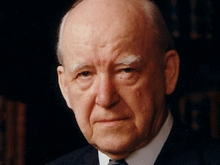
Posted in encouragement, spurgeon

Spurgeon on Hopefulness amid Apostasy

Charles Spurgeon on hopefulness in the face of general apostasy, heresies, and false doctrines. The entire piece is worth reading.

~~~~~~~~~~~~~~~~~~~~~~~~

As for myself, I am often sadly tossed about because of the heresies and false doctrines of this present age. It grieves me to the heart to see the lack of spirituality among ministers and of holiness among professing Christians. It cuts me to the quick to see the utter rubbish and poison which is preached instead of Christianity. At times it looks as if all things were going wrong! The men to whom one looked as pillars, forsake the faith, and the staunchest give way for the sake of peace. We are apt to cry, “What will become of us?”

But if God is our refuge and strength, we need not be afraid, even amid general apostasy! While God lives, Truth is in the ascendant. I remember years ago meeting with that blessed servant of God, the late Earl of Shaftesbury. He was at Mentone with a dying daughter and he happened, that day, to be very much downcast, as, indeed, I have frequently seen him and as, I am sorry to confess, he has also frequently seen me. That day he was particularly cast down about the general state of society. He thought that the powers of darkness in this country were having it all their own way and that, before long, the worst elements of society would gain power and trample out all virtue.

Looking up into his face, I said to him, “And is God dead? Do you believe that while God lives the devil will conquer Him?” He smiled and we walked along by the Mediterranean communing together in a far more hopeful tone. The Lord lives and blessed be my Rock! As long as the Lord lives, our hope also lives! Gospel Truth will yet prevail! We shall live to see the old faith to the front again! The Church, like Noah’s dove, will come back to her rest and bring something with her which shall prophesy eternal peace.

Posted in bible, christian life, mothers, spurgeon

The importance of Mothers

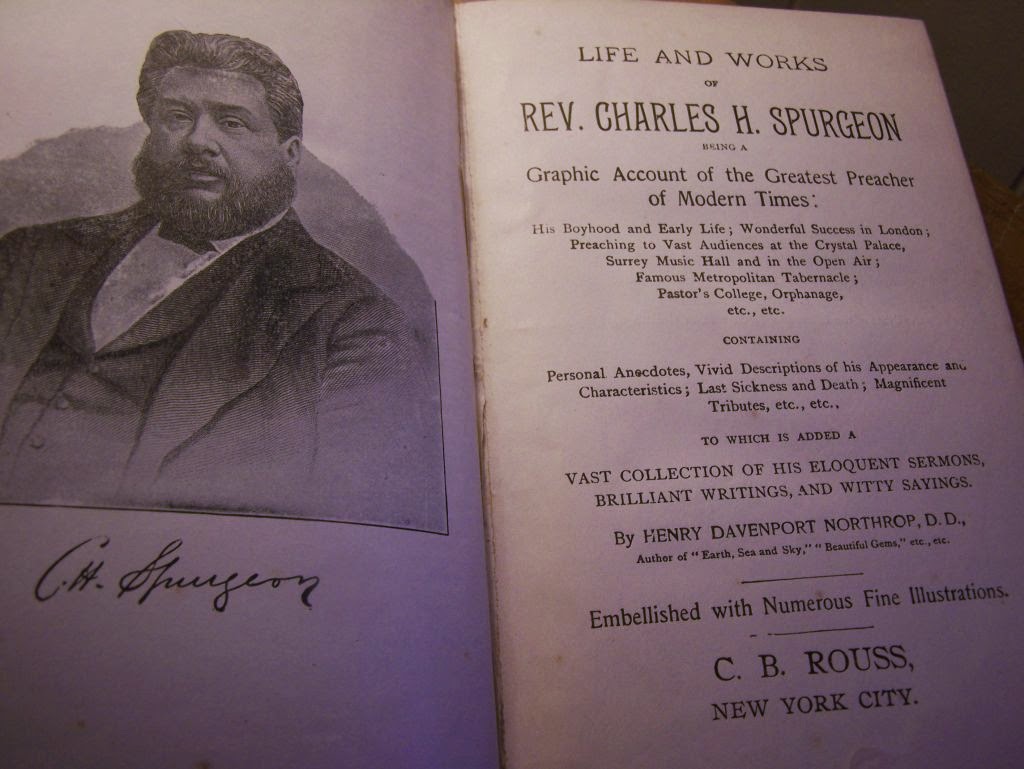
I mentioned in a post a earlier today that I’d received a pile of books, one of them being the “Life and Works of Rev. Charles H. Spurgeon” (Memorial Edition), January 1, 1892. It is a biography of Charles Spurgeon, the famous preacher of the late 1800s.

In endeavoring to illustrate to the reader the influences of Spurgeon, it is noted that his great-grandfather, grandfather, and father were all preachers. The life and works of these respected men was much detailed, and used as an important illustration of the influence onto Spurgeon the son.

However, the mother is not left out. She is an important influence also. It was written of Charles Spurgeon’s father and mother,

“Both Mr and Mrs Spurgeon made great sacrifices of personal comfort to give good education to their children, and the children were taught the habits of thrift and self-denial. The care thus bestowed on their training when young has been to the parents a source of much satisfaction; the good results of that care are manifested in the happy home lives of their children. When, at some future period, the historian of the Metropolitan Tabernacle and of the Stockwell Orphanage is considering the primary cause of those great enterprises, the care which Mrs Spurgeon bestowed on the early training of her family must be counted as valuable auxiliary in preparing the way for such exemplary conduct.”

In addition, of Mrs Spurgeon solely, we read the following: (and please note Mrs Spurgeon bore 17 children, with nine of them dying when they were babies and she raised 8, all while her husband was often gone for long periods traveling the preaching circuit.)

Household Nurture

As the children were growing up, the father, like many professional and public men, feared his frequent absence from home would interfere with the religious education of the little ones. But happily for him he had a true helpmeet to cooperate with him in this important work, and happy for those children they had a noble mother who lived for them, and sought to build them up in true Christian character. Nor had she lived unrewarded for her pains. Hear the good man speak thus of his wife:

“I had been from home a great deal, trying to build up weak congregations, and I felt that I was neglecting the training of my own children while I was toiling for the good of others. I returned home with these feelings. I opened the door and I was surprised to find none of the children about the hall. Going quietly upstairs, I heard my wife’s voice. She was engaged in prayer with the children. I heard her pray for them one by one by name. She came to Charles and specially prayed for him, for he was of high spirit and daring temper. I listened till she had ended her prayer, and I felt and said, ‘Lord, I will go on with Thy work. The children will be cared for.”

Thank You Lord for Godly mothers! Thank You for Godly fathers!

Posted in blackaby, books, hybels, reading, spurgeon

(Updated) A pile of books, oldies and I hope goodies!

Update at bottom

A year ago, our pastor resigned/was fired for having discovered that he’d spent years in serial plagiarism. The deacons and staff were cleaning out his office this week (because it looks like God may just now have sent the man He wishes us to have lead us) and there was a stack of books left over on the old pastor’s shelves. The staff put them on the bench with a “free” sign. One of the men saved aside a book for me. I was bowled over with delight. Here it is:

This book was published in 1892 just after Charles Haddon Spurgeon, AKA “The Prince of Preachers” had died in Menton France.

I’ve read about 50 pages so far and it is charming, well-written, and of course, glowing (being in the height of grief over the loss of the word’s foremost preacher at the time).

Other books that were set aside for me include some I’m very much looking forward to reading, such as–

W. Eugene Sallee: Christ’s Ambassador, a biography written by Sallee’s wife. They both were missionaries in China in the very early 1900s. I have high hopes for this book- it should prove very interesting. I hope I’m not let down… It is the book I’ll read next.

Life and Sayings of Sam P. Jones: A Minister of the Gospel, a famous Georgia preacher of some note who preached in the late 1800s. Wikipedia says Jones “was one of the most celebrated revivalists of his day, at the close of the 19th century. Famous for his wry wit and masterful story-telling, he is credited as a principal influence on Will Rogers.

Home of the Bible: What I Saw and Heard in Palestine (1895), by Marion Harland, AKA Virginia Terhune, a prolific American writer. She lived from 1830 to 1922, and was still writing at age 90 even though she had gone blind. This book was her travelogue, having made an expedition to determine for herself to see what God was doing in the original Christian lands with the peoples there.

Up Among the Ice-floes (1890) by James MacDonald Oxley. I always love me a good old Arctic expedition book.

I also received biblical non-fiction and reference books-

The Second Coming of Christ by Len Broughton, (1902)

Jewish Tales by Leopold Von Sacher Masoch (1894)

The Revelation: Verse by verse study by Oliver B. Green (1963)

Exposition of Ecclesiastes by H. C. Leupold (1952)

Arnold’s Practical Sunday School Lesson Commentary (1926)

The Church of God at Corinth: verse by verse commentary on 1 & 2 by Corinthians John R. Rice (1973)

These three came together in a little case: they seem kind of elementary but will be useful as a quick guide, and also of course to give away to someone who needs something a little elementary when the time comes to give it away!

  • Who’s Who in the Bible by Dietrich Gruen (2011)
  • Bible Almanac Anna Trimiew
  • Bible Facts: People, Places, Events David M Howard Jr.

The Discipling Pastor beat me to the commentaries but I’m thrilled he got some good ones. He offered to let me see what he got, already tucked away in the back of his car, but I declined because I knew it would lead to the sin of me coveting!!

I was just saying to myself, “Self, you’ve given away a good many books lately, I wish I had some more. The shelves are looking mighty thin.” So thank you Lord, for your provision. I’m delighted to have been graciously re-stocked, and just in time for school ending next week. I will actually have time and energy to read. Read. Read. Read. Read. Read. Read….

Sometimes there are simple things that tell the story. For example, the old pastor had books like the life of Spurgeon and other solid books from AW Pink, John R. Rice, and the like, but also alongside those old venerable standards were Purpose Driven stuff from Rick Warren, Max Lucado, Bill Hybels, and Henry Blackaby on ‘how to hear God’s voice’. The solid and practical and expositional had over time, been relegated to the back of his book shelf and at the forefront were books illustrating his heart and his penchant for the mystical, emotional, purpose driven leaven that eventually clouded his judgment and polluted his heart. It was shortly after that his massive sin was uncovered: serial lies from the pulpit in the holy name of Christ. And his bookshelf was a graphic display of his sad decline into apostasy.

If a bookshelf told your story, what story would it tell?

~~~~~~~~~~~~~~~~~~~~~~~~~~~~~~~~

A couple of days after this essay was published, Pastor John MacArthur tweeted out a link to a three minute chat called “The Christian Bokshelf”. In it, Pastor MacArthur mentions the kinds of books he likes to read (Commentaries, theology, biogrpahies, with occasional other historical books thrown in, like The Athenian Navy, Salt, and the Great Influenza).

He goes on to explain what publisher to look for (“Banner of Truth) and urges CHristians to buy books and fill their bookshelves with solid kinds of books like these. Enjoy

//player.vimeo.com/video/93187462
Truth for Today | The Christian Library from Grace Community Church on Vimeo.

Posted in galatians, good, spurgeon

Do not grow weary in the doing good

And let us not grow weary of doing good, for in due season we will reap, if we do not give up.” (Galatians 6:9)

These days are getting more and more evil. A Christian in an area like ours, the Southern United states, is so far spared the persecution many are experiencing abroad, praise the Lord. However, attitudes toward Christians from secular people are shifting rapidly even here in the so-called ‘bible belt.’ Though we are not persecuted from the outside, many local churches are dying from the inside.

Just as Britain is grappling with the reality that they are a post-Christian nation, a clear look at the US will show that we are too.

Apostasy is rising, which means that people who have called themselves Christians are behaving less and less like our Master and more and more like the world.

I used to think that discernment ministries, such as the ministry the Spirit gave me to perform online and in the real world, was the hardest. I was wrong to think so. Plus, I was in error. It is hard for everybody. I’m nobody special.

The tendency is to excuse themselves because at some time or other they have been victimized.~Charles Spurgeon
For example, I was talking with a sister in the faith who serves in a helps ministry. She has been given a strong desire to serve. Even when people who call themselves Christian ask for help from churches where a sweet women like my sister serves, the seekers of help often display the worst of human attitudes; entitlement, greed, laziness, ingratitude, and anger.

Paul warned Timothy to:

“understand this, that in the last days there will come times of difficulty. For people will be lovers of self, lovers of money, proud, arrogant, abusive, disobedient to their parents, ungrateful, unholy, heartless, unappeasable, slanderous, without self-control, brutal, not loving good, treacherous, reckless, swollen with conceit, lovers of pleasure rather than lovers of God, having the appearance of godliness, but denying its power. Avoid such people.” (2 Timothy 3:1-5)

“Having the appearance of godliness”…Christians who look like they are Christians aren’t really, but will at some point be found to never have known the Lord. (Matthew 7:21-23). This is one of the saddest verses in the entire bible, to me.

Weary traveler by eharsee. reuse allowed

Discernment ministries arise within a church and online when a person has been spiritually gifted with a supernatural ability to distinguish between the spirit of truth and the spirit of error, between holiness and evil. It comes from 1 Corinthians 12:10.

Because it is getting toward the end of the end of the age (we have been in the end of the age since Jesus ascended (1 John 2:18), there are a good many people who succumb to tickled ears, heaping up teachers for themselves, and won’t endure sound doctrine. As I read on Challies’ website, not that they don’t know what sound teaching is, but that they WON’T ENDURE it.

People still refuse to accept such and such is a false teacher, or that a particular doctrine is aberrant, or an activity founded on a scripture is actually a twisted use of that scripture…. Discernment is seen as something unnecessary to a vibrant Christian life. So many people display an attitude of “let’s just agree Jesus is the only thing we need to agree on and leave the rest to God. But that’s not all there is, and still the gift of discernment isn’t adhered to much.

Back to the Galatians verse, Charles Spurgeon said in his exhortation about not being weary in the doing good, as related to teaching Sunday School

“It is true, my Brothers and Sisters, that you are not to save yourselves by doing good. Your motive is not selfish, but because you are saved already, you desire to manifest the power of gratitude and to prove to all the world that those who receive a free salvation are the very men who most cheerfully labor to please God and to bring glory to His name. O you who are debtors to infinite mercy, “Be not weary in doing good.” …

Now, secondly, it appears from the text that in your service YOU WILL MEET WITH EVILS common to Christian workers of all descriptions. You will especially be liable to weariness and faintness. Take the first word as it stands in our version—you will be tempted to grow weary.  …

Do you not think that, at times, our getting lax in Christian work arises from our being very low in Grace? As a rule, you cannot get out of a man that which is not in him. You cannot go forth, yourself, to your class and do your work vigorously if you have lost inward vigor. You cannot minister before the Lord with the unction of the Holy One if that unction is not upon you. If you are not living near to God and in the power of God, then the power of God will not go forth through you to the children in y our care! Therefore I think we should judge, when we become discontented and down-hearted, that we are out of sorts spiritually. Let us say to ourselves, “Come, my Soul! What ails you? This faint heart is a sign that you are out of health. Go to the Great Physician and obtain from Him a tonic which shall brace you! Come, play the man! Have none of these whims! Away with your idleness! The reaping time will come, therefore thrust in the plow.”  

By Benson Kua from Toronto, Canada. Wiki commons

“Sometimes, too—I am ashamed to mention it—I have heard of teachers becoming weary from lack of being appreciated. Their work has not been sufficiently noticed by the pastor and praised by the superintendent. Sufficient notice has not been taken of them and their class by their fellow teachers. I will not say much about this cause of faintness because it is so small an affair that it is quite below a Christian. Appreciation! Do we expect it in this world? The Jewish nation despised and rejected their King and even if we were as holy as the Lord Jesus we might still fail to be rightly judged and properly esteemed. What does it matter? If God accepts us, we need not be dismayed though all should pass us by. 

Perhaps, however, the work itself may suggest to us a little more excuse for being weary. It is hard work to sow on the highway and amidst the thorns—hard work to be casting good seed upon the rock, year after year. Well, if I had done so for many years and was enabled by the Holy Spirit, I would say to myself, “I shall not give up my work because I have not yet received a recompense in it. I perceive that in the Lord’s parable three sowings did not succeed and yet the one piece of good ground paid for all! Perhaps I have gone through my three unsuccessful sowings and now is my time to enjoy my fourth, in which the seed will fall upon good ground.”

Spurgeon always has a good word. In addition, the Good Book says to

Do all things without grumbling or disputing, that you may be blameless and innocent, children of God without blemish in the midst of a crooked and twisted generation, among whom you shine as lights in the world, (Philippians 2:14-15)

Spurgeon again,

“If there are a hundred reasons for giving up your work of faith, there are 50,000 for going on with it! Though there are many arguments for fainting, there are far more arguments for persevering. Though we might be weary and do sometimes feel so, let us wait upon the Lord and renew our strength and we shall mount up with wings as eagles, forget our weariness and be strong in the Lord and in the power of His might!” 

————————————-

Methodist Church Organist has been playing every Sunday for 73 years

Posted in fearing the Lord, holy fear, spurgeon

The fear of the LORD is clean

The title is from Psalm 19 verse 9. It has an intrinsic beauty and a comprehensible truth that is evident but hard for puny man to describe. However, Spurgeon did.

I’ll post it in context. Psalm 19:7-9;

7The law of the Lord is perfect,
reviving the soul;
the testimony of the Lord is sure,
making wise the simple;
8the precepts of the Lord are right,
rejoicing the heart;
the commandment of the Lord is pure,
enlightening the eyes;
9the fear of the Lord is clean,
enduring forever;
the rules of the Lord are true,
and righteous altogether.

Spurgeon wrote,

“The fear of the Lord is clean.” The doctrine of truth is here described by its spiritual effect, viz., inward piety, or the fear of the Lord; this is clean in itself, and cleanses out the love of sin, sanctifying the heart in which it reigns. Mr. Godly-fear is never satisfied till every street, lane, and alley, yea, and every house and every corner of the town of Mansoul is clean rid of the Diablolonians who lurk therein. “Enduring for ever.” Filth brings decay, but cleanness is the great foe of corruption. The grace of God in the heart being a pure principle, is also an abiding and incorruptible principle, which may be crushed for a time, but cannot be utterly destroyed.”

Posted in asclepius, brazen serpent, moses, spurgeon

How satan twisted Moses’ brazen serpent into the rod of Asclepius

In around 1400 BC, Moses led the Israelites into the wilderness. They had been released from slavery by powerful acts of God, including ten plagues and parting the Red Sea to aid their escape. (Exodus 1-15)

However, it wasn’t long before the Israelites grumbled. They were sick of manna, they wanted an easier life, they wanted to get there. (Numbers 20:4). So they grumbled some more, against Moses and against God.

God heard their grumbles.

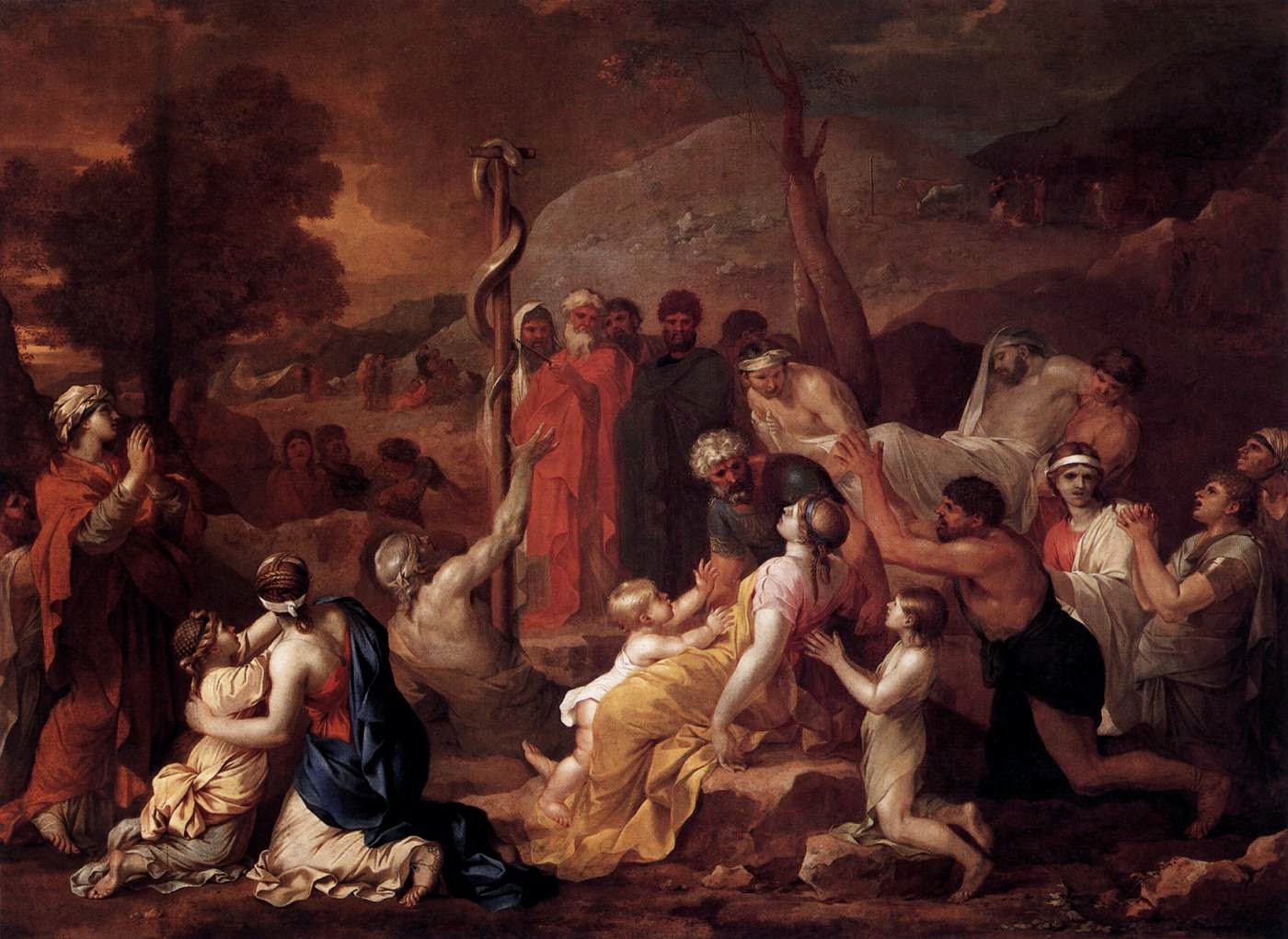
Wiki CC, Moses and the Brazen Serpent, Sebastien Bourdon

“Then the Lord sent fiery serpents among the people, and they bit the people, so that many people of Israel died. And the people came to Moses and said, “We have sinned, for we have spoken against the Lord and against you. Pray to the Lord, that he take away the serpents from us.” So Moses prayed for the people. And the Lord said to Moses, “Make a fiery serpent and set it on a pole, and everyone who is bitten, when he sees it, shall live.” So Moses made a bronze serpent and set it on a pole. And if a serpent bit anyone, he would look at the bronze serpent and live.” (Numbers 21:6-9)

As with everything, God had a purpose. Jesus explained it to Nicodemus.

And as Moses lifted up the serpent in the wilderness, so must the Son of Man be lifted up, that whoever believes in him may have eternal life.” (John 3:14-15).

And as with everything, satan is busy, too.

By 700BC or so, satan had encouraged the Israelites to worship the brazen idol, rather than worship the God to whom it pointed. Worse, the Israelites had actually named the idol! They called it ‘Neshutan.’

He removed the high places and broke the pillars and cut down the Asherah. And he broke in pieces the bronze serpent that Moses had made, for until those days the people of Israel had made offerings to it (it was called Nehushtan).” 2 Kings 18:4

Hezekiah removed them, which pleased God, but it was too late. The idol worship had taken root. By ~460 BC Cult of Asclepius was well underway. To the Greeks, and then the Romans and finally Europe, Asclepius became a god, represented as a man holding a rod with a serpent twined around it. This is actually the pale memory of the actual brazen serpent curled around the rod Moses held, where the Israelites were to look at the serpent lifted high and be healed, but since the world hates the bible, the truth, and anything to do with Jesus, they easily fell into the myth that it was Asclepius. He became known as “Asclepius savior,” in a brazen attempt to remove the righteous place of Jesus in saving souls and bodies.

The serpentine cross sculpture (the Brazen Serpent Monument)
atop Mount Nebo was created by Italian artist Giovanni Fantoni.
It is symbolic of the bronze serpent created by Moses in the wilderness
(Numbers 21:4–9) and the cross upon which
Jesus was crucified (John 3:14). Wiki CC photo

The Greek Island of Kos seems to be ground zero for the largest of the Asclepius cult followers, with a close second a HUGE cult temple at Pergamum. Remember the church at Pergamum? That Pergamum.

After 400BC or so, Asclepion complexes sprung up, monumental temples with a sanctuary, spas, baths, dormitories, patient intake, and a hall of records. (I.e., scrolls and marble carvings of patients who were served and who got healed)

Hippocrates is said to have received his medical training at an asclepieion on the isle of Kos. Prior to becoming the personal physician to the Roman Emperor Marcus Aurelius, Galen treated and studied at the famed asclepieion at Pergamon. (source)

Asclepius was HUGE in the ancient world. Worship of Asclepius was such a part of Greek life that the false god remained on the Greek currency until 2001 when Greek money was replaced by the Euro.

The reverse side of the 10,000-drachma note, showing Asklepios,
the god of healing, with his symbol, the staff with a serpent coiled around it.
Beside him, a healing scene depicts a sacred snake licking or biting
the right shoulder of a sleeping patient. Source

Here is how the Asclepius worship went:

In honor of Asclepius, a particular type of non-venomous snake was often used in healing rituals, and these snakes – the Aesculapian Snakes – crawled around freely on the floor in dormitories where the sick and injured slept. These snakes were introduced at the founding of each new temple of Asclepius throughout the classical world. From about 300 BC onwards, the cult of Asclepius grew very popular and pilgrims flocked to his healing temples (Asclepieia) to be cured of their ills. Ritual purification would be followed by offerings or sacrifices to the god (according to means), and the supplicant would then spend the night in the holiest part of the sanctuary – the abaton (or adyton). Any dreams or visions would be reported to a priest who would prescribe the appropriate therapy by a process of interpretation.

Satan sure can twist things, and make them seem complicated and spiritual at the same time. The Gospel is so simple. Moses’ directions from God as to what to do to be saved was so simple. (Look at the lifted up serpent and be saved).

I mentioned Hippocrates a moment ago. You might know the Hippocratic Oath, an oath doctors swear by to this day. It first appeared around 400BC at the time the Asclepius worship got going. The Oath is one of the oldest binding documents in history. In its original version it read:

I swear by Apollo, the healer, Asclepius, Hygieia, and Panacea, and I take to witness all the gods, all the goddesses, to keep according to my ability and my judgment, the following Oath and agreement:

Today, the modified Hippocratic oath doesn’t make the speaker swear allegiance to Asclepius but instead worships science.

I swear to fulfill, to the best of my ability and judgment, this covenant: I will respect the hard-won scientific gains of those physicians in whose steps I walk, and gladly share such knowledge as is mine with those who are to follow.

I also said a moment ago that Pergamon is mentioned in the bible, and that the largest mainland Asclepion hospital-temple sanctuaries were located there. It is thought by bible scholars that one reason Jesus called the city of Pergamos in the book of Revelation, the place where satan’s throne is located, could be because of the Asclepion there. Wikipedia describes the main feature of Pergamos:

Three kilometers south of the Acropolis at , down in the valley, there was the Sanctuary of Asclepius (also known as the Asclepium), the god of healing. The Ascelpium was approached along a 820 meter colonnaded sacred way. In this place people with health problems could bathe in the water of the sacred spring, and in the patients’ dreams Asclepius would appear in a vision to tell them how to cure their illness. Archeology has found lots of gifts and dedications that people would make afterwards, such as small terracotta body parts, no doubt representing what had been healed. Galen, the most famous doctor in the ancient Roman Empire and personal physician of Emperor Marcus Aurelius, worked in the Ascelpium for many years. Notable extant structures in the Asclepium include:

  • the Roman theater
  • the North Stoa
  • the South Stoa
  • the Temple of Asclepius
  • a circular treatment center (sometimes known as the Temple of Telesphorus)
  • a healing spring
  • an underground passageway
  • a library
  • the Via Tecta (or the Sacred Way, which is a colonnaded street leading to the sanctuary) and
  • a propylon
Wikipedia Rod of Asclepius

“I know where you dwell, where Satan’s throne is...” (Revelation 2:13)

Rod of Asclepius is used by 62% of all medical professionals. As I drove home today, thinking about how to write this blog essay, I pass by my town’s fire department and an emergency vehicle was parked in the lot. The side of the vehicle was emblazoned with this symbol.

We are grateful to know Jesus, the only deity one should look to in order to be saved. Asclepius might be everywhere today, but Jesus soon will return to erase all the false gods, AND worshiped rightly.

Charles Spurgeon preached about the rod of Moses in a sermon called “The Mysteries of the Brazen Serpent“. He said,

But the picture blackens; we must have deeper shades to paint it. Behold the people after they were bitten! Can you picture their writhings and contortions when the poison of the serpent had infected their veins? We are told by the old writers that these serpents when they bit caused vehement heat, so that there was a pain throughout the body, as if a hot iron had been sent along the veins. Those who had been bitten had a great thirst; they drank incessantly, and still cried for water to quench the burnings within. It was a hot fire which was lit in the fountain, and which ran through every nerve and every sinew of the man; they were racked in pain, and died in most fearful convulsions.

Now my brethren, we cannot say that sin instantly produces such an effect as this upon the men who are the subjects of it; but we do affirm, that, let sin alone, and it will develop itself in miseries far more extreme than ever the bite of the serpent could have caused. …

And now comes THE REMEDY. The remedy of the bitten Israelites was a brazen serpent; and the remedy for sinners is Christ crucified. 

But remember, that much as those who heard of the brazen serpent might have despised it, yet there was no other means of cure. And, now hear me for one moment, while I tell the whole story of salvation. Men, brethren, and fathers, we are born of a sinful generation, and we have ourselves increased our guilt, for us there is no hope; do what we may, we cannot save ourselves.

“Could our zeal no respite know,
Could our tears for ever flow,
All for sin could not atone.”

But brethren, Christ Jesus, God’s eternal Son, came into this world, and was born of the virgin Mary, he lived a doleful life of misery, and at last he died a death accompanied by unutterable pangs—that was the punishment of the sins of those who, as penitents, come to Christ. If you this day so repent, and put your trust in Jesus, you have in your trust and repentance a sure proof that Christ was punished for you.

Posted in bible, challies, commentaries, discernment, macarthur, matthew henry, spurgeon, teaching

Sayings and mottos that sound pious but aren’t. #2: "I don’t use commentaries because they’re men’s wisdom. I only use God’s Word when I study."

Part 1 of the series, Sayings and mottos that sound pious but aren’t. #1: “Let Go and Let God”
Part 3 of the series “I’m too humble to think that I could ever know what the Bible really means”
Part 4 of the series  Pray Big Because We Have a Big God
Part 5 of the series He’s so heavenly minded he’s no earthly good

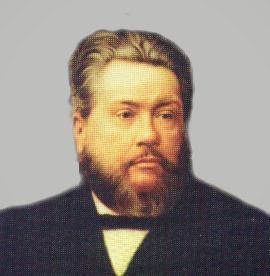
Spurgeon

Some sayings sound legitimate on their surface. They sound pious. They sound biblical. Like this one: “Cleanliness is next to Godliness”. Only problem is, that one isn’t in the bible. At all.

It is sometimes hard to tell what truly is Christian and what merely sounds Christian. Charles Spurgeon wisely said, “Discernment is not a matter of simply telling the difference between right and wrong; rather it is telling the difference between right and almost right.” So what is right, and what is almost right (AKA ‘wrong’) about the following sayings which have become such cliches?

Some of these mottoes are:

  1. “Let go and let God”
  2. “I don’t use commentaries because they’re men’s wisdom. I only use God’s Word when I study.”
  3. “We can’t know for certain what the bible means, I’m not that smart”
  4. “Pray big because we have a big God.”
  5. “He’s so heavenly minded he’s no earthly good”

In part 1 we looked at “Let go and let God.” Now let’s look at ,

“I don’t use commentaries because they’re men’s wisdom. I only use God’s Word when I study.”

“It has been the fashion of late years to speak against the use of commentaries…A respectable acquaintance with the opinions of the giants of the past, might have saved many an erratic thinker from wild interpretations and outrageous inferences.”
CH Spurgeon
Beth Moore says this a lot. It sounds like she’s being diligent and pious, doesn’t it? The phrase actually has a legitimate root. It’s called biblicism. GotQuestions defines biblicism as “Biblicism: a high regard for and obedience to the Bible as the ultimate authority” and this is a good thing.

However, many people take biblicism to an unintended end by rejecting all supportive works recognized as legitimately helpful by the Christian historical record.

It is less than pious to reject the wisdom of the faithful men God has raised up for our learning. God took time to mold men, justify them, install the Spirit in them, educate them, and empower them for good works. When we say “I don’t need commentaries” what we’re saying is that though we believe we have all the power necessary to learn all we need from the bible, (and we do, by the Spirit) it means we also totally reject God’s work in these men. It’s like saying, “I don’t need to listen to my pastor’s sermons because they are a man’s wisdom. I only need God’s Word” and then cover your ears in the pew and go la la la the entire sermon.

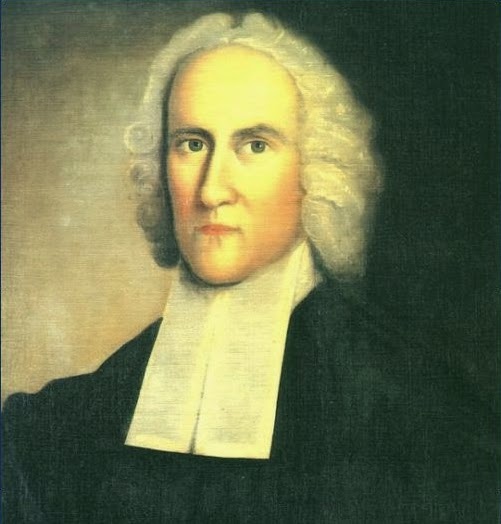
Jonathan Edwards

Who doesn’t need to read Jonathan Edwards’ sermon Sinners in the Hands of an Angry God? Who isn’t blessed in reading SPurgeon’s sermon on God’s Providence? Who doesn’t need to listen to Martyn Lloyd-Jones’ sermon series on the Great Biblical Doctrines? Who can’t use a Matthew Henry or a John MacArthur commentary? Do the people who make this impious claim really understand what they are saying? More to the point, do they realize what they leave themselves open to? Solid biblical and theological scholarship that comes from seminaries and universities or from church fathers obviously in the Spirit (such as Spurgeon who never went to college OR seminary) who remain adherent to God’s word, is teaching that actually guards us against heresy and helps us to remember of the hard lessons of church and martyrdom history.

It seems odd, that certain men who talk so much of what the Holy Spirit reveals to themselves, should think so little of what he has revealed to others. ~Charles Spurgeon

In almost every book or Bible study since Breaking Free, when Moore began to depart from the bible, Moore relates experiences of direct revelation from God or conversations with God. This is what will tend to happen as one rejects solid teaching supplements, begins to slack off in personal study, and fall into the trap of mystical intuition. We need as much help as we can get to remain on the right side of sound doctrine. (Titus 2:1)

“The best commentators are those who have written upon only one book. Few men can comment eminently well upon the whole Bible.” Charles SpurgeonAnd there are also a few logical facts to consider…

In and of ourselves, we aren’t the end of all wisdom about God’s Word. So sometimes we need a little help. That’s what commentaries are for, to help us understand the Bible better. Now, of course studying the bible alone is preferable. It is THE starting point. But it shouldn’t be the only method. Be discerning. But don’t neglect the historical wealth of God’s work in good men.

Martin Luther

In this issue of the student magazine, The Encourager, the author William J. Brown wrote, “To say the written wisdom of Spurgeon, Whitefield, Wesley, Calvin, Luther, Augustine and others have no bearing on our lives shows a bit of arrogance on our part. All we have left of these men is what they wrote. Their pastoral voices cry from the pages of ink-stained books. These men were wise (in many ways much wiser in their times than we are in ours.) We need to listen to these men and the things they desire to teach us about God’s Word.

One caution: Do not allow commentaries, sermons, books, or other notes to dictate to you about what the bible says and means. Begin with the Word of God itself and allow the Spirit room to work in illuminating it to your mind.

Here are some resources for you:

John MacArthur essay: How to Enjoy Bible Study

Kay Arthur’s study “Titus…Living with Integrity in a Hostile Culture” begins with an explanation about

Kay Arthur

inductive bible study- what it means and how to do it. [note: link is to .pdf]

How to Use Bible Commentaries

In keeping with Spurgeon’s exhortation that the best commentaries are ones where the author focused his heart, mind and attention on one book, the standout which comes to mind is Dr Martyn Lloyd-Jones’ exposition on Romans. As The Banner of Truth explains, “All over the world in the most diverse situations are to be found Christian men and women who owe an incalculable debt to the ministry of Dr. D. Martyn Lloyd-Jones who for thirty years was the minister of Westminster Chapel, London. His longest series of expositions was this 14 volume set of Romans, the greatest of New Testament Epistles.”

Martyn Lloyd-Jones sermons on Romans (free)
Martyn Lloyd-Jones commentary on Romans, 14-volume set for purchase

Pastor & book reviewer Tim Challies often makes recommendations on good commentaries. This link leads you to his page titled Best Commentaries on Each Book of the Bible

Wiki Commons, Amish housewife

To be sure, we strike a delicate balance between relying on the Spirit to illuminate the scriptures to us and consuming work the Spirit previously did in other men. We acknowledge that while He is all-sufficient for leading us into all truth (John 6:13), He is always working (John 5:17) and His work includes illuminating the meaning of scripture in others, too, who wrote it down for us.

Ultimately, the important thing is to actually read the bible. One may be surprised at how few people actually read it. I understand lives are busy. There’s a tendency to rely on one’s intuition, or at the other extreme, other people’s commentaries. Reading the bible is hard. Moms are busy, Dads are tired. Satan wants us to set daily reading aside ‘just for today.’ Soon you realize it has been two months.

When you begin, sometimes the text itself is hard to read. I just finished 1 & 2 Kings, and man, it was rough going. I hardly understood anything. The history was unfamiliar to me, the names were difficult to read and pronounce, the list of kings was confusing. I wanted to revert to the Prophets so many times, texts I love! But it’s important to just keep reading. Next time I read something from 1 or 2 Kings, it will be a bit easier. I needed to break that trail.

And now for something completely different, I think I’ll read Galatians next.

I use commentaries after I read a text, Vines Expository Dictionary of New Testament Words, old and new maps (I love seeing where these things are taking place), natural histories (if animals are mentioned or if the topography is important to the story), a Lexicon, Strong’s concordance, parallel verses, and more. I want to understand as much as possible about the text after I read it.

For example, it was helpful to know a simple thing like when I read “A Psalm of Ascents” to hear Phil Johnson explain that when the Israelites had to go to Jerusalem for a feast, it was uphill all the way. So they sang these song as they ascended. I looked up the topography and now I can better hear their singing in my mind and feel the dust under their feet and their tired legs as they ascend. Or when Elijah fled Jezebel from Mt Carmel to Beersheba to Mt Horeb, to see where he ran to and how far it was on a map.

Rely on scripture as your authority to learn the word of God and His revealed nature, and use supporting texts to expand your understanding for context and historical meaning. Don’t be abusive with them but don’t be ashamed, either. But above all, read the bible.

Commons, Photo by Savio Sebastian
Posted in AA, discernment, macarthur, spurgeon

Sayings and mottos that sound pious but aren’t. #1: "Let Go and Let God"

#2: “I don’t use commentaries”

#3 “I’m too humble to think that I could ever know what the Bible really means”

#4: Pray Big Because We Have a Big God

#5: He’s so heavenly minded he’s no earthly good.

Jesus took issue with the Pharisees and Scribes because they had become whitewashed tombs. (Matthew 23:27). This means that they were sick with sin on the inside and were only doing external things that hid their sin but did not address it. They were dead inside but performing rituals as if that would bring them alive. Their rituals had no meaning, and as Solomon would say, they were only striving after wind. (Ecclesiastes 1:14).

We do the same things today, but in slightly different ways. Just as the Pharisees were making long prayers as a show of piety for the sake of those who would hear them, (Matthew 6:5), people say things today that sound pious but aren’t. These sayings are just as dead as a whitewashed tomb, and are only striving after wind.

However, these sayings sound legitimate on their surface. It is sometimes hard to tell what truly is Christian and what merely sounds Christian. Charles Spurgeon wisely said, “Discernment is not a matter of simply telling the difference between right and wrong; rather it is telling the difference between right and almost right.” So what is right and what is almost right (AKA ‘wrong’) about these sayings?

Some of these mottos are:

  1. “Let go and let God”
  2. I don’t use commentaries because they’re men’s wisdom. I only use God’s Word when I study.
  3. We can’t know for certain what the bible means, I’m not that smart”
  4. Pray big because we have a big God.”
  5. He’s so heavenly minded he’s no earthly good

In what will be a multi-part series, let’s look at the first one.

Source, labeled for reuse

. “Let go and let God.” In this pious-sounding saying, the person is trying to indicate that they submit to the sovereignty of God by letting everything go and allowing Him to roll circumstances over us as He will. However if we unpack that a bit we’ll see actually that ‘Let go and let God’ actually contradicts the bible. Here are two sources which speak to the subject, GotQuestions, and Ligonier Ministries.

GotQuestions: Are We Supposed to Let go and Let God?:
Let go and let God” is a phrase that cropped up some years ago and still enjoys some popularity today. Actually, the Bible never tells us to “let go and let God.” In fact, there are so many commandments about what we are to do that it completely contradicts the way most people interpret “let go and let God.” The popular idea of “letting go” is to adopt a sort of spiritual inertia wherein we do nothing, say nothing, feel nothing, and simply live allowing circumstances to roll over us however they may.

The Christian life, however, is a spiritual battle which the Bible exhorts us to prepare for and wage diligently. “Fight the good fight of faith” (1 Timothy 6:12); “Endure hardship…like a good soldier of Christ Jesus” (2 Timothy 2:3); “Put on the full armor of God so that you can take your stand against the devil’s schemes” (Ephesians 6:11). Letting go in the sense of sitting back and watching events unfold however they may is not biblical.

Having said that, though, we have to understand that the things we are to do, we do by the power of God and not on our own steam. The truth is that working at “letting go” is just as much as an effort-filled work as anything else we try to do for God and not nearly as easy to do as some things.

So true! If it was that easy to ‘let go’ our sin, we would have done it! If it was that easy to ‘let go’ our worry, we’d be all set! If it was that simple as to let go our our will, we wouldn’t need God! “Letting go” is just as difficult as hanging on. Submit, yes. But even that is a daily struggle we’re told to perform as we pick up our cross (Matthew 16:24) and to pray daily for the will and help to submit. (Matthew 6:9-13).

Please go to the essay linked above to read the rest of the GotQuestions piece, which looks at the Christian life and see just exactly what we are to do.

Andrew Naselli at Ligonier Ministries explains, “Why “Let Go and Let God” Is a Bad Idea“. He says, in looking at the origin of this two-tiered theology from the 1875 Keswick theology movement, that letting go and letting God promotes in part,

–Perfectionism: It portrays a shallow and incomplete view of sin in the Christian life.
–Quietism: It tends to emphasize passivity, not activity.
–Pelagianism: It tends to portray the Christian’s free will as autonomously starting and stopping sanctification.
–Methodology: It tends to use superficial formulas for instantaneous sanctification.
–Impossibility: It tends to result in disillusionment and frustration for the “have-nots.”
–Spin: It tends to misinterpret personal experiences.

You can tell that Keswick theology has influenced people when you hear a Christian “testimony” like this: “I was saved when I was eight years old, and I surrendered to Christ when I was seventeen.”

By “saved,” they mean that Jesus became their Savior and that they became a Christian. By “surrendered,” they mean that they gave full control of their lives to Jesus as their Master, yielded to do whatever He wanted them to do, and “dedicated” themselves through surrender and faith. That two-tiered view of the Christian life is let-go-and-let-God theology.

I am aware that the motto ‘Let go and let God’ is a heavily used precept in Step 3 of the Alcoholics Anonymous recovery plan. AA has helped millions recover from their addiction to alcohol, and in this sense, AA is helpful. But don’t mistake AA’s Christianese for legitimate biblical principles. The language may sound pious but it collapses under scrutiny. Here is more information:

How does Alcoholics Anonymous compare with the Bible?

John MacArthur spoke to the ‘let go and let God’ phrase in his sermon on Ephesians 6, The Believer’s Armor.”

Do we just say, oh amen, and now I’m just going to surrender to that? I’m going to let go and let God, turn it all over to Jesus, do nothing? No, because you come to verse 5 immediately, and verse 5 says, “And beside this,” beside this, “you give all diligence,” get at it man, get with it, be diligent, be disciplined, “to add to your God given faith virtue; and to virtue, knowledge; And to knowledge, self-control; and to self-control, patience; and to patience, godliness; And to godliness, brotherly kindness; and to brotherly kindness, love.”

In other words, you get on the job. And beloved it is not as simple as walking an aisle and making an act of surrender. That is part of it in your life, there must be a, a commitment to the Lordship of Christ, there must be an acknowledging of His power and resource in your life, but it doesn’t end there- it begins there. In Romans 6 there is a yielding of yourselves, yes, there is a yielding of yourselves in Romans 6. But there is also a mortifying or a killing of the deeds of the flesh, So it isn’t all as simple as that and that’s why we make no hesitation for proclaiming the truths of Ephesians 6.
 
The fact remains, let go and let God does not align well with biblical standards of behavior for a Christian.

As Jim Vander Spek asked, “The problem with making “Let God” the focus is that it pushes the burden back on Him. If things don’t work out, will you blame Him?

Source. Labeled for reuse

~~~~~~~~~~~~~~~~~~~~~

Further Reading

What is wrong with the popular saying, “Let go and let God”?

Posted in bible, don green, lloyd-jones, macarthur, phil johnson, preachers, spurgeon, steven lawson, the word

Through the Years: Faithful men and praise to Jesus for raising them up

What is it? Answer at bottom

The above is the sermon list by year of sermons available in Dr. John MacArthur’s sermon archive.

On a recent blog essay, someone posted the following question to me:

Why do you worship MacArthur so much? You quote him on your blogs more than you do the Bible.-Jeff”

I answered this way:
“Great question! However I don’t worship Dr John MacArthur. I worship Jesus. You know that. I quote MacArthur a lot for several reasons:

–He is doctrinally correct on every issue I’ve heard him speak to. This means his interpretations are aligned with the bible. This is a precious rarity in these days,
–His entire body of work is online, and easily obtainable. Therefore he is easy to quote,
–He has addressed all of the relevant cultural issues, and these also are online and available, and once again therefore easily quotable.

I also often quote GotQuestions, for the same reasons, and Christian Apologetics and Research Ministry. I’d quote Phil Johnson just as often as I do MacArthur but his sermons are not transcribed as MacArthur’s are. And as a side note, he said a couple of years ago that the same lady has been his transcriber for over 40 years. What a blessing to the faith these people are! We all benefit.

I have quoted in the past Jonathan Edwards, but his language is further away from ours, being almost 300 years old. Same with Charles Spurgeon and Matthew Henry. But I still quote them on occasion as well.

If you came across a doctrinally correct, easily obtainable body of work freely given to the body of Christ from a persevering man of faith, why would you NOT want to use it as much as possible? That is what it is there for.”

My response got me thinking about how grateful I am for the good men and pastors God has raised up. I was thunderstruck by Jonathan Edwards’ sermon “Sinners in the Hands of an Angry God“. I have an excerpt of it which I carry constantly in my bible. I occasionally re-read it in its entirety to myself aloud so I can remember and value the feeling of gratitude I have that Jesus saved me from His wrath. The sermon is almost 300 years old, but God carefully preserved it for us so that we can be edified these many generations later.

I was deeply moved by Charles’ Spurgeon’s sermon on God’s Providence. His proposal that the cherubs of the wheels within wheels could be part of the machinery of God’s providence as it works out in our lives was completely amazing to me. I often re-read that sermon to gain further insights that the Spirit will have me learn.

But it was with the advent of technology that we are blessed with being able to hear these preachers as they preach. Many of the later Martyn Lloyd-Jones’s sermons were taped and put onto more current media. John MacArthur’s first sermon at Grace Community Church in 1969 was cassette-taped and transcribed and so have all the rest ever since.

These men are good expositors. The Lord raised them up for the benefit of the church and the edification of souls. When Charles Spurgeon was actively preaching, his sermons were re-printed in the newspaper. He was endlessly quoted. His magazine Sword and Trowel enjoyed a high circulation. Thousands came to hear him in the Tabernacle and the tens of thousands read his sermons each week.

When Spurgeon died, in January 1892, London south of the Thames went into mourning. Sixty thousand people came to pay homage during the three days his body lay in state at the Metropolitan Tabernacle. A funeral parade two miles long followed his hearse from the Tabernacle to the cemetery at Upper Norwood. One hundred thousand people stood along the way, flags flew at half-mast, shops and pubs were closed. It was a remarkable demonstration of affection and respect, even in an era when people were scrupulous in observing the rituals that accompanied death.” (source)

Yet would anyone in those more Godly times peevishly complain that a person was sourcing Spurgeon’s material too much? Worshiping him? I doubt it. “Stop reading his sermon every Monday! You do that too much!” It’s laughable.

I respect the men who came before us and the men whom God raises up today. Their commentaries, books, and sermons are for the benefit of the church members and ultimately are to glorify Him. It’s been true ever since this verse was spoken,

I will raise up for myself a faithful priest, who shall do according to what is in my heart and in my mind. And I will build him a sure house, and he shall go in and out before my anointed forever.” (1 Samuel 2:35)

God did that and continues to do that until He raised up Jesus, the final High Priest and the Priest forever, bless His holy name. After the cross, back here on earth, God still raises up men to teach and preach to us, because God’s word goes out forever and will never pass away (Matthew 24:25).
Preach the word; be ready in season and out of season; reprove, rebuke, and exhort, with complete patience and teaching.” (2 Timothy 4:2)

The apostasy is growing at an exponential rate. My job as an encourager and a discerner is to point people to credible men whose teaching is solid. We are long past the tipping point where most preaching is solid. Nowadays, most preaching is NOT solid. We have gone from being a ‘God-fearing’ nation, to a God-mocking nation.

Therefore when as Bereans you compare to the bible the links I offer you, I believe in every case you will find it matches. Therefore I am unashamed to continue to quote Dr MacArthur, and I refuse to be browbeaten into seeking other men for people to read who may not be as solid simply to cater to whims and wishes of those who are peeved for some reason.

Now, if someone wants a wider array of Godly preachers to select from, I can accommodate. I listed below my favorites, men to whom I give my respect as elders of the faith and to whom I daily and weekly listen or read. They are all expositors.

What is expositional preaching?
Expositional preaching at its simplest is preaching that is focused on explaining the meaning of Scripture in its historical and grammatical context. Expositional preaching involves explaining what the Bible says to a contemporary audience that is likely unfamiliar with the cultural and historical settings that the passage was written in. The word exposition simply means to “a setting forth or explanation.” So expositional preaching is the explanation of Scripture that is based upon diligent study and careful exegesis of a passage. It is the primary call of the pastor or preacher as we see in 2 Timothy 4:2: “Preach the word! Be ready in season and out of season. Convince, rebuke, exhort, with all longsuffering and teaching.”

These first three men have been or are in service to God in a mighty, MIGHTY way, and what a ministry! I praise and thank Jesus for raising them up!

John F. MacArthur, 3,000+ sermons. He has been preaching at Grace Community Church for 45 years. (b. 1939- ). Bio. Sermon archive. I especially enjoyed his preaching series from Genesis

Charles Haddon Spurgeon, (1834-1892). 3,561 sermons. AKA The Prince of Preachers, preached at New Park Street and then Metropolitan Tabernacle for 37 years. (Bio). Sermons. My current favorite is the sermon on God’s Providence.

Lloyd-Jones

Martyn Lloyd-Jones, (1899 – 1 March 1981). 1591 sermons available. He preached for 41 years at Westminster Chapel in London. (Bio). Sermon archive here. My current favorite are the Great Biblical Doctrines, especially, The Fall.

Also:

I also enjoy Dr Steven Lawson. I just listened to a wonderful sermon of his from Philippians, about daily Christian living. Sermon archive here. (Bio).

Phil Johnson is a personal favorite of mine. I’d quote him as often as I do MacArthur but his sermons haven’t been transcribed until lately. Pastor Johnson preaches at the GraceLife Pulpit of John MacArthur’s church. I enjoy the sermons from Dr. MacArthur, but I personally identify with Johnson. My current favorite sermon of his recently has been What Creation Reveals. (Bio and other Bio)

Don Green

Finally, though certainly not least, is Pastor Don Green. He preaches at Truth Community Fellowship. (Bio). My current favorite sermon of his is called “What is Sin?

I hope these links and the thousands upon thousands of wonderfully exposited sermons available to you will edify you in a great way. May the spotless name of Jesus be glorified through their ministry and by us as we receive His word into our hearts and minds from these men. 

Posted in encouragement, new man, old man, romans, spurgeon

The Old Man Crucified

Knowing this, that our old man is crucified with Him.” 
Romans 6:6.

EPrata photo

Take heart. Even as your old man is dying the New Man is blooming in his place.

EVERY New Man is two men; every Believer in Christ is what he was, and not what he was: the old nature, and the New Nature exist at the same time in each regenerate individual. … The old nature, then, is what the Apostle means. The lusts of the flesh, the carnal desires, the affections of our estranged hearts, these he calls the old man . I am much mistaken if every Christian does not find this old man still troubling him. He has a New Nature which was implanted in him, as through the Spirit’s sacred working he was led to hate sin, and believe in Jesus to his soul’s Salvation; it is the heavenly offspring of the New Birth, the pure and holy result of Regeneration. Th at New Nature cannot sin—it is as pure as the God from whom it cam e, and like the spark which seeks the sun, it aspires always after the Holy God from whom it came. Its longings and its tendencies are always towards Holiness, and God, and it utterly hates and loathes that which is evil, so that finding itself brought into cont act with the old nature, it sighs and cries as the Apostle tells us, “O wretched man that I am, who shall deliver me from the body of this death?”

Do you see yonder blood-washed host? Without spot or wrinkle they stand before the Throne of God! Ask them whether they had to fight with sin, and they will tell you that they were men of like passions with us; ask them how they overcame sin—you glori ous ones, out of what armory did you take your weapons, and who girded you for the sacred conflict?— You must get to Christ, nearer to Christ, and you will overcome sin.”

~Charles Spurgeon
excerpt from “The Old Man Crucified”
No. 882 April 11, 1869, at the Metropolitan Tabernacle

Knowing this, that our old man is crucified with Him.” Romans 6:6.