Posted in encouragement, flax, jesus, robe of righteousness

"It was granted her to clothe herself with fine linen, bright and pure”: All About Linen

and out of the sanctuary came the seven angels with the seven plagues, clothed in pure, bright linen, with golden sashes around their chests. (Revelation 15:6)

Flax, Linum usitatissimum, Wikipedia

Linen as a garment and flax workers as a commerce occurs throughout the bible. Did you ever wonder about linen? After all, we are going to be given linen to wear when we are finally glorified. The angels that appeared to men on earth were noted as wearing linen. What about this linen we read so much of?

It starts in Egypt. Linen is made from flax, an easily grown plant but one that is very difficult to extract the linen fibers from. Apparently, it was worth it. The ancient Egyptians called linen “woven moonlight”.

Flax working was a huge industry for agricultural workers along the banks of the Nile. It was a major, major industry in Egypt 4000-5000 years ago. There are even prophecies about the flax workers.

The workers in combed flax will be in despair, and the weavers of white cotton. (Isaiah 19:9)

Smith’s Bible Dictionary says of flax,

“cloth made from flax. Several different Hebrew words are rendered linen, which may denote different fabrics of linen or different modes of manufacture. Egypt was the great centre of the linen trade. Some linen, … a flax that grew on the banks of the Nile, was exceedingly soft and of dazzling whiteness. This linen has been sold for twice its weight in gold. Sir J.G. Wilkinson says of it, “The quality of the fine linen fully justifies all the praises of antiquity, and excites equal admiration at the present day, being to the touch comparable to silk, and not inferior in texture to our finest cambric.”

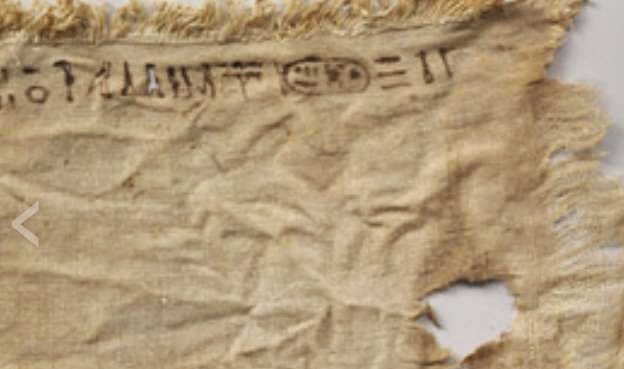
The Egyptians used it to wrap their mummies. The flax woven to soft linen was durable and so fine that when King Tut’s tomb was opened, the linen still looked fresh.

King Tut’s Linen. Source

In the bible, the finest of the woven linen was reserved for the priests.

When they enter the gates of the inner court, they are to wear linen clothes; they must not wear any woolen garment while ministering at the gates of the inner court or inside the temple.” (Ezekiel 44:17)

The International Standard Bible Encyclopedia says of fine linen,

Ancient Egypt was noted for its fine linen (Genesis 41:42 Isaiah 19:9). From it a large export trade was carried on with surrounding nations, including the Hebrews, who early learned the art of spinning from the Egyptians (Exodus 35:25) and continued to rely on them for the finest linen (Proverbs 7:16 Ezekiel 27:7). The culture of flax in Palestine probably antedated the conquest, for in Joshua 2:6 we read of the stalks of flax which Rahab had laid in order upon the roof. Among the Hebrews, as apparently among the Canaanites, the spinning and weaving of linen were carried on by the women (Proverbs 31:13, 19), among whom skill in this work was considered highly praiseworthy (Exodus 35:25). One family, the house of Ashbea, attained eminence as workers in linen (1 Chronicles 4:21 2 Chronicles 2:14).

Flax in the field

In religious services by others than priests, white linen was also preferred, as in the case of the infant Samuel (1 Samuel 2:18), the Levite singers in the temple (2 Chronicles 5:12), and even royal personages (2 Samuel 6:14 1 Chronicles 15:27). Accordingly, it was ascribed to angels (Ezekiel 9:2, 3, 11; Ezekiel 10:2, 6, 7 Daniel 10:5; Daniel 12:6, 7). Fine linen, white and pure, is the raiment assigned to the armies which are in heaven following Him who is called Faithful and True (Revelation 19:14). It is deemed a fitting symbol of the righteousness and purity of the saints (Revelation 19:8).

This site is excellent in recounting the history of flax, and linen-making, complete with a how-to.

Blue flowering flax

Linen is made from Flax

Linen is woven from the spun fibers of the flax plant, Linum usitatissimum. Flax grows wild in the region extending from Northern Africa to India and north to the Caucasus Mountains in Western Europe. Long before we lounged on sunny yacht decks on gauzy linen towels, prehistoric man was busy spinning these exceptionally-strong fibers into the simple thread that changed the world.

The Taming of the Flax

Intentional cultivation of the wild flax plant likely began sometime between 5,000-4,000 BCE in the regions of North Africa and the Fertile Crescent, and from the beginning, linen was holy.

In ancient Mesopotamian city-states like Babylon and Ur, linen fabric was rare and accounted for only 10% of textile production. While the flax plant is not difficult to grow and reaches maturity in about 100 days, it also leaches most of the nutrients from the soil such that the fields must be let lie fallow for several years after a harvest. The laborious process of linen-making then took an additional 130-150 work days. Because production was so labor-intensive, only members of the elite like priests and royal figures could afford clothing and other articles made of linen. Cuneiform sources tell of thrones and statues of deities draped in bolts of fine linen inside temples.

Across the Sinai Peninsula not too many years later, the fertile Nile river valley provided a much more agreeable ecology for flax cultivation. The annual flooding of the Nile brought alluvial deposits that replenished the nutrients in the soil that had been depleted by the flax plant. Coupled with the surplus of the same slave labor that built the pyramids, flax quickly became ancient Egypt’s number one non-foodstuffs crop.

An excellent wife who can find? She is far more precious than jewels. … She seeks wool and flax, and works with willing hands. (Proverbs 31:10, 13)

The armies of heaven were following him, riding on white horses and dressed in fine linen, white and clean. (Revelation 19:14)

Continuing with flax history,

Unlike the Mesopotamians, the Egyptians prized linen fabric for much more than its exclusiveness. Linen fabric is durable, lightweight and wicks moisture away from sweaty skin. Linen thus became the favored material for clothing under the scorching desert sun, from the coarse linen garb of the slaves to the intricately-woven finery of the high priests.

Linen is also resistant to insects and microbial growth, and has a smooth, lint-free surface. Egyptians were obsessed with hygiene, so for these qualities, linen was considered pure. The whiter the fabric, the purer Egyptians believed it to be. By far, the greatest demand for linen was for ritual purposes.

Priests were permitted to dress only in linen. “Chief Royal Bleacher” was an actual job title, though an unenviable one. Tomb paintings and models from across the region depict the repetitive process of washing the wet linen cloth, rubbing it with detergent, pounding it on a smooth stone with wooden clubs, rubbing the surface with balls of leather, rinsing, repeating, again and again; then finally laying it out to bleach dry in the hot sun.

In Revelation 18:12-13 robust trade from Babylon in luxuries is ongoing, including fine linens.

And the merchants of the earth weep and mourn for her, since no one buys their cargo anymore, 12cargo of gold, silver, jewels, pearls, fine linen, purple cloth, silk, scarlet cloth, all kinds of scented wood, all kinds of articles of ivory, all kinds of articles of costly wood, bronze, iron and marble…

So that is probably more than you wanted to know about linen. This link [ How Linen is Made: From Flax to Fabric ] describes the laborious process to make fine linen, and I recommend reading it. It is very interesting. But for the saints, we have to do nothing to be clothed in righteousness, for it was Jesus’ work on the cross that brought us to and through the cross of salvation where righteousness reigns. His righteousness is granted to us, energizes us, and empowers us to works of righteousness in His name.

It was granted her to clothe herself with fine linen, bright and pure”— for the fine linen is the righteous deeds of the saints.” (Revelation 19:8)

I will greatly rejoice in the LORD; my soul shall exult in my God, for he has clothed me with the garments of salvation; he has covered me with the robe of righteousness, as a bridegroom decks himself like a priest with a beautiful headdress, and as a bride adorns herself with her jewels. (Isaiah 61:10)

Robe of Righteousness, Lars Justinen


Posted in charles spurgeon, encouragement, phil johnson, providence, sermons

Preaching Divine Providence: A pair of timeless and wonderful sermons, one old and one new, to bookend your weekend

In 1857, Charles Haddon Spurgeon ascended the pulpit at New Park Street Chapel, Southwark, and delivered a wonderful sermon called God’s Providence.

Charles Spurgeon was an absolutely amazing pastor. His very life defines both submission, and workhorse. Of Spurgeon, Justin Taylor sums up Spurgeon’s prodigious output,

He often worked 18 hours a day. His collected sermons fill 63 volumes (the largest set by a single author in church history). He read six books a week and could recall their contents. He read through The Pilgrim’s Progress more than 100 times. 14,460 people were added to his church’s membership, and he did most of the membership interviews himself. He trained 900 men to the pastorate. He founded an orphanage, edited a magazine, produced more than 140 books, and is said to have received 500 letters a week to respond to. More than 25,000 copies of his sermons were printed each week. He often preached 10 times a week in various churches. He did all this while suffering from gout, rheumatism, and Bright’s disease—living only to the age of 57. And I think his wife was sick most of that time.

One of Spurgeon’s early sermons was called “God’s Providence.” Spurgeon set his reasoning forth at the beginning of his text.

I am constantly talking about providence in my preaching, and I thought it quite as well to devote a whole sermon to explain what I believe are God’s great wonder-working processes which we call Providence.

I love God’s providence because I love God’s sovereignty. The doctrine of Providence is a favorite doctrine of mine, as regular readers know. Providence of God is defined

The providence of God may be defined as His guardianship and care for His creatures and creation. Also, any manifestation of such care may be described as providence. “There is probably no point at which the Christian doctrine of God comes more into conflict with contemporary worldviews than in the matter of God’s providence. Providence means that God has not abandoned the world that he created, but rather works within that creation to manage all things according to the “immutable counsel of His own will” (Westminster Confession of Faith, V, i).

It’s a comfort to ponder how involved God is in the affairs of men, His care of the saved, and His working all things together for the good of those who love Him. (Romans 8:28).

In Spurgeon’s exposition of a passage from Ezekiel, he used the biblical remarkable imagery of the wheels within wheels and the cherubim who are unique and distinct from all other creatures to illustrate Providence.

The sermon was delivered in 1857 but published October 15th, 1908. Spurgeon opened with comforting words:

WHILE READING THE SCRIPTURES, we tried to hint at the practical benefits of the doctrine of Providence. We attempted to explain that portion of Scripture which teaches us to “take no thought for the morrow, for the morrow will take thought for the things of itself.” Our blessed Lord had there uttered very precious words to drive away our fears, to keep us from distrust and from distress, and to enable us so to rely upon Providence that we may say, he that feeds the ravens, and clothes the lilies, will never suffer me to famish nor to be naked.

He is a good God. Spurgeon’s sermons are a blessing and this one in particular is a favorite of mine. I hope you like it too.

~~~~~~~~~~~~~~~~~~~~~~~~~~

In October 2013, Pastor Phil Johnson delivered a sermon as part of the Strange Fire conference at John MacArthur’s Grace Community Church. It is called Providence IS Remarkable. The Conference was a direct rebuttal to the Charismatic movement, which is polluting the minds and hearts of Christians and false Christians all over the world. In this sermon, Johnson relates the true reasons for the miracles of times past and points to the miracle of today, God’s providence. In his sermon, Johnson explained:

Verse 29, “Are not two sparrows sold for a penny? And not one of them will fall to the ground, apart from your Father.” That doesn’t merely mean that God watches and observes that. It means without His expressed decree and permission, even a sparrow doesn’t die. But even the hairs of your head are all numbered. “Fear not, therefore, you are of more value than many sparrows. Really He gives them miraculous power and He tells them, “I’m sending you out in the midst of wolves, you’re going to be attacked,” and instead of saying use that power to silence your opposition, He says, “Just bear in mind God’s there and He’s involved with you.”

I cannot stress this enough. When the Lord wants to reassure the Apostles that Almighty God is directly and personally and lovingly involved in their experience, and not only in their triumphs and successes, but also in their trials and sufferings. Jesus doesn’t point them to the miracles. He doesn’t talk about dreams and visions, or other mystical phenomena. He doesn’t tell them to listen for a still small voice inside their own heads, and He certainly doesn’t tell them that their words have creative power, so, you know, when you encounter opposition, just go ahead and make a positive confession.

Instead, Jesus teaches them a truth we know as the doctrine of providence. He stresses the fact that God is intimately involved in all the details of our lives, even when we can’t consciously sense His presence, even when we don’t understand what He’s doing or why He’s doing it.

Thinking about providence from heaven is remarkable in that it reduces us to a puddle of love in knowing our Great God is intimately involved with His people. No remote, uncaring, or unaware sovereign is He, but a Shepherd actively caring for the most lowly of His lambs. It’s uplifting to ponder these things. (Philippians 4:8).

Here is the Grace To You video with transcript

Here is the stand-alone sermon on Youtube:

Whether old or new, there are sermons out there, and books, and essays, from men the Lord has raised up in truth to convict us, edify us, and comfort us. God’s word is uniquely worth pondering. He has left no generation alone and has always used His people as vessels for this work. And He always will, until the Day He calls us home and we are with Him personally!

Posted in encouragement, jonathan edwards, sermons, sinners in the hands of an angry god

Preaching divine wrath: A pair of timeless and wonderful sermons, one old and one new, to bookend your weekend

I have four favorite sermons. In thinking about them, I realized they were two pairs, one old and one modern. Each pair was of the same subject. Of course each of the two pairs of sermons are edifying. Let me share the first pair now, and the second pair tomorrow.

Your wickedness makes you as it were heavy as lead; …
and if God should let you go, you would immediately sink
and swiftly descend and plunge into the bottomless gulf,
…and all your righteousness, would have no more influence to uphold you
and keep you out of hell, than a spider’s web
would have to stop a falling rock. Sinners

On July 8th, 1741, pastor Jonathan Edwards ascended the pulpit and preached one of the most famous and convicting sermons in the last 270 years, “Sinners in the Hands of an Angry God“.

Edwards first preached an outline of it to his own congregation, then preached it fully as a guest pastor to the Enfield CT people. Sinners is part of the First Great Awakening.

The Spirit’s work in the First Great Awakening, unlike the Second Great Awakening which reached the unchurched and unconverted, was to shake complacent, church-going Christians to the core and revive their somnolent Christianity to one of fervor for personal holiness and prayer under a loving but wrathful eye of God.

First Great Awakening. Edwards’ use of vivid imagery combined with the powerful concepts of personal responsibility for sin in the face of a holy and sovereign God, crushed the hearts of listeners everywhere- because Edwards was asked to re-preach it often.

Edwards “is widely acknowledged to be America’s most important and original philosophical theologians,” and one of America’s greatest intellectuals. The only son in a family of eleven children, he entered Yale in September, 1716 when he was not yet thirteen and graduated four years later (1720) as valedictorian. He received his Masters three years later. (Source)

On July 8, 1741, in Enfield CT (where a small stone marker marks the spot) Edwards delivered this great, theologically convicting sermon. Though Puritan congregations were well used to fire and brimstone teaching and preaching, the fact of hell and wrath unquestioned, the Spirit’s desire to spark an awakening by using this gifted preacher and his powerful sermon with vivid imagery stands still today as one of the great sermons.

Here is JD Wetterling’s foreword to the sermon, a concise recounting of the sermon’s history and impact.

If you live at the turn of the third millennium after Christ walked this earth, you’ve probably never heard a sermon like this one. Jonathan Edwards was a renowned Puritan preacher, philosopher, theologian, and the leading intellectual figure of colonial America. He graduated from Yale at age 17, became a preacher like his father and grandfather, and is today considered one of the theological titans, along with Augustine, Luther and Calvin, of the Reformed faith.

SINNERS IN THE HANDS OF AN ANGRY GOD was delivered during a time called the Great Awakening, when revival was sweeping the continent and thousands were daily coming to Christ. Two-hundred-fifty years later it is generally recognized as the greatest sermon ever preached on the North American continent, and one of the prime manifestations of the Holy Spirit that brought about the first Great Awakening. While Edwards was equally fervent and eloquent in his preaching on all of God‟s infinite attributes, especially His love and mercy, he is remembered most for this powerful portrayal of God‟s infinite hatred of sin. Edwards was not considered a charismatic orator. He read his sermons, and when he looked up at all it was to stare at the rope for the church bell on the back wall. He knew that in order for lost sinners to come to Christ, their only hope for salvation, they must first be brought to the realization of the desperate state they were in and the horrendous eternal consequences of it. He brought many of his listeners to that realization this day with “remarkable effect.” Such was the power and passion of his words that moans and groans filled the sanctuary and people fainted as he spoke.

The “h-word” is used more often here than I have heard in 52 years of church attendance—it sets the standard for “fire and brimstone.” Jesus himself talked about hell more than anyone else in the Bible, and Edward‟s biblical support for his awesomely graphic metaphors is correct,complete and convicting, and elicits a sense of urgency rarely heard in church pulpits today.

To read in original form-
Sinners in the Hands of an Angry God

To hear on Youtube:
Sinners in the Hands of an Angry God

—————————————————————-

Edwards was concerned with sin, complacency, and the wrath of God. His biblical exposition used vivid imagery and is the hallmark woven through the entire sermon. In this next sermon from today’s times, the vivid imagery is also a powerful vehicle to bring the concepts of the devastation of sin to the listener.

The title of this sermon that has three times now brought me to a place of utter conviction, is called “Hacking Agag to Pieces.” Many people consider this sermon as MacArthur’s best. Its content is as vivid as the title, which is a literal event from 1 Samuel 15:33.

John MacArthur’s bio from Wikipedia,

John Fullerton MacArthur, Jr. (born June 19, 1939) is an American Calvinist, Baptist pastor and author known for his internationally syndicated radio program Grace to You. A popular author and conference speaker, he has served as the pastor-teacher of Grace Community Church in Sun Valley, California since February 9, 1969 and also currently serves as the president of The Master’s College in Newhall, California and The Master’s Seminary in Sun Valley, California. MacArthur has authored or edited more than 150 books.

MacArthur is … a strong proponent of expository preaching. He has been acknowledged by Christianity Today as one of the most influential preachers of his time, and was a frequent guest on Larry King Live as a representative of an evangelical Christian perspective.

The sermon is paired with the verses from 2 Corinthians 1:12, Romans 6:14-17, both about sin and how it devastates a life, unless it is hacked to pieces. MacArthur exposition of the context of Saul’s disobedience set the stage for the doctrinal explanations of the verses in Corinthians and Romans.

Both sermons bring to the listener how important it is not to give quarter to sin. We must not give the enemy any opportunity to weave his way into our hearts nor to nestle there. When we find sin in us we must deal with it immediately and vividly. Jonathan Edwards reminded his audience that it is only the pleasure of God that we draw the next breath. If you are unsaved, and your breath is taken away and death befalls you, an eternity of unutterable torment awaits. Those living a deluded life in false assurance of their salvation are at most risk.

And in MacArthur’s sermon, Agag lived a pagan, rebellious life before God and until the first sword stroke never thought it would be his last breath. As for Saul, God pronounced a curse upon him for his disobedience in not killing Agag in the first place, another sin before God, because disobedience is always sin.

Both sermons remind us that sin has profound and eternal consequences.

In tomorrow’s blog essay, a pair of sermons that uplift the listener, one old and one new. Prepare to be awed by His providence and His sovereignty.

The preaching of divine wrath serves as a black velvet backdrop that causes the diamond of God’s mercy to shine brighter than ten thousand suns. It is upon the dark canvas of divine wrath that the splendor of His saving grace most fully radiates. Preaching the wrath of God most brilliantly showcases His gracious mercy toward sinners. ~Steven J. Lawson

Posted in encouragement, power

Compare and Contrast: lightning bug vs. lightning

A false gospel is a lightning bug

The true Gospel is lightning

The false gospel only brings insect-sized light. Fleeting, not enough to empower, and limited scope.

The true Gospel is the Light, blazing and powerful, able to pierce the darkness even behind closed eyes that do not see. It is from heaven and able to light whole cities…or destroy them.

And now why do you wait? Rise and be baptized and wash away your sins, calling on his name.’ (Acts 22:16)

Posted in bible twisters, encouragement, joel osteen, scripture

The ignorant & unstable twist scriptures, but the wise persevere patiently

JAdams

A reader emailed me a longer comment regarding apostasy, the Osteens, and Facebook. Her thoughts were well presented and captured the unarticulated thoughts I’d been having regarding bible twisters. I asked her if I could post it as an essay. She said yes.

We are all born for a specific time and placed in the epochs to perform works for His glory. We are here now, at the end. True, mature Christians stand in amazement watching the collapse of the church. It is a hard epoch to be living in, but no harder than the first church, or the persecuted church, or the apathetic church, etc. But still, those who love Jesus fervently find it difficult to be surrounded by so much sin, so much satanic activity inside the church, so much hatred for our Savior.

Jesus has the victory, and the true church will never fail, but it has become so inflated over the years with false converts, false doctrine, and pastors who are in Adam and not in Christ, that all these outer layers are imploding to reveal what the bible has said all along: the true church is small. Few find it. (Matthew 7:14).

In 2 Peter 3:16, Peter is talking about something Apostle Paul had written. Peter says,

as he does in all his letters when he speaks in them of these matters. There are some things in them that are hard to understand, which the ignorant and unstable twist to their own destruction, as they do the other Scriptures.”

You note that Peter acknowledges that some of the doctrines Paul explains are hard to understand. Anyone who has read Romans knows this. The unstable and the ignorant will twist those hard verses. But you also notice something else. The ignorant and the unstable also twist the easy verses. To reverse things, those who twist the bible’s scriptures are ignorant and unstable.

[And a note to those who dismiss Paul’s epistles as contrary to Jesus’ doctrines, Peter confirms them as “Scriptures”.]

Enter the Osteens. Enter Linda Dodson, who is also grieved by these apostate days. Here is her comment, so well done I wanted to share it with you.

——————————-

Like you, though, I am grieved by the falling away of the church because of the lack of sound teaching and example by Christian leaders.

I thought you might be interested in this. I came across it when a Facebook friend commented on it. It was from Joel Osteen’s Facebook site on September 10:

Second Timothy 4 says, “Be calm, cool and steady, unflinchingly endure hardships.” If somebody says something derogatory about you, don’t even flinch. Don’t blink. Don’t let it faze you.

That did not sound right to me because I knew 2 Timothy 4 talks about people turning away from sound teaching to satisfy their itching ears. So I went to Biblegateway.com and read through that chapter several times trying to discern where Joel was getting that statement about someone saying derogatory things about you. I couldn’t find it.

So I went to Joel’s Facebook page and was saddened by the amount of comments, thanking Joel for “the word” and relating how they have people in their lives who are critical, bullying, etc.–comment after comment showing obvious lack of discernment.

I got angry how a ‘pastor’ can say whatever he wants, whether it’s biblically sound or not, and people just lap it up like it’s true. So I posted a comment of my own:

“I have read 2 Timothy three times through this morning and don’t see where this is said. Paul is telling Timothy to be strong because people don’t want to hear the truth of the gospel…not that people are saying derogatory things about Timothy. It’s not about Paul or Timothy, it’s about people’s resistance to and antagonism toward Jesus Christ and the gospel message.”

The irony of this has not been lost on me, and I was going to post something to that effect but figured no one would get it, so I stuck to speaking the truth in love.

God bless you,
Linda

—————————————-

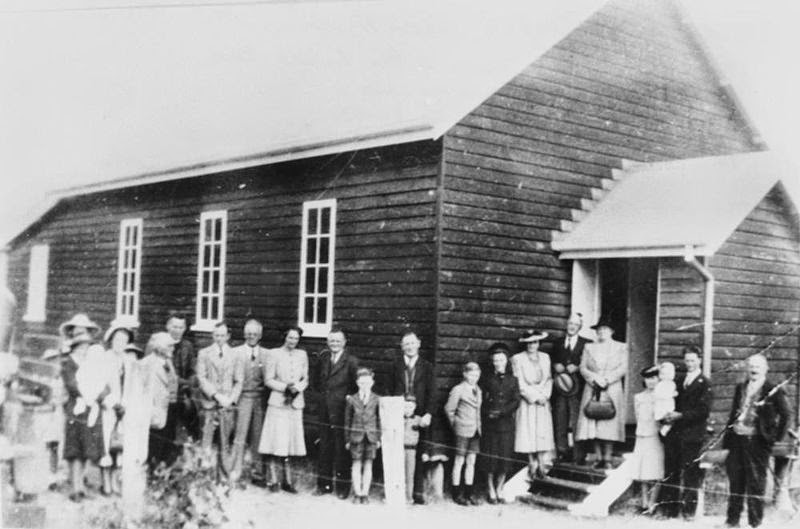
Presbyterian congregation, 1947

I thought the Osteen Facebook comment was a perfect example of how the ignorant twist Scriptures. I also thought that Linda’s response was pitch-perfect. I pray this is an encouragement to you in the following ways:

Though the unstable and ignorant speaking false things from the bible are all around us, even in pulpits, there are stable and wise Christians. They labor in the back pews in quiet conversations after Wednesday night bible study/prayer meeting. They have concerned coffee with a stumbling sister. They speak up on blogs, comment sections, Twitter and Facebook, often bearing the wrath of the ignorant upon their heads for their words. They fix cars in garages with brothers who need discipling and the truth spoken in love.

The truth spoken in love is not spoken in haste. You notice that the mature are Bereans, seeking to confirm what is said, or not said, or wrongly said, before offering their own words of correction or wisdom. The mature and the stable are not as numerous as the ignorant and the unstable, but such brethren are out there, proclaiming His word quietly, consistently, humbly. Just as there are many unknown pastors diligently dividing the word for the edification and encouragement of their flocks, so there are many sheep absorbing it and going forth in strength and determination on behalf of the spotless name of Christ.

Take heart. I did, after reading Linda’s comment. I was grateful she graciously let me post it. It humbled me and at the same time gave me encouragement. Fellow believers are out there. You’re not alone. The only good thing about all this is that the worse it gets, the closer we are to being redeemed for all time. Until then, we go forward every day,

being strengthened with all power according to his glorious might so that you may have great endurance and patience, and joyfully giving thanks to the Father, who has qualified you to share in the inheritance of the saints in the kingdom of light. (Colossians 1:11-12)

Posted in adam, death, encouragement, Eve, resurrection, sin

The First Mourning

Our earth is beautiful, but for all that, it is still cursed. I wonder what the Garden of Eden looked like! The place was created directly by God, and it was earth as He intended it to look.

He created Adam and then Eve, and the two were as humans intended to look.

For a while, a probably brief while, everything was perfect and in balance and harmony. Adam loved Eve, Eve loved Adam, they both loved God, the animals were friendly and submitted to man, who cared for them lovingly.

Then sin came,

Therefore, just as sin came into the world through one man, and death through sin, and so death spread to all men because all sinned— (Romans 5:12)

Eve sinned, then Adam. How did God feel? We know He feels. He takes delight, He is angry, He loves. I wonder if He mourned the eternally changed relationship He’d had with His humans, who no longer glorified Him. They destroyed the very purpose for which they were made. We know He cursed them (Genesis 3:16, 17). Perhaps the LORD mourned.

It wasn’t long after, Cain slew Abel. Cain was the first human to be born. Abel was the first human to die. Brothers, yet sin came between them and Cain killed Abel in a jealous fit. We follow what happened after that. Genesis 4 shows the conversation with Cain and God. The discovery of the murder. The penalty. And then we see Cain go off and our eyes travel down the biblical road to follow the story of sin and redemption as it is laid until its conclusion in Revelation.

But turn your eyes back to Abel for a moment. We do not know how it came about…but at some point Abel’s mother and father of all the living, Eve and Adam, must have discovered their son, laying dead on the ground, blood pooled around his head.

We know both of them were familiar with death. Their spiritual life died the moment they disobeyed (“surely you won’t die” the serpent lied in Genesis 3:4). They were familiar with death because God killed the first animal to make clothing out of its skin (the first sacrifice to cover them in their sin). We know they must have killed an animal themselves because they had to eat. The two humans who had never seen blood before grew to know it intimately once they sinned.

And then…the blood of their son. The bible does not record the discovery of Abel’s body, nor his burial (as far as I know). But perhaps the scene looked like this.

The First Mourning (Adam and Eve mourn the death of Abel); oil on canvas 1888 painting by William-Adolphe Bouguereau.


Oh, the searing pain of losing a son! A pain that would be replicated again and again through history as sin took its toll on a million mothers in epochs to come! A grief that the Father Himself would know soon enough!!

The first death was of a beloved son.

The last death was of a beloved Son.

Praise our Holy Savior for His death, for through Him we have life! Praise our Resurrected Savior for vanquishing sin!


Posted in encouragement, saul

Impatience can hinder our sanctification

Patience. (Pixabay, Public Domain)

The LORD was testing Saul. Saul failed the test. The situation was, the new King, Saul, was fighting the Philistines. The Philistines at that time were mighty, had lands all around Israel, displayed military fervor, and their well-trained men possessed metal armor and chariots. Israel didn’t have the metal-working capability that the Philistines had. The people were trembling, and some fled. Some hid in caves. Saul had been instructed by Prophet and former Judge, Samuel, to go and wait 7 days at Gilgal, where Samuel would come and offer the sacrifice before the battle.

He waited seven days, the time appointed by Samuel. But Samuel did not come to Gilgal, and the people were scattering from him. So Saul said, “Bring the burnt offering here to me, and the peace offerings.” And he offered the burnt offering. As soon as he had finished offering the burnt offering, behold, Samuel came. And Saul went out to meet him and greet him. Samuel said, “What have you done?” (21 Samuel 13:8-11a)

Saul broke the Law. He disobeyed God, because prophets were God’s spokesmen. As God said to Samuel earlier when the People wanted a King and not Samuel as Judge, “And the Lord told him: “Listen to all that the people are saying to you; it is not you they have rejected, but they have rejected me as their king.” (1 Samuel 8:7)

When you reject the LORD’s Prophet, you reject the LORD. (When you reject Jesus, you reject God- John 14:6)

In chapter 11 Saul is empowered by the Spirit. By chapter 13, Saul is acting in his own eyes, fearful and impatient. If patience is a mark of the Spirit’s fruit, then the opposite, impatience, would be a mark of the devil’s fruit. Saul began triumphantly, empowered by the spirit, faithful, obedient, and victorious. He ended faithless, afraid, and seeking wisdom from witches. (1 Samuel 28:7).

It is not wise to take a situation from the Old Testament and directly apply it to today, because there’s context, different covenants exist, and there are nuances that are not directly applicable. In this case, the Holy Spirit in the OT came upon men for periods of time, to perform certain purposes, (Exodus 31:3) or He came and stayed as long as people were faithful but withdrew if the faith waned or sin wasn’t addressed. (Psalm 51:11). Though Saul was briefly empowered by the Spirit (1 Samuel 11:6), in the OT, the Spirit could and did leave people, as He left Saul. In the NT under the present covenant, He remains in us, He cannot be taken away. We won’t lose our salvation.

However there are principles we can extract from Saul’s impatience, First, as Galatians says, patience is a fruit of the Spirit. It is a mark of maturity. We can see Saul’s impatience led him not only to break God’s law but to be immature when called to account. When Samuel asked, “What have you done?” Saul was full of excuses–

And Saul said, “When I saw that the people were scattering from me, and that you did not come within the days appointed, and that the Philistines had mustered at Michmash, I said, ‘Now the Philistines will come down against me at Gilgal, and I have not sought the favor of the Lord.’ So I forced myself, and offered the burnt offering.” And Samuel said to Saul, “You have done foolishly. You have not kept the command of the Lord your God, with which he commanded you…” (1 Samuel 13:11-13a)

Public Domain, Pixabay.

In other words, “But, but, but…” Saul was king, but he did not take it like a man. Compare to King David. After David sinned, Prophet Nathan rebuked King David. David immediately said,

“David said to Nathan, “I have sinned against the Lord.”” (2 Samuel 12:13)

Our patience must be practiced daily. It not only is a fruit of the Spirit, it keeps us in His will. It keeps us wise to see. Detecting false doctrine growing on the tree takes patience. (Matthew 7:16). If we pluck the fruit of the tree before it is ripe we are doing a disservice to ourselves, impugning the reputation of the alleged false teacher, and most of all blaspheme the Spirit, Who’s ripening the fruit. Who are we to be impatient?

Impatience is a mark of immaturity, and we would tend to make rash decisions and have a poor witness, as Saul went on to do two more times. And a poor witness puts a stumbling block before the weak ones.

The bible speaks to patience and impatience quite a bit.

Paul prayed the Colossians would have patience, which comes from strength. We need strength to be patient:

May you be strengthened with all power, according to his glorious might, for all endurance and patience with joy, (Colossians 1:11)

Love itself is patient!

Love is patient and kind; love does not envy or boast; it is not arrogant (1 Corinthians 13:4)

Patience brings endurance, and endurance brings you to the end.

Better is the end of a thing than its beginning, and the patient in spirit is better than the proud in spirit (Ecclesiastes 7:8)

Patience helps us finish well. Saul was impatient. He did not endure. He did not finish well.

James said,

You also, be patient. Establish your hearts, for the coming of the Lord is at hand. (James 5:8)

Patience!


Posted in angels, cherubim, encouragement

The cherubim are amazing creatures!

Demus, Otto. The Mosaic Decoration of San Marco, Venice.

Our Sunday School lesson regarding the worthiness of God to receive praise, had a part in it about the angels, and how the angels praise Him. I love studying about the angels, I’m fascinated with them. Especially the cherubim,God’s highest order of angel. The mysterious creatures, with eyes all over, and wheels and multiple wings…are simply amazing. I ended up studying more deeply from the lesson about these amazing creatures. Here is a very short study on cherubim, the different things I discovered. May reading this bless you as well, in knowing our God is simply the most worthy and intelligent, creative God possible! All superlatives go to Him!

~~~~~~~~~~~~~~~~~~The Cherubim~~~~~~~~~~~~~~~~~~

Ezekiel gives a startling and specific description of these creatures. I say ‘creatures’, because in Ezekiel 1:5 that is how the Prophet describes them. And again in Ezekiel 1:13, 14, 15, 19, 20, 21, 22. But in Ezekiel 10, another chapter given to a lengthy and amazing description of these beings, he calls them cherubim, beginning in verse 1.

Then I looked, and behold, on the expanse that was over the heads of the cherubim there appeared above them something like a sapphire, in appearance like a throne. And he said to the man clothed in linen, “Go in among the whirling wheels underneath the cherubim. Fill your hands with burning coals from between the cherubim, and scatter them over the city.” (Ezekiel 10:1-2)

And I looked, and behold, there were four wheels beside the cherubim, one beside each cherub, and the appearance of the wheels was like sparkling beryl. And as for their appearance, the four had the same likeness, as if a wheel were within a wheel. When they went, they went in any of their four directions without turning as they went, but in whatever direction the front wheel faced, the others followed without turning as they went. And their whole body, their rims, and their spokes, their wings, and the wheels were full of eyes all around—the wheels that the four of them had. As for the wheels, they were called in my hearing “the whirling wheels.” (Ezekiel 10:9-13)

John MacArthur describes the wheels as, “representing the power of God as He acts against sin.” Charles Spurgeon describes the wheels this way, “The machinery of heaven as Providence is enacted.”

It is interesting to note that the wheels act in unison, and from the context, we can understand they act instantly, also. When God commands, they act, perfectly in precision with each other as they perform the dance of Providence up and down, back and forth, between and above and below the throne.

Who is the Man in Linen? Most surmise it is Jesus, but it could be a high ranking angel. Linen was always given to high ranking people. It was used for priestly robes, and was so finely woven it was like silk. It was a quality garment! Luke 16:19 mentions it, as a luxury item. Do a study on linen one day, after all, we will be given fine linen robes when we get there.

And when he commanded the man clothed in linen, “Take fire from between the whirling wheels, from between the cherubim,” he went in and stood beside a wheel. And a cherub stretched out his hand from between the cherubim to the fire that was between the cherubim, and took some of it and put it into the hands of the man clothed in linen, who took it and went out. The cherubim appeared to have the form of a human hand under their wings. (Ezekiel 10:6-8)

In Isaiah 6:7 the seraphim used a burning coal from the altar to purify Isaiah, taking away his guilt.  In the above passage from Ezekiel, a cherubim took fire from between the wheels and gave it to the man to use to purify a city (through wrathful destruction). So much activity in heaven!

In the next two verses, one of God’s names is God of Israel that ‘dwellest between the cherubim’!

O LORD of hosts, God of Israel, that dwellest between the cherubim, thou art the God, even thou alone, of all the kingdoms of the earth: thou hast made heaven and earth. (Isaiah 37:16, KJV)

To the choirmaster: according to Lilies. A Testimony. Of Asaph, a Psalm. Give ear, O Shepherd of Israel, you who lead Joseph like a flock! You who are enthroned upon the cherubim, shine forth. (Psalm 80:1)

In this next one it is metaphorical (I think).

He rode on a cherub and flew; he came swiftly on the wings of the wind. (Psalm 18:10).

Pulpit Commentary says,

The imagery here transcends all experience, and scarcely admits of comment or explanation. God is represented as borne through the heavens, as he proceeds to execute his purposes, by the highest of his creatures, the cherubim.

The cherubim are active in performing God’s will and are at the highest of his hierarchy. Cherubim are represented as the angels with wings over the Mercy Seat, (Exodus 25:20), and on the decorative elements of the temple (1 Kings 6:32). For example, life sized versions were made of wood overlaid with gold. Twenty cubits was about 30 feet-

The wings of these cherubim extended twenty cubits. The cherubim stood on their feet, facing the nave.  (2 Chronicles 6:13)

And their likeness was also woven into the tapestry in the temple. (2 Chronicles 3:14)

They are first mentioned in the first book of the bible, Genesis.

He drove out the man, and at the east of the garden of Eden he placed the cherubim and a flaming sword that turned every way to guard the way to the tree of life. (Genesis 3:24)

And they are mentioned in the last book of the bible, Revelation.

And around the throne, on each side of the throne, are four living creatures, full of eyes in front and behind: (Revelation 4:6)

These amazing creatures are associated with God’s power, presence, and holiness. Isn’t it wonderfully humbling to think that we will be there one day, and see them, and join them in singing the praise He is so worthy of,

“Holy, holy, holy, is the Lord God Almighty,
who was and is and is to come!”
Posted in bible twisters, encouragement, plumb line, truth

Bible twisters and the plumb line

The corkscrew … bible twisters

Free vintage line drawings, from The Graphics Fairy

Paul also wrote to you according to the wisdom given him, as he does in all his letters when he speaks in them of these matters. There are some things in them that are hard to understand, which the ignorant and unstable twist to their own destruction, as they do the other Scriptures, (2 Peter 3:15b-16)

The plumb line…God’s word, straight and true

Christianblog.com

therefore thus says the Lord God, “Behold, I am the one who has laid as a foundation in Zion, a stone, a tested stone, a precious cornerstone, of a sure foundation: ‘Whoever believes will not be in haste.’ And I will make justice the line, and righteousness the plumb line; (Isaiah 28:16-17)

Are you a bible twister, or are you following Gods plumb line of truth? Are you following a bible twister, or do you submit to just and righteous teachers who follow God’s plumb line?

In this chaotic world full of man’s philosophies, I’m grateful to Jesus for His word, God’s plumb line of truth to follow, and to the Spirit for opening my mind to it. It does not matter that the line is narrow, all I need is His strength, and the width of my feet to follow it.

Posted in encouragement, hope, spurgeon

True hope: leave all thy concerns in the hand of a gracious God

The Graphics Fairy Free Vintage Art

I don’t know why this happens, but sometimes at night there is a refrain of a song rolling around in my head. Each time I awaken momentarily, it plays. Over and over. It isn’t necessarily a song I’ve heard recently either, and it’s not always a Christian song.

Last night it was Paul Simon’s “Mother and Child Reunion”. The refrain was

“But I would not give you false hope, on this strange and mournful day…”

I got to thinking about how fortunate I am to know REAL hope. There is no false hope, when one knows THE Hope, Jesus Christ. I will never again be plagued by false hope.

Before I was saved, I always had false hope. That was because I was either hoping for the wrong things, or I was looking for a ‘savior’ to hope in.

Now knowing Christ, I have true hope. It will never fail. It is sure. Jesus said He would never give us false hope, there was no lie in His mouth! We already benefit from the firstfruits of this Hope, for Jesus rose from the dead. Now, Jesus makes us alive when we were dead in our sins. I am alive, a part of the Living Hope, because of Jesus. We have hope of His power over sin.

Since God raised Jesus from the dead, our resurrection after bodily death is also sure. We have hope in His power over death. Charles Spurgeon’s Morning Devotional speaks to everlasting hope: (true hope!)

Pixabay: Public Domain
Charles Spurgeon
Hope on, hope ever:

“Casting all your care upon Him; for He careth for you.”—1 Peter 5:7.

It is a happy way of soothing sorrow when we can feel—”HE careth for me.” Christian! do not dishonour religion by always wearing a brow of care; come, cast your burden upon your Lord. You are staggering beneath a weight which your Father would not feel. What seems to you a crushing burden, would be to Him but as the small dust of the balance. Nothing is so sweet as to

“For God alone, O my soul, wait in silence,
for my hope is from him.” (Ps 62:5, ESV)

O child of suffering, be thou patient; God has not passed thee over in His providence. He who is the feeder of sparrows, will also furnish you with what you need. Sit not down in despair; hope on, hope ever. Take up the arms of faith against a sea of trouble, and your opposition shall yet end your distresses.

There is One who careth for you. His eye is fixed on you, His heart beats with pity for your woe, and his hand omnipotent shall yet bring you the needed help. The darkest cloud shall scatter itself in showers of mercy. The blackest gloom shall give place to the morning. He, if thou art one of His family, will bind up thy wounds, and heal thy broken heart.

Doubt not His grace because of thy tribulation, but believe that He loveth thee as much in seasons of trouble as in times of happiness. What a serene and quiet life might you lead if you would leave providing to the God of providence! With a little oil in the cruse, and a handful of meal in the barrel, Elijah outlived the famine, and you will do the same.

If God cares for you, why need you care too? Can you trust Him for your soul, and not for your body? He has never refused to bear your burdens, He has never fainted under their weight. Come, then, soul! have done with fretful care, and leave all thy concerns in the hand of a gracious God.