Posted in encouragement, Uncategorized

God is a gentleman … or is He?

A common rebuttal to the doctrine of God’s sovereignty in salvation by people who insist that man can “choose Jesus” is the statement,

“God is a gentleman and would never force Himself on anyone.”

This statement is supposed to support the notion that man can enact salvation for himself by ‘accepting Jesus’ or some such notion. God might make it available, enticing, even, but ultimately, we choose.

Not so.

I wrote about God’s sovereignty in salvation in 2015, rebutting the ‘God is a gentleman’ notion, here:

Is God a gentleman? The illusion of a Gentleman God

Today I want to look at other cases besides salvation where God is certainly not a ‘gentleman’ (a foolish statement anyway, because God is God and not man, even a gentle man).

So I ask the question, using reverse logic, if God is a gentleman and never forces someone to convert, then why is He not a gentleman in these situations?

The spirit:

So the God of Israel stirred up the spirit of Pul king of Assyria, the spirit of Tiglath-pileser king of Assyria, and he took them into exile, namely, the Reubenites, the Gadites, and the half-tribe of Manasseh, and brought them to Halah, Habor, Hara, and the river Gozan, to this day. (1 Chronicles 5:26).

The king’s heart is a stream of water in the hand of the LORD; he turns it wherever he will. (Proverbs 21:1).

The heart:

But the Lord hardened the heart of Pharaoh, and he did not listen to them, as the Lord had spoken to Moses. (Exodus 9:12).

for God has put it into their hearts to carry out his purpose by being of one mind and handing over their royal power to the beast, until the words of God are fulfilled. (Revelation 17:17).

The mind:

As Samuel was offering up the burnt offering, the Philistines drew near to attack Israel. But the LORD thundered with a mighty sound that day against the Philistines and threw them into confusion, and they were defeated before Israel. (1 Samuel 7:10).

God can and does intervene in man’s affairs. He governs man’s spirit, man’s mind, and man’s heart. He does so in man’s life, his salvation, and his death. God is God and there is no other.

I will extol you, my God and King,
and bless your name forever and ever.
2 Every day I will bless you
and praise your name forever and ever.
3 Great is the Lord, and greatly to be praised,
and his greatness is unsearchable.
Psalm 145:1-3

Posted in encouragement, Uncategorized

YHWH is my Banner

As you head to worship today, if you are reading this on a Sunday, raise your banner of the LORD before you and praise Him, exalt Him, and love Him. If you’re reading this on a weekday, raise your banner of the LORD before you and share His Light in your sphere by your words and deeds.

Chris Powers is an artist, animator, and Bible study writer who makes his products available for free. Please visit his page at fullofeyes.com, or support him on Patreon. Mr Powers is drawing an illustration to a verse per day. I will post them frequently, because they are beautiful, scriptural, and edifying. Visual theology at its beautiful best. Read below for artist’s explanation.

YHWH is my Banner

Mr Powers said:

Today’s verse picture is more of a visual word study (thus the inclusion of verse references within the picture, which I don’t typically do for these). You can take a look at the verses and how they intertwine below:
________

Notice the repeated Hebrew word for Banner/Signal (נס) in the following verses:

Exodus 17:15, “And Moses built an altar and called the name of it, ‘YHWH Is My Banner (נס)” – YHWH as נס

Numbers 21:8, “And YHWH said to Moses, ‘Make a fiery serpent and set it on a pole (נס), and everyone who is bitten, when he sees it, shall live.” – Serpent set on נס

Isaiah 11:10-12, “In that day the root of Jesse, who shall stand as a signal (נס)…[the Lord] will raise a signal (נס) for the nations and will assemble the banished of Israel…” – The Messiah as נס raised to gather the nations…

John 3:14-15, “…as Moses lifted up the serpent in the wilderness, so must the Son of Man be lifted up, that whoever believes in Him may have eternal life.”

John 3:14-15 unites the imagery of YHWH, the curse, the Messiah, and the beacon raised to gather the nations into one–the crucified Son…

Posted in encouragement, Uncategorized

Ode to moms: helpful links

I don’t have children of my own. Most women who keep blogs write about this important aspect of who they are in Christ, the role of Mom. Since I do not have children I would not presume to write about children or parenting or motherhood. I do teach children all day long and that’s been my main career in life, but that is not the same as parenting. However I know that many women read the blog, and may have parenting concerns.

I began teaching in 1983 and with a break for some years I took it back up 9 years ago. There has been a palpable decline in the family quality of childrens’ lives over the past 34 years since I began working with children and families through my career in education. I see the culture’s drastic effect on children, I see the fractured family’s effects on children. I cannot imagine being a parent in this day and age, fraught with the evils, false religions, liberal doctrines, and general chaos and trying to protect your child. I’d go insane with worry!

God cares deeply for children and intact families. How many Bible verses talk about protecting this most vulnerable demographic in society? Many! The orphans, the fatherless, or the children are spoken of in scores of verses throughout the Old Testament to the New.

See that you do not despise one of these little ones. For I tell you that their angels in heaven always see the face of my Father in heaven. (Matthew 18:10)

Religion that God our Father accepts as pure and faultless is this: to look after orphans and widows in their distress and to keep oneself from being polluted by the world. (James 1:27)

Do not take advantage of the widow or the fatherless. (Exodus 22:22)

So with that, here are some links I’ve seen last week regarding children, parenting, and the issues moms say moms face. I hope you find them beneficial. 🙂

Nancy Guthrie has some Divine Words for Desperate Parents

We can teach our child the Scriptures, but we can’t be the Holy Spirit in our child’s life. … But anyone who’s been a parent for long knows parenting requires a lot more than simply following the right steps to success. To raise a child toward godliness, we need much more than the good advice parenting experts have to offer. We need what only the Scriptures have to offer.

Jennifer at One Hired Late In the Day is entering her 18th year of parenting and has some thoughts about How Our Faith Influences Our Parenting

Rachel over at the Danielthree18 blog wrote a good piece today examining whether or not it is wise for Christian parents to send their kids to public school with the idea that they be salt and light to the unsaved. She has some excellent points and food for thought, so please be sure to click on this link and read her essay. Her post prompted me to examine again the decisions that my husband and I have made regarding our own children and their education. Parenting is one of the most important roles that God gives to us, and I know that I am not alone in having a deep concern for my children and whether or not I am making the right decisions for them and most importantly, pleasing the Lord in how I am raising them.

I have written before about shepherding the minds and hearts of our children. For today’s post, I thought I would expand on that a little bit and give you some insight into our strategy of Christian parenting.

My friend who is mom of an infant recommended this Christian Living book on Facebook, and it does look very good.

Mom Enough

Are you mom enough?

The cover of Time Magazine asked this haunting question in bold red letters that hung over the startling image of a young mother breastfeeding her four-year-old. When the issue hit newsstands it re-ignited a longstanding mommy war in American culture. But it turns out this was the wrong question, pointing in the wrong direction. Here is a higher and more essential question faced by mothers: Is God God enough?

This short book by eight women explores the daily trials and worries of motherhood. In the trenches, they have learned (and continue to learn) how to treasure God and depend on his all-sufficient grace. The paradox of this book is the secret power of godly mothering. Becoming mom enough comes as a result of answering the question, “Are you mom enough?” with a firm no.

Here’s Jen Oshman with the question, What if We Kept Doing Family Devotions after Advent?

But first, let me encourage you: no one’s family worship time is pretty everyday.  If your kids are poking one another with their toes and screaming out for justice, if they are picking their noses and looking at the ceiling fixture, or if they are rolling around on the floor and feigning interest, then you’re doing it right (all three of these things happened in our Advent reading time during one single evening this week).

I am on Pinterest, but I hate Pinterest. I find it awkward, clumsy, and useless (in the constant pinning and never actually getting TO the thing you want to cook/make/read/knit). I also think it is satan’s way of encouraging defeat in moms, by presenting a highly skewed picture of life that no one can really match up to. With that in mind, here’s a meme I found enjoyable this week:

Missionary to the cannibals in the New Hebrides, John G. Paton, revered his mother and father. He wrote how he learned to submit to the will and sovereignty of God through listening to his mother pray. His mother’s faith, her lifetime of devoting herself to the good of the family, and to prayer, along with his father’s teaching and faith, gave Paton his foundation and sustained him throughout terrible trials at the hands of the cannibalistic pagans he’d sailed across the world to serve.

How do you claim the promises of God for protection when your wife was equally faithful but, rather than being protected, died; and when the Gordons on Erromanga were equally trusting in those promises and were martyred? Paton had learned the answer to this question from listening to his mother pray, even before he leaned the theology that supports it. When the potato crop failed in Scotland, Mrs. Paton said to her children, “O my children, love your Heavenly Father, tell him in faith and prayer all your needs, and he will supply your wants so far as it shall be for your good and His glory” (p. 22) (source)

Moms, please know that I admire you and pray for you. Your job is one of the most important in the entire world.
Posted in encouragement, Uncategorized

At table: What the Table of the Showbread signifies

Our relationship with God is like a meal with Him at table.

From my Ligonier class ‘Understanding the Tabernacle’, we read,

We tend to appreciate a delicious meal enjoyed in the company of good friends. Such delight in a common meal should not surprise us, because the Lord in His Word describes many times in both the Old and New Testaments how our relationship to Him is like a meal we sit down to enjoy together with Him. In this lesson, Rev. Hyde explains to us the “bread of the presence” in the tabernacle and how it communicates to us God’s desire for intimate covenant fellowship with His people by way of presentation, preservation, and participation.

Here is the main verse where God tells Moses what and how to make the items for the tabernacle.

“You shall make a table of acacia wood. Two cubits shall be its length, a cubit its breadth, and a cubit and a half its height. You shall overlay it with pure gold and make a molding of gold around it. And you shall make a rim around it a handbreadth wide, and a molding of gold around the rim. And you shall make for it four rings of gold, and fasten the rings to the four corners at its four legs. Close to the frame the rings shall lie, as holders for the poles to carry the table. You shall make the poles of acacia wood, and overlay them with gold, and the table shall be carried with these. And you shall make its plates and dishes for incense, and its flagons and bowls with which to pour drink offerings; you shall make them of pure gold. And you shall set the bread of the Presence on the table before me regularly. (Exodus 25:23-30).

Did you ever wonder about this verse below…where the beginning part of the verse states that the Angel of the LORD (Jesus) encamps around those who fear Him, and then the verse goes into tasting and seeing that the LORD is good? What does a encampment have to do with tasting? If you remember that our relationship with the LORD is like eating with Him at table and enjoying a meal, the verse shows that you are enjoying intimate fellowship with Him even in the midst of enemies.

The angel of the LORD encamps around those who fear Him, And rescues them. O taste and see that the LORD is good; How blessed is the man who takes refuge in Him! (Psalm 34:7-8).

Especially in the midst of enemies! As David wrote:

You prepare a table before me in the presence of my enemies; you anoint my head with oil; my cup overflows. (Psalm 23:5).

If you read Exodus carefully you might notice a particular word that occurs often, it’s the word ‘regularly’. I underlined it in the verse above. The LORD regularly meets with His priests who represent the People. He makes regular visits with His people at table. Often, frequently, repeatedly. What a God we have, who regularly meets with His people to partake of intimate fellowship!

In the tabernacle, there was a table on which the priests would place the bread. The table had a raised crown molding around the edge. The description of the table reminded me of the table that was in my old living room growing up:

There was a lip around the edge of it. In the Tabernacle, the raised edge signified the following:

The table contained crown molding to keep the bread and utensils from falling. This prevented the bread from becoming defiled. This pictures the Lord’s preservation of His people. He who never slumbers ever keeps His children in the grip of His grace. The table permitted partaking in the bread, denoting the participation of God’s people with Him. Source: Ligonier Connect course Understanding the Tabernacle

On the last day, we will join the Lord in His presence and eat with Him and drink with Him.

I tell you I will not drink again of this fruit of the vine until that day when I drink it new with you in my Father’s kingdom. (Matthew 26:29).

And the angel said to me, “Write this: Blessed are those who are invited to the marriage supper of the Lamb.” And he said to me, “These are the true words of God.” (Revelation 19:9).

Blessed are those invited (called, elected) to participate with intimate fellowship in Him, our King, Priest, Friend, and Savior at His table!

Posted in encouragement, Uncategorized

Deuteronomy passage reveals a stupendous God!

Just bask in this wonderful passage. We can never extol the virtues and attributes of our God enough. He is so wonderful, holy, perfect, majestic! He revealed Himself through His word. What a gift.

Deuteronomy 4:32-40,

The Lord Alone Is God

32 “For ask now of the days that are past, which were before you, since the day that God created man on the earth, and ask from one end of heaven to the other, whether such a great thing as this has ever happened or was ever heard of. 33 Did any people ever hear the voice of a god speaking out of the midst of the fire, as you have heard, and still live? 34 Or has any god ever attempted to go and take a nation for himself from the midst of another nation, by trials, by signs, by wonders, and by war, by a mighty hand and an outstretched arm, and by great deeds of terror, all of which the Lord your God did for you in Egypt before your eyes? 35

To you it was shown, that you might know that the Lord is God; there is no other besides him. 36 Out of heaven he let you hear his voice, that he might discipline you. And on earth he let you see his great fire, and you heard his words out of the midst of the fire. 37 And because he loved your fathers and chose their offspring after them and brought you out of Egypt with his own presence, by his great power, 38 driving out before you nations greater and mightier than you, to bring you in, to give you their land for an inheritance, as it is this day, 39 know therefore today, and lay it to your heart, that the Lord is God in heaven above and on the earth beneath; there is no other.

There is no other God. Our God did all that, and He allows us to know Him! He meet with us at table, comforts us, gives us what we need, loves us. He is a great God, and there is no other.

Posted in encouragement, Uncategorized

What’s in your pocket? Lists? Or nails?

We are sinners. The Syro-Phoenician woman knew that. (Mark 7:26). The Tax Collector in the temple knew that. (Luke 18:13). Mary knew that. (Luke 1:46). We know we are sinners.

No one believes in Jesus Christ the savior unless they see a need in Him. Martyn Lloyd Jones, sermon Isaiah 1:10, Repentance and Salvation.

Before we are saved, we are blind to our sin. After the Lord graciously gives us the ability to see ourselves as we are, the scales having fallen off our eyes so to speak, (Acts 9:17-18), we repent of our sins. But that does not mean we stop sinning. We have the Power to resist sin thanks to the Holy Spirit in us, but we still sin. (Matthew 16:24). We will continue to sin until we are glorified.

Legalists like the Pharisees to whom Jesus contrasted the Tax Collector, believed they would attain heaven by their good works. This belief is not expired. People believe it to this day. If you watch street pastors Ray Comfort or Todd Friel, when they ask people on the street if they expect to get to heaven and how, the people always respond that they are a good person doing good things so surely they will go to heaven.

We ourselves are Jews by birth and not Gentile sinners; yet we know that a person is not justified by works of the law but through faith in Jesus Christ, so we also have believed in Christ Jesus, in order to be justified by faith in Christ and not by works of the law, because by works of the law no one will be justified. Are you so foolish? (Galatians 2:15-16)

After we are saved, however, we still have a tendency to give in to our to our sinful nature. We can easily start to believe satan’s propaganda that we earn God’s regard by doing good things, that we maintain our salvation by doing good works. Or we start to make lists of the things we must do to preserve our good name before the Lord. Paul addressed this in Galatians 3:3, asking rhetorically,

Having begun by the Spirit, are you now being perfected by the flesh?

John MacArthur said of the verse,

The notion that sinful, weak human nature could improve on the saving work of the Holy Spirit was ludicrous.

We should always remember that it is by grace through faith that we have been saved, not by works. After salvation, the good works that we do are an inevitable result of our gratitude for this great gift, and it is the proof of the existence of the new creature. But our works do not save us and they do not add to the preservation of our salvation. Martin Luther said,

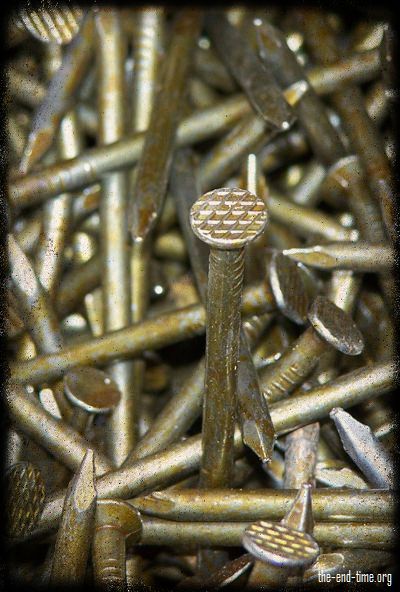
We all carry about in our pockets His very nails.

Erik Raymond at The Gospel Coalition succinctly said,

Legalists keep lists in their pockets, while Christians keep nails.

What’s in your pocket today? Lists? Or nails?

Posted in encouragement, Uncategorized

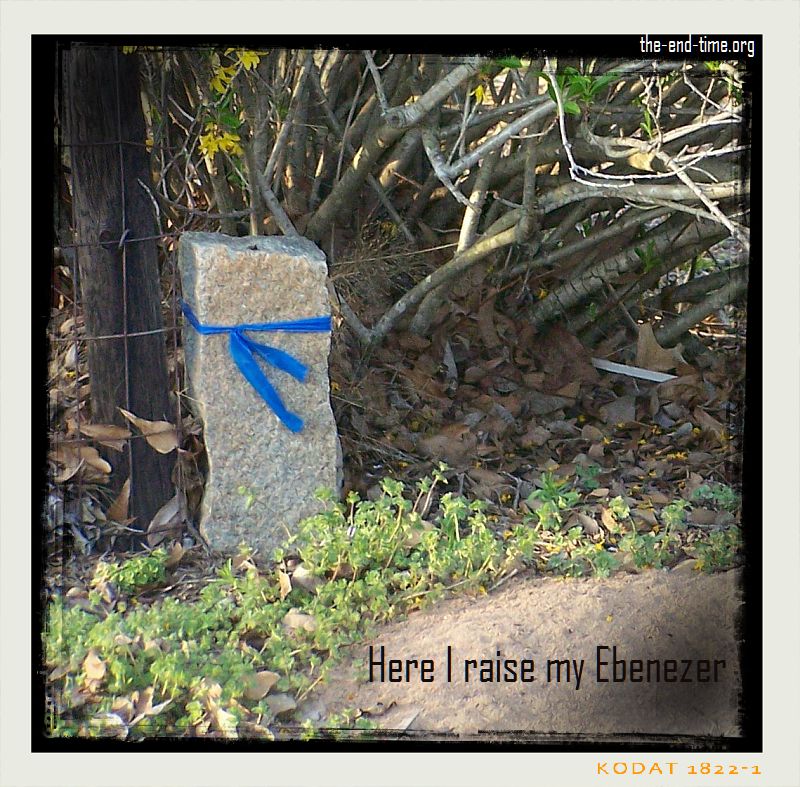
Here I raise my Ebenezer

We sing the hymn Come Thou Fount of Every Blessing at our church. Hopefully you do as well. It is a beautiful hymn written in 1757 by Robert Robinson. Here are the original lyrics from the first two of five stanzas. Some hymn books have updated it to modern language but I like the original.

Come, Thou Fount of every blessing,
Tune my heart to sing Thy grace;
Streams of mercy, never ceasing,
Call for songs of loudest praise.
Teach me some melodious sonnet,
Sung by flaming tongues above.
Praise the mount, I’m fixed upon it,
Mount of Thy redeeming love.

Sorrowing I shall be in spirit,
Till released from flesh and sin,
Yet from what I do inherit,
Here Thy praises I’ll begin;
Here I raise my Ebenezer;
Here by Thy great help I’ve come;
And I hope, by Thy good pleasure,
Safely to arrive at home.

What is an Ebenezer? Our church had put an explanation in a box at the bottom of the bulletin, which was helpful. We should know what we are singing. Words matter. When we sing in church, or pray, or listen to the sermon, we are meeting with God, eating at His table. We should know what we are about and be mindful of the things we say or do or read or sing.

The phrase comes from 1 Samuel 7:12. Here’s the verse:

Then Samuel took a stone and set it up between Mizpah and Shen and called its name Ebenezer; for he said, “Till now the Lord has helped us.”

In the first narrative (1 Samuel 4:1-11 ), the Philistines defeat the Israelites, even though the Israelites brought the Ark of the Covenant onto the battlefield in hope of it bringing them a divinely assured victory. As a result of the Philistine victory and the Ark’s presence on the battlefield, it was captured by the Philistines, and not returned until many months later (1 Samuel 6:1-2).

In the second narrative (1 Samuel 7:2-14 ), the Israelites defeat the Philistines, after Samuel has offered a sacrifice. Samuel puts up a stone in memorial and names it Eben-Ezer (the placename in the previous narrative resulting from this). This monument is referred to in the hymn Come Thou Fount of Every Blessing. (Source)

The Lexham Bible Dictionary also explains-

EBENEZER 

“The stone of help” that Samuel set up to commemorate a great victory over the Philistines (1 Sam 7:12). Also the name of the place where the Philistines defeated Israel and captured the ark of the covenant (1 Sam 4:1; 5:1). 

Ebenezer as a Place Name

First Samuel 4 describes a battle between the Philistines and Israel, whose army was camped at a place called Ebenezer (1 Sam 4:1). The battle ends in disaster for the Israelites, as the Philistines defeat the Israelite army, kill many men, and capture the ark of the covenant.

Ebenezer as a Monument 

Scripture also refers to Ebenezer as the monument stone that Samuel set up after a successful battle against the Philistines. Several months after Israel’s defeat at Ebenezer, Samuel called for the people of Israel to gather at Mizpah and repent of their sins (1 Sam 7:2–14). The Philistines again massed their armies to attack; but as Samuel was praying, God threw the Philistines into a panic. The Israelites cut down the Philistines as they fled, chasing them “as far as below Beth-car” (1 Sam 7:11). In commemoration of the victory, Samuel erected a stone “between Mizpah and Shen and called its name Ebenezer; for he said, ‘Till now the Lord has helped us'” (1 Sam 7:12 NRSV).

Raise your own Ebenezer in thanks to the Lord for His help. Our victories are not ours, but His. God is our refuge and strength, a very present help in trouble. (Psalm 46:1).

So that we may boldly say, The Lord is my helper, and I will not fear what man shall do unto me. (Hebrews 13:6 KJV).

Posted in encouragement, Uncategorized

Natural History lesson, Acacia wood

I mentioned before about Bible reading plans. I have been following a plan of ‘Read the Bible in 90 days”. I’ve read through Genesis and Exodus so far.

In Exodus, you can’t swing a cat and not read that God ordered someone (usually Moses) to build something or other (always for the tabernacle) out of acacia wood. After so many mentions of acacia wood, I decided to look it up.

11527335486_c18f6c28d9_z

Above: Acacia Tree Straw beehives dangle from the branches of an acacia tree south of Arba Minch, Ethiopia. David Stanley photo, Creative Commons.

Sometimes it helps just to look up the plants, animals, processes, and materials mentioned so frequently in the Bible. I’ve done a study on ancient linen making, onions of ancient Egypt, how grain was threshed, wine-making, sheep, almond blossoms, and more.

So here is a short study on acacia wood. First, some verses-

[ The Ark of the Covenant ] “They shall make an ark of acacia wood. Two cubits and a half shall be its length, a cubit and a half its breadth, and a cubit and a half its height.” (Exodus 25:10)

[ The Table for Bread ] “You shall make a table of acacia wood. Two cubits shall be its length, a cubit its breadth, and a cubit and a half its height.” (Exodus 25:23)

[ The Bronze Altar ] “You shall make the altar of acacia wood, five cubits long and five cubits broad. The altar shall be square, and its height shall be three cubits.” (Exodus 27:1)

And so on. What IS acacia wood? What are its properties? What is is about those properties that made it such a good selection for the task at hand? These are the kind of questions one can ask as they read. As I told my second graders today, ‘good readers think’, and ‘good readers ask questions’.

ACACIA: Hard wood with a beautiful fine grain or close grain, which darkens as it ages. Insects find the taste of acacia wood distasteful, and its density makes it difficult for water or other decaying agents to penetrate. The Israelites pitched their tents by Jordan, from Beth-jesimoth as far as Abel-shittim, translated “meadow of the acacias” (Numbers 33:49). Holman Illustrated Bible Dictionary (p. 15).

Ahhh, so that’s it. The wood had properties within it that made it super resistant to decay. Well, that makes sense because the tabernacle was assembled, disassembled, moved, and used by the Israelite priests for over 400 years.

Moses received the instructions for the building of the tabernacle on Mount Sinai (Exod. 25–35), in the Arabian Desert (Gal. 4:25) where acacia is among the larger of the few timber species to be found. Items constructed for the tabernacle of acacia (shittim) wood include: the ark of the covenant and its poles; the table of showbread and its poles; the brazen altar and its poles; the incense altar and its poles; and all the poles for the hanging of the curtains and the supports (Exod. 36:20, 31, 36; 37; 38).

The acacia wood was so precious that Exod. 25:5 says that besides the offering of silver and brass, every man who had acacia (shittim) wood brought it for the Lord’s offering. In Joel 3:18 Judah will be blessed “in that day” with a spring that will water the valley of Shittim. Holman Illustrated Bible Dictionary (p. 16)

Acacia wood (a branch). The International Standard
Bible Encyclopaedia (Vol. 1–5, p. 27)

Bible trivia:

SHITTIM (שִׁטִּים, shittim). City in the plains of Moab located just east of the Jordan River. The Hebrew city name Shittim means “acacia trees.” The city was likely named after a great quantity of the trees present at its location. Acacia wood was a valuable commodity in the ancient Near East, and Shittim would have been a key locale for trade and commerce. The Lexham Bible Dictionary. Bellingham, WA: Lexham Press.

The yellow blooms of a modern variety of the acacia (shittim)
tree in Israel. In Holman Illustrated Bible Dictionary (p. 1495).

Ten Things you didn’t know about African Acacia Trees

They protect themselves

The African acacia is self-protecting in many ways. First, most species have long, sharp thorns, which prevent (most) animals from eating their leaves. Second, sometimes stinging ants live inside hollowed-out thorns, which provides another disincentive for predators. And furthermore, the trees create poisonous chemicals when they detect an “assault.” Not only can these chemicals be fatal to animals, but the trees “warn” nearby acacias to start making their own poison. How it works: When the leaves begin to fill with poison, they release ethylene gas, which drifts out of their pores and toward other acacias (within 50 yards). In response, the nearby trees begin to manufacture poison themselves.

So that is a quick lesson on acacia, its location, its uses, properties, and how it looks. It is the iconic tree of Africa, and remember, Africa is where the Israelites were released from as they fled Pharaoh and crossed the Red Sea on dry land.

God is good!

Posted in encouragement, Uncategorized

Just a closer walk with Thee

I like the Appalachian fiddle instrumental version of the old song Just a Closer Walk With Thee. Here are the lyrics, written by an anonymous or unknown author

I am weak, but Thou art strong;
Jesus, keep me from all wrong;
I’ll be satisfied as long
As I walk, let me walk close to Thee.

Refrain:
Just a closer walk with Thee,
Grant it, Jesus, is my plea,
Daily walking close to Thee,
Let it be, dear Lord, let it be.

Through this world of toil and snares,
If I falter, Lord, who cares?
Who with me my burden shares?
None but Thee, dear Lord, none but Thee.

When my feeble life is o’er,
Time for me will be no more;
Guide me gently, safely o’er
To Thy kingdom shore, to Thy shore.

The only mention of anything sovereign is the word ‘kingdom’ in the last line.

I’ve been watching the biography of Queen Elizabeth II, called The Crown. It’s an excellent biography, by the way, well written, well acted, with sumptuous production values. It is Netflix’s most expensive series to date. They spent a lot of money replicating the surroundings of the kings and queens depicted, and nearly exactly replicated the events they lived through.

One thing that this first season’s series has firmly shown, is that while the crown is a successive institution, the people inhabiting it alternate. Yet the people inhabiting it are still distinct from the commoners. The Queen, her mother, her sister, her father, any of the sovereigns, are isolated. They live behind fences and high walls. When they appear in public they are again shielded. If they are walking, there is always a large distance between the rows of people and the Queen (or the King as it may be). They might walk past the people, but they do not walk with the people.

Jesus is our King. He is King of KINGS and Lord of LORDS! He is the highest of the high. Has any King ever invited the commoners to walk with Him? No! Did King Ahasuerus (Esther’s husband) invite people to walk with Him? No! He decreed that anyone entering his throne room without him having called them there would be put to death! Did King Herod go out and stroll around with Lydia and Timothy and James? No!

Jesus invites us to be His friend, He is our Father, our Brother, our Intercessor, our Priest, our Redeemer, and our Savior. Yet…walking with the King is unheard of!

We sing that song in a lively fashion when we hear it on the radio, because it’s familiar to us and it’s sweet. But think about the words, really think about them. We ask Jesus to walk closer to us And He will!

None of this is news to any of you. But it does us good to think about Him once in a while as the amazing Person He is, King, who does not isolate Himself behind fences and walls. In what other kingdom at any time or anywhere, does the King invite His people to walk with Him? The King who does not dismiss the commoners, but invites them to participate with Him in his sovereignty is to be praised in wonder and awe.

Walking the long road with the King!
Posted in encouragement, Uncategorized

Prata Potpourri: Books, Books, Books, and Instagram Bible

Bible Reading Plans, Reading Challenges, Reading Resolutions, what’s a girl to do? Read!

Memory moment: A constant accusation against me as a kid was “Why do you always have your nose stuck in a book?” I heard that a lot, from parents, relatives, teachers. Though the teachers may have had a point. I’d put the smaller book by Laura Ingalls Wilder inside the larger tome of Algebra 1 and pretended to follow along in the math lesson. The teacher was not fooled, blast her preternatural senses.

Now that I’m saved, I pray that my nose is always stuck in THE Book, the Bible. Beyond that, reading as a pleasurable activity also engages the mind and stirs the imagination. Reading increases vocabulary, provides conversational topics, and are just plain fun. I’d let reading go to the side for a while but I’m resolving to pick it back up. (Do you see what I did there?)

I loved this piece by Jen Wilkin: Beware The Instagram Bible. She spoke against “The Instagram Bible” which is to say, the tendency for girls and women to post frilly and sentimental verse posts on Instagram, fluffed by flowers and feathers and filters, but ONLY the “loving”and “kind” verses and none of the tougher verses. Wilkin mused that if all the Bibles of the world disappeared and we only had access to scripture via these posted Instagram verses, the Bible would hardly be properly represented.

I’ve written about this before, regarding Church Bulletins, which typically do the same thing. Just once I’d like to see a judgment or wrath verse on a church bulletin.

Are you on the fence about starting a Bible Reading Plan? Yes. Yes I am. I am on day three and I’m already chafing under the self-imposed restrictions I’ve adopted. On the other hand, diligence and discipline do often chafe. So there’s that. I am sticking with it so far. But Jen Oshman has a good take on the whole thing in her article above. BTW, I am tickled I found Jen Oshman and put her on my blogroll before Challies did. There you go, my first boast of 2017. I repent. But it felt so good.

“Never trust anyone who has not brought a book with them.” 
― Lemony Snicket, Horseradish: Bitter Truths You Can’t Avoid


Victoria Elizabeth Barnes, who is a good and funny writer, shares her latest estate sale find, a mini barrister bookcase. Her photos are gorgeous too. BTW, my former husband had a barrister bookcase, several levels high. It was a cool item, though not as cool as Mrs Barnes’ bookcase, because, well, hers is mini and mini means cute and cute is always cool.

Tim Challies is complementarian and he reads books by women. Gasp! LOL, of course men read books by women and unlike the Tower of Siloam, the hierarchy God has instituted for his church does not come unexpectedly toppling down to crush all in its usurping path. Read more to see why.

Here is Solid Food Ministries with a list of Reading Resources. Their Book Review page. And, their GoodReads page. Check them out!!

What does Samuel James believe is the threat to reading?

This is such an important, and liberating, point. You can’t read it all, and almost certainly shouldn’t try. Indiscriminate buying of books to fill out one’s “personal library” looks great on Instagram, but in practically every circumstance, it undermines the very intellectual pursuit it mimics.

Are your books piled up in stacks around the house? Bookshelves overflowing? 2X4’s on milk crates sagging? No mini-barrister bookcase in sight? Here is a Librarian with a website dedicated to organizing your own personal library. BTW I organize my books by genre and size. If you do it any other way, you’re doing it wrong. Just kidding. Maybe.

“There are worse crimes than burning books. One of them is not reading them.” 
― Joseph Brodsky

A Gentle Madness: Bibliophiles, Bibliomanes, and the Eternal Passion for Books. I have this book. It’s on the top left shelf of Bookcase #1. I am too afraid to read it. I have heard that self-diagnosing from the internet isn’t a good idea.

A photo I took of a poster at the famous City Lights bookstore in San Francisco
City Lights Books, San Francisco, EPrata photo