Posted in encouragement, Uncategorized

Bible reading plans, choices, personal reading, books!

It’s time once again for the annual Bible Reading Plans blog essay! I’m notorious for starting and utterly failing to stick to a Bible Reading Plan. But I keep trying! Alexander Pope wrote hope springs eternal

Hope springs eternal in the human breast;
Man never is, but always to be blessed:
The soul, uneasy and confined from home,
Rests and expatiates in a life to come.
– Alexander Pope, An Essay on Man


Three Reasons Why You Should Read the Whole Bible in 2017

Each year at the end of December, many people choose a reading plan for the upcoming year only to find themselves failing to keep pace as the weeks pass. It may surprise you to know how many people in your church have not read the entire Bible. This year would be a wonderful time to read the whole Bible. Consider these three important reasons why you should read the whole Bible in 2017.

Reading through your Bible has become a year-end advertisement, resolution, and chore list. I would like to encourage you not to not do it. This may seem like an odd request, but I want to drive past the activity and look at the heart. I don’t want you to grab a plan, make plans, and follow through with those plans so you can say you read through your Bible. I would rather you simply say, “I’m committed to learning about my Lord and Savior, therefore I need to read my Bible because it is the source of light in this dark world.”

I’ve never been one to follow a crowd and I balk at being herded into a plan just because it’s Bible plan time of year. Alternately, I have not read through the Bible completely, and it’s been 13 years since I was saved. So, I am lax, lazy, unproductive, non-diligent, and all the words. I want to know my Lord, and the way to do it is to read His word. So thanks to the ever-diligent Challies who wrote about different plans, I am doing three. Over-ambitious? Setting myself up for failure? Probably. However, think of the feast I’ll enjoy if I’m successful at even one of them!

This plan I chose is a five day, semi-chronological plan. And it’s free. Challies wrote, of theFive Day Reading Plan,

My favorite daily Bible-reading plan is the 5 Day Bible Reading Program from Bible Class Material which I was introduced to by Melissa Kruger. It has several features I love:

It is a familiarity plan that covers the entire text of the Bible over the course of the year. Between January 1 and December 31 those who follow it read every word of the Bible.
It is a pseudo-chronological plan that covers the text of the Bible in the order the events happened. Thus, for example, the Psalms come at appropriate moments in the life of David, the books of Kings and Chronicles are read in harmony, and so on. This helps set the events in their historical context. Yet even though it’s chronological, it’s only pseudo-chronological. There are Old Testament and New Testament readings each day and the gospels are interspersed through the year. I find this an ideal compromise over a strictly chronological program.

It is a 5-day plan. A benefit of a 5-day plan (as opposed to a 7-day plan) is that there is less chance of falling far behind. At 5 days per week it is far more doable than at 7 days—there is always a chance to catch up. Also, it allows a day or two of reading something different for those who, for example, like to read and ponder the sermon text on a Sunday morning.

It is a free plan. It’s free for the taking! They’ve got a nice little print-out you can download, print, fold in half, and put inside your Bible. It’s got boxes to tick as complete each day and each week. Or you can do what I did, which is use the Reading Plan app to organize the plan even while reading through Logos, the ESV app, or a printed Bible.

2. I also bought this one for Kindle,
Reading God’s Story, Hardcover: A Chronological Daily Bible Hardcover
by George Guthrie (Author), Holman Bible Staff (Editor)

Reading God’s Story takes that clear narrative approach to the Bible, arranging the complete text into a fresh chronological reading plan developed for the Read the Bible for Life biblical literacy initiative. In this plan the books, chapters, and verses of the Bible are thoughtfully arranged so readers can track the story of Scripture, day by day, from beginning to end, understanding the flow of events and how all the different parts fit together to make sense.

I bought this one too,
3. NIV, Bible in 90 Days, Hardcover Hardcover, by Zondervan (Author)

As you break it down into bite-sized pieces, what may have seemed to be an overwhelming challenge becomes doable and enjoyable. And this specially designed Bible will help you get the most out of your experience. Use it in conjunction with The Bible in 90 Days curriculum for all the benefits of sharing God’s Word in community, or read it by yourself. Either way, you’ll be fulfilling what for many people is a longstanding ambition: reading through the entire Bible.

Well, we’ll see. If I can’t stick to a plan for three months, or for five days in a week, I will be a sorry excise for a reader, a Christian, and a student!

Other plans

Michelle Lesley listed these kinds and other types of Bible Reading Plans on her page also. Take a look to see if there are some that appeal to you. There is a good variety. Michelle is faithful to provide a variety of credible and worthwhile resources on her page. You should bookmark it for 2017 if you haven’t already.

If you commute, pr prefer an audible Bible reading plan, there are those also. BibleGateway has The Daily Audio Bible plan.

Here is another option, The MacArthur Daily Bible:

The MacArthur Daily Bible takes a portion of the Old Testament, New Testament, Psalms, and Proverbs for each day of the year, with daily comments that guide and inform you as you read through the Bible in a year. John MacArthur’s insight maximizes the benefit of each day’s reading. If a commitment to daily Bible reading never worked for you before, this is the answer.

You can also purchase it directly from Grace To You’s website, here.

Personal Reading

I am also planning on going through Challies’ reading program at the avid level. That is a commitment to read one book every two weeks. I work two jobs, and when I finish for the day, finish my own Bible reading, fulfill my ministries, and write a blog essay for that day, I’m pretty numb. But I do waste time on tv (like Judge Judy clips on Youtube) or shows like Top Chef or Great British Menu, so the fact is, there IS time to read. I want to read more. It relaxes me more than TV does and it’s better for my mind. I want to re-ignite the daily habit. I like books, and I miss them.

Here is the entire offering, from light reader of one book a month, to obsessed reader at two books per week.


Completed Personal Reading:

So far this School vacation I have finished:

JD Vance’s Hillbilly Elegy which was excellent. There’s profanity, but it’s necessary because when he quotes his family, that is how they spoke. Overall it’s an excellent secular book examining poverty cycles among those from Appalachia, from the perspective of ‘one who made it out.’

I read a Kindle short called My Seinfeld Year by Fred Stoller. You might remember Stoller as Everybody Loves Raymond’s whiny look-alike cousin. It’s well written and interesting about the background life of character actors and comedy writers.

Hearts of Fire: Eight Women in the Underground Church and Their Stories of Costly Faith. It’s published by Voice of  the Martyrs. I got a few chapters in and burst out crying as a mother fleeing murderous Muslim fanatics with torches and machetes crawled through the jungle and then exhausted, stopped to prepare her young children for imminent death. Tough but necessary book! There is nothing like reading about the courage of martyrs to make one grateful for the Lord’s decision to install me in the US in a comfortable life.

Warren Wiersbe’s Lonely People: Biblical Lessons on Understanding and Overcoming Loneliness (Living Lessons from God’s Word). I’m not lonely, lol. I am accumulating books for the church library or to hand out to Christian friends. I read them ahead of time to make sure they are solid in doctrine. I’ve seen too many church libraries and even pastor’s study shelves flooded with junk. So I read them before I give them. The book was slim, readable, and biblical. Wiersbe looked at six attributes that contribute to loneliness, which he distinguishes from solitude or lonesomeness. Wiersbe offers reasons for loneliness and biblical solutions.

I had three Banner of Truth magazines piled up and finished them. These are meaty, theological magazines. I especially enjoyed the November edition looking at the doctrine of Particular Atonement and October’s edition where the last days of Martin Luther were chronicled. I encourage you to subscribe. They publish 11 times per year, one of the issues is a double issue.

On the To-Read list, books I recommend to one and all,

Truth Or Territory: A Biblical Approach to Spiritual Warfare by Jim Osman. Pastor Osman is pastor of Kootenai Community Church. He is Justin Peters’ pastor, the preacher known for his discernment conferences and videos. Pastor Osman has another book coming out soon, too. A new book by Pastor Jim Osman on Psalm 73 and the prosperity of the wicked will be released in early 2017.

Justin Peters has a new book just released this week, also-

Do Not Hinder Them: A Biblical Examination of Childhood Conversion
I live in the Bible Belt where there’s a Baptist church around every corner. It is common for me to arrive at school on a Monday and a kindergarten or first grade child shares that ‘yesterday they got saved, they’d asked Jesus into their heart’. While I’m thrilled the child goes to church and learns about Jesus, I’ve seen too many children over the years grow up and abandon their commitment and fall away. I often mourn when greeted with “Jesus into my heart” news. From the book:

Jesus said, “Permit the children to come to Me and do not hinder them; for the Kingdom of God belongs to such as these” (Mark 10:14). Is this a verse in support of baptizing children who make a profession of faith in Christ as most evangelicals have supposed? If it is, why is it that so many of the children we baptize grow up to show little if any fruit of having been genuinely converted? Why do so many walk away from Christianity once they gain independence from the home? In Do Not Hinder Them, author and evangelist Justin Peters presents a compelling biblical case that both the nature of children and the nature of salvation warrant extreme caution before we baptize children who have made intellectual assent to the basics of the Gospel.

Reviving New England: The Key to Revitalizing Post-Christian America

At one time in history, New England was a light to the nations. From its origination, the Northeast region has been a spiritual powerhouse, leading the way for Christianity to flourish in America and beyond. However, after three centuries of vibrant Christian influence, it encountered a perfect storm comprised of false doctrine, liberalism, and materialism, which crippled the church, and plunged the region into spiritual darkness. In Reviving New England, Nate Pickowicz makes a case for the inestimable value of the region, and offers a series of biblical prescriptions for faithfulness

I’m from New England, and it’s heart-breaking to see the empty churches, failing churches, liberal churches, all in gloriously beautiful and historic buildings that once espoused the faith in truth and light.

Women’s Ministry in the Local Church, by J. Ligon Duncan, Susan Hunt (Paperback)

Susan Hunt and Ligon Duncan walk through the Scriptures to help readers better understand what it means to have an effective, biblical women’s ministry in the church. The benefits of women’s ministries are great: training and discipling, evangelizing, and reaching out to the poor and needy. This book, written by seasoned ministry leaders, provides many proven tools to help start a women’s ministry in your church.

Ok, if I sit here writing about reading for too long I will not get to read! Happy New Year, may the Lord bless you in all you do for Him and in Him.

books-1abooks-2a

Posted in encouragement, Uncategorized

Wynter awakeneth all my care

One of the oldest surviving poems in written form is the Middle English poem Wynter awakeneth all my care. It is thought the poem was written in about 1340, before even Chaucer wrote.

Click to enlarge

As A Clerk of Oxford wrote on their blog,

A translation is inadequate, though; a lot of the power of the poem is in the rhymes, and the untranslatable negatives, especially ‘Nou hit is, and nou hit nys, / Also hit ner nere, ywys’. There are some clever touches, such as the phrase waxeth bare: ‘waxen’ can just mean ‘to become’, but it usually means specifically to ‘grow’ (like the moon, which waxes and wanes; do we use the word in any other context now?). But when leaves fall, waxing bare, it’s the exact opposite of growth; it’s death and depletion.

From the Library of the University of Rochester, we read,

Al that gren me graveth grene. “All that seed men bury unripe.” … “to put something under the ground, cover with earth; bury; plant.” There is no MED gloss for gren, a much-discussed crux, sometimes emended to grein, “grain, seed” (suggestive of John 12:24–25: “Amen, amen I say to you, unless the grain of wheat falling to the ground die, itself remaineth alone. But if it die, it bringeth forth much fruit”).

Regarding the world’s joy…Spring is certainly a joyous time. Shoots and leaves burst forth. Time-lapse photography on the nature channels show flowers veritably bounding from the soil. Flora’s vivid early spring colors bring smiles to all who see.

Summer simmers into a dreamy and languid time. One’s cares still crowd the thoughts, but they are less potent, their robustness competing with sunny joys and relaxing pursuits.

Fall’s surge of color and riotous leaf swarms in wild wind both delight and vex. Stooping to pick up a brightly colored leaf, craning to see the Vee-shape of birds scuttling south, glancing at rushing clouds and crystal skies, breathing the crisp air…

Sadly, these momentary flares of color and movement are soon doused in the harsh embrownment of the darkling season. Winter. No better description of the ground and sky at late fall exists, in my opinion, than Thomas Hardy’s opening scene of The Return of the Native

A Saturday afternoon in November was approaching the time of twilight, and the vast tract of unenclosed wild known as Egdon Heath embrowned itself moment by moment. Overhead the hollow stretch of whitish cloud shutting out the sky was as a tent which had the whole heath for its floor.

The heaven being spread with this pallid screen and the earth with the darkest vegetation, their meeting-line at the horizon was clearly marked. In such contrast the heath wore the appearance of an instalment of night which had taken up its place before its astronomical hour was come: darkness had to a great extent arrived hereon, while day stood distinct in the sky.

Winter’s dark death, dearth of color and lack of life…

Nou hit is, and nou hit nys, Also hit ner nere, ywys; (Now it is and not it isn’t, as if it never had been, indeed!). And yet, what a time, the bleak midwinter, to praise the Lord for all life! He has stripped away the distracting color and movement and delights of flora, and shown us His manifest care. In the bleak midwinter, one that awakeneth all my sorrow, He sustains all life, precious but hidden in His hand. “All passes but God’s will”.

How kind of Him to allow this fallow time so as to see new life resurrecting in spring, just as He came to life from the dead. The frigid season is one that entombs itself but then again bursts with life and joy and color soon enough. “It all goes to nought”, for only a season. The grace of this cyclical and everlasting flourishing is bounteous and beauteous. God is in control!

For in Him all things were created, things in heaven and on earth, visible and invisible, whether thrones or dominions or rulers or authorities. All things were created through Him and for Him. He is before all things, and in Him all things hold together. (Colossians 1:16-17).

The supremacy of Christ, spring, summer, fall, and winter, everlasting supremacy and everlasting life. In him was life, and the life was the light of men. (John 1:4)

Jesus, help that this be known,
And shield us from hell,
For I know not whither I’ll go,
Nor how long here dwell.

No matter. The dormant seed entombed in ice, fleeting on scudding wind, or falling unnoticed on harsh road, I am that unripe seed, not knowing how long here I dwell. But secure am I that as wynter comes, even a death, I will spring forth in joy and color and movement from the very grave that seeks to grip me fast, but never can. The springtime of the eternity in Jesus awaits.

Posted in encouragement, Uncategorized

Linus dropped the blanket, Hallelujah the Lord is come

A meme going around on Facebook caught my attention. It involved the Peanuts Christmas cartoon show that is 51 years old this year, A Charlie Brown Christmas. The half hour program regularly plays in December prior to the Christmas holiday, and shows Charlie Brown searching for the true meaning of Christmas. As Charlie Brown becomes more and more frustrated by the materialism clouding the true meaning of the holiday, he finally yells out,

Isn’t there anyone who knows what Christmas is all about?

Linus says that he knows, and walks to the center of the stage where the play practice is being held. He recites verbatim to tthe scripture from Luke 2:8-13 KJV,

And there were in the same country shepherds abiding in the field, keeping watch over their flock by night. 9And, lo, the angel of the Lord came upon them, and the glory of the Lord shone round about them: and they were sore afraid. 10And the angel said unto them, Fear not: for, behold, I bring you good tidings of great joy, which shall be to all people. 11For unto you is born this day in the city of David a Saviour, which is Christ the Lord. 12And this shall be a sign unto you; Ye shall find the babe wrapped in swaddling clothes, lying in a manger. 13And suddenly there was with the angel a multitude of the heavenly host praising God, and saying,

14Glory to God in the highest, and on earth peace, good will toward men.

From the same link above, we read,

Schulz’s main goal for a Peanuts-based Christmas special was to focus on the true meaning of Christmas. He desired to juxtapose this theme with interspersed shots of snow and ice-skating, perhaps inspired by his own childhood growing up in St. Paul, Minnesota. He also created the idea for the school play, and mixing jazz with traditional Christmas carols. Schulz was adamant about Linus’ reading of the Bible, despite Mendelson and Melendez’s concerns that religion was a controversial topic, especially on television. Melendez recalled Schulz turned to him and remarked “If we don’t do it, who will?”. Schulz’s estimation proved accurate, and in the 1960s, less than 9 percent of television Christmas episodes contained a substantive reference to religion, according to university researcher Stephen Lind. It could also be worth noting that the Linus’s recitation of Scripture was incorporated in such a way that it forms the climax of the film, thus making it impossible to successfully edit out.

Here’s the scene,

But wait, there’s more. As many times as you have seen the show, and as much as you know for a fact that Linus never goes anywhere without his blanket in his hand, when you watch the scene carefully, you notice that at the point in the scripture when Linus says ‘Fear not!’ HE DROPS HIS BLANKET.

In December 2015 Jason Soroski at The Gospel Coalition wrote about the moment, here:
Just Drop the Blanket.

The birth of Jesus allows us to simply drop the false security we have been grasping so tightly, and learn to trust and cling to him instead.

This time of year is so precious. We pray and praise the Lord for His incarnation. The babe in the manger, born in a stable among the animals, and yet myriad angels announced his arrival to the shepherds. It’s a scene that brings tears. Hallelujah.

The Leonard Cohen song Hallelujah always seemed to me to be firmly in the realm of sad, yet seemed like it should be joyful. Like it’s on the verge of joy but always in the dark. The group Cloverton has changed the lyrics to praise and honor Jesus. Now Hallelujah is sweetly joyful. As my friend Tara said,

I’ve always loved the song, Hallelujah by Leonard Cohen. But his was a broken hallelujah. In this one, the hallelujah isn’t broken and it’s the most beautiful version I’ve ever heard.

Hallelujah, the Lord is come.

Posted in encouragement, Uncategorized

We all look forward to our wages, but…

I work in a school system. We’re paid monthly, on the last day. It takes discipline to budget a household in a single income where the wages come 28-31 days apart. In December we go on Christmas vacation a few days before the holiday and return in the first week of January. It’s about a two week break, something everyone looks forward to since we began school in early August. We all need one by then!

As a kindness, the payroll system works in feverish activity and closes payroll early so we can get paid before Christmas instead of the week after, as the usual rotation would have been. That’s the plus. The minus is that it’s 50 days in between paychecks. Our wages don’t come for about 6 weeks and it’s a veeeeeeery long stretch between mid December and the last day of January. It takes a lot of patience to wait calmly and in disciplined manner for that paycheck in January.

We all look forward to our wages, whether they come on the day we worked, or the week’s end or the month’s end. When we receive that envelope, or open our bank account to view the Direct Deposit, we feel gratitude, pride in our work, and relief.

For the unsaved world, including the false Christians who think they are saved but aren’t, the spiritual wages they will receive on their last day will come as a shock. The wages for the sinner have a very long delay, but on their last day they will receive a fat envelope containing a list of all their misdeeds and sins. Their wages will be toted up at the bottom and it will say $DEATH$.

Why is this Romans 6:23 verse an encouragement to me? Deep in sin, Jesus lifted me from the muck, cleansed me with His blood, and gave me eternal life. I accumulated an eternal debt of wages upon wages for all the evil work I had performed before I was saved. I deserve death. He gave me life. Hallelujah!

Praise Him to the Highest. The babe has come, the boy will grow in wisdom and stature, the Man will die, the King will reign!

EPrata photo

And she gave birth to her firstborn son and wrapped him in swaddling cloths and laid him in a manger, because there was no place for them in the inn. (Luke 2:7)

And Jesus increased in wisdom and in stature and in favor with God and man. (Luke 2:52).

He was delivered over to death for our sins and was raised to life for our justification. (Romans 4:25)

Then the seventh angel sounded; and there were loud voices in heaven, saying, “The kingdom of the world has become the kingdom of our Lord and of His Christ; and He will reign forever and ever.” (Revelation 11:15)

Posted in encouragement, Uncategorized

A thorny crown

In Genesis 3, Eve and Adam sinned. They fell from grace, and destroyed the intimate relationship they’d been enjoying with Holy God. God told Adam that because of his sinful action,

cursed is the ground because of you;
in pain you shall eat of it all the days of your life;
thorns and thistles it shall bring forth for you;
and you shall eat the plants of the field.
(Genesis 3:17b-18a)

Before the Fall, no thorns existed on earth. After the Fall, because of sin, thorns and thistles grew.

EPrata photo

As Jesus was being led to the crucifixion, they mocked Him.

and twisting together a crown of thorns, they put it on his head and put a reed in his right hand. And kneeling before him, they mocked him, saying, “Hail, King of the Jews!” (Matthew 27:29)

The only reason thorns grew is because of sin. The man sinned and as a result, the ground was cursed, and thorns came. The thorns on Jesus’ head are a visual reminder of our sin and the curse of it He came to release us from.

He is a good, good God.

Posted in encouragement, Uncategorized

I was here

Did you ever see the doodle/tag Kilroy was here? It was popular when I was a kid. It was a tag that came out of WWII and was a precursor to graffiti. It continued being popular for a while after WWII, such as my coming up days in the 1960s.

Kilroy tag at Washington DC WWII Memorial

It is generally thought that the origin of the tag was from James J. Kilroy who worked at a Massachusetts shipyard in WWII. When riveters finished their shift would make a chalk mark at the end of his shift to show where he had stopped and the next riveter had started. JJ Kilroy allegedly began tagging uniquely to stop the practice. Dishonest riveters would erase the previous worker’s mark and chalk a new mark farther back on the same seam, giving themselves credit for part of the previous riveter’s work, as Wikipedia says. The tag grew from there.

Then in the late 1960s and early 1970s spray paint graffiti came about, more tagging. John Naar was the first graffiti photographer. His pictures were published the 1973 seminal book on graffiti, by Norman Mailer and Mervyn Kurlansky’s “The Faith of Graffiti”. The Amazon description says,

In 1973 author Norman Mailer teamed with photographer Jon Naar to produce The Faith of Graffiti, a fearless exploration of the birth of the street art movement in New York City.

EPrata photo of local train tags

Did you ever see names or initials scrawled in wet cement? I saw this article at the magazine Gothamist,

A gang of tween vandals were “tagging” their names in wet cement outside their school in Middlesex, New Jersey recently when the local constabulary happened upon them. Taking swift action, police collared the young hoodlums, took them downtown for questioning, and finally handed them over to their parents, who signed an agreement to punish the children and paid a $250 fine each—except the father of 11-year-old Kelly Zierdt, who is refusing to pay his daughter’s debt to society. And now his little princess is being called before a judge to face justice.

Graffiti and tagging isn’t new. The Atlantic published an article about the graffiti on the ancient standing walls and sidewalks at Pompeii, Italy.

From Roman walls to Twitter, humans have a long-standing obsession with leaving their mark. …The oldest known graffiti at Pompeii also happens to be among the simplest: Gaius was here. Or, more precisely, “Gaius Pumidius Diphilus was here,” along with a time stamp, which historians have dated to October 3, 78 B.C. … So-and-so was here has been one of the messages humans have scrawled, etched, and eventually Sharpied and spray painted onto public spaces for millennia.

From across time and across oceans, the same impulse resides in humans to tag, make a stamp, declare identity, do something that remains. Why? Roger Gastman tried explaining the urge in the same Atlantic article-

“Overall, people want to write on things to be known,” Roger Gastman, the author of The History of American Graffiti, told me in an email. “To be everywhere at once yet nowhere at all.”

To be known. Man wants to be known, he wants to know that after he departs he won’t be lost to the mists of time as his body becomes dust. But he will be forgotten. He will be dust and he will be gone from this earth. Instinctively, he knows this.

All go to one place. All are from the dust, and to dust all return. (Ecclesiastes 3:20).

Will I be remembered? Will my mere few decades on earth carry any weight at all as the press of eternity weighs down the memory of me and as the overlay of other memories of other people rise up, compressing mine to a sliver, and then poof, my wispy remaining presence even as fleeting memory is obliterated completely? Noooo, I WAS HERE!

I sound my barbaric yawp over the roofs of the world. ~Walt Whitman, ‘Song of Myself’

My first thoughts about eternity came to my mind when I was in my 20s. When I was teaching school in my twenties, a woman I’d taught with for a few years named Ann retired. A few months after she retired, a phase of life she had eagerly been looking forward to, she died quickly of cancer. It started me thinking of life and death. Is this all there is? To work to live, then die right after you retire, nothing to be gained? What was the point of life? Was there an afterlife? If so, what was the thing that allowed someone in? Do we all get in? When someone close to you dies, these are the thoughts one naturally begins to think. I WAS HERE!

When we turn to Ecclesiastes again, we see that the verse says,

He has made everything beautiful in its time. Also, he has put eternity into man’s heart, yet so that he cannot find out what God has done from the beginning to the end. (Ecclesiastes 3:11).

Therefore, we know there is an eternity. We know that we do not stop when our heart stops. We know there is a God. We know that he is so much higher than us we can’t understand all his works from start to finish. We know this, instinctively. It is the urge that pushes us to tag, write, declare, “I WAS HERE.”

My friend recently discovered that a High School friend had died. She wrote about the issue of eternity at her blog. What Happens When You Die? Here is an excerpt, please read it in its entirety. It’s good.

I do know what happens when we die, and I will share that with you now since I’ve been asking you if you know.  In Hebrews 9:27 it says that it is appointed for men to die once, and then after that is judgement.  For those of us who have believed in God’s Son Jesus, and are placing our trust in His perfectly sinless life, death on a cross as punishment for our sins, and resurrection to life (the indication that Jesus sacrifice was acceptable to the Father, and His power over death) our judgement was taken care of by Jesus on the cross.  So for we who believe and are born again “to be absent from the body is to be present with the Lord” (2 Corinthians 5:8; please click on the link and read the entire chapter).  But for those people who do not believe in Jesus and are not trusting Him to pay the penalty for their sins, they will face eternal judgement and condemnation “and these will go away into eternal punishment, but the righteous into eternal life.” (Matthew 25:31-46 please read this entire passage)

Our barbaric yawps, graffiti spray, Kilroy tags, claims staked in cement only to be smoothed over by a crushing roller, will dissipate into the ether. All of it. Yet we want to be heard. Mr Gastman was getting close to the truth, ‘we want to be known.’

We will be known. We will go on. This is at once either a terrifying thought for the unsaved, or a comforting thought for the saved. Those who are not in Christ, who have not repented of sins and asked Him for forgiveness, will face Him in judgment. He knows you, unsaved person. You are known. The problem is, you do not know Him. Our fists shaken at the sky, our tremulous childish voices yawping into the cosmos are heard and seen by the One who created us.

What happens when we die? Eternity comes in an instant, and we go on as changed beings in hell or in heaven. Will we descend to join the moans and cries of others who declared their own eternity, only to discover that their piteous cries on earth melted into the air almost as instantly as their destination eternity had come? Or will they ascend to glory to know and be known?

For now we see through a glass, darkly; but then face to face: now I know in part; but then shall I know even as also I am known. (1 Corinthians 13:12 KJV).

You see, we are known. We are here. Yet here is as temporary as the tag that declares presence. Presence goes away. Eternity remains. Do you want to be known as friend to the One who will save you? Or do you want to be known as enemy to the One who condemns you? Our life is not about I AM HERE, but I am there. Unbeknownst to the unsaved, they have already been tagged.

And if anyone’s name was not found written in the book of life, he was thrown into the lake of fire. (Revelation 20:15).

Yes, I ask you also, true companion, help these women, who have labored side by side with me in the gospel together with Clement and the rest of my fellow workers, whose names are in the book of life. (Philippians 4:3).

This is the ultimate tag. This is where it matters most of all where your name is. Not on a subway train. Not on a ship hull. Not in wet cement. Your tag in the Lamb’s Book of Life is where it matters ultimately.

What is The Gospel?

Posted in encouragement, Uncategorized

Worshiping the Creator of creation

I like natural history. It’s God’s creation. I like thinking about how He has created everything from nothing with just a word. I see the intricacy of His creatures and flora and fauna and I’m just amazed. But reading natural history books is a two-edged sword. Most are written from a secular point of view, and at some point the pricks of the constant lies within such books grate, and I abandon the endeavor.

Only to try again later, lol.

I wrote recently about the Victorian craze for seaweed collecting. This was a craze in which mostly women who were constrained by cultural pressure not to collect the more seductive looking plants participated. It was based on an original article at Atlas Obscura, which is a secular magazine. My article was to look at the issue through a biblical lens.

One of the natural history books mentioned in the Atlas Obscura article was a seaweed journal by Margaret Gatty. AO wrote of her,

One of the best known and most dedicated of these so-called seaweeders was Margaret Gatty, a children’s book author who took up the hobby while convalescing in Hastings, on Britain’s southeast coast, in 1848. Gatty’s crowning work of algology, British Sea-Weeds, is an exhaustive compilation of local seaweeds, fully described and illustrated in 86 colored plates.

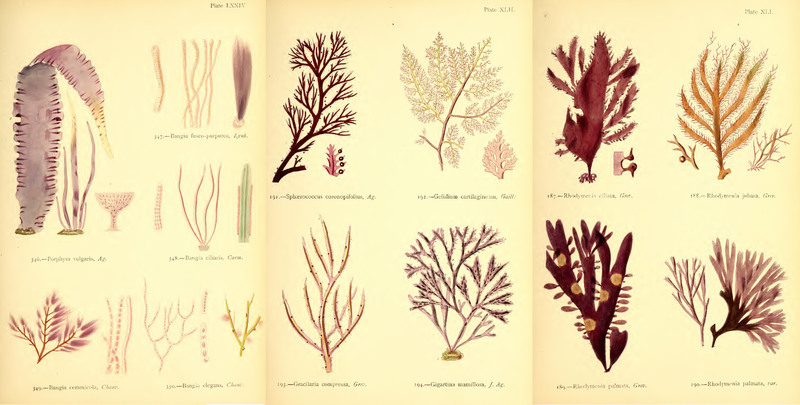
These are selected plates of her seaweed drawings,

Selected plates from Margaret Gatty’s “British Sea-Weeds.” BIODIVERSITY HERITAGE LIBRARY/PUBLIC DOMAIN

I love those colored plates from natural history books from the 1800s. I own two rare books,

A popular history of the mollusca : comprising a familiar account of their classification, instincts and habits and of the growth and distinguishing characters of their shells, by Mary Roberts, 1851; and

Popular British conchology. A familiar history of the molluscs inhabiting the British Isles, By George Brettingham Sowerby, 1854.

I love the hand colored plates of the plants or animals they carefully drew. I also have several books by Harvard University paleontologist Stephen Jay Gould (secular guy, sigh). There’s French poet-philosopher Paul Valery in his engaging meditation on the aesthetics of the seashell, as Amazon describes his work. Anne Morrow Lindbergh’s musings on shells in her famous Gift from the Sea. And so many other books. I guess now that I’m thinking of listing them, my library contains quite a few natural history books. Rachel Carson, Farley Mowat, John Hay, Abbot & Dance…

In this article I enjoyed from the New York Times Review of Books, I learned from this article “What the Trees Say,

In 1664 John Evelyn, diarist, country gentleman, and commissioner at the court of Charles II, produced his monumental book on trees: Sylva, or a Discourse of Forest Trees. It was a seventeenth-century best seller. Evelyn was a true son of the Renaissance. His book is learned and witty and practical and passionate all by turns. No later book on trees has ever had such an impact on the British public.

I love trees. Maybe I’ll get that book. Hmmm. Maybe you’ll get those books.

As much as I love reading about the creation from scientists of various kinds, there’s nothing like reading the Bible, God’s actual account of His world. As poetic as Lindbergh was, as witty as John Evelyn was, as precise as Sowerby or Roberts was, the thrill of reading about the creation from God Himself never fails to thrill me. As familiar as these verses are, they still ignite a reverent awe at His power:

In the beginning, God created the heavens and the earth. 2The earth was without form and void, and darkness was over the face of the deep. And the Spirit of God was hovering over the face of the waters.

3And God said, “Let there be light,” and there was light. 4And God saw that the light was good. And God separated the light from the darkness. 5God called the light Day, and the darkness he called Night. And there was evening and there was morning, the first day.

6And God said, “Let there be an expanse in the midst of the waters, and let it separate the waters from the waters.” 7And God madeb the expanse and separated the waters that were under the expanse from the waters that were above the expanse. And it was so. 8And God called the expanse Heaven. And there was evening and there was morning, the second day. (Genesis 1:1-8)

Nature displays God’s glory. The best place to read about that is His word, what He, Himself, has declared.

Let the heavens rejoice, let the earth be glad; let the sea resound, and all that is in it. Let the fields be jubilant, and everything in them; let all the trees of the forest sing for joy. (Psalm 96:11-12)

We are glad because as Job 12:10 says,

In his hand is the life of every creature and the breath of all mankind.

Is there any better place to be, if you’re saved? In His hand? Is there any worse place to be, if you’re not saved?

It is a fearful thing to fall into the hands of the living God. (Hebrews 10:31)

Read of His creation. The essays, poems, philosophies of the secular writers and scientists is fine, also good are Natural History books on the Bible such as The Scripture Alphabet of Animals by Mrs. Harriet N. Cook, 1842; The Plants of the Bible by John Hutton Balfour, 1885. But the originator of it all is the one to be worshiped and the best place to do that is read of Him in His word.
Do you not know? Have you not heard?
The Everlasting God, the Lord, the Creator of the ends of the earth
Does not become weary or tired.
His understanding is inscrutable. (Isaiah 40:28)
Posted in encouragement, Uncategorized

God is light

God is many things. His attributes are infinite. We know that God is love. Did you know that “God is light” too?

See the verse.

This is the message we have heard from him and proclaim to you, that God is light, and in him is no darkness at all. (1 John 1:5).

I like thinking of Jesus as Light. It’s one of my favorite ways to think of Him. I use a lighthouse quite often in my blog banners and avatars.

God is light. What does that mean? We know what it means on a surface level. We understand and can read the words on the page. It’s easy enough to understand the fact of the sentence. But what does it mean, spiritually? How can it inform me of His attributes and increase my knowledge of Him so I can love Him more and worship Him properly?

The word light in this verse is from a Greek word meaning phós. Strong’s Concordance says it is defined this way-

in the NT, the manifestation of God’s self-existent life; divine illumination to reveal and impart life, through Christ.

When were saved, our citizenship transfers, from being children of darkness to children of the Light. (1 Thessalonians 5:5). Light does reveal, doesn’t it? It reveals all. What glorious light He is!

God is light—What light is in the natural world, that God, the source of even material light, is in the spiritual, the fountain of wisdom, purity, beauty, joy, and glory. As all material life and growth depends on light, so all spiritual life and growth depends on GOD. As God here, so Christ, in 1 Jn 2:8, is called “the true light.” Jamieson, R., Fausset, A. R., & Brown, D. Commentary Critical and Explanatory on the Whole Bible

As a matter of fact, look how many times Apostle John referred to Jesus as Light- (John 1:4–5, 7–9; 3:19–21; 8:12; 9:5; 12:35–36, 46; Rev. 21:23). One cannot walk in His light and also be walking in darkness (sin). One cannot serve two masters. Light is Light and darkness is darkness, and the two can’t dwell with each other. If we claim to be in the Light but are holding on to sin without repentance we are lying that we’re in fellowship with the Light. Disobedience is dark indeed.
God is purity itself. He is holy without blot or stain. Is there anything on earth that is pure? I think not. Gold has dross which must be extracted. A newborn babe, though innocent looking, has a sin nature. Even the light through which we see vistas and each other, is polluted. The cleanest and clearest thing on earth swill is subject to the curse.
God’s glorious light must be ablaze with stunning purity and glorious illumination. Sometimes  at church where the lights are a bit dimmer, a lady’s diamond ring might catch the light and sparkle for just that flash of a moment. I always try to hold onto that flash but it’s momentary. As beautiful as it is, it cannot be captured.
Matthew Henry wrote,
This report asserts the excellency of the divine nature. He is all that beauty and perfection that can be represented to us by light. He is a self-active uncompounded spirituality, purity, wisdom, holiness, and glory. And then the absoluteness and fulness of that excellency and perfection. There is no defect or imperfection, no mixture of any thing alien or contrary to absolute excellency, no mutability nor capacity of any decay in him:Matthew Henry’s commentary on the whole Bible
Picture the glittering brightness of this scene, our prophetic future: (Revelation 22:1-5).
1Then the angel showed me the river of the water of life, bright as crystal, flowing from the throne of God and of the Lamb 2through the middle of the street of the city; also, on either side of the river, the tree of life with its twelve kinds of fruit, yielding its fruit each month. The leaves of the tree were for the healing of the nations. 3No longer will there be anything accursed, but the throne of God and of the Lamb will be in it, and his servants will worship him. 4They will see his face, and his name will be on their foreheads. 5And night will be no more. They will need no light of lamp or sun, for the Lord God will be their light, and they will reign forever and ever.
His morally perfect sinless soul will illuminate the entire universe. His light will blaze out in uninterrupted glory, in a purity so clear that God, who IS light, will be our light. What a day that will be.
Posted in encouragement, Uncategorized

The Lawyer tested Him on the Law

Let’s think about this verse today:

And when the Pharisees heard that Jesus had silenced the Sadducees, they themselves gathered together. One of them, an expert in the law, tested Him with a question: “Teacher, which commandment is the greatest in the Law?” (Matthew 22:34-36).

This lawyer was an expert not in civil law, but in religious law. By that time of Jesus’ incarnation, there had been added to the original ten, 603 laws. The Jews were laboring under a heavy yoke of an expectation to keep 613 laws.

Here is a website with which I’m not familiar, but lists a simple version of all 613 laws with their scripture. Continue reading “The Lawyer tested Him on the Law”

Posted in encouragement, Uncategorized

Thankful

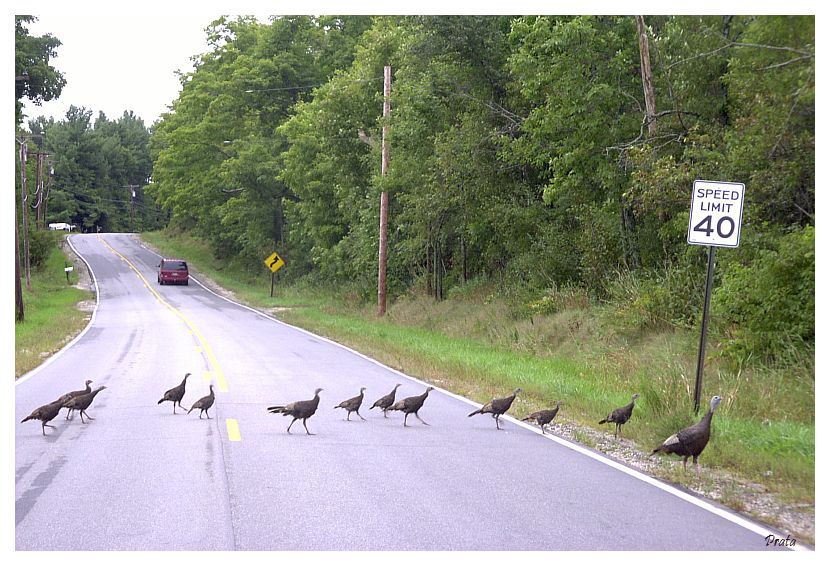
Why did the turkey cross the road?
To prove he wasn’t chicken!

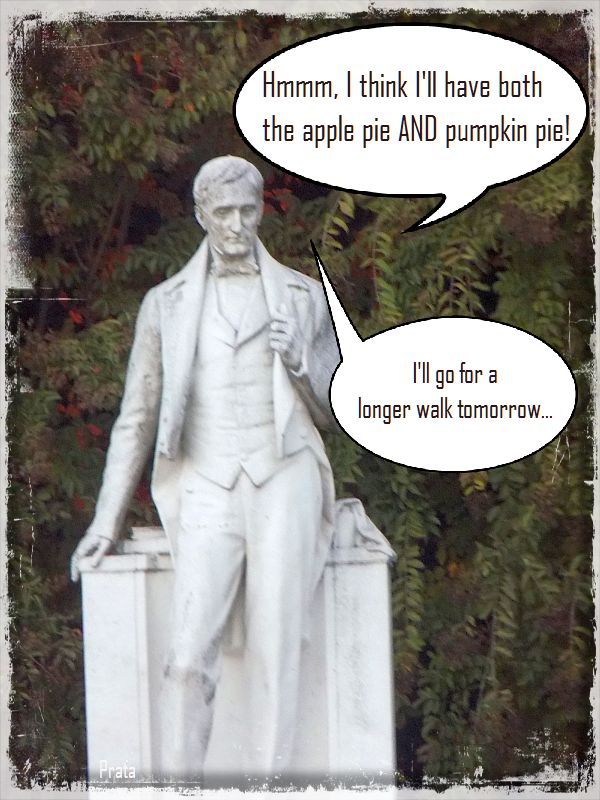
Enjoy your meal, breaking bread with friends and family.

For 43 years I rebelled against Christ, and He plucked me from my mire and saved me anyway. Today I’m thankful for grace.

Happy Thanksgiving everyone. I hope your travel goes smoothly, your meal is delicious, and your family is tame.