This section of verses that show Jesus’ life are focused on His attributes. In His earthly ministry we’ve seen Him as servant, teacher, shepherd, intercessor, and healer. We then looked at His attributes of omniscience, His authority, and now His sinlessness.
He came from glory where righteousness reigns. He descended to an earth that’s cursed where every single human is depraved, thoroughly drenched with a sin nature. He lived among us, sinlessly and perfectly fulfilling the Father’s commands for righteous living. He did this at every moment in every way. Not one blot, not one thought, not one act of anything less than perfection.
For this, He was reviled, mocked, hated, and killed.
In what sense did Jesus become “sin on our behalf”? Does that phrase mean that Jesus literally became a sinner on the cross? …
Based on the above passages, we can safely determine what 2 Corinthians 5:21 does not mean. It cannot mean that Jesus became unrighteous, or that He became a sinner, or that He took on a sin nature, or that He literally embodied sin. … So, then what does it mean? This brings us to our third point. … 3. The best way to understand Paul’s statement (that Jesus became sin on our behalf) is in terms of imputation. Our sin was imputed to Christ, such that He became a substitutionary sacrifice or sin offering for all who would believe in Him.
On the cross, Jesus took our sin upon Himself and purchased our salvation. We have “been justified by his blood” (Romans 5:9), and part of that justification is an imputation of His own righteousness. Paul puts it this way: “For our sake [God] made [Jesus] to be sin who knew no sin, so that in him we might become the righteousness of God” (2 Corinthians 5:21). Jesus is righteous by virtue of His very nature—He is the Son of God. By God’s grace, “through faith in Jesus Christ,” that righteousness is given “to all who believe” (Romans 3:22). That’s imputation: the giving of Christ’s righteousness to sinners.
Ligonier: Jesus’ Sinless Life Jesus lived a representative life. Jesus lived a sinless life, and it was, therefore, a life of representative sinlessness. Our Lord’s obedience stands in the place of His people’s sin. His law-keeping is counted as the law-keeping of those who have faith in Him.
~~~~~~~~~~~~~~~~~~~~
Thirty Days of Jesus Series-
Introduction/Background
Prophecies:
Day 1: The Virgin shall conceive Day 2: A shoot from Jesse Day 3: God sent His Son in the fullness of time Day 4: Marry her, she will bear a Son
Birth & Early Life-
Day 5: The Babe has arrived! Day 6: The Glory of Jesus Day 7: Magi seek the Child Day 8: The Magi Offer gifts & worship Day 9: The Child Grew Day 10- the Boy Jesus at the Temple Day 11: He was Obedient
The Second Person of the Trinity-
Day 12: The Son! Day 13: God is pleased with His Son Day 14: Propitiation Day 15: The Gift of Eternal Life Day 16: Kingdom of Darkness to Light Day 17: Jesus’ Preeminence Day 18: The Highest King Day 19: He emptied Himself Day 20: Jesus as The Teacher Day 21: The Good Shepherd Day 22: The Intercessor Day 23: The Compassionate Healer
Attributes
Day 24: Jesus’ Omniscience Day 25: Jesus’ Authority
We have been through a section of verses that show Jesus’ life in His earthly ministry. We’ve seen Him as servant, teacher, shepherd, intercessor, and healer.
Now we look at His attributes. Today- Omniscience.
CARM.org: The sovereignty of God: His omniscience, omnipresence, omnipotence Omniscience is an attribute of God alone. It is the quality of having all knowledge (Isaiah 40:14). God knows all things possible as well as actual because He has ordained whatsoever will come to pass according to the counsel of His will (Eph. 1:11). He does not need to experience something to know about it completely.
Ligonier: Scripture and the Two Natures of Christ The historic Christian understanding of the person of Christ is that He is one person who possesses two natures: a divine nature and a human nature. Each nature retains its unique properties, and the two natures remain distinct, though inseparably united in Christ’s person. Thus, according to His divine nature, as the second person of the Trinity, the Son of God is omniscient, omnipotent, and so forth. According to His human nature, the incarnate Christ needs to eat food to survive, grows in knowledge, and so forth.
GotQuestions: What does it mean that Jesus is omniscient? Despite the condescension of the Son of God to empty Himself and make Himself nothing (Philippians 2:7), His omniscience is clearly seen in the New Testament writings. The first prayer of the apostles in Acts 1:24, “Lord, you know everyone’s heart,” implies Jesus’ omniscience, which is necessary if He is to be able to receive petitions and intercede at God’s right hand.
~~~~~~~~~~~~~~~~~~~~~~~~~~~~~~~~~
Thirty Days of Jesus Series-
Introduction/Background
Prophecies:
Day 1: The Virgin shall conceive Day 2: A shoot from Jesse Day 3: God sent His Son in the fullness of time Day 4: Marry her, she will bear a Son
Birth & Early Life-
Day 5: The Babe has arrived! Day 6: The Glory of Jesus Day 7: Magi seek the Child Day 8: The Magi Offer gifts & worship Day 9: The Child Grew Day 10- the Boy Jesus at the Temple Day 11: He was Obedient Day 12: The Son! Day 13: God is pleased with His Son
The Second Person of the Trinity-
Day 14: Propitiation Day 15: The Gift of Eternal Life Day 16: Kingdom of Darkness to Light Day 17: Jesus’ Preeminence Day 18: The Highest King Day 19: He emptied Himself Day 20: Jesus as The Teacher Day 21: The Good Shepherd Day 22: The Intercessor Day 23: The Compassionate Healer
We are in the section of my Advent thirty day flow where we examine PROPHECY, ARRIVAL, and EARLY LIFE of Jesus.
In this section I chose verses that reflect the prophecies that predict His coming. Prophecy warns of coming judgment but it also comforts in that it foretells the holy and wonderful resolution of all things for the believer. This resolution didn’t begin with Jesus’ incarnation as a babe in the manger, it began before the foundation of the world when the God-head held an intra-council discussion and Jesus voluntarily chose to become the sacrificial Lamb.
Thirty days of exalting Jesus through selected verses with pictures representing the prophecy, life, death, resurrection, and Second Coming of our Savior.
We are in the flow of verses that prophesied his coming.
History tells us this is exactly what happened, with David’s royal dynasty all but dying out as a result of God’s judgment of His people through Assyria and Babylon. Nevertheless, Isaiah also saw that while the Davidic line would seem to be dead, life would remain within the stump. A shoot—life barely detectable at first—would emerge. But once this shoot went forth, it would become a mighty tree.
He comes forth out of the stem, or stump, of Jesse. When the royal family, that had been as a cedar, was cut down, and only the stump of it left, almost levelled with the ground and lost in the grass of the field (Dan. 4:15), yet it shall sprout again (Job 14:7); nay, it shall grow out of his roots, which are quite buried in the earth, and, like the roots of flowers in the winter, have no stem appearing above ground. The house of David was reduced and brought very low at the time of Christ’s birth, witness the obscurity and poverty of Joseph and Mary. The Messiah was thus to begin his estate of humiliation.
Jesse [Jĕs’se]—jehovah exists or firm. The son of Obed and father of David, and grandson of Boaz and Ruth, and an ancestor of Christ (Ruth 4:17, 22). Jesse had eight sons and two daughters by different wives (1 Sam. 17:12-14, 25). Isaiah speaks of “the stock of Jesse,” a phrase indicating that it was from Jesse the Messiah would come. The humble descent of the Messiah is contrasted with the glorious kingdom He is to have (Isa 11:1).
And Isaac said to his father Abraham, “My father!” And he said, “Here I am, my son.” He said, “Behold, the fire and the wood, but where is the lamb for a burnt offering?” Abraham said, “God will provide for himself the lamb for a burnt offering, my son.” So they went both of them together. (Genesis 22:7-8)
The Sacrifice of Isaac is a familiar chapter to most Christians. We study it in Sunday School, it’s taught in VBS, we read it familiarly as mature Christians, our eyes having passed over the verses many times.
But sometimes the gravity of the moment just grabs you and won’t let go. The Father DID provide the Lamb for the sacrifice. The grandest, most beautiful, most terrible moment in all of history or ever shall be, was the death of Jesus on the Cross at Calvary.
Therefore, we are ambassadors for Christ, God making his appeal through us. We implore you on behalf of Christ, be reconciled to God. He made Him who knew no sin to be sin on our behalf, so that we might become the righteousness of God in Him. (2 Corinthians 5:20-21)
Ambassadors have all the authority of the sending nation behind them. As Christ’s ambassadors, we have all the authority of heaven behind us!
Sometimes just thinking about how Jesus died for us and absorbed the wrath that was rightfully due me, is overwhelming. Sometimes thinking of how despite my craven sinful nature, God cleaned me and forgave me. Sometimes thinking of the fact that God uses me, a poor clay vessel, for His glory, is just too immense for my mind to absorb.
The Christian journey is sometimes not easy, and it is always demanding, but it is also the most joyous and entrancing life a person could ever imagine. If you have not turned to Jesus for forgiveness of your sins, sins that incur the wrath of a Holy God against you every minute of every day, please do it. The life, death, and resurrection of Jesus of Nazareth split history. The event divided the world into two paths. One is narrow and leads to everlasting life. The other path is broad and many find it, and will descend to hell for everlasting wrath.
The Father did provide the Lamb. And He is exalted.
The Lamb Exalted Then I looked, and I heard the voice of many angels around the throne and the living creatures and the elders; and the number of them was myriads of myriads, and thousands of thousands, saying with a loud voice, “Worthy is the Lamb that was slain to receive power and riches and wisdom and might and honor and glory and blessing.” And every created thing which is in heaven and on the earth and under the earth and on the sea, and all things in them, I heard saying, “To Him who sits on the throne, and to the Lamb, be blessing and honor and glory and dominion forever and ever.” (Revelation 5:11-13)
There is the false wall of fame and the true wall of fame. Many women already have their reward, but if your name is in the Book of Life, you are eternally known
So many people, especially women, are hopscotching the globe founding important ministries, establishing orphanages, ’empowering’ native women, or teaching to packed arenas, that it makes some of the rest of us humdrum ladies feel, ahem, left behind. Should we be doing the big things? Can we do the bigger things? Are we doing enough?
All I do every single day, is go to work. I come home and I study my Bible and pray, I write, and if I have enough energy after that, I read a bit. Then I go to sleep and do it all over again. On the weekends all I do is grocery shopping, laundry, cooking the week’s lunches ahead, and study a lot more and write a lot more. I go to church on Sunday. Bed time. Repeat.
I wash dishes in obscurity in north GA and my job is to help kindergarteners tie their shoes and struggling readers learn their ABC’s. It’s not glamorous. It doesn’t seem like it’s very much at all of a contribution to the kingdom.
I mean, Beth Moore is a nearly 70 year old grandma busy helping her daughter through her unbiblical divorce & remarriage and interacting with her grandchildren yet keeps a packed schedule. Joyce Meyer is 81 and still spouting what she spouts. Younger women also seem to be doing the big things, the glamorous things, like Bianca Olthoff with the charmingly titled book “How To Have Your Life Not Suck” or Dancing with the Stars runner-up Sadie Robertson flitting around from conference to conference. As for me, I’m just trudging along in one small sphere.
Well, let’s hear it for the trudgers.
First, if you are a mother, you are in a highly esteemed Biblical position. You are doing such wonderful work for the kingdom in being a foundation block in society, in raising pure young women and strong young men for the next generation. I thank Lois $ Eunice, Augustine’s mom Monica, Elisabeth Elliot, Mrs John G. Paton, Paton and Mrs Susie Spurgeon and Mrs Patricia MacArthur and all the other Missus’ who raised men and women who in turn, impact the kingdom.
Secondly, mother or not, married or not, if you think of the life of Paul most often we think of the highlights. His speeches before thousands, his dramatic miracles, his appearances before kings and leaders.
However, Paul also walked. Thousands upon thousands of miles, he plodded. He trudged. He hiked. From one town to another, in all weathers. In addition, Paul sewed tents. (Acts 18:3). He did the mundane. He wrote letter upon letter to friends. He fundraised. The in-between miracle times in his three missionary journeys were rife with the mundane and the insignificant, except nothing about a Christian’s life is insignificant. Not Paul’s and not mine and not yours. The Lord cares for all our concerns. He clothes us and feeds us and He even knows the number of hairs on our heads. To Him, it’s all significant.
As for the women of the New Testament, Dorcas was beloved not because she was Raechel Myers on storytelling tours of Rwanda empowering women for great things, but because she sewed. She made clothes for the poor and she “was always doing good”. (Acts 9:36). She lovingly helped, humbly and quietly, within her own sphere.
Mary, mother of God? Do we hear of her going on her book tour, telling about the angel that came to her one day, and the miracle of the three wise men or hyping up audiences with her harrowing tale of narrowly escaping the massacre of the innocents? No. Whether she was in Egypt or in Galilee, Mary simply raised her Son. She brought Him up in the faith and managed her household and she raised Jesus’ siblings too.
A few times a year she made the pilgimage to the Temple and the rest of the time, she did what women then and onward have done, she lived in her home and she was faithful to the Lord through His word.
Here are two articles about the plodding kind of faith that endures. That kind of faith is cement. It’s bedrock.
It’s sexy among young people—my generation—to talk about ditching institutional religion and starting a revolution of real Christ-followers living in real community without the confines of church. Besides being unbiblical, such notions of churchless Christianity are unrealistic. It’s immaturity actually, like the newly engaged couple who think romance preserves the marriage, when the couple celebrating their golden anniversary know it’s the institution of marriage that preserves the romance. Without the God-given habit of corporate worship and the God-given mandate of corporate accountability, we will not prove faithful over the long haul.
This one is one of my favorites. It’s by John MacArthur, titled An Unremarkable Faith
Meet Larry, a thirty-six year old Science teacher. Larry married Cathy 12 years ago. They love each other and enjoy raising their two sons. Larry’s life wouldn’t hold out much interest to the average citizen. His Facebook account doesn’t draw many friends and nobody ever leaves a comment on his blog. In fact, most people would summarize Larry’s life with one word—boring. But not Larry. Teaching osmosis to junior high students, playing Uno with his kids, and working in the yard with Cathy is paradise to him. But the real love of his life is Jesus. Larry’s a Christian. He’s been walking with the Lord for more than 20 years.
Not that founding orphanages isn’t worthwhile or something women or men can’t or shouldn’t do. Not that going on a missionary trip to Africa isn’t something Jesus wants us to do. But the big doers are fewer than we think, despite the hype. Most of the church is populated with plodders. As Kevin DeYoung concluded his article,
Put away the Che Guevara t-shirts, stop the revolution, and join the rest of the plodders. Fifty years from now you’ll be glad you did.
Ladies, keep doing what you are doing, one dish at a time, one child at a time, one year at a time. You are preceded by many magnificent plodders who we will gloriously meet in heaven.
Chris Martin used to write at his blog Millennial/Evangelical, which is now defunct. FYI, Hardcover or paperback books never go defunct, but online essays come and go like milkweed seeds in the wind. OK, old lady rant over, lol.
EPrata photo
In 2015 he wrote a piece called 3 Bad Reasons to Leave Your Church which is in archive mode now. The link works. Mr Martin is currently content director for Moody Radio and keeps a substack instead of a blog now.
I had not read a great quantity of articles at his site, but I did enjoy this piece. At the bottom of it, he has a link to a companion piece called 3 Good Reasons to Leave Your Church. Here is his archived essay ‘3 Bad Reasons’ opening paragraph:
“Stop treating your local church like your high school girlfriend, and start treating it like the bride of Christ.”
“You don’t leave the church when it doesn’t share the same musical interests, when it hurts your feelings, or when a newer, more popular one catches your eye.“
“The people of God, the Church around the world, is the bride of Christ, and the bride of Christ deserves the faithfulness of a bride, not the summer crush you bailed on when you were a jerk in college.“
And in like manner Mr Martin did indeed write about 3 ‘good’ reasons to leave your church. In the former (the bad reasons) they were trivial and self-serving. But sometimes there arises an issue in one’s church which violate one’s conscience, harms the sheep, or otherwise provide a basis for a holy reason to leave. Here are his opening paragraphs about ‘good’ reasons to leave:
On Wednesday I shared “3 Bad Reasons to Leave Your Church.” That sort of piece is common, almost a rite of passage for Christian bloggers these days. As I was brainstorming some blog posts the other day, I realized that I’ve read a bunch of posts on why not to leave your church, but I’ve read very few on reasons why you should leave your church. Allow me a bit of disclaimer as well: even among these “good” reasons to leave your church—it is my hope, as one who deeply cares about the local church, that even these problems wouldn’t cause you to leave. My hope is that somehow you could work through the problems listed below, stay at your church, and see them through to health and new life. However, not everyone is in a position to enact major change in their churches, so leaving may be the best option, unfortunately. Here are three good reasons to leave your church…
I recently left my church. I left in good standing and with recommendations from my elders to the church I’m currently a member of now. It was a plant to which I’d been a member since before the first service when we were praying and organizing. One of the elders who planted it had been my Sunday School teacher for 5 years prior to that. It was very hard to leave. I miss him so much to this day.
EPrata photo. Leaving your church is hard. It SHOULD be hard, anyway.
I left for 3 reasons. I’d had an issue since 2 years into the plant, then another issue cropped up 5 years later, then a final issue which cemented my decision to depart. I’d prayed for the elders and been a submitted member the entire time I was wrestling with my issues, but eventually, the Spirit in me made it clear in the way He makes it clear, that it was acceptable to depart. My first and longest-lasting issue was my church’s eschatology.
This week on Twitter/X I saw a poll and a discussion about eschatology which brought to mind this issue of whether to leave a church over its eschatology. The question was, “If your church required a specific end-times view to become a member, would you agree with that policy, though you held that same view of the end-times?“
I haven’t thought through the part about a membership requirement, but it brought to mind the issue of a church member believing differently on Last Things than their church teaches.
I noticed two things about the replies. Everyone called Eschatology (Doctrine of Last Things) a ‘secondary doctrine’. In purely theological terms a secondary doctrine is one that isn’t salvific, that is, requires a person to believe in if they are to be considered saved. The Deity of Christ is an Essential Doctrine. In addition, most of the Essential Doctrines contain a biblically stated penalty for NOT believing. CARM.org calls them Essential Doctrines and outlines them here.
Then there are Secondary Doctrines, AKA Non-Essential Doctrines that don’t touch on one’s salvation. Believing in the timing of Jesus’ return or the specific sequence of end-time events, isn’t a doctrine that illustrates that a person is unsaved. It’s not that the doctrine isn’t important when we call it ‘Secondary’ or ‘Non-essential’, but that it isn’t a biblical mandate to believe.
EPrata photo
CARM asked this question about secondary doctrines: Women pastors is not an essential doctrine, so why worry about it?Shouldn’t we just let those with whom we disagree go ahead and believe what they do about women pastors and not worry about it? The answer is that we should be concerned – very concerned. The reason is that in order to justify having women pastors and elders, several Scriptures need to be reinterpreted.”
If you’re interested, CARM has a Doctrine Grid here. Last Things is classified on CARM’s page as a secondary non-essential, “Any of them can be denied or affirmed, and regeneration is not questioned.”
But that does not mean these secondary non-essentials are insignificant. They are significant. All doctrines in the Bible are tied together with a thread, all of them touch on all the others. In order to believe certain stances, the interpreter needs to change his interpretive method and/or blatantly discount other clearly stated verses. So though a Last Things doctrine isn’t salvific, it comprises a third of the Bible and are a hinge point for many other interpretations and doctrines. It informs the preacher’s hermeneutic, that is, the WAY they interpret all the scriptures. And the way your pastor interprets the scriptures touches every person under his authority.
The second thing I noticed about the Twitter discussion of Last Things and membership was that though most people said ‘nah, do not require a specific eschatological stance for membership, don’t divide over non-essentials…EXCEPT…’ and then the person would state his exception. ‘Except if they believe preterism…except if they want to become a leader…except if they become divisive over it…’
I agree that Eschatology isn’t salvific, but it’s more important than one would think. The Prophets taught on it. It’s taught in the Gospels, referenced in Corinthians, Thessalonians, 2 Peter, and of course Revelation, among other mentions.
Eschatology informs us as to what to think and how to act when certain things come to pass. Eschatology makes certain demands and commands of us, as in Matthew 24, 2 Peter 3, and 1 Thessalonians.
Also, believing alternately from your elders and your church friends creates difficulties and temptations for the member. Several of the Twitter comments referenced this. When one signs on the dotted line to become a member of a church, often there is a clause with asks the prospective member to submit to the church’s teaching.
EPrata photo
In my case, as some of my friends studied and came to eschatological conclusions different from the teaching of our church, they came to me to ask about it. I always referred them to the elders if they had questions. We had open and approachable elders, a blessing. If they insisted to know my stance, I told them in general, but again strongly referred to the elders. If a member goes around teaching something different behind the Elders’ backs, it is divisive and causes confusion and a stumbling block.
This caused me a temptation to teach differently. My conscience was caught between needing to be a submitted member, which the Bible tells us to be, and my conscience in referring people to a teaching I honestly believe is error. A hard go.
Another issue is that the member who believes alternately from his or her church’s teaching on Last Things is muzzled. I wanted to joyfully shout the doctrines and exult in the Lord’s plan. I could not. Eschatology is a third of the Bible that I could not speak to, proclaim, or even encourage. After a while, this hurt my conscience so much.
Why did I join such a church, you ask? It was a plant by a then-young minister who had not completely cemented his personal reconciliation about the Doctrines of Last Things. Two years into it, he had, coming down on an opposite side of what I believed from my own 10 year study of the Old Testament first then the New Testament. What did I do? I was disappointed, but I focused on all the positive things my church did well, and there was a lot to be joyful about.
Until some other issues piled up. Until my conscience issue about the three issues I was having made it impossible and it as clear that I needed to go, not just for myself but for my church family. Let them be joyful in their interpretation, and I’ll go somewhere else and be joyful in mine.
Our church family is family. I know that blood ties feel strong, but they are only fleshly ties. Emotional, yes. Long lasting, yes. But the church family is eternal. It’s a family that is united not by our blood but by the infinitely holy blood of Jesus. Our union is with Him, through Him, and with Him. Leaving one’s church should not be a trivial matter, nor should it be casual.
Here are a few ‘church search’ sites that help you find a church according to the search directory.
TMS church search lists churches led by or planted by The Master’s Seminary Graduates. If you know the doctrinal stances of TMS then you fairly well know the doctrinal stances of these churches. Plug in your zip code or city info and a radius and it brings up a map and a listing. There are links for each search result that bring you to their website with contacts so you can check further:
There are good reasons for leaving a church and there are good reasons for staying. Pray it through, don’t be hasty, honor the Head of the Church and the under-shepherds (your pastors), and may the Lord bless your decision.
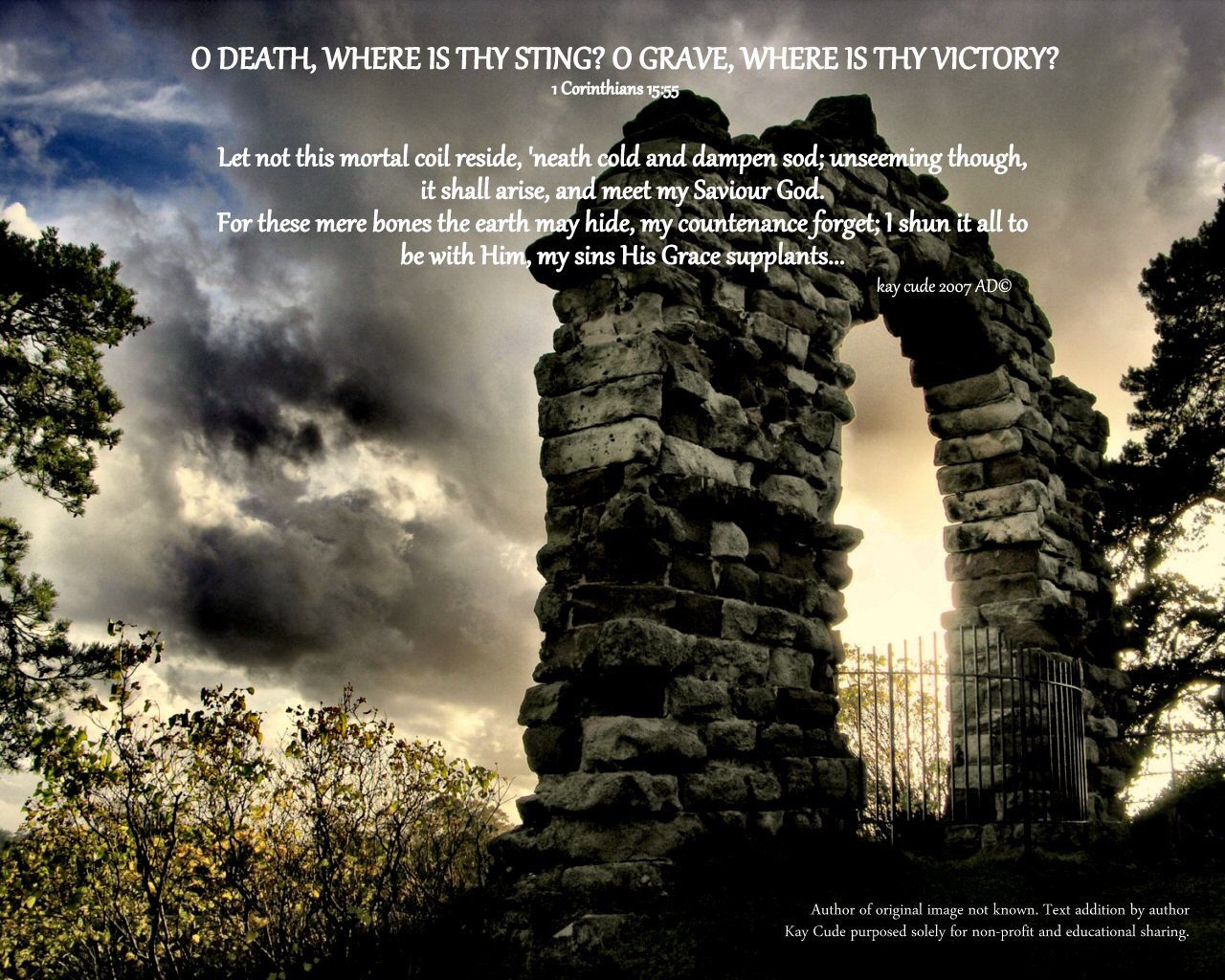
Poetry by Kay Cude. Used with permission. Right click on image to open larger in new tab. Or read the text below. Artist’s statement:
I keep returning to our (me!!) needing to “remember” God’s promises and provision. GOD THE I AM is the only fortress in Whom we find a righteous protector, defender and provider. He is the only place of eternal refuge from the world’s continuing tragedies and chaos. He is the stronghold Who is and Who will provide peace, wisdom, understanding, instruction and endurance.
FACING FEAR: IN THE MIDST OF GOD’S PROVIDENCE As waves of fear rolled nearer still, as deep its swell approached us nigh; our hearts near failed as we cried out, “O Lord, Your servants rescue now!” And crashed the waves of terror strong, our lives at risk — we knew death’s tide; yet stilled our hearts Your Glorious Word and on we clung and Truth prevailed.
As deep and dark, as depth of brine, we battled ‘gainst the foe’s onslaught; its torrents fierce as bounding main, — with cruelest rage this foe can slay. Yet in Your Will, O Saviour ours, Salvation’s Light’s our mighty Ark; afloat we stay midst evil’s gale, for You prevail within its rage.
Afloat we ride with knowledge sure, we look ahead with strength not ours; Endurance meets us Face-to-face, ’tis You our Strength our sure Bulwark, The fears we face — our spirit’s gain, makes strong we resolute of heart, to live God’s Will through providence — and triumph through His Will’s Intent. ~kay cude, October 1, 2017
OUR FORTRESS PREVAILS Refer to Psalm 46. FEAR NOT, GOD IS OUR ETERNAL REFUGE AND STRENGTH. “We will not fear, for God hath willed His Truth to triumph through us; The body they may kill. God’s Truth abideth still, His Kingdom is FOREVER.” ~Martin Luther
IT IS the grace of God through His unfathomable mercy through the power of His predetermined love that urges us to remain and stand in His will concerning providence! WHAT THEN
IS IT that assails our thoughts with such unrelenting vengeance that can tempt us into overbearing fear when trials overtake us?
IT IS not remembering His Word — that He is Sovereign over all circumstances and issues we will encounter during our lives, during our service to, for and through Him…
You might be feeling a bit weary, as I am feeling. Weary of our own sin, weary of the world’s sin. Weary of the election cycle. Weary of tragedies and disasters. Weary of being shocked. Weary of girding against shock.
Jesus acknowledged weariness. He knows of the weariness of the unbeliever burdened by his conscience and his heavy battle against God in his enmity; to the Jew burdened by ceremonial Laws, to the believer who struggles with awareness of His sin and labors daily to mortify it.
Jesus is the salve for weariness.
Then Jesus said, “Come to Me, all of you who are weary and carry heavy burdens, and I will give you rest.” (Matthew 11:28)
“The Lord’s purpose in laying burdens upon us is to weary us out. We cannot learn our religion in any other way. We cannot learn it from the Bible, nor from the experience of others. It must be a personal work, wrought in the heart of each; and we must be brought, all of us, if ever we are to find rest in Christ, to be absolutely wearied out of sin and self, and to have no righteousness, goodness, or holiness of our own.”
“The effect, then, of all spiritual labor is to bring us to this point: to be weary of the world, for we feel it, for the most part, to be a valley of tears; to be weary of self, for it is our greatest plague; weary of professors, for we cannot see in them the grace of God, which alone we prize and value; weary of the profane, for their ungodly conversation only hurts our minds; weary of our bodies, for they are often full of sickness and pain, and always clogs to our soul; and weary of life, for we see the emptiness of those things which to most people make life so agreeable.”
“By this painful experience we come to this point: to be worn out and wearied; and there we must come, before we can rest entirely on Christ”.
“As long as we can rest in the world, we shall rest in it. As long as the things of time and sense can gratify us, we shall be gratified in them. As long as we can find anything pleasing in self, we shall be pleased with it. As long as anything visible and tangible can satisfy us, we shall be satisfied with them.”
“But when we get weary of all things visible, tangible, and sensible–weary of ourselves, and of all things here below–then we want to rest upon Christ, and Christ alone.”
— J.C. Philpot, “The Laborer’s Rest”
If you are weary, be weary in joy that Jesus gives us rest.
I particularly enjoyed this piece from poet Kay Cude. I hope you enjoy it too. May it encourage you, strengthen you, or simply allow your thoughts to linger on the wonders and glories of our Savior.




 the-end-time.org