Poetry by Kay Cude. Used with permission. Right click on image to open larger in new tab. Artist’s statement below.
I keep returning to our (me!!) needing to “remember” God’s promises and provision. GOD THE I AM is the only fortress in Whom we find a righteous protector, defender and provider. He is the only place of eternal refuge from the world’s continuing tragedies and chaos. He is the stronghold Who is and Who will provide peace, wisdom, understanding, instruction and endurance.
This section of verses that show Jesus’ life are focused on His attributes & earthly ministry. We’ve seen Him as servant, teacher, shepherd, intercessor, and healer. We looked at His attributes of omniscience, His authority, and now His sinlessness.
He came from glory where righteousness reigns. He descended to an earth that’s cursed where every single human is depraved, thoroughly drenched with a sin nature. He lived among us, sinlessly and perfectly fulfilling the Father’s commands for righteous living. He did this at every moment in every way. Not one blot, not one thought, not one act of anything less than perfection.
For this, He was reviled, mocked, hated, and killed.
We have been through a section of verses that show Jesus’ life in His earthly ministry. We’ve seen Him as servant, teacher, shepherd, intercessor, and healer.
Now we look at His attributes. Today- Omniscience.
We are in the section of my Advent thirty day flow where we examine PROPHECY, ARRIVAL, and EARLY LIFE of Jesus.
In this section I chose verses that reflect the prophecies that predict His coming. Prophecy warns of coming judgment but it also comforts in that it foretells the holy and wonderful resolution of all things for the believer. This resolution didn’t begin with Jesus’ incarnation as a babe in the manger, it began before the foundation of the world when the God-head held an intra-council discussion and Jesus voluntarily chose to become the sacrificial Lamb.
Thirty days of exalting Jesus though selected verses with pictures representing the prophecy, life, death, resurrection, and Second Coming of our Savior.
Jesus only calls those sheep whose names have been written down since before the foundation of the world. (Ephesians 1:4). Those sheep know His voice and listen to them. Those sheep follow Him out of the sheepfold and into green pastures. He doesn’t put a general call into the sheepfold and wait to see who will come out. He knows them by name, and He calls them.
EPrata photo
Truly, truly, I say to you, he who does not enter the sheepfold by the door but climbs in by another way, that man is a thief and a robber. But he who enters by the door is the shepherd of the sheep. To him the gatekeeper opens. The sheep hear his voice, and he calls his own sheep by name and leads them out. When he has brought out all his own, he goes before them, and the sheep follow him, for they know his voice. (John 10:1-4)
John 10:1–2. Verses 1–5 describe a morning shepherding scene. A shepherd enters through a gate into a walled enclosure which has several flocks in one sheep pen. The enclosure, with stone walls, is guarded at night by a doorkeeper to prevent thieves and beasts of prey from entering. Anyone who would climb the wall would do it for no good purpose.
John 10:3–4. By contrast, the shepherd has a right to enter the sheep pen. The watchman opens the gate, and the shepherd comes in to call his own sheep by name (out from the other flocks). Shepherds knew their sheep well and gave them names. As sheep hear the sound of their owner’s familiar voice, they go to him. He leads them out of the pen till his flock is formed. Then he goes out toward the fields with the sheep following him.
John 10:5–6. If a stranger enters the pen, the sheep run away from him because his voice is not familiar. The point of this figure of speech consists in how a shepherd forms his flock. People come to God because He calls them (cf. vv. 16, 27; Rom. 8:28, 30). Their proper response to His call is to follow Him (cf. John 1:43; 8:12; 12:26; 21:19, 22). But this spiritual lesson was missed by those who heard Jesus, even though they certainly understood the local shepherd/sheep relationship. In their blindness, they could not see Jesus as the Lord who is the Shepherd (cf. Ps. 23).
John 10:7–9. Jesus then developed the shepherd/sheep figure of speech in another way. After a shepherd’s flock has been separated from the other sheep, he takes them to pasture. Near the pasture is an enclosure for the sheep. The shepherd takes his place in the doorway or entrance and functions as a door or gate. The sheep can go out to the pasture in front of the enclosure, or if afraid, they can retreat into the security of the enclosure. The spiritual meaning is that Jesus is the only Gate by which people can enter into God’s provision for them.
When Jesus said, All who ever came before Me were thieves and robbers, He referred to those leaders of the nation who cared not for the spiritual good of the people but only for themselves. Jesus the Shepherd provides security for His flock from enemies (whoever enters through Me will be saved, or “kept safe”). He also provides for their daily needs (the sheep come in and go out, and find pasture).
Source: Blum, E. A. (1985). John. In J. F. Walvoord & R. B. Zuck (Eds.), The Bible Knowledge Commentary: An Exposition of the Scriptures (Vol. 2, pp. 309–310). Wheaton, IL: Victor Books.
I attended High School in the mid 1970s. It was an excellent high school, offering high-end academics, a thriving sports program, a beautiful campus, and star teachers. To us, though, it was just high school, and the best thing about it was none of those things.
It was Senior Privileges.
Seniors were allowed entry to spaces in the school that no other students were allowed to enter. These spaces were severely restricted, and anyone who was not senior was barred.
For example, the Health Room was once a senior-only room, and was furnished with couches, a television, and refrigerator, if you can believe it. Even more unbelievable in this generation’s health-conscious era, of the area of the school’s inner courtyard where three brick walls connect was once reserved as a smoking area for students. Smoking is now banned on the entire campus.
I never took advantage of those privileges but there were two others that I enjoyed.
Seniors during the 1970’s and 1980’s could sign themselves in and out of school. If we had a study hall first period of the day, we were able to come in late. We were able to sign out of school in the case of a last period study hall. I used to sign out and go to McDonald’s and get breakfast, which was a new offering back then. McDonald’s introduced the Egg McMuffin in 1972 and a full breakfast in 1977. The novelty of the McMuffin and hash browns was too luscious to resist. I signed myself out of study hall and drove to get breakfast a la McD’s style, also bringing back orders for friends who didn’t have a car.
But the greatest privilege to me was that seniors-only could use the courtyard. The courtyard was not an arborist’s dream. It was a scrubby place, not really a greenspace, just well-worn paths amid gasping grass, concrete benches, the aforementioned smoking area, and some trees. But the school was large and being able to cut down travel time between classes to beat the bell was extremely compelling. Plus only seniors could go there.
All the Freshmen knew about senior privileges. We’d look upon the seniors emerging from the courtyard with awe, and excitedly talk about the day we, too, would be allowed entry into this most prized restricted area. I don’t have enough words to relate to you the thirst, angst, and yearning for senior privileges. WE were blocked out, but THEY could go hang out! They could go in and come out! They could remain in a private area just for them! We wanted that!
Courtyard at Hotel Inca Real, Cuenca, Ecuador. EPrata photo
The parallel to God’s courts is the point I want to make here. Do we possess the same fervency to be in God’s courts? Do we yearn for the privilege of being in His courts?
The Psalmist said,
For a day in your courts is better than a thousand elsewhere. I would rather be a doorkeeper in the house of my God than dwell in the tents of wickedness. (Psalm 84:10)
The righteous man will flourish like the palm tree, He will grow like a cedar in Lebanon. Planted in the house of the LORD, They will flourish in the courts of our God. (Psalm 92:12-13)
Enter his gates with thanksgiving, and his courts with praise! Give thanks to him; bless his name! (Psalm 100:4)
I know when the time comes to enter His fabulously luxuriant and holy courts, it will be with thanksgiving and praise. But until then, do we yearn for His home, which is our home? Do we look with joy and anticipation when it will finally be our turn to enter the restricted area, the private area reserved for only those chosen? Do we crave to be there, enjoying the privilege of being in His court?
I can’t imagine what it will look like or what it will be like to enter His courts. The Bible tells us that we can’t conceive of it. My juvenile mind could not conceive of any privilege or any courtyard sweeter than the High School Courtyard reserved for those of a certain age. Just as now, my juvenile Christian mind cannot conceive of a courtyard sweeter or more tranquil that, say, the one at the Hotel Inca Real in Cuenca Ecuador, adorned with plants, tiled floors, resting benches, beauty and peace.
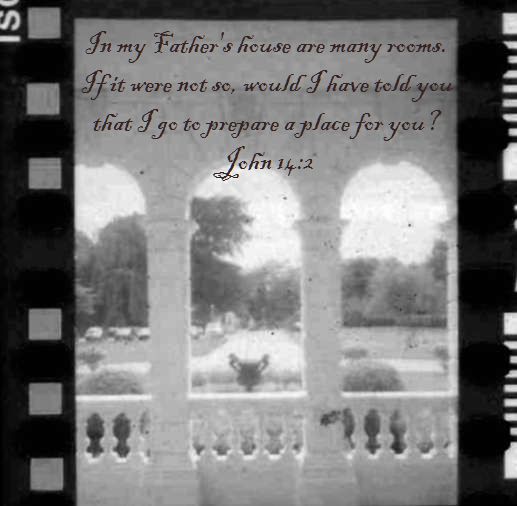
But, as it is written, “What no eye has seen, nor ear heard, nor the heart of man imagined, what God has prepared for those who love him”– (1 Corinthians 2:9)
But I can and do joyfully anticipate His courts even without being able to visualize them. It is quite humbling to think of Jesus preparing this place for us.
After some days Felix came with his wife Drusilla, who was Jewish, and he sent for Paul and heard him speak about faith in Christ Jesus. And as he reasoned about righteousness and self-control and the coming judgment, Felix was alarmed and said, “Go away for the present. When I get an opportunity I will summon you.” (Acts 24:24-25)
It is stated earlier that Felix was thoroughly familiar with “The Way”. (v. 22). Whether it was because Felix had been governor in the area for almost a decade, or because his wife was Jewish, or both, Felix was familiar with the facts about Jesus and his “sect” as Paul’s accuser Tertullus put it. Felix was secure in his knowledge of Christianity in the intellectual realms, enough to feel confident to make a decision regarding the case.
But when the case got personal, really personal, Felix became alarmed. He told Paul to go away and when it was a more convenient time, Felix would think about it. The Greek word for time used in this verse means “a suitable time” or “the right moment”. But there will never be a more convenient right moment.
As James Montgomery Boice said of Felix’s procrastination, if you put it off, the same sinful nature that made you put it off today will make you put it off tomorrow. Nothing will be different. In addition, you’ve begun a habit of procrastination which will only deepen and entrench. Tomorrow it will be worse for you. Now is the acceptable time (2 Corinthians 6:2).
Notice Felix’s alarm at being told of sin and judgment. In the Greek the meaning of terror is ‘being in the grip of a great Godly terror’. The word is used 5 times in the New Testament.
–When the women who brought spices to the tomb after Jesus’ death saw the gleaming angels, they were terrified. –When they were gathered and Jesus appeared to His disciples they became terrified. –Cornelius’ terror at seeing a holy angel in a God-given vision. –In Revelation when a great earthquake occurred and a tenth of Jerusalem fell, the people became terrified and gave God in heaven glory. –Felix, upon hearing Paul speak of sin and judgment.
You see, in each of the four cases, apart from Felix, the people became terrified upon directly seeing a slice of heaven. Or in the case of the earthquake they knew it was a mighty work of God Himself. And just as seeing a holy angel of God or experiencing God’s hand directly, Felix was experiencing heaven. It wasn’t just Paul speaking some words articulately and Felix becoming annoyed or a bit worried. It was the Holy Spirit opening the depths of Felix’s soul to see his own sin compared to heaven. It was a deep, spiritual terror. Paul’s words and their effect should have brought about the same reaction from Felix as Peter seeing Jesus as Lord of creation with the heavy, full nets of fish in Luke 5:8. Peter fell at Jesus feet, saying “Go away from me, I am a sinful man!” Felix said, “Uh, come back later, this is inconvenient for me.”
When Felix was confronted with his sin and positionally saw how far he was from Jesus, he should have done the same as Peter. Yet though the Lord graciously offered Felix the opportunity to see his sin in light of God’s glory, and though Felix did see it and became abjectly afraid, he procrastinated.
This is a decision. Jesus said whoever is not with Him is against Him. (Matthew 12:30).
So don’t let anyone sway you from evangelizing this way, talking of sin, self-control, righteousness, and the coming judgment. “Jesus loves you and has a wonderful plan for your life” doesn’t have the same potential spiritual terror to pierce the soul as “You’re dead in your sins and Jesus is coming to judge you.”
There is no record in the Bible as to whether Felix found “a more convenient time” and reconciled to God. Probably not, seeing as the next verse records that Felix kept Paul in prison to see if Paul would cough up some money for a bribe. In this case, it IS worse for Felix. All that intellectual knowledge will put him in a worse position at the judgment.
For it would have been better for them never to have known the way of righteousness than after knowing it to turn back from the holy commandment delivered to them. (2 Peter 2:21)
It’s Thanksgiving soon. I can think of no better gift than salvation to be thankful for. A close second is the Holy Spirit as a gift and a deposit inside us, illuminating the wonders of the Holy Bible to our mind and growing us in sanctification. Or perhaps Jesus forgiving our sins after salvation, or maybe it’s His chastisement which refines us into sterling silver and gold. Or maybe seeing the world, on our walk after the meal, and giving God the glory for His beautiful earth. Or His eternal, boundless grace. There is so MUCH to be thankful for, if you are a Christian. Offer the Gospel to someone today, maybe by next year at this time they will be praising God in gratitude for their reconciliation, and blessedly, Thanksgiving will have taken on a whole new meaning for them.
We’re familiar with infinity, even if we can’t really comprehend it. We know the Realtor selling point “There’s an infinity pool!” or the Toy Story motto “To Infinity and beyond!” which is pretty funny actually.
In the second grade classroom in which I am stationed as teacher aide, there is a number line above the Smart board. (AKA chalkboard for us old timers). To the left of zero are a host of negative numbers and to the right of zero is a host of increasing whole numbers. The teacher occasionally mentions to the kids that the numbers go on and on, to infinity.
When I was a schoolchild I learned about the number googol. I used to think that a googol was the largest number. It isn’t. But here is a Wikipedia definition of a googol:
A googol is the large number 10 to the 100. In decimal notation, it is written as the digit 1 followed by one hundred 0s. The term was coined in 1920 by 9-year-old Milton Sirotta (1911–1981), nephew of American mathematician Edward Kasner. A googol has no special significance in mathematics. However, it is useful when comparing with other very large quantities such as the number of subatomic particles in the visible universe or the number of hypothetical possibilities in a chess game. Kasner used it to illustrate the difference between an unimaginably large number and infinity, and in this role it is sometimes used in teaching mathematics.
The ancients had a difficult time expressing just large numbers. For centuries, the standard way to describe any number over 10,000 was “myriad.” A really, REALLY big number would be ‘myriad myriads’. Here in Deuteronomy 32:30 ISV the rhetorical question is asked how could one of the the thinly populated Jews have put ten thousand soldiers to flight, or two of the Jews put “a myriad to flight”. Other translations say ten thousand.
How can one person chase a thousand of them and two put a myriad to flight, unless their Rock delivers them and the LORD gives them up?
Of course a verse that comes immediately to mind is Revelation 5:11-
Then I looked, and I heard around the throne and the living creatures and the elders the voice of many angels, numbering myriads of myriads and thousands of thousands, One day, the famous mathematician Archimedes (287BC-212BC) wanted to sort of count the number of grains of sand, Or rather, he wondered how many grains of sand would be the upper limit of grains of sand that could fit into the universe. Archimedes definitely had big thoughts.Yet he knew that ‘myriad upon myriad’ was not going to suffice as a reckoning for this large number experiment he desired to perform. Wikipedia says,
In order to do this, he had to estimate the size of the universe according to the contemporary model, and invent a way to talk about extremely large numbers. … Archimedes had to invent a system of naming large numbers. The number system in use at that time could express numbers up to a myriad (μυριάς — 10,000), and by utilizing the word “myriad” itself, one can immediately extend this to naming all numbers up to a myriad myriads (10 to the 8th power.)
Anyway, the ancients had a hard time naming large numbers, and infinity is just beyond us all. It means endless, and comprehending endless numbers, or endless anything, is impossible.
Here’s another brain buster. The only reason we can even have numbers to infinity is because of God. God is infinite. He is beyond everything that there is.
Even though in our own crude, puny human way, we can only express the majestic God as myriad upon myriad big, the fact that we have an infinite relationship with Him is enough. Our time with Him is endless, boundless, impossible to calculate. We will worship Him in infinite glory endlessly.
If you listen to old time radio pastors from the 1930s through 1950s and later, each one at some point, has said that this generation of church-going Christians or this era of Christianity is going downhill. Charles Spurgeon famously published an anonymous article actually written by his friend Robert Shindler (with input from Spurgeon himself) addressing a visible downgrade in an 1887 issue of his magazine, Sword and Trowel. That article, and its follow up, famously brought the “Down-grade controversy” to the public’s attention.
A hundred and fifty years before Spurgeon, Jonathan Edwards wrote about the devil’s triumph in squelching a religious revival in New England and a lack of religious affections that had become evident in the people.
We can trace the genealogy of apostasy back to Genesis 6, or to Genesis 3. So is it anything new to say that this generation of church-going Christians are weak or falling away, that visible Christianity itself is downgrading itself in a compounding manner, faster and faster as we go? No.
Now the Spirit expressly says that in later times some will depart from the faith by devoting themselves to deceitful spirits and teachings of demons, (1 Timothy 4:1)







 the-end-time.org