Posted in bible, holy living, quiet

To Live Quietly…

My other blog is called The Quiet Life. It refers literally to the fact that I do not like noise. I like to live where there will not be loud noises, sustained interrupting noises, or any other wise unpleasant noises. I do not like them.

More philosophically the blog title refers to this verse from 1 Thessalonians 4:11 which is an important verse to me,

and to aspire to live quietly, and to mind your own affairs, and to work with your hands, as we instructed you,

I like the word ‘aspire’ and then the surprise of what comes next- ‘live quietly’. Usually aspirations include lofty things like winning the Pulitzer or becoming President of the US. Or at least, getting that raise or becoming a homeowner. One does not aspire to be quiet. Not unless you’re a Christian and you’re used to the Bible illustrating an upside down lifestyle. The first shall be last and the last shall be first. Meek shall inherit the earth. Do not expect to be served but to serve. Now we see that a holy aspiration is to live quietly. Why?

Excerpt:

First, his readers should lead a restful life. The word translated quiet (hēsychazein) means quiet in the sense of restfulness (cf. Acts 22:2; 2 Thes. 3:12; 1 Tim. 2:2, 11), rather than quiet as opposed to talkativeness (sigaō; cf. Acts 21:40; 1 Cor. 14:34). The former means “undisturbed, settled, not noisy,” while the latter means “silent.” Paul was telling the Thessalonians to be less frantic, not less exuberant. A person who is constantly on the move is frequently a bother to other people as well as somewhat distracted from his own walk with God. The latter can lead to the former. But a Christian who strives to be at peace with himself and God will be a source of peace to his brethren. Such quietude constitutes a practical demonstration of love for others.

Second, Paul recommended minding one’s own business. The connection with love for the brethren is obvious (cf. Prov. 25:17).

Third, working with one’s own hands demonstrates love for the brethren because a self-supporting person is not a burden to others. Paul himself set the example by working with his hands when he was in Thessalonica (1 Thes. 2:9). Too restful a life can be a problem also, and Paul guarded against that with this instruction. This verse dignifies manual labor. The reference also suggests that many, perhaps most, in the church came out of the working class. The Greeks deplored manual labor and relegated it to slaves as much as possible. But the Jews held it in esteem; every Jewish boy was taught a trade regardless of his family’s wealth. Work itself is a blessing, and working with one’s hands should never be despised by Christians. A man who is willing to work with his hands demonstrates his love for his brethren by being willing to humble himself to provide for his own needs so that he does not depend on others but provides for himself.

Constable, T. L. (1985). 1 Thessalonians. In J. F. Walvoord & R. B. Zuck (Eds.), The Bible Knowledge Commentary: An Exposition of the Scriptures (Vol. 2, p. 703). Wheaton, IL: Victor Books.

Posted in bible, jonathan edwards, repentance, revival, sinners in the hands of an angry god, valley of vision

Marks of a True Spirit-initiated Revival

The Book of Acts is such a wonderful book to study. I’m fascinated by what the Spirit brings to mind each time I read through it. On Wednesday night we were studying the end of chapter 13 and the beginning of 14. I was thinking about Acts chapter 13, verse 42. Here are the rabbit trails I went down after I got home and in the succeeding two days 🙂

As they went out, the people begged that these things might be told them the next Sabbath. (Acts 13:42)

Antioch. From Wikipedia

I focused on the word “begged”. Isn’t it wonderful that the people BEGGED to hear more of the Word. Begged to hear more of the Good News. It seemed important. Begged.

I started thinking of the reaction of people to the Gospel that Acts shows us. Shortly after the verse 42 was this one in v. 44

The next Sabbath almost the whole city gathered to hear the word of the Lord.

What a wonderful work of the Spirit! To ignite an entire city’s heart so that almost all of them turned out! I know that among the crowd would like be some rubber-neckers, others would be sent to spy on them (Gal 2:4) but still, almost an entire city eager and begging to hear of the Gospel. It blesses the heart and refreshes the mind to even think of such a thing happening today.

That thought brought me to another city that turned out to hear the message from God, this time, not Good News but Bad News: impending Divine wrath. Jonah preached only one day into a three-day walk sized city and immediately they were repenting already. (Jonah 3:3-4). Again, another amazing move of the Spirit.

Turning from those days to Enfield CT when Jonathan Edwards preached Sinners in the Hands of an Angry God, I was thinking of the Spirit’s lack of move in Edwards’ own congregation. He’d preached the same sermon to his own people but it fell like a lead balloon. When Edwards was invited to preach at Enfield, it had an immediate impact, the historically verified one we know of today.

The Dictionary of Bible Themes defines revival as

The soveriegn activity of God whereby he renews his people individually and corporately in vigour, affecting both sincerity of belief and quality of behaviour.

What seems to be the marks of a real revival? In looking at Antioch, Nineveh, and Enfield CT the same things are present:

–an immediate response (eagerness to hear more of God’s word, repentance)

–widespread impact (in the case of the Woman at the Well, her individual conversion resulted in telling the Good News to the town, which all showed up asking Jesus to stay and tell them more as per John 4:40. In the case of the corporate conversion, the people at Antioch wanted to hear more and all showed up the next week to listen to Paul.)

–demonic opposition (angry Pharisees, plots, riots, rejection. Even as Edwards was lauded for the sermon and people begged to hear it over and over from different pulpits to which he was invited, after a several-year fight he was dismissed from his own pastorate for trying to lead them away from the liberalism and compromise in the Half-Way Covenant).

It’s so strange to think of the Spirit’s move in masses of people. In Nineveh, widespread repentance. In Jerusalem, widespread rejection of Jesus and His followers. In Antioch, widespread acceptance (at least, a curiosity without rancor). In Lystra, they drove Paul out and stoned him. In June 1741 in Northampton, Edwards’ sermon was received without murmur. A month later in Enfield, they tore their clothes and begged to be saved.

It seems that after repentance, the very least one should see in a genuinely converted or revived person or corporate entity is eagerness to hear the Word preached, to study it, and proclaim it. After that, one should expect to see lives that align with the repentance they professed, in the form of a personal hatred of sin and progressive sanctification as their old man dies and the New Man is growing in them. Last, one should expect to see perseverance of the saints. The genuinely revived or converted will not fall away

The wind blows where it wishes, and you hear its sound, but you do not know where it comes from or where it goes. So it is with everyone who is born of the Spirit.” John 3:8

Matthew Henry wrote,

The Spirit sends his influences where, and when, on whom, and in what measure and degree, he pleases. Though the causes are hidden, the effects are plain, when the soul is brought to mourn for sin, and to breathe after Christ.

The Faithlife Study Bible Commentary says,

3:8 wind The Greek word pneuma can mean “wind,” “breath,” or “spirit.” John uses the metaphor of the wind as a power that is felt but unseen to explain the power of the Spirit of God. This echoes God’s Spirit hovering before His creative works began—providing credence for the Spirit that Jesus initiates among all believers being one with God the Father as well (1:2). The creative act of God will enter people, becoming the source of their transformation back into God’s image.

The Holy Spirit’s work in salvation individually or corporately, is a wondrous strange thing.

Lord Jesus, I sin. Grant that I may never cease grieving because of it, never be content with myself, never think I can reach a point of perfection. Kill my envy, command my tongue, trample down self. Give me grace to be holy, kind, gentle, pure, peaceable, to live for Thee and not for self, to copy Thy words, acts, spirit, to be transformed into Thy likeness, to be consecrated wholly to Thee, to live entirely to Thy glory. Valley of Vision

Posted in bible, hermeneutic, life verse, what this verse means to me

Rejecting "Life verses" and "What this verse means to me" because interpreting the Bible is not a Rorschach test

Hermeneutics. It’s not a word you hear often inside of churches. In our watered down state, preachers and pastors rarely use the “big words” any more. If they do, they’re abashed and even apologize for saying theological words like ‘justification’ or ‘inerrancy.’ However hermeneutics is a battleground in our continued spiritual warfare against the schemes of the devil. You have to know what it is.

From the Compact Dictionary Doctrinal Words by Terry L. Mithe, hermeneutics is

From the Greek hermeneutikos, “interpretation.” Hermeneutics is the science of the study and interpretation of Scripture, the branch of theology that prescribes rules by which the Bible should be interpreted. Biblical hermeneutics strives to formulate guidelines for studying scripture that help recover the meaning a biblical text had for its original hearers.

There are three essays and a quote regarding hermeneutics I came across yesterday which illuminate the practice of hermeneutics and also illustrates the problems today with casual interpretation and practices infiltrating the Christian life, such as “life verses” and “what this verse means to me”.


1. Erin Benziger at Do Not Be Surprised and her personal experience of being taught a verse that had a particular meaning to the teacher and the teacher only
2. John MacArthur explaining the fallacy of teaching ‘What does this verse mean “to me?”‘
3. Craig A. Parton comparing the similarity of the principles behind legal interpretations and biblical hermeneutics

The first is from Friday’s This N That posting by Erin Benziger at Do Not Be Surprised. She wrote,

I recently attended a simulcast event for a popular women’s ‘Bible teacher.’ Not long after I settled into my seat, a woman from the host church stood up to welcome us and to share with us her ‘life verse.’ The divine irony of this was that the most recent episode of Equipping Eve, in which I discussed the life verse craze, was airing that very same day. I couldn’t help but smile, but my amusement was short-lived as I heard this woman say, “Now, what this verse means to me is…”

I listened to this most recent episode of Equipping Eve regarding live verses (and labyrinths) and it’s a good episode.

Biblical interpretation is not a Rorschach test “What do you see in the inkblot?”

Benziger then went on to post-

So, what does John MacArthur say about the ‘what does this verse mean to you’ method of interpreting Scripture?

I read MacArthur’s essay, it’s good. I highly recommend it. Here is an excerpt:

What Does This Verse Mean “to Me”?
Titus 1:9, Romans 12:1-2 June 16, 2009

That’s a fashionable concern, judging from the trends in devotional booklets, home Bible study discussions, Sunday-school literature, and most popular preaching. The question of what Scripture means has taken a back seat to the issue of what it means “to me.” The difference may seem insignificant at first. Nevertheless, our obsession with the Scripture’s applicability reflects a fundamental weakness. We have adopted practicality as the ultimate judge of the worth of God’s Word.

In just one sentence, MacArthur punctures the practice. We cannot adopt a scripture because it has personal applicability to us and dispense with other verses because they don’t. MacArthur continues,

No believer can apply truth he doesn’t know. Those who don’t understand what the Bible really says about marriage, divorce, family, child-rearing, discipline, money, debt, work, service to Christ, eternal rewards, helping the poor, caring for widows, respecting government, and other teachings won’t be able to apply it. Those who don’t know what the Bible teaches about salvation cannot be saved. Those who don’t know what the Bible teaches about holiness are incapable of dealing with sin. Thus they are unable to live fully to their own blessedness and God’s glory. True doctrine transforms behavior as it is woven into the fabric of everyday life. But it must be understood if it is to have its impact. The real challenge of the ministry is to dispense the truth clearly and accurately. Practical application comes easily by comparison.

Solid biblical hermeneutics searches for truth under the premise of “What did God intend for me to know about Himself in this passage?” versus today’s practice of me-centered interpretations asking “What does this verse mean to me?” The latter leads to a false kind of open-mindedness regarding interpretation. In theology at some point you need firmness, it’s imperative to obtain a settled authoritative stance on at least the fundamentals of the faith.

Dogmatic theology gets its name from the Greek and Latin word dogma which, when referring to theology, simply means “a doctrine or body of doctrines formally and authoritatively affirmed.”

Biblical hermeneutics appropriately conducted leads to an illumination of the scriptures which leads to a Spirit-settled understanding which leads to an authoritative witness with conviction. S. Lewis Johnson this in his sermon “Paul’s Right to Compensation.” In highlighting the importance of dogmatism he compared the ridiculousness of open-minded non-dogmatism in the secular world:

Now, I’ve been talking like I’m dogmatic, haven’t I? I’ve been trying to inject a little bit of the apostolic dogmatism in it. The world has little use for people without convictions when — for example, when your child becomes very, very sick and you want to call a doctor, you don’t call a doctor who is open-minded about personal disease, do you? Or we don’t send our children to school if we know the teachers are open-minded about the multiplication tables and things like that. We don’t do that. We want someone that we have confidence in…

The third piece I stumbled across was an excellent discussion of the science of the interpretation of Law, by Craig A. Parton from Patrick Henry College. It seems to have been written about ten years ago, on the heels of an important Supreme Court decision. It’s titled,

Remember, hermeneutics is the science of the study and interpretation of Scripture, the branch of theology that prescribes rules by which the Bible should be interpreted. There are prescribed rules for interpreting Law, as well. Why are we content with leaving the interpretation of medical issues and legal issues to the doctors and lawyers, intuitively understanding that their years of training and education allow them this right, yet when it comes to the Word of God, it’s a free-for-all? Mr Parton wrote in his introduction,

[T]he issue that defined the end of last century and defines our current day is one that few Christians could have ever seen coming. It was, simply, the question of hermeneutics or interpretation. As powerful efforts were made by historical, legal and literary apologists (e.g. the likes of Lewis, Chesterton, and Montgomery) to establish the facticity of Christian revelation and its utter and complete trustworthiness, the enemy was forced to shift the field of battle. Instead of launching frontal assaults on the sufficiency of the evidence for the case for Christianity (a difficult chore indeed in light of the evidence for the resurrection alone and its fundamental legal and evidential adequacy), the questions surrounding interpretation sought to make the inquiry futile–or worse, just another viewpoint in the marketplace of relativistic worldviews…

Scalia has taken an approach to the interpretation of the Constitution that is directly in line with the traditional “historical grammatical”school of creedal Christianity, a method engaged in by serious Biblical interpreters for centuries prior to the Age of the Enlightenment.

There are valuable lessons to be learned from how Justice Scalia has articulated his position and how it has stood up to the postmodernist arguments of the likes of Supreme Court Justice Anthony Kennedy and Professor Lawrence Tribe of the Harvard Law School. Scalia’s approach is a powerful apologetical anecdote to postmodernism and its oft-used and abused mantra that “even if the New Testament text is reliable, ultimately it all comes down to a matter of interpretation and interpretation is a subjective undertaking.”

Not so, says Scalia. Not so, says the orthodox Christian interpreter.

OK, that was an interesting introduction, excerpted as it was. There is a science of interpretation that adheres to rules and has rigor, which is increasingly being set aside for open-minded views which only serve to confuse the Christian. In his article, Mr Parton outlined the legal approach with the Christian approach, quoting Justice Scalia in three main points,

1. The actual words control every interpretation of a text and no interpretation should suffer to contradict the natural and plain sense of the text.

In this case, I’ll offer you the example of a plain and simple verse that should be easily interpreted: “The wages of sin is death.” (Romans 6:23). Yet people dispute the interpretation of wages, redefine sin, and claim death is annihilation, not eternal conscious torment. They also redefine and dispute eternal (as in eternal punishment), wrath, and refute plain texts such as “women may not teach men in the church” and “homosexuality is sin”(no, it’s lack of hospitality is sin…”. Yet the plain meaning is clear. Next,

2. The meaning of a text should never be created from external sources (nor, we might add, from the pressure of current events or evolving public opinion) and then imposed on a text to render a meaning contrary to the clear language.
For Justice Scalia, when a text is clear on its face, that ends the matter. To then plumb the depths of secondary sources to impose a meaning contrary to the clear text would be to engage in pure divinization. Lord Bacon summed it up nicely: Non est interpretatio, sed divinatio, quae recedit a litera (“Interpretation that departs from the letter of the text is not interpretation but divination.”)

When we say “what this verse means to me,” particularly about a clear, plain textual meaning of a verse, it is an interpretation coming from external sources: outside of the word of God. The third principle Parton outlines in his comparison of biblical interpretation and legal interpretation is

3. There is one best interpretation of a passage.

Traditional Biblical interpretation stresses the “sensus literalis unus est”–the one proper and intended sense of the text. This is determined from the words of the document itself. The law supports this approach unreservedly, and the rules of evidence in California set this forth in a number of specific principles of contract–or document–construction.

Does a pastor ascend the pulpit on a Sunday morning after a week of study, and say, “Open to John chapter 3, here is what the verse means to me. It may mean something different to you.” No. Not a good pastor anyway.

Via the Iranian Atheist agnostic movement.
“What this verse means to me” is only a step away
from how we view scripture as per this atheist flowchart.

In contrasting the “this verse means to me” approach with the biblical approach, we now turn to Acts 8:26:40. The Spirit directed Philip the evangelist to go up to the Ethiopian Eunuch, who was seated in his chariot reading scripture, Isaiah 53 as it turns out. How did Philip begin the teaching lesson? Did He say, “Oh, I see you are reading scripture. What does the verse ‘“Like a sheep he was led to the slaughter and like a lamb before its shearer is silent, so he opens not his mouth’ mean to you?”

Of course not. We read in Acts 8:30-31 that Philip asked, “Do you understand what you are reading?” This indicates there is one understanding, not many understandings dependent on personal applicability, whether the reader likes it, or how it fits into their culture or era.

In humility, the Eunuch said, “How can I, unless someone guides me?” indicating that interpreting a verse is not about a mutual exchange of different interpretations relative to an individual’s personal meaning, but a teacher-student relationship wherein one submits to the other’s greater knowledge and listens. (Always check for proper interpretations as a Berean afterward as per Acts 17:11). What happened next was,

Then Philip opened his mouth, and beginning with this Scripture he told him the good news about Jesus. (Acts 8:35)

Philip told him. Dogmatically, authoritatively. That’s what a teacher does, he studies, submits himself to the Spirit and seeks the interpretation. Then he tells the Good News. Do we say “I will share the Good News. It’s Good News to Me. Maybe it won’t be to you.” Heavens, no!

Parton ends his essay about interpreting the Law and the Bible,

Second, lawyers deal with facts and evidence. As importantly, they deal with verdicts, some of which literally involve life and death for the parties. The law therefore has a distinct advantage over speculative postmodern literary criticism which remains insulated in comfortable academia, often totally isolated from the a world where postmodern approaches are totally and thoroughly unworkable.[13] In the final analysis, a Court hearing a case of contractual interpretation will decide that one party–and one party only–has the correct interpretation of a document. Any judge presiding over a case of contract interpretation who concludes that “everybody is entitled to their own interpretation” and that “all interpretations are equal” would be given time off to pursue other more productive occupations…

If a Judge is duty bound to search the documentation until he can offer a delivery of the ONE interpretation, how much more so should we do this in the scriptures?!

This is not to say that we aren’t humble. Philip was humble when he submitted to the Spirit’s order to go where he didn’t know and approach the person he didn’t know and explain the scriptures to him. The Eunuch was also humble in his reply.

The difference between errant dogmatism and correct dogmatism in hermeneutical interpretation is the Holy Spirit. He will settle you, if you earnestly seek the Lord and submit to His teaching. Once a passage or doctrine is settled in your mind due to the Spirit’s illumination, then is the time to explain, exhort, and defend.

This has been a lengthy explanation of why we should not say “here’s what the verse means to me.” It means what it means, and if you don’t know, study more and be quiet until you do. You’re not displaying sincere humility when you approach scripture by saying, “well I’m not sure, but what it means to me is…” you’re actually prideful, because you’re ignorant but speaking up anyway. ‘What the verse means to me’ only confounds, confuses and doesn’t help someone arrive at the crystal clear beauty of what Jesus is saying and who He is. Matthew Henry explains Peter’s verse in 2 Peter 1:20, “knowing this first of all, that no prophecy of Scripture comes from someone’s own interpretation“. Peter is talking about the origin of scripture and man’s responsibility to interpret it.

Observe, No scripture prophecy is of private interpretation (or a man’s own proper opinion, an explication of his own mind), but the revelation of the mind of God. … But though the scripture be not the effusion of man’s own private opinion or inclination, but the revelation of the mind and will of God, yet every private man ought to search it, and come to understand the sense and meaning thereof.

Henry, M. (1994). Matthew Henry’s commentary on the whole Bible: complete and unabridged in one volume (p. 2436). Peabody: Hendrickson.

We don’t need a life verse to see His beauty from Genesis 1:1 to Revelation 22:21, from the opening “In the beginning” to the last “Amen”. Life verses only diminish the majesty of the total picture. “What this verse means to me” is making yourself the idol instead of searching for what God intended for us to know.

Posted in bible, encouragement, gideons, gideons international, word

Gideons hand out 2 BILLIONTH Bible!

Gideons International reports:

The Gideons International has just surpassed the two billion mark in distributing Bibles and New Testaments.

The distribution of the first one billion Bibles and New Testaments by Gideon members spanned 93 years (1908 to 2001). This second billion was attained in less than 14 years (2002 to 2015).

To celebrate what God has accomplished through this ministry, The Gideons are scheduling representatives of their membership to present a Two Billionth Commemorative Bible to as many of the leaders as possible in the countries in which they are organized.

The Gideons currently distribute over 80 million Scriptures annually, and the numbers are growing, especially in places like Brazil, India, and Asia. Through the efforts of over 300,000 members in 200 countries, territories, and possessions, The Gideons share more than two Scriptures every second of every day—in over 90 languages.

More Than Just A Number
As we rejoice in this two-billionth Scripture placement, we are mindful that the real significance is what the number represents.

“It is more than just a number,” says International President Dr. William E.G. Thomas. “We are placing Bibles because they save souls. Behind every number is a face, behind every face a story, behind every story a priceless soul that could live throughout eternity.”

The impact of these Scriptures can be seen through the many testimonies we’ve shared with you on this blog. These are real stories of souls saved and lives changed as a result of someone coming to a saving knowledge of Jesus through a copy of God’s Word provided through The Gideons International. And as the Lord is faithful to His promise in Isaiah 55:11, we can be assured that each Scripture placed touches a life, and often, many lives.

We Are So Grateful
We are also deeply grateful for the pastors, churches, and individual donors who support us through their prayers and gifts.

Most of all, we thank God, to Whom we give all the glory for each and every Scripture distributed, and for every soul saved as a result. Until He comes again, we will continue to seek His will in taking His Word to all the nations.

Please share this praise for our two billionth Scripture with your pastor, friends and family.

Would you like to make an impact right now? Click here to Give God’s Word.

Posted in bible, encouragement, refresh, word

And now a word from our sponsor: the Word of God

Saturday was a great morning and I’ll tell you why. Last week was the beginning of State Testing, it’s a demanding time for the kids and test administrators, proctors, and everyone else. Very stressful. On Friday I had a bad day after receiving some news about a student. I arrived home Friday feeling beaten up, wrung out, run over, and cast off. I was wiped out.

Did you ever get home from a long week and your body just throbs? Pulses with stress and worldly pollution and reverberating with clanging and noise you just can’t seem to get out or clear your head? That was Friday night.

Saturday morning I slept late, always nice. (until 7:00 am!). I got my Bountiful Basket from a friend who who kindly picks it up for me in Athens when she goes to get hers, and we meet halfway between. I came home and roasted broccoli, butternut squash, orange peppers, and spaghetti squash. On BB weekends which occur every other Saturday, when I process the produce and cook, I listen to sermons. I enjoy Refnet, Reformation Network. It’s a 24-hour online radio station featuring expositional sermons, prayers from the Valley of Vision, music and hymns, devotionals, some talk on news issues from a Christian perspective, and plain old reading of the word, uninterrupted and unadulterated. It’s a great network. No ads, and it’s free.

So on Saturday morning while my hands worked, my mind was busy listening. I listened to three sermons on RefNet.fm while I cooked: Alistair Begg on David and Goliath (which is not about facing your giants but is about the might of God), RC Sproul on Mary’s Magnificat (brought me to tears), and John MacArthur on predestination in Romans 8, gorgeous.

Reformation Network: 24-Hour Internet Radio Committed To the Historic Christian Faith

As for the prayers, I heard one from the Valley of Vision that just about killed me, it was so beautifully written. Here is just part of it:

Lord Jesus, give me a deeper repentance, a horror of sin, a dread of its approach. Help me to flee it and jealously to resolve that my heart shall be yours alone. Give me a deeper trust, that I may lose myself to find myself in you, the ground of my rest, the spring of my being. Give me a deeper knowledge of you as Savior, Master, Lord, and King. Give me deeper power in private prayer, more sweetness in your Word, more steadfast grip on its truth. Give me deeper holiness in speech, thought, action, and let me not seek moral virtue apart from you. The Valley of Vision (Puritan Prayer)

When people are stressed or overwhelmed they do a lot of things. They work out. They go for a walk. They cook ;). They enjoy their hobby/game/movie. For the Christian, there is no better stress reliever than the Word. Read it or listen to it. I don’t know how to explain the supernatural advance of the Spirit in us, but when I listen to the reading of the word and sermons explaining the word and music that praises the Lord, it does something to me. It washes me from the inside. It restores me, cleans me, revives me.

After a few hours, my heart was expanded with love for Jesus, my head was full of scripture, and my belly was satisfied with food He had provided.

The law of the LORD is perfect, reviving the soul; (Psalm 19:7a)

he refreshes my soul. He guides me along the right paths for his name’s sake. (Psalm 23:3)

I am exceedingly afflicted; Revive me, O LORD, according to Thy word. (Psalm 119:107)

for he satisfies the thirsty and fills the hungry with good things. (Psalm 107:9)

He gives strength to the weary and increases the power of the weak. (Isaiah 40:29)

Power-
and what is the immeasurable greatness of his power toward us who believe, according to the working of his great might (Ephesians 1:19)

The reviving energy of the Word is part of the great power He bestows on us.

The word “power” (dynamis; cf. 3:20) means a spiritually dynamic and living force. This power of God is directed toward believers. Paul then used three additional words to describe God’s power. It is according to the working (energeian, “energetic power,” from which comes the Eng. “energy”) of the might (kratous, “power that overcomes resistance,” as in Christ’s miracles; this word is used only of God, never of believers) of God’s inherent strength (ischyos) which He provides (cf. 6:10; 1 Peter 4:11). This magnificent accumulation of words for power under scores the magnitude of God’s “great power” available to Christians.
Hoehner, H. W. (1985). Ephesians. In J. F. Walvoord & R. B. Zuck (Eds.), The Bible Knowledge Commentary: An Exposition of the Scriptures (Vol. 2, p. 620). Wheaton, IL: Victor Books.

What a good and loving God we have. His word is eternal and strong, it refreshes, revives, strengthens, and enlivens. Don’t put off reading it or listening to it.

Before reading/listening to the Word

After reading/listening to the Word

Posted in bible, flea, fly, insects, locust

Locusts and bees and flies, oh my! Insects in the Bible

It’s spring, and that means birds are back, yay! It unfortunately also means bug season.

I walked around the yard and over to the pasture and I pass wasps busily building nests, carpenter bees buzzing, bumble bees in the wildflowers, fleas trying to get on my cats, flies, and moths circling the spotlight.

When I came back inside, I settled down to Facebook to see what was what and who was who. People like to post photos with quotes on them. Often, far too often, the quote is from someone who is a false teacher or at least, on the path and is currently not highly trustworthy. I’ve often wondered how far to go in adding my 2¢.

Today I made three comments regarding the Truth, which were not totally affirming of the posted quote but offered an alternate view. I thought of the term “gadfly.” According to Wikipedia,

A gadfly is a person who upsets the status quo by posing upsetting or novel questions.

The term “gadfly” was used by Plato in the Apology to describe Socrates’s relationship of uncomfortable goad to the Athenian political scene, which he compared to a slow and dimwitted horse.During his defense when on trial for his life, Socrates, according to Plato’s writings, pointed out that dissent, like the gadfly, was easy to swat, but the cost to society of silencing individuals who were irritating could be very high. “If you kill a man like me, you will injure yourselves more than you will injure me,” because his role was that of a gadfly, “to sting people and whip them into a fury, all in the service of truth.”

I don’t see my role as that, to purposely whip people into a fury, but often in employing the gift of discernment the results evidenced are emotions that range from irritation to fury. Sometimes people are stung when you offer that their favorite teacher is really a false teacher, or their pet doctrine is unbiblical, or their method isn’t aligned with what the bible says. Some examples of gadfly questions or statements might be:

  • Are you sure you want to continue doing altar calls?
  • Did you know that Billy Graham preached a different Gospel?
  • Is Beth Moore the best curriculum we can find or are there others that would be more biblical?
  • I don’t think free will means what you think it means
  • Is it possible that LifeWay has become untrustworthy and sells things with heretical doctrine in them?

The thought about gadflies brought me to a biblical reference about gadflies in Jeremiah 46:20.

Egypt is a beautiful heifer, but a gadfly is coming against her from the north.” (NIV)

Yes, the gadfly cometh. LOL. I got to thinking about animals in the Bible in general. We think of leviathan, or the great fish that swallowed Jonah, or the bears that tore up the mocking boys, or the lions that David fought, but what of lowly insects?

Locust

The bible mentions them frequently. Some of the plagues God put on Pharaoh and his people were insects. The Plague of Gnats, the Plague of Flies (Exodus 8), the Plague of Locusts (Exodus 10).

John the Baptist ate wild honey and locusts in the desert. (Matthew 3:4). God even likened Himself to a moth once. (Hosea 5:12). But what of other insects in the Bible?

INSECTS: we find at least 23 names of insects or words referring to them: ant, bald locust, bee, beetle, cankerworm, caterpillar, creeping thing, cricket, crimson, flea, fly, gnat, grasshopper, honey, hornet, locust, louse, (lice), moth, palmer-worm, sandfly, scarlet-worm, silk-worm.

These can be referred to about 12 insects, which, arranged systematically, are:
Hymenoptera, ant, bee, hornet;
Siphonaplera, flea;
Diplera, fly;
Rhynchota, louse, scarlet-worm;
Orthoptera, several kinds of grasshoppers and locusts.

The word “worm” refers not only to the scarlet-worm, but to various larvae of Lepidoptera, Coleoptera, and Diptera. “Creeping things” refers indefinitely to insects, reptiles, and beasts. In the list of 23 names given above honey and bee refer to one insect, as do crimson and scarlet. Sandfly has no place if “lice” be retained in Ex 8:16 ff. Bald locust, beetle, canker-worm, cricket, and palmer-worm probably all denote various kinds of grasshoppers and locusts.

The Eng. language seems to lack appropriate names for different kinds of grasshoppers and locusts, and it is difficult to suggest any names to take the places of those against which these criticisms are directed. See under the names of the respective insects.

See also SCORPION and SPIDER, which are not included here because they are not strictly insects.

Source: Day, A. E. (1915). Insects. In J. Orr, J. L. Nuelsen, E. Y. Mullins, & M. O. Evans (Eds.), The International Standard Bible Encyclopaedia (Vol. 1–5, p. 1473). Chicago: The Howard-Severance Company.

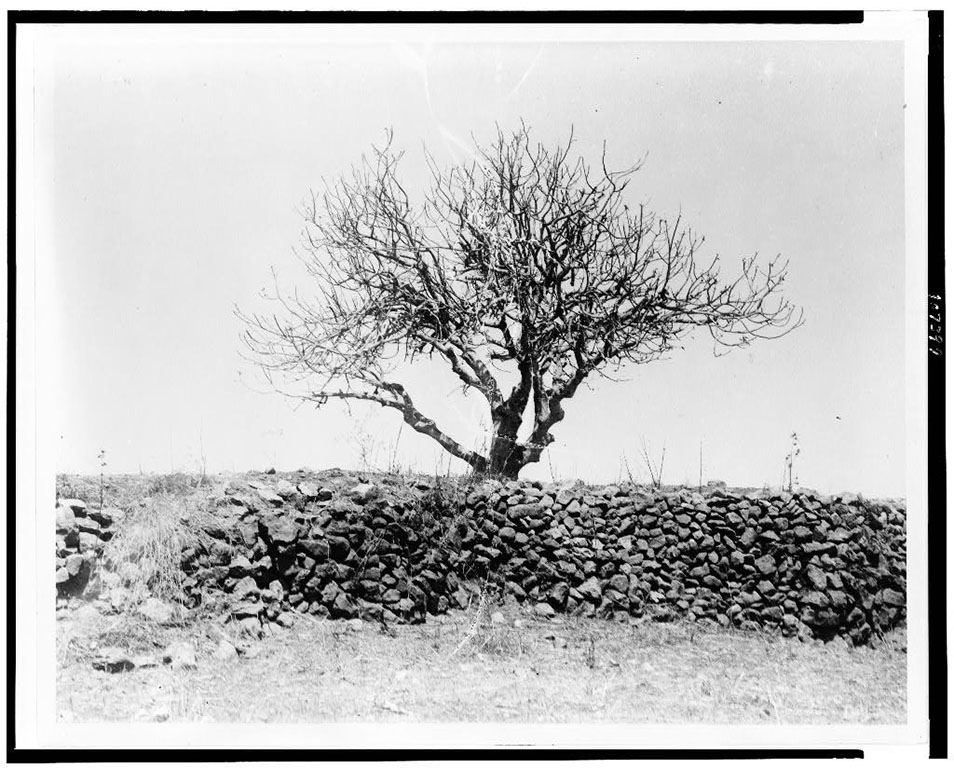
In 1915, swarms of locusts devastated Palestine. An American Colony photographer took this picture of a fig tree that the locusts had stripped bare. The picture starkly illustrates the kind of damage these insects would have inflicted during the locust plague in Egypt and in the other instances that the Bible mentions of locust swarms. ‎Exod 10:4–19, Deut 28:38, Joel 1:4, Joel 2:25, Amos 7:1, Rev 9:3–7
‎Image by Matson Photo Service, from Library of Congress. License: Public Domain

The Bitterness of Pharaoh

God used insects as the dividing line to show Pharaoh Who is in charge of creation.

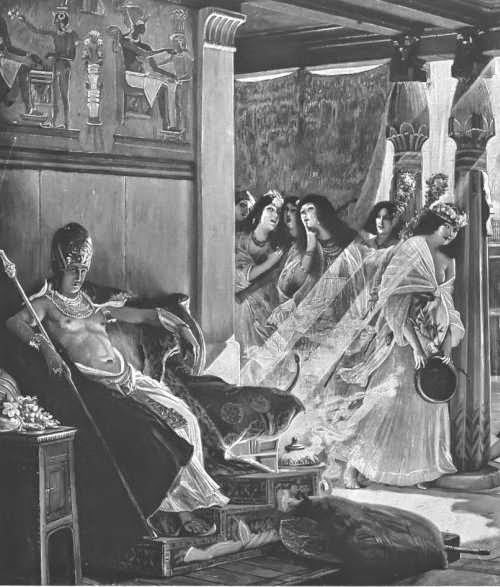
‎After the third and fourth plagues there could no longer be any doubt as to the power of Moses, and very little doubt as to his divine authority. When the plague of lice came, Pharaoh’s magicians tried to imitate it and failed, and they confessed to him that they believed that Moses had the power of a god. In the plague of flies, Moses for the first time drew a dividing line: the flies did not come into the houses of the Israelites; they pestered only the Egyptians.

‎Strangely indeed must Pharaoh have felt his position. He, the absolute monarch who had always had his way in everything and been all powerful, who was called a god by his people, he was now told by his own learned men that there was another more powerful than he, that there was a real God acting against him, and that he must yield. The Bible and its Story, Volume 2: The Law, Leviticus to Deuteronomy, Horne, Charles, Bewer, Julius

In Isaiah 7:18 we read,

In that day the LORD will whistle for the fly that is at the end of the streams of Egypt, and for the bee that is in the land of Assyria.

Flies were a serious problem.

As the plague is represented as filling the houses of the Egyptians, it is likely that the house-flies (Muscidae) are intended. In the warm climate of Egypt these insects are an annoyance that can hardly be overstated. The manner in which they assemble in dense clouds at such a sun-trap as Akaba, for instance, is almost inconceivable, and the irritation they produce is heightened by the knowledge that they are capable of carrying an infectious sort of ophthalmia, which is a prevalent disorder amongst the Bedouins, from person to person. Owing to the softness of the skin in the warm climate, the house-fly of Egypt is soon able to effect a penetration in tender parts, such as the corner of the eyes, and the vulnerable point speedily becomes a throbbing mass of these abominable insects, who are thus enabled to suck the blood and produce festering sores.

The other term translated by the word fly is zebub. It occurs in Eccles. 10:1, ‘Dead flies cause the ointment of the apothecary to send forth a stinking savour;’ and here the term is probably generically used for the swarms of flies, which speedily cause corruption and pollution in anything capable of being attacked by them in the East. The ointments spoken of are perfumed unguents and cosmetics, so largely used in these countries.

The second passage where zebub occurs is in Isa. 7:18, ‘the Lord shall hiss for the fly that is in the uttermost part of the rivers of Egypt, and for the bee that is in the land of Assyria.’ [See under BEE.] This word zebub has been identified with the modern Arabic ḍebab, which is a name given to a species of gad-fly. A species of Tabanus, or ‘breeze fly,’ is stated to be common in the valleys of the Jordan and the Nile, and is very injurious to animals. To this genus our ‘horse-flies’ or ‘clegs’ belong, which are armed with an arrangement of lancets enabling them to make a clean incision for the purpose of blood-sucking.

Hart, H. C. (1888). The Animals Mentioned in the Bible (pp. 100–101). London: The Religious Tract Society.

God is amazing as Creator. Everything He created was very good. (Genesis 1:31). Insects didn’t bite, suck blood, cause disease, or pollute the food and ointments (Ecc 10:1). Yet sin entered the world and the ground was cursed and creation was polluted with thorns and sweat and blood and death. Yet even then, God uses insects to carry out His will and He uses them in general as symbols of His might and His plan. Insects individually might be lowly, but when God uses them, they are mighty!

A Psalm of David. The earth is the LORD’s and the fullness thereof, the world and those who dwell therein, (Psalm 24:1)

I hope you have enjoyed this short survey of insects in the Bible.

Here are some photos of the insects I have met in my yard…

Bee. EPrata photo

Fire ants. EPrata photo

Fly. EPrata photo

Wasp. EPrata photo

Posted in bible, hermeneutic, interpetation

The Spirit’s illumination and how the Sadducees missed the boat

We know that it is possible to interpret the bible too liberally. We run into that all the time. People put their own spin on things, twist the scriptures, even add tradition or direct revelation to the sacred word. What comes out the other end is a different Jesus and a different Gospel.

But is it possible to interpret the bible too narrowly? To interpret it so strictly or literally that many general concepts are missed, and you wind up with a different gospel just the same as interpreting too liberally? Yes.

One example of a group that exhibited that kind of hermeneutic are the Sadducees.

The Sadducees

The Sadducees were one of the major Jewish religious groups in Israel from the Maccabean period (167 BC) through the destruction of the temple (AD 70). While we do not have any of their writings, the information we do have paints a picture of a rather small group of individuals and families who maintained a strong influence on the leadership of the Jewish people under Roman rule. They were popular with the aristocracy and the wealthy, but they did not enjoy the support of most of the people.

The term Sadducees is likely derived from Zadok, the high priest at the time of David (1 Sam 8:17; 15:24) and Solomon (1 Kgs 1:34; 1 Chr 12:29). The sons of Zadok controlled the Jerusalem temple and high priesthood from the rebuilding of the temple (520–525 BC) through its desecration by Antiochus IV (AD 175–164). In the aftermath of the Maccabean revolt, the Hasmoneans emerged as occupiers of the priesthood. Many descendants of Zadok and other priestly and lay followers believed the appointment of the Hasmoneans was illegitimate and sought to reestablish the dynasty of Zadok from the Davidic age. This opposition party likely grew to become the group called the Sadducees.

The NT mentions the Sadducees several times. In the Synoptic Gospels, they are often paired with the Pharisees in their opposition to Jesus (Matt 16:1) and in receiving Jesus’ condemnation (Mark 3:7; 16:6–12). They are specifically identified as those who challenged Jesus about His teaching on the resurrection and the afterlife (Matt 22:23–33; Mark 12:18–27; Luke 20:27–40). The book of Acts also mentions the Sadducees as members of the Jewish ruling class who were challenging the preaching of the apostles—particularly their teaching on the resurrection (Acts 4:1; 5:17). Acts 23:6–8 recounts an argument between the Pharisees and Sadducees over their views of the resurrection. Luke specifically tells his readers that, “the Sadducees say there is no resurrection, nor angel, nor spirit, but the Pharisees acknowledge them all.” There is no definitive explanation for their disbelief other than their strict adherence to the clear teaching of the Pentateuch alone. Jewish teaching regarding the resurrection, afterlife, and rewards was largely developed during the years following the postexilic prophets.

References to the Sadducees in Josephus and the rabbinic literature portray them in constant conflict with the Pharisees. However, both of these sources were closely aligned with the Pharisees themselves. Although the Sadducees are generally seen as the stricter of the parties, in some instances they were more lenient for the Jewish people when the Pharisaic teachings were seen as extrabiblical and therefore nonbinding. They saw themselves as the “old guard,” who sought to maintain the ancient Jewish traditions and teachings that originated with the Pentateuch and defend them in the face of what they viewed as dangerous innovations introduced by the Pharisees.

There are no references to the Sadducees following the destruction of the temple in AD 70. Perhaps most of them fell during the attack. Since the temple and worship laws associated with it were central to their existence, it is not hard to imagine them being willing to die for their cause. If they did survive, their influence was completely lost after the temple’s destruction. We simply have no record of their demise.

LEE WEBB
(Barry, J. D., Heiser, M. S., Custis, M., Mangum, D., & Whitehead, M. M. (2012). Faithlife Study Bible. Bellingham, WA: Logos Bible Software.)

The Sadducees thought they knew truth. The Pharisees thought they knew truth. Saul certainly thought so, and then he met Jesus on the road to Damascus and the newly converted Paul was taught otherwise. So it it ever possible to know that you know the truth? Yes.

Picture the moment when your bicycle training wheels came off, and you were wobbling all over the road as you tried to stay upright. You on your bike swayed toward the left hand sidewalk, then curved dramatically to the right, and wobbled and wiggled all the way down the road.

However you don’t always wobble and wiggle all over the road. As your legs got stronger your bike stayed more upright and your path became straighter. Eventually you were flying down the road on the centerline. “Look, Ma! No hands!”

The Spirit’s work in our minds as He biblically illuminates truth is just like the kid on the bike. We are on a narrow road. We are on a bike. We wobble here to the left and then wiggle to the right, our handlebars making dramatic swoops and sways. But…we stay ON the road, not going off because we’re saved after all, and not swaying too far to the left like the Sadducees nor too far to the right like the Pharisees, because we are on a road that is narrow. And second, and we quickly gain traction and skill, and we soon are submitting to the Spirit’s illuminations and staying doctrinally centered. We won’t be interpreting the bible too narrowly nor will we be interpreting it too liberally. It will be juuuust right.

S. Lewis Johnson on the doctrine of “Illumination- or Truth Made Clear“, 1 Cor 2:6 to 1 Cor 3:4

Now, tonight we are studying Illumination, and that is the work of the spirit in granting understanding to us as we study the inspired revelation, so that illumination has to do with understanding the Bible. In fact, this is the secret to the understanding of the word of God. P. T. Forsyth was a man who was a very famous theologian in the earlier part of the twentieth century, and he once made a statement that we can use as a kind of motto for our study tonight. He said, “The truth that we see depends upon the men that we are.” “The truth that we see depends upon the men that we are.” And I think that we’re going to see that that is taught by the Apostle Paul in the passage to which we shall look in just a moment. To put it in a popular way, the divine side of the understanding of the Bible is illumination. From the human standpoint, looking at it from the standpoint of human effort, we speak of interpretation. So, interpretation is the human effort expended in the understanding of the Bible. Illumination is the divine activity by which the Holy Spirit enables us to understand.

the apostle says the five senses are insufficient in divine truth. He said, “As it is written, Eye hath not seen, nor ear heard, neither have entered into the heart of man, the things which God hath prepared for them that love him.” So, divine truth is not attained to by means of the senses. It is something that is revealed in another way. Now, the second thing that he says is that it is known and revealed by the spirit.

“Now we have received, not the spirit of the world, but the spirit who is of God; that we might know the things that are freely given to us by God.” Therefore, what Paul is affirming is that it is only through the Holy Spirit that we are able to understand divine truth. I think Phillips has rendered this something like this, “But God has through the spirit let us share his secret.” So illumination then is the means by which we come to understand things that we could not possibly understand about divine truth.

Please go to the link to listen to or read the transcript of this very good sermon on how the Spirit makes truth clear to us.

But, as it is written,
“What no eye has seen, nor ear heard,
nor the heart of man imagined,
what God has prepared for those who love him”—

10these things God has revealed to us through the Spirit. For the Spirit searches everything, even the depths of God. 11For who knows a person’s thoughts except the spirit of that person, which is in him? So also no one comprehends the thoughts of God except the Spirit of God. 12Now we have received not the spirit of the world, but the Spirit who is from God, that we might understand the things freely given us by God. 13And we impart this in words not taught by human wisdom but taught by the Spirit, interpreting spiritual truths to those who are spiritual. (1 Corinthians 2:9-13)

Freely given. Freely! We can understand the things of God, by His Spirit, because He knows the mind of God. And it’s free. The gracious gifts from our Savior are plentiful and manifold.

Posted in bible, busy, martin luther, proverbs 31

If you feel inadequate reading Pinterest, then DO NOT read this

I am reading the book “50 People Every Christian Should Know: Learning from Spiritual Giants of the Faith“, Warren Wiersbe. The blurb says,

Christians in the twenty-first century need encouragement and inspiration to lead lives that honor God. When faith is weak or the pressures of the world seem overwhelming, remembering the great men and women of the past can inspire us to renewed strength and purpose. Our spiritual struggles are not new, and the stories of those who have gone before us can help lead the way to our own victories.

I like the format, short biographies of the greats. Something browsable, short, edifying that I can fit into my busy day. And then I read the first bio…and I nearly fainted and have not recovered yet.

Anyway, before I get to that, I read Challies’ link to the following article The Gospel According to Pinterest and it reminded me of the bio in 50 Christians. It starts this way:

It seems I’m always one step away from being completely overwhelmed by social media. I’ve purged my Twitter and Instagram feeds and I’ve radically altered my Facebook settings. These changes have made social media more enjoyable for me. I can better process what I see. I don’t feel as if I’m dodging a barrage of words and images being hurled at me at lightning speed.

Pinterest is another story.

When I first created my account, I thought Pinterest was a wonderful idea. All those recipes, craft projects, and tips conveniently saved for later perusal. But “later” hardly ever came, until last week. 500+ pins, all testifying to my insatiable need to be better.

A better cook.
A better decorator.
A better homemaker.
A better reader.
A better student of the Bible.

Projects I will never tackle, recipes I will never cook, and homemade cleaning solutions I will never try – they all mocked me horrendously. Staring at all the amazing things other women are doing, I felt ashamed.

Sista, you haven’t felt inadequate until you read Katherine Von Bora’s bio. Not hardly. After you read her bio, you WISH you had Pinterest to mock you again. Talk about the short route to getting a hyperhousewifery complex. Proverbs 31 lady was a total slacker compared to Von Bora.

Her interesting story begins much before her nuptials to the famed reformer Martin Luther in 1525, but suffice to say, she came into her own as the quintessential diligent wife after her marriage.

Living in a monastery? Why let all that room go to waste?! To boost their income, she made use of the rooms in the former monastery, running a guest house and offering room and board to up to as many as 30 paying students and visitors. She was 16years younger than Martin,

Of course, Martin Luther was busy reforming all of known Christendom. They were the original power couple.

Pinterest? If you will pardon me, I have 19 children to raise, an orchard to plant, some pigs to slaughter, household finances to balance, butter to churn, guests to attend, my husband’s peers to entertain, vegetables to pick, fish to catch (and gut and clean and cook), theologians to confer with, and beds to change. I’m swamped.

Posted in bible, encouragement, judgment, prophecy, tribulation

End time encouragement from a long-past prophet: Habakkuk

My friend, Pastor Phil Andrukaitis of the First Baptist Church of South Portland Maine, preached on Habakkuk 3 recently. I am on the email list for the sermon notes, and I was struck by how encouraging the notes were. Because:

  • it is always good to be energized by the profound truths of God’s word
  • it is always wonderful to remember that prophecy points to the sovereignty of God
  • it is comforting to see there are faithful pastors laboring in all parts of this country and the world, serving and ministering to our Lord

I asked Pastor Phil to reprint the notes. They include a thoughtful and discerning introduction. Please be encouraged with either or both, the introduction or the sermon notes themselves. I added the photos and artwork. They are not original to the sermon.

Please continue to pray for pastors all over the world who preach the Gospel faithfully and discerningly. There are 4,500 pastors meeting in Sun Valley CA right now at the annual Grace Community Church/Masters College Shepherds’ Conference. There are thousands of other pastors right now working out sermon notes, praying in tears for their sheep, visiting the sick, building a new church, or doing any of the myriad and seemingly impossible things God calls His under-shepherds to do.

Pastor Phil Andrukaitis

It is only by the Holy Spirit that these men are able to lift themselves up each day under the workload, to have the word of God illuminated to them, to have kindness and comfort to offer the grieving or sin-stricken, to have strength to have the difficult conservations and uncomfortable confrontations.

And when I came to you, brethren, I did not come with superiority of speech or of wisdom, proclaiming to you the testimony of God. For I determined to know nothing among you except Jesus Christ, and Him crucified. (1 Corinthians 2:1-2)

Good pastors are a gift from God.

And I will give you pastors according to mine heart, which shall feed you with knowledge and understanding. (Jeremiah 3:15)

The introduction and sermon are long. Print it out, mull it over, return to it when you have time. These are God’s words, delivered through a pastor’s heart, and offered in love and truth to comfort you.

SERMON INTRODUCTION

Phil Andrukaitis
Good afternoon my family and friends,

As a pastor, I have a divine responsibility to shepherd my flock [and to encourage other Christians] by strengthening their faith with the Bible and by preparing them for future trials and tribulations, which lie ahead for all of us. Knowing my own weaknesses and failings, I still press on to model my faith with my life, as this is part of the process of making disciples.

Question: My family and friends, are we ready to experience the difficult times that are coming to our country? As I read the Book of Habakkuk, this prophet of God was told what was in store for his nation. This news was so disturbing for Habakkuk, it caused him to tremble. I believe God is allowing discerning Christians, along with many American citizens, to see ominous signs for our nation. And some folks are trembling.

The concept of the Rapture is embraced as an escape plan among many Christians. While I believe Scripture promises the church to escape the “Great Tribulation,” the church may very well experience smaller tribulations [e.g., the collapse of our economic system, martial law, restricted freedoms, fear in the streets, etc.] before the actual rapture of the church.

My brothers and sisters, I urge you in the name of the Lord not to dismiss current events or to become discouraged by them. Rather, we are to embrace God and His Word, as did Habakkuk. Therefore, let each Christian embrace his God-given assignment and enable the church to fulfill the Great Commission, making disciples of Jesus Christ.

I pray that Habakkuk’s message will strengthen your faith and prepare you to stand firm on the Rock of our salvation, Jesus Christ.

Your servant in Christ,
Pastor Phil

SERMON TRANSCRIPT

This morning, I begin this sermon not with a story to illustrate the passage; rather, with the text itself. It is one of the most magnificent pieces of Hebrew poetry [comparable to Psalm 23]; the closing verses in the Book of Habakkuk (3:17-19 – NASB):

Though the fig tree should not blossom and there be no fruit on the vines; though the yield of the olive should fail and the fields produce no food; though the flock should be cut off from the fold and there be no cattle in the stalls; yet, I will exult in the LORD, I will rejoice in the God of my salvation. The Lord GOD is my strength, and He has made my feet like hinds’ feet, and makes me walk on my high places.

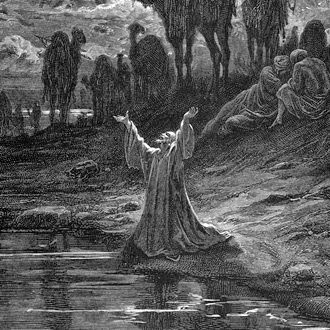
Gustav Dore: Habakkuk crying out in prayer

Did you hear Habakkuk’s words with your soul? But wait: Unless we understand these words in the context of the chapter, in the context of the book, and in the context of its setting, Habakkuk’s words of praise would be wrongly interpreted and misapplied to our lives. Therefore, let us begin with the fact that Habakkuk is a devout servant of God who…

  • grieved over his nation’s wickedness,
  • wrestled with theological perplexities,
  • and shook with fear when God told him what was coming to the nation.

God was bringing judgment to His people. Yet, Habakkuk declared his faith and expressed praise to the Lord GOD, in spite of the news he learned (Habakkuk 3). How is that possible?

So as not to get ahead of myself, permit me to ask you two questions: First, what was the most gut-wrenching, painful experience you have ever had? Second, how long did it last and what were the consequences? Perhaps some of you have experienced one or more of the following:

• The death of a parent, spouse, child, or friend
• An act of violence committed against you [rape, beaten, robbed, etc.]
• News that your health is failing – you have only three months to live
• The rejection of your spouse [divorce]; the betrayal of a friend; the discipline of a church
• The consequences of a sinful decision that brought overwhelming guilt and shame

Okay, now that you are in the moment for just a moment, what were your thoughts towards God when you were in that time of trouble? Were you praying? Were you crying? Were you afraid? Were you angry? Did you doubt God’s love? Were you filled with despair? How did you get through this painful experience?

Transitional Sentences

Having jolted your memory, you are now ready to connect with the prophet’s words and emotions; but just for a little bit. I do not want to offend anyone by minimizing your gut-wrenching painful experience, but when God told Habakkuk what was coming to the nation, within the prophet’s lifetime, Habakkuk wrote,

I heard and my inward parts trembled, at the sound, my lips quivered. Decay enters my bones, and in my place I tremble. Because I must wait quietly for the day of distress, for the people to arise who will invade us (Habakkuk 3:16 – NASB).

Yet, immediately following these words,

• Habakkuk did not stare at the horrific news he just received.
• Habakkuk did not become paralyzed in his walk with God.
• Habakkuk did not run away from God; rather,
• Habakkuk grounded himself in what he knew to be true about God and praised the Lord.

Historical Setting

Okay, before we proceed further, you might be asking, who is Habakkuk? There is nothing known about the prophet’s personal life. While students of Scripture have speculated that Habakkuk was of a priestly family, the Scripture is silent on this issue.

Habakkuk’s name means, “to embrace.” Based on the prophet’s words, it appears that Habakkuk embraced God [God’s glory, will, purity, heart, people, and suffering]. While all the other prophets spoke for God to the people, Habakkuk speaks openly to God about people.

Habakkuk wrote this book approximately 2 years before the first of three deportations to Babylon [B.C. 605, 597, 586]; 20 years before king Nebuchadnezzar eventually destroyed Jerusalem with a great slaughter. Habakkuk was a contemporary of Jeremiah. Moreover, there is a sense in the text that Habakkuk is also living in Jerusalem.

• We know that Jeremiah lived through the two-year siege of Jerusalem. Jeremiah describes God’s wrath against Jerusalem (Lamentations 2), whereby the Babylonian military forces first starved the people into submission and then broke through Jerusalem’s wall, slaughtering, plundering, and destroying the people and the city.

• However, as for Habakkuk, we do not know if he perished in the two-year siege or died by the sword when the Babylonian forces ransacked the city. However, when the prophet heard the news from God, what was to come, it is no wonder the prophet shook with fear.

I heard and my inward parts trembled, at the sound, my lips quivered. Decay enters my bones, and in my place I tremble. Because I must wait quietly for the day of distress, for the people to arise who will invade us (Habakkuk 3:16 – NASB).

In order to understand more fully Habakkuk’s prayer of praise in Chapter 3, let us review quickly a summary of the Chapters 1 and 2.

Summary Points in Chapter 1

Habakkuk’s 1st Complaint (1:2-4)

• God, why do You seem so indifferent to my prayers?
• God, why did You allow Israel to go so far with their sins?
• God, why do You not bring justice to the land?

Evidently, the time for divine judgment was now. From the Book of 2nd Chronicles, the godly reforms King Josiah instituted were reversed by his wicked sons, especially by king Jehoiakim. Consequently, Israel was rife with the following sins:

The people were idolatrous, especially as they sacrificed children upon the altars of demons, for financial and agricultural prosperity.

  • Corruption in the highest political and religious offices were the norm [Observation: perhaps that is why the nobility were first to be carried off in the first of three deportations to Babylon].
  • Jerusalem’s officials abused their authority and power, bringing injustice to the widows and the poor.
  • Bloodshed and crime were rampant throughout the land.
  • The Word of God was rejected; so were the prophets, as they were persecuted.
  • Consequently, the people of the land refused to repent of their sins.

God’s Reply to Habakkuk’s 1st Complaint (1:5-11)

God said, I am bringing the Chaldeans [Babylonians] to judge My people [Israel].

Habakkuk’s 2nd Complaint (1:12-2:1)

• But God, the sinfulness of the Chaldeans is worse than the sinfulness of the Jews!
• God, how can You endorse evil people to do Your divine work?
• God, You are too holy to look upon sin.
• God, the cruelty of the Chaldeans is known worldwide! They will destroy us!

To feel the horror that filled Habakkuk’s soul, imagine ISIS forces overwhelming this nation, as they are overwhelming the nations of Iraq and Syria.

Summary Points in Chapter 2

God’s Reply to Habakkuk’s 2nd Complaint (2:2-20)

• God declares: The just shall live by faith [present the gospel]
• God declares: I will judge the Chaldeans for their sins [5 woes]

–greed and aggression (5-8)
–exploitation and extortion (9-11)
–violence (12-14)
–immorality (15-17)
–idolatry (18-20)

Summary Points in Chapter 3

Even though Habakkuk did not understand everything about God and the course of action He was taking against Israel, the prophet offers a powerful prayer of praise.

First, Habakkuk makes a request of God (2).

–Revive Your work.
–Make Your work known.
–Be merciful when You express Your wrath.

Observations about Habakkuk’s request

1. Habakkuk knows what is coming and expressed his fear, along with his faith in God.

2. Understanding that God is holy, Habakkuk knew that God must judge sin. Habakkuk does not ask for personal deliverance, ease of suffering, defeat over the Chaldeans, or for Israel’s deliverance.

3. Rather, Habakkuk asked for God’s will to be done. Hmmm, this is reminiscent of the Lord’s Prayer. Consider the following questions: Are we more concerned about…

…our personal welfare or God’s will in our lives?
…which political party will win next year’s election or purity of the church?
…becoming more like Christ or securing material possessions?
…our comforts in this life or the kingdom of God?

Do you seek the shadow of the Jesus’ cross looming over this passage? Habakkuk asks, “in wrath remember mercy.” Habakkuk knew that God could no longer tolerate Israel’s sin. God’s righteous character demands that He judge sin.

God is still the same God today. He does not change. He cannot look upon our sin without judging us. That is why God sacrificed His Son on the cross for our sins. When Jesus hung on the cross, He alone bore the wrath of God so that you and me could escape God’s wrath. Indeed, God did remember His mercy while pouring out His wrath on His Son. We do not deserve to be saved. God held back the judgment we deserve [mercy] and gave to every sinner who has believes, eternal life [grace].

Listen, my friends, there is no sin in your life beyond the cross. Even though no one else knows about your sin, God knows. Come to Him in faith, believing that the blood of Jesus cleanses you from all your unrighteousness.

And to my brothers and sisters in Christ, God continues to bestow mercy and grace on our lives. Forsake the sin that so easily cripples your walk with God by calling out to Him to revive your heart for Him.

Second, Habakkuk remembers the deeds of God (3:3-15).

God displayed His majesty to the world.
God displayed His power over the nations [the Exodus and the plagues].
God displayed His presence among His people [Mount Sinai].
God displayed His glory, causing the nations to fear Him [Joshua 10].

What was God’s purpose in all of His deeds? The answer is clear: To demonstrate to His salvation for a people He loved.

Applications from Habakkuk’s remembrance

1. Read Scripture and understand how God has demonstrated His faithfulness in the past. A good place to begin would be at the cross. Think through how God took steps to bring Jesus into this sin-cursed world. In your mind, imagine yourself among the fickle crowds that called for the death of Jesus. See with your mind’s eye how Jesus carried His cross for you; the soldiers who nailed Him to the cross. Listen to His last words from the cross. These actions on our part have a way of strengthening our faith and making more intimate our personal relationship with Jesus.

2. Think back how God has delivered you in the distant and recent past. Be sure to tell others about His faithfulness.

3. Parents and grandparents, how are we demonstrating our faith and what values are we setting before our children? It is true that many young people are leaving the church. Might the problem lie in our homes and the manner in which we live out our faith?

Third, Habakkuk confesses his fear because he knows what lies ahead of him (16).

Habakkuk knew what was coming. If the Spirit of God told us of our future, I do not think we would be able to handle it, as God permits a measure of intense suffering for many of us. Read Peter’s first letter as suffering is a major theme he addresses (1st Peter 2:20-25; 3:13-17; 4:12-19).

Is it any wonder then, that we often times design our lives to avoid future suffering? God’s Word says, “Many are the plans in the heart of man, but the answer comes from the Lord.” God desires that we learn to walk by faith and not by sight or to solely lean on our own understanding (Proverbs 3:5-6). Therefore, as Habakkuk’s heart melted in fear, his faith did not paralyze his walk with God.

Applications from Habakkuk’s confession

I do not read tea-leaves. I do not listen to Glenn Beck. I am not a pessimist. However, you do not have to be a rocket scientist to see that difficult days lie ahead for this nation.

God has not spoken to me, as He did to the prophet Habakkuk; however, His Word speaks to all of us. And our country, like ancient Israel, is rife with the same sins. God is going to judge America for her many sins. The question is, when will this judgment fall?

As your pastor, I have a divine responsibility to strengthen your faith with the Word of God and by modeling my life before you; making disciples of Christ.

My brothers and sisters, are our souls ready to experience what is coming to our country? God told Habakkuk what was coming and the news caused him to tremble. God is allowing us to see the signs in our country and across the world and I sense that people are beginning to tremble.

I believe many of us think that the Rapture is the church’s escape plan. Yes, I believe Scripture promises the church to escape the Great Tribulation; however, there will be many smaller tribulations, [like the collapse of our economic system, martial law, restricted freedoms, fear in the streets, etc.] that impact the church.

My brothers and sisters, I urge you in the name of the Lord not to dismiss current events or to become discouraged. Rather, we are to embrace God, as did Habakkuk, seek to fulfill our mission as a church, bringing Jesus into the lives of others.

With that being said, let us look at the final portion of Habakkuk’s prayer of praise.

Fourth, Habakkuk praises God because… (17-20)

–God’s sovereignty never changes (17).
–God’s salvation is sure (18).
–God’s strength will help us walk with Him (19)

Though the fig tree should not blossom and there be no fruit on the vines;
though the yield of the olive should fail and the fields produce no food;
though the flock should be cut off from the fold and there be no cattle in the stalls;
yet, I will exult in the LORD, I will rejoice in the God of my salvation.
The Lord GOD is my strength, and He has made my feet like hinds’ feet,
and makes me walk on my high places.

Applications from Habakkuk’s praise

When the Chaldeans ransack the nations, they wiped out the permanent crops [figs, grapes, olives], the basic food and the flocks. In other words, God oversaw the destruction of Israel’s economy. What did that mean for the people of Israel? There was no food in the land. The absence of social services, like those of today, guaranteed that the young, the old, and the sick would most likely die of starvation.

What do we say today, when any of us lose our job and become unemployed; when the insurance runs out; when social security check is denied? Even worse, what might be our reaction should Wall Street collapse, wiping out all of our savings?

A word to the wise and prudent: Our country is on the verge of economic collapse. Even now, America is financially bankrupt, not to mention morally and spiritually bankrupt. Even though many people may lose everything, God remains in control. After all, He is responsible for removing those things in our lives.

Conclusion

This is Communion Sunday. Someone has said that God tries our faith so that we may try God. When God gives His people unwanted burdens, God also provides His undeserved blessings. Therefore, thankfulness comes from what is in our hearts, not what is in our hands.

Even though I have lost everything [consider Job], I will rejoice in the Lord for He has guided my steps into this experience. May each of us cultivate a heart like that of Habakkuk, of Job, and of Jesus. Amen.

—————————————————————-

First Baptist Church 879 Sawyer Street ~ South Portland, Maine 04106
Office: (207) 799-4565 Fax: (207) 799-5922
Website: http://www.spfbc.com Email: southportland.fbc@gmail.com

Posted in bible, christian living, clamor, encouragement, the word

How is being clamorous like a Russian nesting doll?

Let all bitterness and wrath and anger and clamor and slander be put away from you, along with all malice. (Ephesians 4:31)

My Sunday School teacher was reading this verse aloud yesterday, and I got stuck on the word ‘clamor’.

It is an interesting word. We hardly ever hear anyone use it these days. I like the word clamor, if not the real life noise it represents.

According to the internet dictionary, clamor means

“a loud and confused noise, especially that of people shouting vehemently.”

Set of Matryoshka dolls nested
inside each other. Wikipedia

Whenever there is a list of words together, especially moral qualities, it seems to me that they build. Like Russian nesting dolls, they’re connected. In this case, Matthew Henry Commentary explains the connection between bitterness, wrath, and anger and its connection to clamor and slander and malice.

By bitterness, wrath, and anger, are meant violent inward resentment and displeasure against others: and, by clamour, big words, loud threatenings, and other intemperate speeches, by which bitterness, wrath, and anger, vent themselves. Christians should not entertain these vile passions in their hearts not be clamorous with their tongues.

Henry, M. (1994). Matthew Henry’s commentary on the whole Bible: complete and unabridged in one volume (p. 2315). Peabody: Hendrickson.

I think this can be especially applied to women. The bible speaks of woman’s quietness and gentleness as part of exemplary character. Riotous women, whether in anger or clamorous mirth, are not to be modelled after. In fact, Titus 2:3 says women should be reverent in behavior.

Strength and dignity are her clothing, and she laughs at the time to come. (Proverbs 31:25)

Whether man or woman, we know that what is inside us comes out and it can either honor Jesus or defile us. See Mark 7:21-23,

And he said, “What comes out of a person is what defiles him. For from within, out of the heart of man, come evil thoughts, sexual immorality, theft, murder, adultery, coveting, wickedness, deceit, sensuality, envy, slander, pride, foolishness. All these evil things come from within, and they defile a person.

Matryoshka dolls set in a row
Wikipedia

If I suddenly break out in clamorous, slanderous, or malicious talk, then I know I have much more inside me that needs to be repented of. The outward expression is merely the end result, not the beginning. The beginning is what is in the heart. It is a grace to have verses like these, which tell us that if we are speaking clamorously, then it is the warning signal that there is something needing to be addressed inside of us, as a sinful heart condition.

Aren’t we fortunate and blessed to have the Word of God to use as the mirror of all goodness? Holding it up to ourselves as a reflection is painful sometimes but this is what Jesus wants, and it is good for us. After all, didn’t Paul say to Timothy,

All Scripture is breathed out by God and profitable for teaching, for reproof, for correction, and for training in righteousness, (2 Timothy 3:16)