
By Elizabeth Prata
SYNOPSIS: In this essay I explore Puritan migration, beliefs, and society, highlighting overlooked women whose literacy, labor, and faith sustained households, shaped children, and quietly influenced early American development despite historical invisibility and significant hardship.
The Puritans were a fascinating group of people. Hardy pioneers, committed to religious belief, literate and intelligent, yet complex, misunderstood, and historically mocked…who were these people?
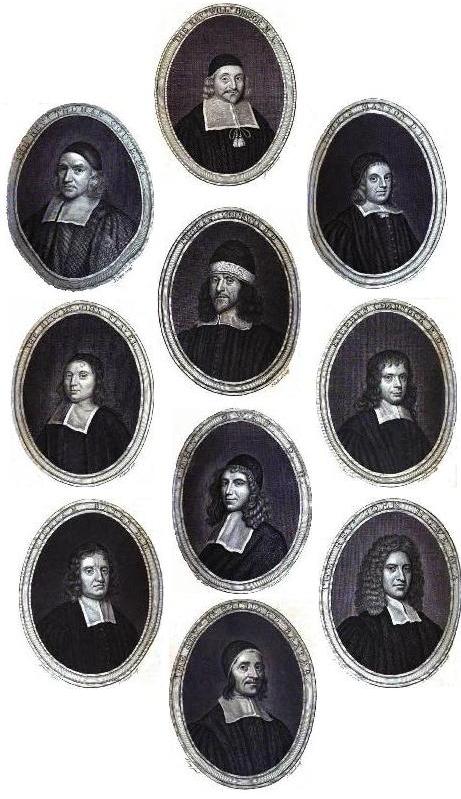
One internet definition of a Puritan is-
a member of a group of English Protestants of the late 16th and 17th centuries who regarded the Reformation of the Church of England under Elizabeth as incomplete and sought to simplify and regulate forms of worship.
As such, many of the men who were persecuted in England for their beliefs fled to the Netherlands. In Holland, however, the Puritans found worse conditions. It was a licentious place adversely affecting their children. William Bradford wrote,
“But that which was more lamentable, and of all sorrows most heavy to be borne, was that many of their children, by these occasions, and the great licentiousness of youth in that country and the manifold temptations of the place, were drawn away by evil examples into extravagant and dangerous courses…”
So the Puritans gathered up and emigrated to America in what is known as The Great Migration. (1620-1640). Some notable arrivals were:
Sir Richard Saltonstall, three sons, and two daughters,
Isaac Johnson and his wife Lady Arabella, daughter of Thomas Clinton, 3rd Earl of Lincoln,
Charles Fiennes,
Thomas Dudley, his wife, two sons, and four daughters
William Coddington, a Governor of Rhode Island Colony and his wife,
William Pynchon and his wife and three daughters,
William Vassall, for whom Vassalboro, Maine was named, and his wife,
John Revell, merchant, who lent money to the Plymouth Colony, and who was chosen assistant to the Massachusetts Bay Colony
Captain Thomas Wiggin, the first Governor of the Province of New Hampshire.
These men were married. They had wives. These women were mothers. What did the women think? What was their contribution? How did they fare? With a string of children behind them, a new world ahead, dire conditions and hardship- what was the Puritan wife’s life like?
Sometimes we think of our historical brethren as backward or uneducated, but in fact Puritan Massachusetts was populated with highly literate people, and that included the women.
The early settlers of Massachusetts included more than 100 graduates of Oxford and Cambridge. One historian termed Massachusetts “the best-educated community the world has ever known.” Puritan women, though they didn’t receive a college education, were generally literate and often well-read. The only respectable female vocation in Puritan America was managing a household. But that “household” generally included large numbers of children, servants, apprentices, and even single men and women (who were required to live with families). (Source)
We read trial transcripts of one Abigail Kippin fined for wearing lace and excessive clothing or Ann Linsford who was fined for drunkenness. But aside from these incidental and sadly negative glimpses, what was the long-lasting impact and contribution of the Puritan wives? Puritan wives were busy, capable, and hardy. They are still mainly invisible and it has been hard to find other notable Puritan women besides the more well known names of seditious Anne Hutchinson, poet Anne Bradstreet, and Quaker-convert Mary Dyer (eventually hanged for her Quaker beliefs).
Puritan wives were indispensible in building the country we now call America. Their work in the nascent nation was crucial to our growth. Because of the nature of their work – managing the household, supporting the husband – they are largely invisible to history. Trying to find the names and deeds of these women has been difficult, except for the several I mentioned above.
But were/are they invisible? Their patience, their Godliness, their contribution to American society was the children they bore and raised. Laurie Hochstetler, in the September 2013 edition of The New England Quarterly, wrote that the home was the “locus of spiritual and civic development and protection”. (Making Ministerial Marriage: The Social and Religious Legacy of the Dominion of New England).”
Thus, the Puritan home was the incubator for the men & women who came after the Great Migration and went on to populate and found the country. Puritan parents “exercised an authoritative, not an authoritarian, mode of child rearing” that aimed to cultivate godly affections and reason, with corporal punishment used as a last resort.” (Source). And the influence of the godly Puritan wife was the nexus.
Dearest sisters, wives and mothers, never think that your contribution to the household and to the family of God isn’t valuable. It might be invisible for a while, but eventually the strength of doing one more dish, changing one more diaper, supporting the husband for one more day will emerge into bright glory as Jesus pronounces your faithful service ‘well done.’ The building blocks are there and even if you can’t see them (though you might get glimpses at times), Jesus sees them. And what you are building will last.
Further Resources


My general view of the Puritans is very good. A great number of them seemed to be very serious about learning as much as they could about the Bible. As always you have those who were extreme on different ends but so much of what we have from them today is still worth reading. I am just scratching the surface on my study of the Puritans. While in Europe they dealt with a all kinds of problems including political upheaval. I can see why many wanted to leave and start over.
I have read some about the wives of the Puritans while reading some of their biographies. Once again, in general I have gotten a very high view of them but I must admit that I don’t know much about them. That they allowed their husbands to spend so much time in God’s Word says something.
Thank you for this interesting post.
,
LikeLike
You are most welcome. As an unsaved child, teen, and adult for half of my adult life, and having been raised in the Massachusetts/RI area where a lot of Puritans settled, the figured prominently in my education. But I always wondered why they would leave all they knew, sail across a dangerous ocean, just to come to a strane, inhospitable place and carve out a whole new life for the purpose of religion. This always puzzled me. Then I was saved, and I knew. Jesus is worth a prize far above anything earth offers. So I got interested in the Puritans for that reason, which is a better reason 🙂
LikeLiked by 1 person
That is a great reason to be interested in the Puritans. You now understand their willingness to face the unknown to believe what they wanted.
What a great place to grow up. You were right in the middle of where much of that history here happened as you well know.
I’ve been quoting Puritans for several months now and, if interested, you may want to check my blog. At right side of my blog is my RECENT POSTS which give you an idea of how I have been focusing on them lately.
I hope you have a great day!
LikeLike