Posted in discernment, Uncategorized

Act your age

old women youths


Our church has a healthy demographic of college kids and young marrieds. Some time ago I was watching an Instagram video story a young friend posted of a bunch of the youths in high spirits romping around the college campus at midnight, then heading to a local store for sodas, laughing and pushing and giggling.

I smiled, remembering my own hi-jinks and clean fun- road trips and loud laughter and silly fun. Ahhh, youth.

Those kind of memories are satisfying because that is how youths act, college or no. They’re boisterous, they’re lively, they’re carefree, they’re happy.

Kim Shay at The Upward Call blog published a good essay about older women not being a trope. (In TV or Movies a trope is a common overused theme or device). In many TV shows, the older women is depicted as silly, or a gossip, or a busybody. Think Hyacinth Bucket (Bou-quet) or the sanctimonious Church Lady of Saturday Night Live by Dana Carvey. Or Mrs Bridgette McCarthy on Father Brown, a church secretary, gossip, and often at odds with and acerbic toward other characters.

Shay’s essay was a look at how older women should act according to Bible verses that command reverence and sober-mindedness.

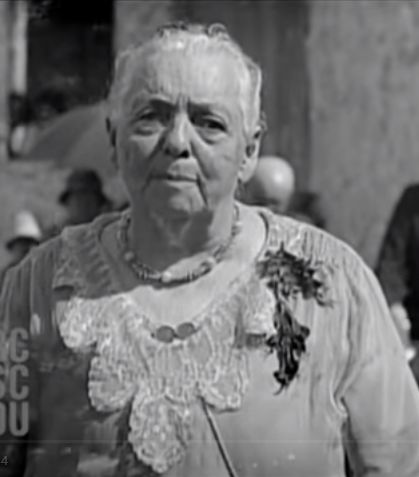
I’m an older woman now. I’m almost 64 years of age. I have completely white hair, overweight, a lumbering stiff walk, and oh my achin’ back. All the things that come with old age, including sagging skin, age spots, and general droopiness.

old women 2
Not me. But sort of me.

I remember being a teen at a friends’ house listening to the latest music laying upside down, college road trips, my car stuffed with gangly youths, a young adult with my posse playing bar trivia…it was yesterday. Ladies, age creeps up on silent cat feet (with apologies to Carl Sandburg). The boisterous hi-jinks no longer suit. If I were to gadabout at midnight with pals, they’d lock me up for being crazy. Why? That’s not how older women act.

We line the wall at dances sitting in folding chairs, purses firmly atop lap. We tut-tut at the beauty and litheness of the young ones sailing by. We cook and serve the meals with a knowing nod and quiet hospitable satisfaction. We accept collect calls from grandkids at midnight when the car breaks down on the way home from hi-jinks. We rearrange the potlucks on the sagging table, they form the cleanup swat team afterwards. I say, we. I’m a we now.

I know some of these are a writing trope in themselves, but they are tropes because they are true.

Kim Shay wrote: “My husband once asked me with regard to the women who have spoken at my church’s women’s conferences: “Why is the speaker always young and beautiful instead of old and plain?”

old women


I was noticing that, too. So many of the speakers at conferences now are younger women. Do younger women have something to say? Yes, but so do older women. And the elder females have been at it longer.

old women 3.jpg

So since we have been at it longer what do we say about how to conduct ourselves? Well, whatever the Bible says we are to act.

Before I get into the nuts and bolts of biblical behavioral standards, I’ll mention that whenever I discuss behavioral standards, particularly applied to false teachers, these comments receive the most negative feedback of all the kinds of comments I make online. People hate to be reminded that the Bible endlessly outlines behavioral standards of any kind. There are general calls for certain kinds of good behavior, there are specific calls for individual demographics, and there is a reminder that we will be judged on how we behaved as well as what we believed.

In one set of verses we read about how we are to act, and the reason for it-

as servants of God we commend ourselves in every way: by great endurance, in afflictions, hardships, calamities, 5 beatings, imprisonments, riots, labors, sleepless nights, hunger; 6 by purity, knowledge, patience, kindness, the Holy Spirit, genuine love; 7 by truthful speech, (2 Corinthians 6:4-7a)

Why?

so that no fault may be found with our ministry” (2 Corinthians 6:3b).

But what specifically of elder women? If we are married to a overseer, act in ways that aid him in keeping order in the household. (1 Timothy 3:4). If married to a deacon, the same, (1 Timothy 3:12. Additionally, deacon’s wives must be dignified, not slanderers, but sober-minded, faithful in all things. (1 Timothy 3:11). I am assuming that wives of pastors and deacons aren’t entirely youthful because the qualifications for pastors are not to be recent converts (1 Timothy 3:6) and to have built up a good reputation- which takes time. (1 Timothy 3:7).

If we are a widow, Paul in 1 Timothy 5 described real widows as: “Now she who is a widow indeed and who has been left alone, has fixed her hope on God and continues in entreaties and prayers night and day.” Which reminds me of Anna at the temple in Luke 2.

A widow could be put on the list for church aid if she had behaved in the following way-

A widow is to be put on the list only if she is not less than sixty years old, having been the wife of one man, 10having a reputation for good works; and if she has brought up children, if she has shown hospitality to strangers, if she has washed the saints’ feet, if she has assisted those in distress, and if she has devoted herself to every good work.

An elder married woman is not to be contentious, as Syntyche and Euodia were. (Philippians 4:2). Titus 2 is the famous verse that outlines how older women are to act-

Older women likewise are to be reverent in behavior, not slanderers or slaves to much wine. They are to teach what is good, and so train the young women to love their husbands and children, to be self-controlled, pure, working at home, kind, and submissive to their own husbands, that the word of God may not be reviled.

Reverent in behavior. Self-controlled. Kind. These are not hard to understand and not unreasonable to ask. When I write about behavioral standards other women rush to scream and rant, but really, what is there to rant against? They want to lose control? Be irreverent? Unkind?

Anyway, the Bible outlines behavioral standards for all ages. As I pass through the aging eras and enter the golden gate of elder womanhood, I’ll try to be mindful of how the Bible expects me to behave, so as not to discredit the ministry. Plus, in the Lord’s grace, I’ll try not to be a trope!

Gladys_Kravitz

Further Reading

This makes a nice companion piece. Jared Wilson, that whippersnapper at age 49, not only muses on growing old, but provides some helpful tips to grow old gracefully.

Growing Old Gracefully

Posted in theology

Christian women you should know

By Elizabeth Prata

Here is some edifying content for you- some Christian women from the Bible and from church history that added to the glory of the name of Jesus with grace and truth. You can read about them in the following:

FROM THE BIBLE

Twelve Unlikely Heroes, by John MacArthur, contains a bio of Miriam, Moses’ sister. Book.

Twelve Extraordinary Women: How God Shaped Women of the Bible, and What He Wants to Do with You, book by John MacArthur. Includes bios of –
Eve: Mother of All Living
Sarah: Hoping Against Hope
Rahab: A Horrible Life Redeemed
Ruth: Loyalty and Love
Hannah: A Portrait of Feminine Grace
Mary: Blessed Among Women
Anna: The Faithful Witness
The Samaritan Woman: Finding the Water of Life
Martha and Mary: Working and Worshiping
Mary Magdalene: Delivered from Darkness
Lydia: A Hospitable Heart Opened
Ruth & Esther: There is a Redeemer & Sudden Reversals


WOMEN FROM CHRISTIAN HISTORY

Reformation Women: Sixteenth-Century Figures Who Shaped Christianity’s Rebirth by Rebecca VanDoodewaard. Book

Katharina von Bora Luther, Katy, Martin Luther’s wife. Online essay.

Susannah Spurgeon: Susie: The Life and Legacy of Susannah Spurgeon, wife of Charles H. Spurgeon. Book

Jonathan Edwards’ wife, Sarah Edwards, in Marriage to a Difficult Man, by Abigail Dodds. Book description-

What was Sarah Edwards doing while her husband navigated ministry difficulties and pressures, traveled often to preach, nursed his delicate health, and spent long hours in his study composing sermons and writing books? She was busy mothering their 11 children, caring for the household, warmly welcoming the many guests who came to talk to and study with her famous husband, and providing a rock of stability and sociability for her introverted husband—one of America’s most influential intellectuals and theologians.

A must-read for any ministry wife or wife who’s husband is necessarily very busy with work or travel, this book gives us an intimate glimpse into the Edwards’s home life, where Sarah shines as a model of motherhood, marital and ministry support, and hospitality.

Lady Jane Grey:

Lady Jane Grey was queen for just nine days, as part of an unsuccessful bid to prevent the accession of the Catholic Mary Tudor. The great-granddaughter of Henry VII, Jane inherited the crown from her cousin Edward VI on 9 July 1553.

She arrived at the Tower of London to prepare for her coronation, but within a fortnight she was back as a prisoner of her Catholic cousin, Mary I who had claimed the throne as rightfully hers. While Mary was reluctant to punish her at first, Lady Jane proved too much of a threat as the focus of Protestant plotters intent on replacing Mary.

“On 12 February 1554 Jane was executed on Tower Green. She was 17 years old. Did she die an innocent victim of the men plotting around her? Or as a willing Protestant martyr? We may never know. This is her story.” From, Tower of London History.

To read more about the faithful Lady Jane Grey, online essay Scott Hubbell at Desiring God, or online essay Who Was Jane Grey, from Ligonier series, women of extraordinary faith.

The Little Woman, autobiography of missionary to China Gladys Aylward, By Gladys Aylward and Christine Hunter. While many lone women going afield on mission seem to have been proto-feminists, Gladys seems not to have been. I recommend her story. Book

Posted in theology

Are women more susceptible to sin and doctrinal error than men?

By Elizabeth Prata

I mentioned earlier that there was a disruptive conversation/argument on Twitter this summer sparked by Dale Partridge concerning whether women can or should teach theology to other women. I dealt with that in my essay blog here, and also reposted Chris Hohnholz’ conclusion within it.

In my opinion this discussion is important because the conversation seems to be part of a growing segment of the faith, edging ever more to the fringe of the faith (and perhaps soon to creep OUT of the faith?) which is hyper-conservative and hyper-focused negative aspects on women. Not the feminist side but the reaction to feminists that is swinging the pendulum toward the extreme other end of the spectrum.

Some men, like Dale Partridge, and women, like Lori Alexander, (The Transformed Wife), harp on the fact that women are more susceptible to error than men, and that this is why men must lead.

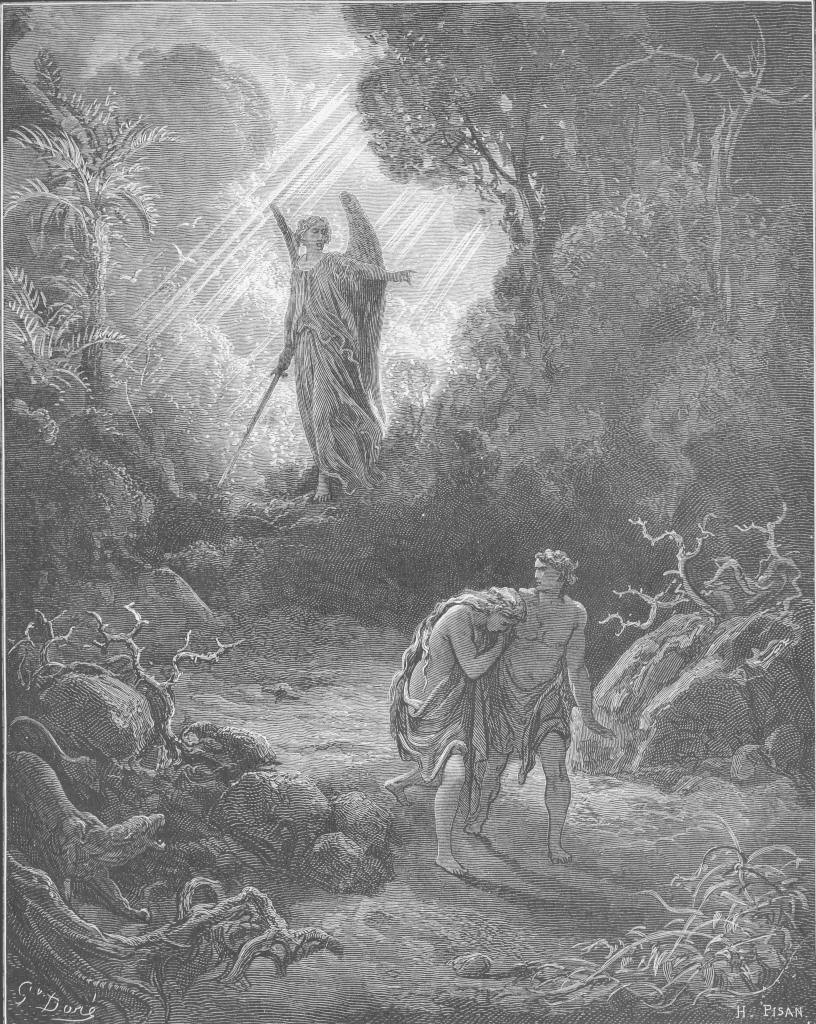
This isn’t true. The hierarchy of men leading and women helping was established before the Fall of Man into sin. Eve was specifically created to be a helpmeet. Adam was told to work the garden.

The ever thoughtful, ever articulate, Chris Hohnholz rebutted this idea of women being more susceptible than men to doctrinal error. Here is his response to that erroneous concept being touted by unlearned people online:


Chris Hohnholz – Servant of Christ Jesus, @ChrisHohnholz

“Today’s #PointToPonder: In the Garden, Eve was deceived and transgressed. Adam was not deceived and transgressed. This is biblical truth. However, before you jump to making an argument about how the deception of Eve is characteristic of her being, thus consigning all women to being susceptible to deception, remember Adam was not deceived yet he transgressed.”

“Why is this important? Because some are saying that men are to lead because they are less prone to deception and were made, in their being, for such things. However, Adam’s transgression was willful and purposeful. In other words, he knew it was wrong and did it anyway.

“Therefore, if women are susceptible, in their being to deception, men are then susceptible to rank disobedience and rebellion, in their being. Neither are by nature of their being, better for leadership. To assert otherwise is to commit a selective reading of Scripture.”

“Authority and leadership are rooted first and foremost in God who has determined our purposes and roles in accordance with His sovereign will. He has created us and gifted us uniquely for those roles and purposes. Yes, men are things women are not and women are things men are not. And it is a glorious gifting of God that it is this way. The question of what makes a person suited for authority and leadership is “What does Scripture command” not “What is the nature of our being”. So, let’s stop being cocky and attributing something to women that somehow makes them less and men more.”

—end Chris Hohnholz comment


I believe, sadly, that some of the people promoting this view enjoy making women less and men more. I believe this about Lori Alexander. Far from being an advocate of women, or a support for women, her comments seem to constantly berate women.

The other day Christian journalist Megan Basham @megbasham asked
@Phil_Johnson_ on Twitter about this new stance we are seeing pop up. She said,

I’m trying to understand what’s happening in some circles right now. Overcorrection? New hybrid strain of sharia law and evangelicalism?

I’ve seen an increasingly strict emphasis on modesty, a narrow interpretation of women must wear head coverings. As a result, more than one person has referenced in response to these highly strict, women-submission type comments, that what next? should we be wearing Muslim hijabs, and under sharia law? (“In Islam, Sharia Law refers to the divine counsel that Muslims follow to live moral lives and grow close to God”, says the CFC.) In fact, when Lori Alexander The Transformed Wife promoted something for women that went beyond the Bible (and lacked grace) a Muslim women ‘liked’ the comment and mentioned sharia law positively.

Sisters, when your comments about women bring to mind strict Muslim culture and you have Muslims who promote Sharia law approve your posts, it is time to step back and take a look at not only what you’re posting, but what you believe.

Women and men both have strengths, both have vulnerable points. We glory in the creativity and wisdom of God who made us to complement each other in our gender roles, and who also complement each other in our churches with the Spiritual gifts the Holy Spirit has dispensed.

Please watch out for and reject this hyper-submission, extra-biblical narrow and negative view of women. Both women and men are precious to God, neither are less than the other and neither are more than the other. God is great and He loves us humans, all we frail, sinful, sheep.

Posted in theology

The most anger now comes from a surprising quarter

By Elizabeth Prata

EPrata photo. Professional woman walking to work

It used to be that when I posted a discernment essay critiquing a teacher and showing through scripture that he or she was false, I’d receive a lot of heat, insults, and anger. Still do – a bit. But nowadays, it’s the posts about women’s roles (being at home as submissive wife/mom as the career) that generate anger, rejection of verses, curses and name calling.

Far from wanting to push back in similar anger, I just sadly look at their handles (many are crass), bios, (usually proud of a rebellion), or profile photo (many are immodest), yet these angry women claim to be Christian. My sorrow for them increases.

Since my conversion, a verse that always stood out starkly to me was Matthew 7:21-23, “Lord, Lord, didn’t we…?” I’ve researched it often. Greek for many here is “polýs (“much in number”) emphasizes the quantity involved; signifies ‘many, numerous’– i.e. great in amount.”

Hypocrisy and false belief is a heavy possibility for us all. Disobedience increases the likelihood of both.

Gill’s Exposition says of the Matthew 7:21-23 verse, “The word is repeated to show their importunity, sense of danger, the confusion they will be in, the wretched disappointment they will have; and therefore speak as persons amazed and confounded, having expected they would have been the first persons that should be admitted into heaven.”

I’ve heard in sermons that the number of the rejected will be astoundingly great. Their shock at learning the truth of their false belief will be unveiled before all. But it will be too late. This is a sobering truth- worthy of restraint and contemplation when dealing with a woman who may be on a path toward that side of the gulf.

How many professing Christian women will say ‘Lord, Lord, didn’t we make a wonderful career out of ministry? Didn’t we help many people? Didn’t we teach Bible to thousands? Didn’t we bring in a good income from my job? Splitting my time between job and kids wasn’t SO bad, was it? Even if the kids missed us a little, or ate frozen dinners too often, isn’t the ultimate balance a good one? Lord?’

No. It isn’t. The Bible is clear, a woman’s orientation is toward the home.

Ladies, I know Stay At Home Mom work isn’t glamorous. It’s dirty, boring, and repetitive. Raising kids is hard. It’s background work that seems to reap no public affirmation. Indeed, the public scorns housewifery. Even ‘Christian’ women mock it by claiming that just being a housewife isn’t enough, that a career outside the home is OK too. But staying in our roles God has ordained for us is ultimately for our good and reaps good. It’s our calling. Make it your joyful priority.

[I realize that circumstances mean some families make decisions that have the woman work outside the home. The young wife with no kids temporarily works to put her husband through seminary. The husband is deployed or on medical disability. She’s a widow, and so on. I am not making a general, blanket edict for ALL families.]

But… the Bible states that a woman’s primary goal should be to serve the home by helping her husband and raising the children at home (if the Lord blesses the couple with them). Serving the husband and her church if not.

Then the LORD God said, “It is not good for the man to be alone; I will make him a helper suitable for him.” (Genesis 2:18).

Neither was man created for woman, but woman for man. (1 Corinthians 11:9).

Older women likewise are to be reverent in their behavior, not malicious gossips nor enslaved to much wine, teaching what is good, 4 so that they may encourage the young women to love their husbands, to love their children, 5 to be sensible, pure, workers at home, kind, being subject to their own husbands, so that the word of God will not be dishonored. (Titus 2:3-5).

There are two issues: understanding the concepts the Bible puts forth on this topic of gender roles, and obeying them. As for the former, the Bible is clear about a wife’s primary orientation. It’s the home. The verses above are easily interpretable. They’re not murky on the subject.

So the issue is not one of interpretation, it’s an issue of obedience. They read, know, and understand the verses, they just choose to reject them in willful rebellion. This is why their stance is so dangerous, and calls for rebukes ranging from gentle to pointed.

Lifestyle disobedience is disobedience. Here is a good resource from Dr. Michael Youssef, “Genuine faith can only be demonstrated by obedient action.” More here, titled Faith that leads to Obedience.

And have mercy on some, who are doubting; save others, snatching them out of the fire; and on some have mercy with fear, hating even the garment polluted by the flesh. (Jude 1:22-23).

Barnes’ Notes says on the Jude verse-

Save with fear – That is, by appeals adapted to produce fear. The idea seems to be that the arguments on which they relied were to be drawn from the dangers of the persons referred to, or from the dread of future wrath. It is undoubtedly true, that while there is a class of persons who can be won to embrace religion by mild and gentle persuasion, there is another class who can be aroused only by the terrors of the law. Every method is to be employed, in its proper place, that we “by all means may save some.”

Pulling them out of the fire – As you would snatch persons out of the fire; or as you would seize on a person that was walking into a volcano. Then, a man would not use the mild and gentle language of persuasion, but by word and gesture show that he was deeply in earnest.

The women who don’t have to work outside the home, who split their time between career and husband/kids/home for reasons of personal fulfillment are in disobedience, which means they either are not a Christian, or, they are in Christ and are spiritually conflicted. I know this because rebellion always brings discomfort. The Day will reveal whether it was a false belief or a willful disobedience.

It should be noted that if a woman is actually in Christ, persistent disobedience will bring chastisement and eventual repentance.

In the meantime, though some are warranted a harsh rebuke to instill the fear of God, others are due a gentle warning. Perhaps the rebuke or warning will be the mechanism He uses to bring repentance. I ask God, grant me the wisdom to know when to do which. In other cases, you ladies’ exemplary modeling of the lifestyle to which He has called us may be the mechanism that brings repentance.

Ladies, even though the day-to-day work of being a wife and mom may be a grind, even if you get tired or irritated, in the end do you feel a sense of joy at the humans you’re raising? Satisfaction with how you’re supporting your husband? Do you feel a sense of spiritual fulfillment that your obedience aligns with God’s desires for you? Does your knowledge of scripture for women’s roles give you a sense of purpose for your life? If not, examine yourself to see if you are one that will hear “Well done Good & faithful servant, enter into the joy of your master” or “Depart from me, you worker of iniquity. I never knew you!”

My earnest desire is for women to know and love the scriptures, to be satisfied with their role, and to greet Jesus in love on the side of Light on the Day.

EPrata photo. A mom at home doing dishes
Posted in theology

Does a woman reading a Scripture verse during worship constitute “exercising authority”?

By Elizabeth Prata

I was asked this question by a reader and it’s a good question! Thank you, sister for the query. We have several verses in scripture that speak to ecclesiastical roles/duties with regard to men and women. The one most spoken of is Paul’s verse in 1 Timothy 2:12,

“But I do not allow a woman to teach or to exercise authority over a man, but to remain quiet.”

There is also the verse in 1 Corinthians 14:34,

the women are to keep silent in the churches; for they are not permitted to speak, but are to subject themselves, just as the Law also says.”

Which is re-emphasized in the next verse, 1 Corinthians 14:35,

If they wish to inquire about something, they are to ask their own husbands at home; for it is dishonorable for a woman to speak in the church.

Headship is the issue, which as part of her submission to the Head of the Church, mentions the woman’s silence. Thus, part of woman’s role is to remain silent in the church. It’s actually dishonorable to speak! The Greek word for dishonorable or disgraceful, is actually “sordid“. THAT’S how gross the Lord deems it for a woman to speak in the church service.

A woman reading scripture is not technically teaching or preaching it, (or IS it?) but the optics of a woman on the dais, with open Bible, reading and speaking, visually contradicts the verses that say women should remain quiet. It *looks* like she is taking authority, an authority she doesn’t have. That is not a good visual. She is also not being quiet as the verse says she must be.

If a woman was truly submissive to the headship of elders and to husband, there really should be no reason why she would want to perform in front of the church during service in that role. 

Some people say ‘But, but, it’s JUST reading!’ No it’s not just innocent reading. Public reading of scripture during worship service is actually part of preaching.

1 Timothy 4:13 says, “Until I come, give your attention to the public reading, to exhortation, and teaching.

“Those three elements form the essence of preaching: reading Scripture, declaring it, and explaining it” said MacArthur. So it’s not ‘just’ reading, it actually is a function of the pastor as part of the sermon.

To conclude, the issue of women reading the Bible to the congregation during services is:

1. Headship/Creation order issue;
2. Women remaining silent;
3. Understanding via proper interpretation that reading scripture is part of the pastor’s duties in preaching; and
4. A bad look, with a nuance in interpretation that treads close to a line many churches decide not to cross.

I rejoice when women ask me these kinds of questions. The glory of the Lord should be utmost in people’s mind and heart, with an earnest desire to obey His word in all things. Even though many visible churches seem to be falling into reproach these days, there are many more where obedient and diligent elders and pastors strive toward holiness and urge their people to do so as well. They gather, serve, sing, rejoice, obey; and persist in all these things. Even though we can’t see them, these churches are there. Some have 20 people in them and some have 200 and some have more. The Lord is not slack concerning His promises. He will build His church and the gates of hell shall not prevail against it.

In Acts 18:10, the Lord spoke to Paul in a vision. He told Paul to keep persevering in Corinth, ‘for I have many people in that city’. We never know where the Lord has His elect, nor who will be regenerated by the preaching of His leaders. We don’t know where people will grow and flourish despite our view of circumstances on the ground. He keeps His church thriving and will do so until the end.

Posted in theology

Do you make your husband known at the gate?

By Elizabeth Prata

I was raised by an unbelieving feminist who taught that a woman’s calling is to be out in the world, making a name for herself. “You can do anything” it was said.

Except houswifery. THAT was definitely not part of the ‘anything’ a woman could become. No, never that.

I often wondered about this hypocritical stance, especially since housewifery seemed good. (I still wasn’t saved, but the notion of keeping a house for my husband was cozy to me). No, a woman should be in the world, marching, yelling, claiming, staking, pushing.

This was the vaunted ideal in the 1960s and ’70s:

Continue reading “Do you make your husband known at the gate?”
Posted in theology

This woman spoke volumes by not speaking

By Elizabeth Prata

When I was a young adult my social sphere overlapped with a group of women who liked to party. Individually they were fine. But when they got together they were loud, raucous, lewd, and coarse. Because they got so loud at times they were dubbed The Deci-Belles.

I’m extremely sensitive to noise. I don’t like loud noises. When women get together their voices go up several octaves. Loud, high-pitched laughter or raucous conversation is just plain old hurtful to my ears. When I was with these ladies, I’d often stand on the sidelines and just watch in amazement at the goings on.

Today’s secular society proclaims these kind of women “strong”, “assertive”, or “powerful.” Nor does Christian ministry escape from the cultural twisting of what God wants women to be. We are constantly being told that we have “influence”, “potential”, or that we need “activating” (Are we inert robots with an ‘on’ button?) Christine Caine’s organization, Propel Woman is such an example of this attitude. Her Propel Woman “is a woman who leads—and believes she was made to lead. She gives all that she has. Puts it all on the line. Leaves nothing behind.” Caine’s Propel Woman sounds more like an Amazonian Nomad than a quietly serving Christian wife…

Caine’s website declares that the Christian ‘Propel’ woman is-

BOLD + DARING
CLASSIC + MODERN
IMAGINATIVE + INTELLIGENT
PLAYFUL + PROFESSIONAL
PRESENT + VISIONARY
EFFORTLESS + EVERYDAY
COMPASSIONATE + STRONG
COURAGEOUS + TENDER
TRUSTWORTHY + TENACIOUS
INFORMED + HOPEFUL
PASSIONATE + COMMITTED
LEADER + LEARNER
LOCAL + GLOBAL
AUTHENTIC + ACCOUNTABLE

That’s a lot of things. Who can live up to THAT? I certainly can’t. I don’t focus solely on Caine’s Propel Woman, many ‘Christian Women’s Ministries’ these days have the same attitude about what a woman should be. Do you notice what’s missing from Caine’s list? Some key words. Titus 2:3-5 words, for example-

Reverent
Self-controlled
Pure
Kind
Submissive (to their own husbands)

and…

Working at home.

Hard to do when we’re propelling all over the place.

Women were not “made to lead”. This is in direct scriptural opposition to the reason God made woman. (Genesis 2:18-25). It was to help, not to lead. As Christians in general, man or woman, we are made to serve our Lord by glorifying Him, but women especially serve. We serve our husbands, if we have one. We serve our home. We serve in our church. We don’t lead.

Sadly, Christian women’s ministries these days are perpetually claiming that we do. Worse, they are acting like unless you possess a speaking gift, which they say is the best one of all, you’re nothing. Unequal. Marginalized. Invisible.

Paul spends most of 1 Corinthians 12 chastising the members at Corinth for envying the members who have more prominent gifts. Note the first four words of this verse from 1 Corinthians 12:28,

And God has appointed in the church, first apostles, second prophets, third teachers, then miracles, then gifts of healings, helps, administrations, and various kinds of tongues.

God appoints his people to do various functions in the church, including speaking. GOD does. To disdain what God has appointed is to disdain God.

Now there are varieties of gifts, but the same Spirit. And there are varieties of ministries, and the same Lord. (1 Corinthians 12:4-5).

And there are the other two members of the Trinity. The God-head is fully involved in His church, and if He designated men to be the main speakers in the church so be it. Women are to be quiet/silent.

Contempt, hatred, envy, and strife, are very unnatural in Christians. It is like the members of the same body being without concern for one another, or quarrelling with each other. The proud, contentious spirit that prevailed, as to spiritual gifts, was thus condemned. ... The Spirit distributes to every one as he will. We must be content though we are lower and less than others. We must not despise others, if we have greater gifts. How blessed the Christian church, if all the members did their duty! Instead of coveting the highest stations, or the most splendid gifts, let us leave the appointment of his instruments to God, and those in whom he works by his providence. Remember, those will not be approved hereafter who seek the chief places, but those who are most faithful to the trust placed in them, and most diligent in their Master's work. Matthew Henry on 1 Corinthians 12:27-31.

I was a new Christian, saved maybe 5 or 6 years but losing the first 18 months by not being in church and in following Joel Osteen. There was a woman in my Sunday School class. It was a small class, not many members, and only a few women. This one woman was older, and long time married. She appeared each week to church. This in itself was pretty noticeable for a church with a small membership. Regular attendance these days seems like an optional event.

When she appeared, she was always dressed for church. She didn’t dress lavishly, nor casually. You could always tell she put effort into her outfit and that it was a church outfit.

She sat next to her husband, of course, and was perfectly attentive. She looked, listened, took a few notes, occasionally touched her husband’s elbow. She remained silent. She did not speak. Even when the Class teacher invited comment, she waited until her husband spoke, and only spoke if directly asked a question or encouraged to share an insight. It’s not that she was shy. Not at all.

This kind of church woman, or any kind of woman in or out of church, was new to me. As a person having grown up during the feminist 1960s and 70s, having been pressed by my own family to be a feminist, having been a teacher and used to speaking and teaching, her silence was resounding. She wasn’t invisible. Silence did not render her invisible. In fact, she was more visible than if she had brashly offered comment after comment. Her meekness didn’t mean weakness. No, far from being marginalized, her gentle and quiet demeanor broke through to my newly Christian mind and still resounds across my soul all these years later, now that I myself am older.

Ladies, Peter wrote our adornment is not in our tongue, in speaking great things and strutting around a stage. Our adornment is inner, by our spirit, and,

should be the hidden person of the heart, with the imperishable quality of a gentle and quiet spirit, which is precious in the sight of God. (1 Peter 3:4).

God does not look with favor on loud, brash, footloose women

She is boisterous and rebellious, Her feet do not remain at home; (Proverbs 7:11)

The word boisterous is hamah in Hebrew and it means to be in a stir, be in a commotion; to be boisterous, be turbulent. This bespeaks an unquiet spirit, a woman characterized by constant unrest or disorder. To be this way, live this way, is exhausting to your family, your church, the people in your sphere whether online or real life. In other words, don’t be a Deci-belle. Speak God’s language. Be quiet, peaceful, gentle, attentive, humble, meek, with an attitude of service. This is precious in the sight of God. I want to be precious in the sight of God. Don’t you?

Posted in theology

Modesty: what are the limits and what does scripture say?

By Elizabeth Prata

Usually the discussions about modesty come in late spring as the temps heat up and we enter the summer season peeling off some layers of clothes. When bathing suit season approaches, the discussions online often turn to the limits of skin being shown, where to obtain modest clothing, and what the Bible actually describes modesty as.

Continue reading “Modesty: what are the limits and what does scripture say?”
Posted in theology

What can women do on stage during church services?

By Elizabeth Prata

A reader asked about women on stage during church services. During the service different churches allow women to do different things. Some of those things might be-

–preaching the sermon
–leading a confessional or a devotional
–reading of scripture
–leading the choir
–singing solos
–singing in the choir with men
–leading congregational prayer
–giving announcements

It is obvious that scripture forbids a woman from preaching to the congregation, to men, or to teach them. No matter how feminists twist the pertinent scriptures, they always say the same thing. Preaching is a NO. (1 Timothy 2:12)

Ten years ago Tim Challies, book reviewer and at that time a pastor/elder in his church, wrote two essays on women reading scripture on stage during services. The first article was strong on the complementarian nature of the functions of men and women in the Sunday Church service. It generated lots of push back (even ten years ago, imagine if it was published these days!). So he wrote a second article explaining more of his thinking.

He believes that the reading of scripture is a teaching function and therefore reserved for men only. Oddly, he/his church allows a woman to lead prayer from time to time. So here we view the see-saw nature of what a woman can or cannot do on stage during a Sunday Service according to scripture and according to various peoples’ interpretation of it.

It’s really up to the conscience of the elders/pastor and his interpretation of the pertinent verses to make decisions in the gray areas where scripture doesn’t speak specifically. I tend to fall into the narrow interpretation category of interpreting that it’s best not having a woman speak anything on stage during the service. I like seeing only men on stage during Sunday services praying, speaking, leading, or teaching because it’s consistent with 1 Timothy and the headship issue.

the women are to keep silent in the churches; for they are not permitted to speak, but are to subject themselves, just as the Law also says. If they wish to inquire about something, they are to ask their own husbands at home; for it is dishonorable for a woman to speak in the church. (1 Corinthians 14:34-35)

Here are Challies’ two articles. I liked his explanation of why he interprets the reading of scripture is a teaching function. That’s why I’m linking to it.

Here are Challies’ two articles

Article -

The Public Reading of Scripture

Article responding to push back,

Men, Women & the Public Reading of Scripture

I agree with his articles that the reading of scripture is related to a teaching function (article explains why very well, it’s why I posted it). I agree that preaching is reserved for men according to 1 Timothy 2 and other verses. In that same vein of interpretation, I personally believe that women leading prayer on stage during church service is the also a teaching function because we often pray scripture or pray about scripture, and therefore reserved for men.

I think especially in these days that a woman on stage during the church service speaking to the congregation in any form except to be baptized or share her testimony is a violation of 1 Timothy 2:11-12 and/or is a dangerous precedent presenting a poor ‘visual’ that will inspire others to follow and enlarge. A picture of a woman standing on stage with a Bible in her hand and a microphone in the other speaking to the congregation thru reading scripture or thru prayer puts the camel’s nose under the tent flap. We know that once you give an inch, satan will take a mile. Soon, I believe, that same church will allow women to preach. It’s incremental.

Here is an example of that incremental creep: …in a church I went to long ago a woman led the choir from on stage during service and sang with them. OK. But then she gravitated to standing behind the pulpit and explaining to the congregation the origin of the song they were about to sing. Hmmm. Then, she gravitated to standing behind the pulpit and explaining the theology and scriptures behind the song, and her explanations got even longer. Uh-oh. You see how it gets incrementally more of a violation of scripture to have a woman on stage explaining anything. Her “explanations” turned into mini-sermons over time. Give satan an inch … he takes a mile.

As for women singing in the choir with men or singing solos, I believe that is different. I believe that is an expression of service to God by using her God-given talent for the glory of God. When a woman leads congregational prayer or reads scripture she is being used as a vehicle to deliver God’s words to the people, that is why I believe it to be a violation of 1 Timothy 2. When she sings, she is using man’s words. She is not in authority over men because the highest authority, the Bible, is not being used as a conduit to express that authority. In that way, I believe singing is a service, not an authoritative leading.

Here is a blog post from Grace To You 2013 on the topic

https://www.gty.org/library/Blog/B130904

It’s about headship and submission (And Adam was formed first, then Eve…as the rest of the 1 Timothy 2 verse goes).

In my beliefs in matters of gray area, I tend to fall on the more conservative side. I know how grabby sin can be, and standing on the line with my toes right up to it would make for an easier fall into sin, in my view. Better to stay on more solid ground. But in matters of gray area it’s up to the pastor or elders’ interpretation and conscience, and then our own as our churches live out their ecclesiology.

Posted in theology

Joanna: Who was she?

By Elizabeth Prata

Luke has this intriguing little nugget tucked in to the beginning of chapter 8.

Women Accompanying Jesus

1Soon afterward he went on through cities and villages, proclaiming and bringing the good news of the kingdom of God. And the twelve were with him, 2and also some women who had been healed of evil spirits and infirmities: Mary, called Magdalene, from whom seven demons had gone out, 3and Joanna, the wife of Chuza, Herod’s household manager, and Susanna, and many others, who provided for them out of their means.

We only find her mentioned by name one other time in any of the Gospels or even the rest of the New Testament. It’s in Luke 24:10, where the women were the first to find the empty tomb of the resurrection and went back to tell the apostles: Now it was Mary Magdalene and Joanna and Mary the mother of James and the other women with them who told these things to the apostles,

Continue reading “Joanna: Who was she?”